Introduction
The timing and circumstances of first sexual intercourse (sexual debut) among young people continues to attract much interest because this marks the beginning of their exposure to a range of sexual and reproductive health outcomes (Yode & LeGrand, Reference Yode and LeGrand2012). The circumstances under which the event occurs may also have implications for their future sexual behaviours and health (Ghebremichael et al., Reference Ghebremichael, Larsen and Paintsil2009).
Studies have demonstrated that the timing of sexual debut is linked to a wide range of individual socio-demographic and psychosocial factors, as well as broad structural-level factors (see, for example, Luke, Reference Luke2003; Maticka‐Tyndale et al., Reference Maticka‐Tyndale, Gallant, Brouillard‐Coyle, Holland, Metcalfe, Wildish and Gichuru2005; Tenkorang & Maticka-Tyndale, Reference Tenkorang and Maticka-Tyndale2008). At the individual level, educational attainment (Price & Hyde, Reference Price and Hyde2009; Adamczyk & Greif, Reference Adamczyk and Greif2011; Doyle et al., Reference Doyle, Mavedzenge, Plummer and Ross2012; Speizer et al., Reference Speizer, Fotso, Davis, Saad and Otai2013) and parental characteristics, for instance socioeconomic status (Luke, Reference Luke2003, Maticka‐Tyndale et al., Reference Maticka‐Tyndale, Gallant, Brouillard‐Coyle, Holland, Metcalfe, Wildish and Gichuru2005) and education (Santelli et al., Reference Santelli, Lindberg, Abma, McNeely and Resnick2000; Price & Hyde, Reference Price and Hyde2009), can trigger early sexual debut depending on how parents fare on these indicators. Other variables such as religiosity (Edwards et al., Reference Edwards, Haglund, Fehring and Pruszynski2011) and early onset of puberty (French & Dishion, Reference French and Dishion2003; Downing & Bellis, Reference Downing and Bellis2009) have been linked to the timing of sexual onset. Poor parent–child relationship/connectedness, weak monitoring (Kumi-Kyereme et al., Reference Kumi-Kyereme, Awusabo-Asare, Biddlecom and Tanle2007) and family/household composition (i.e. whether young people live in intact or non-intact families) are other factors that may expose adolescents to having their first sexual experience (Santelli et al., Reference Santelli, Lindberg, Abma, McNeely and Resnick2000; Oman et al., Reference Oman, Vesely and Aspy2005).
Structurally, gender roles and norms, the availability of preventive health and educational services and ethnic and/or civil conflicts may determine when young people engage in sexual activity. For instance, in contexts where masculinity is associated with sexual prowess, young men may engage in early sex as a way of fulfilling social/cultural ‘norms’ (Campbell & MacPhail; Reference Campbell and MacPhail2002; Kabiru & Orpinas, Reference Kabiru and Orpinas2009). While these factors play a considerable role in determining when young people transition into sexual activity, the mechanisms through which they operate may be different for women and men. For instance, whereas poverty may constrain women’s resistance to sexual pressures (see Moore et al., Reference Moore, Biddlecom and Zulu2007; Choudhry et al., Reference Choudhry, Östergren, Ambresin, Kyagaba and Agardh2014) leading to premarital sexual activity, for men, affluence may facilitate seeking sexual opportunities, particularly in contexts where sex exchange between men and women is high (e.g. Kaufman & Stavrou, Reference Kaufman and Stavrou2004; Zembe et al., Reference Zembe, Townsend, Thorson and Ekström2013). Thus, wealth may operate in opposite directions for men and women on when their first sexual experience occurs.
Recent evidence shows that age at sexual debut across sub-Saharan Africa is rising, but the overall proportions having sexual intercourse before 15 years are still high (Doyle et al., Reference Doyle, Mavedzenge, Plummer and Ross2012; Speizer et al., Reference Speizer, Fotso, Davis, Saad and Otai2013). In addition, there are wide variations across countries and by sex. For instance, in an analysis of nationally representative surveys from 24 sub-Saharan countries between 2005 and 2010, Doyle et al. (Reference Doyle, Mavedzenge, Plummer and Ross2012) found differences in the proportion of 15- to 19-year-olds who reported having had sex before the age of 15 years. Among the countries included in their analysis, the values ranged from 2% to 27% for men and 5% to 26% for women. Their analysis further revealed regional variations between men and women. While a significantly larger proportion of women compared with men reported having engaged in sex before the age of 15 in countries in West Africa, the pattern was mixed for countries in Central, East and South Africa.
The continued interest in the timing of young people’s sexual debut largely stems from its association with other subsequent sexual risk-taking behaviours: high number of sexual partners, increased coital frequency and having older sexual partners (Kaestle et al., Reference Kaestle, Halpern, Miller and Ford2005; Fatusi & Blum, Reference Fatusi and Blum2008; Doyle et al., Reference Doyle, Mavedzenge, Plummer and Ross2012). In addition, the onset of sexual activity at an early age, often unprotected, increases the risk of contracting HIV/AIDs and other sexually transmitted infections (STIs), as well as unplanned pregnancy (Pettifor et al., Reference Pettifor, Van Der Straten, Dunbar, Shiboski and Padian2004; Kaestle et al., Reference Kaestle, Halpern, Miller and Ford2005; Speizer et al., Reference Speizer, Fotso, Davis, Saad and Otai2013; Houlihan et al., Reference Houlihan, Baisley, Bravo, Kapiga, de Sanjosé and Changalucha2016).
Although a body of research on the timing/age of sexual debut among young people in sub-Saharan Africa exists, multi-country studies are few, but notable among them are those of Singh et al. (Reference Singh, Wulf, Samara and Cuca2000) and Doyle et al. (Reference Doyle, Mavedzenge, Plummer and Ross2012). One limitation inherent in these studies, however, is that they fail to account for the actual time sexual debut occurred by the use of event history analytical techniques, which are better suited to such datasets. Those studies that have applied the event history approach, on the other hand, are either based on small datasets (Tenkorang & Maticka-Tyndale, Reference Tenkorang and Maticka-Tyndale2008) or on a small number of countries (Zaba et al., Reference Zaba, Pisani, Slaymaker and Boerma2004) or only urban areas (Kabiru et al., Reference Kabiru, Beguy, Undie, Zulu and Ezeh2010; Speizer et al., Reference Speizer, Fotso, Davis, Saad and Otai2013). This limits the comparability of findings across countries within the sub-region mainly due to differences in datasets as well as methodological procedures. The use of comparable datasets in terms of methodology and questioning of respondents provides an international perspective on such an important sexual behaviour.
This study focused on unmarried young people for the following reasons. In many settings, marriage bestows culturally and legally unfettered grounds for sexual intercourse. Even though every sexual engagement involves some risks, those occurring outside formal unions carry much higher risks than sexual intercourse inside marriage (White et al., Reference White, Cleland and Caraël2000; Ghebremichael & Finkelman, Reference Ghebremichael and Finkelman2013; Salih et al., Reference Salih, Metaferia, Reda and Biadgilign2015). However, there is some evidence to suggest a weak protective influence of marriage for women (see Akwara et al., Reference Akwara, Madise and Hinde2003). This is partly because unmarried young people may not be adequately informed about their physical well-being, health and body systems, and are often uncomfortable discussing reproductive health concerns with parents, health care providers and educators, particularly when compared with their married counterparts (Barkat & Majid, Reference Barkat and Majid2003). What is also known is that sexual activity occurring at a very early age, usually below 16 years (Spriggs & Halpern, Reference Spriggs and Halpern2008; Lavikainen et al., Reference Lavikainen, Lintonen and Kosunen2009), is associated with elevated exposure to sexually transmitted infections including HIV, unwanted pregnancy, physical and sexual abuse by older partners and increased risk of cervical cancer (O’Donnell et al., Reference O’Donnell, O’Donnell and Stueve2001; Rector et al., Reference Rector, Johnson, Noyes and Martin2003; Bearinger et al., Reference Bearinger, Sieving, Ferguson and Sharma2007; Hindin & Fatusi, Reference Hindin and Fatusi2009; Heywood et al., Reference Heywood, Patrick, Smith and Pitts2015). These problems are exacerbated by the moralization of sexual behaviour of young people in sub-Saharan Africa (Smith, Reference Smith2004; Nattrass, Reference Nattrass2004; Stoebenau et al., Reference Stoebenau, Heise, Wamoyi and Bobrova2016). Therefore, for both demographic and health reasons, this study focused on unmarried women and men aged 15–24 years.
The timing and factors associated with sexual debut across 34 sub-Saharan countries were examined based on nationally representative demographic and health survey data. Despite the cultural and social diversity across sub-Saharan Africa, a multi-country study on the timing of sexual debut provides an opportunity to unearth broad patterns to inform policy decisions and interventions (Doyle et al., Reference Doyle, Mavedzenge, Plummer and Ross2012). This is important given the severe course that adverse sexual and reproductive health outcomes such as HIV/AIDS and maternal and infant mortality have taken, especially among young people.
Methods
Demographic and Health Survey (DHS) data from 34 sub-Saharan African countries obtained between 2006 and 2014 were used. Since the DHSs started in the 1980s in developing countries, they have provided important datasets for monitoring the progress of demographic and health indicators. Although the surveys target women of reproductive age (15–49 years), men aged 15–59 years are also interviewed. To allow inter-country analysis, the DHS programme has a core component for all countries where information is collected for the same variables. Also, the surveys in each of the selected countries use the same data collection protocol in terms of sampling, data collection, coding and analysis. In all the surveys, a two-stage stratified sampling is employed. At stage one, regions/provinces/counties/states are stratified into urban and rural areas. Enumeration areas/clusters from each region/province/county/state proportional to the size of the national population is then selected. Subsequent to this, a fixed number of households are sampled from each enumeration area/cluster systematically. In sampled households, all women aged between 15 and 49 years who consent to participate in the survey are interviewed. In half of the sampled households, men between the ages of 15 and 59 years who are permanent household members, or who spent the previous night in the household, are also interviewed. All DHS surveys go through nationally recognized ethics approval bodies. Individual respondents also provide written and verbal consent. All the datasets used in this paper are publicly available from the DHS website (www.measuredhs.org). Permission for the use of the datasets was granted by Measure DHS. The analysis included male and female youths who reported having had first sexual intercourse at the time of the survey. This resulted in 167,932 females and 76,900 males.
The outcome variable for analysis was ‘age at sexual debut’. In all the countries where a DHS was conducted, a standard question was asked about the age of first penetrative sexual intercourse, eliciting responses on the exact age the event occurred. In this analysis, youths whose sexual debut happened at first union/marriage were excluded. This was because of an expectation that sexual debut which occurs in a recognized union/marriage is less risky. Known covariates of sexual debut – education, household wealth status, residence (urban–rural), sex of head of household – were included in the analysis. Another variable was created to capture the sub-Saharan African sub-regions where data were collected: East, Central, South and West Africa.
The analysis proceeded first with descriptive statistics (medians and proportions) of the variables by country. Since age at sexual debut takes on an event history distribution, the survival analysis technique was employed to estimate the risk of sexual debut occurring. Survival analysis offers a better option simply because the normality assumption inherent in the application of standard regression (e.g. linear) is violated given that not all the respondents had experienced the event at the time of survey. In this case, respondents who were yet to have their sexual debut were right-censored. To be included in the final model, the log-rank test of equality was used to check for proportionality of covariates. At a recommended p-value of 0.2–0.25 (Bruin, Reference Bruin2006), the following covariates were included in the models: education (no education=1, primary=2, secondary=3 and higher=4), wealth (categorized into quintiles, i.e. poorest=1, poorer=2, average=3, richer=4 and richest=5), residence (urban=0; rural=1) and sex of head of household (male=0; female=1). The wealth index was constructed based on an aggregation of household amenities (e.g. electricity, type of water), household material ownership (e.g. refrigerator, sewing machine, car, bicycle) and dwelling construction materials (e.g. floor, wall and roofing materials). Using Principal Component Analysis (PCA), the indicator variables were standardized (calculating z-scores), after which factor coefficient scores (factor loadings) were calculated; and finally, for each household, the indicator values were multiplied by the loadings and summed to produce the household’s wealth index value (Rutstein & Johnson, Reference Rutstein and Johnson2004). The use of these variables is consistent with previous studies (e.g. Santhya et al., Reference Santhya, Acharya, Jejeebhoy and Ram2011; Speizer et al., Reference Speizer, Fotso, Davis, Saad and Otai2013). Kaplan–Meir survival curves were used to illustrate time to sexual debut in each country.
Two multivariate models were estimated for men and women, with all the variables mentioned plus African sub-region (East, Central, South and West) included in the first model. In the second model, region was dropped and country was inserted into the model. The aim was to assess how the covariates responded to fitting region and country into the models sequentially. Recognizing that education, residence and household wealth quintile are not fixed measures, these factors were treated as time-varying covariates in the modelling (Сox, 1972). This is important in the sense that a respondent might have had sexual intercourse at a time they had attained secondary education but had had higher/tertiary at the time of the survey. The possibility of intragroup correlation (e.g. interviewing any two respondents in the same household) was factored into the analysis by estimating robust standard errors. The analyses also took into account clustering at the primary sampling level and weighting factors to generate representative results within and across countries.
Results
Respondents’ demographic characteristics
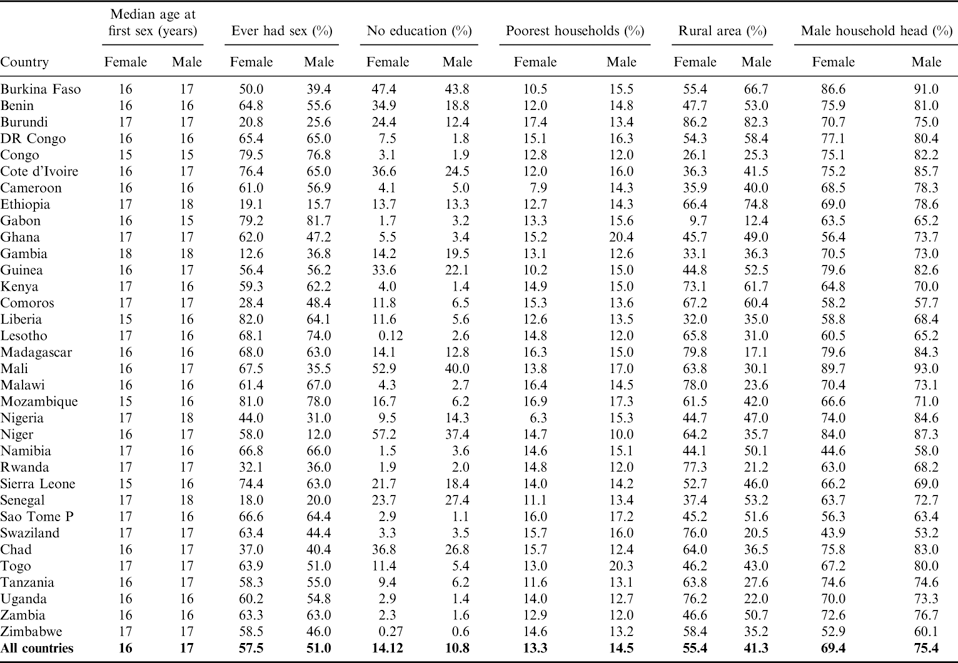
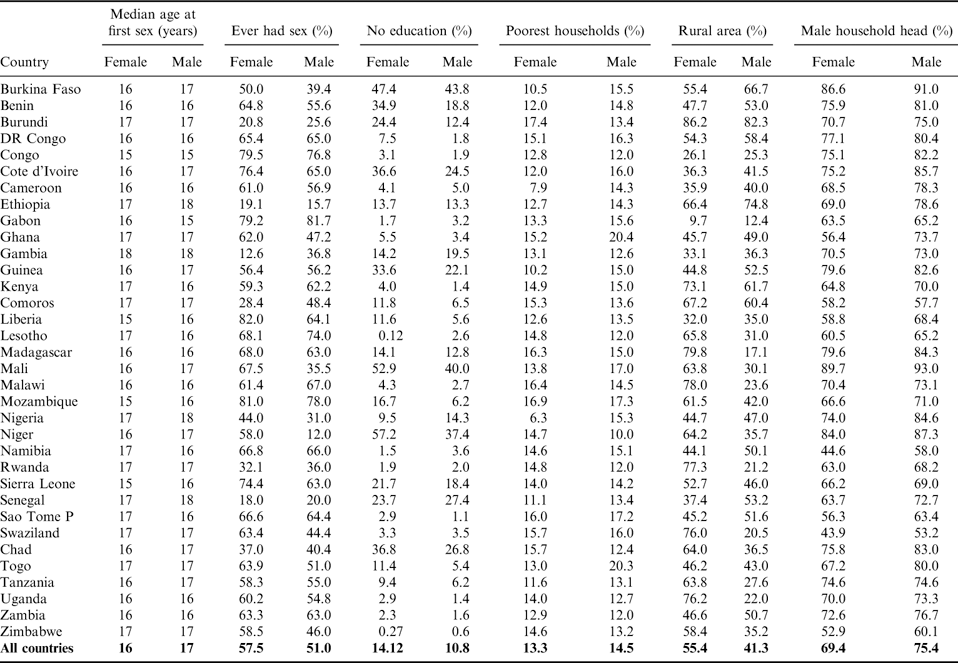
Table 1 shows the characteristics of the study sample of unmarried young people in the target countries. A large proportion of young people reported having had primary education, with just less than one-fifth (14%) of women and approximately 11% of men not having any formal education. However, substantial differences were noted across countries. For instance, more than half of young women in Niger (57%) and Mali (53%) had had no education, whereas in Lesotho the percentage was 0.12%. Among women, Burundi had the highest proportion of the poorest women (17.4%); for men, Ghana (20%) and Togo (20%) were the countries with the highest proportion of the poorest. Burundi had the highest proportion of rural dwellers with more than eight out of ten women and men residing in rural areas. As expected, in almost all countries, the majority of heads of households were men for both sexes of respondent, except for Namibia and Swaziland (Table 1).
Characteristics of unmarried men and women aged 15–24 from 34 sub-Saharan African DHS datasets
Sexual experience of respondents
The proportion of unmarried young women who ever had sexual intercourse ranged from 13% in Gambia to 82% in Liberia, while it ranged from 12% in Niger to 82% in Gabon for men. Close to two-thirds (58%) of women and a slight majority (51%) of men had experienced sexual intercourse at the time of the survey. By the age of 16–17 years, half of all women and men had had their sexual debut (intercourse). For both sexes, the median age at sexual debut ranged from 15 to 18 years. The lowest median age for women (15 years) was reported in Congo, Liberia, Sierra Leone and Mozambique, while that of men occurred in Gabon and Congo.
Regression analysis
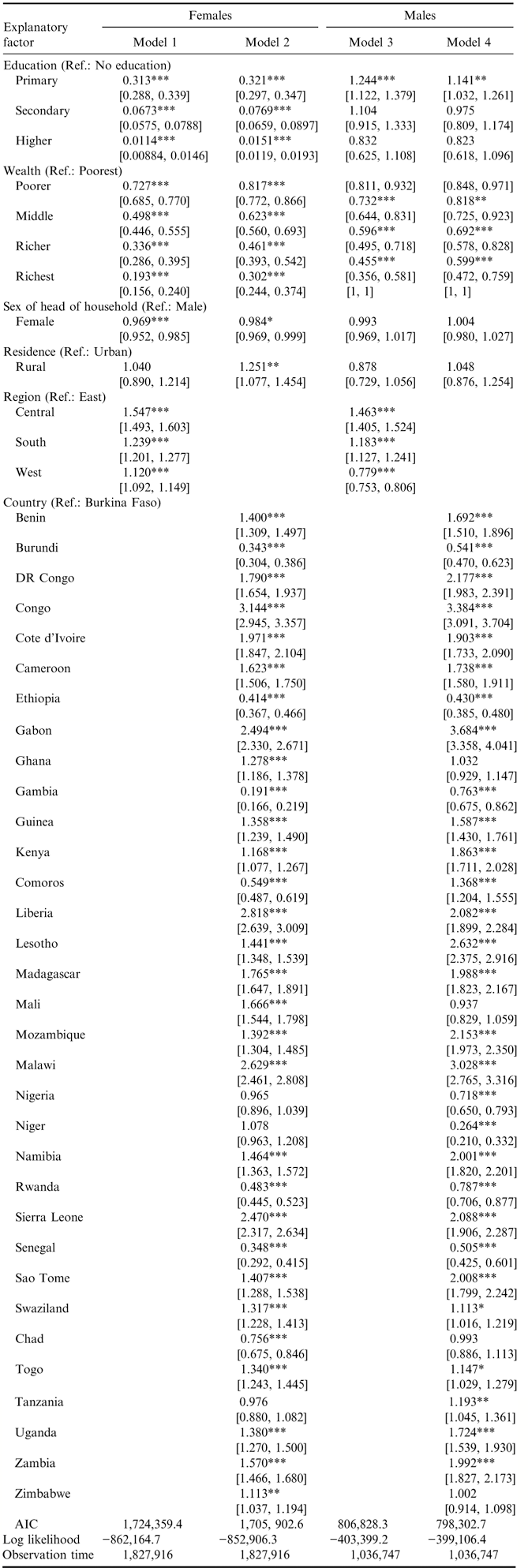
Table 2 shows that at each higher level of education, the risk/hazard for sexual debut reduced considerably among women but not among men. Thus, female education appeared to be crucial in extending the survivor time of sexual debut. For example, women with higher education transitioned to sexual debut later compared with those without any education; this was consistent in Models 1 and 2, where region and country were placed in the model interchangeably.
Cox proportional regression hazard ratios of timing of first sex in unmarried men and women aged 15–24 in sub-Saharan Africa

95% CI values are in parentheses. Ref.: reference category. AIC: Akaike Information Criterion.
*p<0.05; **p<0.01; ***p<0.001.
Disaggregated by countries, some disparities in the association between education and timing of sexual debut among both women and men were noted. In half of the studied countries, time to sexual debut was shorter with higher male education, with the risk rising to 2.6 in Nigeria and Chad (data not shown). Similarly, for women in Cameroon, Burkina Faso and Lesotho, the association between education and sexual debut was inverse. In several other countries, however, the link between education and early debut was inconsistent.
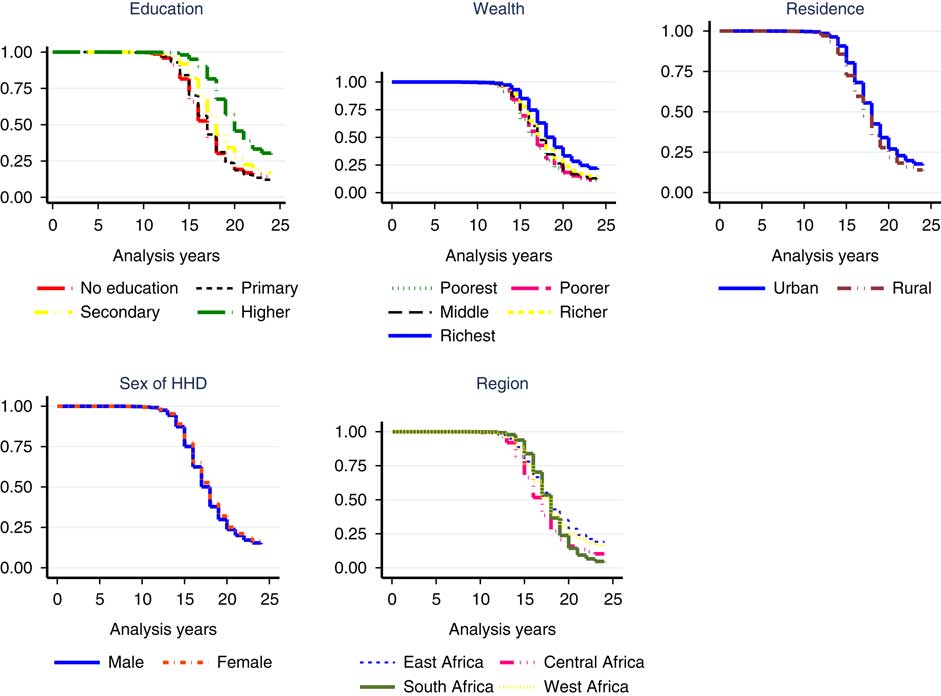
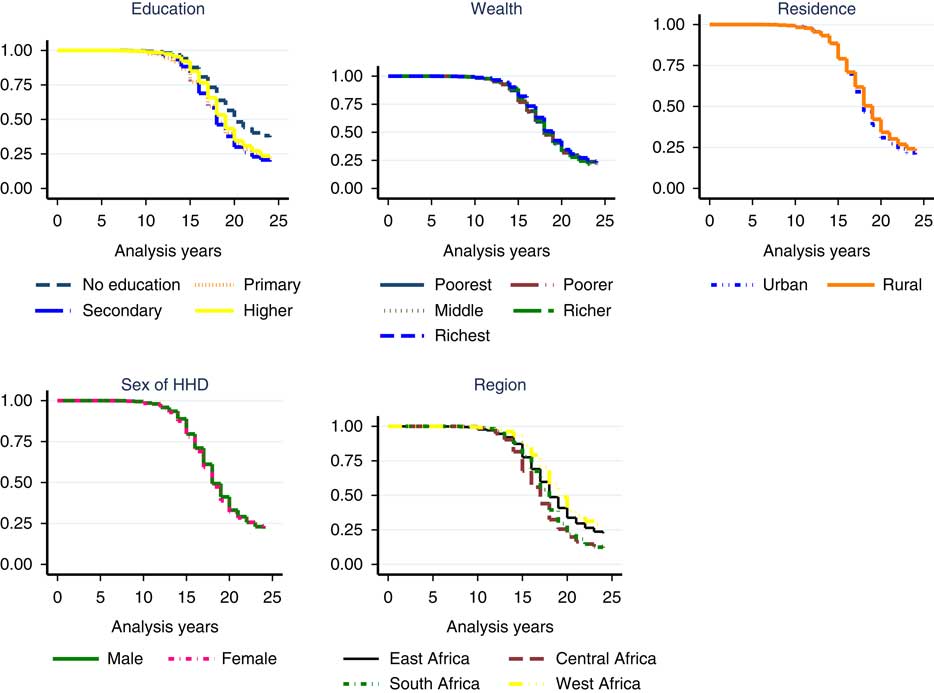
Again, for the pooled analysis, the effects of wealth on sexual debut were strongly observed among women and men with poorer young people starting sexual activity earlier. Thus, each higher level of wealth extended the timing of sexual debut significantly. However, disaggregating by countries, it was observed that this effect was not universal to all countries. For instance, in Cameroon, Ethiopia, Lesotho and Burkina Faso, the hazard of early sexual debut increased with increasing household wealth for men (data not shown). Figures 1 and 2 describe these patterns using survival curves for the main explanatory factors for women and men, respectively.
Kaplan–Meier survival curves for timing of sexual debut by covariates for females.
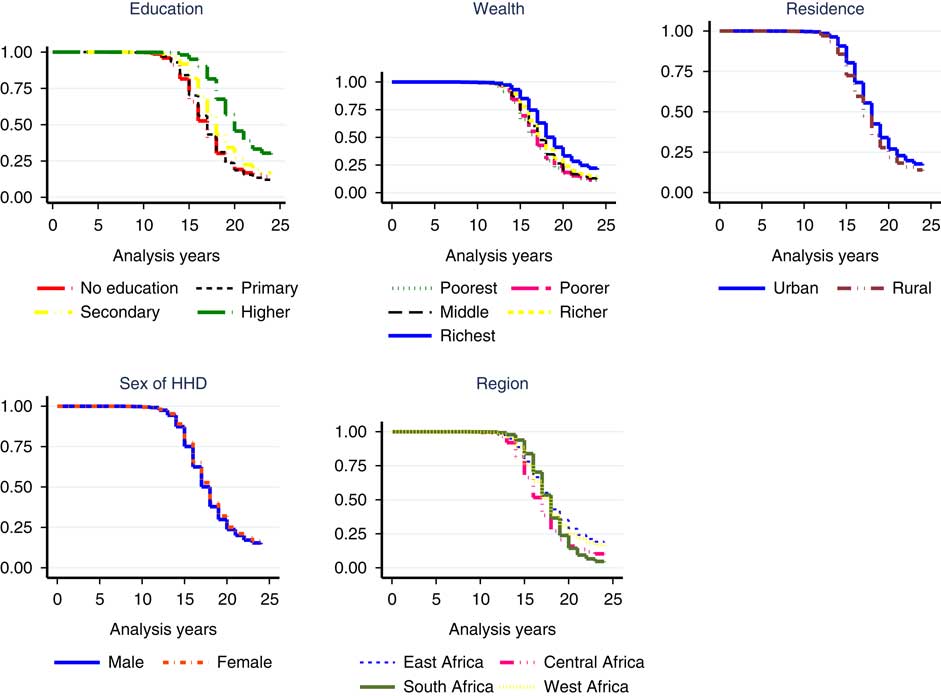
Kaplan–Meier survival curves for timing of sexual debut by covariates for males.
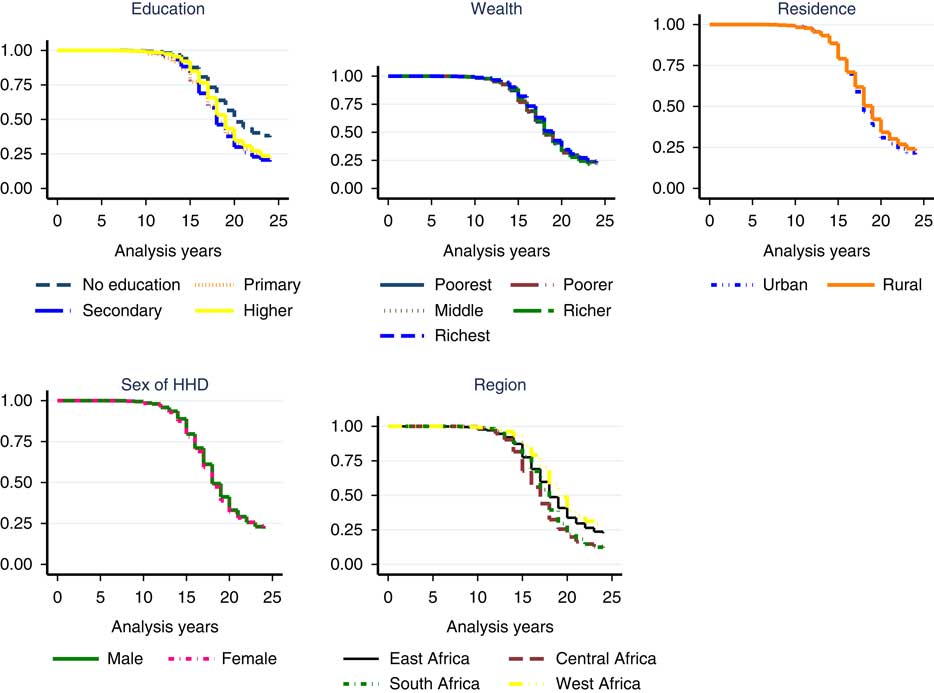
In other findings, the risk of sexual debut occurring at younger ages was higher among women in women-headed households, but this was not the case for male respondents. Controlling for country instead of region, women in rural households had higher risks of sexual debut occurring at an earlier age. No significant differences were observed among men by residence, as shown in Models 3 and 4.
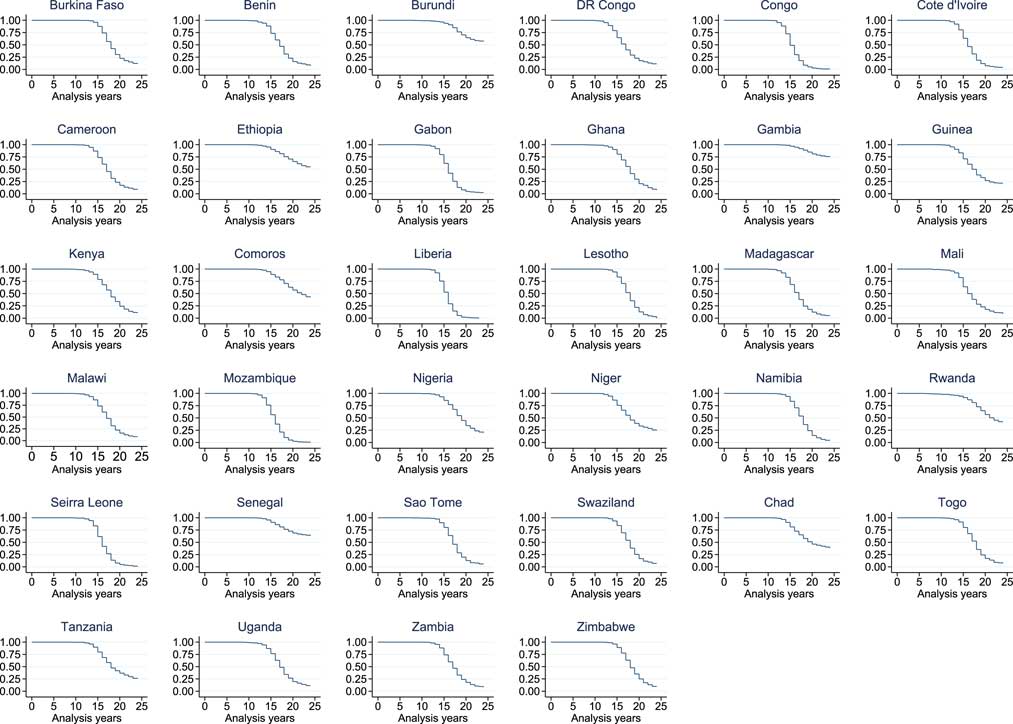
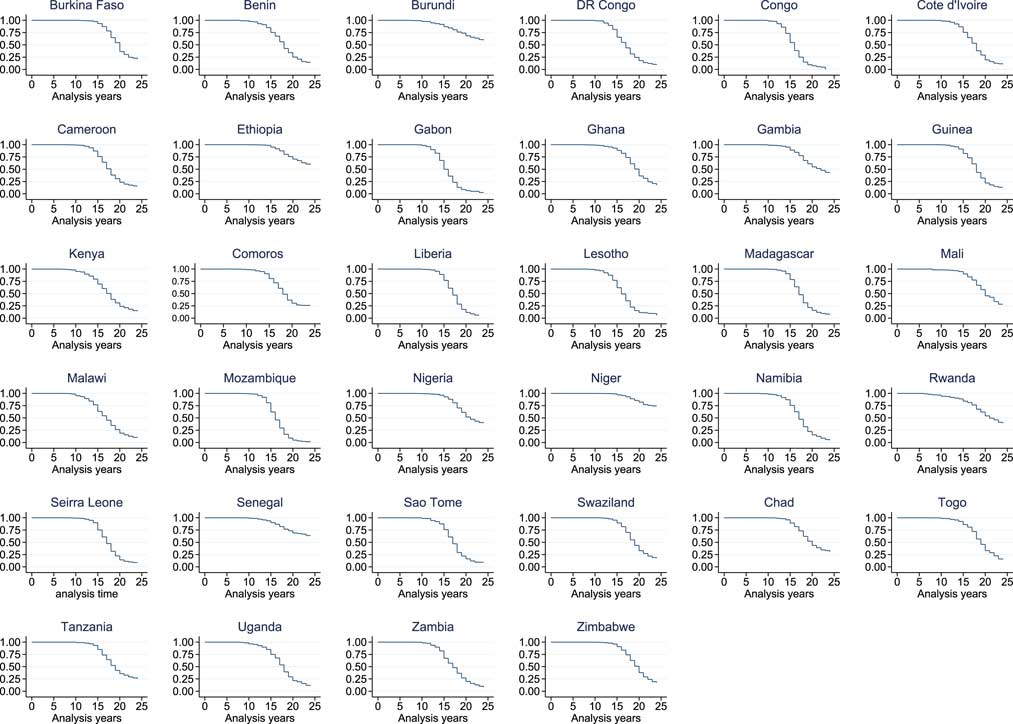
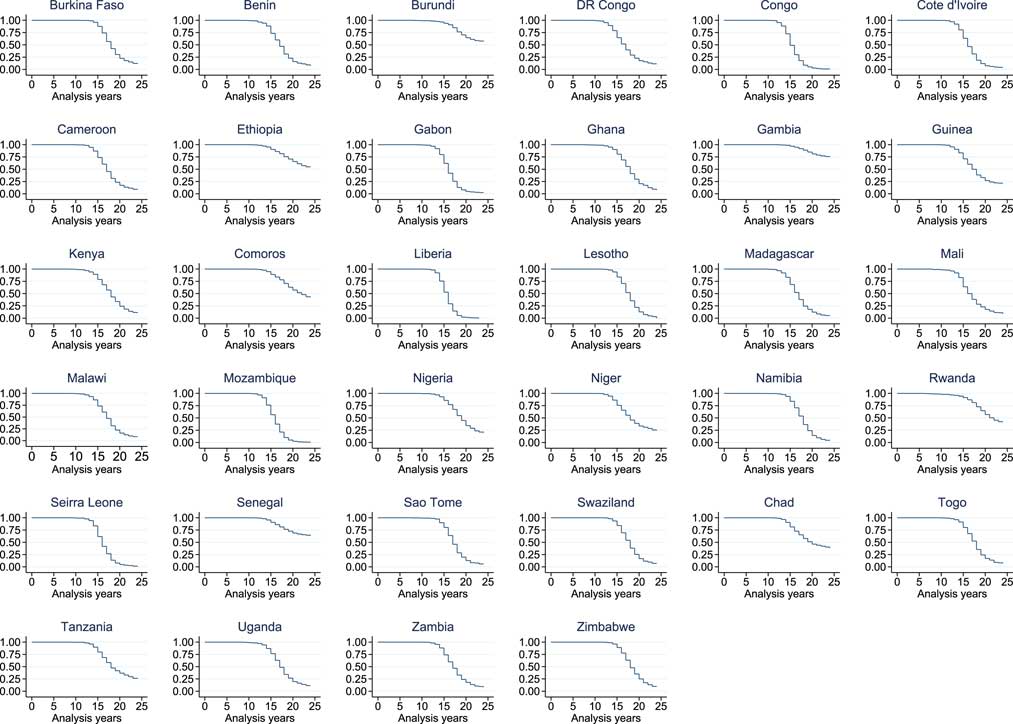
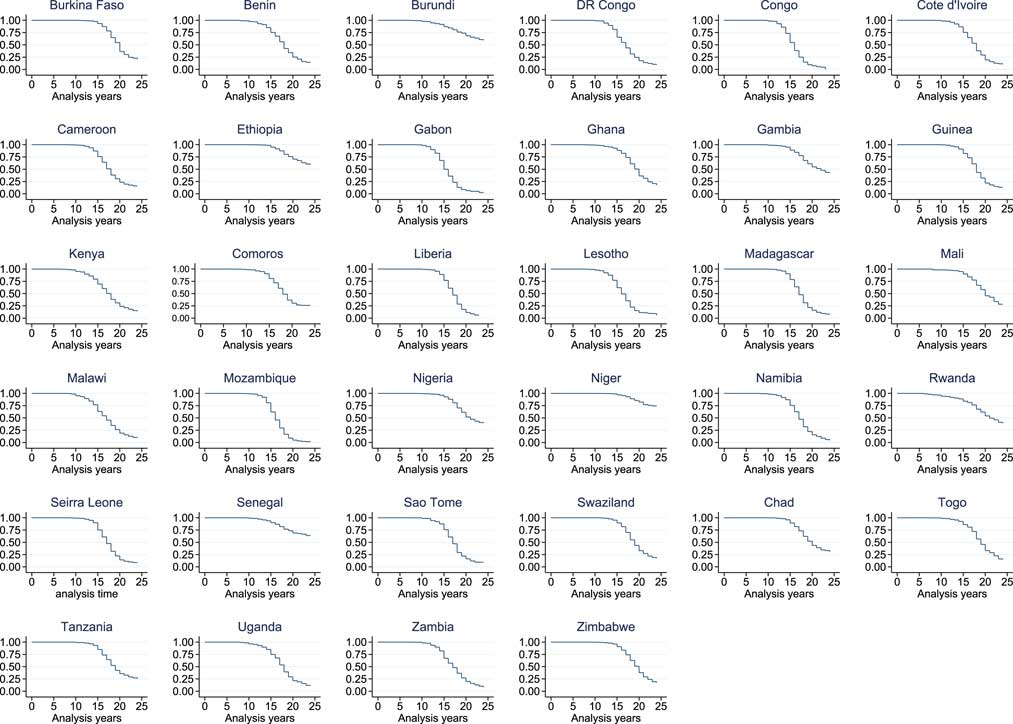
With East Africa as reference, the hazard of sexual debut happening early was higher in Central, South and West Africa for men. For women, being resident in West Africa (0.78; 95% CI=0.75–0.81) significantly delayed sexual debut. By country, the highest risk of first sex occurring earlier among women was in Congo (3.14; 95% CI=2.95–3.36), while the lowest hazard was in The Gambia (0.19; 95% CI=0.17–0.22). On the other hand, male sexual debut was less probable in Niger, with the greatest risk being observed in Gabon (Table 2). Figures 3 and 4 demonstrate the survival curves for individual countries.
Kaplan–Meier survival curves for timing of sexual debut disaggregated by country – females.
Kaplan–Meier survival curves for timing of sexual debut disaggregated by country – males.
Discussion
This study aimed to demonstrate the extent and timing of sexual debut among unmarried young women and men interviewed in comparative national surveys from 34 sub-Saharan African countries. The findings reported in this study highlight the unequal/varying trajectories of men and women towards sexual debut. Young women transitioned into sexual activity on average one year earlier than men in virtually all countries studied. While education, place of residence (urban–rural) and sex of head of household played diverging roles in time to sexual debut for women and men, wealth had consistent and similar (inverse) associations for both sexes.
The findings on wealth status and early sexual debut among women resonate with the literature on predisposing factors to early sexual debut (Speizer et al., Reference Speizer, Fotso, Davis, Saad and Otai2013; Okigbo et al., Reference Okigbo, Kabiru, Mumah, Mojola and Beguy2015). The onset of sexual activity/intercourse among men was graded according to wealth quintiles. While it was anticipated that greater wealth would extend the timing of sexual debut among women, the same was not expected among men due to the persisting practice of exchange of gifts for sexual intercourse in sub-Saharan Africa (Choudhry et al., Reference Choudhry, Östergren, Ambresin, Kyagaba and Agardh2014). The resources involved in such exchanges are positively associated with age (Bezuidenhoudt et al., Reference Bezuidenhoudt, Dube, Kuonza, Zungu and Zuma2014). That said, as confirmed in the present study, household wealth offers young men and women significant delays in beginning sexual intercourse. It is argued, however, that other parental characteristics such as education, which is strongly correlated with household wealth, may be operating concurrently to offer a congenial environment for postponing sexual debut for young people. As Mmbaga et al. (Reference Mmbaga, Leonard and Leyna2012) demonstrated, adolescents whose parents are educated and affluent transition into sexual debut much later than those whose parents are at the lower limits of education and wealth.
Consistent with many earlier studies (Adamczyk & Greif, Reference Adamczyk and Greif2011; Doyle et al., Reference Doyle, Mavedzenge, Plummer and Ross2012; Speizer et al., Reference Speizer, Fotso, Davis, Saad and Otai2013), every increase in level of female education delayed when women commenced sexual intercourse. The possible pathways by which education delays sexual debut in women include the following. First, education enlightens young women about the potential harms of early sexual initiation through sex education programmes/subjects/courses (Lindberg & Maddow-Zimet, Reference Lindberg and Maddow-Zimet2012). Second, formal education is able to build in women a repertoire of resilience life skills such as assertiveness and, more importantly, the self-efficacy to postpone/delay sexual activity (Fonner et al., Reference Fonner, Armstrong, Kennedy, O’Reilly and Sweat2014). Also, young women with higher educational and vocational aspirations may want to delay sexual intercourse. Primarily, this is because one of the negative outcomes of early sexual debut– teenage pregnancy – does not only carry a sanction of dismissal from school, but truncates future prospects (Mumah et al., Reference Mumah, Kabiru, Izugbara and Mukiira2014). The same implications are most often not associated with men who get girls pregnant. For women, the pursuit of schooling may motivate them to delay their first sexual experience. These propositions seem more plausible in the light of the finding about men – that educational level had marginal or no correlation with when they had their sexual debut.
This study highlights the unequal effects of female-headed homes on the timing of first sexual intercourse for women and men. While women were at a disadvantage if their household heads were women, for men it did not matter. It is known from the extant literature that female-headed households tend to be single-parent and poor (Snyder et al., Reference Snyder, McLaughlin and Findeis2006; Horrell & Krishnan, Reference Horrell and Krishnan2007). The monitoring of youth activities could be weaker in female- compared with male-headed households, where both parents are usually available to monitor youths (Langley, Reference Langley2016). Also, if female-headed households have a higher probability of being poor, then the results on wealth and timing of sexual debut strengthen this argument. As to why this is not observed among men may only be linked to the general vulnerabilities of young women imposed by gender inequalities, gendered power relations and social structures (e.g. Higgins et al., Reference Higgins, Hoffman and Dworkin2010) on transitioning into adulthood. It could also be due to the somewhat lax monitoring of, and permissive attitudes towards, male sexuality compared with that of women.
The study identified considerable variation in country and regional risks of early sexual debut, with the highest risk being noted in the Central region compared with the East (reference), South and West for both sexes. The highest risk of early sexual debut in Central Africa is principally being driven by specific country-level high risks, notably observed in Congo and Gabon among women and men. While the reasons for these disparate country/regional hazards are not apparent, differences in education, wealth, political stability/civil conflicts and individual-level tendencies may be complexly contributing to the patterns seen.
Although the multi-country approach used in this paper provides aggregated evidence on this important dimension of young people’s sexuality in sub-Saharan Africa, there are some limitations that ought to be pointed out. First, some other known covariates such as religion, region/state within each country and ethnicity could not be inserted into the regression models. This was principally due to the lack of uniformity in how these variables are measured in the 34 countries considered in the analysis. Perhaps their inclusion might have altered the direction and survival functions of when sexual intercourse first occurred. Also, since the data used were cross-sectional, it was impossible to account for changes in timing of sexual debut and the indicators driving such changes. However, by using the most recent nationally representative datasets, it was possible to estimate the prevailing risks that can guide programmes and interventions. Another limitation is that the study could not explore the circumstances surrounding sexual debut – whether it was consensual/wanted or coerced. Such information could have helped determine the magnitude of the effects of the covariates applied in the study.
In conclusion, this study identified varying timing as well as country-specific risk factors associated with sexual debut for unmarried female and male youths across sub-Saharan Africa. With the exception of a few countries, the saliency of education and wealth in protecting young women against shorter time to sexual debut was conspicuously manifest. The same was not, however, observed for men. Largely, the magnitude and direction of triggers of sexual debut for young women and men were significantly diverse from country to country. Sexual health programmes and interventions for young people may require different approaches for young women and men.