Introduction
One of the most consistent findings in psychiatric epidemiology is that childhood adversity, including maltreatment and stressful life events, is one of the most potent determinants of mental health problems throughout the lifespan (Shonkoff & Garner, Reference Shonkoff and Garner2012). Overall, childhood adversities appear to at least double the risk of youth- and adult-onset mental disorders (McLaughlin et al. Reference McLaughlin, Green, Gruber, Sampson, Zaslavsky and Kessler2010; McLaughlin et al. Reference McLaughlin, Green, Gruber, Sampson, Zaslavsky and Kessler2012; Gilman et al. Reference Gilman, Ni, Dunn, Breslau, McLaughlin and Smoller2015). Yet, relatively little is known about how the characteristics of adversity influence subsequent mental health outcomes. For instance, does the developmental timing of exposure to adversity matter most in shaping future risk for psychopathology symptoms? Or is the duration of exposure more important? A greater understanding of how the features of adversity are associated with mental health outcomes could shed new light on the mechanisms underlying risk for psychopathology, by suggesting developmental processes that are disrupted by exposure. It could also help in determining the optimal times to intervene, as childhood spans multiple developmental periods when different types of interventions (e.g., home- v. school-based programs) could be deployed to minimize the effects of adversity based on the age of the child or the nature of the exposure.
Here, we compared three theoretical models derived from life course theory, each of which describes the association between an exposure and a health outcome (Ben-Shlomo & Kuh, Reference Ben-Shlomo and Kuh2002; Kuh & Ben-Shlomo, Reference Kuh and Ben-Shlomo2004), to determine the model(s) that best explained the relationship between exposure to childhood adversity on emotional and behavioral problems at age 8. The first life course model tested was an accumulation of risk model, which posits that every additional year of exposure is associated with an increased risk of poor health in a dose-response manner, irrespective of timing (Rutter et al. Reference Rutter, Maughan, Mortimore and Outston1979; Evans et al. Reference Evans, Li and Whipple2013). The second model was a sensitive period model, which presumes the developmental timing of exposure is most important. In this model, timing matters because the exposure occurrence coincides with the time period of greatest maturation or plasticity in the brain, for example (Bailey et al. Reference Bailey, Bruer, Symons and Lichtman2001; Knudsen, Reference Knudsen2004), making the exposure at one point in time more potent than the same exposure occurring earlier or later (Dunn et al. Reference Dunn, McLaughlin, Slopen, Rosand and Smoller2013; Reference Dunn, Nishimi, Powers and Bradley2016). The third model was a recency model, which suggests that mental health outcomes are most strongly linked to more proximal, rather than distal events, as the effects of adversity can be time-limited (Shanahan et al. Reference Shanahan, Copeland, Costello and Angold2011). To our knowledge, no studies have simultaneously conducted formal comparisons of these three theoretical models across the main types of adversity related to psychopathology.
We aimed to address this gap by using an innovative life course modeling approach (Mishra et al. Reference Mishra, Nitsch, Black, De Stavola, Kuh and Hardy2009) to simultaneously compare these theoretical models with four of the main types of early life adversity linked to psychopathology: caregiver physical or emotional abuse, sexual or physical abuse, financial stress, and parent legal problems. These adversities were measured repeatedly between birth and age 8. Our goal was to determine which theoretical model (or set of models) were best supported by the data, estimate the magnitude of the association between each model and child psychopathology symptoms, and evaluate whether the model chosen varied by the type of exposure. We performed these analyses separately among boys and girls, as prior studies have shown sex differences in lifetime exposure to adversity (Koenen et al. Reference Koenen, Roberts, Stone, Dunn, Lanius and Vermetten2010) and risk for psychopathology (Dunn et al. Reference Dunn, Gilman, Willett, Slopen and Molnar2012). Although these life course models are often described in relation to adult outcomes, and the period of childhood is often considered a sensitive period in and of itself, we focused on child psychopathology symptoms in order to examine the short-term consequences of adversity and determine the possibility of being able to differentiate between these life course models for early-onset psychopathology symptoms.
Methods
Sample and procedures
Data came from a prospective, longitudinal birth-cohort of children (Avon Longitudinal Study of Parents and Children; ALSPAC, Boyd et al. Reference Boyd, Golding, Macleod, Lawlor, Fraser and Henderson2013). ALSPAC sampled children born to mothers living in the county of Avon, England (120 miles west of London) with estimated delivery dates between April 1991 and December 1992. Approximately 85% of eligible pregnant women agreed to participate (n = 14 541), and 99% of eligible live births (n = 14 775) who were alive at 12 months of age (n = 14 701 children) were enrolled. Response rates have been good (75% completed at least one follow-up). More details are available on the ALSPAC website including a fully searchable data dictionary: http://www.bristol.ac.uk/alspac/researchers/access/. Ethical approval for the study was obtained from the ALSPAC Ethics and Law Committee and the Local Research Ethics Committee.
Measures
Exposure to abuse and stress
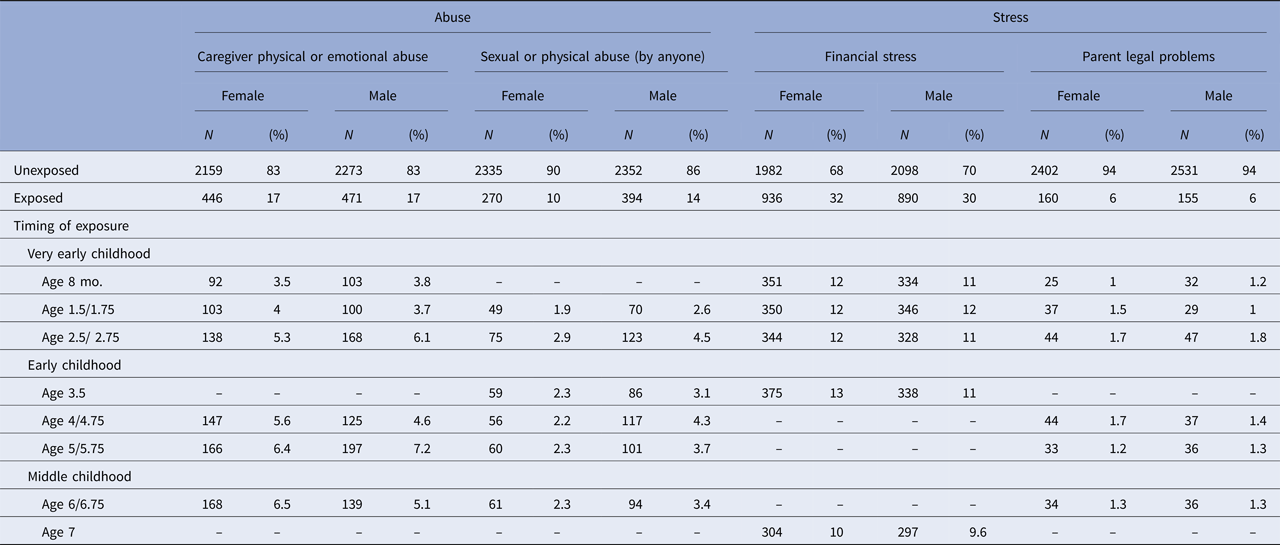
We examined four types of adversity measured using parent-mailed questionnaires. Each adversity was measured on at least five occasions before age 8 (see Table 2), with each measurement occasion analyzed separately due to different assessment time periods. The adversity types selected are commonly used to define ‘early life adversity’ (Felitti et al. Reference Felitti, Anda, Nordenberg, Williamson, Spitz and Edwards1998; Slopen et al. Reference Slopen, Kubzansky, McLaughlin and Koenen2012; Slopen et al. Reference Slopen, Koenen and Kubzansky2014). The abuse-related variables were chosen because they aligned with previous work demonstrating the strong association between physical, sexual, and emotional abuse and subsequent mental disorders (Maniglio, Reference Maniglio2009; Norman et al. Reference Norman, Byambaa, De, Butchart, Scott and Vos2012). Similarly, the stress-related variables were chosen based on previous work linking parental incarceration (Murray & Murray, Reference Murray and Murray2010, Turney, Reference Turney2014) and financial stress (Evans, Reference Evans2004) to risk for psychopathology.
Abuse
Caregiver physical or emotional abuse: Children were coded as having been exposed to physical or emotional abuse if the mother, partner, or both responded affirmatively to any of the following items: (1) your partner was physically cruel to your children; (2) you were physically cruel to your children; (3) your partner was emotionally cruel to your children; (4) you were emotionally cruel to your children.
Sexual or physical abuse: Exposure to sexual or physical abuse was determined through an item asking the mother to indicate whether or not the child had been exposed to either sexual or physical abuse from anyone.
Stress
Financial stress: Mothers indicated using a Likert-type scale (1 = not difficult; 2 = slightly difficult; 3 = fairly difficult; 4 = very difficult) the extent to which the family had difficulty affording the following: (a) items for the child; (b) rent or mortgage; (c) heating; (d) clothing; (e) food. Children were coded as exposed if their mothers reported at least slight difficulty for three or more items; this cut-point roughly corresponded to the top quartile.
Parent legal problems: Mothers indicated whether or not the child's parents had been in trouble with the law in the past year. Children were coded as exposed if either or both parents had legal problems.
For each type of adversity, we generated three sets of encoded variables, as summarized in Table 1. These encoded variables were all entered into a multiple regression model for a given type of adversity, allowing for multiple life course associations to be present simultaneously.
Description of the life course theoretical models tested in the current analysis, using exposure to abuse as an example

For each type of adversity, we generated three sets of encoded variables: (a) a single variable denoting the total number of time periods of exposure to a given adversity, to test the accumulation hypothesis (coded as 0–6); (b) a set of variables indicating presence v. absence of the adversity at a specific developmental stage, to test the sensitive period hypothesis; and (c) a single variable denoting the total number of time periods of exposure, with each exposure linearly weighted by age (in months) of the child during the measurement time period, to test the recency hypothesis; this variable assumed a linear increase in the effect of exposure over time and weighted more recent exposures more heavily than distally-occurring ones, allowing us to determine whether more recent exposures were more impactful (Smith et al. Reference Smith, Hardy, Heron, Joinson, Lawlor and Macdonald-Wallis2016). This weighted recency variable is distinguished from the last sensitive period model, which captures only the most recent exposure.
As no clear sensitive periods linking exposure to adversity and risk for psychopathology have been identified, we made full use of available ALSPAC data and coded each sensitive period model based on the time periods when adversity was measured in the ALSPAC dataset, enabling us to use a more fine-grained set of measures (i.e., specific ages of exposure) to detect possible sensitive periods, an approach found elsewhere to be informative (Dunn et al. Reference Dunn, McLaughlin, Slopen, Rosand and Smoller2013). However, to facilitate interpretation of our findings and compare our results to prior studies, which have used similar but slightly broader age categories to define sensitive periods (Kaplow & Widom, Reference Kaplow and Widom2007; Andersen et al. Reference Andersen, Tomada, Vincow, Valente, Polcari and Teicher2008; Slopen et al. Reference Slopen, Koenen and Kubzansky2014; Dunn et al. Reference Dunn, Nishimi, Powers and Bradley2016), we present our results (examining each specific age stage of exposure) according to three developmental periods – very early childhood, ages 0–3; early childhood, ages 4–5; middle-childhood, ages 6–7.
Child psychopathology
Child emotional and behavioral problems were assessed using the Strengths and Difficulties Questionnaire (SDQ) (Goodman, Reference Goodman1997; Goodman, Reference Goodman2001), which mothers completed by mail when the child was 8 years old. The SDQ is one of the most commonly used dimensional ratings of child psychopathology in epidemiology studies and has excellent psychometric properties (Muris et al. Reference Muris, Meesters and Van Den Berg2003; Ezpeleta et al. Reference Ezpeleta, Granero, De La Osa, Penelo and Domènech2013). The SDQ contains 25 items, rated on a three-point scale (0 = not true, 1 = somewhat true, or 2 = certainly true), capturing the child's behavior and feelings within the past 6 months. We calculated a total SDQ score by summing across items on the first four subscales (conduct problems; emotional symptoms; hyperactivity; peer problems; range 0–40), with higher scores indicating more emotional and behavioral difficulties (α = 0.82). This total score has been shown in studies from across the globe to correlate highly with questionnaire and interview measures of psychopathology, including the Child Behavior Checklist as well as clinician-rated diagnoses of child mental disorder (Goodman et al. Reference Goodman, Lamping and Ploubidis2010; Goodman & Goodman, Reference Goodman and Goodman2011).
Covariates
We controlled for the following covariates, measured at child birth: child race/ethnicity; pregnancy size; number of previous pregnancies; maternal age; maternal marital status; homeownership; highest level of maternal education; and parent social class (see Supplementary Materials for coding). We also controlled for levels of maternal psychopathology symptoms measured during pregnancy with the Edinburgh Postnatal Depression Scale (Cox et al. Reference Cox, Holden and Sagovsky1987) to reduce potential impacts of both confounding and common rater bias (Podsakoff et al. Reference Podsakoff, Mackenzie, Lee and Podsakoff2003), as mothers reported about their child's emotional and behavioral problems, mothers were the primary reporters of their child's exposure to adversity, and maternal mood or other factors may influence reports of adversity exposure (Holt et al. Reference Holt, Buckley and Whelan2008) and psychopathology (Chilcoat & Breslau, Reference Chilcoat and Breslau1997; Ringoot et al. Reference Ringoot, Tiemeier, Jaddoe, So, Hofman and Verhulst2015). The covariates were included because they were found in our study to be potential confounders or were routinely included in birth cohort studies of child health outcomes (Hibbeln et al. Reference Hibbeln, Davis, Steer, Emmett, Rogers and Williams2007; Suren et al. Reference Suren, Gunnes, Roth, Bresnahan, Hornig and Hirtz2014). Both sets of results with and without adjustment for maternal psychopathology symptoms are presented to facilitate future replication efforts.
Analyses
After conducting univariate and bivariate analyses to examine the distribution of covariates and exposure to adversity in the total analytic sample, we compared the theoretical models using a two-stage structured life course modeling approach (SLCMA) originally developed by Mishra (Mishra et al. Reference Mishra, Nitsch, Black, De Stavola, Kuh and Hardy2009) for analyzing repeated, binary exposure data across the life course. Relative to a more traditional regression model, the main advantage of the SLCMA is that it provides a structured and unbiased way to compare multiple competing theoretical models simultaneously and identify the most parsimonious explanation for the observed outcome variation.
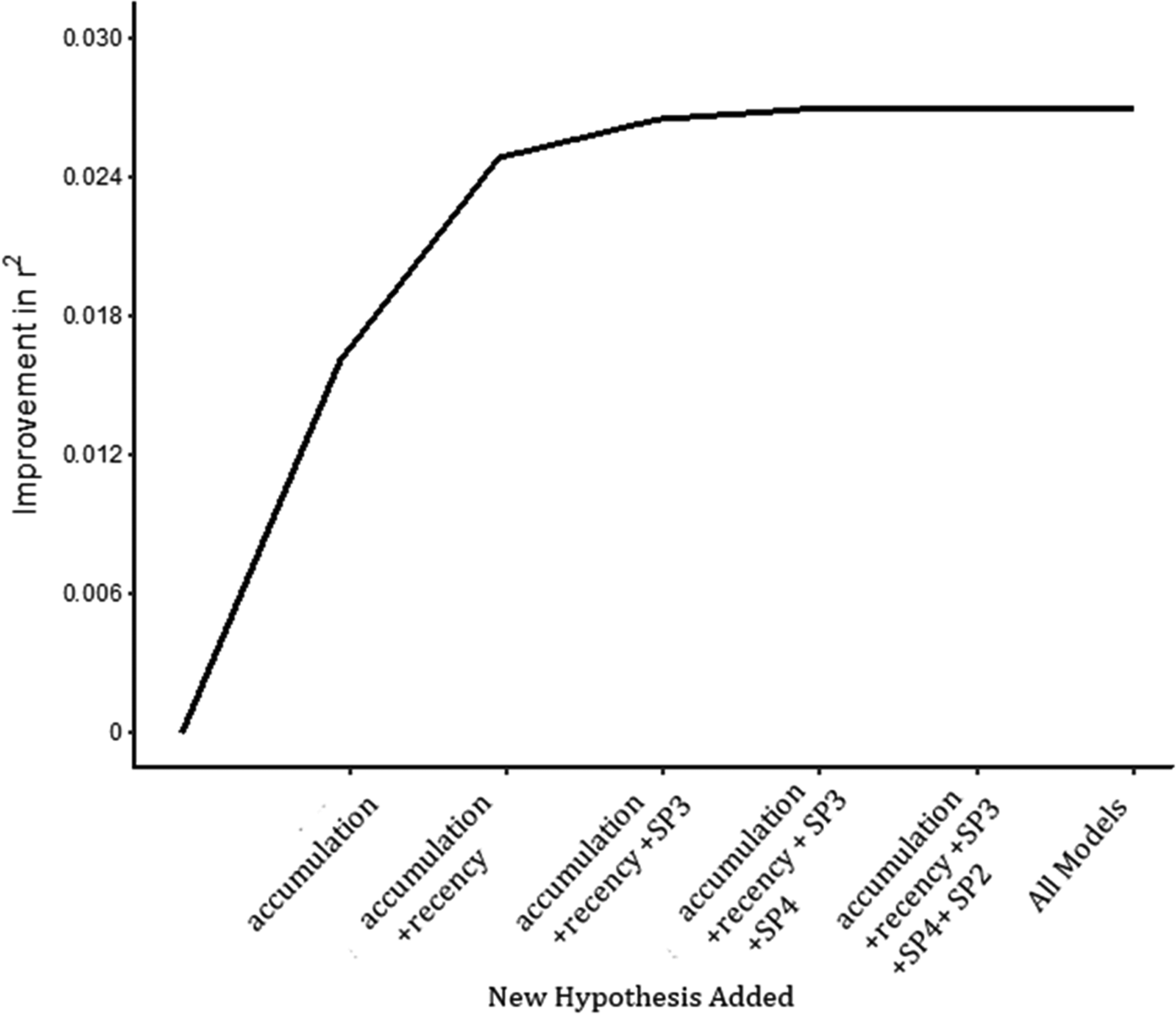
In the first stage, we followed the approach of Smith (Smith et al. Reference Smith, Heron, Mishra, Gilthorpe, Ben-Shlomo and Tilling2015) and entered the set of variables described previously into a Least Angle Regression (LARS) procedure (Efron et al. Reference Efron, Hastie, Johnstone and Tibshirani2004) in order to identify, separately for each type of adversity, the single theoretical model (or potentially more than one model working in combination) that explained the most variability in child emotional and behavioral problems. Thus, four separate LARS models were conducted, corresponding to each type of adversity, separately for boys and girls. We used a covariance test (Lockhart et al. Reference Lockhart, Taylor, Tibshirani and Tibshirani2014) and examined elbow plots (Fig. 1) to determine whether the selected models were supported by the ALSPAC data. Compared with other variable selection procedures, including stepwise regression, the SLCMA has been shown to not over-inflate effect size estimates (Efron et al. Reference Efron, Hastie, Johnstone and Tibshirani2004) or bias hypothesis tests (Lockhart et al. Reference Lockhart, Taylor, Tibshirani and Tibshirani2014). Compared with other methods for the structured approach, LARS has been shown to have greater statistical power and not bias subsequent stages of analysis (Smith et al. Reference Smith, Heron, Mishra, Gilthorpe, Ben-Shlomo and Tilling2015). Notably, the covariance test p values derived from the LARS also account for the other variables being (sequentially) tested in the procedure, making the type I error rate controlled for each type of adversity.
Elbow plot illustrating the LARS variable selection procedure testing life course models. LARS begins by first identifying the single variable with the strongest association with the outcome; it then identifies the combination of two variables with the strongest association, followed by three variables, and so on, until all variables are included. LARS therefore achieves parsimony by identifying the smallest combination of encoded variables that explain the most amount of outcome variation. In addition to a covariance test, which is calculated at each stage of the LARS procedure and tests the null hypothesis that adding the next encoded variable does not improve r 2, results can also be summarized in an ‘elbow plot,’ showing the increase in overall model r 2 as additional predictors were added to the model. The point where this plot levels off indicates the point of diminishing marginal improvement to the model goodness-of-fit from adding additional predictors, suggesting that the predictors included in the model at this point represent an optimal balance of parsimony and thoroughness. In this example, both accumulation and recency were selected in the best fitting models. SP, sensitive period.

All analyses were stratified by sex. To adjust for potential confounding, we regressed each encoded variable on the covariates and implemented LARS on the regression residuals (Smith et al. Reference Smith, Hardy, Heron, Joinson, Lawlor and Macdonald-Wallis2016).
In the second stage, the theoretical models determined by a covariance test p value threshold of 0.05 in the first stage (which appeared before the elbow; see Fig. 1) were carried forward to a multiple regression framework, where measures of effect were estimated for all selected hypotheses. The goal of this second stage was to determine the contribution of a selected theoretical model after adjustment for covariates as well as other selected theoretical models, in instances where more than one theoretical model was chosen in the first stage. To reduce potential bias and minimize loss of power due to attrition, we performed multiple imputation in both stages (see Supplementary Materials).
Results
Sample characteristics and distribution of exposure to adversity
The imputed analytic sample (n = 7476) was gender-balanced (49.2% girls) and comprised of predominately White (94.6%) children from families whose parents were married and owned their home (Supplementary Table 1).
Approximately half of the children in this analytic sample (49%; n = 3694) experienced at least one adversity. As shown in Table 2, the most commonly experienced adversity, for both boys and girls, was financial stress (32% girls; 30% boys). Parent legal problems were the least reported (6% in girls and boys).
Exposure to childhood adversity overall and by age at exposure

Percentages for each age represent proportions of those exposed out of the total population.
– indicates that the variable was not assessed at the corresponding time point.
Age at exposure to adversity somewhat varied by type. For instance, caregiver physical or emotional abuse was more common in middle childhood than infancy (Table 2). However, the remaining adversities were primarily reported with the same frequency across time.
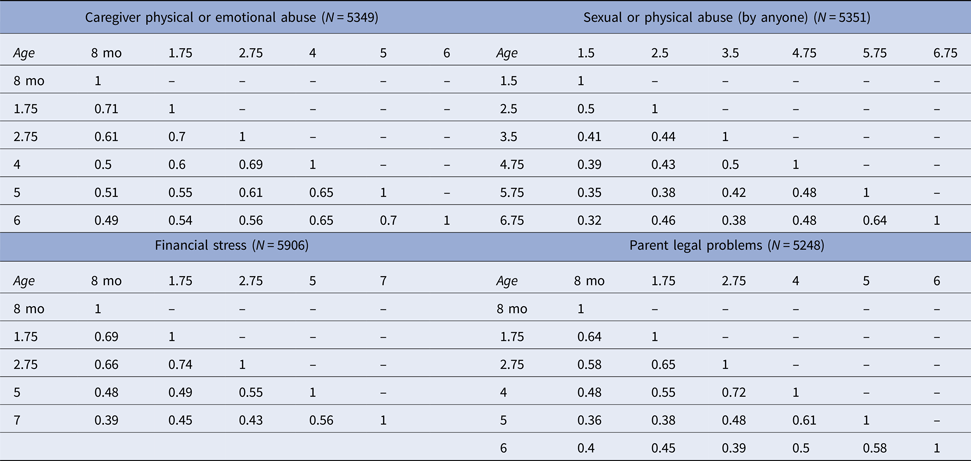
Within each adversity type, exposure was correlated over time (Table 3; average correlations: caregiver abuse r = 0.61; abuse by anyone r = 0.44; legal problems r = 0.52; financial stress r = 0.54). In general, neighboring time points were more highly correlated than distant time points.
Tetrachoric correlations between childhood adversities

However, across adversity types, the exposures were only modestly correlated (Supplementary Table 3 and Supplementary Fig. 1; average correlation across adversity types r = 0.24).
Both exposure to any adversity and child emotional and behavioral problems were patterned by socio-demographic factors, including sex, and socioeconomic status (Supplementary Table 1).
Model selection
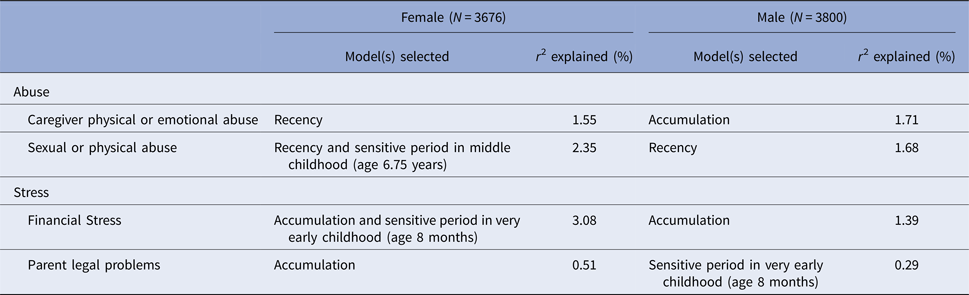
Table 4 shows the models selected by the LARS procedure for each adversity type, in boys and girls. Overall, recency was the theoretical model best supported by the data for the abuse-related adversities.
Results of LARS models on multiply imputed data, stratified by sex

The table indicates the set of theoretical models chosen by the LARS, after adjusting for covariates.
In girls, recency of caregiver physical or emotional abuse explained 1.55% of the variation in child emotional and behavior problems. The combination of recency and exposure to physical or sexual abuse during middle childhood (at 6.75 years of age), the last time point of assessment for this exposure, explained 2.35% of the variation in child emotional and behavior problems. Further, both accumulation and exposure to financial stress during infancy (at 8 months of age) were selected. Accumulation of parent legal problems explained 0.51% of the variation in emotional and behavioral problems.
In boys, accumulation was the best theoretical model chosen for caregiver physical or emotional abuse, explaining 1.71% of the variation in child emotional behavior problems. Recency of sexual or physical abuse explained 1.68% of the variation in boys. Moreover, accumulation was selected as the single best fitting model for financial stress (r 2 = 1.39%), whereas for parent legal problems, exposure during infancy (at 8 months of age) was most important (r 2 = 0.29%).
Model selection results were similar after adjusting for maternal depression (Supplementary Table 4), though two differences are noted. In girls, exposure to financial stress during the sensitive period 1 (at 8 months of age) was not significantly associated with emotional and behavior problems; accumulation was the theoretical model best supported by the data (r 2 = 0.76%). In boys, recency of caregiver physical or emotional abuse replaced accumulation as the best-supported model (r 2 = 0.89%).
Out of all combinations of theoretical models considered for all adversities, financial stress was the type of adversity that explained the largest amount of variation in psychopathology symptoms among girls (r 2 = 3.08%). Among boys, sexual or physical abuse was the most strongly associated type (r 2 = 1.68%).
Effect estimation
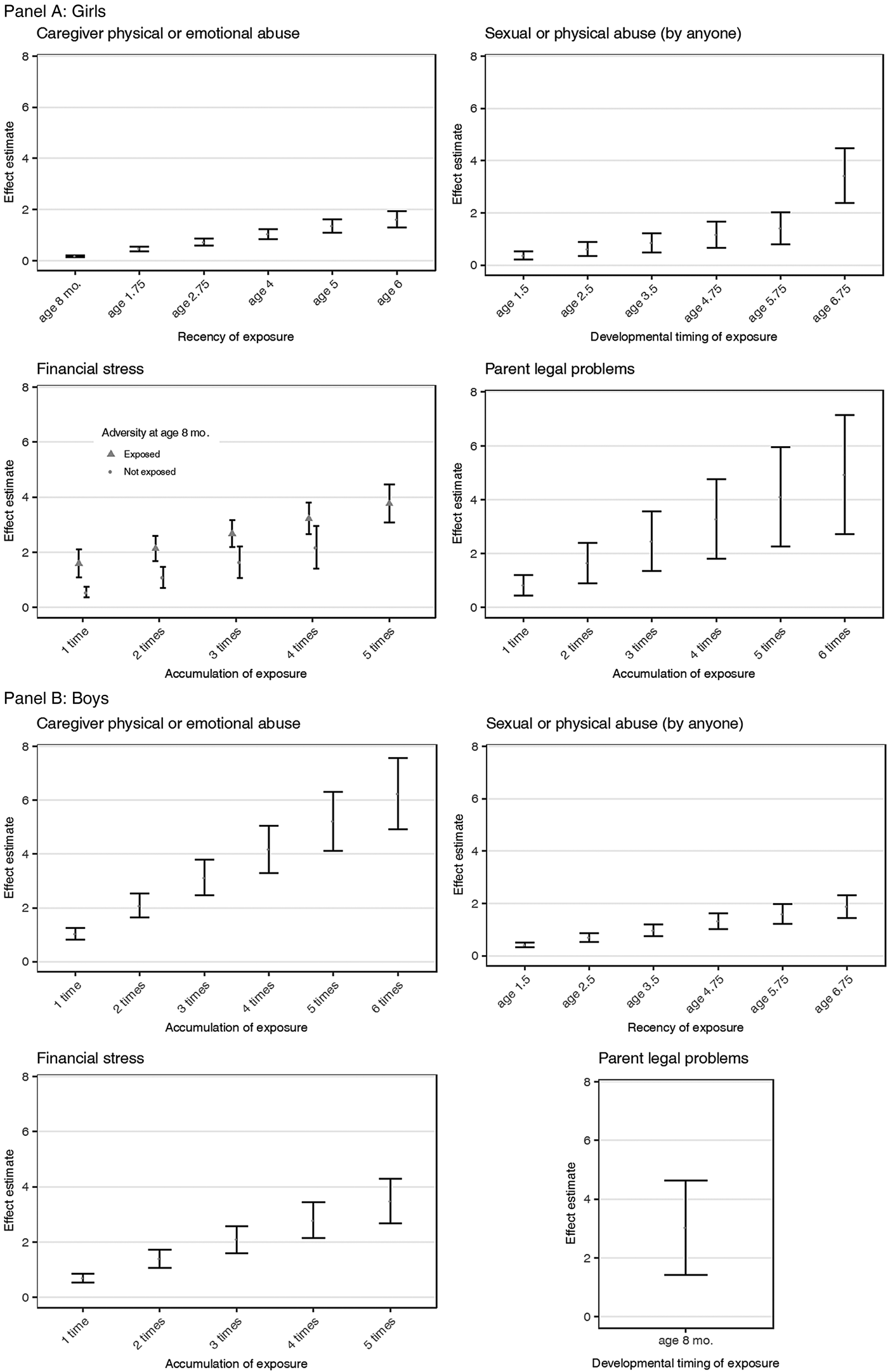
After identifying the theoretical models shown in the first stage to explain the most outcome variation, we then entered these theoretical models into a multiple linear regression. As shown in Fig. 2, Panel A, which presents these results for girls, we found that girls exposed to caregiver physical or emotional abuse during more recent developmental periods had the largest increase in emotional and behavior problems as compared to those exposed during earlier time periods (an increase of 0.27 for every additional year of exposure, 95% CI = 0.22, 0.32; standardized mean difference for exposure at age 6 (SMD6y = 0.34)). The association with exposure to sexual or physical abuse increased linearly with the proximity of exposure, such that girls exposed at more recent developmental periods had the most emotional and behavioral problems (β = 0.24; 95% CI = 0.14, 0.35; SMD6.75y = 0.35). Further, the association with exposure to sexual or physical abuse also increased with proximity of exposure, but in a non-linear fashion such that exposure at age 6.75 was a particularly sensitive period, conferring an additional increase in symptoms (β = 1.78; 95% CI = 0.21, 3.35; SMD6.75y = 0.38). For financial stress, where two theoretical models were chosen, each time period of exposure was linearly associated with an increase of 0.54 (95% CI = 0.35, 0.73; SMD5 = 0.58), though girls exposed to financial stress at age 8 months had an additional increase of 1.05 (95% CI = 0.41, 1.68; SMD8mo = 0.22) in the measure of emotional and behavior problems. More time periods of exposure to parent legal problems were also linearly associated with increasing emotional and behavior problems (an increase of 0.82 per event, 95% CI = 0.45, 1.19; SMD6 = 1.04).
Effect estimates for exposure to adversity, stratified by sex. The effect estimates and corresponding 95% confidence intervals demonstrate the increase in SDQ scores for exposure to adversity during a certain time point or number of exposures. For accumulation, an increase in the number of time points exposed corresponds to a greater increase in SDQ score. For recency, exposure to adversity during later time points corresponds to a greater increase in SDQ score.

As shown in Fig. 2, Panel B, boys exposed to sexual or physical abuse more recently had higher emotional and behavioral problems (an increase of 0.28 per additional year of exposure; 95% CI = 0.21, 0.34; SMD6.75y = 0.36). More time periods of exposure to either caregiver physical or emotional abuse or financial stress were linearly associated with increasing emotional and behavior problems (increases of 1.04 per event, 95% CI = 0.82, 1.26; SMD6 = 1.18, and 0.70 per event, 95% CI = 0.53, 0.86; SMD5 = 0.66 respectively). Exposure to parent legal problems at 8 months of age was associated with increased child psychopathology (β = 3.03; 95% CI = 1.43, 4.64; SMD8mo = 0.57).
Discussion
The primary finding of this study is that child psychopathology symptoms were largely explained by the accumulation and recency of exposure to adversity, rather than sensitive periods. Specifically, for either type of abuse, we found that more recently occurring exposures were generally more harmful, as the LARS procedure most frequently selected the recency model for these types of adversity. This finding is consistent with at least one prior study testing the recency hypothesis (Shanahan et al. Reference Shanahan, Copeland, Costello and Angold2011) and other work showing that the depressogenic effects of adversity are elevated in the same month or month after the event (Kendler et al. Reference Kendler, Karkowski and Prescott1999) or the same year of exposure (Dunn et al. Reference Dunn, Gilman, Willett, Slopen and Molnar2012). Accumulation was the second theoretical model selected most frequently. Dozens of studies have shown that chronic or cumulative exposure to adversity is harmful to mental health and other outcomes (Evans et al. Reference Evans, Li and Whipple2013).
However, only two clear sensitive periods were identified. The first was for financial stress in girls, where we found that both accumulation and exposure during very early childhood were most strongly associated with child emotional and behavior problems. That is, while each additional time-period of exposure was linearly associated with an increase in psychopathology symptoms, girls first exposed to financial stress at age 8 months had even worse emotional and behavioral problems with more accumulated exposure. The second sensitive period observed was for parent legal problems, where we found that exposure at age 8 months had the strongest association with psychopathology symptoms. Therefore, our results on this occasion provide limited additional insight compared with studies that only examined whether or not a child was exposed.
Why did so few sensitive periods emerge? Our inability to identify sensitive periods was surprising, given that numerous animal studies have found time-dependent effects of adversity on a range of outcomes, including not only anxious/depressive symptoms (Raineki et al. Reference Raineki, Cortes, Belnoue and Sullivan2012), but also social, emotional, and behavioral processes (e.g., fear conditioning, stress reactivity, aggressive behavior, Sanchez et al. Reference Sanchez, Ladd and Plotsky2001; Holmes et al. Reference Holmes, Le Guisquet, Vogel, Millstein, Leman and Belzung2005; Veenema, Reference Veenema2009), and brain structure and function (Liu et al. Reference Liu, Dietz, Deloyht, Pedre, Kelkar and Kaur2012; Makinodan et al. Reference Makinodan, Rosen, Ito and Corfas2012). However, in the human literature, there is mixed support for the existence of sensitive periods shaping risk for psychopathology. Research on the importance of the developmental timing of child maltreatment on depression risk provides a good illustration of such inconsistencies. Several prospective studies have found higher levels of internalizing symptoms in early childhood (Keiley et al. Reference Keiley, Howe, Dodge, Bates and Pettit2001) and depressive symptoms in early (Thornberry et al. Reference Thornberry, Henry, Ireland and Smith2010) and early to mid-adulthood (Kaplow & Widom, Reference Kaplow and Widom2007) among individuals exposed to child maltreatment before age 5 compared to those who were either never exposed or exposed during later stages. However, several prospective studies have found no effect of maltreatment timing (Manly et al. Reference Manly, Kim, Rogosch and Cicchetti2001; English et al. Reference English, Graham, Litrownik, Everson and Bangdiwala2005; Jaffee & Maikovich-Fong, Reference Jaffee and Maikovich-Fong2011) or that maltreatment exposure during adolescence is more harmful than exposure during earlier developmental stages (Thornberry et al. Reference Thornberry, Ireland and Smith2001; Harpur et al. Reference Harpur, Polek and Van Harmelen2015). Conflicting findings could reflect differences in the length of time between the onset of adversity and measurement of the outcome, showcasing more ‘recency’ rather than sensitive period effects. Our future research will perform similar analyses in relation to outcomes measured during adolescence and adulthood, which will help evaluate the longer-term effects of adversity on both the onset and course of psychopathology symptoms and help determine whether the lack of distinct sensitive periods within childhood is common to other outcomes. Heterogeneity in the literature could be explained by the fact that there are unlikely sensitive periods for psychopathology per se. Instead, adversity likely disrupts multiple intermediate processes linked to psychopathology, including attention and emotion recognition; each of these domains could have their own sensitive period.
As expected, sex differences were observed. For example, there were instances when more than one theoretical model was operating simultaneously to produce mental health outcomes in one sex, but a single theoretical model was operating for another. Importantly, these differences did not appear driven by sex differences in the prevalence of exposure, as boys and girls were exposed to each of these adversities at the same frequency. Future studies are needed to understand the factors giving rise to these sex differences and replicate findings regarding the importance of developmental timing, as few studies in this area have been conducted (Najman et al. Reference Najman, Clavarino, Mcgee, Bor, Williams and Hayatbakhsh2010a, Reference Najman, Hayatbakhsh, Clavarino, Bor, O'CALLAGHAN and Williamsb).
Although the variance explained by each of these best-fit models may at first appear small, it bears noting that these life course models are examining a single adversity type in a large population-based sample, as opposed to a cumulative adversity score in a clinical sample. Moreover, unlike models examining the variance explained by a given exposure, the examined life course models are examining effect sizes for the temporal patterns of certain exposures. Thus, the size of the reported R 2 values is on par with what we might expect given the temporal specificity of the models and the population-based nature of the sample.
This study has several strengths. We conducted these analyses in a large, longitudinal, and population-based sample of children, which minimized the likelihood of retrospective recall bias that is common among studies of childhood adversity and allowed us to evaluate the short-term consequences of adversity on psychopathology symptoms. We also applied a novel analytic approach that enabled us to simultaneously compare these theoretical models and evaluate the impact of each theoretical model to each adversity type. Comparisons of these models by type of adversity may contribute to insights about the mechanisms underlying psychopathology risk. Information about the types and features of adversity that are most strongly associated with childhood psychopathology may also help identify highest priority points for intervention.
We also considered exposures individually, rather than simultaneously, which was arguably both a strength and limitation. On the one hand, focusing on one type of childhood adversity without accounting for the impact of highly correlated exposures can artificially inflate effect estimates for the single adversity type (Dong et al. Reference Dong, Anda, Felitti, Williamson, Dube and Brown2005; Green et al. Reference Green, McLaughlin, Berglund, Gruber, Sampson and Zaslvasky2010). However, in our sample, the adversities examined were only modestly correlated with each other. Of note, the clustering of different types of adversity experiences with typically high co-occurrence, such as physical and emotional abuse and sexual and emotional abuse (which was done through the combined format in the questionnaire), may help account for our lower inter-correlations between adversity experiences in this sample.
On the other hand, attention to specific adversity types – and in particular the time-course of exposure to these adversity types – proved meaningful for understanding adversity-specific associations to risk for psychopathology. The finding that different life course models differentially explained the association between childhood adversity and psychopathology symptoms suggests that grouping adversity experiences could have obscured these distinctions. An important next step would be to consider ways to examine multiple adversities simultaneously so that meaningful information could be gleaned without simply summing across the number of adversities experienced (McLaughlin & Sheridan, Reference McLaughlin and Sheridan2016).
Several limitations are noted. The use of single items to capture adversity could affect the precision of these estimates. However, the prevalence of these adversities, including those capturing experiences of abuse, were comparable with estimates derived from nationally-representative samples (Gilbert et al. Reference Gilbert, Spatz Widom, Browne, Fergusson, Webb and Janson2009; McLaughlin et al. Reference McLaughlin, Green, Gruber, Sampson, Zaslavsky and Kessler2012). As with any longitudinal study, there was attrition over time, which we attempted to address using multiple imputation. We were also unable to examine the impact of experiencing multiple adversities simultaneously because these adversities were measured at different time points. Furthermore, most of the socio-demographic covariates were only measured at birth, which may be problematic as some of these variables could be time-varying, including indicators of socioeconomic status. Finally, although we controlled for several potential confounding factors, including maternal psychopathology, it is possible that residual confounding may remain, including through unmeasured genetic factors that shape both exposure and outcome (i.e., gene–environment correlation). As more genetic variants associated with neuropsychiatric phenotypes emerge from genome-wide association studies, future studies will be better positioned to ensure that study results are not explained by genetic factors.
In summary, our results suggest that no single theoretical model best captures the relationship between adversity and mental health problems, but rather than depending on sex and the type of exposure, adversities can operate through different pathways. These findings underscore the importance of measuring the characteristics of adversity, which can help further elucidate the most important environmental risk factors shaping child mental health.
Supplementary material
The supplementary material for this article can be found at https://doi.org/10.1017/S0033291718000181.
Acknowledgements
We are extremely grateful to all the families who took part in this study, the midwives for their help in recruiting them, and the whole ALSPAC team, which includes interviewers, computer and laboratory technicians, clerical workers, research scientists, volunteers, managers, receptionists, and nurses. The content is solely the responsibility of the authors and does not necessarily represent the official views of the National Institutes of Health. We thank Stephanie Gomez, and Emily Moya for their assistance in preparing this manuscript for publication.
Financial support
The UK Medical Research Council and the Wellcome Trust (Grant ref: 102215/2/13/2) and the University of Bristol provide core support for ALSPAC. This publication is the work of the authors, who will serve as guarantors for the contents of this paper. This research was specifically funded by the National Institute of Mental Health of the National Institutes of Health (E.C.D., Award Number K01MH102403 and R01MH113930) and a NARSAD Young Investigator Grant from the Brain & Behavior Research Foundation. The content is solely the responsibility of the authors and does not necessarily represent the official views of the National Institutes of Health.
Conflict of interest
None.
Ethical standards
All ethical guidelines were followed as per research involving the use of human subjects.