In the last 20 years, there have been significant improvements in both the survival of children with congenital heart disease, and in the subsequent levels of functioning that such children are expected to achieve.1 Correspondingly, there has been an increasing awareness of the need also to consider the health-related quality of life of these children.
Consistent with the United Nations Convention on the Rights of the Child,2 there is a growing recognition that the views of children should be sought with respect to decisions regarding their health. It follows, therefore, that measures of health-related quality of life should also reflect their views. It cannot be assumed that others can supply this information, as studies have shown considerable disagreement between the assessment of their health by the children, and that of respondents such as parents, physicians, and nurses.3, 4
The current measures of health-related quality of life in children with congenital cardiac disease have recently been reviewed, and criticised because of poor conceptual and methodological rigour.5 The review stated that the term “quality of life” has been poorly operationalised. For instance, a well-developed measure should have a scoring system that accounts for differences in the relative importance to the respondent of the various dimensions of quality of life it seeks to measure.
The aim of our study, therefore, was to develop a measure of health-related quality of life for use among children with congenital cardiac disease. The intention was that the new instrument would fulfil a number of requirements:
- It would represent those aspects of health-related quality of life considered important by children with congenitally malformed hearts. The items in the new measure are based on a series of qualitative interviews with children and young people with such congenitally malformed hearts. The results of this part of the study have been reported elsewhere.6
- It would measure the impact of events or problems rather than just list their frequency.
- It would summarise data in a format that was suitable for use in clinical trials by having a single index score as one output.
- It would have both clinical and research applications so that it could be used by clinicians to determine the needs of individual patients for care, and to check that these needs had been met. To ensure that the new measure would be acceptable to all of the members of the multi-disciplinary teams that work in the field of paediatric cardiology and surgery, development work was guided by a steering group that included representatives of the children, specialist nurses, cardiologists, paediatric cardiac surgeons, a paediatric cardiac morphologist, physiotherapists, and psychologists.
We report here the development and assessment of the ConQol.
Methods
Ethics
The protocol for the study received approval from both the Multi-centric Research Ethics Committee and local research governance committees. All participants and their parents gave informed consent. The development and validation was conducted in 4 main phases.
Constructing the questionnaire.
Two of the authors generated potential items to represent the themes that emerged from interviews, specifically physical symptoms, mood and cognition, restricted activities, relationships with others, control over health and the body, and coping with illness. Wherever possible, the words or phrases used by the children were used in the questions. The list of potential items was presented to, and discussed by, the steering group. The items to be included in the measure were agreed upon.
Piloting the questionnaire.
The initial version of the measure was piloted with a sample of children with congenital cardiac malformations drawn from the Yorkshire Heart Centre, who were asked to complete the pilot version. This was to ascertain if there were problems, for example, to ascertain if some items were redundant or ambiguous. To encourage a good return, all children who returned the scale received a £5 gift voucher.
Deriving the weights for scoring.
A sample of children, parents, and health professionals were asked to complete a postal “weighting” questionnaire which required them to give each of the 22 quality of life items included in the measure a score from zero to 10, where 10 equalled very important for quality of life, and zero equalled no importance for quality of life. Respondents were asked to score the worst theoretically possible manifestation of a state.
The weighting questionnaire consisted of 3 pages, each presenting a vertical visual analogue scale with 10 points on the right hand side of the page, with between 7 and 9 items listed on the left hand side. Respondents were required to write a score for each item in a box, rather than mark the visual analogue scale. Two versions of the questionnaire were produced, which alternated the order in which items were presented in the top and bottom halves of each page. Respondents were instructed to imagine a child aged between 8 and 16 years with a cardiac problem, and to think about how important each item would be for the quality of life of the individual child if he or she had it for one week, and experienced that item either “all the time”, or were not able to do it “as much as they wanted to”, whichever was the worst response for that item. Children with a cardiac problem were also told that, if they wanted to, they could think about themselves.
In addition, the sample of clinicians was also asked to score the 13 symptom items in a similar fashion on a visual analogue scale extending from zero to 10. In this case, they were told to assume that each symptom had been making the life of the child really difficult for a week.
Psychometric Performance.
The validity and reliability of the measure was assessed in a sample of children with congenital cardiac malformations aged between 8 and 16 years recruited from across the United Kingdom.
Validity
The ConQol was validated in two ways, first by observing its relationship with an established previously validated measure, the Paediatric Quality of Life Inventory, and second, through its ability to discriminate between children grouped in terms of the severity of their disease.
The Paediatric Quality of Life Inventory7 is an instrument for measuring health-related quality of life in children and adolescents divided into three age-specific versions. It has four core dimensions, namely physical function, emotional function, social function, and school function, plus a series of disease-specific, bolt-on modules, including a cardiac module consisting of six dimensions. These are cardiac problems and their treatment, treatment II, physical appearance, anxiety about treatment, cognitive problems, and communication.8 The dimensions of the inventory are scored on a scale from zero to 100, where 100 indicates least problems, and zero indicates most problems.
Two independent measures of severity of disease or illness were included in the survey. First, children were classified according to the severity of their diagnosis using the guidelines set at the 32nd Bethesda Conference of the American College of Cardiology.9 Clear classifications are given for categorising conditions into three groups, namely simple, such as isolated congenital aortic valvar disease, moderate complexity, such as moderate-to-severe pulmonary valvar disease, and great complexity, such as double outlet ventricle. Children were classified into the appropriate category by a researcher with a nursing background in paediatric cardiology.
Second, respondents were asked to report the extent to which they felt their cardiac condition affected their daily life on a three point scale, specifically that it does not affect my daily life, it affects my daily life a bit, or it affects my daily life a lot.
Reliability
The reliability of the measure was assessed by examining its internal consistency, and its reliability at re-testing. The latter was assessed for a random sub-sample of 100 children who had already returned questionnaires. They were asked to complete the measure for a second time six weeks after the first. Of the group, 79 children replied.
A sample of children aged from 8 to 16 were then randomly selected from six centres for Paediatric Cardiology across the United Kingdom, namely Southampton General Hospital, Freeman Hospital, Newcastle, Royal Liverpool Children's National Health Service Trust, Great Ormond Street Hospital for Children National Health Service Trust, London, Royal Hospital for Sick Children, Glasgow, and the Yorkshire Heart Centre, Leeds General Infirmary. They were selected from the databases of each centre using a pre-generated random number table. Criterions for exclusion were having a level of cognitive functioning that would impair the ability to complete the questionnaire, or an inability to understand English. Hospital staff checked the resulting lists to ensure that families were not contacted inappropriately. Packs were sent from the centres to the parents of children and young people. Each pack contained a letter of introduction from the consultant, an information sheet for the child, a parental information sheet, a questionnaire containing the ConQol and the Paediatric Quality of Life Inventory, and a prepaid reply envelope. A reminder was sent to non-responders after 4 weeks. All children who returned their questionnaire received a £5 gift voucher.
Results
Constructing the questionnaire
Item generation.
A list of 50 potential items was produced and examined by the steering committee. A number of items were discarded as repetitive, unsuitable, or ambiguous, and the items in the dimensions of physical symptoms, and mood and cognition, were grouped together to form a single dimension relating to symptoms. Similarly, items in the dimensions concerning control over health and body, and coping with illness, were grouped together.
Interviews had revealed that the concerns of older and younger children were different. Most notably, older children were far more likely to talk about problems with coping and control. For this reason, we developed two versions of the questionnaire, one for those aged from 8 to 11 years, and one for the group aged from 12 to 18 years. This split also reflected the transition between primary school and secondary school, as children appeared to have different experiences in these two settings. The version for the younger patients contained 31 items grouped into dimensions of symptoms, ability to do activities, and relationships with others. The version for the older patients had an extra dimension relating to control and coping, and contained 39 items.
Scaling responses.
As the new measure aimed to assess the extent to which children felt their cardiac disease affected their life, a continuous response format was deemed most appropriate. Hence, a visual analogue scale was chosen as the best method. In the version for the younger patients, the anchor points on the visual analogue scale were illustrated using sad and happy faces to indicate the direction of the scale. For items forming the dimension of symptoms, the frequency with which they were experienced was also measured on a 4-point categorical scale, with responses for every day, most days, a few days, or not at all as well as the extent to which they made life difficult on the visual analogue scale.
Following discussion with the expert steering committee, a recall period of one week was specified for the measure. It was felt that younger children in particular would struggle to recall their behaviour or feelings over a longer period, and that a shorter period would allow the questionnaire to be repeated over a short time interval, for example before and after surgery or commencement of a new medical treatment.
Piloting the questionnaire
The measures were piloted in a randomly selected group of children and young people under the care of the Yorkshire Heart Centre. Families were approached by post with a covering letter from the consultants. A total of 320 children and young people were sent a copy of the measure, of which 171, or 53%, returned completed questionnaires.
The performance of the measure was scrutinised in terms of its coverage, frequency of endorsement, and structure of dimensions. This process is described in more detail in the User manual.10 Analysis revealed that the questionnaire appeared to be acceptable to both younger and older children, with low levels of missing data. Of the items relating to symptoms, one or two had relatively low frequencies of endorsement, but were retained for completeness of coverage. The intention was to have as many common items as possible across the versions for the patients of different ages. A few items, nonetheless, discriminated either younger or older children, and so were only retained for the appropriate version. After discussion with the steering group, the decision was made to reduce the upper age limit to 16 years, as many of the questions asked about school-related issues were not appropriate for those who had left school, as many young people have by 16 years of age.
The final ConQol measures consisted of a 35-item scale for those aged from 12 to 16 years, and covered 4 dimensions. These related to symptoms, comprising 13 items, activities, comprising 7 items, relationships, comprising 10 items, and control and coping, comprising 5 items. The version for those aged from 8 to 11 years covered 3 dimensions, namely symptoms, comprising 13 items, activities, comprising 6 items, and relationships, comprising 10 items.
Deriving the weights for scoring
A random sub-sample of 120 of the children who took part in the piloting, along with one of their parents or carers, was invited to complete the weighting exercise. Of this group, 82 children, and 78 parents, responded giving response rates of 68% and 65%, respectively. A control group of 45 children from two local schools, matched for age range, and with no cardiac disease, was also asked to complete the questionnaire. From this group, 38 (84%) questionnaires were returned. In addition, weighting questionnaires were also distributed to 70 health professionals recruited via the six collaborating centres. Of these, 33 (47%) were returned.
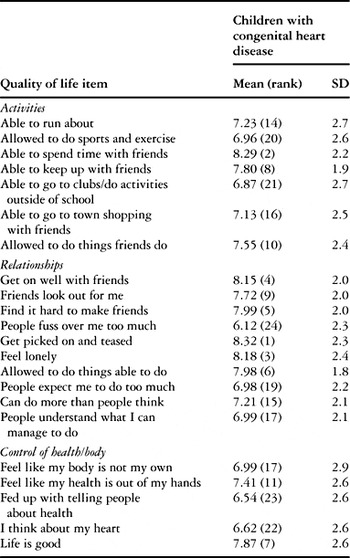
As the ConQol was developed with a child-centred philosophy, it was decided that the weights used to score it should be those elicited from children with congenital cardiac disease. The weights generated by the other groups may be used if researchers have specific interest, and are reproduced in the ConQol user manual.10 Table 1 presents the mean weights for each of the 22 quality of life items contained in the ConQol. Of the children providing data, 65% indicated that they thought about themselves when they were completing the exercise.
Table 1. Quality of life item scoring weights.

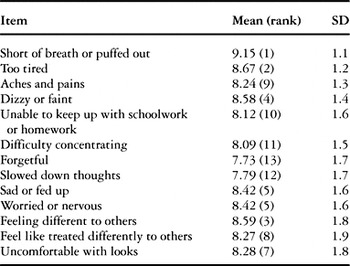
Table 2 presents the mean weights for the 13 items for symptoms as scored by the sample of health professionals.
Table 2. Symptom item scoring weights from health professionals.

Children ranked breathlessness and tiredness as the most significant symptoms, with items related to cognitive function being the least significant to them.
Scoring.
The ConQol is scored by multiplying the score for each item by the mean weight for that item, and summing the resulting scores. Scores are calculated as a proportion of the maximum score possible, and multiplied by 100 to provide a position on a scale from zero to 100, where zero equals worst quality of life, and 100 equals best quality of life. This standardisation allows for scores from the two different versions of the ConQol to be compared. Separate scores are generated for the items relating to quality of life items, the index score, and those relating to symptoms, the ConQol symptom score.
Psychometric performance
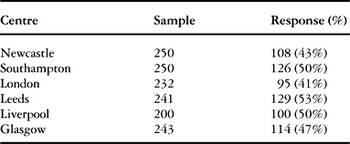
The ConQol was sent to 1416 children with congenital cardiac disease, of which 640 (44%) returned a completed questionnaire. The number of children contacted in each centre, and the rates of response, are shown in Table 3. Of those responding, 171 were classified as having a disease of great complexity, 223 were classified as having a disease of moderate complexity and 227 were classified as having simple conditions. In those aged from 8 to 11 years, the mean age was 10 years, with standard deviation of 1.18, and comprised 52% male and 48% female respondents. In the group containing those aged from 12 to 16, the mean age was 14 years, with standard deviation of 1.32, and the group was comprised of 51% males and 48% females.
Table 3. Response rates by study centre.

The mean index score for the younger patients was 75.04, with standard deviation of 17.65, and for the older patients was 76.02, with standard deviation of 14.91. Figures 1 and 2 present the distribution of the index score for both groups.

Figure 1. Frequency distribution of ConQol index scores in 8–11 year olds.

Figure 2. Frequency distribution of ConQol index scores in 12–16 year olds.
Relationship with Paediatric Quality of Life Inventory
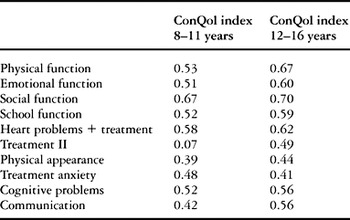
Table 4 shows the relationship between the dimensions as represented in the Paediatric Quality of Life Inventory and the ConQol index score.
Table 4. Correlations (Pearson's r) between ConQol index score and Paediatric Quality of Life Inventory dimensions scores.

Overall correlations tended to be higher for older compared to younger children. The relationship for the dimension of treatment II in the Inventory was particularly low for younger children.
For both groups, the ConQol index score correlated best with the core dimensions of the Inventory, along with the dimension of heart problems and treatment from the cardiac module. For younger children, the best correlation was achieved with the dimension relating to social function (r equal to 0.67), followed by that for heart problems (r equal to 0.58). For older children, social function again showed the best relationship with ConQol index score (r equal to 0.70), followed by physical function (r equal to 0.67).
Relationship with severity of disease
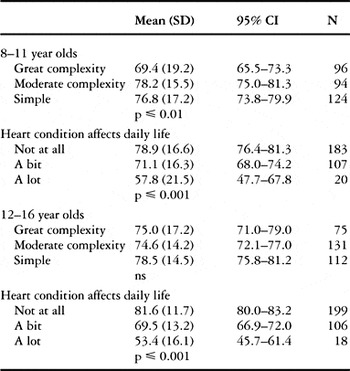
Table 5 presents the mean ConQol index scores by severity according to the classification of the American College of Cardiology for both groups.
Table 5. Mean ConQol index score by disease severity, according to the American College of Cardiology classification.

Analysis of variance showed that, among the younger patients, those children with cardiac problems classified as being of great complexity had significantly lower ConQol index scores than children with less severe problems. Children who were classified to the simple category had a lower mean ConQol index score than children who were classified as having a condition of moderate complexity. This difference, however, was not statistically significant. In terms of self-report of how much their cardiac condition affected their daily life, there was a significant decrease in ConQol index scores as children in this younger age group increasingly reported an influence of their illness on their day-to-day life.
Among children aged from 12 to 16 years, there were no significant differences in ConQol index score by severity of disease. The ConQol index score, nonetheless, was able to discriminate between children in this age group according to how much they reported their cardiac condition affected their daily life.
Reliability
For both age groups, Cronbach's a for the ConQol index score was 0.86, which reflects a good level of internal consistency. Intra-class correlation coefficients were calculated to assess reliability for re-testing. For both age groups, the intra-class correlation coefficients for the ConQol index score were 0.7 or above. Paired t-tests also indicated that the mean scores for both age groups at were not significantly different at testing and re-testing.
Discussion
The final ConQol measure comprises two versions, a scale with 29 items for children aged from 8 to 12 years, and one with 35 items for children aged from 12 to 16 years. It provides clinicians and researchers with 3 outputs that summarise how a child has been feeling in the past week:
- a single index of quality of life that measures the extent to which respondents feel limited in terms of their activities and relationships with others.
- a single index for symptoms that measures the extent to which respondents feel the symptoms of their disease have made their life difficult.
- a descriptive profile recording the number and frequency of symptoms experienced by the child in the past week.
The indexes are standardised for scores on a scale extending from zero to 100, permitting scores for the different versions for age to be compared. For the purposes of research or audit, the quality of life score provides a single measure that can be used to record change in quality of life, but also identifies the experience of the individual child in those areas of life rated as most important to their quality of life. We hope that the measure will be routinely used by healthcare staff providing rehabilitation and support to children as part of their normal clinical practice to identify areas of life where a particular child is struggling or has an unusual level of difficulty. It can be used to initiate a discussion of these areas when a verbal question will often generate the response of “it's OK” from a child. The measure can be repeated to provide evidence that the help provided has resolved the problem.
In a similar way, it provides a valid and reliable profile of the load of symptoms, descriptively in terms of which symptoms and how often, and in terms of the perspective of the child. We believe that it may be a useful addition to structuring consultations, and guiding and balancing therapeutic interventions, allowing them to be based on alleviating those symptoms considered most difficult by the child, or those found most disruptive, rather than using the assumptions of parents and clinicians, which we know are sometimes misleading. The index score for symptoms may also be used to assess any changes in the impact of symptoms experienced from any change in therapy or a surgical intervention.
In these ways, we hope that it can provide a useful tool for informing clinical decision-making. For example, the timing of corrective and palliative surgical procedures is currently based on maximising cardiac functioning. In the absence of a valid measure of health-related quality of life, it is impossible to establish the extent of the trade-off, if any, between medical and health-related outcomes.
It must be remembered, however, that although the children did report the symptom included in the ConQol, they were not on the whole viewed by them as being problematic. The clinicians on the steering committee felt strongly that, despite this, the report of symptoms provides useful information about the pattern and nature of symptoms, which may not always be discussed if they are not raised by children or their parents. They accepted that, for the reasons given above, this must be scored and reported separately from the items relating to quality of life, and that it should not be used as a proxy for quality of life.
In addition to the clinical, research and audit purposes, the ConQol could provide epidemiological data systematically to examine the relationships between physical, psychological, and social variables to determine the most common risk factors for poor health-related quality of life.
Data from a large sample of children with congenital cardiac disease drawn from across the United Kingdom have provided evidence that the ConQol exhibits good reliability and validity. Correlations with the Paediatric Quality of Life Inventory were sufficient to demonstrate validity, but not so high as to make the ConQol redundant. The ConQol index score did not cover many of the cardiac-specific items included in that measure, such as experience of treatment, or problems with medication, because children did not indicate that these areas were significant in terms of their quality of life.
That the correlations with the Paediatric Quality of Life Inventory were only moderate was what we had expected, because the ConQol was developed using a child-centred philosophy in line with current best practice. The items of the ConQol that contribute to its score concerning quality of life were derived from those topics that children with congenital cardiac disease considered important in determining their quality of life, and did not rely on the views of “experts”, psychologists, clinicians, or parents. The same child-centred approach also underlies the scoring system used to generate the ConQol score for quality of life. The weights used to generate this score were based on the estimations of children with cardiac disease of how significant each item would be in influencing quality of life. For those who wish also to know the effect of scoring it from the perspective of parents or clinicians, the relevant weightings are provided in the accompanying manual.
There was a trend towards young people with more complex conditions reporting poorer quality of life, and those young people who reported their condition as having a great deal of impact on their daily life did differ statistically in this respect from those who did not feel their condition impacted on their daily life. The fact that complexity was not a stronger differentiator of quality of life was not surprising to us, as it is a common finding in research related to quality of life that the “seriousness” of the underlying lesion is often only weakly related to perceived quality of life. An additional difficulty in this area is that we were unable to find a universally agreed system for determining the severity of disease. Future research might usefully investigate the discriminant validity of the ConQol using other methods. In addition, future work is required to establish its responsiveness or sensitivity to change. The measure appeared to be acceptable to respondents, possibly because, at the piloting stage, a number of modifications were made using feedback from children. Although it is relatively long, at 29 or 35 items there were very few missing item responses. The measure is designed to be self completed, and was administered as a postal questionnaire with very few problems. A useful strategy can be to ask the child to complete the questionnaire whilst in the waiting room, or prior to attending. With a little experience, it can be quickly scanned before the consultation or interview to see where there may be problems. Future research might be conducted to determine if a “short form” could be constructed without loosing psychometric quality.
Future Work
While the ConQol addresses the issues of quality of life of importance to children between 8 and 16 years of age, it was not designed to collect data from younger children or older young people. The research team were committed to a child-centred approach, and the design of the study allowed us to address the issues important to the age group identified. Further studies will be required in order to identify the important areas for younger children, which may be quite different. Indeed, questionnaires may not be the most appropriate method for elucidating their feelings. A new measure for young adults with congenital heart disease has been developed and validated along similar lines to the ConQol, and could be used for that age group.11
Limitations
Although the method of selecting children and young people to participate in this study was designed to reduce bias in selection as far as possible, the overall rate of response was 44%. While this is a common problem with postal studies, and our response rate does not differ significantly from other large postal studies, such as those conducted in the United Kingdom by the Department of Health, there may be an associated risk of non-response bias. The limited information available on the children who did not respond did not indicate any differences in terms of the spread of severity of disease, or age. The samples were drawn from hospital databases of variable quality and accuracy, so it may be the case that some of those who did not respond may have had little or no clinical contact for a number of years, or been discharged, or moved, or have had few if any problems to report, and thus did not feel that their responses would be appropriate. Anecdotally, we know that some felt that their problem was cured, and that they no longer had congenital cardiac disease, because when parents contacted the research centre by telephone, they often asked if this assumption was justified.
Conclusions
Our study reports the initial development of a new measure for outcomes in children and young people with congenital cardiac disease, aged between 8 and 16 years. Developed using a child-centred perspective, it is valid and reliable, and shows discrimination according to the severity of disease. It can be used in a clinical setting, and its acceptability to both children and their parents was established during its development.
Acknowledgements
This measure was developed with funds provided by a British Heart Foundation Project Grant (PG/2001/ 155). The authors would especially like to thank the members of the steering committee who contributed so much time and enthusiasm to the project. They are Prof. Robert H. Anderson, Mrs Wilma Dickson, Mrs H. Greig-Midlane, Mr Leslie Hamilton, Dr Barry Keeton, Mrs Lynne Kendall, Dr Sara Matley, and Mrs Jo Quirk. We would also like to thank the staff in all the centres for paediatric cardiology who helped with the national survey. Particular thanks go to Kath Ashcroft, Chris Daniels, Judith Gallagher, Amanda Haworth, Alan Houston, Paul Jennings, Ed Ladusans, Lorraine Leaske, John O'Sullivan, and Valerie Sutherland. We are also extremely grateful to all of the children and young people and their parents who helped us in this project.
The ConQol questionnaires, a users manual and an excel spreadsheet to automate the scoring can be downloaded from http://www.cardiacrehabilitation.org.uk/conqol.htm, or by writing to The British Heart Foundation Care and Education Research Group, Department of Health Sciences, Seebohm Rowntree Building, University of York, YO10 4DD, UK. The copyright belongs to the British Heart Foundation, who have made it available free of charge for non-commercial users.