This paper examines the nature and reception of the British Association for the Advancement of Science's annual meetings in their different urban settings in the century or so following that body's foundation. Our concern is to understand the ways in which towns promoted themselves as venues for provincial civic science, to explore the use made of particular urban spaces and localities as scientific venues and to document the reception afforded the association, its science and its scientific visitors.
The British Association for the Advancement of Science (BAAS) was begun in York, ‘the most centrical city of the three Kingdoms’, in 1831.Footnote 1 At foundation, it was decided that the association's annual meetings would be held in different towns throughout Britain and Ireland. The importance of different geographical locations for the annual meetings in helping to realize the association's objectives for the public promotion of science was a point stressed by the founding figures – ‘It was then and there resolved that we were ever to be Provincials’, as John Dalton put it in 1831 – and it has been the subject of attention since by historians of the BAAS. For Morrell and Thackray, having the annual meetings in different towns on a peripatetic basis meant that ‘the manifest aim of advancing science could be fruitfully wedded to the latent function of social integration’.Footnote 2 In charting the geography of early BAAS meetings between 1831 and 1844, they distinguished between what they termed ‘the circuit of academic and metropolitan centres 1832–1835’ (Oxford, 1832; Cambridge, 1833; Edinburgh, 1834; Dublin, 1835), and the ‘circuit of provincial towns 1836–1844’ (Bristol, 1836; Liverpool, 1837; Newcastle, 1838; Birmingham, 1839; Glasgow, 1840; Plymouth, 1841; Manchester, 1842; Cork, 1843; and York, again, 1844). For them, the choice of locations was not fortuitous:
The adoption of a provincial stance by the British Association did foster a vision of social integration, for it assuaged the pride of those peripheral groups represented in the rank and file and thus aided the gradual and complete take-over by the Gentlemen of Science of the actual decision-making apparatus of the organization.
As early as 1835 the association was dominated by men from the academic centres of Cambridge, Dublin, Edinburgh and Oxford, and from London. Only after the mid-1830s was the increase in provincial membership reflected in the visit of the BAAS to commercial and manufacturing towns.Footnote 3
These claims about the geographical mobility of the BAAS as a key feature in the association's construction of itself, and of science for the public, as ‘a cultural resource’, and the contention that ‘the British Association prospered as a philosophical travelling circus’,Footnote 4 have been elaborated upon by Morrell and Thackray and others with reference to particular towns and BAAS meetings, principally before 1845. The Cambridge meeting of 1833 was significant, for example, in establishing both the identity of the BAAS and the influence of Cambridge academics within it. The 1838 Newcastle meeting originated in proposals from local scientific bodies, as was the case for Glasgow in 1840. Lowe's examination of the association's relationship with the British provincial public has highlighted several key features. Local scientific and other bodies were important in prompting an invitation to the BAAS. The creation in 1884 of a Conference of Corresponding Societies particularly reflected the role that local scientific societies had in the association's national endeavours. There was inter-urban competition to attract the association. Success could ensure a town's social and scientific status when, for a week or so, scientists of national and international renown mixed with provincial figures, as conversazioni and soirées provided a social counterpart to academic sessions and as men, and many women, attended the scientific presentations, exhibitions and displays.Footnote 5 Similar features characterized the BAAS overseas meetings (in Montreal, 1884; Toronto, 1897, 1924; Winnipeg, 1909; South Africa, 1905, 1929; and Australia, 1914) even as the association additionally sought in these meetings to connect the imperatives of science and civic utility with those of politics and empire.Footnote 6
We argue that there is yet more to know about the workings of the BAAS and of its meetings in its different ‘urban settings’ (a term we explore below). Most of what is known of the ‘mechanics of meetings’ relates to the association before about 1845. Work on the BAAS has principally discussed its role and functions in social and political terms, seeing its development as a ‘cultural resource’ as the result of leading practitioners and the emergence of a public agenda for science.Footnote 7 Relatively little attention has been paid to the nature of the geographical setting and to how local sites were used to foster the agenda for provincial science, and almost none to the reception of provincial science in the association's later meetings. Such matters may vary over time, given this body's variable fortunes. MacLeod documents an initially successful period for the BAAS (from foundation to the 1870s), a period in which it promoted science at home and abroad with mixed fortunes (from the mid-1880s to c.1905), and a period of indecision, even decline (1905–19), followed by one of retrospection and uncertainty (1919–40).Footnote 8
Questions thus remain about how, exactly, the association's scientific and provincial geographical agenda was locally made after 1845, about the conjunction of social, intellectual and epistemic space afforded practitioners, local and otherwise, and about the ways in which different towns offered sites (and sights) of scientific interest.Footnote 9 How did particular scientific societies or leading citizens influence the nature and focus of the science presented at BAAS meetings? How were given towns, their civic spaces and their surrounding localities used as venues for science? How was the BAAS received locally? Since there is evidence for some meetings that townsfolk had to accommodate visiting scientists at their own expense, we might expect there to be differences between the concerns of civic dignitaries to entice the BAAS, and locals' reaction to the actual arrival of visiting scientists and public audiences. There was certainly recognition at the association's foundation in York that there would be different audiences – ‘two interested classes’, as it was put: ‘visitors coming to meet their fellows in science and the intelligent persons of our own neighbourhoods who hope to be gratified and instructed’.Footnote 10 Did different local publics engage in the same ways with science? This question is pertinent since most work on the association's meetings and the production and reception of science in provincial context has tended to treat the BAAS as a whole. Relatively little attention has been paid to the urban spaces utilized in its meetings or to the association's different constituent sections and, thus, to the possibility that different practitioners constituted, and different audiences engaged with, BAAS meetings differently. There is evidence to suggest, for example, that the content of certain sciences and associational sections such as anthropology, statistics, geology (to some extent) and (notably) geography (Section E) was easier to follow than that of others, with the consequence that attendance there was often greater and that the experience of science thus varied locally in its production and reception.Footnote 11
These concerns with the urban settings for the activities of the British Association and with the production and reception of science in local context have wider resonance. In recent years considerable attention has been paid to the situated nature of science's making and reception and to the mobility of scientific knowledge.Footnote 12 Certain features have been central to this work. Consideration has been given to the different sites in which science has been produced: for example, botanical gardens, the laboratory, ‘the field’, museums, public houses, scientific institutions, country houses, ships.Footnote 13 Interests have focused on the replicability of science and its mobility and standardization.Footnote 14 Attention has been paid to the different scales of science's production and to what ‘local’ means.Footnote 15 Matters of scientific practice, of what scientists actually do, have also been addressed, highlighting the rhetorical, textual and embodied nature of claims to knowledge and issues of display, repetition and experimentation.Footnote 16 The differing reception of scientific knowledge has been evaluated and questions raised about the problems inherent in what one leading historian of science has called ‘knowledge in transit’.Footnote 17
There is not room here to document in detail these facets of the ‘geographical turn’ in science studies. But in noting that matters of place, practice and reception are important in understanding how science was made and worked with, elements of this wider context become relevant in examining the British Association's meetings. One survey of the connections between science and the city has addressed what the editors term ‘an urban history of science’.Footnote 18 Rather than seeing the city as just a location for science, a ‘setting’ in perhaps its simplest sense, their attention to the mutual constitution of science and cities addressed four themes: the rise of urban expertise, science and the representation of the city, places of knowledge and their urban context, and knowledge from the street. Finnegan has elsewhere shown how nineteenth-century Scottish natural-history societies were involved in various ‘civic rituals’ as display spaces, as stops on a circuit of local civic knowledge and as sites for social patronage.Footnote 19 Such work has pointed, amongst other things, to the importance of different sites within city space, to the politics of urban science and, with others, to how much there is still to know regarding the relationships between science and civil society in historical urban context.Footnote 20 In considering the activities of the British Association in different urban settings within Britain and Ireland, we hope at least to endorse Naylor's view that ‘historical geography can be a rich resource for all those interested in producing nuanced accounts of science's history’.Footnote 21 We aim also to enrich it by offering insight into what may be embraced by terms such as ‘an urban history of science’ and a ‘historical geography of provincial science’, and to consider what questions of scale, social context and cognitive content (to say nothing of local politics, civic science and civil society) are embraced by these terms.
The paper is in several related parts. The first considers evidence for towns' and cities' civic promotion as appropriate venues for British Association science, particularly for the period after c.1845. The second considers how far the programme for BAAS meetings reflected local circumstances and examines the ways in which particular local spaces such as field sites and excursions were used in the making of the association's science. The third continues this attention to questions of practice by looking at the emergence of the association's meeting handbook as a text for the production of local science. The final part explores evidence relating to the reception of the association in different places at different times, focusing on the reception of the BAAS as a whole and upon the reception of Section E (Geography) in more detail. These themes are illustrative, not definitive. Even allowing that the volume of surviving BAAS material is considerable, particularly in respect of the press cuttings files which allow insight into matters of reception, what survives varies greatly – by theme and by section – and unequally in respect of the towns visited between 1831 and 1939.Footnote 22 In looking at these themes of how science was produced and received within urban Britain, we nevertheless hope to be able to bring into sharper relief the means the association used to realize its own geographical mission and to illuminate the historical geographies of provincial science in British cities.
Civic promotion and provincial science: attracting the association
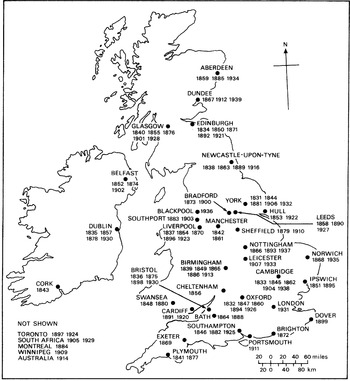
The British Association met in thirty-seven towns and cities in Britain and Ireland in the period from 1831 to 1939, visiting several towns more than once and, in keeping with its provincial mission, London only upon the association's centenary (Figure 1). After York, the BAAS met in the four great academic cities of Britain – Oxford, Cambridge, Edinburgh and Dublin – turning after 1835 to northern industrial cities, with the exceptions of Cork (1843) and Plymouth (1841). For Morrell and Thackray, everywhere ‘[l]ocal pride, civic rivalry, competitive emulation, and the desire for spectacle united to ensure participation, achieve harmony, and make manifest the resources of science’.Footnote 23 This claim is open to further review since what is less clear is how these elements united and with what spatial consequences in the places in question.
Location map of the annual meetings, by date, of the British Association for the Advancement of Science, 1831–1939.

Managing the invitations for a BAAS meeting required diplomacy from BAAS officers and formal presentation from city figures to accompany prior written submission. During the 1838 Newcastle meeting, for example, the geologist Roderick Murchison, then a BAAS general secretary, read out applications from Birmingham, Manchester, Glasgow, Sheffield and Hull, and an invitation to return to York. The president then ‘invited any deputies present from the places which have sent invitations, to come forward to support their claims’. City officials from each of the towns did so. In the case of Glasgow, Baillie Paul was accompanied by two leading university professors (Nichol, professor of practical astronomy, and Thomson, professor of chemistry). For Hull, representatives exhibited a plan to show how and where the association would be accommodated should it come. Discussion centred upon the respective merits of each, Birmingham being selected since this was the city's second representation and because, later in the meeting, Glasgow ‘stood aside’ in its rival's favour. Having thus in 1838 secured what we might think of as civic credibility, the eight-man deputation from Glasgow that again represented its case in Birmingham in 1839 successfully drew upon its earlier graciousness in stressing then the city's scientific credibility: ‘a city in which Science and the Arts have been so long, and so successfully cultivated, and on the advancement of which so materially depends the future commercial and manufacturing prosperity of the inhabitants’.Footnote 24
Many of these features are apparent from 1845 onwards. Civic dignitaries and leading officials commonly promoted their town or city as a scientific venue by reference to particular features which, it was argued, should attract the association. In 1847 W. R. Grove spoke on behalf ‘of the Inhabitants of Swansea’ in drawing to the attention of the association's officers ‘the peculiar local circumstances of the plan which might interest the Association, and the benefits which its visit might confer on the great mineral district of South Wales by a visit to Swansea’. His point was echoed in the support of the geologist William Daniel Conybeare, the very rev. the dean of Llandaff, who wrote ‘respecting the advantages to the advancement & diffusion of knowledge which might be justly expected from a visit of the Association to the great seat of our metallurgical operations’. Representations in support of Swansea had been made earlier: in April 1847 John Phillips reported on the accommodation likely to be available in the town were a meeting to be held there and noted that
Swansea is not so large a place, or so richly environed, as to be able to sustain a meeting of the Association except by the strength of united public feeling. This feeling is at present undoubtedly strong, and in the right direction, and there is no reason to believe that it will not remain so.Footnote 25
On the motion of Sir Roderick Murchison, seconded by Professor Owen, Swansea's offer (initially made in Southampton in 1846) was accepted.Footnote 26 Quite why Conybeare, who lived near Cardiff, should support a meeting in Swansea is not known. Perhaps shared interests in exposing the geological and mineralogical wealth of south Wales transcended local loyalties. Swansea was certainly regarded as the pre-eminent scientific town in south Wales in the 1830s and 1840s, given the presence of the Royal Institution of South Wales and the conjoint scientific interests of leading men of commerce and industry. W. R. Grove was one of three Fellows of the Royal Society (FsRS) then active in Swansea.Footnote 27 The thirty-three signatories to the letter sent from Ipswich to the BAAS in August 1848 requesting ‘a visitation’ similarly emphasized ‘the interesting Geological Character of the locality, and the extensive Manufactures established in the Town’, and hoped, moreover, that a visit ‘would prove most conducive to the advancement of Science, and give an increased zest to that which already exists amongst the working classes, for the further investigation of Natural & Scientific phenomena’.Footnote 28
While invitations stressed the scientific status of the intended location (and, often, its inhabitants) and the mutual benefits that would accrue to the BAAS and locals from a visit, the question of where to go and how to judge competing invitations for the association's annual meeting was a source of concern to its officers. In January 1848 the General Committee reiterated that it ‘has the duty of appointing the place, time and officers of the Annual Meetings’, and noted that by custom ‘this power has been limited to places which present invitations, to times suitable for those places, and to officers more or less indicated by local circumstances’. It further recorded,
The practice of obeying local invitations has been productive of good and evil: good by the spontaneous awakening of many important places to scientific activity; evil by the introduction of elements of display, temporary expedients, and unnecessary expense. These have somewhat impaired the efficiency of the Meetings, by withdrawing attention and consuming time which could ill be spared from the essential business of one scientific week.Footnote 29
The fact of an invitation stressing local benefits did not always result in attendance by locals. ‘By selecting for our place of meeting a central accessible point in an interesting district, where science has food and life, we may expect to secure a large local attendance of new members, and yet not lose our friends from a distance.’ However, ‘it has happened’, recorded the General Committee, ‘that a meeting by invitation has been so ill attended from public occurrences and local peculiarities, as to cause a loss … to the Association Treasury’. In August 1848 John Phillips, then the association's assistant general secretary, put before Council a discussion paper entitled ‘Reasons for thinking that the Annual Meetings of the British Association ought not to be restricted to the places which present formal invitations and guarantees of expense’. But since the decision had already been made to hold the 1849 meeting in Birmingham, no further action was taken regarding Phillips's proposal and it was not readdressed.Footnote 30
Meeting places were chosen according, on the one hand, to the views of BAAS officers that situating a meeting should bring scientific and civic benefits and, on the other, through assessment of civic invitations that stressed the scientific capacity of the location, the educational advantages for the local inhabitants and the financial support that local civic bodies would give the association. In order to prevent hurried planning and unnecessary competition between locations, the Council agreed that meetings were to be fixed two years in advance. Where there was doubt as to location, preference was given to places not before visited. In discussing the respective merits of Leeds and Manchester as sites for the 1858 meeting, for example, the towns were held to have more or less equal advantages in respect of the invitations. What finally swung the association towards Leeds (that town being favoured only after an amendment proposed by William Whewell) was the fact that it was at the centre of ‘a great district never yet visited by the British Association viz … the largest district of the Kingdom uncultivated by the Association’.Footnote 31
But if the BAAS was at pains to locate its later meetings in settings where it thought benefits would accrue and not simply to return to established academic and industrial locations, local bodies sometimes had to be persuaded. Printed in 1853, but given as a paper in November 1852 to the opening session that year of the Hull Literary and Philosophical Society, Charles Frost's On the Prospective Advantages of a Visit to the Town of Hull by the British Association for the Advancement of Science presents perhaps the clearest case of a local man of science trying to convince others of the value of the BAAS meeting.Footnote 32 Frost (president of the Hull body) noted in general that the association meeting could stimulate local science:
Herein we have a proof afforded of the utility of the Association in calling into action native talent, and exciting such of the inhabitants as possess a taste for science, to qualify themselves in advance, for taking an active part in the preparation of the intellectual treat to be placed before their philosophical guests.
He cautioned too that the BAAS meeting could act in isolation from its immediate context unless care were taken to the contrary:
In short, the Association, when in the height of its activity, may be compared to a little commonwealth, which has parasitically located itself in the midst of the visited town, and there acquired, for a brief space, a local habitation – with a population of its own – engaged only in its own pursuits – and governed only by its own peculiar laws and customs.Footnote 33
He specifically noted the benefits to tourism of the association meeting, the improvement of local facilities (including new meeting rooms for the Literary and Philosophical Society) and the moral and intellectual benefits of associating with visiting experts: ‘It is scarcely possible to appreciate too highly the mind-purifying and soul-ennobling effects of coming into familiar contact with a vast assemblage of the master spirits of the age.’Footnote 34
By the 1860s and 1870s the expressed conjoint interests of civic bodies, leading manufacturers and local scientific institutions and their representatives were an increasingly common feature of the deputations and written invitations made to the BAAS. Following ‘a large and influential meeting of the principal bodies and Societies of this district’, Newcastle's invitation to the association in 1862 stressed how facilities had changed since the 1838 meeting and highlighted the emergent industrial development of the region:
The Scientific Interest of the neighbourhood of Newcastle has increased since 1838 in equal proportion, and new Branches of Trade have sprung up; amongst others the manufacture of the Metal Aluminium and Aluminium Bronze; and the smelting of Copper Ores; the manufacture of metallic Copper is also new to the Tyne. In Geology the great iron stone field of Cleveland has been discovered and practically worked.Footnote 35
Having received earlier notice of Newcastle's intentions from Isaac Lowthian Bell, the city's mayor, John Phillips's reply hints at several of the issues being borne in mind in deciding meeting locations:
There will be of course other claimants, but the ground is all fair for canny Newcastle; & as several later meetings have been far south of her, she has a clear locus standi, & the prestige of a never-to-be forgotten success. One thing: bring a delegation and documents and proof of space in rooms for a large meeting.Footnote 36
At Norwich in 1868, the City of Liverpool represented its case for a future meeting through the mayor and two other leading figures from the corporation; three representatives each from the city's Literary and Philosophical Society, Historic Society, Polytechnic Society, Chatham Society and Naturalists' Field Club; and delegates from the Chemists' Association, the Geological Society and the city's Medical Institution.Footnote 37 Liverpool's delegation had to compete with similar representation from Exeter, Edinburgh, Bradford and Brighton. The civic parties respectively made their cases. That for Exeter centred on the association not having been to the West of England; that for Edinburgh on preserving an order of precedence without justification in terms of any agreed association rules:
The deputation from Edinburgh expressed a readiness to give way to Exeter next year, as they had done to Norwich this year, provided Liverpool would give way to Edinburgh in the year following, and so preserve something like the order in which former meetings have been held, Edinburgh having on both occasions preceded Liverpool.
Edinburgh's case was rejected both because the association aimed to ‘distribute its meeting as impartially as possible over the United Kingdom; and that, as the meeting was held last year at Dundee, the time had not yet arrived for another visit to Scotland’.Footnote 38 The Dundee meeting in 1867 here referred to had been strongly supported by numerous local borough councils.Footnote 39
When, in Glasgow in 1876, competing invitations from Leeds and from Dublin were both supported by numerous local scientific and literary institutions, a vote was taken, Dublin winning by a majority of twelve.Footnote 40 In Dublin in 1878 the association's General Committee received and read out invitations from various bodies from Sheffield and beyond as that town presented its case: the Borough Council, the Corporation of Cutlers, the Town Trust, the Chamber of Commerce, Sheffield's Literary and Philosophical Society, its Naturalists' Club, the Yorkshire Geological and Polytechnic Society, the Council of the Borough of Rotherham, Rotherham Literary and Scientific Society, the Yorkshire Naturalists' Union and the mayor, aldermen and burgesses of the Borough of Barnsley.Footnote 41 In 1896 Glasgow's delegation withdrew its intended invitation to the BAAS after finding upon arrival in Liverpool that arrangements for holding the 1898 meeting in Bristol were so advanced ‘that it would have been neither courteous to that town nor proper to now present an invitation from Glasgow for that year’.Footnote 42 In contrast to the willingness with which academics at Cambridge had earlier welcomed the BAAS, views within the university in 1901 over a possible further visit were mixed. One member of the Philosophical Society there argued that ‘Cambridge should restrict herself to international gatherings’, while another complained ‘that I know it will murder a Long Vacn. as far as private work is concerned’.Footnote 43 Grudgingly, the association was invited again to Cambridge, returning in 1904. Such equivocation over the BAAS meetings was by then common and had been apparent since the later 1880s. It was increasingly evident after 1914 as the association was undermined by the growth of specialist meetings, by growing government funding for science and, in places, by the strength of local bodies, some of whom saw little benefit in diverting scientific energies and financial resources away from their own initiatives.Footnote 44
Evidence for the decisions and processes behind the location of BAAS meetings after c.1845 suggests some continuity with the earlier period: the importance of local scientific bodies, of influential ‘gentlemen of science’, of financial assistance, of appropriate facilities (existing or promised) and of stimulating locals' interests in science as a civic good. The later evidence also suggests shifts in emphasis: an increased recognition by urban authorities and local scientific societies that their own capacities, and, importantly, the significance of the local area, would attract the BAAS and might influence the content of meetings and of sectional programmes; and a concern by the BAAS to meet where they had not before (as in Hull in 1853, Leeds in 1858, Dundee in 1867), not to visit the same area if another town had recently had a meeting (as happened to Edinburgh in 1868), and to return to towns when invitations, boosted by the success of a previous visit, could ensure appropriate new venues (Newcastle, 1868) and/or the support of neighbouring civic authorities (Dundee, 1867; Sheffield, 1878; Liverpool, 1896). A clearer sense of how these towns and cities were science's ‘making’ and ‘selling places’Footnote 45 is apparent if we change the scales of analysis – geographically, to look at particular urban sites and the uses made of the local area, and epistemologically, to consider the practices employed in making the association's science work locally.
Practising local science: BAAS meeting programmes
Morrell and Thackray stressed the academic and individual imperatives behind the location of BAAS meetings before about 1844 and the role of local scientific bodies and figures in accommodating the association's concerns.Footnote 46 This was true also of many meetings in the later nineteenth century and the early twentieth. Little is known for later periods, however, about just which urban spaces were involved or of the things that civic authorities and local institutions did to receive the BAAS and to present, as hosts, a view of ‘local science’.
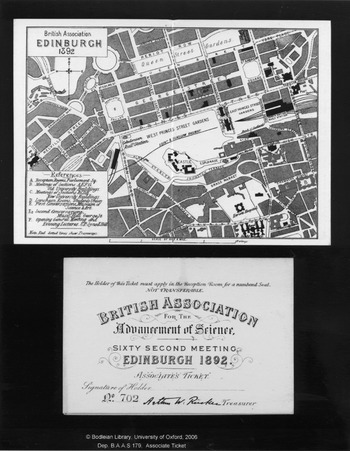
BAAS meetings evolved a more-or-less standard format: presidential address, sectional programmes of papers (themselves commonly begun by that section's presidential address), a conversazione or other formal social occasion, and day trips or longer excursions. These embraced local sites either reflecting particular sectional interests (notable factories for Sections B, Chemistry, or G, Engineering, for example, geological exposures for the geologists in Section C), more general sites of display, such as exhibitions of scientific equipment or sites open to the public, in appropriate civic venues, but usually reflecting particular scientific subjects (such as botanical or zoological gardens). Registration for the association meeting was, effectively, admission to certain urban civic and scientific spaces. As early as the Edinburgh 1834 meeting, tickets to association meetings were also maps of the meeting's locations. Bristol's Local Committee in 1836 even instructed their printers that the Bristol ticket-map should be no larger than the Edinburgh one for fear of causing offence.Footnote 47 As meetings grew in size of audience and in numbers of participants and different settings, they tended to outstrip the capacity of the host city to house them in one place. As the ticket-map for the Edinburgh meeting in 1892 suggests, attendance required careful planning of one's mobility within the city (Figure 2). Noting that in ‘some of the towns visited in the past by the Empire's premier scientific body it has been so scattered that placards had to be placed in the main streets pointing the way to “Zoology”, “Anthropology”’ and so on, the 1923 Liverpool meeting prided itself on having central facilities for the different sections.Footnote 48
Admission ticket to the 1892 Edinburgh meeting (lower image) which, when opened out (upper image), became a portable location and route map of the meeting's specific venues in the city. (Source: MS. Dep. BAAS 179. By permission of the British Association and of the Bodleian Library.)

If we consider BAAS meetings not as one event, but in terms of their multiple specific features – such as museums as sites, local collections as indicative of the scientific standing of the local area and of the wider networks in which local figures participated, the movement of audiences to different venues and the mobile nature of excursions, for example – we can highlight how particular places and practices were mutually constitutive ‘settings’ for urban provincial science. This is also to illuminate the overlapping issues of geographical scale, social space and intellectual network that made up such scientific activity. A commonplace of Victorian science was that many so-called ‘local’ or ‘amateur’ scientists were members of more than one body (and of national and international bodies such as the BAAS), with interests and capacities in more than one discipline or scientific practice such as taxonomy, field collecting, exhibiting, writing or public speaking. They often held positions of institutional authority in their discipline and municipal or civic responsibility in the town in question.Footnote 49
Attention to questions of setting, understood not at a city-wide scale but as complex spaces in which different scientific practices and social interests came together, may help move us away from the dualism of sites/places of production and sites/places of reception. It is clear in many cases that the location of the BAAS meeting was chosen because of the prior existence of ‘local science’ or in response to the need to go where it had not gone before. There is evidence also to suggest that the prospective arrival of the BAAS acted to constitute local science. That is, by being on a national circuit for association meetings, local or provincial science in one form or another and the social and intellectual networks that sustained it were either brought into being or, at least, given renewed vigour by virtue of being an intended association venue. Consideration of BAAS meetings in terms of their different settings therefore raises questions about the mobility and make-up of association science since the subjects that made up the BAAS sections were themselves in the process of formation.Footnote 50 Attention to the practices involved in the meetings also highlights the complexities involved in the making of science as ‘provincial’, given that visiting scientists were commonly perceived to bring ‘expertise’ with them even as ‘local knowledge’ was being constituted and enhanced by the fact of the BAAS meeting.
Most meetings used museums and existing civic scientific collections. There were over 250 natural-history museums of some kind in England in the nineteenth century, and whether the collection type was personal, that of a society, municipal or a university's, they were commonly used by the BAAS in negotiation with local organizers.Footnote 51 Yet both displaying and constituting the local as part of a national meeting was not straightforward. In Birmingham in 1886 the Natural History Sub-committee of the Local Executive Committee established to organize the BAAS meeting that year reported upon initial difficulties in getting hold of local specimens for the intended exhibition:
we issued a large number of circular letters inviting the owners of Natural History collections to lend specimens for exhibition. As it was desired to limit the exhibition to the locality of Birmingham and neighbourhood we have experienced some difficulty in obtaining specimens, but we are pleased to report that we have had promised various loans of collections which will ensure a good exhibit of the Fauna, Flora and Geology of Birmingham and the district.Footnote 52
As inert specimens for display came in, so also the mayor of Sutton Coldfield consented ‘to the removal of living plants from Sutton Park to augment the illustration of the flora of the district’. Members of the Birmingham Natural History and Microscopical Society organized a display to be held on the evening of the meeting's conversazione.Footnote 53 In Bristol in 1898 the Bristol Museum authorities ‘put themselves out of the way to do everything which can be done to make their valuable collection useful to the visitors. There will be an important series of local geological exhibits’.Footnote 54
Displaying local artefacts, whether scientific or industrial, instilled pride in the hosts and allowed local knowledge to become national, at least for the duration of the association meeting. Motivated by the fact that the BAAS had not met ‘in the West-Riding of Yorkshire, a district which offered, in its natural resources and manufacturing industry, a wide field of interest’, the Leeds Philosophical and Literary Society reflected in 1859 upon the meeting of the year before:
The Local Committee believe that the benefits which it [the meeting] conferred on the town of Leeds were neither few nor trifling. It called forth a large amount of public spirit and of individual energy, and was the means of eliciting from several of our townsmen very valuable contributions to our stock of scientific knowledge. It awakened a new and lively interest in science and scientific men amongst considerable numbers of our population, and can hardly have failed to create in many cases a desire for more extensive and accurate information. It brought together the theorist and the practical man, who commonly move in separate and remote spheres. It established friendly and personal relationships with many of the distinguished leaders in science, from which the town has already reaped valuable results; and it made known to large numbers of the most educated class the true position of Leeds, as a seat of manufacturing industry and enterprize. The Meeting of the Association, however, they feel, should not be regarded primarily with reference to the benefit which it may have conferred on ourselves. Science is the foundation of the wealth and prosperity of Leeds and it was fitting that, when the opportunity offered, its citizens should welcome and honor the Masters of Science.Footnote 55
Thirty-two years later, members of the Leeds Geological Association commented likewise upon the BAAS meeting of 1890:
The special feature of the present year has been the visit of the British Association to Leeds. Much was hoped for from the stimulus which, it was expected, would be given to scientific pursuits by the presence in our town of many eminent scientists. Though there has been no great accession of activity in our own Association as the result of these meetings, the Council feel that the prominence given to Yorkshire Geological work, especially in the Boulder and Photographic departments, ought to encourage the members to a determined endeavour for the attainment of a still higher standard of work in the future.Footnote 56
The programmes for different sections reflected, where they could, the economic or political interests of given towns, but not in any consistent way. In Newcastle in 1889, in Hull in 1922 and in Liverpool in 1923, for example, the programme of Section E, Geography, was planned to reflect the commercial and imperial geographies of importance to those towns. ‘In a commercial centre like Newcastle’, it was noted, ‘we may fairly assume that the practical applications of geographical knowledge will receive prominent treatment by this section’. Attention was paid to trade routes and to commercial geography as well as to geographical education. In Hull ‘special attention was given to various aspects of the North Sea, geographical, geological, and biological, out of compliment to the town's position as a port’, and in Liverpool, the city as a centre for Britain's imperial geography was the subject of several papers ‘in view of the location of this year's meeting’.Footnote 57 In this respect the meetings of the BAAS helped promote the role of provincial geographical societies in these and other similar towns.Footnote 58 But programmes also incorporated papers from visiting speakers, and local figures, on topics of wider significance as well as sometimes using local matters to illustrate more general principles. The intention of BAAS organizers and local committees to ensure local interest was a concern throughout the later nineteenth century and was revisited with some urgency in the early twentieth century during debates about the association's structure and future. As part of (unrealized) plans in 1909 and 1910 to reorganize the sections, it was noted that ‘more attention should be paid to the previous selection of subjects, with particular interests to the places of the meetings; and that discussions should similarly be more carefully arranged’.Footnote 59 From examination of the content of BAAS meeting programmes after 1910 there is no evidence to suggest that these recommendations had any significant effect upon the content of meetings. Judged from paper titles, meeting programmes always contained some element or other of local work. Likewise, local scientific men used the meetings to promote their own standing as national or disciplinary authorities within networks that demonstrated the national scope of the association's science.
The local or provincial agenda for association science is more clearly reflected in excursions, since they allowed local scientific and social agenda to be realized through particular settings. One report of the 1901 Glasgow meeting speaks to matters of practice and social and intellectual intention more generally held:
Excursions will be arranged by which Members will be afforded an opportunity of visiting locations unsurpassed for the beauty of their natural scenery; presenting special attractions for the scientific explorer, whether Geologist, Zoologist, or botanist; for the Archaeologist, and those who desire to observe the various important Industries of the district of which Glasgow is the centre.Footnote 60
In looking at trips and excursions within the BAAS meetings as elements of a historical geography of science, a general distinction might be made between inner-urban trips, in which sites within the city were used to illustrate matters of scientific interest, and sites outwith the immediate urban setting. The Manchester meeting of 1861, for example, was notable for its use of local industrial sites to illustrate the connections between science and technology, industry and commerce: chemical works, copper mines, the coal mines at Astley Deep Pits, Manchester's waterworks and so on.Footnote 61 But a distinction based solely on location within or outwith the city and solely in terms of particular sectional or scientific interests is hard to sustain. Excursions and site visits fulfilled a social as well as an intellectual function, bringing together locals with visitors, experts with ‘amateurs’. Moreover, recovering the intentions of those who visited exhibitions or made trips in the field, even to the conversazione, is difficult. For some, science provided the justification for sociability and was itself not the primary concern. For Lady Caroline Howard, for example, in Dublin for the 1857 BAAS meeting, attendance at morning paper sessions on geology, geography and ethnology; at the display of geological maps, the conversazione and afternoon promenade in the Zoological Gardens; and at an evening's soirée at the Royal Irish Academy was a chance to converse with friends, to see and to be seen – ‘I saw Judge Crampton and Lord and Lady Meath and several faces I know’ – and to be amused rather than educated by science.Footnote 62
Excursions could be social and scientific affairs. At the 1878 Dublin meeting members of the geological excursion to Kilruddery, over a hundred strong, were entertained to a light dinner by the Earl and Countess of Meath. The excursion allowed enthusiastic amateurs an opportunity to undertake fieldwork and hold discussions with experts, and others an opportunity to converse or botanize:
Scarcely had the long line of excursionists moved up the road than hammers were quickly displayed, and ladies and gentlemen, old and young, were seen most amusingly to the non-scientific observer peering into crevices of rocks, breaking off pieces of stone, and holding consultations as to what formation they belonged. Eagerly bent was seen many a fair scientist, rapping with her hammer at the rocks, and examining through her spectacles, for it must be confessed that some of these geologically-ladies [sic] wore glasses of studious import, and indicative of midnight oil expenditure, the fragments wore off. Some, however, who evidently more enjoyed the ‘outing’ than they were desirous of obtaining information about the Cambrian formation, looked on, strove to look learned, and sighed, others devoted their attention to the flora of the district.Footnote 63
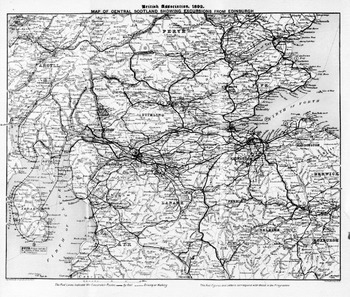
By the later nineteenth century, excursions had become a notable feature of BAAS meetings, more so than in earlier meetings, and were tailored to accommodate different specialist and general interests. In Edinburgh for the 1892 meeting, for example, scientific site visits were planned within the city, within the local area and throughout central Scotland (Figure 3). Given the excellence of the local rail network, the excursions to Tayside, Argyll and the Ben Nevis Meteorological Observatory started at 4 a.m. BAAS meetings thus had different urban settings and, for their leaders and audiences, different purposes. Within cities, particular civic venues or circuits of sites were important (cf. Figure 2, upper image). Beyond the urban setting, a local-cum-regional geographical context was important, in which particular sites of scientific interest were the subject of attention – sites tailored to given sectional interests and which might demand associated social activities (overnight accommodation, dinner, even entertainment at the expense of local nobility or gentry if they were BAAS members). Such evidence points to the difficulties involved in proposing any strict classification or typology of scientific excursion and to the dangers inherent in thinking about the historical geographies of science in terms of any strict separation between issues of production, reception and mobility rather than, as may be more useful, in terms of the connections between them. BAAS meetings were not city-wide affairs but rather matters of different practice in specific socio-scientific settings in and out of the city for audiences whose intentions were not always the same. At the same time, the enduring concern of the BAAS that its work should incorporate the science in and of the local area found textual expression in its meeting handbooks.
Map of central Scotland showing the excursions from Edinburgh undertaken as part of the 1892 Edinburgh BAAS meeting. (Source: MS Dep. BAAS 179. By permission of the British Association and of the Bodleian Library.)

Writing local science: the association's handbooks
Writing in June 1913 of that year's BAAS Birmingham meeting, a reporter for the Birmingham Post clarified for the reading public the nature and purpose of the principal BAAS meeting publications:
The custom of the Association is to induce the local committee of the place of meeting to publish two handbooks, one for the enlightenment of the visiting member, and enlarging upon the history, topography, organisation, and scientific interests of the locality; the other for the enlightenment of the local member who, in nine cases out of ten, knows little of his or her neighbourhood. The first is the handbook; the second is the excursion guide-book. The handbook is a work of reference, a volume of some 500 pages, laborious and expensive to produce. The guide-book is a small pocket affair that can be easily carried and consulted. Both of these books are given free to every member or associate on presentation of their tickets at the reception room.Footnote 64
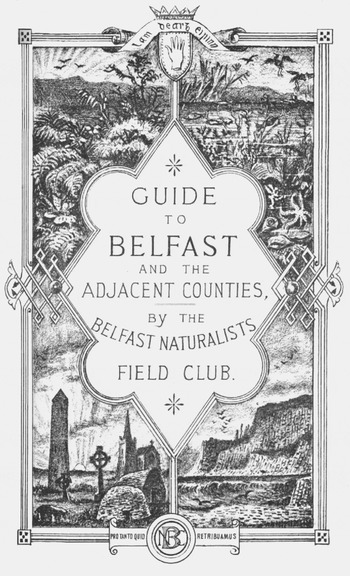
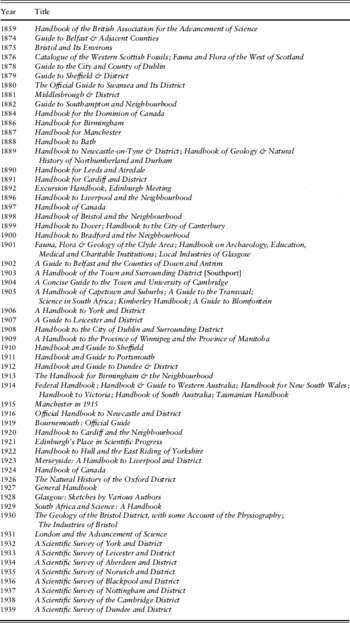
This distinction was not always evident in practice. Indeed, the handbook in particular took over forty years to emerge as a distinctive expression of BAAS activity. Table 1 shows the chronology and titles of the BAAS handbooks between 1859 and 1939. Several features are noteworthy. The first, of 1859, was not properly a handbook but a collection of papers on the rise and progress of science, with much attention given to the BAAS. It was by Mrs Margaret Fison, who in 1856 had reported for the periodical Leisure Hour upon the Cheltenham meeting. Reading her accounts, Sir Roderick Murchison and others in the association encouraged the bigger project. The first handbook to consider the local geography and history of the location in question was produced in 1874 for the Belfast meeting under the direction of the Belfast Naturalists' Field Club. Its content embraced the region's physical geography, geology, botany, zoology, topography, history, antiquities, agriculture and trade and commerce, with a short section on the excursions (Figure 4). This volume effectively established the model for later handbooks, with the exception of the overseas meetings whose handbooks, often longer and in more than one volume, had a strongly imperial agenda, portraying the colonies to the visitor and stressing science's importance to the development of Britain's overseas dominions.Footnote 65 There were individual variants: the 1921 Edinburgh handbook reviewed that city's position as a centre for scientific advance over time in contrast to the usual focus on local scientific sites and themes, and the 1931 volume did likewise for London as, for the first time, the meeting had a metropolitan rather than a provincial location. After 1932 the handbook became standardized as a Scientific Survey of the region in question.
The decorative title page of the first proper BAAS handbook, The Belfast Naturalists' Field Club, Guide to Belfast and Adjacent Counties (Belfast: M. Ward and Co., 1874). Note the depiction of a ‘palaeo-Belfast’ to accompany the discussions on the area's geology.

Date of publication and title of the BAAS handbooks, 1859–1939. Source: BAAS Archives, Bodleian Library, Oxford

The BAAS handbooks provided a textual expression on thematic lines of the association's provincial mission but did so in a more or less consistent form only from 1874. They offered in summary a review of the location's history and local geography and its scientific features. Most began with the local region's topography or geology, moved through its natural history and, ordered usually chronologically, covered the region's industrial productions, notable sites and potential for the future. One early exception was the 1881 volume. The meeting was that year held in York, but the handbook was produced for those members who took part in the Cleveland Hills excursions. Since most handbooks were written and collated by local figures, with members of the local scientific body involved in the work, BAAS handbooks were both a textual expression of local science and a statement of local capacity. Knowledge of the area meant that science was invested in the hosts rather than in visiting ‘experts’. To an important extent BAAS science was made in its provincial settings, not imported to them. Later BAAS visits afforded an opportunity to revise errors in previous handbooks. Organizers in Glasgow in 1901 looked upon the three volumes produced as ‘an opportunity for repairing many of the errors and omissions of the former handbook and for bringing to a focus the very large amount of work which has been done of late years in the Clyde area’.Footnote 66 Such visits also allowed publication of what existed only in manuscript or as field notes held by local specialists, as was stressed of the Southport volume of 1903. The 1912 Dundee handbook aimed not just at the temporary edification of association visitors but also at the longer-term benefit of local citizens that they might be ‘further strengthened in their feelings of local patriotism and towards endeavour to raise the standard of life and thought in our community’.Footnote 67
In the 1920s especially, BAAS handbooks established definitive standards for the presentation of science in provincial context. They did so not solely from work within the BAAS but through prompts by the Conference of Corresponding Societies and because of contemporaneous developments in the nature of regional survey within geography. Despite the local emphasis of most handbooks the view of delegates to the Conference of Corresponding Societies that met as part of the 1925 BAAS meeting in Southampton was that still more needed to be done ‘to secure the establishment and [to] facilitate the extension of regional researches, especially in the districts which it [the BAAS] visits’. This proposal was adopted by the BAAS General Committee and realized through collaboration with the Geographical Association, whose own Regional Survey Committee was then advancing the study of regional survey in Britain.Footnote 68 Regional survey as the basis of the BAAS handbooks was best undertaken in association with departments of geography in local universities, as the agricultural scientist Sir John Russell put it to the historian and archaeologist Sir John Linton Myres in 1925: ‘the best way of putting the principle into practise would be in each case to ask the University School of Geography to undertake the work. It is the kind of thing that many of them are doing and all of them ought to do’.Footnote 69 In this respect the 1922 Hull handbook was taken, by its compiler at least, to be the model for BAAS handbooks as a distinctive genre of regional text: ‘My modesty will no doubt prevent me’ noted T. Sheppard, director of Hull's Municipal Museums and editor of the 1922 Hull handbook,
from stating that the Hull Handbook might be taken as a model for future places. All I can say is that Nature and other Journals stated that it was as near perfection as it could possibly be for a Handbook of this sort. Possibly had it had ‘Regional Survey’ <in big!> letters on somewhere it might have been absolutely perfect.Footnote 70
This emphasis on regional survey in the 1920s did not always demand new work. The BAAS met its provincial agenda by collaborating with other bodies in order to promote its handbook as a form of regional survey and, thus, regional survey as a form of provincial science. As one senior figure put it,
I regard the current suggestion about regional survey rather as a change in the mode of preparing for a B.A. meeting, than as a demand for a new handbook on every occasion. Where there is a good Handbook in print, it should be adopted & supplemented (as I understand Oxford will do): where there is none, the B.A. offers I think a real service in proposing to cooperate in producing one.Footnote 71
Receiving science locally: questions of reception
Even as towns and cities generally welcomed the BAAS and planned for its meeting in different ways and different civic spaces, the nature of the urban setting could determine where, how and even, to a degree, whether or not association science was received by the public. In Glasgow in 1901 one section, Geography, was not well attended as a result of the venue for that section's paper sessions:
Although the University was fixed upon as the general headquarters of the Meeting, yet, in consequence of an apprehension that the space available at the University was insufficient, it was arranged that Section E (Geography) should meet at the Queen's Rooms [a civic hall distant from the University]. It had always been the aim and desire of the Executive to keep the whole sections together; and it is a matter of regret that the separation of the Geographical from the other sections had the effect of restricting the attendance upon one of the most interesting sections of the meeting.Footnote 72
For the annual meetings as a whole the sources available to document the reception of the BAAS in its local settings are different in type and survive only variably well. Newspaper accounts, the principal record of local and audiences' reaction, afford no systematic means of discerning how meetings were regarded or of how different sections' programmes were attended. Attendance figures were seldom recorded for later BAAS meetings and whilst diaries permit insight into individuals' engagement with the activities of the BAAS, generalization is difficult from such sources.Footnote 73 Certain themes do emerge, however, from analysis of newspaper accounts and other sources.
Although initial disquiet about the purpose, content and future of the BAAS had largely ceased by 1845, public doubts were still aired and the association, notably as a result of its annual meeting, was regularly satirized in Punch as late as 1893. Where, in an earlier period, the BAAS had been mocked as ‘The British Association for the Advancement of Everything in General and Nothing in Particular’, later comments tended to poke fun more at the characteristics of the inhabitants of the host town or at notable goings-on in the scientific proceedings. The explorers David Livingstone and Henry Morton Stanley, for example, were satirized in coverage of the 1872 Brighton meeting after the latter's ‘discovery’ of the former in Africa.Footnote 74 Newspaper reports are particularly valuable where they differ through editorial view or political affiliation or where they may be used in combination with other evidence, not least because they then highlight social and intellectual distinctions within such general terms as ‘reception’, ‘audience’ and ‘science’.
Consider in these terms accounts of the Dublin 1857 meeting. To the reporter of the Dublin Evening Post, the opening address of the meeting was ‘well calculated to impress our foreign visitors’ – by which he meant British as well as other overseas visitors – ‘with the high estimation in which science is held in this country, and the adaptability of the Irish mind to her practical culture’. Appeals were made to the Dublin citizenry for financial support for the meeting and for them to accommodate, gratis, visiting scientists: ‘We think a selfish sense of interest ought to induce the people of Dublin to subscribe to it at once.’ Papers on Irish dialectology, which ‘afforded not a little amusement to the audience’, and the craniometry of Irish and Scottish Gaels were cited as an indication that the BAAS spoke to matters of local interest and so should be welcomed.Footnote 75 By contrast, the strongly pro-independence newspaper The Nation used the visit of the association to reiterate political arguments about domination by Britain and satirized the association precisely because its delegates were dependent upon Dublin residents for their board and lodging:
Among the savans now assembled in the metropolis of Ireland, there are many whose names are emblazoned on the golden roll of Philosophy, Science and Art. Such men ought to be welcome in Ireland: here they tread a land which was once the home of learning, the munificent patroness of the Arts and Sciences, ere the country for which the Association takes its name, had emerged from the night of barbaric ignorance. Here they will find traces of all that interest the ethnologist, and the antiquarian; they will find relics of a glorious past, evidence of a miserable present. They may employ themselves profitably in investigating the cause of this state of things; in tracing the date at which this decadence set in, and they will find that when Ireland ceased to be independent, the Arts and Sciences fled the land.
The report continued, in the form of a BAAS presidential address to the ‘Dublin Provisional [i.e. Republican] Committee of the British Association’, to mock the needs of visiting scientists to have any need for food and shelter:
It strikes me that men of such notoriously studious habits and concentrated scientific ambition, require very little sleep at all (cheers). Besides they do not visit us for the purpose of sleeping or enjoying themselves in any way, but for that of instructing us. As to their diet, I would fain think they are amply provided for. Ethnography shows us that Newton (who required, by the way, only four hours' sleep) often forgot his dinner for two consecutive days (loud cries of hear, hear). A single water melon sufficed Galileo for a similar period (bursts of applause); and I rejoice to have to read that La Place, while calculating the attractive force which the Star X in the Dumb Bell Nebulae, exercised upon our Moon, pursued his mathematical studies so far as to destroy his appetite altogether. Facts like these, gentlemen, lead me to hope that, in respect to the preparations made for the British Association, the citizens of Dublin have nothing to fear. To a mind that would square the circle, what possible interest could attach to an article so insignificant as a mutton cutlet?Footnote 76
Whether or not Lady Caroline Howard read these reports is unknown. As we have seen, her engagement with the BAAS in Dublin in 1857 was about sociability rather more than science, and her politics presumably contrasted with those expressed in The Nation. Lady Caroline attended one set of geography papers ‘but the room was greatly crowded and so we did not hear much’. Her companions were even less fortunate in attending Livingstone's lecture on African discoveries: ‘Julie enjoyed herself so much and brought me back such an account of it that I felt quite in despair at being laid up. They however did not hear one word of the lecture as they got bad seats, and Dr Livingstone speaks in a whisper’.Footnote 77 We may not ever know why an inaudible lecture on African exploration should have been the subject of such enjoyment (allowing, of course, that it was the occasion and the place and not the topic or speaker that was important). Yet such evidence points to the complexities surrounding the ‘reception’ of BAAS science. For some, the association's coming was political anathema and of national importance; for others, it was an opportunity for polite education, to attend and to observe and to listen, but not always to hear.
BAAS meetings could have the effect of taking over a town (as Frost had cautioned in 1853). The Scotsman reported how the 1871 Edinburgh meeting embraced civic spaces for the formal business, domestic spaces for the continuing discussions:
The British Association for the Advancement of Science comes among us with an authoritative air and an appropriating touch which in ordinary circumstances or people would be looked upon as intolerably intrusive or amusingly audacious. We are compelled to give it an invitation, and when it appears at the preconcerted hour, it takes possession of us in the most overpowering style. It fills our streets with its finger-posts; it takes our Courts of Law to lounge in; it seizes our University, and fills it with hurry and high debate; it soliloquises in evening dress in our public halls; it prescribes the preachers in our pulpits; it makes itself easy in our drawing-rooms; it raises commotion in our kitchens; it descends to the depths of our cellars; and exercises itself in a great variety of liberties which we are not in the habit of permitting to anybody, and all as if it thought that we ought to consider ourselves particularly well off in being utilised by so potent and august a visitor.Footnote 78
Whilst the advantages for ‘men of science’ were great, ‘its advantages of the public are still greater’. They would be greater still, it was opined, if the association would visit towns – by implication, those without a large resident scientific population – more than once a year:
No one can question the great scientific services rendered by the British Association. It has undoubtedly raised the country from a state of apathy into one of appreciation for scientific pursuits; but that form of action which has enabled it to produce a powerful temporary impression ought to be followed up by another better fitted for continuing and promoting the impression already produced. The Association may, in fact, be compared to [a] gigantic boa-constrictor, which takes one hungry meal a-year, and lies in a semi-dormant state during the rest of the period … The energy is magnificent, but, at the same time, discontinuous and spasmodic, and though the inhabitants of cities such as Dundee and Bradford may for once in a generation receive a visit from the Association, for twenty or twenty-five years they are left to grow up – and they do grow up – in ignorance of the very existence of this great peripatetic body.Footnote 79
Public reaction to the 1876 Glasgow meeting was strongly of the view that the meeting was a failure. For one commentator, this was due to incorrect prior perceptions about the nature of the BAAS and its meetings:
A good deal of this is unquestionably due to the disappointment of a large number who tacitly assume that gatherings of the kind, breaking in upon the monotony of business, ought to be amusing. The coming of the Association was looked forward to as a kind of entertainment, and those who took that view of its functions have been considerably annoyed by the seriousness of its actual behaviour.
Behind this observation lay a deeper disquiet with the BAAS:
The Association is trying to serve two masters – science and the public. If it sticks to science its meeting becomes superfluous, or ought to be limited to scientific men. If it seeks to serve the public in a way the public can appreciate it must meet once in ten years, and have something to show that the unscientific mind may grasp and feel interest in. It may, indeed, be intended to show what charming people men of science are, and to induce the public to adopt their pursuits from desire to acquire their fascinations. But in that case the science may be dispensed with altogether, and the lighter graces of the man of science in his domestic and social aspects cultivated in its stead. The title would then read – British Association for Popularising the Scientific Men.Footnote 80
Such evidence points to different themes and possible avenues for further research in the reception of the BAAS as a matter of urban historical geography. These include audiences' participation by social rank or by scientific affiliation, or in terms of perception of purpose and, potentially, of attendance differences in relation to scientific subject, where geography and geology, for example, were often better attended than other sections. Yet the same evidence also illustrates the difficulties of the reception of science in urban contexts. Newspaper accounts do not always illuminate individual intentions. To possess a review of a meeting or section programme is not to know what its audience made of it. Attendance did not necessarily mean understanding (or even hearing) what was said. Being at a BAAS meeting as a delegate was a form of scientific production and reception. Presence at the meeting required timing one's day and location within and perhaps beyond the city. To consume civic science demanded mobility and engagement with city life. Reading the handbook about one's host town or scientific venues in the local area was for some a form of scientific reception. For others it was a means to local civic pride. For yet others it could be part of the making of provincial science through regional survey in ways which depended more on local expertise than on the scientific visitor such handbooks were designed to instruct.
Conclusion
In considering BAAS meetings as the principal expression of its stated provincial mission, we have illustrated how one scientific institution looked to make science work locally and outlined something of how that institution's scientific intentions were received in different urban settings. In some respects this thematic study of the nature of BAAS science in its later British meetings reflects, if unequally, those themes of the rise of urban expertise, science and the representation of the city, places of knowledge in urban context, and knowledge from the street proposed by Dierig, Lachmund and Mendelsohn.Footnote 81 Our evidence has pointed to local urban expertise vested in scientific institutions whose members variously formed civic delegations to invite the association, or who led BAAS excursions, and who wrote and edited meeting handbooks so that local sites might be used to instruct visitors and locals. Science was commonly seen in terms of civic benefit – benefit to the association in seeing local sites of wider relevance, benefit for the host town in having experts visit. So, too, BAAS handbooks and excursion guides represented the city and the region, their authors and field leaders interpreting the sites in ways which might be thought of as knowledge from, or perhaps of, ‘the street’. Museums, meeting rooms, botanical gardens and other civic spaces were places of scientific knowledge and of social display, just as drawing rooms and even kitchens may have been spaces of scientific conversation. In BAAS meetings such locales were often temporary venues for engaging in science, ticketed sites in which one had but passing engagement with science and scientists. We concur, too, with the view that ‘when the city is involved, the historian of science must pay as close attention to it as to the science conducted there’.Footnote 82
But in contributing towards a historical geography of science rather than an urban history of science in which specialist institutions of science were ‘fixed’ within cities, we have sought here to consider the different spaces and places in the city in which science was temporarily housed and the sites in and beyond the city in and through which science was locally made public in consequence of a BAAS strategy which, from the outset, depended upon science and scientists being mobile. One consequence of illuminating the different spaces and places in which science was made in BAAS meetings in different urban locations in Britain between 1831 and 1939 is to challenge the city or the town as the necessary unit of analysis in any urban historical geography of science. Of course, there may be benefits, sources permitting, in looking over time at different BAAS meetings in the same place. Many later meetings – such as Newcastle in 1868, Edinburgh in 1871 and 1892, Glasgow in 1901, or Leeds in 1927 – were chosen and were successful because of successful earlier meetings there, not just because the association considered it necessary to return to such ‘provincial’ locations. The city may be then taken not as a setting in any simple locational or ‘containing’ sense, but as a network of civic venues, of ‘field sites’, and as the locus from which regional survey work, highlighted by certain thematic venues, was undertaken. Different practices in different settings – whether sitting attentively, conversing, hammering at rock exposures, reading handbooks, walking past display cases or promenading to be seen – were each part of producing and receiving association science. Movement between such venues in one town made work locally what the association intended nationally in moving between towns. As Lorimer and Spedding note,
To write a historical geography of science is explicitly to present scientific knowledge and practice as phenomena that are made in place and shaped by spatial relationships. Traditional parameters of location, distance and the journeys in between must be at the core of any such project, but it is important to include those aspects of space and place, as understood in contemporary geographical thought, that confound cartography. A full history of science requires us to extend summaries of location, distance and journey to create a new register of positionings, spacings and traffickings.Footnote 83
We have here considered elements of this new register: positionings less clearly perhaps, but certainly so in terms of the civic ‘spacings’ in which the BAAS worked, in and out of town, and in terms of meetings' ‘traffickings’, as people moved to excursions, to lectures, as books were written to promote regional science and artefacts were brought together to become ‘local’ collections. Yet we must also be attentive to questions of scale. As Livingstone notes, ‘Precisely what the correct scale of analysis is at which to conduct any particular enquiry into the historical geography of science – site, region, nation, globe – has to be faced.’Footnote 84 Also important is the relationship between different scales. Study of the BAAS meetings has documented different geographical scales: a national policy of provincialism, selected cities, handbooks that depended upon and promoted a genre of regional survey, field sites, individual lecture halls and display rooms. Harris has cautioned that in work on the geographies of science ‘the “localist thrust” … has not only predisposed researchers to choose research sites that are spatially and temporally circumscribed, it has also encouraged the selection of scientific practices that were themselves spatially and temporally circumscribed’.Footnote 85
In considering the ways in which the BAAS meetings worked and how they were received, we have here proposed ways in which an urban historical geography of science transcends such ‘local’ geographical matters whilst being attentive to the social practices through which, at given times, science was both consumed and received. We have also raised questions concerning the importance of geographical scale in thinking about the historical geographies of science. At one level the BAAS had an international dimension, notably after 1884 and its overseas meetings but also in terms of the individual foreign scientists attending its meetings. At another, what was a national body depended for its success upon geographical mobility within the nation, upon a provincial or regional agenda that was a reflection of BAAS policy at foundation and a consequence of there being such regional or provincial science at work in the host towns. Within the city certain civic spaces were opened up for the consumption and display of science as were locales of significance nearby. The city no longer becomes the only or even the required unit of assessment in such an urban historical geography. Rather, the focus becomes certain sites, matters of mobility and of different social intention and scientific practice. At the same time institutions of science itself – here, the BAAS – may be seen to be not one body but to be different things, each with different spatial expressions and consequences. Doing an urban historical geography of science must recognize the opportunities and the difficulties of examining science in ways that highlight as mutually reinforcing its component features and the settings in which they take place.