Liquid securities markets offer investors the opportunity to trade easily, at little cost and without unduly affecting prices. These features are considered desirable because they are seen as the start of a virtuous circle of financial innovation, in which ease of trading attracts new investors, leading to the launch of new products, which attract yet more investors, and so on (O'Hara 2003, 2007; Levine 1997). Larry Neal has argued that in this crucial respect, the secondary market for public debt in eighteenth-century Britain was superior to the one in Holland (Neal 2000; Carlos and Neal 2011). The latter market had emerged by about 1670, but we do not know how it worked, nor how liquid it was (Gelderblom and Jonker 2009, 2011).Footnote 1 This is puzzling since a secondary market in Dutch East India Company (VOC) shares had started as early as 1602, and had achieved an unparalleled level of liquidity and sophistication by 1680 (Gelderblom and Jonker 2004; Petram 2011). Consequently, the emergence of a liquid securities market is not such a straightforward process as one might think. This article therefore examines the structure of the secondary market for Holland's public debt to find out how and why it worked in the way that it did, and what the impact of the market's structure was on Holland's overall financial evolution.
The cases of Britain and Holland show that limited government, while important for the optimal functioning of the primary market, did not automatically lead to liquid secondary markets.Footnote 2 It nevertheless mattered greatly how debt was issued on that primary market. According to Neal, Holland differed from Britain in that it lacked a standard debt instrument like the consol and a central issuance market like London (Neal 2000). This article argues that the reason for this—a country's economic geography—is key to understanding why some markets became liquid whereas others did not. London's large population and wealth enabled Britain to issue debt in that town only. Holland, by contrast, issued debt in all major towns, a total of nineteen.Footnote 3 Both solutions were convenient locally because they minimized the cost and risk of circulating taxes and interest payments. Secondary markets, however, took their shape from these primary markets and thus assumed different forms. Whereas the market in London became thick and liquid, markets in Holland were dispersed and remained thin. The latter effect was amplified by the buy-to-hold behavior of Dutch investors.
The Dutch case illustrates that the development of a market with advanced financial institutions did not naturally produce a liquid secondary market for every security traded.Footnote 4 More generally, it shows that configuring financial markets in preindustrial Europe was not a uniform process leading to one ideal-type market structure. Previous literature by Philip Hoffman, Gilles Postel-Vinay, and Jean-Laurent Rosenthal on France has recognized this, but focused on a country's institutional context (Hoffman, Postel-Vinay, and Rosenthal 1998, 1999, 2000).Footnote 5 The present article thus contributes by emphasizing economic geography and investment behavior. It demonstrates that financial markets in preindustrial Europe were rooted in local circumstances, but they also could function well while adapting to them.
This article first discusses the primary market for Holland's debt and its buyers. Next, it draws on a wide range of contemporary sources—notarial deeds, business ledgers, private correspondence, and newspaper advertisements—to document how trade was conducted on the secondary market. Finally, it shows that the particular structure of the primary and secondary market suited government and investors, and did not exercise a negative influence on the development of the financial market as a whole.
PUBLIC DEBT AND INVESTORS
The Dutch Republic was a union of seven largely autonomous provinces. The process of centralization, initiated by the Burgundians and Habsburgs who ruled these territories, was cut short by the revolt against Spanish rule (1568–1648) and only resumed under French influence from the late eighteenth century onwards. Contrary to Britain, a significant national debt issued by the States General in The Hague— a central government in name only—was therefore never established and public debt was issued at the provincial level instead (Fritschy 1988; Van Wisselingh 1906; Poell 2009).
Holland was by far the most important of these provinces. Although the province coordinated the issue of debt from the outbreak of the revolt onwards, debt continued to be issued by local tax offices (Tracy 1985, 1990; Zuijderduijn 2009). Each office had to issue debt proportionally to its share in the tax take, so most debt was issued in Amsteram and The Hague. During the eighteenth century, these two offices’ combined share ranged between 56 percent and 64 percent of the debt. This geographic fragmentation of the primary market offered several advantages to province and investors alike. By making its debt easily accessible, Holland was able to successfully tap into the wealth of its burghers around the province. Making interest payable at the issuing office was convenient for investors and allowed the province to use local tax revenues for local interest payments.Footnote 6
From around 1630 Holland increasingly relied on bills instead of life and term annuities to fund its debt.Footnote 7 While initially a temporary solution, the share of bills in the provincial debt gradually increased and, from the last quarter of the seventeenth century, fluctuated between 60 percent and 80 percent (Dormans 1991, pp. 58, 65–66, 80–81, 110–11; Gelderblom and Jonker 2011, pp. 28–34). Bills had a term of up to one year but were automatically rolled over until the bearer asked for redemption or the province announced its intent to redeem. They were secured by all the income and possessions of the province of Holland (des gemeene lands inkomsten en goederen); a practice already common by the late sixteenth century.Footnote 8
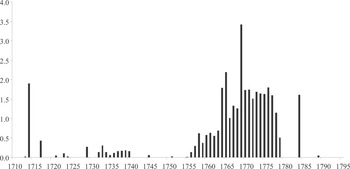
These characteristics of Holland's debt made the secondary market develop differently from the one in Britain. Since the British government was not required to redeem consols upon request, British investors needed a secondary market for selling their investment. This market became liquid not only because of Britain's large public debt but also because consols were issued and transferred only in London.Footnote 9 Whereas British investors had to rely on the market to sell off consols, Holland's investors could always offer their bills to the local tax receiver, who managed debt and interest payments. However, they rarely did. For most of the time, Holland simply lacked the money for debt redemption, so receivers were not often active buyers (see Figure 1).Footnote 10 Conversely, as a rule, bills traded at prices above par, so investors would mostly sell privately rather than go to the receiver and be redeemd at par.Footnote 11 Consequently, secondary markets remained rather thin, with only Amsterdam and The Hague offering any potential for a thick market.
The buy-to-hold behavior that emerged from the late seventeenth century made markets even thinner. Business opportunities dwindled as economic growth stagnated. After the War of the Spanish Succession between 1701 and 1713, Holland had reached its fiscal limits and issued little new debt until the mid-eighteenth century. With high savings rates, bills became a relatively scarce asset and private and institutional investors thus rolled them over continuously (De Vries and Van der Woude 1997, pp. 120, 124).Footnote 12 The ledgers of Joseph Elias van der Muelen, a burgomaster in the town of Utrecht, nicely demonstrate the long time horizons of investors. Around 1750, 18.5 percent of his portfolio consisted of securities issued by the province of Holland. The notes in his ledgers show that he had inherited quite a few of them and, in turn, he also handed over some of them to his son (Fynn-Paul 2010). Notarial transfer deeds further illustrate the importance of such life cycle events as marriage and death for transferring securities within the family.Footnote 13
REDEMPTIONS OF HOLLAND BILLS, 1712–1794 (in million Dutch guilders)

Centralization of public debt could have made markets thicker, but investors experienced little trouble from decentralized markets and actually stood to lose from centralization. As was already pointed out, it was convenient and cheap to collect interest locally. Those who possessed nonlocal bills and could not time collecting interest with other activities, incurred costs. While centralizing the market would have made it easier to trade at lower brokerage fees, it would have confronted many investors with expenses for collecting interest. The added liquidity of a centralized market did not weigh up against this. For example, the thin market for Holland bills raised the cost of finding buyers. Sellers therefore had to pay their brokers 0.25 percent of a security's face value for doing so (Noordkerk 1748, p. 1685). For buy-to-hold investors this hardly mattered since they traded infrequently and stood to benefit more from the low annual costs of collecting their interest locally. The portfolio of Joseph Elias van der Muelen documents this. Upon their marriage, his wife, Maria de Malapert, brought with her seven bills that paid interest in Amsterdam. In 1738 Joseph Elias paid 2.10 guilders to have the interest collected there.Footnote 14 Although this only amounted to 0.30 guilders per bill, it reduced the already low returns.Footnote 15 The lower transaction costs that a liquid market such as London allowed for (i.e., 0.125 percent), did not make up for this (Dickson 1967, p. 462; Cope 1978, p. 3; Neal 2012). From a cost perspective, Van der Muelen would have been better off with assets that paid interest locally; unless he intended to sell his bills quickly, of course.Footnote 16
Thus neither investors nor the province had much incentive to strive for a central secondary market. Even so Dutch investors did of course need to trade sometimes, so some form of market structure had to be developed. The following sections document what it looked like.
TRADING SECURITIES IN AMSTERDAM
The large part of Holland's debt issued in Amsterdam should have provided a greater potential for a secondary market there than elsewhere.Footnote 17 We do not really know how transactions were organized, however. There were no central transfer registers or price currents as in London.Footnote 18 Apart from a handful of exceptional issues, the Amsterdam price current did not publish securities prices. The Amsterdamsche Courant did publish such prices, but only for securities in the forward trade, which included East India Company shares and some British funds. From 1766 the monthly magazine Mercurius included the prices of securities that were auctioned. It was only after 1795 that the Prijs-courant der Effecten, a specialized journal that appeared multiple times per week, included quotes as reported by a number of sworn brokers. For almost the entire eighteenth century, Dutch investors could thus not rely on anything that came close to an equivalent of London's Course of the Exchange (Van Dillen 1931; Neal 1990, chap. 2).
The absence of published price data suggests that a central spot market did not exist at the Amsterdam Exchange. Such a market, where brokers were present on a permanent basis to represent clients from all over the country, would have been costly anyway. After all, Holland bills paid interest locally and demand would consequently have been higher in the respective issuing towns. This put local intermediaries in a better position to identify potential buyers. It is likely that a secondary market in Amsterdam existed because the brokers’ guild rules included charges for handling securities.Footnote 19 In addition, auctions provided an increasingly likely market.
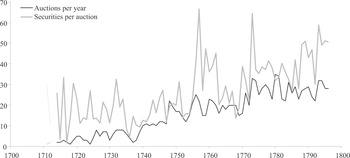
Auctions were used from the early eighteenth century onwards and provided the only structured market-clearing mechanism in the Republic. They offered several advantages to those wishing to sell securities, including transparent bidding, an auctioning mechanism that stimulated bidders to reveal (private) information about prices, and an ability to usually sell all securities in one session.Footnote 20 Meeting buyers was facilitated in two ways. First, day, time, and location were standardized for meetings at 3:00 pm on Mondays at the hotel Oude Heeren Logement.Footnote 21 Although auctions were not organized with high frequency, they did offer a regular opportunity to trade. A new data set with detailed information about the auctioned securities shows that the number of auctions per annum increased until the 1770s, when meetings were held roughly every fortnight (see Figure 2).Footnote 22 Second, brokers generated exposure for auctions by printing booklets in which the securities were described and by posting bills in town. They also advertised in the various local and nonlocal newspapers.Footnote 23 Auctions were thus clearly not organized for locals alone, but brokers cast their nets widely in order to attract potential buyers. Private correspondence shows that investors also consulted these sources of information to keep up to date about auctions.Footnote 24
Between 1711 and 1796 around 45,000 securities were auctioned in Amsterdam and the average number of securities sold per meeting increased gradually (see Figure 2). Debt issued by Holland (over one- third of the total) and other Dutch public authorities comprised an important part of the auctioned securities. Despite these large numbers, auctions probably were not the main way to sell securities. Organizing an auction took time and was costly.Footnote 25 The available evidence suggests that it was primarily inheritors and trustees who resorted to using them for the settling of estates. The information presented here, as well as the large number of brokers who attended the auctions, nevertheless suggests that a dynamic market must have existed (Van Bochove, Boerner, and Quint 2012).Footnote 26 Sources generated in the auction context provide evidence on how transactions were recorded there.
AUCTIONS OF SECURITIES IN AMSTERDAM, 1711–1796

The newspaper advertisements used by Amsterdam's brokers to inform the public about their auctions show that a strict specialization between brokers and notaries had emerged in auctioning securities.Footnote 27 A 1740 advertisement points out that the securities, and the relating documents with proof of ownership, could be consulted in the office of notary De Wolff. Advertisements dating from 1726, 1727, and 1729 are even more explicit. Not only did the notary hold the proofs of ownership, but he would also transfer the ownership of the securities. Brokers thus took care of finding counterparties by generating publicity and organizing the auction, whereas the notary took care of the legal aspects of transfer and proof of ownership.Footnote 28 Investors valued this proof of ownership because interest was presumably paid to legitimate bill holders only. As transfers were not recorded in the original government ledgers, investors thus strengthened title by recording transfers in notarial deeds. Deeds included the history of each security and investors stressed that being able to document their history enabled one to sell bills more easily.Footnote 29
Some evidence on transfers elsewhere suggests, however, that brokers also recorded transfers in their own ledgers.Footnote 30 Analyzing all notarial deeds in Amsterdam may therefore give only a partial view of the secondary market. This article instead makes an in-depth analysis of notarial deeds from the town of Utrecht, because this problem presumably did not exist there. Utrecht, located at about 35 kilometers from Amsterdam, was the regional center of the province of Utrecht and belonged to the economically advanced western part of the Republic. Its markets attracted people from surrounding towns and the countryside. The provincial government bodies and courts were located there and wealthy investors made up a relatively large part of the town's population. Amsterdam and Utrecht were linked through a barge network on which a one-way trip took seven hours with barges departing three times per day. Wealthy Amsterdam families spent their summers in their country houses along the river Vecht or had settled permanently in Utrecht. There is little reason to assume investors in Utrecht had very different preferences from investors in Amsterdam or elsewhere in Holland (De Vries 1978; Brugman, Buiter, and Van Vliet 1995; Rommes 1997, pp. 171, 175; 1997, p. 195; Kooijmans 1997; Faber and Rommes 2000, pp. 267–70, 299–313; De Bruin 2000, pp. 325–28, 340, 358).
Unlike in Amsterdam, a brokers’ guild did not exist in Utrecht. An ordinance of 1669 stipulated that henceforward one had to be admitted as broker by the town government. The ordinance compelled brokers to record in a ledger the details of all transactions in which they were involved. Since Utrecht's notaries transformed into notary-brokers, transactions were obviously recorded in notarial deeds, likely making the notarial archives in Utrecht richer than those in Amsterdam (Van de Water 1733, pp. 867–68). The deeds from Utrecht's notarial archive can be analyzed relatively easily because summary information for almost all individual deeds has been made available in a database. In the offices of Utrecht's notaries, many securities changed hands through donations (schenking) and the partitioning of estates (scheiding). Since in such cases no intermediary services were provided because both parties were typically related to each other, notaries merely recorded the transfer and for this reason they are disregarded here. The following sections focus on those transactions in which a money payment was made: transfers (overdracht).Footnote 31 They inform us about how transactions were organized in a smaller town outside the province of Holland, where investors did not have access to a local receiver.
TRANSFERS IN THE TOWN OF UTRECHT
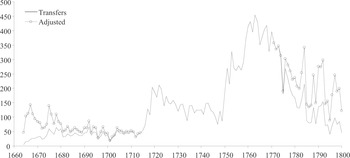
For the period 1664 to 1800 a total of 18,414 transfer deeds involving money payments were drawn up by Utrecht notaries (see Figure 3). Since many deeds related to the transfer of more than a single security the total number of transferred securities may have exceeded 30,000.Footnote 32 The data point to a negative relationship between the borrowing needs of the province of Utrecht and the activity of investors on the secondary market. Between 1688 and 1714 the province issued much new debt to contribute its share to the Nine Years’ War (1688–1697) and the War of the Spanish Succession. After 1714, however, the reorganization of the province's finances kept borrowing amounts modest up until the 1750s. Between the 1750s and 1770s the province ran budget surpluses, but deficits returned during the 1780s and 1790s (Aalbers 1997, pp. 255–56, 261–65; De Bruin 2003, p. 86; Verstegen 2006, pp. 13, 20, 57, 110–11, 165–66). When the province issued little debt, investors were challenged to find new outlets for their surplus capital. That the secondary market consequently grew in size suggests that securities were imported from outside the province of Utrecht. Some, but not all, of these securities paid interest in Utrecht. A preference for securities that paid interest locally therefore likely explains why investors, when issuing by the province increased, preferred to buy securities on the primary market.
TRANSFER DEEDS INVOLVING MONEY PAYMENTS IN UTRECHT'S NOTARIAL ARCHIVE, 1660–1800

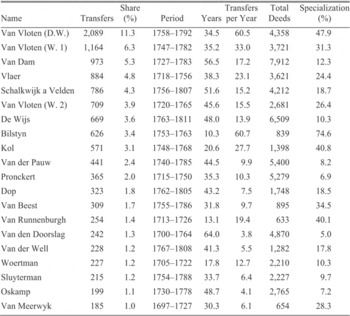
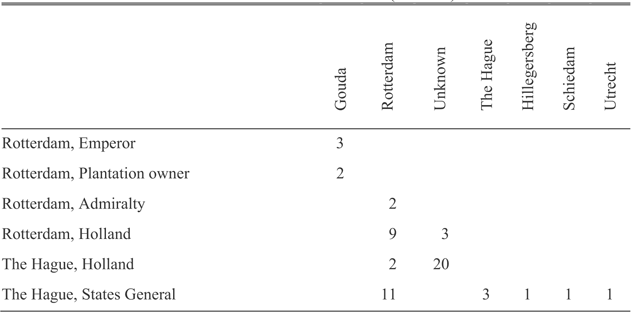
A further analysis shows that the Utrecht transfer deeds were distributed highly unequally over the 193 notaries. Only twenty notaries, each with a share of at least 1 percent of the total, were responsible for 62 percent of total transfers. Even within this group, large differences existed in the listings by notary in Table 1. Notaries Gijsbertus Bilstyn and Dirk Wernard van Vloten recorded nearly double the transfers per year of the third leading notary and each specialized in such transfers more than the rest.
The question remains as to why transfers dominated the deeds of such notaries as Bilstyn and Van Vloten. If clients were solely interested in documenting proof of ownership, any notary would have done. The fact that some of them were highly specialized in recording transfer deeds must imply that they offered their clients additional services.
The most likely service was an ability to match buyers and sellers or provide information about prices. Contemporary sources, such as the correspondence of Jacoba Catharina van Schoonhoven from The Hague, show that this was indeed the case. She used the local notary-broker Jan van den Bos both to record transfers and to actively provide her with information about sales and issue of securities. He advised her about prices that bonds of the States General should raise as well.Footnote 33
THE MOST IMPORTANT UTRECHT NOTARIES AND THEIR TRANSFER DEEDS INVOLVING MONEY PAYMENTS, 1660–1800

Note:
For the period 1715–1770 all inventory numbers were available in the database, but for the years before and after adjusted figures were calculated. See the Appendix for more details on the procedure.
Source:
See the Appendix.
It should be noted that no single notary was able to make a living by focusing solely on brokering government securities. Recording other deeds remained the core business for most. Given that notarial offices were relatively small, being a notary could not have been a full-time occupation for most and many notaries therefore took up additional activities. Two examples in the field of finance were Dirk Wernard van Vloten, who became an underwriter for foreign loans that were issued in Amsterdam, and Jan Kol, who was also active as manager of foreign investment portfolios, cashier, and banker.Footnote 34
The secondary market for public debt in the Republic could of course not have remained limited to a mere collection of local markets. Due to inheritance, marriage, and removal, securities moved around too. A system was therefore required to “repatriate” securities to the places where they paid interest. The following two sections discuss how these transactions were organized in the Republic.
MARKET MAKERS AND THE REGIONAL SECONDARY MARKET
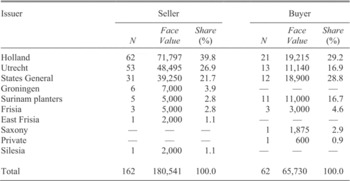
A noticeable feature of Bilstyn's intermediary services was that he also connected local secondary markets to each other as a market maker. Between 18 July 1750 and 23 May 1763 he appeared in the transfer deeds of his fellow notaries 100 times as a seller (162 securities) and 35 times as a buyer (62 securities). Total turnover amounted to almost 250,000 guilders, as reported in Table 2.Footnote 35 The transfer deeds—recording the history of each security—show that Bilstyn purchased securities in Amsterdam (71), Rotterdam (29), Utrecht (24), and several additional markets. He then sold approximately 82 percent of the securities in less than two months.Footnote 36 This kind of trading fits with the characterization of Utrecht as a market where wealth holders’ demands for securities at times could not be fully satisfied by the local and provincial governments. Alternative securities thus had to be imported and intermediaries such as Bilstyn provided this service. The relatively high share of securities issued by the province of Utrecht shows that he focused in particular on securities that paid interest locally.Footnote 37
A quite similar story applied to The Hague. Although not formally a town itself, it was home to many of Holland's and the Republic's governmental and judicial bodies. And unlike the stagnant populations of towns elsewhere in the Republic, The Hague's population doubled between the mid seventeenth and the late eighteenth century. Its relatively large number of wealthy inhabitants generated a demand for securities. It was for this reason that The Hague, while it did not have voting rights in Holland's provincial assembly, had a receiver's office (Ibelings 2004; Wijsenbeek 2005, pp. 59, 72–73, 78). And like Bilstyn in Utrecht, members of the Boas family operated in The Hague as market makers on the regional market.
BILSTYN'S PRIVATE SECURITIES TRADING, 1750–1763

Note:
For one Holland purchase, the face value of the security was not specified. It was assumed that it was 500 guilders, just like similar securities in that transaction. The face value of one purchased security was 750 German rijksdaalders, which has been assumed to correspond to 1,875 guilders.
Source:
HUA, Notarissen, D. Oskamp: inv.nr. U188a012 deed 55, inv.nr. U188a016 deeds 7, 15, inv.nr. U188a017 deeds 3, 43, inv.nr. U188a019 deed 1, inv.nr. U188a020 deed 1; D.W. van Vloten inv.nr. U247a001 deeds 105, 107, 115, 120, 122, inv.nr. U247a002 deeds 41, 44-47, 51, 59, 102, 109; E. Vlaer: inv.nr. U166a029 deed 45, inv.nr. U166a030 deeds 23-24, 33, 96, 101, 122, inv.nr. U166a032 deeds 3, 5, 83; G.J. van Spall: inv.nr. U196a008 deed 36, inv.nr. U196a009 deeds 48, 71, 74-75, 92, inv.nr. U196a011 deeds 30, 34, inv.nr. U196a013 deeds 27, 35; G. van Wesel: inv.nr. U253a001 deeds 1, 5-10; H. van Dam: inv.nr. U184a018 deed 167, inv.nr. U184a019 deeds 3, 16, 209, 237, inv.nr. U184a020 deed 196, inv.nr. U184a022 deed 10; J. Kelffkens inv.nr. U225a001 deeds 55-56; J. Kol inv.nr. U219a002 deed 79, inv.nr. U219a003 deeds 50, 75, 82, 87, 90-93, 95, 116, inv.nr. U219a004 deeds 31, 77, 82-83, 100, 103, inv.nr. U219a005 deeds 2, 29, 33, 40, 49-50, 52, 60-61, 74-76, 93-94, 99; J.T. Blekman: inv.nr. U227a001 deeds 54-56, 101; L. van der Pauw: inv.nr. U205a008 deeds 86, 91, inv.nr. U205a010 deed 37; N. de Graaff, inv.nr. U218a003 deeds 49, 98, inv.nr. U218a004 deeds 23-24; O. van der Schroeff: inv.nr. U245a001 deed 81, inv.nr. U245a002 deed 66; R. van Vliet: inv.nr. U238a001 deed 61; W. Geerling: inv.nr. U243a001 deeds 3-4; W. van Vloten 1: inv.nr. U169a014 deed 82, inv.nr. U169a016 deed 123, 125, 132, 155, 179; W. van Vloten 2: inv.nr. U217a002 deeds 68, 71-72, 127, inv.nr. U217a003 deed 156, inv.nr. U217a005 deeds 72, 74-75, 79-80, 83, 87, inv.nr. U217a007 deeds 20, 167, 184, 224; Z.C. van Leene: inv.nr. U207a004 deed 78, inv.nr. U207a006 deed 60, inv.nr. U207a007 deed 95; A. van Goudoever: inv.nr. U191a002 deed 10; T. van Weydom: inv.nr. U232a001 deed 8; C. van Beest: inv.nr. U235a001 deed 99; H.N. van Schalkwijk a Velden: inv.nr. U242a002 deed 101, inv.nr. U242a003 deed 28.
It is not surprising to find the Boas family active in this field because they already provided various other financial services. Abraham Boas had started the family's activities during the early eighteenth century with a jewelry trade. He was joined in 1712 by his son Tobias. This jewelry trade was continued, but the trade in bills of exchange and banking services were added to the firm's activities.Footnote 38 Tobias broadened the supply of financial services. He settled estates, sold land for clients, paid interest for the province of Zeeland to its bond holders in The Hague, managed the foreign investments of clients, raised loans, transferred money and also seems to have speculated in land. The current accounts of one of his clients further suggest that they also provided deposit banking and overdraft facilities.Footnote 39
The notarial archives in Utrecht contain 23 deeds in which members of the family—but mostly Abraham and Simeon—are found. Twenty-two of these relate to the trade in securities: seventeen sales to them personally, one sale to them in their function as guardian, two purchases and two requests to sell securities. In the 19 proprietary trades, a total of 59 securities were involved. The purchases included securities issued by Holland's receiver in The Hague (28), the States General (25), Silesia (2), and Frisia (1). Three bonds of the province of Utrecht were sold. The great majority of these transfers (56 securities) thus involved the reallocating of securities to the places The Hague and Utrecht, where they paid interest. This was also the case for the 12 securities that they were ordered to sell or that they bought as guardians.Footnote 40
Notarial deeds from The Hague (1750–1753) provide additional evidence. They show that Tobias Boas sold half of the securities he imported within two months and 91 percent within half a year.Footnote 41 With 53 percent of the securities paying interest in The Hague, the reasons for doing so were presumably identical to those of Utrecht notary Bilstyn. But there might have been two additions. First, a substantial part of the clientele of Tobias Boas consisted of people for whom it was explicitly stated that they were outsiders who had a political function in The Hague. Having a portfolio of securities available may have been a clever way to attract the business of such itinerant customers who may not have had the time to wait for a direct match to be identified. Second, there also is the possibility that Tobias Boas turned the excess deposits from his bank into government securities. This allowed him to earn some interest and also made sure that he always had securities at hand to sell. The secondary market enabled him to turn these securities into cash when necessary.
Although notarial deeds thus provide a valuable insight into the businesses of market makers, they do not shed light on their fees. Spreads cannot be reconstructed because the deeds hardly ever mentioned the price at which transactions were executed. Despite this lack of evidence, it is unlikely that market makers had much leeway to mistreat their clients. Information spread easily and cheaply in the Republic thanks to a well-functioning postal system. This enabled investors to keep up to date about market conditions such as prices. The short terms of bills, low rates of interest, low taxation costs, and the presence of alternative trading mechanisms must also have helped to keep spreads modest (Van Dillen 1931; Neal 1990, chap. 2; Overvoorde 1902; Ten Brink 1956).Footnote 42 But in the end, as Jacoba Catharina van Schoonhoven was well aware, not being in a hurry did enable one to get a better price.Footnote 43
MATCH MAKERS AND THE REGIONAL SECONDARY MARKET
Intermediaries like Bilstyn and Boas enabled investors to trade by connecting local secondary markets as market makers. This was not the only service that intermediaries had to offer, however. The oldest surviving business ledger of the firm of Utrecht notaries Vlaer and Kol, dating from the early 1760s, also provides an important insight into how the regional market functioned (HUA, Kol, inv.nr. 683; Barthels 1998). Browsing through the ledger, one finds numerous accounts with intermediaries in Amsterdam, Leiden, Rotterdam, London and Paris. The account of Rotterdam broker Hendrik van der Meij shows that transfers of securities were found both on the debit and credit sides of his balance sheet. On the debit side, 63 securities changed hands between 16 February 1761 and 29 December 1762. The transactions typically mention the security, its face value, and the price for which it was sold. To this was added the interest that still had to be paid and subsequently 0.25 percent of the face value was deducted for commission.Footnote 44
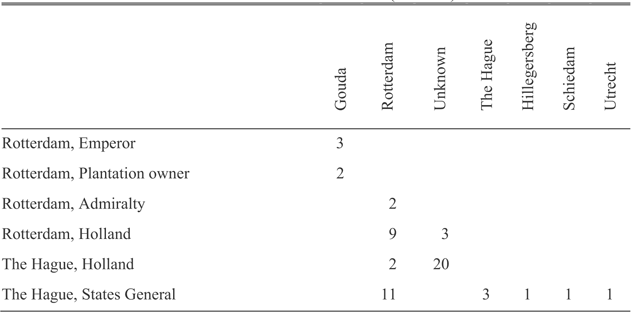
These securities were thus sold in Rotterdam by Van der Meij on behalf of Vlaer and Kol. The characteristics of the securities and the persons involved in the transactions explain why Vlaer and Kol employed the help of Van der Meij. As Vlaer and Kol were the selling intermediaries, the transfers of 58 securities could be located in thirty notarial deeds of Kol.Footnote 45 The fact that all owners lived in Utrecht explains the involvement of Vlaer and Kol as intermediaries. The characteristics of securities and buyers are summarized in Table 3. The importance of bills issued in Rotterdam (35 percent of the Holland bills) is noteworthy for Rotterdam's receiver only issued 4 to 7 percent of Holland's debt.Footnote 46 A relatively large number of bills were thus relocated to the place where they paid interest.
The transactions discussed in this and the previous section demonstrate three important aspects of the secondary market for public debt in the Dutch Republic. First, the transfer deeds of notaries did not solely relate to transfers between persons residing in that place. An important share of the transactions actually related to transfers between people that lived in two different towns. Second, this network was particularly useful for transferring securities to the place where they paid interest. The transactions of Bilstyn, Boas and Vlaer and Kol are a good example of this. Investors likely preferred the ease of collecting interest locally and the regional brokerage network allowed them to do so. Third, regional networks also exchanged important numbers of additional securities. Securities for which a ready market could not be found locally were brought into the regional network of brokers. Investors did thus not have to rely solely on local intermediary solutions, but also had access to networks between local markets which offered opportunities to trade.
SECURITIES TRANSFERRED BEFORE NOTARY KOL ORDERED BY PLACE OF INTEREST PAYMENT AND ISSUING PARTY (first column) AND PLACE OF RESIDENCE OF THE BUYER (first row)
Source:
HUA, Notarissen, inv.nr. U219a010 (notary J. Kol), deeds 11, 12, 13, 14, 18, 33, 34, 35, 59, 97, 98; inv.nr. U219a009 (notary J. Kol), deeds 11, 12, 13, 15, 23, 53, 55, 83, 84, 85, 86, 98, 100, 101, 114, 115, 129, 130, 131.
THE ABSENCE OF LOCAL MARKETS
Although the preceding sections might suggest otherwise, opportunities to trade government debt did not emerge in every town. The case of Amersfoort, located in the province of Utrecht as well, illustrates well that size and location mattered. With a population that increased from 7,000 to 8,500 people during the seventeenth and eighteenth centuries, Amersfoort can be characterized as a provincial town. It served as nodal point for the surrounding countryside. During the eighteenth century, the town came to play an important role in the region's tobacco trade. At 20 and 42 kilometers respectively, Utrecht and Amsterdam were located relatively nearby. Both could be reached over land, but a connection by boat also existed with Amsterdam (De Vries 1984, p. 88; Rommes 1997, pp. 196–97, 208–10; Rommes 2009, p. 230).
The portfolio of Geertruidis van Halteren may be used as example to show that people in Amersfoort invested in government debt. Geertruidis herself had invested about 75,000 guilders in securities of the province of Utrecht (41 percent), Holland (31 percent), other Dutch issuers (11 percent), and foreign issuers (17 percent).Footnote 47 To ascertain whether investors had access to a local secondary market, all transfer deeds in Amersfoort's notarial archive were identified for the years 1700, 1780, and 1800.Footnote 48 Although eleven, twelve, and six notaries were active in these years respectively only three relevant deeds could be located: one auction deed in 1700 and two transfer deeds in 1800. That no one was authorized by proxy to purchase securities in such nearby markets as Utrecht and Amsterdam suggests that Amersfoorters mostly bought their securities there themselves or approached local intermediaries directly. The most likely purchasers of government securities—the local political, judicial, and commercial elites—probably had regular business in these nearby centers and could have transacted when visiting.
The Van Halteren case provides evidence of how Amersfoort investors may have done so. On 13 March 1770 Jacob van Halteren, the brother of Geertruidis, appeared before Utrecht notary W. van Vloten to sell three Holland bills (HUA, Notarissen inv.nr. U217a12 (notary W. van Vloten), deed 105). He was not only transacting on his own account, but he also represented his sister who had stayed behind in Amersfoort. Since he was an advocate at the Court of Utrecht, Jacob most likely did not travel to Utrecht for this transaction alone. A few years later, Jacob died and bequeathed some of his securities to his sister. Since Geertruidis had to pay a tax on her inheritance, she went to Utrecht and authorized two people to arrange matters before the courts of Utrecht and Middelburg.Footnote 49 In 1785 Geertruidis appeared before D. W. van Vloten in order to purchase a bond issued by the Dutch East India Company (HUA, Notarissen, inv.nr. U247a21, deed 72). Jacob and Geertruidis were exemplary; other individuals and institutions from Amstersfoort can also be identified in Utrecht's notarial deeds.Footnote 50 Although most of these examples refer to bonds of the province of Utrecht, there also is evidence that Amersfoorters traded in Holland bills.Footnote 51
Links with Amsterdam also existed. In May 1760 Coenraad Temmink and Elisabeth Johanna Kool authorized their son Matthias to sell six Holland bills that Elisabeth had bought at issue a few years earlier. A few months later Jan Guilliam Temmink and Anthony Methorst authorized him to sell eight Holland bills. As Matthias Temmink was an advocate at the Court of Amsterdam, he presumably sold the securities there. Institutional investors also knew how to enter the Amsterdam market.Footnote 52
The size and wealth of Amersfoort's population meant that local demand and supply was much smaller than in Utrecht. The proximity of larger towns such as Utrecht and Amsterdam must have made it attractive for investors, who probably also had business to take care of in these towns, to transact there. The fact that investors preferred the liquidity that these nearby and larger markets offered thus prevented the rise of a local secondary market in Amersfoort.
ASSESSING THE REPUBLIC'S SECONDARY MARKETS
Now the question is, how liquid were the Republic's secondary markets? Due to the centralization of primary and secondary markets in Britain, good data on the annual number of transfers are available there. Unfortunately, however, these figures also include the transfers of securities within families (Dickson 1967, pp. 528–33).Footnote 53 Donations, partitioning of estates, gifts, and other exchanges obviously took place in the Republic as well, but these transactions have not been analyzed systematically in this article. It did become clear, though, that these transactions involved many securities. This article has focused instead on transfers and auctions in a number of towns but showed that such transactions were also conducted elsewhere. Reliably estimating the number of transactions in the entire Republic would require an elaborate sampling of all notarial archives, but, even if this were feasible, the exercise would be pointless. It should be realized, after all, that redemptions of consols in Britain, such as took place through the sinking fund, had to go through the secondary market. In Holland, however, investors dealt directly with a receiver.
Besides these practical arguments, there also is a more fundamental reason why such a quantitative exercise would be beside the point. What really mattered to investors was not the number of annual transactions, but whether they could trade at modest transactions costs whenever they wanted and without affecting prices unduly. Although the spreads of Dutch market makers could not be retrieved from notarial deeds, we saw that brokerage fees were higher than in Britain. This implies that even where immediacy could be obtained, brokers could charge more for executing transactions. Dutch secondary markets were therefore probably less liquid than the secondary market in London. Now did this matter for lenders, for borrowers, or for the development of financial markets?
To start with the latter, the absence of a liquid public debt market clearly did not have a negative impact on the development of Dutch financial markets. First, the lack of known bill derivatives did not mean that the public did not have access to them. A lively trade in derivatives of shares of the Dutch East India Company had already existed since the early seventeenth century and stimulated market development. During the eighteenth century trade in time contracts of the shares of a number of British companies was added to this (Gelderblom and Jonker 2004; Koudijs 2012; Petram 2011). Amsterdam's financial market was thus clearly capable of dealing with derivatives and must have had good reason not to establish a similar trade for bills. The stable prices of Holland's bills presumably did not make them interesting enough to speculate upon or hedge against price fluctuations (Auctions database).Footnote 54
Second, borrowing on the collateral of bills probably became the cornerstone of Amsterdam's money market in the late seventeenth century and remained so until 1914. This was facilitated by the bills’ homogeneity and widespread possession, and likely the stable prices referred to above as well. Here, the market could build on the experience it had gained since the early seventeenth century with pledging shares of the Dutch East India Company (Jonker 1996; Gelderblom and Jonker 2004).Footnote 55
Third, Amsterdam was far more advanced in some fields of finance than London. Amsterdam bankers pioneered financing complex commercial transactions based on interest rate arbitrage with acceptances, for instance.Footnote 56 The second half of the eighteenth century witnessed an issuing boom, first in mortgage-backed securities for Caribbean plantations, and then in a wide range of bonds for foreign governments and companies (Riley 1980). Finally some bankers started experimenting with mutual funds (Rouwenhorst 2005; Berghuis 1967). This precociousness of the Amsterdam market clearly resided in the familiarity with securities of a very wide public; the regular issuing of complex or foreign securities in London started only in the nineteenth century.
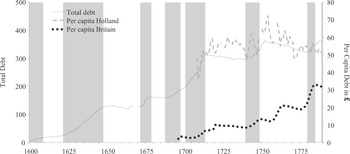
The absence of a liquid secondary market was not of much concern to borrowers like the province of Holland either. Public authorities in the Republic were mainly concerned about raising large amounts of money at low costs. And this they could. Holland paid a coupon of only 2.5 percent while its bills usually traded at prices above par (Liesker and Fritschy 2004; Auctions database).Footnote 57 Compared to other European states this obviously was a very low return on investment and Holland could realize it without shipping funds across the province. Moreover, Holland had access to a large pool of investors. Although the largest single investors were institutions, the majority of public debt was held by private investors. During the period 1700 to 1780 the fortunes at death of the elites in Leiden, Gouda and Hoorn—three towns located in the province of Holland—contained bills to the value of 70,809, 52,079, and 36,883 guilders respectively. There were numerous people with smaller holdings but unfortunately no systematic data about them are available. Assuming an average holding of 30,000 guilders, Holland bills would have been held by 10,000 to 12,000 investors.Footnote 58 Contrary to Britain, where investors mainly resided in London and its immediate vicinity (Bowen 1989; Carter 1955; Dickson 1967),59 these investors could be found throughout the country. Perhaps assisted by this accessibility of its debt, Holland could issue a per capita debt that was much higher than in Britain.Footnote 60 Moreover, the gap between the two only gradually narrowed during the eighteenth century (see Figure 4).
It should be noted, of course, that Figure 4 compares public debts, not bills and consols. The dominance of Holland remains, however, when bills (60–80 percent) and consols (57–74 percent) are isolated and an adjustment is made for each security's average trading size.Footnote 61 Restricting the analysis to bills issued in Amsterdam (25–35 percent) still leaves a per capita figure that was around 2.5 times as high during the second half of the eighteenth century. Although this should not be interpreted as a measure of potential liquidity, it does help to gauge the significant impact of the buy-to-hold behavior on liquidity. It not only reduced the number of transactions, it also provided a strong incentive to prefer and maintain decentralized primary and secondary markets. Collecting interest elsewhere, after all, cost money.
Investors maintained their preference for local interest payments even when the public debt was finally centralized from the end of the eighteenth century onwards. In 1798 all provincial debts were amalgamated and in 1806 a new and uniform tax system was introduced in the Netherlands. Although this theoretically created a national debt, in practice a very diverse set of instruments, terms and interest rates remained in place. Finally, in 1814 these older debts were converted into one 2.5 percent security that would pay interest in Amsterdam. For the first time there then was a truly homogenous asset, the ownership of which was registered in a central government ledger, and that paid interest in a single town (Van Wisselingh 1906; Fritschy 1988, chap. 4; Pfeil 1998; “Ontwerp van Staatsregeling”). Instead of turning Amsterdam into the central secondary market, commercial administration offices were established in various towns in order to maintain the old situation. They bought large batches of public debt in Amsterdam and subsequently issued certificates on them. They sold these certificates to clients who then did not have to bother about collecting interest in Amsterdam but instead received interest payments locally.Footnote 62 The trade-off between lower brokerage fees and higher collecting fees was thus a very persistent one.
THE TOTAL DEBT OF HOLLAND (in million Dutch guilders) AND PER CAPITA DEBT OF HOLLAND AND BRITAIN (in pounds), 1600–1789

CONCLUSION
Based on new archival evidence, this article documents trading patterns on the secondary markets for public debt in the Dutch Republic. Some local markets seem to have been in place around the mid-seventeenth century already, but during the eighteenth century they continued to develop. Brokers, notaries, and bankers offered various intermediary services that enabled investors to trade: match making, market making, and auctions. Although developing a comparative measure for liquidity fell beyond the scope of this article, Larry Neal was right to claim that these secondary markets were probably not as liquid as their counterpart in London. To explain this divergence of Europe's two leading markets, this article posited that liquidity was not merely a function of debt size or limited government. It argued that the location and investment behavior of investors not only determined how debt was issued on primary markets, but also how it was traded on secondary markets. Together with Hoffman, Postel-Vinay, and Rosenthal's work on France, the Dutch case thus forces us to rethink the formation of primary markets in preindustrial Europe.
The situation in Britain was ideal for the development of a liquid secondary market. London was by far its largest and most important town. Since wealth holders were concentrated there, Britain could afford to issue debt in a single town only. The secondary market that subsequently emerged in London became thick and liquid in the course of the eighteenth century. The context in the Dutch Republic was much different, however. The Dutch Revolt (1568–1648) cut short the process of central state formation and debt therefore continued to be issued at the provincial level. Although this fragmentation placed Britain in a more favorable position to develop liquid secondary markets, it probably was not decisive since most debt was issued in a single province: Holland. But with wealth spread over many towns, Holland could build up a substantial debt only by tapping into local markets. Issuing bills in the nineteen most important towns fragmented the debt, however, and reduced the potential size of the secondary market.
It was crucial that most investors also preferred this decentralized primary market because it minimized their costs to invest and collect interest. They did not have to incur costs by travelling elsewhere, but could conveniently do all of this within their own town. This preference was of great importance for the development of secondary markets. Dutch investors of course appreciated the benefits of liquid markets in which they could sell at modest transactions costs whenever they wanted. But Holland's urban landscape confronted them with a trade-off between liquidity and low one-time trading costs on the one hand and annually recurring interest collection costs on the other. The buy-to-hold behavior that emerged during the late seventeenth century made the desire to cut interest collection costs outweigh the anticipated benefits of daily exchanges of securities. Their preference for minimizing interest collection costs remained in place even after a national debt was issued in the nineteenth century.
The preference to minimize interest collection costs was also reflected in the structure of the secondary market. Local markets were modest in scale or, as the case of Amersfoort illustrated, did not develop at all. A key function of the secondary market was to repatriate securities to the places where they paid interest, so as to enable investors to minimize collecting costs. The way in which liquidity developed—not only in the Republic, but also in Britain—was therefore contingent on local circumstances such as economic geography and investment behavior. The fact that the Dutch Republic had a deep market for public debt as well as advanced financial institutions, hence demonstrates that in preindustrial Europe there was not one single configuration for developed financial markets.
The author wishes to thank Heidi Deneweth, Price Fishback (editor), Caroline Fohlin, Oscar Gelderblom, Benjamin Guilbert, Joost Jonker, Heleen Kole, Anne Murphy, Steven Nafziger, Larry Neal, Jean-Laurent Rosenthal, the anonymous referees, and seminar participants at Free University Berlin and Utrecht University for valuable comments and suggestions.
Appendix: Transfer Deeds in Utrecht's Notarial Archive
The Utrecht City Archive has made available in an online database summary information for a substantial part of the deeds in its notarial archive. A list with 18,414 transfer deeds (overdracht) pertaining to the period 1664–1800 was downloaded on 6 November 2009. In nearly all cases, these deeds related to the transfer of securities. These records could not be used straight away, however, because the database was an ongoing project and not all inventory numbers had yet been made available. To take this into account, an adjustment ratio had to be calculated.
When the database was consulted, deeds from 1,429 inventory numbers were available online for the period 1664–1800. A comparison with the archive's inventory showed that a total of 1,816 inventory number were available in the archive as a whole (Heins and Mathijssen 1982). For the period 1715–1770 deeds from all inventory numbers had been entered, but for the periods 1664–1714 and 1771–1800 deeds from 387 inventory numbers were still unavailable. In order to take this into account the following adjustment ratio was determined for each year: [inventory numbers in archive] ÷ [inventory numbers online]. This procedure also considered that inventory numbers covered multiple years. For an inventory number covering the period 1700–1702, for example, a value of one-third was assigned to each year. Adjustments were mostly required for the period until c.1680 and after c.1780.