

Introduction
Atmospheric concentrations of greenhouse gases (GHG) have increased significantly as a result of human activities in the last 250 years, posing serious threats to the economy, ecology and global climate (IPCC, 2007). Rising population, rapid urbanization, changing food habits and economic growth not only drive the demand for food, energy and water (FEW) resources but also contribute to GHG emissions and climate change (Hoff, Reference Hoff2011; Food and Agriculture Organization of the United Nations, 2014; UN, 2019). For sustainable management of the FEW resources, scholars and policymakers have called for the adoption of a “nexus” approach that identifies potential synergies and unintended consequences of individual actions within and across these domains (Bazilian et al., Reference Bazilian, Rogner, Howells, Hermann, Arent, Gielen, Steduto, Mueller, Komor, Tol and Yumkella2011; Howells et al., Reference Howells, Hermann, Welsch, Bazilian, Segerström, Alfstad, Gielen, Rogner, Fischer, van Velthuizen, Wiberg, Young, Roehrl, Mueller, Steduto and Ramma2013; Newell et al., Reference Newell, Goldstein and Foster2019). Loosely translated from the Latin verb “nectere”, the word nexus means “to connect” and has emerged as an important concept in identifying and understanding the interconnections across the FEW domains at multiple spatial and temporal scales (DeLaurentiis et al., Reference DeLaurentiis, Hunt and Rogers2016; Simpson & Jewitt, Reference Simpson and Jewitt2019). While a big majority of the current literature explores the FEW nexus at regional, national and global scales, relatively lesser attention has been drawn on their application at individual or residential households’ levels despite their significant share in the overall global carbon footprint (Berman et al., Reference Berman, Shwom and Cuite2019; Dubois et al., Reference Dubois, Sovacool, Aall, Nilsson, Barbier, Herrmann, Bruyère, Andersson, Skold, Nadaud, Dorner, Moberg, Ceron, Fischer, Amelung, Baltruszewicz, Fischer, Benevise, Louis and Sauerborn2019). However, if we are looking at consumption interventions in the interconnected FEW nexus from a systems perspective, then it is important that we take into account spillover effects.
Spillover effects are generally described as the indirect and unintended consequences of an intervention, event or occurrence that are relevant to the evaluation of a resource conservation program (Austin et al., Reference Austin, Cox, Barnett and Thomas2011). Although the idea of one behavior influencing subsequent behaviors across time and space is not new and has been studied across different academic disciplines, lately, it has attracted the attention of scholars and policymakers in the context of pro-environmental behaviors (PEBs) due to their potential role in reducing carbon emissions and mitigating climate change. Failure to account for all possible spillovers not only leaves out valuable information on dynamic interactions across domains but also results in biased estimates and misdirected policy recommendations (Angelucci & Maro, Reference Angelucci and Maro2015). Despite the growing body of research on theories, mechanisms and analytical perspectives of the PEB spillovers, however, the questions of spillover direction, strength and mechanism remain unsettled (Nash et al., Reference Nash, Whitmarsh, Capstick, Hargreaves, Poortinga, Thomas, Sautkina and Xenias2017).
In this study, we first systematically reviewed articles that investigate the idea that the performance of one PEB influences the conduct of subsequent behaviors(s) from the FEW domains. We find that the literature on behavioral spillovers is marked by multiple definitions, diversity in theoretical approaches and underlying explanations. Further, a big part of the discussion is restricted to the nature and direction of causal relationships between individual behaviors from isolated viewpoints, leaving out the bigger picture comprised of dynamic, interactive and complex relationships across FEW domains. While this complex picture might be too difficult to model, isolate and measure in a noisy real-world setting, clarity of concepts and better design of empirical studies can advance our understanding of spillovers. Next, we conducted a quantitative meta-analysis of the reviewed empirical studies to find a modest but overall positive spillover effect. Finally, we reviewed the theoretical and methodological plurality in the FEW spillover literature using a systemic thinking lens to summarize what is already known and identify future challenges and research opportunities with implications for behavioral intervention policies.
The remainder of this article is organized as follows: after a brief overview of the contemporary literature on the theoretical concepts, typologies and estimation methodologies for behavioral spillover effects in the section “Overview of literature on spillover effects”, we present the outline of our analytical approach for systematic review conducted on spillover literature. We first summarize the descriptions of the reviewed literature and then present our findings from the quantitative meta-analysis in section “Analytical approach and findings”. In the section “Spillovers from systems thinking lens”, we briefly outline the key theoretical concepts of the systems approach in analyzing spillover effects that require an understanding of interconnections, engagement with overarching perspectives and decision on boundaries judgments in the context of FEW conservation behaviors. The section “Conclusion” concludes with policy implications on FEW behavioral interventions and suggestions for future studies.
Overview of literature on spillover effects
Improving efficiency and promoting conservation are generally considered to be among the most cost-effective options to address the challenges associated with FEW resource management (Bazilian et al., Reference Bazilian, Rogner, Howells, Hermann, Arent, Gielen, Steduto, Mueller, Komor, Tol and Yumkella2011). Traditionally, the conceptualization, implementation and evaluation of such policy interventions have largely focused on technical innovations, financial incentives and improvements in economic efficiencies. However, scholars and policymakers are increasingly recognizing the role and importance of human behavioral factors as an intervention strategy for a sustainable transition (Allcott, Reference Allcott2011; Stern et al., Reference Stern, Sovacool and Dietz2016). Many consider behavioral change theory as one of the most promising elements of social sciences in terms of its potential in improving policy outcomes, particularly in the context of climate change mitigation and adaptation (Steg et al., Reference Steg, Perlaviciute and Werff2015; Somda et al., Reference Somda, Zougmoré, Sawadogo, Bationo, Buah, Abasse, Uitto, Puri and van den Berg2017). Such changes include behavioral interventions or “nudges” that use choice architecture to alter people's behavior in a predictable way without forbidding any options or significantly changing their economic incentives (Thaler & Sunstein, Reference Thaler and Sunstein2008). Whereas human behavioral interventions present a definite opportunity to policymakers, their evaluation poses a serious challenge as the exact role and the extent is less understood, difficult to quantify and subject to multiple interpretations. For the design, implementation and evaluation of interventions aimed at influencing PEBs, it is considered essential to understand behavioral change theories along with their key variables (Glanz et al., Reference Glanz, Rimer and Viswanath2015).
Primary PEBs
The behavioral sciences literature broadly identifies two types of environmentally significant behaviors: (i) behaviors that have a significant negative impact on the environment and (ii) those intended to protect, preserve and improve the environment (Stern, Reference Stern2000; Krajhanzl, Reference Krajhanzl2010). For the purpose of this study, we generally refer to PEBs as those environmentally significant behaviors that are relevant for FEW conservation as a part of sustainable climate change policies (Nash et al., Reference Nash, Whitmarsh, Capstick, Hargreaves, Poortinga, Thomas, Sautkina and Xenias2017; Caggiano et al., Reference Caggiano, Kumar, Shwom, Cuite and Axsen2021).
The earliest efforts to explain PEBs in the US were based on a simple linear progression model proposed in the 1970s. It suggested a linear and sequential relationship between environmental knowledge, attitude and the PEBs (Burgess & Harrison, Reference Burgess and Harrison1998; Kollmuss & Agyeman, Reference Kollmuss and Agyeman2010). Subsequently, Ajzen (Reference Ajzen1991) came out with the theory of planned behavior (TPB) assuming rational human behaviors by extending the factors responsible for behavior change identified earlier in the theory of reasoned action (Fishbein & Ajzen, Reference Fishbein and Ajzen1975; Ajzen & Fishbein, Reference Ajzen and Fishbein1980; Ajzen, Reference Ajzen1991). On the completion of 20 yr of the TPB, Ajzen (Reference Ajzen2011) acknowledged that despite its limited consideration of irrationality, affect, emotions, measurement context, past behavior and habits, TPB remains one of the most cited and influential models for predicting human behavior (Ajzen, Reference Ajzen2011). Another popular framework to account for the general and behavior-specific causal factors of PEB is based on the value, belief, norm (VBN) theory (Stern, Reference Stern2000). It builds on and links the value theory (Schwartz & Bilsky, Reference Schwartz and Bilsky1987), norm-activation theory (Schwartz, Reference Schwartz1977) and the New Environmental Paradigm (NEP) perspective (Dunlap & Liere, Reference Dunlap and Liere1978) through a causal chain of five variables leading to PEB. In general, four types of human values are considered important for individuals’ PEBs: biospheric (i.e., concern for the environment), altruistic (i.e., concern for others), egoistic (i.e., concern for personal resources) and hedonic values (i.e., concern for pleasure and comfort) (Steg et al., Reference Steg, Perlaviciute and Werff2015). Further, persons with strong biospheric and altruistic values have been found to be more likely to act pro-environmentally than those influenced by egoistic and hedonic values (Bouman et al., Reference Bouman, Steg and Kiers2018). The VBN theory has been found to predict adequately residential household's intention to use efficient light bulbs or other energy efficiency applications (Fornara et al., Reference Fornara, Pattitoni, Mura and Strazzerac2016). At the same time, another study on households’ energy-saving behavior found that attitudinal variables, such as values, may not explain all types of environmental behavior suggesting the potential role of contextual factors, such as individual opportunities and abilities (Poortinga et al., Reference Poortinga, Steg and Vlek2004). For a comprehensive review of the theories explaining PEBs, see Kollmuss & Agyeman (Reference Kollmuss and Agyeman2010) and Nash et al. (Reference Nash, Whitmarsh, Capstick, Hargreaves, Poortinga, Thomas, Sautkina and Xenias2017) among others. With the advances made in behavioral sciences, the nature, causes and extent of PEBs have been researched and explained better. At the same time, it may not be sufficient to explain the subsequent spillover behaviors entirely on the basis of such models, except for spatial and temporal behaviors. A different, although not entirely unrelated, set of theoretical frameworks has been proposed to explain the secondary subsequent spillover behaviors.
Secondary (spillover) behaviors
Although the concept of one primary behavior influencing subsequent behaviors is not new and has been observed and studied for quite some time, there is no consensus regarding their causes, nomenclature, categorization, theoretical framework and underlying mechanisms. These secondary or subsequent behaviors have been known by different names, such as “knock on”, “spin-off”, “catalyst behavior”, “foot in the door effect” and “rebound effects” (Austin et al., Reference Austin, Cox, Barnett and Thomas2011; Nash et al., Reference Nash, Whitmarsh, Capstick, Hargreaves, Poortinga, Thomas, Sautkina and Xenias2017). Such behaviors have been studied and analyzed from different academic perspectives, including but not limited to, economics, marketing, health, law, physical and social sciences (Cody & Smallwood, Reference Cody and Smallwood1996; Rickerby & Serventi, Reference Rickerby and Serventi2010; Austin et al., Reference Austin, Cox, Barnett and Thomas2011; Truelove et al., Reference Truelove, Carricob, Weber, Raimi and Vandenbergh2014; Schnittker et al., Reference Schnittker, Uggen, Shannon and McElrath2015; Rogan & Lacher, Reference Rogan and Lacher2018; Trung, Reference Trung2019).
In the social sciences literature, there are two overlapping, yet distinct definitions of behavioral spillovers based on whether the initial causal factor is an intervention or the primary behavior itself (Maki et al., Reference Maki, Carrico, Raimi, Truelove, Araujo and Yeung2019; Henn et al., Reference Henn, Otto and Kaiser2020). Based on their systematic and extensive review of literature, Galizzi and Whitmarsh (Reference Galizzi and Whitmarsh2019) define “behavioral spillover” as the observable and causal effect that a change in one behavior (behavior 1) has on a different, subsequent behavior (behavior 2). Specifically, to constitute such spillovers, the behaviors must be different (i.e., not related components of a single behavior), sequential (where one behavior follows another), share a motive (e.g., pro-environmentalism) and involve a common link (Nash et al., Reference Nash, Whitmarsh, Capstick, Hargreaves, Poortinga, Thomas, Sautkina and Xenias2017; Galizzi & Whitmarsh, Reference Galizzi and Whitmarsh2019). In the second definition, behavioral spillovers are understood as the effect of an intervention (rather than the primary behavior) on subsequent behaviors not targeted by the intervention (Truelove et al., Reference Truelove, Carricob, Weber, Raimi and Vandenbergh2014; Henn et al., Reference Henn, Otto and Kaiser2020). A report for the UK Department for Environment, Food and Rural Affairs (Defra) makes a distinction between the changes in behavioral outcomes “spillovers” resulting from causative intervention, nudge, event or occurrence from “behavioral spillovers”, in which the intervention itself is a prior behavior and calls such special interventions as “catalyst behavior” (Austin et al., Reference Austin, Cox, Barnett and Thomas2011). While these two understandings of behavioral spillovers may have their relative strengths and weaknesses depending on the research objectives, the subtle difference between them has important implications for the policy design as discussed further in the sub-section “Theoretical and methodological plurality”.
Types of spillovers
In the evolving literature on PEBs, spillovers have been categorized and explained differently based on the direction between behaviors or their occurrences over space and time. Depending on the direction of the secondary spillover behaviors from the primary behavior, a body of literature suggests performing one environmentally conscious behavior can make the performance of other behaviors more (less) likely and considers them as examples of positive (negative) spillovers (Truelove et al., Reference Truelove, Carricob, Weber, Raimi and Vandenbergh2014). In addition to the spillover behaviors within a given setting, recent studies have also explored and found evidences of positive spillovers, typically relating to energy conservation or recycling behaviors across the home and workplace settings. Such relationships in which the adoption of one behavior leads to the adoption of similar behaviors across contexts or settings have been generally known as “situational spillovers” (Tudor et al., Reference Tudor, Barr and Gilg2007; Nash et al., Reference Nash, Whitmarsh, Capstick, Hargreaves, Poortinga, Thomas, Sautkina and Xenias2017; Whitmarsh et al., Reference Whitmarsh, Haggar and Thomas2018). Similarly, on a time scale, cross-temporal spillover describes how enactment of a PEB can affect the frequency of conducting the same behavior in the future, i.e., whether conducting behavior A in time 1 affects the probability of conducting the same behavior A in time 2 (Nilsson et al., Reference Nilsson, Bergquist and Schultz2016). A recent study also describes a related concept of “spillunder” as a category of environmental behaviors triggered by extrinsic interventions, in which the non-targeted behavior precedes the intended outcome behavior (Krpan et al., Reference Krpan, Galizzi and Dolan2019).
Separately, development economics literature mentions four different types of spillover effects such as externalities, social interactions, context equilibrium effects and general equilibrium effects (Angelucci & Maro, Reference Angelucci and Maro2015). Drawing from the human health behavior literature, Dolan and Galizzi (Reference Dolan and Galizzi2015) describe different types of spillovers as promoting, permitting and purging behaviors. To inform policy, they suggest capturing all ripples of behaviors when a pebble of intervention is thrown in the pond instead of focusing on any one specific behavioral response at a time (Dolan & Galizzi, Reference Dolan and Galizzi2015). In the context of evaluating net impacts from the ratepayer-funded energy efficiency programs, spillovers generally refer to additional reductions in energy consumption or demand that are due to program influences beyond those directly associated with program participation (Violette & Rathbun, Reference Violette and Rathbun2014). For a comprehensive cost–benefit analysis of environmental campaigns, all changes in resource consumption should be considered based on the full understanding of underlying mechanisms (Tiefenbeck et al., Reference Tiefenbeck, Staake, Roth and Sachs2013). However, a recent meta-review of ratepayer-funded energy efficiency programs in the US notes wide variations in nomenclature, classifications and methodologies in the measurement and evaluation of spillovers with significant implications on their cost–benefit analysis results (Froio et al., Reference Froio, Kumar and Felder2020).
Theoretical frameworks for behavioral spillovers
The most commonly used explanations for positive spillover are based on the cognitive dissonance theory (Festinger, Reference Festinger1957), the self-perception theory (Bem, Reference Bem1972) and other learning theories based on gateway behaviors (Nigg et al., Reference Nigg, Burbank, Padula, Dufresne, Rossi, Velicer, Laforge and Prochaska1999). According to the cognitive dissonance theory, people with pro-environmental views are likely to behave sustainably across domains and settings to reduce their perceptions of cognitive discomfort. On the other hand, the self-perception theory postulates that perceptions of identity based on PEBs in the past are likely to cause similar behaviors. By combining psychological factors based on pro-environmental goals and values, identity, skills, knowledge and self-efficacy, Thøgersen (Reference Thøgersen2012) proposed a theoretical framework that links primary and secondary behaviors by priming, learning and self-efficacy actions for positive spillovers. Alternately, Nash et al. (Reference Nash, Whitmarsh, Capstick, Hargreaves, Poortinga, Thomas, Sautkina and Xenias2017) have explained the behavioral spillover effects on the basis of social practice theory that considers individuals as “carriers” or “carrying points” of multiple different practices rather than being the core unit of analysis.
Separately, theoretical explanations of negative spillover behaviors are often associated with psychological and economic principles, e.g., moral licensing, contribution ethic, the single action bias and rebound effects at individual and societal levels (Thøgersen, Reference Thøgersen2012; Truelove et al., Reference Truelove, Carricob, Weber, Raimi and Vandenbergh2014; Nash et al., Reference Nash, Whitmarsh, Capstick, Hargreaves, Poortinga, Thomas, Sautkina and Xenias2017; Verfuerth & Gregory-Smith, Reference Verfuerth and Gregory-Smith2018). In their comprehensive analysis of spillover behaviors, Truelove et al. (Reference Truelove, Carricob, Weber, Raimi and Vandenbergh2014) explore the dichotomy between the existence of positive and negative spillovers. They suggest that the extent to which an initial behavior influences subsequent behaviors depends on two major factors: (i) affect-based, rule-and role-based, or calculation-based decision modes, and (ii) attribution of behavior to either internal or external sources. According to their framework, calculation-based decisions attributed externally lead to no net spillover, affect-based decisions are likely to have negative spillovers and role-based decisions that enhance environmental identity are likely to result in positive spillovers (Truelove et al., Reference Truelove, Carricob, Weber, Raimi and Vandenbergh2014; Verfuerth & Gregory-Smith, Reference Verfuerth and Gregory-Smith2018).
The emerging literature on behavioral spillovers based on theoretical models and empirical studies do help us in understanding complex behavioral relationships from diverse perspectives. However, their empirical evaluation gets limited due to a lack of consistency in the nomenclature, types and underlying theoretical explanations. To explore these issues further, we conducted a review of the current literature on FEW spillover behaviors from the perspective of carbon emission reduction and associated policy implications.
Analytical approach and findings
For this review, we systematically searched for studies on behavioral spillovers published using the terms “behavior, spillover, environment, food, energy, water, conservation, evaluation”. Our search on the Science Direct database for research and review articles resulted in a total of 194 studies. Separately, we also searched the Scopus database using the terms “behavior, environment, energy, spillover” and accessed 15 articles published during the years 2010–2020. Using these terms, we also searched the Google Scholar search engine that returned 17,300 results and scrutinized the first 20 pages for articles relevant to our study. We also benefitted from the special issue on advances in theoretical, methodological and applied aspects of behavioral spillovers containing 14 articles published in the Frontiers in Psychology journal (Jones et al., Reference Jones, Whitmarsh, Byrka, Capstick, Kaklamanou, Galizzi, Carrico and Uzzell2019).
As a limitation of this study, we examined only a few prominent social psychological models relevant to pro-environmental behavioral spillovers, excluding other economic and social marketing models. We also restricted our attention to the evaluation of spillovers from PEBs with residential households as the unit of analysis, ignoring any differences in the household behavior dynamics within the family members (O'Brien, Reference O'Brien2005; Seebauer et al., Reference Seebauer, Fleiß and Schweighart2017). For ease of analysis, we artificially distinguished between the causes, explanations and background theories of the primary and subsequent secondary (spillover) behaviors despite the possibility of overlaps and the absence of clear boundaries between them. Further, the distinctions between primary and secondary behaviors may not strictly apply to the discussion on contextual or temporal spillovers (similar behaviors triggered across space and time). We also limited our review to the studies on behavioral, contextual or temporal spillover effects from food, energy and water conservation behaviors in a residential household context excluding the search results on spillovers in education, health, transportation or those mentioned in the economic development context.
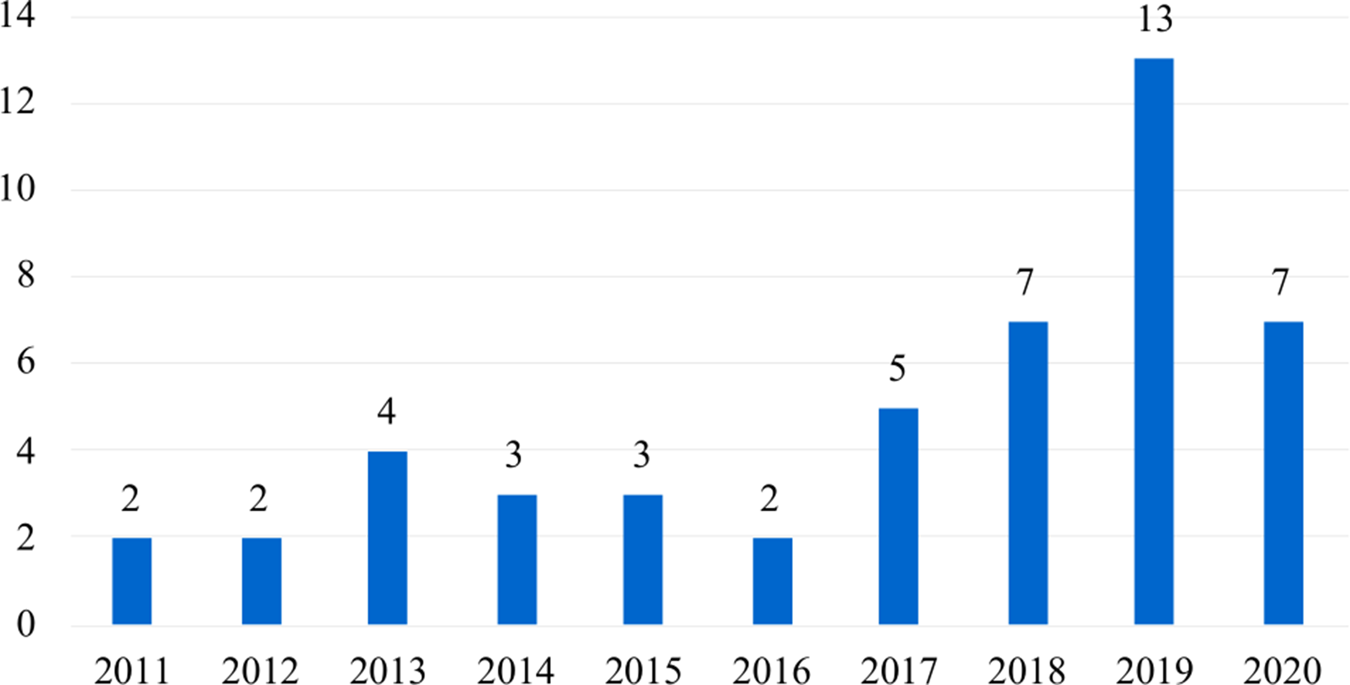
After filtering out studies beyond the scope of our study and excluding the duplications, we carefully finalized a list of 48 journal articles/publications that explore conceptual, theoretical and methodological aspects of spillover evaluations from behavioral interventions across food, energy and water domains for a detailed review (a list of all reviewed articles and author names is shown in Appendix). A quick glance at the year-wise distribution of our selected publications (see Figure 1) suggests an increasing trend in the number of publications since 2016 onwards, except for the year 2020, apparently because of the unusual situation caused by the Covid-19 pandemic.
Year-wise frequency distribution of reviewed publications.

Our review also suggests a fairly representative sample of studies spread across 21 publications/journals on diverse topics with 14 contributions from Frontiers in Psychology journal, 8 from Journal of Environmental Psychology, 4 from Resources, Conservation, and Recycling journal, 2 each from Energy Research & Social Science and Global Environmental Change followed by one each from E2E working Paper, Economics Letters, Energy Policy, Environmental Education Research, Journal of Cleaner Production, Journal of Economic Psychology, Journal of Vocational Behavior, Nature Sustainability, Procedia – Social and Behavioral Sciences, Research Handbook on Employee Pro-Environmental Behaviour, Resources, Conservation and Recycling, Tourism Management, Transportation Research Part D: Transport and Environment, Journal of Environmental Economics and Management, WIREs Climate Change, and Sustainability.
Summary description
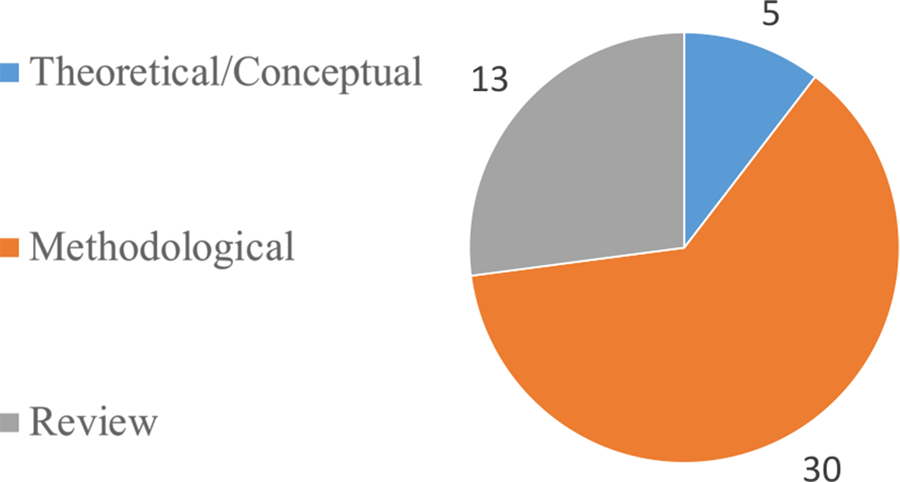
For this study, we distinguish between articles depending on whether they proposed any theoretical explanations for the spillover behaviors, reviewed the spillover literature or tested hypotheses using empirical data despite some of them falling under more than one category. We found the majority of them to be empirical studies that tested hypotheses using quantitative, qualitative or mixed methods followed by review and theoretical/conceptual articles (Figure 2).
Frequency distribution of study designs.

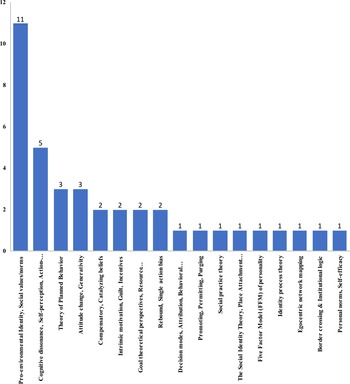
We also grouped the reviewed studies based on their underlying theoretical frameworks. Figure 3 below displays the number of reviewed publications distributed against the underlying theoretical frameworks or explanations.
Distribution of studies across theoretical frameworks and underlying explanations.

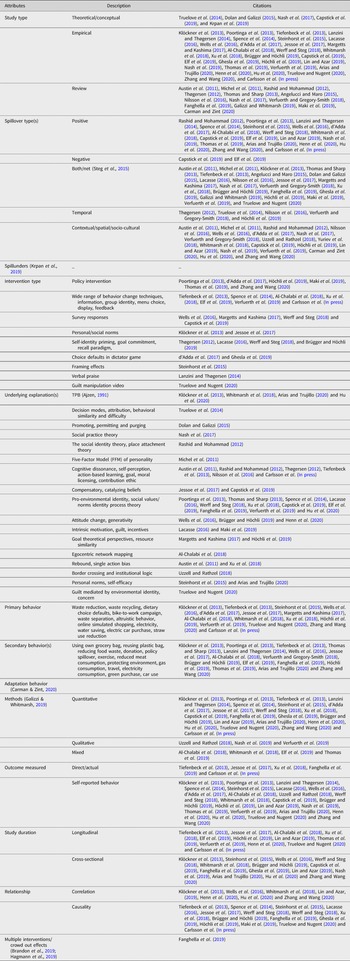
In terms of the theoretical frameworks and underlying explanations for the spillover behaviors, pro-environmental identity, social values/norms, cognitive dissonance, self-perception, action-based learning, goals were cited most frequently followed by the TPB, beliefs, attitudes for the positive spillovers and moral licensing, contribution ethic, rebound effects and single action bias for the negative spillover behaviors. Table 1 summarizes brief descriptions of the reviewed articles with respect to spillover attributes analyzed in our study.
Spillover attributes in reviewed studies

From the review, we find that the number of studies on the positive (20)Footnote 1 or contextual/spatial (19) spillover behaviors are much higher than the number of studies examining negative (3) and temporal (5) spillovers. We also note the recent development in evaluating both (24) the positive, negative or net spillover effects. With few exceptions, our review suggests that most empirical studies examine the cause–effect relationships between the primary and secondary behaviors triggered by interventions relying on the qualitative, quantitative or mixed methods broadly outlined by Galizzi and Whitmarsh (Reference Galizzi and Whitmarsh2019). Some of the common examples of initial interventions used are – information, group identity, menu choice, display, feedback, survey responses, personal/social norms, self-identity priming, goal commitment, recall paradigm, choice defaults in the dictator game, framing effects and verbal praise. Further, the examples of primary behaviors tested mostly relate to activities such as waste reduction, separation and recycling, dietary choice defaults, bike-to-work campaign, altruistic behavior, online simulated shopping, water and electricity saving, and electric car purchase. Similarly, activities related to using own grocery bag, reusing plastic bags, reducing food waste, monetary donation, policy spillover, exercise activity, meat consumption, protecting environment intention, gas consumption, travel activity, electricity consumption, green purchase and car use were frequently tested as examples of secondary spillover behaviors. For example, a recent study examined the direct and indirect effects of the perceived consumer effectiveness (PCE) on recycling behavior. The authors found a significant mediating role of carrying shopping bag behavior in the connection between PCE and recycling (Arias & Trujillo, Reference Arias and Trujillo2020). In another study, Truelove and Nugent (Reference Truelove and Nugent2020) checked whether the relationships between plastic straw use and self-reported, non-targeted PEBs were mediated by environmental guilt, identity and concern using a video message as the intervention. They found significant, positive and indirect effects of reducing straw usage on changes in other PEBs (Truelove & Nugent, Reference Truelove and Nugent2020). The introduction of five pence plastic bag charge in the UK is considered as one of the earliest examples of policy spillovers. Using a mixed-method longitudinal study, Thomas and Sharp (Reference Thomas and Sharp2013) found that the plastic bag charge not only changed consumers’ behavior but also increased awareness and support for other charges to reduce plastic waste.
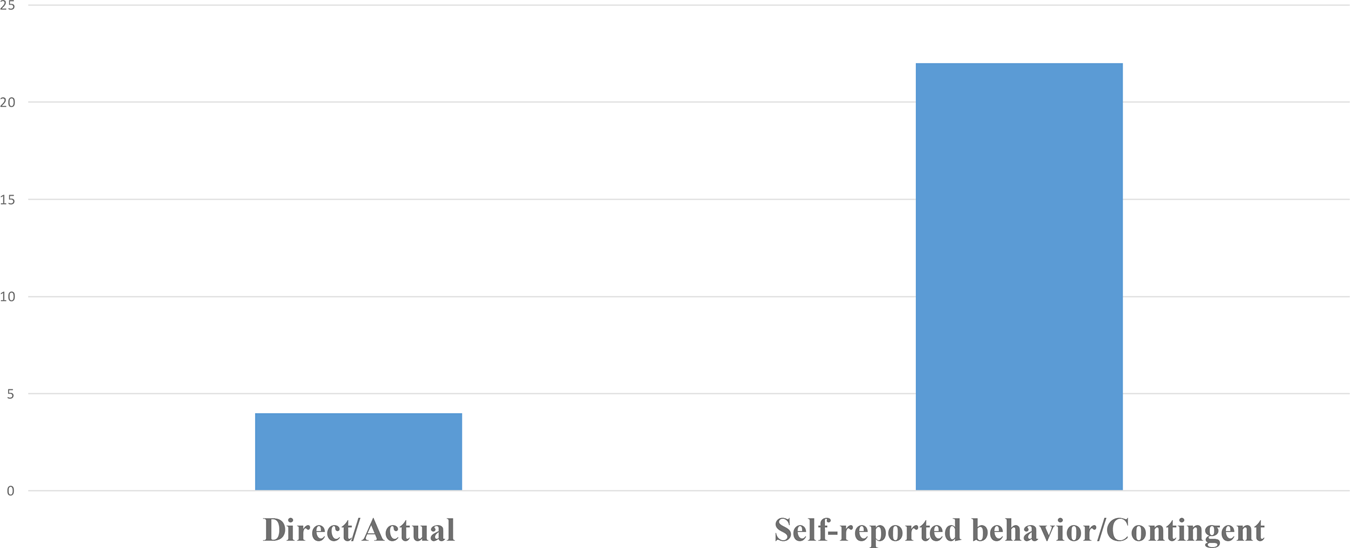
In our review, we could find only four studies that directly measured actual behavioral outcomes in comparison to 22 studies resorting to indirect methods based on survey responses of respondents’ perceptions (see Figure 4).
Direct measured vs self-reported behaviors in reviewed studies.

Although the choice between the two methods requires a tradeoff between cost and validity, the possibility of getting socially desirable biased results using indirect methods in the absence of separate validation cannot be overruled even with a larger sample size, especially when the questions are of sensitive nature (Groves et al., Reference Groves, Fowler, Couper, Lepkowski, Singer and Tourangeau2009; Krumpal, Reference Krumpal2013). Further, such responses also suffer from non-random bias caused by the decision heuristics of survey participants. For example, a recent article compared consumers’ perception of electricity consumption with their actual use in Texas, US. It found that consumers often over/underestimate their electricity use depending on the low/high rating of such appliances (Lesic et al., Reference Lesic, De Bruin, Davis, Krishnamurti and Azevedo2018).
Whereas the geographical scope of most studies appears limited to the national or sub-national context, few studies also explore the spillover behaviors across countries. In a longitudinal study based on continuous engagement between the participants of the lagom Footnote 2 project support system in the UK and Ireland over 1 yr, Elf et al. (Reference Elf, Gatersleben and Christie2019) analyzed whether program participation led to changes in targeted and non-targeted PEBs (Elf et al., Reference Elf, Gatersleben and Christie2019). Based on their quantitative and qualitative studies, they found a significant and positive correlation between targeted and non-targeted behaviors. Similarly, Capstick et al. (Reference Capstick, Whitmarsh, Nash, Haggar and Lord2019) conducted a cross-cultural study of catalyzing and compensating beliefs from seven countries – Brazil, China, Denmark, India, Poland, South Africa, and the UK. Using a mix of factor analyses and correlation tests on survey-based self-reported behaviors, they found a positive relationship between catalyzing beliefs and different PEBs with variations across countries. However, their other hypothesis regarding compensatory beliefs being inversely related to PEBs was not supported by the data (Capstick et al., Reference Capstick, Whitmarsh, Nash, Haggar and Lord2019).
Quantitative meta-analysis
Recently, Maki et al. (Reference Maki, Carrico, Raimi, Truelove, Araujo and Yeung2019) conducted a meta-analysis of 22 studies on behavioral spillovers. While noting the variabilities in the measurement of spillovers in the literature underlining the need for future studies on temporal and contextual spillover analysis, they analyzed only experimental studies that used an external intervention to trigger primary and secondary PEBs. Using Cohen's d metric for the effect size, they found an overall positive and small spillover effect for intentions but overall negative spillover effects for actual behaviors and policy support with intrinsic motivation as the most statistically significant underlying explanation (Maki et al., Reference Maki, Carrico, Raimi, Truelove, Araujo and Yeung2019). Subsequently, Geiger et al. (Reference Geiger, Brick, Nalborczyk, Bosshard and Jostmann2021) have also comprehensively explored the nature and extent of spillover effects. Using a Bayesian analysis, they found a moderate evidence for overall spillover on intention as well as behaviors (Geiger et al., Reference Geiger, Brick, Nalborczyk, Bosshard and Jostmann2021).
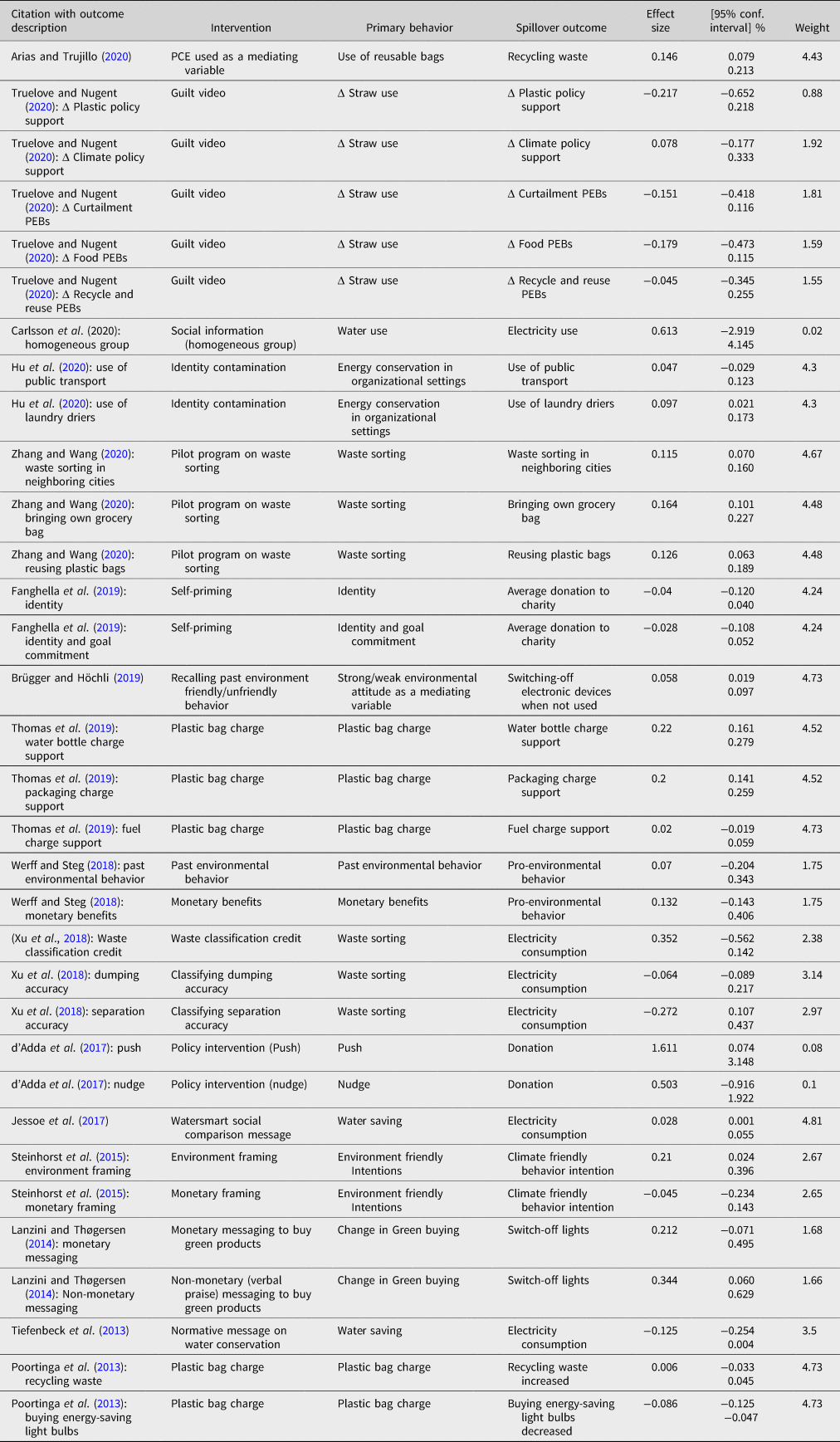
We conducted a meta-analysis to get a statistical summary of the overall spillover effects of behavioral interventions related to FEW resources. Out of the total 48 reviewed articles, we shortlisted 23 experimental, quasi-experimental or observational studies that empirically analyzed behavioral spillover outcomes. We finalized a list of 16 studies for meta-analysis after dropping articles that did not report all parameters required for calculating numerical effect sizes and standard errors or those reporting temporal and spatial spillovers. We included all outcomes from studies reporting multiple spillover effects from interventions totaling a list of 33 items for the meta-analysis. For studies reporting spillover outcomes measured on a binary/ordinal scale, the effect sizes in terms of standardized means and standard errors were derived using appropriate conversion formulas (Lipsey & Wilson, Reference Lipsey and Wilson2001; Borenstein et al., Reference Borenstein, Hedges, Higgins and Rothstein2009). The analysis was done using the maximum likelihood iterative method using the random effects model in Stata MP 17.0 Mac (64-bit Intel) software. A complete list of citations, interventions, spillover description along with meta-analysis output showing effect sizes, 95% confidence intervals and relative weights is presented in Table 2.
Description of empirical studies with meta-analysis results

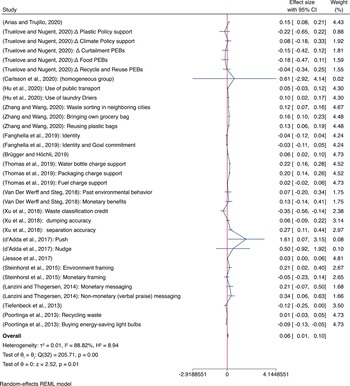
For consistency, we changed the signs of electricity use behaviors, so that lesser electricity consumed reflects a positive energy conservation spillover outcome. A forest plot of the meta-analysis results from the reviewed empirical studies is shown in Figure 5 with the line graph showing individual mean effect sizes and horizontal lines representing the extent of confidence intervals.
Forest plot of the spillover effects in included empirical studies.

With a statistically significant Cochran's Q value of 205.71 and I 2 value of 88.82% as a measure of the proportion of total heterogeneity, our result suggests significant variation across studies (Cleophas & Zwinderman, Reference Cleophas and Zwinderman2017; Ahir & Chakraborty, Reference Ahir and Chakraborty2021). The overall effect size of spillover outcomes has a modest but significant value of 0.058 within the 95% confidence interval ranging from 0.013 to 0.103 (Prob > z = 0.0116). However, individual results present a mixed pattern of both positive and negative spillover effects distributed within and across studies. Out of the total 33 studied outcomes, 16 positive spillover effects were found significant with a maximum standardized mean value of 1.61 for push measures on subsequent donation behavior in the online simulated dictator games. In comparison, only three negative spillover outcomes were found significant with a maximum standardized mean value of −0.12 for the electricity conservation behavior following water-saving messages. However, we could not come across any study that empirically tested for “spillunder” effects or spillovers from climate change adaptation behaviors despite their importance and cost-effectiveness (Carman & Zint, Reference Carman and Zint2020).
Spillovers from systems thinking lens
Although the idea of “systems” is not new and can be traced back to the earliest quest for comprehensive knowledge by human minds, the term was formally introduced as a part of biological studies in the 20th century and later became popular as a management concept (Senge, Reference Senge1990; Richmond, Reference Richmond1993; Lin & Forrest, Reference Lin and Forrest2012; Arnold & Wade, Reference Arnold and Wade2015). However, there appears to be no single agreed-upon definition of “systems” in the literature, and the term has been defined, described and redefined in multiple different ways since then. In general, the words “systems”, “systemic thinking” or “systems approach” are commonly used in the literature as an umbrella term for holistic approaches and distinguished from “reductionist” methodologies that concentrate on a relatively narrow set of linear, causal relationships between predefined variables (Midgley, Reference Midgley2000; Befani et al., Reference Befani, Ramalingam and Stern2015). A systemic approach should not be seen merely as an assemblage of boxes and arrows of individual parts but as an organic whole that uncovers hidden insights and contextualizes individual methods as a part of the bigger picture (Midgley, Reference Midgley2007; Sanneh, Reference Sanneh2018).
In this context, it is relevant to distinguish between the systemic approach and systematic approaches. Whereas the systems approach involves complex analysis of processes that may be different from their constituent parts, systematic approaches are based on step-by-step linear causal effect analysis of parts to understand the whole (Forrester, Reference Forrester1994; OpenLearn, 2015). For a comprehensive understanding of complex behavioral interventions that may trigger subsequent sustainable FEW conservation actions, multi-disciplinary systems thinking offers a useful lens capable of appreciating the interconnections across spatial and temporal dimensions (Williams et al., Reference Williams, Kennedy, Philipp and Whiteman2017; Abdi et al., Reference Abdi, Shahbazitabar and Mohammadi-Ivatloo2020; Schlor et al., Reference Schlor, Marker and Venghaus2021). In analyzing complex behaviors, theoretical and methodological plurality are considered inherent features of systemic thinking as compared to a mechanistic description of reality built on objective knowledge (Midgley, Reference Midgley2000). For our study, we distilled from the literature three core concepts of systems thinking that require understanding interconnections across domains, engagement with multiple perspectives and decision on boundaries judgments (Williams, Reference Williams2015; Reynolds et al., Reference Reynolds, Gates, Hummelbrunner, Marra and Williams2016; Midgley, Reference Midgley2000; Schlor et al., Reference Schlor, Marker and Venghaus2021). We use the systems thinking approach less as a FEW resource management tool and more of an analytical framework that looks at the complex interrelationships between individual behaviors across domains and contexts to see if studying them as a whole brings out new insights from sustainable policy perspectives. In the following sub-sections, we briefly outline the key theoretical concepts of the systems approach relevant to analyzing spillover behaviors in the context of FEW conservation.
Theoretical and methodological plurality
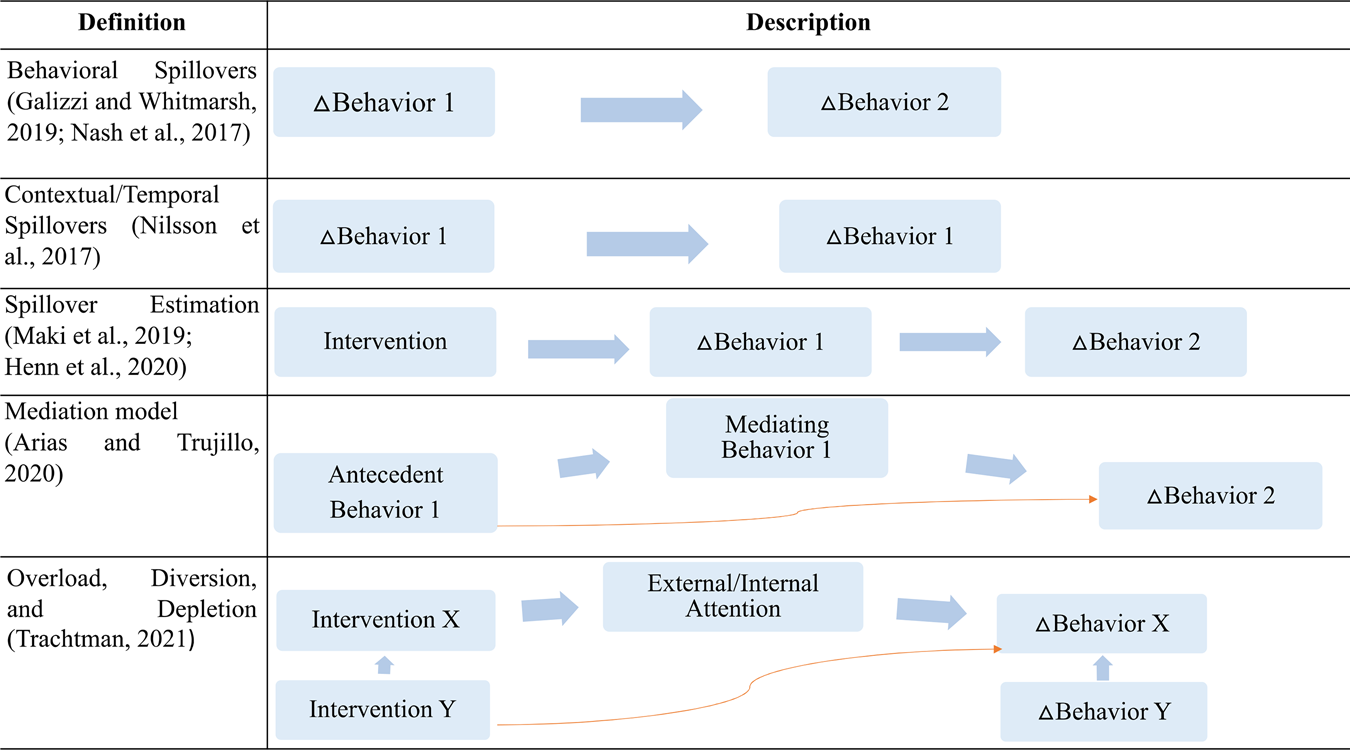
Midgley (Reference Midgley2000) considers theoretical and methodological pluralism as inherent features of systemic thinking and argues that all theories are essentially partial as they are informed by the purposes and values of the agents constructing them. In this review, we looked at the theoretical and methodological plurality in describing the spillover effects from FEW conservation behaviors. A schematic sketch of the different theoretical concepts used in spillover studies is shown in Figure 6.
Theoretical and methodological plurality in spillover studies.

“Behavioral spillover” has been defined as the observable and causal effect that a change in one behavior (behavior 1) has on a different, subsequent behavior (behavior 2) (Galizzi & Whitmarsh, Reference Galizzi and Whitmarsh2019). In our review, however, we could not find any study that specifically used primary behaviors as initial causal intervention. Rather, most empirical studies used initial interventions that can be distinguished from the primary and secondary behaviors. In most of the reviewed examples of behavioral change, the causal interventions used are information nuggets, feedbacks based on socio-technical parameters or even monetary incentives that might trigger more than one concurrent behavioral change. Some of the common examples of spillover measurement use interventions in the form of social norms messaging on the electricity consumption of residential households to find water conservation behaviors (Jessoe et al., Reference Jessoe, Lade, Loge and Spang2017); or test spillovers from self-reported green purchase behavior to other PEBs caused by interventions based on financial incentives or verbal praise (Lanzini & Thøgersen, Reference Lanzini and Thøgersen2014). As shown in the Figure 3, experiments to test the magnitude and direction of behavioral spillovers do not unequivocally rule out the possibility of mediating relationships or triggering multiple PEBs by the same initial causal intervention (Arias & Trujillo, Reference Arias and Trujillo2020; Henn et al., Reference Henn, Otto and Kaiser2020). This apparent gap between the theoretical definition of behavior spillovers and their estimation based on interventions in real life has potential implications for the design and evaluation of behavioral intervention policies.
Interactions within and across FEW behaviors
The conservation of food, energy and water resources is seen as increasingly interconnected due to their synergies, tradeoffs and rebounds (Abdi et al., Reference Abdi, Shahbazitabar and Mohammadi-Ivatloo2020). However, exploring the interactions within and across FEW behaviors in a real-life setting often gets restricted due to the presence of multiple confounding variables that are extremely difficult to isolate and filter out. In such situations, the interactions between the interventions and targeted and non-targeted FEW behaviors may not be explicit, unidirectional and independent of each other. As such, the possibility of interactions between interventions and non-targeted behaviors cannot be ruled out as explained in a recent study in terms of depletion, overload and diversion concepts (Trachtman, Reference Trachtman2021).
Although the estimation of isolated positive or negative spillover effect adds to the spillover literature, the comprehensive design of policies also requires examination of net effects after accounting for the positive and negative spillovers (Truelove et al., Reference Truelove, Carricob, Weber, Raimi and Vandenbergh2014). We find a healthy and encouraging trend in spillover literature reflected in the growing number of publications that study both positive and negative behaviors together – 24 in comparison to 21 and 2 for positive and negative spillover studies, respectively. However, except for the recent study by Fanghella et al. (Reference Fanghella, d'Adda and Tavoni2019), we did not come across any other article that analyzed the net effects of positive and negative spillover behaviors together using multiple nudges. In that study, the authors found a negative interplay between identity priming and goal-setting nudges on the net outcome donation behavior that has significant policy implications.
Scales and boundary judgment
Defining boundaries to choose what is included or not included in the analysis is considered an important feature of systems thinking (Midgley, Reference Midgley2000; Williams, Reference Williams2015). Depending upon the choice of units on spatial, temporal or jurisdictional scales, the idea of boundary judgment provides a useful construct in analyzing complex systems (Cash et al., Reference Cash, Adger, Berkes, Garden, Lebel, Olsson, Pritchard and Young2006; Williams et al., Reference Williams, Kennedy, Philipp and Whiteman2017). The most notable examples of boundary judgments in spillover literature are contextual and temporal spillovers across FEW domains at individual and households’ levels as the units of analysis. Verfuerth et al. (Reference Verfuerth, Jones, Gregory-Smith and Oates2019) propose a conceptual framework for the contextual spillover based on the “Identity process” theory. Using qualitative interviews, they found evidence of people carrying the behaviors across contexts where the appeals are integrated into identities. However, they did not find evidence of negative spillovers across contexts (Verfuerth et al., Reference Verfuerth, Jones, Gregory-Smith and Oates2019). From another perspective based on concepts of “permeability”, “border crossings” and “institutional logic”, Uzzell and Räthzel (Reference Uzzell and Rathzel2018) conducted life history interviews to explain how workers in a transnational oil corporation carried environmental practices between the home and workplaces (Uzzell & Rathzel, Reference Uzzell and Rathzel2018). Similarly, Höchli et al. (Reference Höchli, Brügger, Abegglen and Messner2019) propose a goal theoretic perspective to explain the temporal spillover. Using an experiment that tested the effects of bike-to-work campaign intervention, they found positive spillovers to other leisure biking activities that continued even after 2 months of the campaign (Höchli et al., Reference Höchli, Brügger, Abegglen and Messner2019). Another study by Ghesla et al. (Reference Ghesla, Grieder and Schmitz2019) links two strands of behavioral sciences literature on the effects of choice defaults or nudges and their spillover in a laboratory setting. Using weak, medium and strong choice default types as an intervention in a dictator game setting with charity donation/recipients as other players, they could not find any significant role of moral licensing and negative spillovers (Ghesla et al., Reference Ghesla, Grieder and Schmitz2019). These studies provide valuable insights into individual behaviors across spatial and temporal scales. Future studies will need to build upon these experiments by scaling up the units of analysis from individual to organizational behaviors and beyond for better-informed FEW conservation policies (Williams et al., Reference Williams, Kennedy, Philipp and Whiteman2017; Chater & Loewenstein, Reference Chater and Loewenstein2022).
Perspectives
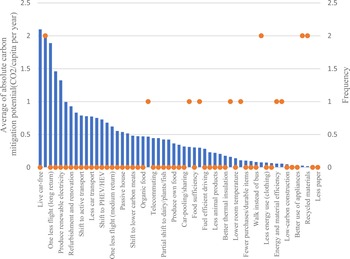
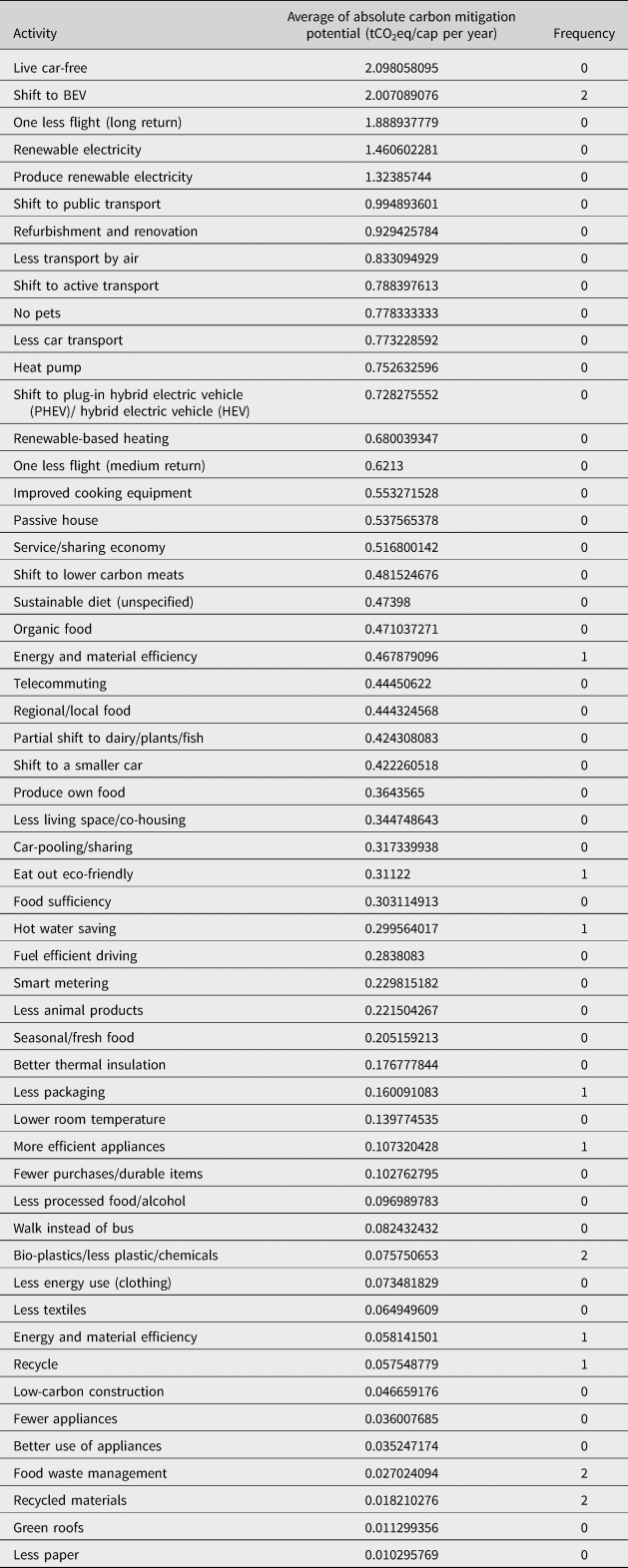
Systems thinking involves seeing and thinking from different perspectives to look at the whole as more than the sum of its parts (Richmond, Reference Richmond1993; Ackoff, Reference Ackoff1994; Arnold & Wade, Reference Arnold and Wade2015). Recently, Ivanova et al. (Reference Ivanova, Barrett, Wiedenhofer, Macura, Callaghan and Creutzig2020) studied the carbon emission mitigation potential of food, energy, water, transportation conservation actions and compiled an extensive list of households’ behaviors. Using the estimates from their study, we compared the carbon emission mitigation potential of listed FEW spillover behaviors with the number of times those behaviors were captured in the reviewed studies (see Figure 7).
Mitigation potential vs frequency of reviewed FEW behaviors (Ivanova et al., Reference Ivanova, Barrett, Wiedenhofer, Macura, Callaghan and Creutzig2020).

We plotted the average carbon emission potential of prominent FEW households’ conservation behaviors in tons of CO2 equivalent per capita per year in decreasing order along the horizontal axis. The secondary vertical axis in Figure 7 shows the overall frequencies of the FEW behaviors in reviewed studies. At the risk of over-simplification, it emerges from the comparison that except for few examples – intention to use battery-based electric vehicle use and energy efficiency behaviors – a big majority of high potential mitigation actions still need to be studied for their spillover effects.
Conclusion
Assessing the impacts of human behavior on climate change are subject to theoretical and methodological limitations involving complex, uncertain and aleatory situations (Bridges et al., Reference Bridges, Felder, McKelvey and Niyogi2014). Drawing from the spillover literature in the last decade, we conducted a quantitative meta-analysis of the spillover effects for behavioral interventions across FEW domains. With an overall finding that suggests a modest but significantly positive effect, our analysis draws from and adds to the current spillover literature. We also used the key systems thinking concepts of boundaries, interactions and perspectives to summarize what is already known and identify future challenges and research opportunities. From our review, we observe that the behavioral spillover literature on contextual, temporal and net spillover effects across FEW domains has evolved over time with the use of better analytical tools and robust research methods in terms of their scope and validity. However, there remain limitations caused by the predominance of self-reported behaviors focused on singular, unidirectional relationships between primary and secondary behaviors. We also note that there is a disconnect between the theoretical explanations of behavioral spillovers and their estimation based on interventions triggering primary and secondary behaviors. Although the current literature suggests the presence of multi-faceted, mutually enhancing and co-occurring behaviors, there is a lack of sufficient evidence for a generalized “theory of everything” that can establish causality from one behavior to others, to the exclusion of other underlying effects (Midgley, Reference Midgley2000; Austin et al., Reference Austin, Cox, Barnett and Thomas2011). Based on the lifecycle impact in terms of carbon emissions, we find a big majority of studied behaviors to be lying on the lower range of scale, leaving out high-impact behaviors in the residential context largely unexplored. These inherent limitations in behavioral spillover literature will have to be made explicit and deliberated in future studies and policy interventions.
Behavioral policy interventions have been criticized in the past for their reliance on one-off behaviors that are based on binary decision-making and “light-touch” solutions (Sanders et al., Reference Sanders, Snijders and Hallsworth2018; Chater & Loewenstein, Reference Chater and Loewenstein2022). Given the limitations of any one particular theoretical and methodological approach in describing complex relationships between human behaviors that are relevant for reducing carbon emissions and climate change, systems perspective presents a useful analytical framework for studying spillover behaviors. We believe that in addition to studying causal relationships between individual behaviors, future studies can explore the possibilities of scaling up individual spillover behaviors to organizations and beyond. Our study also identifies a need for analyzing spillover behaviors across FEW domains taking into account the net effects of such behavioral interventions in assessing life cycle impacts of their carbon emissions in a noisy real-life setting. We believe that future studies that consider the entirety of the FEW nexus will not only shed light on a comprehensive understanding of dynamic FEW consumption behaviors but also help in better-informed policy interventions.
Acknowledgement
The authors acknowledge the partial funding support provided by the U.S. National Science Foundation (grant no. 1639342).
Appendix
List of reviewed publications

Mitigation potential vs frequency of reviewed FEW behaviors based on Ivanova et al. (Reference Ivanova, Barrett, Wiedenhofer, Macura, Callaghan and Creutzig2020)