Summations
-
• We hypothesis that Obstructive sleep apnoea (OSA) is mostly underdiagnosed in patients with serious mental illness (SMI).
-
• OSA should be considered in a patient who snores, shows signs of daytime sleepiness, and obese or have large neck circumferences.
-
• OSA is associated with increased morbidity and mortality. Treatment is challenging; psychiatrists can play a very important role with referrals, counselling and advocating behavioural changes.
Considerations and limitations
-
• Data on OSA in patients with SMI remains scant and requires more definitive studies.
-
• Modifiable risk factors such as weight loss and acceptance of referrals to sleep studies, are difficult in the general population and will likely be the case in patients with SMI.
-
• Even after successful diagnosis of OSA, it is unclear how many SMI patients will accept, or be compliant with treatment.
Introduction
Obstructive sleep apnoea (OSA) is a common and chronic breathing disorder. When untreated, OSA has been recognised as an independent risk factor for several disorders including systemic hypertension (Reference Peppard, Young, Palta and Skatrud1), mild pulmonary hypertension, cardiovascular morbidities (Reference Peker, Carlson and Hedner2), stroke and abnormal glucose metabolism (Reference Punjabi and Polotsky3). Patients with severe OSA [apnoea–hypopnoea index (AHI) >30 events per hour] appear to be at increased risk for all-cause mortality (Reference Punjabi, Caffo and Goodwin4). Furthermore, by impairing vigilance and increasing daytime sleepiness, OSA increases driving and work-related accidents and impairs concentration, memory and performance (Reference Gurubhagavatula, Maislin, Nkwuo and Pack5). The risks and costs of undiagnosed or untreated OSA have been estimated at $11.1 billion per year in indirect costs (e.g. motor vehicle accidents) and $3.1 billion in direct costs for screening and treatment (Reference Sassani, Findley, Kryger, Goldlust, George and Davidson6,Reference George7).
OSA is defined by recurrent episodes of obstructive apnoeas and hypopnoeas caused by repetitive partial or complete airway obstruction during sleep. An apnoea is defined as a decrease in airflow of greater than 70% of the preceding airflow measurement that lasts at least 10 s. A hypopnoea is a 30–70% decrement in airflow from the preceding baseline for at least 10 s with an associated fall in oxyhaemoglobin desaturation (8). Such apnoeas and hypopnoeas are invariably related to full arousals, which disrupt sleep and often lead to daytime drowsiness. The more events a patient experiences during sleep, the more severe the disorder.
OSA is common in older patients with schizophrenia (Reference Ancoli-Israel, Martin and Jones9). It is more common in patients with schizophrenia compared to patients with other psychiatric disorders (Reference Winkelman10). The diagnosis may be more challenging in this population as many patients do not report snoring or they may not have a bed partner who complains about patient's snoring. Furthermore, both disorders can share some clinical features. For example, daytime sleepiness and poor cognitive performance may be misattributed as negative symptoms or medication side effects when it is possibly related to undiagnosed OSA. Subsequently, OSA may remain largely undiagnosed in people with schizophrenia.
Prevalence of OSA in the general population
It is estimated that 26% of adults are at high risk for OSA (Reference Punjabi11). According to the Sleep Heart Health Study, the largest epidemiological study in this field to date, 24% of men and 9% of women (30–60 years old) are affected by OSA (Reference Young, Palta, Dempsey, Skatrud, Weber and Badr12). They estimated that 2% of women and 4% of men in the middle-aged work force meet the minimal diagnostic criteria for the sleep apnoea syndrome, which was defined as an (AHI) of 5 or higher accompanied symptom of daytime hyper- somnolence (Reference Young, Palta, Dempsey, Skatrud, Weber and Badr12).
It is remarkable that despite all the recent increased attention OSA has received, the majority (70–80%) of those affected remain undiagnosed (Reference Punjabi11,Reference Young, Evans, Finn and Palta13,Reference Kapur, Strohl, Redline, Iber, O'Connor and Nieto14). It is estimated that about 1 in 20 (5%) of adults in Western countries have undiagnosed OSA (Reference Young, Peppard and Gottlieb15). With the increased incidence of obesity, the number of undiagnosed OSA may be even higher than previously reported.
Prevalence of OSA in patients with schizophrenia
OSA appears to occur more commonly in psychiatric conditions than with other medical conditions (Reference Schroder and O'Hara16,Reference Baran and Richert17). Focusing only on schizophrenia, we reviewed four studies that looked into OSA in patients with schizophrenia. The largest one by Winkelman (Reference Winkelman10) retrospectively evaluated 364 inpatients from Mclean Psychiatric Hospital (Belmont, MA, USA) referred for a sleep study. He reported that schizophrenia or schizoaffective disorder was the most common diagnosis among patients who were diagnosed with OSA (odds ratio = 6.22, p < 0.001) (Reference Winkelman10). Also, when patients with schizophrenia were found to have OSA, it was more severe compared to patients with other psychiatric disorders. Takahashi et al. studied the prevalence of OSA in inpatients schizophrenic (64 men and 37 women) from two psychiatric hospitals in Japan (Reference Takahashi, Shimizu, Saito, Sugita, Takahashi and Hishikawa18). They reported a rate of 19% of OSA in those patients. One issue with that study is that it used overnight oximetry, a technique that lacks sensitivity and specificity in the diagnosis of OSA (Reference Takahashi, Shimizu, Saito, Sugita, Takahashi and Hishikawa18). Another study by Ancoli-Israel et al. (Reference Ancoli-Israel, Martin and Jones9) looked at the prevalence of sleep-disordered breathing (SDB) and periodic limb movements in older patients (mean age = 59.6 years) with schizophrenia. They found that 48% of these patients had at least 10 respiratory events per hour of sleep. When compared to an age-matched subsample of healthy elderly from a previous study, there was no significant difference in prevalence of SDB. However, similar to younger patients with schizophrenia, these older schizophrenia patients also had a higher prevalence of severe SDB than the subsample of healthy elderly.
The prevalence of psychiatric comorbid diagnoses in patients with OSA was studied by Sharafkhaneh et al. (Reference Sharafkhaneh, Giray, Richardson, Young and Hirshkowitz19) in US veterans. They found that depression was the most common comorbid disorder at 21.8% and psychosis was noted in 5.1% of the patients (Reference Sharafkhaneh, Giray, Richardson, Young and Hirshkowitz19). The authors concluded that patients with OSA when compared to patients without OSA had significantly higher prevalence of a diagnosed psychiatric disorder, including psychosis.
Antipsychotics and OSA
It has been estimated that patients receiving antipsychotic medication for more than 6 months may gain between 15 and 75 pounds during treatment (Reference Stanton20). This significant weight gain can increase the likelihood of developing OSA. Wirshing et al. (Reference Wirshing, Pierre and Wirshing21) reported two cases of sleep apnoea associated with antipsychotic-induced obesity. Winkelman (Reference Winkelman10) found that the use of antipsychotic medications was an independent risk factor for OSA and concluded that the use of antipsychotics with resultant weight gain could lead to the emergence of OSA (Reference Winkelman10). Another recent study by Rishi et al. looked at the association between atypical antipsychotic (AA) medications with severe OSA. They concluded that taking AA may increase the risk of more severe OSA independent of body weight and neck circumference. Perhaps, AA tranquilizing effects independently contribute to risk of OSA, by a reduction in activity of hypoglossal or recurrent activity of laryngeal nerve on the upper motor airway musculature (Reference Rishi, Shetty, Wolff, Amoateng-Adjepong and Manthous22).
OSA risk factors
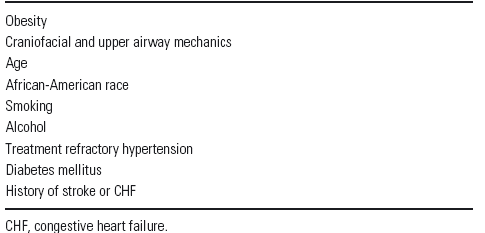
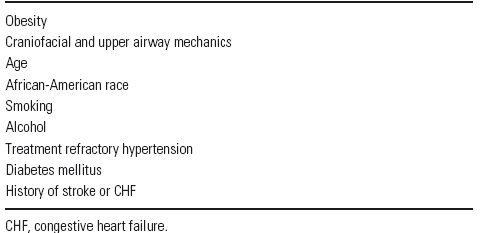
There are several risk factors that increase the probability of developing OSA (Table 1).
Risk factors for OSA
CHF, congestive heart failure.
Obesity. The most significant risk factor for the development of OSA (Reference Strohl and Redline23–Reference Phillips, Cook and Schmitt25). Seventy per cent of patients with OSA are obese (Reference Vgontzas, Tan, Bixler, Martin, Shubert and Kales26). Conversely, significant OSA is found in approximately 40% of obese individuals (Reference Vgontzas, Tan, Bixler, Martin, Shubert and Kales26). Longitudinally, there is an association between change in weight and OSA. A person who experiences a 10% weight gain is expected to have an approximate 32% increase in AHI and to have six times the odds of being newly diagnosed as having moderate-to-severe OSA at follow-up (Reference Peppard, Young, Palta, Dempsey and Skatrud27). On the other hand, a 10% weight loss predicted a 26% decrease in the AHI (Reference Peppard, Young, Palta, Dempsey and Skatrud27). OSA correlates more specifically with an increased neck size or waist circumference than general obesity (Reference Stradling and Crosby28,Reference Carmelli, Swan and Bliwise29). It is predominantly common among men with a collar size >17 inches and in women with collar size >16 inches (Reference Epstein, Kristo and Strollo30).
Craniofacial and upper airway features. Abnormal maxillary or short mandibular size, wide craniofacial base, an enlarged tongue or soft palate or tonsillar and adenoid hypertrophy are all anatomic risk factors for OSA (Reference Young, Skatrud and Peppard32). Nasal congestion increases the prevalence of OSA about two-fold compared to controls, regardless of the cause (Reference Jennum and Riha33).
Age. The prevalence of OSA increases from age 20 to 45, with a plateau occurring between ages 55 and 65. Then there is two- to three-fold higher prevalence of OSA among those who are 65 years and older, compared to those who are 30–64 years old (Reference Jennum and Riha33).
Gender. OSA is about twice as common in males compared to females. About 4% of women have OSA compared to 6–9% of men (Reference Young, Palta, Dempsey, Skatrud, Weber and Badr12).
Race. Independent of body weight, OSA is more common among African-Americans who are younger than 35 years, compared to Caucasians of the same age group (Reference Jennum and Riha33).
Smokers. Studies show that current smoking is associated with a higher prevalence of snoring and OSA (Reference Jennum and Sjol34–Reference Khoo, Tan, Ng and Ho36). Even exposure to second-hand smoking has been independently linked with habitual snoring (Reference Franklin, Gislason and Omenaas37).
Alcohol. It can induce apnoeic activity in normal or asymptomatic individuals (Reference Taasan, Block, Boysen and Wynne38–Reference Mitler, Dawson, Henriksen, Sobers and Bloom40). Alcohol can also prolong apnoea duration and worsen the severity of associated hypoxemia (Reference Taasan, Block, Boysen and Wynne38,Reference Issa and Sullivan41).
Diabetes. OSA is nearly three times more prevalent in patients with diabetes or insulin resistance compared with the general population (Reference Sigurdson and Ayas42).
OSA risk factors in patients with schizophrenia
We were unable to locate any article that specifically examined the prevalence of OSA risk factors in patients with schizophrenia. However, the major risk factors associated with OSA noted above are more common in patients with schizophrenia compared to the general population. For example, the prevalence of obesity in the United States is 27% of the general population, but 42% of patients with schizophrenia have a body mass index (BMI) of ≤27 (Reference Fontaine, Heo and Harrigan43). Of the general population, about 25% are current smokers compared to about 79% among patients with schizophrenia (Reference De Leon, Dadvand, Canuso, White, Stanilla and Simpson44). Diabetes mellitus prevalence ranges from 10 to 15% in this population (Reference Bushe and Holt45), which is also higher than the general population with an estimated rate around 7.5% (Reference Kilmer, Roberts and Hughes46). On the basis of these data, we can predicate that OSA risk factors are more prevalent in patients with schizophrenia. Considering these associations, psychiatrists and other mental health clinicians may be uniquely positioned to screen their psychiatric patients for OSA risk factors and refer those at risk of undiagnosed OSA for further evaluation.
Clinical presentation
Snoring and daytime sleepiness. These are the most common clinical features related to OSA. Most patients come to clinical attention because of the complaint of snoring by the patient or bed partner. Daytime sleepiness is also a common feature, and its presence is key in deciding which patients should undergo diagnostic testing for OSA.
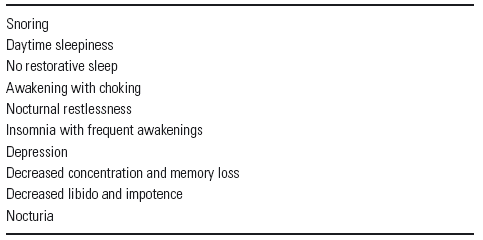
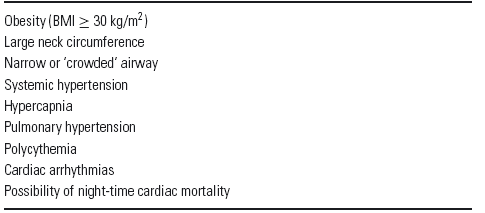
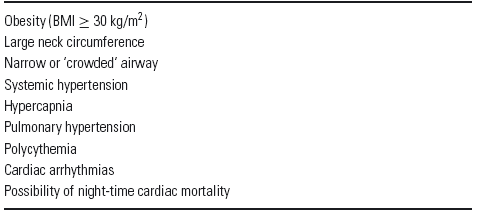
Other features include awakening with a sensation of choking or gasping for air, insomnia or restless sleep, depression, lack of concentration, morning headaches, nocturia, decreased libido and impotence (Table 2 and Table 3). It is also important to note that OSA can present with atypical symptoms such as irritability, cognitive deficits and concentration lapses, all of which are commonly seen in patients with schizophrenia with or without OSA. The prompt recognition of the signs and symptoms of OSA should trigger referral to a sleep disorder specialist.
OSA symptoms
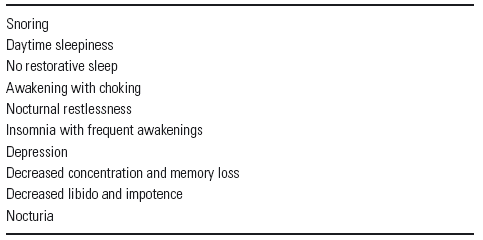
Clinical features that might be seen with OSA
Medical complications
Patients with untreated severe OSA appear to have a three- to six-fold increased risk of all-cause mortality compared to individuals without OSA (Reference Punjabi, Caffo and Goodwin4,Reference Marshall, Wong, Liu, Cullen and Knuiman47).
Cognitive impairments. OSA induces daytime sleepiness, inattention and fatigue, each of which impairs daily function. OSA also induces or exacerbates cognitive deficits and increases the likelihood of errors and accidents (Reference George7).
Cardiovascular diseases. Clinical and epidemiological data suggest an independent association among OSA and systemic hypertension, pulmonary hypertension, and other cardiovascular disorders such as coronary artery disease, cardiac arrhythmias, heart failure, and sudden cardiac death (Reference Peker, Carlson and Hedner2). Patients with OSA may also have a higher propensity for night-time cardiac mortality (Reference Somers, White and Amin48). Cardiac dysrhythmia, bradycardia, and asystole during sleep are the most prominent and significant rhythm disturbances associated with OSA (Reference Simantirakis, Schiza and Marketou49–Reference Miller51). OSA may contribute directly to the development of cardiac systolic and diastolic dysfunction. A study with echocardiography has shown that diastolic dysfunction occurred in 36.8% of patients with OSA (Reference Fung, Li and Choy52).
Metabolic syndrome and diabetes mellitus. Comparing OSA patients to subjects without OSA, metabolic syndrome was 9.1 times more likely to be present in subjects with OSA (Reference Coughlin, Mawdsley, Mugarza, Calverley and Wilding53). Independent of obesity, age, smoking and alcohol consumption, OSA was associated with increased systolic and diastolic blood pressure, higher fasting insulin and triglyceride concentrations and lower high-density lipoprotein cholesterol (Reference Coughlin, Mawdsley, Mugarza, Calverley and Wilding53). OSA was associated with impaired glucose tolerance and insulin resistance independent of obesity (Reference Punjabi, Sorkin, Katzel, Goldberg, Schwartz and Smith54). Severe OSA is accompanied by a five-fold increase in the risk of diabetes mellitus (Reference Spiegel, Leproult and Van Cauter55). Because of this risk, the International Diabetes Federation Taskforce on Epidemiology and Prevention has recently recommended that health professionals working with both diabetes mellitus and OSA should ensure that a patient presenting with one condition is considered for having the other (Reference Shaw, Punjabi, Wilding, Alberti and Zimmet56).
OSA and mortality in patients with schizophrenia
Patients with schizophrenia have up to a 20% shorter life span than the general population, with the leading cause of death being cardiovascular disease (Reference Newcomer57). A recent review noted that there may be a 15-year decrease in life expectancy in patients who have schizophrenia compared with the general population (Reference Hennekens, Hennekens, Hollar and Casey58). Patients who have schizophrenia face barriers to receiving prompt and appropriate medical health care (Reference Muir-Cochrane59).
The impact of OSA on mortality in patients with schizophrenia has yet to be studied in detail; nonetheless, we found two case reports on this issue. Fleischman et al. (Reference Fleischman, Ananthamoorthy, Greenberg, Harvey and Merlino60) reported a case of unexplained death at the psychiatric emergency room, likely linked to undiagnosed OSA. Pompeo (Reference Pompeo and Salutari61) reported a case of sudden death by sleep apnoea syndrome associated with myxoedema in a patient with schizophrenia.
OSA can and possibly poses an additional risk for all-cause mortality if undiagnosed and untreated in patients with schizophrenia. Therefore, early identification and referral is a very important goal, in which psychiatrists can play a significant role through being aware of OSA and facilitating referrals for diagnosis and treatment.
Diagnosis of OSA
Diagnostic testing is essential to confirm or exclude OSA, since the clinical features of OSA are non-specific and the diagnostic accuracy of clinicians' subjective impression is low.
Polysomnography (PSG). It is considered the gold standard for diagnosis of OSA. PSG is a comprehensive recording of the biophysiological changes that occur during sleep and requires a full night stay at a sleep laboratory.
Portable monitoring. This may be used to diagnose OSA via in-home unattended monitoring. Many devices have been validated against standard PSG, but according to clinical practice guidelines, it maybe used as an alternative to PSG only in patients with a high pretest probability of moderate-to-severe OSA (Reference Collop, Anderson and Boehlecke62).
Who to refer for diagnosis. Diagnostic testing for OSA is advised for any patient who snores and has excessive daytime sleepiness. In the absence of excessive daytime sleepiness, diagnostic testing is recommended if the patient snores and has two or more of the features shown in (Table 2).
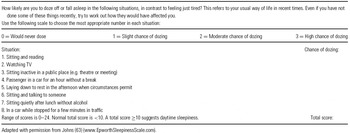
Patients might not complain about daytime sleepiness, but it can be noticed during group or individual therapy sessions. In such instances, further questions about other symptoms and signs of OSA should be explored. Also, a simple questionnaire, the Epworth Sleepiness Scale, is a rapid screen to reveal excessive daytime sleepiness (Reference Johns63) (Table 4).
Epworth Sleepiness Scale

Adapted with permission from Johns (Reference Johns63) (www.EpworthSleepinessScale.com).
OSA management
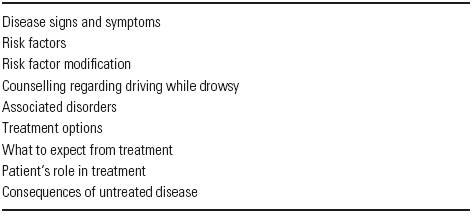
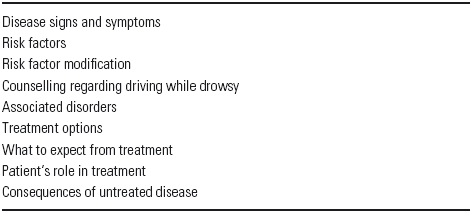
Pharmamacologic and oxygen therapy. First and important part of the treatment. Should include a discussion of risk factors, clinical consequences and treatment options (Table 5). Also, the benefits of weight loss, alcohol avoidance, and medication side effects, which can be part of a routine psychiatric clinic visit.
Components of patient education for OSA
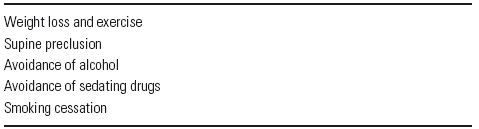
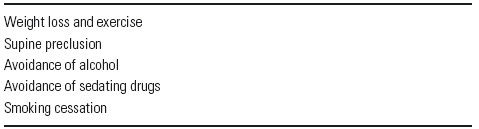
Behavioural modifications. Mostly related to risk factors modification (Table 6).
Behavioural approaches
Weight loss. Should be recommended and frequently encouraged for all overweight or obese OSA patients. Successful weight loss, ideally to a BMI of 25 kg/m2 or less, decreases the apnoea–hypopnoea index, improves quality of life and possibly decreases daytime sleepiness (Reference Browman, Sampson and Yolles64,Reference Smith, Gold and Meyers65). After substantial weight loss (i.e. 10% or more of body weight), a follow-up PSG is indicated to ascertain whether positive airway pressure (PAP) therapy is still needed (Reference Kushida, Littner and Morgenthaler66).
Sleep position. Sleeping in a non-supine position, lateral recumbent, may correct or improve OSA and should be encouraged. However, it should not be used as the primary therapy unless normalisation of the AHI when sleeping in a non-supine position has been confirmed by PSG (Reference Epstein, Kristo and Strollo30). A number of devices have been developed to reduce the likelihood of sleeping in the supine position including posture alarms, special pillows, tennis ball backpack and modified nightshirts.
Alcohol avoidance. All patients with OSA should avoid alcohol, even during the daytime, because it can exacerbate OSA, worsen sleepiness and promote weight gain.
Medication selection. In patients with OSA, medications that inhibit the central nervous system, such as benzodiazepines, barbiturates, other antiepileptic drugs, some antidepressants, antihistamines and opiates should be avoided if reasonable alternatives exist. When these medications are necessary, despite the patient's OSA, their use should be monitored. Avoidance of medications with weight gain potential should seriously be considered.
Pharmamacologic and oxygen therapy
Multiple pharmacologic agents have been investigated as primary therapies, but no agent has been identified that prevents or overcomes upper airway obstruction enough to justify pharmacologic therapy as a primary therapy. Selective serotonergic uptake inhibitors, protriptyline, methylxanthine derivatives and oestrogen therapy have been studied but are not recommended for the treatment of OSA (Reference Morgenthaler, Kapen and Lee-Chiong67). Pharmacologic therapy may be useful to treat excessive daytime sleepiness. Modafinil is recommended for the treatment of residual excessive daytime sleepiness in OSA patients who continue to experience sleepiness despite effective PAP treatment and those subjects who are lacking any other identifiable causes for their sleepiness (Reference Morgenthaler, Kapen and Lee-Chiong67). Oxygen supplementation is not recommended as a primary treatment for OSA (Reference Morgenthaler, Kapen and Lee-Chiong67).
OSA-specific therapies
PAP. First described by Sullivan (Reference Sullivan, Berthon-Jones, Issa and Eves68), PAP is considered the first-line therapy for OSA. PAP provides pneumatic splinting of the upper airway and is effective in reducing the AHI (Reference Gay, Weaver, Loube and Iber69). There is good evidence that PAP therapy reduces the frequency of respiratory events during sleep, decreases daytime sleepiness and improves quality of life (Reference Gay, Weaver, Loube and Iber69–Reference Giles, Lasserson, Smith, White, Wright and Cates71). Favourable outcomes likely depend on adherence to PAP therapy. However, it is estimated that 20–40% of patients do not use their PAP device and many others do not use it all night or every night (Reference He, Kryger, Zorick, Conway and Roth72). Especially during the first few weeks of PAP use, close follow-up for PAP usage and problems is important to establish effective utilisation and remedy problems (Reference Kushida, Chediak and Berry73). Psychiatrists can play a major role in supporting patient's adherence with OSA treatment.
Oral appliances. Custom-made oral appliances may improve upper airway patency during sleep by enlarging the upper airway or by decreasing upper airway collapsibility (Reference Ferguson, Cartwright, Rogers and Schmidt-Nowara74).
Surgery. A large variety of surgical options exist. Upper airway surgery may improve OSA, if patients are appropriately chosen and treated (Reference Maurer75).
Bariatric surgery. Bariatric surgery may be used as adjunctive treatment in obese patients with OSA (Reference Sullivan, Berthon-Jones, Issa and Eves68). It is indicated in individuals with a BMI ≤ 40 kg/m2 or those with a BMI ≤ 35 kg/m2 with high-risk medical comorbidities and among those persons where dietary attempts at weight control were ineffective (76).
Treatment OSA in patients with schizophrenia
To our knowledge, no article has specifically examined the treatment of OSA in patients with schizophrenia. However, we found several case reports that describe improvement in psychotic or other symptoms with OSA treatment. Karanti and Landen (Reference Karanti and Landen77) reported a case of refractory psychosis, which remitted with CPAP treatment. Boufidis et al. (Reference Boufidis, Kosmidis, Bozikas, Daskalopoulou-Vlahoyianni, Pitsavas and Karavatos78) reported significant improvement of symptoms of schizophrenia and depression in a patient with schizophrenia and OSA who was treated with nasal CPAP. Dennis and crisham (Reference Dennis and Crisham79) reported a case of chronic assaultive behaviour that improved with sleep apnoea treatment. Berrettini (Reference Berrettini80) reported a case of paranoid psychosis with violent outbursts in a patient with sleep apnoea syndrome; weight loss and use of an oropharyngeal airway when sleeping led to improvement of that condition. Martin and lefebvre (Reference Martin and Lefebvre81) reported a case of a 13-year-old boy who presented with psychosis and found to have OSA. Surgical treatment was indicated and his psychosis cleared immediately after mandible reconstruction surgery.
Conversely, Chiner et al. (Reference Chiner, Arriero, Signes-Costa and Marco82) reported a case of acute psychosis 5 days after CPAP treatment in a patient with schizophrenia and sleep apnoea syndrome. The psychosis was controlled after stopping CPAP and starting an antipsychotic medicine. Ramos et al. (Reference Ramos Platon and Espinar Sierra83) studied the changes in psychopathological symptoms after treatment with nasal continuous PAP (NCPAP). They concluded that severe OSA is associated with psychosocial impairment that improves gradually with NCPAP.
These very limited data suggest the need for a more systematic investigation about treatment of OSA in patients with schizophrenia.
Concluding remarks
OSA is a common chronic breathing disorder in the general population and in patients with schizophrenia. Although public awareness of OSA has steadily increased, the majority of those affected remain undiagnosed. In light of the serious consequences of OSA and the high cost to the patient and society it is essential that this disorder be recognised promptly and managed appropriately.
Patients with schizophrenia have about a 20% reduced life expectancy compared with the general population (Reference Hennekens, Hennekens, Hollar and Casey58). Around three quarters of all deaths in people with serious mental illness are related to physical illness, of which cardiovascular disease is the most common cause (Reference Brown, Inskip and Barraclough84). To what extent OSA contributes to this lost lifespan in people with schizophrenia is not yet known but is clearly worth studying.
Psychiatrists and mental health care clinicians are uniquely positioned to identify those who are possibly affected by OSA and facilitate making the appropriate diagnostic referral. Psychiatrists can also play a significant role in patient education and be part of the treatment by encouraging behavioural modification treatments. Many of the risk factors associated with OSA are currently part of the psychiatric treatment efforts, for example, weight reduction, smoking cessation, dietary counselling, exercise or switching to psychotropic medications with a minimal potential for weight gain.
Acknowledgements
The authors specially wish to thank Jami Menhart, Physician Assistant, Duquesne University.