

Introduction
It is widely recognized that engaging community and patient partners (partners) in the design, implementation, and dissemination of research yields studies that are more effective and relevant to the populations they aim to impact [1–Reference Novak, George and Wallston7]. In turn, many researchers are eager to incorporate engagement methods into their studies, and sponsors now emphasize community engagement (CE) as a key component of the research they fund [1,Reference Eder, Carter-Edwards, Hurd, Rumala and Wallerstein8,Reference Forsythe, Heckert, Margolis, Schrandt and Frank9]. Community Based Participatory Research – or CBPR – is a gold standard engagement methodology that centers a collaborative approach where partners and academic researchers collaborate to conduct research with shared responsibility and decision-making throughout the research process [Reference Wallerstein and Duran10–Reference Belone, Lucero and Duran12]. While valuable, CBPR requires a high degree of training and skill, as well as significant time and financial resources. Many clinical and translational researchers do not receive formal training in engagement and lack experience engaging partners, making methodologies like CBPR hard to implement [Reference Holzer and Kass13,Reference Boyer, Fair and Joosten14]. CBPR is also not always an appropriate or feasible approach for partners who are interested in engagement but prefer more flexible options that align with their needs, experience, and bandwidth [Reference Carman, Dardess and Maurer15,Reference Key, Furr-Holden and Lewis16]. As such, many investigators seek accessible engagement methods that can be implemented with limited capacity (e.g., limited funds dedicated to engagement, short project timelines) and skillsets (e.g., investigators who are new to engagement or have received no formal training).
One established lower-touch approach for integrating partner perspectives into research is the CE Studio, which facilitates structured discussions between researchers and community members [Reference Joosten, Israel and Williams17,Reference Joosten, Israel and Head18]. Developed by the Meharry-Vanderbilt Community Engaged Research Core (MV-CERC) in 2009, the CE Studio is a consultative model that allows researchers to obtain project-specific input from patients, community members, and other interest-holders [Reference Joosten, Israel and Williams17,Reference Joosten, Israel and Head18]. CE Studios can be used in all phases of the research process to increase the relevance or patient-centeredness of a project, respond to funder requirements for community input, or address challenges related to project implementation. Those involved in CE Studios – including researchers, partners, and CE Studio program staff – have described the model as valuable, feasible, and accessible, and have agreed that it improves the overall quality of research [Reference Joosten, Israel and Head18]. Because of its widespread success and relative reproducibility, the CE Studio was named a “promising practice” for creating infrastructure to support community-partnered research in the 2024 Principles of Community Engagement, 3rd Edition, which called for academic and other institutions to consider using the model to expand their capacity to conduct community-engaged research [1].
CE Studios have been used across various populations and projects, with over 40 institutions in the United States having implemented the model to date [Reference Fair, Dunkel and Frost19]. Not only is the CE Studio model ripe for expansion across academic research institutions, but opportunities exist to adapt the model to improve efficiency, minimize resource utilization, promote scalability, leverage web-based technology, and build researchers’ and community partners’ engagement capacity. Despite this, little information is available about how other institutions have modified or tailored the model, or how factors that differ across organizations (e.g., funding, administrative and regulatory processes, staff capacity, etc.) impact translation of the model across various contexts. As the CE Studio model continues to proliferate across academic research centers, it is important to describe how it has been adapted across institutions to suit organizational contexts, resources, and needs, and to assess the feasibility, acceptability, and utility of such adaptations.
In 2022, the Patient and Community Engagement in Research (PaCER) Program at the North Carolina Translational and Clinical Sciences (NC TraCS) Institute – the hub of the National Center for Advancing Translational Science’s Clinical and Translational Science Award (CTSA) at the University of North Carolina at Chapel Hill (UNC-CH) – developed and implemented an adapted version of the CE Studio model, called Community Feedback Sessions (CFS). The goals of this adaptation were to create an approach that: (1) requires fewer programmatic and human resources to maintain over time; (2) supports capacity-building within research teams for conducting future engagement without reliance on PaCER involvement; and (3) is scalable to other institutions with capacity similar to our own. This paper describes our process of adapting the CE Studio model, implementing a CFS service at our Institute, and evaluating the feasibility, acceptability, and utility of the CFS approach.
Methods
Background
NC TraCS’s PaCER Program promotes engaged research at UNC-CH by offering engagement guidance, training, and technical assistance to the university’s clinical and translational research community, as well as to patient and community partners across North Carolina [20]. Via conversations with CE staff at other CTSAs and searches of the literature, we identified the CE Studio model as a possible approach to address increased researcher demand for support in implementing accessible engagement methods within their projects. As we assessed our capacity to incorporate CE Studios as a programmatic service offering, we determined the need to alter several process points in the model to facilitate implementation at UNC-CH. This resulted in the development of our CFS service – a modified CE Studio program with adaptations to recruitment, onboarding, virtual delivery, compensation, and session planning processes.
Overview of the community feedback session approach
A CFS provides a structured forum to help researchers gather actionable, authentic, and constructive feedback on their projects from partners, who may be community members, patients, caregivers, healthcare providers, or other interest-holders, depending on the research topic. A CFS includes: (1) consultation with PaCER staff (who have educational backgrounds and training in CE, facilitation, and qualitative methods) to orient a researcher to the CFS process and define the focus of the session; (2) researcher-led recruitment of 4–8 partners who represent the researcher’s population of interest, with guidance from PaCER staff throughout the recruitment process; (3) preparation of session materials, including a facilitation guide with discussion prompts (developed by PaCER staff) and a brief, plain language project presentation (developed by the researcher with input from PaCER staff); (4) a 1-page information sheet (developed by PaCER staff) shared with partners in advance to help prepare for the session; (5) a 1.5- to 2-hour virtual meeting (requests for in-person meetings are considered on a case-by-case basis) that involves delivery of the brief presentation by the researcher, a handful of key questions posed to partners, and discussion guided by a neutral, trained PaCER facilitator to elicit feedback; (6) compensation of partners by the research team; (7) preparation of a post-session summary report of key takeaways (developed by PaCER staff); and (8) session and service evaluations completed by partners and researchers, respectively. This process is outlined in Figure 1. Furthermore, Table 1 outlines critical modifications (discussed in more detail below) in our CFS process compared to the CE Studio model as it relates to the responsibilities of the research team and PaCER staff.
The process for requesting and implementing a Community Feedback Session (CFS) with the Patient and Community Engagement in Research (PaCER) Program.

Figure 1. Long description
The flowchart outlines the steps involved in requesting and implementing a Community Feedback Session (CFS) with the Patient and Community Engagement in Research (PaCER) Program. The process begins with PaCER receiving a request for a CFS from the research team. This is followed by a consultation phase where orientation to the CFS process, sharing planning resources, defining the focus or topic of the CFS, and formulating discussion questions occur. The research team recruits partners for the CFS, creates a plain-language project presentation, and coordinates with PaCER and partners to schedule the CFS. PaCER prepares a facilitation guide with discussion prompts, develops an information sheet, and supports the research team with recruitment and presentation preparation. Partners confirm CFS attendance and review the information sheet. The Community Feedback Session itself is a 1.5 to 2-hour virtual meeting where the researcher delivers a presentation, the PaCER facilitator leads the discussion, and partners provide feedback. After the session, the research team compensates partners and completes an evaluation. PaCER prepares a summary report of key takeaways and sends evaluation surveys to researchers and partners.
Comparison table of adaptations to the CE studio model

Key adaptations to the CE studio model
Researcher-led recruitment
Unlike the CE Studio model, where CE Studio program staff are typically responsible for recruitment, the CFS service relies on the research teams it supports to recruit their own partners. PaCER staff are available to mentor research teams throughout the recruitment process, providing guidance and best practices; however, PaCER staff are not involved in the recruitment process itself. As CFSs are often geared toward a specific population (e.g., patients with a particular disease), we have found that research teams are more likely than PaCER staff to have expertise about and connections to the specific communities on which their work focuses. To support research teams in their recruitment efforts, PaCER staff offer to: (1) review and revise recruitment materials; (2) distribute recruitment messages to PaCER’s network of partners; and (3) advise research teams on how to include a representative group of people and perspectives in the CFS, though research teams are ultimately responsible for reviewing recruitment screener responses, collecting and storing demographic information, selecting partners, and inviting them to participate in the session.
Streamlined onboarding for CFS participants
As part of the CE Studio model, individual or small group onboarding meetings are held with partners prior to participating in a studio [Reference Joosten, Israel and Williams17,Reference Israel, Farrow, Joosten and Vaughn21]. This formal orientation led by CE Studio staff involves review of a Community Expert Orientation Guide containing a “community expert” job description, frequently asked questions about the CE Studio process, glossary of common research terms, and forms used during the meeting [Reference Israel, Farrow, Joosten and Vaughn21]. In contrast to this tailored, individual orientation, in the CFS model PaCER staff develop a 1-page information sheet to be shared via email, by research teams, with partners a few days prior to a session. This resource contains essential information about session logistics, the research project to be discussed, purpose of the CFS, how to prepare for the discussion (including links to any materials to be reviewed in advance and a selection of the questions to be discussed), and what to expect during and after the session. This approach to onboarding requires minimal time and human resources from PaCER staff and partners, while still adequately preparing attendees for the session.
Expedited compensation process
CE Studio program staff typically manage the disbursement of payments to partners [Reference Joosten, Israel and Williams17,Reference Fair, Dunkel and Frost19,Reference Israel, Farrow, Joosten and Vaughn21,Reference Zisman-Ilani, Buell, Mazel, Hennig and Nicholson22]. In our CFS model, PaCER staff rely on research teams to distribute payments to their partners using expedited payment processes that our team has developed [Reference Bilheimer, Datta and Grewe23]. This approach reduces the administrative burden placed on PaCER staff, while allowing research teams to oversee and track the disbursement of their own funding to partners. PaCER staff are available to provide guidance throughout the process to ensure that CFS attendees are compensated at a rate commensurate with the expertise and perspective they bring as partners.
Virtual CFSs and utilization of technological tools
Core to the original CE Studio model is in-person delivery of sessions. Since the onset of the COVID-19 pandemic, virtual CE Studios have become more common [Reference Fair, Dunkel and Frost19,Reference Zisman-Ilani, Buell, Mazel, Hennig and Nicholson22]. While in-person engagement is valuable and can enhance communication and relationship-building, virtual engagement reduces the amount of time that partners devote to participation, reduces costs associated with in-person attendance (e.g., venue fees, food, mileage reimbursement, childcare), and alleviates other accessibility-related barriers [Reference Fair, Dunkel and Frost19,Reference Zisman-Ilani, Buell, Mazel, Hennig and Nicholson22]. As such, our CFS service centers on the virtual delivery of sessions via the videoconferencing platform Zoom, which can be accessed via the Web or a dial-in phone number. Conducting CFSs virtually has also allowed for the utilization of technological tools to facilitate engagement (e.g., live polling, whiteboarding, chat function) and documentation (e.g., enabling Zoom AI Companion to assist with notetaking) during the session. To address potential challenges related to technological access, digital literacy, and virtual platform familiarity, dial-in options are provided, additional support (e.g., step-by-step instructions, troubleshooting sessions) is available in advance of a session, and requests for in-person session delivery are considered on a case-by-case basis. Measures are also taken to protect partner privacy (e.g., session recordings and notes are stored on a secure server and deleted from Zoom accounts upon project completion, names are removed from summary documents, partners may opt out of participation or participate off-camera).
Modified staffing structure to support service delivery
The adapted process points described above have allowed PaCER to streamline the amount and type of human resources dedicated to the CFS service. While the CE Studio model typically relies on multiple distinct staffing roles (i.e., Community Navigator, Facilitator, Scribe, Community-Engaged Research Specialist) [Reference Fair, Dunkel and Frost19,Reference Israel, Farrow, Joosten and Vaughn21,Reference Zisman-Ilani, Buell, Mazel, Hennig and Nicholson22], CFSs usually involve 2 PaCER staff – one serving as project lead, with the other serving in a support role. The CFS project lead is responsible for all tasks related to project administration, communication with the research team, material development, session facilitation, summary report preparation, and evaluation. The CFS support role assists with notetaking and technical issues during the session, provides feedback on session materials as needed, and serves as an additional staff contact for the research team. The estimated amount of total PaCER staff time required for conducting a CFS is 16 hours (8 hours for session preparation, up to 4 hours for the facilitator’s and notetaker’s attendance at the session, 4 hours for summary report preparation). Research teams can expect to spend 8–15 hours engaging in CFS-related activities, with total time commitment depending on factors such as session topic and recruitment methods. This differs from the estimated time required to implement a CE Studio, which can be up to 35 hours for the CE Studio Team and 4 hours for a researcher [Reference Joosten, Israel and Williams17,Reference Israel, Farrow, Joosten and Vaughn21]. Average time from CFS request to session implementation is ∼4 weeks, though turnaround time varies according to scheduling parameters, recruitment methods, and complexity of session topic. Notably, the CFS service operates on a recharge model, where researchers are expected to provide funds to support PaCER service costs. Our ability to reduce the amount of PaCER staff involved in each CFS has positive budget implications for study teams, allowing the service to remain affordable for those with limited budgets.
Planning resources
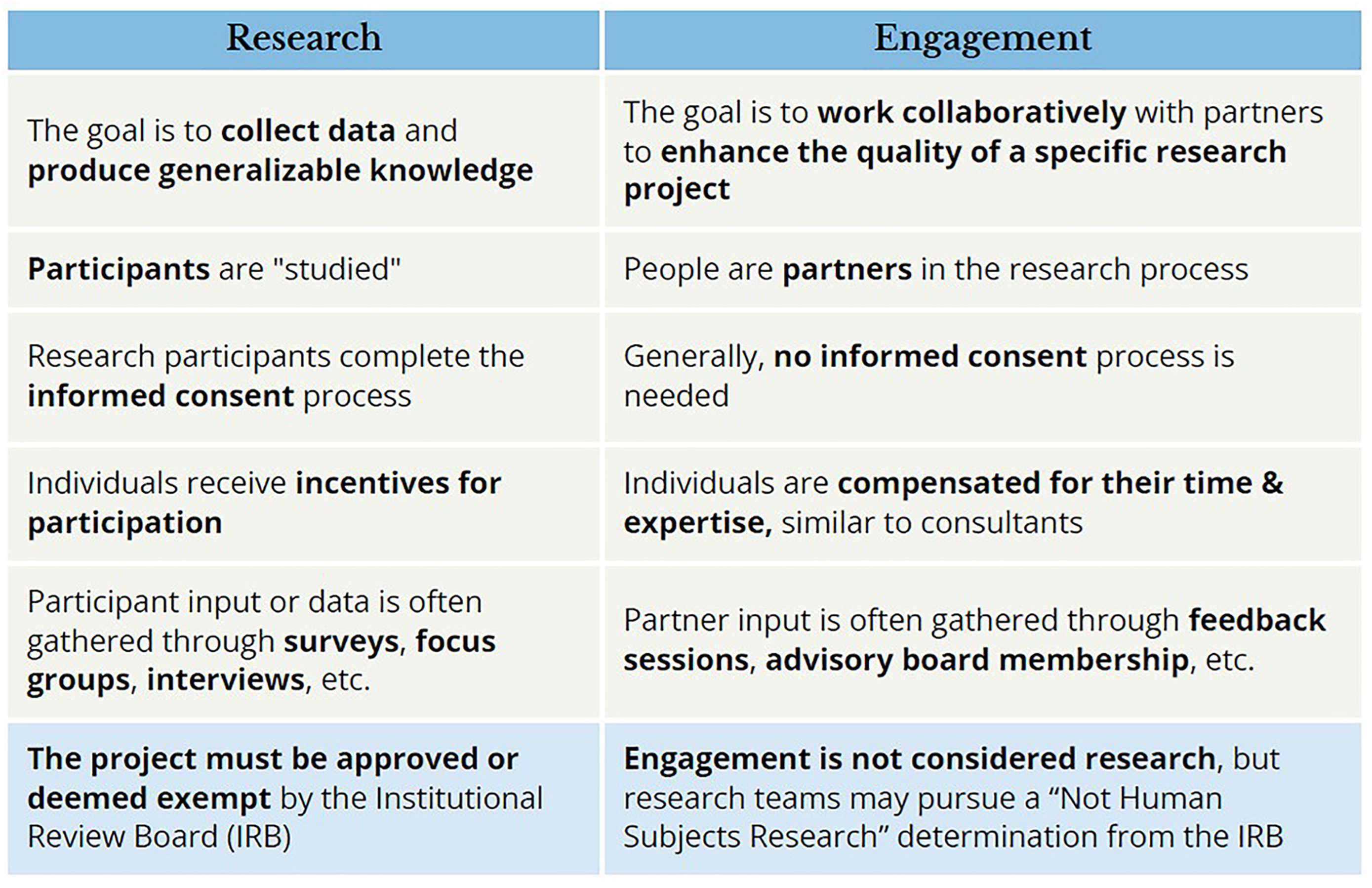
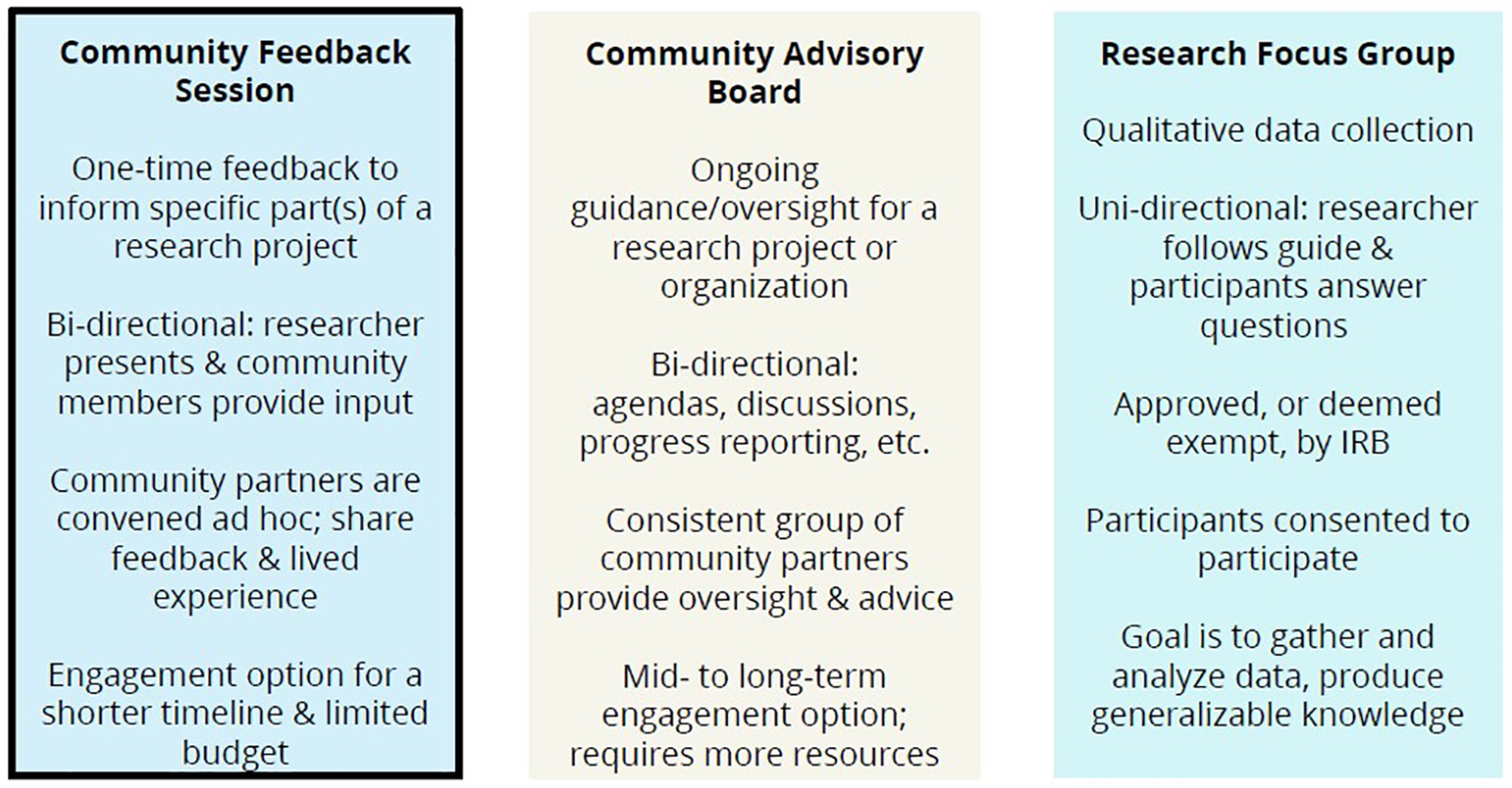
To support early-stage conversations with researchers interested in utilizing the CFS service, PaCER developed a suite of materials to provide concise information about the CFS process, discuss benefits and limitations of the CFS approach, determine if the research team has interest in and capacity to conduct CFS-related activities, and develop a mutual understanding of the purpose and goals of the session (Supplementary Materials 1–5). These include: (1) an overview flyer that outlines the CFS method, process, and frequently asked questions; (2) a slide deck that details how a CFS differs from other engagement and research methods, benefits of the CFS approach, expectations of PaCER staff and research teams when collaborating on a CFS project, a detailed timeline of all CFS-related activities, tips for conducting recruitment, and administrative and budgeting information; (3) a fillable worksheet that serves as a collaborative planning tool and asks research teams to reflect on questions related to session logistics, characteristics of session attendees, plans for recruiting partners, purpose and goals of the session, and envisioned application of feedback gathered, and (4) an Institutional Review Board (IRB) guidance document that describes the differences between human subjects research and engagement and outlines considerations for understanding engagement activities as “Not Human Subjects Research” (NHSR) (to note: PaCER has pursued and received a NHSR designation from UNC-Chapel Hill’s IRB for the CFS service; key differentiations between research and engagement and a side-by-side comparison of the CFS approach to other methods are highlighted in Figures 2 and 3, respectively). Additionally, when a CFS is completed, PaCER requests permission from the research team to share certain materials (e.g., recruitment materials, brief presentation) with future teams who are conducting CFSs on similar topics or are at a similar stage in the research lifecycle. Through this process, PaCER has created a repository of sharable materials that aid research teams in the development of screeners, recruitment flyers and emails, and project presentations. These materials enable research teams to view examples of key documents and tailor them to enhance their relevance and applicability to their own CFS project.
Key differentiations between human subjects research (HSR) and engagement activities as not human subjects research (NHSR).

Figure 2. Long description
The table compares research and engagement activities, focusing on key differences. It has two columns labeled ‘Research’ and ‘Engagement,’ each with several rows detailing specific aspects. The ‘Research’ column notes that the goal is to collect data and produce generalizable knowledge, participants are studied, informed consent is required, individuals receive incentives, data is gathered through methods such as surveys and interviews, and IRB approval is necessary. The ‘Engagement’ column states the goal is to work collaboratively to enhance specific research projects, people are partners, no informed consent is needed, individuals are compensated for their time and expertise, input is gathered through methods such as feedback sessions, and engagement is not considered research but may seek a NHSR IRB determination.
Side-by-side comparison of Community Feedback Sessions, Community Advisory Boards, and Research Focus Groups.

Figure 3. Long description
A table comparing Community Feedback Sessions, Community Advisory Boards, and Research Focus Groups. The table has three columns and three rows. The first column describes the Community Feedback Session, which involves gathering one-time feedback to inform specific parts of a research project, bi-directional interaction between researchers and community members, ad hoc convening of community partners, and is suitable for shorter timelines and limited budgets. The second column outlines a Community Advisory Board method, which provides ongoing guidance and oversight for a research project or organization, involves bi-directional agendas, discussions, and progress reporting, consists of a consistent group of community partners, and requires more resources for mid- to long-term engagement. The third column details the Research Focus Group, which focuses on qualitative data collection, follows a uni-directional approach where researchers guide and participants answer questions, is approved or deemed exempt by the Institutional Review Board, involves consented participants, and aims to gather and analyze data to produce generalizable knowledge.
Evaluation
To facilitate continuous quality improvement of the CFS service and track its related outcomes and impact, PaCER developed a comprehensive evaluation approach, which includes: (1) anonymous post-session surveys to assess researcher and partner experiences and satisfaction with the CFS process, as well as partner demographics; (2) researcher follow-up surveys delivered to one “key contact” on the study team 6–12 months post-CFS to assess how feedback was applied to their research study and any related outcomes; and 3) ongoing written and verbal check-ins with researchers (concluding at 18–24 months) to assess long-term impacts of the CFS. All evaluation surveys (Supplementary Materials 6–8) contain a mix of open-ended, 5-point Likert scale, and multiple-choice questions and were informed by evaluation examples shared in MV-CERC’s Community Engagement Studio Toolkit 2.0 [Reference Israel, Farrow, Joosten and Vaughn21]. The intent of the surveys is to evaluate the CFS service, not to measure specific constructs; therefore, no psychometric testing was conducted. Our programmatic evaluation also includes hosting periodic data parties [24,Reference Franz25] – a participatory evaluation event – during which PaCER staff collectively review and interpret evaluation responses and propose changes to CFS service process points to ensure continuous enhancement of service quality and utility. Quantitative survey responses are analyzed via a descriptive statistics approach, while open-ended survey responses are organized into thematic categories. We utilized an available case analysis approach to address missing survey responses [Reference Kang26].
To determine initial feasibility, acceptability, and utility of the CFS service, we conducted a brief pilot phase (from January – March 2022), during which PaCER implemented 7 CFSs for 2 research projects (4 CFSs for one project, 3 CFSs for the other) and followed the initial post-session evaluation protocol outlined above. We then held a data party, during which PaCER staff reviewed feedback, identified suggestions for improvement, and proposed changes to the CFS process based on evaluation responses. Resulting recommendations from this event were used to improve the CFS approach prior to our scaling up of the service.
Results
CFS characteristics
Between January 2022 and August 2025, we conducted 46 CFSs across 19 projects engaging 302 partners, with an average number of 7 attendees per session. The number of CFSs conducted for any one project ranged from 1 to 5. Common reasons for implementing multiple CFSs within a single project included holding separate sessions: (1) for distinct groups of partners (e.g., clinicians, patients); (2) focused on different topics (e.g., recruitment, intervention development); and 3) at various timepoints across the project lifecycle (e.g., proposal development, study design, dissemination).
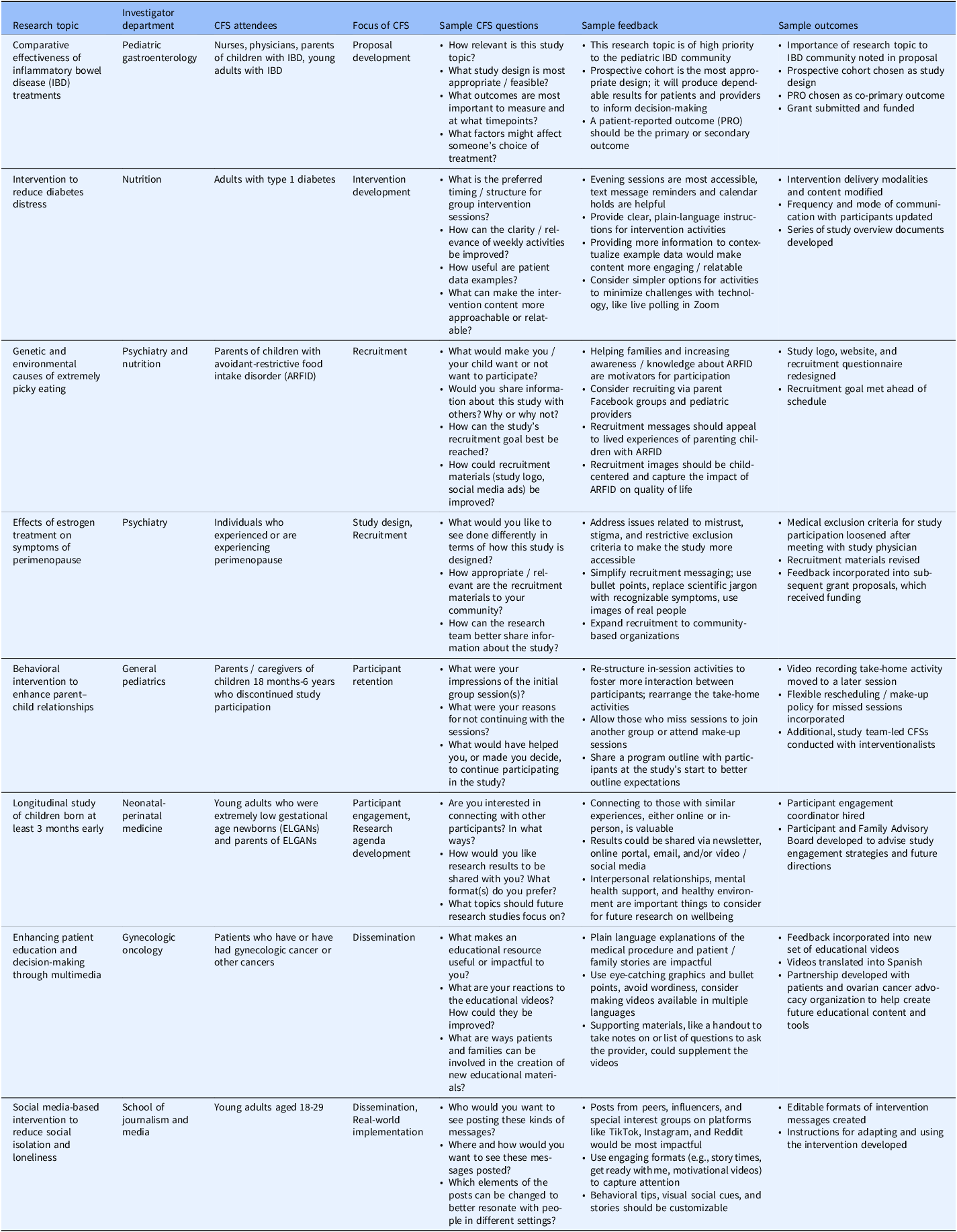
The projects for which CFSs were conducted represent a broad range of health topics (e.g., a variety of chronic health diseases, health needs of various populations, etc.) and types of research, including randomized controlled trials, comparative effectiveness studies, and observational studies. Researchers utilizing the CFS service represent an array of academic ranks and disciplines. CFSs were implemented at various stages of the research process, and focused on a variety of topics, including: motivators for and concerns about participating in a particular study; barriers to study participation; proposal development; study design and/or intervention development (including discussion of delivery, methods, outcomes, eligibility criteria, etc.); outreach and recruitment approaches; review of study-specific materials (e.g., logos, flyers, websites, infographics, social media ads, recruitment scripts, consent forms); participant engagement and retention; and strategies for dissemination, communication, and sharing of study results. Table 2 highlights the characteristics of a sample of completed CFSs.
Characteristics of and selected outcomes from a sample of community feedback sessions (CFS)

CFS attendee evaluation
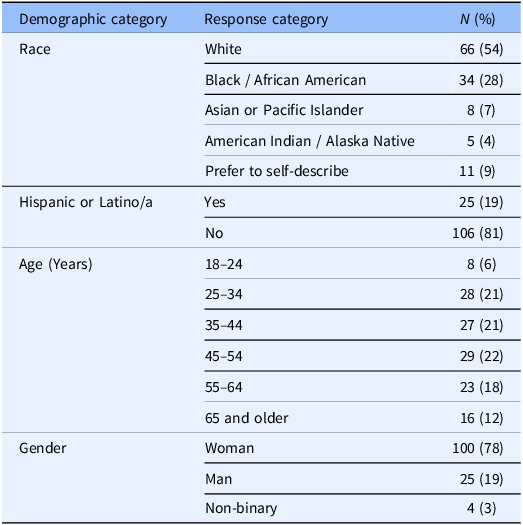
Post-session evaluation surveys were sent to all partners who attended a CFS. The overall response rate was 49%; however, respondents were able to skip questions which resulted in varied response rates by item. Partners who completed the post-session evaluation survey (n = 149) were diverse in terms of race and ethnicity, age, and gender (Table 3). Respondents reported an overwhelmingly positive experience participating in CFSs. Almost all (95%, n = 125) partners reported that the CFS was worth their time, and 99% (n = 148) indicated that they would be willing to participate again; 94% (n = 124) said they felt comfortable sharing their thoughts and ideas during the session, and 95% (n = 124) agreed that the researcher’s presentation gave them enough information to provide appropriate feedback. Partners endorsed contributing to research projects in a variety of ways during the sessions, including increasing researcher understanding of their point of view/experiences (77%, n = 99); sharing ideas on how to inform patients, providers, or community members about the project (64%, n = 82); sharing ideas on recruiting research participants (60%, n = 78); providing feedback on the importance of the study topic (56%, n = 72); providing feedback on how practical or doable the project would be (50%, n = 64); and sharing ideas on how to use project results to benefit the community (33%, n = 42).
Demographics of CFS attendees who completed the post-session evaluation survey (n = 149)

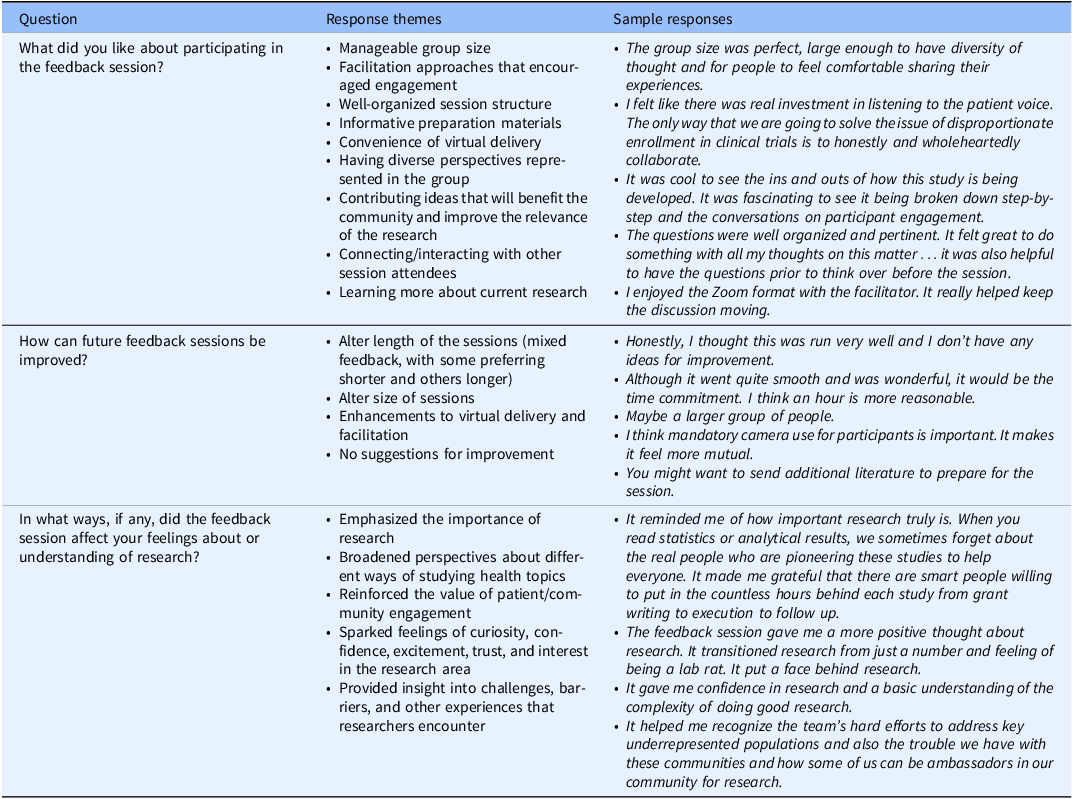
The evaluation survey also included open-ended questions that explored what partners liked about participating in the session, how it could be improved, and how it affected their feelings about or understanding of research. Respondents shared that they liked the structure, organization, facilitation, and size of the sessions; appreciated sharing their opinions and experiences in an encouraging environment; liked connecting and interacting with a diverse group of other partners; and enjoyed learning more about current research within their areas of interest. With respect to session delivery, partners shared positive comments related to the virtual format of meetings, utilization of virtual tools (e.g., live polling, chat function, whiteboarding), and ability to interact with study-related materials (such as websites and videos) in real time on Zoom. Several partners noted in open-ended responses that they found receiving information via email in advance of sessions to be efficient and effective. Many respondents had no recommendations for improving future sessions; recommendations received were primarily related to session logistics. Partners shared that the sessions emphasized the importance of research and broadened their perspectives about different ways of studying health topics; reinforced the value of engagement; sparked feelings of curiosity, confidence, excitement, trust, and interest in the research area; and provided insight into common challenges, barriers, and other experiences that researchers and institutions encounter throughout the research process. Common themes and illustrative excerpts from open-ended CFS attendee evaluation survey responses are summarized in Table 4.
Common themes from CFS attendee post-session evaluation survey responses

Researcher evaluation: Post-session survey
Thirty-four researchers completed the initial post-session evaluation survey; respondents were investigators and other research staff (e.g., project manager, study coordinator) who played an active role in CFS planning and implementation. At least one post-session evaluation survey was completed for every project. Researchers were highly satisfied with the CFS process, rating the overall CFS service as Excellent [88% (n = 30)] or Good [9% (n = 3)]. Thirty-three (97%) researchers said they would recommend the CFS service to colleagues. Researchers rated the quality of specific parts of the CFS process highly as well, including communication with PaCER staff [88% Excellent (n = 30), 9% Good (n = 3)], session facilitation [91% Excellent (n = 31), 9% Good (n = 3)], and recruitment guidance, when applicable [78% Excellent (n = 18), 17% Good (n = 4)].
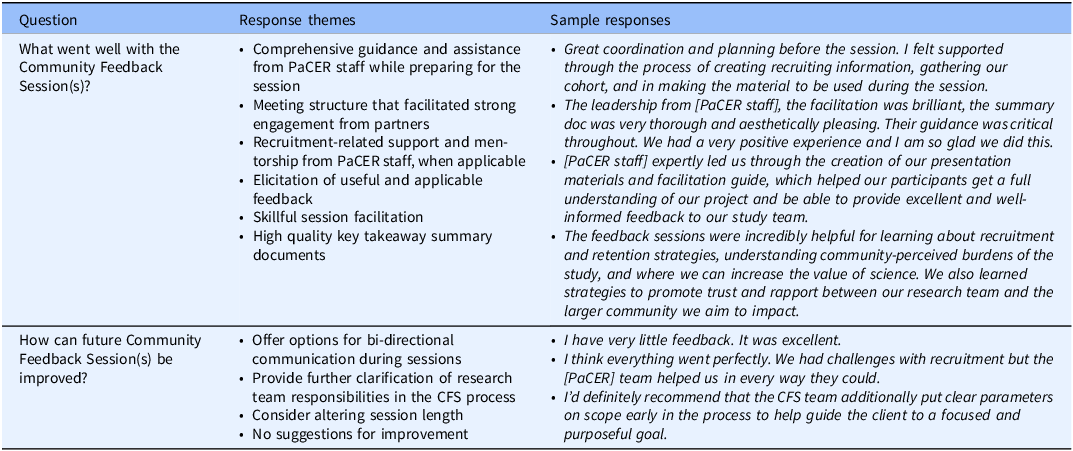
In open-ended responses, researchers further elaborated on positive aspects of the CFS, including comprehensive guidance and assistance from PaCER staff while preparing for the session, meeting structures that facilitated strong engagement from attendees and elicited useful and applicable feedback, skillful session facilitation, and high-quality key takeaway summary documents. Many researchers had no suggestions for improvement; recommendations received were related to session length and clarification of research team responsibilities in the CFS process. In rare instances when research teams experienced difficulties or delays in recruitment, researchers reported that receiving support, guidance, and assistance from PaCER helped alleviate these challenges and yielded successful recruitment. Common themes and illustrative excerpts from open-ended researcher initial evaluation survey responses are summarized in Table 5.
Common themes from researcher post-session evaluation survey responses

Researcher evaluation: Follow-up survey
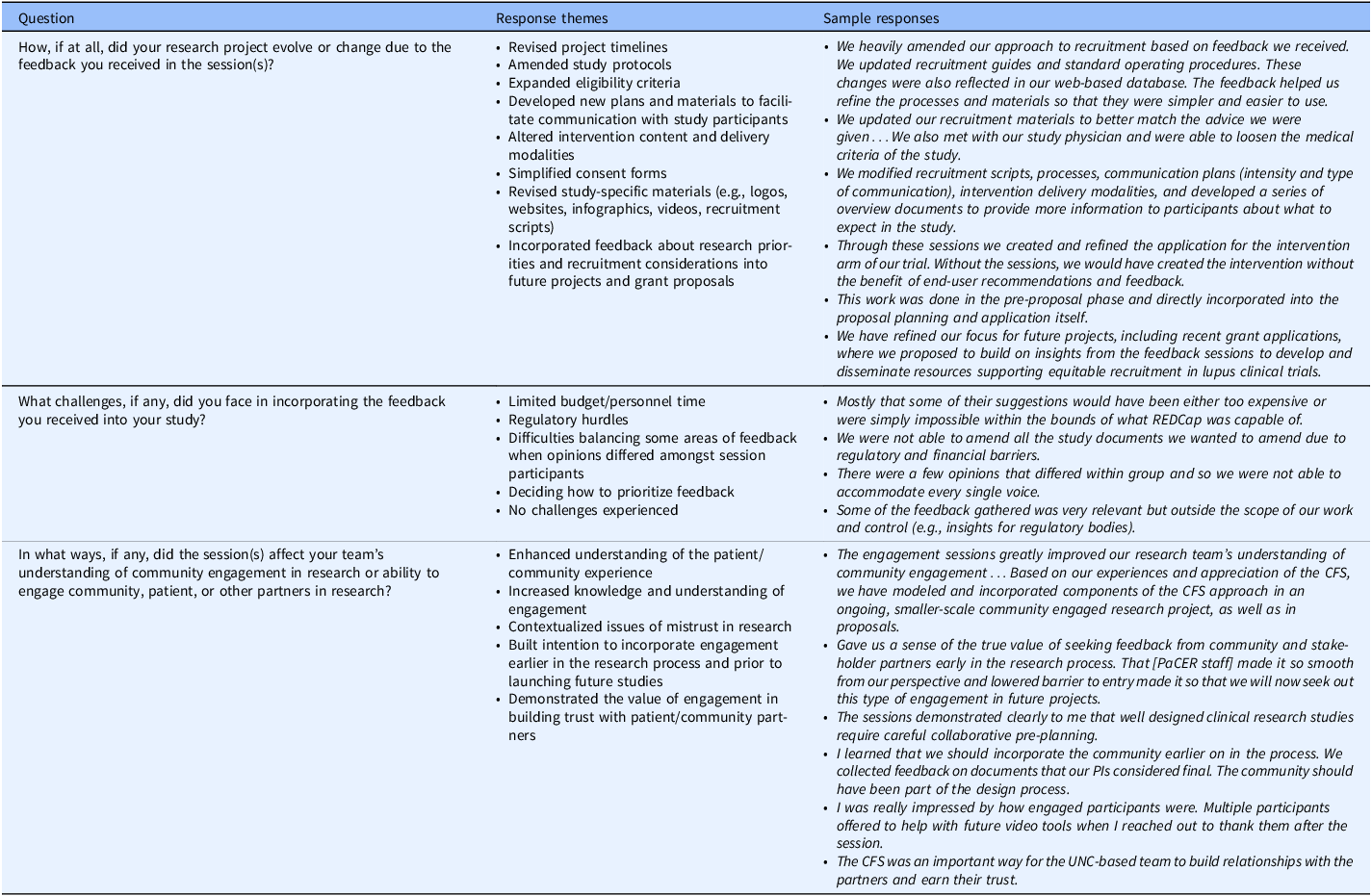
All researchers who have come due to complete their 6–12-month follow-up evaluation surveys (n = 16) have completed them. In their responses (summarized in Table 6), researchers noted specific changes they made to their projects as a result of feedback received during CFSs, including revising project timelines, amending study protocols, expanding study eligibility criteria, developing new plans and materials to facilitate communication with study participants, altering intervention content and delivery modalities, simplifying consent forms, and revising a variety of other study-related materials like logos, websites, flyers, infographics, videos, and recruitment scripts. Some researchers also described how they applied CFS feedback to other projects within their research portfolios, including refining the focus of future research projects and incorporating more generally applicable feedback about research priorities and recruitment considerations into subsequent grant applications. While most researchers noted that they did not face significant challenges incorporating feedback into their projects, some shared that financial and structural limitations (e.g., limited budget/personnel time, regulatory hurdles) made it difficult to apply some of the feedback received or noted that it was challenging to balance some areas of feedback when opinions differed within the group.
Common themes from researcher 6-12-month follow-up evaluation survey responses

Researchers also noted the ways in which conducting CFSs affected their understanding of engagement in research or ability to engage partners in the research process, describing enhanced understanding of the patient/community experience and intention to incorporate engagement earlier in the research process and prior to launching future studies. In general, researchers praised CFSs for providing an “excellent opportunity” to connect with partners and gain “invaluable feedback” to improve their research.
Researcher evaluation: Long-term impact
The longer-term impacts of CFSs are still being assessed, as many were completed within the last 18–24 months. However, during periodic written and verbal check-ins with PaCER staff, some researchers have reported that CFSs resulted in notable outcomes such as successful acquisition of grant funding, development of conference presentations and manuscripts, sustained contact and further collaboration with CFS attendees, incorporation of study team-led CFSs and higher-level engagement approaches into future projects, and improvements in participant recruitment and retention.
Discussion
Through the development, piloting, and evaluation of our CFS service, the PaCER Program has adapted the CE Studio model [Reference Joosten, Israel and Williams17] into a scalable approach that requires minimal resources, facilitates capacity building within research teams to conduct future engagement without external support, and leverages virtual technologies. Evaluation data from researchers and partners support the acceptability, feasibility, and utility of this modified approach and indicate that the CFS service meets researcher needs, informs research in an impactful way, and provides value to partners. Existing publications have described implementing CE Studios within specific studies or projects [Reference Nielson, Huang, Kull and Park27–Reference Denney, Moore, Patterson, Bialostozky and Williams33], conducting CE Studios virtually [Reference Zisman-Ilani, Buell, Mazel, Hennig and Nicholson22,Reference Killough, Martinez and Mata34–Reference Skiba, Badger, Garcia, Chilton and Winters-Stone36], using CE Studios to engage different communities and populations [Reference Killough, Runyan, Bishop, Sedillo, Benally and Brakey37–Reference Orellana, DSouza and Yap46], and developing “expanded” and “multisession” CE Studio approaches [Reference Valdez, Garay and Vasquez47,Reference Valdez, Schrobilgen and Garay48]; yet, there are few published examples [Reference Joosten, Israel and Head18] of implementing, reproducing, and/or adapting the CE Studio model to suit varied institutional contexts and capacities, a gap that this paper sought to address.
Throughout our adaptation process, we ensured that key components of the CFS approach reflect core principles of CE [1]. For example, our researcher-led recruitment process facilitates trust and strengthened partnerships; neutral facilitation of sessions and sharing of plain-language materials promotes bidirectional communication, culturally centered practice, and inclusivity; and partner compensation acknowledges the value of community knowledge and expertise. Our partner and researcher evaluation surveys also include items that map onto these principles, including questions about comfort sharing thoughts and ideas (trust, open communication), perceived contributions made to research projects (perceived influence, value), effects of CFS participation on understanding of research (expanded knowledge, capacity building), perceived benefits of CFSs (value), changes made to research projects based on feedback received from partners (improved projects/programs), effects of CFS involvement on understanding of CE and ability to engage partners in research (expanded knowledge, capacity building), continued contact/collaboration with CFS attendees (strengthened partnerships), and outcomes related to dissemination and future funding (sustainability).
Evaluation responses from researchers and CFS attendees indicate that our modifications to the CE Studio – specifically, altering processes related to session recruitment, partner orientation, and session planning and delivery – have been acceptable to researchers and partners and have positively impacted their experiences with and involvement in the CFS service. As reported by researchers and partners, researcher-led recruitment resulted in discussion groups that provided comprehensive, relevant, and appropriate feedback and included a range of perspectives, opinions, and experiences. Our positive experiences implementing virtual CFSs align with what others have described in publications when implementing project- or study-specific virtual CE Studios [Reference Zisman-Ilani, Buell, Mazel, Hennig and Nicholson22,Reference Killough, Martinez and Mata34–Reference Skiba, Badger, Garcia, Chilton and Winters-Stone36]. Additionally, partners’ suggestions related to session preparation did not include mention of or desire for additional onboarding or virtual touchpoints with the research team or PaCER staff, though this is not something we asked about explicitly in our evaluation process. We plan to incorporate further evaluation of partners’ perceived level of preparedness to participate in a CFS given abbreviated onboarding – which we did not formally assess in post-session surveys – as a future direction of our evaluation process.
Feedback received from researchers provides compelling evidence that CFSs can both help build research team capacity for conducting future sessions without PaCER support and for implementing other engagement approaches in their work. Active involvement in the CFS process seems to provide researchers with insight into how engagement works and elucidates processes related to the planning, implementation, execution, and evaluation of engagement activities. The CFS model allows researchers to build engagement knowledge and capacity in a supportive environment through ongoing consultation, communication, and support from PaCER staff. In informal communications with our team, some researchers expressed the realization that they had more connections to potential partners than they initially thought and were able to leverage existing connections with their own networks of patients, community members, and clinical partners during CFS recruitment. Although long-term impacts of CFSs implemented to date are still being assessed, researchers have reported independently implementing additional CFSs in their projects (e.g., with other groups of interest-holders, at later stages in the research process), incorporating CFSs and other engagement approaches – such as advisory boards and working with partners as co-investigators – into future studies and proposals, using feedback from CFSs to inform grant applications and other research projects within their portfolios, and sustaining contact and further collaboration with CFS attendees, which was previously noted as an unintended positive outcome of some CE Studios [Reference Joosten, Israel and Williams17,Reference Joosten, Israel and Head18].
While we developed researcher-focused evaluation processes to assess CFS-related outcomes beyond the initial survey, we have not conducted follow-up surveys with partners. Thus, we cannot report longer-term impacts of CFS participation on partners’ perceptions and understanding of research, or involvement in future research or engagement activities, though this topic has been discussed in other publications in the context of CE Studio participation [Reference Kas-Osoka, Israel and Ahonkhai49]. Piloting partner follow-up surveys to assess whether CFS participation influenced future engagement, trust, or self-efficacy in research contexts could help explore this further. Furthermore, given the CFS approach’s reliance on researcher-led screening and recruitment, PaCER does not collect demographics of CFS attendees and thus we are unable to compare survey respondent versus total attendee composition through a nonresponse analysis. Additionally, we did not assess researchers’ engagement experience before their CFSs, so we do not know if researchers with more engagement experience would rate their CFS experience differently than those with less experience. Due to staffing limitations, we currently conduct all CFSs in English. While there has been some work describing utilization of the CE Studio model for multilingual populations [Reference Valdez, Schrobilgen and Garay48,Reference Currier, Arteaga and Turner-Uaandja50], further exploration is needed to determine the feasibility, acceptability, and utility of CFSs conducted in languages other than English. Lastly, we cannot speak to the comparative effectiveness of the CFS process versus the CE Studio model, as doing so would require formalized testing of the different approaches within a controlled environment, which is beyond the scope of this paper and our work to date. However, comparing the effectiveness of various CE Studio model adaptations could be the topic of a future research study and would help build the evidence base related to research engagement.
The CFSs conducted through PaCER are driven by researcher-initiated requests. Prior to 2025, the number of sessions implemented rose steadily year over year as we scaled up the service (10 sessions in 2022, 13 in 2023, 16 in 2024); notably, we did not experience an increase in sessions in 2025 (8 sessions have been delivered to date in 2025) likely due to an increase in service charge rates and turmoil in the federal funding landscape. Most researchers utilizing the CFS service have funded their projects through departmental funds, existing grant funds, or budgeting for CFSs in grant proposals. To further bolster early-stage engagement (i.e., engagement during proposal development and study planning), PaCER has instituted an Engagement Voucher Program through which researchers can receive funding to support pre-award engagement activities like CFSs [20,Reference Bilheimer, Datta and Grewe23]. Our focus on reducing the number of PaCER staff hours required to implement a CFS has positioned us to not only meet increasing demand and grow the service, but also allows the service to remain affordable for research teams with limited budgets. Notably, we have achieved attendee counts and turnaround times from initial service request to session delivery comparable to published CE Studio metrics [Reference Joosten, Israel and Williams17,Reference Joosten, Israel and Head18], despite our reduced staffing structure; this ability to maintain service efficiency with limited resources further highlights the scalability and affordability of the CFS approach.
Developing institutional infrastructure and service offerings to support engagement in research – like many CTSAs have done – is critical to promoting researchers’ utilization of and capacity to implement evidence-based engagement methods. We successfully modified the CE Studio model to promote scalability within our institution, showing promising short- and intermediate-term outcomes. In addition to continuing to implement CFSs and enhance the quality of the service within our institution, we believe this model may provide value to investigators and research staff across the CTSA consortium and beyond. To further inform and strengthen the translational value of the CFS approach, others could consider using an implementation science framework and CE implementation principles to guide their adoption or uptake of the CFS model [1]. Additional future directions include further evaluation of long-term impacts of CFSs on research projects, more robust evaluation of CFS attendee experiences (e.g., perceived preparedness for sessions, longer-term impacts of session participation), conducting CFSs in languages other than English, and further study of the CFS approach in comparison to other engagement methods.
Supplementary material
The supplementary material for this article can be found at https://doi.org/10.1017/cts.2026.10745.
Acknowlegements
We thank the Meharry-Vanderbilt Community Engaged Research Core, Community Engagement Studio Learning Collaborative, and the Community Engagement (CE) Brokers forum for facilitating idea and resource sharing. We also thank the research teams we have supported through the Community Feedback Session (CFS) service and partners who have participated in CFSs, as well as members of the NC TraCS Community and Patient Advisory Board who have provided guidance on our institutional programming, including the CFS service. Lastly, we extend our gratitude and appreciation to our CTSA’s institutional leadership for their support in developing the CFS service.
Author contributions
Simone C. Frank: Conceptualization, Data curation, Formal analysis, Methodology, Project administration, Writing-original draft, Writing-review & editing; Alicia Bilheimer: Conceptualization, Project administration, Supervision, Writing-original draft, Writing-review & editing; Nixola Datta: Conceptualization, Data curation, Project administration, Writing-review & editing; Mary E. Grewe: Conceptualization, Methodology, Project administration, Writing-review & editing; Eseohe Aikhuele: Data curation, Formal analysis, Writing-review & editing; Khadeejatul-Kubraa A. Lawal: Data curation, Formal analysis, Writing-review & editing; Michael lD. Kappelman: Conceptualization, Supervision, Writing-review & editing.
Funding statement
This work was supported by the National Center for Advancing Translational Sciences of the NIH (grant numbers UL1TR002489 and UM1TR004406). The content is solely the responsibility of the authors and does not necessarily represent the official views of the NIH.
Competing interests
The authors declare none.




 Open access

