Block differentiates phenomenal consciousness and its cognitive access based on empirical data obtained with healthy subjects and neglect syndrome patients. Evidencing consciousness in noncommunicative patients is an important theoretical, medical, and ethical issue. In this commentary, we first emphasize the problem faced when determining the presence of phenomenal consciousness in vegetative and minimally conscious states in absence of any verbal response; second, we show that phenomenal consciousness may occur without verbal or motor reports in patients with a complete locked-in syndrome.
Vegetative state (VS) is characterized by “wakefulness without consciousness,” accompanied by reflexive motor activity only, devoid of any voluntary interaction with the environment (The Multi-Society Task Force on PVS 1994). Minimally conscious state (MCS) describes patients who are unable to communicate while demonstrating inconsistent but reproducible behavioral evidence of consciousness. Patients in MCS may show command-following, gestural or verbal yes/no response, intelligible speech, and purposeful behavior (Giacino et al. Reference Giacino, Ashwal, Childs, Cranford, Jennett, Katz, Kelly, Rosenberg, Whyte, Zafonte and Zasler2002). Neurological practice illustrates how difficult it is to identify signs of conscious perception in such patients. Misdiagnosis of VS occurs in about one-third of patients (Andrews et al. Reference Andrews, Murphy, Munday and Littlewood1996; Childs et al. Reference Childs, Mercer and Childs1993). Consciousness is a subjective experience and by definition VS and MCS patients are noncommunicative; we are therefore limited to observing their motor responses and interpreting them in terms of consciousness. Functional neuroimaging procedures provide an opportunity to find the neural correlates of phenomenal consciousness in these patients.
The problem is that there is no validated objective “consciousness meter” that can be used as a proof or disproof of consciousness in such patients. Passive paradigms such as auditory and pain perception showed that brain activations were significantly different between VS and MCS (for a review, see Giacino et al. Reference Giacino, Hirsch, Schiff and Laureys2006). But in the absence of a thorough understanding of the neural correlates of consciousness, brain activations observed with passive paradigms are not sufficient to know whether or not these patients are phenomenally conscious. Brain activations observed by using passive paradigms could reflect consciousness but they could also simply reflect nonconscious processing (see studies on subliminal priming or nonconscious processing during sleep and anesthesia). Active paradigms may provide a means for detecting phenomenal consciousness in brain-damaged patients (Boly et al. Reference Boly, Coleman, Davis, Hampshire, Bor, Moonen, Maquet, Pickard, Laureys and Owen2007). Owen et al. (Reference Owen, Coleman, Boly, Davis, Laureys and Pickard2006) have recently used such paradigms by asking patients to actively perform mental imagery tasks. In one exceptional VS patient studied five months after trauma, activation was observed in the supplementary motor area after the patient was asked to imagine playing tennis; and in premotor, parahippocampal, and posterior parietal cortices when asked to imagine visiting her house. Identical activation was observed in healthy volunteers. The aforementioned patient's neural responses by imagining tasks when asked to do so confirmed that she was phenomenally conscious (Boly et al. Reference Boly, Coleman, Davis, Hampshire, Bor, Moonen, Maquet, Pickard, Laureys and Owen2007; Owen et al. Reference Owen, Coleman, Boly, Davis, Laureys and Pickard2006; Reference Owen, Coleman, Boly, Davis, Laureys, Jolles and Pickard2007).
We concur with Block when he claims that conscious states would not magically disappear in a person who is unable to report conscious states. In this context we emphasize the complete locked-in syndrome (LIS). Classical LIS is defined by sustained eye opening, aphonia, quadriplegia, vertical or lateral eye movement or blinking of the upper eyelid to signal yes/no responses, and preserved consciousness (American Congress of Rehabilitation Medicine 1995). Complete LIS consists of total immobility including all eye movements (Bauer et al. Reference Bauer, Gerstenbrand and Rumpl1979). In approximately half of LIS patients the diagnosis initially is missed (Laureys et al. Reference Laureys, Pellas, Van Eeckhout, Ghorbel, Schnakers, Perrin, Berré, Faymonville, Pantke, Damas, Lamy, Moonen and Goldman2005). Julia Tavalaro, a LIS patient whose diagnosis was missed for 6 years, illustrates that phenomenal consciousness can exist for many years in the absence of reportability. Although Tavalaro was actually fully conscious, she was called “the vegetable” – she documents this horrible experience in her book, Look Up for Yes (Tavalaro & Tayson Reference Tavalaro and Tayson1997). Another testimony comes from an unpublished case we witnessed. This patient was considered as being vegetative for 15 years after a traumatic brain injury, although he was conscious. Now he can talk; and, using a facilitated communication device, he talks of his despair during these years of isolation.
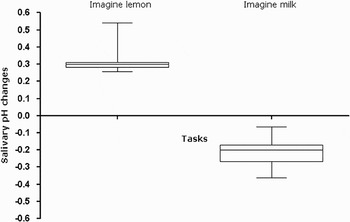
Brain computer interfaces (BCI), also named “thought translation devices,” have shown their utility to document consciousness in LIS. BCI is a communication system in which the messages or commands that an individual sends to the external world do not pass through the brain's normal output pathways of peripheral nerves and muscles (Kubler & Neumann Reference Kubler and Neumann2005). In end-stage amyotrophic lateral sclerosis (ALS), near-complete LIS patients were able to communicate without any verbal or motor report, but were able to do so solely by modulating their EEG (Birbaumer et al. Reference Birbaumer, Ghanayim, Hinterberger, Iversen, Kotchoubey, Kubler, Perelmouter, Taub and Flor1999; Hinterberger et al. Reference Hinterberger, Birbaumer and Flor2005). BCI can use surface electrodes but is faster when intracortical electrodes are used (Hochberg et al. Reference Hochberg, Serruya, Friehs, Mukand, Saleh, Caplan, Branner, Chen, Penn and Donoghue2006). Finally, mental manipulation of salivary pH has been used as a form of non-motor mediated communication in one complete LIS ALS patient (Wilhelm et al. Reference Wilhelm, Jordan and Birbaumer2006). Figure 1 graphically illustrates such “Yes” (imagine lemon)/“No” (imagine milk) communication we obtained from a healthy volunteer.
Nonverbal report of phenomenal consciousness using salivary pH changes. A healthy subject communicated “Yes” (i.e., imagine lemon) or “No” (i.e., imagine milk) while salivary pH changes were monitored (as compared with baseline). Box (mean and standard deviation) and whickers (minima and maxima) obtained during a single untrained session; 2 minutes of imagery for each task.

Bedside evaluation of consciousness in severely brain-damaged patients who cannot verbally or behaviorally report their putative phenomenal consciousness is intrinsically difficult. New functional neuroimaging techniques employing “active” mental imagery paradigms have shown their interest in the assessment of VS and MCS. The rare but horrifying condition of complete LIS illustrates that phenomenal consciousness may remain present for many years in the absence of any overt reportability.
ACKNOWLEDGENTS
Steven Laureys is research associate at the Belgian Fonds National de la Recherche Scientifique (FNRS). Audrey Vanhaudenhuyse is funded by a grant from the French Speaking Community of Belgium (Concerted Research Action 06/11-340).