INTRODUCTION
Agriculture and cattle ranching have reduced the original vegetation to patches of different successional stages of tropical dry forests (Portillo-Quintero & Sánchez-Azofeita Reference PORTILLO-QUINTERO and SÁNCHEZ-AZOFEITA2010, Quesada et al. Reference QUESADA, SÁNCHEZ-AZOFEITA, ÁLVAREZ-AÑORVE, STONER, AVILA-CABADILLA, CALVO-ALVARADO, CASTILLO, ESPÍRITO-SANTO, FAGUNDES, FERNANDES, GAMON, LOPEZARAIZA-MIKEL, LAWRENCE, CERDEIRA, POWERS, NEVES, ROSAS-GUERRERO, SAYAGO and SÁNCHEZ-MONTOYA2009). The size of the remaining fragments may influence bird species richness (Maldonado-Coelho & Marini Reference MALDONADO-COELHO and MARINI2000), but the composition and structure of the vegetation remaining on the original patches may have a stronger effect on the number of bird species than the size of the fragment (Maldonado-Coelho & Marini Reference MALDONADO-COELHO and MARINI2000, Stouffer & Bierregaard Reference STOUFFER and BIERREGAARD1995). Bird richness may also be high in intermediate stages due to the presence of species from early and mature forests (Connell Reference CONNELL1978).
In addition to the arrival of migratory birds at the end of the rainy season, birds respond to the physiognomic changes of the vegetation and to the available food resources. For instance, Bursera trees, a dominant component of mature dry forests of western Mexico (Rzedowski et al. Reference RZEDOWSKI, MEDINA and CALDERÓN2005), produce fruit during the dry season. There is ample evidence that frugivores, such as flycatchers and vireos, include Bursera drupes as an important part of their diet (Ramos-Ordoñez & Arizmendi Reference RAMOS-ORDOÑEZ and ARIZMENDI2011). These birds also consume arthropods and fruit from other plants, but in the dry season some species seem to prefer this resource to the sugary fruit produced by other plants.
Flycatchers in particular remove large amounts of fruit from these trees (Ramos-Ordoñez & Arizmendi Reference RAMOS-ORDOÑEZ and ARIZMENDI2011). In addition, migratory birds move readily between mature and early-successional patches (Hutto Reference HUTTO1998, Smith et al. Reference SMITH, SALGADO-ORTIZ and ROBERTSON2001). These habitat shifts facilitate the dispersal of seeds and the establishment of woody vegetation in disturbed environments (Galindo-González et al. Reference GALINDO-GONZÁLEZ, GUEVARA and SOSA2000, Tellería et al. Reference TELLERÍA, RAMÍREZ and PÉREZ-TRIS2005).
Few studies have focused on the relationship between the distribution of frugivorous birds and habitat changes in dry forests (Chazdon et al. Reference CHAZDON, HARVEY, MARTÍNEZ-RAMOS, BALVANERA, STONER, SCHONDUBE, AVILA-CABADILLA, FLORES-HIDALGO, Dirzo, Young, Mooney and Ceballos2011, Ortiz-Pulido et al. Reference ORTIZ-PULIDO, LABORDE and GUEVARA2000, Smith et al. Reference SMITH, SALGADO-ORTIZ and ROBERTSON2001). We assessed the influence of the vegetation structure, successional stage and season on the diversity and distribution of frugivorous birds in tropical dry forest in south-western Mexico. Since early-succession sites were larger than mature and intermediate patches, we also assessed the influence of patch size on the number of frugivorous bird species. We hypothesized that: (1) Frugivorous bird richness should respond positively to the complexity of the vegetation. (2) Species richness and abundance of frugivores should be higher in late-successional stages during the dry season because the production of fruit by zoochorous trees such as Bursera spp., a preferred food source, is higher during this time of the year. Migratory species, on the other hand, are ubiquitous (Hutto Reference HUTTO1998) and their distribution would be widespread. (3) Species richness should be higher in transitional succession stages during the rains, according to the intermediate disturbance hypothesis (Connell Reference CONNELL1978).
METHODS
Study area and sampling sites
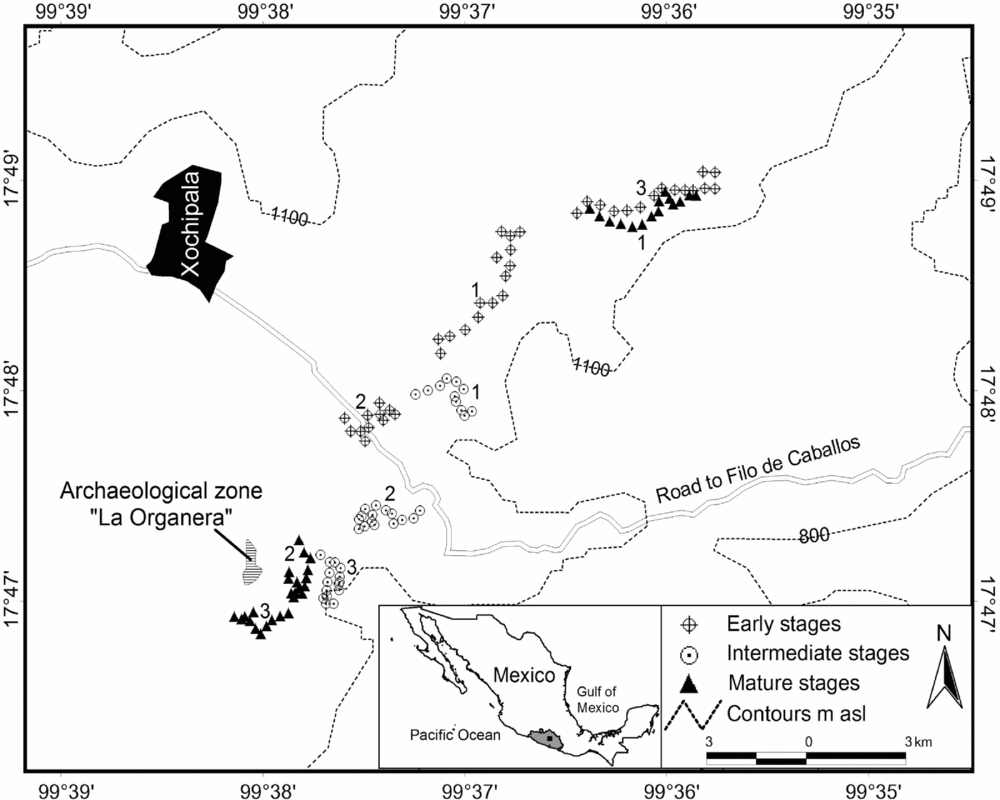
The study was conducted in the area known as La Organera–Xochipala, 18°03′46.65′′–17°42′11.14′′N, 99°36′36.50′′–99°35′30.46′′W. The region belongs to the biotic province of the Balsas river basin, in the Mexican state of Guerrero (Figure 1). The orography in the region is rugged, with an average altitude of 1100 m asl. The predominant climate is semidry, with an annual average temperature of 23.9°C, and an annual rainfall of 684 mm (Peralta Reference PERALTA, Diego-Pérez and Fonseca1995). Rain falls mainly from June to October (Meza & López Reference MEZA, LÓPEZ, Diego-Pérez and Fonseca1997).
Map of the study region in the state of Guerrero, southern Mexico, showing the sampling plots in La Organera–Xochipala tropical dry forest. The numbers (1–3) represent the three sites of each successional stage.

We studied nine dry-forest fragments in three stages of succession (i.e. seral stages) that had been mostly unmanaged for different periods of time since the last major disturbance (i.e. clear-cutting and fire): (1) Three disturbed sites (early stage of succession (ES) ~20 y) consisting of native vegetation in land used for cattle ranching and, to a lesser extent, seasonal agriculture. Today the vegetation continues to be felled for wood. The sites have a low slope and there are only scattered trees on rocky ground that is not suitable for large-scale agriculture (Almazán-Núñez et al. Reference ALMAZÁN-NÚÑEZ, ARIZMENDI, EGUIARTE and CORCUERA2012). (2) Three sites within the transition between a mature forest and fragmented areas (intermediate stage (IS) ~35 y). The matrix surrounding the sites consisted of pasture and corn and bean seasonal fields. These sites have a steeper slope which varies from 15° to 30°, and have been used for seasonal corn production as well as cattle ranching. There are still some patches with eroded soils. Nonetheless, to a large extent, they have developed structural and floristic elements from the original vegetation. (3) Three sites with a closed canopy (mature stage (MS) > 50 y), characterized by the presence of a tree cover that is typical of mature dry forest (e.g. dominance of the Bursera spp.). The slope here is > 25° and therefore these areas have not been used on a large scale. In past years all sites were clear-cut and burned to open areas for agricultural and/or ranching activities. This information was obtained from interviews with farmers.
The area of the sites ranged from 18 to 181 ha. The mean distance between sites was 0.80 km with a range of 0.20 km (MS1 to ES3) to 1.78 km (ES1 to MS1) (Figure 1).
Habitat structure
We established 41 30-m diameter (0.28 ha) circular plots (two sites with 15 plots each, one with 11 plots) for each successional stage (three sites per stage; Figure 1). In each of these (n = 123 plots) we defined two perpendicular transects pointing to the four cardinal points. We recorded and identified every individual tree and shrub (dbh ≥ 10 cm) that intersected the lines (Almazán-Nuñez et al. Reference ALMAZÁN-NÚÑEZ, ARIZMENDI, EGUIARTE and CORCUERA2012). The crown size or cover of each plant was estimated with the formula for an ellipse using the maximum and minimum diameter lengths (Muller-Dombois & Ellenberg Reference MULLER-DOMBOIS and ELLENBERG1974). We also counted the number of individual trees and shrubs (shrubs were differentiated from trees by their relative short size (< 6 m) and multiple stems) in each plot (density). Stratification of the vegetation was determined with an optical square marked with two perpendicular axes (Montaña & Ezcurra Reference MONTAÑA and EZCURRA1980). In each plot we recorded height and number of times the foliage touched the point of intersection of the two axes. This procedure was repeated every 50 cm (60 times) oriented to the four cardinal directions in each transect. Heights were grouped in 1-m intervals and foliage height diversity (FHD) was estimated with the Shannon–Wiener index.
In addition to the stratification of the vegetation, 15 additional variables were assessed: (1) shrub density, (2) shrub cover, (3) density of Bursera spp. trees, (4) cover of Bursera spp. trees, (5) density of succulent species (i.e. Cactaceae plants), (6) cover of succulent species, (7) density of other zoochorous species (i.e. species whose fruits are eaten by birds, but do not belong to Bursera or Cactaceae), (8) cover of zoochorous species, (9) total plant density with a dbh ≥ 10 cm, (10) total cover of every plant with a dbh ≥ 10 cm, (11) diameter at breast height (dbh ≥ 10 cm), (12) mean height of shrub and trees species, (13) shrub species richness, (14) tree species richness, and (15) total species richness (trees and shrubs). Detailed vegetation analyses for these sites are described in Almazán-Núñez et al. (Reference ALMAZÁN-NÚÑEZ, ARIZMENDI, EGUIARTE and CORCUERA2012).
Bird census
Bird censuses took place from February 2010 to February 2011 and we used a fixed-radius point count method with a 30-m radius. This distance has been recommended for tropical dry forests (Hutto et al. Reference HUTTO, PLETSCHET and HENDRICKS1986). Each point, established in the same plots in which the vegetation had been characterized, was separated by approximately 200 m to avoid counting the same bird more than once. Every frugivorous bird seen or heard within the point count radius was recorded. Observations took place during the birds’ period of highest activity: mornings (6h30–11h00) and afternoons (16h30–19h00). All individuals seen or heard within a 10-min period at each point were recorded. This time lapse is long enough to allow most birds present, including rare species, to be counted, and short enough so that the probability of counting the same bird more than once is minimized (Reynolds et al. Reference REYNOLDS, SCOTT and NUSSBAUM1980). Each site was visited eight times during the study period. Since the dry season is longer (7 mo) than the wet period (5 mo), plots were visited five times during the dry months and three during the rains. The abundance of each species was the average number resulting from all visits in each season.
We recorded the name of the species, as well as the number of individuals. We also observed, when possible, the way in which birds processed fruits and grouped them as potential legitimate dispersers (birds that eat the entire fruit and regurgitate or defecate the seeds further away from the plant from which the fruit was obtained), pulp consumers (species that consume the pulp and discard the seeds, usually under the parent plant), or seed predators (birds that break the seeds when eating them or eat the whole fruit and digest the seeds together with the pulp) (Jordano Reference JORDANO and Fenner1992, Reference JORDANO1995; Traveset Reference TRAVESET1994). Because frugivorous birds can be both dispersers of some plant species and predators or pulp consumers of others (Herrera Reference HERRERA, Herrera and Pellmyr2002), we considered the general interaction pattern (i.e. relationship between seed size and manner of processing; Levey Reference LEVEY1987) based on the information gathered in the study areas, and particularly on the way in which they processed Bursera drupes. Bursera drupes were the main fruit frugivores ate and the trees of the genus are dominant in the study area (Almazán-Núñez et al. Reference ALMAZÁN-NÚÑEZ, ARIZMENDI, EGUIARTE and CORCUERA2012). No direct foraging observations were recorded for some birds (for example, different species of dove) but, since they are known to be frugivores, we used the information provided in the Neotropical bird literature (Skutch Reference SKUTCH1983) to categorize them. Most of our observations coincided with the literature with the exception of species such as Passerina versicolor, P. leclancherii and Spinus psaltria, which are generally categorized as granivores, but were seen eating the pseudo-aril of Bursera fruits. Since usually they discarded the seed of the drupes, we classified them as pulp eaters. Species were also separated according to seasonal status (i.e. local and latitudinal migrants and resident species).
Statistical analyses
Since the vegetation variables were highly intercorrelated, and it was difficult to assess which of them explained the bird species distribution, we used Principal Component Analyses (PCA) with varimax rotation for the 16 untransformed habitat-related variables to synthesize the structure of the vegetation. Furthermore, since birds probably recognize their habitats based on the simultaneous assessment of different vegetation characteristics (the niche gestalt suggested by James (Reference JAMES1971)), it seems that this approach may be a more realistic approximation of the habitat space used by birds than the individual variables.
The Chao2 estimator was used to assess the comprehensiveness of the bird species survey. This non-parametric species richness estimator has been found to give reasonable approximations at small-grain-size sample units (i.e. circular plots; González-Oreja et al. Reference GONZÁLEZ-OREJA, DE LA FUENTE, HERNÁNDEZ-SANTÍN, BUZO-FRANCO and BONACHE-REGIDOR2010, Hortal et al. Reference HORTAL, BORGES and GASPAR2006). In addition, empirical results have also shown it is less dependent on sampling intensities than other approximation methods (Colwell & Coddington Reference COLWELL and CODDINGTON1994, Hortal et al. Reference HORTAL, BORGES and GASPAR2006). Calculations were done with the software EstimateS version 8. Dominance was obtained with the Simpson index (Magurran Reference MAGURRAN1988). Differences in abundance and dominance of birds between sites and successional stages during the dry and rainy seasons were compared with unbalanced two-way analysis of variance (ANOVA, factor 1: successional stage, factor 2: sites). After inspecting the statistical distribution, data were transformed to log(x + 1) in order to comply with the normality and homoscedasticity assumptions. Multiple comparisons were carried out using Tukey HSD test with SPSS v. 17.0. Since the sampling effort was different between sites, we used rarefaction to compare richness. The effect of vegetation on rarefied species richness, abundance and dominance of frugivorous birds was calculated with linear regressions. We also used regression analyses to assess the influence of the fragment size on the number of frugivorous bird species. All analyses were considered statistically significant when P ≤ 0.05.
The relationship between species distribution and the vegetation principal components was analysed using a Canonical Correspondence Analysis (CCA). This technique is used to obtain synthetic environmental gradients of groups of ecological data (ter Braak & Verdonshot Reference TER BRAAK and VERDONSHOT1995) and to detect species distribution patterns that can be explained by a group of environmental variables (Storch et al. Reference STORCH, GASTON and CEPÁK2002). Bird species with ≤ three individuals for any given season were excluded from the analysis of that particular period. We tested the significance of the results with Monte Carlo permutations (999 simulations, P ≤ 0.05). In this case, two statistical tests were used, one based on the first ordination axis, and the other based on the addition of all canonical axes (ter Braak & Verdonshot Reference TER BRAAK and VERDONSHOT1995). These analyses were run with the CANOCO 4.5 and CANODRAW 4.0 programs©.
RESULTS
Habitat structure
The vegetation structure differed between successional stages. Tree density, vegetation cover and foliage height diversity were highest in the intermediate seral stage. This was because there were more young trees in different layers in these sites compared with mature forests, which had fewer but larger trees. Trees in the early-successional sites were more scattered than in the other fragments.
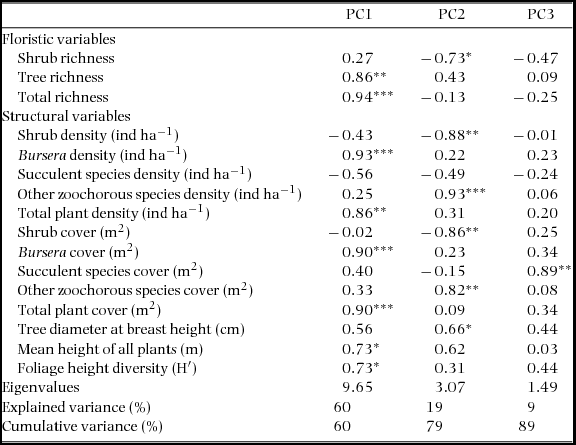
The structure of the vegetation was synthesized into three principal components that explained 89% of the variance (Table 1). The first component (PC1) explained 60% of the variance, and represented the complexity of the vegetation due to the high scores of variables such as vegetation height, foliage height diversity, density and cover of Bursera, cover and number of individual plants per plot tree richness, and total richness. The higher positive scores of the second component (19% of the explained variance) corresponded to the cover of other zoochorous plants which are present in less complex forest (i.e. Ficus spp. and Capparis spp.) and that did not include species of Burseraceae or Cactaceae and negatively to shrub richness, density and cover. The third component (9% of the explained variance) was related to the cover of succulent species of Cactaceae.
Ordination (PCA) values of the first three factors for habitat variables in nine sites in a tropical dry forest in south-western Mexico. The sites represented different successional stages. Significant correlations are highlighted with * P < 0.05, ** P < 0.01, *** P < 0.001.
Composition of frugivorous birds
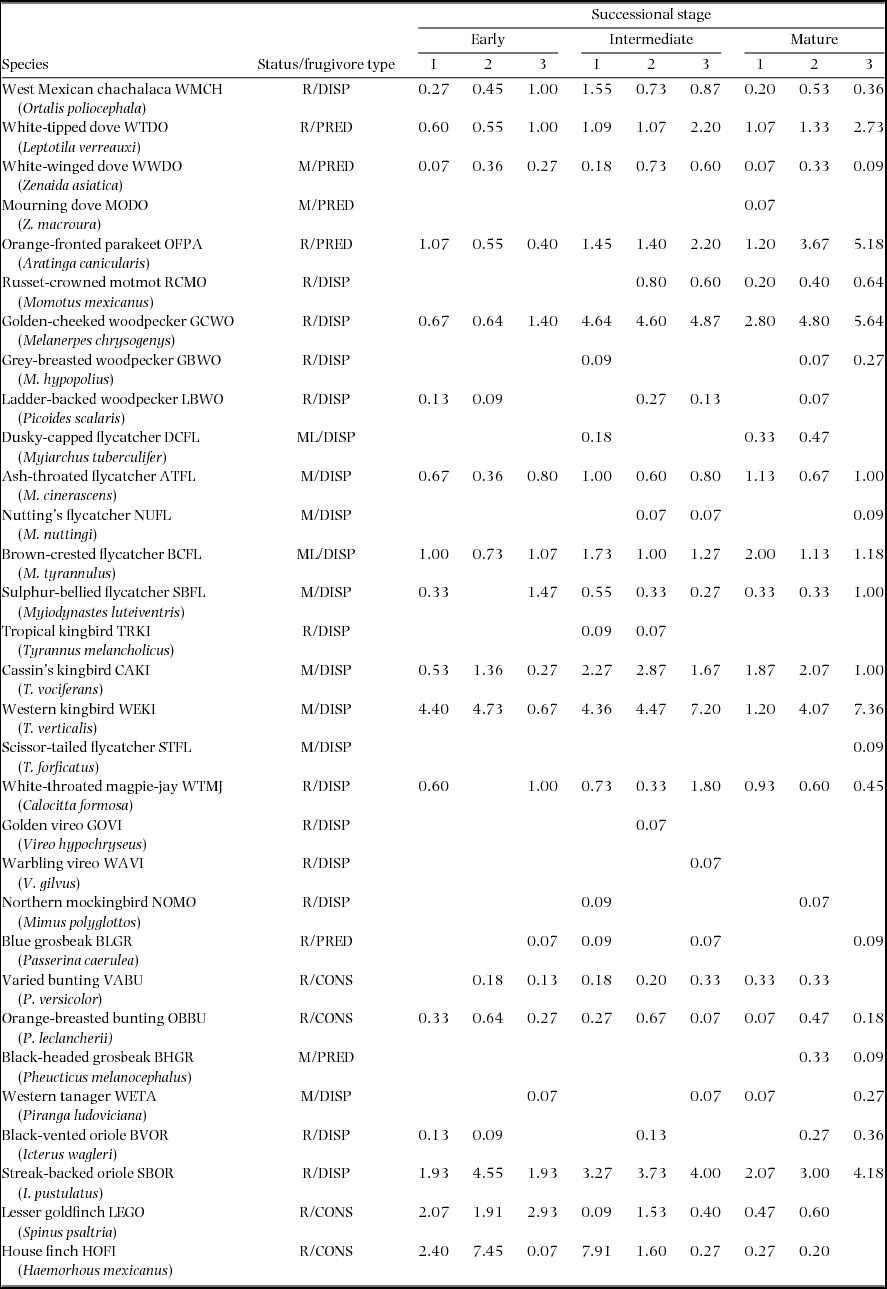
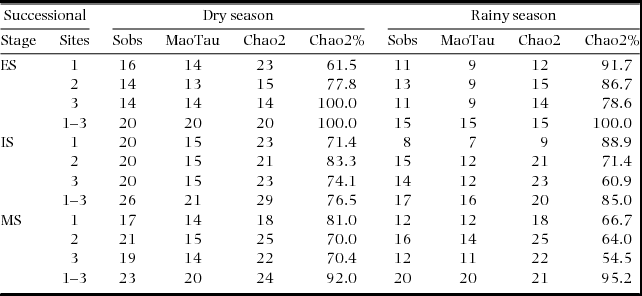
We recorded 31 species of frugivorous bird belonging to 13 families in the nine study sites (Appendix 1). Species like Ortalis poliocephala, Leptotila verreauxi, Zenaida asiatica, Aratinga canicularis, Melanerpes chrysogenys, Myiarchus tyrannulus, M. cinerascens, Tyrannus verticalis, T. vociferans, Passerina leclancherii and Icterus pustulatus were present in every site. Other species were found only in intermediate or mature stages of succession with higher tree cover, like Momotus mexicanus and Myiarchus nuttingi. There were no species found exclusively in early stages, although the four species that feed on pulp were more abundant in sites in early stages of succession. We also found six species (15% of all the individuals) that predated seeds, and 21 legitimate potential dispersers (70% of the total; Appendix 1). On average we recorded 90% of the total number of expected frugivorous according to Chao2 during the dry season and 93% during the rainy season (Appendix 2).
Bird–habitat relationships
In the rainy season, the rarefied number of species (MaoTau) was lower in the early-successional sites in comparison with intermediate and mature stages. In the dry season the number of species was similar between successional stages (Appendix 2).
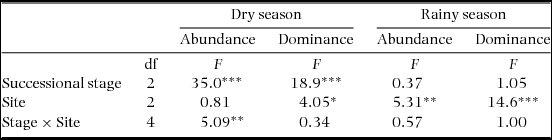
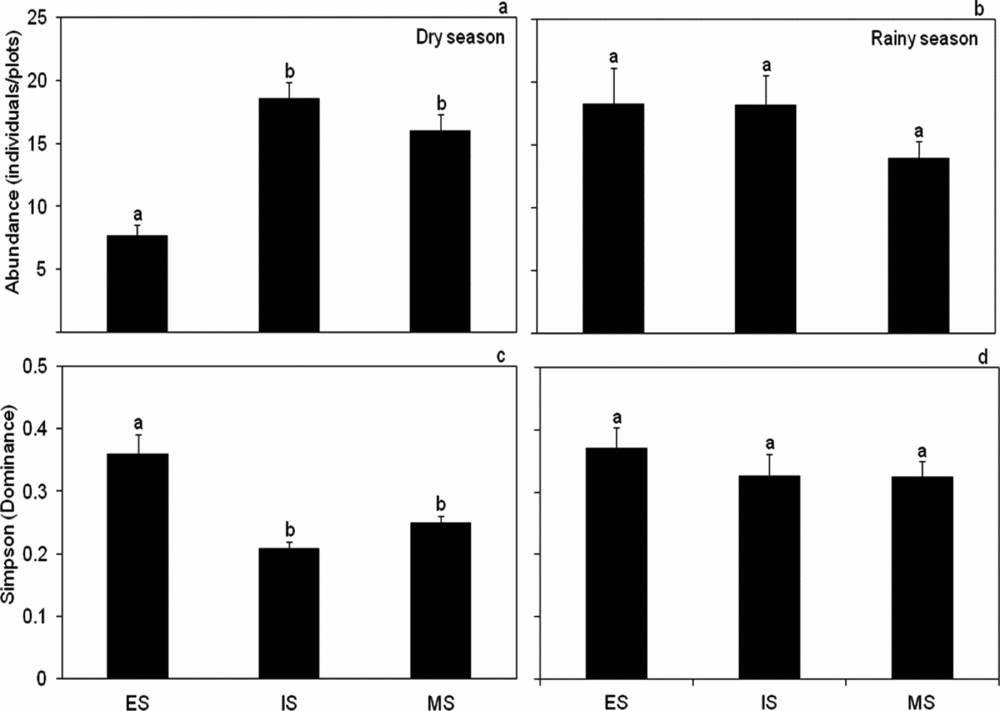
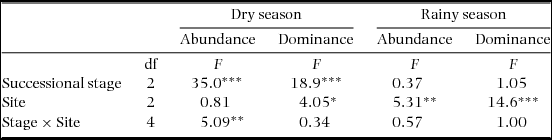
In the dry season, intermediate and mature-forest sites had more individuals than those of early stages (F = 35, P < 0.001; Figure 2a). Nevertheless, the interaction between sites and stages was significant (F = 5.09, P < 0.01; Table 2), because one of the early-successional sites (ES2) did not have a significant difference with regards to one of the mature-forest sites (MS1). In the rainy season, the number of individuals was different between sites but not between seral stages (F = 5.31, P < 0.01; Figure 2b). One of the early-successional sites (ES2) had the highest abundance of birds in this season; the site with the lowest abundance was MS1 (Table 2).
Two-way ANOVA comparisons of frugivorous bird diversity and abundance between three successional stages in a dry forest in south-western Mexico. * P < 0.05, ** P < 0.01, *** P < 0.001.
Mean abundance and dominance values for the frugivorous bird community in three different successional stages in a tropical dry forest in south-western Mexico during the dry (a, c) and rainy seasons (b, d). Different letters indicate significant differences (P < 0.05) according to Tukey HSD test. ES, early stage; IS, intermediate stage; MS, mature stage.
During the dry season, dominance of the frugivorous birds was consistently higher in the early stages (F = 18.9, P < 0.001; Figure 2c), mainly due to the presence of high numbers of pulp consumers such as Haemorhous mexicanus and Spinus psaltria. In this case, the interaction between sites and successional stages was not significant (Table 2). In the rainy season, there were significant differences in the dominance of bird species between sites (F = 14.6, P < 0.001; Table 2), but not between successional stages (F = 1.05, P > 0.05; Table 2).
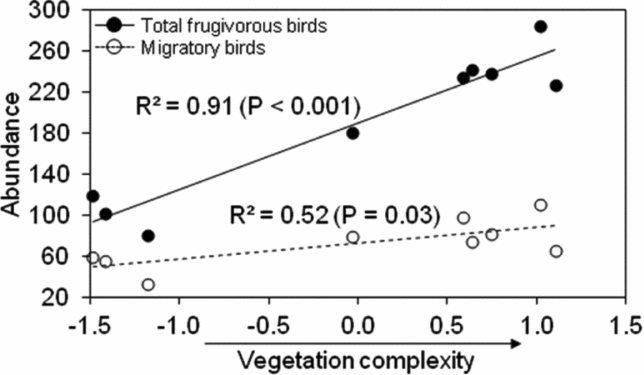
During the dry season, there was a negative relationship between the size of habitat fragments and the rarefied number of species (F2,7 = 16.0, P = 0.005), i.e. the smaller fragments had more bird species. The relationship between the size of the fragments and species richness was not significant for the rainy season (F2,7 = 0.34, P = 0.57). Abundance of frugivorous birds and that of migratory birds increased significantly with the vegetation complexity during the dry season (Figure 3).
Relationships between abundance of migratory birds and total number of frugivorous birds, with the first factor of the PCA analysis of the vegetation in nine sites representing different successional stages in a south-western Mexico dry forest. The first ordination factor represented the early to advanced succession gradient.
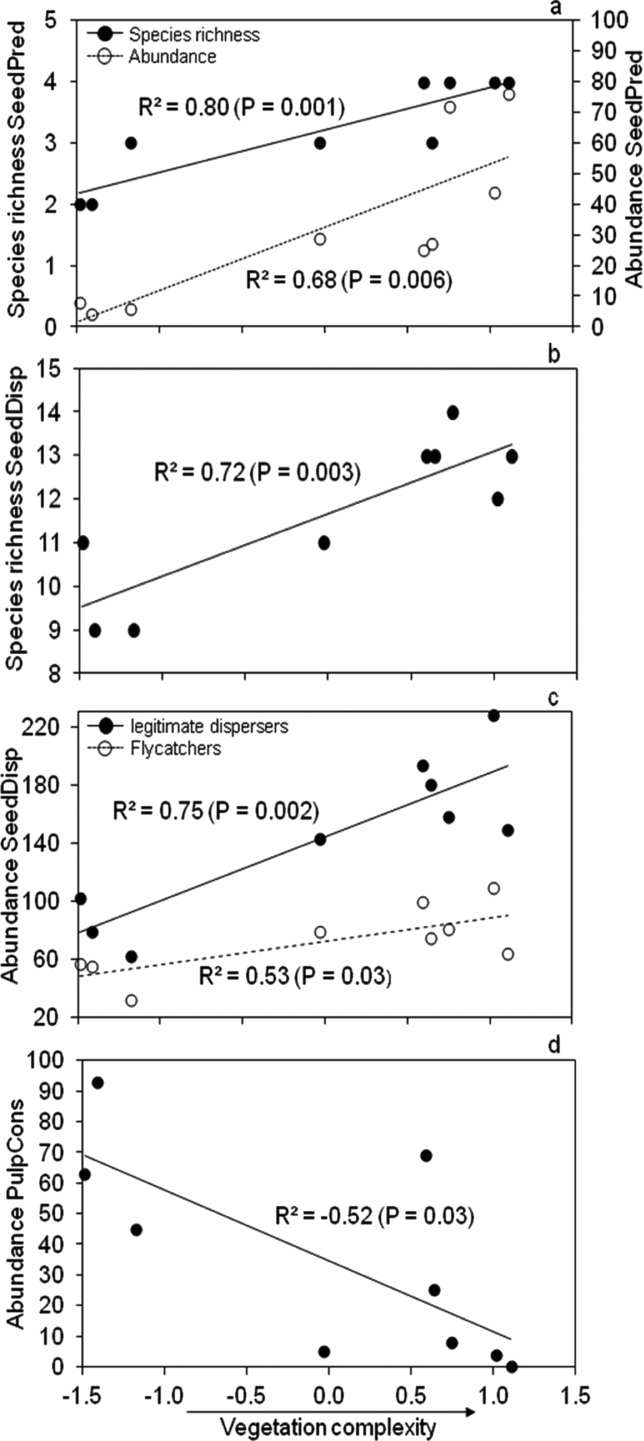
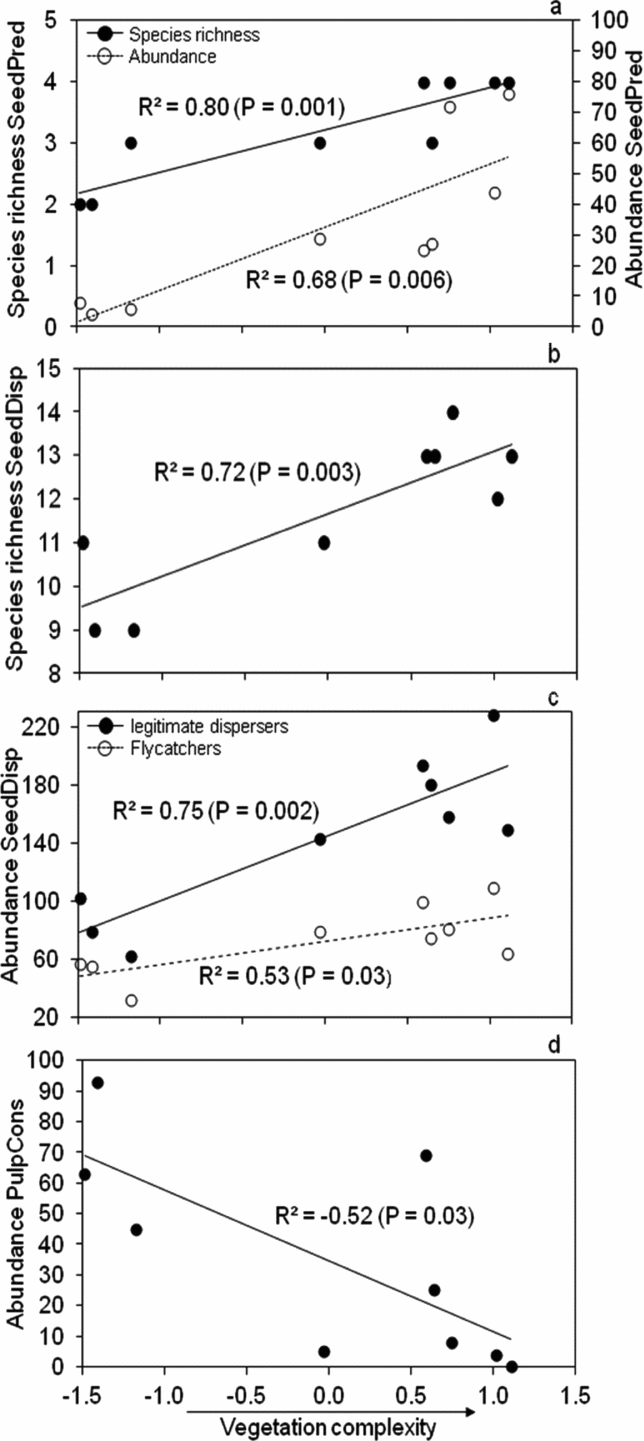
The rarefied species richness and abundance of seed predators (SeedPred) were positively correlated with the first axis of the vegetation ordination (Figure 4a). Richness (Figure 4b) and abundance (Figure 4c) of potential legitimate dispersers (SeedDisp) also increased in sites with complex vegetation. Abundance of flycatchers, a group of birds that can remove large quantities of fruit (in particular from Bursera trees) in the region, showed the same tendencies (Figure 4c). The number of birds that feed on pulp (PulpCons) was negatively correlated with the first vegetation ordination axis (Figure 4d).
Relationships between different frugivorous bird guilds and the first factor of a PCA ordination of the vegetation in a dry forest in south-western Mexico. The first ordination factor represented the early to advanced succession gradient. During the dry season (a–c). During the rainy season (d). Abbreviations are indicated as SeedPred (seed predators), PulpCons (pulp consumers), SeedDisp (potential legitimate dispersers).
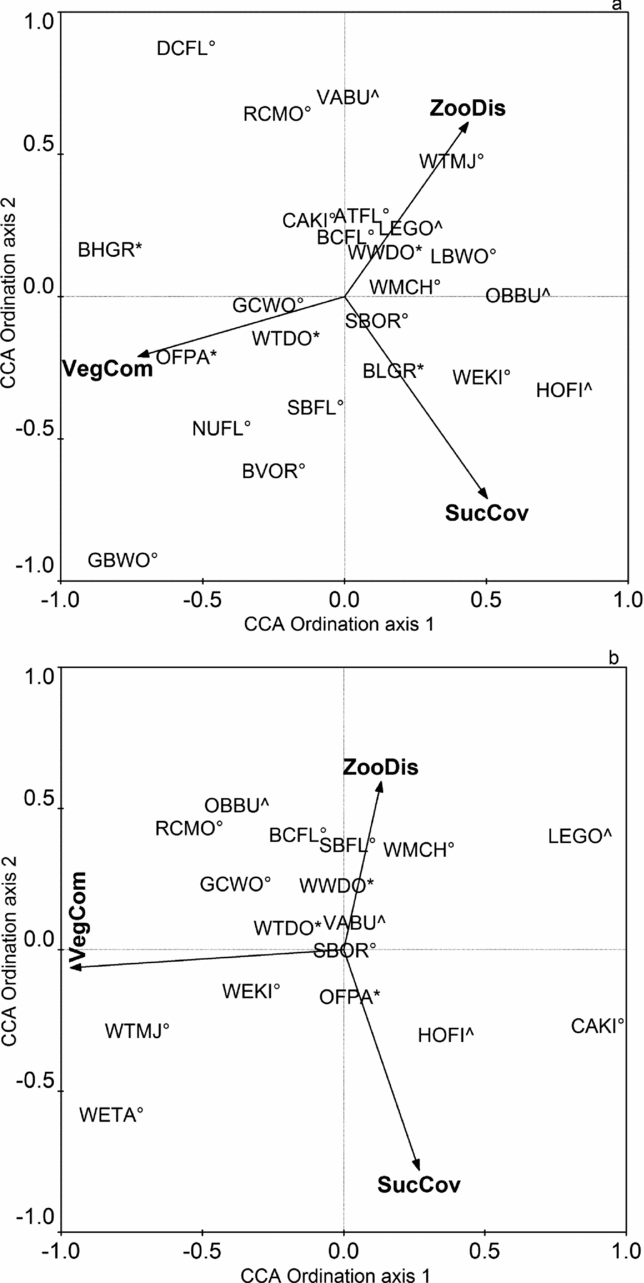
Although the Monte Carlo test for the first axis was not significant (F-ratio = 1.85, P = 0.07) in the dry season, it became significant with the addition of two other axes (F-ratio = 1.77, P = 0.01). The first axis of the CCA (eigenvalue, λ = 0.12) explained 52.4% of the variation in the relationship between distribution of frugivorous birds and habitat variables, and had a positive correlation with the first vegetation axis (vegetation complexity = VegCom; −0.73, P < 0.05). The other two components (succulent cover = SucCov and zoochorous species of disturbed sites = ZooDis), explained 31.3% and 16.7% of the variation, and were correlated with the second (−0.70, P < 0.05) and third (−0.67, P < 0.05) axes respectively.
The potential legitimate dispersers Myiarchus nuttingi, Melanerpes chrysogenys, M. hypopolius, Myiodynastes luteiventris, Icterus wagleri and the seed predators Aratinga canicularis, Leptotila verreauxi and Pheucticus melanocephalus were positively related to the first axis of the plant ordination (Figure 5a). Pulp consumers such as Passerina versicolor, P. leclancherii and Spinus psaltria were associated with the second ordination component, as were the migratory legitimate dispersers Tyrannus vociferans, Myiarchus cinerascens and M. tyrannulus. The pulp consumer Haemorhous mexicanus, the potential legitimate disperser T. verticalis, and the seed predator Passerina caerulea, were associated with the cover of succulent plants (Figure 5a).
Canonical ordination of a frugivorous bird community in a dry forest in south-western Mexico during two contrasting seasons: dry season (a) and rainy season (b). Independent factors are the three main factors obtained from a PCA ordination of the vegetation. (°) potential legitimate dispersers, (*) seed predators, (^) pulp consumers. Variables are indicated as: VegCom, vegetation complexity; ZooDis, zoochorous species of disturbed sites; SucCov, succulent cover. Abbreviations of bird species are given in Appendix 1. Species with ≤ two individuals were excluded from the analyses.
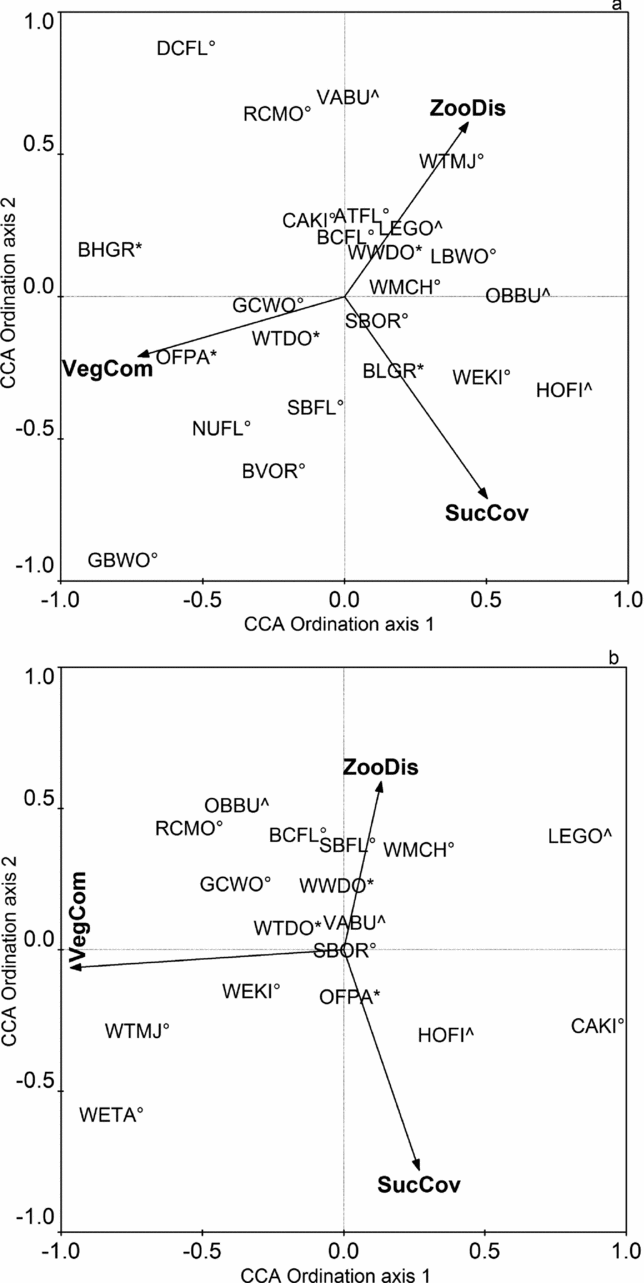
Monte Carlo permutation test was not significant for the first axis (F-ratio = 1.69, P = 0.41) nor for the total of canonical axis (F-ratio = 1.16, P = 0.34) in the rainy season. Nevertheless, the distribution of frugivorous groups showed a similar pattern as in the dry months. Legitimate migratory dispersers such as Tyrannus verticalis and Piranga ludoviciana and residents like Calocitta formosa and Melanerpes chrysogenys, as well as the seed predator Leptotila verreauxi (Figure 5b) were associated with the first vegetation axis (vegetation complexity). In contrast, the pulp consumers Spinus psaltria and Passerina versicolor and the legitimate disperser Ortalis poliocephala, were associated with the second axis (zoochorous species of disturbed sites). Haemorhous mexicanus was again associated with succulent cover.
DISCUSSION
Due to rapid changes in land use, sites represented by early successional stages generally occupy larger areas than forests in advanced succession (Quesada et al. Reference QUESADA, SÁNCHEZ-AZOFEITA, ÁLVAREZ-AÑORVE, STONER, AVILA-CABADILLA, CALVO-ALVARADO, CASTILLO, ESPÍRITO-SANTO, FAGUNDES, FERNANDES, GAMON, LOPEZARAIZA-MIKEL, LAWRENCE, CERDEIRA, POWERS, NEVES, ROSAS-GUERRERO, SAYAGO and SÁNCHEZ-MONTOYA2009). Usually younger forests are structurally simple (Lasky & Keitt Reference LASKY and KEITT2010). This may explain the negative correlation between species richness and size of the fragments during the dry season in this study. On the other hand, there was a positive correlation between species richness and vegetation complexity. This result supports our first hypothesis and agrees with other studies that have found more bird species in small fragments with high vegetation complexity (Echeverría et al. Reference ECHEVERRÍA, NEWTON, LARA, BENAYAS and COOMES2007, Gillespie & Walter Reference GILLESPIE and WALTER2001, Lasky & Keitt Reference LASKY and KEITT2010, Maldonado-Coelho & Marini Reference MALDONADO-COELHO and MARINI2000, Newmark Reference NEWMARK1991, Stouffer & Bierregaard Reference STOUFFER and BIERREGAARD1995). In addition, smaller fragments in our study sites had a larger number of species and cover of Bursera spp. (Almazán-Núñez et al. Reference ALMAZÁN-NÚÑEZ, ARIZMENDI, EGUIARTE and CORCUERA2012). Drupes of Bursera are removed by different groups of frugivorous birds in the dry season (Greenberg et al. Reference GREENBERG, FOSTER and MÁRQUEZ-VALDELAMAR1995, Ortiz-Pulido & Rico-Gray Reference ORTIZ-PULIDO and RICO-GRAY2006, Ramos-Ordoñez & Arizmendi Reference RAMOS-ORDOÑEZ and ARIZMENDI2011).
Our results do not allow us to clarify which of the variables associated with axis 1 of the vegetation ordination could have a definite effect on the distribution of the birds. Nevertheless, the preference for the fruits of Bursera spp. could explain the high abundances and richness of legitimate dispersers, seed predators and migratory frugivores in the patches with a high vegetation complexity, as predicted by our second hypothesis. This fruit can be especially important to migratory species, because they provide energy which they store (Ramos-Ordoñez et al. Reference RAMOS-ORDOÑEZ, ARIZMENDI and MÁRQUEZ-GUZMÁN2012), improving their chances of survival during the migratory season, allowing them to return to their mating sites (Tellería et al. Reference TELLERÍA, RAMÍREZ and PÉREZ-TRIS2005).
In addition to food resources, resident legitimate dispersers (i.e. Melanerpes chrysogenys and Myiarchus nuttingi) and seed predators (Aratinga canicularis, for example) may favour habitats with a complex vegetation, because they provide better opportunities for nesting and foraging (cactus species and taller trees) in the dry months (Ding et al. Reference DING, LIAO and YUAN2008, Palomera-García Reference PALOMERA-GARCÍA2010). On the other hand, species such as Spinus psaltria and Passerina leclancherii have been associated with open areas with scattered trees (Howell & Webb Reference HOWELL and WEBB1995), and were more abundant in open fragments. These results coincide with reports by Chazdon et al. (Reference CHAZDON, HARVEY, MARTÍNEZ-RAMOS, BALVANERA, STONER, SCHONDUBE, AVILA-CABADILLA, FLORES-HIDALGO, Dirzo, Young, Mooney and Ceballos2011), who found a higher dominance of species of these birds in disturbed areas of the Chamela-Cuixmala region in western Mexico.
During the wet season, the relationship between richness and size of the study sites was not significant. In addition, and contrary to our third hypothesis, we did not find a higher richness in the intermediate succession sites. The number of individuals, on the other hand, was highest in one of the early-successional sites. Ficus cotinifolia and Capparis spp., which are typical of disturbed vegetation, were abundant in that site. The two species produce abundant fruit that is consumed by frugivores during the rainy season (Durán-Ramírez et al. Reference DURÁN-RAMÍREZ, FONSECA-JUÁREZ and IBARRA-MANRÍQUEZ2010, Lorea-Hernández Reference LOREA-HERNÁNDEZ2004) and may have attracted large numbers of birds and pulp consumers in particular. Chazdon et al. (Reference CHAZDON, HARVEY, MARTÍNEZ-RAMOS, BALVANERA, STONER, SCHONDUBE, AVILA-CABADILLA, FLORES-HIDALGO, Dirzo, Young, Mooney and Ceballos2011) reported similar results in the study they conducted in a dry forest in western Mexico.
The absence of Bursera drupes could explain the absence of Myiarchus tuberculifer and Myiarchus tyrannulus for the most part of the rainy season. Although some frugivorous birds can change the resources they use in response to seasonal changes (Carnicer et al. Reference CARNICER, JORDANO and MELIÁN2009), species such as the flycatchers mentioned above probably migrate locally when fruits are scarce, as has been reported for some other species of dry-forest flycatchers (Ramos-Ordoñez & Arizmendi Reference RAMOS-ORDOÑEZ and ARIZMENDI2011).
Even though the number of migrant birds was high in mature and intermediate stages, where the vegetation was more complex, it has been suggested that these species use indistinct patches of vegetation as intermediate stops in their migration routes (Hutto Reference HUTTO1998). This was supported by the ordination results. The canonical correspondence analyses showed that Tyrannus vociferans, Myiarchus cinerascens and M. tyrannulus were ubiquitous in the dry season, in agreement with our second hypothesis. Migratory birds can therefore help to establish zoochorous trees in perturbed or early succession stages, increasing the connectivity between isolated fragments by facilitating the movement of seeds between patches in different stages (Bascompte & Jordano Reference BASCOMPTE and JORDANO2007, Tellería et al. Reference TELLERÍA, RAMÍREZ and PÉREZ-TRIS2005). As a consequence, migratory birds help in the recovery of woody vegetation (Galindo-González et al. Reference GALINDO-GONZÁLEZ, GUEVARA and SOSA2000, Guevara & Laborde Reference GUEVARA and LABORDE1993, Herrera & García Reference HERRERA and GARCÍA2009).
In our study, plants of Opuntia spp. were common in early successional stages, while Neobouxbaumia mezcalaensis had high importance values in intermediate stages. These plant species had high scores in the third component (succulent cover) and have been associated with Haemorhous mexicanus, a sparrow that commonly feeds on fruit and nectar from cacti flowers (Godínez-Álvarez et al. Reference GODÍNEZ-ÁLVAREZ, VALIENTE-BANUET and ROJAS-MARTÍNEZ2002).
Conclusion
A decrease in mature vegetation in tropical dry forests means a decline in abundance and composition of frugivorous bird species and, therefore, a disruption in the interactions between frugivores and seed dispersal. Nevertheless, our results indicated that the vegetation of early stages of succession could provide an important habitat for some migratory species, which are known for eating large amounts of fruits (Bascompte & Jordano Reference BASCOMPTE and JORDANO2007, Ramos-Ordoñez & Arizmendi Reference RAMOS-ORDOÑEZ and ARIZMENDI2011). From this perspective, all stages of succession are important to maintain the interaction between plants and frugivores.
On the other hand, even though most of the frugivores were common in the three stages of succession, there were some species that were found only in mature stages (Myiarchus tuberculifer, Pheucticus melanocephalus) or which were more abundant in these sites (Aratinga canicularis, Melanerpes chrysogenys). Some traits of mature forests, such as climatic buffering and the presence of large trees can influence habitat choices and nesting sites of these resident species (Ding et al. Reference DING, LIAO and YUAN2008, Smith et al. Reference SMITH, SALGADO-ORTIZ and ROBERTSON2001). If land-use tendencies in the region and, in the Balsas river basin in general, continue as they are today, these bird species can be seriously affected, and also the conservation of several Bursera species will be compromised, in particular those that are endemic to the Balsas basin (e.g. B. longipes, B. chemapodicta).
ACKNOWLEDGEMENTS
We would like to thank M.T. Cruz, R. Bahena, J. González, N. González and B. Pérez for their assistance during the field work. Economic support for this study was obtained from the projects DGAPA-PAPIIT No. IN217511, IN210908 and CONABIO HQ008 of M. C. Arizmendi. R. C. Almazán-Núñez wishes to thank CONACYT (Reg. 165552; Consejo Nacional de Ciencia y Tecnología) for the scholarship provided to study for his PhD and the Posgrado en Ciencias Biológicas y de la Salud, Universidad Autónoma Metropolitana.
Species composition, seasonal status and relative abundance of frugivorous bird species in nine sites representing different successional stages in a tropical dry forest in south-western Mexico. Species names and systematic order follow AOU (1998), and supplements. The code after species name was used in the ordination analyses. Status: R (resident), M (migratory), LM (local migratory) according to Howell & Webb (Reference HOWELL and WEBB1995) and personal observations. Frugivore type: PRED, Seed predator; DISP, potential legitimate disperser; CONS, pulp consumer.
Observed (Sobs), expected (Chao2) and rarefied (MaoTau) richness of the frugivorous bird community in nine sites representing three successional stages in a dry forest in south-western Mexico. ES, early stage; IS, intermediate stage; MS, mature stage.