Exposure to early abuse and neglect is one of the more reliable predictors of developmental, behavioral, and health problems in the child, with potentially persisting effects into adulthood and across generations (Cicchetti, Rogosch, Howe, & Toth, Reference Cicchetti, Rogosch, Howe and Toth2010; Collishaw, Dunn, O'Connor, & Golding, Reference Collishaw, Dunn, O'Connor and Golding2007; Farrington & Loeber, Reference Farrington and Loeber2000; Flaherty et al., Reference Flaherty, Thompson, Litrownik, Zolotor, Dubowitz and Runyan2009). However, these same studies that report long-term overall effects also demonstrate that not all individuals who experienced early adverse care exhibit significant disturbance. Understanding why early adversity may be linked with long-term disturbance and what accounts for the variation in outcomes is an important conceptual and clinical task for development theory. This study focuses on attachment theory and examines the special case of adolescents in foster care, one of the most clinically significant contexts for assessing the long-term impact of early abuse and neglect, to address three questions central for understanding the effects of early adverse care.
1. To what extent are adolescents who experienced severe abuse/neglect able to develop secure attachment relationships with subsequent care providers, that is, foster parents?
2. What predicts secure attachment to foster caregivers among adolescents who experienced early abuse/neglect?
3. Is a secure attachment associated with fewer delinquent and antisocial symptoms among adolescents in foster care?
Do Adolescents Who Experience Early Abuse/Neglect Form Secure Attachment Relationships With Foster Parents?
Attachment theory and research findings indicate that a supportive or secure relationship with a caregiver is a central factor distinguishing resilient individuals (Egeland, Jacobvitz, & Sroufe, Reference Egeland, Jacobvitz and Sroufe1988; Fonagy, Steele, Steele, Higgitt, & Target, Reference Fonagy, Steele, Steele, Higgitt and Target1994; Luthar, Cicchetti, & Becker, Reference Luthar, Cicchetti and Becker2000; Masten & Coatsworth, Reference Masten and Coatsworth1998); researchers not explicitly adopting attachment theory have made the same point (e.g., Werner & Smith, Reference Werner and Smith1982). The vast majority of studies suggesting that supportive relationships may promote resilience use observational designs; the considerable stability in risk exposure in most cases means that these studies are unable to determine, for example, if sizable changes in caregiving quality forecast changes in attachment security. More specifically, observational studies of typically developing samples are unable to address a critical question for attachment theory with substantial clinical application: are children who experience early abuse/neglect able to form secure attachment relationships with subsequent caregivers? That is the first question addressed in the current study.
The internal working model hypothesis in attachment theory (Bowlby, Reference Bowlby1982; Bretherton, Reference Bretherton1999; Main, Kaplan, & Cassidy, Reference Main, Kaplan and Cassidy1985) would predict that early experiences of abuse/neglect in the attachment relationship will be internalized by the child to influence ongoing interactions with the caregiver and psychological adjustment; changes in experiences with a specific caregiver would be expected to modify the internal working model of that caregiver in a transactional manner. However, little is known about whether or not an internal working model of one abusive or neglectful relationship is extended to a subsequent caregiver or interferes with the formation of a subsequent attachment relationship. Research on this issue is critical for promoting positive relationships for children in foster care in particular and for promoting the adjustment of children who experienced poor early care more generally. One set of studies that may be relevant involves those that have followed up children after removal from institutional settings. In general, the findings show that a sizable minority to a solid majority of these children develop normative and even secure attachments to adoptive parents following institutional deprivation and that the quality of attachment to new caregivers mediates at least some of the improvements in child adjustment; there is a further suggestion that older age at removal from the institutional setting may be associated with persisting and severe problems in forming subsequent relationships (Bruce, Tarullo, & Gunnar, Reference Bruce, Tarullo and Gunnar2009; Chisholm, Reference Chisholm1998; Jaffari-Bimmel, Juffer, van IJzendoorn, Bakermans-Kranenburg, & Mooijaart, Reference Jaffari-Bimmel, Juffer, van IJzendoorn, Bakermans-Kranenburg and Mooijaart2006; McLaughlin, Zeanah, Fox, & Nelson, Reference McLaughlin, Zeanah, Fox and Nelson2011; O'Connor, Marvin, Rutter, Olrick, & Britner, Reference O'Connor, Marvin, Rutter, Olrick and Britner2003; O'Connor & Rutter, Reference O'Connor and Rutter2000; Smyke, Zeanah, Fox, Nelson, & Guthrie, Reference Smyke, Zeanah, Fox, Nelson and Guthrie2010). Studies of institutionally reared children may not yield generalizable results, however, because of the extreme and multiple nature of the deprivation.
In their study of infants in foster care, Dozier, Stovall, Albus, and Bates (Reference Dozier, Stovall, Albus and Bates2001) reported that infants removed from maltreating birth parents show a normative rate of secure attachment to their foster caregivers. Dozier et al. also showed that caregiver state of mind was a significant predictor of infant attachment in the Ainsworth Strange Situation. The implication is that, despite very poor early care, infants were able to form secure attachment relationships to new carers if the foster parents provided sensitive care. However, that optimistic impression may be limited to infancy because older children in foster care, who are typically placed well after infancy, have been reported to exhibit significant attachment and other relationship disturbances (Harden, Reference Harden2004; Minnis et al., Reference Minnis, Green, O'Connor, Liew, Glaser and Taylor2009). The current study extends the work of Dozier et al. by assessing the extent to which adolescents who experienced early abuse/neglect form a secure attachment to a foster caregiver despite relatively late placement in the foster family.
What Predicts the Development of a Secure Attachment for Adolescents in Foster Care?
If, despite early abuse/neglect experiences, some adolescents do develop secure attachment relationships with foster caregivers, then a next critical step is to assess why. Parental sensitivity is a reliable predictor of a secure attachment among infants and young children who have continually lived with the index parent, (e.g., Ainsworth, Blehar, Waters, & Wall, Reference Ainsworth, Blehar, Waters and Wall1978; Pederson, Gleason, Moran, & Bento, Reference Pederson, Gleason, Moran and Bento1998). Whether or not that is (equally) so for new relationships, especially relationships formed following a history of maltreatment and formed later in life, is not clear from existing data. For the current study, we collected detailed observational data on parent–adolescent interactions to examine if those adolescents who display secure representations in an attachment interview experienced more positive and supportive relationships with foster carers.
In addition to the current caregiving context, we also examine if caregiving history is associated with attachment quality to foster parents. Data from several groups suggest that qualities of the caregiving received before foster care placement, such as severity and duration of early maltreatment and number of placements, may have carryover effects and undermine the quality of subsequent relationships with foster caregivers (Milan & Pinderhughes, Reference Milan and Pinderhughes2000; Strijker, Knorth, & Knot-Dickscheit, Reference Strijker, Knorth and Knot-Dickscheit2008); children who have experienced longer duration of abuse and are removed to foster care relatively late do particularly badly (Rushton, Mayes, Dance, & Quniton, Reference Rushton, Mayes, Dance and Quinton2003). In general, however, this is an area that has not attracted substantial clinical research attention, despite the central importance of this issue for attachment theory. The current study adds to the existing research by examining current relationship quality and history of care as predictors of attachment security in late-placed adolescents in foster care.
Is a Secure Attachment Associated With Fewer Delinquent Symptoms Among Adolescents in Foster Care?
A logical next consideration is whether or not those adolescents with a history of abuse/neglect who do form secure attachment relationships with foster parents show better behavioral adjustment than those who do not develop secure attachments. In other words, does the formation of a secure attachment with a foster parent confer developmental advantage and lead to better outcomes? Children in foster care are at disproportionate risk for major health and behavioral problems (Ford, Vostanis, Meltzer, & Goodman, Reference Ford, Vostanis, Meltzer and Goodman2007; Jee et al., Reference Jee, Conn, Szilagyi, Blumkin, Baldwin and Szilagyi2010; Landsverk, Burns, Stambaugh, & Reutz, Reference Landsverk, Burns, Stambaugh and Reutz2009; Leslie et al., Reference Leslie, James, Monn, Kauten, Zhang and Aarons2010; McMillen et al., Reference McMillen, Zima, Scott, Auslander, Munson and Ollie2005; Simms, Dubowitz, & Szilagyi, Reference Simms, Dubowitz and Szilagyi2000), but it is not clear if the higher rates of disturbances derive from a history of poor care or from poor contemporary patterns of attachment with foster caregivers.
Behavioral adjustment in the current study is indexed by disruptive behavioral symptoms and disorders, a long-standing major clinical concern for children in family foster care (Pilowsky, Reference Pilowsky1995). A secure attachment relationship is protective against the development of disruptive, antisocial behavior in young children (Dadds, Jambrak, Pasalich, Hawes, & Brennan, Reference Dadds, Jambrak, Pasalich, Hawes and Brennan2011; Speltz, DeKlyen, & Greenberg, Reference Speltz, DeKlyen and Greenberg1999) and, to a lesser extent, in older children and adolescents (Allen et al., Reference Allen, Marsh, McFarland, McElhaney, Land and Jodl2002; Scott, Briskman, Woolgar, Humayun, & O'Connor, Reference Scott, Briskman, Woolgar, Humayun and O'Connor2011). Whether that would also be so for adolescents in foster care is uncertain from existing data. There is reason to suspect that the link between attachment and disruptive behavior may be comparatively weak in adolescents in foster care if, for example, adolescents have internalized insecure attachment models from caregiving experiences prior to the current foster placement. Another reason for suspecting a relatively weak link between attachment and behavioral adjustment in adolescents in foster care is genetics. A genetic predisposition to antisocial behavior, which may be elevated in children who are removed from birth parents because of abuse or neglect, may lead to higher rates of antisocial behavior in the child and disturbed social family relationships (Cadoret, Troughton, Bagford, & Woodworth, Reference Cadoret, Troughton, Bagford and Woodworth1990; Cloninger, Sigvardsson, Bohman, & von Knorring, Reference Cloninger, Sigvardsson, Bohman and von Knorring1982; O'Connor, Deater-Deckard, Fulker, Rutter, & Plomin, Reference O'Connor, Deater-Deckard, Fulker, Rutter and Plomin1998). However, if a secure attachment to foster caregiver is associated with lower levels of disruptive behavior, then there would be significant implications for clinical intervention.
In summary, the current paper has three aims. First, we examine the degree to which adolescents whose experience of previous maltreatment was so severe as to require removal from the birth home were able to form secure attachments to foster carers. We operationalized attachment quality in terms of narrative assessments of attachment from a semistructured interview. Based on the consistent pattern of empirical evidence (Cicchetti & Toth, Reference Cicchetti and Toth2000) and attachment theory (Bowlby, Reference Bowlby1988), we hypothesized that a sizable minority of children would form secure attachments with current caregivers. Second, we examine the qualities of prior experience and current experience with foster caregivers that predict attachment representations. Based on the limited prior research, mostly on young children, we hypothesized that developmental history of maltreatment and quality of the current relationship would predict attachment security to the foster parents. Third, we examined the association between attachment to foster parents and a key marker of behavioral adjustment, delinquency, according to parent, teacher, and self-report. Based on limited existing data (Allen et al., Reference Allen, Marsh, McFarland, McElhaney, Land and Jodl2002; Hoeve et al., Reference Hoeve, Stams, van der Put, Dubas, van der Laan and Gerris2012), we predicted a modest link between attachment security and delinquent behavior.
Methods
Foster care sample
Foster families were recruited via Social Services' computerized records from the Children's Services Departments of two London boroughs. Families were eligible to take part in the study if the child or adolescent they were looking after had been living with them for at least 5 months (to allow for adjustment to the new placement) and was aged 10–16 years. Children with severe developmental disorders and those placed with kinship carers were excluded. Because of the demands of understanding interviews and questionnaires, both child and carer were required to be fluent in English.
One hundred sixty-four families fulfilled inclusion criteria and were contacted by letter via Children's Services; 62 families consented to take part in the study. The main reasons for refusal to take part in the study were imminent placement breakdown (10%), lack of interest (13%), foster parent concern that participation might adversely affect the child or adolescent (16%), and lack of time to participate (13%); 16% of carers gave no reason for not participating.
Comparison sample
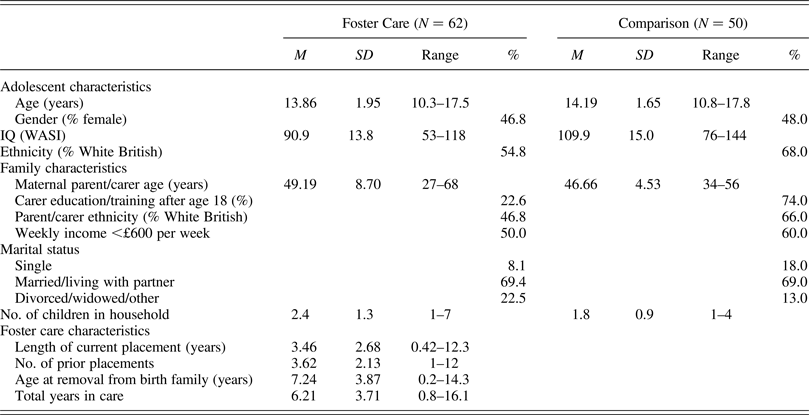
We sought a comparison group of adolescence who would have a comparable current caregiving environment, that is, normal risk and the absence of severe maltreatment history. The schools from which the comparison families were recruited were in the same boroughs from which the fostered children had originated. Families were contacted by letter sent from the schools, and 50 replied, consenting to take part in the study. Children for the comparison group were recruited from mainstream schools in London on the basis of the following criteria: that they had been living with at least one biological parent from birth until the present and that, as a group, they were comparable to the fostered group in terms of age, gender, and ethnicity. Families with Social Services involvement or a history of out-of-home care, based on parent interview, were excluded. Table 1 displays demographic characteristics of adolescents in the two groups.
Characteristics of adolescents in foster care and comparison families

Note: WASI, Wechsler Abbreviated Scale of Intelligence.
Ethical approval was obtained from the King's College London Research Ethics Committee and from the Research Group of the Association of Directors of Social Services.
Procedures
Every family was visited at home. An initial interview was conducted with the parent/carer in order to obtain demographic information about the family and to assess the adolescent's adjustment. The carer completed questionnaires to assess different aspects of the adolescent's functioning at home and at school. Every adolescent was also visited at home and administered psychometric assessments and interviews; all assessments and interviews with the adolescent were conducted in private. Each assessment lasted approximately 2.5 hr. Finally, both parent and adolescent were videoed together at home in a problem-solving task (see below). Parents/carers were given £20 as compensation for their time; adolescents were given £10 for taking part. Teachers of each study child were also sent questionnaires to return by mail.
Measures
Adolescent attachment
The Child Attachment Interview (CAI; Shmueli-Goetz, Target, Fonagy, & Datta, Reference Shmueli-Goetz, Target, Fonagy and Datta2008) is a semistructured interview designed to access the child's mental representation of their attachment figures. Like the Adult Attachment Interview (Main, Reference Main, Parkes, Stevenson-Hinde and Marris1991) on which it is based, the CAI encourages children to relate specific episodes from memory that support their descriptions of their relationships with their caregivers. Ratings of the videotaped interviews are made on several scales (idealization, dismissing, emotional openness, conflict resolution, preoccupation, coherence, and quality of examples) and composited to form secure, dismissing, preoccupied, and disorganized categories. Following the completion of a pilot study, suggestions for modification were made and the measure's developers were consulted; specifically, the interview was modified for the adolescents in the foster care group so that information about their relationship with their current foster carers, as well as with their birth parents, could be obtained. Adolescents in foster care were interviewed first about their foster parents and subsequently about their birth parents. In some cases (see below), adolescents in foster care did not have regular contact with their birth mother and/or father. No clear guidelines or empirical evidence yet exist about how much contact is needed for a valid attachment interview. We adopted a conservative approach in which we first ascertained if the adolescents had clear memories of the birth parent, and if so, the CAI about the birth parents was administered. The CAI has separate sections for mother and fathers, and these are coded separately; however, many families were headed by a single parent. From the foster sample of 62 adolescents, valid CAIs were obtained on 57 foster mothers (only parent-report data were available for 2 and the interview was judged to be not codable in 3 cases because of uncooperative participant and/or concerns about comprehension); we obtained 41 valid CAIs for foster fathers, 55 valid CAIs for birth mothers, and 28 for birth fathers. The reliability of the CAI from two raters was conducted on 40 tapes, intraclass correlations for the scales ranged from 0.65 to 0.94, and interrater reliability for the four-way classifications was 85% (κ = 0.79, p < .001) for both mothers and fathers. The same rater assessed attachment to birth and foster parents in the foster care sample (in practice, it was impossible to keep raters blind to the birth or foster parent target of these interviews). The reliability estimates did not differ significantly for foster and birth parent interviews.
Quality of parent–adolescent interaction
Observational measures of parent–adolescent relationship quality were assessed from three interaction tasks: (a) a 5-min planning task in which adolescent and parent had to plan a family holiday together for £500, (b) a 10-min “hot” problem-solving interaction paradigm in which the adolescent and parent/carer discussed two topics that had been nominated as sources of disagreement from a list of common topics (Hagan, Hollier, O'Connor, & Eisenberg, Reference Hagan, Hollier, O'Connor and Eisenberg1992; Hetherington, Reference Hetherington1999; Rasbash, Jenkins, O'Connor, Tackett, & Reiss, Reference Rasbash, Jenkins, O'Connor, Tackett and Reiss2011), and (c) a 10-min building task in which the adolescent and parent constructed a challenging magnetic creation from a picture. Parent and adolescent behaviors were coded from a standard observational coding system used in many previous studies (Hagan et al., Reference Hagan, Hollier, O'Connor and Eisenberg1992; Scott et al., Reference Scott, Briskman, Woolgar, Humayun and O'Connor2011), including warmth, communication, assertiveness, involvement, anger/rejection, and coercion; each dimension was coded on a 5-point Likert scale. Measures were subsequently subjected to a principal components analysis, which confirmed a Positivity factor (warmth, assertiveness, communication, involvement) and a Negativity factor (anger/rejection, coercion), consistent with prior studies. Positive and Negative factors were collapsed within each person across the three tasks. The reliability of the parent and adolescent ratings was assessed by two researchers who were trained in the system and were blind to all identifying information and other data. The reliabilities for the individual codes, based on intraclass correlations for n = 21 tapes, ranged from 0.62 to 0.81 (mean = 0.72) for parent codes and 0.53 to 0.84 (mean = 0.70) for child codes. In addition, as an exploratory supplemental measure, we coded maternal sensitivity on a 9-point Likert scale adapted from the Coding of Attachment Related Parenting (Bisceglia et al., Reference Bisceglia, Jenkins, Wigg, O'Connor, Moran and Barr2012; Matias et al., 2006; O'Connor, Matias, Futh, Tantam, & Scott, Reference O'Connor, Matias, Futh, Tantam and Scott2013), an attachment-based coding system developed for school-age children and adolescents from ratings scales used for younger children. The Sensitivity Scale assesses the degree to which the parent shows awareness of the child's needs and sensitivity to his/her signals, promotes the child's autonomy, adopts the child's psychological point of view, and physically or verbally expresses warmth toward the child. Based on an intraclass correlation for 21 tapes, the reliability was 0.77. The overlap between observational ratings scales was typically moderate to large within individuals and more modest between individuals. For example, for adolescent behavior, the correlation between Positive and Negative factors was r (101) = –.31, p < .01; for maternal behavior, the correlation between the Positive and Negative factors was r (101) = –.55; the correlation between the maternal Positive factor and sensitivity was r (99) = .88, p < .001, and so we focus analyses on the mother Positivity factor because it has a stronger basis in the adolescent literature. Correlations between adolescents and parents were r (101) = .27, p < .01 for the Negativity factor and r (101) = .57, p < .001, for the Positivity factor.
Caregiving history (foster care sample only)
An index of early care experiences was derived from Social Services case reports. We assessed a history of each foster child's experiences from the point of entry into the care system to his/her current placement. For descriptive purposes, we report information on maltreatment history; however, given the uncertain reliability of social care worker reports of the caregiving quality received by the child in each foster care placement, we include only objective care history variables in statistical analyses. Specifically, we recorded the age of the child and the duration for each placement; we also recorded the nature and frequency of current contact with birth parents. For analyses below, we compiled several care variables on an a priori basis: number of placements, duration of total and current placement (months), age at first placement (months), and amount of current contact with birth parents (coded as no contact, unsupervised contact, or supervised contact).
Disruptive behavioral outcomes
An index of disruptive behavior was derived from conduct problems, delinquency, and antisocial behaviors assessed from parent, self-, and teacher reports on questionnaires and from a diagnostic interview with the current caregiver. The Strengths and Difficulties Questionnaire (SDQ; Goodman & Scott, Reference Goodman and Scott1999) is a well-validated clinical rating scale with parallel forms for parent, self, and teacher. We included parent (in the vast majority of cases the mother) and teacher reports on the conduct problems factor, which consists of 5 items relating to antisocial or difficult behavior: temper tantrums, disobedience, fighting with other children or bullying them, lying or cheating, and stealing from home, school, or elsewhere (Cronbach αs = 0.74 and 0.80 for parent and teacher reports, respectively). The Antisocial Process Screening Device (Frick & Hare, Reference Frick and Hare2001) is a 20-item checklist measuring psychopathic traits in children and adolescents that contains three factors: Narcissism, Impulsivity, and Callous/Unemotional traits. The Callous/Unemotional (CU) Scale from the parent and teacher reports employed in the current study queries concern about how well he/she does at school or work, ability to keep promises, feelings of guilt when he/she does something wrong, concern about the feelings of others, display of feelings or emotions, and ability to maintain friends. The CU scale has considerable reliability as well as construct and predictive validity (McMahon, Witkiewitz, & Kotler, Reference McMahon, Witkiewitz and Kotler2010); in the current sample, Cronbach αs were 0.66 and 0.81 for parent and teacher reports, respectively. The Child and Adolescent Psychiatric Assessment (CAPA; Angold & Costello, Reference Angold and Costello2000), is an interviewer-administered semistructured psychiatric interview that elicits information for diagnostic purposes using criteria from DSM-IV; interviews were conducted with foster parents for adolescents in the foster care sample and with birth parents in the comparison sample. Assessments of symptoms and disorders were obtained from the oppositional defiant disorder and conduct disorder sections of the CAPA. The Self-Report Delinquency instrument (Elliot, Huizinga, & Ageton, Reference Elliot, Huizinga and Ageton1985; Smith & McVie, Reference Smith and McVie2003) was completed by the youths. It covers a range of antisocial acts such as vandalism, burglary, assault, truancy, and arson; the total volume delinquency scale was used in analyses below. The scale has good psychometric properties and correlates with official police arrests (Mcara & McVie, Reference Mcara and McVie2005); in the current sample, the internal consistency (Cronbach α) was 0.72.
Covariates for analyses included adolescent intelligence from the Weschler Abbreviated Scale of Intelligence (Weschler, Reference Weschler1999); adolescent sex, ethnicity, and age; maternal education; and single-parent household status.
Data analysis
Several of the key questions are relevant only for the adolescents in foster care, that is, within-group analyses of the adolescents in foster care. In contrast, other questions would be informed by the inclusion of the comparison group, that is, between-group analyses. We present both types of analyses. We first present descriptive data for the adolescents in the foster care and comparison samples. We then present attachment classification data in the foster care sample with birth and foster parents, and compare this data with that found in the comparison group. The next section assesses the predictors of attachment quality to foster caregivers, focusing on the impact of prior care experiences (duration of current and total placements, number of placements, and age at first placement) and current caregiving quality based on observational ratings of the interactions; adolescent age, sex, and intelligence are included as covariates. Analyses linking attachment classifications to interaction quality focus on behavior with mothers because only mothers were observed in problem-solving interactions and there was a high rate of convergence in attachment to mothers and fathers (see below). The final section examines the link between attachment to foster parents and symptoms of disruptive and antisocial behavior using multiple methods and sources. After reporting the link between attachment and disruptive behavior within the foster care sample, we conduct analyses including both foster and comparison sample adolescents and include a Foster Care Group × Attachment Security interaction to examine if the association between attachment and delinquency is weaker in the foster care sample. For analyses predicting disruptive behavioral problems, adolescent characteristics (age, sex, and intelligence) are included as covariates; we also include maternal education and single-parent status as sociodemographic covariates because they are robust predictors of delinquent behavior. Effect sizes, where reported, are based on the mean difference between groups divided by the pooled standard deviation.
Results
Descriptive data for the foster and comparison samples are presented in Table 1. Adolescents in foster care were not significantly different from adolescents in the comparison sample except for intelligence (p < .05); we control for intelligence in subsequent analyses. There was one significant difference between the samples on family characteristics: there was a higher percentage of single parents in the comparison group than in the foster care families (p < .05).
The vast majority (90%) of adolescents in foster care had birth parents with substance abuse or depression and had been living with their biological mothers at the time that they were taken into care (87%). Seventy percent were taken into care because of more than one type of maltreatment. Fifty-eight percent were in care because of neglect, 29% for emotional abuse, 24% for physical abuse, and 8% for sexual abuse (these numbers sum to >100% because of multiple kinds of abuse in some cases); 23% experienced domestic violence.
Table 1 indicates a sizable range of experience in the foster care sample, with age at removal, length of current placement, and number of placements all indicating wide variation. For example, 54% of adolescents in foster care entered the care system between the ages of 5 and 10, and just over half had been in care for over 6 years. Many of these young people had been in more than one placement (average four placements) and had also experienced placement disruptions such as returning to biological parents and then returning to foster care. The average duration of current placement indicates that this group represented a relatively stable group when compared to the whole population of looked-after children; for example, two-thirds had been in their placements for 2 years or more.
Preliminary analyses indicated no significant associations between Weschler Abbreviated Scale of Intelligence full-scale, verbal, or performance IQ and security on the CAI to foster mother or father in the foster care sample; in addition, there was no association between IQ and attachment security to birth parents in the non-foster-care sample. Neither gender nor ethnicity was significantly associated with attachment security to parents in either group. Intercorrelations among the five behavioral adjustment measures indicated low to modest overlap, ranging from a low of r (96) = .14 for parent-reported CU symptoms and adolescent-reported delinquency to a high of r (95) = .57 for parent-reported CU symptoms and parent-reported conduct symptoms.
Correlation analyses in the foster care sample indicated that placement factors or care history variables were not independent; for example, total duration in care was positively associated with number of placements, r (59) = .52, p < .01, and duration of current placement, r (59) = .42, p < .01. Duration of current placement was not significantly correlated with number of placements, r (58) = –.11, ns, but was negatively associated with the age at first placement, r (58) = –.31, p < .05. The implication is that it may be difficult to differentiate the impact of age-related placement variables on outcomes (see below).
Do adolescents who experience early abuse/neglect form secure attachment relationships with foster parents?
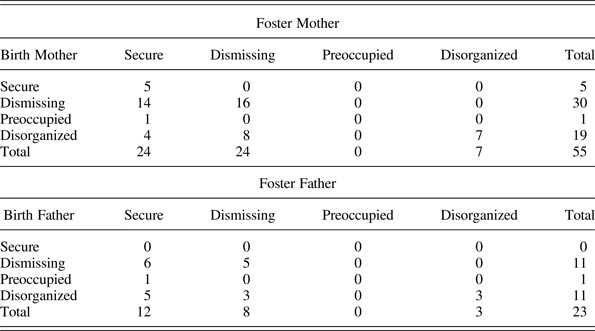
For the adolescents in foster care, the rates of attachment classifications to the birth mothers were secure (9%, n = 5), dismissing (55%, n = 30), preoccupied (2%, n = 1), and disorganized (35%, n = 19). By contrast, rates of attachment classification to foster mothers were secure (46%, n = 26), dismissing (42%, n = 24), and disorganized (12%, n = 7). A cross-classification for those with attachment data for both foster and birth parents (where both were available) further clarified these marked differences in distributions (Table 2). It is perhaps interesting that all 5 of the adolescents who were classified as secure to the birth mother were classified as secure to the foster mother; of the 19 classified as disorganized to the birth mother, just 4 were rated as having a secure attachment to the foster mother; and 19/50 (38%) with an insecure attachment to birth mothers were rated as showing a secure attachment to foster mothers (Table 2). Fewer cases were available for fathers, but there was a similar distinction between the attachment classifications to birth fathers (secure: 0%; dismissing: 50%, n = 14; preoccupied: 4%, n = 1; and disorganized: 46%, n = 13) and foster fathers (secure: 49%, n = 20; dismissing: 42%, n = 17; disorganized: 10%, n = 4). A cross-tabulation (Table 2) indicated that, as with mothers, a substantial percentage (52%) of adolescents with an insecure attachment to birth fathers had a secure attachment to foster fathers (where data on birth and foster fathers were available).
Attachment classifications to foster and birth mothers: Foster care sample
Note: Shown are the cross-classification of attachment patterns to foster and birth mother and father where attachment patterns to both parents could be obtained. Given the number of cells with small or 0 values, statistical analyses are based on the two-way (secure/insecure [dismissing, preoccupied, disorganized]) classifications. For fathers, no statistics were computed for the secure/insecure classifications because none of the adolescents exhibited a secure attachment to birth father. For secure/insecure 2 × 2 classifications, χ2 (1) = 8.63, p < .05; κ = 0.23, p < .01.
The degree of within-person variation in attachment classifications to birth and foster parents was substantial. However, there was no within-adolescent variation in attachment to foster mother and foster father: of the 41 adolescents with attachment data for foster mother and father, 20 exhibited a secure attachment to both and 21 exhibited an insecure attachment to both. Because attachment to foster mother and father were identical and because fewer cases were available for fathers, we focus subsequent analyses on attachment to foster mother. The high rate of insecure attachment to birth parents in the foster care sample was not unexpected; the implication of the minimal variation is that attachment to birth parents is unlikely to be a reliable predictor or outcome in analyses. Among adolescents in foster care, attachment to birth mother was not significantly associated with observational or behavioral adjustment variables independent of attachment to foster mother.
The rates of attachment classifications in the comparison sample identified it as a generally normal-risk sample. Sixty percent (30/50) were classified as having a secure attachment to mothers, with 18% (n = 9) dismissing and 22% (n = 11) disorganized. The rates were somewhat similar for fathers: secure (43%, n = 20), dismissing (33%, n = 15), preoccupied (2%, n = 1), and disorganized (22%, n = 10). There was a similarly high rate of attachment convergence between mothers and fathers where CAI data were obtained for both parents: of the 27 adolescents with a secure attachment to mother, 20 were classified as secure to father; of the 19 adolescents rated as insecure to mother, all 19 were also classified at insecure with father. Given the high rate of convergence in attachment patterns to mothers and fathers in the comparison sample and the missing father data, we focus analyses below on mother data.
The rate of secure attachment of adolescents in foster care toward their foster mother (46%) did not differ significantly from the rate of secure attachment of comparison adolescents to their biological mother (60%), χ2 (1) = 2.22, ns. Similarly, the rate of secure attachment of adolescents in foster care toward their foster fathers (49%) did not differ significantly from that found among comparison adolescents to their biological fathers (44%), χ2 (1) = 0.25, ns.
What predicts the development of a secure attachment for adolescents in foster care?
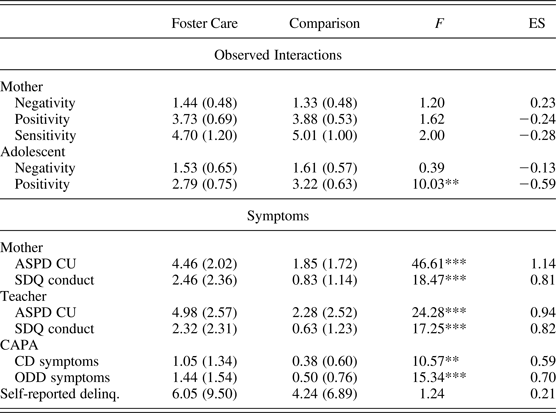
Means (standard deviations) and effect sizes for the foster care and comparison adolescents for the observed interaction variables and behavioral adjustment variables are given in Table 3. Only one significant difference in observed interaction quality was detected: adolescents in foster care were significantly less positive toward their mother than were adolescents in comparison families.
Mean differences in observed behavior and disruptive behavioral outcomes: Adolescents in foster and comparison families
Note: For observed interaction data, ns = 52 and 49 for foster care and comparison samples, respectively, except for mother sensitivity, for which ns = 51 and 48, respectively. For SDQ and ASPD mother report, ns = 48 and 48 for foster care and comparison samples; for teacher report, ns = 43 and 40 for ASPD and 47 and 40 for SDQ for foster care and comparison samples, respectively; for CAPA symptoms, ns = 62 and 50 for foster care and comparison samples, respectively; for self-report, ns = 60 and 49 for foster care and comparison samples, respectively. ES, effect size; ASPD CU, Antisocial Process Screening Device callous–unemotional scale; SDQ, Strengths and Difficulties Questionnaire; CAPA, Child and Adolescent Psychiatric Assessment; CD, conduct disorder; ODD, oppositional–defiant disorder.
*p < .05. **p < .01. ***p < .001.
Adolescents classified as having a secure attachment to foster mother were younger than adolescents with an insecure attachment at first entrance into care, 75.56 (43.50) months vs. 103.23 (40.06), respectively, F (1, 55) = 6.24, p < .05, although the range was similar and considerable in both groups, from under 3 months to more than 13 years. There was a similar pattern for security to foster fathers, 72.65 (43.45) for secure compared to 105.14 (39.71) for insecure, F (1, 39) = 6.26, p < .05. A likely related finding is that total duration of care was positively related to secure attachment to foster mother, for secure, 92.03 (44.55) months compared to insecure, 60.30 (41.73) months, F (1, 55) = 7.69, p < .01; and foster father, for secure, 98.53 (43.54) months compared to insecure, 58.91 (40.26) months, F (1, 39) = 9.16, p < .01. In addition, duration of current placement was strongly positively related to a secure attachment to foster mother, 52.54 months (36.82) for secure compared to 30.53 months (23.51) for insecure, F (1, 54) = 7.30, p < .01; the same effect was observed for foster father, 57.40 (39.93) for secure compared to 35.15 (24.78) for insecure, F (1, 38) = 4.48, p < .05. However, as the standard deviations imply, there was sizable variation in duration of placement among both secure and insecure adolescents and no suggestion that a particular length of current relationship was required for a secure attachment to develop.
Some nonsignificant findings are also worth noting. The number of current placements did not distinguish securely attached from insecurely attached adolescents, for mothers, 3.96 (2.42) for secure and 3.39 (1.89) for insecure, F (1, 54) = 0.99, ns; for fathers, 4.32 (2.58) for secure and 3.19 (1.78) for insecure adolescents, F (1, 38) = 2.62, ns. Moreover, attachment to foster parents was not significantly associated with amount of contact with birth parents. For example, 36% of adolescents with a secure attachment to foster mother had no contact with the birth mother, compared to 40% of those with an insecure attachment to foster mother (p > .05).
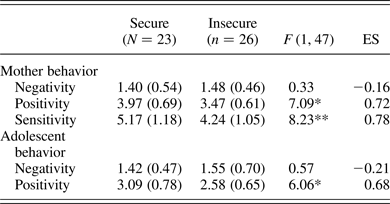
Table 4 shows the associations between adolescent attachment to foster mothers from the CAI and quality of observed maternal behavior; only data for mothers are presented because we did not obtain interaction data from fathers. Analyses show that mothers of securely attached foster adolescents were more positive; reciprocally, adolescents who were classified as having a secure attachment to foster mothers were significantly more positive in their interactions. The differences were marked, ranging from 0.68 to 0.78 of a standard deviation. No differences were found between secure and insecure adolescents in the amount of negativity in the interactions.
Association between attachment classifications and parent–adolescent interaction quality in foster adolescent–mother dyads
Note: For sensitivity, n = 22 for secure and n = 26 for insecure, F (1, 46). ES, effect size.
*p < .05. **p < .01.
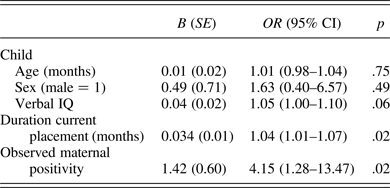
A logistic regression analysis was conducted to identify the predictors of attachment security to foster mother. We included adolescent age, sex, and verbal IQ as a priori covariates; hypothesized predictors were quality of current maternal behavior from the observational assessment (using the positive and negative factors) and duration of current placement; we also considered other history of care variables (number of placements, age at first placement, total duration in care, and duration of current placement). Results indicated a significant effect of duration of current placement and observed maternal positivity (Table 5); none of the other history of care variables predicted attachment security independent of these factors (although, as suggested by the correlation between duration of current placement and total duration in care noted above, duration of current placement was not a significant predictor independent of total duration in care). Follow-up analyses indicated similar effects of when observed maternal sensitivity was included in the regression model as an alternative to observed maternal positivity, B = 0.82 (0.38), odds ratio = 2.26, 95% confidence interval = 1.08–4.73, p < .05. Follow-up analyses also indicated that the association between observed maternal positive behavior or sensitivity in the interactions and attachment security was not moderated by the duration of current placement or other care history variables.
Logistic regression analysis predicting secure attachment to foster mother
Note: OR, odds ratio; CI, confidence interval.
The above analyses indicated that current quality of observed parenting behavior was a reliable and independent predictor of attachment security as assessed from the CAI, even for high-risk, late-placed adolescents. That was substantiated by further analyses indicating that the association between quality of observed parenting and attachment security was similarly strong in the foster care and in the comparison sample. A logistic regression model predicting secure attachment to mother (foster mother for adolescents in foster families; birth mother for adolescents in comparison families), controlling for child age, sex, and verbal IQ indicated a significant effect of observed maternal positivity (B = 1.05, SE = 0.40, odds ratio = 2.85, 95% confidence interval = 1.30–6.27) and no significant effect of group (B = 0.60, SE = 3.12) or Group × Maternal Positivity interaction (B = –0.16, SE = 0.82). There was also no evidence of a significant Group × Maternal Behavior interaction when maternal sensitivity was used as the predictor of attachment security.
Is a secure attachment associated with fewer delinquent symptoms among adolescents in foster care?
There were sizable mean differences in symptoms measures of disruptive behavior (except for self-report) between the adolescents in the foster care and the comparison samples. In addition, diagnostic data from the CAPA indicated that 13% (8/54) of adolescents in foster care had a diagnosis of oppositional defiant disorder or conduct disorder, but none of the 50 adolescents in comparison families had either diagnosis (Fisher exact test, p < .01).
The degree to which a secure attachment to the foster mother was associated with fewer symptoms of disruptive behavioral problems according to multiple reporters (from measures listed in Table 3) was assessed using a one-way analysis of variance. Only for parent-reported symptoms on the SDQ and the Antisocial Process Screening Device was there a significant effect of attachment security at p < .05. Adolescents classified from the interview as having a secure attachment were reported by parents to exhibit fewer CU symptoms, secure = 3.70 (1.94) compared to insecure, 5.00 (1.98), F (1, 44) = 4.94, p < .05, effect size = 0.63, and fewer conduct symptoms on the SDQ, secure = 1.65 (2.08) compared to insecure 3.15 (2.46), F (1, 44) = 4.81, p < .05, effect size = 0.63. These two outcomes were considered for further analyses to examine if attachment security to the (foster) mother was significantly associated with adjustment after accounting for covariates and if it could eliminate group differences on these outcomes. Although attachment security was not significantly associated with teacher- or self-reported delinquent behavior or diagnostic assessments, the effect sizes for these measures were nonetheless moderate, ranging from .43 for self-reported delinquency to .51 for symptoms of conduct disorder from the CAPA diagnostic interview.
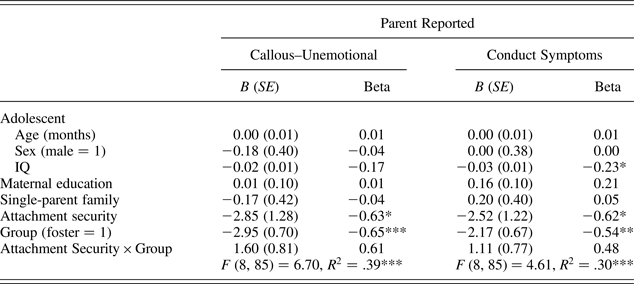
The final set of analyses (displayed in Table 6) examine the predictors of parent-reported disruptive behavioral symptoms in the total sample. After controlling for key covariates (adolescent age, gender, and IQ, and two indicators of sociodemographic risk: parent education and single-parent household), attachment security to the mother (foster mother for foster adolescents; biological mother for comparison adolescents) was a significant predictor of both CU behavior and conduct symptoms. However, attachment security did not account for the group difference in disruptive behavior, which remained substantial. There was no significant evidence that the link between attachment security and disruptive behavior differed significantly between groups, as indicated by the nonsignificant Attachment Security × Group interaction. (A nonsignificant trend, p < .10, was observed for CU traits and was attributable to a stronger link in the foster care sample; this could be an artifact of the very limited range of scores in the comparison sample.)
Regression analysis predicting disruptive behavioral symptoms in the total sample
Note: n = 93.
*p < .05. **p < .01. ***p < . 001.
Discussion
Experimental animal and clinical studies converge in documenting that poor early care increases the risk for subsequent behavioral and somatic health problems, with potentially persisting effects across time and generation (Bowlby, Reference Bowlby1988; Francis, Diorio, Liu, & Meaney, Reference Francis, Diorio, Liu and Meaney1999). Nevertheless, wide variation in these effects has been observed in human studies, and that has stimulated research into the sources of resilience. One of the most cited sources of resilience in children is the existence of a stable, supportive family relationship (Werner, Reference Werner and Smith1982). The possibility that a stable, supportive relationship with a foster caregiver might alter the developmental trajectory of children who experienced poor early care is an explicit assumption of the foster care system. Unfortunately, limited data exist on the likelihood that children who experienced poor early care would form a secure attachment relationship, particularly past early childhood.
The current study provides much-needed data on the formation of secure attachment relationships in adolescents who experienced maltreatment that was severe enough to require placement in foster care. The radical intervention of foster care (a change in caregivers) provides a powerful test of an individual's ability to form new attachments. We found that nearly half of the adolescents in foster care formed a secure attachment relationship with a foster carer according to an interview measure of attachment. What was particularly notable was that these same adolescents reported nearly universal insecurity with their birth families. That observation, coupled with the moderate link between observed parent–adolescent interaction quality and adolescent attachment representation, underscores that working models of attachment in adolescents who experienced severe maltreatment nonetheless remain open and responsive to day-to-day caregiving experiences. Furthermore, we obtained evidence that a secure attachment relationship with the foster mother was associated with fewer symptoms of disruptive behavior according to parent report. We discuss the limitations of the study before turning our attention to the conceptual and clinical implications.
Several limitations of the study should be noted. First, we were not able to identify more severe disturbances, such as a lack of a discriminating attachment relationship (e.g., “nonattachment”), based on the attachment measure used. The modifications of the attachment interview to assess birth parent security were inevitably somewhat exploratory, and this may have led to a weaker assessment of the attachment quality to birth than to foster parents (although we were unlikely to have misclassified security to birth parents of the children in foster care given what was known about their developmental histories; observational interactions with birth parents were impractical to obtain for ethical and clinical reasons). Second, we included a normal-risk group sampled from a comparable geographical area as a comparison group. Multiple comparison groups might have been used. The sample used here provides a calibration group for current caregiving experience, however, which was particularly important for assessing current attachment security and its link with adjustment. Third, the data collection was cross-sectional although it included historical data. We are unable to account, for example, for intra-individual change in attachment relationship quality or attribute any causal direction to links between attachment and delinquent behavior; delinquent behavior may have preceded attachment insecurity. Fourth, the same rater coded attachment to foster and birth parent. That might have reduced the distinctiveness of within-individual differences in attachment representations, although that was clearly not a problem in this study. Fifth, there is inevitably some difficulty in comparing across foster care samples. In this context, we note that the adolescents in this sample were not referred for clinical treatment (although our sample clearly included adolescents with clinical need) and we did not include kinship foster care; there are other features of this sample that make generalization to other foster care samples difficult, such as the wide variation in age at placement, number of placements, and duration of care. Generalizability between this and other foster care samples in the literature is difficult for these and other reasons. Set against these limitations are several strengths of the study, including a comparatively large sample size for detailed clinical assessments, an interview measure of attachment, observational data to assess quality of current relationship with caregivers, and detailed clinical outcomes assessed from multiple sources and methods, including diagnostic interviews.
Perhaps the most notable finding is that the rate of attachment security of adolescents toward their foster parents did not differ from that found in a normal-risk comparison sample of adolescents. This finding may have several explanations; it is possible to rule out several. For example, the normative rate of attachment security in the foster care sample is not attributable to any particular intervention delivered to the foster caregivers. A number of interventions for foster families have been reported and have shown promising or positive effects on the child–caregiver relationship and other indicators of child adjustment (Chamberlain et al., Reference Chamberlain, Price, Leve, Laurent, Landsverk and Reid2008; Dozier, Peloso, Lewis, Laurenceau, & Levine, Reference Dozier, Peloso, Lewis, Laurenceau and Levine2008; Juffer, Hoksbergen, Riksen-Walraven, & Kohnstamm, Reference Juffer, Hoksbergen, Riksen-Walraven and Kohnstamm1997; Kessler et al., Reference Kessler, Pecora, Williams, Hiripi, O'Brien and English2008; Pallett, S Weissman, Reference Pallett, Scott, Blackeby, Yule and Weissman2002; Taussig, Culhane, & Hettleman, Reference Taussig, Culhane and Hettleman2007). However, the foster families in this study were not part of a treatment program (i.e., they received management as usual, which is fairly minimal and not systematically delivered); in this regard, it is notable that observational data did not distinguish parents in the foster care and the comparison samples. The normative rate of attachment security among the adolescents in foster care is also not explained by an atypically low-risk sample. Adolescents in foster care had experienced early significant maltreatment and, on average, multiple placements; they exhibited substantially higher rates of disruptive behavior than did the comparison group, which is consistent with epidemiological data. Another possibility is that the interview measure of attachment was insensitive or otherwise misleading. That account is also not consistent with our data because (a) adolescents were able to distinguish between birth and foster parents, (b) attachment security was reliably linked with observer ratings of interaction quality, and (c) attachment security was associated with an external index of well-being, namely, disruptive behavior according to parent report. Whether or not the normative rate of attachment in the foster care sample is attributable to the stable placement (5 months minimum) is less clear because we do not yet have a clear understanding of the role of placement duration on the formation of new attachment relationships. In this sample, placement duration was associated with attachment security, but the association was modest; longer placement certainly did not insure security.
We propose that the findings on attachment suggest that apparently substantial recovery is possible later in development in the absence of intensive intervention. Given the limited data in this area, particularly concerning evidence-based attachment measures in an adolescent sample, it is not clear if the rate of recovery we found in this sample is atypical. One possible parallel is the study of Milan and Pinderhughes (Reference Milan and Pinderhughes2000), who reported that approximately one-third of their 32 9- to 13-year-olds in foster care reported “adequate” pattern of relatedness to foster parents based on a self-report questionnaire. In any event, the rate of attachment security and the link between attachment security and quality of interactions provide some of the strongest empirical evidence that attachment representations to subsequent caregivers remain open to change as late as adolescence, despite a history of severe maltreatment, insecure attachment representations about prior caregivers, and relatively late age at placement and modest relationship duration (for most foster children). A more novel finding was that the link between caregiving quality and attachment security was not significantly different in the foster care and the comparison sample. That extends the report on infants by Dozier et al. (Reference Dozier, Stovall, Albus and Bates2001) by suggesting that strong reliable links between caregiving and attachment can be formed in the absence of shared genes and despite poor early care experiences. Put another way, these findings challenge the view that, following several years of maltreatment and multiple placements, adolescents would be less susceptible to the impact of caregiving in the foster care family in forming a new relationship with the foster caregiver(s).
There are limited data linking quality of parent–adolescent interactions and adolescent attachment, as assessed through representations (Allen et al., Reference Allen, McElhaney, Land, Kuperminc, Moore and O'Beirne-Kelly2003; Kobak, Cole, Ferenz-Gillies, Fleming, & Gamble, Reference Kobak, Cole, Ferenz-Gillies, Fleming and Gamble1993; Scott et al., Reference Scott, Briskman, Woolgar, Humayun and O'Connor2011; Zimmermann, Reference Zimmermann2004). The associations observed here, which were moderate in magnitude and specific to warmth/positivity in the behavior of both the adolescents and the foster caregivers, do not appear to be remarkably different from what has been reported so far (and did not differ significantly between the foster care and the comparison samples). It is not yet clear why the associations were reliable with warmth/positivity but not with negativity/conflict. That might reflect the greater sensitivity of attachment representations to experiences of support, care, warmth, and responsiveness that are indexed by the measures in the positivity scale.
Among the adolescents in foster care, the degree of within-individual variation in representational models between birth and foster parents was striking. We would not wish to draw conclusions too firmly on this matter given the difficulty in assessing attachment representations to birth parents with whom the adolescents did not live. Further research is needed to examine if, and how, these findings add to our understanding of how and when multiple attachment models become integrated in development (Main, Reference Main, Parkes, Stevenson-Hinde and Marris1991). In this context, it is interesting that we found a high correspondence between attachment security to mother and father in the foster care and the comparison groups.
There is much anecdotal evidence that children form conflicted, detached relationships with foster caregivers, which in turn may exacerbate preexisting adjustment problems and precipitate a further placement breakdown, leading to further adverse outcomes for the foster child. Empirical support for this has been reported by several groups (Dozier, Albus, Fisher, & Sepulveda, Reference Dozier, Albus, Fisher and Sepulveda2002; Strijker et al., Reference Strijker, Knorth and Knot-Dickscheit2008). In the current study, we did not find that features or frequency of the pre-foster-care placements were reliable predictors of adolescent–parent interaction quality or attachment representations. That conflicts with the finding that relationship with the foster caregiver was predicted from number of prior placements (Milan & Pinderhughes, Reference Milan and Pinderhughes2000; Strijker et al., Reference Strijker, Knorth and Knot-Dickscheit2008). It is not clear why we observed little influence of prior caregiving history. It may be that there was too little range in the quality of prior care to detect an effect (all experienced significant maltreatment and the rate of secure representations to biological parents was minimal) or that the sampling methods led to selective exclusion of those adolescents whose prior experience would be most disruptive to subsequent placements. In contrast, it may be that attachment representations to current caregivers are more insulated from prior relationship experiences than has been presumed. This is not to say that prior adverse care and maltreatment do not predict behavioral well-being (there were sizable group differences in disruptive behavior), but simply that they may not have a dominant influence on the way in which adolescents talk about their relationships with current specific caregivers.
The final set of analyses indicated that attachment security was associated with fewer disruptive behavioral symptoms, an outcome of particular concern given that disruptive behavior puts the placement at risk for breakdown and the adolescent on a developmental trajectory leading to long-standing disturbance and lost opportunities. We are not able to say that the formation of a secure attachment relationship with the foster caregiver was a cause of a lower level of disruptive behavior; it may have been a consequence. Nonetheless, these data also add to the limited but growing work linking attachment security in adolescence to psychological well-being. Several studies show that securely attached adolescents are less delinquent and aggressive, with attachment either playing a main effect (Allen et al., Reference Allen, Marsh, McFarland, McElhaney, Land and Jodl2002; Kobak, Zajac, & Smith, Reference Kobak, Zajac and Smith2009; Scott et al., Reference Scott, Briskman, Woolgar, Humayun and O'Connor2011) or moderating genetic risk (Zimmermann, Mohr, & Spangler, Reference Zimmermann, Mohr and Spangler2009). That the link between attachment security and parent-reported disruptive behavior was not significantly different in foster care and comparison adolescents is notable; the two groups differed with respect to shared genes between child and caregiver, and history of severe maltreatment. Within the foster care sample, the size of the effect of attachment security and delinquent behavior was greater than what has been reported in meta-analyses (Hoeve et al., Reference Hoeve, Stams, van der Put, Dubas, van der Laan and Gerris2012).
In addition to presenting novel data on the development of new attachments formed in adolescence, the current study suggests several clinical implications and directions for further clinical research. The finding that nearly one-half of the late-placed adolescents formed a secure attachment with foster parents suggests that family-based foster care offers a valuable opportunity for resilience even for very high-risk individuals. Improving the quality of parent–child interactions in foster families may promote the formation of a secure attachment relationship and better psychological adjustment as a result. The rates of secure attachment to foster caregivers may be especially informative in light of the finding that children who are reunited with their birth families following foster placement show worse outcomes (Taussig, Clyman, & Landsverk, Reference Taussig, Clyman and Landsverk2001). Further research is needed to examine what role attachment to the foster parent may play in the child's development and how an attachment relationship that develops with the foster parent may be identified as a likely source of resilience for the child. Intervention studies of typically developing and high-risk samples consistently demonstrate that early interventions for children who experienced poor early care can be effective in promoting quality of the parent–child relationship and child behavior (Bakermans-Kranenburg, van IJzendoorn, & Juffer, Reference Bakermans-Kranenburg, van IJzendoorn and Juffer2003; Scott et al., Reference Scott, Sylva, Doolan, Price, Jacobs and Crook2010; Webster-Stratton, Reference Webster-Stratton1984). Randomized clinical trials also indicate that parenting interventions may yield positive effects even where the quality of early care had been very poor and included maltreatment (Cicchetti, Rogosch, & Toth, Reference Cicchetti, Rogosch and Toth2006; Thomas & Zimmer-Gembeck, Reference Thomas and Zimmer-Gembeck2011). The findings from the current study would suggest that improvements in the relationship between the foster child and the foster parent would be expected to mediate improvements in child behavior. More research of this kind is needed. In addition, further research is needed to examine if the formation of a secure attachment reduces the risk of placement breakdown in the presence of elevated disruptive behavioral problems (Fisher, Stoolmiller, Mannering, Takahashi, & Chamberlain, Reference Fisher, Stoolmiller, Mannering, Takahashi and Chamberlain2011). Further clinical research is also needed to examine why adolescents in foster care with a secure attachment nevertheless exhibited elevated levels of disruptive behavior; that is, current attachment security did not eliminate the presumed effects of early risk. Among the many factors identified by previous research on foster care, in addition to preplacement history, is deviant peer affiliation (Eddy & Chamberlain, Reference Eddy and Chamberlain2000; Van Ryzin & Leve, Reference Van Ryzin and Leve2012), which we did not assess in the current study. Finally, the study emphasizes the potentially important role for attachment research in very applied settings (Byrne, O'Connor, Marvin, & Whelan, Reference Byrne, O'Connor, Marvin and Whelan2005) and the conceptual and methodological challenges that brings.