Asthma is a chronic respiratory condition characterised by inflammation of the airways in the lungs. It is the world's leading paediatric chronic disease, with prevalence rates of approximately 9.5% (Akinbami et al., Reference Akinbami, Moorman, Bailey, Zahran, King, Johnson and Liu2012). Children often receive a diagnosis of asthma as young as 5 years old, and continue to experience symptoms of the condition (e.g., difficulty breathing, wheezing, coughing, chest tightness) throughout childhood and adolescence, and often into adulthood.
A diagnosis of asthma carries with it a range of psychosocial consequences. Youth with asthma, when compared to those without, have been found to participate less in sporting activities (Mitchell, Adams, & Murdock, Reference Mitchell, Adams and Murdock2005; Vahlkvist & Pederson, Reference Vahlkvist and Pederson2009), engage less in age-appropriate social activities (Sawyer & Fardy, Reference Sawyer and Fardy2003), are at higher risk of educational difficulties due to school absences (Ahmad & Grimes, Reference Ahmad and Grimes2011), and have an increased risk for further respiratory comorbidities (de Groot, Nijkamp, Duiverman, & Brand, Reference de Groot, Nijkamp, Duiverman and Brand2012; Galli et al., Reference Galli, Gianni, Auricchio, Brunetti, Mancino and Rossi2007; Kheirandish-Gozal, Dayyat, Eid, Morton, & Gozal, Reference Kheirandish-Gozal, Dayyat, Eid, Morton and Gozal2011; Ross, Davis, & Hogg, Reference Ross, Davis and Hogg2007).
Children with asthma have also been shown to be at increased risk for psychological comorbidities when compared to children without asthma; for example, anxiety (Dudeney, Sharpe, Jaffe, Jones, & Hunt, Reference Dudeney, Sharpe, Jaffe, Jones and Hunt2017) and depression (Goodwin, Fergusson, & Horwood, Reference Goodwin, Fergusson and Horwood2004; Katon et al., Reference Katon, Lozano, Russo, McCauley, Richardson and Bush2007). This presentation of comorbid psychological difficulties can further affect the life of someone with paediatric asthma. Children with comorbid asthma and anxiety have been found to experience an increase in asthma symptom burden (Richardson et al., Reference Richardson, Lozano, Russo, McCauley, Bush and Katon2006), a decrease in self-efficacy to manage asthma (McCauley, Katon, Russo, Richardson, & Lozano, Reference McCauley, Katon, Russo, Richardson and Lozano2007), an increase in health care utilisation (Fernandes et al., Reference Fernandes, Fonseca, Martins, Delgado, Pereira, Vaz and Branco2010), and an overall reduced quality of life.
The negative relationship between asthma and quality of life outcomes is not limited to the child (Crespo, Carona, Silva, Canavarro, & Dattilio, Reference Crespo, Carona, Silva, Canavarro and Dattilio2011; Halterman et al., Reference Halterman, Yoos, Conn, Callahan, Montes, Neely and Szilagyi2004). Parents of children with asthma have been shown to experience increased rates of anxiety and depression when compared to those without (Easter, Sharpe, & Hunt, Reference Easter, Sharpe and Hunt2015), and it has been proposed that stress and worry is an almost expected part of parenting a child with asthma (Palmer, Reference Palmer2001). In addition to the usual familial responsibilities of a parent, parents of a child with asthma have increased caregiving burden through managing illness demands such as asthma symptom and trigger monitoring, medication administration, and physician appointments. There is an additional financial burden for families of children with chronic diseases such as asthma through missed work opportunities and increased medication expenditure (American Lung Association, 2012).
Despite the documented stress that is inherent in managing asthma for the family, there remains a paucity of research that investigates the ways in which parents navigate diagnosis and treatment. This research is needed if we are to appropriately understand how families cope with the additional burden associated with the management of a chronic respiratory disease such as asthma, and whether and where intervention is required. Therefore, the aim of the current study was to explore the impact of asthma, from stages of initial diagnosis onwards, for children and their parents. This was an exploratory, qualitative study to develop a model of the impact of paediatric asthma on a child and their parents.
Methods
Sample
Parents of children (<18 years) with medically diagnosed asthma were recruited to take part in the current study. Recruitment occurred through community advertisements or followed up from participants’ previous involvement in research. All participants spoke fluent English and resided in Australia. Recruitment of participants continued until no original thematic information emerged from three consecutive interviews, and theoretical saturation was met. In the current study, theoretical saturation occurred after 17 interviews.
Procedure
Contact with participants who had previously taken part in research conducted by our laboratory was made by phone, where the study was explained. For participants who were recruited through the community, parents contacted the research team by phone or email, where the study was explained. Following verbal consent, an interview time was scheduled and a participant information statement and consent form were emailed. If participants consented to take part in the research, they emailed back a scanned copy of their signed consent forms to the research team. Prior to the interview, participants received an email with a link to complete a set of online questionnaires administered via Qualtrics, which took approximately 20 minutes to complete.
A semi-structured interview guide was developed for the study. The initial research questions were based around two main areas: (1) experience and impact of the asthma diagnosis, and (2) psychosocial impact of asthma for the child and family. Research questions were open and follow-up questions were determined by participant responses. Research questions also continually evolved depending on the themes developing from previous interviews. For example, it appeared from the initial interviews that there were three distinct experiences that were related to the circumstances leading to a child's diagnosis of asthma. During subsequent interviews, it was important to be able to determine whether these three experiences accurately represented those in the larger population, and thus questions were developed that allowed for this information to be captured.
All interviews were conducted via phone at The University of Sydney, Australia, from December 2014 to August 2015. Interviews lasted between 30 minutes and 1 hour and were conducted by the first author (J.D.), who at the time of data collection was a Clinical Psychology Registrar. All interviews were audio recorded and transcribed verbatim for content and thematic analysis. Participant information was anonymised prior to analysis. The study was approved by The University of Sydney Human Research Ethics Committee.
Measures
Demographics
Parents reported basic demographic information, including their own age, gender, ethnicity, marital status, education, employment status, and number of children in the family. Parents also reported their child's basic demographic information, including age, gender, and ethnicity. They also reported their child's asthma information, including age at diagnosis, asthma presentation type, medication treatment status, and past diagnoses of anxiety.
Measures for anxiety symptoms
The State Trait Anxiety Inventory — Form Y (STAI-Y1/Y2; Spielberger, Reference Spielberger1983) is a measure of anxiety in adults. There are 20 items that measure state anxiety (Y1), and 20 that measure trait anxiety (Y2). Combined scores range from 20 to 80, with higher scores suggesting greater levels of anxiety. The STAI-Y1/Y2 has been shown to have sound psychometric properties (Spielberger, Reference Spielberger1983). Internal validity for this sample was α = 0.54 and 0.41. The Spence Children's Anxiety Scale — Parent reported (SCAS-P; Nauta et al., Reference Nauta, Scholing, Rapee, Abbott, Spence and Waters2004) is a parent-report measure of child anxiety that has demonstrated evidence of strong reliability and validity in samples of young people aged from 7 to 19 years (Nauta et al., Reference Nauta, Scholing, Rapee, Abbott, Spence and Waters2004) and has been used previously in research with children with asthma (Dudeney, Sharpe, Sicouri et al., Reference Dudeney, Sharpe, Sicouri, Lorimer, Dear, Jaffe, Selvadurai and Hunt2017; Sicouri et al., Reference Sicouri, Sharpe, Hudson, Dudeney, Jaffe, Selvadurai, Lorimer and Hunt2017). There are 38 items that assess symptoms related to six subscales: social phobia, separation anxiety, panic attack/agoraphobia, obsessive compulsive disorders, generalised anxiety, and physical injury fears. Subscale scores are calculated by summing the individual items related to each subscale, and a total score is calculated by summing all items. Higher scores indicate greater anxiety symptomatology. For the purposes of this study, only the total anxiety symptom score was investigated. Internal validity was α = 0.83.
Data Analysis
Data collection and analysis was guided by grounded theory (Glaser & Strauss, Reference Glaser and Strauss2009; Strauss & Corbin, Reference Strauss and Corbin1980). Interview transcribing and coding occurred after the completion of the first interview and continued in parallel with data collection. Initial coding was conducted on the transcripts a sentence at a time to uncover essences and broad descriptive categories. Conceptual relationships were assembled through axial coding, which resulted in the merging, renaming and development of new categories. Selective coding was use to integrate and refine final categories, in order to provide a detailed, complete explanation of the factors associated with the impact of asthma on the child and parent.
As interviews progressed, recurrent themes were explored in subsequent interviews to enable theoretical sampling. Diagrams of the categories that emerged from each of the 17 transcripts were also produced. Observation of each diagram assisted the research team in determining whether any gaps in the theory still existed, and the diagrams helped guide further sampling. In line with Strauss and Corbin (Reference Strauss and Corbin1980), diagramming was conducted in parallel with the coding of each transcript.
Two raters (J.D., L.S.) coded the first three interviews to develop an agreed set of categories. A single rater (J.D.) coded the remaining interviews, but discussed new categories with the second rater until consensus was met. QSR NVivo 11 qualitative data analysis software was used to assist with coding analysis (QSR International, 2016). Analysis of the demographic data and questionnaire measures was conducted using SPSS version 21.
Results
Participant Demographics
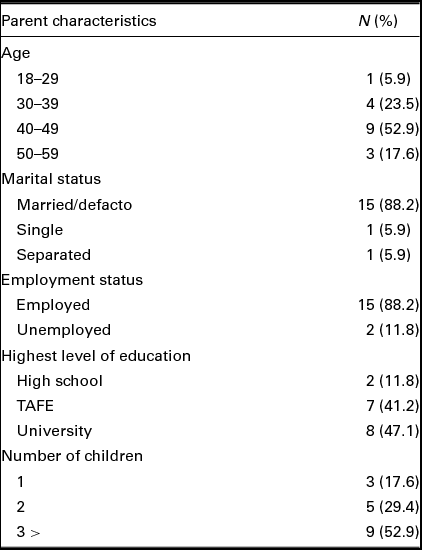
Table 1 provides a summary of parent characteristics for the 17 participants. The participants’ age ranged from 24 to 51.6 years (M age = 42.5 years, SD = 7.2). Participants were female and all spoke English as their primary language. The scores on the anxiety measures ranged from 34–53 (STAI-Y1) and 38–52 (STAI-Y2). The means (Y1 M = 45, SD = 4.3; Y2 M = 44.3, SD 3.9) were within one standard deviation of normative data (Crawford, Cayley, Lovibond, Wilson, & Hartley, Reference Crawford, Cayley, Lovibond, Wilson and Hartley2011).
Demographic Data of Parents Interviewed (n = 17)

The children of the participants ranged in age from 4.7 to 15 years (M age = 9.3 years, SD = 3.0). There were eight males and nine females. Asthma was based on parent report of an asthma diagnosis that was initially diagnosed by a physician. The mean age of asthma diagnosis was 3.7 years (range = 4 months to 11 years). Sixteen children were taking prescribed medication for their asthma, with 13 taking more than one. Seven children were described as presenting with asthma symptoms during winter and spring months only. Five children experienced asthma symptoms all year round; three had viral asthma, one had asthma symptoms in winter only, and one during fall/autumn only. Five children had previously been diagnosed with an anxiety disorder. The scores on the parent-reported child anxiety measure ranged from 1–28. The mean (14.6, SD = 8.1) was within one standard deviation of normative data (Nauta et al., Reference Nauta, Scholing, Rapee, Abbott, Spence and Waters2004).
Main Qualitative Analysis
Three major themes that emerged from the data were explored: (1) the experience of obtaining an asthma diagnosis, (2) how competent parents believed they were at managing their child's asthma (the level of knowledge and skills, and the controllability of the asthma), and (3) how parents behaved in response to the asthma.
Diagnosis
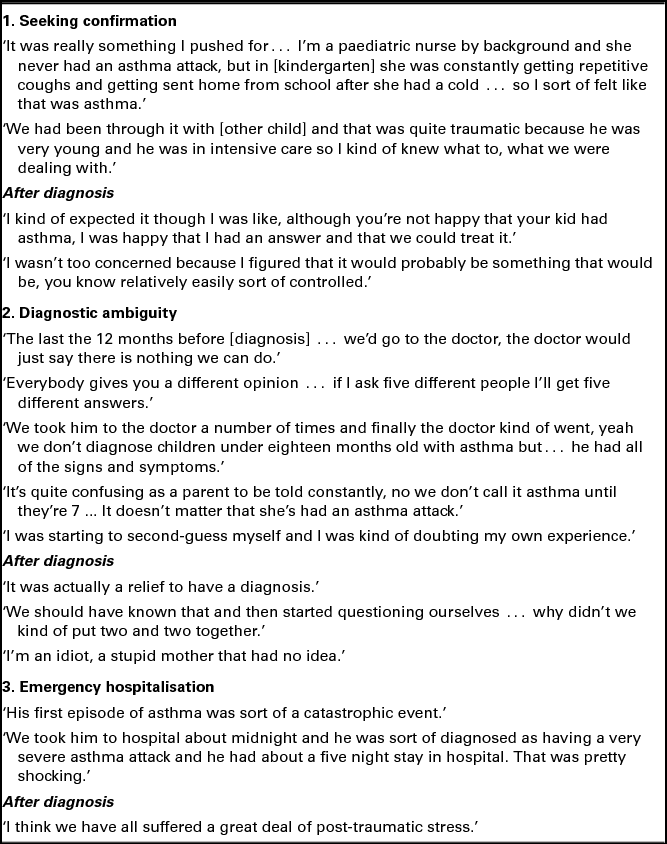
Data analysis pointed towards the majority of parents (14/17) having some warning that their child was unwell. Children presented with various symptoms including, but not limited to, a constant cough, rhinorrhea (runny nose), and wheezing. For these families, one of two distinct experiences was reported. Either parents specifically sought confirmation for what they believed was asthma (6/17), or a delayed asthma diagnosis was provided after numerous physician visits, the appearance of further symptoms, or the involvement of a respiratory clinician (8/17). For a minority of families (3/17), severe acute asthma symptoms were reported to appear out of nowhere and required immediate attention. See Table 2 for a representative sample of parent reflections about their child's asthma diagnostic experience.
Parent Reflections on Their Child's Asthma Diagnosis Experience

1. Seeking confirmation
Parents with an understanding of how asthma presents took their child to a primary care physician for the purpose of confirming whether their child's symptoms met criteria for a diagnosis of asthma. This prior understanding of asthma resulted from working in health-related professions, a personal or family history of asthma, or from the experience of older siblings being diagnosed with asthma. Parents who sought confirmation of their child's asthma reported that they felt prepared for the diagnosis and found it unsurprising. Negative emotions were seldom expressed by these parents upon learning of the diagnosis. In regard to the management of their child's asthma, these parents reported they felt competent and confident that they had an understanding of asthma triggers, symptoms and treatment, and appropriate skills to assist their child.
2. Diagnostic ambiguity
Parents lacking prior experience with asthma did not have the knowledge to seek a specific diagnosis. These parents reported that the process for their child to receive a diagnosis was long and filled with ambiguity. The ambiguity was around what their child's symptoms represented and, subsequently, how they as parents should respond to such symptoms. For example, parents were told that the symptoms were viral or a stand-alone cough and that over-the-counter syrups would be adequate treatment. A diagnosis of asthma was not received upon the first visit to a healthcare professional. Instead, multiple visits to physicians in private practice, medical centers and hospital clinics were required for diagnosis, along with further testing, or the presentation of further symptoms. There was further ambiguity for parents of very young children. Parents of children under the age of 2 who presented with asthma symptoms reported doctors’ reluctance to diagnose asthma in their child, despite being told that the symptoms were consistent with asthma.
The parents’ lack of experience with, and understanding of, asthma, coupled with the lengthy process of diagnosis, led parents to experience self-doubt as to whether the symptoms they were witnessing in their child were significant, and there were reported feelings of confusion.
A diagnosis of asthma for these parents was met positively. There was an overwhelming reporting of relief for both the parent and child because there was an answer, and they knew asthma was a manageable condition. Despite the evident relief, there was also self-blame. As asthma was viewed as a common problem in the community, parents thought they should have seen the signs or ‘joined the dots’, without having to wait for the eventual diagnosis.
3. Emergency hospitalisation
The third diagnostic experience that was reported by parents was for children who received a diagnosis of asthma during, or immediately following, an emergency hospitalisation due to the onset of acute respiratory symptoms. The process of an emergency hospitalisation had a different impact on parents compared to those who attended routine or outpatient appointments for diagnosis. For some parents, there was the real possibility that their child might die, and thus there were considerable emotions arising from that experience. There was also a feeling of powerlessness. All parents going through this diagnosis experience described the time as traumatic.
Asthma Management
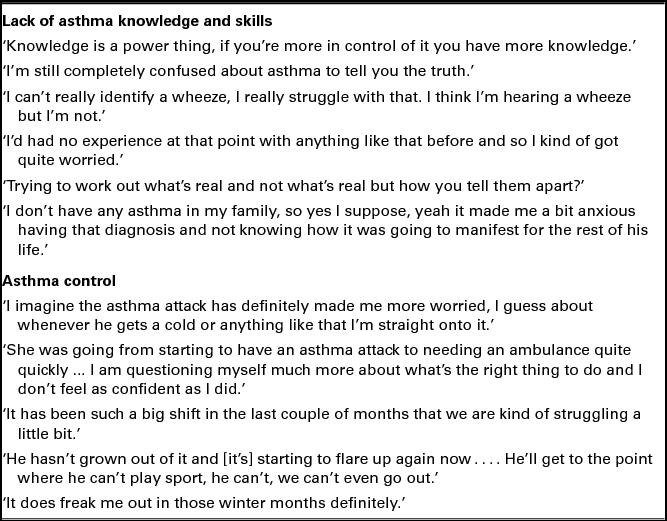
Parents described the way in which they learnt to manage their child's asthma following diagnosis. All parents who had warning that their child was developing asthma (14/17) reported two factors that were important in managing the asthma, post diagnosis: (1) the level of knowledge and skills possessed by parents, such as identifying symptoms and managing the symptoms; and (2) the level of asthma control. See Table 3 for a selection of parent reflections of managing their child's asthma.
Parent Reflections on Managing Their Child's Asthma

Asthma knowledge and skills
The parents with limited knowledge of, and experience with, asthma (8/17) reported that health professionals were very proficient at teaching their children how to use medication. However, many felt they, as parents, did not have the adequate information and skills they thought they needed as their child's primary caregiver, such as information regarding differentiating asthma symptoms from non-asthma symptoms, how to respond to different symptoms, and identifying signs of impending exacerbations. This lack of knowledge and skills resulted in a decrease in confidence or self-efficacy, as they were unsure how to measure and monitor symptoms, and an increase in worry for parents as they were concerned about what their lack of knowledge could mean for their child. Some parents reported that they were able to increase their awareness of asthma and therefore increase their self-efficacy and decrease their worry. Reported methods of increasing knowledge and skills included online research and talking to asthma clinic specialists, either at their child's outpatient appointments or through private appointments. However, there were other parents who still felt overwhelmed by what they deemed was a lack of understanding of their child's illness.
Asthma control
Even where parents felt competent regarding their child's asthma, the ability to manage asthma was compromised by severe or frequent exacerbations. Hence, for children whose asthma was not well controlled, or whose asthma was characterised by exacerbations requiring emergency room presentations, parents had lower self-efficacy for managing their child's illness. This included parents who sought a diagnosis of asthma for their child and who therefore had at least basic skills in identifying symptoms of an impending exacerbation.
Parenting Behaviours
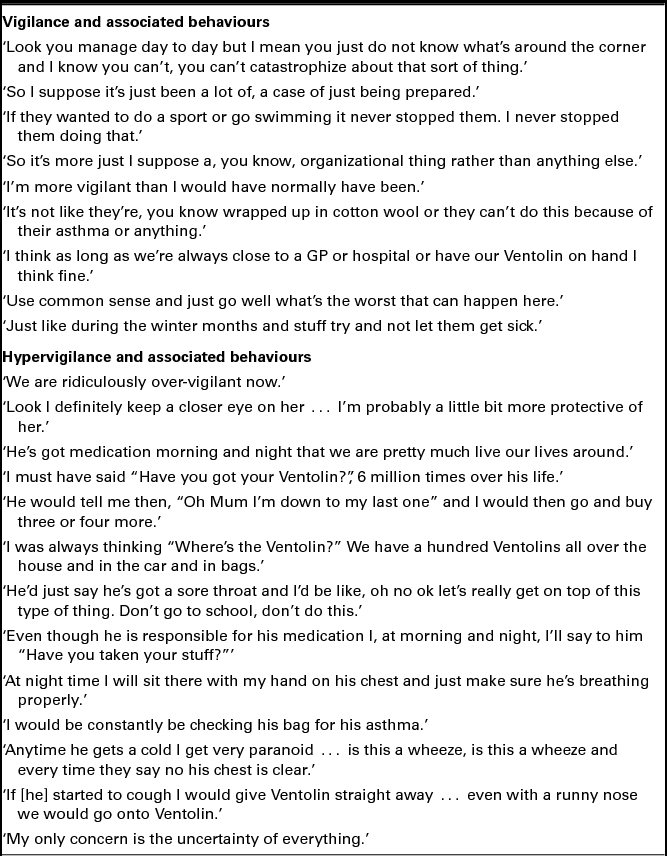
As parents talked about adjusting to their child's asthma from day to day, there were two distinct patterns of behaviours that developed. See Table 4 for a selection of parental reflections on how parents responded to their child's asthma from day to day.
Parent Reflections on Their Behavioural Responses

Vigilance and associated behaviours
When parents felt they were able to appropriately manage their child's illness, they reported remaining emotionally stable and did not report heightened worry or stress about the asthma. They described an appropriate level of vigilance in their caregiving approach whereby they used appropriate safety precautions regarding their child's symptoms (e.g., sticking to a physician-developed asthma plan, carrying Ventolin), while allowing their children to engage in normal, age-appropriate, healthy activities. Regarding the future, while all parents interviewed hoped their children would grow out of asthma, parents who presented with this adaptive adjustment had an appropriate ‘wait and see’ approach to the uncertainty of the asthma prognosis, and it was not a source of worry or concern.
Hypervigilance and associated behaviours
In contrast, parents of children who were diagnosed through emergency hospitalisation, or who had a lack of asthma knowledge and skills, or whose child had poor asthma control, reported different behaviours. These parents reported a higher level of vigilance (referred to here as hypervigilance) compared to other parents. For example, these parents were more likely to avoid situations in order to reduce the chance of their child developing asthma symptoms (despite receiving no medical advice that this was necessary) and were more likely to check on their child regularly in situations that they perceived as risky. Indeed, while the vigilant parents appeared to use appropriate safety precautions, hypervigilant parents appeared to develop potentially maladaptive ‘safety behaviours’. For example, they might buy multiple Ventolins and leave them in various different locations within the house. Elements of catastrophising were also reported whereby parents would misinterpret benign symptoms as signalling their child's asthma and seek medical assistance. It seemed that avoidance, checking, safety behaviours, and catastrophising maintained the worry that parents developed concerning their child's asthma. With regard to the future, parents reported further worry about what the future would hold for their child with asthma.
Discussion
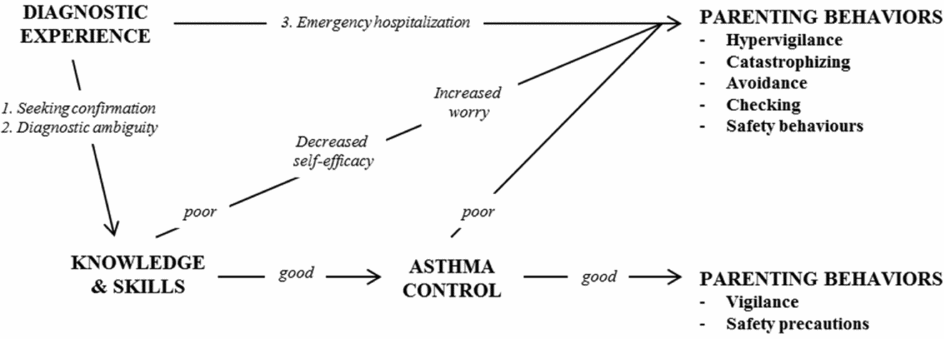
The aim of the current article was to explore parents’ views of their children's asthma experience, from stages of initial diagnosis onwards, to enhance our understanding of how families adjust and adapt to the diagnosis and management of asthma. The model presented in Figure 1 outlines the proposed relationship between diagnosis, asthma management, and parental behaviour.
The relationship between diagnostic experience, asthma management, and behaviour.

As presented in the model, we found that the circumstances surrounding a child's asthma diagnosis were important in setting the stage for a parent's behaviour. Where diagnosis occurred following a hospitalisation, subsequent parental behaviours included hypervigilance, catastrophising, checking, avoidance, and the use of safety behaviours, regardless of knowledge of asthma management techniques or the level of asthma control following the diagnosis. If diagnosis did not follow hospitalisation, it was not the diagnostic experience itself that affected parents’ behavioural responses, but the degree of self-perceived parental competence. Decreased knowledge and skills resulted in lower self-efficacy, increased worry, and hypervigilance and associated behaviours. However, not all parents continued to feel incompetent in managing their child's asthma and, as some increased their knowledge and skills, they moved from engaging in hypervigilant, avoidant behaviours to a vigilant parenting style. Reasons for this increase in competency included researching asthma, asking for information from health professionals, or having an older child with asthma. Finally, whether the parents had skills and knowledge, if the asthma was severe or poorly controlled, parents engaged in the hypervigilant and associated behaviours, with some moving from vigilance to hypervigilance if their child's asthma became particularly unstable.
Consideration of the potentially unhelpful behaviours parents engage in might aid understanding of the development and maintenance of emotional difficulties such as anxiety in children with asthma and their parents. Hypervigilance, catastrophising, avoidance, checking, and the use of ‘safety behaviours’ rather than safety precautions are often seen in both adults and children who experience anxiety disorders in the absence of a physical illness such as asthma. Cognitive models of anxiety propose that behaviours such as hypervigilance towards threat and the misinterpretation of information as catastrophic are two factors that increase the development and maintenance of anxiety (Beck & Clark, Reference Beck and Clark1988; Eysenck, Reference Eysenck1991; Hirsch, Hayes, Mathews, Perman, & Borkovec, Reference Hirsch, Hayes, Mathews, Perman and Borkovec2012). Further, responses such as checking, avoidance, and safety behaviours are common responses of people with anxiety disorders when they are actively trying to reduce their state anxiety (Ameican Psychiatic Association, 2013). Thus, our model would suggest that engaging in behaviours such as these may be a contributing factor in anxiety development and maintenance, and may at least partly explain the high rates of anxiety in both children with asthma and their parents.
While hypervigilant, avoidant, and checking behaviours may not be adaptive if a child is at low risk, in cases of unstable and uncontrolled asthma, the likelihood of becoming unwell is increased and the risks associated with not responding to the triggers and symptoms of the asthma might be severe and indeed life threatening. Thus, the hypervigilance and subsequent behaviours shown by parents may in fact be adaptive if the asthma is not controlled. Parents reported experiences of moving from a vigilant to a hypervigilant parenting style if their child's asthma became particularly unstable. This is consistent with an adaptive parental response. Indeed, research into children with other medical conditions, such as diabetes (Sullivan-Bolyai, Deatrick, Gruppuso, Tamborlane, & Grey, Reference Sullivan-Bolyai, Deatrick, Gruppuso, Tamborlane and Grey2003) and cancer (Pelcovitz et al., Reference Pelcovitz, Libov, Mandel, Kaplan, Weinblatt and Septimus1998), has demonstrated similar relationships: hypervigilance associated with severe episodes or severe conditions, and vigilant caregiving associated with day-to-day management.
The balance between vigilance and hypervigilance, and safety precautions versus safety behaviours, is an ongoing challenge for parents of children who have fluctuating illness severity. If parents are hypervigilant when their child's asthma is stable and they start responding to the asthma as if it were uncontrolled, then children may learn from these responses and begin to adopt hypervigilance and safety behaviours themselves. While a limitation of the study was that we did not directly investigate the factors that may make children with asthma more vulnerable to develop internalising conditions such as anxiety, the child literature proposes that parenting may play an important role (Rapee, Schniering, & Hudson, Reference Rapee, Schniering and Hudson2009). Research has shown that parenting behaviours similar to those seen throughout the results of this study, such as overprotection, which often occurs when parents who are hypervigilant to threat misinterpret information as threatening (Rapee, Reference Rapee1997; Wood, McLeod, Sigman, Hwang, & Chu, Reference Wood, McLeod, Sigman, Hwang and Chu2003), parental modelling of negative responding to threat through behaviours such as avoidance or checking (Murray et al., Reference Murray, De Rosnay, Pearson, Bergeron, Schofield, Royal-Lawson and Cooper2008), and parents talking about their fears in front of their children (Muris, Steerneman, Merckelbach, & Meesters, Reference Muris, Steerneman, Merckelbach and Meesters1996) are all associated with higher rates of childhood anxiety. Without the inclusion of child reports, we can only speculate as to how the relationship between parental responding to illness and subsequent parenting behaviours may influence a child with asthma. Thus, while it is likely that factors such as hypervigilance and the misinterpretation of symptoms may be involved in the etiology and maintenance of anxiety in children with asthma and their parents, future research needs to test the hypotheses that arise from the model developed in this study, and validate the model's application to parents and children, both with and without anxiety.
The findings of our study suggest that different parenting behaviours are determined by the circumstances surrounding diagnosis, the level of knowledge and skills of the parents, and the stability of the asthma. The similarities seen between behaviours in adults and children with anxiety disorders without asthma, and the parental behaviours reported in this study when parents have decreased asthma management competence, when there is a traumatic diagnostic experience, or when their child's asthma is uncontrolled, indicate that these experiences may leave a parent, and perhaps their child, more vulnerable to develop anxiety.
Acknowledgments
The research team would like to acknowledge Helen Newton for her assistance with interview transcription. We confirm that all personal information has been removed to the extent that no participant can be identified through reading this article. This research received no specific grant from any funding agency, commercial or not-for-profit sectors.
Conflicts of Interest
None.