Implications
Influence of age of bulls and periods of the year on seminal plasma and spermatozoa antioxidative status and oxidative stress (OS) variables were studied in order to establish potential differences in these variables as well as their correlations with semen quality parameters. Such analysed data would serve to obtain insight into significance of these factors upon evaluating service of bull semen. The estimation of the antioxidative and OS variables in seminal plasma and spermatozoa may have practical value for the assessment of semen quality, and thus may serve to improve reproductive efficiency of breeding bulls.
Introduction
Breeding animals are exposed to a large number of biological and environmental factors, such as variations in feed and husbandry practices, climatic variables, transportation, regrouping, therapeutic and prophylactic activities, various stressors, etc. (Brito et al., Reference Brito, Silva, Rodrigues, Vieira, Vderagon and Kastelic2002; Majić-Balić et al., Reference Majić-Balić, Milinković-Tur, Samardžija and Vince2012). The ability of breeding bulls to cope with these factors is important to maintain health and reproductive efficiency (Rahal et al., Reference Rahal, Kumar, Singh, Yadav, Tiwari, Chakraborty and Dhama2014). Any disturbance in homoeostasis leads to an increased production of reactive oxygen species (ROS), much higher than the detoxifying capability of local tissues or the organism, resulting in OS conditions (O’Flaherty, Reference O’Flaherty2014). Strong and sustained exposure to OS may result in a higher negative energy balance, reduction in adaptation mechanisms, increased susceptibility to infection, decline in reproductive efficiency and ultimately to great economic loss. The overall physiological impact of these factors and the adaptation ability of the organism may depend on animal species, breed, age, gender, etc. (Rahal et al., Reference Rahal, Kumar, Singh, Yadav, Tiwari, Chakraborty and Dhama2014; Žura Žaja et al., Reference Žura Žaja, Samardžija, Vince, Majić-Balić, Đuričić and Milinković-Tur2016a).
Historically, emphasis has been focussed on assessing bull fertility by evaluating sperm characteristics, whereas little attention has been paid to physiological function and/or fertility markers, that is, antioxidants/proteins in the blood, seminal plasma and spermatozoa of breeding animals (Kumar et al., Reference Kumar, Kroetsch, Blondin and Anzar2015). Spermatozoa concentration, motility and morphology are the most common semen metrics used at breeding stations worldwide. However, these semen parameters have limited value for predicting bull fertility (Samardžija et al., Reference Samardzija, Karadjole, Getz, Makek, Cergolj and Dobranic2006; Dogan et al., Reference Dogan, Mason, Govindaraju, Belser, Kaya, Stokes, Rowe and Memili2013).
The ejaculated spermatozoon, as an aerobic cell, must be resistant to toxic levels of ROS generated by its own metabolism but also by exogenous products (O’Flaherty, Reference O’Flaherty2014). Reactive oxygen species are recognized for playing a dual role and have beneficial or detrimental effects upon spermatozoa functions, depending on their nature and concentration (Kohen and Nyska, Reference Kohen and Nyska2002). Mammalian spermatozoa, in their cell membranes phospholipids, are rich in polyunsaturated fatty acids and have a relatively low antioxidant capacity, making them highly susceptible to injuries caused by high ROS concentrations (Agarwal et al., Reference Agarwal, Gupta and Sikka2006; Žura Žaja et al., Reference Žura Žaja, Samardžija, Vince, Majić-Balić, Đuričić and Milinković-Tur2016d). The excessive ROS concentration generates substantial damage to all components of spermatozoa and thus, significant levels of lipid peroxidation, protein and DNA oxidation may be observed (Brouwers and Gadella, Reference Brouwers and Gadella2003; Bansal and Bilaspuri, Reference Bansal and Bilaspuri2011) that are often associated with altered membrane function, together with impaired metabolism, morphology, motility and male infertility (O’Flaherty, Reference O’Flaherty2014). The spermatozoa oxidative status is maintained by intracellular and extracellular mechanisms composed of non-enzymatic and enzymatic antioxidants to provide optimal amounts of ROS that are necessary for the physiological functions of spermatozoa (Bansal and Bilaspuri, Reference Bansal and Bilaspuri2011; Žura Žaja et al., Reference Žura Žaja, Samardžija, Vince, Majić-Balić, Vilić, Đuričić and Milinković-Tur2016b). Numerous antioxidants in seminal plasma and spermatozoa are related to ROS detoxification, including superoxide dismutase (SOD), glutathione peroxidase (GSH-Px), catalase (CAT), reduced glutathione (GSH), albumins (ALB), uric acid (UA), vitamins C and E, and other compounds and minerals (Majić-Balić et al., Reference Majić-Balić, Milinković-Tur, Samardžija and Vince2012), which might be useful in predicting spermatozoa fertilizing potential (Kasimanickam et al., Reference Kasimanickam, Kasimanickam, Thatcher, Nebel and Cassell2007).
Determination and quantification of OS by direct detection of ROS and other free radicals is difficult as these molecules are short-living and highly reactive in a non-specific manner. Ongoing oxidative damage, that is, the intensity of OS, is generally analysed by measurement of the content of secondary oxidation products, including derivatives of amino acids/proteins (such as protein carbonyl content (PCC)), nucleic acids and lipid peroxidation (such as thiobarbituric acid reactive substances (TBARS)), or the evaluation of enzymatic and non-enzymatic antioxidants (Kohen and Nyska, Reference Kohen and Nyska2002; Guéraud et al., Reference Guéraud, Atalay, Bresgen, Cipak, Eckl, Huc, Jouanin, Siems and Uchida2010; Žura Žaja et al., Reference Žura Žaja, Samardžija, Vince, Majić-Balić, Đuričić and Milinković-Tur2016a).
Interaction and interrelation of enzymatic and non-enzymatic antioxidants in seminal plasma and spermatozoa and their relations with OS variables in bulls of varying age at different times of year have not previously been investigated, to the extent of our knowledge. Therefore, the aims of this study were to determine the presence and quantities of seminal plasma and spermatozoa antioxidative status and OS variables, and to establish the correlation of these variables with semen quality parameters of breeding bulls, in order to obtain better insight into the significance of these factors and variables on evaluating the service potential of bull semen.
Material and methods
The research protocol and animal management were in accordance with Directive 2010/63/EU (European Union 2010) on the protection of animals used for scientific purposes.
Feeding and handling of animals
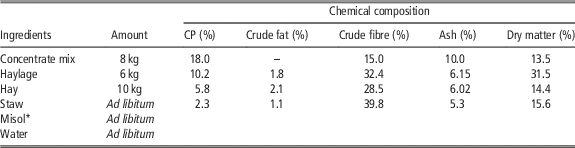
This study was performed on 18 Simmental breeding bulls aged from 2 to 10 years. Animals were divided into two groups by age, each with nine bulls. The first group consisted of younger bulls, with a mean age of 3.1±0.58 years (mean±SD), and the second group consisted of older bulls with a mean age of 7.4±1.91 years (mean±SD). Bulls were kept in open concrete stables with solid floors (windows were closed only in winter) in separate sections and tied with leather collars. Sections were located in two facilities, one for the group of older bulls with proven fertility results, and the other for younger bulls in the testing process. Zoohygienic measures were regularly conducted at the facilities, including cleaning and washing of floors with the addition of dry straw litter on the bay of each bull. Animals were fed with a standard fodder mixture produced and quality controlled by Department for Nutrition of Domestic Animals at the Faculty of Agriculture of the University of Zagreb in Croatia. Feeding was performed twice per day and water was provided ad libitum (Table 1). Before each semen collection, bulls were taken outside the barn and tied to a carousel to encourage them to move for about 30 min.
The composition and quantity of the daily ration for bulls

* 1% Mg, 39% Na, 3000 mg/kg Zn, 1200 mg/kg Mn, 24 mg/kg Co, 20 mg/kg Se, 20 to 30 mg/kg J (Žura Žaja et al., Reference Žura Žaja, Samardžija, Vince, Majić-Balić, Đuričić and Milinković-Tur2016a).
Semen sampling and preparation for analysis
The study was conducted at the Centre for Reproduction in Livestock Breeding, Križevci, Croatia, where bulls were exploited for semen collection two times per week for artificial insemination. For experimental purposes semen was collected from each breeding bull at routine exploitation during the cold (late November to late January) and warm (mid-May to mid-July) period of the year two times within the same interval in each period of the year. Average air temperatures (mean±SD) in the cold and warm periods were −0.09±2.38°C and 17.89±3.94°C, respectively. Average air humidity (mean±SD) in the cold and warm periods were 84.14±2.78% and 76.21±9.04%, respectively (source: Weather Service, Croatia). The weather station was located at 350 m from the barn. Bull ejaculates were collected using an artificial vagina between 0700 and 0900 h. Immediately after semen collection, semen vials were placed in a water bath at 37°C for the duration of the evaluation process. Macroscopic evaluation included ejaculate volume measurement by direct reading on a graduated semen vial, and microscopic assessment was performed for estimation of spermatozoa motility percentage. Concentration of spermatozoa in the ejaculate (4.0 ml 0.9% NaCl and 0.4 ml native semen) was determined using a Photometar SDM 5 (Minitube, Tiefenbach, Germany). Spermatozoa motility in small drop of native semen was estimated at 200× magnification on two separate visual fields, using a binocular phase-contrast microscope (Olympus BX, Japan) with incorporated spermotherm. All of the semen samples meeting the criteria of the macroscopic and microscopic evaluations (concentration 1 to 2×10⁹ spermatozoa/ml and motility >85%) were further processed. The total number of spermatozoa per ejaculate per bull was calculated by multiplying spermatozoa concentration and ejaculate volume. Each native ejaculate sample was centrifuged at 1500×g for 20 min at 20°C. After centrifugation, separated seminal plasma (1.5 ml) and spermatozoa were obtained, and the seminal plasma was stored at −80°C until analysis. The separated spermatozoa were washed three times in saline, centrifuged at 500×g for 5 min at room temperature (about 20°C), and stored at −80°C until analysis. Prior analysis the equal amount of redistilled water was applied on precipitate containing sperm cells to induce destruction of sperm cell membranes in hypotonic conditions. Following centrifugation supernatants were used for biochemical analysis.
Analysis of seminal plasma and spermatozoa samples
The antioxidative status in the seminal plasma and spermatozoa samples of breeding bulls was determined by measuring the activity of total superoxide dismutase (TSOD), manganese superoxide dismutase (MnSOD), copper–zinc superoxide dismutase (CuZnSOD), CAT, selenium-dependent glutathione peroxidase (SeGSH-Px), GSH and total protein (TP). Several antioxidants were determined in the seminal plasma of breeding bulls as follows: total glutathione peroxidase (TGSH-Px), selenium-independent glutathione peroxidase (Non-SeGSH-Px), UA, ALB and alkaline phosphatase (ALP). The intensity of OS in the seminal plasma and spermatozoa samples of the bulls was established by lipid peroxidation, that is, by determining the concentration of TBARS. The intensity of oxidative damages of proteins was established by determining the concentration of PCC. The resulting values of antioxidative variables in spermatozoa were expressed in grams of proteins. The obtained values for the variables ALP, TP, ALB, UA, GSH were expressed per litre of seminal plasma, whereas for the variables TSOD, MnSOD, CuZnSOD, CAT, TGSH-Px, SeGSH-Px, Non-SeGSH-Px, PCC, TBARS as grams of proteins of seminal plasma.
Determination of antioxidative status variables
The activities of TGSH-Px, SeGSH-Px, TSOD and MnSOD in semen samples of bulls were determined spectrophotometrically with the SABA 18 analyser (AMS, Rome, Italy) using Randox commercial kits (Crumlin, UK). The activity of GSH-Px was determined using Ransel commercial kits (Randox, Crumlin, UK; catalogue no. RS505) at 340 nm, whereas TSOD activity was determined by using Ransod kits (Randox, Crumlin, UK; catalogue no. SD125) at 505 nm. Hydrogen peroxide was used for the detection of TGSH-Px activity, and cumene hydroperoxide was used for the detection of SeGSH-Px activity. Activity of Non-SeGSH-Px was derived by calculating the difference between TGSH-Px and SeGSH-Px activities. Further, the activity of MnSOD was determined similarly as for TSOD with exception that samples were previously incubated for 30 min. with 1 M KCN to suppress CuZnSOD activity. Copper–zinc superoxide dismutase activity was calculated as the difference of activities between TSOD and MnSOD (Spitz and Oberley, Reference Spitz and Oberley1989; Ibrahim et al., Reference Ibrahim, Lee, Yen, St Clair and Chow2000). Uric acid was also determined spectrophotometrically at 520 nm with the SABA 18 analyser using Randox commercial reagents (catalogue no. UA 1613). In spermatozoa and seminal plasma, the concentration of GSH was determined according to the method by Beutler et al. (Reference Beutler, Duron and Mikus1963), protein concentration by the method of Lowry et al. (Reference Lowry, Rosebrough, Farr and Rendal1951) using bovine albumin as a standard, and CAT activity was measured at by the method of Johansson and Borg (Reference Johansson and Borg1988). Probe absorbencies were measured spectrophotometrically by Thermospectronic Helios delta (Unicam, Cambridge, UK) apparatus (for GSH at 412 nm, for TP at 750 nm and for CAT at 240 nm). Alkaline phosphatase activity and ALB concentration were determined spectrophometrically with the SABA 18 analyser using commercial reagents (catalogue no. TR-1104) at 405 nm and (catalogue no. T-1000) at 630 nm, respectively, produced by Herbos Dijagnostika (Sisak, Croatia).
Determination of oxidative stress variables
The concentration of TBARS in semen samples was determined according to the methods of Trotta et al. (Reference Trotta, Sullivan and Stern1982) and Placer et al. (Reference Placer, Cushman and Connor Johnson1966), and PCC concentration was determined by the method of Levine et al. (Reference Levine, Garland, Oliver, Amici, Climent, Lenz, Ahn, Shaltiel and Stadtman1990). Probe absorbance were measured spectrophotometrically by Thermospectronic Helios delta apparatus (for TBARS at 532 nm, for PCC at 370 nm). In the current study we have performed single biochemical analysis of the samples using automatic biochemistry analyser SABA 18 which is reliable and regularly calibrated. However, in our research all data that extremely differ from the most frequently obtained values for any particular analysis for individual bull/sample (only two samples in this study, but not for all biochemical parameters tested) were subjected to repetition of the analysis. Manually performed methods (CAT, TBARS, PCC, GSH and TP) were made in triplicates.
Statistical analysis
Statistical analysis were performed using SAS 9.4 software (2002 to 2012 SAS Institute Inc., Cary, NC, USA). Each variable was tested for normality of distribution and homoscedasticity of variance estimating λ with the BOXCOX model using the TRANSREG procedure of SAS. The general linear mixed model (PROC GLIMMIX) was used to analyse the antioxidative status and OS variables in seminal plasma and spermatozoa. The statistical model included the fixed effects of age groups and time periods and their interactions. The bull effects on repeated measures over time were also included in the model by the RANDOM statement. The Tukey–Kramer multiple comparison test was performed using the SLICE option to compare each age group level within each period and vice versa. The correlation coefficient was calculated between variables using the CORR procedure of SAS. The results in tables were presented as the least square mean and pooled standard error. The level of statistical significance was set at P<0.05.
Results
Conventional semen analysis
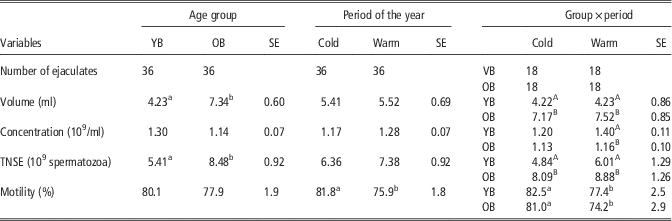
The results on ejaculate volume, total number of spermatozoa per ejaculate, concentration and motility of spermatozoa of younger and older bulls at different times of year are shown in Table 2. Ejaculate volume and total number of spermatozoa per ejaculate differed between younger and older bulls during different periods. Namely, older bulls had a higher ejaculate volume and total number of spermatozoa per ejaculate than younger bulls during both cold and warm periods (P<0.05). Younger bulls had a greater concentration of spermatozoa in ejaculate than older bulls, though these differences were statistically significant only during the warm period (P<0.05). Moreover, statistical analysis indicated that there were significant differences in spermatozoa motility between periods, and thus greater spermatozoa motility was found during the cold v. warm period in older and younger bulls (P<0.05).
The ejaculate volume, total number of spermatozoa per ejaculate (TNSE), concentration and motility of spermatozoa of younger and older bulls in relation to different periods

The results are expressed as a least squared mean and pooled standard error.
YB=younger bulls (aged 2 to 4 years); OB=older bulls (aged 5 to 10 years).
a,bValues with different superscript differ significantly within rows at P<0.05.
A,BValues with different superscript differ significantly between rows at P<0.05.
Seminal plasma non-enzymatic antioxidant variables and alkaline phosphatase activity
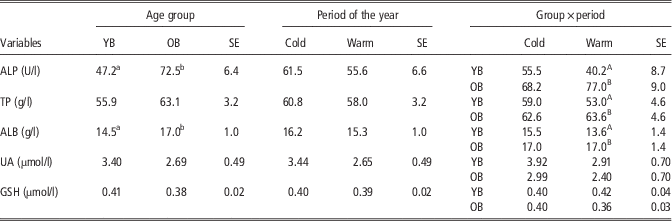
The mean values of seminal plasma non-enzymatic antioxidant concentrations and ALP activity in bulls of different ages during different period of the year are presented in Table 3. The mean values of ALP and ALB were significant higher in seminal plasma of older bulls v. younger bulls during the warm period (P<0.05). Moreover, the concentration of TP in seminal plasma of bulls differed depending on age, that is, there was a significantly higher concentration of TP in seminal plasma of older than in younger bulls during the warm period (P<0.05). Concentrations of UA and GSH of seminal plasma in bulls did not differ significantly depending on age or time of year (P>0.05).
Concentration of non-enzymatic antioxidants and alkaline phosphatase (ALP) activity in the seminal plasma of younger and older bulls in relation to different periods

The results are expressed as a least squared mean and pooled standard error.
YB=younger bulls (aged 2 to 4 years); OB=older bulls (aged 5 to 10 years); TP=total protein; ALB=albumins; UA=uric acid; GSH=glutathione.
a,bValues with different superscript differ significantly within rows at P<0.05.
A,BValues with different superscript differ significantly between rows at P<0.05.
Seminal plasma enzymatic antioxidant and oxidative stress variables
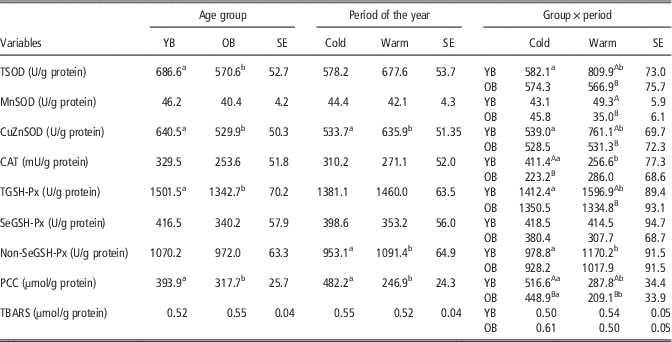
The activities of enzymatic antioxidant and concentrations of OS variables in the seminal plasma of bulls by age and time of year are shown in Table 4. The mean values of TSOD and TGSH-Px activities in seminal plasma of bulls differed significantly depending on age. Namely, younger bulls had higher activity of TSOD and TGSH-Px v. older bulls during the warm period (P<0.05). Total superoxide dismutase and TGSH-Px activities in seminal plasma of younger bulls were significantly higher during the warm v. cold period (P<0.05). The activities of MnSOD and CuZnSOD in seminal plasma of younger bulls were significantly higher in comparison to that in older bulls during the warm period (P<0.05). The seminal plasma of younger bulls also recorded higher CuZnSOD activity during the warm period (P<0.05). However, CAT activity was significantly higher in younger than in older bulls during the cold period. Significantly higher CAT activity in seminal plasma of younger bulls was established during the cold period (P<0.05). Similar results were obtained for PCC concentration, that is, significantly higher concentration was recorded in seminal plasma of younger v. older bulls in both periods (P<0.05). Furthermore, younger and older bulls had significantly higher PCC concentration during cold v. warm period (P<0.05). The mean value of on-SeGSH-Px activity was significantly higher during the warm period, but only in seminal plasma of younger bulls (P<0.05). Seminal plasma SeGSH-Px and TBARS values did not differ significantly by bull age or time of year.
Activities of enzymatic antioxidants and concentrations of oxidative stress variables in the seminal plasma of younger and older bulls in relation to different periods

The results are expressed as a least squared mean and pooled standard error.
YB=younger bulls (aged 2 to 4 years); OB=older bulls (aged 5 to 10 years); TSOD=total superoxide dismutase; MnSOD=manganese superoxide dismutase; CuZnSOD=copper–zinc superoxide dismutase; CAT=catalase; TGSH-Px=total glutathione peroxidase; SeGSH-Px=selenium-dependent glutathione peroxidise; Non-SeGSH-Px=selenium-independent glutathione peroxidise; PCC=protein carbonyl content; TBARS=thiobarbituric acid reactive substances.
a,bValues with different superscript differ significantly within rows at P<0.05.
A,BValues with different superscript differ significantly between rows at P<0.05.
Spermatozoa antioxidant and oxidative stress variables
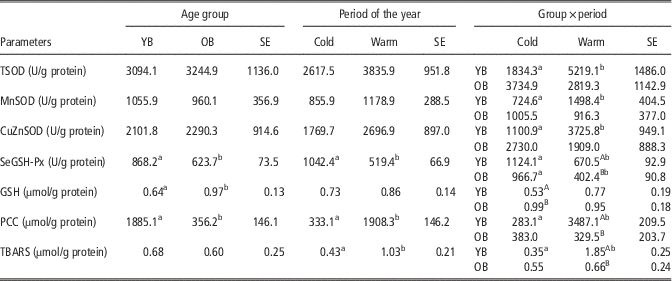
The results obtained for values of antioxidant and OS variables in the spermatozoa of bulls of different ages at different times of year are shown in Table 5. Total superoxide dismutase, MnSOD and CuZnSOD activities in spermatozoa of younger bulls were significantly higher during the warm v. cold period (P<0.05). During the warm period, younger bulls had significantly higher SeGSH-Px activity in spermatozoa than older bulls. Significantly higher SeGSH-Px activity in spermatozoa of younger and older bulls was determined in the cold v. warm period (P<0.05). Older bulls had a significantly higher GSH concentration in spermatozoa than younger bulls during the cold period (P<0.05). The PCC concentration in spermatozoa of younger bulls was significantly higher during the warm v. cold period (P<0.05). A significantly higher PCC concentration was determined in spermatozoa of younger v. older bulls during the warm period (P<0.05). During that period, younger bulls had a significantly higher concentration of TBARS in comparison to older bulls (P<0.05), whereas CAT activity was not measurable in spermatozoa.
Values of antioxidant and oxidative stress variables in the spermatozoa of younger and older bulls in relation to different periods

The results are expressed as a least squared mean and pooled standard error.
YB=younger bulls (aged 2 to 4 years); OB=older bulls (aged 5 to 10 years); TSOD=total superoxide dismutase; MnSOD=manganese superoxide dismutase; CuZnSOD=copper–zinc superoxide dismutase; CAT=catalase; TGSH-Px=total glutathione peroxidase; SeGSH-Px=selenium-dependent glutathione peroxidise; GSH=glutathione; Non-SeGSH-Px=selenium-independent glutathione peroxidise; PCC=protein carbonyl content; TBARS=thiobarbituric acid reactive substances.
a,bValues with different superscript differ significantly within rows at P<0.05.
A,BValues with different superscript differ significantly between rows at P<0.05.
Correlations among tested semen variables
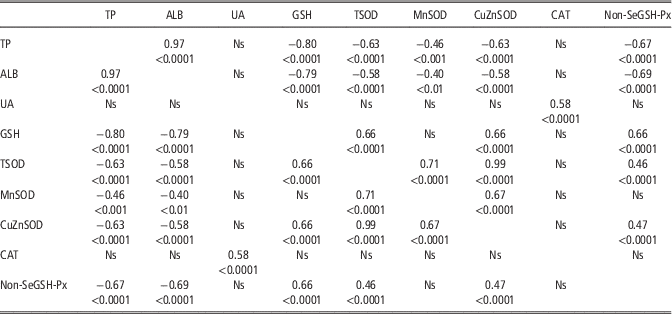
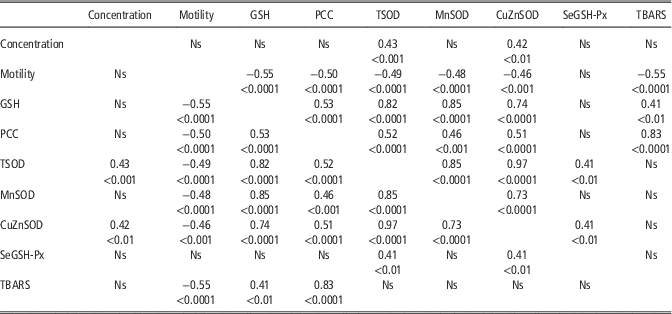
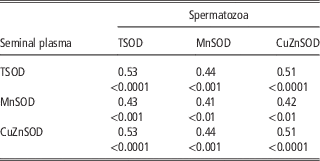
Correlations were found among the tested semen variables, and the correlations of the tested seminal plasma enzymatic and non-enzymatic antioxidant variables of bulls are shown in Table 6. The correlations of investigated bull spermatozoa antioxidant and OS variables in relation to conventional semen analysis are shown in Table 7, and the correlations of tested bull spermatozoa antioxidant variables in relation to seminal plasma antioxidant variables are shown in Table 8.
Coefficient of correlations among the investigated seminal plasma enzymatic and non-enzymatic antioxidant variables of bulls

TP=total protein; ALB=albumins; UA=uric acid; GSH=glutathione; TSOD=total superoxide dismutase; MnSOD=manganese superoxide dismutase; CuZnSOD=copper–zinc superoxide dismutase; CAT=catalase; Non-SeGSH-Px=selenium-independent glutathione peroxidise.
In the table only data with correlation coefficient higher than ±0.400 regardless statistical significance are shown.
Coefficient of correlations among the investigated bull spermatozoa antioxidant variables, oxidative stress variables in relation to conventional semen analyses

GSH=glutathione; PCC=protein carbonyl content; TSOD=total superoxide dismutase; MnSOD=manganese superoxide dismutase; CuZnSOD=copper–zinc superoxide dismutase; SeGSH-Px=selenium-dependent glutathione peroxidise; TBARS=thiobarbituric acid reactive substances.
In the table only data with correlation coefficient higher than ±0.400 regardless statistical significance are shown.
Coefficient of correlations among the investigated bull spermatozoa antioxidants variables in relation to seminal plasma antioxidant variables.

TSOD=total superoxide dismutase; MnSOD=manganese superoxide dismutase; CuZnSOD=copper–zinc superoxide dismutase.
In the table only data with correlation coefficient higher than ±0.400 regardless statistical significance are shown.
Discussion
The influence of genetics, physiological status, age, management and climatic conditions on seminal plasma and spermatozoa antioxidative status and OS variables, and whether potential changes in these variables are correlated with the semen quality parameters of breeding bulls have not yet been fully elucidated.
The current study indicated that volume and total number of spermatozoa per ejaculate were significantly affected by age, that is, these semen characteristics tended to increase with bull age, which has been previously reported (Mathevon et al., Reference Mathevon, Buhr and Dekkers1998; Brito et al., Reference Brito, Silva, Rodrigues, Vieira, Vderagon and Kastelic2002; Fuerst-Waltl et al., Reference Fuerst-Waltl, Schwarzenbacher, Perner and Sölkner2006; Majić-Balić et al., Reference Majić-Balić, Milinković-Tur, Samardžija and Vince2012). This observation could be explained by well-known fact that the main factor determining the volume of ejaculate and total number of spermatozoa produced is the size of the testes, which increases for at least 5 years after puberty (Mathevon et al., Reference Mathevon, Buhr and Dekkers1998; Majić-Balić et al., Reference Majić-Balić, Milinković-Tur, Samardžija and Vince2012). The results obtained for spermatozoa concentration in the present study were partially consistent with those of Brito et al. (Reference Brito, Silva, Rodrigues, Vieira, Vderagon and Kastelic2002) and Majić-Balić et al. (Reference Majić-Balić, Milinković-Tur, Samardžija and Vince2012), who reported that bull age had no effect on spermatozoa concentrations. In contrast to the present findings, other authors (Mathevon et al., Reference Mathevon, Buhr and Dekkers1998; Fuerst-Waltl et al., Reference Fuerst-Waltl, Schwarzenbacher, Perner and Sölkner2006) observed an increase in spermatozoa concentration with age. A significantly higher spermatozoa concentration and significantly smaller ejaculate volume were observed in the current study in younger v. older bulls during the warm period, suggesting that the smaller ejaculate volume could be compensated for by a greater spermatozoa concentration in younger bulls during the warm period. A testicular temperature below body temperature is essential for the production of fertile spermatozoa. Higher ambient temperature may result in an increased testicular temperature, thus decreasing semen quality (Fuerst-Waltl et al., Reference Fuerst-Waltl, Schwarzenbacher, Perner and Sölkner2006). In the present study, of the selected semen characteristics tested, spermatozoa motility was most affected by ambient temperature and humidity. Significantly higher spermatozoa motility was observed during the cold v. warm period, which corroborates the findings by Fuerst-Waltl et al. (Reference Fuerst-Waltl, Schwarzenbacher, Perner and Sölkner2006) and similar results to those presented here for spermatozoa motility were reported by Majić-Balić et al. (Reference Majić-Balić, Milinković-Tur, Samardžija and Vince2012) for Simmental bulls. However, contrary to the present findings were those of Brito et al. (Reference Brito, Silva, Rodrigues, Vieira, Vderagon and Kastelic2002) who reported that ambient temperature and humidity did not significantly affect the semen production. Such disagreement of our results and those of Brito et al. (Reference Brito, Silva, Rodrigues, Vieira, Vderagon and Kastelic2002) who kept bulls in tropical conditions could be ascribed to great differences in climatic conditions. Although above-mentioned authors did not establish the influence of ambient temperature and humidity on semen production in two bovine species (Bos indicus and Bos taurus), more recent data reported that season affected volume of semen and total sperm output in four different breeds of bulls (Holstein, Brown Swiss, Limousin and Charolais) of B. taurus in same climatic zone as in our study (Snoj et al., Reference Snoj, Kobal and Majdic2013).
The seminal plasma, derived from testes, epididymis and accessory sex glands, contains proteins that contribute to spermatozoa motility, spermatozoa membrane protection, protection from OS, etc. (Kumar et al., Reference Kumar, Kroetsch, Blondin and Anzar2015; Žura Žaja et al., Reference Žura Žaja, Samardžija, Vince, Vilić, Majić-Balić, Đuričić and Milinković-Tur2016d). Non-enzymatic antioxidants, present predominately in extracellular fluid, are known to eliminate free radicals generated by OS, and some protect the membrane integrity of spermatozoa, such as from heat shock, by acting interactively and synergistically (Bansal and Bilaspuri, Reference Bansal and Bilaspuri2011). In the current study we have tested OS parameters in bulls not younger than 2 years which is essential due to the fact that OS status of bulls younger than 2 years could be significantly different, especially around puberty. In the present study, significantly higher values of ALP, TP and ALB were found in seminal plasma of the older bulls than in younger bulls during the warm period. Simultaneously, in the seminal plasma of the younger bulls, significantly higher activities of TSOD, MnSOD, CuZnSOD, TGSH-Px and Non-SeGSH-Px were determined v. those in older bulls during the same period. The formation of the enzymatic antioxidant system, whose components vary among species, provides the protection of spermatozoa against OS with their interplay. Superoxide dismutase and its two isozymes (CuZnSOD, MnSOD) spontaneously dismutase both extracellular and intracellular superoxide anions to O2 − and H2O2. In order to act against H2O2, it essentially conjugated either with CAT or GSH-Px family enzymes (SeGSH-Px, Non-SeGSH-Px) using GSH (O’Flaherty, Reference O’Flaherty2014). The results of this study could indicated that non-enzymatic antioxidants in seminal plasma of older as well as enzymatic antioxidants in younger bulls have important and significant functions in protecting against OS during the warm period, and that the mechanisms of this protection differed for different age groups of bulls. Positive correlations within non-enzymatic and enzymatic antioxidative variables were established. However, the negative correlations between non-enzymatic and enzymatic antioxidative variables in seminal plasma were recorded and confirmed by previously presented results (Table 6). Significantly higher activities of CuZnSOD and Non-SeGSH-Px observed in seminal plasma of bulls during the warm v. cold period were not accompanied by increased values of OS variables, which could indicate an adaptive antioxidative protective response in seminal plasma of bulls in the warm period. Significantly higher PCC concentrations found in seminal plasma of bulls during cold v. warm period, suggested that the intensity of oxidative processes in seminal plasma were significantly higher during the cold period, as recently reported by Žura Žaja et al. (Reference Žura Žaja, Samardžija, Vince, Majić-Balić, Đuričić and Milinković-Tur2016a) in the serum of breeding bulls. This finding is consistent with earlier reported data by Kumar et al. (Reference Kumar, Kroetsch, Blondin and Anzar2015), who established that the majority of seminal plasma constituents originated from blood, whereas some were seminal plasma-specific constituents. In the current study, younger bulls had significantly higher PCC concentration and CAT activity in seminal plasma than older bulls during the cold period, indicating that the seminal plasma of younger bulls showed greater sensitivity to OS during this period. CAT activity is increased in situations when H2O2 concentration was greatly increased, i.e. in the OS status (O’Flaherty, Reference O’Flaherty2014; Žura Žaja et al., Reference Žura Žaja, Samardžija, Vince, Majić-Balić, Đuričić and Milinković-Tur2016a) when CAT converts H2O2 into oxygen and water, which was also established in this study. Immunoblotting studies demonstrated that bull spermatozoa do not contain CAT which was also observed in the current study. It is assumed that CAT is not a significant player in the antioxidant protection of bull spermatozoa against high levels of H2O2 (O’Flaherty, Reference O’Flaherty2014).
During the warm period, elevated ambient temperatures can increase testicular temperature, which results in increased metabolism and oxygen consumption. Testicular blood flow is limited and this increased O2 consumption cannot be supplied, resulting in hypoxia, overproduction of ROS, lipid peroxidation, OS and decrease in spermatozoa motility (Brito et al., Reference Brito, Silva, Barbosa and Kastelic2004; Majić-Balić et al., Reference Majić-Balić, Milinković-Tur, Samardžija and Vince2012). According to these results, significantly higher concentrations of PCC and TBARS were established in the spermatozoa of younger v. older bulls during the warm period, indicating more intensive OS in spermatozoa of younger bulls and their higher sensitivity to OS. Majić-Balić et al. (Reference Majić-Balić, Milinković-Tur, Samardžija and Vince2012) obtained similar results, during the summer season. In the current study, a positive correlation was obtained between spermatozoa concentrations of PCC and TBARS (Table 7). Simultaneously, the higher TSOD, MnSOD and CuZnSOD activities in the spermatozoa of younger bulls during the warm period were insufficient to counteract the intensive oxidative processes in spermatozoa, which eventually resulted in decreased spermatozoa motility during the warm period (Table 2). These results were additionally supported by the negative correlations obtained between spermatozoa motility and activities of TSOD, MnSOD and CuZnSOD and concentrations of PCC and TBARS in spermatozoa (Table 7). Similar results were obtained by Nichi et al. (Reference Nichi, Bols, Züge, Barnabe, Goovaerts, Barnabe and Cortada2006), who found positive correlations among bull spermatozoa primary defects with TBARS concentration and SOD activity during the summer. In this study, a significantly higher activity of SeGSH-Px in spermatozoa (Table 5) and spermatozoa motility (Table 2) were obtained during the cold v. warm period. This is in agreement with the statement of Stradaioli et al. (Reference Stradaioli, Sylla, Monaci and Maiorino2009), who suggested that SeGSH-Px plays an important role in protecting mammalian spermatozoa from the loss of motility caused by lipid peroxidation processes.
Based on these results, it could be concluded that antioxidative and OS variables differ significantly depending on bull age and time of year. Namely, younger bulls were more sensitive to elevated ambient temperatures during the warm period, when the higher enzymatic antioxidative protection in seminal plasma and spermatozoa were insufficient to counteract the intensive oxidative processes in spermatozoa. Disruption of the balance between prooxidants and antioxidants, that is, development of OS in spermatozoa of younger bulls, may eventually result in decreased spermatozoa motility, with consequential semen quality deterioration during the warm period. Furthermore, in the seminal plasma of younger bulls, significantly intensive oxidative processes of proteins have also been detected as compared with older bulls, which may indicate that younger bulls show greater sensitivity to changing climate conditions during the cold period, though these oxidative processes were not reflected on spermatozoa motility and semen concentration. In addition, this may indicate that both oxidative damages caused on lipids and proteins may have serious consequences on spermatozoa function, particularly their motility. Estimation of the antioxidative and OS variables in seminal plasma and spermatozoa may have practical value for the assessment of bull semen quality. Our results show that it may be beneficial to avoid collecting bull semen at the warmest period of the year. However, studies on largest bull populations and on different breeds will be necessary to strengthen this conclusion.
Acknowledgements
This research was supported by a grant from the Ministry of Science, Education and Sports, Croatia (Number 053-0531854-1866). The current study was performed according to animal welfare law (NN 135/06) and was approved by the Ministry of Agriculture, Fisheries and Rural Development, Croatia (UP/I 322-01/07-01/59, 525-6-07-2 Lj.Z.).