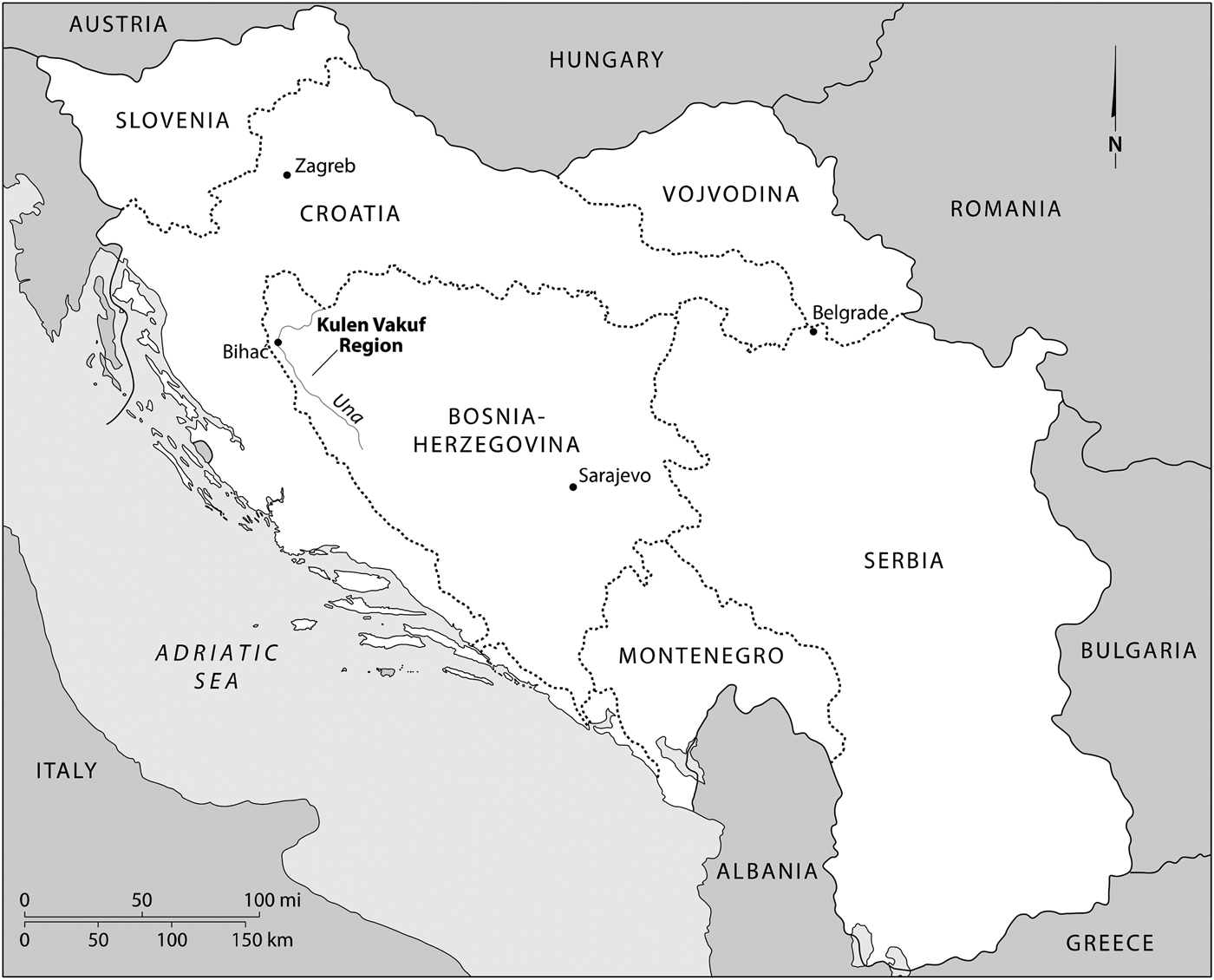
Northwest Bosnia was convulsed during the summer of 1941 with escalating waves of intercommunal violence. In the Kulen Vakuf region, it began in June with killings of those defined as “Orthodox Serbs.” The perpetrators were small numbers of local men known as “Ustašas,” who were nominally Catholic Croats and Muslims. They had taken power in this region after the Axis invasion of the Kingdom of Yugoslavia in April 1941 and the subsequent creation of the fascist Independent State of Croatia (Nezavisna Država Hrvatska, or NDH). Their killings sparked an insurgency, which a handful of local communists, most of whom were nominally Serb Orthodox, along with their sympathizers, struggled to mold into a multiethnic guerrilla army. Their tenuous hold over the insurgents became evident in late July and early August when the fighters attacked four Croatian villages. Instead of settling scores with local Ustašas, they massacred every person they thought was a “Croat.” But the climax of communist weakness was a series of massacres that occurred in and around the town Kulen Vakuf from 6–8 September. During those two days, insurgents and local peasants, whom the communists attempted to command, killed nearly two thousand of their Muslim neighbors, most of whom were unarmed.
Yet during this same period (July–September 1941) there were instances in the same region when insurgent commanders were able to restrain this wave of retaliatory violence. In the villages of Rašinovac and Bjelaj, commanders prevented revenge-seekers from joining the attacks, and when such individuals did manage to take part they succeeded in stopping them from killing civilians. Near the town Bosanska Dubica, located northeast of the Kulen Vakuf region, commanders managed to stop a column of nearly a thousand peasants from entering the town, where they had intended to slaughter those whom they defined as Croats and Muslims.
How can we account for the success of restraint in these cases? What explains this striking variation in insurgent behavior in a region where the Ustašas had subjected the perceived Serb population to similar forms of persecution? Most of the literature in the field of genocide studies, which during the past decade and a half has been largely focused on explaining the origins, causes, and macro-dynamics of large-scale, usually state-directed violence against civilians, has little to say about instances in which mass violence seems likely yet does not occur (e.g., Valentino Reference Valentino2004; Levene Reference Levene2005; Mann Reference Mann2005; Semelin Reference Semelin2007; for an exception, see Straus Reference Straus2015). Scholarship on political violence and civil war has been much more attentive to the question of variation in levels of violence, including that against civilians, as well as the reasons for their persecution or rescue. But generally, this literature has not investigated the micro-dynamics of restraint (e.g., Varshney Reference Varshney2002; Ron Reference Ron2004; Kalyvas Reference Kalyvas2006; Weinstein Reference Weinstein2006; Downes Reference Downes2008; Su Reference Su2011; Dumitru and Johnson Reference Dumitru and Johnson2011; Kopstein and Wittenberg Reference Kopstein and Wittenberg2011; Reference Kopstein and Wittenberg2018).
Only in the past few years has the subject of restraint started to receive sustained attention, mostly from political scientists. One strain in this fledging literature, which mainly examines conflicts during the second half of the twentieth century, argues that armed groups are more likely to practice restraint when they seek international legitimacy and thus are subject to norms about respect for human rights and humanitarian law (Jo Reference Jo2015; Stanton Reference Stanton2016). Others have suggested that, among armed groups that seek to restrain violence, a stress by leaders on political training, education, and discipline is critically important in reducing levels of violence that such leaders do not sanction (Manekin Reference Manekin2013; Oppenheim and Weintraub Reference Oppenheim and Weintraub2016; Hoover Green Reference Hoover Green2016; Reference Hoover Green2018). These approaches have their strengths, such as elucidating why a disposition in favor of restraint may exist among some members of armed groups. However, like much of the current political science literature on various aspects of civil war, ground-level research techniques, such as microhistorical approaches, to the extent that researchers use them at all, are generally deployed to merely illustrate what is usually the central analytical focus: statistically significant independent and dependent variables used in pursuit of isolating a single explanatory factor. As such, the current literature on restraint tells us little about how individuals who want to restrain violence turn that goal into reality. In moments of rapidly escalating tension in the context of civil war, how exactly do the leaderships of armed groups succeed in restraining killing? Empirically rich, and especially micro-oriented studies on this subject scarcely exist (for a partial exception, see Straus Reference Straus2012). Yet such studies, with “thick description” and analyses of local events on the ground, may best illuminate how and why an inclination to restrain violence can in fact lead to doing so at critical moments. As one political scientist of restraint has recently noted regarding future research, “qualitative, within-group accounts, though difficult to generalize, may have the best chance of distinguishing between competing causal accounts in a given case” (Hoover Green Reference Hoover Green2016: 629). This article takes up this challenge by providing a vivid, qualitative account of restraint to identify its underlying causal mechanisms. It examines the complex microhistory of the Kulen Vakuf region during the summer of 1941 to solve a macro-theoretical puzzle: What explains why retaliatory violence does not always occur in contexts in which it seems over-determined to take place?
Answering this question can elucidate not only the under-researched dynamics of restraint but also the widely debated mechanisms believed to drive the escalation of violence. After all, we will be better able to support our hypotheses about what made violence possible in a village if we can also account for why it did not happen in a nearby village. Identifying and analyzing these factors will be valuable to scholars of genocide and political violence because they promise to tell us more about what elements must be absent and/or overcome for mass killings to happen. The Kulen Vakuf region, with its puzzling history of both the escalation and restraint of insurgent violence, is an ideal site for ascertaining what micro-mechanisms make restraint possible.
Archivists of the Military Archive in Belgrade (Serbia) gathered and catalogued the documents produced by most warring factions in Bosnia-Herzegovina during 1941. These vast and underutilized sources provide a primary window through which we can reconstruct the real-time micro-dynamics of restraint that summer. Unstudied memoirs by participants provide another view into how individuals managed not to kill in dramatic moments. Most of these were published by communist veterans’ and other socio-political organizations, primarily during the 1960s–1980s. They are of varying quality and tend to be hagiographic regarding the role of the Communist Party, which months later managed to assume leadership over many of these fighters. Yet many of them convey a complex picture of local events and often richly detail the insurgency's weaknesses. For another set of sources, archives hold insurgents’ public manifestos and private letters written during the rebellion, which can be compared with the memoirs to evaluate to what extent their authors exaggerate, minimize, and/or omit information.
Comparative examination of these sources exposes the motivations, actions, and objectives of local insurgents. It then becomes possible to analyze not only the endogenous dynamics of violence, which have received substantial attention from scholars of civil war (e.g., Kalyvas Reference Kalyvas2006; Balcells Reference Balcells2017), but also the dynamics of non-violence. In so doing, we can better understand the strikingly contingent behavior of armed groups in moments when the fate of civilians hangs in the balance, which quantitative research methods often flatten out, render static and ahistorical, or obscure. By examining momentary decisions taken to counteract processes of dehumanization, along with a capacity to rapidly change military strategy when facing a deficit of authority over revenge-seekers, we can begin to theorize some of the key micro-mechanisms that make restraint possible on the ground. Doing so will give scholars of violence a better means of answering a vexing question of global significance: why do intercommunal killings happen in some situations, but not in others?
LOCAL MASS VIOLENCE
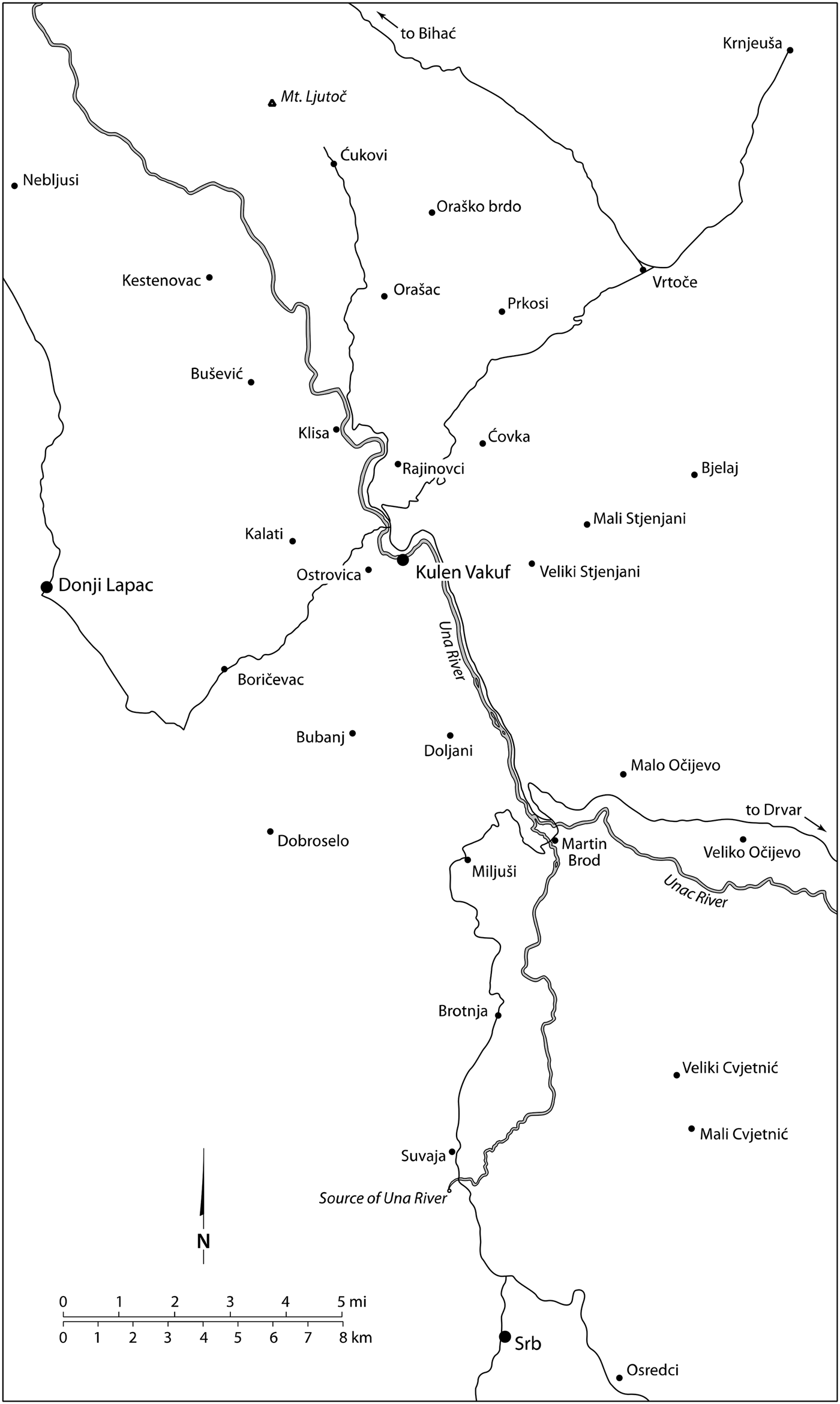
Located approximately 50 kilometers southeast of the town Bihać, the Kulen Vakuf region straddles the emerald green waters of the Una River, which forms part of the present-day border between northwest Bosnia and Croatia. Prior to 1941, the municipality of Kulen Vakuf was comprised of the town of Kulen Vakuf and its surrounding hills. In the Una River valley were three Muslim villages and the town, whose population was largely Muslim, while in the nearby hills were at least seventeen Orthodox Serbian and four Catholic Croatian villages.Footnote 1 The region's pre-World War II past was not without conflict, most of it due to Ottoman-era land tenure policies that pitted Muslim landlords against their predominately Orthodox Christian tenants. But overall, it indicates a long history typified by intercommunal peace and manageable discord. Prior to 1941, serious and sustained intercommunal violence had only occurred once, during a major peasant uprising from 1875–1878 (Evans Reference Evans2007 [1878]: 39, 77–81, 85, 90–91). More minor, isolated instances of local violence occurred during the first years following the formation in 1918 of the Kingdom of Serbs, Croats, and Slovenes—commonly referred to as “the first Yugoslavia”—into which the Kulen Vakuf region was incorporated.
It is striking that these two previous periods of significant upheaval defy any easy characterization of the nature of the region's conflicts. While killings and plunder did occur on an ethnic axis, during both periods intra-ethnic violence was also central. For example, during the rebellion of 1875–1878, Orthodox insurgents often burned the houses of their supposed brethren who refused to participate against their Muslim landlords (Ekmečić Reference Ekmečić1996 [1960]: 120).
During both of these periods, various individuals and groups also made significant attempts to prevent or stop intercommunal violence and to create a basis for resolving social conflicts. This dynamic is vividly illustrated in what took place in 1918 in the town of Kulen Vakuf after the aforementioned Kingdom was formed. Throughout Bosnia-Herzegovina, armed groups of so-called “Green Cadres,” often made up of Orthodox peasants, began seizing land from their Muslim landlords. They stole property, torched houses, and killed Muslims, including their former landlords (Purivatra Reference Purivatra and Purivatra1969: 220–26). In Kulen Vakuf, a large group marched to the town intending to attack its Muslim residents but were stopped before they could kill anyone. It may surprise scholars who characterize this period as one of clear, ethnically based enmity that those who intervened were not fellow Muslims but rather the local Serbian Orthodox priest, Father Vukosav Milanović, and Jovan Knežević, a well-known Orthodox peasant from a nearby village.Footnote 2 “If you have come as liberators,” Father Milanović declared to the group, “then enter and you will be received warmly and well cared for. But if you have come to commit any kind of evil against our Muslim brothers, then I will call on my entire parish to rise up against you.”Footnote 3 Such an example does not erase the fact that a longer-term sense of an antagonistic “us” and “them” existed among some people in the region, rooted primarily in religious identities and the social, economic, and political structures of Ottoman society. But this should not blind us to the fact that conflicts often unfolded along an intra-ethnic axis and that there were individuals who sought to prevent and restrain violence.
The Kulen Vakuf region in relation to the western borders of the Ottoman Empire, ca. early seventeenth century until 1878. Map illustrated by Bill Nelson.

The Kulen Vakuf region in the Kingdom of Serbs, Croats, and Slovenes, ca. 1918-1929. Map illustrated by Bill Nelson.

Moreover, the region's history indicates that the period of turmoil following the establishment of the Kingdom, which many historians, such as Ivo Banac (Reference Banac1988), have depicted as solely fueling inter-ethnic conflict, actually produced various forms of intercommunal solidarity. Social and economic structures in the region changed during the 1920s as the landlord-tenant divide gave way to one between town (i.e., merchants) and village (i.e., peasant producers), and this shift generated new relationships of mutual interdependence. Large-scale construction projects during the 1930s, such as railroads in the Una River valley, along with the development of a wood processing industry in the nearby town of Drvar, led to the formation of a group of construction and industrial workers made up of people from all backgrounds. These changes created new points of contact, including economic relations, friendships, and political solidarities, many of which crossed nominal lines of ethnicity. For example, while organizing a strike in the Orthodox village of Martin Brod in 1938, the labor activist Josip Hodak (nominally Catholic) arranged for the baker Hamdija Kulenović of Kulen Vakuf (nominally Muslim) to supply the workers with bread. The loaves would be received and distributed to the strikers by a local merchant in Martin Brod, Marko Vladetić (nominally Orthodox).Footnote 4
The Kulen Vakuf Region. Map illustrated by Bill Nelson.

The interwar transformations of the local society and economy also brought local conflicts, some of which had an inter-ethnic component. However, there was little to no support in the Kulen Vakuf region for the more extremist nationalist organizations that most historians say played a central role during the 1930s in laying the groundwork for the intercommunal violence of 1941, such as the Croatian Ustašas and the Serbian Chetniks.Footnote 5 In fact, the divisions there were less inter-ethnic and more intra-ethnic, intra-party, and interpersonal. In the archival records from the 1920s and 1930s one finds many examples of local politicians of the same nominal ethnicity locked in bitter conflict.Footnote 6 Further, criminological evidence from local police archives, such as rates of murder, rape, and theft, points to more intra-ethnic than inter-ethnic crime.Footnote 7 In short, the potential in the spring of 1941 for multiple forms of conflict surely existed, but so too did the potential for peace and manageable tension.
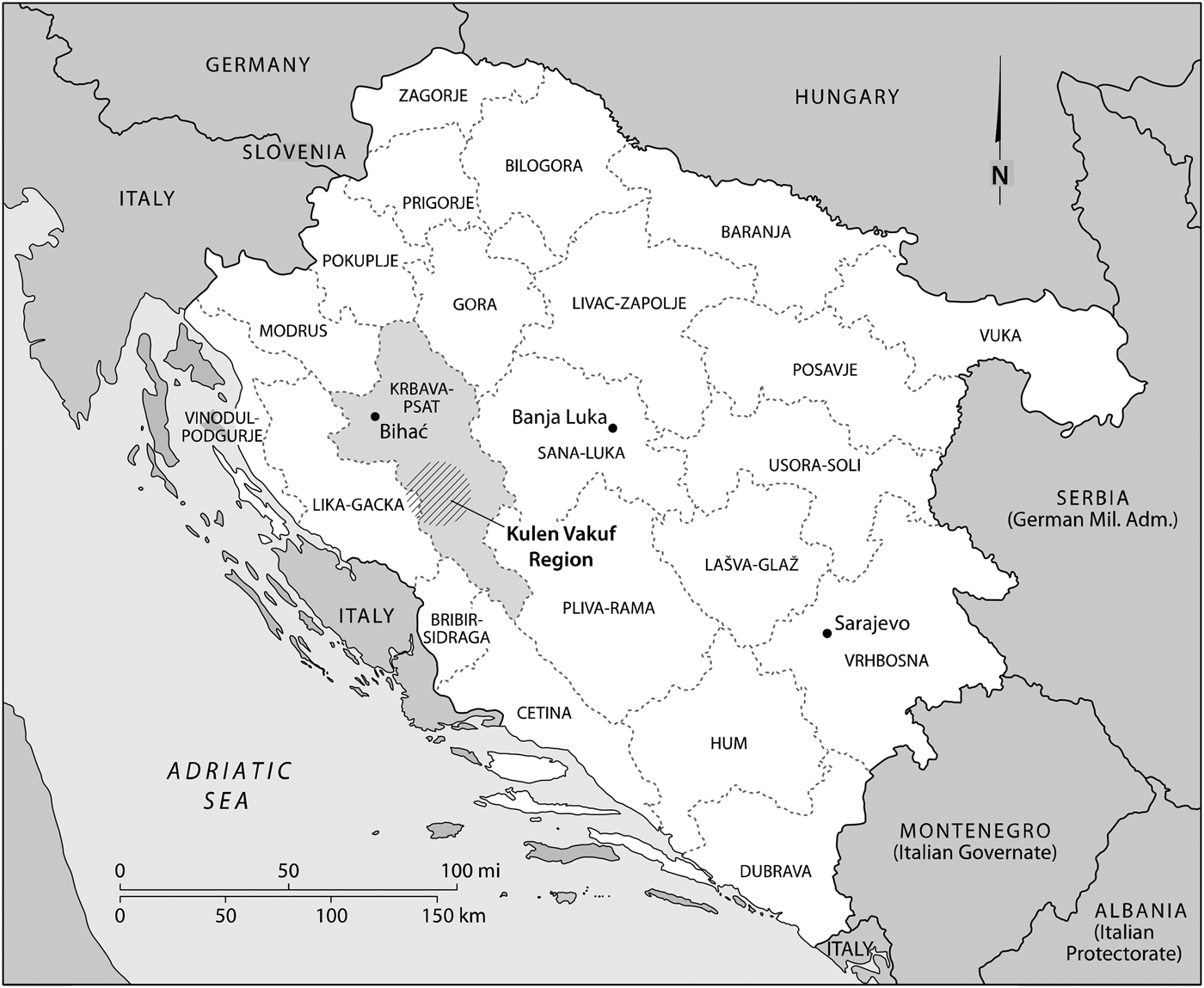
The mass violence that took hold of the Kulen Vakuf region during the summer of 1941 was made possible mainly by an unexpected upheaval caused by outside actors, which rapidly upended a local world that for most people had been characterized by long-term ecosystems of inter-ethnic coexistence. Following the Axis invasion of the Kingdom of Yugoslavia on 6 April, the region was incorporated into the newly established Independent State of Croatia (or NDH). Its fascist leadership, known as the Ustašas, was committed to creating a state exclusively for the category “Croats,” which was generally understood to include those who were nominally Catholic and Muslim. The main group that the Ustašas saw to be obstructing their vision of an ethnically pure Croatian state, aside from those whom they defined as Jews and Roma, was the perceived Serb Orthodox community, which they believed comprised nearly one-third of the state's population.Footnote 8
The Kulen Vakuf region in the Independent State of Croatia in 1941. Map illustrated by Bill Nelson.

There is no evidence that any individuals in the Kulen Vakuf region had formal links to the Ustaša movement prior the spring of 1941. Archival documents indicate that at least 111 individuals joined the organization during the early summer, of whom seventy-two have names suggesting they would have been perceived as “Muslims,” while thirty-nine would have been seen as “Catholic Croats.”Footnote 9 This group constituted less than 1 percent of the total population of nominal Muslims and Croats in the Kulen Vakuf region, which indicates a low level of interest among those defined as “Croats” in actively supporting the NDH leadership's policies of ethnically based discrimination and violence. A handful of those who did join were local merchants, most of whom were among the least successful in the region. Joining the Ustašas was their sudden opportunity to erase the community's business conventions, restructure them entirely in their favor, and rapidly enrich themselves (Obradović Reference Obradović and Zatezalo1985: 827; Đ Karanović Reference Karanović and Morača1972: 425). There were many others, particularly from extended families in several villages, who seem to have viewed joining the local Ustaša units as a means to quickly and decisively settle ongoing local disputes, particularly those over the use of land and other natural resources. Memoir evidence suggests that a majority of the locals who joined the Ustašas were from relatively poor families or had been unable to find steady employment (Obradović Reference Obradović and Zatezalo1985: 824). For the most part, the local volunteers were attracted to the Ustašas out of a sense that joining them would quickly and easily improve their marginal economic and social status. There was thus a certain logic and rationality at work. Unexpected opportunities for personal gain and quickly settling conflicts crystalized clearly in response to the radical transformation of local political life. Those who joined saw these opportunities in concrete terms and quickly moved to take advantage of them.
Imbued with a vision of creating an ethnically-pure Croatian nation-state, the central and regional NDH authorities attempted during late June and early July to move the “Serb” population out of northwest Bosnia.Footnote 10 But implementing a large-scale resettlement policy proved difficult, especially in that region's vast countryside. NDH elites thus looked to the heartland of their new state, which included northwestern Bosnia (where Kulen Vakuf is), and saw large numbers of “Serbs,” whom they considered a threat. By mid-to-late June, the regional authorities had decided to use mass violence to eliminate part of the Serb population and induce the rest to flee (Vukmanović Reference Vukmanović1987). Viktor Gutić, the main Ustaša leader in northwest Bosnia, announced the shift: “Now I will be approaching the grand task of cleansing the Croatian Bosnian Krajina [northwest Bosnia] of unwanted elements.”Footnote 11
In late June, local Ustašas began entering Orthodox villages where they arrested influential men such as local leaders, merchants, the most prosperous peasants, and Orthodox priests. Among those caught up in these arrests was Father Vukosav Milanović, who was one of those who in 1918 had successfully diffused the attempt by Orthodox peasants to attack Kulen Vakuf. Exemplifying the local Ustašas’ economic motivations in persecuting their neighbors, they first demanded their victims’ money and other valuables. They later killed many of them with gunshots to the head before throwing their bodies into vertical caves. This violence caused many Orthodox villagers to flee to the forests, which stoked Ustaša fears of an imminent, large-scale rebellion among the Orthodox population. In response, they initiated large-scale attacks on three Orthodox villages between 1–3 July, during which they significantly escalated their violence, sometimes wiping out extended families (Obradović Reference Obradović and Zatezalo1985). The local NDH authorities noted the dramatic impact of these massacres on intercommunal relations: “It is difficult to conceive of collective life of the Croat-Muslim part of the population with the Serb part. The chasm that now exists is too big.”Footnote 12 The local Ustašas thus quickly shattered many of the long-term, intercommunal bonds of friendship and neighborliness that many had formed. They killed about seven hundred local Serbs in June and July.Footnote 13 This burst of locally executed violence by the few dramatically transformed the identities, relations, and lives of the many, most specifically by turning one's perceived ethnicity into a factor that now determined life and death.
INSURGENCY
In response to these killings, in late July many of the nominally Serb Orthodox peasant survivors organized an armed insurgency, made up almost exclusively of men. While the NDH violence was the immediate trigger, a long tradition of armed resistance and more recent military activity gave many local men the mental outlook and skills to quickly organize themselves. As one recalled, “Our grandfathers waged war with the Turks [i.e., the Ottoman authorities], our fathers were veterans from the First World War, and stories from these experiences were constantly discussed. I had listened to terrible war stories from the time that I knew that I existed, and they were told more often when another war seemed possible [in 1941].”Footnote 14 To these stories were added the experience of having just been mobilized to resist the Axis invasion that April. Most men still had their uniforms and weapons from the Kingdom of Yugoslavia's recently disintegrated army. In short, an oral tradition that depicted the community as one that regularly took up arms to defend itself, and the more immediate experience of having just been mobilized, provided local men with a mindset that armed resistance was necessary. It was something for which they were prepared both psychologically and militarily.
The local, mostly peasant fighters, who generally called themselves “insurgents” (ustanici), immediately overran at least four villages and towns, killing several Ustašas, NDH gendarmes, and soldiers.Footnote 15 While some might depict these local insurgents as coherent groups of communist “Partisans” or Serb nationalist “Chetniks”—the two main resistance movements that eventually crystalized in the NDH—they were actually quite heterogeneous in their outlooks and behaviors. Lacking formal political organizations, they ranged from men seeking blood vengeance against all “Catholics” and “Muslims” to others who sought a more restrained approach to violence. Others oscillated between these two tendencies.
The region's handful of communist activists, most of whom were nominally “Serb,” struggled to organize these insurgents into a unified and disciplined guerrilla army. This group of activists, most in their twenties or thirties, had slowly crystalized during the 1920s and 1930s around railroad construction sites along the Una River valley and sawmills in the town of Drvar. Some had left the region for university studies in Zagreb and Belgrade but maintained connections with their villages. During the late 1930s, they organized strikes and sought to forge inter-ethnic alliances around the issue of workers’ rights.Footnote 16 In the summer of 1941, their numbers were very small, and they often lacked the authority wielded in villages by other prominent locals such as former gendarmes and military officers. The degree to which these local activists were operating outside the direct influence of the Communist Party of Yugoslavia is clear in the facts that none of the region's incipient insurgent groups at this time had formal communist party organizations and none were in regular contact with communist leaders outside the region (Reljić Reference Reljić and Morača1972: 393–94; N. Karanović Reference Karanović and Morača1972: 410; Jovanić Reference Jovanić1988: 119; Majstorović Reference Majstorović and Čerkez1974: 379; Keča Reference Keča and Čerkez1974: 201).
Further evidence of the weakness of communist influence concerns the issue of whether or not the insurgents should collaborate with their Muslim and Catholic neighbors. The local communist activists believed strongly in forging a multiethnic resistance movement to fight for socialist revolution. This view had roots in their previous strike activities in the region and their experiences as students or laborers in larger cities, where they were exposed to the workers’ movement with its emphasis on class—not ethnic—solidarity. They now hoped that fighters of all nominal ethnicities would join the rebellion and fight the Ustašas, and also resist the urge to retaliate on an ethnic axis. As local communist Gojko Polovina wrote to his neighbors in a leaflet in late July: “Don't equate the whole Croat people with the Ustašas … the only way we can replace the blood of our brothers and sisters who have been killed is to catch those who are the real criminals and those who are really guilty, and not by spilling the blood of those who are innocent. We will fall again into slavery if we behave as the Ustašas have. That is why we are joining forces and we will offer a brotherly hand to those respectable Croats and Muslims who are ready to fight with us until the enemy is destroyed.”Footnote 17 The communist approach to violence was thus one of restraint. Military action would be waged against the NDH when possible, but ethnically categorical retaliation against civilians had to be avoided since it would destroy any chance of forging a multiethnic resistance movement. Polovina was emphatic on this point: “We cannot allow people to appear among us who, because of a need for revenge, seek to kill innocent people and destroy the property of innocent Croats and Muslims.”Footnote 18
Yet many insurgents felt that all of their non-Serb neighbors had become their collective enemy, though only small numbers of them had joined the Ustašas. Memoir evidence indicates that survivors of the Ustašas’ massacres tended to view all nominal Muslims and Catholic Croats as “Ustašas.”Footnote 19 This created a desire to exact vengeance on their neighbors based simply on their perceived ethnicity (Vukmanović Reference Vukmanović1987; Kecman-Hodak Reference Kecman-Hodak and Čerkez1974: 199–200; N. Karanović Reference Karanović and Morača1972: 410). Encounters between local insurgents and those they saw as “Croats” during and after Ustaša attacks attest to these sentiments. On 3 July near the village of Bubanj, where Ustašas had killed several hundred Serbs during the previous two days, villagers remembered hearing from survivors: “You Croats are now filling bottomless pits with us, but when our time comes we will do the same with you.”Footnote 20
This pledge was fulfilled during attacks on four Catholic villages in late July and early August in which insurgents burned the villages and massacred all “Croats” there regardless of whether they were involved with the Ustašas (Ivezić Reference Ivezić and Pavičić2012: 343–52; Jurjević Reference Jurjević1999; Došen Reference Došen2006; Reference Došen1994; Ministarstvo vanjskih poslova NDH 1942: 38).Footnote 21 One insurgent remembered, “Hatred toward the Ustašas dominated … as did the desire to take revenge on them for the relatives and friends they had killed” (Radošević Reference Radošević and Čerkez1974: 470). These “Ustašas” had become, for many, a euphemism for entire ethnicities. As a contemporary recalled, “For them, every Croat was an Ustaša.”Footnote 22 These retaliatory massacres along an ethnic axis displayed how little control the few communist-oriented commanders had over the fighters.
By late August, the local NDH authorities realized that they would be unable to hold their position in the region. The insurgents had encircled Kulen Vakuf and the villages in its immediate vicinity. Therefore, the town's NDH military commander, Vladimir Veber, decided to evacuate his forces and the region's entire Muslim population of about 5,600 people to Bihać, about 50 kilometers away. On the morning of 6 September they left in a column of horse-drawn carts, with thousands of others on foot.Footnote 23 But not far from Kulen Vakuf the insurgents, hidden in the forests, opened fire. They quickly killed as many as five hundred mostly unarmed civilians.Footnote 24 Just over 3,100 escaped the ambush and made it to Bihać,Footnote 25 but the insurgents captured the remaining two thousand or so who remained alive.
During this ambush the insurgent and prewar communist activist Stevan Pilipović Maćuka was killed. He was a key local commander who advocated killing Ustašas, but not any of the non-Serb civilian population. “After his fall,” one witness recalled, “there was total chaos in the battalion that he had commanded.”Footnote 26 The loss of a key restraint advocate created an unexpected opportunity for revenge-seekers. One group of insurgents, led by Mane Rokvić, who had a month before shown his desire for categorical revenge by helping fuel massacres of Catholics in a nearby village, immediately took about seventy Muslim men to a nearby pit. Without trying to determine if any were Ustašas, they shot each in the head and dropped their bodies into the hole.Footnote 27 The shift into mass killing in this chaotic atmosphere was closely connected to the sudden absence of key restraint advocates. Because many insurgents so badly wanted revenge, any disappearance of restraint advocates could quickly tip the scales toward killing.
Eventually, the small number of communist-oriented commanders arrived and ordered that the rest of the prisoners be returned to Kulen Vakuf. Once there, the insurgents divided their prisoners into three groups. Shortly thereafter, several commanders left to assist others who were now under attack in nearby villages. Like Stevan Pilipović Maćuka, the insurgent commanders who left were those who felt most strongly that the killing of civilians based on their nominal ethnicity and perceived connection with the Ustašas would bring negative consequences. They unwittingly placed responsibility for protecting the prisoners in the hands of others who had different ideas about how to treat their Muslim neighbors.
Encouraged by Petar Đilas, a former gendarme who had no pre-1941 ties to the communist activists, some of the insurgents broke into the town's shops and homes. Others opened the many taverns and began drinking.Footnote 28 Another group demanded that the prisoners show them the location of the mass graves of Serbs whom the Ustašas had killed during July and August (Odić Reference Odić and Pejanović1972: 213–14) and there ordered several to exhume the bodies. As they dragged each corpse out, the insurgents tried to identify their relatives and neighbors. Other local peasants, including those who had yet to join the insurgency, arrived from their villages in the hills and joined them. This experience of touching the mutilated corpses of their neighbors and relatives aroused what one insurgent later called “a wild and uncontrollable desire for revenge.”Footnote 29
Many of the people who were dragging the bodies from the graves had already killed earlier that day. There was no authority figure supervising the exhumation who could try to calm those searching among the corpses and restrain retaliation. Indeed, the main figure present, the former gendarme Đilas, was the man who had proposed the exhumation and encouraged others to plunder the town. Well over a thousand unarmed Muslim prisoners were in the immediate vicinity, and for many insurgents trying to identify the corpses, all their Muslim neighbors now appeared guilty for the killings of their relatives and neighbors. The presence of the corpses was crucial in this regard: “This inflamed the rage of the mass of people even more,” remembered the local communist Gojko Polovina. “That fury, combined with the town burning, created a terrible chaos.”Footnote 30
The insurgents soon began killing those they suspected were Ustašas. Circulating among the prisoners, they were heard calling out, “This one is an Ustaša!” Others would offer confirmation: “He killed my brother and father!” (Jovanić Reference Jovanić1988: 128). The individual would be immediately executed.Footnote 31 Then the insurgents, along with local peasants who had arrived, set the town on fire. While houses, stores, taverns, and the mosque were burning, the violence shifted into wholesale slaughter. They began killing the Muslim women and children by cutting their throats or beating them to death with sticks. They chased a large number of others to the Una River, and in particular to a bridge over a gorge, and watched as the women threw their children and then themselves into the water, where most drowned.Footnote 32 As one communist-oriented commander recalled: “Drunk and furious people acted savagely towards them.”Footnote 33 Petar Đilas ordered that the 400–420 men and boys be taken to the nearby village of Martin Brod to await an improvised trial to determine their fate. All were killed the next day, except one man who escaped.
The gendered nature of this violence deserves reflection. One might expect that if the insurgents’ main objective was to avenge the previous Ustaša violence then most of their victims would be those they believed had been Ustašas, who were almost all men. Yet hundreds of defenseless women and children, along with scores of men who had nothing to do the Ustašas and therefore had committed no violence, were swept up in the insurgent killings. For the insurgents who killed in Kulen Vakuf, it was impossible to undo the damage the Ustašas and their perceived followers had inflicted on their communities earlier in the summer. But for people in such a situation, as the psychologist Nico Frijda has suggested in his work on vengeance, “What one can do is remove every trace of his or her gains, every recollection of it, and everything that might remind one of the offense. The nearest one can come to terminating the pain, perhaps, is to secure the object's total destruction” (Frijda Reference Frijda1994: 279). Understood this way, there was a disturbing logic at work in these killings, which almost immediately crossed the line from targeting perceived perpetrators of Ustaša violence to include all people, regardless of their behavior or gender, whom the insurgents associated with “Ustašas.”
In the end, of the approximately 5,600 Muslims and a handful of Catholics who fled Kulen Vakuf on the morning of 6 September 1941, just over 3,100 arrived at the city of Bihać. Of the remaining 2,500, it appears that about five hundred managed to survive. As for the rest—nearly two thousand men, women, and children—the insurgents killed them between 6–8 September (for a partial victim list, see Altić Reference Altić1942).
EXPLAINING RESTRAINT
The escalation of insurgent violence from the outbreak of the rebellion in late July until the killings in and around Kulen Vakuf in early September appears to have been rooted in a handful of key elements. First, the fighters often lacked a clear leadership structure, and those who did advocate restraint frequently lacked a requisite level of authority among those they attempted to command. Second, restraint advocates were sometimes absent at critical moments, or were killed, which unexpectedly removed their influence. Third, the discovery of corpses in the middle of an attack could result in a traumatic destabilization that made immediate retaliation more likely. Finally, and most important, was the revenge motive. The scope and nature of insurgent violence implies that a powerful desire for revenge fueled their killings. In short, the Ustaša violence triggered a desire for revenge, and because of the process of collective ethnic categorization that the initial wave of killing brought about, insurgents killed all those they considered to be non-Serbs.
While the revenge motive seems like a compelling explanation, the existence in the same region and during the same period of “negative cases”—instances in which revenge killing did not occur despite previous Ustaša persecution—should give us pause. Although the Ustaša violence in the wider region did vary geographically and temporally, it had profoundly destructive effects in nearly all Serb Orthodox villages in northwest Bosnia. Despite that fact, large-scale retaliatory violence such as what occurred in Kulen Vakuf did not happen everywhere. Thus, if desire for revenge can be thought of as a necessary cause for insurgent violence, it cannot be understood as sufficient, since it was present in the vast majority of communities that suffered Ustaša persecution.
What accounts for the negative cases? Examining several instances exposes the micro-mechanisms of restraint. In August, the fight against the Ustašas brought the insurgents to Rašinovac, a village with residents who were nominally “Muslim” and “Serb.” A Serb refugee remembered that “local Muslim Ustašas” had arrested about thirty-five Serb men in July and August, most of whom were later killed. The Muslim villagers who carried out the arrests plundered the village's Serb homes.Footnote 34
Communist-oriented insurgent leaders had no intention of harming the village's Muslim residents, since most had not joined the local Ustašas. But they had difficulty controlling the fighters and peasants they were leading. Many of the latter were intent on avenging killings that the local Ustašas had committed and destroying everything Muslim in the village. Persuading them to abandon this was difficult. As one fighter remembered, “There was no other way for our commander to stop people from burning houses and the mosque except to threaten them with death.” This stopped most, but several insurgents still had to physically intervene to prevent a group of local peasants from burning down the mosque and houses. The local insurgent commander, Đuro Đurekan Pećanac, then made explicit whom he believed the insurgents were fighting against, and those who they were not. He knocked on the door of a local Muslim man. With other fighters and peasants watching, he greeted the terrified man by kissing him on his cheeks. He told him the insurgents were not fighting against all Muslims and Croats, but only against “Ustaša evildoers” (Pećanac Reference Pećanac and Čerkez1974: 86). In this case, restraint advocates prevailed, and after this gesture no killings occurred in Rašinovac.
Violence was successfully restrained in Rašinovac due to the presence, numbers, and strength of insurgent commanders who believed in this strategy. Just as important, however, were specific, momentary acts they took to protect individuals and their property and to stop those seeking revenge on the entire Muslim community. What was striking was leaders’ refusals to succumb to the pressures of collective categorization and dehumanization that others present tried to act upon. Several crucial actions helped preserve the individual human qualities of Rašinovac's Muslim villagers. One was threatening to physically restrain or kill those who joined the attack on the whole Muslim community. Another was embracing the Muslim man at his doorstep, which presented him to the other insurgents not as a member of an abstract “ethnic group” but as an individual. These acts reduced the space within which this fluid situation could turn into a scenario of dehumanization, in which all of Rašinovac's residents were transformed into “Ustašas.”Footnote 35 Such acts could be understood as a form of “political education,” though certainly not the sort that scholars of restraint have typically studied through the lens of military and other formal institutions. Nonetheless, in moments of great tension in Rašinovac these acts were profound moments of teaching, such as when Pećanac, at great risk to himself, made crystal clear the kind of behavior required in that volatile situation with its potential for extreme violence.
In other cases, these tense moments, when insurgents had to choose between escalation and restraint, could threaten to generate intra-insurgent violence. This dynamic is vividly displayed in an encounter that local communist Gojko Polovina had immediately after the fall of the Catholic village of Boričevac:
I found myself in the middle of the village in front of the sawmill and store of the Ustaša murderers Grco Pavičić and [his wife] Marica. Two armed fighters [i.e., insurgents], one of whom was my relative, came toward me with lit shingles from the roof of a house. I asked where they were going, and they answered with complete indifference: “To set [Pavičić’s] sawmill and store on fire … so that no one ever again eats polenta from that dog's mill.…” I drew my pistol, pointed at them, and yelled out: “I forbid the burning of anything.… I'll kill you if you do this.” In response, they calmly pulled their rifles off their shoulders, and then set them on the ground in front of me. My relative said: “Comrade commander, you can kill us with our rifles … but if you don't then we're going to set the mill and store on fire.” I put my pistol back in my pocket. They picked up their rifles and went off to start the fire (Polovina Reference Polovina and Zatezalo1971: 788).
Here, although Polovina raised his weapon and made threats, he was unprepared to shoot his own fighters, and due to his hesitation, the opportunity to prevent the insurgents’ retaliatory violence was lost. The choice between escalation and restraint could ride on the capacity and willingness of a would-be authority figure to risk committing violence against the fighters he sought to command. Issuing threats when unwilling to actually use force against revenge-seekers was generally an ineffective strategy. In such moments, resort to physical force against fellow insurgents was critical for preventing further violence, as was the case in Rašinovac, especially so when there was no widespread support for the communist objective of restraint.
The potential for intra-insurgent violence presented restraint advocates with a dilemma before nearly every attack. They sometimes went to great lengths prior to launching an operation to ascertain how their fighters might behave and adjusted their plans accordingly to prevent retaliation. Take what happened in the predominately Muslim village of Bjelaj, located east of Kulen Vakuf. Due to their small numbers, the Ustašas there had not killed local people before the insurgency. According to memoirs, there was a group of Muslim villagers who had ties to communist youth organizations prior to 1941 and were sympathetic to the insurgency. They had been in contact with local Serb insurgent commanders about collaborating to overthrow Bjelaj's Ustašas (Hromađić Reference Hromađić and Čerkez1974: 494–97).
Though these Ustašas had not engaged in mass violence, others nearby had destroyed the families and homes of many of the fighters who were now preparing to attack Bjelaj. The process of collective categorization, through which nominally Muslim or Catholic people in the region were transformed into “Ustašas,” was widespread among the insurgents because, as one commander recalled, “the Ustaša killings of the Orthodox [Serbs] had been done in the name of Catholics and Muslims.” Given this, restraint advocates knew that “preventing a slaughter of [Bjelaj's] Muslim population by fanatical elements had to be accomplished at all costs.”Footnote 36
Toward this end, they decided that those who would carry out the attack had to be “sympathizers of the [Communist] Party and those who had already been directly involved with the Party's work.” They held a meeting one evening in a village not far from Bjelaj, attended by four or five hundred people. They explained that plans were being made to attack Bjelaj, but that no one was to harm the village's Muslim population. There was immediate disagreement. As one commander remembered, “The meeting showed that it would be difficult to quickly change the attitude of the mass of people [during an attack], and that this was dangerous because it would be impossible to control so many people.” So, a much smaller group of insurgents was selected to execute the attack who shared the commanders’ attitudes about not taking revenge. They were helped by Muslims in Bjelaj who did not support the Ustašas and who were aware that insurgent commanders were trying to “eliminate hatred” among their fighters. Together, they disarmed the local Ustašas. In the words of one commander: “There was not a single instance of violence during the liberation of Bjelaj.”Footnote 37
Restraint advocates could preclude retaliatory violence in Bjelaj because they understood the specific ways in which the Ustaša violence had affected their fighters’ mental outlook. They were also acutely aware of their own weak position. “The Ustašas,” one later wrote, “who were recruited from the Croat and Muslim population, committed atrocities against the Serb population in the name of Croats and Muslims. This provoked hatred …, and the mass participation [of Serbs] in the insurgency, along with the lack of party cadres, threatened to give the fighting the character of a fratricidal war.”Footnote 38 Because these commanders lacked sufficient numbers and authority, and because they advocated restraint—an unpopular notion among many insurgents—they had to devise measures to prevent killings. Before launching the attack, they assessed their fighters’ mood, concluded that revenge killings were likely, and so sent fewer but more politically reliable fighters into the village. They also forged an inter-ethnic alliance with some of the Muslims there, the foundation of which had been laid by pre-1941 youth activists. Bjelaj might have become another site for mass revenge but for the commanders’ grasp of the dynamics of collective categorization, awareness of their own limitations, assessments of their fighters’ moods, and consequent revisions of strategy. Instead, restraint was the order of the day.
To the northeast, the insurgency in and around the town of Bosanska Dubica further clarifies the micro-dynamics of exercising restraint and also provides more historical context regarding why restraint advocates existed in the first place. As in the Kulen Vakuf region, a relatively small number of nominal Muslims and Croats joined the Ustašas after the NDH was established in April.Footnote 39 NDH persecution of those defined as “Serbs” resulted in massacres.Footnote 40 This violence set in motion a process of collective categorization because, as one witness recalled, “The people saw that, in general, it was the Serb population that was persecuted, while Muslims and Croats still had some rights.”Footnote 41 In short, the nature of Ustaša violence established a mental template that over-determined that revenge, if it came, would unfold along an ethnic axis.
And yet, retaliatory killing along ethnic lines did not occur in Bosanska Dubica once the insurgency began in late July. Commanders managed to restrain their fighters as they began massing on the town. One reason for this is the specific social and political conditions in the town and its surroundings prior to 1941, about which we have more information than for the cases discussed so far. Unlike many areas in Bosnia, the Bosanska Dubica region had since the 1920s had an active, local workers’ movement, centered in the sawmills along the Una River. This organization provided the basis for the growth of a regional, underground communist party, whose activists included students and teachers. Like the workers, they came from all the nominal ethnic backgrounds. These groups deepened their interconnections by participating together in strikes, sports organizations, and collecting funds to assist unemployed workers. This region, then, had a history of inter-ethnic socialization, political activism, and mutual aid (Ćelam Reference Ćelam and Petković1971a: 100–4; Samardžija Reference Samardžija1984: 27–49).
The establishment of the NDH did not destroy these social and political networks; on the contrary, led by communist activists, such as Boško Šiljegović, they were expanded, specifically through the creation of more formal party structures whose main objective was to resist the NDH (Ćelam Reference Ćelam and Petković1971b: 193–97). Communists in the town of Bosanska Dubica, most of whom were young Muslims and Croats, along with their Serb counterparts in the nearby villages, established local leadership structures, discussed plans for armed resistance, and held meetings during which they mobilized support.Footnote 42 Still, they faced formidable obstacles. Šiljegović recalled that the Ustašas’ violence did succeed in engendering hatred among some Serb villagers toward their Muslim and Croat neighbors. As plans for an armed uprising became more concrete, the communist leadership was aware that “there existed great danger that an insurgency would begin as a struggle of Serbs against Muslims and Croats, and that it would begin with bloodshed and a settling of scores” (Reference Šiljegović and Morača1961: 350–51).
On 30 July, insurgents quickly overran several NDH posts near Bosanska Dubica. Large numbers of local peasants joined them and chased the survivors of the attacks toward the town. The idea crystalized among some that they would now “take Dubica,” which would almost certainly be followed by the “settling of scores” along ethnic lines. This is what communist commanders feared, and they did not passively stand aside. As Šiljegović recounted:
However understandable and “heroic,” the thought [of taking Dubica] had to be rejected and stopped, even at the price of one's life. An attack on Dubica would not only have been unorganized. It would have been even worse because this would have given various chauvinists the opportunity to “drink from the cup of revenge as much as they wanted” and “to return what was taken from them.” Because of this, the party leadership made the decision to stop the column that was on its way to town. The majority of the peasants accepted this decision, or better said, they accepted this order from the communists. Aside from the grumbling of individuals and groups, the whole column stopped. One part remained in the villages by the road, while another part went home (Reference Šiljegović and Babić1954: 73–74).
Here, several longer- and shorter-term factors made restraint possible. Since the 1920s, a multiethnic worker's organization had existed, and later a communist party. Its members had created organizational structures after the establishment of the NDH, through which they endeavored to spread the message that they would lead an uprising. This enabled the communists to establish embryonic authority among a sizable section of the persecuted population in the Orthodox villages. Even though the Ustaša violence had unfolded along ethnic lines, these mostly nominally Serb communists maintained their own ideational framework of building a multiethnic resistance movement and did not succumb to collective categorization of Muslims and Croats as enemies. When speaking of the Ustašas, they called them “not only the enemy of us Serbs, but also the enemy of every respectable Croat and Muslim in the world.”Footnote 43 Letters they sent to their Croat neighbors were unequivocal on this issue: “We are raising our fists against the source of the evil that had befallen us, and this is not you, Croats, but rather … the fascist Ustašas.”Footnote 44 They preached this same message to their fighters.
Thus a constellation of factors is crucial for explaining why most of the peasants on their way to Bosanska Dubica stopped when the communists told them to: the long-term existence of a multiethnic group of politically active communists; their organizational work in 1941 and commitment to launching an armed uprising; their establishment of a certain level of authority in the Serbian villages; and their belief that one's guilt depended on one's actions and not one's perceived ethnicity. When the order came, it is likely that a majority perceived it as coming from a legitimate authority due to the long-term and especially short-term organizational actions of the region's communists.
This is not to say that revenge-seekers were suddenly freed from the process of antagonistic collective categorization that the Ustaša violence had unleashed. Rather, the work of the communists, and the limited authority that they had established through it, combined with their willingness to risk intervening in a moment of great tension, was just enough to dissuade most peasants from acting on their desires for retaliation. This was a moment of profound contingency, the specific dynamics of which allowed the communists to momentarily realize their delicate agenda of both “waging military actions and avoiding bloody revenge against the Muslim and Croat population in towns and villages.”Footnote 45
Describing the period when these instances of successful restraint took place, one communist-oriented commander noted: “The question arose as to whether the [Communist] Party needed to put the brakes on the insurgency, and to ensure that its development went hand in hand with that of cadres. We decided that it was not necessary.”Footnote 46 They gambled that they could continue to enforce restraint despite their small numbers and even though those favoring ethnicized retaliation were far from marginalized. What this microanalysis makes clear is that a cluster of mostly endogenous factors would be necessary for this gamble to pay off. First, restraint advocates had to be on the ground with their fighters and ready to intervene with physical force at any moment; their disappearance or death could make the difference between restraint and killing. Second, avoiding retaliation was easier when their fighters were not destabilized through the discovery of the mutilated corpses of their relatives and neighbors. Third, commanders needed to find ways—often on the fly and under chaotic circumstances—to counteract the violence-driven processes of antagonistic collective categorization and dehumanization. Fourth, an awareness of the limits of their authority was crucial, as was a willingness to quickly adjust military strategy accordingly. Finally, the existence of strong intercommunal organizational activity—before establishment of the NDH and especially during the summer of 1941—was key to their acquiring embryonic authority and legitimacy among their fighters.
In a region where retaliatory killing had become a feature of daily life, these factors made it possible, in certain instances, to save lives. Teasing them out helps us explain why the strong desire for revenge—which was present in most villages where the perceived Orthodox Serb community was subjected to Ustaša persecution—did not automatically lead to retaliation in all places where insurgents launched attacks. Though revenge was a key factor for the escalation of insurgent violence in certain villages and towns, like Kulen Vakuf, these killings were also contingent on the absence or failure of the forces of restraint that were at work in the cases of Rašinovac, Bjelaj, and Bosanska Dubica.
CONCLUSION
In accounting for the puzzling restraint of violence in this Balkan community during a time of cascading intercommunal killing, one might look first to the current literature on restraint for answers. Some political scientists have argued that armed groups practice restraint in order to achieve legitimacy in the eyes of international actors who have stressed the importance of humanitarian law, especially during the final decades of the twentieth century (Jo Reference Jo2015; Stanton Reference Stanton2016). Others have suggested that an armed organization's level of discipline, training, and political education is critical for explaining why a desire for restraint exists and whether it is likely to translate into action (Manekin Reference Manekin2013; Oppenheim and Weintraub Reference Oppenheim and Weintraub2016; Hoover Green Reference Hoover Green2016). While these arguments are useful in a general way for understanding what happens in certain contexts, they have limited applicability to explaining the restraint displayed in the Kulen Vakuf region. There, the local insurgents and their handful of would-be communist commanders were little concerned with adhering to international norms.Footnote 47 The commanders’ incipient level of political and military authority left the objective of systematic political education more a dream for the future than a reality. But the more serious limitation of these arguments, and not only for the case at hand, is that although their authors certainly show a broad correlation between these factors and the presence of restraint as a preferred strategy for armed groups, they do not test their applicability in historical cases of conflict situations. As such, although this research tells us something about what might account for a desire for restraint in certain contexts, it says little about how armed groups make restraint a reality on the ground in the midst of ongoing violence. In short, the absence of close historical analysis of specific instances of restraint is a striking weakness in this largely political science literature on the restraint of violence.
To explain how and why violence was restrained in the Kulen Vakuf region, another useful approach might be to focus on the area's longer-term political history. We might analyze interwar voting patterns to discern regional variations in social solidarity and division, something several political scientists have recently employed in various contexts, such as interwar Poland, with revealing results (e.g., Kopstein and Wittenberg Reference Kopstein and Wittenberg2011; Reference Kopstein and Wittenberg2018). The successful intervention in Bosanska Dubica, as well as events in Bjelaj, do indeed point to prewar communist organizational activities having helped communist-oriented insurgent leaders establish an embryonic level of authority. However, analysis of prewar voting behavior in the Kulen Vakuf region shows no clear linkages to wartime behavior. In the 1920s, local residents often voted for the political parties that claimed to speak on behalf of “nations” and religious groups, except during the years of royal dictatorship (1929–1934), when such parties were banned. This finding varies little at the municipality and village levels. The Communist Party was outlawed from competing in elections from 1921 onward and its underground membership in northwest Bosnia was very small, especially in the countryside. The election results in some villages point to significant intra-ethnic splits (among Orthodox and among Muslim residents, for example), but more qualitative, micro-level research would be needed to determine whether these intra-communal voting differences were significant for intercommunal relations and, if so, how. In short, the data that we have on prewar voting patterns do not indicate along which lines of regional variations violence, or its restraint, would unfold if it did break out, or even that violence would be likely to occur at all (for the election results, see Statistički pregled—Statistika izbora 1921; 1924; 1926; 1928; 1935; 1938).
Instead, what emerges from this microhistorical analysis of killing and restraint in the Kulen Vakuf region is that we underestimate the power of violence itself as a generative force in radically shaping the limits and possibilities for human behavior (Das Reference Das and Stone2008: 108–9; Bergholz Reference Bergholz2016). The establishment of the NDH suddenly empowered local opportunists and a few nationalist extremists to plunder and kill on an ethnic axis. This violence triggered a process of collective categorization whereby many former neighbors suddenly viewed one another as dehumanized members of antagonistic, ethnicized collectivities. Retaliation by insurgents, and a counterinsurgency by the NDH authorities, brought waves of cascading group-selective violence, which further intensified intercommunal polarization. The paradox is that these revenge killings were also a key catalyst for strategies of restraint. Communist-oriented commanders and their sympathizers quickly realized that the insurgency's initial military success would mean nothing if the fighters who they tried to command continued killing all those they perceived as “Croats” and “Muslims.” Such categorical violence would make it impossible to expand the insurgency into a multiethnic guerrilla army fighting for socialist revolution, which was the cornerstone of the communists’ political strategy. Because of the counterproductive nature of insurgent retaliation during the summer of 1941, these commanders increasingly made restraint a central part of their military strategy wherever their numbers, authority, and luck allowed.
Some longer-term factors created a context in which restraint would be possible, such as the decades of political activities of the small number of local communists and their sympathizers. This helped to forge a group of individuals who shared a common ideational framework in which multiethnic solidarity, and thus restraint of ethnicized retaliatory violence, were of crucial importance. It also created an embryonic network of intercommunal connections based on solidarity and reciprocal assistance, which rapidly took on greater importance after the establishment of the NDH with its policies of ethnic persecution. While these factors helped make restraint of inter-ethnic violence a possible mode of action, it was certainly not a given within the context of cascading intercommunal violence, which polarized local life and made escalation of retaliatory killings more likely. Moreover, this political and social history does not account in any precise way for why there was restraint in certain villages but not in others, since all were shaped by the same longer-term history.
Better accounting for instances of restraint amid so much violence requires research methods that can elucidate highly contingent events on the ground. That approach brings into focus a set of primarily endogenous factors that crystalized in response to the ongoing violence, and also a capacity to make risky decisions in the context of civil war. Careful microhistorical research alone can reveal these local processes whereby a desire for restraint—the existence of which may be conditioned by longer-term historical developments—generates restraint in certain moments. We have seen that momentary decisions and actions could become micro-mechanisms of successful restraint, or instead open the door for the escalation of violence: the presence, or sudden absence, of a commander during a military action; the willingness to risk kissing the cheeks of a terrified Muslim man in front of one's revenge-seeking fighters, or instead issuing the order to kill him; the refusal to allow vengeance-driven fighters to take part in attacks or to hand defenseless civilians over to them; threatening revenge seekers with death, or refusing to use force against them.
Reference to prewar structural features, such as political cleavages based on pre-conflict voting patterns, may help less than we might expect in explaining such moments. This is because the dynamics of violence and events on the ground could quickly assume a much greater level of importance. Key advocates of restraint could be suddenly killed or called away, resulting in an explosion of violence. Ideational frameworks and organizational networks in favor of restraint were crucial in the present case yet meant nothing if those who held such ideas and participated in such organizations could not, for whatever reason, take decisive action in key moments.
The fledging literature on restraint, most of it authored by political scientists interested in large-scale statistical analysis that lacks deep qualitative and historical dimensions, offers broad analytical tools that insufficiently capture and explain such moments. For example, the proposal that systematic political education and indoctrination are crucial factors in accounting for restraint does little to explain situations in which highly organized armed groups do not exist or have no stable level of support. After all, only well-organized groups can generate the kind of statistical “data” that political scientists seek and attach explanatory value to in their pursuit of establishing significant correlations between variables. While such models may be applicable to certain contexts, and may make greater sense at a macro-level, they are far less useful for making sense of local histories of violence in which poorly organized, incipient groups of insurgents try to enforce restraint in a chaotic atmosphere of civil war. To identify and explain restraint in such historical contexts, we must put the highly contingent nature of those contexts front-and-center. We must work to excavate local sources that can reveal the contingencies faced by the people whose behaviors we seek to explain and use such materials to account for the choices they made in dramatic moments.
This case study has argued for the need to be more attentive to the local, endogenous dynamics of conflict, and to be cautious of explaining the ebb and flow of violence, or its restraint, primarily through analysis of pre-conflict macro-cleavages, ideologies, and political processes (Balcells Reference Balcells2010; Wood Reference Wood2008). The attempt to account for both the presence and dynamics of restraint through quantitative methods that point to a single macro-factor, whether international norms, military training, political education, or electoral cleavages, is simply too blunt an approach to explain how delicate processes of restraining violence crystalize and unfold at the micro-level. While the specific dynamics of restraint in the Kulen Vakuf region may differ from those in other geographical and temporal contexts, the microhistorical analysis presented here indicates a need for a methodological reorientation by researchers seeking to explain the restraint of violence. Serious qualitative research on this subject is urgently needed. The multi-causal and often endogenous nature of restraint should be embraced rather than reduced to a mono-causal process. Future work should proceed first from the complexity of dynamics at the micro-level, especially through micro-comparative work, and only then move toward formulating macro-level generalizations, rather than working in the opposite direction as much of the existing literature does.
The payoff of such research goes beyond simply theorizing about why restraint of violence can exist as strategy, and how those who favor it make it a reality on the ground during armed conflicts. By identifying and analyzing the local factors that lead to restraint, we will be better equipped to explain the overarching dynamics that cause and drive the escalation of violence. Perhaps most important in the case examined here, we see that one's momentary disposition in favor of killing—such as a desire for revenge—is insufficient to explain why violence escalates in a given instance. Rather, a host of contingent factors—ranging from the incitement to killing by leaders to the unexpected discovery of corpses, from processes of dehumanization to the sudden absence of restraint advocates—must coalesce in a particular moment for this disposition to translate into violent action. The insurgent violence in the Kulen Vakuf region during the summer of 1941 shows us that powerful dispositions in favor of escalating violence can be surprisingly contingent on the absence or failure of forces of restraint, which can succeed even in moments when the point of no return seems terrifyingly close.