Introduction
In recent years, due to the aging of the population, the percentage of people with mild cognitive impairment (MCI) or dementia is constantly increasing. According to recent data, more than 46 million people are suffering from dementia worldwide and this number is predicted to reach 131.5 million by 2050 (Prince et al., Reference Prince, Wimo, Guerchet, Ali, Wu and Prima2015). This rapid increase is expected to have major social and economic impact, not only on individual patients and their families but also on health systems worldwide (Radak et al., Reference Radak, Hart, Sarga, Koltai, Atalay, Ohno and Boldogh2010; Winblad et al., Reference Winblad2016).
A major challenge concerning dementia treatment is the management of the neuropsychiatric symptoms (NPS) that a large proportion (i.e., 30–90%) of dementia patients experience (Müller-Spahn, Reference Müller-Spahn2003). These symptoms, which include agitation, apathy, anxiety, depression, hallucinations, are associated with multiple negative consequences, such as low quality of life, increased caregiver burden, poor prognosis, premature institutionalization and increased risk of mortality in these patients (Gilley et al., Reference Gilley, Bienias, Wilson, Bennett, Beck and Evans2004; Lyketsos, Reference Lyketsos2007; Lyketsos et al., Reference Lyketsos, Lopez, Jones, Fitzpatrick, Breitner and DeKosky2002; Rolland et al. Reference Rolland2007). Particularly, as the clinical symptoms of the disease worsen, the need for help with the personal care and safety of the patients is constantly increasing (Christie et al., Reference Christie2017) with a consequent increase in the cost of care and healthcare (Gilley et al., Reference Gilley, Bienias, Wilson, Bennett, Beck and Evans2004).
However, although NPS are essential elements of the phenomenology of dementia, and their mismanagement has such a multifaceted impact, they have not yet received the required attention from the research community (Iliffe et al., Reference Iliffe2015). To date, no safe and effective therapy for dealing with NPS in dementia patients has been found. For most patients it is common to undergo pharmacological treatments; however, treatments based on medicines such as antipsychotics, antidepressants, benzodiazepines, etc. may be related to significant side effects (Ballard et al., Reference Ballard2009; Ballard and Cream, Reference Ballard and Cream2005; Hersch and Falzgraf, Reference Hersch and Falzgraf2007; Kales et al., Reference Kales2007; Kindermann et al., Reference Kindermann, Dolder, Bailey, Katz and Jeste2002; Hui et al., Reference Hui, Wong and Wijesinghe2016). Consequently, the need for alternative non-pharmacological interventions is imperative. Structured physical activity is increasingly recognized as an effective non-pharmacological treatment of NPS. Several studies have shown that physical exercise improves the activities of daily living of patients with dementia and at the same time reduces their neuropsychiatric symptoms and the burden on their caregivers (Neil and Bowie, Reference Neil and Bowie2007; Woodhead et al., Reference Woodhead, Zarit, Braungart, Rovine and Femia2005).
The results of systematic reviews conducted in this direction are interesting although conflicting. In particular, Hulme et al. (Reference Hulme, Wright, Crocker, Oluboyede and House2010) that included reviews of non-drug treatments have shown that physical exercise is effective on the NPS of patients with dementia. Similarly, the results of meta-analysis of Leng et al. (Reference Leng2018) have shown that exercise significantly reduces the symptoms of depression and has beneficial effects on NPS in this population category. However, these symptoms were secondary outcomes of the review and according to the inclusion criteria the studies, sample was patients with mild cognitive impairment and dementia. Moreover, the control groups maintained their daily physical activity during the intervention. Some years earlier, De Souto Barreto et al. (Reference de Souto Barreto, Demougeot, Pillard, Lapeyre-Mestre and Rolland2015) concluded that physical exercise does not reduce the overall level of NPS but significantly reduces the level of depression in dementia patients. Nevertheless, this latter systematic review included studies in which the participants were not all dementia patients (inclusion criterion over 50% of the sample of dementia patients) and the control groups did not follow standard treatment alone. In addition, the methodological heterogeneity of studies of other systematic reviews did not allow for clear and quantified conclusions (De Oliveira et al., Reference de Oliveira2015; Theleritis et al., Reference Theleritis, Siarkos, Politis, Katirtzoglou and Politis2017). Also, to the best of our knowledge, relevant systematic reviews and meta-analyses have not clarified whether the effectiveness of the exercise varies depending on the type of exercise being applied.
On the basis of the foregoing, the purpose of this systematic review was to examine the effect of physical exercise on the NPS of dementia patients according to the type of exercise-intervention applied. Secondly, the efficacy of the exercise on specific NPS was studied.
Method
Search strategy
International literature was reviewed in accordance with the guidelines for Systematic Reviews “Preferred Reporting Items for Systematic Reviews and Meta-Analyses-PRISMA” (Moher et al., Reference Moher, Liberati, Tetzlaff and Altman2009) that ensure quality through a standard list of 27 items.
Two investigators (KK and AM), experts in sport science, independently searched the literature in 5 electronic databases: SCOPUS, PubMed, SPORTDiscus, Web of science and ScienceDirect. Where possible, terms from the MEdical Subject Headings (MESH) or keywords such as physical activity, exercise, Alzheimer’s dementia, mild cognitive impairment, neuropsychiatric symptoms with appropriate algorithms were used. The lists of articles included were studied in order to identify the research related to the subject at hand. A sample search strategy for PubMed is available (Supplementary Material).
Inclusion criteria
During the search of the studies the inclusion criteria were based on the PICOS method (Participants, Intervention, Comparison, Outcomes, Study) (Moher et al., Reference Moher, Liberati, Tetzlaff and Altman2009). Consequently, studies with the following characteristics have been included in the present review: a) Sample: institutionalized or non-institutionalized patients with MCI or dementia – studies involving model organisms were excluded, b) Intervention: implementation of physical exercise programs with reference to its specific characteristics such as type, frequency, intensity and duration, c) Comparison: the effect of exercise interventions was studied in relation to a control group following standard treatment, so that the findings could be attributed exclusively to the intervention, d) Results: The effect of physical exercise in NPS of dementia and e) Type of studies: randomized controlled trials (RCTs).
Primary and secondary outcomes
As expected, most studies investigating the NPS of dementia patients used the Neuropsychiatric Inventory (NPI) rating scale (Cummings et al., Reference Cummings, Mega, Gray, Rosenberg-Thompson, Carusi and Gornbein1994). Therefore, the main aims of the present study were to deal with the 12 domains that comprise this scale, such as delusions, hallucinations, aggression, depression, anxiety, euphoria, apathy, disinhibition, irritability, aberrant motor behavior, sleep and night time behavior disorders and appetite/eating changes. Studies investigating the above symptoms using different assessment tools from the NPI were not excluded. In addition, investigating the efficacy of the exercise on specific NPS was a secondary aim of the review.
Type of studies
RCTs that applied exclusively interventional physical activity programs were selected. As many exercises include some social and mental elements simultaneously, studies that applied such interventions were not excluded from this review. Also, there were no restrictions on the particular characteristics of the exercise such as type, frequency, duration and intensity. Regarding the calculation of cognitive function (e.g. executive function, language, memory) the only precondition was the quantitative and objective realization of the measurements. All of the research included in this review should have been published and written in English.
Methodological quality evaluation of studies
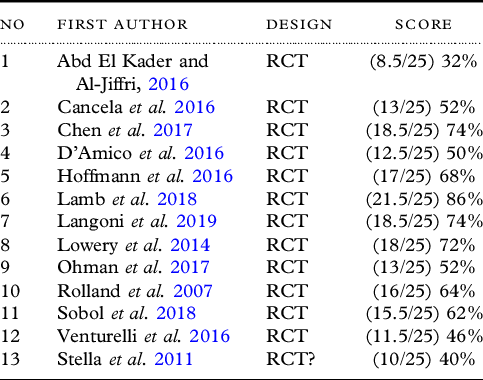
The two independent researchers mentioned above (KK and AM) evaluated the methodological quality of the randomized studies included in this review using the Consolidated Standards of Reporting Trials (CONSORT) checklist. This is a standard 25-item quality checklist according to which the corresponding scores for each of the included studies were formulated as shown in Table 3. Divergences between the above-mentioned researchers that emerged during evaluation were settled with the mediation of a third researcher (KEK) expert in sport research methodology.
Results
Search procedure
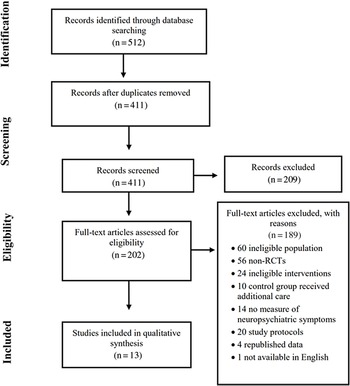
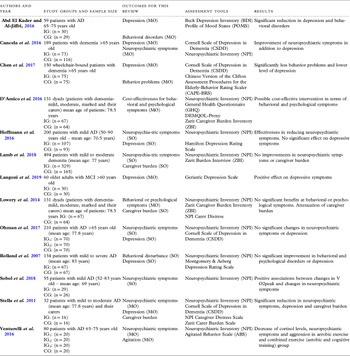
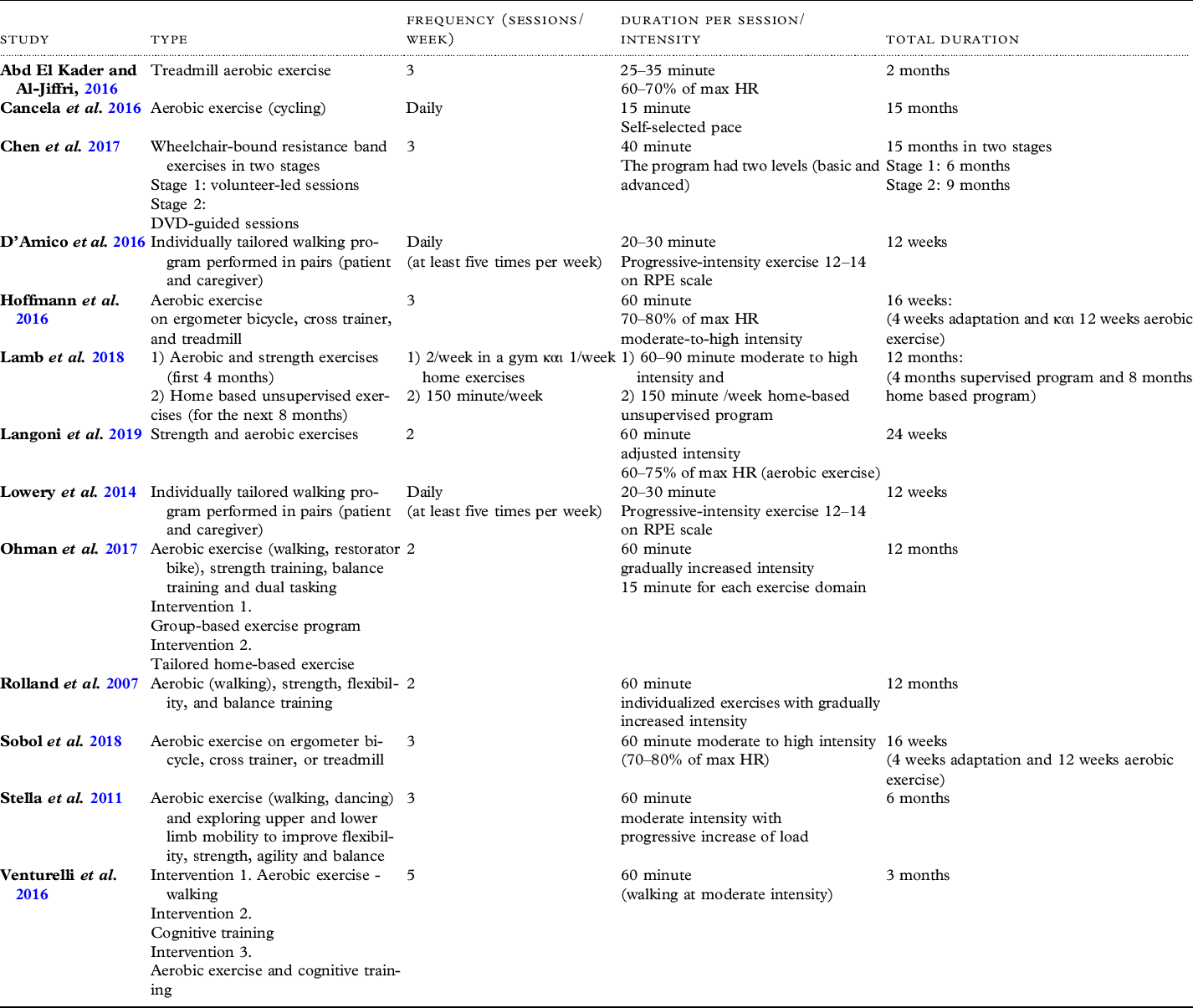
The last search of the databases was conducted on March 10, 2019, resulting in a total of 13 studies (Abd El Kader and Al-Jiffri, Reference Abd El Kader and Al-Jiffri2016; Cancela et al., Reference Cancela, Ayán, Varela and Seijo2016; Chen et al., Reference Chen, Kuo, Chang, Huang and Cheng2017; D’Amico et al., Reference D’Amico2016; Hoffmann et al., Reference Hoffmann2016; Lamb et al., Reference Lamb2018; Langoni et al., Reference Langoni2019; Lowery et al., Reference Lowery2014; Ohman et al., Reference Ohman2017; Rolland et al., Reference Rolland2007; Sobol et al., Reference Sobol2018; Stella et al., Reference Stella, Canonici, Gobbi, Santos-Galduroz, Cacao and Gobbi2011; Venturelli et al., Reference Venturelli2016) published from 2007 to 2019. In one of the above articles (Stella et al., Reference Stella, Canonici, Gobbi, Santos-Galduroz, Cacao and Gobbi2011) it is not clearly stated whether this is a randomized study, which was not clarified even after attempting to communicate via email with the respective research team. As this study was not excluded from the present review, its results should be interpreted with caution. In the studies that were reviewed a total of 1,925 patients were included, of whom 1,557 completed the experimental procedure and were included in the analyses. In most of them participants were patients with Alzheimer’s disease (Abd El Kader and Al-Jiffri, Reference Abd El Kader and Al-Jiffri2016; Hoffmann et al., Reference Hoffmann2016; Ohman et al., Reference Ohman2017; Rolland et al., Reference Rolland2007; Sobol et al., Reference Sobol2018; Stella et al., Reference Stella, Canonici, Gobbi, Santos-Galduroz, Cacao and Gobbi2011; Venturelli et al., Reference Venturelli2016); in one study patients were diagnosed with mild cognitive impairment (Langoni et al., Reference Langoni2019); in five studies participants were patients with dementia; however, the type of the disease was not clearly specified (Cancela et al., Reference Cancela, Ayán, Varela and Seijo2016; Chen et al., Reference Chen, Kuo, Chang, Huang and Cheng2017; D’Amico et al., Reference D’Amico2016; Lamb et al., Reference Lamb2018; Lowery et al., Reference Lowery2014). Figure 1 presents the PRISMA flowchart for the selection of studies at different stages of the screening process. Table 1 presents the main features of the studies that met the inclusion criteria and were included in this review. The “sample and study groups” column of this table lists the initial number of participants in each study who were randomly divided into groups. Table 2 lists the specific characteristics of the interventional exercise programs implemented in the specific studies (type, intensity, duration, frequency and participation).
Process of screening and selecting studies for inclusion in the systematic review (Moher Liberati et al., Reference Moher, Liberati, Tetzlaff and Altman2009).

Main characteristics of included studies (by alphabetical order)

IG: Intervention Group, CG: Control Group, (MO): Main Outcome, (SO): Secondary Outcome
Specific characteristics of interventions (by alphabetical order)

max HR = (maximum Heart Rate: 220 – the person’s age), RPE = Rating of Perceived Exertion scale
According to the results of our evaluation in terms of the quality of reported data, the average score was 14.88 (out of a total of 25 points), which corresponds to 59.5% (Table 3). This score reflects the number of individual items on the checklist (and the corresponding percentage) that are reported satisfactorily in each study. Consequently, high scores correspond to a high degree of compliance with the guidelines, in terms of methodological quality, while lower scores point to a departure from the guidelines. The average dropout rate for the intervention and control group was 13.5% and 18.2%, respectively.
Quality of the reported results using the CONSORT checklist

CONSORT: Consolidated Standards of Reporting Trials; RCT: Randomized controlled trial
The results were analyzed and synthesized according to the type of exercise applied in the studies, in order to draw clear and specific conclusions. The type of intervention most frequently presented in this review is aerobic exercise which has been applied in seven studies. Multidimensional mixed exercise programs combining aerobic exercise and strength training (five studies) follow, whereas in only one study the experimental group performed a resistance-strength training program.
-
a) Aerobic exercise interventions
Abd El Kader and Al-Jiffri (Reference Abd El Kader and Al-Jiffri2016) studied the effect of aerobic exercise on systemic inflammation, quality of life, and psychological well-being in patients with Alzheimer’s disease. The study involved elderly patients who were randomly divided into two groups, experimental and control. The experimental group followed a 2-month 25–35 minute treadmill aerobic exercise program, three times a week. The results showed a significant reduction in depression and behavioral disorders and an increase in psychological well-being of this population.
A study of Cancela et al. (Reference Cancela, Ayán, Varela and Seijo2016) conducted to investigate the effect of a physical exercise program on institutionalized patients with dementia has shown, inter alia, that aerobic exercise significantly improves the total score of NPI but this is not the case with depression. When the intervention, based on intention-to-treat analysis, was completed, depression in the control group appeared to improve and worsen in the experimental group. Complete-case analysis results indicated improvement in both groups, although depression showed greater improvement in the control group. The study initially included 189 patients (experimental group 116 and control group 73 patients) and the intervention consisted of a daily 15-minute exercise on a cycle-ergometer for 15 months.
In the same direction, Hoffmann et al. (Reference Hoffmann2016) carried out research with physical activity sessions of 2–5 people, totaling 16 weeks. The goal of the first 4 weeks was to adapt the participants to exercise (strengthening exercise twice a week and aerobic exercise once a week). During the remaining 12 weeks, patients performed aerobic exercise of moderate to high intensity (between 70 and 80% of maximal heart rate) for 1 hour, three times a week. The analysis of the results has shown that physical activity can inhibit or delay the emergence of severe NPS as the disease progresses. The difference in the alteration of these symptoms was estimated to be −3.5 points (p = 0.002). In contrast, there was no significant effect of the intervention on depressive symptoms according to the Hamilton Depression Rating Scale (p = 0.791), which may be due to the low prevalence of depressive symptoms at baseline in both groups.
In secondary outcome analyses of the above study (Hoffmann et al., Reference Hoffmann2016), Sobol et al. (Reference Sobol2018) attempted to investigate the relationship between peak oxygen uptake (VO2 peak) and NPS in patients with mild Alzheimer’s disease. Participants (n = 55) aged 52–83 years (mean 69 years) were divided into an experimental group (n = 29) and a control group (n = 26). Data analysis showed positive associations between changes in VO2peak and changes in NPS (Rho = –0.41, p = 0.042) and changes in mental speed and attention (Rho = 0.36, p = 0.010), respectively. These results indicate, on the one hand, a mutual effect of cognition on NPS, and on the other, they imply a potentially positive effect of exercise on the cognitive ability and symptoms of patients with Alzheimer’s disease.
Also, positive seems to be the effect of aerobic exercise on Sunset Syndrome (SDS), a syndrome strongly associated with high levels of cortisol. As it has been documented that aerobic exercise combined with cognitive training can decrease cortisol levels (Plag et al., Reference Plag2014), Venturelli et al. (Reference Venturelli2016) investigated whether these types of exercise had a positive effect on the symptoms of this syndrome by regulating cortisol levels. The sample (80 patients) was divided into four groups: aerobic exercise (n = 20), cognitive training (n = 20), combination of aerobic exercise and cognitive training (n = 20), and usual therapy (n = 20). The interventions were applied 1 hour before sunset for 3 months, five times a week. The results showed that cortisol levels decreased in the aerobic exercise group and in the aerobic-cognitive exercise group by up to 26%. Participants’ total score of NPS and aggression were also reduced by up to 50% in the same groups, as measured by the NPI and the Agitated Behavior Scale (ABS), respectively. In contrast, cortisol levels and behavioral disorders were similar to baseline in cognitive training and usual therapy groups. At the same time, it was found that changes in NPI and ABS were significantly associated with a decrease in cortisol levels. Therefore, the effects of aerobic exercise or the combination of aerobic and cognitive training on cortisol levels reveal the efficacy of these programs in treating SDS (Venturelli et al., Reference Venturelli2016).
In contrast, a study by Lowery et al. (Reference Lowery2014) conducted to investigate the effect of a simple walking-exercise program performed in pairs (patient and caregiver) showed that this intervention does not offer significant benefits to patients at behavioral or psychological level; however, it appeared to attenuate their caregiver burden. More specifically, after the implementation of a 12-week exercise program, overall NPS were lower in the intervention group in comparison with the control group, but this difference was not statistically significant. According to the researchers, this may be related to the poor adherence to the full exercise regimen, and/or the duration of the program. The study involved 131 dyads that were randomly divided into two groups, experimental and control. The experimental group had to apply the program daily with a minimum frequency of five sessions per week. Each session lasted 20–30 minutes with progressively increasing intensity, between 12 and 14 on the Rating of Perceived Exertion scale (RPE).
Two years later, based on the above study (Lowery et al., Reference Lowery2014), a study by D’Amico et al. (Reference D’Amico2016) was carried out with the main objective of assessing the cost-effectiveness of the above intervention. Data from 52 dyads of participants were analyzed and the results showed that the walking in pairs exercise aiming at the elimination of NPS was more cost-effective than treatment as usual from societal, health and social care perspectives.
-
b) Multidimensional exercise interventions
Langoni et al. (Reference Langoni2019) have shown that intervention that combines aerobic exercise (walking) and strength training (with ankle weights, elastic bands, dumbbells) has a positive effect on depressive symptoms of dementia patients. The study was completed by 52 patients with MCI, who randomized equally into an experimental and a control group. The experimental group participated in two 60-minute sessions per week for a total of 24 weeks. Analysis of the results revealed that the experimental group significantly improved depression symptoms, as measured by the Geriatric Depression Scale [GDS; mean before: 4 (1.8–6), after: 2.5 (1–4)], whereas in the control group these symptoms increased [mean before: 3.5 (2–7.3), after: 4 (2–5.3)]. There was also a significant reduction in the percentage of participants with signs of depressive symptoms at the end of the intervention (GDS ≥ 5 = depression diagnosis) in the experimental group, whereas the corresponding decrease in the control group was not statistically significant. Specifically, the decrease in the intervention group presented a large effect size (Cramer’s V = 0.57, p = 0.007), whereas in the control group the effect size was small (Cramer’s V = 0.17, p = 0.032).
Similar conclusions were reached a few years earlier by Stella et al. (Reference Stella, Canonici, Gobbi, Santos-Galduroz, Cacao and Gobbi2011) studying the effect of exercise on both depression and other NPS in patients with dementia. The study involved 32 patients with mild to moderate Alzheimer’s disease who were divided into experimental (n = 16) and control (n = 16) groups in relation to their physical activity level, as calculated according to the Modified Baecke Questionnaire for the Elderly and similar psychopathological status, according to the NPI and the Cornell Scale for Depression in Dementia. The intervention involved moderate-intensity aerobic activities such as walking and dancing, and exercises aiming at enhancing flexibility, strength, agility, and balance. Each session lasted 60 minutes three times a week and the program was implemented for a total of 6 months. Caregivers attended the exercise programs without engaging in the intervention themselves. Results showed that the experimental group presented a significant reduction in their NPS compared with the control group (NPI; p = 0.01; Cornell Depression Scale; p = 0.01). Similarly, the burden and stress of caregivers responsible for the patients in the experimental group significantly decreased compared to the caregivers of the control group (Neuropsychiatric Inventory-Distress; p = 0.01; Burden Interview; p = 0.01).
In the opposite direction, research results (Lamb et al., Reference Lamb2018) have found that, inter alia, a mixed exercise program (aerobic exercise combined with upper and lower extremity strengthening exercises) is not an effective method of treating behavioral disorders in patients with dementia. The study involved 494 patients and the intervention lasted 12 months, of which the first 4 months included three supervised sessions per week (two sessions in a gym and one home session) and the remaining 8 months consisted of a home-based unsupervised program with a target of 150 minutes of exercise per week.
Also of interest are secondary study findings (Ohman et al., Reference Ohman2017) that investigated the effect of long-term exercise on patients with Alzheimer’s disease. The study involved 210 patients over 65 years old (mean age 77.8 years) and their caregivers who were randomly divided into two intervention groups (tailored home-based exercise, n = 70 and group-based exercise, n = 70) and one control group (n = 70). Each 60-minute session was held twice a week, with a total duration of 12 months. The exercise sessions included aerobic exercise, strength training, balance training, and dual-tasking. Fifteen minutes were allocated to each exercise domain and the intensity of the training was gradually increased. Results showed no significant changes in overall NPI score (p = 0.41) during the 6 months of the program; however, in patients who participated in group exercise programs, irritability appeared to be significantly reduced (p = 0.03). Post-intervention depression was not significantly different among groups (after adjustment for age, gender and baseline measurements) (p = 0.81). According to Ohman et al. (Reference Ohman2017), the above results could be attributed to the fact that the primary outcome of their study was to investigate the effect of exercise on physical performance; whereas, baseline NPI scores were relatively low and 99% of the patients that participated were on Alzheimer’s medication.
Approaches more targeted to behavioral disorders are also suggested by Rolland et al. (Reference Rolland2007), who did not observe a significant improvement in the NPS of dementia patients by applying an exercise program primarily aimed at improving their daily living activities and physical performance. The study involved 134 institutionalized patients (mean age 83 years) with mild to severe Alzheimer’s disease. The experimental group (n = 67) participated in a 12-month group exercise program, while the control group (n = 67) received only routine medical care at the same time. The intervention consisted of two hourly sessions per week that included walking and exercises focused on improving strength, flexibility, and balance. In order to enhance adherence to the exercise program, the exercises were individualized and their intensity was gradually increased over the first month of the intervention.
-
c) Muscle strengthening intervention
Even in the early stages of the disease, patients with dementia may have difficulty walking and may therefore rely on wheelchairs for their mobility (Pitkala et al., Reference Pitkälä, Savikko, Poysti, Strandberg and Laakkonen2013). This further reduces their physical activity, thus enhancing a circle of hypomobility and further deterioration of their condition. Towards this end, a team of researchers studied the effect of a resistance-band exercise program on depression and behavioral problems of wheelchair-bound older adults with dementia (Chen et al., Reference Chen, Kuo, Chang, Huang and Cheng2017). The intervention with a total duration of 15 months was conducted in two stages (1st stage: 6 months with guidance and supervision, 2nd stage: 9 months duration with DVD support). The study initially included 150 patients, who were equally divided into an experimental and a control group. The analysis of the results showed that at the end of the first phase of intervention, the experimental group showed significantly less behavior problems and lower level of depression than the control group (all p < 0.05), differences that were maintained 9 months later, when Stage 2 of the program was completed (all p < 0.05).
Discussion
The main objective of the present review was to systematically determine the effect of physical exercise on the NPS of dementia patients. Most of the included studies seem to converge in the view that physical exercise is a promising non-pharmacological intervention in the management of NPS in patients with dementia. The present review included 13 studies that, despite meeting their inclusion criteria, showed significant heterogeneity in sample number, exercise interventions, and their main or secondary outcomes. Specifically, the number of participants ranged from 32 to 494 patients with Alzheimer’s disease or other dementias, whereas in most (61.5% of studies) the sample was larger than 100 patients. For the synthesis of the results the studies were grouped according to the type of intervention implemented.
Regarding the aerobic exercise interventions, most of the studies implemented the simplest type of exercise protocol, i.e., walking (Abd El Kader and Al-Jiffri, Reference Abd El Kader and Al-Jiffri2016; D’Amico et al., Reference D’Amico2016; Hoffmann et al., Reference Hoffmann2016; Lowery et al., Reference Lowery2014; Sobol et al., Reference Sobol2018; Venturelli et al., Reference Venturelli2016). Three of the seven studies used cycle-ergometer (Cancela et al., Reference Cancela, Ayán, Varela and Seijo2016; Hoffmann et al., Reference Hoffmann2016; Sobol et al., Reference Sobol2018) and two of them cross trainer to perform aerobic exercise (Hoffmann et al., Reference Hoffmann2016; Sobol et al., Reference Sobol2018). NPS were assessed primarily with the Neuropsychiatric Inventory Questionnaire (NPI) in addition to the research by Abd El Kader and Al-Jiffri (Reference Abd El Kader and Al-Jiffri2016) using the Profile of Mood States (POMS). With regard to depression, in the cases studied separately, the scales applied were the Beck Depression Inventory (Abd El Kader and Al-Jiffri, Reference Abd El Kader and Al-Jiffri2016), the Cornell Scale of Depression in Dementia (Cancela et al., Reference Cancela, Ayán, Varela and Seijo2016) and the Hamilton Depression Rating Scale (Hoffmann et al., Reference Hoffmann2016).
Results showed that aerobic exercise repeated three to five times a week had a positive effect on the NPS of dementia patients. In particular, it appears to contribute to the reduction of behavioral disorders (Abd El Kader and Al-Jiffri, Reference Abd El Kader and Al-Jiffri2016; Cancela et al., Reference Cancela, Ayán, Varela and Seijo2016; Hoffmann et al., Reference Hoffmann2016; Sobol et al., Reference Sobol2018; Venturelli et al., Reference Venturelli2016), while at the same time being cost effective in reducing these disorders (D’Amico et al., Reference D’Amico2016). This recommendation is similar to that of ACSM (American College of Sports Medicine), in which at least 150 minutes of moderate intensity aerobic exercise per week is sufficient to improve cardiovascular fitness (Nelson et al., Reference Nelson2007). In the opposite direction, the results of only one study (Lowery et al., Reference Lowery2014) showed that walking in pairs (patient-caregiver) did not provide significant benefits to patients at behavioral or psychological level. However, it does attenuate caregiver burden. In the same intervention category, of the three studies that evaluated depression separately, only one found a significant reduction in these symptoms (Abd El Kader and Al-Jiffri, Reference Abd El Kader and Al-Jiffri2016).
Concerning multidimensional interventions, five studies were included (Lamb et al., Reference Lamb2018; Langoni et al., Reference Langoni2019; Ohman et al., Reference Ohman2017; Rolland et al., Reference Rolland2007; Stella et al., Reference Stella, Canonici, Gobbi, Santos-Galduroz, Cacao and Gobbi2011), in which aerobic exercise programs were implemented, mainly walking, combined with strength, balance and flexibility exercises. Their frequency of application was 2–3 sessions per week and their total duration was 6 to 12 months. In four of the five studies (Lamb et al., Reference Lamb2018; Ohman et al., Reference Ohman2017; Rolland et al., Reference Rolland2007; Stella et al., Reference Stella, Canonici, Gobbi, Santos-Galduroz, Cacao and Gobbi2011), the effects of these interventions on NPS were all evaluated on the NPI scale. The results showed a positive effect of these exercise programs only in the study of Stella et al. (Reference Stella, Canonici, Gobbi, Santos-Galduroz, Cacao and Gobbi2011), but we do not know if it was randomized. In the same intervention category, depression was studied separately in four of the above studies (Langoni et al., Reference Langoni2019; Ohman et al., Reference Ohman2017; Rolland et al., Reference Rolland2007; Stella et al., Reference Stella, Canonici, Gobbi, Santos-Galduroz, Cacao and Gobbi2011) for which three different scales were applied: Geriatric Depression Scale (Langoni et al., Reference Langoni2019), Cornell Scale of Depression in Dementia (Ohman et al., Reference Ohman2017; Stella et al., Reference Stella, Canonici, Gobbi, Santos-Galduroz, Cacao and Gobbi2011) and Montgomery and Asberg Depression Rating Scale (Rolland et al., Reference Rolland2007). In two of the aforementioned studies (Langoni et al., Reference Langoni2019; Stella et al., Reference Stella, Canonici, Gobbi, Santos-Galduroz, Cacao and Gobbi2011) it was shown that this type of intervention is effective in reducing depression symptoms in patients with dementia.
Also of interest are the results of intervention focused on muscle strengthening in patients with dementia, who presented motor problems and performed wheelchair-bound resistance band exercises (Chen et al., Reference Chen, Kuo, Chang, Huang and Cheng2017). It was found that the 15-month program with a frequency of application three times a week significantly reduced depression symptoms and behavior problems by somewhat inhibiting the circle of hypomobility and further weakening of dementia patients with mobility impairment. Concerning behavior, the Clifton Assessment Procedures Scale for the Elderly Rating Scale was used, and for depression the Cornell Scale for Depression in Dementia.
In the light of the above information, it seems that exercise has a positive effect on ameliorating NPS in patients with dementia. A number of potential psychological and neurobiological mechanisms underlie this effect. Starting with the psychological mechanisms, the positive influence of physical exercise on cognition may reduce perceived feeling of weakness leading to lower levels of stress, irritability, aggression and depression. Similarly, improving the quality of patients’ sleep (as a consequence of regular exercise) is likely to reduce symptoms such as apathy and irritability (Matura et al., Reference Matura, Carvalho, Alves and Pantel2016). In addition, as showed in several studies (Lowery et al., Reference Lowery2014; Stella et al., Reference Stella, Canonici, Gobbi, Santos-Galduroz, Cacao and Gobbi2011), the attenuation of caregiver’s burden is likely to be associated with more positive behaviors towards the patient and it can further contribute to the alleviation of NPS. The aforesaid psychological mechanisms are complemented by several neurobiological mechanisms including modulated production of neurotransmitters, increased neurotrophins, reduction of oxidative stress and inflammation, hypothalamic pituitary adrenal axis regulation and elevation of cerebral blood flow (Matura et al., Reference Matura, Carvalho, Alves and Pantel2016; Veronese et al., Reference Veronese, Solmi, Basso, Smith and Soysal2018). Physical exercise may also attenuate cardiovascular risk factors, which potentially exaggerate NPS (Veronese et al., Reference Veronese, Solmi, Basso, Smith and Soysal2018). It is important to note at this point that physical exercise should be prioritized.
However, it should be mentioned that the heterogeneity of existing studies examining the positive effect of exercise, i.e application of different exercise protocols, restricts the possibility to draw reliable conclusions which would inform the development of the most effective exercise interventions for alleviating NPS. So far, studies investigating the dose–response effects of physical exercise on NPS with systematic manipulation of the type, duration, intensity, and frequency of exercise have not yet conducted.
Nevertheless, barriers on the development of the most effective exercise interventions related to the stage of the disease and the participants’ individual characteristics should be considered when designing exercise programs. Patients who are in the later stages it should be taken into account that they are likely to experience severe memory loss, changes in behavior, and communication problems (Veronese et al., Reference Veronese, Solmi, Basso, Smith and Soysal2018). Furthermore, given that some of the studies included in this systematic review (Cancela et al., Reference Cancela, Ayán, Varela and Seijo2016; Chen et al., Reference Chen, Kuo, Chang, Huang and Cheng2017; D’Amico et al., Reference D’Amico2016; Lowery et al., Reference Lowery2014) do not report the stage and the type of dementia. Further studies are warranted before final conclusions with regard to the relationship between effective exercise interventions and the stage of the disease.
To the best of our knowledge this systematic review is the first to examine the effect of different types of physical exercise on the NPS of dementia patients. Findings from previous research systematic reviews and meta-analyses on the effectiveness of exercise on these symptoms do not provide a clear picture on this important issue (De Souto Barreto et al., Reference de Souto Barreto, Demougeot, Pillard, Lapeyre-Mestre and Rolland2015; Hulme et al., Reference Hulme, Wright, Crocker, Oluboyede and House2010; Leng et al., Reference Leng2018). This study has several strengths that should be mentioned. The search strategy was conducted in five databases (Scopus, PubMed, SPORTDiscus, Web of science, and ScienceDirect) applying appropriate algorithms with standardized search terms. A systematic way of identifying the studies (Liberati et al., Reference Liberati2009) was also used and their methodological quality was assessed by the acknowledged CONSORT 2010 checklist (Schulz et al., Reference Schulz, Altman and Moher2010), which is adapted to randomized studies. To minimize bias, two researchers worked independently to search, screen, select, and evaluate studies.
However, there are also some limitations to the present review that should be taken into account when interpreting its findings. To start with, only published studies have been included as the search was not carried out in grey literature, so there is a possibility of publication bias. Furthermore, a quantitative synthesis of the results would provide additional information regarding the exercise effect on NPS; however, in this case it was not possible. Given the limited number of studies in each exercise type and especially the fact that only one study was included in the muscle strengthening interventions, a meta-analysis to compare the effectiveness of the different types of exercise could not have been conducted (Valentine et al., Reference Valentine, Pigott and Rothstein2010). Finally, in many of the studies in this systematic review, NPS were not primary outcomes, which may have partly affected the results. Specifically, in 5 of the 11 studies the NPS were secondary outcomes, whereas depression in 3 of the 7 studies (which examined it separately) was not investigated as the primary outcome. The primary focus of these studies was to study the effects of exercise on other areas such as physical performance (Ohman et al., Reference Ohman2017; Rolland et al., Reference Rolland2007) or activities of daily living (Rolland et al., Reference Rolland2007) rather than reducing the behavioral disorders, which might require a different approach. Another possible explanation for the non-positive results of the above studies may be given by the fact that in many cases the initial NPI scores were low which in combination with the large proportion of patients already receiving medication significantly reduced the margin of improvement (Ohman et al., Reference Ohman2017).
Conclusions: Practical applications
To summarize, it is important to note that non-pharmacological interventions should be prioritized for the treatment of NPS. Following this path the main objective of the present review was to systematically determine not only the possible positive effect of physical exercise on treating NPS but the effect of different types of physical exercise as a more appropriate personalized non-pharmacological approach. There is clear evidence that physical exercise as a non-pharmacological intervention and especially aerobic exercise can be effective in managing NPS, specially depression, in dementia patients. Since these studies are methodologically heterogeneous, more high-quality, randomized studies (RCTs) with a thorough and rigorous design, focused on investigating the effect of exercise on the NPS of dementia patients, are needed. In addition, it would be useful in the future to examine more closely the effect of aerobic exercise on delaying the manifestation of these symptoms raising the possible preventive action of physical activity.
As the relationship between physical exercise and dementia varies depending on the particular characteristics of the exercise, the different dementia stages, the specific NPS, in order to enhance its contribution to the treatment of the particular disease, the application of clear practical recommendations regarding its type, intensity, frequency and duration is required. Therefore, knowledge and understanding of the contribution of specific factors that influence this relationship can lead to the development of personalized or tailored designed physical exercise interventions that can be safely integrated into the daily therapeutic scheduled activities of people with dementia.
Conflict of interest
None.
Description of authors’ roles
KK and KEK conceptualized the paper. KK designed the study and drafted the paper. KK and AM conducted the literature searches, reviewed the studies for inclusion and exclusion and undertook quality assessment of studies. Disagreements in the assessment of the quality of the reporting of the results were arbitrated by KEK. AP, FV and KEK contributed in the data extraction from the selected studies, reviewed and modified the content of the manuscript. AP and FV revised the paper critically and provided conceptual guidance. All authors approved the submitted version.
Supplementary material
To view supplementary material for this article, please visit https://doi.org/10.1017/S1041610221000193