INTRODUCTION
Identifying avenues to increase water productivity (WP) has come back to the forefront of research and development agendas since the mid-1990s (Zoebl, Reference Zoebl2006). Major concerns of scientists and policy-makers relate to predictions of global water and food shortages, calculated from anticipated population growth, and to the growing competition for water use between agriculture and other sectors at the regional level. These concerns were accentuated by the global food price crisis in 2008, which drew attention to the underlying freshwater requirements necessary for agricultural production. According to Mukherji et al. (2009), by 2050 South and East Asia would need 10–57% and 16–70% more water respectively for irrigated agriculture, depending on whether optimistic or pessimistic assumptions are made regarding food and water demand. To address this challenge, many scientists have stressed the need to develop technical and biophysical options to get more ‘crop per drop’, i.e. raise WP. Introduced as a measurement of how a system converts water into goods and services (Molden, Reference Molden1997), WP is an indicator of the effectiveness and efficiency of rain-fed and irrigated agriculture, thereby providing a tool to guide the adoption of water-saving technologies and practices. Initially applied to single crops, this concept has recently been extended to the analysis of livestock water productivity (LWP), widening its application to mixed crop-livestock farming systems (Peden et al., Reference Peden2002; Taddese, Reference Taddese2005). Besides being promoted as a solution to tackle water and food shortages, increasing LWP has also been advocated as a means to reduce poverty. The application of what was originally a purely biophysical concept to the analysis of socio-ecological systems raises a number of questions, and several scholars have recently discussed the relevance and usefulness of the WP concept for sustainable water management (Molden et al., Reference Molden, Oweis, Steduto, Bindraban, Hanjra and Kijne2009; Zoebl, Reference Zoebl2006). This paper further develops the debate by exploring its adequacy as a guiding tool for poverty alleviation efforts. It particularly addresses the following questions: Is there a strong linkage between WP and poverty? Under which conditions is an increase in WP likely to benefit the poor? The theoretical discussion is illustrated with findings from a study conducted in the Ganga Basin, India, on LWP in mixed crop-livestock farming systems.
The next section briefly reviews the development of the concept of WP and critically assesses its assets and limitations. Then, after introducing the case study sites and methodology, we explore the characteristics and drivers of water access and control, and investigate the potentials and limitations of WP as a tool for guiding the design of recommendations for poverty alleviation and livelihood improvement.
Origins, definition and history of the WP concept
Water productivity started to be commonly used in the 1990s for comparing water use and water efficiency of different crops, and was then extended to the analysis of farming systems and practices (Zoebl, Reference Zoebl2006). Based on water accounting principles (Molden, Reference Molden1997), it is defined as the ratio between the output derived from water use and the water input:

This definition allows different sub-definitions or calculations of WP. The output can be expressed in a physical unit, i.e. the amount of biomass produced per unit of water resource – defined by some authors as the physical WP. It can also be measured based on the economic value derived from the product – and is called either water use efficiency or economic WP. Therefore, crop water productivity (CWP) can be expressed as the kilogram of yield produced m−3 of water depleted by evapotranspiration by the crop or as the monetary value of yield produced m−3 of water depleted (Mahoo et al. Reference Mahoo, Mkoga, Kasele, Igbadur, Hatibu, Rao and Lankford2009). The denominator can also be expressed either as water depleted or water supplied. The consideration of water reuse is also important as it will increase WP by generating a sequence of derived outputs. We will, in our discussion, use values of both physical and economic WP.
Livestock water productivity has been recently developed and applied to the use of water for both crop and livestock in mixed farming systems, and is defined as the ratio of net beneficial livestock-related products and services to the water depleted in producing them (Peden et al., Reference Peden, Tadesse, Misra and Molden2007). It considers all water inputs, including the water transpired for feed production, the most important form of water depletion by volume for livestock (Peden et al., Reference Peden, Tadesse, Misra and Molden2007; Singh et al., Reference Singh, Sharma, Singh and Shah2004). It thus enables evaluation of total livestock water needs. Furthermore, the LWP framework that Peden et al. (Reference Peden, Tadesse, Misra and Molden2007) developed also addressed water contamination and the impact of animal grazing on vegetation and soil, and thus on water hydrology at the landscape level. Lastly, the LWP framework has been linked with the gendered sustainable livelihood framework in order to evaluate the social impacts of water-related interventions on livelihoods on a gender basis (van Hoeve and van Koppen, Reference van Hoeve and van Koppen2006).
Recent studies have pursued efforts geared towards holistic and interdisciplinary approaches by stressing the role of policies, institutions and culture (e.g. Descheemaeker et al., Reference Descheemaeker, Amede and Haileslassie2009; Mapedza et al., Reference Mapedza, Amede, Geheb, Peden, Boelee, Demissie, van Hoeve and van Koppen2008). This paper aims at furthering these efforts by exploring linkages between WP, water access and control, and livelihoods.
WP: rationale and critics
The concept of WP has been presented not only as a tool to guide research efforts, but specifically, as a strategy to overcome problems of water scarcity (Haileslassie et al. Reference Haileslassie, Peden, Gebreselassie, Amede and Descheemaeker2009; Molden et al., Reference Molden, Oweis, Steduto, Bindraban, Hanjra and Kijne2009). The common argument behind this concept is that, under an expanding population in a world with finite resources, we need to produce more food with less water (Molden et al., Reference Molden, Frenken, Barker, De Frailure, Mati, Svendsen, Sadoff, Finlayson and Molden2007). The reasoning follows that the only possible means to achieve this goal is to increase WP. An increase of 1% in water productivity in food production makes available, in theory, at least an extra 24 litres a day per head of population (FAO, 2003). (This statement assumes that water used is currently available for another purpose. This is not always true for instance in arid lands, where all precipitation is lost as evapotranspiration.) The line of argument is all the more compelling because WP calculations show large variations resulting not only from climatic and biophysical conditions but from the combination of these factors with farming systems and cropping practices. It is therefore expected that there is a huge potential to increase water use efficiency and WP, as long as one can identify and implement the best practices that have the highest WP values (Molden et al., Reference Molden, Oweis, Steduto, Bindraban, Hanjra and Kijne2009). It has also been argued that the maximization and optimization of LWP potentially contribute to poverty reduction by leading to better livestock management practices and to the preservation of land and water resources (Peden et al., Reference Peden2002; Reference Peden, Tadesse, Misra and Molden2007). On the other hand, the same authors have suggested that poverty alleviation might also lead to increased WP.
A number of studies have challenged WP as a relevant concept for sustainable water management. First, linking WP and poverty alleviation requires assigning a meaningful value to WP which reflects its contribution to livelihood improvement (Cook et al., Reference Cook, Andersson and Fisher2009). Several methods of economic valuation have been developed for converting the net total benefits from different livestock products and services in one single economic value (Cook et al., Reference Cook, Andersson and Fisher2009). However, in addition to the limitations of such methods, it has become widely accepted that the measurement of poverty goes beyond the evaluation of household income or financial assets (Ruggeri Laderchi et al. Reference Ruggeri Laderchi, Saith and Stewart2003; Saith, Reference Saith2005).
A second challenge is how to infer sound conclusions from WP values. Drawing comparisons requires extreme caution and consideration of the methods used to calculate WP (Bessembinder et al., Reference Bessembinder, Leffelaar, Dhindwal and Ponsioen2005). What is more, WP might not reflect the actual sustainability of water use when attached to an economic value. Zoebl (Reference Zoebl2006) remarks that the opportunity costs or the value of lost and saved water should be considered when analysing WP values. The water saving abilities of crops and the timing of water application should also be considered for the concept to be meaningful. Also, it is necessary to take into account the amount of water used per hectare and per time unit together with WP before drawing any conclusion, because crops with a high marketing value and high WP are often more water intensive (Neubert, Reference Neubert, Heumann, Neubert, and Kipping2008). Expanding the cultivated area under these crops, because it increases WP, might result in an overexploitation of water resources. Lastly, water savings and losses highly depend on the scale considered (Amede et al., Reference Amede, Descheemaeker, Peden and van Rooyen2009; Bessembinder et al., Reference Bessembinder, Leffelaar, Dhindwal and Ponsioen2005; Molden et al., Reference Molden, Oweis, Steduto, Bindraban, Hanjra and Kijne2009). What is lost at the farm level might be used for another beneficial purpose at the watershed level. Recommendations for policy-making should therefore carefully take these issues into account.
A third set of more radical criticisms disputes the application of productivity to water. The arguments are that productivity makes sense when considering an organizing system with a range of inputs but might be useless and misleading when calculated for a single input factor, because the considered outputs depend on other factors (Wichelns, Reference Wichelns2003). Increasing WP is justified only if it is not made at the expense of other production inputs such as labour, money or land. As Molden et al. (Reference Molden, Oweis, Steduto, Bindraban, Hanjra and Kijne2009) notice, farmers rarely manage to increase WP. In addition, the social sustainability and acceptability of a farming system is, at least, as important as its productivity. For instance, whereas a mixed farming system has often a lower production efficiency when compared to a monocrop system, diversification has been a common strategy of many rural households for increasing resilience to external shocks (Ellis, Reference Ellis1998).
There are therefore a number of serious limitations to the use of WP as a guiding concept for poverty alleviation. Several scholars have considered some of these shortcomings, as for example, Molden et al. (Reference Molden, Oweis, Steduto, Bindraban, Hanjra and Kijne2009) for whom WP ‘reflects the objectives of producing more food, income, livelihood and ecological benefits at less social and environmental cost per unit of water consumed’, and advocate a system approach that does not only consider water but other factors of the farming system. Peden et al. (Reference Peden, Taddesse and Haileslassie2009) have attempted to integrate social factors into a wider definition of LWP: ‘quantity and quality of food, income, livelihoods, environmental services produced per unit of water used in an agroecosystem’. Beyond the redefinition of these concepts, we aim at advancing the debate by exploring the links between both LWP and CWP with poverty. Drawing on livelihood and institutional analyses, we have investigated the social processes associated with WP increase. We defend a systematic analysis of the differentiated inter-household capitals and capabilities as a pre-requisite for the design of WP interventions. What is more, we argue that the potential of WP interventions to alleviate poverty highly depends on our understanding of how the institutions in place influence the distribution of capitals and capabilities and reinforce or challenge existing structures of inequity.
MATERIALS AND METHODS
Analytical framework
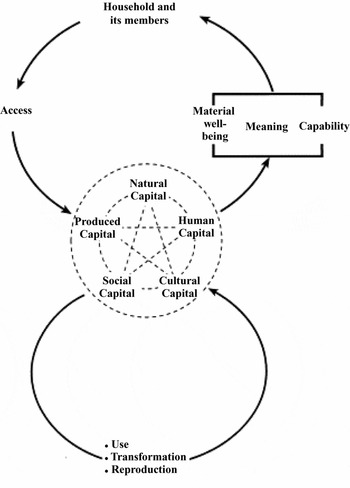
The framework adopted for this study is based on the capitals and capability framework (Figure 1), which was developed in order to analyse the sustainability of rural livelihoods and to see the linkage between livelihoods, capitals and poverty (Bebbington Reference Bebbington1999). We draw on the capability approach developed by Sen (Reference Sen1999), which views well-being as the ‘capability or freedom people have to achieve the various ‘beings’ and ‘doings’ they have reason to value’. Consequently, poverty is viewed as a lack of capability or freedom. In this view, generating profit or fostering economic growth constitutes only one way to expand one's capabilities or reduce poverty.
Capitals and capabilities framework showing capitals, livelihoods and poverty linkages.
Source. Bebbington (Reference Bebbington1999).

The framework is based on the five capitals (or assets) upon which people draw to base their livelihoods: the natural capital, produced capital, social capital, cultural capital and human capital. (These are slightly different from the five capitals originally defined by Carney (Reference Carney1998), which are human, social, natural, physical and financial capitals.) Produced capital means man-made capital and includes physical and financial capital. In addition, it acknowledges the dynamic process of how the different forms of capitals are continuously being substituted within a changing political-economic context (Figure 1). It also stresses the importance of access to capitals and how capitals are transformed into benefits. Benefits include not only material well-being but also the meaning capitals might give to one's livelihood and the capabilities to be and to act (Bebbington, Reference Bebbington1999). Of particular importance for poverty alleviation efforts is the capability individuals and communities have to change the institutions that govern the use and control of resources.
By institution, we mean ‘the prescriptions that humans use to organize all forms of repetitive and structured interaction including those within families, neighborhoods, markets, firms, sports leagues, churches, private associations, and governments at all scales’ (Ostrom, Reference Ostrom2005, p. 3). Institutions are thus distinguished from organizations as emphasized in new institutional economics (North, Reference North1990). They include all kinds of formal and informal prescriptions stemming from, among others, legal documents issued by central governments, implicit norms governing policy implementation or collective rules-in-use orally shared within a community. We explored more particularly the role of institutions and power relationships at the community level, but insights from our interviews with block and district officials have also guided the analysis.
Selection of case study sites and data collection
This study was part of a research project called ‘Improving water productivity, reducing poverty and enhancing equity in mixed crop-livestock systems in the Indo-Gangetic Basin’, implemented from 2008 to 2010. Although the geographical scope of the project was initially the Indo-Gangetic basin, the project actually focused on the Ganga Basin. As implied by the title, improving WP was not set as a goal per se, but rather as a means to alleviate poverty and reduce inequities. The research project focused on LWP, but this discussion aims at offering general lessons regarding the application and appropriateness of the broader concept of WP.
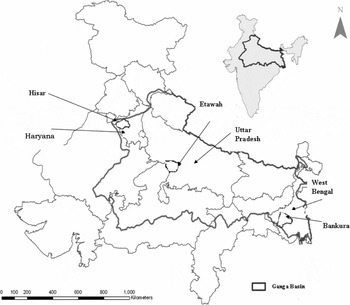
The case study sites are located in two states at the extreme western and eastern parts of the Ganga Basin, in Basra Village, Hisar District, Haryana and in Bankura District, West Bengal respectively (Figure 2). The administrative units in India, from the largest to the smallest, are state, district and sub-district units (taluq or tahsil, blocks) and gram panchayat.
Location of the case study areas in the Ganga Basin.

The selection of representative farming systems in these states was guided by a scoping study ‘Crop-livestock interactions in the Trans-Gangetic Plains’ that assessed crop-livestock interactions and mapped the spatial and seasonal diversity of crop-livestock interactions (Erenstein et al., Reference Erenstein, Thorpe, Singh and Varma2007). Data collection followed a multi-stage approach in all villages. First, a baseline census survey was conducted among all 557 households of the five villages in order to assess the level of heterogeneity of farming systems, livelihood activities and water access. Results were used to select a representative sample of households in each village regarding these three components. Selection criteria included size of livestock and landholding, access to water, household size and caste. Then, this sample was divided into two groups in each village: one group (88 households in total among the five villages) was selected for a detailed household characterization of land-use, livestock, feeding system and water use following a quantitative questionnaire. The second group (70 households in total among the five villages) was surveyed to gain a qualitative understanding of livelihood strategies, gender issues and institutional arrangements. Since the interviews and questionnaires were relatively time consuming and farmers' availability was limited, we chose to include different households in each group. The process of data collection associated with the second group involved participatory exercises (focus groups, transect walk, village mapping) and semi-structured interviews with households and key informants in the village (e.g. local elected representative, head of organizations and customary head of the village). Lastly, interviews were conducted with elected officials of local government executive bodies (panchayati raj institutions) and government officers of state line departments at the district and block level to analyse the governance structure and investigate the impact of rural development policies.
Farmers were grouped for the livelihood and LWP analysis according to their ownership/access to key forms of livelihood capitals, namely land, livestock and water. These also ultimately represent distinct livelihood strategies and vulnerability. This led to the creation of four groups:
1. Landless without any farming activity (no livestock and who do not produce any crop) – called in this study ‘off-farm poor’;
2. Landless with livestock or who work on land sharecropped in/ rented in – called ‘poor farmers';
3. Landowners with 0–1 asset – called ‘medium farmers’;
4. Landowners with 2–3 assets – called ‘better-off farmers’.
Assets were the following:
1. Land size above the average of the surveyed farmers in the district case study sites;
2. Livestock index above the average of the surveyed farmers in the district case study sites; and
3. Access to irrigation water.
The livestock index is calculated by assigning a weight to each animal (large or small ruminants) depending on its species, sex and age. The score is obtained by summing weights for each animal owned.
Characteristics of the case study sites
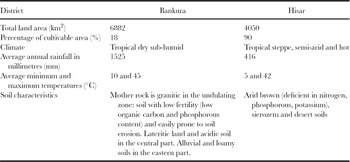
Table 1 presents the major biophysical characteristics of the districts of Bankura and Hisar.
Biophysical characteristics of the case study districts.

Sources: (Development and Planning Department – Government of West Bengal, 2007, Singh and Gupta, Reference Singh and Gupta2007).
Bankura District is classified as a ‘backward district’ by the Central Government of India. The proportion of households below the poverty line (BPL) reached 45.5% in 2005 (Government of West Bengal, 2005). (Note that BPL households in India are identified based on their degree of deprivation according to 13 criteria such as asset ownership, food security, sanitation and literacy.) The Human Development Index of Bankura District ranks eleventh among the 17 districts of West Bengal. Agriculture is characterized by low productivity under limited irrigation facilities. The four case study villages, named Chatinbaid, Jhagradihi, Lakhipur and Udaypur, are located in Saltora block, itself considered as a ‘more backward area’ within the district with 48.6% of its population classified as BPL (Government of West Bengal, 2005).
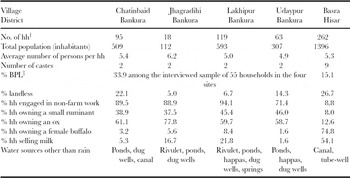
The population is relatively homogenous in the case study sites, with around 90% belonging to the Santhal community, one of the largest adivasi (indigenous) communities in the Indian subcontinent. Farming systems in the surveyed sites are semi-intensive. Mechanization is almost non-existent but the use of chemical inputs and the adoption of high yielding paddy varieties are nevertheless widespread. With a single annual paddy crop in an average landholding size almost 1 ha, agricultural production in the study sites is almost exclusively subsistence oriented. For a very large majority of surveyed farmers (88%), paddy production does not cover the household annual food needs and for 46% of them, it meets less than six months of their food requirements. A number of farmers are engaged in vegetable cultivation during rabi (dry season) depending on their water access. Non-farm work supplements agriculture for most farmers (Table 2). Non-farm opportunities in the district and in the neighbouring towns are available in the sector of construction, coal mining and stone crushing.
Main characteristics of the five case study sites.

†hh: households.
Source: Our census survey, 2009 except ‡our detailed questionnaire survey, 2009.
Livestock management comes as a secondary or tertiary activity for the majority of farmers. Beside a pair of oxen kept for ploughing, farmers commonly keep goats or sheep, used as a coping mechanism to cover unexpected or exceptional expenses. Goats, as well as chickens, are also used by Santhal families for rituals. The feeding system is largely dominated by grazing in the nearby forest, or in fallow fields after harvesting, supplemented by stall-feeding with rice straw and husk (our detailed questionnaire survey, 2009).
In contrast to Bankura, Hisar District has a relatively low proportion of BPL households (24.7%), and agricultural production and productivity have largely benefited from a well-developed canal infrastructure and from the Green Revolution. The case study village, called Basra, is located in the sandy pockets of the fluvial plain of the district, close to the border with Rajasthan, circa 25 km from Hisar, the district headquarters. It is a village of refugees, created around 150–200 years ago by 10–15 families originating from Rajasthan. The village population is largely dominated by the Jat caste (77%), which belongs in Haryana to the other backward castes, and a minority belongs to scheduled castes. A large majority of villagers are exclusively engaged in farm activities, with the exception of a few landless households who rely on non-farm waged labour in the construction sector for their livelihood (Table 2).
Farmers own on average just under 3 ha of land in the area and rely on surface and groundwater irrigation. Almost all of them have adopted intensive and mechanized farming. Farmers who have access to irrigation cultivate wheat during winter and others, mustard, green gram and barseem clover. Crops grown during the monsoon season are mostly pearl millet and also guar bean, sorghum, chick peas, green gram and moth bean. Beside crop cultivation, a majority of households (75%) own at least one female buffalo (Table 2). Dairy products such as milk, ghee (clarified butter), curd and lassi (yoghurt-based drink) are important components of the diet. Many households sell part of their milk production (Table 2). The livestock composition used to be dominated by desi (indigenous breeds) cows with an extensive feeding system based on grazing. However, for the past 10–15 years, because of the conversion of grazing land to cultivated land, desi cows have been progressively replaced by high-yielding breed cattle and buffaloes, which are almost exclusively stall-fed with crop residues, forage crops, cotton seeds and oil cakes.
RESULTS
Preliminary observations on LWP and poverty
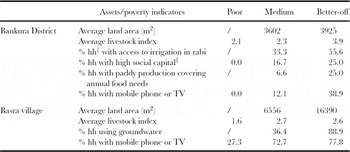
Table 3 shows the different assets for the poor, medium and better-off farmers in Bankura District and in Basra, Hisar District. Landholding is relatively homogenous in the surveyed sites of Bankura district. The high number of small ruminants in Bankura explains the relatively high livestock index compared to the village of Basra, where livestock makes a larger contribution to household incomes. There is high variation in water access among the groups.
Major assets and indicators of poverty of the three livelihood groups in Bankura District and Basra.

‡hh: households.
†This entails being member of the adivasi club, gram panchayat (local elected government body) or watershed committee (committee set up to implement government watershed development programmes). This indicator was calculated only for Bankura District as there is no club in Basra and the membership of the gram panchayat and watershed committee is very limited.
Source: Our detailed questionnaire survey, 2009, sample size: 55 households in Bankura District and 33 households in Basra.
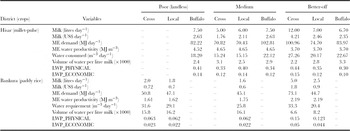
We examined how farmers within the same community perform in terms of LWP. Table 4 shows LWP estimates for the poor, medium and better-off farmers in Bankura District and in Basra (Haileslassie et al., in press). For a detailed methodology on the calculation of LWP, please refer to Haileslassie et al. (in press).
Milk production, water consumed and livestock water productivity (LWP) of dairy cows and buffaloes across farm clusters and farming systems.

ME: metabolizable energy.
The results indicate two opposite relationships between LWP and livelihood typology. Whereas the economic and physical value of LWP both for crossbred and local cows is twice as high for the better-off farmers than for the poor farmers in the sites of Bankura District, the value of LWP for buffaloes is slightly lower for the better-off farmers than for the poor farmers of Basra village. In Bankura, better-off farmers have higher milk yields because of better access to feed of higher quality (rice crop residues), either produced on their own land or purchased outside. This translates into higher milk production for similar or even lower water use for feed production. In Basra, the difference in productivity is explained by the fact that the better-off feed their animals more than they actually require. The volume of water consumed per animal is thus higher – thereby decreasing the animal WP.
Therefore, poor farmers do not have necessarily lower LWP than better-off farmers who have easier access to the capitals required to improve for instance soil and water conservation, animal health management, etc. Two issues are worth considering in this regard. Firstly, even if they have a higher LWP than the better-off, the poor farmers in Basra are still poor. Productivity can be high and production remains low. What is important to consider here is that the milk production of the poor farmers is not high because of farmers' lack of better-informed or sounder decisions but because of constraints on feed access – this is the second point. Had the poor the capacity to feed their animals as the better-off do, they would probably also overfeed their animals. Ironically, poverty – i.e. a lack of capabilities and freedom – has had a positive effect on LWP. To sum-up, LWP reflects the performance of the system, but not necessarily the access to the inputs, control over the process which makes the system function or the level of production that determines income. As developed further, WP interventions might be misguided if not linked with an examination of farmers' heterogeneous set of capitals and capabilities.
Capital heterogeneity for water access
In Bankura District, despite the high average annual rainfall, agriculture is greatly constrained by access to water. Water scarcity is more acute during the dry season, but even during the monsoon season (kharif), dry spells frequently cause crop failure. The households’ capabilities to access water and cope with drought are highly heterogeneous. Water sources available for irrigation are rivulets and streams fed during the monsoon, dug wells and rainwater harvesting structures, including tanks/ponds or happas. (A happa is a ditch constructed according to the five percent technique, i.e. with 5% land of the total land holding in rectangular shape with steps down to a depth of 10 feet.) Around 68% of landowners among the four case study villages rely on one of these sources for supplemental irrigation water for paddy cultivation during kharif and almost half of them for vegetable cultivation during rabi (Table 5). The remaining 30% of farmers have no other source of agricultural water than rainfall. They are not only unable to cultivate their land during rabi but are also unable to cope with the dry spells of the kharif season. For these farmers, what matters is not how to produce ‘more crop per drop’ but how to produce a crop at all. Initiatives focusing on CWP increase might therefore not be the most appropriate interventions – at least in a first stage.
Percentage of landowners using irrigation water during kharif and rabi in the four case study villages in Bankura District

Source: Our census survey, 2009.
For the other farmers, access to irrigation water depends on multiple forms of capital. Produced capital is important in terms of land assets (size and land type) and accessibility (land elevation and proximity) to rainwater harvesting structures and dug wells. In Lakhipur, wealthy farmers with large landholdings have dug wells in their fields and have full control over water. Those whose fields are located close to the rivulet can use the water from the stream during three months for vegetable cultivation. A cemented dam was built by the panchayat samiti upstream of the fields of Bora Para hamlet in 2004. Beyond landholding, other forms of produced capital – a diesel pump or cash (to rent the pump and purchase diesel) – are also essential to access water. In Lakhipur, pumps are easily available as several pump owners in the village rent their equipment. Rental prices are 50–60 rupees (Rs)Footnote 1 /hour (not including the cost of diesel, around 20 Rs/litre), the equivalent of the wage for one day of unskilled work in construction, and therefore beyond the financial capacity of many farmers. A few farmers, however, manage to irrigate their fields during rabi without a pump. They use the rainwater stored in clay lowland plots adjacent to their field for vegetable cultivation, transported to their fields with buckets – in this case, produced capital is substituted by human capital (labour). In Jhagradihi, the access to the pump is driven by social capital. Only one pump is available in this small and relatively isolated village, and access is controlled by one family. The households who have tight links with the pump owner have the privilege of using the pump.
The LWP framework represents water as a free good naturally flowing into the farming system – distantly influenced by policies (Descheemaeker et al., 2010). However, water access requires different levels of capital investment for different households – which are highly locally variable. Interventions aiming at improving CWP or diversifying crops would have a greater impact if prior to their design, the forms and how much capital is required to make a change on productivity for different farmers' livelihood typologies were taken in to consideration. The better-off farmers who have their own water source and who only need to pay diesel costs to access water might be more willing to accept the need to change water management or cropping practices. Those who already invest their labour force to access water might be less ready to adopt changes that will require additional labour investment. Those who have an insecure access to pumps will be even more reluctant.
In Basra, crop growth and survival solely depends on rainfall for a large majority of farmers. The development of tube-well irrigation has been hindered by a relatively low water table (around 25–30 m depth) combined with problems of salinity. Out of 22 farmers using tube-wells, 13 (59%) reported salinity problems. Approximately 15% of land owners have their own tube-well (next to the branch of the canal) and only 1.5% of farmers purchase water from the tube-well owners. Most land holdings (83%) fall under the canal command area, but farmers have suffered from a sporadic water supply. For the past 10–15 years, canal water has been provided only from November to February, once in a month for seven days. Within the seven days during which water flows in the canal, each farmer is allowed to withdraw water once during a specific time slot assigned by the Irrigation Department. However, when the water flow speed is low, the canal water supplied might reach the fields located at the tail of the branch farmer's after the time slot allocated – the farmer thereby looses his access to water. In this case, farmers' access to water is entrenched with land ownership – land location relative to the canal. The low rate of groundwater extraction is more related to local unfavourable biophysical conditions than to the lack of financial capital to dig the well.
Reducing inequities and targeting the poor: the role of institutions
The previous section has highlighted the inequities that are related to water access and control. There is no linear relationship between the latter and WP – better water access will not necessarily result in higher WP, but it is nonetheless essential to consider that acting upon the productivity of a system requires a minimum level of control over the system inputs – we took the example of water but this is of course also valid in respect to other inputs, such as land or labour.
When designing recommendations or proposing technologies to improve WP, it is essential to consider how these inequities can be reduced or at least not reinforced by the interventions – if the overall goal is poverty alleviation. For instance, drip irrigation or sprinklers can be adopted only by the better-off farmers of Basra who have reliable access to canal water or groundwater. It is dubious whether such interventions will bring any economic benefit to the poorest members of the community through a trickle-down effect. Rather, they will reinforce existing inequities. This is problematic not only from an ethical perspective, but also from an instrumentalist perspective striving for efficiency. Jhagradihi and the pump incident related previously offer an insightful example in this regard. All villagers used to build an earthen bund to keep the water level in the rivulet high during the dry season. It was first initiated and supported by the gram panchayat (village-level elected government executive body) and then made by villagers on a voluntary basis. However, last year, only four households participated. A member of one of these households explained that those who were willing to build the bund were those who ‘have most needs’. Indeed, these are the farmers who cultivate and sell vegetables, i.e. those who have the capability to extract water from the river: the pump ‘owner’ and three close households. Other villagers decided to stop participating in building the bund, because they had no longer interest in doing it, since they did not have access to the pump anymore. The inter-household inequity in terms of capability to access water had an impact on the labour productivity of the better-off.
Some of the observed inequities in water access are long-rooted in land ownership (physical accessibility to water harvesting structure or location relatively to the canal) and are difficult to challenge. However, others forms of inequity directly result from the way institutions have been crafted. For instance, in the village of Jhagradihi, the pump of the village was originally given to the community by the panchayat samiti (block-level elected government executive body) and was to be shared by all villagers. However, when the pump broke down, only one household paid for its repair and thereafter became de facto ‘owner’ of the pump. Such capture could have probably been avoided with appropriate institutional arrangements (creation of a collective fund for the pump maintenance).
In Basra, even if farmers' access to irrigation water is greatly affected by the location of their field relatively to the canal, the lack of flexibility of the rules for water allocation has reinforced these pre-existing inequities. Farmers cannot impact on the design of these rules fixed by the Irrigation Department because the representation and downward accountability (to the local population) of the latter is almost inexistent. The state of Haryana currently encourages the creation of water user associations, but the current scheme devolves solely canal maintenance responsibilities – not the rights to manage water supply or allocation. Villagers from Basra have indicated their lack of interest for such an initiative – why would they invest time in maintaining a system if they are not satisfied with the services provided.
Understanding the relationship between WP and poverty requires an in-depth analysis of the social processes driving farmers' decisions. Firstly, if a system is productive because of a lack of access to the required inputs (e.g. water), it is likely that interventions modifying input management will not succeed in reaching their intended outcomes. Management requires a minimum level of access and control. The poorest households of rural communities are often disadvantaged in term of access to irrigation water. For some households, what matters is not so much how to increase productivity but how to have sufficient production – which requires different solutions.
Secondly, the study suggests that the capitals necessary to gain access and control over water (and other forms of capitals such as credits, technologies, knowledge, etc.) are highly locally specific and dynamic even under a relatively homogenous biophysical and social context, as in Bankura. A one-fix-all intervention is unlikely to suit the heterogeneity of farmers' capitals and capabilities to manage water and make changes in their farming system or practices. Before examining how to increase water productivity, it is thus essential to identify which forms of capitals are used by different groups and how the proposed intervention will modify the capital required for water management or will affect the capital available to different groups to manage water. An external intervention can expand some forms of capitals (e.g. increasing produced capital through loans and subsidies, improving human capital through capacity building) or substitute one form of capital to another. For example, providing a pump to a community is a way to substitute private financial capital by collective physical capital. If the pump is collectively owned by the community, farmers will only have to pay for diesel costs and the poor households will see their access enhanced. However, when an intervention introduces or affects a collective form of capital, its success highly depends on the institutions that will regulate its use and access, as evidenced in Jhagradihi with the provision of the pump.
Lastly, when drafting WP recommendations, one has to remember that inequities in water access do not come from the sky. These are shaped and maintained by local and remote determinants, among which institutions, policies and power distribution play a key role. It is thus not only important to acknowledge that the means that farmers have to cope with water scarcity and manage water are heterogeneous but also to understand the rules that have influenced the distribution of capitals and related capabilities. Because WP interventions have the potential to reinforce or reduce inequities, associating a WP analysis with a livelihood and institutional analysis is a prerequisite for designing pro-poor and sustainable recommendations.
CONCLUSIONS
Current development and environment discourses have often presented increasing WP as the way forward to cope with the growing water demand for food production. Improving WP has also been presented as a tool to alleviate poverty. We argue that interventions aimed at increasing WP do not necessarily benefit the poorest members of rural communities – rather these might favour the better-off farmers who have access to a wide range of capitals and have the capability to make changes in their farming system and practices. We recommend that WP analyses, which pursue not only biophysical but also social objectives, would benefit from considering the role of capitals, inequities and institutions. Notably, greater attention to the distribution of water within communities and the set of capitals necessary to access water would support pro-poor interventions. Water productivity interventions could also better target the poorest members of communities if institutions are not merely considered as supportive tools to implement different farming practices or new technologies but are analysed at the outset of the study to understand how institutions drive the distribution of capitals and capabilities within a community.
For research efforts to guide policy interventions, we recommend expanding the institutional analysis from the community level to upper decision-making levels (regional and national). This paper has focused on the relationships between capitals and institutions at the household and community level. A next step for developing appropriate policy recommendations is to link local institutions with institutions and policies elaborated at higher governance levels.
Acknowledgements
This article greatly benefited from the detailed review and insightful comments of an anonymous reviewer. Sincere acknowledgements go to all the persons thanks to whom the fieldwork was a valuable and enjoyable experience. Firstly, all the farmers in the study villages, and particularly Sunil Soren and his family in Lakhipur and Sohan Lal and his family in Basra for their warm hospitality and kindness. We are also very grateful to our local partners for their support: PRADAN, BAIF, Pawan Kumar and Sarpanch Satyawan in Bankura, Etawah and Hisar Districts respectively.
Thanks to the participants of the workshop on ‘Improving Water Productivity of Crop-Livestock Systems’ held in Addis Ababa, 5–10 October 2009 for engaging fruitful and thought-provoking discussions, and particularly to Everisto Mapedza for his insightful comments on the paper. The research project under which this study was conducted has been supported by the CGIAR Challenge Program on Water and Food (CPWF).