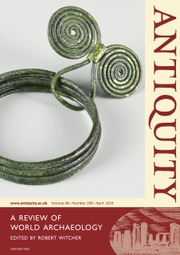


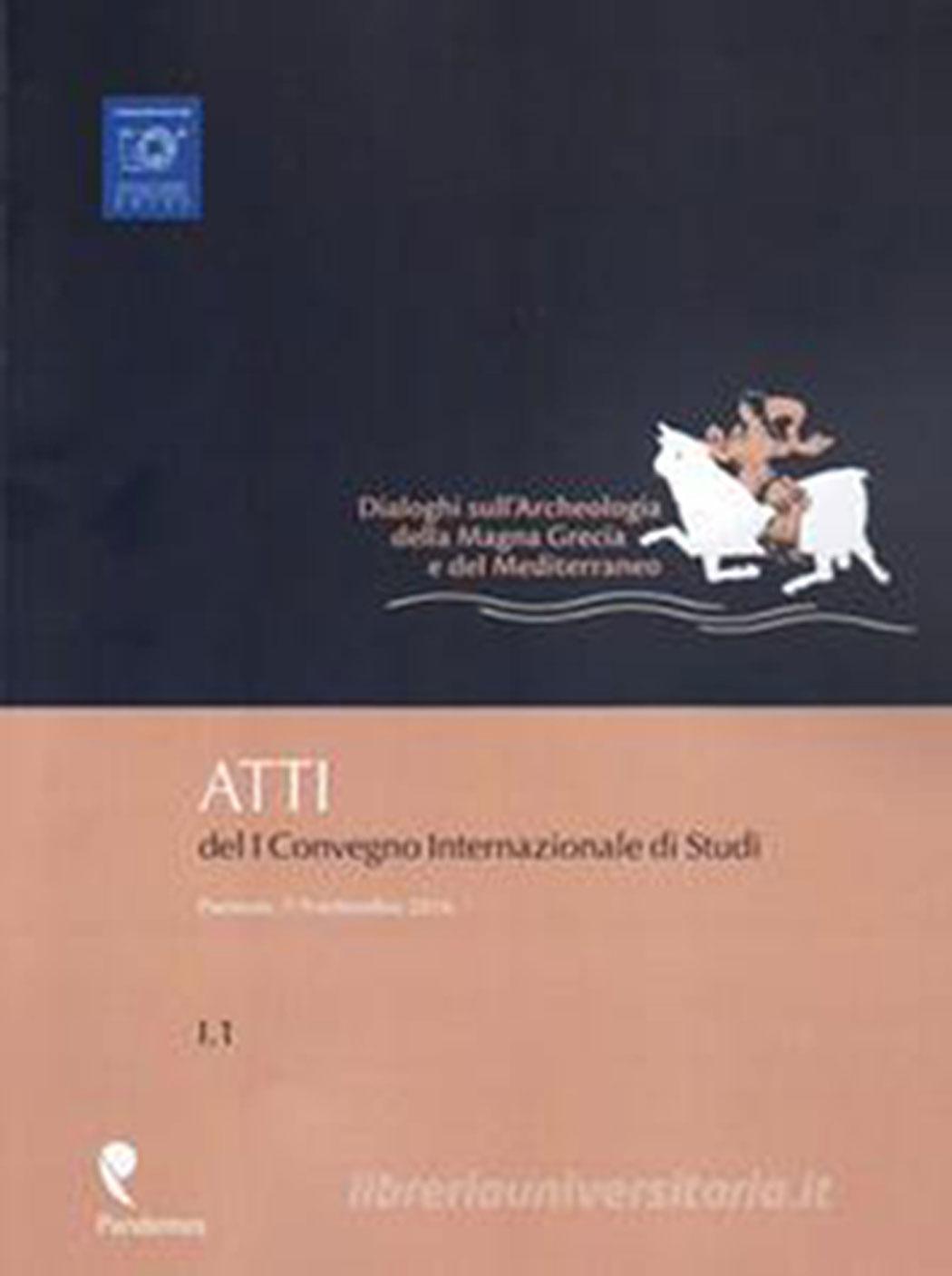
These volumes publish the proceedings of a conference that took place in 2016 in Paestum, Italy; its main focus was on settlement and productive economy in southern Italy. Nearly 150 papers ranging from the Late Bronze Age to the late Roman period make up this set; they are divided into 11 unequal sections and distributed across five volumes.
The organising entity is the Fondazione Paestum, which has a focus on comparative studies of colonial activity in the Mediterranean. The conference was just one of a series of extraordinary events and refurbishments that have taken place at Paestum recently; a second conference has just been published and a third is in preparation. The conferences are aligned with another major event at Paestum, and one of Italy's most important cultural tourism events, the Borsa Mediterranea del Turismo Archeologico (an international trade show for the travel and tourism industry). Paestum, a colony itself both in the sense of a Greek foundation, and then a Roman resettlement, is well suited therefore to host discussions that touch on mobility, hybridity and the interpenetration of culture as visible in the material record.
The blockbuster conference proceedings is a difficult phenomenon to assess. One is often grateful for the mass of work, but coherence is impossible, and sometimes it is only in retrospect that one can see its value. Several of the major ‘Conferences in Italian Archaeology’—the seventh in this occasional series, in Galway, has just been published (Herring & O'Donoghue Reference Herring and O'Donoghue2018)—brought out the best in their contributors, but they were often highly international too, and I shall come back to this. Even without the benefit of hindsight, what does the first of the new Paestum series tell us about the health of the discipline?
In the first section (volume I.1), Il Mediterraneo antico tra conflitti e integrazioni, Matthiae reviews some of the tragedies of contemporary archaeological destruction through war, highlighting recent events in Syria. Greco and Correale present a deposit of arrows in the context of sympotic buildings at Efestia on Lemnos, and they suggest that these indicate male rituals of thanksgiving; Vassallo looks at the battlefield archaeology of Himera and its now well-known line of skeletons from 480 BC; and the repairs after the blockade of 409 BC, and Graells i Fabregat presents an example of a victory trophy in the Antikensammlung of Munich. Part of this rather remarkable find is wooden, with a bronze helmet, breastplate and a spear and shield; it is of Apulian production from the later part of the fourth century BC, and the author thinks it may have been a battlefield monument. There are accounts of the Orchomenos trophy set up by Sulla, and of the Actium monument. Gallo's article on Nelson's Island, taken over by Greeks after Alexander's conquest, reveals a less violent process, especially as there was already a strong Greek presence there.
A number of papers in volumes I.1–2 deal with settlements generally. Several focusing on the Bronze Age highlight the growing body of information, including data on the dramatic Avellino eruption and the importance of trading connections across southern Italy. Coluccia's fascinating article on the southern Salento orients us towards the Adriatic; the suggestion of a sort of lighthouse at Roca, visible from inland and across the sea, is bold. A useful article on the prehistory of Paestum consolidates the long history of the site, right up to a couple of ceramic fragments from the Mycenaean period. Two subsequent articles continue the story into the imperial period, including a useful summary by Ficuciello of the excavation around the archaic house on the western urban area.
Marino's synthesis of her doctoral thesis on the transition from Late Bronze to Early Iron Age in Etruria offers an interesting argument for variety. Although there clearly were moves from small 15ha settlements to larger 50–200ha settlements, the dynamics and outcomes are variable. It is interesting to read this account of ‘proto-urbanisation’ against Tosti's description of Sparta's development across a similar but slightly longer time span. Evidence for the collapse of a pre-existing palatial system is clearly absent in Etruria, but the settlement pattern of villages within a broader unity has evident parallels with the Etruscan so-called proto-urban centres.
The importance of variation in settlement across this long time span from the fourth millennium onward is clear, but the Bronze Age evidence is obviously slighter. Even in the sample we have, there are many different interpretations, experiences and, indeed, terminologies of urbanism, such as palatial, proto-urban, colonial and polis. One potential avenue for further research might be to lay even more emphasis on the local experience of aggregation, and to combine geological and environmental data more effectively; for instance, viewshed and land-use analysis, and the growing evidence for agriculture, vegetation and animal husbandry, which are not particularly strongly represented in this collection.
Moving into later periods, there are several papers on Velia/Elea, a site that certainly merits the attention. Water management and cult are prominent themes. Discussion of Foce Sele opens possibilities for a better understanding of the organisation of the territory of Posedonia/Paestum. Naples and Cumae are also discussed, the former through its urban necropoleis and the third-/second-century BC fortification of the acropolis, and the latter through an important Hellenistic/Roman villa with clear parallels to the Vesuvian cities. There are useful summaries of work at Croton and Teanum Apulum.
A particularly noteworthy chapter is Spallino's account of farmsteads in classical Attica. The distribution map is clearly the product of the focus of archaeological activity, but it would be useful nonetheless to compare this evidence with other regional survey data (the example of Croton is illustrative). Toscana Raffa approaches an analysis of the interdependence of town and farm in her account of late Roman Sicily. Lurking rather out of sight in many of the essays was the question of what these central settlements were for. This problem is acute in some settlements in central Italy in the Roman period. The interesting question is what makes some of these centres flourish as active and lively hubs of population density, administration and other functions, while others remain occasional gathering points for a predominantly rural population? The variety of pathways to urbanism might well imply a very disparate set of urban phenomena.
The section on living environments (volume I.3) begins with an illustration of the importance of returning to archival material, in this case from the sanctuary of Artemis Orthia in Sparta, from which Luongo identifies an early ninth-century phase (interesting in the context of the earlier paper on Sparta's urban history). Other archival pieces look at Orsi's unpublished work at Calderazzo a Medma, at the material in store from the Metapontine sanctuary at San Biagio della Venella, and at terracottas from the so-called Giardino Romano at Paestum. There is also a very helpful account by Oddo of reports by Italian scholars of radiocarbon dates in the 1960s and 1970s. By clarifying how they treated different kinds of data (and in different areas too), Oddo provides another calibration tool for this important information.
Panvini offers a valuable overview of the archaic emporion at Gela (sadly damaged recently), and Spadea provides a synopsis of the perennially fascinating emergence of the Brettii. D'Angelo's reading of the Messapian stelai as territory and identity markers would have worked well in the previous section. Other papers consider cults and sanctuaries in Naples, Roman Eleusis, Dodona and Panetelle (Mondragone).
Several of the papers focus on epigraphy. Gallo associates the inscriptions from Heraclea that detail the lands owned by the temples of Dionysus and Athena with the impact of Rome, thus proposing a later date than is traditionally accepted. Pellegrino gives an overview of the epigraphy from Pontecagnano from the seventh to the fourth centuries. There are also discussions of sympotic inscriptions from Kamiros and household pottery from Elea.
The other main staple of archaeology is of course the necropolis. Volume I.3 provides a fair sample of evidence, both indigenous and colonial. There are indigenous burials from Gela, and from the Locride with intriguing fibulae and pottery; and another look at the extraordinarily dense necropolis from Agrigentum. Citera uses burial evidence to push the foundation of Paestum to just after 600 BC. Conturis offers a very good essay on hero cult and burials, reminding us that the burial is the end of a process of heroisation and that there is a good deal more work to be done here. Balducci considers funerary pyres—which certainly highlights the need to think more about the mechanics of cremation. Essays on Capua, Pontecagnano and Salerno take us chronologically onward to the third century BC. The Lucanian area is represented by essays on Sala Consilina, Volcei and a new fourth-century warrior tomb from Anzi.
There is a wealth of specialist material in these two sections. It is our own categorisation that has neatly separated the world of the living and that of the dead. Conturis reminds us that this is not a reflection of the ancient reality, and the authors are, of course, all aware of this, but some reflection is no doubt due on how to integrate the two better.
The section in volume 1.4 on territorial dynamics ought to be the place where case studies combine the disparate elements. Tarlano looks at the Lucanians in the Val d'Agri, around Grumentum. Taking a long view, he sees a growth in population from the fifth century, but the distribution of settlement is still sparse. The development of Grumentum is seen as a moment of self-Romanisation. The direct impact of the Romans is more evident from the mid first century BC, which fits with arguments made elsewhere about the relatively slow impact of colonisation. A possible cippus along one of the central centuriation lines is a nice discovery.
Marchi's essay takes a broader view, showing Grumentum to be unusual in being on a regular plan without Roman intervention. Elsewhere the Roman impact is more direct. The discussion of how Roman colonisation changes the landscape is currently hotly debated, and these two essays demonstrate why. For example, there is a significant amount of work to be done on the local response to Rome and Roman direction; centuriation, which clearly had the largest effect, is notoriously difficult to date.
Mastrocinque gives a brief summary of the area around Egnazia, stressing recent palaeobotanical work in the reconstruction of Messapic landscapes. Bassani's account of thermal springs is a valuable overview of an important Italian phenomenon, one which develops its own economy and morphology. It is a good reminder that there are other structural phenomena than cities, sanctuaries and necropoleis.
The results show that we are still very much in thrall to widely differing versions of what Romanisation means and the timescale on which it operated. As Cinquantaquattro hints in her good summation, it is easy to forget that in the fourth and third centuries, for example, Rome was not the only player, as shown by the evidence for Samnites in the region. The value of these wider syntheses is precisely that they raise questions over, for instance, what to call the large pre-Roman Daunian settlements. Here the notion of diversity begins to win through.
A long and highly disparate section on production in volume I.4 offers an enormous range of material and, as one would expect, an emphasis on chronology, typology and statistical analysis. Architectural terracotta decoration is well represented, and there are some important essays here, especially on Sibaris and Poseidonia, Metapontum and indigenous Basilicata. The processes of production are discussed for bricks and ceramics at Elea/Velia, ceramics at Paestum, Atena Lucana and the Sibaritide, and there are also considerations of the provenance of amphorae at Foce del Sele and Velia.
The domestic nature of agriculture is a feature of sections on territory. The essays pose a number of questions, and a stronger synthesis would have been helpful. With small farms and not especially substantial villas, an interesting question is what was the basis of industrial production? For the most part it looks very similar to domestic agriculture. A statistical analysis of the economy of southern Italy would be interesting to try to establish the parameters and the shape of any possible growth curve under Roman power. It may be that these economies were more embedded than they appear when objects are extracted from context. Other emerging issues are: what is the nature of exchange? How does one measure a city's productive capacity if much of the production is at household level? Is this the real limiting factor on the development of the economy of southern Italy, and do centuriation or the other features of Roman influence make a difference?
A section (volume I.5) on artistic forms is similarly heterogeneous. Some of the items examined are well known—the section opens with reflections on the shipwreck scenes on the Pithecusa krater and an oinochoe in Munich (Scafuro), arguing that they reflect a new law-driven social order. Rignanese focuses on a marriage scene on a seventh-century BC Daunian stele, noting the significance of women in the elite world. Petrillo considers the representation of clothing and accoutrements from the mothering statues in Capua, and their utility as evidence for changes in fashion. Rebaudo argues that we need to allow for more variety and invention in the depiction of scenes from Greek tragedy on southern Italian pottery; representation of myth in art is a popular theme.
There are three articles on mosaics. Cecconi looks at Greek temple mosaics, which perhaps need to be brought more firmly into our view. Treatments of the Hellenistic domestic mosaics at Heraclea (which may include a signature) are considered, as is the Roman-period workshop at Karalis in Sardinia. Other subjects include the symbolism of the stone in Etruscan ritual (including an alleged equivalent to the oath per Iovem lapidem, swearing to Jupiter using a stone); a strange box with three heads from the Fondo Patturelli; Hercules bronzetti from Capua; and lastly a consideration of the possible vicissitudes of the Minerva statue said by Pliny to have been in the Largo Argentina. Volume I.5 closes with some papers on conservation and museum display.
Overall, the order of the papers could have been more coherent and the sections tighter. The articles are short, without notes, and the volume does not have a coherent theoretical approach. There are other benchmarks, however. No affiliations are given, but it is clear that quite a lot of younger scholars are represented here. This is some indication of the health of studies in southern Italy, and it is good to see an openness to a new generation of scholars. That said, the authors are almost without exception Italian. There are fewer and fewer international participants at these major events. To some degree this is the product of congested timetables, changing patterns of university funding and different ways of disseminating archaeological discoveries through social media, all of which make it more difficult and perhaps less essential than it used to be for non-Italians to attend. There is, however, far less interest in southern Italy outside mainland Europe than there used to be, or than there should be. Recently, there has been an upsurge in interest in Etruria and central Italy from the UK and the USA, and I hope we shall see the same for southern Italy too.
Without this, the danger is that the dialogue, to use the title of the series, is diminished, in both directions. A more international conversation can be useful in unlocking larger questions. What seems to me to be critical for the future of the discipline is the structure of research funding. It is vital that well-funded doctoral programmes in Italy lead to post-doctoral positions; that funding can include superintendency staff as well as academic staff, and international collaborations. Finding a way to share data—to create dialogues between different kinds of evidence, different areas and different models—is vital. These data can then drive collaborative and focused research programmes at an appropriate level of detail.
As a simple example, one dialogue that is almost entirely missing here is between southern Italy and the Adriatic. The putative Bronze Age lighthouse on Roca shines rather forlornly across the straits. Yet this is one area where more information and more dialogue will almost certainly help to transform the way that we understand the productive economies and cultural intermediaries of southern Italy.
Another core task must be to address the organisation of data. One consequence of the excellent attention to detail is a bewildering proliferation of research outputs. Good use of metadata in articles helps searching, and it is past time that we thought about how to organise bibliographical resources for Italian archaeology. It is excellent to see the use made here of archival material, but for all the advantages of the digital world, we still need to curate these resources well.
As a final observation, it would be good to focus on comparison in future editions. A dialogue that was hinted at but not fully developed in these volumes is that between contemporaneous Greek and Italian evidence beyond colonies. Are proto-urbanism and the birth of the polis comparable processes? What follows from their similarities or differences for economy, politics, society? What is the validity of the term Mediterranean?
Every initiative that keeps alive the interest in antiquity and furthers research is to be welcomed. It is to be hoped that these Dialoghi become a part of the ecology of Italian archaeology. As the project matures, one hopes that it will retain a commitment to supporting early career researchers, become a more international arena and begin to set the agenda for future research.


