For a brief period, c. 1853–54, the lives of Johannes Brahms, his mentor Robert Schumann and their friends Joseph Joachim, Julius Otto Grimm and Albert Dietrich, intersected with particular intensity. This had much to do with Schumann, who introduced some of these musicians to one another, who involved Brahms and Dietrich in co-composing with himself a violin sonata in honour of Joachim, and whose nervous breakdown in early 1854 sent most of the other composers rushing collaboratively to the aid of the Schumann family in the months to follow. These men formed a tight-knit circle, not only socially but also musically, regularly sharing their works in progress, offering and receiving compositional advice and feedback and performing each other's works. Interestingly, the composition of a D-minor concerto or symphony appears to have occupied every one of these composers during this period, which is especially remarkable considering that some of these men produced little else by way of major orchestral pieces.Footnote 1 For much of the 1850s, Brahms was occupied with the composition of the D-minor work that was at one point a candidate to become his first symphony, but would ultimately become his First Piano Concerto. During this same period, Joachim and Schumann wrote violin concertos, and Grimm and Dietrich appear to have been working on symphonies, all in D minor. Although the relationship between the Joachim and Brahms concertos has received some attention in the existing scholarship, there has been no focused examination of relationships and possible mutual influences between this broader group of works.
Perhaps one reason for this is that there are two different genres involved (symphony and concerto); nonetheless, this does not make for an unreasonable comparison. In the nineteenth century, great concertos were sometimes lauded by critics as virtually symphonic; as one scholar points out, during that period, ‘the pinnacle of praise was to proclaim a great concerto a “symphony!!!” with an enthusiasm that has somehow made it excusable to overlook its generic identity altogether’.Footnote 2 Brahms's First Piano Concerto reached its ultimate generic designation only following a period during which it was an incomplete symphony, so it has lineage in both genres. (Brahms was certainly not the first major composer to rework material so as to shift between these two genres: Beethoven's Eighth Symphony, for example, derives from sketches for a piano concerto.Footnote 3) Finally, especially given that this collection of works was written in a tight artistic circle within a relatively short period of time, it is important to keep in mind that shared ideas can certainly transcend genre, particularly when the genres involved are both large-scale, multi-movement orchestral genres and when the works are all in the same key.
In this article, I will demonstrate that the D-minor concertos and symphonies composed in the Brahms–Schumann circle in the 1850s were shared among their composers during their period of composition. I will sort out as best as possible the overlap between the works’ compositional timelines and demonstrate that there appear to be musical correspondences likely to have been encouraged by the composers’ close social and musical ties. These pieces, I will argue, bear to one-another a number of interesting musical relationships extending beyond those generic to their shared key and genres. A key finding that will emerge from the comparisons that follow is that, in many cases, the works also appear to bear important relationships to the music (particularly the orchestral music) of Beethoven – whose last symphony, not insignificantly, is also a D-minor work. In short, the evidence points to mutual musical influences among the composers, particularly where the use of specific Beethoven models is concerned.
Overview of Personal Relationships
As a foundation for what follows, I begin with a brief summary of the personal relationships among these figures during the period in question. These relationships – especially with the celebrated Hungarian Jewish violinist Joseph Joachim (1831–1907) and with Robert Schumann – are well-known and well-documented, so I provide only a short summary of them here and refer the reader elsewhere for further information.Footnote 4
Brahms and Joachim were introduced at Hanover in April 1853 by the violinist, Eduard Reményi, a former fellow student of Joachim with whom the young Brahms was touring as an accompanist. Brahms, almost twenty years old, and Joachim, twenty-one and much more well-established professionally, became fast friends, and the friendship would prove integral to the musical lives of both men for decades to come, resulting in works including Brahms's Violin Concerto and Double Concerto. In the early years of the relationship, Joachim was an active composer, but he soon gave up composing to focus on his career as a violinist and conductor; in these latter capacities, he was to play an important role in promoting Brahms's work.
In the summer of 1853, Brahms embarked on a Rhine journey culminating in Düsseldorf, where he stopped at the Schumann home to introduce himself, a visit encouraged and facilitated by Joachim, who had become friendly with Robert and Clara Schumann earlier that year. The Schumanns, dazzled by his music, immediately took Brahms under their wings, and within less than a month, Robert's famous article, ‘Neue Bahnen’ was published, portraying Brahms as a musical saviour who would carry on the Beethovenian lineage (fighting the perceived threat of Liszt and the New German School).Footnote 5 It was on 27 February 1854, that Schumann's mental decline reached a climax with a suicide attempt that led to his institutionalization. According to Clara Schumann, before his death her husband came to consider Brahms and Joachim his closest friends; along with Dietrich, they headed the procession at Schumann's funeral in 1856.Footnote 6
Estonian-born composer, conductor and pianist Julius Otto Grimm (1827–1903) was another member of the Brahms–Schumann circle in the 1850s. He first met the Schumanns in his own homeland while they were travelling to Russia in 1844, and he reconnected with them in Leipzig in 1852 before meeting Brahms there in November 1853.Footnote 7 In the aftermath of Schumann's institutionalization, both Grimm and Brahms rushed to the aid of the Clara and her children at Düsseldorf; consequently, 1854 (the year in which Brahms's D-minor Concerto has its origins) was a year of especially close and frequent interaction between the two composers.Footnote 8 Brahms's Op. 10 ballades (1854) were dedicated to Grimm, and Grimm's later Suite No. 2 in the form of a canon, Op. 16 (1870), one of only a handful of works Grimm composed for orchestra aside from his Symphony, was dedicated to Brahms.Footnote 9
Albert Dietrich arrived at Düsseldorf in 1851, and there he became incorporated into the Schumanns’ circle, eventually meeting Brahms at the Schumann home upon Brahms's arrival in Düsseldorf in the autumn of 1853.Footnote 10 Brahms and Dietrich became close friends and, with Schumann that fall, co-authored the so-called ‘F-A-E’ Sonata, a tribute to Joachim, employing a musical motive based on the initials of Joachim's personal motto, ‘Frei aber einsam’; Dietrich composed the Sonata's first movement, Schumann the second and the finale and Brahms the scherzo. Dietrich later named Brahms and Joachim godfathers of his first child, Max, who was born in 1860.Footnote 11 He conducted Brahms's music frequently, especially while serving as music director at the court of Oldenburg (1861–90), a position that Joachim had helped him to obtain.Footnote 12 It has also been suggested that Dietrich is the likely composer of the A-major Piano Trio sometimes attributed to Brahms.Footnote 13 The year after Brahms's death, Dietrich's memoirs of and correspondence with Brahms through 1889 were published in his Erinnerungen an Johannes Brahms in Briefen.Footnote 14
We turn now to the works themselves. Proceeding in rough chronological order, we will examine the concertos and then the symphonies. I will give a brief overview of each work's compositional timeline and historical relationship with other composers in the circle and then explore musical relationships among the pieces and the ways in which these works appear to respond to music of Beethoven.
Robert Schumann, Violin Concerto, WoO 23
Schumann's records indicate that he began work on his D-minor Violin Concerto in September 1853, completed the piano reduction by 1 October and had fully orchestrated the work by 3 October.Footnote 15 The piece was composed for Joachim by request and was Schumann's last orchestral work, completed just a handful of months before his institutionalization.Footnote 16 Due to his reservations about the piece (later expressed to Moser), Joachim never performed the Concerto publicly, and in fact the work was suppressed by Clara Schumann, Joachim and Brahms as the product of a mind on the brink of collapse.Footnote 17 The piece was not to see the light of day until the mid-1930s.Footnote 18
Remarkably, Schumann's completion of the Concerto happened to coincide precisely with Brahms's arrival at the Schumann home in Düsseldorf to introduce himself on 30 September 1853. The next day, 1 October, Schumann logged the two events in his records, almost in the same ‘breath’: ‘Finished the Violin Concerto. Visit from Brahms (a genius)’.Footnote 19 While Schumann was putting the final touches on his Concerto, Brahms was spending quite a bit of time under Schumann's own roof and, given the known intensity of their relationship from its start, it is difficult to imagine that each composer would not have been highly attuned to the other's current musical activities during these days.
Brahms's attitude toward this work is important, as I will argue below that its influence may be heard in his own First Piano Concerto. Although Brahms was complicit with Clara Schumann and Joachim in suppressing Schumann's Violin Concerto, his expressed views on the work, when compared to those of Clara and Joachim, suggest that he may not have been as much of a driving force as the others in the Concerto's suppression. According to the testimony of the Schumanns’ daughter Eugenie, Clara was vehemently opposed to the work's publication, and we know Joachim actively suppressed the work until his death.Footnote 20 Whereas Joachim and Clara clearly had concerns about the work as the product of a mind on the brink of breakdown, the opinion Brahms expressed about Schumann's Concerto was more positive, at least when he recalled the work late in life. Music critic Arthur Abell reported on a discussion he had with Brahms in 1896 about Schumann's Concerto, in which Brahms expressed appreciation for the work's ‘beautiful, characteristic themes’ ‘interesting harmonies, and ‘rhapsodical character’.Footnote 21 The decision to leave the Concerto out of the Breitkopf & Härtel Schumann edition on which Clara and Brahms collaborated after Robert's death appears to have been Clara's and actually seems to have run counter to Brahms's own preferences.Footnote 22 I will return to this work shortly, drawing comparisons with the other pieces discussed below.
Johannes Brahms, Piano Concerto No. 1, Op. 15
Brahms's First Piano Concerto had a long, complicated compositional history. In spring 1854, Brahms had just finished drafting the first three movements of a two-piano sonata in D minor.Footnote 23 By that summer, he had begun orchestrating the work as a symphony. Footnote 24 By early February 1855, he had orchestrated the first movement and composed two new inner movements, but had yet to compose a finale – and then he had a dream in which he was performing the work as a piano concerto.Footnote 25 This dream (along with the daunting nature of the task of writing a first symphony) led him to rework the piece yet again – this time, as a concerto. The completed work featured a revised first movement (fully drafted by mid-October 1856) and a new slow movement (drafted by early January 1857), and Brahms managed at last to compose a finale (drafted by mid-December 1856).Footnote 26 Malcolm MacDonald writes, ‘the Concerto was essentially complete by March 1858 … but [Brahms] continued tinkering with it right up to the first public performance in January 1859, and was hardly satisfied even then’.Footnote 27
The origins of the work in early 1854 coincide with a period of particular professional and emotional intensity stemming from Brahms's interactions with the Schumanns, from personal and artistic introductions, from ‘Neue Bahnen’, and from Schumann's breakdown, suicide attempt and institutionalization – all occurring within a period of a few months and all radically life-changing for those involved. The dark, tumultuous opening of Brahms's D-minor Concerto, the original drafts of which date from the immediate aftermath of these events, has often been interpreted as Brahms's response to, or evocation of, Schumann's breakdown and plunge into the Rhine. This idea stems from Kalbeck, who claims Joachim as his personal source; as musical elements evoking Schumann's suicide attempt in this concerto opening, Kalbeck cites ‘pedal points insistently pounded by the timpani’, an initial gesture containing ‘fearsome leaps’, and ‘a trill which unites the orchestra in an elemental shudder’.Footnote 28 As for the adagio, Brahms wrote to Clara that the movement was a ‘tender portrait’ of her.Footnote 29
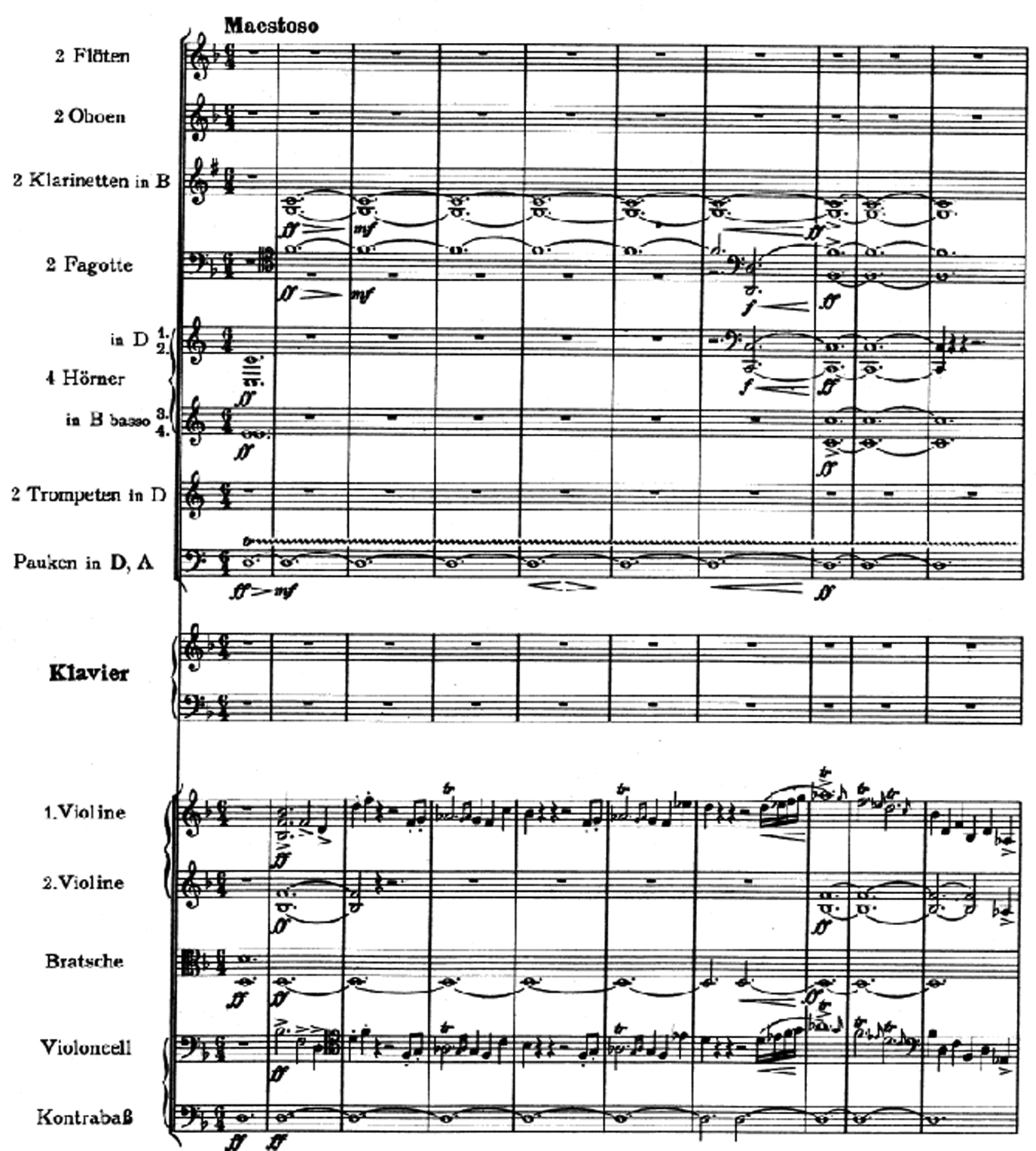
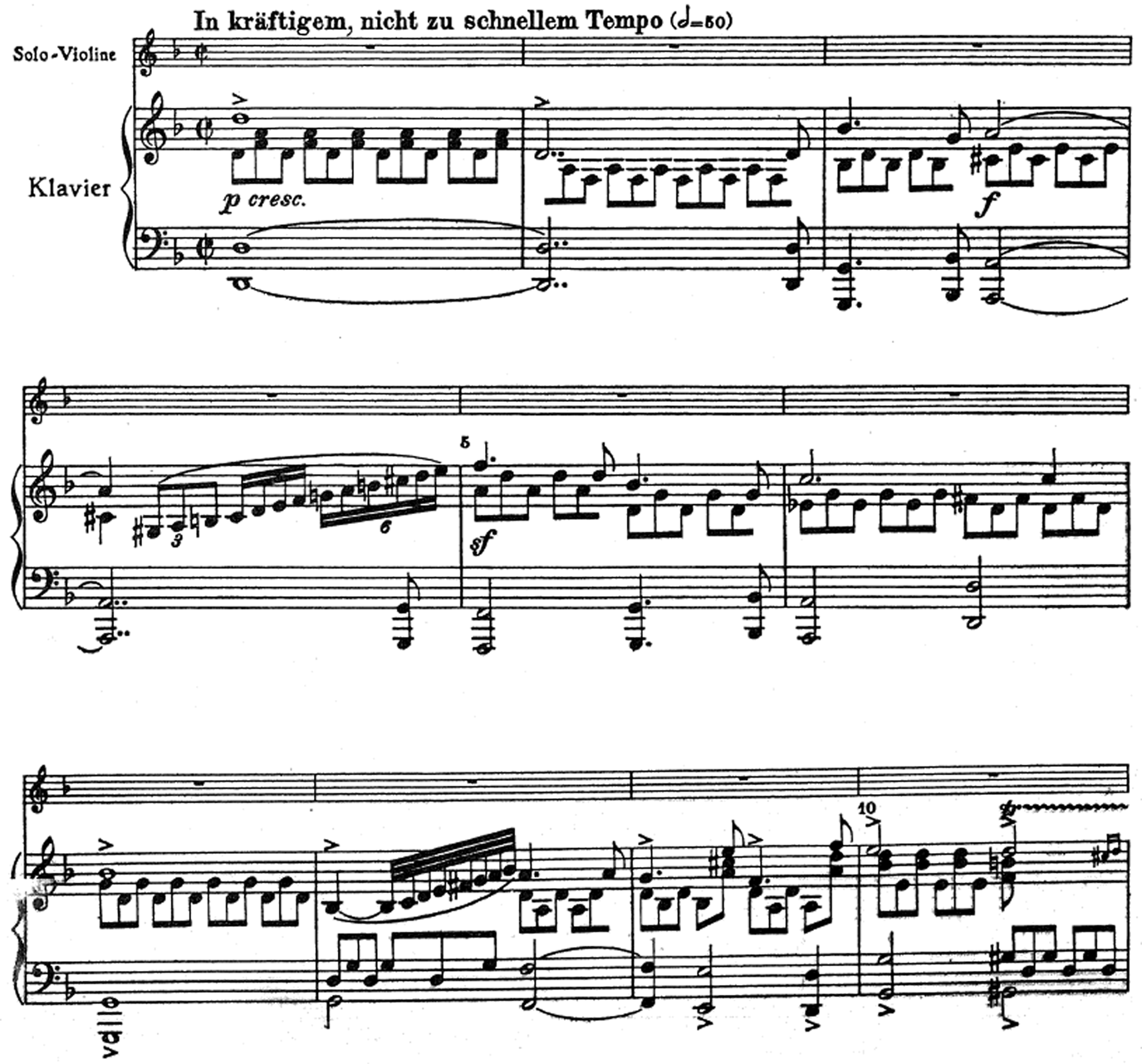
Biographical circumstances surrounding the composition of both this work and Schumann's Concerto, as well as musical similarities between the opening movements of these two works, suggest that Brahms may have been influenced by Schumann's Concerto as he wrote his own.Footnote 30 Given the indications that Brahms may have had Schumann himself in mind when composing his D-minor Concerto, it is not hard to imagine that he would have had Schumann's own D-minor Concerto also in mind; the Violin Concerto at least deserves to be considered along with other D-minor orchestral works, including of course Beethoven's Ninth Symphony, as a possible source of inspiration. Brahms's Concerto opening has much of the driving, unsteady, tumultuous feel of Schumann's, and of Beethoven's Ninth (see Ex. 1a–c).
Brahms, Op. 15, mvt i, bars 1–10

Schumann, WoO 23, mvt i, bars 1–10 (piano reduction)

Beethoven, Op. 125, mvt i, bars 1–8

It is natural that one seeking to determine the influence of Schumann's Concerto on Brahms would look especially to Brahms's own Violin Concerto (completed 1878), likewise written for Joachim. A number of musicians and scholars have pointed to parallels between these two violin concertos.Footnote 31 Scholars have also pointed to parallels between Schumann's Concerto and Brahms's Violin Sonata No. 1 (1878–79).Footnote 32 Nonetheless, Brahms's Violin Concerto and First Violin Sonata both significantly postdate Schumann's Concerto and are composed in D and G major, respectively, not in minor. Footnote 33
The Piano Concerto is temporally and musically more proximate to Schumann's Concerto; indeed, given the works’ relative compositional histories, surrounding biographical circumstances and musical similarities (which are actually stronger, at the outset, than those between the Brahms Concerto and the opening of Beethoven's Ninth), the possible influence of Schumann's Concerto on Brahms's D-minor Piano Concerto deserves closer attention than it has received. (Brahms's second and third movements, begun later and not associated so closely in the scholarship with Schumann's breakdown, are quite different from Schumann's in character and approach, so it is mainly a comparison of the first movements that interests us here.Footnote 34) Both concertos begin with a stormy character; angular, accented melodies; and off-kilter rhythms (see again Exx. 1a-b). Both first themes are rife with accented dissonance and chromaticism. Both opening themes feature contrasts between long and short note-values and begin with two longer notes in similar proportion (semi-breves and double-dotted minims in Schumann vs. dotted minims and minims in Brahms). Both melodies begin with accented, descending gestures; have octave leaps on the first scale degree within the first two bars (Schumann starts with an octave descent plus sixth ascent, which Brahms reverses to begin by outlining a sixth descent followed by an octave ascending leap); and feature abrupt directional contrasts. The large leaps and dramatic changes of direction create a sense of restless dynamism. Like Schumann (and Joachim), Brahms uses upward-sweeping runs as transitions between phrases. Like Schumann, Brahms ends his first gesture with unresolved-sounding upward motion and, to enhance the tremulousness of their first theme groups, both composers use dramatic trills. Both composers arpeggiate a B-flat major chord in descent in the melody at the outset of one of the first two phrases (Brahms, bar 1; Schumann, bar 5; see also Brahms, bar 9). Both begin dominated by the strings, with percussion. Whereas Beethoven's Ninth Symphony begins quietly, both the Schumann and Brahms works begin with or immediately rise to a high dynamic level. The tempos of the two concerto openings are also comparable: Schumann's is marked ‘In kräftigem, nicht zu schnellem tempo’ (‘in a powerful tempo, but not too fast’), whereas Brahms's is ‘Maestoso’, conveying a similar impression. Brahms's Concerto also shares with Schumann's a relatively hesitant entry of the soloist after a substantial orchestral opening, as well as the absence of a cadenza in the first movement.Footnote 35 Although to a lesser extent than in the Brahms, the soloist's initial entry in Schumann's Concerto similarly fails to match the assertiveness of the orchestral entrance, incorporating ‘stutter’ figures (for example, at bars 58ff.), as well as melodic circularity, hesitancy suggested by the contrast of long and short note-values and a slow harmonic rhythm.
Brahms did not rely on Schumann's Concerto in any explicit way, but rather merely evoked a similar character in a way that may have represented, if anything, the general connection in Brahms's mind between the opening of his piece and his friend and mentor, Schumann. If the opening of the piece indeed responded to Schumann's breakdown, then what better way to have opened the work than by evoking the dramatic opening of the last orchestral piece Schumann composed before that breakdown occurred? Such a connection with the Schumann Concerto would have been all the more meaningful to Brahms considering that Schumann's completion of his work coincided exactly with Brahms's first meeting with Schumann and also considering the roles Schumann played in encouraging Brahms to compose for orchestra in a Beethovenian manner, something Brahms attempted to do for the first time when composing the symphonic version of the work that became his Op. 15. One wonders if a link between that work and Schumann's could even have played a role in Brahms's ultimately reenvisioning his own piece as a concerto.
Apart from its associations with the Schumanns, Brahms's Concerto, like so many of his compositions of this period, is also known for its close ties to music of Beethoven. The work is often cited as an example of the influence of Beethoven's Ninth Symphony, which is of course in the same key and similarly traces a trajectory from minor to parallel major, the latter being definitively established only in the finale. Schumann had encouraged Brahms to model the openings of his works on the opening passages of the Beethoven symphonies, and the beginning of Brahms's Concerto, at one time been intended to open a first symphony, was quickly likened by critics to the beginning of Beethoven's Ninth.Footnote 36 Kalbeck claimed that hearing the Beethoven Symphony was Brahms's inspiration for beginning the work, and Reynolds has argued that Brahms intended to turn the piece into another ‘choral’ symphony.Footnote 37
But perhaps the most striking influence of Beethoven occurs in the Concerto's finale. The movement's proportions, key scheme and developmental techniques (particularly a fugato based on the refrain) are recognized to have been closely modelled on those of the rondo finale of Beethoven's Piano Concerto No. 3, Op. 37. Building on discussions by Rosen, Tovey and others, I have analyzed Brahms's handling of his model in detail elsewhere, and have argued that the young composer selected this model as a backdrop against which he could assert his own artistic individuality and perhaps even ‘one-up’ Beethoven.Footnote 38 Indeed, Brahms incorporates into his developmental fugato not only the refrain but also one of the episodic themes; appends to Beethoven's structure a more extensive, involved coda; and gives the movement two cadenzas. As I will discuss in a moment, this Beethoven finale may also have served as a model for the finale of one of the other works under discussion here.
Joseph Joachim, Violin Concerto No. 2 (‘in the Hungarian Manner’), Op. 11
The genesis of Joachim's Violin Concerto ‘in the Hungarian Manner’, also in D minor and concluding in the parallel major, coincides with the composition of Brahms's Concerto, although lagging slightly behind. Joachim began his Concerto around 1855 (the year when Brahms reconceptualized his own work to fit within this genre), with the bulk of the writing apparently taking place between 1856 and 1858, the final touches stretching out until early 1860.Footnote 39 Meanwhile, Joachim not only conducted the premiere of Brahms's First Piano Concerto in Hanover on 22 January 1859, but also provided feedback on that piece many times throughout its gestation, especially with regard to orchestration, with which Brahms was particularly inexperienced.Footnote 40 Just as Brahms shared drafts of his own piece with Joachim, Joachim shared drafts of his Concerto with Brahms, who admired the work and became its dedicatee.Footnote 41 Brahms wrote to Joachim in December 1858 that he would love to have his own Concerto performed on the same programme with Joachim's.Footnote 42
This would have been a natural pairing, for not only do the works share their key, but as Tovey has pointed out, remarkably, the finale of Joachim's Concerto likewise appears to derive aspects of its structure from Beethoven's Op. 37.Footnote 43 Joachim's finale has an outline similar to the Beethoven and Brahms finales, including a developmental fugato based on the Moto perpetuo refrain, as well as similarities in phrase structure and cadenza-like transitional passages.Footnote 44 Given the compositional timelines, it is likely that Joachim was influenced by Brahms's choice of model, rather than (as Tovey suggests) the other way around.Footnote 45 Indeed, it seems that Brahms's Concerto had already been premiered before Brahms ever saw or heard Joachim's finale.Footnote 46
Although Joachim's Concerto is infused with the musical flavour of its composer's native Hungary (for example through chromatic inflections, emphasis on dotted rhythms and syncopation, grace notes, etc.) and the finale is of substantial scale, Joachim's handling of form, when compared with that of Brahms in his own Concerto's finale, suggests less concern with distinguishing his music from and ‘outdoing’ the Beethoven model.Footnote 47 For example, Joachim follows Beethoven's scheme in adopting the tonic major for the first episode's recapitulatory statement, whereas the recapitulation of Brahms's first episode appears in the tonic minor, delaying the shift to major until later in the movement. Instead of providing two cadenzas to Beethoven's one, as Brahms does, Joachim's final movement, however virtuosic, contains no formal cadenza. Brahms's elaborate coda is where his finale breaks most spectacularly from its model, whereas Joachim's coda is notably less substantial. Brahms's greater emphasis on deviating in spectacular ways from his model is not surprising. Although only two years Brahms's senior, Joachim enjoyed a musical reputation far better established at this time, having already been Mendelssohn's youthful protégé in Leipzig, served as Concertmaster under Liszt at Weimar and taken up directorship of the court orchestra at Hanover. He was also more concerned with his career as a violinist than as a composer, and in fact he gave up composing soon thereafter. Unlike Brahms, he had written for orchestra before, and he did not face the pressure to follow in Beethoven's footsteps that Schumann's endorsement had engendered in Brahms. In short, Joachim had less to prove.
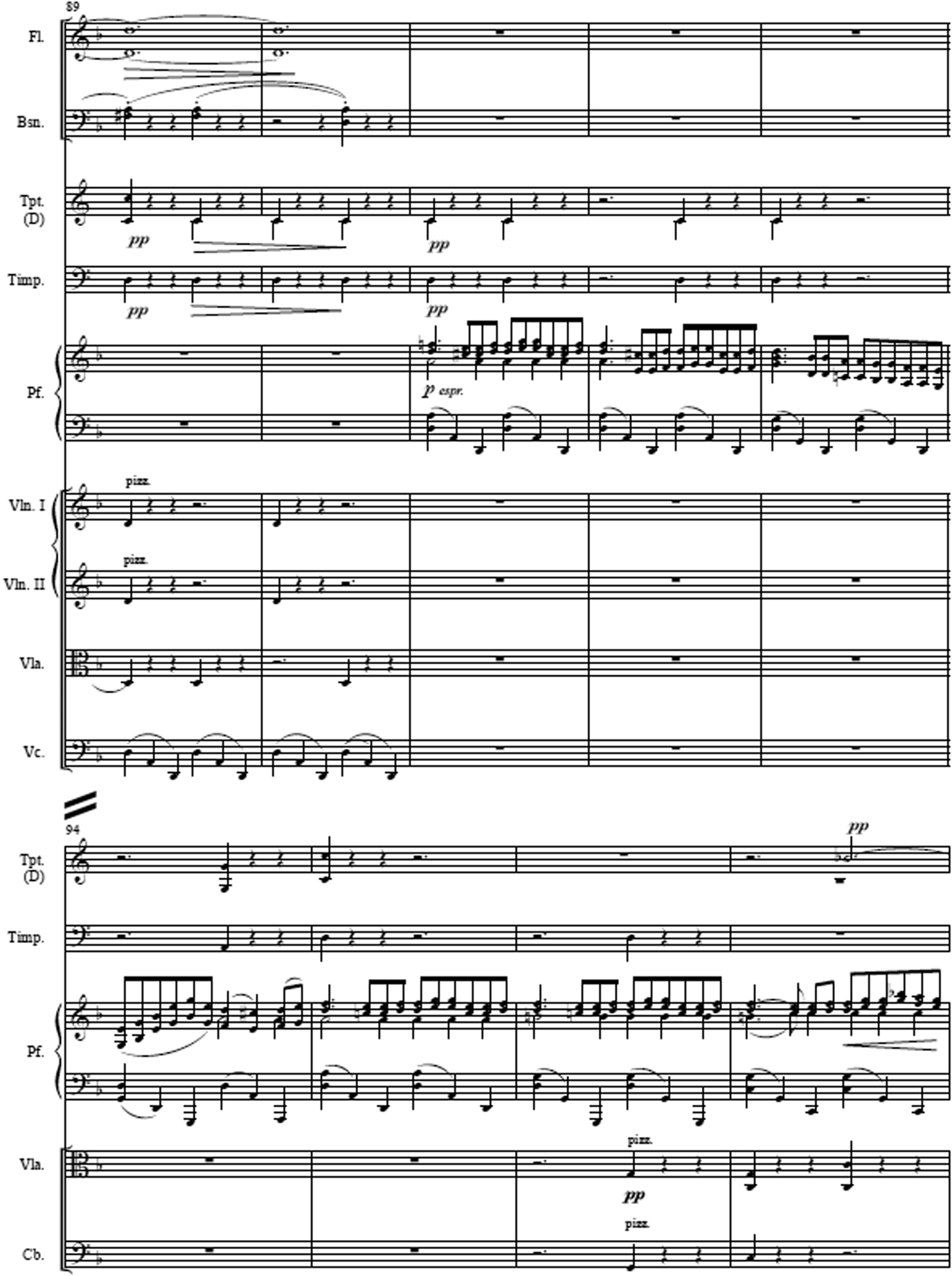
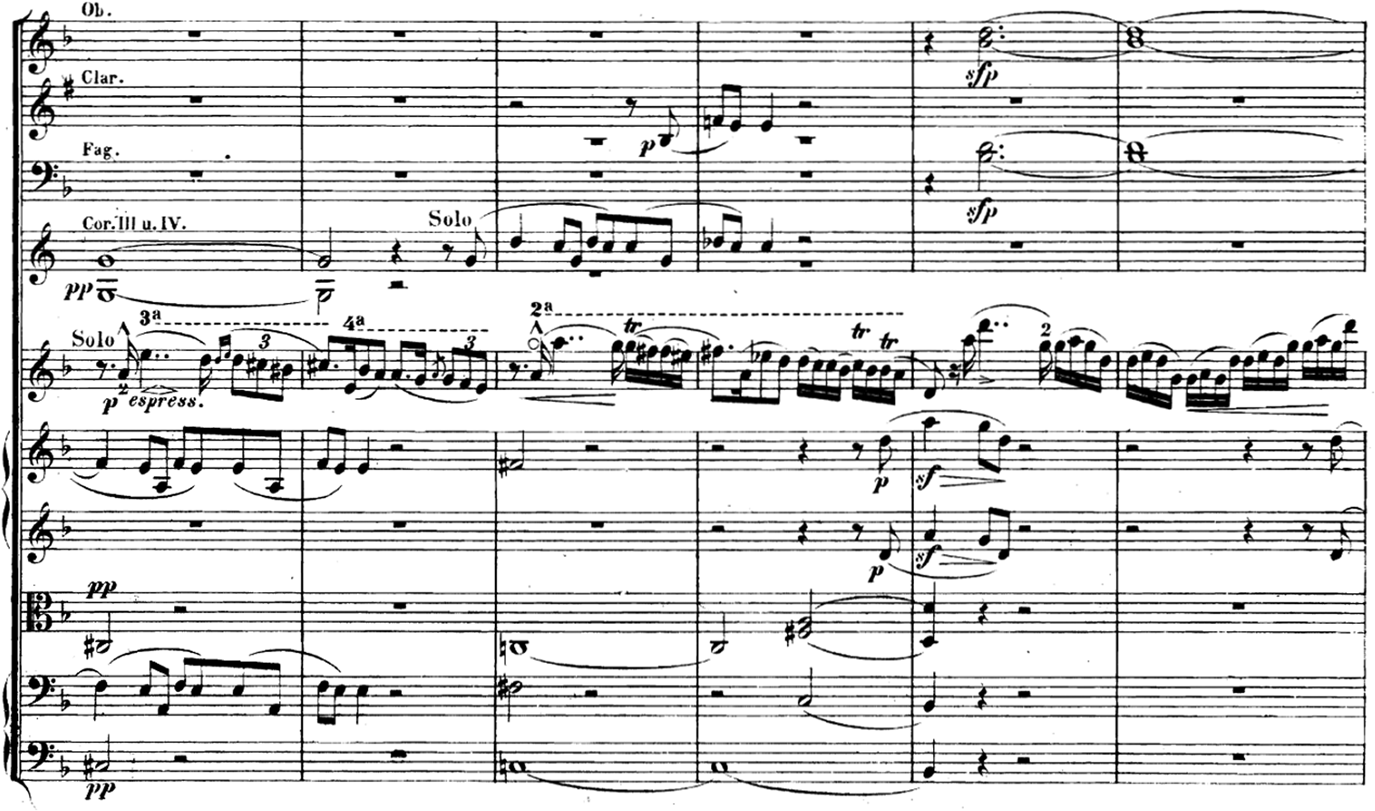
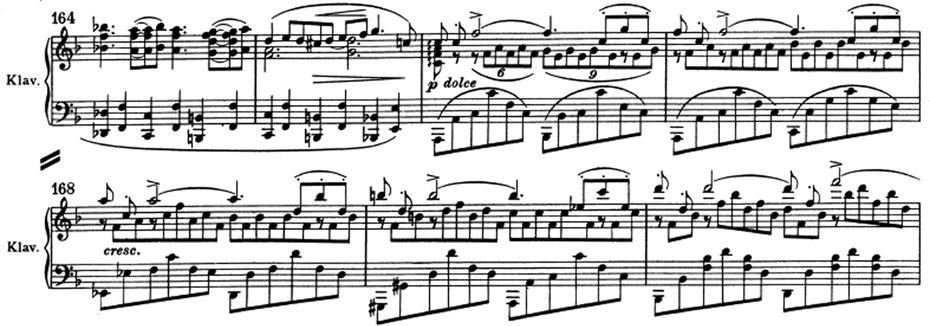
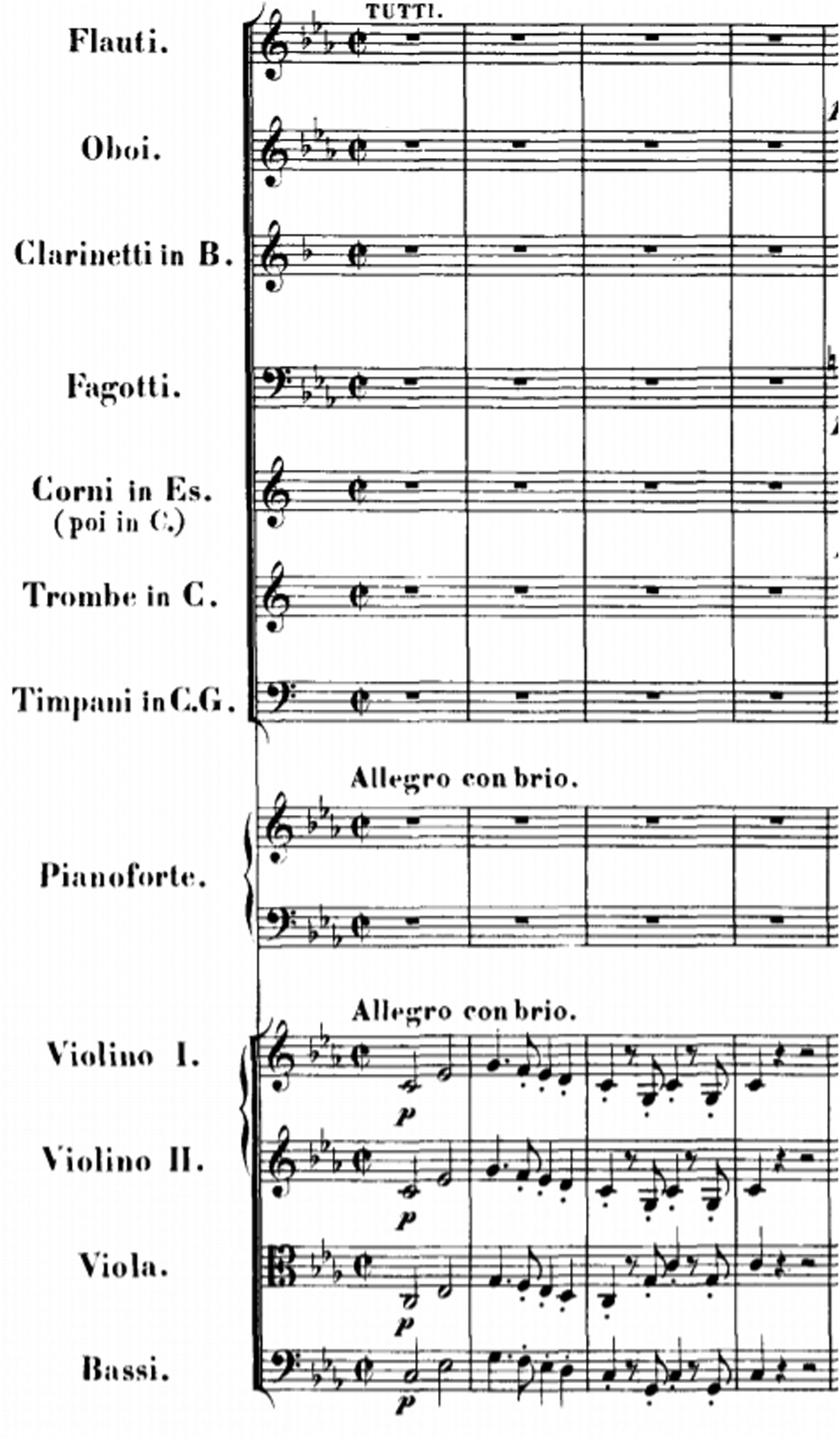
There are further parallels between Joachim's and Brahms's opening movements, some also related to Beethoven's Concerto. The heaviness, large scale and serious tone shared by the Brahms and Joachim openings have elicited much comment, including MacDonald's remark that these features stem from the composers’ ‘shared concern to restore Beethovenian dignity and architectural logic to the concerto form’.Footnote 48 Although only Brahms's Concerto evolved from a symphonic conception, both the Brahms and Joachim works have commonly been referred to as ‘symphonic’ in that they are both written on a particularly large scale and begin with especially long orchestral sections before the primary entrance of the soloist.Footnote 49 In both works, when the soloists finally enter, they do so with material other than their respective opening orchestral themes. Furthermore, the characters of those solo entrances are similarly unassuming, with a certain tentativeness in both pieces in comparison to the orchestral entrances and also in comparison to virtuoso solo entrances in other concertos of the time. Both soloists enter quietly and in moderate registration, and both feature a kind of ‘stuttering’ figure, with repeated notes heard first on the off-beat and then on the beat (see Exx. 2a-–b). Although the general feeling of the two solo entrances contrasts starkly with the bold, fluid gestures with which Beethoven's soloist makes his initial dramatic entrance, there are similar ‘stuttering’ figures in the piano in Beethoven's first movement (particularly starting at bar 26). One distinctive feature of Brahms's Concerto is an oscillating ‘horn-call’-like figure appearing in various forms throughout the work (for example, in the solo part at bars 166–170).Footnote 50 Joachim's Concerto likewise features an oscillating horn-fifths call, in this case first appearing almost immediately (bar 8). One might even liken these melodic oscillations to those in bars 3–4 of Beethoven's Concerto (see Ex. 3a–c).
Brahms, Op. 15, mvt i, bars 89–97

Joachim, Op. 11, mvt i, bars 101–106

Brahms, Op. 15, mvt i, bars 164–70

Joachim, Op. 11, mvt i, bars 1–9 (horn part)

Beethoven, Op. 37, mvt i, bars 1–4

Beyond the ‘Hungarian’ colouring that reflects Joachim's heritage and style, other differences between the Joachim and Brahms movements again generally show Brahms deviating more from the archetype represented by the Beethoven work than does Joachim. For instance, although the opening movements of both Brahms and Joachim feature relatively subdued solo entrances and, at the outset, less virtuosity than some, Joachim's soloist becomes more virtuosic as his movement progresses, and Beethoven places the expected cadenza before the close of the movement, whereas Brahms's soloist remains relatively anti-virtuosic in his first movement and concludes without a cadenza. Additionally, although both composers introduce their soloists with material other than their initial orchestral themes, Joachim's soloist proceeds, shortly thereafter, to restate the opening orchestral material, whereas Brahms's soloist does not state the opening material of his movement anywhere in the exposition. Joachim's double-exposition form deviates from classical tradition mainly in that it moves to the relative major key in the orchestral exposition. This is by no means radical or unprecedented, however; it is in fact something Joachim's movement shares with the first movements of both Schumann's Violin Concerto and, significantly, Beethoven's Op. 37. Brahms's movement is more structurally idiosyncratic, in that the expository material for the soloist involves two new themes and no repetition of the orchestra's opening material. Brahms also asserts his individuality by having the piano introduce the second of its expository themes entirely unaccompanied for some time. Whereas Beethoven's opening movement is Allegro con brio, Joachim seems to have emulated Brahms's distinct ‘Maestoso’ designation (or melded the two), labelling his own first movement ‘Allegro un poco maestoso’.
Despite the fact that Joachim and Schumann concertos are both for violin and share the harmonic feature just mentioned, generally speaking, Joachim's Concerto bears to the Brahms and Beethoven works a clearer relationship than it bears to the Schumann. Although Joachim was the dedicatee of Schumann's work, given the reservations he expressed about that Concerto, it is not surprising that Joachim does not seem on the whole to be under heavy influence of the work, nor to make much obvious reference to it in his own, and his Concerto begins more slowly, quietly and legato than the Schumann or Brahms works (cf. Exx. 1a, 1b and 3b). (Joachim does, however, employ upward-sweeping figures between phrases in all three movements of his Concerto that resemble similar gestures in Schumann's.Footnote 51)
We now move to the symphonies, one each by Julius Otto Grimm and Albert Dietrich. It is especially notable that Brahms, Grimm and Dietrich, who were in close contact with one another in Düsseldorf in 1853–54, all appear to have been working at around this time on pieces intended to be their respective first symphonies – and all in D minor. This is, of course, the key of Beethoven's final symphony, and it is not unlikely that the composers chose this key as a means of picking up the genre where Beethoven left off.Footnote 52 Beethoven's Ninth, with its incorporation of voices and text in its final movement, certainly posed a challenge to successive symphonists like Brahms and his peers, particularly in the face of claims from Wagner and the ‘New German School’ that ‘the Ode to Joy’ represented a death knell for the symphony as a genre of absolute music. That the idea of taking up the reigns where Beethoven's Ninth left off was very much in the mind of Brahms and his friends while they were composing these D-minor works is suggested by the difficulty that Brahms and Grimm in particular had in composing final movements for their respective pieces. The comparison of any D-minor symphony from Brahms's generation with Beethoven's Ninth was perhaps almost inevitable, and such comparisons certainly occurred with the D-minor symphonies of Grimm and Dietrich, both of which, like the other works discussed here, share with the Ninth a conclusion in D major.Footnote 53
Julius Otto Grimm, Symphony, Op. 19
Grimm's only published symphony, his Op. 19 in D minor, did not appear in print until 1874, but it seems that the first three movements existed and were performed in some form on 19 June 1852, when they appeared as the first ‘three movements from a Symphony in D minor by Julius Otto Grimm’ on a Leipzig Conservatory student examination concert programme.Footnote 54 The programme lists the three movements as: I. Andante sostenuto, allegro con fuoco; II. Tempo di marcia funebre; and III. Scherzo: allegro vivace.Footnote 55 The work was performed again on 18 February 1857 (possibly in four movements by that point, but this is unclear) in Göttingen under Grimm's baton.Footnote 56 Grimm's struggles to compose a finale, evident in the lack of a such a movement at the 1852 performance, resulted in his eventually producing two different final movements. In addition to the rondo Grimm ultimately chose, there was apparently an unpublished sonata-form finale, now lost; the movement seemed possibly to have been written before the rondo, particularly because it appeared to have been detached from a complete manuscript for the Symphony.Footnote 57
Although the precise relationship between the 1852, 1857 and 1874 versions remains unclear, evidence indicates that they may comprise one fundamental work. (It is impossible to know, however, whether or how Grimm may have revised the piece before publishing it.)Footnote 58 The symphony published in 1874 retains a number of features indicated in the 1852 programme. The two versions share not only the main key of D minor, but also the presence of a funeral march (‘Trauermarsch’) for the second movement, a ‘Sostenuto’ introduction before the opening Allegro and a concluding tempo of ‘Allegro vivace’.Footnote 59 It is unlikely that the composer would have produced two distinct symphonies fitting this description (and no others).Footnote 60 Furthermore, in 1910, several years after Grimm's death, composer and conductor Friedrich Gernsheim, a fellow student of Grimm's at Leipzig Conservatory, had a conversation with August Preising, one of Grimm's own former students; Gernsheim asked what had become of the symphony Grimm had been working on in their student days at Leipzig – and sang a two-bar motive from the work that matches the head motive of the main theme from the published Symphony's opening movement.Footnote 61
Given the compositional timelines, most of Grimm's work, at least in its earliest form, was probably composed too early to have been informed or influenced by Schumann's Concerto (nor does Schumann's work particularly evidence the influence of Grimm's); however, at the outset, Grimm's Symphony does bear some striking resemblances to the opening of Joachim's Concerto (see Exx. 4a–b). Although Grimm certainly had many years in which to revise before his Symphony was published, the timeline of compositional events suggests it is more likely that Joachim was influenced not only by the Brahms Concerto but also by Grimm's work rather than the other way around.
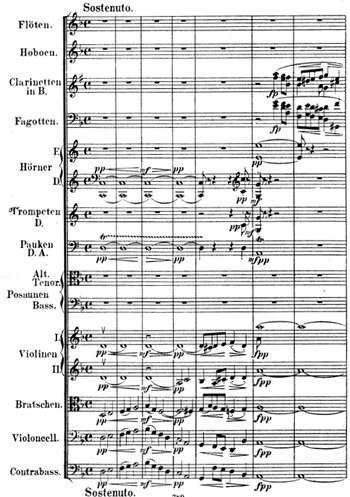
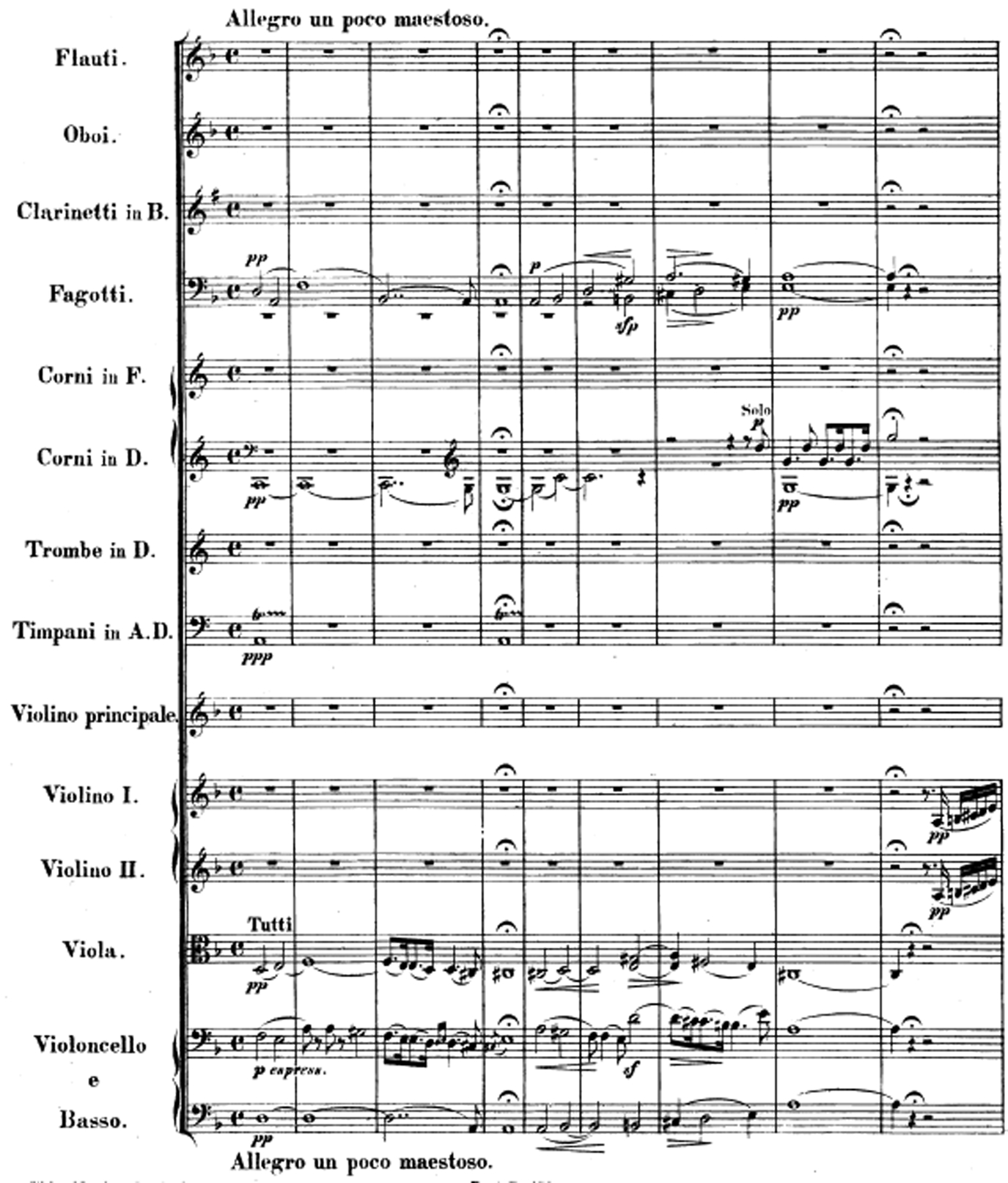
Whereas the Brahms and Schumann pieces begin dynamically, with an edgy intensity, Grimm's work shares with Joachim's a much quieter start, pianissimo in both cases (but in both instances punctuated with ‘sf’ or ‘fpp’ after the first phrase). Whereas Brahms opens in 6/4, Schumann, Grimm and Joachim all begin in ‘cut time’. Both Grimm and Joachim begin with a focus on the low strings. After an initial four-bar phrase, both composers have a brief horn gesture involving a fourth-leap between dominant and tonic (or vice versa), followed by a figure in the winds, including duetting bassoons. Grimm and Joachim both feature in their openings chromatic, complete lower-neighbour figures involving the tonic and leading tone (D–C#–D), sometimes transposed to other pitch levels. Grimm's opening also includes trills like the opening passages of the other works. Grimm and Joachim both use timpani rolls and drones at their openings as well. At the outset of the Grimm and Joachim movements, the viola parts share not only a simple stepwise ascent from the first to the third scale degree (a feature generic enough on its own), but combine these with precisely the same rhythm, registration, and pp dynamic marking.
Grimm, Op. 19, mvt i, bars 1–7

Joachim, Op. 11, mvt i, bars 1–9

Grimm's second movement, however, seems to relate more closely to Brahms, and the comparison suggests another mutual influence of Beethoven. The 1852 performance of the Grimm Symphony movements predates not only the initial work on Brahms's D-minor symphony/concerto, but also, by nearly a year and a half, Grimm's initial meeting with Brahms; nonetheless, given the close personal relationship between the two composers, the tendency within their circle to share their works in progress, the fact that Grimm's Symphony was still not complete as of 1852 and the fact that both composers were occupied with D-minor symphonies or would-be symphonies at around the same time, it is not hard to imagine that Grimm shared his Symphony with Brahms during the period in question.Footnote 62 When Grimm's Symphony was performed again in 1857, Brahms was still working on his Concerto. Brahms was in Göttingen only days before the performance and could well have attended.Footnote 63
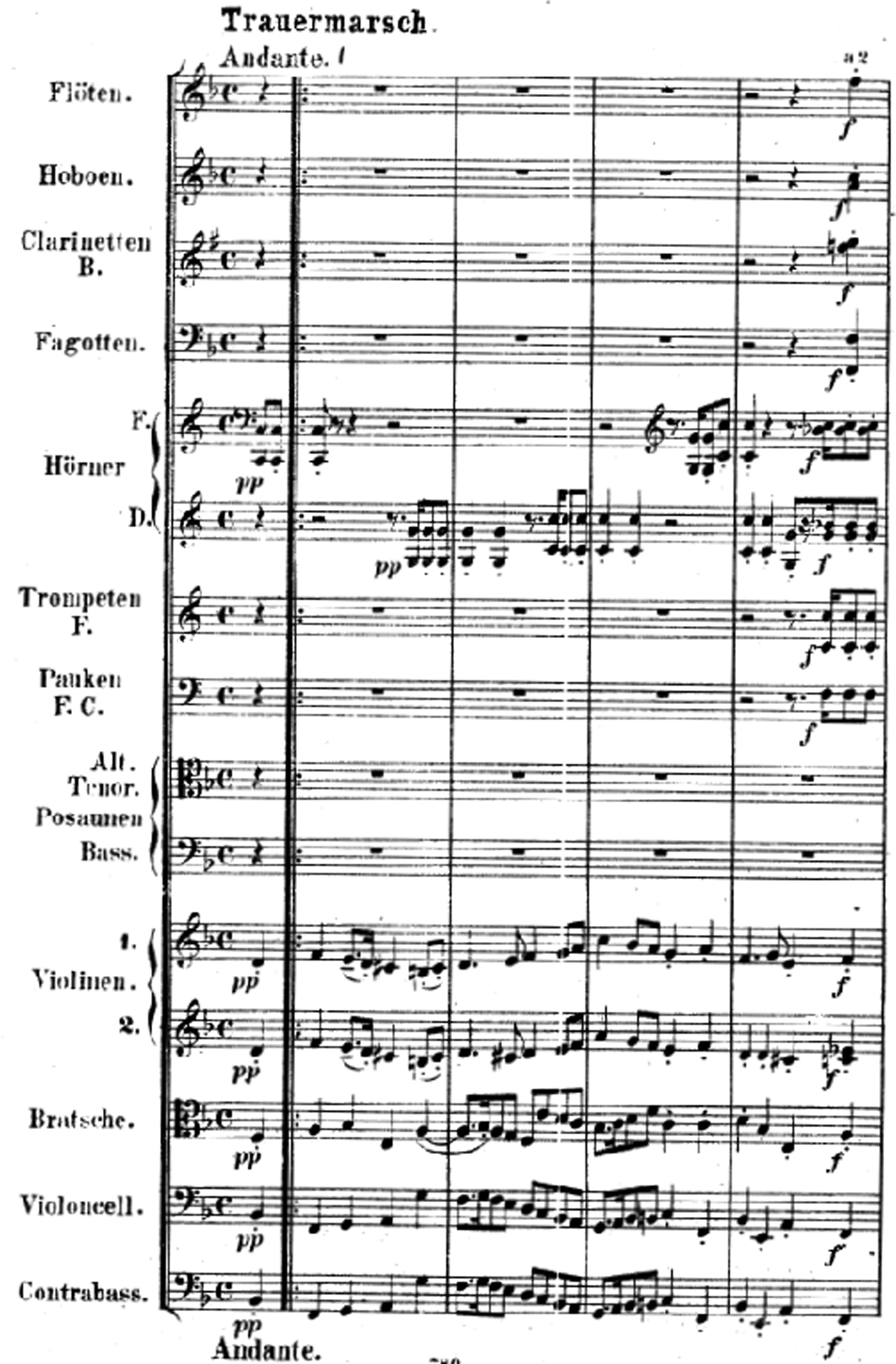
The second movement of Grimm's Symphony is a funeral march (see Ex. 5). We know, furthermore, according to Dietrich's testimony that the original slow scherzo of the sonata-symphony that became Brahms's Concerto was some form of the funeral march that Brahms eventually reworked as the second movement of his German Requiem.Footnote 64 Grimm's symphonic funeral march and the second movement of the Requiem are, musically, fairly distinct. The similarities between the two are generic enough (they both employ dotted rhythms, move from minor to major and use a motive that recalls the ‘Fate’ motive from the opening of Beethoven's Fifth Symphony), but there is no clear reliance of one on the other. Nonetheless, the mere idea of placing a funeral march as an inner movement of a symphony (or sonata) was unusual enough to suggest, in combination with the biographical connection between the composers during this time, that one composer's choice (Grimm's, given the chronology) may have influenced the other's.Footnote 65 As of the early 1850s, the main precedent for placing a funeral march as the second movement of a symphony comes, of course, from Beethoven. Specifically, this precedent is the ‘Eroica’ Symphony, which represents the obvious point of origin for Grimm's second-movement symphonic march. There is also precedent in Beethoven for placing a funeral march as an inner movement of a sonata: the penultimate movement of Beethoven's four-movement Piano Sonata No. 12 in A flat major, Op. 26. However, just as Grimm and Brahms write funeral marches that are distinct from one-another, so too are both movements reasonably distinct from these Beethoven marches. In that sense, both composers nod to their musical lineage while simultaneously maintaining their artistic individuality.Footnote 66
Grimm, Op. 19, mvt ii, bars 1–4

Setting aside the third movement of Grimm's finished Symphony, which is less obviously relevant to the other works under discussion, we turn briefly to his final movement.Footnote 67 Once again, we find some suggestive relationships between Grimm's musical choices and those of Brahms and Joachim, and once again, those choices suggest the influence of Beethoven.
We have already seen that the Brahms and Joachim concerto finales both appear to have been structurally modelled on the last movement of Beethoven's Op. 37. We know also that Grimm had not yet completed his finale as of 1852 and know of no performances of the work between then and 1857; the chronology suggests that Grimm's finale, with which he apparently struggled, is likely to have been composed at around the same time as the Brahms and Joachim movements, if not later.
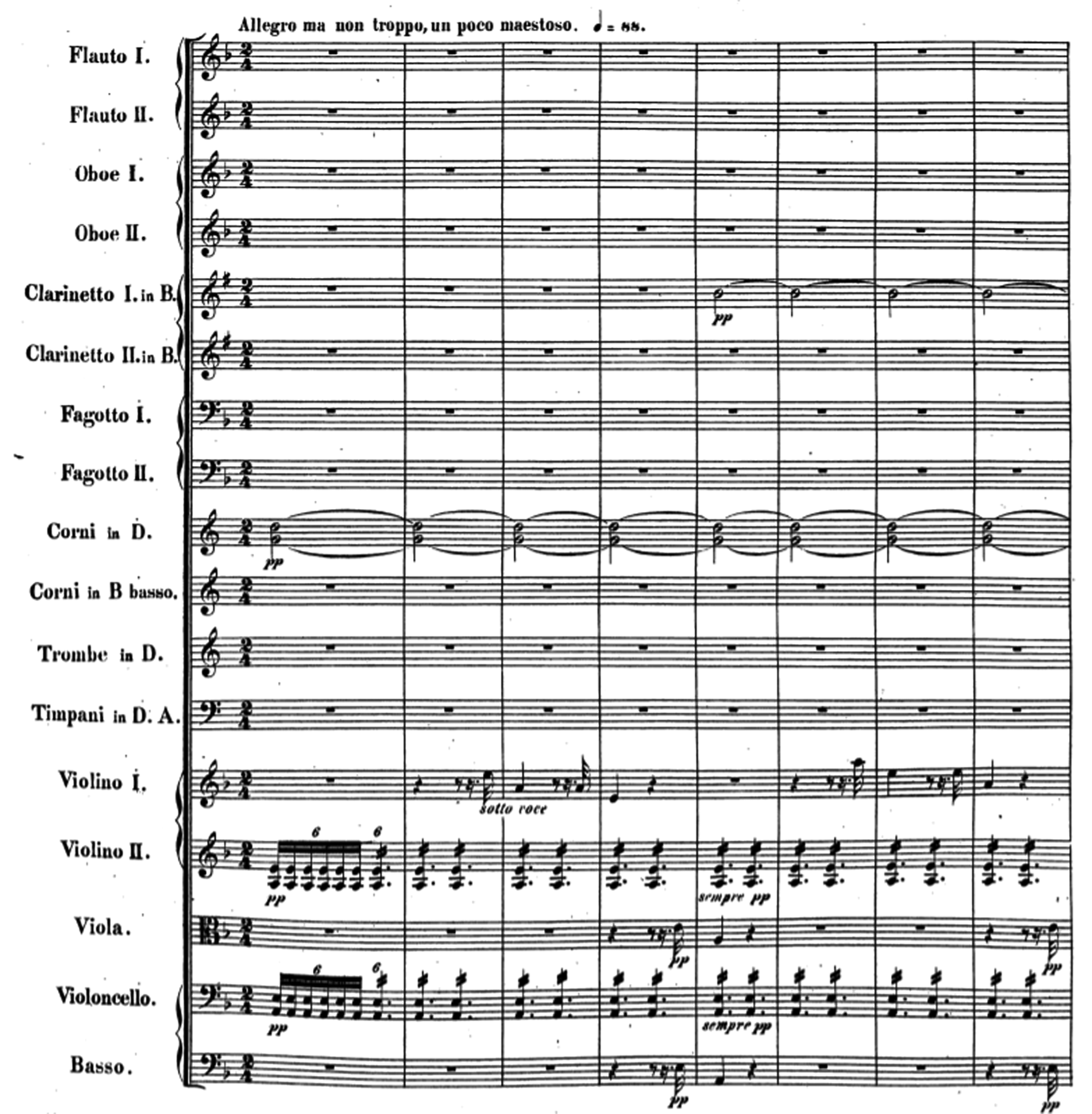
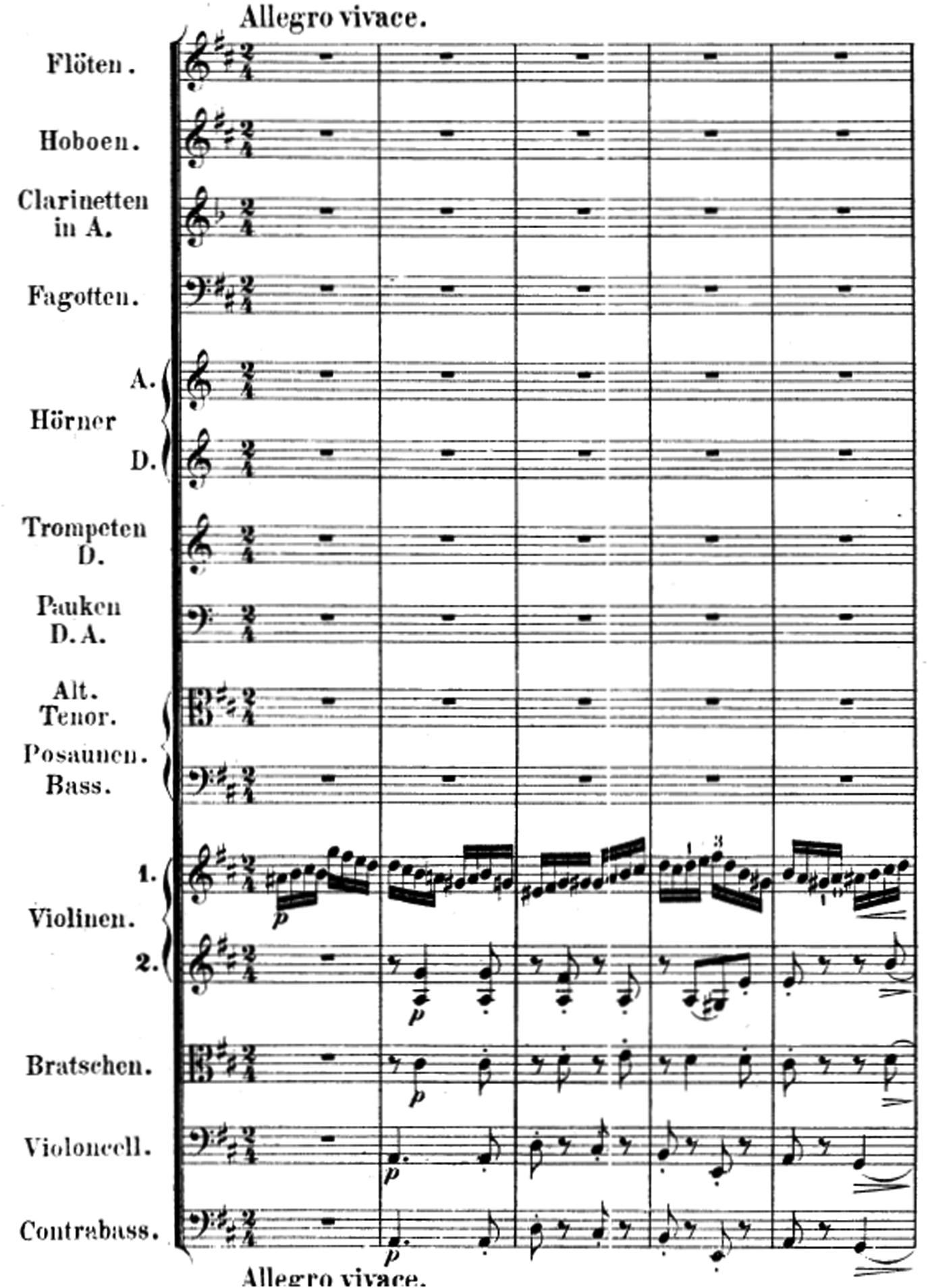
Although Grimm's Allegro vivace sonata-rondo is not identical in form to the other finales, and it begins not in D minor but in the parallel major, it nonetheless exhibits some features that are at least stylistically and structurally comparable with those of the Beethoven and Brahms (and Joachim) movements, possibly suggesting the close proximity in which Grimm was working with the other composers as, like Brahms, he sought a solution to his ‘finale problem’.Footnote 68 Like both the Brahms and Beethoven rondos, Grimm's finale is in 2/4 time. The refrains of all three movements feature a continuous patter of semiquavers. All three composers place the second episode in the submediant key, and the episode, like those of the Brahms and Beethoven (and Joachim) movements, features fugal or imitative material in the development and concludes in the major tonic. In the opening of Grimm's movement (see Ex. 6), the accompaniment in the first violin and viola employs the rhythm quaver rest – crotchet – quaver; this syncopated rhythm is similar to the melodic rhythm in the first bar of Brahms's finale. As for structural proportions between the Grimm finale and the Beethoven and Brahms movements, they are not exact matches, but display a rough similarity: Grimm's second theme (first episode) begins at bar 51 (vs. bars 66 and 68 in Brahms and Beethoven, respectively), he returns to the refrain at bar 138 (vs. bars 144 in Brahms and 127 in Beethoven), his second episode begins at bar 177 (vs. bars 181 and 182), with development/extended transition beginning at bar 234 (vs. bars 238 and 230), he returns to the refrain at bar 283 (vs. 297 and 298), and his second episode recapitulates at bar 335 (vs. 348 and 331); from here on, the structures are less comparable, but Brahms's finale also departs from the structure of the Beethoven model as it progresses.Footnote 69
Grimm, Op. 19, mvt iv, bars 1–5

The structural kinship between the Grimm movement and the Brahms (and Joachim) finale(s) based on Beethoven's form, given that Brahms and Joachim composed their movements in the mid-1850s, when they were in close contact with Grimm, is perhaps not as striking as some of the other parallels, but may be enough to suggest that Grimm's movement is also likely to date from around this time, perhaps immediately preceding the 1857 performance, rather than from some years later, when the personal distance between the composers and the temporal distance of the Brahms and Joachim works’ composition were greater.
Albert Dietrich, Symphony, Op. 20
This brings us, more briefly, to one last member of the Brahms–Schumann circle in the 1850s: Albert Hermann Dietrich (1829–1908), who also composed a D-minor symphony, one feasibly dating from the same period. There is some confusion surrounding the relationship between the Dietrich symphony published in the 1870s – a work apparently completed and performed by early 1869 – and a symphony Dietrich wrote in the 1850s that remained unpublished during that decade. Some scholars have concluded that there were two distinct symphonies, and that the earlier work has been lost, in which case, the surviving Symphony (Dietrich's only published one) may postdate Brahms's preliminary work on what would become his Op. 15 by more than ten years.Footnote 70 Other scholars have conflated the two, however. In the works-list for Pascall's New Grove article on Dietrich, Op. 20 is the only symphony, and the article mentions only a single symphony performed in the 1850s; there is no indication that these are different works.Footnote 71 Knapp claims that Dietrich's First Symphony, which the composer conducted from the manuscript in 1854, was at least a version of the D-minor work published in 1876. Footnote 72 In short, the situation remains unclear, but there does not seem to be evidence to conclude that the work performed in the late 1860s was substantively distinct from the one performed the decade before; the two works, if not identical, may be two versions of the same piece – in which case the work in its early form predates or is roughly contemporary with Brahms's earliest work on what would become his Op. 15.
Dietrich's period of full-time residence in Düsseldorf (where he met and interacted intensely with the other composers discussed in this article between 1853 and 1854) concluded in late 1854 when, before beginning a position in Bonn, he travelled to Leipzig to conduct the premiere of his Symphony on 9 December.Footnote 73 Presumably, this was a work he had completed somewhat recently beforehand, and he had just left behind Brahms, of whose own D-minor (at that time) symphony-in-progress he had been well aware. (Like the others, Dietrich was privy to drafts of Brahms's D-minor Concerto in its earlier forms. It appears to have been Dietrich alone who recorded for posterity that the slow scherzo of the early sonata-symphony was eventually the basis for the second movement of the German Requiem.Footnote 74) Nearly 15 years later, in February 1869, Brahms performed his Liebeslieder Waltzer with Clara Schumann at Oldenburg on a programme also featuring a symphony by Dietrich.Footnote 75 (Brahms's attitude toward the Dietrich work is suggested in the letter he wrote to Clara a few months earlier, cautioning her that the Symphony would be performed and suggesting that she employ ‘a little more gentleness than frankness there’.Footnote 76) Reviews of this performance and of ones following shortly thereafter refer to the Symphony as a ‘new’ work, but that may simply mean that the piece was new to its audience, new to the press and unpublished – that it had not been performed in the memory of anyone local and/or that it had never been performed in its current form.Footnote 77 This does not preclude the possibility that the piece had been performed, perhaps in some earlier incarnation, somewhere else years before, unbeknownst to performers, audiences and critics in Oldenburg. Despite Brahms's apparent reservations about the piece, when the Symphony was published as Dietrich's Op. 20, Brahms was its dedicatee.Footnote 78
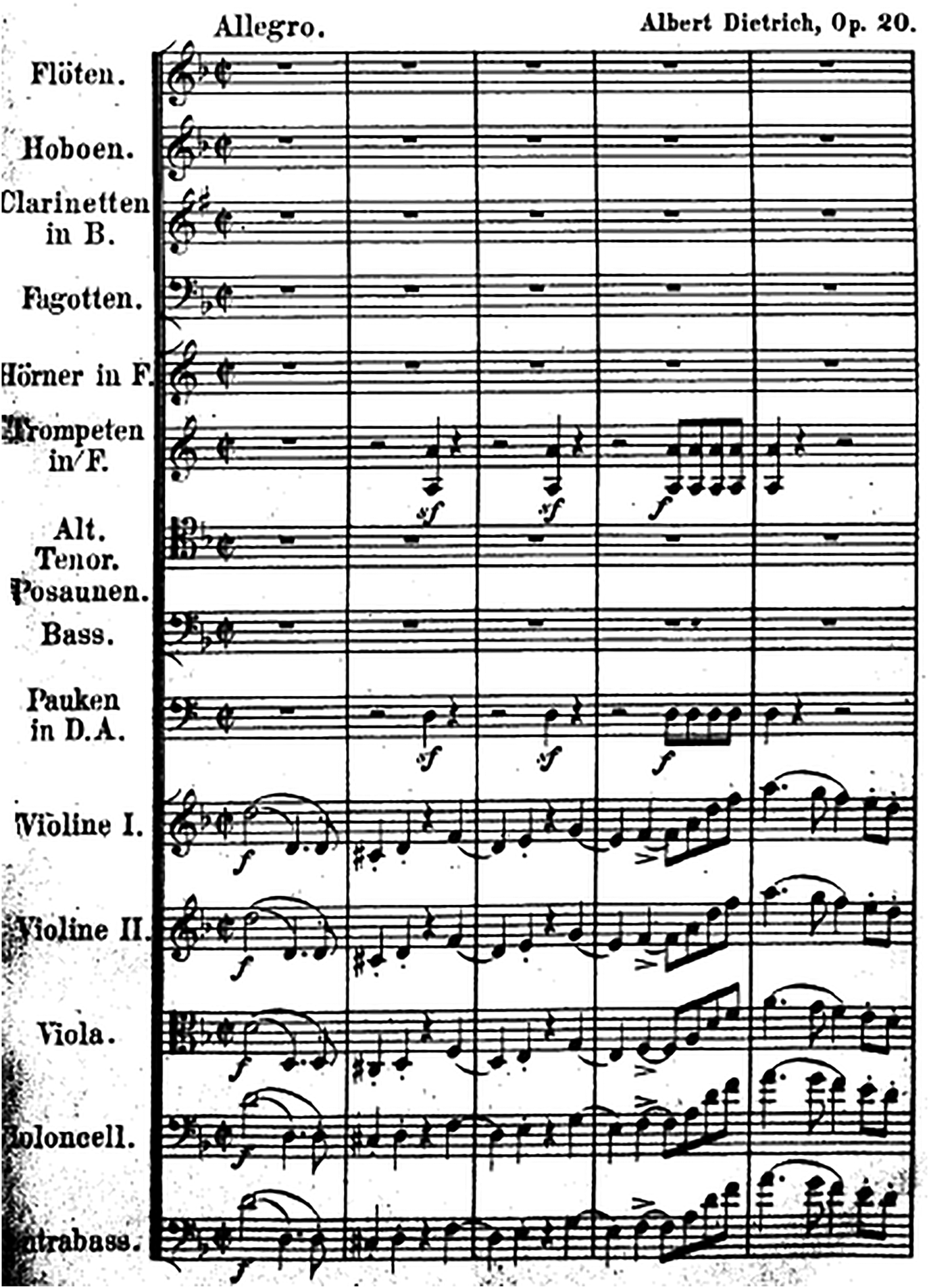
Dietrich's Symphony seems to share fewer distinct features with the other works discussed here, and it is less certain than the others to date from the mid-1850s, but, as a D-minor orchestral work issuing from the same circle and possibly dating to the same time period, it deserves to be addressed at least briefly with an eye to any relevant musical parallels that may exist. Dietrich's first movement is in ‘cut time’, like the opening movements of Schumann's Violin Concerto and Beethoven's Op. 37, as well as (following its introduction) Grimm's Symphony. (Brahms's first movement, by contrast, is in 6/4.) However, Dietrich's Symphony opens with a bit of the Sturm-und-Drang feel of the Brahms Piano Concerto and Schumann Violin Concerto (see Ex. 7). Melodically, Dietrich begins with a dramatic octave leap downward from the tonic pitch, like Schumann, who similarly employs dotted rhythms at the outset. The main theme of the opening movement of Dietrich's Symphony, which is also related to the second theme of that movement, bears a resemblance, however, to the opening theme of Grimm's Symphony.Footnote 79 Compare the violin lines in Dietrich's bars 1–3 with those of Grimm's bar 5 (see Ex. 7 and Ex. 4a): both begin their melodies with a complete lower-neighbour figure involving the tonic pitch and leading tone (also featured in Joachim's Concerto, as noted above) and trace the contour D–C#–D–(E–)F–D. (Although Grimm's gesture does not occur until his bar 5 and thus falls in the middle of phrase rather than at the beginning, the violin does nothing for the first four measures but sustain its opening D, so in both movements this figure represents the first real motion in the violin.)
Dietrich's finale, unlike the others, is a sonata-form movement, not a rondo or sonata-rondo, and at least on the surface, sounds nothing like the intense, minor-mode Brahms, Joachim and Beethoven finales. Like Grimm's and Schumann's finales, in contrast to the others, Dietrich's begins in the major tonic. Dietrich's finale does, however, feature running upward sweeps in the strings in semiquavers, leading into the downbeat, something we also find in the Schumann, Joachim and Beethoven works.
Dietrich, Op. 20, mvt i, bars 1–5

Conclusions
Given the well-established importance of Beethoven to this circle, and the fact that each of these composers set out to write a major, multi-movement orchestral piece – for many of these composers, it would be the first or only major orchestral work they would write – in D minor that concludes in D major, emulating the broad, ‘transcendent’ mode shift from minor to parallel major that occurs in Beethoven's final symphony in the same key, it is not unreasonable to suggest that their choice of key (and corresponding modal trajectory) was a symbolic way of picking up where Beethoven left off as a composer of large-scale orchestral music. This is especially so, given that most or all of these D-minor pieces otherwise appear to bear the mark of one or more specific Beethoven works. Furthermore, in many cases, the particular works involved seem to be shared influences among two or more of the circle's composers, in varying combinations, reflecting the closeness of the personal and artistic relationships within the circle during this time. For example, Brahms's use of Beethoven's Third Piano Concerto as a structural model for his finale resonates also with what occurs in the finale of the Joachim work and perhaps that of the Grimm. The openings of works such as the Schumann, Brahms and Joachim concertos parallel the beginning of Beethoven's Ninth in their general character and specific style traits. Both Grimm and, apparently, Brahms in his original, symphonic version of the work that evolved into his Concerto, employed funeral marches as inner movements of their works, suggesting the possibility of mutual influences from Beethoven's ‘Eroica’ Symphony. And Dietrich's Symphony, although less certain in its dating and perhaps less closely related to the other pieces, may also be a part of this circle of mutual and Beethovenian influences.
This study not only emphasizes the central role that Beethoven played in the minds of these composers in the mid-1850s, but also underscores the musical intimacy that extended from the social intimacy of the composers in the Brahms–Schumann circle. It furthermore highlights the particular urgency that Brahms (in comparison to, for instance, Joachim) felt, thanks in large part to the Schumanns’ expectations of him and the broader expectations engendered by Schumann as a result of ‘Neue Bahnen’, about both continuing the Beethovenian tradition and simultaneously asserting himself as a unique artistic voice.
This article is intended merely as a starting point. The works I have examined certainly bear further consideration, and, although I do not have other specific pieces in mind at this time beyond those I have mentioned in passing or in the footnotes, there are surely other pieces that could be drawn into the comparison: D-minor works by other composers in the Brahms–Schumann circle, later works that may have been influenced by those discussed here and also perhaps other pieces by Beethoven on which the composers of this circle may have drawn.Footnote 80
It is important to acknowledge that certain things remain unclear about the compositional timelines for some of these works – the Grimm and Dietrich in particular – and that some aspects of the relationships between the pieces must remain speculative. Nonetheless, what we do know about the compositional histories of the works, the biographical contexts in which they were created, and the music itself all suggest that in this collection of pieces there are likely to have been mutual influences among the composers; and the musical choices involved seem to point to an underlying backdrop of Beethovenian influence involving specific works from Beethoven's orchestral oeuvre – an oeuvre concluding with an unforgettable symphonic work in D minor.