INTRODUCTION
Human populations have always lived in dependence with close interaction within and beyond their sociopolitical networks and specific environments, including rurality. Embracing the full range of settlement populations and networks is key in our efforts towards understanding the complexity of rural life among the ancient Maya. Traditionally scholars have directed their attention to the elite populations of large-site centers; only in recent decades has rural society gained visibility within Maya research (e.g., Freter Reference Freter2004; Hutson Reference Hutson2016; Iannone and Connell Reference Iannone and V. Connell2003; Lamb Reference Lamb, Hutson and Ardren2020; Lohse Reference Lohse and Lohse2013; Lohse and Valdez Reference Lohse and Valdez2004; Robin Reference Robin2012; Sheets Reference Sheets2002; Somerville et al. Reference Somerville, Fauvelle and Froehle2013; Webster and Gonlin Reference Webster and Gonlin1988; Yaeger Reference Yaeger, Canuto and Jaeger2000).
The explorations of ancient Maya rurality would not be complete without an admixture of information of skeletal and mortuary datasets. Bioarchaeological approaches to the physically embodied lifestyles of rurality are attracting the attention of the Mayanist community due to the interdisciplinary mindsets among the younger generations of scholars coupled with novel analytical possibilities. In the past 20 years, the analyses of skeletal materials have diversified, set forth by multidisciplinary or actor-based agendas, which benefit the integration of populational and cultural datasets. Despite their limitations—specifically the uncertainty that surrounds the identification of rural settlements and inferring residence from an individual's burial location—such research schemes have evolved to enable direct measurements of health burdens among hinterland populations towards an ever-more integrated understanding of regional dynamics and scaled settlement interactions (Cucina and Tiesler Reference Cucina and Tiesler2003; Novotny Reference Novotny and Robin2012, Reference Novotny2015; Reed Reference Reed and White1999; Scherer Reference Scherer2015; Somerville et al. Reference Somerville, Fauvelle and Froehle2013; Tiesler Reference Tiesler, Laporte, Escobedo and Villagrán1997; Tiesler et al. Reference Tiesler, Chi Keb, Muñoz, Azcorra and Dickinson2020; Whittington Reference Whittington1988, Reference Whittington and White1999; Whittington and Reed Reference Whittington, Reed, Whittington and Reed1997; Wright Reference Wright2006; Wrobel Reference Wrobel2014).
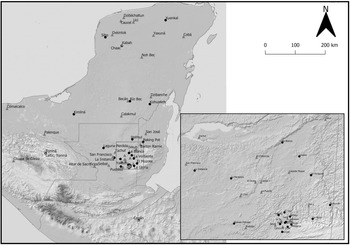
This article approaches the capital topic of this timely dossier on ancient Maya rurality not by looking at specific urban versus hinterland populations (at a given time or a given site). Instead, we conceive a multisite perspective which encompasses rural Maya lowland health and lifestyle in the context of urbanization and settlement growth (Figure 1). The inherent challenges that Maya rural settlements bore within a centralized settlement pattern of a state-level society set agendas and assumptions for studying rural health impacts and living conditions. In this vein, we start out by asking ourselves if small versus large urban aggregations, sensu Marcus (Reference Marcus, Lohse and Valdez2004), would have affected lifestyle and well-being differently. Despite sharing a similar geography and subtropical climate conditions, their access to resources and the degree of crowding should be diverse, resulting in differences between urban and rural residential layouts, and accordingly, varied life experiences.
Map of the Maya area indicating the locations of the urban and rural settlement populations included in this study. Circles represent rural sites (>2) and triangles represent urban sites (≤2). Map by Charles Golden, modified by Laboratory of Bioarchaeology/ Universidad Autónoma de Yucatán.

Concretely, we assume the settler's physical well-being should be the combined outcome along the ranges of the following three contrasting expectations. The first pair of opposing scenarios proposes that hierarchically organized settlement systems shall replicate inequality in rural populations; however, such inequality should be counteracted by the active participation in regional networks of rural populations. Second, hierarchically organized urban strongholds should provide lifestyle benefits among central core populations by sparing them from physical exertion and trauma loads; conversely, the dissipated layouts of rural hamlets should spare inhabitants from the infectious loads among the dense and highly populated urban living spaces. Third, we ask whether the nutritional conditions among Classic-period Maya hinterland populations would be adverse when considering their socioeconomic dependence and exploitation by the central urban strongholds. On the other side, rural populations would be relatively spared from the nutritional stresses exerted by urban monostaple dietary supplies, which in the Maya Lowlands would translate into a high maize intake especially in the urban masses. In summary, this set of assumptions measures the weight of political centralization in alternative scenarios of exploitation and food intake versus active rural participation in a complex cultural landscape.
We contend that the three contrasting pairs of assumptions should materialize in distinctive stress loads between dispersed hinterland populations and urban neighborhoods, as measured by the expressions of deficiency and degenerative disease and nonspecific physiological stress markers in representative skeletal populations (Steckel Reference Steckel and Schutkowski2008). With this trifold of bioarchaeological expectations, we wish to infer and measure how differently sized sites may have impacted the lifestyles, diets, and state of health of their populations.
STUDYING RURALITY FROM THE SKELETAL RECORD
For this study, we screened a regional Maya burial database accrued at the Laboratory of Bioarchaeology of the Universidad Autónoma de Yucatán during the past two decades as part of ongoing collaborative work. A control cohort of adult burials from large sites (centrality levels 1 and 2) was confronted with another pool of residential populations from small, rural sites (centrality levels 3 and 4).
In order to distinguish settlement size, we adapted the settlement classification by Garza and Kurjack (Reference Garza and Kurjack1980) for the Yucatan peninsula and a further, similar ranking system, designed by Juan Pedro Laporte (Laporte and Mejía Reference Laporte and Mejía2005) for the Guatemaltecan Peten. Similarly structured as the Mexican taxonomy devised by the Instituto Nacional de Antropología e Historia, the terminology by Laporte is based on regional archaeological reconnaissance for which a geographical information system was used. In their research, they differentiate the settlement patterns by the functions and meaning of the architectural type (ceremonial, residential, workshops, among others), as well as artifact assemblages and site volumetry. This multivariable approach distinguishes the centralized urban settlements from dispersed rural hamlets across the central Maya lowlands of Guatemala. The present study combines both classification systems in order to categorize and then confront the rural populations with their urban counterparts. We acknowledge that the resulting dichotomy of settlement categories is a proxy at the most, a shortcoming that we hope to overcome at least partly with our systematic settlement coverage of the Maya lowlands. One futher caveat of which we are aware relates to the uncertainty that surrounds the location of burial, which does not necessarily coincide with the last residence nor childhood residence.
The present survey includes burial series that span the first millennium a.d. (150–900 a.d.) from lowland settlements that are located away from the coastline and therefore share semitropical inland climate and physiography. Apart from coastal burials, we excluded all cave assemblages along with otherwise problematic human assemblage categories. Over half of the resulting study population originates from the central and southern lowlands. An additional 25 percent correspond to core and non-core populations of the Copan pocket in Honduras. The remaining individuals included are from the Yucatecan peninsula, the Usumacinta basin and the area located still further west (Toniná and Palenque, Chiapas).
The overall series was adapted in response to the methodological requirements of paleodemographic research. All individuals which could not be sexed were excluded to clarify specific lifestyles regarding sex and the size of sites. Subadults were also excluded to reduce the analytical biases implied by positive population growth (as represented by higher proportions of infants and juveniles in the burial record; Wood et al. Reference Wood, Milner, Harpending and Weiss1992). These filters left us with a series of sexed adult skeletons with an ascribed age range beyond 15 years old.
One further potential bias is implied by social status itself, which could confound the comparison of urban and rural living conditions, especially thinking of the protected lifestyle among Classic Maya royals. To cope with this issue, we inferred each individual's social standing from a set of mortuary attributes, correlated to funeral architecture, body treatments, and prestige offerings. Our ranking adapts a set of status markers originally proposed by Krejci and Culbert (Reference Krejci, Culbert and Grube1995; see also Price et al. Reference Price, Nakamura, Suzuki, Burton and Tiesler2014; Tiesler Reference Tiesler1999). This taxonomy was developed for this specific area and timeline (Classic-period lowland Maya). It considers the presence and quantity of specific artifacts known as “status markers” and distinguishes between commoner burials [status scores 0 and 1], elite burials [status scores 2 and 3], and high elite [status scores 4 and 5] (see Price et al. Reference Price, Nakamura, Suzuki, Burton and Tiesler2014:Table 1). Although the scores are by no means meant to be a precise expression of each individual's social status during life, they do offer a broad view of social insertion ranges when applied to mortuary populations on the scales of neighborhoods, sites, and cultural landscapes.
Frequencies of skeletal conditions among urban adults from Copan.

To set the stage and scale for our regionally borne comparisons between urban versus rural physiological stress indicators, we implemented a case study of the central urban health hazards from the dense residential areas within one km of distance from Copan's Main Group (Sanders Reference Sanders1990, Reference Sanders2000; Webster Reference Webster2018; Webster et al. Reference Webster, Freter and Golin2000).
The Burial Population
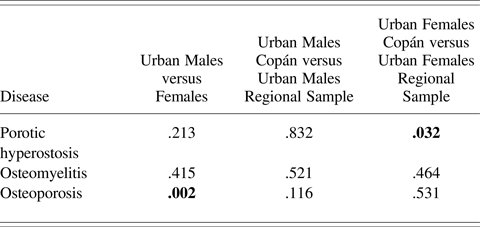
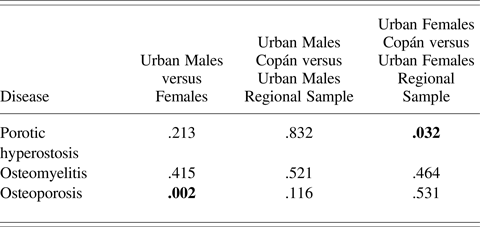
The final number of individuals selected for this study totals 842 people who were buried in 63 Maya sites from urban and rural environments (Figure 1). Our urban case study of central Copan includes a total of 143 individuals (Tables 1 and 2). All members of this population were interred within the radius of one km from the Main Group and are meant to represent Maya urban health conditions (Sanders Reference Sanders1990, Reference Sanders2000; Webster Reference Webster2018; Webster et al. Reference Webster, Freter and Golin2000). This numerically large and well-documented skeletal population sets the benchmark for validating the subsequent comparisons of regional stress frequencies between urban and rural lowland populations and is roughly in line with the regional urban cohort, except for its higher osteoporotic load among women (Figure 1 and Table 2).
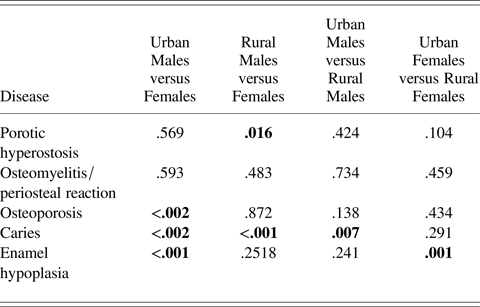
Level of significance (p-values) obtained from chi-square comparison of disease according to sex among urban settlers from Copan. Statistically significant differences are displayed bold. Level of significance p ≤ .05.
From the overall regional sample, some 216 individuals from small sites were compared with 626 individuals buried in tier-1 and tier-2 urban centers (Figure 1 and Tables 3–6). Status scores could be assigned to 679 of the 842 individual contexts (which were not looted or otherwise altered in contents and arrangement). The status scores are more diverse among the urban populations as expected. While only three rural individuals scored 4, some 28 urban dwellers scored 4 or 5, among them, Palenque's ruler Janaab’ Pakal and Calakmul's Lord Yuknoom Yich'aak K'ahk’ (Jaguar Paw). Nevertheless, the urban status scores are not significantly different from the rural scores in the overall collective comparison. Urban neighbors from the regional sample display a slightly higher average (0.78, N = 521) when compared to the 143 individuals of Copan's central urban sample (0.67). The hinterland peers of the regional cohort display an average score of 0.74 (N = 158). In tandem are the sexed status scores: urban males score slightly higher on average (0.83, N = 293) when compared to rural males (0.81, N = 91). Urban females present an average status score of 0.73 (N = 228), while rural females (N = 67) show a lower ascribed score on average of 0.65. More specifically in urban Copan, the average status score in males is 0.74 (N = 71), whereas females from the same series score lower (0.6, N = 72).
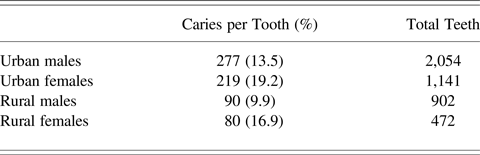
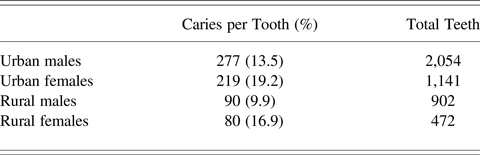
Number of teeth affected by caries and frequency of caries according to sex and settlement size.
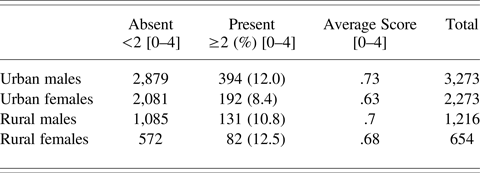
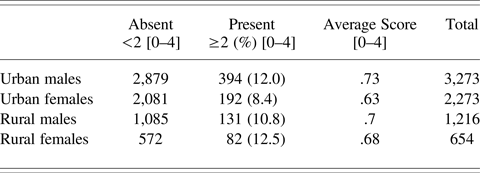
Enamel hypoplasia expression according to sex and settlement size.
Number of scored individuals and frequencies according to sex and settlement size.

Level of significance (p-values) obtained from chi-square intergroup comparison of disease according to sex and site size. Statistically significant differences appear as bold. Level of significance p ≤ .05.

Sex and Age-at-Death
In a subsequent step, we extracted the information of sex and age-at-death as independent variables for measuring five nonspecific physiological stress markers from our systematically documented database, following a standardized protocol for all individuals included in this study. Age-at-death and sex were estimated macroscopically and relied mainly on gross morphological parameters of the pelvis, cranium, teeth, and the mandible (Buikstra and Ubelaker Reference Buikstra and Ubelaker1994). When possible, the macroscopic sex determination was aided by metric discrimination of single and multiple variables adapted from a regional Maya sample (Tiesler Reference Tiesler1999). The general skeletal robustness was recorded and dimorphic measures of long bones with a specific reference to the Mesoamerican populations were taken (Wrobel et al. Reference Wrobel, Danforth and Armstrong2002). The individual age-at-death ranges were clustered according to age categories: adult (≥ 15) when age estimation range was impossible, late adolescent/early young adult (15–24.9), young adult (25–34.9), middle adult (35–44.9), mature adult (45–54.9), and elderly adult (≥ 55).
Caries and Enamel Hypoplasia
Enamel hypoplasia defects (in the form of grooves, lines, and pits) are acquired during tooth development. These defects are visible during the remainder of the individual's lifespan (or until premortem tooth loss) because enamel does not remodel once formed. The enamel microdefect patterns, displayed between and within teeth, may materialize congenital abnormality, local trauma, and more so systemic stress episodes in the form of acute disease and/or dietary shortages (Goodman et al. Reference Goodman, Martin, Armelagos, Clark, Cohen and Armelagos1984, Reference Goodman, Thomas, Swedlund and Armelagos1988).
Cariogenic lesions result from dental enamel, dentine and/or cement demineralization, caused by bacterial activity in the dental plaque and mediated by acid pH levels. Caries prevalence is the end result of a set of complex processes that involves the interplay of internal and external stimuli. Diet and oral care are considered the two main factors that play a role in the cariogenic process. A diet enriched in sugars, such as staple carbohydrates and honey, is bound to produce an unbalanced oral pH and elevated bacterial activity, which in turn cause carious lesions (Hillson Reference Hillson1996).
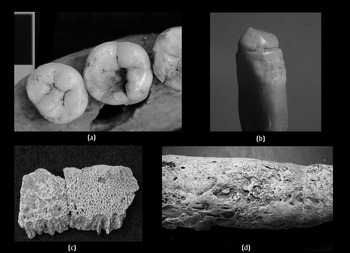
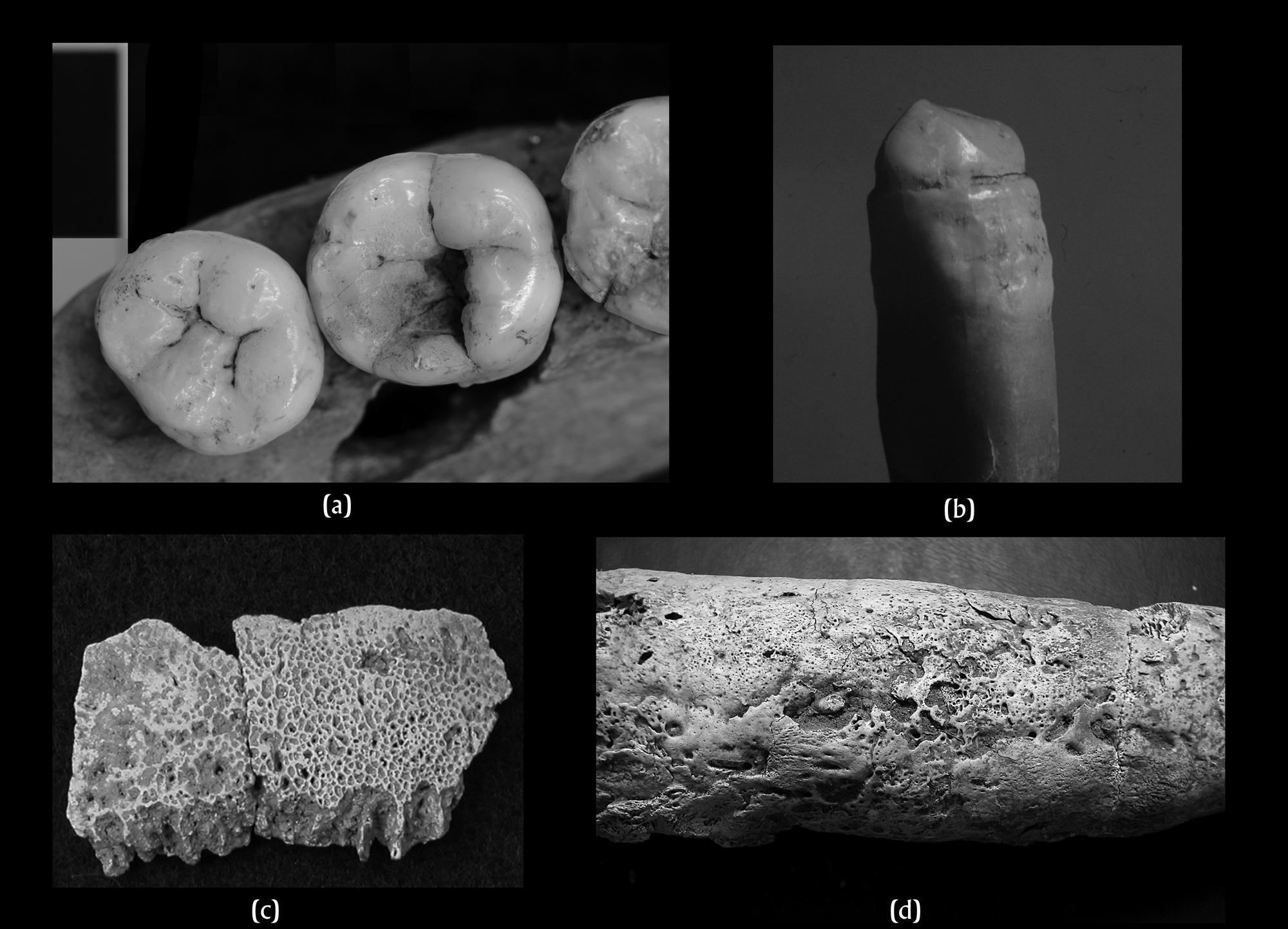
For the present study, caries and enamel hypoplasia were scored by tooth rather than by individual, following standard procedure in dental anthropology and acknowledging the poor state of preservation of the samples. Carious lesions and enamel hypoplasia (in the form of linear defects) were recorded on all permanent teeth (Figures 2a and 2b). All teeth that did not allow systematic scrutiny because of advanced attrition, calculus, and/or dental modification were excluded from this study. In the remaining study cohort, carious defects were registered as present when the cavity had invaded the dentine, corresponding in each case to category ‘2’ and beyond in a range of defect expressions from ‘0’ (absent) to ‘4’ (crown severely deformed; Schultz Reference Schultz and Knußmann1988). In the case of caries, “presence” indicates defects that are at least two mm wide and reach the dentine. Enamel pits that possibly could be confused with early stages of caries were previously excluded from the count. In total, 4,569 permanent teeth were analyzed for caries and 7,416 permanent teeth for enamel hypoplasia (Tables 4 and 6).
(a) Carious lesions affecting a mandibular second molar (Yaxuna, PIPCY). (b) Linear enamel hyploplasia in a mandibular canine (Yaxuna, Proyecto Arqueológico Yaxuná, Yucatán, México (Selz Foundation). (c) Porotic hyperostosis in parietal bones (Atlas de Guatemala/Instituto de Antropología e Historia de Guatemala). (d) Severe chronic osteomyelitis/ subperiosteal reaction in an adult tibia (Laltic, Tonina/Clausto de Sor Juana). Photographs courtesy of Laboratory of Bioarchaeology.
Porotic Hyperostosis
Childhood stress episodes were inferred from the presence of healed porotic hyperostosis (Figure 2c). Porotic hyperostosis is defined as abnormal porosities on the external surface of the cranial vault. These lesions are the product of reorganization and radially oriented enlargement of the diploic tissue or the apposition of bone on top of the external lamina of the cranial vault. Active remodeling will occur only in infants but will leave visible porotic lesions in those individuals surviving through adult age. Although porotic hyperostosis may relate to inflammatory conditions and the ossification of a subperiosteal hematoma, it is likely related to childhood anemia (Schultz Reference Schultz and Ortner2003). The scoring system used in this study follows the taxonomy and criteria proposed by Schultz (Reference Schultz and Knußmann1988) and dichotomizes grades of ‘2’ and above as “present” (Table 5).
Osteomyelitis/ Subperiosteal Reaction
Infectious diseases were a common cause of chronic suffering and death in pre-antibiotic populations. Nonspecific osteomyelitis is an infectious disease caused mostly by the introduction of a bacteria through a traumatic injury, either infiltrating from a tissue already infected or by the blood stream (Ortner Reference Ortner2003). The prevalence of osteomyelitis/subperiosteal reaction along the skeletonized body of the ancient Maya is an approach to evaluate the health risk during their life due to association with poor hygienic conditions and an adverse living environment.
For the purposes of this study, all bone surfaces were examined systematically for subperiosteal accretions and abnormal porosities under a bright light and magnifier, following the criteria described by Brickley and Ives (Reference Brickley and Ives2008) and Ortner (Reference Ortner2003; Figure 2d). Undamaged surfaces were distinguished from those that showed longitudinal, fine to coarse striation (when at least one half of the diaphysis was scoreable). Additional isolated or diffuse patches of bone apposition and general swelling of bone segments were also noted in this category (Table 5), as well the dense versus porotic nature of the bone accretions. In the literature (Ortner Reference Ortner2003), this set of reactions is usually correlated with open and infected wounds that result in chronic systemic (nonspecific bacterial) osteomyelitis with a subperiosteal component.
Osteoporosis
Osteoporosis is catalogued as a degenerative disease that occurs due to an unbalanced or poorly balanced remodeling process, resulting in the progressive loss of calcified substance and, with it, a reduced skeletal resistance (Ortner Reference Ortner2003; Schultz Reference Schultz and Knußmann1988). This weakness in the bone tissues can increase the vulnerability to trauma among the affected individuals, most of whom are mature or elderly. Osteoporosis, as the other pathologies described above, is a multifactorial illness, although most noticeably triggered by hormonal shifts during female menopause. Some of the general factors involved in the prevention of premature osteoporosis is physical activity. Factoring in sex, human females are more likely to manifest osteoporotic bones than males (Brickley and Ives Reference Brickley and Ives2008; Ortner Reference Ortner2003). After excluding all incomplete and poorly preserved postcranial skeletons, we scored the macroscopic osteoporotic lesions (Table 5) on a scale of ‘0’ (absent) to ‘3’ (severely osteoporotic) based on the macroscopically visible rate of reduction in compact tissue thickness of long bones.
SETTING THE STAGE: PHYSIOLOGICAL STRESS LOADS AMONG THE ADULTS OF COPAN'S CENTRAL NEIGHBORHOODS
To provide a benchmark for subsequent regional comparisons and discussion on potential urbanization impacts, we obtained stress frequencies in a numerically elevated, sexed, and individually contextualized skeletal cohort from the largest site series of our regional database. It comes from Copan, Honduras, the main Classic-period urban stronghold on the Maya southeastern peripheral area. Some 207 adults make up this cohort, all of whom had been buried beneath the dense residential units within one km from Copan's Main Group. For the purposes of this research, we pooled the scores obtained from three archaeologically-retrieved collections from this site (PAC-Phase I, PAC-Phase II, and the holdings of the Peabody Museum of central Copan tombs and burials; Figure 3 and Table 1).
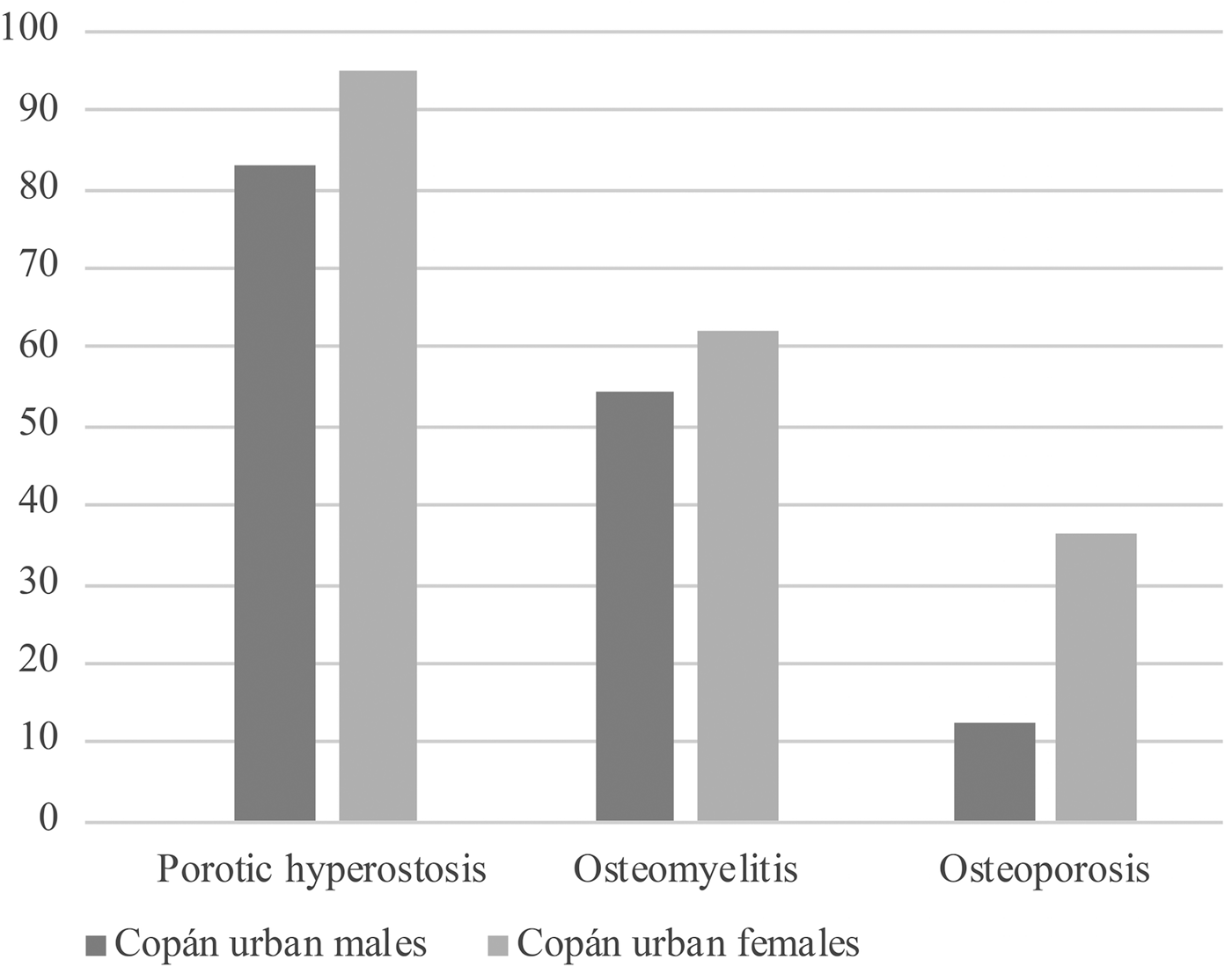
Frequency of skeletal conditions among central urban females and males from Copan, Honduras. Graph by López Pérez.

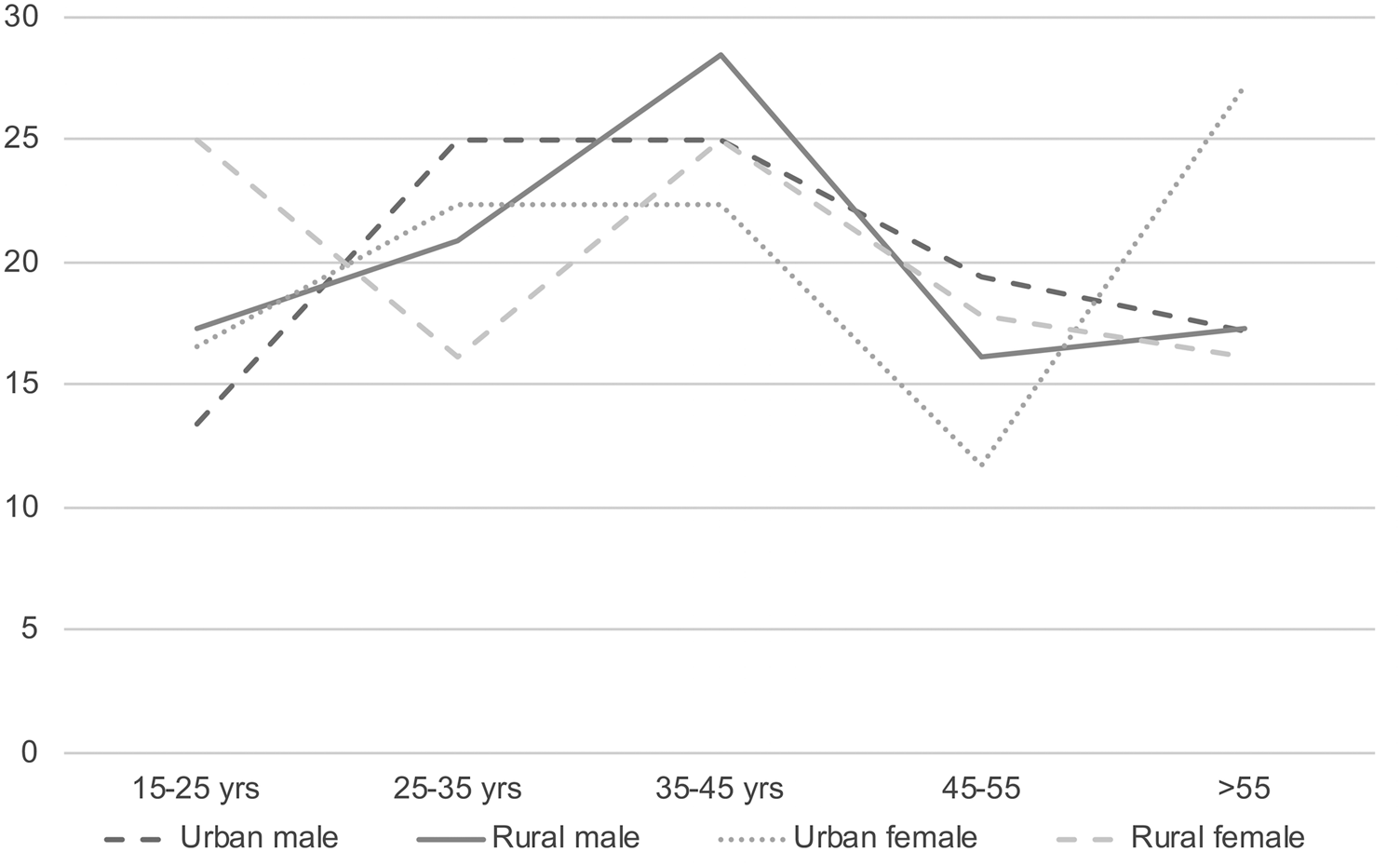
In tandem with the overall regional age-at-death trend (Figure 4), the male and female collective from Copan's central quarters shows a slight death peak between the fourth and fifth life decade. The assessment of dental stress indications in the Copan samples was excluded due to inconsistencies among the recording methods and low rates of scored teeth due to decay. Higher female stress ratios were noted among all three skeletal stress indications. Porotic hyperostosis frequencies sustained by boys and girls who survived to adulthood from Copan's central neighborhoods are 83.3 percent and 95.1 percent, respectively. No statistically significant difference was documented between the sexes (Figure 3, Tables 1 and 2). In the postcranial skeleton, the frequency of osteomyelitis was lower among central urban males (54.5 percent) when compared to their female counterparts (62.3 percent) without there being statistically significant differences (Figure 3, Tables 1 and 2). The frequencies of osteoporosis are displayed in Figure 3 and Table 1. According to our results, some 12.3 percent of Copan's male settlers were affected, while females triplicate this frequency (36.5 percent), indicating statistically significant differences (Table 2).
Age-at-death profile distribution of the Classic-period adult burial population from rural and urban sites according to sex. Graph by López Pérez.

REGIONAL TRENDS
In the following, we address the results obtained among the scored adulthood and childhood stress frequencies on a regional scale (Figure 1), comparing each ratio according to settlement size and sex.
Sex and Age-at-Death
The adult mortuary population from urban centers is slightly older than the one derived from small sites (Figure 4). Although this trend is apparent both in women and men, we shall not generalize on this aspect due to potential biases that may have been introduced by fertility and population shifts (which in practice come to produce “artifacts” in the adult age distributions that would be unsubstantiated in an equivalent stationary population, i.e., with no positive or negative population growth; see Wood et al. Reference Wood, Milner, Harpending and Weiss1992). Age-at-death profiles, according to sex and centrality category, are provided in Figure 4 and broadly reflect the adult age-at-death distribution described for Copan's central neighborhood populations. It is noteworthy that urban females and males are more evenly dispersed across the middle adult age ranges than their rural peers. While the urban age distribution shows a platform of dead young and middle-aged adults (third through fifth life decade), their rural peers of both sexes display a peak in their late thirties and early forties. Only the urban female series shows a rise in elderly age ranges (beyond the 50-year threshold).
Caries and Enamel Hypoplasia
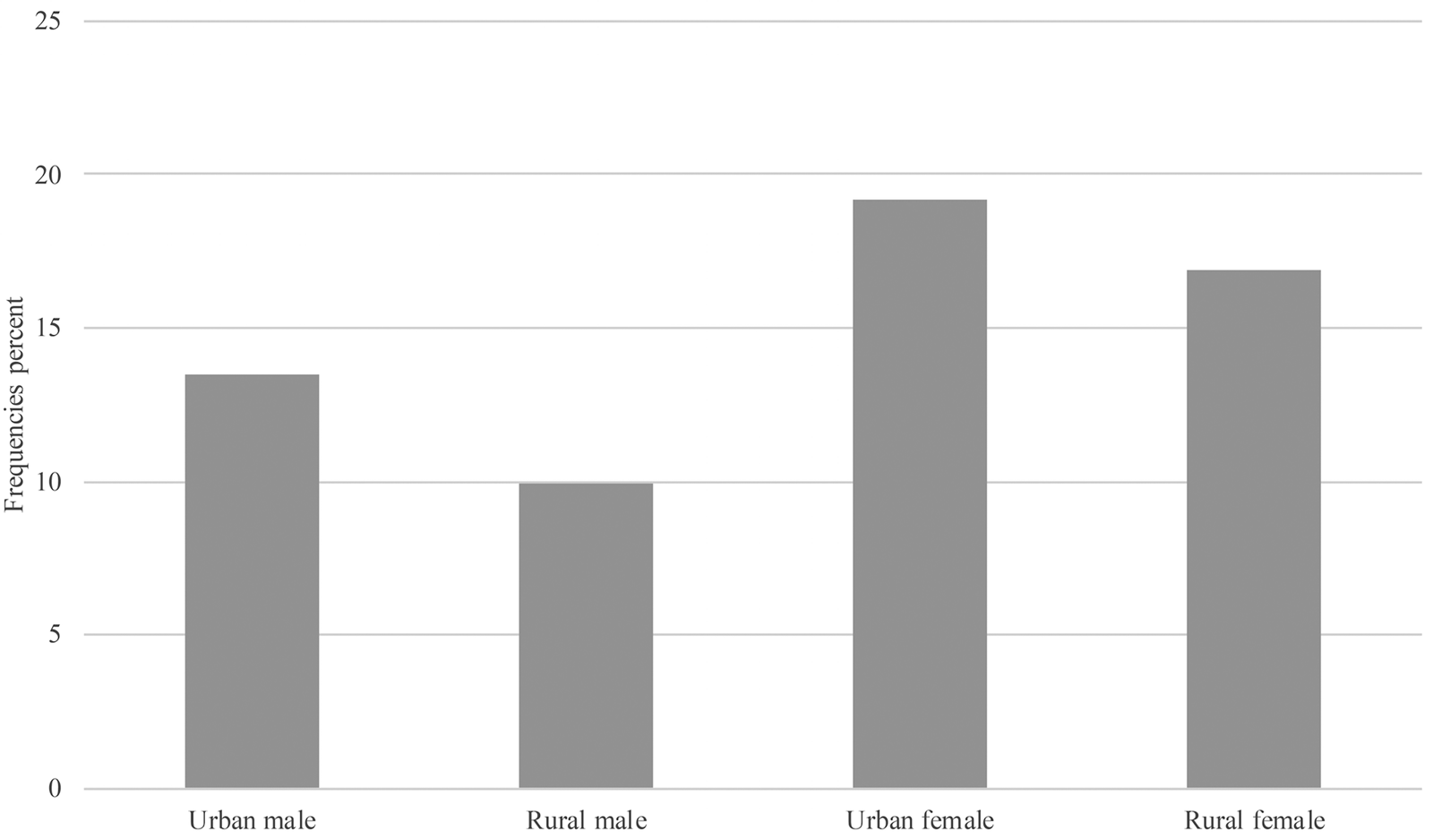
Frequencies of caries and enamel hypoplasia are listed in Tables 3 and 4, respectively. The prevalence of carious teeth ranges from 9.9 percent among rural males to 16.9 percent in rural females. Higher are the cariogenic frequencies among urban male adults (13.5 percent) and urban females (19.2 percent) when compared to their rural neighbors (Figure 5 and Table 3). This difference is statistically significant (Table 6).
Caries frequencies according to sex and settlement size. Graph by López Pérez.

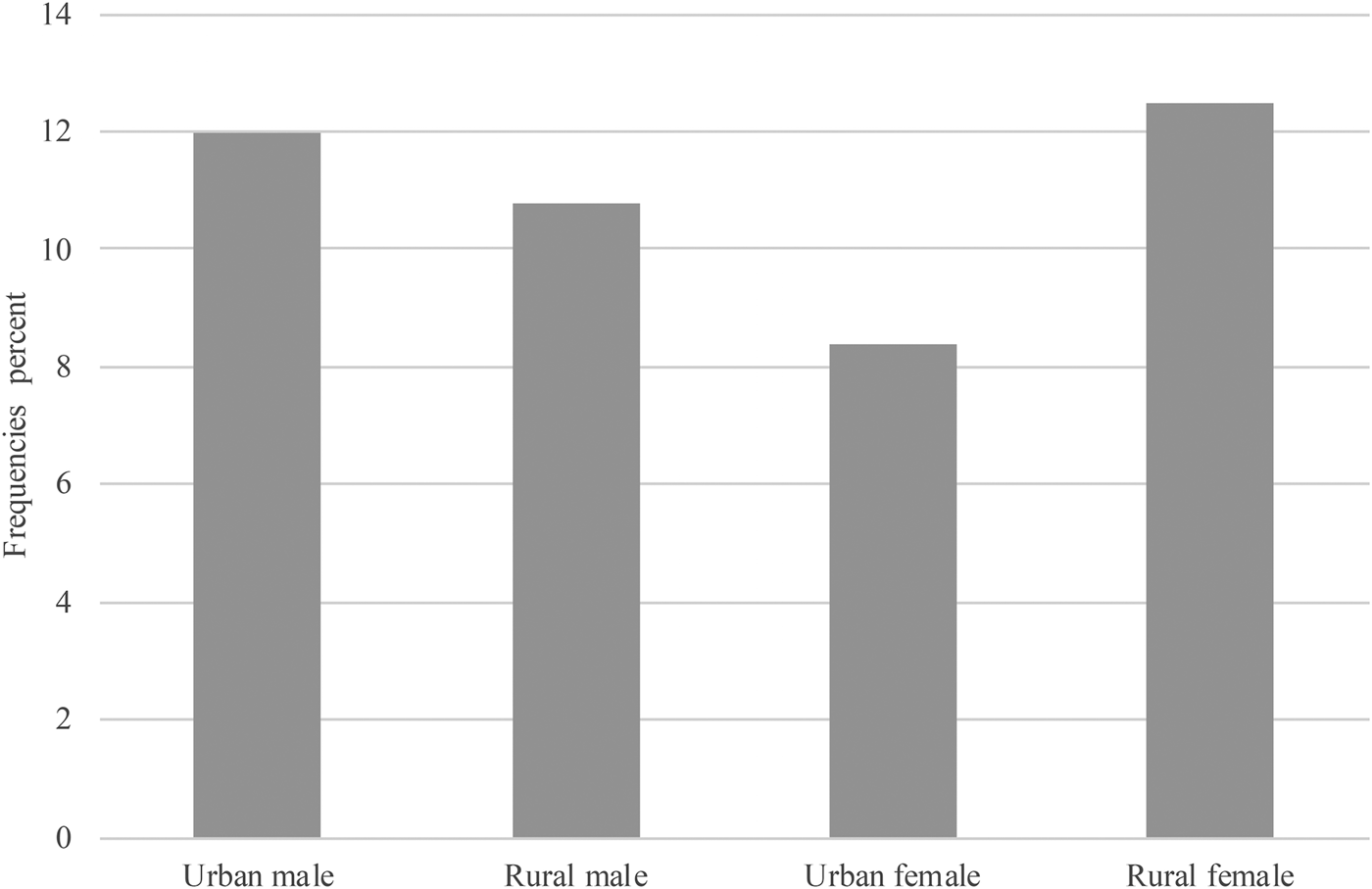
The frequencies of enamel hypoplasia defects according to dichotomized centrality and sex appear in Table 4. Figure 6 displays the percentage of teeth with enamel defects per number of evaluated teeth. Enamel defects among rural and urban boys who lived to be adults are similar. Infant boys, however, experienced slightly more stress growing up in urban areas when they are compared to boys from the rural villages and hamlets (12.0 percent and 10.8 percent, respectively). The average expression of enamel defects in a range of ‘0’ (no sign) to ‘4’ (highly deformed) shows that urban males suffered an average of 0.73 in expression, which is slightly higher when compared to their rural male peers (0.70). Inverse to the boys’ enamel microdefect trend, urban girls represent the lowest nonspecific stress indicator in their enamel (8.4 percent, 0.63), while the most severely affected were rural girls who had survived to adulthood (12.5 percent, 0.68). Thus, it appears that the combined effects related to sex and site centrality led to significantly more childhood stress among rural females than any other group (Table 6).
Frequency of enamel hypoplasia according to sex and settlement size. Graph by López Pérez.

Porotic Hyperostosis
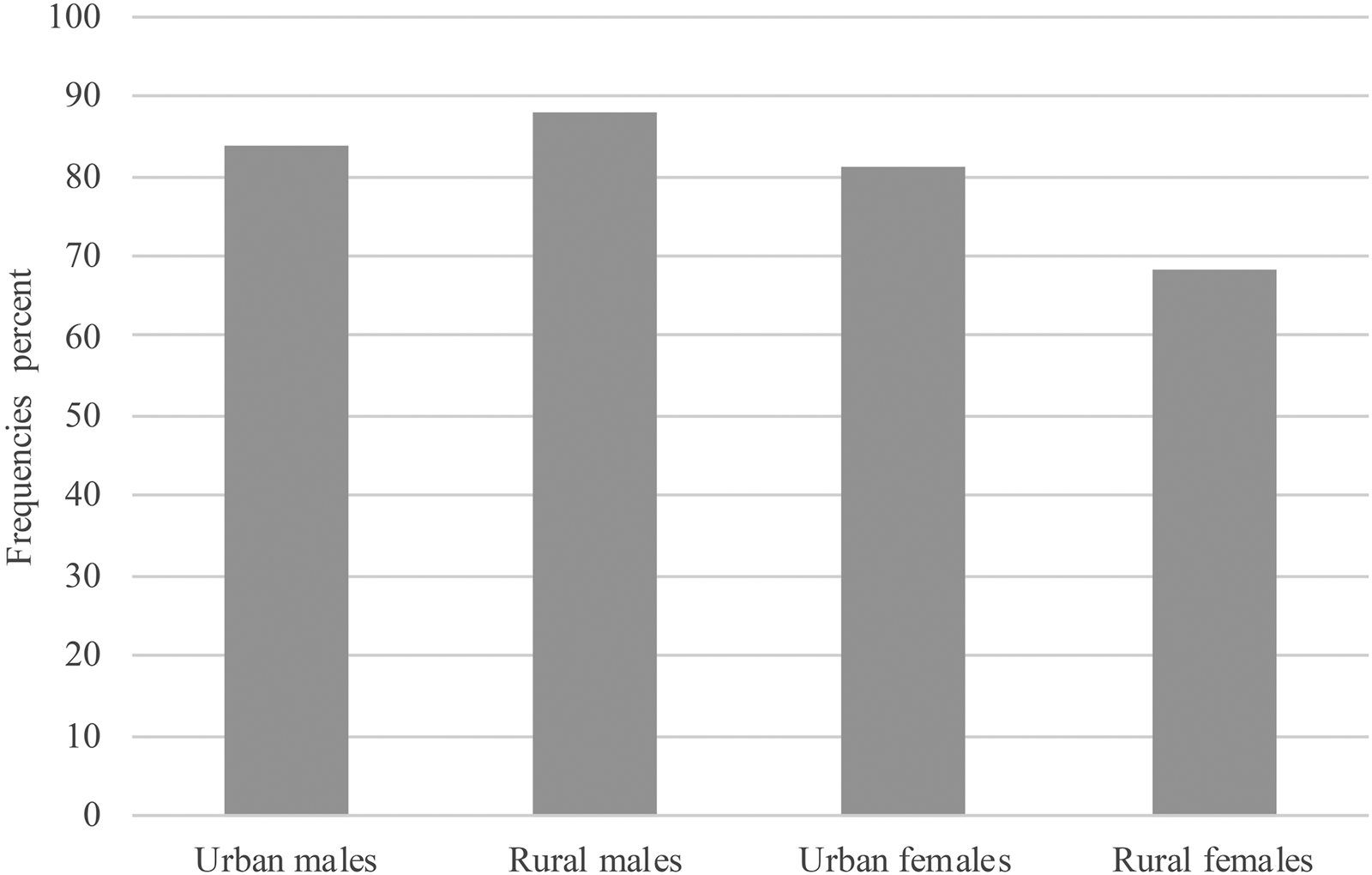
The prevalence of skeletal childhood stress by sex and settlement size is represented in Table 5 and Figure 7. The overall frequency of porotic hyperostosis ranges between 88.1 percent among the rural boys and 68.4 percent among those rural girls who survived through adulthood. Statistically significant differences were found when comparing rural males with rural females (Table 6). Relatively lower is the ratio frequency among urban boys, an 83.8 percent of whom show healed lesions, and higher for the urban girls, among whom an 81.1 percent show signs of analogous lesions (Figure 7). Still higher is the ratio among Copan's female core settlers. Only one out of 20 female grown-ups (4.9 percent) do not show the scars of porotic hyperostosis (Figure 3, Tables 1 and 2).
Frequency of porotic hyperostosis according to sex and settlement size. Graph by López Pérez.

Osteomyelitis/ Subperiosteal Reaction
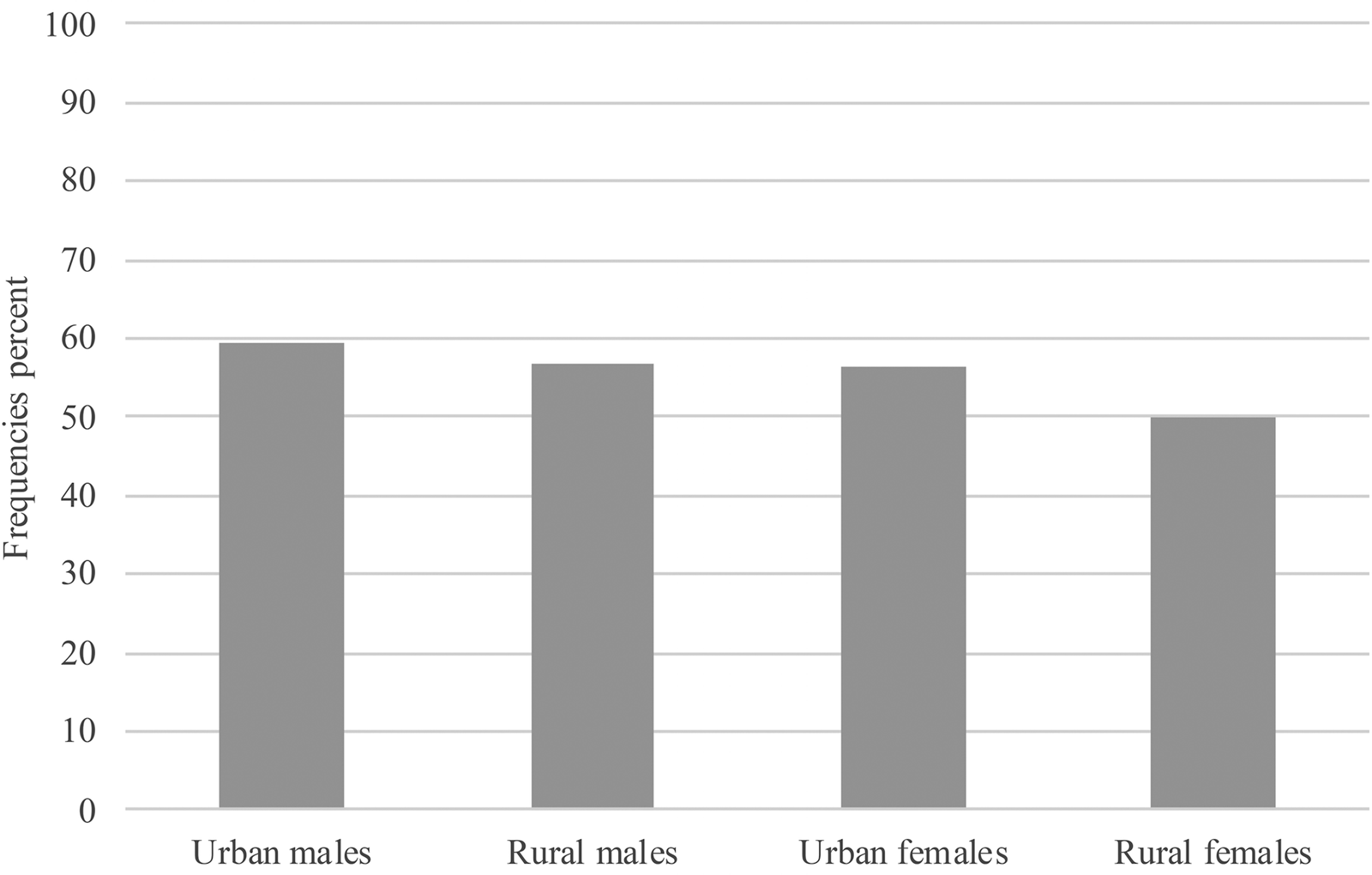
According to the present results, half (50 percent) of the rural females displayed reactive osteomyelitis, compared to a slightly higher rate of 56.9 percent of the rural males. The sexed urban frequencies are similar at 56.3 percent among females and 59.4 percent among males (Figure 8 and Table 5). No statistically significant differences were found regarding either sex or centrality (Table 6). Again, the frequencies of systemic osteomyelitis among the women of central Copan are comparatively higher (62.3 percent; Figure 3, Tables 1 and 2).
Frequency of osteomyelitis/subperiosteal reaction according to sex and settlement size. Graph by López Pérez.

Osteoporosis
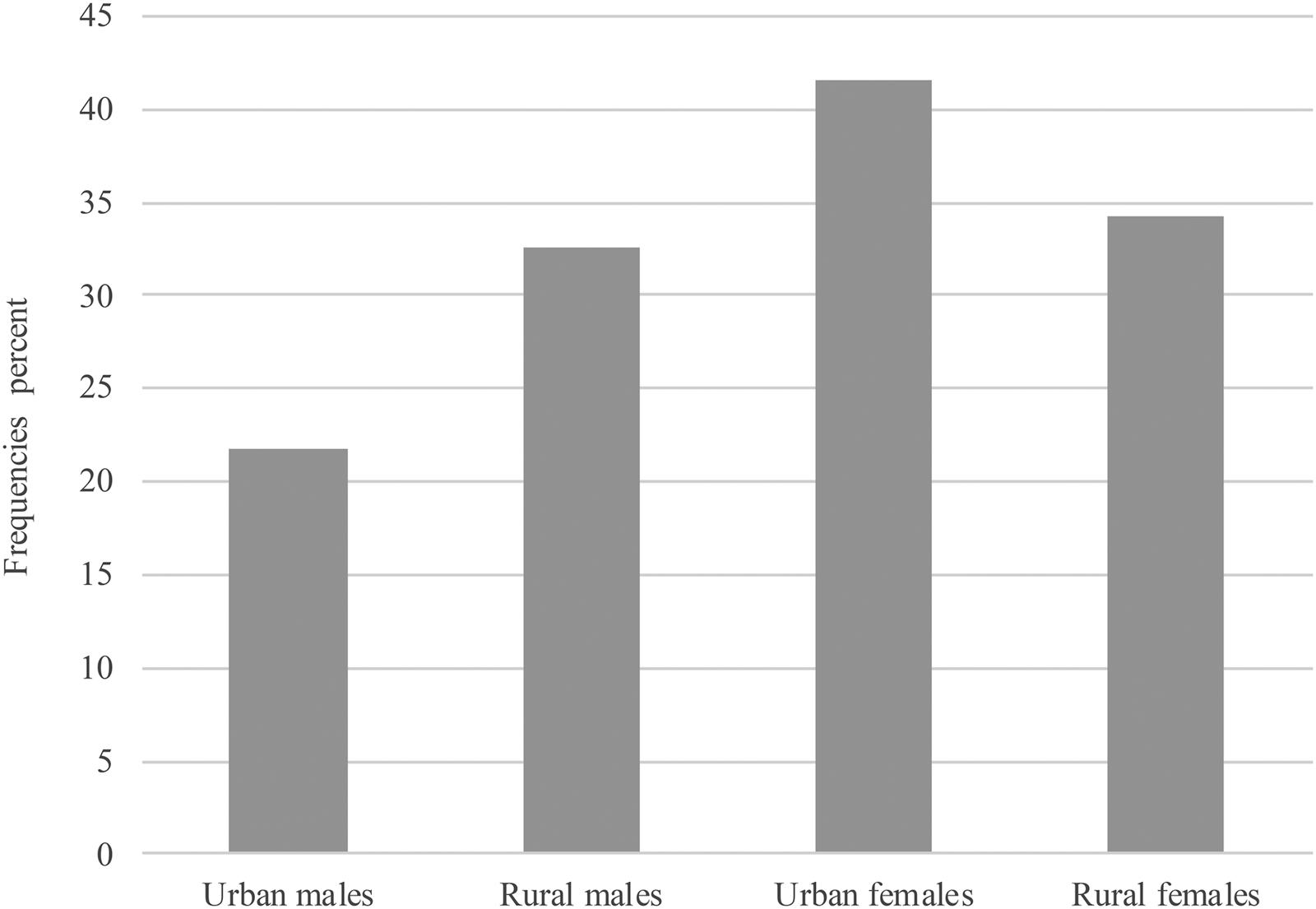
Some 12.3 percent of Copan's central male residents are affected by systemic bone loss, while females triplicate this frequency (36.5 percent), indicating statistically significant differences (Figure 3 and Table 1). Similar to the sex differences among Copan's core settlers are those from the regional urban settlements. Urban males present the lowest ratio of osteoporosis (21.8 percent), while urban females (41.6 percent) display twice their frequency (Figure 9 and Table 5). Again, statistically significant differences were obtained when both sexes are compared (Table 6). Interestingly, a sex difference is not apparent when osteoporosis frequencies among rural females (34.3 percent) are compared to rural males (32.5 percent). The latter are much higher than the osteoporosis frequencies measured among urban males (21.8 percent) and almost triple the ones among Copan's urban males (12.3 percent).
Frequency of osteoporosis according to sex and settlement size. Graph by López Pérez.

DISCUSSION
Unfortunately, low sample sizes hamper lowland Maya bioarchaeological explorations by way of invalidating most generalizations about health and lifestyle when calculated from reduced archaeologically-retrieved burial series. The shortcoming becomes apparent in our own study cohort in which the available individual count per site averages only seven individuals per rural settlement and 18 individuals per urban settlement. This was the point of departure for the present, more regionally geared examination in which we used close to 1,000 sexed adult individuals from systematically selected burials for the collective scrutiny of physiological stresses.
This research builds on prior bioarchaeological studies that have focused on specific settlements or circumscribed areas within the Maya sphere, where the archaeological landscapes have been systematically surveyed and excavated, leading to the recovery of large skeletal series. An example of such work is the continuing regional survey of southeast Peten, Guatemala, by the Archaeological Project Atlas of Guatemala (Instituto de Antropología e Historia, Laporte and Mejía Reference Laporte and Mejía2005). In the course of these efforts, some 400 systematically documented skeletons from 50 sites were made available for systematic skeletal analysis. East of the southeastern Peten lies the Belize Valley, which has similarly benefited from intense scholarly coverage and includes numerous well-documented skeletal series (Novotny Reference Novotny and Robin2012, Reference Novotny2015). Further south, the Río de la Pasión region has been extensively surveyed and reported by Wright (Reference Wright2006). The Copan pocket, extending in length some 40 kilometers, adds to the list of such regional surveys. Although more restricted in territory than the previously mentioned areas, the pocket of Copan, Honduras, has been among the most intensely studied Maya settlement networks with approximately 1,000 recorded burials and a standing nomenclature of settlement sizes and types spanning the Copan Valley (Whittington Reference Whittington1988).
Before comparing our results with further scrutiny of rural and urban living conditions, some cautionary remarks apply due to the potential biases implied by generalizing about Classic-period rural versus urban well-being across the Maya lowlands. The first bias adheres to the sex distribution of our overall series with its slight male predominance (56.8 percent). This is to be expected and most probably is the final outcome of excavating the central portions of sites which are prone to harbor more males than females. Other potential causes of bias are related to preservation issues due to the fact that male sex is easier to determine than female sex when dealing with the deteriorated skeletal remains that characterize Maya lowland burials, as discussed in other research (Krejci and Culbert Reference Krejci, Culbert and Grube1995; Tiesler Reference Tiesler1999). Given the slight male predominance, our results are valid only when we separate male from female health profiles. Therefore, we have limited our comparisons to urban and rural females and urban and rural males and shall do so in this discussion.
An additional bias relates to the divergent social insertion among some urban dwellers, as represented by a higher proportion of urban dwellers in the royal elite category of ‘4’ and ‘5’, which in other work has shown to display discrepant, mostly reduced, stress frequencies (Tiesler Reference Tiesler1999; Wright Reference Wright2006). Fortunately, the overall consideration for this bias is negligible on the grounds of the reduced portions of such burials in each stress category, as expressed by the overall averages of status scores. Still a further shortcoming has to do with section points in our approach. Dichotomize trends, according to presence and absence, do not ideally represent the nuanced conditions underlying health and stress loads. As we acknowledge, the heterogeneous corpus of information limits the problematization of urban and rural sites.
After reducing the above biases at least partly by sample exclusion versus inclusion strategies, however, a number of general trends become apparent when confronting the regional database with the scores of adults buried in central Copan (Figure 3 and Table 2). The latter shows higher female stress loads in all three skeletal markers. Regarding porotic hyperostosis and osteomyelitis, this trend signals that female residents were less buffered against stress and disease than their male co-residents. Given the relatively uniform study cohort, this result points to local differences between the sexes in principle and potentially so, discrimination against female inhabitants. Less apparent is this gap within the sexes among the regional urban cohort.
No clear-cut differences are apparent between urban and rural living conditions per se. Instead, the ratios of the nonspecific stress markers and systemic conditions draw a heterogeneous picture when confronted according to sex. With all the above, we think that the multifarious nature of our trends dismisses any ad hoc simplifications regarding benefits versus costs of living in small villages. At least, the projected picture highlights a differentiated set of costs and benefits among rural lifestyles, which is still more evident when considering the statistically significant differences only in female enamel hypoplasia defects (and not male) and in male caries (Table 4). It seems to follow that some health trends are clearly based on the sex of the individuals. This gendered quality apparently shows that lifestyles would have been played out differently according to centrality. Despite a shared geography and a subtropical setting, this aspect potentially translates distinctions in the ascribed occupations and social roles of women and men in differently sized sites, “snapshots” of the complexities involved in the different lifestyles and living conditions throughout the first millennium a.d.
Such a case could be made for the similar osteoporotic ratios among rural men and women. Given the analogous age-at-death distributions (Figure 4), this trend makes us suspect that an elevated physical regimen was part of these men's and women's daily routine both within the domestic and agricultural sphere. Conversely from the hinterlands, urban males and females show lower ratios. Compared among urban adults, the frequencies are highly discrepant in their expressions of systemic bone loss both in our regional study cohort and in Copan's core population. Copan's female residents suffer three times more from osteopenia than their male peers. In the regional urban series, twice as many women are noted for bone loss when compared to urban men, this being a statistically significant difference. This contrasting trend is well explained in tandem with the correlated age-at-death profiles. We assume that the benefit of females living in urban environments is related to a relatively high life expectancy as they reach their mortality peak long past menopause (Figure 4). Within the context of lifestyle and physical regime, it appears that both men and women living and dying in urban centers would experience a more sedentary lifestyle than their rural peers.
Beyond the skeletal biomechanics of daily physical exercise and its role in preventing premature and specifically osteoporosis past the female reproductive age; there can be only speculation with the present data about the specific biocultural conditions behind this and the four other physiological health burdens among the Classic-period lowland Maya. We will therefore attempt to trace a number of these trends, starting out with stress indications that were shared among inland populations without distinctions of their urban or rural residence. Such a shared health burden was apparently expressed by healed lesions of porotic hyperostosis, which in the literature are associated mainly to the scars of childhood anemia, as produced by an insufficient weaning diet or extrinsically conditioned by parasites of the intestine. Both urban and rural inland series of this study showed high levels of exposure that surpass 70 percent among the scored adult populations. Whittington (Reference Whittington1988:300, 313–314) documents similar affliction rates among inland Maya buried in and around Copan. Whittington specifies that some 60 percent of Copanecan adults had suffered from hyperostosis episodes during their infancy and further poses that type 1 (rural) sites were the most affected by this post-weaning stress condition. Note that such rates of porotic hyperostosis are high across the inland Maya lowlands when compared to the frequencies recorded from coeval coastal sites. As an example, we cite the study by Cetina and Sierra (Reference Cetina Bastida and Sierra2005; Sierra et al. Reference Sierra, Cucina, Price, Burton and Tiesler2014) of a large skeletal series of over five hundred well-preserved skeletons from the small coastal port of Xcambo, Yucatan. Using an equivalent scoring system to the one used in this study, hyperostotic affliction of cranial vaults scored below the 25 percent mark. Faced with this significant difference between coastal and inland frequencies, we ask whether coastal populations exploited more successfully the diverse ecological niches and therefore enjoyed a better balanced diet, which would benefit their children. Why did poor inland weaning diets induce anemia in childhood similarly among urban and rural populations?
By combining oxygen and carbon isotopic analyses in tooth enamel, Wright and Schwarcz (Reference Wright and Schwarcz1998) inferred the timing of weaning among Kaminaljuyu's infants happened during the first year of life while the breastfeeding continued through the fifth year. Consequently, the health risk induced through contaminated food and water during the introduction of solid food could have caused anemia, as the authors discuss. Although not focused on the effects of post-weaning diets in infants, per se, a number of additional studies on dietary isotopes among Classic Maya lowland sites have successfully demonstrated that the diversity in food intake among grown-ups depended on their environments (Gerry Reference Gerry1997; Gerry and Krueger Reference Gerry, Krueger, Whittington and Reed1997). Independently from settlement centrality, Somerville and colleagues (Reference Somerville, Fauvelle and Froehle2013) showed that commoners kept a constant food menu throughout the Classic period, whereas elite inhabitants evidenced more variability in consumed food sources in comparison with commoners over the same period. Similar trends are sustained by the bone and enamel geochemistry among Belize River (Freiwald Reference Freiwald2011), the Copan pocket (Whittington Reference Whittington1988), and the settlers from Río de la Pasion (Wright Reference Wright2006).
Differences between urban and rural living conditions are more apparent among postcranial infectious loads (osteomyelitis/ periostosis). In the overall populations, the majority of lesions are healed and concentrate in both lower legs (fibulas and tibias). This is explained by the low rate of blood circulation, which makes this part of the organism susceptible to infectious propagation and therefore visible subperiosteal reaction. Over half of the urban adult populations show the vestiges of such condition either active or (in most cases) healed. Inversely, only half of rural females displayed such osteomyelitic lesions. We follow that they were apparently spared from some of the loads that affected their urban peers, such as open inflammatory trauma. Similar to our findings, Whittington (Reference Whittington1988:334; 342, Table 11.6) identifies that half of the adult tibias from Copan display lesions and points out that the urban core population was more affected than the non-core population. Analogous disease loads, tied to chronic infectious conditions, have been recorded by Storey (Reference Storey1992, Reference Storey and White1999) and Whittington (Reference Whittington, Goodman and Capasso1992, Reference Whittington and White1999) for the central urban population of Copan's Las Sepulturas neighborhood and interpreted as the health cost of specialization and loss of diversity of food staples.
Similar trends appear among the statistically significant comparisons of enamel defects and cariogenic frequencies. The difference of enamel hypoplasia ratios according to centrality and female may indicate varied disease hazards and stress loads among urban children. In this scheme, girls growing up and surviving in urban residential units were predisposed to more stressors while boys appear to have buffered the impact of general stressors. Therefore, we must engage the possibility of cultural gender discrimination during breastfeeding, weaning and later upbringing practices of girls. A cautionary note for this interpretation regards the multi-etiological nature of enamel hypoplasia, of course, which renders any direct causal association of childhood stress problematic.
Finally, cariogenic defects express higher female exposure in our study sample. This trend is expected in most agricultural populations due to the combined effect of pregnancies and active role in daily processing of cariogenic staple foods, mainly maize (Cucina et al. Reference Cucina, Perera, Sierra and Tiesler2011). Independent of the differences between both sexes, females and males signal a lower rural exposure in our sample population when compared to their urban counterparts. Urban neighbors appear to express either a lower collective level of oral hygiene or a higher reliance on monostaple crops with a (cariogenic) carbohydrate content (Cucina and Tiesler Reference Cucina and Tiesler2003; although see Cucina et al. [Reference Cucina, Perera, Sierra and Tiesler2011] for a cautionary note on equaling carbohydrates to cariogenic frequencies).
While the focus and scope of this research—i.e., the biocultural analyses of human remains from archaeological contexts of hinterland communities all over the Maya inland lowlands— has not been pursued so far among studies of rural Maya bioarchaeology, there have been noteworthy efforts in this direction already. To illustrate this point, we single out the research by Wright and White (Reference Wright and White1996; see also Wright Reference Wright2006), who put to work systematic regional coverage to measure the evolving population impacts of infectious disease and malnutriton among Classic populations, and possible late shifts during and after the collapse of inland kingdoms. These authors concluded their studies by demonstrating geographic variability among a number of stressors, such as porotic hyperostosis (Wright and White Reference Wright and White1996:160). Still more important, Wright and White do not encounter significant increases in stress frequencies in more recent prehispanic Maya populations and conclude that their stressors were buffered similarly to earlier ones. Hence, Wright and White reject the ecological model as the main explanation for the Maya collapse (at least for the Pasion Region; see also work by Wright [Reference Wright2006]) and instead explore the viability of sociopolitical conditions as the main dynamic behind the collective crisis and abandonment of immense areas inside the Peten. Our regional results, although static, are analogous to those of Wright and White in that they do not show a clear-cut pattern of ranking. Beyond the ‘crisis' label, our results underscore some additional health trends for Classic-period Maya populations that have not been explored in this form in prior research. For example, we demonstrated that stress loads during the Classic period affects both sexes differently while apparently not being driven as much by settlement size.
One further point of discussion concerns the low occupational densities among Maya settlements, even within cities. The dispersion of living spaces has been related to Maya urban design (clustered residential zones as urban aggregates) and the multifaceted and non-intensive appropriation of the semitropical agricultural landscapes by Maya farmers (Isendahl and Smith Reference Isendahl and Smith2013; Smith et al. Reference Smith, Engquist, Carvajalc, Johnston-Zimmerman, Algara, Gilliland, Kuznetsov and Young2015). Even more dispersed are the rural Maya villages, hamlets, and farmsteads (Lemonnier and Arnauld Reference Lemonnier and Arnauld2022). From this functional and ecological approach, the urban versus rural dichotomy seems problematic to uphold.
Finally, within the dynamic network of differently sized settlements, Maya peasant mobility equally awaits systematic exploration (Smith Reference Smith2014), considering a number of related questions: how did rural immigrants integrate into the social structure of their new first or second tier urban locality? How did migration modify the social fabric of the settlements during and after out-migration? Beyond categorically affirming their presence and impact on ancient Maya society (Freiwald Reference Freiwald2011; Price et al. Reference Price, Burton, Fullagar, Wright, Buikstra and Tiesler2008, Reference Price, Burton, Sharer, Buikstra, Wright, Traxler and Miller2010, 2014; Suzuki et al. Reference Suzuki, Nakamura and Price2020; Wright Reference Wright2012), more specific inferences regarding the motivations and social dynamics behind the elevated intra- and interregional mobility still remain speculative, at least for the era before the so-called Maya collapse.
CONCLUSIONS
This study has utilized a bioarchaeological and comparative approach to explore health-related aspects of well-being and health benefits versus costs among Maya rural populations as opposed to Maya populations living in large urban aggregations. Beyond its purely exploratory nature, this research has adopted a series of concepts, formulated by Marcus (Reference Marcus, Lohse and Valdez2004:260–270) on Maya urban/rural relationships, that may have affected lifestyle both positively and negatively. Our study has tested these assumptions by comparing the frequencies of nonspecific stress markers among the burial populations documented from 63 differently sized Classic-period sites. At the beginning of this research, we have proposed that the living conditions among Classic-period Maya hinterland populations would be adverse when considering the socioeconomic dependence, degree of political centralization and urban benefits. In an alternative scenario of active rural participation in a complex cultural landscape, rural populations would not be as much affected by the health cost of the dietary stresses experienced by urban aggregations from their urban monostaple dietary supplies, which in the Maya Lowlands would translate into a high maize intake. Furthermore, we expected that rural hinterlands were spared from the high infectious loads associated with living in densely populated urban strongholds.
After scoring and discussing the expressions of each of the five deficiency conditions and nonspecific physiological stress markers under study, our results show inconsistency with most of our prior expectations, except for confirming a relationship between rural residence and a more physically demanding regime among men and women. Beyond bone biomechanics, the dietary stresses (as expressed by porotic hyperostosis) appear to affect a similar number of children raised in rural and urban environments. This trend proves our pair of opposing previous assumptions invalid or irrelevant. Also, caries frequencies among adults are correlated with sex rather than with settlement size (although the latter does factor in), and only the frequency and expression of enamel hypoplasia appear to be correlated to site size but not by sex. Equally inconsistent were our results regarding the infectious loads (as expressed by nonspecific subperiosteal reactions) among urban neighbors versus rural settlers. Both series display similarly elevated frequencies among males, while females from hinterland communities appear to be relatively spared. Beyond the biases imposed by the different social profiles among the funerary samples, this is by itself a health indication. We follow from all of the above that cultural, social, and population changes have impacted the potential health benefits and costs of inland populations in a complex and nonuniform fashion. This finding, by itself, is extraordinary given that the natural environments and broader subsistence regimes remained stable over the centuries during the first millennium a.d. across the inland Maya lowlands.
We close by acknowledging that, despite the systematic research design and the large sample population, our survey does not escape the inherent shortcomings of engaging in static dichotomies instead of more nuanced trends. The multifactorial mechanisms involved in lifestyles and stress loads come to deny any categorical affirmative statement or causal explanation regarding the relationship between well-being and rurality (or urbanism, for that matter). This leaves us with an added heuristic value for future Maya rurality research. These should be aided by equally broad but more nuanced settlement validations, ideally guided by systematic LiDAR coverage across the ancient urban and rural Maya landscapes (Garrison et al. Reference Garrison, Houston and Firpi2019; Lemonnier and Arnauld Reference Lemonnier and Arnauld2022). Still more important, we wish to have incited new questions and thoughts regarding the intricate dynamics among the semitropical settlement landscapes of the Maya Lowlands.
RESUMEN
Las condiciones de salud varían entre los miembros de las sociedades estatales, dependiendo del género, los privilegios sociales y su residencia urbana versus rural. Como tales, estas condiciones son propensas a expresar las experiencias de vida individuales y, en última instancia, su bienestar. En este artículo se exploran dichos correlatos, examinando y poniendo los marcadores de estrés fisiológico de poblaciones rurales mayas en contexto con sus pares urbanos. Para ello, comparamos las frecuencias y las expresiones de la hipoplasia del esmalte, la caries, la hiperostosis porótica y la osteomielitis infecciosa /reacción subperiosteal, medidas en 842 esqueletos adultos de ambos sexos que proceden de 63 asentamientos periféricos y céntricos de las Tierras Bajas mayas alejados de la costa. Nuestros resultados sugieren dietas de destete problemáticas y cargas infecciosas elevadas entre poblaciones rurales. La mayoría de los resultados marcan distinciones entre hombres y mujeres y, en general, muestran cargas de salud inconsistentes cuando se comparan entre los medios de vida urbanos y rurales. Desprendemos de nuestros resultados que, aparte de los potenciales sesgos de la muestra habrán influido los costos y beneficios de la salud en los estilos de vida rurales. Estas condiciones fueron complejas diferenciadamente durante el primer milenio d.C., lo cual rechaza cualquier conceptualización jerárquica a priori al tiempo de invitar futuras exploraciones sobre las condiciones y dinámicas multicausales detrás de las tendencias encontradas.
ACKNOWLEDGEMENTS
Our thanks go to Céline Lamb for kindly inviting us to contribute to this timely dossier and for her valued feedback during all stages of writing. Prior research in co-authorship with Andrea Cucina was presented during an SAA meeting in Honolulu, Hawaii in 2013. We also thank Nicholas Sanders for proofreading this manuscript and the five anonymous reviewers for their most valuable comments on contents and form. The reported skeletal series are part of project work conducted with the kind permission or in collaboration with the following projects and institutions: the Instituto Hondureño de Antropología e Historia (IHAH, core and non-core Copan), Peabody Museum, Harvard University (Ceibal, Holmul, Uaxactún, Altar de Sacrificios, core and non-core Copan, Baking Pot, Barton Ramie); Proyecto Sur de Quintana Roo, Instituto Nacional de Antropología e Historia (INAH, Kohunlich and Dzibanche); Proyecto Atlas Arqueológico de Guatemala, Instituto de Antropología e Historia (Calzada Mopan, Curucuitz, Copoja 1, El Chal, El Mozote, El Chilonche, El Ocote, El Mozote, El Tzic, Ix Ak, Ix Ek, Ixcol, Ixcoxol, Ixkun, Ixcheu, Ixtutz, La Lechuza, La Instancia, La Pacayera, Laguna Perdida, Linares, Moquena, Nuevas Delicias, Pueblito, San Francisco, Yachul, Tesik, San Francisco, Ixtonton, La Vertiente, Sukche, Yaltutu, La Lucha, Sacul, La Gloria Sacul); Proyecto Arqueológico Becán, INAH (Becán); Proyecto Arqueológico Calakmul, INAH (Calakmul); Universidad Autónoma de Campeche (Calakmul); Proyecto Arqueológico Xuenkal, Kent University (Xuenkal); Universidad de Zacatecas (Kimilna); Dirección de Antropología Física, INAH (Palenque, Tonina); Claustro de Sor Juana (Toniná, Palenque, Laltic, Santa Rosa, Vayejtas); Centro INAH Yucatán (Caucel, Noh Bec, Río Bec); Proyecto Arqueológico Yaxuná, University of California Riverside (Yaxuna); and Proyecto Arqueológico Uci, University of Kentucky (Uci). All errors are our own.