Introduction
Children and young people who are looked after by the state (‘children in care’ or ‘children looked after (CLA)’) have poor outcomes in childhood and beyond, compared to their peers in the general population. In particular, research across several decades in high-income countries has documented a significant gap in attainment, evident throughout the school years (Scherr, Reference Scherr2007; Stone & Zibulsky, Reference Stone and Zibulsky2015; Trout, Hagaman, Casey, Reid, & Epstein, Reference Trout, Hagaman, Casey, Reid and Epstein2008). While some young people in care will achieve success (Jackson & Cameron, Reference Jackson and Cameron2010), many leave school with few or no formal qualifications, putting them at risk of long-term social and economic disadvantage, including poor physical and mental health, high unemployment, and criminality (Buehler, Orme, Post, & Patterson, Reference Buehler, Orme, Post and Patterson2000; Centre for Social Justice, 2015; Dregan, Brown, & Armstrong, Reference Dregan, Brown and Armstrong2011; Dregan & Gulliford, Reference Dregan and Gulliford2012; Forsman, Brännström, Vinnerljung, & Hjern, Reference Forsman, Brännström, Vinnerljung and Hjern2016; Vinnerljung & Hjern, Reference Vinnerljung and Hjern2011).
In England, for example, in 2016, 50% of CLA who were seven years old reached the expected standard or above in reading and 46% achieved this in maths, this compares to 74% and 73% in reading and maths for children in the general population. At age 11, the gap widens so that 41% of CLA achieved at or above age-related expectations in reading and maths, in contrast to nearly 70% of children in the general population. At age 16, the attainment of CLA is even lower: only 17% achieved five A*-Cs in their General Certificate of Secondary Education (GCSE, the national exams), compared to nearly 60% of children in the general population (DfE, 2017). This picture is similar in other countries, including Australia (AIHW, 2017), the USA (Wiegmann et al., Reference Wiegmann, Putnam-Hornstein, Barrat, Magruder and Needell2014), Canada (Tessier, O'Higgins, & Flynn, Reference Tessier, O'Higgins and Flynn2018), and Nordic countries (Kääriälä & Hiilamo, Reference Kääriälä and Hiilamo2017). A number of systematic reviews have compared the educational outcomes of children in care to children in the general population and found a significant gap in attainment (Scherr, Reference Scherr2007; Trout et al., Reference Trout, Hagaman, Casey, Reid and Epstein2008). However, other and more recent reviews have shown that when children in care are compared to children who face similar risks and disadvantage, this gap is significantly reduced (Goemans, Geel, Beem, & Vedder, Reference Goemans, van Geel, van Beem and Vedder2016).
Research offers limited insights into how and why children in care fall behind their peers (Stone, Reference Stone2007; Stone & Zibulsky, Reference Stone and Zibulsky2015). On the one hand, a body of evidence suggests that pre-care experience, such as maltreatment, abuse, neglect, and chaotic early life experiences, puts children at significant risk of future harm and poor outcomes (Goemans, van Geel, & Vedder, Reference Goemans, van Geel and Vedder2015; Romano, Babchishin, Marquis, & Fréchette, Reference Romano, Babchishin, Marquis and Fréchette2014; Scherr, Reference Scherr2007; Veltman & Browne, Reference Veltman and Browne2001). On the other hand, some argue that the care system fails to meet the needs of children it is responsible for, and that this impedes their progress (Ainsworth & Hansen, Reference Ainsworth and Hansen2014; Connelly & Chakrabarti, Reference Connelly and Chakrabarti2008; Jackson, Reference Jackson2007). For example, Connelly and Chakrabarti (Reference Connelly and Chakrabarti2008, p. 355) expressed concern about ‘the devastating impact of being in care on young children's attainment in reading, writing and mathematics’. Forrester, Goodman, Cocker, Binnie, and Jensch (Reference Forrester, Goodman, Cocker, Binnie and Jensch2009) conducted a systematic review to assess the impact of the care system on a range of outcomes and found that overall, being in care was not detrimental to the wellbeing of children. However, the conclusions were limited by the number and quality of the included studies.
While the debate about whether the care system is detrimental to the education of children continues, it is not clear what the scope of the research evidence is to support either claim. This paper builds on prior research by presenting the findings of a systematic review as well as the findings from data analysis on the education of children in care in England. In the first part of the paper, we present the findings of an international systematic review, which assesses the evidence on whether poor educational outcomes of children can be attributed to being in care. In the second part, we present an analysis of administrative data from England, which compares the educational outcomes of children in care at age 16 to those of children in the general population and to other children supported by social services. The analysis supports and illustrates the findings of the systematic review, with particular respect to selection bias.
Systematic Review
Objective
The objective of the present systematic review was to survey existing research evidence to determine whether being in care is detrimental to the educational outcomes of children. It updates a previously conducted review (see O'Higgins, Sebba, & Luke, Reference O'Higgins, Sebba and Luke2015, for full details of the methodology).
Methods
Studies were included in the review if they compared the educational or cognitive outcomes of school-aged children (under the age of 18) to other groups of children who were not in care. Nine academic databases and 18 websites were searched for studies published between January 1990 and December 2017. The search used international terminology to create search strings describing ‘foster care’ and ‘education’. Reference lists and one journal were hand searched and a number of international experts were contacted for advice. Only quantitative studies were included. The included studies are listed and described in tables in each paragraph; this review cannot capture all the details from individual studies, so readers are invited to find these in the original papers.
The findings are organised in five parts, in increasing order of the included studies’ ability to isolate the effect of being in care on educational outcomes. However, this does not preclude the fact that some studies in the latter parts of the review may suffer from methodological flaws, which make them vulnerable to other types of bias and therefore affect the findings. Where this was the case, it was highlighted in the analysis.Footnote 1
Description of Included Studies
The review included 28 studies. Sixteen studies were carried out in the USA, three in the UK, five in Australia, and four in Canada. Sample sizes ranged from 107 to 46,838 and all but one were evenly split by gender. Ethnicity was reported in the majority of studies. However, it was not consistently reported whether particular ethnic groups were over- or under-represented. Some studies focused on a small age range (e.g., 2 years), whereas others used a broader range from 5 to 18 years.
Most studies that included children with special educational needs (SEN) did not provide population or sample prevalence rates, and where they did, few described whether the needs of children were physical, learning disabilities or emotional and behavioural difficulties. Similarly, studies provided little detail of maltreatment type and frequency where there was any information about maltreatment history at all. Such descriptions are important because characteristics (like SEN) or experiences (like maltreatment) are likely to have an impact on educational performance and should thus be taken into consideration in analyses.
Findings
Comparing the educational outcomes of children in care to their peers
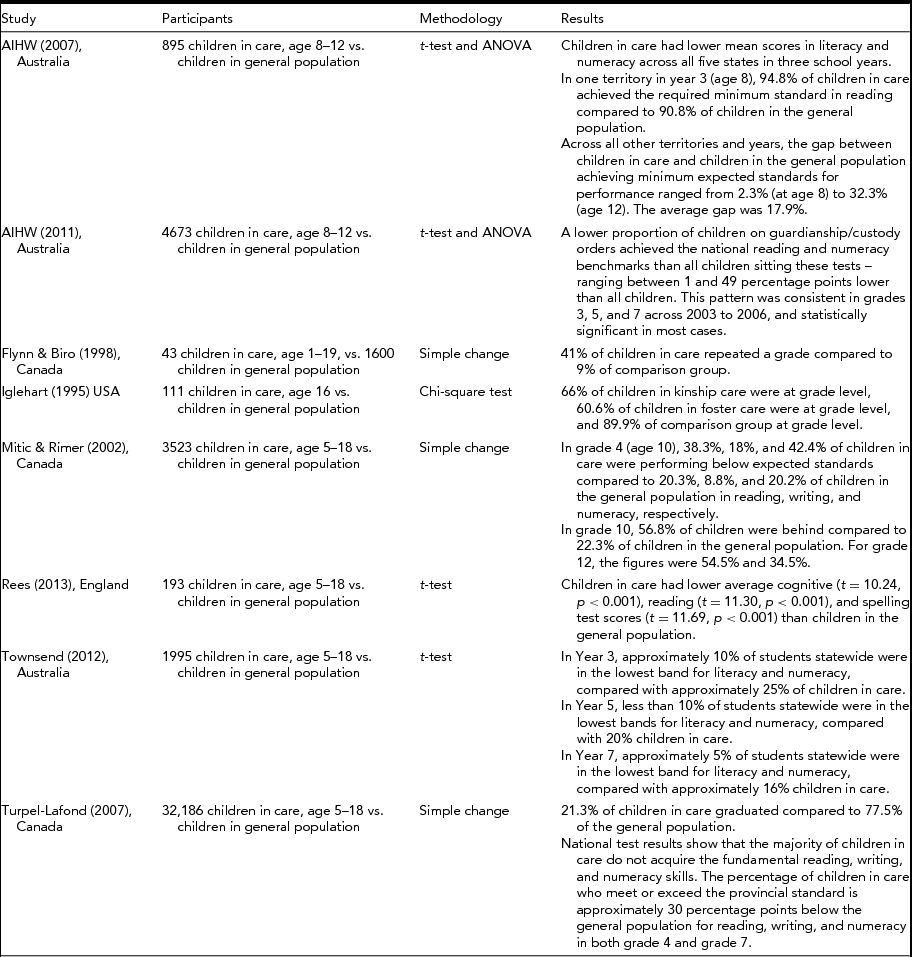
Echoing the findings from previous research (Berridge, Reference Berridge2012; Goddard, Reference Goddard2000), this review found eight studies that add to existing evidence on the gap between the educational outcomes of children in care and their peers in the general population (see Table 1). The findings from these reviews are unequivocal: on average, children in care lag behind their peers in the general population on a number of measures of educational outcomes, including cognitive abilities, attainment, literacy and numeracy test scores, attendance, and exclusions.
Included studies comparing outcomes of children in care to children in the general population.

It is findings such as these that led some to conclude that there is a causal relationship between being in care and poor educational outcomes. However, the above studies make no allowance for selection bias. Selection bias refers to systematic differences between groups being compared. For example, we know that the vast majority of children in care have experienced maltreatment or neglect and that they are more likely to have SEN, which are likely to affect their school experiences and performance significantly (Font & Berger, Reference Font and Berger2015; Sylva et al., Reference Sylva, Melhuish, Sammons, Siraj, Taggart, Smees and Hollingworth2014).
Taking other factors into consideration in explaining educational outcomes of children in care
Past research about children in care or children in the general population has found that many individual, family, school, community, and policy factors play a role in predicting academic performance (O'Higgins, Sebba, & Gardner, Reference O'Higgins, Sebba and Gardner2017; Sylva et al., Reference Sylva, Melhuish, Sammons, Siraj, Taggart, Smees and Hollingworth2014). These factors should be accounted for in an effort to isolate the effect of being in care on educational success.
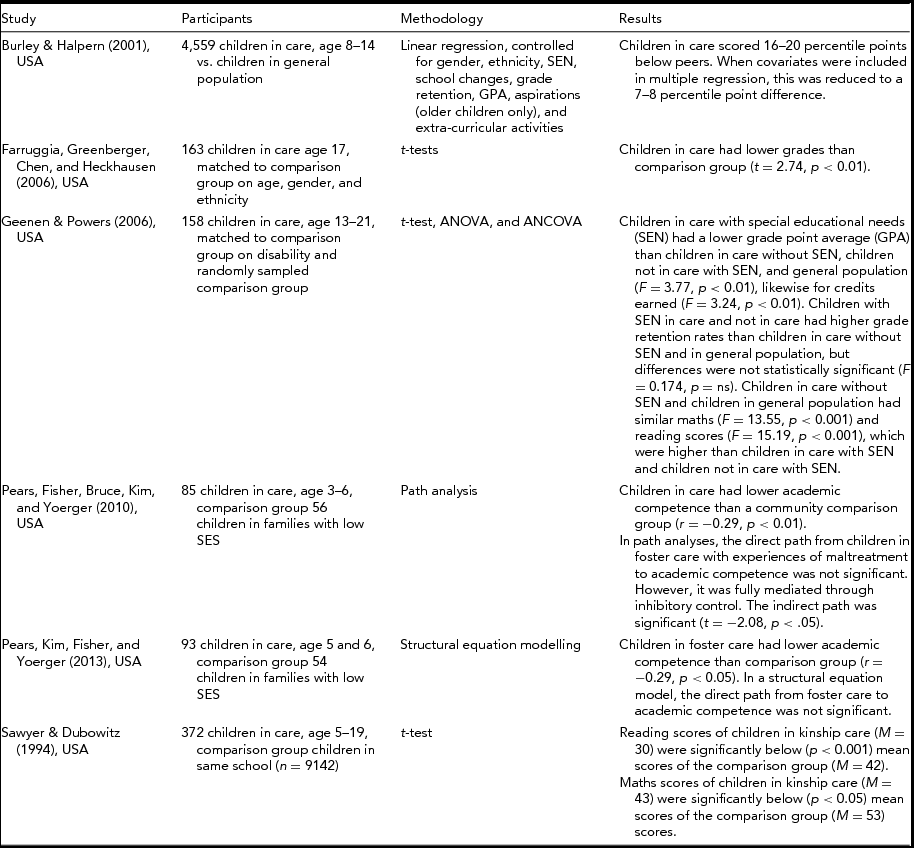
In total, six studies included in this review compared the educational outcomes of children in care and children in the general population and controlled for risk factors or used samples matched on a number of factors, which were hypothesised to play a role in predicting outcomes (see Table 2).
Included studies which control for other variables or use matched samples.

The methodological quality of these studies are mixed. Many lacked detail on comparison groups and how ‘at risk’ children were selected or defined for the study. Statistical analyses were also vulnerable to type I errors in Sawyer and Dubowitz (Reference Sawyer and Dubowitz1994), for example, where no corrections were done for multiple testing. This may limit the reliability of the findings.
In the six studies presented in table 2, children in care were compared to young people in the general population; therefore, it was not possible to control for risk factors of particular relevance to children in care and their academic performance. Past research has highlighted that most children in care experience many disadvantages before they enter care, including persistent poverty, maltreatment, and multiple birth risks (Bebbington & Miles, Reference Bebbington and Miles1989; Bhatti-Sinclair & Sutcliffe, Reference Bhatti-Sinclair and Sutcliffe2012; Crozier & Barth, Reference Crozier and Barth2005; Franzen, Vinnerljung, & Hjern, Reference Franzen, Vinnerljung and Hjern2008; Simkiss, Stallard, & Thorogood, Reference Simkiss, Stallard and Thorogood2012). Research on children in the general population has also shown that these experiences are all risk factors for poor educational outcomes (e.g., Goodman & Gregg, Reference Goodman and Gregg2010; Sylva et al., Reference Sylva, Melhuish, Sammons, Siraj, Taggart, Smees and Hollingworth2014). So, in order to investigate the effect of being in foster or kinship care, studies must account for risk factors relevant to children in care, rather than just general risk factors. The relationship between being in care and educational outcomes may otherwise be confounded by important variables that are not measured.
Accounting for factors specifically relevant to children in care
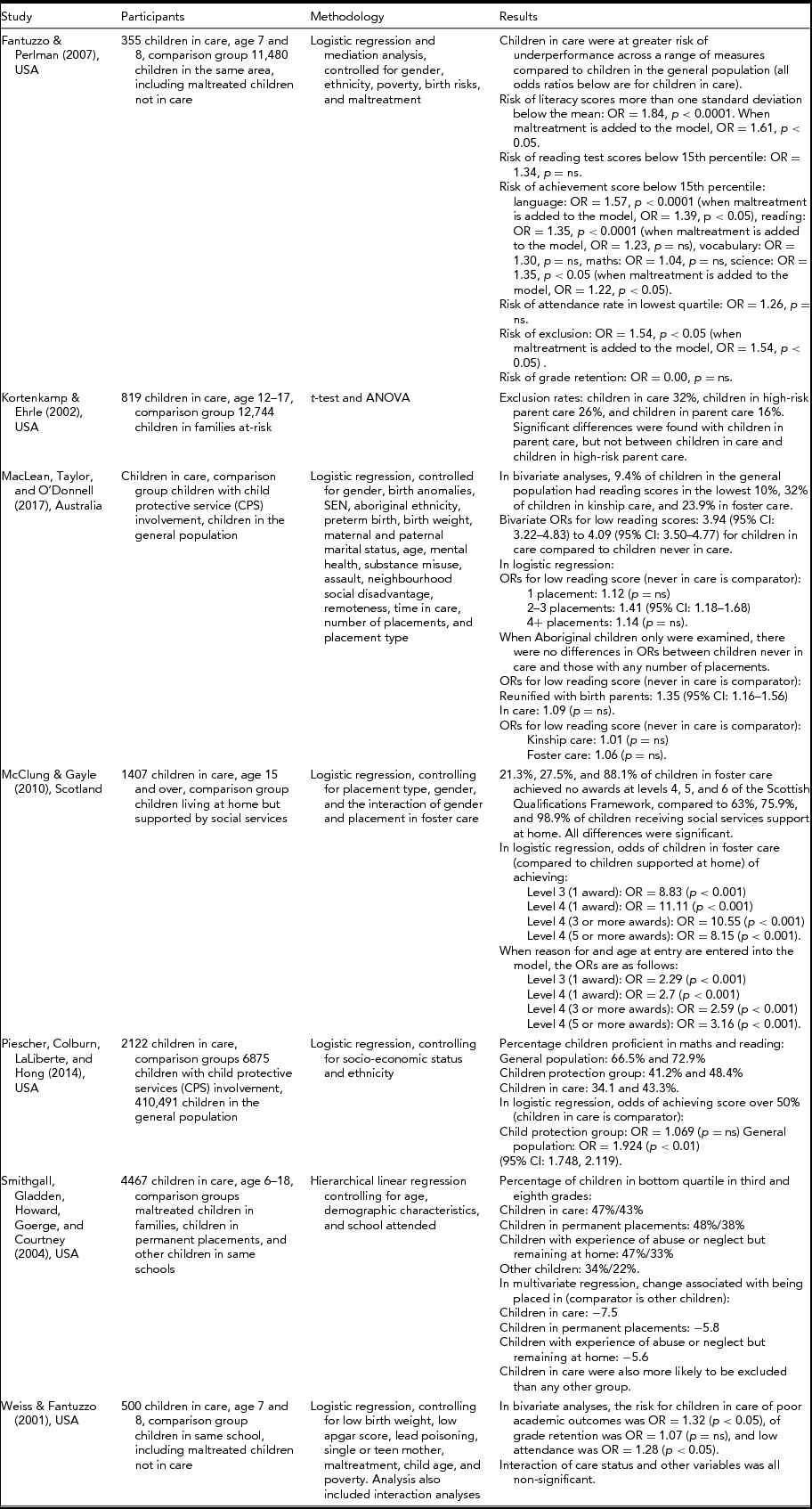
Seven studies attempt to overcome the limitations identified above by accounting for some of the factors relevant to children in care (see Table 3). This was done by controlling for variables or by comparing children in foster or kinship care to children who were similarly disadvantaged.
Included studies controlling for variables relevant to children in care or using matched samples.

The studies demonstrate that differences in attainment between the outcomes of children in care and children in the general population cease to be significant when the outcomes of children in care are compared to children who have faced similar disadvantage. Critical appraisal of studies also suggested that risk of bias in these studies was average to low as samples were large, either random or large enough to approximate the population, detailed data was provided, adequate statistical tests were performed, and almost all used well-validated standardised measures of educational attainment.
There may be other factors which were not considered in these studies; for example, parental level of education may have an important role in explaining the outcomes of children in care, which may weaken the relationship between being in care and outcomes even further. Moreover, there are limitations in comparing children in care to a group of children who remain with their families, no matter how similar they may be in other respects. All but one of the studies were cross-sectional, in that they looked at the outcomes of children at a specific point in time, so it is not known how children in care were performing when they entered care or how they progressed over time, and so alternative explanations of the above findings cannot be ruled out.
Examining educational performance over time
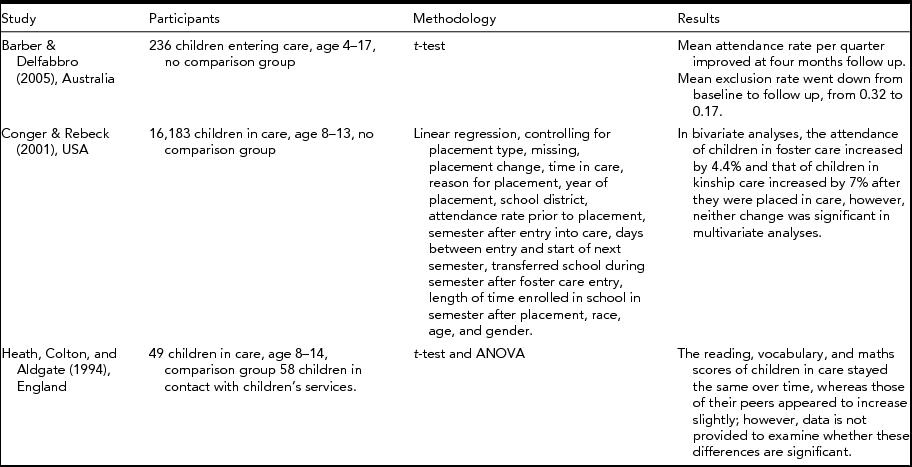
Forrester has argued that in order to assess the impact of being in care, one has to examine progress on outcomes over time (Forrester, Reference Forrester2008; Forrester et al., Reference Forrester, Goodman, Cocker, Binnie and Jensch2009). In 1978, Fanshel and Shinn (Reference Fanshel and Shinn1978) found that the effects of foster care were mostly positive across a range of outcomes six months after children were taken into care, and that these were sustained over time. Studies which look at educational outcomes over time offer another strategy to examine the relationship between being in care and educational outcomes. Three studies included in this review conducted such longitudinal analyses (see Table 4).
Longitudinal analyses examining educational outcomes of children in care.

The findings from these studies are somewhat limited, but also useful for this review. They demonstrate how outcomes can change over time after children enter care, suggesting that children can make progress. However, the limited data only provides short-term follow up and the lack of adequate control groups makes it impossible to determine whether this is an effect of being in foster care, other interventions, or simply a reflection of expected progress. Moreover, the methodological quality of these three studies was limited. For example, Heath et al. (Reference Heath, Colton and Aldgate1994) had very small sample sizes (for example, n = 10 in some analyses) and there was limited data available in order to determine whether differences between baseline and follow up test scores were significant.
Other methodologies exploring causality
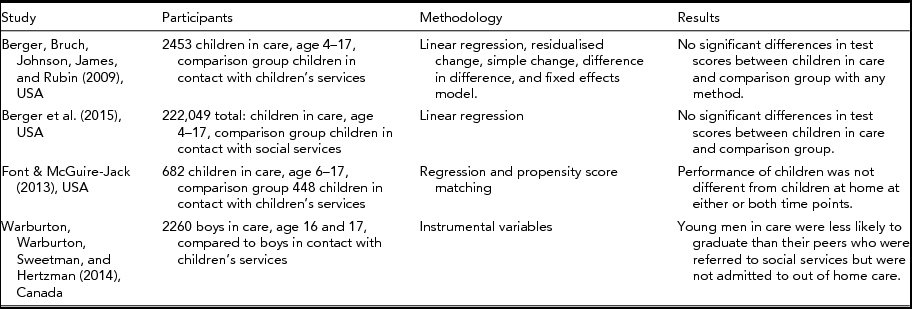
So far the review has described studies which compared the educational outcomes of children in care to children in the general population, studies which control for individual characteristics of children, studies which account for care-relevant factors, and finally studies with longitudinal designs. While these are incrementally relevant to the review's primary research question – namely, whether care is detrimental to the educational outcomes of children – a number of studies have adopted yet more complex and sophisticated designs, with the specific and explicit aim of estimating the impact of being in care on outcomes. Four such studies were identified for this review (see Table 5). The methodological quality of these studies was high; they used large and random samples, conducted extensive statistical testing including sensitivity analyses, reported details of hypotheses and results, and selected well-validated standardised measures of educational outcomes.
Studies assessing the impact of being in care.

Note: The details of figures are not provided in this table as these were either not significant or in the case of Warburton et al. (Reference Warburton, Warburton, Sweetman and Hertzman2014), too extensive and complex to summarise here.
This review finds, therefore, limited evidence that being in foster care is to blame for the poor educational outcomes of children. This conclusion is in line with the findings of others, including historical research from Wolkind and Rutter (Reference Wolkind and Rutter1973), who argued that more attention should be paid to understanding the processes underlying early childhood and family experiences and their relationship to later wellbeing outcomes. In 2006, in response to a statement by the English Government on the outcomes of children in care, Stein wrote that ‘[t]he simplistic view of care as failing 60,000 young people should be confined to the dustbin’.
Analysis of National Databases
In this section of the paper, we present the findings of an analysis of English administrative datasets.
Sample
The study used national data about the educational attainment of all children in England registered on the National Pupil Database (NPD) for the cohort who were eligible for GCSEs (examinations at age 16 years) in 2013 (n = 642,805). An anonymised identifier enabled us to link this to local authority data on CLA and their experiences of care from the Children Looked After Dataset (CLAD, also known as SSDA903). The 2013 CLAD contained data for 7852 children who spent at least 24 hours in care between 1st April 2012 and 31st March 2013. Further details of the sample are available in the report of the larger study from which the current paper is drawn (Sebba et al., 2015).
Our analysis compares six groups, each of which is a sub-set of the full cohort:
• CLA-LT: the sub-set of young people (n = 4,842) who had relatively longer-term care experience, being looked after continuously for at least the 12 month period up to 31st March 2013. This is the sub-set of young people in care whose educational attainment is the focus of the statistical reports released by the English Government's Department for Education (e.g., DfE, 2017). This longer-term group was further divided into three categories, to reflect the timing of entry to care in relation to crucial points in the English schooling system. All results presented use these three categories:
○ CLA-LT 1–2 years, which covers the school years spent preparing for their final examinations – our KS4 attainment outcome (n = 902);
○ CLA-LT 2–5 years, which covers the whole of secondary school (n = 1479);
○ CLA-LT Over 5 years (n = 2461).
• CLA-ST: the sub-set of young people (n = 1387) who had relatively shorter-term care experience, being looked after on the 31st March 2013, but for less than 12 months continuously. We acknowledge differences in length of time in care within this group (from 0 to 364 days), but a preliminary analysis which divided CLA-ST into 12 groups (to represent increasing numbers of months in care) showed no significant differences on educational outcomes according to the number of months spent in care; we therefore treat CLA-ST as one group throughout the analysis.
• CIN: all those ‘children in need’ who were not CLA but were entitled to a service from the local authority on the 31st March 2013 because of an assessment concluding that it was necessary to promote or safeguard their health or welfare (e.g., due to disability or child protection concerns) (n = 13,599).
• Not in need or looked after: the remainder of young people, who were classed neither as CLA nor as CIN in the 2012–2013 cohort year, but whose data appeared in the NPD (n = 622,970).
Measures
Outcome variable
Our primary analysis compares educational attainment across the four groups. The NPD contains numerous variables pertaining to the end of four ‘key stages’ (KS) of schooling. The focus here is on the examinations taken at the end of KS4 (at age 16), including the GCSE and equivalent qualifications. The outcome measure is the number of points a child achieves in their eight best exam results. The maximum number of points available for each exam is 58, giving a maximum possible score of 464 points, with an improvement of one grade in one exam (e.g., from C to B) adding six points to the score.
Predictor variables
Our secondary analysis examines the role of other measures available in the NPD in predicting the outcome. Using these predictors also allows us to establish whether the relationship between membership of the four comparison groups and young people's educational attainment is affected, after controlling for other factors. These predictor variables have been shown in earlier analyses to relate to educational attainment for young people (e.g., O'Higgins et al., Reference O'Higgins, Sebba and Gardner2017). Categorical variables were coded in line with previous research. Where relevant, we note whether these are drawn from the end of Key Stage 1 (KS1, when children are 7 years old), Key Stage 2 (KS2, 11 years old), or Key Stage 4 (KS4, 16 years old):
• Gender (coded as 1 = ‘female’ and 2 = ‘male;’ there are no other options in the NPD).
• Ethnicity (coded as a series of dummy variables for comparison against the most common category ‘White British or Irish’: ‘Asian or Black African’, ‘Black Caribbean or Mixed White/Black Caribbean’, ‘Other Mixed Ethnicity’, ‘Traveller’, ‘Any Other Ethnicity’, ‘Ethnicity Unknown’ – this final category covers situations where parents have refused to provide information or where schools have not yet obtained this information from parents, rather than simply representing ‘missing’ data).
• Special Educational Needs (SEN, coded as a series of dummy variables: ‘autism spectrum disorder’, ‘behavioural, emotional, or social need’, ‘moderate learning difficulty’, ‘physical, sensory, and other disabilities’, ‘severe, profound, or multiple learning difficulties’, ‘specific learning difficulty’, ‘speech, language, and communication needs’).
• Two measures of socio-economic status: eligibility for free school meals (FSM; 0 for ‘no’ and 1 for ‘yes’) as a proxy measure for family poverty, and Income Deprivation Affecting Children Index (IDACI; scored from 0 to 1, with higher scores representing greater neighbourhood deprivation). Both of these measures were drawn from the data provided at two time points: the end of KS1, before 74% of our sample of CLA-LT had entered care, and the end of KS2, when all CLA-LT were in care.
• Attainment at the end of KS2 (the mean of the young person's scores from KS2 tests in English, mathematics, and science, with a possible range from 2.5 to 8 points).
• Three measures of school attendance in secondary school: unauthorised absences as a proportion of total possible school sessions across Years 7 to 11 (ages 12 to 16), total sessions missed due to fixed-term exclusions across Years 7 to 11, and child ever permanently excluded (coded 0 for ‘no’ and 1 for ‘yes’).
• Change of school in Year 10 or 11, the two years before exams are taken (coded 0 for ‘no’ and 1 for ‘yes’).
• Type of school attended at the end of KS4 (coded 0 for ‘mainstream’ and 1 for ‘non-mainstream’: the latter includes special schools, pupil referral units, alternative provision, secure provision, further education colleges, and the small number of children in independent schools).
Missing Data
Only six of the variables had missing data: the four measures of socio-economic status (missing between 9.8% and 12.5% of cases), the KS2 attainment score for 10.2% of cases, and unauthorised absences were missing in just 0.01% of cases. Further analyses conducted to test for patterns of missingness showed some (limited) relationships between missingness and the predictor variables. This introduces potential bias, and means that caution should be exercised in interpreting their power to predict the outcome; however, for the purposes of the multiple regression, we used pairwise deletion (retaining data from the maximum possible number of available variables for each case in the analysis). Missing data imputation methods were not used.
Analysis
Chi-square tests and analyses of variance (ANOVAs) were used to compare the prevalence of each variable across the six groups (CLA-LT, CLA-ST, CIN, and not in need or looked after). A multiple regression using ordinary least squares (OLS) allowed us to examine the association between the set of predictor variables and young people's educational attainment at the end of KS4, including whether these can account for some of the association between membership of the four comparison groups and young people's educational attainment.
Ethical Approval
Approval to obtain the anonymised data and to use them for the specified purposes was granted by the English Government's Department for Education. Ethical approval for this secondary analysis was obtained from the University of Oxford.
Results
Group Comparison
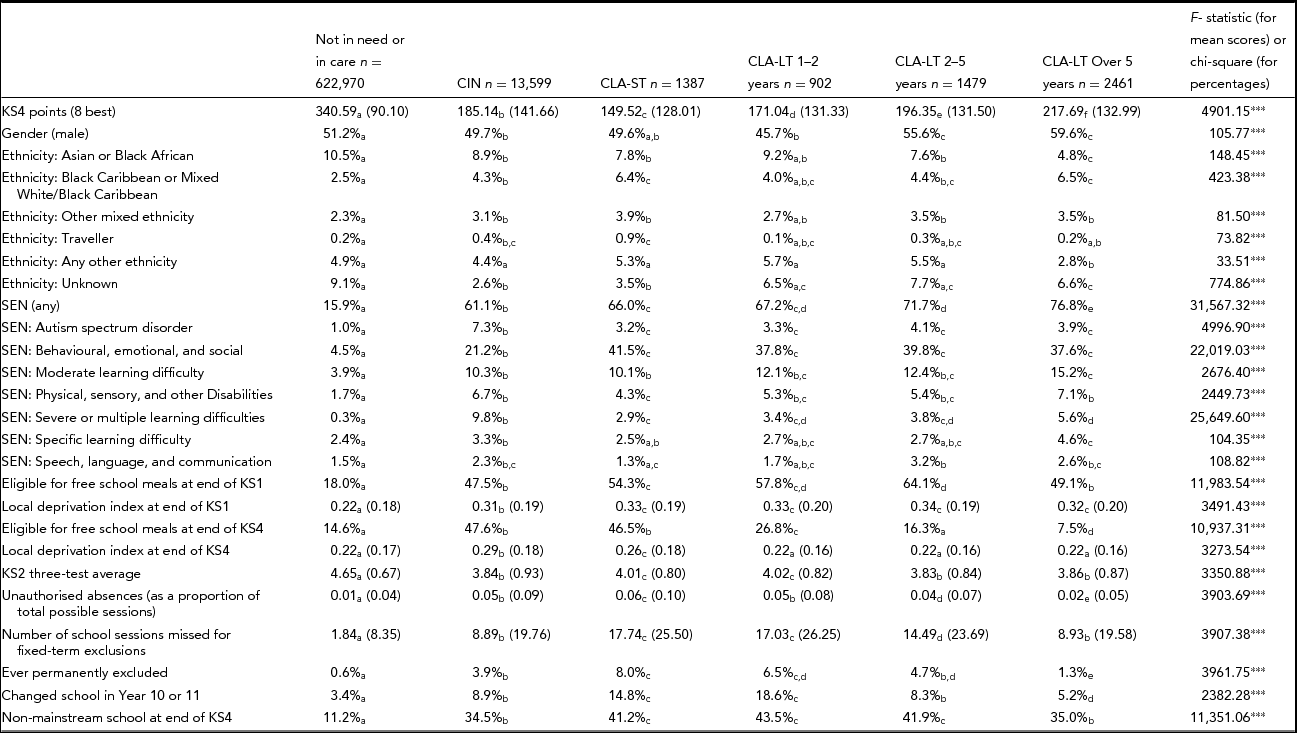
Table 6 shows the prevalence (percentage) or mean scores for each predictor across the four comparison groups. Chi-square tests and analyses of variance (ANOVAs) showed a significant difference between groups in the prevalence of each outcome, ps < .01. The table shows a wide gap in educational attainment between children looked after and those who were neither in need nor in care; however, children in care for two or more years outperformed children in need and those who had been in care for under two years. Although there was no consistent pattern of similarities and differences between groups on the predictor variables, in general, children looked after and children in need had more in common with each other than with children in the general population, indicating that even those young people who have been in care stably for at least 12 months at age 16 are over-represented in a wide range of forms of educational disadvantage. In some respects, CIN faced greater risk than children looked after: they were more likely to have a noted autism spectrum disorder or severe or multiple learning difficulties, and had poorer socio-economic status at the end of KS4 (by which time young people in care were living in their placement and therefore less likely to be living in deprivation). In contrast, children in care were more likely to have a noted behavioural, emotional, or social need (regardless of length of time in care) and had experienced greater neighbourhood deprivation at KS1. Those with longer stays in care were more likely to have any form of SEN. However, the risk of several forms of educational disadvantage (unauthorised absences and fixed-term exclusions, and greater likelihood of permanent exclusions, school changes, and non-mainstream schooling) declined with increasing lengths of stay in care.
Comparison of predictors (percentage or mean score with standard deviation, and scores for significance tests) across four groups.

Note: Each subscript letter denotes a sub-set of groups whose scores do not differ significantly from each other across the row at the 0.05 level.
*p < .05, **p < .01, ***p < .001.
SEN = special educational need. Group effects after controlling for other variables.
To explore which factors could significantly predict the educational attainment outcome, we conducted a multiple regression using OLS. Prior to running the model, we tested the data against the assumptions of linear regression. Assumptions regarding independence of errors and homoscedasticity were met. The data also showed a lack of multicollinearity: no pair of predictors correlated at above r = 0.80, and the only correlations above 0.70 were between non-mainstream school and ethnicity unknown (r = 0.76) and between IDACI deprivation measures at KS1 and KS4 (r = 0.74), with all other correlations at r < 0.48. The more subtle measures of multicollinearity – variance inflation factors (VIF) and tolerance – also showed that the assumption was met, with all VIFs falling below 3.20 and the average being 1.36, and all tolerances lying above 0.30 with 79% being above 0.70. There were also few outliers in the data: 8146 cases (1%) had standardised residuals of > ±2.58. All cases were therefore retained.
Variables were entered using a hierarchical forced entry method: Step 1 consisted of the four looked after groups and the children in need group (CIN), to examine their relationship with KS4 attainment in the absence of any other predictor variables. Step 2 added in variables relating to children's individual characteristics (gender, ethnicity, and special educational needs). Step 3 added measures of socio-economic status at the end of KS1 and KS4. Finally, Step 4 added the educational predictors (KS2 attainment, absences and exclusions, school changes, and non-mainstream schooling).
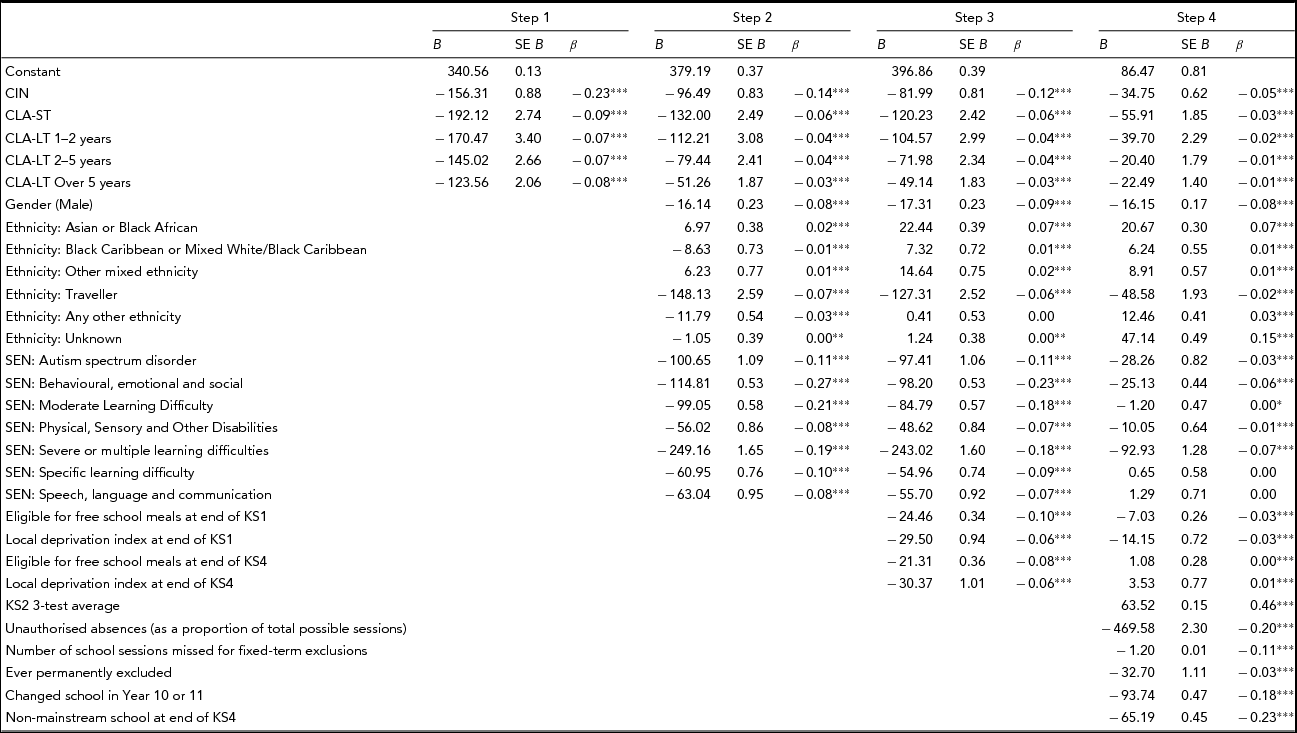
Table 7 shows Steps 1 to 4 of the model. The role of individual predictors in the model is shown by the significance level (p level) of its standardised beta (β). p levels tell us whether an individual variable is a significant predictor of the outcome, after controlling for all other variables in the model. The unstandardised beta (B) shows the nature of the relationship between the predictor and the outcome, since it represents the change in outcome (KS4 points) associated with a change of one unit in the predictor. Positive values show that an increase of one unit in the predictor is associated with an increase in KS4 points, while negative values show that an increase of one unit in the predictor is associated with a decrease in KS4 points. As an example, Step 1 of Table 7 shows that being a child in need (CIN) is a significant predictor of KS4 points. The B for this variable shows the change in KS4 points when comparing young people who are in need (CIN; scoring 1 on this variable) against those who are not in any of the need or care groups (scoring 0). A change of one unit on this predictor is associated with a B value of −156.31. In other words, a CIN will on average score 156.31 points less in their KS4 exams than a young person who is neither in need nor in care. Remembering that six points is equivalent to one grade on one exam, this represents a negative association between CIN and educational attainment that equates to around 26 grades spread across the eight exams. An examination of all of the Bs in Step 1 of Table 7 shows that – as previously seen in Table 6 – children in need and young people in care for under 2 years do worse than those in care for 2 years or more.
Four-step multiple regression models for KS4 points.

Note: R 2 = .08 for Step 1, ΔR 2 = .17 for Step 2, ΔR 2 = .04 for Step 3, ΔR 2 = .30 for Step 4.
*p < .05, **p < .01, ***p < .001
Crucially for our research question, the use of a hierarchical model allows us to compare the role of group membership (of our four CLA groups, or CIN) in predicting KS4 attainment, once additional variables have been entered in the model. For example, a comparison of the Bs for CLA-LT with 2–5 years in care shows that the gap between this group and those children who were neither in need nor in care shrinks from 145 points in Step 1, to just 20 points in Step 4. Similar decreases are shown for the other CLA groups and CIN. This suggests that a large proportion of the difference in attainment between these groups and the general population can be accounted for by individual characteristics, socio-economic status, and educational experiences.
As Table 7 shows, each of the predictors in Steps 1 and 2 has a significant association with the outcome. The addition of variables relating to socio-economic status (Step 3) and educational experiences (Step 4) means that two SEN statuses (specific learning difficulty and speech, language, and communication needs) are no longer significant predictors. A comparison of the βs in Step 4 (in the final column) suggests that the strongest predictors of KS4 attainment are those which also relate to education (KS2 test scores, absences and exclusions, change of school, and KS4 school type).
Finally, the addition of further variables in each step was associated with a significant improvement in model fit, ps < .001. The R2 statistic shows the proportion of variance in our outcome (KS4 points) explained by the predictors included in that step of the model; it can be converted to a percentage for ease of interpretation. There was a significant increase in variance explained at each step. Although knowledge about which children were looked after or in need could explain 8% of the variance in KS4 points (Step 1), the addition of information about individual characteristics (Step 2) added a further 17% of variance explained. Socio-economic variables (Step 3) increased this by 4%, and educational variables (Step 4) by a further 30%. Having all of this information therefore explains 59% of the variance in KS4 scores, indicating that having information about young people's characteristics, socio-economic status, and educational experiences is more useful for predicting attainment at age 16 than simply knowing whether they are in care or in need.
Discussion
Our review of the evidence from 28 studies confirmed the existence of a gap in educational attainment between young people in care and those in the general population. Our analysis of national data on the educational attainment of young people in England supported this: young people in care scored fewer points in their exams at age 16 than their peers in the general population. However, length of time in care also had a role to play: those who had been in care for at least the previous 2 years out-performed those who had entered care more recently. They also had better results than young people receiving services from social care who lived with their birth families. This ‘ranking’ of the care and need groups according to educational attainment remained largely consistent even after controlling for other factors. On this basis, like Stein (Reference Stein2006), our findings do not support a simplistic argument that foster care per se is no better for children's outcomes than remaining with birth parents. As McSherry and Fargas Malet (Reference McSherry and Fargas Malet2017) acknowledged, despite its flaws, the care system cannot be considered a failure in this respect.
The finding that young people had to have been in care for at least two years continuously in order to have higher attainment scores than children in need is interesting. As Table 6 shows, there was no difference in the prevalence of behavioural, emotional, or social SEN across the different lengths of stay in care. However, the declining risk of absences and fixed-term exclusions with length of time in care suggests that school-related behaviour might play a role for those who have entered care at a later age after all. It is possible that young people in these groups display a severity of behavioural issues that is not captured by the dichotomous nature of the SEN variable. Alternatively – or in addition – their late entry to care may mean that behavioural issues affecting education take a substantial amount of time to be addressed and so a relatively short amount of time in care is less likely to produce this kind of improvement.
The review went on to show that once other factors are taken into account, the difference in attainment between young people in care and those in the general population is reduced. The results of our data analysis provide further evidence for this, since even those young people who had been in care for at least 12 months at age 16 were over-represented in a wide range of forms of educational disadvantage, such as special educational needs and social deprivation. Our regression analysis showed that while care status can predict educational attainment at age 16, this relationship is considerably affected when accounting for young people's characteristics, socio-economic status, and educational experiences. Indeed, the strongest predictors of attainment were those which also related to education (including earlier attainment, attendance, and type of school attended).
The review showed that the gap can be further reduced by taking into account factors that are especially relevant to children in care, such as experiences of maltreatment. Comparisons of children looked after to children in need or maltreated samples living in the community show little difference in educational attainment. In our data analysis, young people who had been in care for 2 years or more achieved better results in their exams than those classed as children in need. We did not have available data to compare groups on their experience of maltreatment, though a forthcoming study (see http://bit.ly/2BHD6nP) will control for recorded abuse or neglect in comparing the educational trajectories of children in need and children in care.
Finally, studies included in the review that aimed to evaluate impact showed very little evidence that care is ‘to blame’ for poorer educational attainment. The exception to this was one study which found that boys taken into care at age 16 and 17 performed worse than those who remained in the community (Warburton et al., Reference Warburton, Warburton, Sweetman and Hertzman2014), so perhaps this speaks to the heterogeneity of the care population and the importance of considering the needs of different groups. Ainsworth and Hansen (Reference Ainsworth and Hansen2014) raise the important issue of multiple placements. Indeed, further work on the English national databases reported by Luke, Sinclair, and O'Higgins (Reference Luke, Sinclair and O'Higgins2015) shows a wide variation in KS4 scores within the group of young people who had been in care for 12 months or more, which was partly explained by differences in care stability (those with more placement changes during secondary school doing worse), and most recent placement length (those in longer placements doing better) and type (those in foster or kinship care doing better than those in residential care). When considered in conjunction with the individual characteristics, socio-economic measures, and educational experiences presented in Luke et al. (Reference Luke, Sinclair and O'Higgins2015) and the current paper, this supports the argument that an individual's profile of needs, characteristics, and experiences offer a better predictor of their educational attainment than simply considering their care status.
Limitations and Future Directions
In terms of the systematic review, estimating the impact of being in care on educational outcomes is not a simple task, and many papers did not set out to test this. Findings are greatly influenced by the study sample and control groups, the data available, and methodology. The review findings are limited by the quality of the included studies. Many studies lack data on important pre-care experiences, including education. The concept of ‘care’ is unlikely to be used consistently across studies. It is not a homogenous experience and the population of children in care is heterogeneous. Finally, the review only looks at educational outcomes. Reviews examining other outcomes may well find different effects of being in care. Indeed, Forrester et al. (Reference Forrester, Goodman, Cocker, Binnie and Jensch2009) found that being in care may benefit children. Findings from a number of other studies have examined effects of care in terms of wellbeing and behavioural problems (Berger et al., Reference Berger, Bruch, Johnson, James and Rubin2009; Forrester et al., Reference Forrester, Goodman, Cocker, Binnie and Jensch2009; Goemans et al., Reference Goemans, van Geel, van Beem and Vedder2016; Maclean, Sims, O'Donnell, & Gilbert, Reference Maclean, Sims, O'Donnell and Gilbert2016), delinquency, emergency healthcare episodes, and later poverty outcomes (Doyle, Reference Doyle2013; Warburton et al., Reference Warburton, Warburton, Sweetman and Hertzman2014).
Our analyses of the national databases also come with limitations. We acknowledge that our retrospective approach to data gathering excludes young people who were only in care when they were younger, and that this group may represent different experiences of and outcomes from education. We have also restricted our analyses to one measure of educational ‘success’ (KS4 points), though other measures (e.g., achievement of top exam grades, 100% school attendance, progression to further or higher education) might be equally valuable. We also acknowledge that although widely used and easily interpretable, the OLS approach to multiple regression has its limitations and we might alternatively consider employing an approach that accounts for outcome values that are truncated in some way, such as Tobit regression models. For the purposes of this article, however, the OLS approach – which has the advantage of producing results that are more easily interpreted by non-statisticians – provides useful information on the range of individual characteristics and experiences that (a) gives an overall indication of whether a particular variable has a positive or negative relationship with the outcome, and (b) identifies (through its standardised coefficients) the strongest predictors. In practical terms, this concurs with our focus on explaining the educational attainment gap between groups of children (rather than trying to predict results for individual pupils), while also identifying potential areas for intervention that might close the gap.
Crucially, although the evidence suggests that pre-care experience is important for future outcomes (Goemans et al., Reference Goemans, van Geel and Vedder2015; Romano et al., Reference Romano, Babchishin, Marquis and Fréchette2014; Scherr, Reference Scherr2007; Veltman & Browne, Reference Veltman and Browne2001), the databases contain no information on children's pre-care experiences beyond their socio-economic status in the early years of schooling. Our review showed that this was common with many included studies suffering from a lack of data on important pre-care experiences, including in education. Work is needed to develop reliable measures of pre-care experiences so they can be taken into consideration when trying to disentangle the effects of the care system on educational and other outcomes.
We also lacked detailed information on children in need and, in particular, their experience of maltreatment. Given the comparative similarity of children in care and children in need across a range of measures of disadvantage, future work that explores the complexity of individual characteristics, needs, and experiences in these two groups and their contribution to educational outcomes is crucial. We agree with McSherry and Fargas Malet (Reference McSherry and Fargas Malet2017) that more detailed research is needed to capture the complexity of children's lives and across their experience of contact with social care services.
Conclusion
Taken together, these findings suggest that while research demonstrates an important attainment gap between children in care and children in the general population, this difference is reduced and in many cases disappears when other important factors are taken into consideration to reduce selection bias. Therefore, there is little evidence that being in care is detrimental to the educational outcomes of children in care, but given the heterogeneity of the population, special attention should be paid to different groups of children and their particular needs while in care.
Acknowledgements
The authors would like to thank Professors Ian Sinclair and Steve Strand for their support and advice in the analysis of the national databases, as well as the Principal Investigators of the original work, Professors Judy Sebba and David Berridge. The analysis of national databases was supported by a grant from the Nuffield Foundation, grant reference EDU/41524.