The “dancing minority” has been a common trope for understanding nationality discourse and relationships between minority and majority identities in the People's Republic of China.Footnote 1 In his landmark essay on this topic, anthropologist Dru Gladney (Reference Gladney1994, 95) writes, “One cannot be exposed to China without being confronted by its ‘colorful’ minorities. They sing, they dance; they twirl, they whirl. Most of all, they smile, showing their happiness to be part of the motherland.” Here, the dancing minority becomes metonymic of a wider set of representational practices that Gladney calls, borrowing Michael Hechter's (Reference Hechter1975) phrase, the discursive dimensions of “internal colonialism,” what is now commonly called “internal Orientalism” (Schein Reference Schein and Williams1996).
Although minority representations enacted through dance have been viewed as a powerful and constitutive component of nationality discourse in the PRC, there has been surprisingly little investigation into the history of these representations or of PRC dance as a field of meaning-making more broadly. Anthropologists such as Gladney, Schein, and others, whose field research transpired during the 1980s and 1990s, did foundational work highlighting the discursive power enacted through representations of minorities (namely, their ideological construction of Han dominance over minority groups), and they pioneered an important comparison between Chinese nationality discourse and Western Orientalism. The impact of these studies over the past twenty years, however, has led to an unintended result: empirical patterns identified in the post-Mao era now regularly inform conceptual frameworks used to analyze nationality discourse in all PRC periods.Footnote 2 In its disregard for historical specificity, this approach obscures real changes in nationality discourse and policy. Katherine Kaup identifies this problem in her study of Zhuang nationality politics in post-1949 China when she writes, “though numerous studies have attempted to outline the interactions between the state and particular minority groups, they fail to show that the nature of the relationship between ethnic groups and the state has changed radically over the course of the CCP's rule” (Kaup Reference Kaup2000, 7; emphasis added). It follows that as these relationships changed, so too did the discursive practices deployed to represent and enable them.
Another challenge in many foundational studies of nationality discourse is their tendency to consider official, academic/artistic, and popular domains as one continuous whole. As Susan Blum (Reference Blum2001) points out in her study of Han perceptions of minorities in contemporary Kunming, popular and official forms of nationality discourse have often been at odds in the PRC historically. This was the case, she explains, during the 1950s, when the Chinese national government introduced new policies that sought to enforce political equality between ethnic groups, along with corresponding education campaigns. Such campaigns, she argues, were largely ineffective not because the state endorsed representations of minorities as “primitives” in official discourse, but, rather, because entrenched popular racism proved too resilient for official discourse to change. “Despite half a century of ideological ‘work’ to promote tolerance and (in some periods) appreciation of the minorities at their edges … [t]here are important cognitive categories already in existence that have a ponderousness of their own,” Blum writes (180). Although Blum's study as a whole reinforces the internal Orientalism argument, she points here to the importance of differentiating between competing voices and power structures within the larger spectrum of nationality discourse.
This study seeks to bring such questions of historicity and multidimensionality to bear on the image of the dancing minority in China. Rather than offering a single answer for what is said or done when dancers representing non-Han groups perform on stage or on television in the PRC, I argue that there are multiple meanings and forms of power enacted in these images, which differ across time and context. By shifting attention from the post-Mao era to the early PRC (1949–54), I examine how dancing minorities were first introduced into PRC official discourse.Footnote 3 I argue that, in the early PRC, images of dancing minorities were often the very opposite of patterns identified by anthropologists in the 1980s and 1990s. “Internal Orientalism” thus cannot serve as a generalizable framework for interpreting minority dance and its relationship to PRC nationality discourse.
Exotic, Erotic, and Primitive: A Review of Internal Orientalism
The impact of the internal Orientalism argument on English-language studies of minority representations in China cannot be overstated. The perspective is so pervasive that scholars wishing to elaborate on any other dimension of PRC cultural production related to ethnic minorities must summarize this work and then provide an explanation of why they have chosen to depart from it (see, e.g., Berry and Farquhar Reference Berry and Farquhar2006, 170–75; Bulag Reference Bulag2012, 135–36). In most cases, however, the argument is taken as an accepted fact.Footnote 4 In contemporary Chinese studies outside China, internal Orientalism has become the dominant paradigm for analyzing almost any cultural practices in which members of minority ethnic groups either participate or are represented.
Uradyn Bulag, an anthropologist based in the United Kingdom whose work deals primarily with Han-Mongol relations, has consistently complicated this narrative, often by providing arguments that are more historically and geographically focused (Bulag Reference Bulag2002, Reference Bulag2010). It is likely for this reason—in addition perhaps to the presumed exceptionalism of the Mongol case itself—that Bulag's analyses have not gained the same level of widespread currency as the internal Orientalism argument. The latter's power comes in part from its apparent generalizability: unspecific historically, geographically, or in terms of the nationality case to which it is meant to be applied, it assumes “China” as a broad and undifferentiated unit of analysis. The scope of internal Orientalism, as Schein describes it, is “the domain of Chinese public culture” (Schein Reference Schein2000, 104) and “China … in the 1980s and for the century preceding” (Schein Reference Schein and Williams1996, 79). Likewise, Gladney (Reference Gladney1994, 94) describes the patterns he identifies as “pervasive throughout Chinese culture, art, and media.” Although other areas of Schein's and Gladney's projects explicitly highlight temporal and geographical nuance and distinction, their arguments about the discursive dimensions of internal colonialism tend toward the all-encompassing. Indeed, this is central to their appeal.
What are the basic claims of the internal Orientalism/internal colonialism argument, as outlined by Gladney, Schein, and their followers? Most of the central claims, minus the “internal Orientalism” appellation, were established in Gladney's Reference Gladney1994 article. The first and most foundational of these is that different rules apply to the representation of Han and minorities. Gladney's first example, the one that involves minority dancers, is drawn from the 1991 CCTV New Year's Gala. He argues that during this performance only minority entertainers wore “colorful [ethnic] costumes,” while “[n]onminority entertainers and hosts exclusively wore Western-style suits and dresses” (96). Gladney goes on to provide other examples of similarly contrasting depictions of Han and minorities, all from the 1980s and early 1990s. Ultimately, he argues that the major difference between minorities and Han is that the former are “marked” in a cultural sense, while the Han are “unmarked” or “normal” (98, 102). “The Han … are rarely described or studied as Han per se,” he writes (102). In other words, according to Gladney's argument, minorities alone are linked to tropes of ethnic and cultural distinctiveness, while Han are an undefined categorical “Self” understood only through contrast to its minority “Others.” Minorities are internally diversified, Gladney argues, yet Han identity is “united” and “homogeneous” (93).
The second claim in Gladney's argument asserts the specific patterns of difference that characterize Han and minority representations. He argues that while Han are portrayed as modern, civilized, and sexually demure, minorities are portrayed as primitive, exotic, and sexually open. Throughout, Gladney references what he calls “the typical exoticization and eroticization of minorities,” which he illustrates through examples of sensual or erotic depictions of minority women that, he argues, would not be acceptable in depictions of Han women. This is connected, he argues, to an overall belief in the developmentally unsophisticated status of minority culture: “their ‘primitivity’ contrasts with supposed Han ‘modernity’” (101–2). Again citing examples exclusively from the 1980s and early 1990s, Gladney argues that a clear evolutionary thought frames understandings of Han and minority culture, in which “[t]he Han, as representatives of ‘higher’ forms of civilization, were clearly more evolved, and were to lead the way for minorities to follow” (100). Based on these patterns, Gladney makes a direct parallel between the ways non-Western colonized peoples were depicted under European colonialism and the ways ethnic minorities are depicted under Chinese internal colonialism. By portraying minorities as exotic, erotic, and primitive, he argues, the Chinese state normalizes both Han identity and domination.
The gendered dimension of the internal Orientalism argument, now largely associated with Schein's work, was already present in a preliminary form in Gladney's Reference Gladney1994 analysis. In the opening section of his essay, Gladney writes, “Minority is to the majority as female is to male, as ‘Third’ World is to ‘First,’ and as subjectivized is to objectivized identity” (93). Schein (Reference Schein and Williams1996, Reference Schein2000) took the argument further, arguing that it was minority women, more so than minority men, who bore the burden of China's internal Orientalism. Summarizing Schein's and Gladney's critiques, Bulag (Reference Bulag2012, 135) writes, “Socialist China is characterized as an internal Orientalist regime, in which the state and its masculine agents cast lustful eyes on infantilized, feminized and eroticized minorities.” Although Schein's work emphasizes the productive power of feminine minority subjects, its legacy, as Bulag suggests here, has often been simplified to envision a system consisting of feminized minorities who appear as objects to be acted upon, viewed, or desired by masculinized Han subjects. When applied to dance, this view generates the assumption that dancing minorities are sexualized feminine images produced for the entertainment of presumed heterosexual, masculine, Han spectators.
Lessons in Multiculturalism: The PRC's First Dancing Minorities
The conceptual framework of internal Orientalism appears less than explanatory when we start to examine state-sponsored dance productions in the early years of the PRC. Beginning in 1949, the image of the dancing minority was introduced into official state discourse as a tool to promote nationality policies calling for “unity and equality” between ethnic groups (Mackerras Reference Mackerras1984). The first large-scale performance that presented this vision was Long Live the People's Victory, a song and dance gala that premiered in Huairen Hall on September 26, 1949 (People's Daily 1949b). The gala was initially created to celebrate the opening ceremonies of the Chinese People's Political Consultative Congress and was then restaged several times in the days following the founding of the PRC on October 1 (Dong and Long Reference Dong and Long2008). Although composed mainly in northern-style Han music and dance (with Shaanxi, Hebei, and Dongbei the regions best represented), the last two sections also included Han dancers who performed the roles of minorities (Hung Reference Hung2011, 81–84). These sections accounted for about one-fifth of the overall production and combined the representation of both ethnic and class diversity (Long Live [1949] 2008).
In Long Live the People's Victory, ethnic minorities were portrayed as agents of revolution and constituent members of the new PRC society. Throughout the two final scenes, dancers dressed as Han, Mongol, Hui, Miao, Yi, Tibetan, and Taiwanese performed alongside dancers dressed as workers, peasants, soldiers, students, and merchants. One segment showed the representatives of different nationalities and social classes advancing in a group together with their fists raised, movement that was interpreted at the time as a picture of collective action aimed at overturning old power structures and ending oppression of disenfranchised groups (People's Daily 1949b). Another sequence showed the dancers filing in a line through an “Arch of Triumph” created by two dancers holding a raised hammer and sickle.Footnote 5 According to ideological requirements of the time, this was interpreted as a symbol that under the leadership of the proletariat, all nationalities and revolutionary social groups would enter together into a new era (People's Daily 1949b). In the final choreography, all of the dancers in the production marched in a circle with each group holding a large red PRC flag, while the stage was lit with glowing red lanterns and set with a Mao portrait at the center. This section was interpreted as depicting all nationalities, regions, and revolutionary social classes uniting together to celebrate the founding of the new nation (Dong and Long Reference Dong and Long2008; Hu Reference Hu1949; People's Daily 1949b).
In this early period, centralized dance ensembles and schools for professional dancers of minority backgrounds had not yet been established in Beijing. Thus, minority artists themselves did not appear in this production, which was performed by the overwhelmingly Han population of students and teachers at the Huabei University performing arts unit.Footnote 6 Apart from Dai Ailian, Hu Sha, Peng Song, and a few others who had led new folk dance movements in Chongqing and Yan'an during the mid-1940s, the majority of performers involved in this production had limited experience with either Han or minority dance styles (Dong and Long Reference Dong and Long2008; Hu Reference Hu1949). Despite these limitations, Long Live the People's Victory established a theme minority dancers would come to embody, namely, their imagined role as contributing members of the new PRC.
Minority dancers made their debut on the PRC national stage one year later, in the first of an annual tradition of National Day tours by minority representatives (Bulag Reference Bulag2012). On September 29, 1950, nearly 370 minority individuals from around China converged in Beijing to participate in a month-long visit; among them, 219 were music and dance performers (People's Daily 1950a, 1950d). The performers comprised four ensembles representing four regions—the Southwest (including parts of today's Yunnan, Guizhou, Sichuan, and Tibet), Xinjiang, Inner Mongolia, and Jilin Yanbian (a small region bordering North Korea)—and their nationality identities included Kazakh, Korean, Manchu, Miao, Tibetan, Uyghur, Uzbek, and Yi, among others (Xiao Reference Xiao1950). During their stay in Beijing, the ensembles presented a joint four-and-a-half-hour song and dance gala that featured a diverse array of minority dance and music, all performed by minority artists. After premiering at the gala for state leaders and minority representatives at the official minority gift-giving ceremony held on October 3, they gave seventeen additional shows in Beijing and Tianjin, with an estimated total live audience of 150,000. In addition, they participated in numerous banquets and social engagements and took part in artistic exchange and joint performances with local professional performance ensembles (Chen et al. Reference Chen, Li, Cai, Ding, Gao and Wu1950; Guangming Daily 1950a, 1950b, 1950c, 1950d, 1950e, 1950f; Ming Reference Ming1950).
The framing of this event encouraged audiences and tour participants alike to view the tour and the performances included in it as part of a new, nationwide effort to address problems in Chinese ethnic relations. During his remarks at the tour's welcome banquet, Premier Zhou Enlai stated, “For thousands of years, the nationalities of China have been disunited, even mutually hating one another…. This year things have changed significantly. Thanks to the hard work of the various nationalities…, the relationships between the nationalities of China are undergoing a fundamental change” (Zhou Reference Zhou1950). At another meeting during the tour, addressing minority representatives and local leaders, state official Li Weihan announced, “On a foundation of unity and collaboration, we must finally exterminate prejudice and distrust … [and] through long-term hard work, eliminate the existing real issues of political, economic, and cultural inequality” (People's Daily 1950b). The purpose of this trip, according to these statements, seemed to be to highlight and work toward resolving tensions and inequalities among ethnic groups in China. Rather than ignoring such problems, the framing of the trip increased their visibility, while promoting interethnic collaboration and trust as the ideal paths to resolving them.
Although the image of the minority dancer in China has often been interpreted as a sign of difference—a tool for uniting the Han majority “self” through essential differentiation from internal minority “others”—in the context of the 1950 nationality tour it was deployed differently. Instead, it helped construct a multiethnic Chinese self in opposition to external geopolitical threats. The outbreak of war in Korea coincided with the minority tour, and this became a key rallying point through which the tour was associated directly with a message of interethnic unity (Guangming Daily 1950d; People's Daily 1950b, 1950d). The gift-giving ceremony where the minority song and dance gala premiered, an official event that symbolized the political allegiance of minority groups to the central government, was recounted in the national news with the following description: “Mao Zedong's people are united as strong as steel, a great power that will make U.S. imperialism tremor to see” (Bo Reference Bo1950). During the opening remarks at the tour's grandest public performance, presented on October 22 at Xiannong Stadium with an estimated audience of 31,000, Li Weihan emphasized the historic nature of this coming together of China's diverse nationalities (representatives of forty-three nationalities were reportedly present), which he said had never occurred before. Li called on all to “unite under the flag of Mao … to smash the conspiracies of aggression of the U.S. imperialist-led collective” (People's Daily 1950c). Finally, when the tour ended and 264 of the minority representatives left Beijing to return home, each group reportedly signed a letter stating that they had “made up our minds … to construct our country and overcome attacks by US imperialism” (Guangming Daily 1950a). In this context, minority dance became an embodied representation of a unified, multiethnic Chinese national identity constructed against an image of foreign, especially U.S., aggressors.Footnote 7
In a China internally divided along ethnic lines, at a time when overcoming these differences was portrayed as a matter of defending national sovereignty, the minority tour became a site for everyday lessons that might be understood in today's terms as a form of Chinese socialist multiculturalism. In her book Pluralist Universalism, Wen Jin (Reference Jin2012, 2–3) defines multiculturalism as “a profoundly political project that serves to mediate between the imperative of national coherence and assertions of minority difference, so that their conflicts do not come to a head.” As viewed through the lens of national media—the medium through which most of the country experienced this tour—minority dancers became ambassadors of something akin to multiculturalism: they offered embodied representations of national unity and modeled new ideals of mutual respect and harmony between members of China's diverse ethnic groups, all as a way of diffusing existing tensions perceived as threatening to the stability of the nascent PRC state. In this way, minority dancers became celebrity endorsements for the political policy of national unification under the new central government by enacting not the exotic and primitive, but, rather, civility and progressiveness.
One way this pedagogy of multiculturalism was achieved was through journalistic reporting that attended to the minority performers' behaviors offstage, interpreting their actions as lessons for all citizens, minority and Han alike. The three-part feature on the ensembles published in the Guangming Daily during the tour began with an anecdote describing the performers' interactions before their first show together. Despite coming from vastly different geographical regions and cultural backgrounds, and not even sharing a common language, the reporter explained, the performers nevertheless found ways to work together respectfully and harmoniously. “[The performers] always showed care for one another, helped one another, and in their treatment of the art of other nationalities showed absolutely no expressions of distance, indifference, or derision,” the reporter claimed (Xiao Reference Xiao1950). This description clearly elevates the image of minority performers, portraying them as models for correct and ethical behavior such as showing respect for those different from oneself. Such statements of moral instruction were common in reports on the behavior of minority performers during the nationality tour and also included descriptions of their interactions with Han peers. In these accounts, the minority performers always served as positive examples (e.g., Guangming Daily 1950c; Ming Reference Ming1950).
Matching these portrayals offstage, the images that dancing minorities performed onstage also modeled ideals toward which all artists, Han and non-Han alike, were encouraged to aspire. With the exception of the Southwest troupe, which was composed primarily of amateur folk artists, the minority ensembles that participated in the 1950 tour were all highly professionalized, with large repertoires and years of touring experience.Footnote 8 The complexity and artistic skill represented in the minority ensemble performances rivaled and at times surpassed those of the top Han-dominated song and dance ensembles in China at the time, a point suggested in the tone of many press reviews (e.g. Ji Gang Reference Ji1950; Xiao Reference Xiao1950). In one case, a top Han choreographer, Wu Xiaobang, explicitly compared the choreography of the Inner Mongolia ensemble to existing modernized Han folk dance forms, arguing that the latter were not as well suited to the expression of modern Chinese society, especially military culture. He recommended that Han dance experts around China learn from the Inner Mongolia ensemble's work, which Wu described as “an excellent example … that should be studied all over China” (Wu Xiaobang Reference Wu1950). Instead of portraying minority dancers as in need of Han development and guidance, it is the Han here who are suggested to be in need of professional guidance from their minority colleagues.
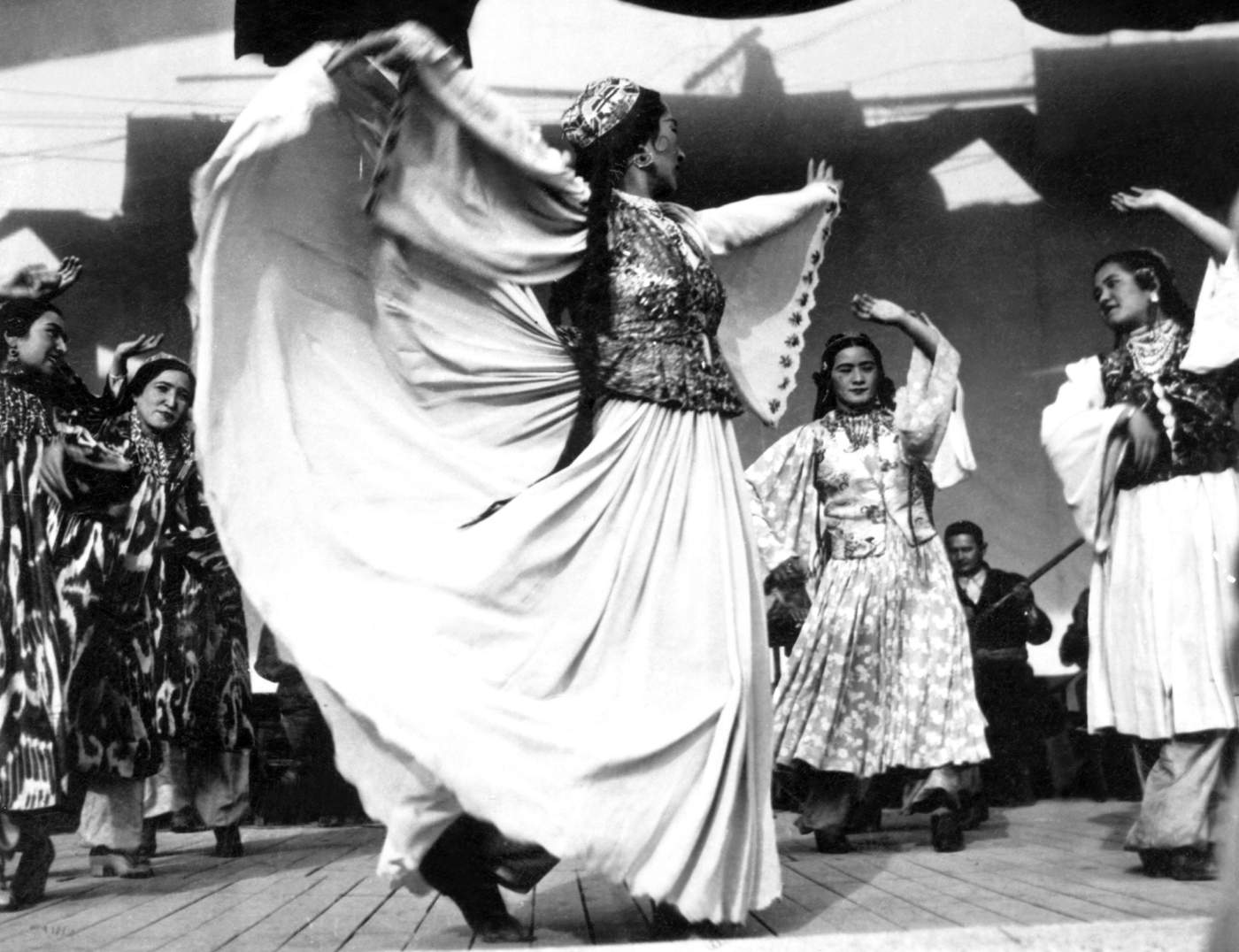
The issue of eroticism and minority women's bodies that is central to the internal Orientalism argument finds little explanatory relevance when analyzing minority dance of the early PRC era. A comparison between the minority tour and a Han-dominated production staged in Beijing at the same time suggests that representations of minority women were more conservative than those of female Han dancers. On October 10, 1950, during the minority tour, the dance troupe attached to the Central Academy of Drama premiered its newest production, a dance drama called Peace Dove that criticized U.S. imperialism (Central Academy of Drama 1950a, 1950b). Created and performed by leading Han artists who had been involved in the 1949 production Long Live the People's Victory, Peace Dove was the most widely reported-upon dance event of the year after the minority tour. Comparing photographs and descriptions of the two events, an analysis of costume alone suggests that minority women's bodies were represented with lower levels of physical exposure and attracted less sexual attention than Han women's bodies. While the minority women are dressed in loose-fitting, ankle-length dresses over long trousers (see figure 1), the Han women are dressed in ballet-style costumes, with form-fitting bodices and tutus cropped high on the thigh (Chen et al. Reference Chen, Li, Cai, Ding, Gao and Wu1950; Guangming Daily 1950e; Wu Yinbo and Xia Reference Wu and Xia1950). Audiences appear to have interpreted Peace Dove's costumes as sexually provocative, since complaints about its purportedly indecent exposure of women's thighs led the work to be widely criticized (Zhai Reference Zhai1996). Although such criticism could also be viewed as a reflection of stricter rules for the covering of Han women's bodies (and hence higher expectations of respectability for Han women), the fact that none of the minority women's costumes approached Peace Dove in its level of exposure seems worth noting here. Ultimately, eroticism understood as physical exposure of the female body does not seem to have been an important quality for contrasting representations of minorities and Han during this period.Footnote 9
Kangba'erhan and other dancers from the Xinjiang ensemble performing in Beijing in 1950. Photo courtesy of China Pictorial.

Another feature of the internal Orientalism argument that becomes problematic when discussing the 1950 minority tour is the idea that PRC nationality discourse presents minority culture as primitive or nonmodern. Conventionally, the distinction between “primitive” and “modern” art is produced discursively through reference to individual creative agency: the individual artist is erased in the former and emphasized in the latter (Price Reference Price1989). While the dances presented in the minority tour were associated with particular ethnic groups and locations (as were the Han dances in Long Live the People's Victory), they were also attributed to individual minority artists. In a review of the Xinjiang ensemble's performance, a critic cites the female Uyghur dancer Minawa as the “creator” of a Bayate dance performed in the program (Fang Reference Fang1950). In another review, a solo dance choreographed and performed by female Uyghur dance artist Kangba'erhan is described as “a creative work elevated a step beyond the old forms” (Xiao Reference Xiao1950). By using the word “elevated” here, the author compares the creative intervention made by Kangba'erhan to processes of modernization being carried out by Han artists on folk dance forms in the same period. Thus, rather than being portrayed as a cultural representative bearing the expression of an entire people, Minawa and Kangba'erhan are described here as individual creators who, like their Han counterparts, are agents in processes of cultural modernization.
Whereas “primitive” culture is often seen as being isolated from international knowledge and artistic trends, the 1950 tour featured minority artists and repertoires that were highly cosmopolitan. Apart from the Southwest ensemble, the minority ensembles all had some connection to international artistic communities: Korea and the Soviet Union in the case of Jilin Yanbian; Europe, the Soviet Union, and Central Asia in the case of Xinjiang; and Japan in the case of Inner Mongolia. Kangba'erhan (1922–94), the biggest artistic celebrity of the tour, was a prime example of the sophistication and worldliness of many of the minority artists. During the late 1930s, Kangba'erhan had been a soloist in the Uzbek Song and Dance Theater and then had trained at the Moscow Music and Dance Academy, where she performed at the Kremlin alongside the famous Soviet ballerina Galina Ulanova (Feng et al. Reference Feng, Liu and Luo2006; Kangba'erhan Reference Kangba'erhan1985). In 1947 Kangba'erhan and others in the Xinjiang ensemble had toured major Chinese cities, where urban intellectuals and artists wrote admiring poems and essays about them (Northwest News 1947; cf. Jacobs Reference Jacobs2008). With the exception of Dai Ailian (1916–2006), a Han dance artist born in Trinidad who had studied ballet and modern dance in England before moving to China in 1940, no Han dance artists in China at the time even approached Kangba'erhan in international prestige and popular celebrity (Glasstone Reference Glasstone2007). Kangba'erhan was frequently mentioned by name in media reports on the 1950 tour, and one account described members of Beijing's professional arts community chanting her name from the bleachers at the beginning of a major performance, despite the fact that local Han artists were also performing (Guangming Daily 1950f). In another report, Kangba'erhan is described exchanging gifts and taking photos with Dai Ailian, and the two are portrayed as peers (Ming Reference Ming1950). As the most prominent figure in the tour, Kangba'erhan embodied the ideal of ethnic minorities as sophisticated equals, rather than primitive others, to the Han majority.
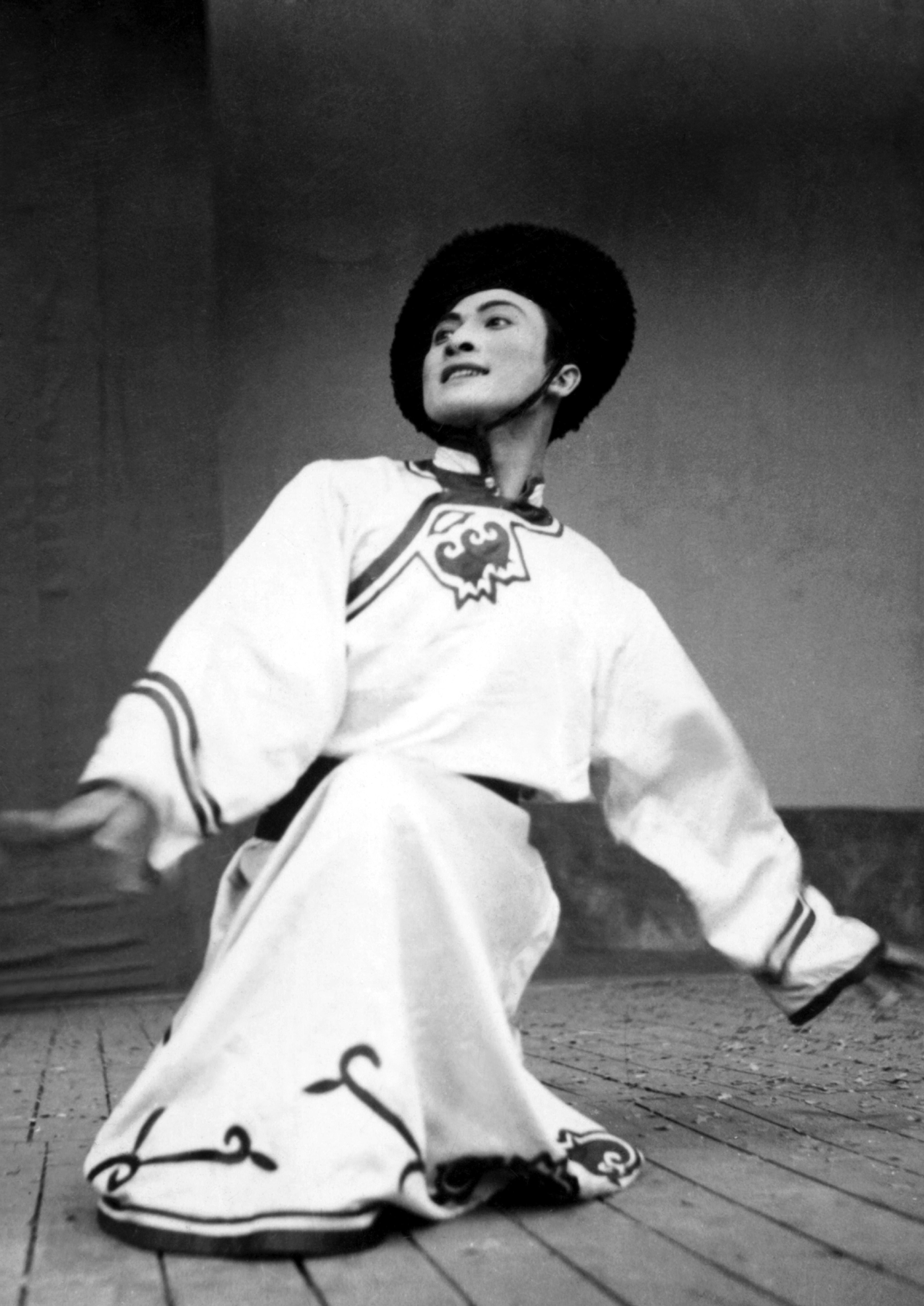
Another highly visible minority artist in the 1950 tour, who also embodied minority cosmopolitanism and individual artistic agency, was the male Manchu dancer and choreographer Jia Zuoguang (b. 1923; see figure 2). Growing up in Japanese-occupied Mukden (contemporary Shenyang), Jia experienced transnational cultural exchange facilitated by the “colonial East Asian cultural sphere” created under Japanese imperialism (Kleeman Reference Kleeman2014). Dance was an important component of this sphere, which connected much of East and Southeast Asia (Kleeman Reference Kleeman2014). Jia received his early dance training from Ishii Baku, known as the “father of Japanese modern dance,” and later he studied with the Japan-trained Wu Xiaobang, the “father of Chinese new dance.” Jia created and performed his own dance works while traveling in northeast China before he joined the newly founded Inner Mongolia Cultural Work Troupe in 1947, becoming its star performer and choreographer (Ji Lanwei and Qiu Reference Lanwei and Qiu1998; Tong Reference Tong2013). In the summer of 1949, Jia was selected along with two of his female Mongol colleagues to be part of the artistic team representing China at the World Festival of Youth and Students held that year in Budapest, Hungary (People's Daily 1949a). Shortly thereafter, Jia was also elected to the leadership committee of the Beijing-based National Dance Workers Association, the supervising council of China's emerging dance field (People's Daily 1949c). Thus, although his minority status was less culturally marked than Kangba'erhan's, Jia was nevertheless an internationally connected non-Han artist with professional status equal to that of top Han dancers in China.
Jia Zuoguang performing in Beijing in 1950. Photo courtesy of China Pictorial.
Professionalizing Minority Dance: Minority and Han in Parallel
Over the next three years, key ideas and practices introduced in Long Live the People's Victory and the 1950 minority tour were built into a new system of state-sponsored dance institutions and repertoire. Through their participation in international dance festivals and recruitment to national performance companies and arts conservatories, minority dancers became high-level, state-employed artists, who worked alongside and enjoyed similar opportunities as Han artists, the majority of whom specialized in Han dance styles. In this context, minority dance came to represent the elite cultural status afforded to minority arts in the early PRC. It also embodied the idea that minority culture and Han culture together constituted a larger, multidimensional Chinese culture.
One cannot interpret China's colorful dancing minorities without understanding the professionalization of minority dance in the early PRC. Indeed, it is through this process that minority dance emerged, alongside Han dance, as a ubiquitous presence on the PRC stage. It is also through this process that minority dance coalesced into a system of consistent and recognizable signs, allowing it to operate as an official discourse about ethnic identity. Throughout this period, developments in minority dance emerged alongside those in Han dance, and the two appeared quite similar in structure, form, and content, with similar relationships to state authorities, ideas of artistic modernization, and national identity. Similar processes of professionalization led to the creation of Han and minority dance as modern performance genres and tools of official discourse.
One area in which Han and minority dance clearly ran in parallel during this period was the representation of PRC culture abroad. Between 1949 and 1962, the most important international cultural exchange events in which China participated were the World Festivals of Youth and Students, large meetings held in Central and Eastern Europe that included a performing arts competition. As mentioned above, Jia Zuoguang and two Mongol dancers joined the cultural delegation representing China at the 1949 Festival in Budapest. In total, four dance works from China were entered into the folk dance competition that year: two representing Han culture (one waist drum dance and one yangge dance) and two Mongol (Mao Reference Mao2005). In 1951 and 1953, similar folk dance programs represented China at the Festivals in East Berlin and Bucharest, respectively. The 1951 program included one Han folk dance and four minority dances, some performed by minority artists, while the 1953 program included four Han dances (Mao Reference Mao2005; Ministry of Culture 2004). The attention these works received at international competitions ensured deepened institutional commitments to these styles within China.
Another area in which Han and minority dance developed alongside one another and in similar ways was through the establishment of professional state-sponsored performing arts companies. When the PRC was founded in 1949, a large network of semi-professional song and dance companies already existed around the country that had developed during the war era, specializing in both Han and minority performance styles. In addition to national and local governments, branches of the military also sponsored many of these ensembles (Liu Min Reference Min2011). During the early PRC, this system was expanded and standardized until it became a nation-wide performing arts infrastructure. In June 1951, top PRC cultural officials stipulated that all of China's major cities and administrative regions should establish professional theater companies, many of which included dance teams (Mao Reference Mao2005). One year later, China's first national-level song and dance companies were established. Based in Beijing and taking their funding and direction from branches of the central government, these national ensembles were the most prestigious and publically visible, and they set standards for performance practice around the country (Zhang Yuling Reference Zhang2012).
The first national-level ensembles, formally established in the fall of 1952, reflected a dual system focused on the parallel development of Han and ethnic minority dance.Footnote 10 The Central Nationalities Song and Dance Ensemble (Zhongyang Minzu Gewutuan 中央民族歌舞团, hereafter “Nationalities”), established in September, had a primarily minority membership and specialized in choreography based on the dances of China's diverse minority groups (Guangming Daily 1962; People's Daily 1962).Footnote 11 The Central Song and Dance Ensemble (Zhongyang Gewutuan 中央歌舞团, hereafter “Central”), established in October, had a primarily Han membership and specialized in choreography based on Han regional folk dances (Jin Ming Reference Jin1960).Footnote 12 The backgrounds of the two troupes were somewhat different: Central grew out of an existing company founded in 1949 at the Central Academy of Drama, while Nationalities was a new ensemble established by recruiting young amateur performers from minority-dominated regions (China's Ethnic Groups 2012; Dong and Long Reference Dong and Long2008; Mao Reference Mao2005).Footnote 13 Nevertheless, the companies were similar in mission, with both dedicated to the study, adaptation, and innovation of traditional folk forms for modern stage performance (Jin Ming Reference Jin1960; Lu Reference Lu1960). As China's top professional song and dance companies, both toured widely around China and abroad over the following decade.Footnote 14
Comparing photographs and recordings of dance works performed by these two ensembles in the early and mid-1950s, one finds that although different in style, the overall aesthetic register and content are quite similar. Central's three best-documented Han-themed works of this period were “Red Silk Dance” (1951), “Lotus Dance” (1953), and “Tea Picking and Butterflies” (1953). All feature elaborate, colorful costumes and brightly smiling dancers, offering idyllic images and joyful atmospheres generated through the creative adaptation of folk performance (see figure 3). The settings for all three works are outdoors, in the context of rural life or nature, and they focus on themes of popular celebration, holidays, and romanticized depictions of agricultural labor (Jin Ming Reference Jin1960; “Lotus” 1955, 1987; “Red” 1963; “Tea” 1954). The same qualities are found in Nationalities' best-documented minority dance works of this period, such as “Peacock Dance” (duet version, 1954), “Reba on the Grassland” (1956), and “Third Day of the Third Moon” (1956) (“Peacock” 1954; “Reba” 1963; “Third” 1959).Footnote 15 In costume, the Han and minority-themed works of this era appear quite similar. Female dancers in both repertoires wear long, loose-fitting pants or skirts, with equally loose-fitting tops characterized by long sleeves and high necklines. Both feature markings of ethnicity: patterned and embroidered costumes, specialized props, and headwear that indicate regional or cultural affiliations. Finally, just as the minority dances are internally diverse to represent different nationality groups, Han dances are also internally diverse, representing Han culture associated with different geographical regions. In the examples listed above, “Red” presents Han folk dance styles associated with northeast China, “Lotus” those associated with northwest China, and “Tea” with those of southeast China (Jia Reference Jia2006). Thus, rather than producing a homogenized notion of Han culture, the dual structure of Han and minority dance encouraged a recognition of the internal variation within both majority and minority culture.
Han folk dance “Tea Picking and Butterflies,” performed in 1954. Photo courtesy of China Pictorial.
The way that dance is used to represent culture is also similar in the Han and minority repertoires. This can be seen by comparing four of the most commonly performed Han and minority dance works of the 1950s: “Red Silk Dance,” “Lotus Dance,” “Ordos Dance,”Footnote 16 and “Reba on the Grassland.” Although the first two represent Han culture and the latter two Mongol and Tibetan culture, respectively, they use analogous creative methods and present similar approaches to the presentation of local culture when viewed from a strictly artistic perspective.
First, all four works combine popular and elite forms: “Red” uses popular yangge dance combined with a silk ribbon technique adapted from Peking opera; “Lotus” blends popular “lotus lamp” dance with body movements derived from Kun theater; “Ordos” brings together elements of religious temple dance with movements from everyday life; and “Reba” combines a popular line dance using long sleeves with the specialized religious dance movements and acrobatic techniques practiced by travelling performers (Jia Reference Jia2006).
Second, all four dances emphasize formal elements over content, with aesthetic qualities of technique such as rhythm, body lines, and movement trajectories serving as the imagined site of localized cultural identities. In “Red” and “Lotus,” Han identity is embodied aesthetically through twisting hip movements and circling ribbons or through tiny stepping actions and orchid-shaped finger positions. In “Ordos,” Mongol identity is conveyed through staccato shoulder and wrist actions and alternating thrusts of the arms in front of and behind the body. In “Reba,” Tibetan identity is conveyed through bouncing foot actions and spinning movements with drums and bells. In both Han and minority dances, the combination and abstraction of movement techniques is employed in similar ways to produce formalized representations of embodied ethnic identities. Although these works conveyed important ideological messages, their work as ethnic performance occurred primarily through their ethnically and regionally marked dance styles, together with costumes and stage sets.
Parallel developments between Han and minority dance are also evident in the theoretical and methodological commitments adopted by China's professional dance practitioners during this period. Like cultural workers in other fields, early PRC dance artists followed the “learning from life” methodology outlined in Mao Zedong's Yan'an “Talks” of 1942, which made the study and selective adaptation of traditional and folk forms the officially promoted path for creating Chinese socialist art (Holm Reference Holm1991; Tang Reference Tang2015). During the 1940s, dance artists across China were already experimenting with this creative method, and it was through this experimentation that the earliest examples of modern Han and minority dance appeared (Tong Reference Tong2013). At the end of 1951, this approach was further enforced in what became known as the “rectification movement,” a political campaign that called for rejecting “blind worshipping of the West” and encouraged study of “native traditions” (Mao Reference Mao2005, 13). In dance, this notion of native tradition incorporated both minorities and Han, and the same creative methods were expounded for the study and creation of both styles, with minority artists also weighing in on the discussions (China Dance 1954). Within this approach, traditional or popular forms of Han and minority dance were assigned similar levels of cultural development, and both were seen as being in need of selective adaptation to become modernized for the professional dance stage (Liu Xiaozhen Reference Xiaozhen2012).
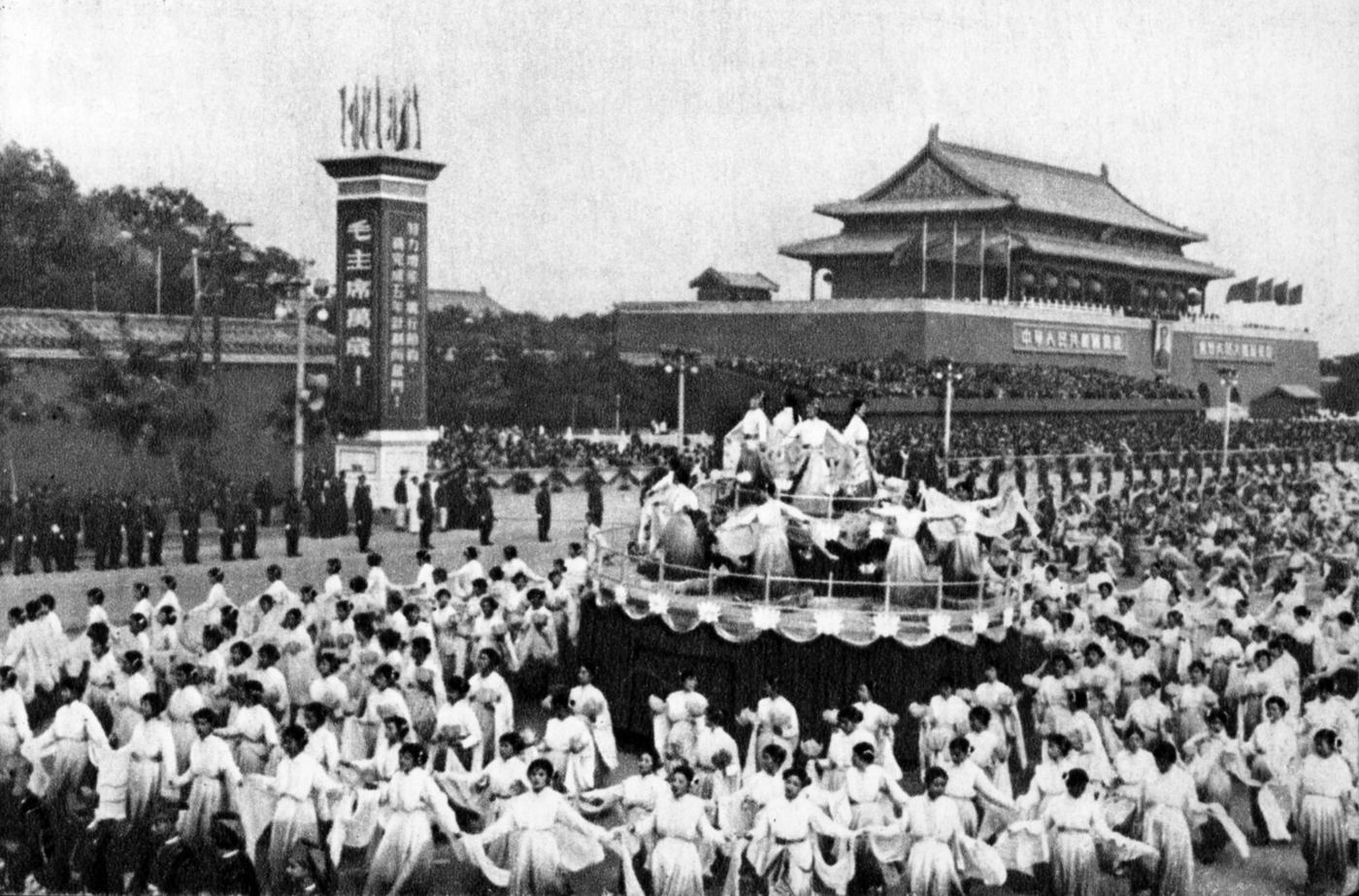
Two events took place in 1953 and 1954 that further materialized the parallel approaches to Han and minority dance. These were the First National Folk Music and Dance Festival of China, held in Beijing on April 1–14, 1953, and the opening of the Beijing Dance School, China's first professional dance conservatory, in September 1954. The significance of the 1953 folk festival lies in the fact that, like the dance repertoires of the time, it combined Han and minority performance together under the shared rubric of “folk.”Footnote 17 The festival featured performances by 308 practitioners from all the major regions of China, representing ten nationalities including Han (People's Daily 1953). The significance of the Beijing Dance School is that it established Han and minority dance as integral and equal components of the first national folk dance curriculum. The curriculum, classified as “Chinese folk dance” (Zhongguo minjianwu 中国民间舞) was organized by ethnic group and included four parts: Han, Tibetan, Uyghur, and Korean.Footnote 18 Both Han and minority specialists participated in the creation of this curriculum, which still forms the basis for folk dance training in professional dance schools and companies across China (Beijing Dance Academy 1997; Zhao Reference Zhao2009).Footnote 19 Through the folk festival and the new national dance curriculum, Han and minority folk dance were performed and institutionalized as analogous artistic practices. Furthermore, their parallel status was confirmed when the two forms appeared consistently as constituent parts of a wider national artistic category conceptualized as Chinese folk dance (see figure 4).
Han folk dance “Lotus Dance,” performed in Tian'anmen Square in 1955. Photo courtesy of China Pictorial.
Problems and Legacies: Implications of Early PRC Minority Dance
In the early years of the PRC, minority dance emerged as an official symbol of state multiculturalism, promoting new ideals of equality and collaboration designed to challenge existing realities of ethnic tension and entrenched inequality. Rather than portraying minorities as erotic, exotic, and primitive, minority dance in this period presented images of minorities as respectable, progressive, and culturally sophisticated. This was part of a larger reconstruction of Chinese identity, where “China” was defined not as a Han nation but, rather, as a composite of many nationalities.Footnote 20 During this time, minority dancers did not appear only as fabricated images on stage. Instead, they participated in the creation and performance of new national dance forms and, through their professional status as state-sponsored artists, emerged as high-status cultural icons. At the same time, minority dance, alongside Han dance, appeared as a modern artistic form that represented a multinational China domestically and abroad.
Despite what were clearly serious efforts to present Han and minority dance as equal and analogous in this period, these efforts were not without flaws. In Long Live the People's Victory, for example, northern Han music and dance forms were used in the vast majority of the work, with southern Han styles almost completely excluded, and minority styles used only when the issue of nationality and class diversity was explicitly addressed as content. In the 1950 minority tour, it is significant that the Southwest ensemble occupied a temporal position of developmental backwardness in relation to the other three minority ensembles, suggesting that some minority groups were developmentally superior to others. The Southwest ensemble was the only group described in media reports as coming to Beijing to “learn culture,” while the other groups were described as “exchanging culture” (Xiao Reference Xiao1950). Furthermore, in the naming of the PRC's first two national song and dance ensembles, Han culture remains clearly unmarked in relation to minority culture: the company focused on minority performance includes the extra term “Nationalities,” while no similar distinguishing term appears in the name of the Han-focused ensemble. Finally, in the national dance curriculum established at the Beijing Dance School, Han and minority folk dance were both subordinated to another new genre, what was known as “Chinese classical dance” (Zhongguo gudianwu 中国古典舞). The latter was allocated significantly more time in students' training schedules and was perceived as a more rigorous training program than that offered in the folk dance courses (Beijing Dance Academy 1997). Although Chinese classical dance was always defined as a representation of national culture, rather than any specific nationality, its close stylistic connections to Peking and Kun opera and martial arts made many practitioners of minority dance view it as implicitly Han in style.Footnote 21 When viewed from this perspective, minority dance appears to be relegated to the category of “folk,” while Han dance appears to enjoy a broader range that includes both “folk” and “classical.” These various issues all suggest that relationships between majority and minority are complicated by relationships between region and nation, as well as among different minority groups.Footnote 22
Despite these and other problems, many of the principles expressed in early PRC minority dance have had ongoing legacies, which have helped to ensure the lasting place for minority dance and dancers in professional and popular dance in China. The large-scale professionalization of minority artists during the early 1950s established a pattern in which institutions dedicated to minority performance are expected to be composed primarily of students, teachers, performers, and administrators who are themselves ethnic minorities. At the same time, the professionalization of minority dance has ensured that at the national, regional, and local levels, minority arts continue to be taught, researched, and performed as elite artistic forms, not only among minorities but among all professional and amateur dance practitioners, including Han. This is because minority dance continues to be practiced and perceived as integral to Chinese dance. In this sense, the ubiquity of minority dance on the PRC stage should be viewed in part as a validation of the high status of minority culture within China's national cultural imaginary. Likewise, the political and economic forces that have shaped minority dance and dancers over the years have also shaped Han dance and dancers, usually in quite similar ways.
That the 1980s and 1990s witnessed a proliferation of minority images that correspond somewhat to representational practices of Western Orientalism is not surprising given the larger context of geopolitical adjustments in China's domestic political, economic, and cultural life. It was during this period that the figure against which minority-majority unity had previously been constructed, namely the external threat of U.S. imperialism, disappeared largely from China's official discourse. At the same time, many social values of early Maoism began to recede from Chinese official and popular culture, including the ideals of gender and class equality, sexual conservatism, and anti-commercialism. It follows that the principle of ethnic equality, which had also been part of these early Maoist educational campaigns, would lose ground in this period.Footnote 23 Similarly, as power differentials increased exponentially along lines of wealth, gender, and region, it also seems plausible that any small gains made in ethnic equality during the previous era would erode.Footnote 24 As Chinese representational spheres such as mass media, arts, and education increasingly looked for models in Western countries, it makes sense that patterns of racial injustice and marginalization endemic to these cultural spheres would (re-)emerge in China. This is especially true given that many of these perspectives and practices mapped comfortably onto local histories of Han chauvinism and interethnic inequalities that early Maoist nationalities policy had explicitly highlighted and attempted to contest.
When examining nationality discourse in the PRC, it is important to recognize historical change and internal multiplicity within PRC cultural practices. To do this, new methodological approaches and lines of inquiry must be developed and critical approaches must be taken to assess existing frameworks of analysis that assume generalizability across space and time. Rather than asking what is the nature of minority-majority cultural representation in the PRC, as if PRC culture is ahistorical or homogenous, one should ask instead how minority-majority cultural representations have changed over time, or how they take shape differently in different places and situations. Rather than using empirical data gathered from one place or time to describe PRC cultural practices as a whole, one should compare and distinguish between different arenas and periods, recognizing that these are internally differentiated and often exist in complex relationships to broader societal shifts. To assume that China is one continuous and consistent cultural entity that can be described and understood through a single, unchanging analytic is highly problematic. To take such an approach imposes a representational practice on China that is reminiscent of the very practices that critics of Orientalism oppose.
Acknowledgments
This research was funded by grants and fellowships from the American Council of Learned Societies; the Shanghai Theatre Academy; and the University of Michigan's Lieberthal-Rogel Center for Chinese Studies, Center for World Performance Studies, and Institute for Research on Women and Gender. The ideas and arguments presented in this essay developed out of conversations with many people over many years, unfortunately all of whom cannot be listed here. Special thanks go to Xiaobing Tang and Miriam Kingsberg for offering written comments on earlier drafts of this particular essay, as well as to Jeff Wasserstrom and the anonymous reviewers at JAS, without whose dedication and critical insights this paper could not have reached its current form.