Introduction
Japanese food has been widespread in Thailand for more than three decades. The number of Japanese restaurants increased dramatically in Thailand from 2274 to 5751 restaurants over 10 years (2013–2023). As a result, Thailand has the largest Japanese restaurant business in Asia (Jetro Thailand, 2023). In addition, growing consumer interest in health-promoting food products has generated a substantial market for rice with higher nutritional value (Mbanjo et al., Reference Mbanjo, Kretzschmar, Jones, Ereful, Blanchard, Boyd and Sreenivasulu2020). Thus, individuals who eat rice prefer unpolished rice that has a black pericarp. The pericarp of coloured rice grains accumulates anthocyanins. These compounds have antioxidant activity and health benefits such as reduction in the risk of cancer and obesity (Yamuangmorn and Prom-u-Thai, Reference Yamuangmorn and Prom-u-Thai2021). Anthocyanins are the flavonoid pigments of black rice and are a source of antioxidants that have the ability to inhibit the formation or to reduce the concentrations of reactive, cell-damaging free radicals (Machon et al., Reference Machon, Mackon, Ma, Kashif, Ali, Usman and Liu2021; Xia et al., Reference Xia, Zhou, Wang, Li, Fu, Wu and He2021). In addition, black rice is high in fibre, vitamins B and E, iron (Fe), thiamine, magnesium (Mg), niacin and phosphorous (P) (Zhang et al., Reference Zhang, Gua and Peng2004; Mbanjo et al., Reference Mbanjo, Kretzschmar, Jones, Ereful, Blanchard, Boyd and Sreenivasulu2020). Therefore, black rice is becoming popular among rice consumers and dieticians due to its high nutritive and medicinal value (Kong et al., Reference Kong, Wang and Cao2008). However, most black rice varieties have been identified in indica-type rice.
Due to the high demand for Japanese food and healthy functional foods, many short grain black rice varieties have been bred with improved agronomical traits in Japan, but their eating quality and yield still need to be improved (Maeda et al., Reference Maeda, Yamaguchi, Omoteno, Takarada, Fujita, Murata, Iyama, Kojima, Morikawa, Ozaki, Mukaino, Kidani and Ebitani2014). Therefore, many researchers have tried to take advantage of the premium short grain rice variety namely Koshihikari's good eating quality (Kobayashi et al., Reference Kobayashi, Hori, Yamamoto and Yano2018), while adding a black coloured pericarp, containing anthocyanins or tannins (both healthful nutraceuticals), respectively (Maeda et al., Reference Maeda, Yamaguchi, Omoteno, Takarada, Fujita, Murata, Iyama, Kojima, Morikawa, Ozaki, Mukaino, Kidani and Ebitani2014). However, the cultivation of Koshihikari is very limited in tropical climates and results in a low yield and low cooking quality (Kobayashi et al., Reference Kobayashi, Hori, Yamamoto and Yano2018). Therefore, the japonica rice variety Akitakomachi is more suitable than other japonica rice varieties for growth in the northern parts of Thailand due to its resistance to hot weather (Seemanon et al., Reference Seemanon, Yamao and Hosono2015). In addition, Akitakomachi has been developed from Koshihikari and is being gradually accepted by consumers, continuously maintaining the fourth position in Japan (Kobayashi et al., Reference Kobayashi, Hori, Yamamoto and Yano2018). Thus, Akitakomachi can be used in short grain breeding programmes in tropical climates.
Recently, the premium long grain black rice variety ‘Riceberry’ has become a registered rice variety in Thailand; it is a cross-bred variety obtained from Jao Hom Nin, a local indica non-glutinous black rice, and Khoa Dawk Mali 105 (premium fragrant rice). Researchers initially developed Riceberry with the aim of boosting the nutritional value, fragrance and taste of rice. In addition, Riceberry is resistant to blast disease, which is a major disease in Thailand (Vanavichit, Reference Vanavichit2021). Therefore, Riceberry is the most popular black rice variety and is known for its health-promoting properties.
The main genetic factors controlling stickiness and hardness of cooked rice grains in japonica rice is the wxb gene, which results in moderate amylose content (Shao et al., Reference Shao, Peng, Mao, Lv, Yuan, Liu and Zhao2020; Hori et al., Reference Hori, Suzuki, Ishikawa, Nonoue, Nagata, Fukuoka and Tanaka2021). In addition, Miura et al. (Reference Miura, Crofts, Saito, Hosaka, Oitome, Watanabe, Kumamaru and Fujita2018) reported that SSIIaJ is found in japonica rice that reduce starch synthase activity, resulting in an increase in amylopectin short chains and reduces gelatinization temperature when compared with SSIIaI that is found in indica rice. Furthermore, the GS3 gene appears to exert the most control grain length (Li et al., Reference Li, Duan and Li2018). All the short and medium grains genotyped carry the C-allele and all the long and extra-long grains carry the A-allele (Calingacion et al., Reference Calingacion, Laborte, Nelson, Resurreccion, Concepcion, Daygon, Mumm, Reinke, Dipti, Bassinello, Manful, Sophany, Lara, Bao, Xie, Loaiza, El-hissewy, Gayin, Sharma, Rajeswari, Manonmani, Rani, Kota, Indrasari, Habibi, Hosseini, Tavasoli, Suzuki, Umemoto, Boualaphanh, Lee, Hung, Ramli, Aung, Ahmad, Wattoo, Bandonill, Romero, Brites, Hafeel, Lur, Cheaupun, Jongdee, Blanco, Bryant, Thi Lang, Hall, Fitzgerald and Yan2014).
Thus, the present research focused on the improvement of a black short grain rice (japonica-like) variety that is suitable for growth in tropical regions to produce high yield and has increased nutritional quality, with improved micronutrient and antioxidant contents. The genetic combination of temperate japonica white rice, Akitakamachi and tropical indica black rice, Riceberry should be introgressed into the progenies that performed by pedigree selection associated with maker-assisted selection (MAS) of cooking quality.
Materials and methods
Rice growth conditions
This experiment was conducted from 2015 to 2020 at Tana Grain Polish, Ltd., Phan District, Chiang Rai Province (19°35′09.4″ N, 99°44′42.7″ E, 413 m above sea level). Weather parameters, including the air temperature, relative humidity and the amount of rain in the field, were measured every 3 h each year (2016–2020) by a data logger (WatchDog 2000 Series Micro Stations, Spectrum Technologies, Inc., USA). The mean day/night temperatures over the 5 years were 26.8/23.1°C, and the mean maximum/minimum temperatures over the 5 years were 31.1/20.2°C. The mean relative humidity during the day/night over the 5 years was 72.1/87.8% RH, and the mean total rainfall over the 5 years was 1497 mm (Fig. S1). The rice plants in every generation were seeded in a field nursery. After 30 days, the rice seedlings were transplanted into breeding plots. The soil in the Phan District consisted of 1.56% organic matter, 0.07% total nitrogen, 26.7 mg/kg available phosphorus, 75.5 mg/kg exchangeable potassium, 629.0 mg/kg exchangeable calcium and 76.5 mg/kg exchangeable Magnesium and had a pH of 5.40. Additionally, basal fertilizer was applied 15 days after planting at rates of 33.7 kg N/ha (diammonium phosphate) and 41.3 kg of P2O5/ha. The second split of fertilizer was applied at the booting stage (65 days) at a rate of 57.5 kg N/ha. Other management practices were in accordance with conventional approaches for high-yield japonica rice cultivation.
Breeding schemes
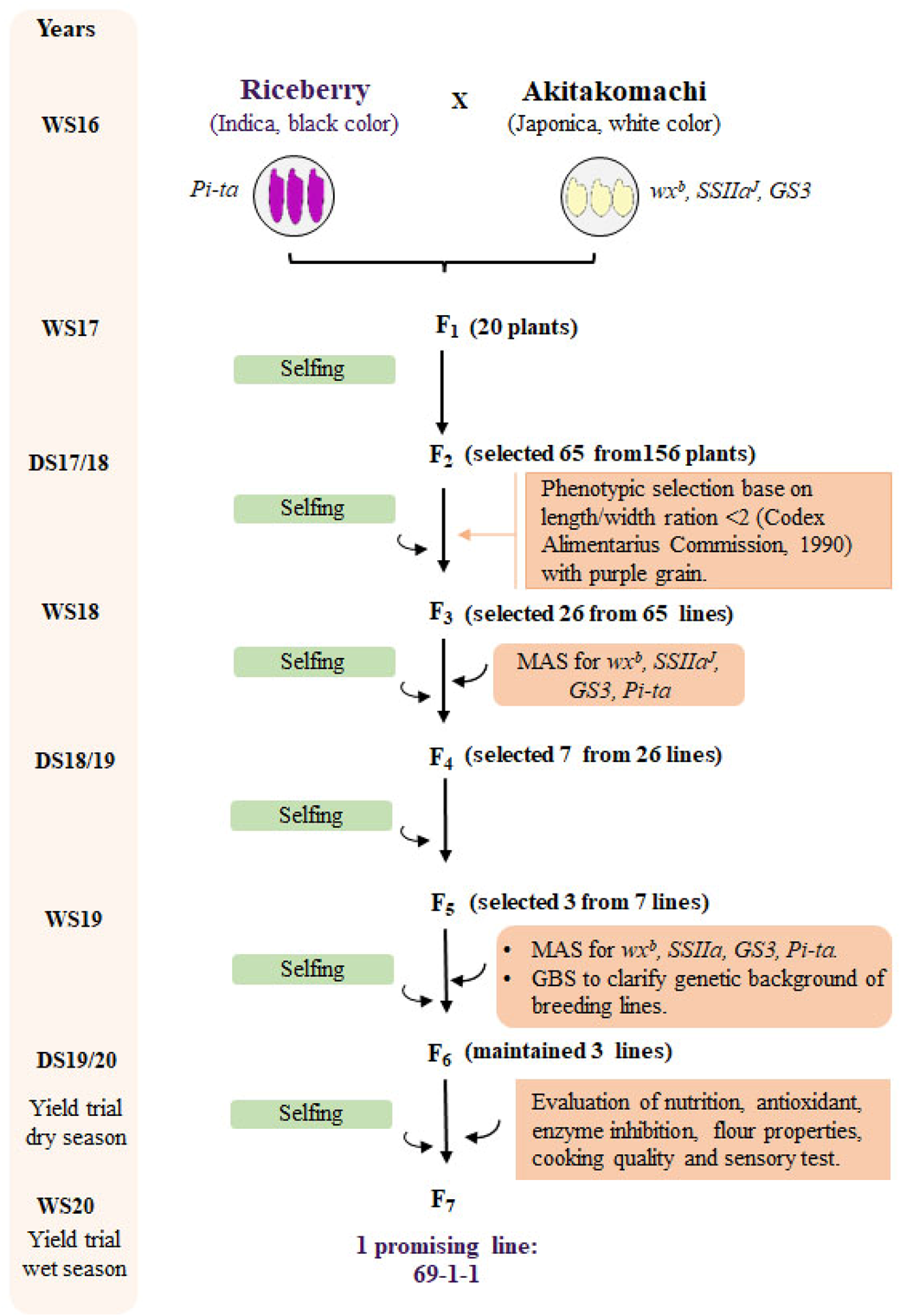
An indica black long grain, Riceberry was used as the female parent, and a japonica white short grain, Akitakomachi was used as the male parent. The two parents were crossed to obtain F1 seeds, and the progeny were then selfed and selected from F2 until F7 by the pedigree method (Fig. 1). Grain colour and japonica grain shape were used as criteria for phenotypic selection (Juliano and Villareal, Reference Juliano and Villareal1993). In F6, the selected lines were grown for the first yield trial with parents and control varieties in the dry season from December 2019 to March 2020 (DS19/20). The experiment was conducted in a randomized complete block design (RCBD), with three replications. The plot size for each treatment was 2.5 × 2.5 m (6.25 m2), with a spacing of 25 × 25 cm. After that, the validation of candidate lines (F7) was conducted in the second yield trial in wet season from June to September 2020 (WS20). The RCBD with three replications was applied, and the plot size for each treatment was 2.5 m × 3.5 m (8.75 m2), with a spacing of 25 × 25 cm.
Scheme of breeding programmes for black short grain rice derived from Riceberry × Akitakomachi from WS16–WS20 in Phan district, Chiang Rai Province.

Phylogenetic analysis based on genotyping by sequencing (GBS)
A phylogenetic analysis was performed among breeding lines (F4), parents and control varieties. The gDNA from the leaves was isolated according to the DNeasy Plant Mini Kit (Qiagen) protocol. The gDNA was then sequenced on an Illumina HiSeq X by Novogene AIT, Singapore. The Bowtie 2 program was subsequently used to align the nucleotides (Langmead and Salzberg, Reference Langmead and Salzberg2012) and the GATK program was used to analyse the single-nucleotide polymorphisms (SNPs) in each sample. Finally, the nucleotide sequences from the candidate lines and control varieties were used to construct a phylogenetic tree using the MEGA X program.
Screening SNP markers by KASP genotyping technology
The screening of MAS in breeding lines was conducted in F3 and F4 using SNP markers, including markers for starch (wxb), gelatinization temperature (SSIIaJ), short grain (GS3) and blast resistance (Pi-ta; TBGI453598) (Table S1). Polymerase chain reaction (PCR) was performed on Hydrocycler™ (LGC, Serial No. 2165-3564-129, Middlesex, UK) water bath-based thermal cyclers using the following thermal cycling profile, starting with the following thermocycler touch-up PCR cycle (Table S2). In addition, all Kompetitive Allele Specific PCR (KASP) assay genotyping was performed using the LGC SNP line system following standard KASP protocols (LGC Group, 2020).
Determination of yield and yield components
The agronomic traits examined included the days to 50% flowering, plant height, number of tillers per plant, number of panicles per plant, panicle length, seed set rate, 1000-grain weight and grain yield. The grain yield in each plot was determined per harvested area of 6.25 or 8.75 m2. The grain moisture was adjusted to 14% and then extrapolated to units of kg/ha.
Grain and cooking quality assessments
The paddy grains were dehulled using a mini-polisher. Three physical grain qualities including grain length, grain width and the grain length to width ratios of both paddy grain and unpolished grain were measured using a two-decimal-point digital Vernier calliper. Three chemical grain qualities, including amylose was determined based on Juliano (Reference Juliano and Champagne1985). Protein was calculated by estimating nitrogen content with the Kjedahl method (AOAC, Reference AOAC2000). Fat was determined using the soxhet distillation method which involved repeated fat extractions with petroleum ether (AOAC, Reference AOAC2000).
The cooking times of the unpolished rice samples and the pasting properties of the rice flours were determined according to the method described by Juliano (Reference Juliano and Champagne1985) using a Rapid Visco Analyser (RVA, Model 4-D, Newport Scientific, Australia).
Evaluation of the sensory qualities of cooked rice
The rice cooking procedure followed the method of Saichompoo et al. (Reference Saichompoo, Narumol, Nakwilai, Thongyos, Nanta, Tippunya, Ruengphayak, Itthisoponkul, Bueraheng, Cheabu and Malumpong2021). The unpolished rice samples were cooked using a rice cooker (Sharp model KS-ZT18, Thailand). Seven panellists who had been well trained in the principles and concepts of descriptive sensory analysis participated in the sensory quality evaluation. The sensory items included smell (score 1‒5), appearance (score 1‒5), stickiness (score 1‒5), softness (score 1‒5) and taste (score 1‒5). The overall quality was the sum of the scores for all the attributes.
Evaluation of nutritional and phytochemical contents
The iron, zinc, vitamin E (α-tocopherol), vitamin B6 and folic acid contents in brown rice were analysed by the Institute of Nutrition, Mahidol University, Thailand, which followed the protocol of Association of Official Agricultural Chemists (AOAC) (Juliano, Reference Juliano and Champagne1985). The anthocyanin content in pericarp grains was measured according to the procedures described by Rahman et al. (Reference Rahman, Lee and Kang2015).
The total flavonoid content was determined following the method of Djeridane et al. (Reference Djeridane, Yousfi, Nadjemi, Boutassouna, Stocker and Vidal2006). The total flavonoid content was calculated from the calibration curve of rutin equivalents (RUE) according to the formula 1:

In addition, the total phenolic content was evaluated using Folin–Ciocalteu reagent. The total phenolic content was calculated from the calibration curve of gallic acid equivalents (GAE) according to the formula 2:
$Y = 0{\rm .0094x} + 0{\rm .0028, \;\ }R^ 2 = 0 .998$ (2)
Antioxidant and enzymatic assays
The inhibitory effect of rice grain water extracts on 2,2-diphenyl-1-picrylhydrazyl (DPPH) radical scavenging was determined following the method of Boskou et al. (Reference Boskou, Salta, Chrysostomou, Mylona, Chiou and Andrikopoulos2006). In addition, 2,2′-azino-bis (3-ethylbenzothiazoline-6-sulfonic acid) (ABTS) radical scavenging was investigated using the method of Hsu et al. (Reference Hsu, Peng, Basle, Travas-Sejdic and Kilmartin2011).
The α-amylase inhibition assay was performed following the method of Kwon et al. (Reference Kwon, Jang and Shetty2006). The α-glucosidase inhibition assay was performed following the method of Ahmad et al. (Reference Ahmad, Hashim, Noor, Ismail, Salim, Lajis and Shaari2011). The per cent inhibition of free radical scavenging and enzymatic activities was calculated from the absorbance data using the formula: inhibition (%) = [(Abscontrol – Abstest)/Abscontrol] × 100.
Pericarp pigment colour analysis
The pigment intensity of unpolished rice was measured with a colorimeter meter (model CR-300, Minolta, Japan). L*, a* and b* values were calculated to determine the colour of the rice pericarp, where ‘L*’ indicates the degree of lightness or darkness (L* = 0 indicates perfect black and L* = 100 indicates most perfect white; hue chart); ‘a*’ indicates the degree of redness (+) and greenness (−); and ‘b*’ indicates the degree of yellowness (+) and blueness.
Statistical analysis
All the data were analysed using R program version 3.6.1 to test the significance of the results in terms of agronomic traits, cooking quality and nutrition value. The means were separated using Duncan's test at alpha levels of 0.05. Chi-square (χ 2) was used to analyse the relationship of the segregation ratio of grain colour in the F2 generation. In addition, correlation analysis (r2) was used to evaluate colour intensity, nutritional and phytochemical values, and antioxidation and antidiabetic activities.
Results
Breeding results during early generations
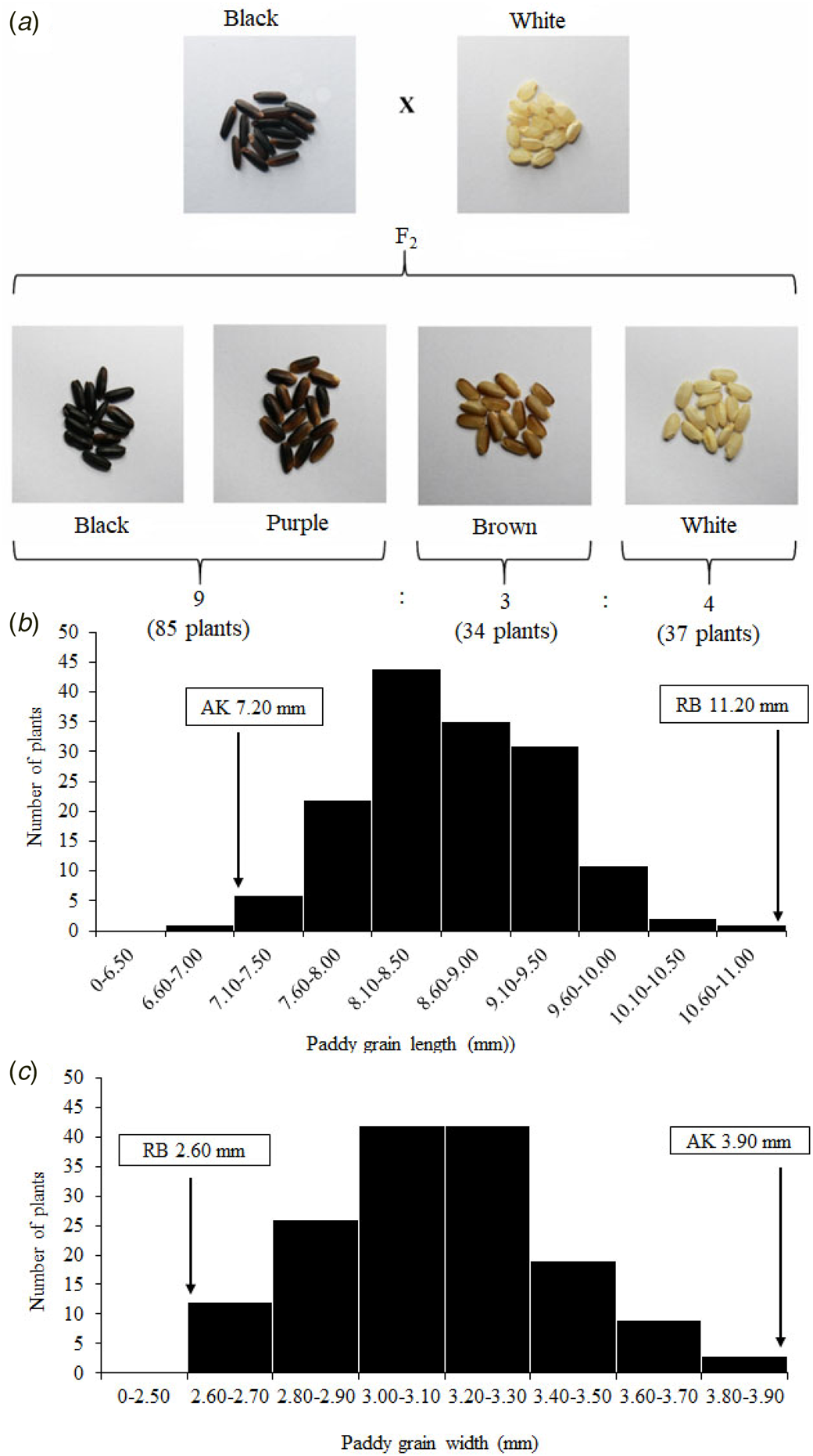
Among 156 F2 plants obtained from a cross between the indica black long grain variety ‘Riceberry’ and the japonica white short grain variety ‘Akitakomachi’, the seed pericarps of 85, 34 and 37 plants were classified as showing black, brown and white coloration, respectively (Fig. 2(a)). Therefore, the colour of the pericarp was identified as a qualitative trait with a segregation ratio of 9 black:3 brown:4 white (χ 2 = 2.62, P > 0.05). The Mendelian ratio 9:3:4 fit to recessive epistasis of two gene interactions. However, the black seed group consisted of two types, black and purple, depending on the degree of colour intensity. Conversely, the paddy grain shape of the F2 population segregated according to a normal distribution, as shown in Fig. 2(b) and (c). The paddy grain shapes of F2 progenies ranged from 6.60 to 11.00 mm in grain length and 2.60 to 3.90 mm in grain width, respectively. Therefore, 65 of 156 F3 seeds that had short grains with black colour were selected and grown as F3 plants. After that, 26 of the F4 seeds were selected according to the same criteria to grow F4 plants as the family lines. In this generation, seven lines were selected, and their growth was continued to obtain the F5 generation.
F2 segregation of (a) grain colour, (b) grain length and (c) grain width compared with Akitakomachi and Riceberry.

In addition, MAS for cooking quality and blast resistance (wxb, SSIIa, GS3 and Pi-ta) was used to detect the target genes/QTLs at the seedling stage in F3 and F4. The results indicated that 17 of 26 plants in F3 were successfully fixed in terms of the homozygosity of all target genes. Moreover, the homozygosity of these genes was confirmed again in the seven selected lines of the F4 generation. When considering these genes in the parents, it was found that Akitakomachi was homozygous for wxb, SSIIa, GS3 and Pi-ta, while Riceberry was homozygous for wxa and Pi-ta (Table S3).
Phylogenetic relationships of the F4 selected lines
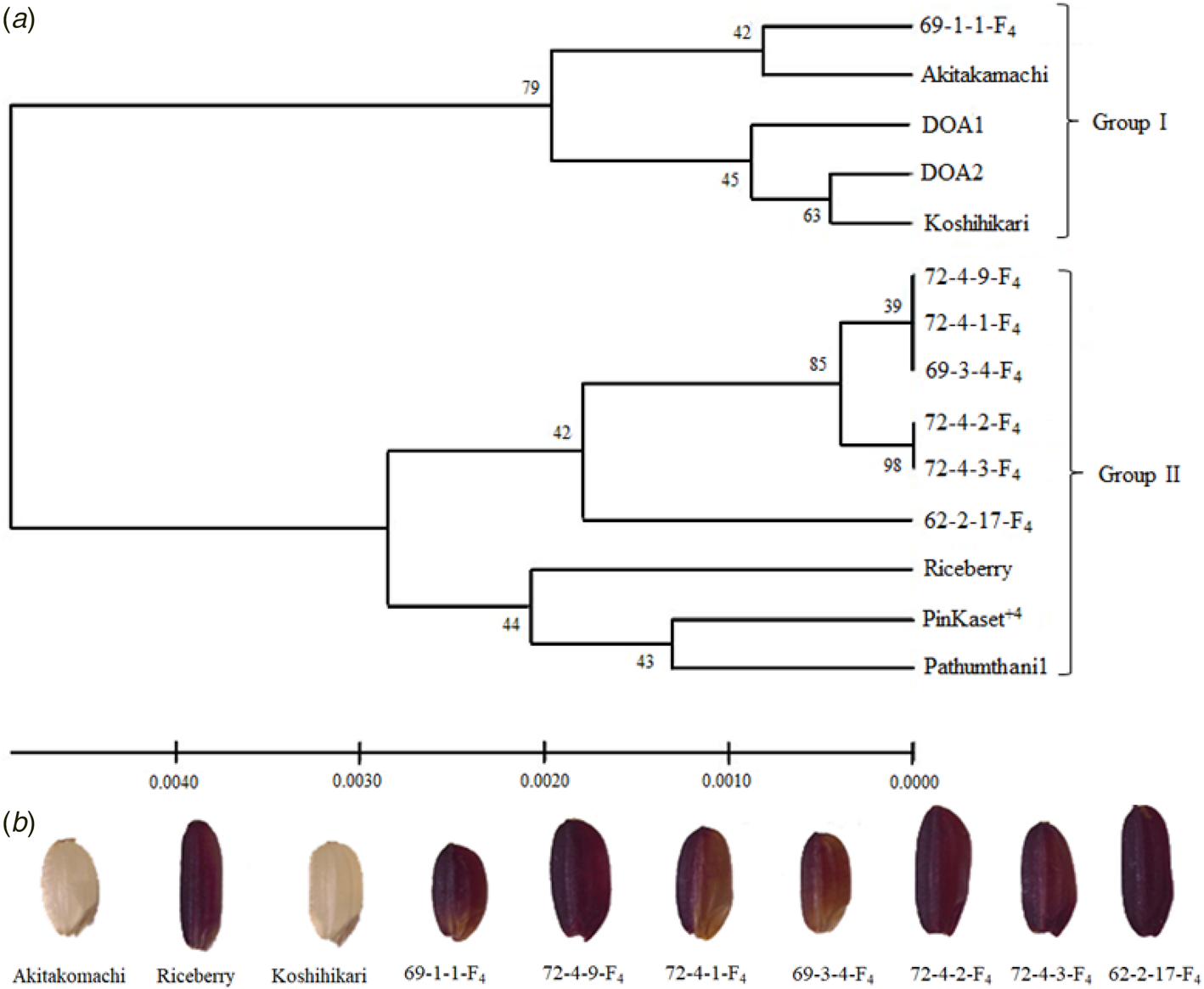
In the F4 generation, the seven selected lines were analysed by GBS for their genetic backgrounds together with their parents and control varieties. The phylogenetic tree was divided into two groups (Fig. 3). Group I contained one selected line (69-1-1) together with Akitakomachi, Sasanishiki, Koshihikari, DOA1 and DOA2. This group was clearly identified as a japonica type. In addition, the genetic background of Akitakomachi had closer relationships with 69-1-1. Group II contained Riceberry and the other indica varieties together with six selected lines. However, grain shape of 69-3-4, 72-4-1, 72-4-2, 72-4-3 and 72-4-9 were identified as short-medium grains. In contrast, only one line among the selected lines, 62-2-17, had a slender shape. Finally, the growth of three lines, 69-1-1, 72-4-3 and 72-4-9, was continued through the F5 generation (data not shown).
Phylogenetic tree (a) of the breeding lines in F4 and controlled varieties based on genotyping by sequencing. The phylogenetic tree was classified into two groups, and the numbers at the nodes indicate the percentages obtained with 1000 bootstrap replicates. The unpolished grains (b) of seven selected lines in F4 compared with their parents and Koshihikari.

Evaluations of agronomic traits and grain yield
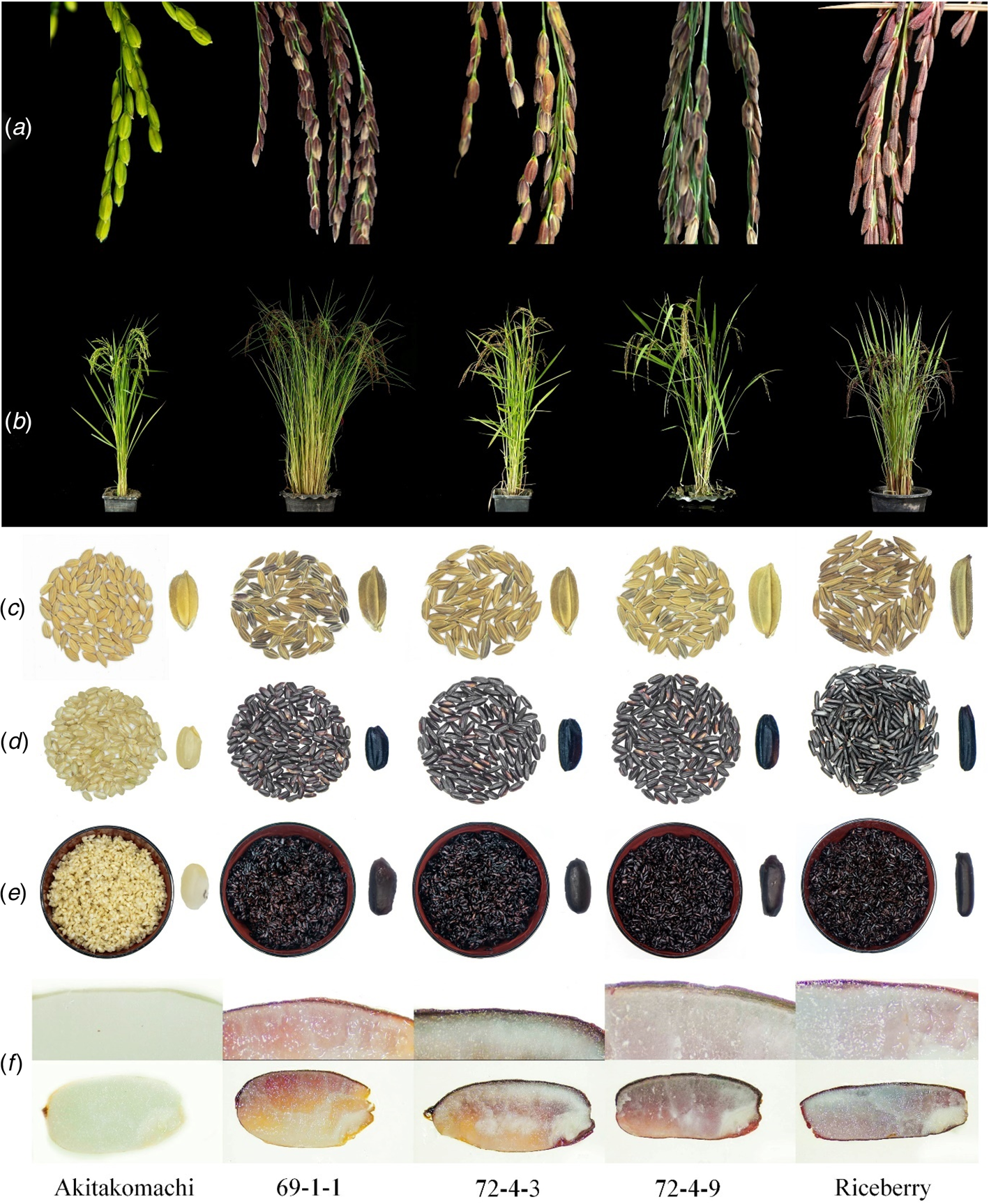
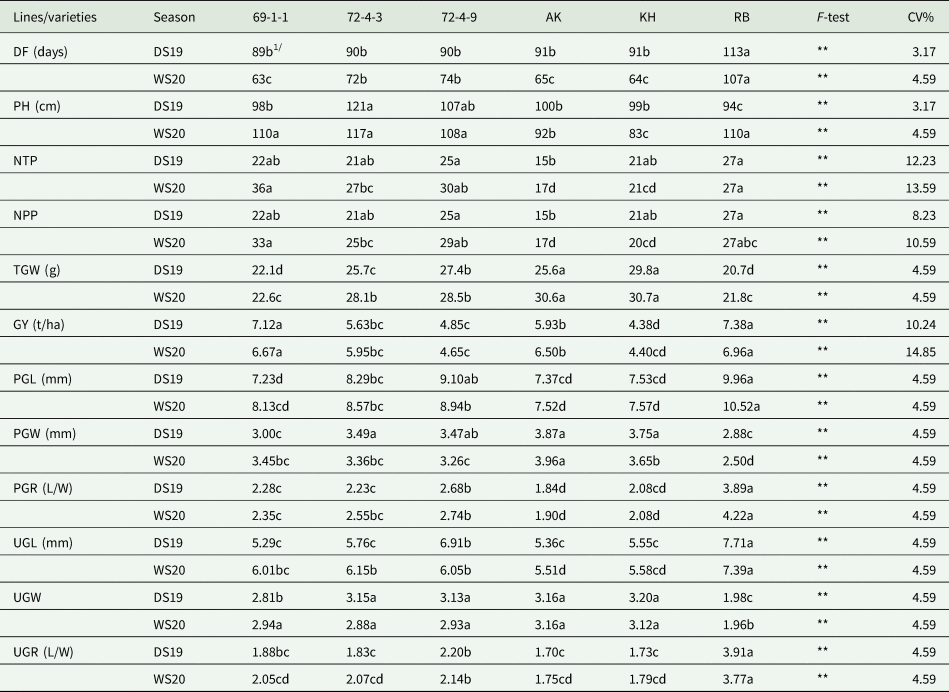
The yield trial experiment was conducted during a dry season 2019/2020 (DS19/20) (F6) and a wet season 2020 (WS20) (F7). The plant types of the candidate lines with their parents are shown in Fig. 4(a) and (b). The three candidate lines (69-1-1, 72-4-3 and 72-4-9) in F6 (DS19/20) and F7 (WS20) generations exhibited significant grain yield and agronomic traits among three lines and control varieties (P < 0.05), as shown in Table 1. The days to flowering periods of the candidate lines and japonica varieties were significantly shorter than that of Riceberry in both seasons.
Plant type (a and b), paddy grain (c), unpolished grain (d), cooked grain (e) and longitudinal section of unpolished grain (f) of the three candidate lines in the F7 generation compared with their parents in WS20.

Agronomic traits of the three candidate short grain lines compared with commercial varieties and their parents in DS19/20 (F6) and WS20 (F7)

DF, days to flower; PH, plant height; NTP, number of tillers per plant; NPP, number of panicles per plant; TGW, 1000 grain weight; GY, grain yield; PGL, paddy grain length; PGW, paddy grain width; PGR, paddy grain length/width ratio; UGL, unpolished grain length; UGW, unpolished grain width; UGR, unpolished grain length/width ratio.
Different letters in the same row indicate significant differences at the 0.05 level using LSD.
The grain yield of 69-1-1 was the highest in both DS19/20 (7.12 kg/ha) and WS20 (6.67 kg/ha), with a significant difference when compared with the other two lines, and the japonica control varieties. In addition, the numbers of tillers and panicles of 69-1-1 was higher than the other lines/varieties. However, the grain yield of 69-1-1 was not significantly different from that of Riceberry (Table 1). Hence, the grain yield of 69-1-1 showed the highest performance, similar to tropical indica, which can be grown in tropical climates. However, the grain weight of 69-1-1 was the lowest and was significantly different from those of 72-4-3, 72-4-9, Akitakomachi and Koshihikari, while it was not significantly different from Riceberry (Table 1).
The length-to-width ratios of unpolished grains in DS19/20, 69-1-1 and 72-4-3 were not significantly different from those in Akitakomachi and Koshihikari, and the ratios of these candidate lines were within the standard range for short grain rice (ratio < 2). However, the length-to-width ratios of 69-1-1 and 72-7-3 in WS20 were above the standard for short grain rice (ratio = 2.05), but the difference was not significant when compared with Akitakomachi and Koshihikari. Conversely, the length-to-width ratio of 72-4-9 was over the short grain standard and was significantly different from 69-1-1, 72-7-3, Akitakomachi and Koshihikari in both seasons (Table 1 and Fig. 4(c)–(e)). Therefore, in terms of grain yield, grain colour and grain shape, 69-1-1 was identified as a promising black short grain line.
Colour intensity
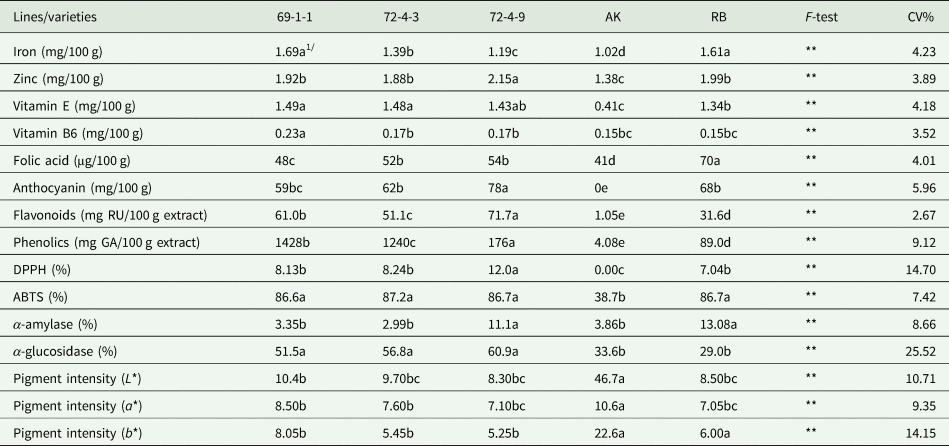
The colour intensity on the rice pericarp differed among the candidate lines and their parents, as shown in Table 2 and Fig. 4(d)–(f). The 72-4-3 and 72-4-9 were not significantly different from Riceberry and had the most intense colour, while 69-1-1 was slightly brighter than the other candidate lines and Riceberry.
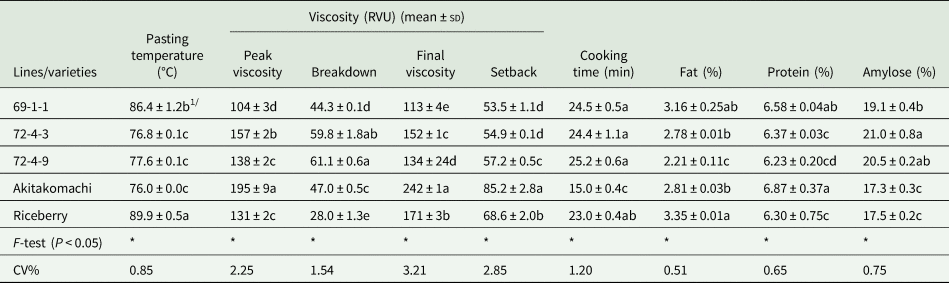
Rice cooking quality including flour properties and chemical compositions of the three candidate lines compared with their parents in WS20

Different letters in the same column indicate significant differences at the 0.05 level using LSD.
Sensory test and cooking quality
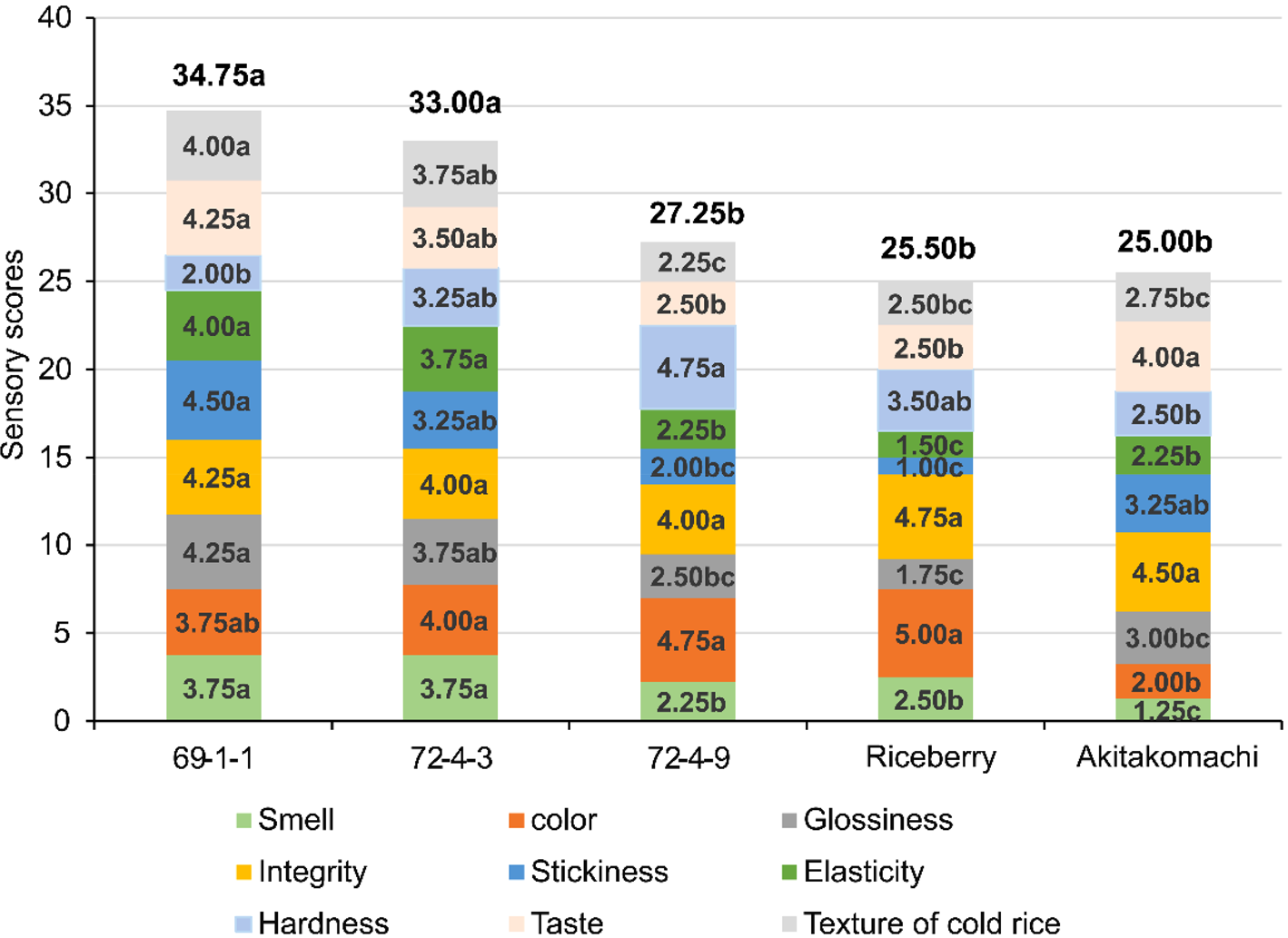
When each sensory item was considered, it was found that 69-1-1 and 72-4-3 had high scores and differed significantly from 72-4-9 and Riceberry in terms of smell, glossiness, stickiness, elasticity, taste and texture of cold rice, respectively, while the hardness scores of 69-1-1 and 72-4-3 were lower than that of 72-4-9 and were not significantly different from that of Akitakomachi (Fig. 5).
Sensory test results of the unpolished grains of the three candidate lines in the F7 generation compared with their parents in WS20.

The three candidate lines and Riceberry had the longest cooking times (23–25 min), while Akitakomachi (white colour grain) had a shorter cooking time (15 min). In addition, the amylose content of 69-1-1 (19.10%) was within the standard range for japonica rice (<20%). However, the amylose content of 69-1-1 was significantly higher than those of Akitakomachi (17.29%) and Riceberry (17.50%) (Table 3).
Nutrition concentration, phytochemical contents, antioxidant inhibitory effects and enzyme inhibitory activities of the three candidate lines compared with their parents in WS20

AK, Akitakomachi; RB, Riceberry.
Different letters in the same row indicate significant differences at the 0.05 level using LSD.
The pasting temperature (PT), peak viscosity (PV), breakdown (BD), final viscosity (FV) and setback (SB) of the rice flour samples were significantly different (P < 0.05) among the lines/varieties (Table 3). The PV, FV and SB of Akitakomachi were the highest, followed by those of the three candidate lines and Riceberry. Regarding PT values, the candidate lines had higher values than Akitakomachi but lower values than Riceberry. BD is usually related to the tendency of gelatinized starch granules to break when holding at high temperature with continuous shearing. The BDs of two candidate lines (72-4-9 and 72-4-3) were not significantly different (59.79-61.12 RVU), and those two lines had the highest BD values among the examined lines/varieties. Conversely, the BD of 69-1-1 (44.29 RVU) was the lowest among the candidate lines but higher than that of Riceberry.
Nutritional values and antioxidant and antidiabetic activities
The protein contents of the candidate lines and control varieties were significantly different (P < 0.05). The rice flour from Akitakomachi and 69-1-1 had the highest protein content (6.87 and 6.58%). However, the protein contents of all lines/varieties in this study were within ranges previously reported for rice (5–8%) (Table 3).
The results of the nutrition analysis are shown in Table 2. The unpolished grain of 72-4-9 had the highest total anthocyanin content (78 mg/100 g), which was significantly different from that of Riceberry (68 mg/100 g), while the anthocyanin contents of 72-4-3 and 69-1-1 were 62 and 59 mg/100 g, respectively. In addition, 69-1-1 showed the highest nutrient concentrations in two categories (Fe and Vit B6), while 72-4-9 had the highest nutrient concentrations for Zn category.
Candidate line 72-4-9 showed the highest contents of flavonoids and phenolics (71.65 ± 1.79 mg RUE/100 g extract and 176.45 ± 16.30 mg GAE/100 g extract, respectively), followed by 69-1-1 (61.03 ± 1.14 mg RUE/100 g extract and 141.88 ± 6.62 mg GAE/100 g extract, respectively). Moreover, 72-4-3 also showed higher concentrations of flavonoids and phenolics than Riceberry and Akitakomachi (Table 2).
The results of antioxidant activity assays showed that the candidate line 72-4-9 presented the strongest inhibition of DPPH (11.99%) among the lines/varieties, while 69-1-1 (8.13%) and 72-4-3 (8.24%) had an inhibitory effect on DPPH similar to that of Riceberry (7.04%). In terms of ABTS radical scavenging inhibition, all candidate lines, 69-1-1, 72-4-3 and 72-4-9, showed strong inhibitory activities of more than 80% and a similar inhibitory effect on ABTS to Riceberry (Table 2).
The α-amylase activity assay showed that the water extracts of Riceberry and 72-4-9 (13.08 and 11.10%) had higher capacity to inhibit α-amylase than the two other candidate lines and Akitakomachi. In the case of α-glucosidase inhibition, it was found that all candidate lines (51.52–60.93%) showed stronger inhibitory activity than Riceberry and Akitakomachi (Table 2).
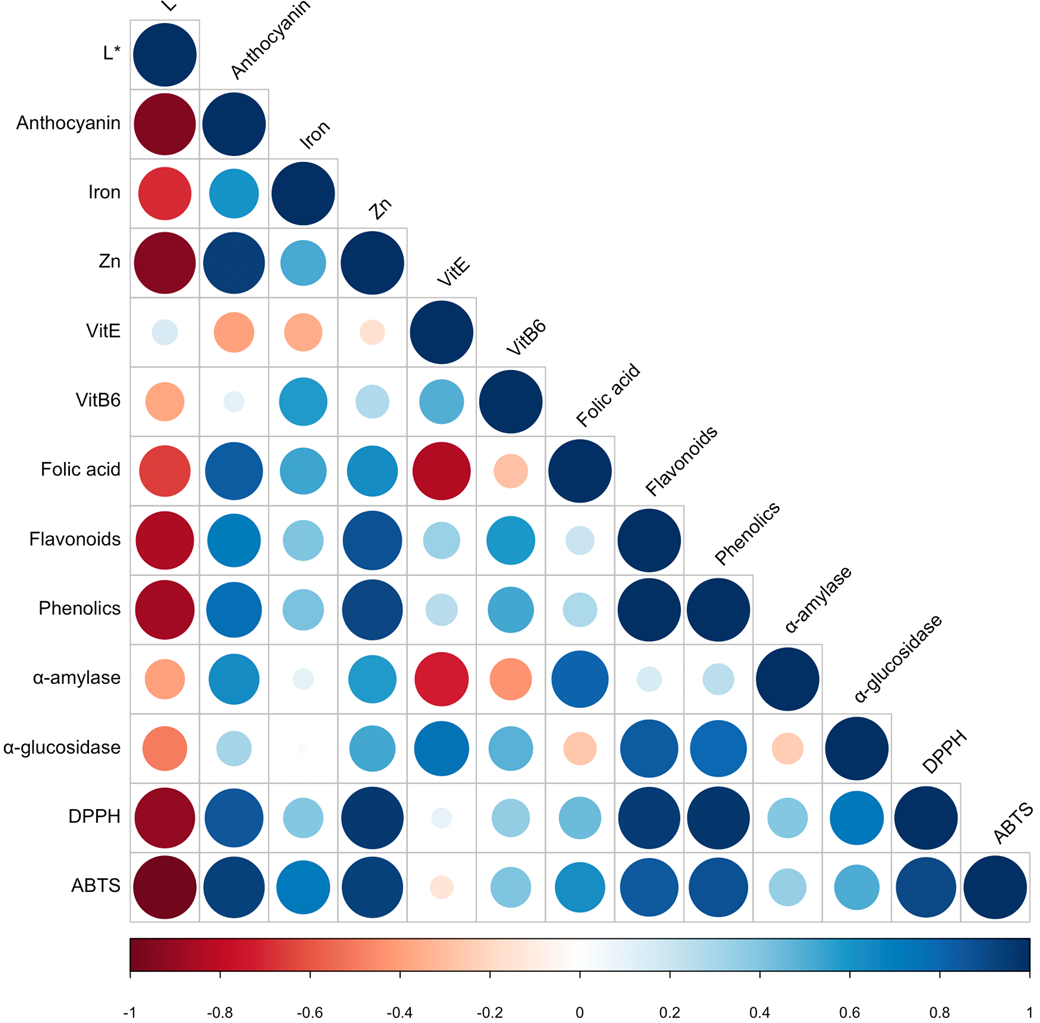
When considering the correlation analysis (Fig. 6), it was found that the intensity of grain colour (L*) was highly negatively correlated with anthocyanin, zinc, flavonoid and phenolic levels and antioxidation activities (DPPH, ABTS). Conversely, the anthocyanin content was highly positively correlated with zinc, folic acid, flavonoid and phenolic levels and α-amylase and antioxidation activities.
Correlation coefficients (r) among colour intensity (L*), nutrition, phytochemical, antioxidant and antidiabetic activity. L*, degree of lightness or darkness; Zn, zinc; VitE, vitamin E; VitB6, vitamin B6; DPPH, 2,2-diphenyl-1-picrylhydrazyl; ABTS, 2,2′-azino-bis (3-ethylbenzothiazoline-6-sulfonic acid).

Discussion
The segregation of colour in pericarp and grain size
The colour segregation analysis in F2 progenies from Riceberry (black colour) × Akitakomachi (white colour) showed the same results as many researchers (Rahman et al., Reference Rahman, Lee, Lee, Matin, Lee, Yun, Kim and Kang2013; Maeda et al., Reference Maeda, Yamaguchi, Omoteno, Takarada, Fujita, Murata, Iyama, Kojima, Morikawa, Ozaki, Mukaino, Kidani and Ebitani2014; Lee et al., Reference Lee, Rahman, Kim and Kang2018) reported that the character of black pigment is controlled by two complementary dominant genes, Pb and Pp, with recessive epistasis (9:3:4). The black pigment gene of rice is perfectly dominant, and its activity is higher than the parent with black pericarp pigment (Maeda et al., Reference Maeda, Yamaguchi, Omoteno, Takarada, Fujita, Murata, Iyama, Kojima, Morikawa, Ozaki, Mukaino, Kidani and Ebitani2014; Kristamtini et al., Reference Kristamtini, Taryono, Basunanda and Murti2019). However, in the black and brown colour groups, there was also variation in colour intensity. This may suggest that the colour of the rice pericarp is controlled by other genes in the pathway of anthocyanin synthesis (Xia et al., Reference Xia, Zhou, Wang, Li, Fu, Wu and He2021). However, the purple pigmentation in the pericarp is an easily observable and selective feature that does not require MAS.
The segregation of grain size was controlled by quantitative genetics that combines grain length, grain width and grain thickness characteristics (Ponce et al., Reference Ponce, Zhang, Guo, Leng and Ye2020). Lu et al. (Reference Lu, Li, Xiao, Wang, Zhang, Deng and Tang2023) reported that the size of rice grains is coordinately controlled by cell proliferation and cell expansion in the spikelet hull and identified several quantitative trait loci and a number of genes as key grain size regulators. However, the GRAIN SIZE3 (GS3) gene was the first molecularly characterized QTL for grain size and is used as the major QTL to identify grain length differences between indica and japonica types (Fan et al., Reference Fan, Xing, Mao, Lu, Han, Xu, Li and Zhang2006). Thus, GS3 could be used as MAS to identify grain size in this breeding programme.
Agronomic and environmental factors
Japonica rice is suitable for cultivation in mid-latitude regions (between 53° N and 36° S latitudes) at lower temperatures and under longer days than in tropical areas (Khush, Reference Khush1997; Zhou et al., Reference Zhou, Jin, Song and Yan2021). In this research, the breeding lines were bred and the yield trials were conducted at a longitude of 19 N and a latitude of 99 E under 26.8/23.1°C mean day/night temperatures and day length was not more than 12 h over 5 years. Interestingly, the 69-1-1 showed a high grain yield similar to that of indica variety ‘Riceberry’, although the flowering day was the same as those of temperate japonica varieties. Therefore, rice plants genetically belonging to temperate japonica varieties can be bred to adapt to tropical region by introgressing indica genetically into breeding lines (Negrao et al., Reference Negrao, Oliveira, Jena and Mackill2008; Saichompoo et al., Reference Saichompoo, Narumol, Nakwilai, Thongyos, Nanta, Tippunya, Ruengphayak, Itthisoponkul, Bueraheng, Cheabu and Malumpong2021).
Grain and cooking quality
Amylose is one of the components of rice starch that greatly affects cooking and eating qualities (Karim et al., Reference Karim, Abuhena, Hossain and Billah2024). Generally, the amylose content of Japonica rice starch ranges from 0 to 20% (Luo et al., Reference Luo, Cheng, Zhang, Shu, Wang, Shu, Wang and Zeng2021). In this study, an amylose content of less than 20% among the candidate lines was found only in 69-1-1 (19.10%). In addition, the unpolished grain size ratio of the promising line 69-1-1 was within the standard for japonica grain shape (ratio < 2) (Juliano and Villareal, Reference Juliano and Villareal1993). However, the grain weights of the three breeding lines were lower than those of japonica white rice because anthocyanin deposition in the pericarp of black rice reduced the photosynthetic rate (Rahman et al., Reference Rahman, Lee and Kang2015).
The sensory quality of cooked rice is an important factor in determining its market price, as well as consumer acceptance and breeding efforts to improve rice grain quality (Xu et al., Reference Xu, Ying, Ouyang, Duan, Sun, Jiang, Sun and Bao2018). In this study, the 69-1-1 and 72-4-3 had higher scores for overall sensory quality which were lower protein content (6.23–6.58%) than the mean of unpolished rice grain (8%) (Mahender et al., Reference Mahender, Anandan, Pradhan and Pandit2016). In addition, both lines showed low hardness and high stickiness scores in the sensory analysis. The results were consistent with the findings of Xu et al. (Reference Xu, Ying, Ouyang, Duan, Sun, Jiang, Sun and Bao2018), who suggested that the overall sensory quality is negatively correlated with protein content and positively correlated with hardness and stickiness. In addition, the stickiness after cooking is due to the low amylose content (Juliano, Reference Juliano and Champagne1985) and the wxb and SSIIa genes that are critical genes to control amylose content (Saichompoo et al., Reference Saichompoo, Narumol, Nakwilai, Thongyos, Nanta, Tippunya, Ruengphayak, Itthisoponkul, Bueraheng, Cheabu and Malumpong2021) were presented in the candidate lines.
The pasting properties of rice flour are related to the cooking and eating quality of rice. The differences in pasting properties among rice varieties in this research could be attributed to differences in the amounts of amylose, lipids and branch chain-length distribution of amylopectin present in rice starch (Singh et al., Reference Singh, Kaur, Sandhu, Kaur and Nishinari2006). Due to the lipid content, the paste viscosity of 69-1-1 was found to be lower than that of the other lines. Starches with a high lipid content can form a rigid network of structures in granules due to amylose–lipid complexation, causing a restriction of granule swelling and resulting in a higher pasting temperature (Becker et al., Reference Becker, Hill and Mitchell2001). Moreover, the formation of amylose–lipid complexes may have prevented amylose from leaching out, resulting in a reduction in the hot paste viscosity (Richardson et al., Reference Richardson, Kidman, Langton and Hermansso2004).
The pasting and chemical properties of Akitakomachi were quite different from those of the breeding lines. This observation might be explained by a characteristic difference between japonica- and indica-type rice in terms of the different branch-chain lengths of their amylopectin molecules. The amylopectin of japonica rice has a larger proportion of short-branch chains than that of indica rice (Kang et al., Reference Kang, Hwang, Kim and Choi2006), and short-branch chains in amylopectin behave in a manner similar to amylose by restricting starch swelling, resulting in high PV, FV and SB values (Jane et al., Reference Jane, Chen, Lee, McPherson, Wong, Radosavljevic and Kasemsuwan1999). Overall, the differences in pasting properties among different genotypes are attributed to protein, lipid and amylose contents, granule rigidity and starch crystallinity. Therefore, pasting profiles associated with chemical content will provide a baseline for the selection of cooking and eating quality grain for further development. In addition, the pasting properties of 69-1-1 were closer with indica parent than those of japonica parent.
Nutritional value and antioxidant and antidiabetic activities
The anthocyanin content in black rice pericarp also varies depending on the rice cultivars (Jiamyangyuen et al., Reference Jiamyangyuen, Nuengchamnong and Ngamdee2017). Kushwaha et al. (Reference Kushwaha, Deo, Singh, Tripathi, Costa de Oliveira, Pegoraro and Viana2020) reported that temperate climate could favour the rise in grain's anthocyanin content than the warm climate. In addition, it was also found that as the colour intensity increased, the anthocyanin content also increased (Machon et al., Reference Machon, Mackon, Ma, Kashif, Ali, Usman and Liu2021). Moreover, the colour intensity had affected the anthocyanin content in rice pericarp. Therefore, the breeding procedure for anthocyanin content from indica black rice x japonica white rice by phenotypic selection using colour intensity was successful in obtaining new breeding lines that had similar total anthocyanin contents to the black-grained parent.
Most of the nutrients found in rice grain accumulate in the outer aleurone layer and the embryo (Mbanjo et al., Reference Mbanjo, Kretzschmar, Jones, Ereful, Blanchard, Boyd and Sreenivasulu2020). The standardization of unpolished rice grains has resulted in ranges of 1.4–5.2 mg/100 g of iron, 1.9–2.8 mg/100 g of zinc, 0.80–2.50 mg/100 g of vitamin E, 0.50–0.70 mg/100 g of vitamin B6 and 16–20 μg/100 g of folate (Juliano, Reference Juliano, Caballero, Finglas and Toldra2016). Therefore, the three candidate lines in this study were within the standard levels. In addition, the correlation analysis in this study confirmed the results of Gao et al. (Reference Gao, Hoffland, Stomph, Grant, Zou and Zhang2012) who reported that the colour intensity was positively correlated with iron, zinc and folic acid contents. Other studies have suggested that pigmented rice contains higher levels of iron and zinc than white grain (Shao et al., Reference Shao, Hu, Yu, Mou, Zhu and Beta2018).
Total flavonoids and phenolics are natural bioactive compounds in plants that can indicate their potential for use as therapeutic agents and in controlling the quality of medicinal sources. They can also function as free radical-scavenging and reducing agents (Tungmunnithum et al., Reference Tungmunnithum, Thongboonyou, Pholboon and Yangsabai2018). In this research, the contents of phenolics, flavonoids and anthocyanins were negatively correlated with L* colour intensity values, in accord with previous findings (Goufo and Trindade, Reference Goufo and Trindade2014). However, the total antioxidant activity of black rice bran was correlated with the contents of total anthocyanins, total phenolics and total flavonoids (Goufo and Trindade, Reference Goufo and Trindade2014), which were determined in the same way as in this research.
Extracts of black rice grain have been shown to effectively inhibit the activities of endogenous α-amylase and α-glucosidase, thereby inhibiting the conversion of starch to glucose in the small intestine, which acts as a source of resistant starch utilized by the gut microbiota in the colon (Chiou et al., Reference Chiou, Lai, Liao, Sung and Lin2018). All black and red bran extracts inhibit α-glucosidase activity; however, only red rice bran extracts inhibit α-amylase activity (Wongsa et al., Reference Wongsa, Chaiwarith, Voranitikul, Chaiwongkhajorn, Rattanapanone and Lanberg2019). In this study, α-glucosidase had the greatest correlation with anthocyanin content. However, α-amylase activity was not correlated with anthocyanin content that was different from those of Wongsa et al. (Reference Wongsa, Chaiwarith, Voranitikul, Chaiwongkhajorn, Rattanapanone and Lanberg2019).
Conclusion
A breeding programme for obtaining black colour, short grain with high nutritional and phytochemical values can provide a promising line for growth in tropical climate that combines tropical adaptability with high yield and high nutritional value from tropical indica rice (Riceberry) and short grain with good cooking and eating quality from temperate japonica rice (Akitakomachi). Finally, the promising 69-1-1 line has undergone short grain rice breeding with the same yield as indica black rice together with high anthocyanin content and good cooking and eating quality according to Japanese food standards.
Supplementary material
The supplementary material for this article can be found at https://doi.org/10.1017/S0021859625000048
Author contributions
Chanate Malumpong: conceived and designed the experiment, wrote the manuscript; Possawat Narumon: field experiment and data collection; Uthomphon Saichompoo: laboratory experiment and data collection; Peeranut Tongyos: field experiment and data collection; Aekchupong Nanta: field experiment and data collection; Patompong Tippunya: field experiment and data collection; Jamnian Chompoo: contributed data and analysis tools, performed the analysis; Teerarat Itthisoponkul: contributed data and analysis tools, performed the analysis; Sulaiman Cheabu: designed the experiment, wrote the manuscript.
Funding statement
Tana group international Co. Ltd, Thailand.
Competing interests
None.