Introduction
Growing evidence suggests that inflammation may play an important role in the aetiology of psychotic disorders, such as schizophrenia (SZ) and bipolar disorder (BD) (Goldsmith et al., Reference Goldsmith, Rapaport and Miller2016). Exposure to childhood trauma is also a significant risk factor for the later development of psychotic disorders (Varese et al., Reference Varese, Smeets, Drukker, Lieverse, Lataster, Viechtbauer, Read, van Os and Bentall2012; Matheson et al., Reference Matheson, Shepherd, Pinchbeck, Laurens and Carr2013; McGrath et al., Reference McGrath, Saha, Lim, Aguilar-Gaxiola, Alonso, Andrade, Bromet, Bruffaerts, Caldas de Almeida, Cardoso, de Girolamo, Fayyad, Florescu, Gureje, Haro, Kawakami, Koenen, Kovess-Masfety, Lee, Lepine, McLaughlin, Medina-Mora, Navarro-Mateu, Ojagbemi, Posada-Villa, Sampson, Scott, Tachimori, Ten Have, Kendler and Kessler2017), and has been demonstrated to play a significant role in the dysregulation of the immune system in adulthood (Coelho et al., Reference Coelho, Viola, Walss-Bass, Brietzke and Grassi-Oliveira2014; Baumeister et al., Reference Baumeister, Akhtar, Ciufolini, Pariante and Mondelli2016). Although sexual abuse has been reported as a significant risk factor for psychotic symptoms (Cutajar et al., Reference Cutajar, Mullen, Ogloff, Thomas, Wells and Spataro2010), all types of trauma have been implicated in their development (Varese et al., Reference Varese, Smeets, Drukker, Lieverse, Lataster, Viechtbauer, Read, van Os and Bentall2012). Recent meta-analytical work provided evidence for increased levels of circulating interleukin 6 (IL-6), tumour necrosis factor-α (TNF-α) and C-reactive protein (CRP) in individuals exposed to childhood trauma (Coelho et al., Reference Coelho, Viola, Walss-Bass, Brietzke and Grassi-Oliveira2014; Baumeister et al., Reference Baumeister, Akhtar, Ciufolini, Pariante and Mondelli2016). However, to the best of our knowledge, no study has investigated associations between specific types of trauma exposures and peripheral inflammatory markers in BD and SZ cases, in the same study.
Numerous reviews (Potvin et al., Reference Potvin, Stip, Sepehry, Gendron, Bah and Kouassi2008; Bergink et al., Reference Bergink, Gibney and Drexhage2014; Miller et al., Reference Miller, Culpepper and Rapaport2014; Rodrigues-Amorim et al., Reference Rodrigues-Amorim, Rivera-Baltanas, Spuch, Caruncho, Gonzalez-Fernandez, Olivares and Agis-Balboa2017) and meta-analyses (Miller et al., Reference Miller, Buckley, Seabolt, Mellor and Kirkpatrick2011; Modabbernia et al., Reference Modabbernia, Taslimi, Brietzke and Ashrafi2013; Fernandes et al., Reference Fernandes, Steiner, Bernstein, Dodd, Pasco, Dean, Nardin, Goncalves and Berk2016a, Reference Fernandes, Steiner, Molendijk, Dodd, Nardin, Goncalves, Jacka, Kohler, Karmakar, Carvalho and Berk2016b; Goldsmith et al., Reference Goldsmith, Rapaport and Miller2016) attest to the consistent association between inflammatory markers and psychosis. These studies report higher peripheral levels of inflammation in both BD and SZ patients, compared with healthy controls (HC). In particular, higher levels of IL-6, TNF-α and CRP have been reported in first-episode psychosis (FEP) patients, and levels of IL-6 and TNF-α are consistently elevated in both acutely and chronically ill SZ cases (Fernandes et al., Reference Fernandes, Steiner, Bernstein, Dodd, Pasco, Dean, Nardin, Goncalves and Berk2016a; Goldsmith et al., Reference Goldsmith, Rapaport and Miller2016). Importantly, high levels of CRP and TNF-α are not affected by antipsychotic medication and represent a state marker of SZ (Davis et al., Reference Davis, Maes, Andreazza, McGrath, Tye and Berk2015; Fernandes et al., Reference Fernandes, Steiner, Bernstein, Dodd, Pasco, Dean, Nardin, Goncalves and Berk2016a), while levels of IL-6 fluctuate with antipsychotic use (Miller et al., Reference Miller, Buckley, Seabolt, Mellor and Kirkpatrick2011). In BD cohorts, IL-6 and CRP (but not TNF-α) appear increased during acute mania (Fernandes et al., Reference Fernandes, Steiner, Molendijk, Dodd, Nardin, Goncalves, Jacka, Kohler, Karmakar, Carvalho and Berk2016b; Goldsmith et al., Reference Goldsmith, Rapaport and Miller2016), while IL-6 and TNF-α (but not CRP) were elevated in chronically ill participants during the euthymic phase but not during a depressive phase (Goldsmith et al., Reference Goldsmith, Rapaport and Miller2016). In contrast, no increase of CRP levels has been reported during depressive or euthymic phases (Fernandes et al., Reference Fernandes, Steiner, Molendijk, Dodd, Nardin, Goncalves, Jacka, Kohler, Karmakar, Carvalho and Berk2016b). Nevertheless, these studies only compared clinical participants to healthy individuals, but no previous study has investigated the difference in peripheral markers of inflammation between SZ and BD.
There is also accumulating evidence for an association between exposure to childhood maltreatment and increased levels of inflammatory markers, independent of the diagnoses of the samples studied (Coelho et al., Reference Coelho, Viola, Walss-Bass, Brietzke and Grassi-Oliveira2014; Baumeister et al., Reference Baumeister, Akhtar, Ciufolini, Pariante and Mondelli2016). In particular, a recent meta-analysis of 25 studies by Baumeister et al. (Reference Baumeister, Akhtar, Ciufolini, Pariante and Mondelli2016) shows that sexual abuse is typically associated with small elevations in TNF-α (Fisher's z = 0.24), but not CRP or IL-6 levels (all Fisher's z⩽0.08), and that exposure to physical abuse is associated with small elevations of TNF-α (Fisher's z = 0.25) and IL-6 (Fisher's z = 0.08), but not CRP levels (Fisher's z = 0.01). In contrast, exposure to emotional abuse was not associated with changes in CRP or IL-6, although the number of studies included was relatively small.
Only a few studies have investigated the potential association between childhood trauma exposure and levels of circulatory pro-inflammatory cytokines in psychotic populations. In a study of FEP patients, higher levels of TNF-α (but not IL-6) were demonstrated in participants exposed to childhood trauma, compared with non-exposed FEP patients in the context of elevated levels of IL-6 and TNF-α in FEP cases vs. HC (Di Nicola et al., Reference Di Nicola, Cattaneo, Hepgul, Di Forti, Aitchison, Janiri, Murray, Dazzan, Pariante and Mondelli2013). Similarly, another study has reported that only FEP cases exposed to childhood trauma presented with higher levels of CRP when compared with a HC group, but not when compared with the non-exposed FEP sample (Hepgul et al., Reference Hepgul, Pariante, Dipasquale, DiForti, Taylor, Marques, Morgan, Dazzan, Murray and Mondelli2012). In a study of chronic SZ cases, elevated levels of IL-6 and TNF-α were reported in trauma-exposed cases compared with a healthy (non-exposed) control group; only higher TNF-α (but not IL-6) levels were seen in trauma-exposed SZ cases when compared with the non-exposed SZ group (Dennison et al., Reference Dennison, McKernan, Cryan and Dinan2012). Finally, elevated CRP levels [but not levels of glycoprotein 130 (gp130), an IL-6 antagonist] were associated with the number of abuse types (emotional, physical or sexual abuse) in a large sample of cases with mixed diagnoses of SZ or BD (Aas et al., Reference Aas, Dieset, Hope, Hoseth, Morch, Reponen, Steen, Laskemoen, Ueland, Aukrust, Agartz, Andreassen and Melle2017), and a study of females with chronic BD showed that exposure to sexual abuse was associated with elevated levels of CRP (Moraes et al., Reference Moraes, Maes, Barbosa, Ferrari, Uehara, Carvalho and Nunes2017).
Based on this literature, the aim of this study was to identify potential associations between the severity of childhood trauma exposure (specifically for the individual domains of emotional, physical and sexual abuse, as well as emotional and physical neglect) and levels of peripheral inflammatory markers (IL-6, TNF-α, CRP) in clinical cases with diagnoses of BD, SZ (separately or combined) and HC. We hypothesised that (i) clinical cases would display elevated levels of inflammatory markers relative to controls regardless of the severity of trauma exposure, (ii) the SZ group would display higher levels of cytokines compared with the BD group, and (iii) greater severity of childhood trauma exposure, especially physical and sexual abuse, would be associated with increased IL-6, TNF-α and CRP levels in all groups.
Methods
All participants were volunteers and provided informed consent according to procedures approved by the Human Research Ethics committees of the University of New South Wales (HC12384), the South East Sydney and Illawarra Area Health Service (HREC 09/081) and St Vincent's Hospital (HREC/10/SVH/9).
Participants
Participants were 137 clinical cases meeting the ICD-10 criteria (W.H.O., 2008) for SZ (n = 42) or schizoaffective disorder (n = 26), together referred to as the SZ group (n = 68), or bipolar-I disorder (BD, n = 69; all with a lifetime history of psychosis), and 72 HC aged between 18 and 65 years old. Participants were recruited from the Sydney Bipolar Disorders Clinic (Mitchell et al., Reference Mitchell, Johnston, Corry, Ball and Malhi2009), the Australian Schizophrenia Research Bank (Loughland et al., Reference Loughland, Draganic, McCabe, Richards, Nasir, Allen, Catts, Jablensky, Henskens, Michie, Mowry, Pantelis, Schall, Scott, Tooney and Carr2010), local community health services and via local community advertisement. Clinical diagnoses were confirmed using the OPCRIT algorithm (McGuffin and Farmer, Reference McGuffin and Farmer1991) applied to interviewer ratings on the Diagnostic Interview for Psychosis criteria (Castle et al., Reference Castle, Jablensky, McGrath, Carr, Morgan, Waterreus, Valuri, Stain, McGuffin and Farmer2006). Exclusion criteria included any inability to communicate sufficiently in English, current neurological disorder, life-time head injury with loss of consciousness, substance abuse or dependence in the past 6 months, and having received electro-convulsive therapy within the past 6 months. Participants from the HC group additionally had no personal or family history of psychotic or mood disorder according to the Mini-International Neuropsychiatric Interview (Sheehan et al., Reference Sheehan, Lecrubier, Sheehan, Amorim, Janvas, Weiller, Hergueta, Baker and Dunbar1998).
Assessments
Current symptom severity was determined using the Positive and Negative Syndrome Scale (PANSS; Kay et al., Reference Kay, Opler and Lindenmayer1989), the Depression, Anxiety and Stress Scale (DASS-21; Lovibond and Lovibond, Reference Lovibond and Lovibond1995), the Montgomery–Åsberg Depression Rating Scale (MADRS; Montgomery and Asberg, Reference Montgomery and Asberg1979), the Young Mania Rating Scale (YMRS; Young et al., Reference Young, Biggs, Ziegler and Meyer1978) and the Bipolar Depression Rating Scale (BDRS; Berk et al., Reference Berk, Malhi, Cahill, Carman, Hadzi-Pavlovic, Hawkins, Tohen and Mitchell2007). Participants also completed the Wechsler Abbreviated Scale of Intelligence (WASI; Wechsler, Reference Wechsler1999) to determine intellectual quotient (IQ) levels. Current medication dosages for a range of pharmacological agents were converted to chlorpromazine (CPZ) equivalent dosages for antipsychotic drugs and imipramine (IMI) equivalent dosages for antidepressants (Leucht et al., Reference Leucht, Wahlbeck, Hamann and Kissling2003; Woods, Reference Woods2003); due to the inability to determine mood-stabiliser equivalent dosages, the number of cases using carbamazepine, lithium, lamotrigine or valproate was also recorded.
Childhood trauma
Exposure to childhood trauma was measured using the short form (25 items) of the Childhood Trauma Questionnaire (CTQ; Bernstein et al., Reference Bernstein, Stein, Newcomb, Walker, Pogge, Ahluvalia, Stokes, Handelsman, Medrano, Desmond and Zule2003). The CTQ is a self-report questionnaire that retrospectively measures domains of emotional, physical and sexual abuse, as well as physical and emotional neglect. For each domain, a score is calculated from five items rated on a five-point Likert scale ranging from 1 (never true) to 5 (very often true). The total score for each domain was used for the regression analyses.
Cytokine assays
Levels of IL-6 (in pg/ml), TNF-α (in pg/ml) and CRP (in ng/ml) were determined using high-sensitivity enzyme-linked immunosorbent assays (human Quantikine ELISA, R&D Systems, Minneapolis, MN, USA) according to manufacturer's instructions at the Metabolic Research Unit, School of Medicine, Deakin University (Geelong, VIC, Australia). Participants with CRP concentrations superior to 10 000 ng/ml, a marker of acute inflammation, were excluded from analyses (N = 13). The Kolmogorov–Smirnoff tests indicated that levels of IL-6, CRP and TNF-α did not follow a normal distribution. Decimal logarithmic transformations were applied, resulting in the three analytes following a normal distribution. Therefore, all analyses were performed on transformed Log10 IL-6, Log10 TNF-α and Log10 CRP concentrations. Intra- and inter-assay coefficients of variation for all analytes were below 10% (respectively for IL-6: 3.99 and 6.21, for TNF-α: 3.61 and 6.01, and for CRP: 2.76 and 3.73). Finally, across the whole sample, all analytes were strongly correlated (IL-6 and TNF-α: r = 0.425, p < 0.001; IL-6 and CRP: r = 0.476, p < 0.001; TNF-α and CRP: r = 0.363, p < 0.001).
Analyses
Descriptive statistics were performed using SPSS 24 (IBM). Group differences in sociodemographic and clinical characteristics, including group differences in exposure to different types of childhood trauma endorsed on the CTQ, were firstly examined using one-way analyses of variance (ANOVAs). Next, group differences (first between HC, BD and SZ diagnoses, and second between the HC group and the pooled group of cases with SZ or BD) in inflammatory markers were investigated using a series of ANOVAs comparing the serum levels of each analyte (Log10 IL-6, Log10 TNF-α, Log10 CRP) separately. Statistical significance was set at a threshold of p < 0.05 (two-tailed), to which a false-discovery rate (FDR) correction was applied to account for the number of analytes studied (q < 0.05) (Benjamini and Hochberg, Reference Benjamini and Hochberg1995). The potential associations between childhood trauma exposures and levels of the three cytokines were then investigated within each group (HC, BD, SZ and pooled SZ/BD cases) using a series of multiple hierarchical linear regressions with the concentrations of each analyte (Log10 IL-6, Log10 TNF-α, Log10 CRP separately) used as the dependent variable. In these trauma-focused analyses, age and sex were entered in a first step as covariates for all groups; symptom severity (PANSS total score) as well as medication equivalent dosages (IMI and CPZ) and mood stabilisers use were also added as covariates for analyses within the clinical samples. Scores for each CTQ domain (emotional, physical, sexual abuse and emotional and physical neglect) were entered together as independent variables in a second step. For each model within each group, statistical significance was set at an initial threshold of p < 0.05, to which an FDR correction was applied to account for the number of cytokines studied within each group (q < 0.05) (Benjamini and Hochberg, Reference Benjamini and Hochberg1995).
Results
Sample characteristics
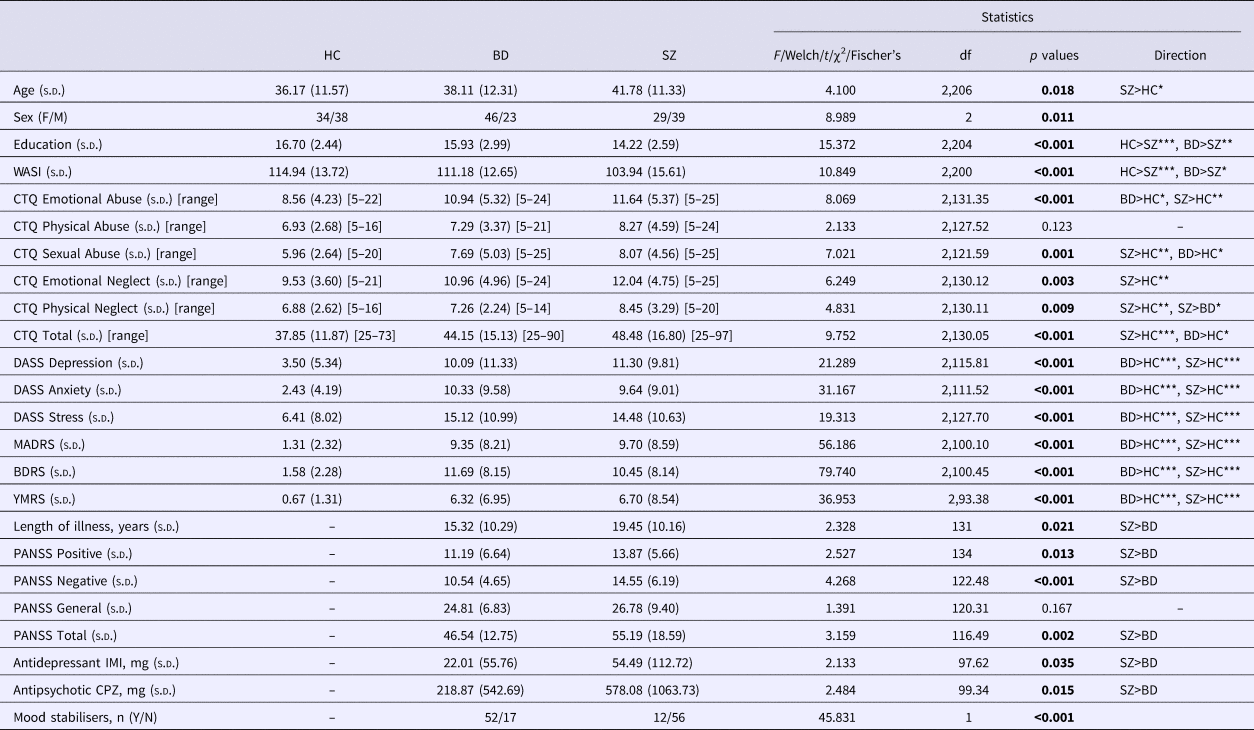
Table 1 summarises the sociodemographic and clinical characteristics of the sample. Briefly, the SZ group was significantly older than the HC group (p = 0.014, d = 0.48), was less educated and reported lower IQ levels than both the HC (education: p < 0.001, d = 0.99; IQ: p < 0.001, d = 0.75), and BD (education: p = 0.001, d = 0.61; IQ: p = 0.010, d = 0.51) groups. The sex distribution also differed significantly between groups (χ2 = 8.928, p = 0.012); there were more females than males in the BD group, and more males than females in the SZ group. Both the BD and SZ groups reported higher levels of depression (BD: p < 0.001, d = 0.74; SZ: p < 0.001, d = 0.99), anxiety (BD: p < 0.001, d = 1.07; SZ: p < 0.001, d = 1.03) and stress (BD: p < 0.001, d = 0.91; SZ: p < 0.001, d = 0.86) as recorded by the DASS-21, as well as higher levels of depressive (MADRS; BD: p < 0.001, d = 1.33; SZ: p < 0.001, d = 1.33), bipolar (BDRS; BD: p < 0.001, d = 1.69; SZ: p < 0.001, d = 1.48) and manic (YMRS; BD: p < 0.001, d = 1.13; SZ: p < 0.001, d = 0.99) symptoms relative to the HC group. The BD and SZ groups did not differ from each other on these measures.
Sociodemographic and clinical comparisons among healthy controls, bipolar-I disorder and schizophrenia cases

HC, healthy controls; BD, bipolar-I disorder; SZ, schizophrenia; df, degrees of freedom; s.d., standard deviation; L/A/R, left-handed, ambidextrous or right-handed; WASI, Wechsler Abbreviated Scale of Intelligence; CTQ, Childhood Trauma Questionnaire; DASS, Depression, Anxiety and Stress Scale; MADRS, Montgomery–Åsberg Depression Rating Scale; BDRS, Bipolar Depression Rating Scale; YMRS, Young Mania Rating Scale; PANSS, Positive and Negative Syndrome Scale; IMI, mean imipramine dosage equivalent in milligrams; CPZ, mean chlorpromazine dosage equivalent in milligrams.
*p < 0.05; **p < 0.01; ***p < 0.001.
When comparing the clinical groups only, the duration of illness was longer for the SZ group relative to the BD group (d = 0.40), and the SZ group reported higher levels of positive (d = 0.43), negative (d = 0.73) and total symptom severity (d = 0.54), but not general symptomatology (d = 0.24), relative to the BD group. In addition, the SZ group used greater dosages of both IMI (d = 0.37), and CPZ-equivalents (d = 0.43) than the BD group that were more likely to be taking mood stabilisers than the SZ group.
Childhood trauma exposures – group differences
Relative to the HC group, both the BD and SZ groups reported higher levels of emotional (BD: p = 0.016, d = 0.50; SZ: p = 0.001, d = 0.64) and sexual abuse (BD: p = 0.045, d = 0.43; SZ: p = 0.011, d = 0.57), as well as a higher CTQ total score (BD: p = 0.036, d = 0.46; SZ: p < 0.001, d = 0.73). The SZ group also reported significantly higher levels of emotional (p = 0.004, d = 0.60) and physical neglect (p = 0.003, d = 0.53) compared with the HC group, and higher levels of physical neglect (p = 0.035, d = 0.42) relative to the BD group.
Inflammatory markers – group differences
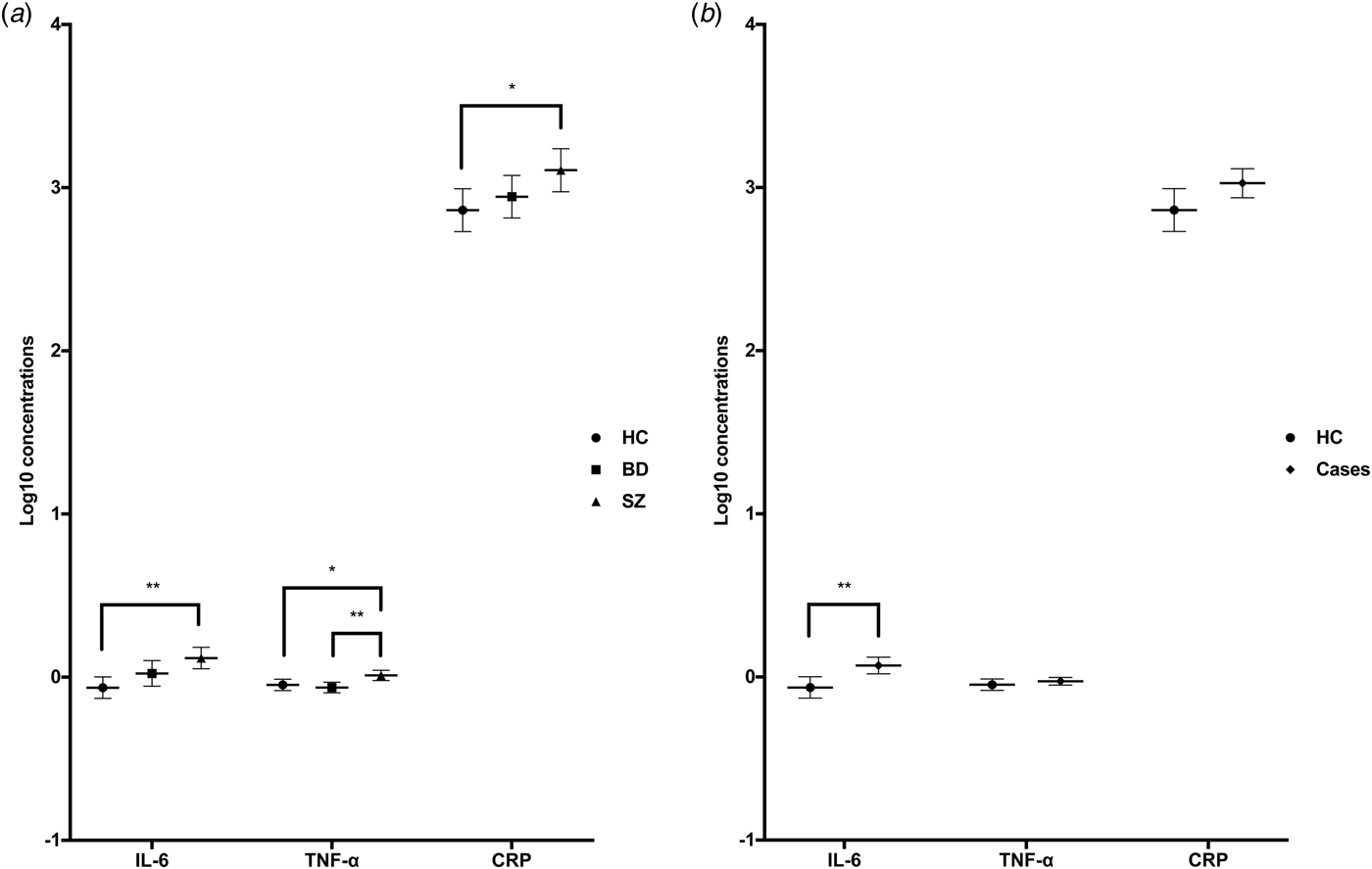
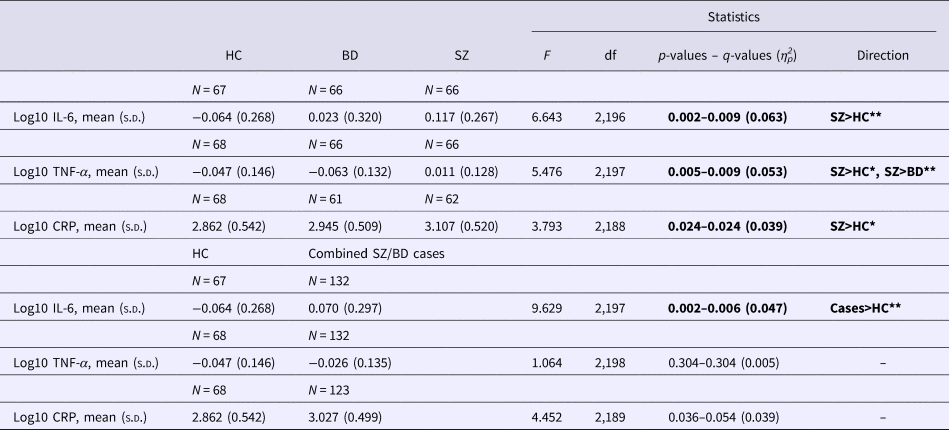
The series of ANOVAs indicated a significant effect of group on IL-6, TNF-α and CRP levels (see Table 2 and Fig. 1a). Post-hoc tests indicated that the SZ group showed higher levels of IL-6 (p = 0.003, d = 0.63), TNF-α (p = 0.029, d = 0.44) and CRP (p = 0.021, d = 0.46) relative to the HC group, and higher levels of TNF-α (p = 0.010, d = 0.54) relative to the BD group. There were no significant differences in serum levels of IL-6, TNF-α or CRP between the BD and HC groups. In addition, levels of IL-6 (p = 0.002, q = 0.006, η p2 = 0.047), but not TNF-α (p = 0.304, q = 0.304, η p2 = 0.005) or CRP (p = 0.036, q = 0.054, η p2 = 0.039) were significantly higher in the pooled SZ/BD group compared with the HC group (see Table 2 and Fig. 1b).
Group differences on serum levels of interleukin 6 (IL-6), tumour necrosis factor-α (TNF-α) and C-reactive protein (CRP). (a) The schizophrenia group (SZ) showed higher levels of interleukin 6 (IL-6), tumour necrosis factor α (TNF-α) and C-reactive protein (CRP) than the group of healthy controls (HC). In addition, the SZ group showed higher TNF-α levels than the psychotic bipolar-I disorder group (BD). (b) The pooled group of cases with BD or SZ showed higher levels of IL-6, but not TNF-α or CRP compared with the HC group. Original concentrations for IL-6 and TNF-α were in pg/mL and concentrations for CRP were in ng/mL. These concentrations were transformed for these analyses using a decimal logarithmic function (Log10). Error bars represent 95% confidence interval; *p < 0.05, **p < 0.01.

Group differences on serum levels of interleukin 6 (IL-6), tumour necrosis factor-α (TNF-α) and C-reactive protein (CRP)

HC, healthy controls; BD, bipolar-I disorder; SZ, schizophrenia; df, degrees of freedom; s.d., standard deviation; q-values <0.05 are presented in bold typeface.
Concentrations for IL-6 and TNF-α were in pg/ml; concentrations for CRP were in ng/ml.
*p < 0.05; ** p < 0.01.
Inflammatory markers – associations with childhood trauma
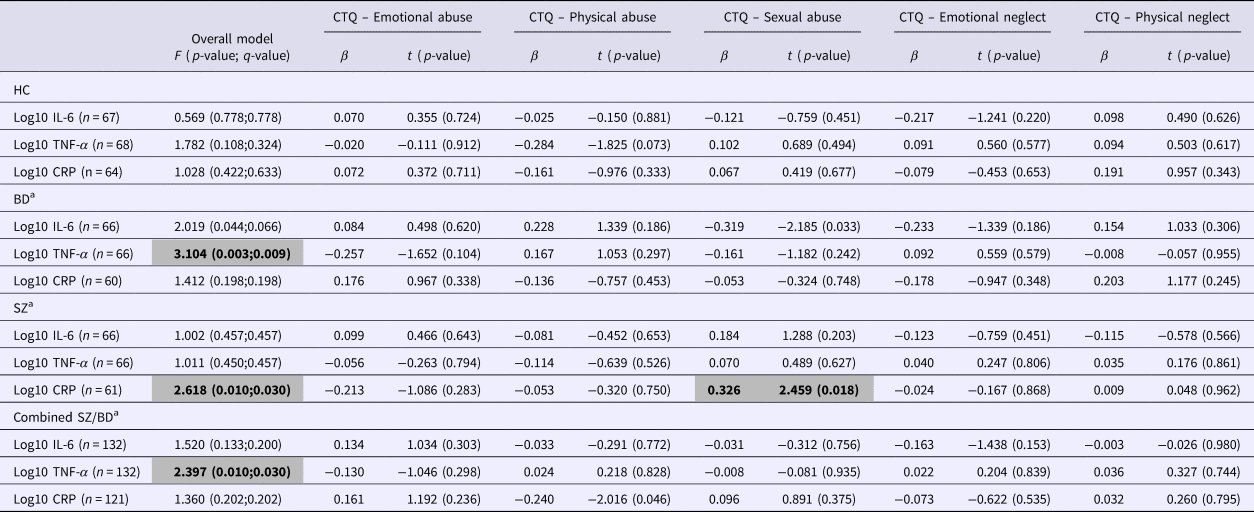
Table 3 summarises the results from the hierarchical linear regression analyses. Within the HC group, the series of hierarchical regressions indicated that no model for any of the analytes was significant (all models with p⩾0.108, all q⩾0.324).
Association between CTQ domains and serum levels of interleukin 6 (IL-6), tumour necrosis factor-α (TNF-α) and C-reactive protein (CRP)

HC, healthy controls; BD, bipolar-I disorder; SZ, schizophrenia; CTQ, Childhood Trauma Questionnaire.
All analyses include age and sex as covariates.
a Symptom severity (PANSS total score) and medication levels (IMI, CPZ) and use (MS) were added as covariates.
p values and q-values <0.05 are presented in bold and highlighted in dark grey.
Within the BD sample, the series of hierarchical regressions were significant for levels of TNF-α (F 11,54 = 3.104, p = 0.003, q = 0.009, R 2 = 0.387), but not for IL-6 (F 11,54 = 2.019, p = 0.044, q = 0.066, R 2 = 0.291) or CRP (F 11,48 = 1.412, p = 0.198, q = 0.198, R 2 = 0.244). Surprisingly, the use of mood stabilisers (standardised β = 0.370, t = 3.267, p = 0.002), but not the individual CTQ domains, was associated with serum TNF-α levels.
Within the SZ group, the series of hierarchical regressions indicated that the models for levels of IL-6 (F 11,54 = 1.002, p = 0.457, q = 0.457, R 2 = 0.170) and TNF-α (F 11,54 = 1.011, p = 0.450, q = 0.457, R 2 = 0.171) were not significant. The model for CRP was significant (F 11,49 = 2.618, p = 0.010, q = 0.030, R 2 = 0.370), with levels of serum CRP positively associated with levels of sexual abuse (standardised β = 0.326, t = 2.459, p = 0.018), but also with age (standardised β = 0.330, t = 2.533, p = 0.015), sex (standardised β = −0.389, t = −2.897, p = 0.006) and levels of IMI-equivalent dosages (standardised β = 0.333, t = 2.139, p = 0.037).
Within the pooled SZ/BD group, the series of hierarchical regressions indicated that the model for levels of TNF-α was significant (F 11,120 = 2.397, p = 0.010, q = 0.030, R 2 = 0.180), but there were no associations with IL-6 (F 11,120 = 1.520, p = 0.133, q = 0.200, R 2 = 0.122) or CRP levels (F 11,109 = 1.360, p = 0.202, q = 0.202, R 2 = 0.121). Levels of TNF-α were not significantly associated with severity of trauma exposure for any of the CTQ domains; however, TNF-α levels were positively associated with age (standardised β = 0.243, t = 2.769, p = 0.007) and PANSS total score (standardised β = 0.225, t = 2.396, p = 0.018).
Sensitivity analyses
Given that the SZ group was comprised of individuals with both SZ and schizoaffective disorder (SZA), we performed a series of sensitivity analyses to examine whether (a) the findings for the SZ group alone remained without the inclusion of SZA cases; (b) there were relationships between trauma exposure and inflammatory markers in the SZA group alone; and (c) the results for BD would be retained if the SZA cases were included in the BD group. These analyses indicated that in SZ alone (n = 39) the overall model for CRP was no longer significant (R 2 = 0.303, F 11,27 = 1.067, p = 0.421, q = 0.837), but the direct association between CRP levels and sexual abuse remained significant (standardised β = 0.388, t = 2.119, p = 0.043). The analyses for IL-6 (n = 41; R 2 = 0.253, F 11,29 = 0.892, p = 0.558, q = 0.837) and TNF-α (n = 41; R 2 = 0.169, F 11,29 = 0.535, p = 0.863, q = 0.863) in the SZ group alone remained non-significant. None of the overall models were significant when the SZA group was tested alone, likely due to the very small sample sizes (CRP: n = 22, IL-6 and TNF-α: n = 25). Finally, when the SZA cases were combined with the BD group for analysis, there remained no significant associations between childhood trauma and CRP, IL-6 or TNF-α levels.
Discussion
Consistent with previous findings (Potvin et al., Reference Potvin, Stip, Sepehry, Gendron, Bah and Kouassi2008; Bergink et al., Reference Bergink, Gibney and Drexhage2014; Miller et al., Reference Miller, Culpepper and Rapaport2014; Rodrigues-Amorim et al., Reference Rodrigues-Amorim, Rivera-Baltanas, Spuch, Caruncho, Gonzalez-Fernandez, Olivares and Agis-Balboa2017), and recent meta-analyses (Miller et al., Reference Miller, Buckley, Seabolt, Mellor and Kirkpatrick2011; Modabbernia et al., Reference Modabbernia, Taslimi, Brietzke and Ashrafi2013; Fernandes et al., Reference Fernandes, Steiner, Bernstein, Dodd, Pasco, Dean, Nardin, Goncalves and Berk2016a; Goldsmith et al., Reference Goldsmith, Rapaport and Miller2016), peripheral levels of all pro-inflammatory cytokines measured in this study (IL-6, TNF-α and CRP) were higher in cases with SZ (but not BD) relative to HC. Also consistent with a previous study (Aas et al., Reference Aas, Dieset, Hope, Hoseth, Morch, Reponen, Steen, Laskemoen, Ueland, Aukrust, Agartz, Andreassen and Melle2017), only levels of IL-6 were higher in the combined group of SZ and BD cases, relative to HCs. In addition, levels of TNF-α were also higher in SZ compared with BD cases. Exposure to childhood trauma was not associated with serum levels of IL-6, TNF-α or CRP in the HC, BD or the combined SZ/BD groups. However, exposure to sexual abuse was associated with increased CRP levels in SZ cases.
These results provide additional evidence for a state of chronic inflammation in SZ, but not in psychotic BD cases. Chronic inflammation can affect the central nervous system by modulating, directly or through tryptophan metabolism, dopaminergic neurotransmission, oxidative stress and mitochondrial function (Kirkpatrick and Miller, Reference Kirkpatrick and Miller2013; Morris and Berk, Reference Morris and Berk2015). Chronic inflammation is a common risk pathway for cardiovascular diseases and type 2 diabetes frequently observed in SZ (Beumer et al., Reference Beumer, Drexhage, De Wit, Versnel, Drexhage and Cohen2012). Importantly, IL-6 and TNF-α are able to activate the hypothalamic–pituitary–adrenocortical axis (Dunn, Reference Dunn2000), suggesting that chronic inflammation contributes to the aberrant stress response found in SZ (Girshkin et al., Reference Girshkin, Matheson, Shepherd and Green2014). Future studies would benefit from investigating the interactions between stress and inflammation in this population. The lack of difference in IL-6 levels in the BD sample compared to the HC group is consistent with previous studies (Modabbernia et al., Reference Modabbernia, Taslimi, Brietzke and Ashrafi2013; Munkholm et al., Reference Munkholm, Brauner, Kessing and Vinberg2013), and also suggests that the effect observed in the pooled SZ/BD group was driven by the SZ cases. However, the lack of difference in levels of TNF-α and CRP between these groups was not expected (Modabbernia et al., Reference Modabbernia, Taslimi, Brietzke and Ashrafi2013; Dargel et al., Reference Dargel, Godin, Kapczinski, Kupfer and Leboyer2015; Fernandes et al., Reference Fernandes, Steiner, Molendijk, Dodd, Nardin, Goncalves, Jacka, Kohler, Karmakar, Carvalho and Berk2016b). In the context of all cases reporting psychotic experiences, high levels of CRP and TNF-α may thus be specifically associated with a diagnosis of SZ and not with a history of psychotic experiences.
Despite considerable evidence for increased cytokine levels associated with childhood trauma exposure (Coelho et al., Reference Coelho, Viola, Walss-Bass, Brietzke and Grassi-Oliveira2014; Baumeister et al., Reference Baumeister, Akhtar, Ciufolini, Pariante and Mondelli2016), in particular in first-episode (Hepgul et al., Reference Hepgul, Pariante, Dipasquale, DiForti, Taylor, Marques, Morgan, Dazzan, Murray and Mondelli2012; Di Nicola et al., Reference Di Nicola, Cattaneo, Hepgul, Di Forti, Aitchison, Janiri, Murray, Dazzan, Pariante and Mondelli2013) and chronic psychotic disorders (Dennison et al., Reference Dennison, McKernan, Cryan and Dinan2012; Aas et al., Reference Aas, Dieset, Hope, Hoseth, Morch, Reponen, Steen, Laskemoen, Ueland, Aukrust, Agartz, Andreassen and Melle2017; Moraes et al., Reference Moraes, Maes, Barbosa, Ferrari, Uehara, Carvalho and Nunes2017), the present study is the first to our knowledge to simultaneously investigate the associations between childhood trauma and serum levels of IL-6, TNF-α and CRP in psychotic and mood disorders. While there was no association between (any kind of) trauma exposure and levels of IL-6 or TNF-α, exposure to sexual abuse was associated with increased CRP levels in SZ. This result extends previous findings from a large sample of mixed psychotic diagnoses (SZ and BD) reporting increased levels of circulating CRP as a function of the number of childhood abuse types experienced (Aas et al., Reference Aas, Dieset, Hope, Hoseth, Morch, Reponen, Steen, Laskemoen, Ueland, Aukrust, Agartz, Andreassen and Melle2017). However, Aas et al. were unable to identify the specific impact of each type and severity of abuse on CRP for each diagnosis category, owing to their methodology that pooled any type of abuse together. A plausible interpretation would be that exposure to childhood sexual abuse may act as a trigger of chronic peripheral inflammation in SZ. Importantly, this association between CRP levels and sexual abuse was not observed within the other groups. It is therefore possible that individuals at high genetic risk for SZ may be susceptible to aberrant immune system function when exposed to sexual abuse in childhood; this hypothesis is consistent with the large proportion of genetic risk variants for SZ being located within the major histocompatibility complex region of the genome that is involved in regulation of immune function (Schizophrenia Working Group of the Psychiatric Genomics, 2014; Chan et al., Reference Chan, Cooper, Heilmann-Heimbach, Frank, Witt, Nöthen, Steiner, Rietschel and Bahn2017). Moreover, genes in these regions may be vulnerable to epigenetic changes (Liu et al., Reference Liu, Chen, Ehrlich, Walton, White, Perrone-Bizzozero, Bustillo, Turner and Calhoun2014) associated with early-life trauma exposure, but these interpretations remain speculative and should be tested in appropriately designed studies. In addition, our results indicate that levels of IL-6 were not associated with childhood trauma exposure in either the BD, SZA, SZ or the combined cases groups. This is consistent with the lack of association between the number of types of abuse and levels of gp130, an IL-6 antagonist, reported in a larger sample of mixed SZ and BD cases (Aas et al., Reference Aas, Dieset, Hope, Hoseth, Morch, Reponen, Steen, Laskemoen, Ueland, Aukrust, Agartz, Andreassen and Melle2017). We tentatively suggest that other factors not related to the diagnosis of BD or SZ or with trauma exposure may have influenced this result, but these factors were not recorded in the present study (e.g. body mass index, alcohol and nicotine consumption, waist–hip ratio, an index of the fat distribution in the body, physical activity or sleep disturbance). Longitudinal studies measuring levels of inflammatory markers, trauma exposure and symptomatology from childhood through to adulthood will be required to fully understand the impact of trauma exposure on inflammatory processes, and their potential role in the later development of psychotic disorders.
Several limitations of this study should be considered. These include the relatively small sample sizes and the high levels of medication use among clinical participants; despite the dosage equivalents of the major classes being accounted for in focal analyses within the clinical samples, it is possible that the combined effects of illness duration and medication may have influenced the observed effects in our clinical samples. In fact, previous meta-analytic work found that CRP and TNF-α are less sensitive to medication than IL-6 (Miller et al., Reference Miller, Buckley, Seabolt, Mellor and Kirkpatrick2011; Fernandes et al., Reference Fernandes, Steiner, Bernstein, Dodd, Pasco, Dean, Nardin, Goncalves and Berk2016a). It is also possible that individual pharmacodynamics for each type of medication might influence the levels of peripheral inflammatory markers, but this was not examined here. In addition, the use of anti-inflammatory drugs was not recorded. While the inclusion of cases with schizoaffective disorder (thought to be of similar genetic profile to SZ cases; Cardno et al., Reference Cardno, Rijsdijk, Sham, Murray and McGuffin2002) could be seen as a limitation, their inclusion did not influence the pattern of results observed within the SZ sample (other than limiting the statistical power of the analyses when removed from that group): sensitivity analyses showed that the association between levels of CRP and sexual abuse remained significant in the SZ group alone, despite the loss of significance of the overall model. Also, while the CTQ has shown good reliability and validity for report of childhood trauma in adult psychotic populations (Fisher et al., Reference Fisher, Craig, Fearon, Morgan, Dazzan, Lappin, Hutchinson, Doody, Jones, McGuffin, Murray, Leff and Morgan2011), trauma exposure was measured retrospectively in samples of adults in chronic stages of illnesses. Importantly, as previously mentioned, several factors have not been recorded in this study such as body mass index or other indices of adiposity, and nicotine consumption, that may have contributed to the observed effects.
In conclusion, this study is the first to investigate the effects of different types of childhood trauma exposure on IL-6, TNF-α and CRP in psychotic and mood disorders (BD and SZ) and healthy individuals. The results contribute to the evidence for a chronic state of inflammation in SZ but not BD cases, compared with healthy individuals. In addition, exposure to sexual abuse was associated with increased levels of CRP in SZ, suggesting a potential role for early trauma exposure in the (dys)regulation of the immune system in adulthood. Future studies are required to understand the potential role of childhood trauma exposure in activating the immune and stress-response systems in psychotic and mood disorders.
Acknowledgements
We would like to thank the volunteers who participated in this study. We acknowledge recruitment assistance from the Australian Schizophrenia Research Bank (ASRB), which was supported by the National Health and Medical Research Council of Australia (NHMRC) Enabling Grant (#386500), the Pratt Foundation, Ramsay Health Care, the Viertel Charitable Foundation and the Schizophrenia Research Institute.
Financial support
This study was supported by a 2016 Early-Career Researcher Project Grant from the Society for Mental Health Research (SMHR) awarded to Yann Quidé, and funded by Project Grants from the NHMRC (#630471 and #1081603), and the Macquarie University's ARC Centre of Excellence in Cognition and its Disorders (CE110001021), as well as a NHMRC R.D. Wright Biomedical Career Development Fellowship (#1061875; 2014-17) awarded to Melissa Green. Michael Berk is supported by an NHMRC Senior Principal Research Fellowship (#1059660 and #1156072). Sarah Cohen-Woods was supported by the Matthew Flinders Fellowship, Flinders University, Australia. Oliver Watkeys was supported by an Australian Government Research Training Program (RTP) Scholarship (administered by the University of New South Wales) and the Edward C Dunn Foundation Postgraduate Scholarship (administered by Neuroscience Research Australia; NeuRA). The funding bodies had no role in the decision to publish these results.
Conflict of interest
None.
Ethical standards
The authors assert that all procedures contributing to this work comply with the ethical standards of the relevant national and institutional committees on human experimentation and with the Helsinki Declaration of 1975, as revised in 2008.
Author ORCIDs
Yann Quidé 0000-0002-8569-7139