Extracorporeal membrane oxygenation usage after surgical repair of CHD has increased over the past two decades and has become an important tool to support children failing to wean off cardiopulmonary bypass or having postoperative persistent low cardiac output including extracorporeal cardiopulmonary resuscitation.Reference Alsoufi, Awan and Manlhiot1
Extracorporeal membrane oxygenation can also be used in postoperative pulmonary hypertension, bridge to transplantation, routine support after staged repair of hypoplastic left heart syndrome and to stabilise preoperative patients in cardiorespiratory failure as a bridge to cardiac surgery.Reference Van Arsdell, Gruenwald and McCrindle2, Reference Bautista-Hernandez, Thiagarajan and Fynn-Thompson3 Among children undergoing congenital heart surgery, 3.2–8.4% may require extracorporeal membrane oxygenation support in the postoperative period for cardiorespiratory failure.Reference Baslaim, Bashore, Al-Malki and Jamjoom4–Reference Ghez, Feier, Ughetto, Fraisse, Kreitmann and Metras6 Veno-arterial extracorporeal membrane oxygenation provides adequate cardiac output while “resting” the heart after the operative insult and allows time for recovery of cardiac function.Reference Sasson, Cohen and Tamir7, Reference Chaturvedi, Macrae and Brown8
The use of extracorporeal life support in such high-risk patients is associated with significant morbidity and mortality with an almost 40% overall survival rate.Reference Paden, Conrad, Rycus and Thiagarajan9 Although the clinical features that might help in predicting the outcomes have not been quantitated well,Reference Kolovos, Bratton and Moler10 reversibility of the cause of cardiorespiratory failure is vital for successful outcome.Reference Baslaim, Bashore, Al-Malki and Jamjoom4
In this study, we report our results of extracorporeal membrane oxygenation after repair of CHDs. Our aim is to identify the predictors of survival of children needed post-cardiotomy extracorporeal membrane oxygenation support.
Materials and methods
We reviewed retrospectively the medical records of all patients with CHD requiring corrective or palliative cardiac surgery that needed extracorporeal membrane oxygenation support between November 2015 and November 2018.
Hospital admission records, operative reports, perfusion data, and ICU records were reviewed to collect demographic information, operative, and postoperative data.
We studied the effects of various outcome predictors on the ability to wean off extracorporeal membrane oxygenation for more than 48 hours (successful decannulation) and survival to hospital discharge.
Survival follow-up was done using the outpatient clinic records and phone calls.
Extracorporeal membrane oxygenation protocol
Extracorporeal membrane oxygenation components
All patients were supported by veno-arterial extracorporeal membrane oxygenation that consisted of a Medtronic’s Bio-Console 560 Bio-Medicus (Medtronic Perfusion Systems, Minneapolis, Minnesota, United States of America) and Bio-Pump blood pump-50 (Medtronic, Inc., Minneapolis, Minnesota, United States of America) incorporating a centrifugal pump-based console with a membrane oxygenator Lilliput 2 (D 902 Infant Hollow Fibre Membrane Oxygenator; Dideco, Mirandola, Italy) or Medos 2400 (Medos, Medizintechnik AG, Stolberg, Germany). The blood temperature in the circuit was maintained by using Hirtz HICO-Variotherm 555 heater–cooler system (Hirtz & Co. KG, Cologne, Germany).
Monitors for the pressure before and after the membrane were utilised. A Sechrist gas blender (Sechrist Industries Inc., Anaheim, California, United States of America) was used to optimise arterial oxygen tension and arterial carbon dioxide level.
The extracorporeal membrane oxygenation circuit was primed with normal saline 0.9%, and then packed red blood cells displaced the priming volume before connection to the cannulas.
The patients with intraoperative failure to come off cardiopulmonary bypass were connected to extracorporeal membrane oxygenation through the previously inserted single arterial and single venous cannulas. A transthoracic approach was generally utilised in the ICU for patients needed extracorporeal membrane oxygenation support in the early postoperative period.
Extracorporeal membrane oxygenation flow was initially started at 100–150 ml/kg/minutes, and it was adjusted to maintain end organ perfusion depending on haemodynamics, blood gases, serum lactate level, mixed venous oxygen saturation, and urine output.
Patient management during extracorporeal membrane oxygenation support
Heparin sulphate was used for anticoagulation to maintain an activated clotting time of 180–220 seconds; unless patients were bleeding and the target activated clotting time was lowered to 160–180 seconds. Haematocrit was kept around 35% for acyanotic heart diseases and around 45% for cyanotic heart diseases. Platelets were transfused to maintain the platelet count more than 100.000/mm3.
Patients with volume overload were receiving diuretics, and ultrafilteration was performed using Sorin high-flux dialyzer 0.2 haemoconcentrators (Sorin Group, Mirandola, Italy) in line with extracorporeal membrane oxygenation circuit to augment fluid removal in such patients. Haemodialysis was used in cases of acute renal failure.
Mechanical ventilation was adjusted at a respiratory rate of 10 breaths/minutes with tidal volume of 6–8 ml/kg and positive end expiratory pressure of 5–10 cm H2O.
Narcotic analgesia and neuromuscular blocking agents were routinely used for all patients. Neurological examination was done regularly, and head ultrasound or CT brain was done in case of suspected stroke.
Inotropic support was kept at minimal levels to maintain normal blood pressure for age, and prophylactic antibiotics were used routinely for all patients.
Nasogastric tube feeding was initiated 24–48 hours after starting extracorporeal membrane oxygenation support, and total parenteral nutrition was used in case of feeding intolerance.
Echocardiography was done regularly to assess the cardiac function with minimal extracorporeal membrane oxygenation flow, and cardiac catheterisation was done in some cases for delineation of the diagnosis or interventional management of residual lesions.
Weaning off extracorporeal membrane oxygenation support was based on evident cardiopulmonary recovery or development of one or more irreversible organ damage precluding survival.
The process of weaning or separation from extracorporeal membrane oxygenation was accomplished with gradual lowering of extracorporeal membrane oxygenation flow over 12–24 hours and optimising ventilator and inotropic support.
Statistical analysis
Statistical analysis was performed using Statistical Package for Social Sciences 20.0. Descriptive statistics were represented as median and interquartile range for continuous variables and as counts and percentages for categorical variables. Chi-square analysis and Fisher’s exact test were used to find the significant relations between categories variables. Shapiro–Wilk test was used to test the normality of the distribution, and the non-parametric Mann–Whitney test was applied to find if there was any significant difference between two independent groups. Patients who survived to hospital discharge (survivors) were compared with those who died before hospital discharge (non-survivors). The survival analysis using Kaplan–Meier and life table was used to test the equality of survival distributions for single ventricle and biventricular repair. A p-value of 0.05 or less was considered to be significant.
Results
Patients’ characteristics
Between November 2015 and November 2018, 30 patients at King Abdulaziz University Hospital required extracorporeal membrane oxygenation support after cardiac surgery for their CHD. The extracorporeal membrane oxygenation population was 30 patients, which represented 4% of 746 children who had cardiac surgery during this period. The patient age range was from 1 day to 20.33 years, with a median age of 6.5 months (interquartile range from 0.97 to 19.9 month). Median weight was 5 kg (range from 2 to 53 kg, interquartile range from 3 to 9 kg).
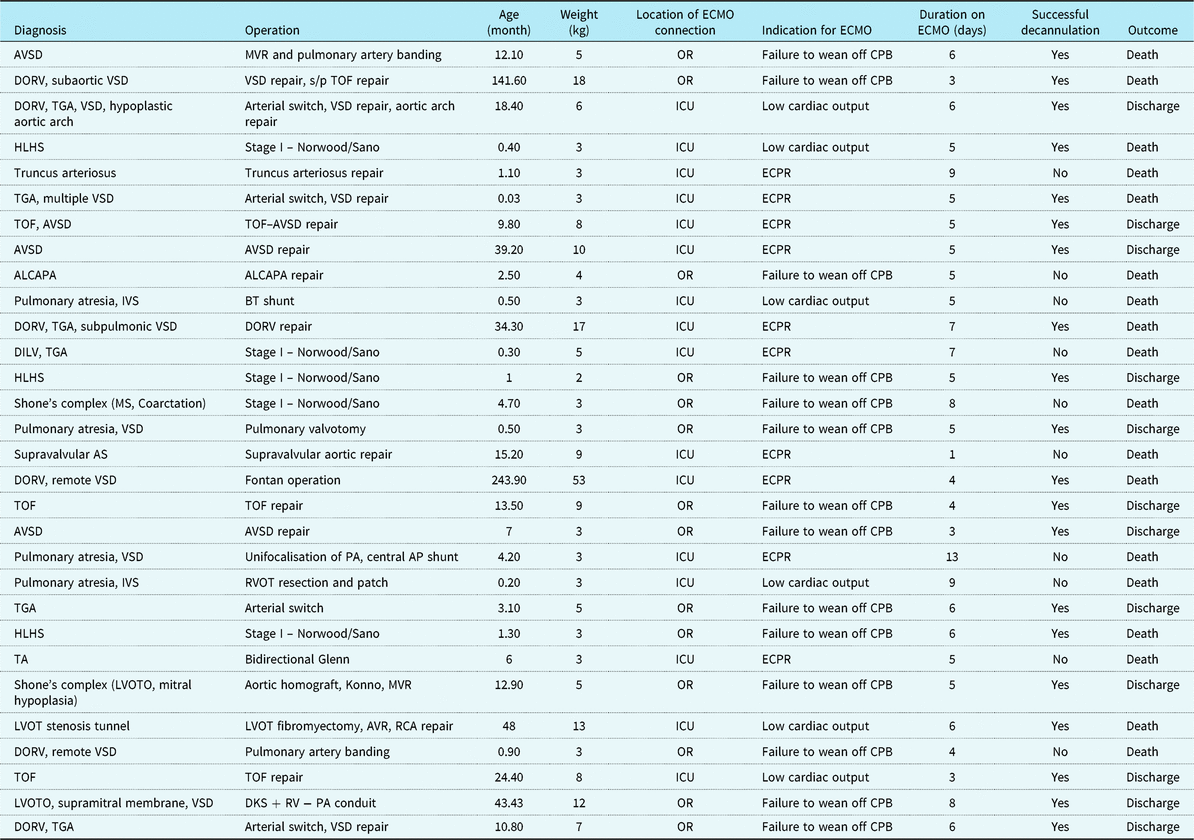
There was a wide spectrum of cardiac lesions in patients needed extracorporeal membrane oxygenation support. Eighteen (60%) patients underwent biventricular repair, and 12 patients underwent single ventricle palliation (40%). The diagnosis and the surgical procedures for each patient are represented in Table 1.
Characteristics of patients undergoing ECMO

ALCAPA = anomalous left coronary artery from the pulmonary artery; AP = aortopulmonary; AS = aortic stenosis; AVR = aortic valve replacement; AVSD = atrio-ventricular septal defect; BT shunt = Blalock–Taussig shunt; CPB = cardiopulmonary bypass; DILV = double inlet left ventricle; DKS = Damus–Kaye–Stansel; DORV = double outlet right ventricle; ECMO = Extracorporeal membrane oxygenation; ECPR = extracorporeal cardiopulmonary resuscitation; HLHS = hypoplastic left heart syndrome; IVS = intact ventricular septum; LVOT = left ventricular outflow tract; LVOTO = left ventricular outflow tract obstruction; MS = mitral stenosis; MVR = mitral valve replacement; OR = operating room; PA = pulmonary artery; RCA = right coronary artery; RV = right ventricle; RVOT = right ventricular outflow tract; TA = tricuspid atresia; TGA = transposition of great arteries; TOF = tetralogy of fallot; VSD = ventricular septal defect
Median cardiopulmonary bypass time was 96.5 minutes (interquartile range from 57.25 to 147.75 minutes), and median aortic cross-clamp time was 56 minutes (interquartile range from 41.25 to 81.5 minutes).
All patients had a veno-arterial extracorporeal membrane oxygenation through a median sternotomy except one patient, in whom a femoral access was used. Extracorporeal membrane oxygenation was initiated in the operating room due to failure to come off cardiopulmonary bypass in 14 patients (46.67%), or later in the ICU for postoperative low cardiac output in 6 patients (20%), or extracorporeal cardiopulmonary resuscitation in 10 patients (33.33%). Median duration of cardiopulmonary resuscitation was 30 minutes (interquartile range from 14 to 92.5 minutes), and median duration for extracorporeal membrane oxygenation support was 5 days (interquartile range from 4.75 to 6.25 days).
Clinical outcomes
The patients who maintained adequate haemodynamics for more than 48 hours after extracorporeal membrane oxygenation support discontinuation were considered as successfully decannulated. Twenty patients were successfully decannulated (66.67%), and 12 patients (40%) were survived to hospital discharge.
Among the successfully decannulated patients (20 patients), 8 of them did not survive to hospital discharge due to variable causes. Six out of eight patients had sepsis after prolonged hospital stay managing residual cardiac lesions, cardiac dysfunction, or renal failure. One patient had significant residual ventricular septal defect and severe mitral regurgitation that required surgical repair after 2 months of having arterial switch operation. He developed multi-organ system failure after the second surgery that led to death. Another patient who underwent fontan surgery had extensive pulmonary arterio-venous malformations that were complicated by severe pulmonary haemorrhage and he died few days after extubation.
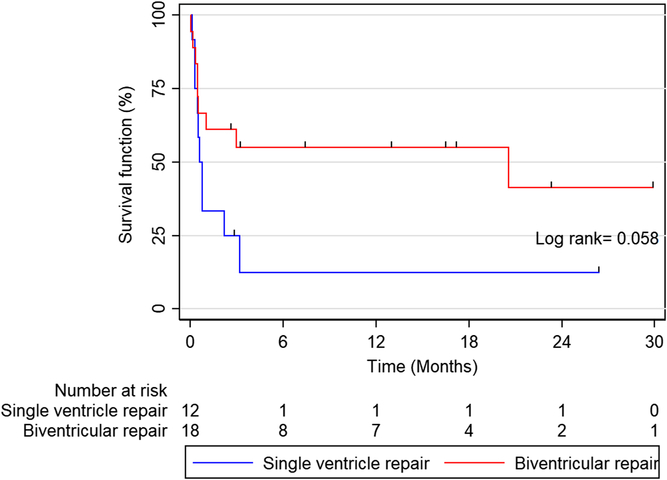
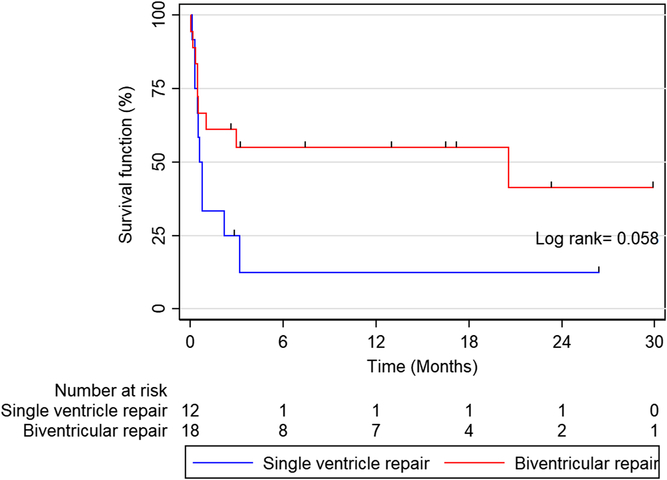
Intermediate-term follow-up was done for a median duration of 16.83 month (interquartile range from 4.28 to 25.53 month), and survival analysis is represented in Figure 1. All survivors to hospital discharge remain alive except one patient. He underwent bilateral pulmonary artery branches stenting on extracorporeal membrane oxygenation for bilateral pulmonary artery stenosis. After hospital discharge, he was following in the paediatric cardiology clinic. Five months after hospital discharge, he was presented with infective endocarditis over the stents that was complicated by septicaemia, septic shock, and death.
The Kaplan–Meier curve demonstrating survival for the postoperative cardiac extracorporeal membrane oxygenation patients who underwent single ventricle repair versus biventricular repair.
For successfully decannulated patients, the median duration of postoperative mechanical ventilation was 16 days (interquartile range from 13 to 24.5 days), the median ICU stay was 28.5 days (interquartile range from 17.5 to 62.75 days), and the median hospital stay was 39 days (interquartile range from 23 to 75 days).
Nine patients (30%) underwent cardiac catheterisation on extracorporeal membrane oxygenation: four patients had diagnostic catheterisation without any intervention and the other five patients required interventional management as stenting or ballooning of pulmonary arteries, coronary artery stenting, vascular occlusion of aortic root fistula, and occlusion of pulmonary arterio-venous malformations. Out of five patients underwent interventional catheterisation, three (60%) of them were survived to hospital discharge.
Additional surgical procedures were done for five patients in the same admission in the form of surgical repair of aortic dissection, aortoplasty, mitral valve repair, and permanent pace maker insertion for postoperative complete heart block in two patients.
Complications during extracorporeal membrane oxygenation support included intracranial haemorrhage in 4 (13.33%), stroke in 2 (6.67%), renal insufficiency in 14 (46.67%), liver dysfunction in 10 (33.33%), and limb ischaemia in 3 (10%). Haemofiltration was required for 20 patients (66.67%) to augment fluid removal or in case of renal insufficiency. The median duration of haemofiltration was 4.31 days (interquartile range from 1.72 to 6.57days).
Among the 20 patients who had haemofiltration, 5 patients required haemodialysis for acute renal failure during extracorporeal membrane oxygenation support. Four of them died in hospital. The two patients who had stroke were successfully discharged from the hospital. The patients who had intracranial haemorrhage or limb ischaemia during extracorporeal membrane oxygenation support did not survive to hospital discharge.
Only one patient required a second extracorporeal membrane oxygenation run in the same admission, and he died after failure to wean off extracorporeal membrane oxygenation.
Factors associated with the outcomes
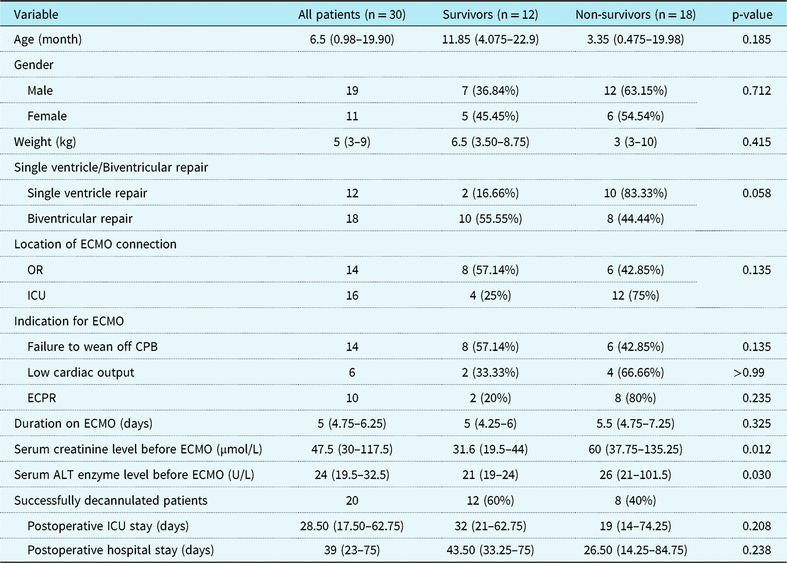
Univariate analysis was done for different factors that might affect survival to hospital discharge (Table 2) or successful decannulation. The patients who were decannulated successfully and survived for more than 48 hours had a median age of 12.5 months (interquartile range from 1.75 to 37.97 months) and a body weight of 6.5 kg (interquartile range from 3 to 11.5 kg). On the other hand, the patients who died within 48 hours after decannulation had a median age of 1.8 months (interquartile range from 0.45 to 5.02 months) and a body weight of 3 kg (interquartile range from 3 to 4.25 kg), which is significantly less than successfully decannulated patients. The p-values for age and body weight were 0.019 and 0.027, respectively.
Possible risk factors for hospital mortality*

ALT = alanine aminotransferase; CPB = cardiopulmonary bypass; ECMO = extracorporeal membrane oxygenation; ECPR = extracorporeal cardiopulmonary resuscitation; OR = operating room
* Continuous variables are presented as median (interquartile range). Categorical variables are presented as frequency (percentage)
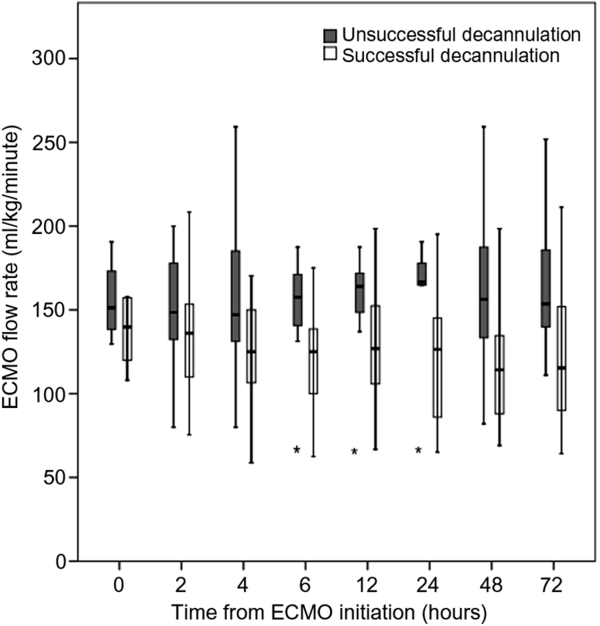
During the first 24 hours of extracorporeal membrane oxygenation support, the extracorporeal membrane oxygenation flow rate was significantly reduced after 4 hours of extracorporeal membrane oxygenation connection in successfully decannulated patients as illustrated in Figure 2. The flow rate p-value at 6, 12, and 24 hours of extracorporeal membrane oxygenation initiation was 0.016, 0.033, and 0.01, respectively.
Box plot showing the difference in extracorporeal membrane oxygenation flow rate between successfully and unsuccessfully decannulated patients during the first 72 hours of its initiation. *p-value <0.05.

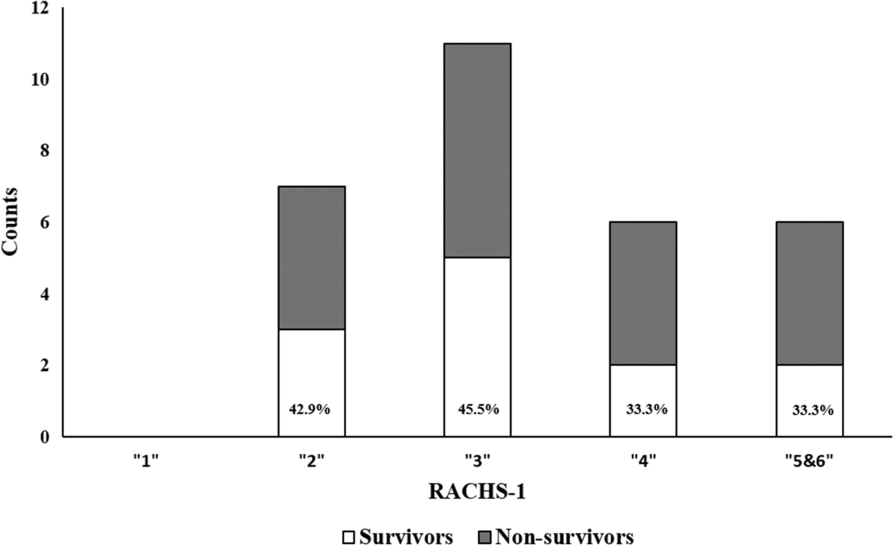
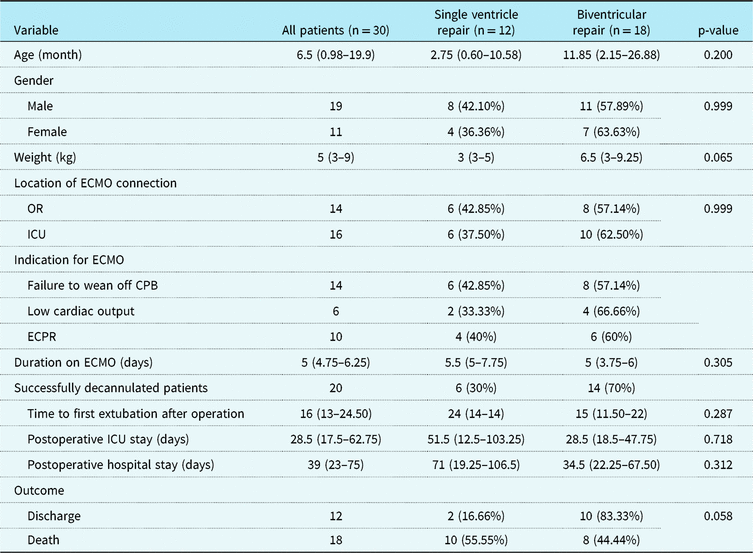
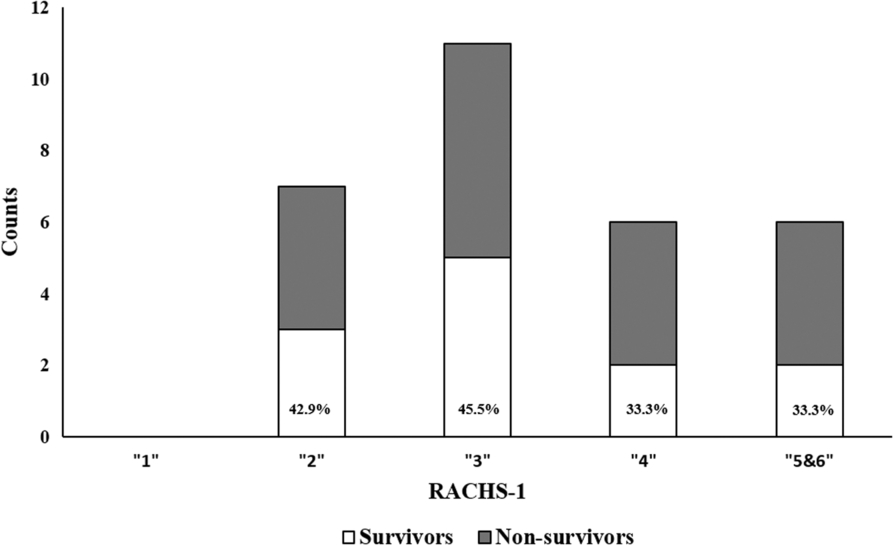
The patients were categorised based on the Risk Adjustment in Congenital Heart Surgery scores, and the survival to discharge was calculated for each category as represented in Figure 3. Patients with biventricular repair tended to have better survival rate compared with those with single ventricle palliation (55.55 versus 16.66%, p-value 0.058). The possible risk factors affecting survival to hospital discharge in those patients are represented in Table 3.
Survival rates according to the Risk Adjustment in Congenital Heart Surgery (RACHS-1) scores classification.
Patients’ characteristics, ECMO details, and outcomes in patients who underwent single ventricle or biventricular repair*

CPB = cardiopulmonary bypass; ECMO = extracorporeal membrane oxygenation; ECPR = extracorporeal cardiopulmonary resuscitation; OR = operating room
* Continuous variables are presented as median (interquartile range). Categorical variables are presented as frequency (percentage)
Based on the indication for extracorporeal membrane oxygenation support, the survival to hospital discharge was as follows: 57.14% (8/14) in case of failure to wean off cardiopulmonary bypass, 33.33% (2/6) in low cardiac output, and 20% (2/10) in extracorporeal cardiopulmonary resuscitation. The survival to hospital discharge in patients who were placed on extracorporeal membrane oxygenation in the operating room was better than those who required extracorporeal membrane oxygenation for low cardiac output or extracorporeal cardiopulmonary resuscitation. However, the difference was not statistically significant. The p-values were 0.135, >0.99, and 0.235, respectively.
Although the duration on extracorporeal membrane oxygenation was longer in non-survivors, there was no significant difference between survivors and non-survivors (p = 0.325). We noticed that one patient only (14.28%) survived among seven patients who required extracorporeal membrane oxygenation support for more than 6 days.
The non-survivors had significantly higher serum creatinine and alanine aminotransferase enzyme levels before extracorporeal membrane oxygenation support in comparison with survivors (p = 0.012 and 0.03, respectively).
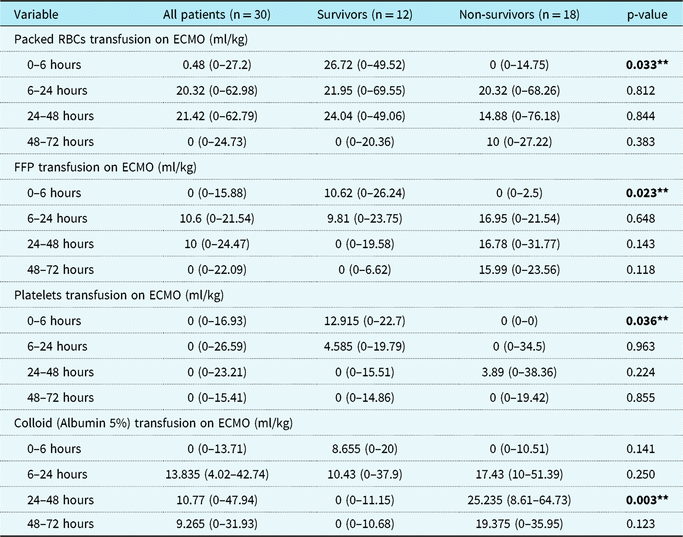
The survivors required a higher amount of blood products transfusion during the first 6 hours of extracorporeal membrane oxygenation support compared to non-survivors, but transfusion over the next 48 hours was getting less in survivors with no significant difference from non-survivors as shown in Table 4.
Blood products and colloid transfusion on ECMO*

ECMO = extracorporeal membrane oxygenation; FFP = fresh frozen plasma; RBCs = red blood cells
* Continuous variables are presented as median (interquartile range)
** Significant p-value
Non-survivors required significantly higher colloid transfusion as albumin 5% during the second day of extracorporeal membrane oxygenation support to maintain blood pressure and adequate end organ perfusion when compared to survivors (p = 0.003).
On univariate analysis, the survival to hospital discharge was not significantly related to age, sex, body weight, indication for extracorporeal membrane oxygenation, duration of cardiopulmonary resuscitation before extracorporeal membrane oxygenation (p = 0.5), and requirement for haemofiltration (p = 0.139).
Discussion
The veno-arterial extracorporeal membrane oxygenation has been widely used after paediatric cardiac surgery due to increasing complex surgical repairs in neonates and infants having complicated CHDs. In addition, it is the most potent available form of acute cardiorespiratory support and allows complete relief of cardiac workload.Reference Chaturvedi, Macrae and Brown8, Reference Loforte, Delmo Walter and Stiller11
Most of the published reports considered weaning from extracorporeal membrane oxygenation support and survival to hospital discharge as the main outcome measures.Reference Baslaim, Bashore, Al-Malki and Jamjoom4 In our series, 66.67% of patients were successfully weaned off extracorporeal membrane oxygenation support, and this compares well with other experienced centres.Reference Kolovos, Bratton and Moler10, Reference Aharon, Drinkwater and Churchwell12, Reference Duncan, Hraska and Jonas13 The survival to hospital discharge was 40%, which is comparable with other published series.Reference Alsoufi, Awan and Manlhiot1, Reference ElMahrouk, Ismail and Hamouda14, Reference Shah, Shankar and Churchwell15
According to extracorporeal life support organisation registry database published in 2012, the survival to hospital discharge in neonatal and children requiring cardiac extracorporeal membrane oxygenation support were 40 and 49%, respectively.Reference Paden, Conrad, Rycus and Thiagarajan9 A large multi-centre study of 998 children from 37 centres in the United States of America was performed by Gupta et al on the same patient, and they reported 48.1% survival rate to discharge.Reference Gupta, Robertson and Beam16
Among the patients who survived to hospital discharge, 91.67% (11/12) were alive and well for a median follow-up period of 16.83 month, and this compares favourably with other reports.Reference Baslaim, Bashore, Al-Malki and Jamjoom4, Reference Chow, Koirala and Armstrong17
Univariate analysis for factors influencing the outcomes
In the current study, we found that initiating extracorporeal membrane oxygenation in the operating room was associated with better chances for survival to hospital discharge than requiring extracorporeal membrane oxygenation in ICU (survival rate, 57.14 versus 25%), but it was not statistically significant (p = 0.135), which is similar to series from other centres.Reference Van Arsdell, Gruenwald and McCrindle2, Reference Baslaim, Bashore, Al-Malki and Jamjoom4, Reference Chaturvedi, Macrae and Brown8, Reference ElMahrouk, Ismail and Hamouda14 The postoperative course after cardiac surgery for CHD could be complicated with cardiac arrest, for which extracorporeal cardiopulmonary resuscitation may promote survival in patients unresponsive to conventional cardiopulmonary resuscitation. Reported survival to hospital discharge for those patients was comparable or higher than that of patients requiring elective extracorporeal membrane oxygenation support.Reference Van Arsdell, Gruenwald and McCrindle2 In our series, extracorporeal cardiopulmonary resuscitation consisted 33.33% of extracorporeal membrane oxygenation indications with a hospital survival of 20%. Similar to other reports, the survival to hospital discharge was not correlated with cardiopulmonary resuscitation duration before extracorporeal membrane oxygenation initiation (p = 0.5).Reference Van Arsdell, Gruenwald and McCrindle2, Reference Kane, Thiagarajan and Wypij18
Data from a large multi-centre study identified that longer duration of extracorporeal membrane oxygenation support is associated with worsening outcomes and increased the odds of mortality by 12% for every extra day beyond 7 days on veno-arterial extracorporeal membrane oxygenation.Reference Gupta, Robertson and Beam16 In our study, non-survivors had longer duration on extracorporeal membrane oxygenation than survivors, but it was not significantly different (p = 0.325). However, most of our patients needed extracorporeal membrane oxygenation support for less than 7 days, and only one patient (14.28%) survived to hospital discharge among seven patients required extracorporeal membrane oxygenation support for 7 days or more.
Multiple reports have demonstrated that acute renal failure during extracorporeal membrane oxygenation support is associated with higher mortality, but it is difficult to confirm whether this renal insult was because of acute kidney injury before extracorporeal membrane oxygenation support or inadequate renal perfusion on extracorporeal membrane oxygenation.Reference ElMahrouk, Ismail and Hamouda14
In our series, non-survivors had significantly higher serum creatinine and alanine aminotransferase enzymes levels prior to extracorporeal membrane oxygenation support (p = 0.012 and 0.03, respectively). Similarly, Shah et al reported that early initiation of extracorporeal membrane oxygenation before development of end organ damage mostly will improve outcomes.Reference Shah, Shankar and Churchwell15 Kolovos et al demonstrated that patient requiring haemofiltration on extracorporeal membrane oxygenation had higher hospital mortality.Reference Kolovos, Bratton and Moler10 In our experience, haemofiltration during extracorporeal membrane oxygenation support was not a risk factor for hospital mortality.
Previous reports identified intracranial haemorrhage as a serious morbidity, and early weaning off extracorporeal membrane oxygenation should be considered with early signs of intracranial bleeding.Reference Van Arsdell, Gruenwald and McCrindle2 Four of our population developed severe intracranial haemorrhage on extracorporeal membrane oxygenation and all of them died. However, two patients had stroke and survived to hospital discharge.
The utility of veno-arterial extracorporeal membrane oxygenation support in complex single ventricle physiology is increasing especially for hypoplastic left heart syndrome undergoing stage 1 Norwood procedure. Multiple previous studies reported variable survival rates for those patients comparing with patient having biventricular repair. In some series, there was no difference in hospital survival between both groups,Reference Aharon, Drinkwater and Churchwell12, Reference ElMahrouk, Ismail and Hamouda14 but other reports demonstrated that univentricular repair was associated with higher risk of mortality.Reference Kolovos, Bratton and Moler10, Reference Kumar, Zurakowski and Dalton19–Reference Flórez, Bermon, Castillo and Salazar21 In contrast, Alsoufi et al (2009) reported that patients having single ventricle palliation had better survival rate (45%) than patients undergoing biventricular repair (33%).Reference Van Arsdell, Gruenwald and McCrindle2
In our current series, patients who had biventricular repair tends to have higher survival rate (55.55%) than those who had single ventricle repair (16.66%), and the p-value is 0.058.
The majority of patients required blood products transfusion during extracorporeal membrane oxygenation support, and it has been reported that exposure to large amounts of blood transfusion increases the risk of renal failure and mortality after successful decannulation. Interestingly, the survivors in our series required significantly higher blood products transfusion during the first 6 hours of extracorporeal membrane oxygenation initiation compared with non-survivors (p = 0.033), but that transfusion was decreasing over the next 48 hours without significant difference between survivors and non-survivors. It is probably more likely that the reason for this is that a higher proportion of survivors were placed on extracorporeal membrane oxygenation in the operating room after failing to wean off cardiopulmonary bypass, which would likely entail more postoperative bleeding and a higher amount of blood products transfusion.
During the first 24–48 hours of extracorporeal membrane oxygenation support, intravascular volume depletion is common due to capillary leak because of an acute inflammatory like reaction triggered by extracorporeal membrane oxygenation.Reference Vidmar, Primožić, Kalan and Grosek22 In our study, we noticed that non-survivors required significantly larger volumes of colloid transfusion (albumin 5%) from 24 to 48 hours of extracorporeal membrane oxygenation initiation and significantly higher extracorporeal membrane oxygenation flow rate at 6, 12, and 24 hours of extracorporeal membrane oxygenation initiation to maintain blood pressure and tissue perfusion comparing with survivors, which could be explained by capillary leak.
Study limitations
There are several limitations of the study including the retrospective design. It is also a single-centre study with limited number of patients. Consequently, the number of events is small and there are several factors that can affect the outcome and cannot be included in a multi-variable analysis.
Conclusion
Application of veno-arterial extracorporeal membrane oxygenation for cardiorespiratory failure in children after cardiac surgery has a definite survival benefit in different kinds of CHDs. Survival to hospital discharge was better in patients who underwent biventricular repair than those who had univentricular palliation.
Capillary leak on extracorporeal membrane oxygenation could be a risk of mortality in patients after paediatric cardiac surgery.
Acknowledgements
The authors gratefully acknowledge the DSR technical and financial support.
Financial Support
This research was funded by the Deanship of Scientific Research (DSR), King Abdulaziz University, Jeddah, under grant no. (DF-800-140-1441).
Conflicts of Interest
None.