Introduction
Sexually transmitted infections (STIs) are globally pervasive health conditions (Arakkal et al., Reference Arakkal, Damarla, Kasetty and Chintagunta2014; Torrone et al., Reference Torrone, Morrison, Chen, Kwok, Francis and Hayes2018; Dagnew et al., Reference Dagnew, Asresie and Fekadu2020). STIs are infections that are passed on from one person to the other through unprotected sexual intercourse with an infected person (Workowski & Bolan, Reference Workowski and Bolan2015). The major STIs include HIV and AIDS, syphilis, gonorrhoea, human papilloma virus (HPV), and chlamydia (Newman et al., Reference Newman, Rowley, Vander Hoorn, Wijesooriya, Unemo and Low2015; Gios et al., Reference Gios, Mirandola, Toskin, Marcus, Dudareva-Vizule and Sherriff2016). STIs have serious health consequences on the sexual, reproductive, maternal-child, and psychological wellbeing of individuals living with STIs (Ngo et al., Reference Ngo, Ratliff, McCurdy, Ross, Markham and Pham2007; Zhang et al., Reference Zhang, Pan, Cui, Law, Farrar and Ba-Thein2013; Vos et al., Reference Vos, Barber, Bell, Bertozzi-Villa, Biryukov and Bolliger2015; Dagnew et al., Reference Dagnew, Asresie and Fekadu2020). For example, evidence shows that STIs may lead to infertility, experiences of genital discomfort, and psychological instability (Ross, 2008; Dhont et al., Reference Dhont, Luchters, Muvunyi, Vyankandondera, De Naeyer, Temmerman and van de Wijgert2011; Nimbi et al., Reference Nimbi, Rossi, Tripodi, Luria, Flinchum, Tambelli and Simonelli2020). The World Health Organization (WHO) reported in 2012 that nearly 357 million novel cases of STIs were recorded worldwide (WHO, 2018).
Sexual violence can be defined as any sexual act, attempt to obtain a sexual act, unwanted sexual comments or advances, or acts to traffic, or otherwise directed, against a person’s sexuality by any person, regardless of their relationship to the victim, in any setting, including but not limited to home and work (Jina & Thomas, Reference Jina and Thomas2013; WHO, 2013a). Evidence has proven that sexual violence against women have numerous consequences on their health. For instance, a study in sub-Saharan Africa (SSA) demonstrated that sexual violence is associated with mistimed and unwanted pregnancies (Ahinkorah et al., Reference Ahinkorah, Seidu, Appiah, Oduro, Sambah and Baatiema2020a). Moreover, sexual violence has been associated with induced abortion, low birth weight, depression, suicide, fatal and non-fatal injuries (Hong Nguyen et al., 2012; WHO, 2013b; Citernesi et al., Reference Citernesi, Dubini, Uglietti, Ricci, Cipriani and Parazzini2015; Mondin et al., Reference Mondin, Cardoso, Jansen, Konradt, Zaltron and Behenck2016; Ferdos & Rahman, Reference Ferdos and Rahman2017; Bichard et al., Reference Bichard, Byrne, Saville and Coetzer2021; Holliday et al., Reference Holliday, Forster, Schneider, Miller and Monteith2021).
To reduce the incidence and prevalence of STIs, it is important for people who have been affected with any form of STIs to self-report at a health facility for prompt diagnosis and further treatment. Therefore, studies on self-reported STIs (SR-STIs) are necessary for public health and policy interventions. Factors such as age, employment status, age at sexual debut, condom use, comprehensive HIV and AIDS knowledge, having multiple sexual partners, and mass media exposure have been found as determinants of SR-STIs (Fatusi & Wang, Reference Fatusi and Wang2009; Yohannes et al., Reference Yohannes, Gelibo, Tarekegn and Gelibo2013; Stahlman et al., Reference Stahlman, Javanbakht, Cochran, Hamilton, Shoptaw and Gorbach2014; Abdul et al., Reference Abdul, Gerritsen, Mwangome and Geubbels2018; Dagnew et al., Reference Dagnew, Asresie and Fekadu2020; Seidu et al., Reference Seidu, Ahinkorah, Dadzie, Tetteh, Agbaglo and Okyere2020; Masanja et al., Reference Masanja, Wafula, Ssekamatte, Isunju, Mugambe and Van Hal2021).
Despite the effects of sexual violence on women’s health and the possibility of having a linkage with STIs acquisition, it appears few studies have given attention to the phenomena in SSA using current nationally representative data. This makes it difficult for policymakers and stakeholders to design and implement pragmatic policies that contribute to the reduction in the prevalence of STIs in SSA. Therefore, this study examined the association between sexual violence and SR-STIs among women in sexual unions in 15 countries in SSA. The study’s findings are expected to guide strategies aimed at further reducing the prevalence of STIs in SSA.
Methods
Data source and study design
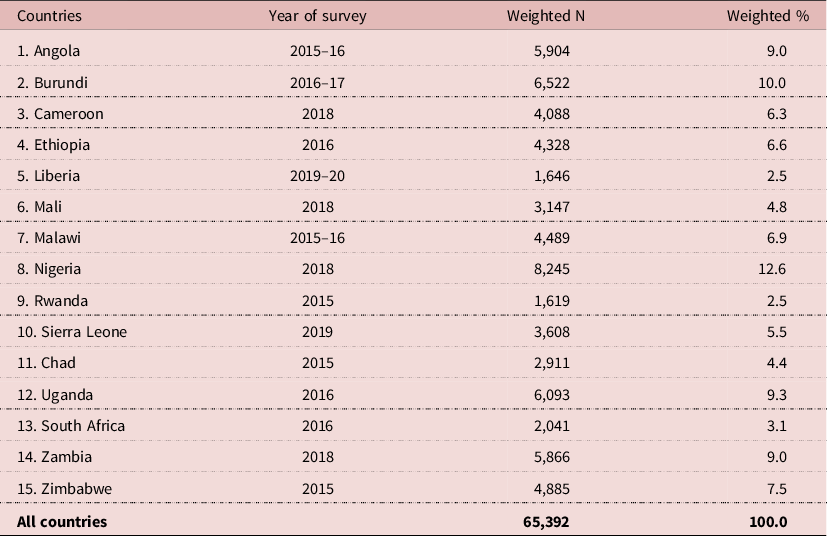
This study involved a secondary data analysis of Demographic and Health Surveys (DHS) datasets. Data for the study were pooled from the recent DHS from 15 countries (Table 1) in SSA. We included only countries with datasets between 2015 and 2020. Specifically, data from the women’s file (Individual recode [IR]) was used in the present study. The DHS is a nationally representative survey conducted every five years in over 85 low- and middle-income countries globally (Corsi et al., Reference Corsi, Neuman, Finlay and Subramanian2012). DHS employed a structured questionnaire to collect data from the women on indicators such as domestic violence, sexual and reproductive health, maternal and child health among others (Corsi et al., Reference Corsi, Neuman, Finlay and Subramanian2012). A two-stage cluster sampling method was used to recruit women for the study. A detailed sampling technique and data collection procedure have been highlighted in a previous study (Aliaga & Ruilin, Reference Aliaga and Ruilin2006). A total of 65,392 women in sexual unions with complete cases of variables of interest were included in the study. This constituted the sample size for the study. We relied on Strengthening the Reporting of Observational Studies in Epidemiology (STROBE) in drafting this manuscript (Von Elm et al., Reference Von Elm, Altman, Egger, Pocock, Gøtzsche and Vandenbroucke2014). The dataset is freely accessible via this link: https://dhsprogram.com/data/available-datasets.cfm.
Description of the study sample

Study variables
Outcome variable
The outcome variable was SR-STIs in the past 12 months. With this variable, the women were asked whether they had acquired a disease through sexual contact in the past 12 months. The response options were “Yes” and “No”. During the analysis, those that responded “Yes” were recoded as “1” whilst those that said “No’ were coded as “0”. Other studies have used this variable to assess STIs among women of reproductive age in SSA (McClintock & Dulak, Reference McClintock and Dulak2021).
Key explanatory variable
Sexual violence was the key explanatory variable in the present study. Sexual violence was created as an index variable from using three questions: “Did you ever experience physical force by husbands/partners to have sexual intercourse when you did not want to?“; “Did your husband/partner use physical force to perform any other sexual acts when you did not want to?“; and “Were you ever forced by your husband/partner with threats or in any other way to perform sexual acts when you did not want to?“. The response options to these questions were “never”, “often”, “sometimes”, “yes, but not in the last 12months”, and “yes, but the frequency in last 12months missing”. The response options were recoded into “No [never sexual violence]” to those that responded “never” and “yes, but not in the last 12months”. Those that responded “often”, and “sometimes” were recoded as “Yes [experienced sexual violence]”. The recoded responses “No” and “Yes” were used for the analysis. This categorization has been used in previous studies that utilized the DHS dataset (Acharya et al., Reference Acharya, Paudel and Silwal2019; Ahinkorah et al., Reference Ahinkorah, Seidu, Appiah, Oduro, Sambah and Baatiema2020a; Ahinkorah et al., Reference Ahinkorah, Ameyaw, Seidu, Agbaglo, Budu and Mensah2020b; McClintock & Dulak, Reference McClintock and Dulak2021).
Covariates
Twelve (12) covariates were included in the study. The variables are maternal age, educational level, partner’s educational level, current employment status, marital status, partner’s age, exposure to radio, exposure to the newspaper, and exposure to television, wealth index, place of residence, and survey countries. These variables were grouped into individual and contextual factors respectively. The selection of the variables was informed by their availability in the DHS dataset as well as their significant association with STIs from previous studies (Dagnew et al., Reference Dagnew, Asresie and Fekadu2020; Seidu et al., Reference Seidu, Ahinkorah, Dadzie, Tetteh, Agbaglo and Okyere2020; McClintock & Dulak, Reference McClintock and Dulak2021).
Individual factors
In the present study, we maintained the existing coding in the DHS dataset for maternal age, educational level for the women and their partners’ current employment status. In the DHS, maternal age was coded as “15-19”, “20-24”, “25-29”, “30-34”, “35-39”, “40-44”, and “45-49”. The educational level was coded as “no education”, “primary”, “secondary” and “higher”. Current employment status was coded as “yes” and “no”. Marital status, partner’s age, exposure to radio, exposure to the newspaper, exposure to television were recoded for this study. Marital status was recoded as “married” and “cohabiting”. Partner age was recoded as “15-24”, “25-34”, “35-44”, and “45 and above”. Regarding the exposure to mass media variables (radio, newspaper, and television), the response options were the same in all three. The response options were “not at all”,” less than once a week”, “at least once a week”, and “almost every day”. The women that responded, “not at all” and “less than once a week” were recoded as “No [not exposed]” whilst those that responded, “at least once a week” and “almost every day” were recoded as “Yes [exposed]”. The categorization was used in each of the three variables (radio, newspaper, and television).
Contextual factors
Wealth index, place of residence, and countries used in the study were the contextual factors. In the DHS, wealth is a composite measure computed by combining data on a household’s ownership of carefully identified assets including television, bicycle, materials used for house construction, sanitation facilities, and type of water access. Principal component analysis was used to transform these variables into wealth index by placing individual households on a continuous measure of relative wealth. The DHS segregates households into five wealth quintiles: poorest, poorer, middle, richer, and richest. The quintiles were used in the final analysis. Place of residence was coded as “urban” and “rural” in the DHS dataset and this was used in the analysis. All the 15 countries studied were included as contextual factors.
Statistical analyses
Data analysis was carried out using Stata software version 16.0 (Stata Corporation, College Station, TX, USA). First, frequency and percentages to show the prevalence of sexual violence and SR-STIs in the selected sub-Saharan African countries were determined. After this, we cross-tabulated the distribution of SR-STIs across the individual and contextual level factors as well as an estimated Pearson’s chi-square test of independence [χ 2] at a p-value of less than 0.05 to show significant factors. Further, a multilevel binary logistic regression analysis was used to examine the individual and contextual factors associated with SR-STIs using four models. Model 0 showed the variance in SR-STIs attributed to the clustering of the primary sampling units (PSUs) without the explanatory variables. Model I and Model II contained the individual and contextual factors, respectively. The final model (Model III) had all the individual and contextual factors. The Stata command “melogit” was used in fitting these models. We used Akaike’s Information Criterion (AIC) tests for Model comparison. All the results were presented using adjusted odds ratios (aOR) at 95% Confidence Interval (CI). Sample weight (v005/1,000,000) and the ‘svy’ command were used to correct for over and under-sampling, including the complex survey design to improve our findings’ generalizability.
Results
Prevalence of sexual violence and SR-STIs in sub-Saharan Africa
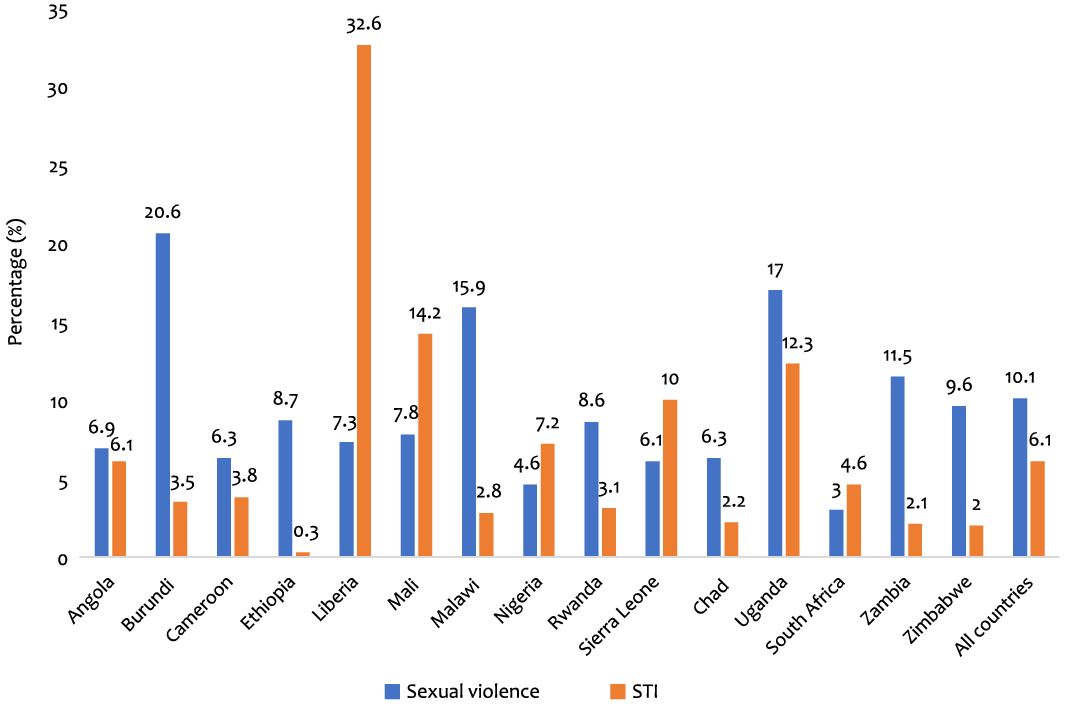
The prevalence of SR-STIs in the 15 countries considered in this study was 6.1%, with the highest (32.6%) and lowest (0.3%) in Liberia and Ethiopia, respectively. The prevalence of sexual violence was 10.1%, with the highest prevalence in Burundi (20.6%) and the lowest in South Africa (3%) (Figure 1).
Prevalence of sexual violence and STIs among women in SSA.

Distribution of SR-STIs across sexual violence and covariates
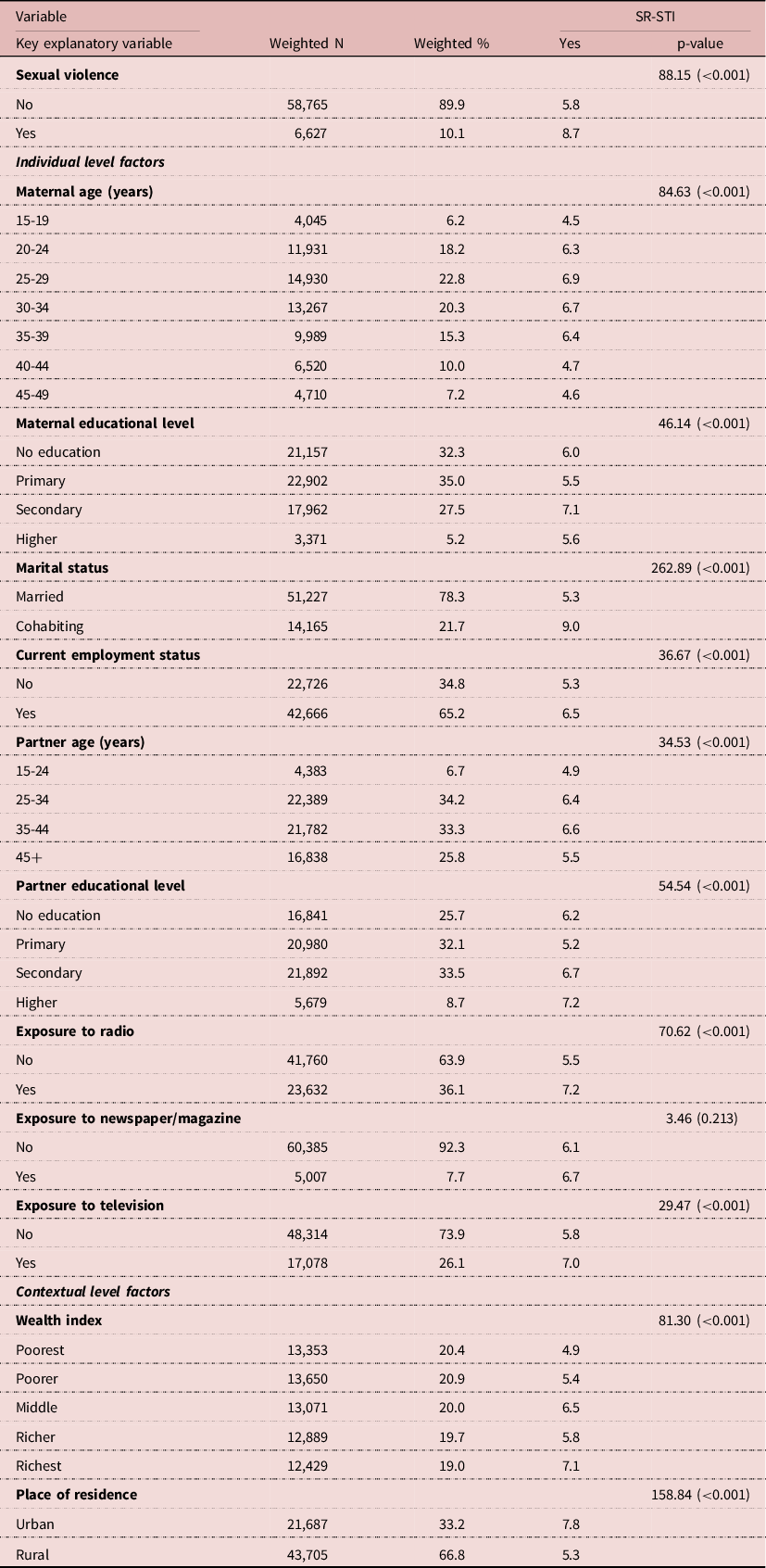
Table 2 shows the distribution of SR-STIs across sexual violence and covariates. The results showed significant disparities in SR-STIs across sexual violence and covariates, except exposure to newspaper/magazine at p<0.005. Specifically, SR-STIs was higher among women who had experienced sexual violence (8.7%) compared to those who had never experienced sexual violence (5.8%). The highest prevalence of SR-STIs was found among those aged 25-29 (6.9%), women with secondary education (7.1%), cohabiting women (9.0%), women who were employed (6.5%) and those whose partners were aged 35-44 (6.6%). SR-STIs was highest among women whose partners had higher education (7.2%), women who were exposed to radio (7.2%), women who were exposed to television (7.0%), women with richest wealth index (7.1%) and those who lived in urban areas (7.8%).
Bivariate analysis of sexual violence and STI among women in sexual unions in SSA

Association between sexual violence and SR-STIs in sub-Saharan Africa
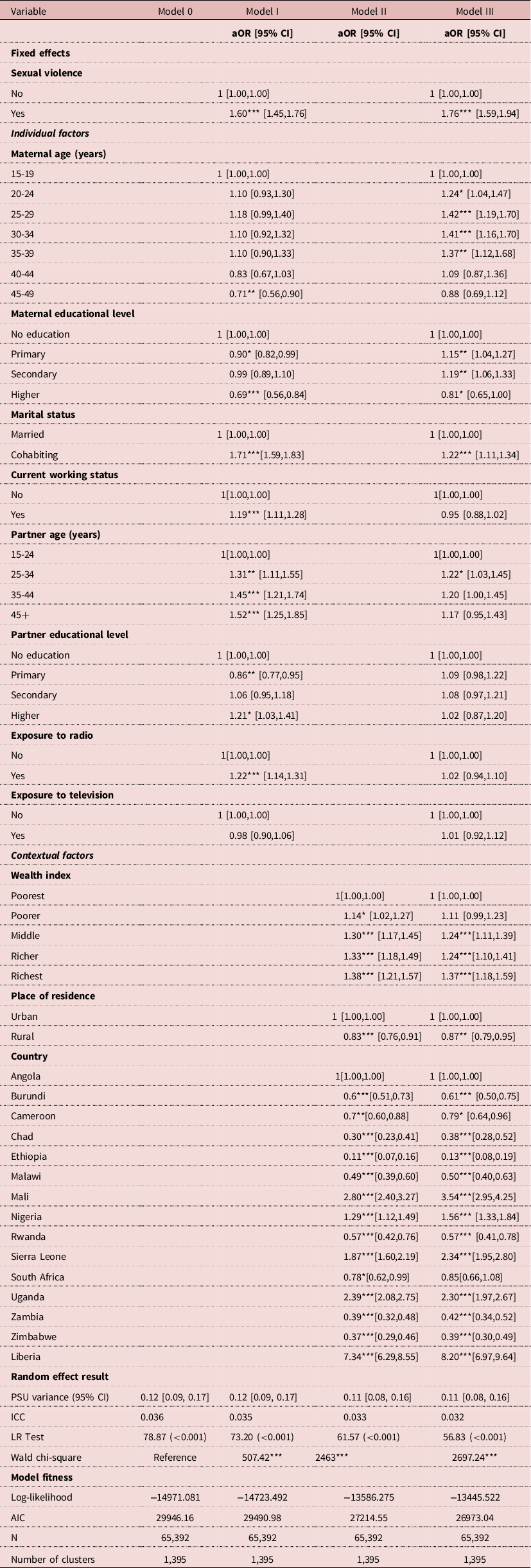
Model III of Tables 3 show the results of the association between sexual violence and SR-STIs in sub-Saharan Africa. We found that women who experienced sexual violence in the last 12 months were more likely to self-report STIs compared to those who did not experience sexual violence [aOR = 1.76, 95% CI = 1.59-1.94]. With the covariates, the likelihood of SR-STIs increased with age to reach a maximum at ages 25-29 years before falling again. Women with primary [aOR = 1.15, 95% CI = 1.04-1.27] and secondary [aOR = 1.19, 95% CI = 1.06-1.33] education were more likely to self-report STIs compared to those with no formal education. Women who were cohabiting were more likely to self-report STIs compared to those who were married [aOR = 1.22, 95% CI = 1.11-1.34]. SR-STIs were higher among women whose partners were aged 25-34 compared to those whose partners were aged 15-24. The likelihood of SRI-STIs increased with higher wealth index. Women who lived in the rural areas were less likely to self-report STIs compared to those who lived in urban areas [aOR = 0.87, 95% CI = 0.79-0.95]. Compared to women in Angola, those who were in Mali, Nigeria, Sierra Leone, Uganda, and Liberia were more likely to self-report STIs while those in Burundi, Cameroon, Chad, Ethiopia, Malawi, Rwanda, South Africa, Zambia, and Zimbabwe were less likely to self-report STIs.
Mixed effect analysis of sexual violence and SR-STI among women in sexual unions in SSA

Exponentiated coefficients; 95% confidence intervals in brackets; aOR adjusted odds ratios; CI Confidence Interval; *p < 0.05, **p < 0.01, ***p < 0.001; 1 = Reference category PSU = Primary Sampling Unit; ICC = Intra-Class Correlation; LR Test = Likelihood ratio Test; AIC = Akaike’s Information Criterion.
Discussion
The study examined the association between sexual violence and SR-STIs among women in sexual unions in 15 sub-Saharan African countries using nationally representative datasets from current DHSs. We found the pooled prevalence of SR-STIs to be 6.1% whilst that of sexual violence was 10.1%. Also, we found that women who had experienced sexual violence were more likely to self-report STIs. Among the controlled variables, there were associations between the women’s age, level of education, marital status, wealth index, and partner/husband’s age and SR-STIs.
The study found that the prevalence of SR-STIs in the last 12 months in the 15 countries was low (6.1%). The prevalence of SR-STIs found in this study is lower compared to what other previous studies reported (Abdul et al., Reference Abdul, Gerritsen, Mwangome and Geubbels2018; Masanja et al., Reference Masanja, Wafula, Ssekamatte, Isunju, Mugambe and Van Hal2021). A possible reason for a lower prevalence reported in this study could be attributed to the use of relatively larger sample size compared to the studies by Masanja et al. (Reference Masanja, Wafula, Ssekamatte, Isunju, Mugambe and Van Hal2021) and Abdul et al. (Reference Abdul, Gerritsen, Mwangome and Geubbels2018). Nonetheless, there were variations in the prevalence among the countries. For example, while Liberia recorded the highest (32.6%) prevalence, Ethiopia had the lowest (0.3%). A possible reason for the variation could be as a result of the differences in socio-cultural practices and beliefs in the countries. For instance, it could be that the sensitive nature of the questions prevented women in Ethiopia from giving truthful responses, reducing the prevalence of SR-STIs among Ethiopian women in sexual unions. The fear of being stigmatized might have also caused Ethiopian women to underreport their STI status.
The pooled prevalence of sexual violence in the last 12 months among women in sexual unions was 10.1%. The prevalence of sexual violence among women found in this study is lower compared to that of a previous study (Elouard et al., Reference Elouard, Weiss, Martin-Hilber and Merten2018) which found a prevalence of 26.1% among women. This finding could be attributed to the relatively larger sample size employed in this study. For example while this study employed a sample of 65,392 women, Elouard et al.’s (Reference Elouard, Weiss, Martin-Hilber and Merten2018) study used 744 women. While Burundi recorded the highest prevalence (20.6%), South Africa had the lowest (3%). A possible reason for this finding could be as a result of the disparities in socio-cultural practices in the studied countries. For instance, it could be that women in Burundi suffer higher levels of human rights abuse at the hands of their male partners which might result from the patriarchial system practiced compared to those in South Africa (Elouard et al., Reference Elouard, Weiss, Martin-Hilber and Merten2018). It could also be that South African women underreported their experiences of sexual violence as a result of normalization of gender-based violence against women in the society (Sinko et al., Reference Sinko, Munro-Kramer, Conley and Saint Arnault2021).
We found that women who experienced sexual violence in the last 12 months were more likely to self-report STIs compared to those who did not. This finding is consistent with previous studies (Vyas, Reference Vyas2017; McClintock & Dulak, Reference McClintock and Dulak2021). Also, studies by Allsworth et al. (Reference Allsworth, Anand, Redding and Peipert2009) and Dude (Reference Dude2011) highlighted that women who have ever been abused are more likely to have higher incidence of STIs compared with those who have never been abused. The association found in the present study could be attributed to several reasons. Firstly, male spouses who sexually abused their female spouses in the last 12 months might have not used condoms which could have increased the women’s possibility of contracting STIs (Varma et al., Reference Varma, Chandra, Callahan, Reich and Cottler2010; Patel et al., Reference Patel, Wingood, Kosambiya, McCarty, Windle, Yount and Hennink2014). Moreover, males who commit sexual violent acts are more likely to engage in risky sexual behaviors and drug use, increasing their chances of contracting STIs and infecting their partners (Dude, Reference Dude2011; McClintock & Dulak, Reference McClintock and Dulak2021). Additionally, the forceful intercourse could have exposed the vaginal canal and surrounding tissues to tears, which speeds up the transfer of microorganisms (McClintock & Dulak, Reference McClintock and Dulak2021). This finding indicates that there is a positive relationship between sexual violence and SR-STIs among women in sexual unions. Therefore, policies that intend to reduce the extent to which women in sexual unions contract STIs should take into account the association between the reporting of STIs and women’s experience of sexual violence.
Akin to the finding of a previous study (Heywood et al., Reference Heywood, Lyons, Fileborn, Minichiello, Barrett and Brown2017), this study found the association between women’s age and the likelihood of reporting STIs to be an inverted U-shape. Thus, the odds of SR-STIs rose with age with the highest odds among those aged 25 to 29 and later reduced with increasing age. A possible reason for this finding could be that those younger women aged 15-19 are expected to be in school, therefore, self-reporting STIs suggests that they engage in unprotected sexual intercourse, a practice which is prohibited by most societies in SSA (Wong, Reference Wong2012). Also, since older women are married and are expected to have offsprings with their partners, they have unprotected sex with their spouses. However, it could be that the spouses of the women also have other sexual partners, increasing older women’s likelihood of self-reporting STIs.
Women with primary and secondary education were more likely to self-report STIs in the last 12 months compared to those with no formal education. This observation is similar to what was reported in other previous studies (Yohannes et al., Reference Yohannes, Gelibo, Tarekegn and Gelibo2013; Abdul et al., Reference Abdul, Gerritsen, Mwangome and Geubbels2018). A possible reason for this finding could be that women who have some level of education have been made to understand the importance of self-reporting STIs through educational programs that are conducted in the schools, increasing their likelihood of self-reporting STIs (Yohannes et al., Reference Yohannes, Gelibo, Tarekegn and Gelibo2013).
Similar to the finding of a previous study (Naidoo et al., Reference Naidoo, Wand, Abbai and Ramjee2014), this study found that women who were cohabiting were more likely to self-report STIs in the last 12 months compared to those who were married. A possible reason for this observation could be that women who were cohabiting were having unprotected sex with their partners who may also have other sexual partners, increasing the possibility of women who were cohabiting to contract STIs which in turn increase their likelihood of self-reporting STIs (Naidoo et al., Reference Naidoo, Wand, Abbai and Ramjee2014). It may also be that women who were cohabiting did not have the autonomy to negotiate for safer sex which may predispose them to the contraction of STIs (Aboagye et al., Reference Aboagye, Ahinkorah, Seidu, Adu, Hagan, Amu and Yaya2021).
SR-STIs in the last 12 months were higher among women whose partners were aged 25-34 compared to those whose partners were aged 15-24. A plausible explanation for this finding could be that women whose partners were in the 25-34 age group were married and are expecting to have children with their spouses, hence, are less likely to use condoms during sexual intercourse, increasing the likelihood of their female spouses to contracting STIs (Asiimwe et al., Reference Asiimwe, Ndugga, Mushomi and Ntozi2014).
Unlike a previous study which reported an inverse relationship between wealth index and the likelihood of SR-STIs (Harling et al., Reference Harling, Subramanian, Bärnighausen and Kawachi2013), this study found that the likelihood of SR-STIs increased with higher wealth index. A plausible reason for this finding could be that wealthy women are more empowered to opt for and afford medical services compared to poor women, increasing their likelihood of self-reporting STIs (Tarekegn et al., Reference Tarekegn, Lieberman and Giedraitis2014). Seemingly, there is inconsistency in literature regariding the relationship between wealth index and the likelihood of sel-reporting STIs among women in sexual unions therefore, further studies are warranted to resolve this inconsistency in the literature.
Women who lived in the rural areas were less likely to self-report STIs in the last 12 months compared to those who lived in urban areas. A possible reason for this finding could be that compared to women in urban areas, women who live in rural areas are not well-informed about the importance of self-reporting STIs in the prevention of contracting STIs, decreasing their possibility of self-reporting STI (Mangena-Netshikweta et al., Reference Mangena-Netshikweta, Maluleke, Maputle and Mushaphi2012; Sok et al., Reference Sok, Hong, Chhoun, Chann, Tuot and Mun2020). Another possible reason could be that the behaviors of some health providers such as revealing the identities and STI statuses of women who self-report the STIs at the facilities to other people reduces women’s desire to self-report their STIs. It could also be that women in rural areas were afraid of the stigmatization that could be attached with self-reporting STIs, reducing their likelihood to self-report STIs. Therefore, health providers in the rural areas should be cautioned about the importance of maintaining the confidentiality and anonymity of women who self-report their STI statuses at the health facilities.
Using nationally representative and a relatively larger sample size to examine the association between sexual violence and SR-STIs among women in sexual unions in 15 countries in SSA is a major strength of the study. However, some limitations are acknowledged. First, the cross-sectional nature of the study does not allow for making causal inferences. Moreover, since the data were self-reported, there could be a possibility of recall bias which might have influenced the findings. Even though a larger sample size was used the findings cannot be generalized to all women in sexual unions in SSA. Therefore, findings derived from this study should be treated with caution. Again, caution should be exercised in interpreting the odds, as we acknowledge that the larger odds ratios observed in relation to some of the variables may be attributable to the large sample size utilized in this investigation.
The findings have implications for policy and practice. In terms of policy, the findings call for the need to strengthen policies on sexual violence in SSA and ensure the enforcement of laws against sexual violence. Victims of sexual violence are encouraged to test for STIs and seek for treatment in the event that they are diagnosed of STIs. In addition, future studies should focus on country-level variations in IPV and STIs, as well as their associations, in order to better inform country-specific policies.
In conclusion, the study found that the prevalence of sexual violence and SR-STIs in the last 12 months in the 15 countries was 10.1% and 6.1%, respectively. The study also revealed variations in the country level regarding the prevalence of sexual violence and SR-STI in the last 12 months among women in sexual unions in the selected countries. This study has demonstrated that sexual violence in the last 12 months is associated with SR-STIs among women in sexual unions. Moreover, factors that predict SR-STIs were observed in this study. Policymakers and agencies that matter could consider the factors identified in this study when designing policies or strengthening existing ones to tackle STIs among women in SSA.
Funding
This research received no specific grant from any funding agency, commercial entity or not-for-profit organization
Conflicts of Interest
The authors have no conflict of interest to declare.
Ethical Approval
We did our analysis using data that is publicly available. Since, the dataset is already available in the public domain, no ethical approval was required for this study. Details about data and ethical standards are available at: http://goo.gl/ny8T6X.
Author contributions
RGA, AS, and BOA contributed to the study design and conceptualization. RGA, AS, and BOA performed the analysis. BOA, RGA, AS, JBF, and SY reviewed the literature and reviewed the manuscript. All authors read and approved the final version.