




No CrossRef data available.
Article contents
Comorbidity in the context of neural network properties
Published online by Cambridge University Press: 29 June 2010
Abstract
Cramer et al.'s network approach reconceptualizes mental comorbidity on the basis of symptom space originating from psychometric signatures. We argue that the advantages of this approach need to be regarded in the context of the multi-level functional organization of the neural substrate, ranging from neurogenetic to psychometric. Neuroelectric oscillations are proposed as a level-integrating principle.
Information
- Type
- Open Peer Commentary
- Information
- Copyright
- Copyright © Cambridge University Press 2010
References
Başar, E., Başar-Eroglu, C., Karakaş, S. & Schürmann, M. (2001) Gamma, alpha, delta, and theta oscillations govern cognitive processes. International Journal of Psychophysiology
39:241–48.CrossRefGoogle ScholarPubMed
Buzsáki, G. & Draguhn, A. (2004) Neuronal oscillations in cortical networks. Science
304:1926–29.CrossRefGoogle ScholarPubMed
Gray, C. M. & Singer, W. (1989) Stimulus-specific neuronal oscillations in orientation columns of cat visual cortex. Proceedings of the National Academy of Sciences, USA
86:1698–702.CrossRefGoogle ScholarPubMed
Herrmann, C. S. & Demiralp, T. (2005) Human EEG gamma oscillations in neuropsychiatric disorders. Clinical Neurophysiology
116:2719–33.CrossRefGoogle ScholarPubMed
Kirov, R., Banaschewski, T., Uebel, H., Kinkelbur, J. & Rothenberger, A. (2007a) REM-sleep alterations in children with tic disorder and attention-deficit/hyperactivity disorder comorbidity: Impact of hypermotor symptoms. European Child and Adolescent Psychiatry
16(1):45–50.CrossRefGoogle Scholar
Kirov, R., Kinkelbur, J., Banaschewski, T. & Rothenberger, A. (2007b) Sleep patterns in children with attention-deficit/hyperactivity disorder, tic disorder and comorbidity. Journal of Child Psychology and Psychiatry
48:561–70.CrossRefGoogle ScholarPubMed
Kirov, R., Weiss, C., Siebner, H. R., Born, J. & Marshall, L. (2009) Slow oscillation electrical brain stimulation during waking promotes EEG theta activity and memory encoding. Proceedings of the National Academy of Sciences, USA
106:15460–65.CrossRefGoogle ScholarPubMed
Moll, G. H., Heinrich, H., Trott, G. E., Wirth, S., Bock, N. & Rothenberger, A. (2001) Children with comorbid attention-deficit–hyperactivity disorder and tic disorder: Evidence for additive inhibitory deficits within the motor system. Annals of Neurology
49:393–96.CrossRefGoogle ScholarPubMed
Raichle, M. E., MacLeod, A. M., Snyder, A. Z., Powers, W. J., Gusnard, D. A. & Shulman, G. L. (2001) A default mode of brain function. Proceedings of the National Academy of Sciences, USA
98:676–82.CrossRefGoogle ScholarPubMed
Rosso, O. A., Blanco, S., Yordanova, J., Kolev, V., Figliola, A., Schürmann, M. & Basar, E. (2001) Wavelet entropy: A new tool for analysis of short time brain electrical signals. Journal of Neuroscience Methods
105:65–75.CrossRefGoogle ScholarPubMed
Rosso, O. A. & Masoller, C. (2009) Detecting and quantifying stochastic and coherence resonances via information-theory complexity measurements. Physical Review E: Statistical, Nonlinear, and Soft Matter Physics
79:040106. (Online publication).CrossRefGoogle ScholarPubMed
Rothenberger, A. (2009) Brain oscillations forever: Neurophysiology in future research of child psychiatric problems. Journal of Child Psychology and Psychiatry
50:79–86.CrossRefGoogle ScholarPubMed
Rothenberger, A., Banaschewski, T., Heinrich, H., Moll, G. H., Schmidt, M. H. & van't Klooster, B. (2000) Comorbidity in ADHD-children: Effects of coexisting conduct disorder or tic disorder on event-related brain potentials in an auditory selective-attention task. European Archives of Psychiatry and Clinical Neuroscience
250:101–10.CrossRefGoogle ScholarPubMed
Sarnthein, J., Petsche, H., Rappelsberger, P., Shaw, G. L. & von Stein, A. (1998) Synchronization between prefrontal and posterior association cortex during human working memory. Proceedings of the National Academy of Sciences, USA
95:7092–96.CrossRefGoogle ScholarPubMed
Sonuga-Barke, E. J. S. & Castellanos, F. X. (2007) Spontaneous attentional fluctuations in impaired states and pathological conditions: A neurobiological hypothesis. Neuroscience and Biobehavioral Reviews
31:977–86.CrossRefGoogle ScholarPubMed
Tort, A. B., Komorowski, R. W., Manns, J. R., Kopell, N. J. & Eichenbaum, H. (2009) Theta-gamma coupling increases during the learning of item-context associations. Proceedings of the National Academy of Sciences, USA
106:20942–47.CrossRefGoogle ScholarPubMed
Varela, F., Lachaux, J. P., Rodriguez, E. & Martinerie, J. (2001) The brainweb: Phase synchronization and large-scale integration. Nature Reviews: Neuroscience
2:229–39.CrossRefGoogle ScholarPubMed
von Stein, A. & Sarnthein, J. (2000) Different frequencies for different scales of cortical integration: From local gamma to long range alpha/theta synchronization. International Journal of Psychophysiology
38:301–13.CrossRefGoogle Scholar
Yordanova, J., Banaschewski, T., Kolev, V., Woerner, W. & Rothenberger, A. (2001) Abnormal early stages of task stimulus processing in children with attention-deficit hyperactivity disorder: Evidence from event-related gamma oscillations. Clinical Neurophysiology
112:1096–108.CrossRefGoogle ScholarPubMed
Yordanova, J., Dumais-Huber, C. & Rothenberger, A. (1996) Coexistence of tics and hyperactivity in children: No additive effect at the psychophysiological level. International Journal of Psychophysiology
21:121–33.CrossRefGoogle ScholarPubMed
Yordanova, J., Dumais-Huber, C., Rothenberger, A. & Woerner, W. (1997) Frontocortical activity in children with comorbidity of tic disorder and attention-deficit hyperactivity disorder. Biological Psychiatry
41:585–94.CrossRefGoogle ScholarPubMed
Yordanova, J., Heinrich, H., Kolev, V. & Rothenberger, A. (2006) Increased event-related theta activity as a psychophysiological marker of comorbidity in children with tics and attention-deficit/hyperactivity disorders. NeuroImage
32:940–55.CrossRefGoogle ScholarPubMed
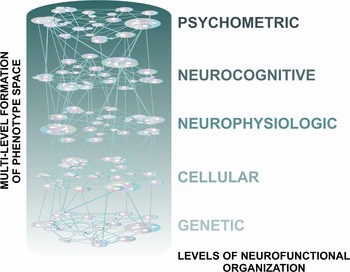
Figure 1. A theoretical extension of Cramer et al.'s Figure 4 demonstrating the multilevel formation of phenotype space.
 You have
Access
- 6
- Cited by
A network perspective on psychopathologic comorbidity is proposed by Cramer et al. as an alternative to the latent variable theory. The authors state that the network approach offers a radically different conceptualization wherein comorbidity is hypothesized to arise from direct relations of symptoms of multiple disorders, rather than from the relationship between sources of these disorders. Here, we argue that the advantages of the proposed perspective need to be viewed not only in the context of psychometry-based latent variable theory, but also in the context of existing neurophysiologic models for comorbidity.
Based on a series of neurophysiologic studies of comorbid child psychiatric disorders (attention-deficit hyperactivity disorder [ADHD] and multiple tic disorder [TD]; Yordanova et al. Reference Yordanova, Dumais-Huber and Rothenberger1996; Reference Yordanova, Dumais-Huber, Rothenberger and Woerner1997; Reference Yordanova, Heinrich, Kolev and Rothenberger2006), we have proposed a multi-level scheme of comorbidity. According to this model (Yordanova et al. Reference Yordanova, Heinrich, Kolev and Rothenberger2006), the TD+ADHD comorbidity can be specified at several different levels, ranging from neurogenetic and neurobiological to neurophysiologic and psychometric. The following argumentation is used.
Transcranial magnetic stimulation (TMS) findings have substantiated the additive model for TD+ADHD (Moll et al. Reference Moll, Heinrich, Trott, Wirth, Bock and Rothenberger2001), according to which the comorbid condition is an expression of the combination of independent nosologies. Since TMS measures reflect the background state of motor system excitability, basic subcortical-cortical (striato-thalamo-cortical) loops controlling the output from the cortical motor system (e.g., Leckman Reference Leckman2002) appear to be differentially impaired in TD and ADHD, and these impairments co-contribute separately in TD+ADHD comorbidity. Similarly, other basic neurophysiologic processes, such as sleep and its regulation, have been found to be altered differentially in TD and in ADHD, and, also consistent with the additive model, a combination of independent TD- and ADHD-related sleep disturbances was present in TD+ADHD (Kirov et al. Reference Kirov, Banaschewski, Uebel, Kinkelbur and Rothenberger2007a; Reference Kirov, Kinkelbur, Banaschewski and Rothenberger2007b). Likewise, the spontaneous theta EEG activity reflecting background neuroelectric brain states has been found to differentiate the TD and ADHD conditions, but not to distinguish the comorbid group, which further supports the additive model.
However, event-related potential studies demonstrate that when active processing demands are imposed, TD+ADHD can be classified either as a phenotype expression of TD (Yordanova et al. Reference Yordanova, Dumais-Huber and Rothenberger1996) or ADHD (Rothenberger et al. Reference Rothenberger, Banaschewski, Heinrich, Moll, Schmidt and van't Klooster2000), or as a unique nosology consistent with the interactive model for TD+ADHD (Yordanova et al. Reference Yordanova, Dumais-Huber, Rothenberger and Woerner1997; Reference Yordanova, Heinrich, Kolev and Rothenberger2006). Together, these results show that the specification of TD+ADHD comorbidity depends on the level at which psychopathological conditions are evaluated. Basic cerebral functions in TD+ADHD coexistence, such as the sleep-wake or cortical excitability and inhibition, appear to be guided by independent TD- and ADHD-related pathogenic sources. Yet, any cognitive activation involving these basic functions, such as focused expectation, uncertainty control, or early selective attention (Yordanova et al. Reference Yordanova, Dumais-Huber and Rothenberger1996; Reference Yordanova, Dumais-Huber, Rothenberger and Woerner1997; Reference Yordanova, Heinrich, Kolev and Rothenberger2006), may lead to a complex interplay of the separate pathogenic sources, which may result in highly specific neurocognitive modes of information processing in comorbid patients. At the psychometric level, behavioral parameters during neuropsychological assessment and symptom expression during clinical assessment represent the most complex stage of integration where new markers of comorbidity may emerge as either isolated or bridging characteristics.
This multi-level scheme of comorbidity interpretation (Yordanova et al. Reference Yordanova, Heinrich, Kolev and Rothenberger2006) shows that the definition of symptom space may not be limited to the psychometric domain (Cramer et al., target article), as it strongly depends on the level of organization at which the functioning of the neural substrate is quantified. Accordingly, the psychometric domain represents just one: the most fused and integral plane across a “vertical” scale where multiple “horizontal” planes of neurostructural organization exist to produce level-specific quantifiers, from molecular and neurogenetic to neurocognitive and psychometric (Fig. 1).
A theoretical extension of Cramer et al.'s Figure 4 demonstrating the multilevel formation of phenotype space.
With this account, the network perspective proposed by Cramer et al. can be extended in the following directions:
1. The network approach may encompass phenotypes at separate levels of neurofunctional organization. Overlapping and non-overlapping signatures can be extracted at each level. Disclosing level-related direct associations may not only refine comorbidity specification, but also provide important information about underlying neural mechanisms.
2. As a further extension, a broader phenotype space can be constructed to expand the definition of symptom space. Multi-level quantifiers, rather than single-level (e.g., psychometric) signatures, can be included in statistical network evaluation. The multi-disciplinary perspective stressed by Cramer et al. can certainly consider signatures derived from genetic, neurofunctional, neuroimaging, morphometric, neurotransmission, and such like, domains.
3. Constructing an integrated multi-level and multiple-domain phenotype space of signatures may enable the assessment of causality and relationships among different, yet interdependent, levels. Enlarged space entities can be analyzed in the framework of linear system concepts and methods. Importantly, nonlinear dynamic methods would extract cross-level interactions as integral descriptors of the behavior of a complex dynamic system (Rosso & Masoller Reference Rosso and Masoller2009; Rosso et al. Reference Rosso, Blanco, Yordanova, Kolev, Figliola, Schürmann and Basar2001).
A unique level-integrating principle for creating a multi-level phenotype space is provided by the concept of neuroelectric oscillations: Oscillatory signals are recorded in various brain structures (Başar et al. Reference Başar, Başar-Eroglu, Karakaş and Schürmann2001; Buzsáki & Draguhn Reference Buzsáki and Draguhn2004). The temporal and spatial synchronization of frequency-specific oscillatory networks subserves information-processing mechanisms (Varela et al. Reference Varela, Lachaux, Rodriguez and Martinerie2001). Slow-frequency oscillations from the delta, theta, and alpha frequency bands have been associated with large-scale networks of executive and cognitive processing, and fast-frequency oscillations from the beta and gamma frequency bands have been related to local processes resulting also from neuronal firing (Gray & Singer Reference Gray and Singer1989; Kirov et al. Reference Kirov, Weiss, Siebner, Born and Marshall2009; Sarnthein et al. Reference Sarnthein, Petsche, Rappelsberger, Shaw and von Stein1998; von Stein & Sarnthein Reference von Stein and Sarnthein2000). Oscillatory networks thus reflect neural functioning at different levels of organization of the neural substrate. Importantly, the synchronization of frequency-specific networks may be interdependent (Tort et al. Reference Tort, Komorowski, Manns, Kopell and Eichenbaum2009) and is also strongly modulated by the spontaneous multiple second-state variations of the default mode networks (Raichle et al. Reference Raichle, MacLeod, Snyder, Powers, Gusnard and Shulman2001). Neuroelectric oscillations have provided important markers of different mental disorders (e.g., Herrmann & Demiralp Reference Herrmann and Demiralp2005) as well as comorbid conditions (Yordanova et al. Reference Yordanova, Banaschewski, Kolev, Woerner and Rothenberger2001; Reference Yordanova, Heinrich, Kolev and Rothenberger2006) and have promoted relevant models of child psychiatric disorders (Rothenberger Reference Rothenberger2009; Sonuga-Barke & Castellanos Reference Sonuga-Barke and Castellanos2007). The relationships and dynamics of neuroelectric oscillations can therefore provide an integrating principle for the formation of multi-level space phenotype signatures, which may have a direct practical application for the identification and treatment of psychiatric disorders.