The development of the heart–lung bypass machine by GibbonReference Zareba 1 revolutionised the field of cardiothoracic surgery. By 1972, advances in oxygenator development led to extracorporeal membrane oxygenation technology. Hill et alReference Hill, O'Brien and Murray 2 successfully applied this technology to an adult with acute respiratory distress syndrome. Soeter et alReference Soeter, Mamiya, Sprague and McNamara 3 used extracorporeal life support in 1973 after surgical repair of tetralogy of Fallot. This was followed by Bartlett et alReference Bartlett, Gazzaniga, Jefferies, Huxtable, Haiduc and Fong 4 in 1976 who applied extracorporeal membrane oxygenation to a neonate with meconium aspiration. By the 1980s, extracorporeal membrane oxygenation support had become an invaluable tool for congenital heart surgery.
In 1989, the Extracorporeal Life Support Organization was established as an international consortium, maintaining a registry of extracorporeal membrane oxygenation use in active Extracorporeal Life Support Organization centres. 5 , Reference Crow, Fischer and Schears 6 In 2009, the registry contained over 40,000 extracorporeal membrane oxygenation cases, the majority of which were either neonates or children. 5 On the basis of the 2009 Extracorporeal Life Support Organization data, the overall extracorporeal membrane oxygenation survival to discharge was 62% when used for cardiac indications. Currently, cardiac indications for extracorporeal membrane oxygenation include failure to wean from cardiopulmonary bypass, peri-operative haemodynamic collapse, pulmonary hypertension, post-repair of hypoplastic left heart syndrome, or bridge to transplantation.Reference Aharon, Drinkwater and Churchwell 7 – Reference Costello, O'Brien and Wypij 13 Since 2000, post-cardiotomy extracorporeal membrane oxygenation reports have chronicled accumulating evidence for improved outcomes based on evolving selection criteria.Reference Aharon, Drinkwater and Churchwell 7 – Reference Costello, O'Brien and Wypij 13
In this paper, we review the indications and clinical outcomes of post-cardiotomy extracorporeal membrane oxygenation over the last decade with regard to evolving selection criteria and protocols and explore the ethical dilemmas arising from programmatic, economic, and moral risks that attend its application.
Evolution of selection criteria for post-cardiotomy extracorporeal membrane oxygenation
Aharon et alReference Aharon, Drinkwater and Churchwell 7 retrospectively reviewed post-cardiotomy extracorporeal membrane oxygenation patients treated from 1997 through 2000. In all, 50 children between the ages of 1 day and 11 years (median, 443 days) required extracorporeal membrane oxygenation after repair of congenital heart lesions; two of these children later received a heart transplantation. The overall hospital survival was 61% for single-ventricle physiology compared with 43% hospital survival for biventricular physiology. Trends towards increased survival were associated with shorter cross-clamp time (52 versus 112 minutes), shorter cardiopulmonary bypass time (116 versus 146 minutes), and shorter time on extracorporeal membrane oxygenation support (88 versus 102 hours). The only statistically significant predictor of mortality, however, was the presence of renal failure that required haemodialysis during extracorporeal membrane oxygenation support.Reference Aharon, Drinkwater and Churchwell 7
In 2005, Alsoufi et alReference Alsoufi, Shen and Karamlou 8 conducted a retrospective review of post-cardiotomy neonates and children treated between 2001 and 2003. In all, 36 patients between the ages of 1 day and 8 years received post-cardiotomy extracorporeal life support. Specific applications for the use of extracorporeal life support were grouped accordingly: extracorporeal life support with oxygenator as a univentricular assist device, extracorporeal membrane oxygenation for failed haemodynamics, and extracorporeal life support for biventricular disease needing only left ventricular support. Separating extracorporeal life support or extracorporeal membrane oxygenation groups resulted in differences in survival outcomes based on the method used: extracorporeal life support for single-ventricle disease (100% survival), extracorporeal membrane oxygenation (50% survival), extracorporeal life support as ventricular assist device for biventricular disease (100% survival), and extracorporeal life support for ventricular assist device converted to extracorporeal membrane oxygenation (20% survival). By univariate analysis, factors associated with survival included age >10 days and weight >3 kg at the time of surgery; single-ventricle disease; <180 hours of extracorporeal membrane oxygenation; use of extracorporeal life support without oxygenator; <2 peri-operative complications; and freedom from renal failure, sepsis, pulmonary haemorrhage, or insufficiency. However, multivariate analysis revealed no independent factor significantly associated with mortality.Reference Alsoufi, Shen and Karamlou 8
Hoskote et alReference Hoskote, Bohn and Gruenwald 9 conducted a retrospective review of infants who had extracorporeal life support post-repair of single-ventricle physiology. A total of 25 patients with a median age of 15 days – ranging from 2–139 days – were grouped for evaluation based on use of an oxygenator. In all, 19 infants had extracorporeal life support with oxygenator, and six had extracorporeal life support as ventricular assist device (no oxygenator). Findings from this study reveal an overall survival to discharge rate of 44% and estimated 38% overall survival at 1000 days since extracorporeal life support. Survival rate was shown to be higher for elective versus emergent extracorporeal life support (55% versus 36%), for extracorporeal life support for ventricular assist device alone versus extracorporeal life support with oxygenator (60% versus 40%), and for duration extracorporeal life support <120 hours versus extracorporeal life support >120 hours (72% versus 50%). The period of vulnerability was bimodal: during the first 24–48 hours and at 7.5 days post-operatively. Univariate analysis revealed statistically significant risk factors in non-survivors: multi-organ failure, renal failure, sepsis, and presence of arrhythmia before extracorporeal membrane oxygenation support.Reference Hoskote, Bohn and Gruenwald 9
Atik et alReference Atik, Castro and Succi 10 described their use of post-cardiotomy extracorporeal membrane oxygenation in their 2008 retrospective review of 11 patients treated from October, 2005 to January, 2007. In all, 10 patients had congenital heart disease, nine of whom had surgical repair. The median age of the 10 patients was 58.5 days – ranging from 3 days to 8.3 years – and median body weight was 3.9 kg. Extracorporeal membrane oxygenation was initiated pre-operatively in two patients, although a patient with severe hypoplasia of the ascending aorta did not undergo surgical repair. There were eight patients who required post-cardiotomy extracorporeal membrane oxygenation owing to post-cardiotomy low cardiac output, failure of cardiac resuscitation, or severe respiratory failure. The mean duration for extracorporeal membrane oxygenation support was 58 ± 37 hours. Actuarial survival was 40%, 30%, and 20% at 30 days, 3 months, and 24 months, respectively. There were three infants who survived to hospital discharge, with two-thirds at functional class I. The most frequent complication was coagulopathic bleeding with surgical re-exploration for haemostasis. In all, five patients were successfully weaned from extracorporeal membrane oxygenation and three of these patients were discharged from the hospital. Sepsis, renal failure, or respiratory distress ultimately led to cardiogenic shock, multiple organ dysfunction syndrome, and death for six patients.Reference Atik, Castro and Succi 10
In their 2010 study, Kumar et alReference Kumar, Zurakowski and Dalton 11 describe post-cardiotomy extracorporeal membrane oxygenation patient outcomes. In their retrospective review of patients treated from January, 2003 to June, 2008, 58 patients required post-cardiotomy extracorporeal membrane oxygenation. The median age was 12 days and median weight was 3.3 kg. A total of 31 patients had surgical repair for single-ventricle physiology, 27 of whom had biventricular repair. The median duration for extracorporeal membrane oxygenation support was 6 days – ranging from 3–10 days, although four patients required extracorporeal membrane oxygenation support a second time. There were 17 patients (33%) who experienced neurologic complications, with elevated lactate levels at 24 hours identified as the only significant factor associated with neurologic complications. There were 18 patients (31%) who had renal failure. Findings from this study revealed several major indications for extracorporeal membrane oxygenation support, which included cardiac arrest (50%), failure to wean from cardiopulmonary bypass (33%), low cardiac output (14%), and hypoxia (3%). Increased risk of hospital mortality was associated with higher volumes of transfused blood, duration of extracorporeal membrane oxygenation support, and sepsis.Reference Kumar, Zurakowski and Dalton 11
Polimenakos et alReference Polimenakos, Wojtyla and Smith 12 retrospectively examined the outcomes of neonates with functional single-ventricle who required post-cardiotomy extracorporeal membrane oxygenation. In all, 14 neonates required post-cardiotomy extracorporeal membrane oxygenation – Norwood operation for hypoplastic left heart syndrome in 10 patients. The mean age and weight were 7.9 days and 3.4 kg, respectively. Extracorporeal membrane oxygenation was implemented with rapid deployment protocol followed by median extracorporeal membrane oxygenation duration of 6 days. A total of eight patients survived to discharge (57%), seven patients survived intermediate-term (mean interval, 13.2 months), and one required heart transplantation. Although not statistically significant, factors associated with survival include early achievement of negative fluid balance, early evidence of ventricular recovery, and prolonged mechanical ventilation (>15 days). The risk factors for mortality include multiple system organ failure, sepsis or necrotising enterocolitis, and renal failure. Interestingly, the only statistically significant predictor of mortality was elevated serum peak lactate level (>8.9 mmol/L) within 24 hours of extracorporeal membrane oxygenation support.Reference Polimenakos, Wojtyla and Smith 12
These studies discuss short- and intermediate-term clinical outcomes with factors for survival and predictors of mortality. Interest in long-term outcomes has increased, yet few studies have explored long-term physical and psychosocial outcomes. Costello et alReference Costello, O'Brien and Wypij 13 explored quality of life of paediatric cardiac patients who required post-cardiotomy extracorporeal membrane oxygenation support and compared them with a matched sample from the general United States population. Among 397 children requiring extracorporeal membrane oxygenation support, in-hospital mortality was 51%, and 6% of survivors died after discharge – 8% >18 years of age and 9% <5 years of age at the time that the study was reported. The patient selection criteria for the follow-up study were patients between the ages of 5 and 18 years of age at the time of the study; 94 patients were eligible. The health-related quality-of-life questionnaire revealed physical capability scores to be significantly lower than those of the general population, whereas psychosocial scores were similar to the matched sample. The authors suggest that the similarity of quality-of-life scores to that of the general population supports the current practice of extracorporeal membrane oxygenation.Reference Costello, O'Brien and Wypij 13
Another consideration is cost-efficiency of post-cardiotomy extracorporeal membrane oxygenation. The real cost of extracorporeal membrane oxygenation is difficult to assess, because accounting practices vary between institutions. Crow et alReference Crow, Fischer and Schears 6 describe cost analysis in the context of life-years gained. When considering costs, they suggest that cost analysis should include expense of inter-facility transport, as well as pre- and post-extracorporeal membrane oxygenation hospital charges. Extracorporeal membrane oxygenation service reimbursement is inconsistent among institutions owing to payer reimbursement variability, lack of codes for decannulation, and differences in intensive care unit billing practices.Reference Crow, Fischer and Schears 6 No prospective cost-effective analyses for post-cardiotomy extracorporeal membrane oxygenation have been conducted. However, retrospective studies of extracorporeal membrane oxygenation use in other populations suggest that early use of extracorporeal membrane oxygenation may lower use of resources and overall hospital costs.Reference Mahle, Forbess, Kirshbom, Cuadrado, Simsic and Kanter 14 In addition, these studies suggest that the cost was well within the recommended range of $4500–$30,000 per life-year saved.Reference Mahle, Forbess, Kirshbom, Cuadrado, Simsic and Kanter 14 Prospective studies to evaluate the cost-effectiveness of this technology will yield important information for care-improvement strategies within the limits of economic realities.
Ethical issues
Moral risks related to post-cardiotomy extracorporeal membrane oxygenation may be encountered before, during, and after the open heart procedure. At each stage of the decision-making process, moral risks are influenced by many factors that may result in decisions that are contrary to the best interests of the patient, parents, or use of shared societal resources. These moral risks centre around the selection process, informed consent,Reference Berg, Appelbaum, Lidz, Parker and Lidz 15 , Reference Manson and O'Neill 16 decision making in the operating room, and post-operative maintenance of extracorporeal membrane oxygenation.Reference Steinhorn 17 Consideration of such risks is affected by questions of haemodynamic stability, haematologic compromise, neurologic status, and family concerns.
Informed consent is a complex process that has no universally accepted standard,Reference Berg, Appelbaum, Lidz, Parker and Lidz 15 , Reference Manson and O'Neill 16 is highly dependent on each clinician's understanding of the entire process, and is generally practised on the basis of the principles of the “art of medicine”.Reference Berg, Appelbaum, Lidz, Parker and Lidz 15 The process involves conveying information to the patient or the patient's family based on known outcome data, the clinician's experience and personality, and complex language interaction between the patient and the physician.Reference Manson and O'Neill 16 Presently, there are no extracorporeal membrane oxygenation-related specific clinical standards to guide clinicians as to how much information should be included in the informed consent process. Some clinicians find the idea of a “laundry list” as too impersonalReference Berg, Appelbaum, Lidz, Parker and Lidz 15 , Reference Manson and O'Neill 16 and likely to interfere with the natural discussion that develops during an encounter. Nevertheless, physicians perform many functions using a predetermined process that ensures comprehensive inquiry and performance, such as the physical examination, methodical inspection of a chest roentgenogram or echocardiogram, and performance of an exploratory laparotomy. Congenital heart operations are not so numerous that specific guidelines based on large databasesReference Mavroudis and Jacobs 18 could not be developed to assist the clinician in the informed consent process. Attention to the delicate balance between optimism and pessimism,Reference Mavroudis, Mavroudis, Farrell, Jacobs, Jacobs and Kodish 19 accurate transfer of information, 20 and professional demeanour are clearly important in preparing the patient and family for the procedure. Moreover, informed consent is not a single event at a point in time; rather, it is an ongoing process whenever clinical decisions are being made. Post-cardiotomy extracorporeal membrane oxygenation need not be discussed in the pre-operative consent discussion. Very few surgeons would discuss possible need for extracorporeal membrane oxygenation before an operation for atrial septal defect closure in a 4-year-old child; however, most would discuss this modality for repair of anomalous left main coronary artery from the pulmonary artery with poor ventricular function in a 10-month-old infant.
Few would disagree with the idea that physicians should do the right thing, that is, act virtuously. Although it is beyond the scope of this paper to offer lengthy discourse on virtue, a well-known viewpoint is that of Aristotle, 21 who offered a definition of moral virtue as “the habit of choosing the golden mean, between extremes, as it pertains to an emotion or action”. The habit of choosing refers to a routine of decision making developed from a base of knowledge amassed over a lifetime of learning from personal experience, as well as from laws and religious values. This moral self-education creates the basis on which a reasonable person makes appropriate decisions and performs the appropriate actions. The habit of choosing also contributes to the idea of conscience. This term is suffused with moral, religious, and philosophical overtones. SulmasyReference Sulmasy 22 offers this definition: “Conscience is defined as having two interrelated parts: (1) a commitment to morality itself; to acting and choosing morally according to the best of one's ability, and (2) the activity of judging that an act one has done or about which one is deliberating would violate that commitment”. Practical wisdom, phronesis to the Greeks, is the virtue of making decisions by applying accumulated knowledge that comes from the habitual practice of basing actions on thoughtful deliberation. In simplified terms, learn what is right, remember what is right, apply what is right, and practice what is right. These tenets should underlie the decision-making process during the entire post-cardiotomy extracorporeal membrane oxygenation experience.
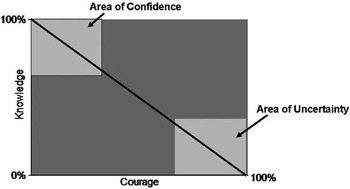
Learning what is right involves scientific knowledge, as well as moral principles. The more clinicians assimilate reliable data from the published literature, the greater the chance that they will make the most appropriate decision. In the absence of sufficient scientific knowledge or in the presence of unusual circumstances despite sufficient scientific knowledge, courage may be required to make the appropriate clinical and moral choices.Reference Mavroudis 23 , Reference Mavroudis 24 In general, there is an inverse relationship between knowledge and courage when it pertains to acting with certainty or uncertainty (Fig 1).Reference Mavroudis 23 Courage may be required in making decisions when few data enable the clinician to act with certainty. These are the times when moral character and informed scientific decisions matter the most. Perhaps the most difficult moral dilemma regarding the initiation of post-cardiotomy extracorporeal membrane oxygenation occurs when the surgeon must decide in the operating room because of the acute need for intervention: if the decision is delayed, the patient may die. Courage may be required to make the right choice.
A graph inversely relating courage and knowledge. (Reproduced with permission from MavroudisReference Mavroudis 23 : Ann Thorac Surg. 75: 1366–1371. Copyright © 2003 Elsevier for Society of Thoracic Surgeons.)

Relative contraindications to post-cardiotomy extracorporeal membrane oxygenation are uncontrolled bleeding, severe neurologic injury, aortic or neoaortic regurgitation, and pre-maturity. 25 Despite these established relative contraindications, the emergent need for extracorporeal membrane oxygenation in the operating room raises the question of whether it can ever be contraindicated. After all, failure to wean from cardiopulmonary bypass implies that the patient is already on extracorporeal life support, and thus extracorporeal membrane oxygenation is merely continuation of current treatment. Moreover, neurologic injury cannot be a contraindication because it is impossible to assess during cardiopulmonary bypass. Even if the operative repair were so inadequate that cardiac recovery is highly improbable, there is always the possibility of cardiac transplantation. Such thoughts as this permit embracing the tacit maxim, “nobody dies in the operating room”.
What are the ramifications of “dying in the operating room” and what are the moral risks? When the patient dies in the operating room, several notable administrative requirements and emotional experiences are triggered. The administrative tasks require reporting the death to the coroner's office, documenting the failed operation in the operative report, and completing the death certificate. The emotional experiences involve the grief of the loss of life of a human being; dread of informing the loving, hopeful, trusting, and perhaps unprepared parents that their child has died; the ominous reflective process of informing and conferring with the referring physicians and colleagues; and the anticipated critical deliberations of the eventual morbidity and mortality conference.
Although many of these duties and emotions would occur whether the child were to die in the operating room or paediatric intensive care unit, underlying issues in operating room cases could bias one's judgment when death is virtually inevitable. Transferring a hopeless case to the paediatric intensive care unit on extracorporeal membrane oxygenation sends the message that there is still hope and ushers in enormous consumption of resources. Technically, the patient is still alive, and transferring the patient to the paediatric intensive care unit on extracorporeal membrane oxygenation gives the family time to begin the grieving process. Moreover, death in the paediatric intensive care unit undercuts attribution of the outcome unequivocally to the surgeon's technique, because extending life with extracorporeal membrane oxygenation conveys a sense that the disease process has caused death.
Notwithstanding such rationalisations, using extracorporeal membrane oxygenation to permit transfer of a child facing virtually inevitable death to the paediatric intensive care unit in order to avoid unfavourable mortality statistics or the emotional burdens of a death in the operating room is unethical and should never be done. Other related principles can also be cited. When the patient does not meet the specified criteria either for starting or for continuing extracorporeal membrane oxygenation, “It's his only chance” cannot be justified. The belief that one must attempt to use technology in every case in which it is potentially helpful has been called the technological imperative. The term has different meanings in different disciplines, but generally can be stated in this way: “The doctrine of the technological imperative is that because a particular technology means that we can do something (it is technically possible) then this action either ought to (as a moral imperative), must (as an operational requirement) or inevitably will (in time) be taken”.Reference King and Henderson 26 , Reference Richards 27 In medicine and medical ethics, it is often used to denote the deeply embedded attitude that patient care demands that we do everything possible for the patient. In other words, if a technology exists that could be helpful for an illness, it must be used, regardless of the context of the illness or the utility of the application. The notion of technological imperative underlying medical decision making over several decades helped launch and accelerate empowerment of patients in the death with dignity movement 28 and growth of the idea of shared decision making.Reference Stiggelbout, Van der Weijden and de Wit 29 In the case of post-cardiotomy extracorporeal membrane oxygenation, some surgeons may feel compelled to use it because it is there, regardless of whether it makes sense in the full context of the situation. This kind of thinking should be assiduously avoided.
The most important consideration is the patient-centred perspective. Do the burdens of extracorporeal membrane oxygenation outweigh the benefits? Is the child suffering without associated prospect of improvement? What is the expected quality of life from the perspective of the child; will he or she survive in the long term? Scientific data help to shape medical judgment and a robust informed consent process, but ultimately the best decision making comes from attention to data informed by ethical deliberation, and in this paper particularly the special ethical considerations in the care of children.Reference Diekema 30 , Reference Miller 31
When considering whether to start or to continue extracorporeal membrane oxygenation, the projected expenditures of time, effort, and cost should be measured against a pre-set goal for expected recovery. This goal should be set in advance by the extracorporeal membrane oxygenation programme, and should aim for an expected recovery probability consistent with published norms and collective experience of the patient care team. Several important factors should be considered in continuing extracorporeal membrane oxygenation, once begun. Daily haemodynamic, haematologic, and neurologic evaluations should be performed in the context of the overall goals of treatment. Realistic evidence-based projections for meaningful survival and expected quality of life, as well as the therapies and technologies required to achieve them, must be weighed in re-formulating the treatment plan at regular intervals, with the ongoing informed consent of the family. Compassion fatigueReference Meadors and Lamson 32 within the patient care team imposes constant pressure that requires careful attention and resolution. Steady improvement of the patient's condition can be expected in about 50–70% of post-cardiotomy extracorporeal membrane oxygenation cases.Reference Crow, Fischer and Schears 6 When positive clinical progress is not made, the healthcare delivery team, in concert with the family, must make the inevitable decision to withdraw treatment.
The short- and mid-term results of post-cardiotomy extracorporeal membrane oxygenation are improving. Indications and contraindications are being developed on the basis of overall clinical experience. Ethical concerns, however, must have a central role in this process, as the preceding discussion indicates. Thorough understanding of the relevant scientific literature, heightened awareness of moral risks, and incorporation of ethical tenets in clinical deliberation will guide the clinician to do the right thing.