Implications
Rearing replacement beef heifers in drylots with high stocking density altered stress-related and physiological responses, and delayed puberty attainment compared with rearing heifers in pastures with low stocking density. Moreover, these outcomes were independent of heifer nutritional status and growth rate, but were associated with reduced physical activity and increased chronic stress most likely caused by the higher stocking density and/or greater degree of confinement. Therefore, housing management and resultant stocking density should be considered in heifer development programs to optimize reproductive and overall efficiency of cow-calf operations.
Introduction
Public scrutiny on beef production systems is growing rapidly, and cattle welfare is one of the main targets for attention (Grandin, Reference Grandin2014). Cattle producers are currently challenged with improving production efficiency while fostering animal well-being (Thornton, Reference Thornton2010). Hence, management regimens that increase beef cattle productivity and promote animal welfare are warranted to enhance profitability in beef cattle systems, address the current and projected increases in beef demand, and satisfy industry and public requirements for proper animal care.
Stocking density is one example of management that impact welfare and productive efficiency in cattle operations (Fraser et al., Reference Fraser, Duncan, Edwards, Grandin, Gregory, Guyonnet, Hemsworth, Huertas, Huzzey, Mellor, Mench, Spinka and Whay2013). In typical US spring-calving cow-calf herds, replacement heifers are weaned in the fall and exposed to their first breeding season the following spring. Hence, these heifers are commonly reared in drylot systems to facilitate feeding and management during the fall and winter (Olson et al., Reference Olson, Jaeger and Brethour1992). However, rearing cattle in areas with elevated stocking density is known to stimulate stress reactions (Grandin, Reference Grandin2014), whereas acute and chronic stress directly impairs reproductive function in beef cattle (Dobson and Smith, Reference Dobson and Smith2000). Accordingly, Petersen et al. (Reference Petersen, Muscha, Roberts and Waterman2014) reported that heifers developed in drylots (11 m2/heifer) gained more BW but had increased heart rate and rested less compared with contemporary heifers reared on native range (7400 m2/heifer). Mulliniks et al. (Reference Mulliniks, Hawkins, Kane, Cox, Torrell, Scholljegerdes and Petersen2013) also indicated that heifers reared in drylots had greater average daily gain (ADG), but reduced pregnancy rates compared with cohorts reared on range pastures. Based on this information, it was hypothesized that elevated stocking density impairs welfare and reproductive development in beef heifers. To test this hypothesis, this experiment compared growth, physical activity, stress-related and physiological responses, and puberty attainment in heifers reared on high (drylots) or low (pastures) stocking densities from weaning until the start of their first breeding season.
Material and methods
This experiment was conducted at the Oregon State University – Eastern Agricultural Research Center (Burns, OR, USA) from September 2015 until March 2016 (days 0 to 182). All animals were cared for in accordance with acceptable practices and experimental protocols reviewed and approved by the Oregon State University Institutional Animal Care and Use Committee (no. 4757).
Animals and treatments
On day 0 of the experiment, 60 Angus×Hereford heifers were ranked by age and BW (initial age=210±2 days; initial BW=220±2 kg) and allocated to: (a) one of three drylot pens (10×14 m pens; 10 heifers/pen), resulting in a stocking density of 14 m2/heifer (HIDENS; n=3), or (b) one of three meadow foxtail (Alopecurus pratensis L.) pastures (25 ha pastures; 10 heifers/pasture), resulting in a stocking density of 25 000 m2/heifer (LOWDENS; n=3). Pasture and drylot pens were located ~800 and 80 m, respectively, from the handling facility where cattle were processed during the present experiment. Treatments were designed to represent stocking densities of drylot- or pasture-based heifer development programs utilized at the Oregon State University – Eastern Agricultural Research Center, and representative of commercial cow-calf operations (Cooke et al., Reference Cooke, Bohnert, Cappellozza, Mueller and DelCurto2012; Reis et al., Reference Reis, Cooke, Cappellozza, Marques, Guarnieri Filho, Rodrigues, Bradley, Mueller, Keisler, Johnson and Bohnert2015). In addition, HIDENS heifers were exposed to the stocking density recommended for growing cattle reared in drylot systems (Albin and Thompson, Reference Albin and Thompson1990; Hurnik, Reference Hurnik1991).
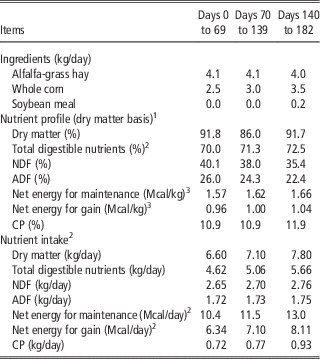
All pastures utilized herein were harvested for hay before the beginning of this experiment, and negligible forage was available for grazing to LOWDENS heifers throughout the experimental period due to wintery conditions. Heifers were weaned 7 days before the beginning of the experiment, and maintained as a single group within a 6-ha pasture with ad libitum access to alfalfa-grass hay until day 0. During the experimental period (days 0 to 182), all heifers received the same limited-fed diet described in Table 1, in addition to ad libitum access to water and a commercial mineral and vitamin mix (Cattleman’s Choice; Performix Nutrition Systems, Nampa, ID, USA) containing 14% Ca, 10% P, 16% NaCl, 1.5% Mg, 6000 ppm Zn, 3200 ppm Cu, 65 ppm I, 900 ppm Mn, 140 ppm Se, 136 IU/g of vitamin A, 13 IU/g of vitamin D3 and 0.05 IU/g of vitamin E. Diets were offered daily at 0800 h in feed bunks with similar linear space across treatments (0.7 m/heifer). Hay was offered separated from concentrate, and the entire diet was completely consumed within 24 h after being offered.
Composition and nutrient profile of diets offered during the experiment

1 Values obtained from a commercial laboratory wet chemistry analysis (Dairy One Forage Laboratory, Ithaca, NY, USA).
2 Calculated with the following equations (NRC, 2000): net energy for maintenance=1.37 metabolizable energy−0.138 (metabolizable energy)2+0.0105 (metabolizable energy)3−1.12; net energy for gain=1.42 metabolizable energy−0.174 (metabolizable energy)2+0.0122 (metabolizable energy)3–0.165, given that metabolizable energy=digestible energy×0.82, and 1 kg of total digestible nutrients=4.4 Mcal of digestible energy.
Sampling
Hay and concentrate samples were collected at the beginning of the experiment, and analyzed for nutrient content by a commercial laboratory (Dairy One Forage Laboratory, Ithaca, NY, USA). Samples were analyzed in triplicates by wet chemistry procedures as reported by Reis et al. (Reference Reis, Cooke, Cappellozza, Marques, Guarnieri Filho, Rodrigues, Bradley, Mueller, Keisler, Johnson and Bohnert2015). Net energy for maintenance (NEm) and net energy for gain (NEg) were calculated using the equations proposed by the NRC (2000). Nutritional profile of the diets is described in Table 1.
Heifer shrunk BW was recorded after 16 h of feed and water withdrawal on days −3 and 183 for ADG calculation. Heifer temperament was assessed via chute score, exit velocity and overall temperament score as described by Cooke (Reference Cooke2014) on days 0 and 182. On day 0, heifers were also fitted with a pedometer (HJ-321; Omron Healthcare, Inc., Bannockburn, IL, USA) placed inside a polyester patch (HeatWatch II; CowChips, LLC, Manalapan, NJ, USA) fixed behind their right shoulder to assess physical activity (Haley et al., Reference Haley, Bailey and Stookey2005; Knight et al., Reference Knight, Bailey, Faulkner and Schafer2015). Pedometers had the capability to store daily data for 7 consecutive days, and remained in heifers throughout the experimental period.
Each week during the experiment (days 0 to 182), heifer full BW and pedometer results were recorded, and blood samples were collected via jugular venipuncture into commercial blood collection tubes (Vacutainer, 10 ml; Becton Dickinson, Franklin Lakes, NJ, USA) with 158 US Pharmacopeial Convention units of freeze-dried sodium heparin for plasma collection. If pedometer malfunctioned or it was lost, a new pedometer was inserted during the weekly handling and data from the previous week was considered missing. Pedometer data from the day of sampling was discarded to prevent confounding effects between treatments and additional activity due to cattle gathering and handling. All plasma samples were analyzed for progesterone concentrations to estimate onset of puberty. Heifers were considered pubertal once plasma progesterone concentrations were ⩾1.0 ng/ml, followed by a cyclic pattern of plasma progesterone < and ⩾1.0 ng/ml suggestive of normal estrous cycles (Reis et al., Reference Reis, Cooke, Cappellozza, Marques, Guarnieri Filho, Rodrigues, Bradley, Mueller, Keisler, Johnson and Bohnert2015). Puberty attainment was declared at the first sampling that resulted in plasma progesterone ⩾1.0 ng/ml. Heifer age and BW at puberty was calculated based on weekly full BW measurements and heifer age at the week of puberty attainment. Heifer full BW on day 182 was also used to estimate the percentage of mature BW at the end of the experiment, based on the mature BW of the cowherd utilized herein (545 kg; Marques et al. Reference Marques, Cooke, Rodrigues, Cappellozza, Larson, Moriel and Bohnert2016). Plasma samples collected on days 0, 28, 56, 84, 112, 140, 161 and 182 were also analyzed for concentrations of cortisol.
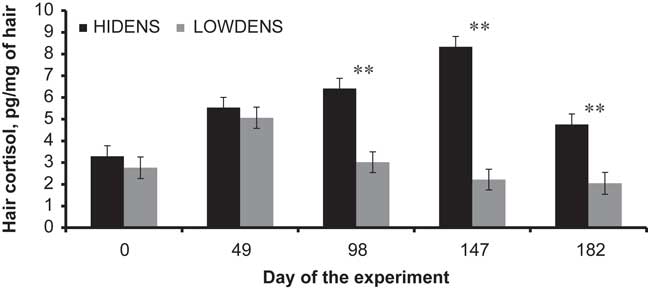
On days 0, 49, 98, 147 and 182, hair samples were collected from the tail switch (Burnett et al., Reference Burnett, Madureira, Silper, Nadalin, Tahmasbi, Veira and Cerri2014) for analysis of hair cortisol concentrations. Within each sampling, hair was collected from an area that has not been previously sampled. Hair was collected using scissors as close to the skin as possible, and the hair material closest to the skin (2.5 cm of length, 300 mg of weight) was stored at −80°C until processed for cortisol extraction. On days 28, 102 and 175, blood samples were also collected via jugular venipuncture into PAXgene tubes (BD Diagnostics, Sparks, MD, USA) for subsequent whole blood RNA isolation and analysis of heat shock protein (HSP) 70, HSP72, ribosomal protein 9 and β2-microglobulin mRNA expression in whole blood cells via real-time quantitative reverse transcription (RT)-PCR.
Laboratory analyses
For plasma collection, blood samples were placed immediately on ice after sampling, subsequently centrifuged (2500×g for 30 min; 4°C), and plasma stored at −80°C on the same day of collection. Plasma concentrations of progesterone and cortisol were analyzed using chemiluminescent enzyme immunoassays (Immulite 1000; Siemens Medical Solutions Diagnostics, Los Angeles, CA, USA). The intra- and interassay CV were, respectively, 5.1% and 5.8% for progesterone and 4.8% and 7.0% for cortisol.
Cortisol was extracted from hair samples based on the procedures described by Moya et al. (Reference Moya, He, Jin, Wang, Penner, Schwartzkopf-Genswein and McAllister2013). In brief, hair samples were cleaned with warm water (37°C) for 30 min, and dried at room temperature for 24 h. Hair samples were then washed twice with isopropanol, dried at room temperature for 120 h, and ground in a 10-ml stainless steel milling cup with a 12-mm stainless steel ball (Mixer Mill MM400 ball mill; Retsch, Hannover, Germany) for 5 min at a frequency of 30 repetitions/s. A quantity of 20 mg of ground hair and 1 ml of methanol were combined into a 7-ml glass scintillation vial, sonicated for 30 min, and incubated for 18 h at 50°C and 100 r.p.m. for steroid extraction. Upon incubation, 0.8 ml of methanol was transferred to a 2-ml microcentrifuge tube and evaporated at 45°C. Samples were reconstituted in 100 μl of the phosphate-buffered saline supplied with a salivary cortisol ELISA kit (High Sensitivity 1-E3002; Salimetrics Expanded Range, State College, PA, USA), and stored at −80°C. Samples were analyzed for cortisol concentrations using the aforementioned ELISA kit, whereas intra- and inter-assay CV were, respectively, 5.8% and 7.3%.
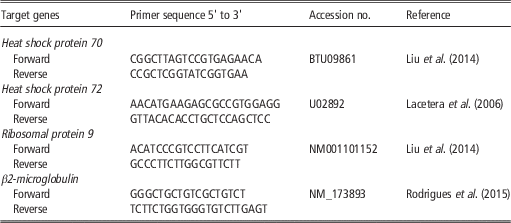
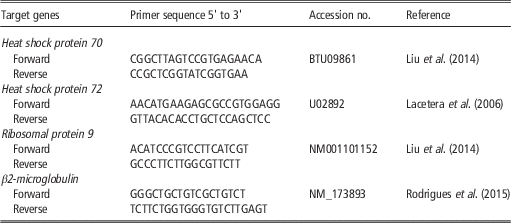
Upon collection, PAXgene tubes were stored at room temperature overnight and then at −80°C until RNA isolation. Total RNA was extracted from whole blood samples using the PAXgene Blood RNA Kit (Qiagen, Valencia, CA, USA). Quantity and quality of isolated RNA were assessed via UV absorbance (NanoDrop Lite; Thermo Fisher Scientific, Wilmington, DE, USA) at 260 nm and 260/280 nm ratio, respectively. Extracted whole blood RNA (120 ng) was reverse transcribed using the High-Capacity cDNA Reverse Transcription Kit with random hexamers (Applied Biosystems, Foster City, CA, USA). Real-time RT-PCR was completed using the Fast SYBR Green Master Mix (Applied Biosystems) and gene-specific primers (20 pM each; Table 2) with the StepOne Real-time PCR system (Applied Biosystems), according to procedures described by Rodrigues et al. (Reference Rodrigues, Cooke, Marques, Arispe, Keisler and Bohnert2015). At the end of each RT-PCR, amplified products were subjected to a dissociation gradient (95°C for 15 s, 60°C for 30 s and 95°C for 15 s) to verify the amplification of a single product by denaturation at the anticipated temperature. A sample of each amplified product was purified with the QIAquick PCR purification kit (Qiagen) and sequenced at the Oregon State University – Center for Genome Research and Biocomputing to verify the specificity of amplification. All amplified products represented only the genes of interest. Responses were quantified based on the threshold cycle (C
T
), the number of PCR cycles required for target amplification to reach a predetermined threshold. The C
T
responses from HSP70 and HSP72 were normalized to the geometrical mean of C
T
values from ribosomal protein 9 and β2-microglobulin (Vandesompele et al., Reference Vandesompele, de Preter, Pattyn, Poppe, Van Roy, de Paepe and Speleman2002). The CV for the geometrical mean of ribosomal protein 9 and β2-microglobulin C
T
values across all samples was 2.5%. Results are expressed as relative fold change (
 $$2^{{{\minus}\Delta \Delta C_{T} }} $$
), as described by Rodrigues et al. (Reference Rodrigues, Cooke, Marques, Arispe, Keisler and Bohnert2015).
Primer sequences, accession number and reference for all gene transcripts analyzed by real-time reverse transcriptase-PCR
Statistical analysis
All data were analyzed using pen or pasture (three replications per treatment) as experimental unit, with the MIXED or GLIMMIX procedure of SAS (SAS Institute Inc., Cary, NC, USA) for quantitative and binary data, respectively, and Satterthwaite approximation to determine the denominator df for the tests of fixed effects. One heifer from the LOWDENS treatment was already pubertal at the beginning of the experiment; hence, results from this heifer were removed from the experiment. All data were analyzed using replication (treatment) and heifer (replication) as random effects. The model statement used for ADG, initial and final BW, initial and final temperament variables, as well as heifer BW and age at puberty contained the effects of treatment. The model statement for puberty attainment, physical activity and physiological variables contained the effects of treatment, day and the treatment×day interaction. The specified term used in the repeated statement was day, the subject was heifer (replication), and the covariance structure utilized was autoregressive, which provided the best fit for these analyses according to the Akaike information criterion. Results are reported as least square means. Significance was set at P⩽0.05 and tendencies were determined if P>0.05 and ⩽0.10. Results are reported according to effect of treatment if no interactions were significant, or according to the highest order interaction detected.
Results
Growth and physical activity
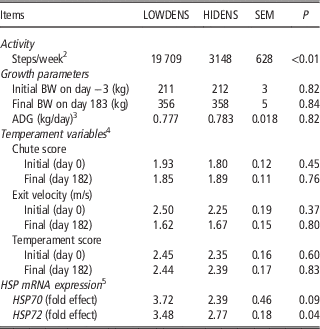
A treatment effect was detected (P<0.01) for physical activity, given that LOWDENS had more steps/week compared with HIDENS heifers throughout the experiment (Table 3). No treatment differences (P=0.82) were detected for heifer BW and ADG during the experimental period (Table 3). In addition, heifer full BW and percentage of mature BW at the end of the experiment (day 182) were similar (P=0.57) between HIDENS and LOWDENS heifers (364 and 368 kg of full BW, SEM=5; 66.8% and 67.6% of mature BW, SEM=1.0; respectively).
Activity, growth parameters, temperament variables and whole blood mRNA expression of heat shock proteins (HSP) in heifers reared in low stocking density (25 000 m2/heifer; LOWDENS, n=3) or high stocking density (14 m2/heifer; HIDENS, n=3)Footnote 1

1 From days 0 to 182, HIDENS heifers were reared in one of three drylot pens (10×14 m pens; 10 heifers/pen) and LOWDENS heifers were reared in one of three meadow foxtail (Alopecurus pratensis L.) pastures (25 ha pastures; 10 heifers/pasture).
2 Based on pedometers (HJ-321; Omron Healthcare, Inc., Bannockburn, IL, USA) assessed every 7 days during the experimental period.
3 Calculated using initial (day −3) and final (day 183) shrunk BW, which was recorded after 16 h of feed and water withdrawal.
4 According to the techniques described by Cooke (Reference Cooke2014), and evaluated on days 0 and 182 of the experiment.
5 Samples collected on days 28, 102 and 175 of the experiment, processed and evaluated for mRNA expression according to Rodrigues et al. (Reference Rodrigues, Cooke, Marques, Arispe, Keisler and Bohnert2015). The treatment×day interaction was not significant (P=0.24); hence, results are reported according to main treatment effects.
Physiological parameters
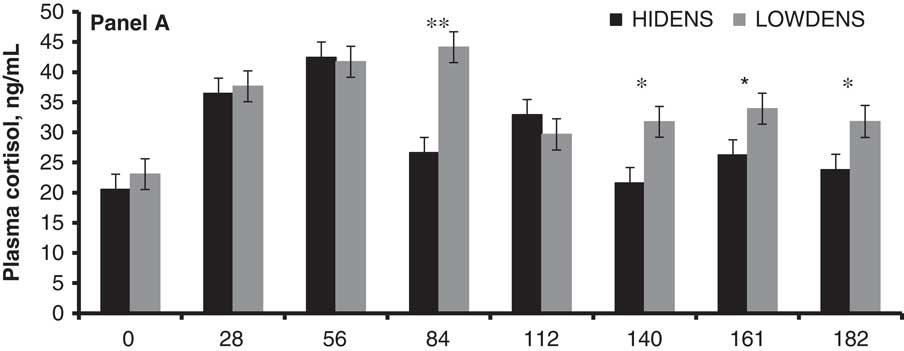
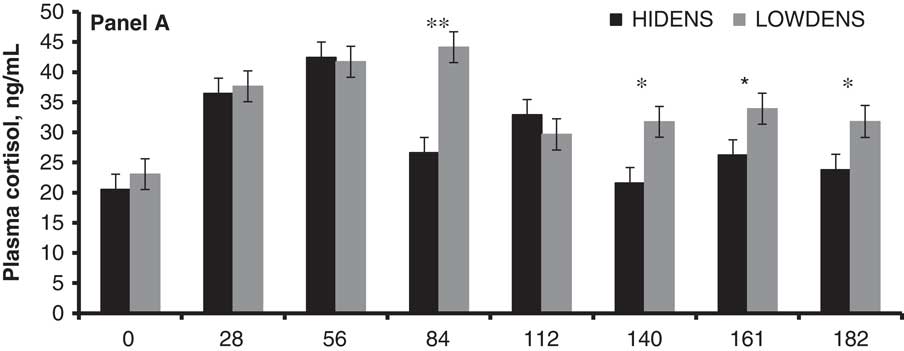
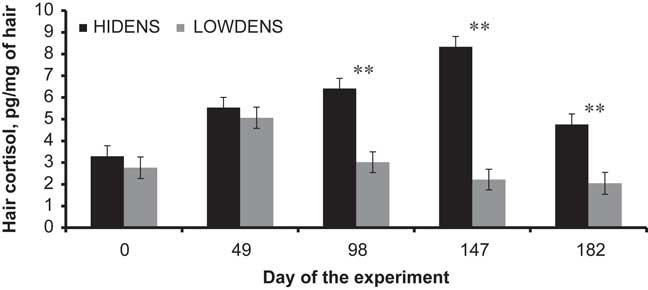
A treatment×day interaction was detected (P<0.01) for plasma cortisol concentration (Figure 1), which was greater (P⩽0.05) in LOWDENS compared with HIDENS heifers on days 84, 140, 161 and 182 of the experiment. A treatment×day interaction was also detected (P<0.01) for hair cortisol concentrations, which were greater (P<0.01) for HIDENS compared with LOWDENS heifers on days 98, 147 and 182 (Figure 2). Heifers from the LOWDENS group had greater (P=0.04) mean mRNA expression of HSP72, and tended (P=0.09) to have greater mean mRNA expression of HSP70 compared with HIDENS heifers during the experiment (Table 3; treatment×day interaction, P=0.26).
Plasma cortisol concentrations from heifers reared in low stocking density (25 000 m2/heifer; LOWDENS; n=3) or high stocking density (14 m2/heifer; HIDENS; n=3) from days 0 to 182 of the experiment. A treatment×day interaction was detected (P<0.01). Within days: *P⩽0.05, **P⩽0.01.
Cortisol concentrations in tail switch hair from heifers reared in low stocking density (25 000 m2/heifer; LOWDENS; n=3) or high stocking density (14 m2/heifer; HIDENS; n=3) from days 0 to 182 of the experiment. A treatment×day interaction was detected (P<0.01). Within days: **P⩽0.01.
Temperament parameters
No treatment differences were detected for temperament traits (P=0.37), given that LOWDENS and HIDENS heifers had similar chute score, exit velocity and overall temperament score at the beginning and end of the experiment (Table 3)
Puberty attainment
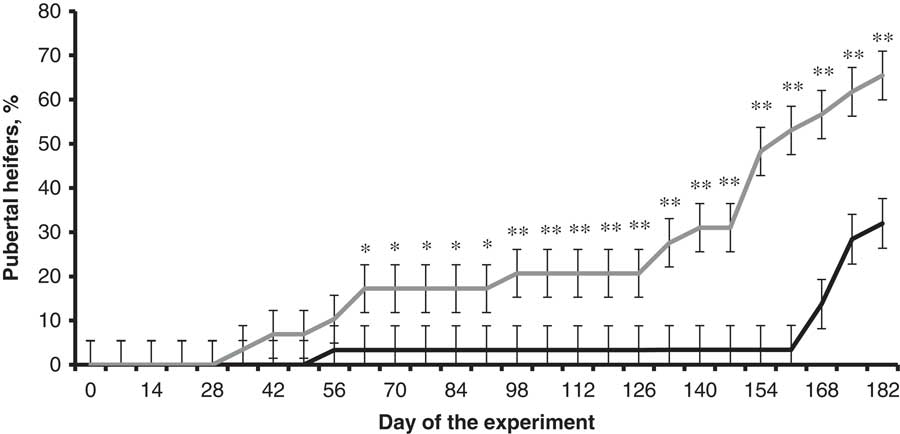
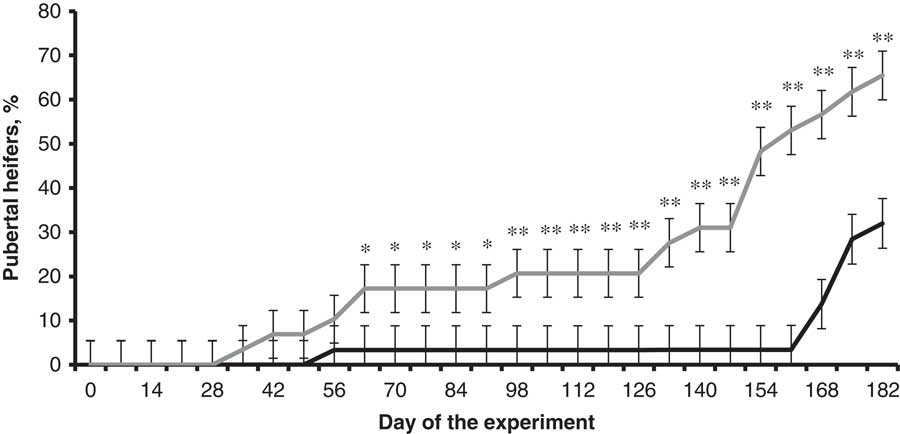
A treatment×day interaction was detected (P<0.01) for puberty attainment, as HIDENS heifers experienced delayed puberty attainment compared with LOWDENS heifers (Figure 3). At the end of the experimental period, a greater (P<0.01; Figure 3) proportion of LOWDENS were pubertal compared with HIDENS heifers (65.4% v. 31.9% pubertal heifers/total heifers; SEM=5.5). Within heifers that reached puberty during the experiment, HIDENS were heavier (P<0.01) and older (P=0.04) at puberty attainment compared with LOWDENS heifers (324% v. 372 kg of BW, SEM=10; 331 v. 364 days of age, SEM=12; respectively).
Puberty attainment in heifers reared in low stocking density (25 000 m2/heifer; LOWDENS, n=3, represented by gray line) or high stocking density (14 m2/heifer; HIDENS, n=3, represented by black line) from days 0 to 182 of the experiment. Puberty was evaluated according to plasma progesterone concentrations in samples collected weekly during the experiment. Heifers were considered pubertal once plasma progesterone concentrations were ⩾1.0 ng/ml, followed by a cyclic pattern of plasma progesterone < and ⩾1.0 ng/ml suggestive of normal estrous cycles (Reis et al., Reference Reis, Cooke, Cappellozza, Marques, Guarnieri Filho, Rodrigues, Bradley, Mueller, Keisler, Johnson and Bohnert2015). Puberty attainment was declared at the first sampling that resulted in plasma progesterone ⩾1.0 ng/ml. A treatment×day interaction was detected (P<0.01). Within days: *P⩽0.05, **P⩽0.01.
Discussion
Growth and physical activity
Treatment differences detected for steps/week were expected based on the current experimental design, given that LOWDENS had greater area available for movement compared with HIDENS heifers. Others have also reported greater physical activity in heifers reared on pasture compared with drylot cohorts (Petersen et al., Reference Petersen, Muscha, Roberts and Waterman2014; Perry et al., Reference Perry, Larimore, Perry and Walker2015). Hence, HIDENS heifers were not only exposed to greater stocking density, but also had less opportunity to exercise compared with LOWDENS heifers.
Although elevated physical activity may increase maintenance requirements and reduce growth rates in cattle (NRC, 2000), LOWDENS and HIDENS heifers had similar BW and ADG during the experimental period (Table 3). According to the NRC (2000) model, stocking density and space allowance assigned to LOWDENS, their NEm requirements could be up to 15% greater compared with NEm requirements of HIDENS heifers. Petersen et al. (Reference Petersen, Muscha, Roberts and Waterman2014) and Perry et al. (Reference Perry, Larimore, Perry and Walker2015) also reported greater ADG in heifers reared in drylot compared with pastures, although nutritional management differed among heifer groups. In this experiment, pasture availability and grazing activity of LOWDENS heifers were deemed negligible due to previous hay harvest and snow cover resultant from wintery conditions. Hence, it is unlikely that LOWDENS heifers consumed pasture in amounts that fulfilled potential increases in their NEm requirements, although pasture availability and intake were not evaluated herein to fully support this rationale. Given that HIDENS and LOWDENS heifers were offered and completely consumed the same limit-fed diet, BW and ADG results suggest that the stocking densities evaluated herein did not impact growth rates in beef heifers receiving the same dietary regimen.
Physiological parameters
Treatment differences detected for plasma cortisol concentrations do not corroborate with the hypothesis that cattle reared in elevated stocking density experience increased adrenocortical stress response (Huzzey et al., Reference Huzzey, Nydam, Grant and Overton2012; Grandin, Reference Grandin2014). Circulating cortisol concentrations have been widely used as a biomarker of stress in cattle (Carroll and Forsberg, Reference Carroll and Forsberg2007). However, plasma cortisol concentrations are also promptly increased in response to physical activity (Hill et al., Reference Hill, Zack, Battaglini, Viru, Viru and Hackney2008). Hence, treatment differences for plasma cortisol can be attributed, at least partially, to the additional activity of gathering and bringing the LOWDENS heifers from pasture to the handling facility, whereas HIDENS heifers were grouped in drylot pens adjacent to the handling facility.
Accordingly, treatment differences detected for hair cortisol concentration support this latter rationale and the main hypothesis of this research. Cortisol concentration in hair from the tail switch has been recently validated as biomarker of chronic stress in cattle (Burnett et al., Reference Burnett, Madureira, Silper, Nadalin, Tahmasbi, Veira and Cerri2014; Moya et al., Reference Moya, Schwatzkopf-Genswein and Veira2015). Cortisol is gradually accumulated in the emerging tail hair and its concentration represents long-term adrenocortical activity rather than concurrent circulating cortisol concentrations (Moya et al., Reference Moya, He, Jin, Wang, Penner, Schwartzkopf-Genswein and McAllister2013; Burnett et al., Reference Burnett, Madureira, Silper, Nadalin, Tahmasbi, Veira and Cerri2014; Cooke et al., Reference Cooke, Schubach, Marques, Peres, Silva, Carvalho, Cipriano, Bohnert, Pires and Vasconcelos2017). Hence, measuring cortisol in hair from the tail switch eliminates the confounding effects that gathering and handling cattle exert on plasma cortisol concentrations (Moya et al., Reference Moya, He, Jin, Wang, Penner, Schwartzkopf-Genswein and McAllister2013, Moya et al., Reference Moya, Schwatzkopf-Genswein and Veira2015). Treatment differences detected for hair cortisol concentration (Figure 2) suggest that chronic stress and adrenocortical activity were indeed greater in HIDENS compared with LOWDENS heifers. Such outcomes were only noted beginning on day 98 of the experiment, which might be associated with the time required for elevated stocking density to be perceived as a stressor by HIDENS heifers, as well as the time required for hair with elevated cortisol concentration to cross the skin line and become available for collection (Burnett et al., Reference Burnett, Madureira, Silper, Nadalin, Tahmasbi, Veira and Cerri2014). Treatment effects on hair cortisol concentrations may also help explaining the similar ADG among HIDENS and LOWDENS heifers. It can be speculated that the greater chronic stress experienced by HIDENS heifers during the experiment increased their basal metabolism and maintenance requirements to the same level that physical activity increased these parameters in LOWDENS heifers (NRC, 2000; Petersen et al., Reference Petersen, Muscha, Roberts and Waterman2014).
Expression of HSP in whole blood cells can also be used as diagnostic marker of stress, given that HSP are rapidly synthesized when cells are exposed to a variety of stressors (Welch, Reference Welch1992). Therefore, treatment effects of whole blood mRNA expression of HSP70 and HSP72 also do not corroborate with the hypothesis of this research and treatment effects detected for hair cortisol concentrations. Nevertheless, exercise has been shown to stimulate mRNA expression and circulating concentrations of these HSP in rodents and humans (Naito et al., Reference Naito, Powers, Demirel and Aoki2001; Febbraio et al., Reference Febbraio, Ott, Nielsen, Steensberg, Keller, Krustrup, Secher and Pedersen2002; Milne and Noble, Reference Milne and Noble2002). Exercise activates the heat shock response via several mechanisms including increased muscle temperature, exercise-related production of reactive oxygen species and muscle ATP depletion (Noble et al., Reference Noble, Milne and Melling2008). Thus, treatment effects detected for whole blood mRNA expression of HSP70 and HSP72 should be attributed to the greater physical activity of LOWDENS v. HIDENS heifers, either on a daily basis according to differences in stocking rate and steps/week (Table 3), or during gathering for weekly samplings corroborating with plasma cortisol outcomes (Figure 1).
Temperament parameters
Rearing cattle in intensive systems, such as drylot with elevated stocking density, results in increased human-animal interaction, which has been shown to impact cattle temperament and subsequent productivity (Cooke, Reference Cooke2014). However, treatments evaluated herein did not impact heifer temperament variables as reported in Table 3; perhaps the level of interaction between HIDENS heifers and research personnel was not sufficient to impact heifer temperament.
Cattle temperament has been directly associated with neuroendocrine reactions and subsequent circulating cortisol concentrations (Cooke, Reference Cooke2014). Hence, treatment differences detected for plasma and hair cortisol concentrations should not be attributed to heifer temperament, which in turn did not impact any of the heifer performance parameters evaluated herein.
Puberty attainment
Age at puberty in cattle is highly determined by BW and growth rate (Schillo et al., Reference Schillo, Hall and Hileman1992); however, HIDENS heifers experienced delayed puberty attainment compared with LOWDENS heifers (Figure 3) despite their similar ADG (Table 2). It is also important to note that heifers from both treatments achieved the recommended BW for puberty attainment during the experimental period (60% to 65% of mature BW; Patterson et al., Reference Patterson, Perry, Kiracofe, Bellows, Staigmiller and Corah1992). These results indicate that rearing heifers in high stocking density delayed their onset of puberty despite adequate age and BW development, and reasons for this outcome likely include treatment differences among physical activity and chronic stress parameters. Regarding physical activity, exercise stimuli alter circulating concentrations of endogenous opioids that modulate gonadotropin secretion and consequent onset of puberty, cyclicity and fertility in cattle (Mahmoud et al., Reference Mahmoud, Thompson, Peck, Mizinga, Leshin, Rund, Stuedemann and Kiser1989). Accordingly, Lamb et al. (Reference Lamb, Barker, Anderson and Walters1979) reported that prepartum exercise regimens enhanced subsequent reproductive efficiency in dairy heifers without impacting BW change. Regarding stress and puberty attainment, chronic stress and the resultant increase in adrenocortical activity impairs gonadotrophin synthesis and release and reduces the sensitivity of the brain to estrogen (Dobson and Smith, Reference Dobson and Smith2000). Hence, the reduced physical activity and increased adrenocortical activity of HIDENS heifers, as evidenced by treatment differences on steps/week and hair cortisol concentrations, likely contributed to their delayed puberty attainment compared with LOWDENS cohorts.
Overall conclusions
In conclusion, rearing replacement beef heifers in drylots with high stocking density impacted stress-related and physiological responses, and delayed puberty attainment compared with rearing heifers on pastures with low stocking density. Moreover, these outcomes were independent of heifer nutritional status and growth rate, but were associated with reduced physical activity and increased chronic stress most likely caused by the higher stocking density and/or greater degree of confinement. Therefore, housing management and resultant stocking density should be considered in heifer development programs to optimize reproductive and overall efficiency of cow-calf operations.
Acknowledgments
Financial support for this research was provided by the Agricultural Research Foundation. Dr Reinaldo Cooke is also affiliated as permanent professor to the Programa de Pós-Graduação em Zootecnia/Faculdade de Medicina Veterinária e Zootecnia, UNESP – Universidade Estadual Paulista, Botucatu, SP 18618-970, Brazil.