Introduction: the lymphatic system
Every day about 2–4 litres of lymph fluid is carried by an adult's lymphatic system. For an arm about 100–200 ml per day will be removed, while, for the leg, it is in the 300–400 ml range, although these estimates vary. Lymph flow from the mesenteric lymph system after a fatty meal of long chain fatty acids can be very high, but the high flow is transient.
When the lymphatic system is working well and is intact, excessive fluid does not accumulate in the tissues. The larger lymphatic vessels called collectors pulsate about 10 times per minute and pump the fluid along them. Their activity level is load dependent; that is generally, if they are able to do so, they will pump faster and pump more per contraction up to a point where the load is beyond their maximum capacity.
To work optimally, the lymphatic collectors need external variation in tissue pressure. The most common way of facilitating this is by movement of the skeletal muscles. Our breathing pattern and respiratory muscles can also help.
The three major factors in facilitating lymph flow are the inherent rhythmicity of the larger lymph vessels, variations in the pressure of the tissues and respiratory movements.Reference Foeldi, Foeldi and Kubik1
However, immobile patients have limited respiratory and skeletal muscle movement (along with a decline in skeletal muscle volumes) and constant external pressure, often in key lymphatic drainage collector areas, resulting in difficulty in moving fluids into these pulsating collectors. In these conditions, interstitial fluid will accumulate, no matter how patent the lymphatic system is.
As we age (and more so in females), there is a reduction in lymphatic pumping pressure.Reference Umno, Tanaka and Suzuki2 Increased levels of cellular super oxides, reactive oxygen and reductions in enzymes normally controlling one's metabolism contribute to this lymphatic pump dysfunction.Reference Thangaswamy, Bridenbaugh and Gashev3 In consequence, when there is any external pressure on superficial lymphatics, the lymphatic pumps (the lymphangions) may not be able to overcome any external pressure and effectively pump the lymph awaiting removal, with subsequent tissue fluid accumulation and its consequences for cell and tissue health – mostly associated with changes in tissue pH, PO2 and PCO2.
Prevalence of lymphoedema
Taking all forms of lymphoedema into account, it is believed to affect about 1.3 people per 1000. There is a great range in these estimates simply because there are no standardized methods of detecting lymphoedema.
Estimates of the prevalence of lymphoedema of the arm following breast cancer range from 3 to 60%. Estimates for the prevalence of lymphoedema of the legs following cancer in the groin or lower abdominal area also have a large range, but average 30%. The risk depends on the type of surgery and on the use of radiotherapy, but as a general rule, the greater the amount of tissue and lymph nodes removed, the greater the risk of lymphoedema. Older people may have had very radical surgery. Swelling does not necessarily occur immediately, the average time between the surgery and detection of swelling being about 3–4 years. Some people may not have any problems for 20 years and then it can appear. Since many lymphatic collectors are located in the adventitia or peri-adventitial area of the larger veins, varicose vein stripping may lead to lymphoedema, since some of the major lymphatic collectors may have been damaged or even removed when the vein was stripped. Damage to the lymphatics can also occur when a vein is ligated or sclerosed.
Differential diagnosis
Oedema
Oedema occurs when, due to changes in the pressures in the capillary beds, their permeability or active numbers, the lymph load exceeds the ability of a normal lymphatic system to remove it. Those who have cardiovascular or capillary fragility problems or who are relatively immobile will have oedema rather than a lymphoedema. However, there is a continuum between oedema and lymphoedema in terms of the reasons for fluid accumulation, its composition and its consequences. Oedema is usually generalized but sometimes regional accumulation of vascular precapillary fluids occurs, associated with an increased intracapillary pressure within the lower extremities, due to a dysfunctional lymphatic system caused by chronic venous insufficiency. Oedemas are associated with congestive heart failure, stasis oedema, renal or hepatic dysfunction, hypoproteinaemia, hypothyroidism, some medications, and Baker's cyst for unilateral swellings.
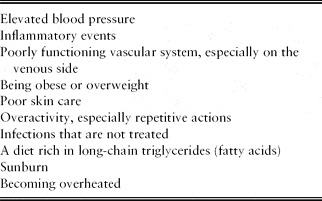
Factors that may increase lymph load are shown in Table 1.
Factors that may increase lymph load

Phleboedema
Phleboedema is due to excessive accumulation of fluids owing to lymphatic overload caused by the additional load of a failing vascular system but a lymphatic system still capable of working optimally.Reference Cavezzi and Michelini4 Examples are early stage chronic venous insufficiency, often associated with problems of vascular fragility, inflammation of the blood vessel walls, and venous thrombosis.
Phlebolymphoedema
Phlebolymphoedema is due to lymphatic and vascular suboptimal function. On most occasions the lymphatic system is structurally and functionally normal and can initially manage a large additional load of fluids, as occurs when there is a compromised venous system; however, continuing excessive loads above the maximum transport capacity can lead to its failure.Reference Foeldi, Foeldi and Kubik1 If, in addition, the lymphatic system has structural impairment such as that which occurs when the lymphatic system is malformed, or following surgery or radiotherapy, then the reduced transport capacity also contributes.
Myxoedema
Myxoedema is associated with a dysfunctional thyroid, which if uncorrected, can lead to the accumulation of mucinoid-like large molecular size materials (proteoglycans) in the tissues.
Lipoedema
Lipoedema is the excessive accumulation of fatty subcutaneous tissues due to a metabolic fat disorder. It is distinguished from lymphoedema in that it usually affects both legs,Reference Schmeller, Meier-Vollrath, Weissleder and Schuchardt5 there is usually no swelling of the feet, and the limbs bruise easily and are often painful on indent pressure. In terms of the fatty tissue area, there is no tendency to pit and the skin is soft and elastic. A true lipoedema must be differentiated from lipo-hypertrophy, which is normally distinguished by a slender trunk and symmetrical fat deposits in the hips and legs. Most concur that lipo-hypertrophy does not present in its latter stages with excessive fluid accumulation as occurs with the later stages of lipoedema, termed lipo-lymphoedema.
Lymphoedema
Lymphoedema is a progressive condition characterized by changes in many aspects of the tissues, the major ones relating to a reduction in oxygenation, changes in fluid, cell and fibre levels and a progressive fibrotic induration due to a continuing chronic grumbling inflammatory process.Reference Foeldi, Foeldi and Kubik1, 6
Lymphoedema occurs when the lymph load is normal but the lymphatic system cannot remove it, either due to a primary problem with the formation of the lymphatic system, or a secondary problem such as its destruction, damage or compression. It also occurs when the exudation is higher than normal and the lymphatic carrying capacity is lower than normal.
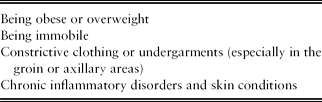
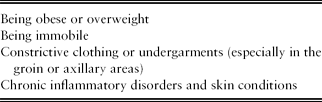
Many factors influence the load-carrying capacity of the lymphatic system. Some of these are shown in Table 2. Lymphatics normally have a large reserve capacity and can take load increases of up to about 90% above normal, unless the lymphatic system has been compromised by surgery, radiotherapy and/or compression from tumours or other external pressures. Surgery to remove lymph nodes (which also destroys the afferent and efferent vessels associated with them) tends to damage the deep lymphatic collector system, but the surgical scarring may also affect superficial drainage. Subsequent radiotherapy may also damage any remaining superficial or deep lymph collectors and capillaries. Regeneration of lymph capillaries through this area is also unlikely. The end result is that lymphatic transport capacity is considerably reduced.
Factors that may reduce lymphatic transport
Malignant lymphoedema
This is usually associated with a rapid onset and a location that is more proximal/central than the normal forms of iatrogenic lymphoedemas. It occurs through reduction of lymph transport through external obstruction of nodes or collectors, or through invasion and proliferation of angiosarcomatous tissues. The skin is often shiny and sometimes cyanotic and the condition can cause significant pain.
Primary lymphoedema
As primary and secondary lymphoedemas have the same appearance, they are differentiated through a review of the patient's family, medical and surgical history. About 3–10% of lymphoedemas are primary in nature and caused by some congenital malformation (generally hypoplasia but sometimes hyperplasia) of the lymphatic system which can become apparent at birth (Nonne Milroy), puberty (Meige or Praecox) or in later life (Tardum). Some patients may be surprised at the development of their lymphoedema after an apparently minor surgical intervention, but an exploration of family history may expose this underlying hypoplasia and the genetic basis of it. A consensus document exists to help in diagnosis. However, the number of forms of genetic abberations linked to lymphatic disturbances is increasing.Reference Lee, Andrade and Bergan7
Due to the relatively early onset of all forms of primary lymphoedema it is very likely that patients in aged care would have manifested the signs and symptoms of this form long before middle or older age.
Classification of lymphoedemas
Recommendations about screening and diagnosis of lymphoedemas have been made by the International Lymphoedema Framework (ILF)8 and the International Society of Lymphology (ISL),6 as well as many regional groups (European Lymphology Society, Italian, German and Dutch).Reference Damstra and Kaandorp9 The ISL consensus recommends using a three-stage classification system (increasingly becoming four stages – with the first one being the latent or subclinical stage). These stages refer only to the physical condition of the extremities. Within each stage currently there is an ‘inadequate but functional severity assessment’ based on simple volume differences. They acknowledge that a more detailed and inclusive classification needs to be created based on our improved understanding of the underlying pathophysiologies, as the changes can be varying mixtures of fluid, fats and fibrous materials as the lymphoedema progresses. In terms of the ISL severity assessment, ‘minimal’ is described as less than a 20% increase (over normal limb or baseline – allowing for limb dominance), ‘moderate’ when it is 20–40% and ‘severe’ when it is more than 40%.6 Additionally, there are a range of instruments to assess disability and quality of life.
Effect of age on lymphatics
With age, lymph transport capacity declines for three reasons. There is a loss of intrinsic lymphatic contractility, an increase in general adiposity and reductions in skeletal muscle mass. Reduced activity (which is important for tissue pressure variation) may contribute but obesity does not always appear to impact on lymphoscintigraphy outcomes (which is a good indicator of the functional status of the lymphatic system).Reference Vasileiou10
In order to maintain good flow, the smooth musculature of the collector walls should ideally undergo strong regular phasic contractions. Studies in aged rats indicate, as has commonly been suspected in humans, that lymph flow declines with age, due to decreased contraction frequency and strength.Reference Aki, Nagai, Cote and Gashev11 It is speculated that these reductions are linked to reductions in the levels of contraction stimulatory metabolites.
Increases in oxidative stress with ageing, and resultant telomere shortening, are associated with lymphatic pump dysfunction (at least in mesenteric vessels).Reference Thangaswamy, Bridenbaugh and Gashev3 This shortening would appear to contribute to a range of associated metabolic disturbances as well as cellular senescence.Reference Tzanetakou, Katsilambros and Benetos12 With declining transport capacity, the safety margin reduces, resulting in signs of oedema accumulation as a consequence of lymphatic failure to remove the load.
The lymphatic system and immune function
There is a strong association between lymphoedema and cellulitis and its reoccurrence,Reference Al-Niami and Cox13 for two reasons. Normally, mononuclear phagocytes will seek out and destroy, or at least neutralize, any foreign materials. However, compromised lymphatic drainage leads to physiochemical changes in the tissue, and not only reduced phagocytosis but also a slower rate of presentation of the cells and phagocytosed debris at the nearest lymph node.Reference Casley-Smith and Casley-Smith14 Furthermore, slow lymph flow through the affected area and the removal of nodes at the root of the extremity mean foreign antigen presentation is delayed, as are macrophage–lymphocyte interactions dependent on presentation of the antigen to nodes in non-extirpated areas.
The importance of re-establishing normal or hypernormal macrophage activity cannot be over emphasized, since each bout of infection significantly worsens the limb in terms of tissue changes (the major one being induration), reduces further macrophage activity, and thus perpetuates the cycle.Reference Keeley15
SimpsonReference Simpson16 suggested that persistent and varying viral infections as we age are related to an overcrowding of the immune space, in which viral-specific T-cells result in a shrinkage of the naïve T-cell numbers, increasing susceptibility. He also suggests that exercise may help reduce this ‘overcrowding’ and facilitate and improve immunocompetency. As will be shown later in this paper, exercise is a mainstay of lymphoedema control.
Combined with the problems created by lymphoedematous tissues (characterized by fatty tissue deposition), evidence suggests that the inflammatory cell signature in ageing adipose tissue can facilitate an induction of regulatory T-cells in the fat.Reference Lumeng17 The resulting tendency of chronic, often grumbling, inflammatory issues means an increased load on a lymphatic system. For this reason it would seem critical to maintain lymph flow optimally (or even maximally) to ensure that chemokines do not remain in elevated levels in areas of fat (visceral sites) thus potentiating the problem, leading to a possible failure of the lymphatic system in the longer term.
Assessing the problem
The first part of any medical assessment aims to establish whether swelling is due to lymphoedema or other causes. A swollen arm is likely to be lymphoedema unless there is vascular pathology such as axillary venous stenosis or vascular entrapment in scar tissue. However, a swollen leg has a wide differential diagnosis. Contributing factors should be identified and treated prior to dealing with any lymphatic problems, particularly when they may be having an impact on load on a compromised lymphatic system.
Taking an accurate and appropriate medical, surgical and familial history as well as acquiring baseline measures of a range of parameters will provide an indication of structural and functional changes that may have occurred (ILF best practice).8 Basic information about the patient and areas of fluid accumulation is easily acquired by observing indent lines and marks and pitting in the various lymphatic territories.
Ridner et al.Reference Ridner, Montgomery, Hepworth and Armer18 suggest that the lack of a gold standard of measurement for detecting lymphoedema is problematic. What is needed is a good measure that is simple, easy, not too time consuming, appropriate to aged care facilities, and one that will correlate well with those derived from other strategies and help inform the effect of the treatment programme. There are many claims that one method is better than others but each method has strengths and weaknesses. The measurements that a clinician makes will often be determined by resources available and time to undertake them.
Most simple measurements used, such as circumference (and volume calculation) and the stemmer test (pinching the toe base to see if a skin fold can be picked up) and assessing changes to tissue fibre using tonometry and changes to fluids using bio-impedance are measures of the outcome of a disrupted lymphatic system. Although these measures do not provide us with details of functional changes in the lymphatic system (or elsewhere), they do allow for appropriate targeted treatment.
In the development of lymphoedema there are many changes in the limb prior to swelling. Some of these are subtle and not easily discernible by visual examination, but may be detected by bio-impedance spectroscopy or dielectric constants (to measure small amounts of free fluid accumulation throughout the tissues), tonometry/indurometry (measuring the extent of fibrotic induration – which, when present significantly, affects the ability of the lymph system to work well), and other changes such as in tissue perfusion or superficial temperature.
Areas of fluid entrapment, subsequent tissue changes and surgical and radiotherapeutical scar tissue frequently result in pain, reduced mobility and thus a reduced function of the lymphatic system. Some (if not most) of the problems associated with the swollen limb are associated with the impact of the limb on the patient's quality of life.Reference Franks19, Reference Amer and Ramati20 Patients will describe subjective self-reported symptoms but often not until the swelling is significant.Reference Armer and Stewart21, Reference Ridner22 A range of simple and validated visual analogue and other scales are available to examine the psychosocial impact and influence on the quality of life and ability to carry out daily activities.
Ridner et al.Reference Ridner, Montgomery, Hepworth and Armer18 compared the relationships between four commonly used measurement techniques, these being self-reported arm symptoms, circumference tape measure, opto-electronic perometry and impedance spectroscopy (single and multi-frequency) in healthy volunteers and those with lymphoedema. As would be expected, the impedance spectroscopy methods strongly correlated, suggesting it may not matter whether single or multiple frequency techniques are used. Perometry and circumference and calculated volume also correlated well. Cross-correlation between the techniques showed a relationship, but it was not as strong. A similar relationship was shown between these two techniques by Moseley and Piller.Reference Moseley and Piller23
Those with lymphoedema in the RidnerReference Ridner, Montgomery, Hepworth and Armer18 study reported more symptoms than the healthy volunteers with no lymphoedema. Some symptoms such as tenderness or stiffness were reported by both groups and are related to the surgery and/or radiotherapy and not to the presence of lymphoedema (or perhaps the immediate risk of it). However, symptoms of firmness and tightness related to circumference measurements and bio-impedance, although heaviness did not, contrary to a previous report.Reference Ridner22
Moseley and PillerReference Moseley and Piller24 have been able to show that objective measures such as local area impedance spectroscopy and tonometry have a high reliability and prognostication index in terms of being able to determine fluid and tissue changes. In the early stages (and in the latent phase) of lymphoedema, bio-impedance spectroscopy may have the edge over other techniques such as circumference and volume (simply because it measures only fluid change, and subtle changes at that) but patient self-reporting is also beneficial. Once lymphoedema is clinically overt, then the form of measurement likely to be most beneficial will be that which can lead to better targeting, sequencing and selection of treatment and management options, focusing on what can make the patient most comfortable with least intervention.
Specifics of limb volume and circumference
We have a number of ways to measure limb volume and circumference.Reference Ridner, Montgomery, Hepworth and Armer18 The most technical and perhaps accurate is that of optoelectronic measurement using a perometer.Reference Stanton, Northfield and Holroyd25 It is suited to larger clinics, while determination of segmental or whole limb volume by calculation following the use of a tape measureReference Piller26 may often be easier for smaller ones. When tape measurement at specified positions is used, care must be taken to minimize errors in the tension applied to the tape, its placement, the distance between measurement sites, and the side of measurement.
The Australasian Lymphology Association27 has defined a protocol to ensure accuracy and repeatability in measurement using tapes. Excel or other statistical software programs can be used to calculate volume, to add accuracy to the measurement for garment selection, reducing risk of patient rejection of garments.
Measurement of the structural status of the lymphatic system and of the limb
The most effective means of measuring the structural status of the lymphatic system and of the limb is ultrasound. Ultrasound provides qualitative and quantitative information about changes to the thickness of the deep and superficial fascias, and of the thickness and fibrotic and other changes to the epifascial compartment. While portable ultrasound units are available, on most occasions transport to a larger institution is required.
Tonometry, which measures the resistance of the tissues to compression at specific sites, has been widely used since the early 1980s.Reference Piller26, Reference Bates28
Measurement of the status of the vascular system
Laser Doppler and other strategies can be used to assess vascular inflow and outflow patterns and has potential value for assessing changes in the vascular system inflow and outflow of a limb at risk or one affected by lymphoedema.Reference Modi, Stanton, Svensson, Peters, Mortimer and Levick29, Reference Stanton30 It seems that increased blood flow into the limb may contribute to swelling just as much as changes in blood capillary filtration pressure due to venous congestion, and that these add to the problems of the impaired lymph drainage system. It is an interesting but still emerging area.
Conservative therapies for lymphoedema
Early recognition and reaction with targeted and sequenced treatment to the measured changes is crucial if we are to gain good patient outcomes both subjectively and objectively.Reference Piller31 As well as a multi-disciplinary approach we need a range of treatment and management strategies aiming to return the limb and the person to as optimal as possible in a cost-effective and timely manner. Some treatments are patient-based with minimal or no therapist input, and some are administered by a trained lymphoedema therapist or clinician.
Treatment can be effective, even if there is a serious problem with the structure and function of part of the lymphatic system, by reducing the lymph load on it or by opening up other pathways via anastasmoses that are dormant but potentially functional, helping them to work more efficiently through greater throughput. This can occur as the lymphatic system is divided into a series of superficial and deep drainage systems divided by richly anastamotic watersheds.
Treatments can be broadly categorized into those which:
facilitate tissue compositional changes;
provide changes to tissue pressures (exercise, massage and massage units);
provide tissue compression (bandaging and garments);
involve pharmacological intervention (inducing or promoting a biological event);
electrically stimulate the tissues and the lymphatics;
involve diet and weight management.
Facilitating tissue compositional change
Low level laser treatment can help remove fibrotically indurated tissue. Its application is particularly beneficial when there is fibrotic induration of the tissues (associated with surgical or radiotherapeutical scarring), in reducing the swelling, softening the tissues, improving scars and improving how the limb feels.Reference Piller and Thelander32–Reference Wigg35 Good long-term outcomes have been reported.Reference Piller and Thelander32 Less than expected outcomes at times may occur through suboptimal sequencing of dose and delivery. A double-blind, cross-over placebo controlled trial has substantiated the impact of laser on improved subjective and objective outcomes.Reference Carati, Anderson, Gannon and Piller33 Optimal treatment time is generally short, with gaps between treatments to allow for treatment effect.Reference Carati, Gannon and Piller36
Providing changes to tissue pressure: compression bandaging, compression garments and compression pumps
Compression is regarded by many as a mainstay of lymphoedema management. It is often, if not always, supported by a range of other treatment modalities such as manual lymphatic drainage massage. Compression is delivered by bandaging, garments and a range of compression pumping units, ranging from a few chambers to as many as 30. Their main mode of action is through an ability to reduce outflow from the vascular system, as well as helping lymph flow into and along lymphatic collectors when tissue pressure is varied in association with the compression.Reference Partsch, Atout and Forner-Cordero37
Lymphatic drainage massage
Lymphatic massage is known to encourage the entry of fluids into the initial lymphatics, facilitate transport along lymph collectors and open anastomoses between adjacent collectors or lymph territories. It does this by inducing changes in tissue pressures.
Evidence is accumulating about the benefits of professional lymphatic drainage massageReference Williams38 in addition to compression bandaging/garments, including earlier return to work.Reference Stanisic, Gabriel and Pawlaczyk39 The strength of these two key interventions is indicated by their inclusion in best practice documents (www.lympho.org). Patient's carers or partners can be trained by lymphoedema therapists over a 10-hour period, to deliver objective and subjective results on a par with those of professional treatment programmes, possibly since the partner/carer knows the patient's body and when the limb is responding and when not.Reference Moseley40, Reference Piller, Rice, Heddle and Miller41 Such programmes not only empower the patient but can reduce costs, and importantly re-establish a touching relationship in this older group, and warrant further research.
There are a plethora of massage pads and units that deliver mechanically administered massage, but only a few have been evaluated in lymphoedemas. In one trial patients gained and maintained good reductions in their limb volume when self-treating for 1 h of massage pad use per day over a 3-week period. Improvement also occurred in tissue softness, and how the limb felt. Importantly, patients felt more in control of their condition and felt better able to undertake their activities of daily living. Good results were maintained up to 1 month after the end of treatment.Reference Piller, Merritt, Esterman and Moseley42 In a trial of a hand-held massage unitReference Moseley, Piller, Heidenreich and Douglass43 on moderate secondary arm lymphoedema there were significant volume reductions and improvements in perception of limb size and range of movement. Again, patient control and use in their own time and at their own pace was important.
Another strategy that varies tissue pressures by tissue movement, revolves around ‘wobbling’ the limbs from side to side. It is really a form of slow vibration. In one trial, patients used the equipment, while supine with the legs elevated on the unit, for periods between 3 and 12 min twice per day for 3 weeks. The results were similar to the massage pad trial in that the limbs reduced in size and volume, they softened and the limbs felt better.44 Patients also felt more in control and were better able to undertake their activities of daily living, which is a common theme with home-based management.
Exercise and the lymphatic system
Exercise across the age span is good for the lymphatic system and essential for health, leading to better lymphatic flow and reduction of chemokine, lymphokine and adipogenic factors in the tissues.69
Mild exercise (Tai Chi, Qi Gong and Yoga)
Tai Chi and Qi Gong are easily performed. They generally vary tissue pressures and combine this with associated variations in intra-thoracic and intra-abdominal pressures to help facilitate lymph system loading and flow. Patients with arm lymphoedema, who used one such 10-min programme daily for 4 weeks, achieved reductions often in the same range as more demanding treatments, and were able to maintain them.Reference Moseley, Piller and Carati45 A water-based version of this form of programme is used in the Encore program run in Australia and around the world, and achieves good outcomes in range of movement and subjective symptoms (author's unpublished data). Yoga has recently been shown to be of benefit in lymphoedema patients.Reference Loudon, Barnett and Piller46
Moderate exercise (in and out of water)
Most studies and reviewsReference Moseley and Piller47, Reference Moseley, Carati and Piller48 indicate that mild exercise is good for lymphatic loading and transport due to the variation in tissue pressures it causes. In older people, even mild exercise can be important in terms of controlling loss of muscle tone, muscle and bone mass and improved lymphatic functioning. However, with increased intensity of exercise, care is needed not to put the patient into a situation where the load is greater than the transport capacity of their lymphatic system.
One good way to undertake exercise, but at the same time to have tissue support in terms of external pressure, is through a range of water-based programmes.Reference Johansson49–Reference Box, Marnes and Robertson51 It is physiologically sensible to have temperatures in concert with normal skin temperature ranges, suggested as 28°C.Reference Johansson49
Gentle movement, deep breathing and slow rhythmic exercise of the proximal and distal muscles of the arm with self-massage routines have been shown to reduce limb volume and improve QOL scores in some participants.Reference Casley-Smith and Casley-Smith52, Reference Bracha and Jacob53
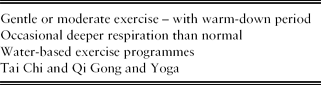
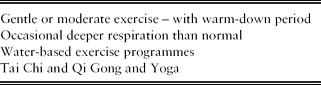
Further along the scale, and encouraging higher level use of the limbs, are programmes using weights.Reference Johansson, Tibe, Kanne and Skantz54 In one trial, patients with arm lymphoedema were asked to support increasing levels of weight while performing a series of predetermined exercises to determine where their limits lie in terms of the maximum exercise which did not worsen their lymphoedema. In most cases, while there was a slight increase in limb volume immediately after the exercise, this effect was short lived.Reference Johansson, Tibe, Kanne and Skantz54 The study indicated that patients can undertake significant and even strenuous amounts of exercise/activity without worsening their lymphoedema. Knowing the limit of exercise and staying below that is crucial. The impact of exercise and significant activity has been reviewed and shows an overall positive impact (varying in magnitude between studies) on limb size, range of movement, muscle strength, subjective limb symptoms and quality of life.Reference Moseley and Piller47 In all studies a cool-down period is essential. Todd et al. found a delay of any full shoulder mobilization of 1 week after axillary surgery for breast cancer reduced lymphoedema incidence.Reference Todd, Scally, Dodwell, Horgan and Topping55 Factors that may increase lymph transport capacity are shown in Table 3.
Factors that may increase lymph transport capacity
Pharmacogenomics and medications targeting the lymphatic system
There have been a range of treatments that have targeted the lymphatic system or its components pharmacologically, the best known of which are the flavonoid/benzopyrene groups. Pecking et al.Reference Pecking, Fevrier, Wargon and Pillion56 and Cluzan et al.Reference Cluzan, Alliot, Ghabboun and Pascot57 reported significant objective improvements for the patient group tested. Although objective outcomes have been questioned, Loprinzi et al.Reference Loprinzi, Kugler and Sloan58 suggest good subjective outcomes. As coumarin (5–6 benzo-α-pyrone) has hepatotoxic effects for some metabolic genotypes, developing genetic and genomic knowledge may allow identification of who will respond well (and who may not) to pharmacological interventions aimed at improving lymphatic structure or function.Reference Farinola and Piller59
Electrostimulation
Lymphatics pulsate between 6 and 10 times per minute, regulated myogenically and neurogenically. A study of secondary leg lymphoedema has shown that electrical stimulation does have a benefit in reducing limb volume over the current best practice self-management group.Reference Piller, Douglass, Heidenreic and Moseley60 Objective indicators also improved. Other units that deliver electrical stimulation (similar in function and principle to a transcutaneous electrical nerve stimulation (TENS) unit) have also been shown anecdotally to reduce lymphoedemas, but trials are in progress.
Tissue manipulation
A technique established for the treatment of cellulite and for some forms of obesityReference Moseley, Piller, Douglass and Esplin61 has been applied to the treatment of lymphoedema, as there is a strong similarity between mid-stage lymphoedema, cellulite, lipoedema and obesity (the adipose connection). Results were similar to manual lymphatic drainage (MLD) although achieved in a lesser time. As with most other forms of treatment, there were improvements in tissue hardness and subjective indicators. Better outcomes were achieved when combined with bandaging, and for surgical patients where the surgeon had spent more time on clearance of the trunk and axillary area,Reference Moseley, Piller, Douglass and Esplin61 as is well known in complex physical therapy (CPT) programmes.
Kinesio-taping
Kinesio-taping is believed to improve lymph drainage by lifting the skin away from the underlying fascial planes of the musculature, perhaps reducing interstitial pressures there, and facilitating blood and particularly lymph flow along these lower pressure areas. It is applied when the tissues are stretched, so that when they are later relaxed there is a puckering effect of the tape. It is widely used in sports injuries but has recent application in treating lymphoedemas,62, Reference Rock-Stockheimer63 especially when garments and other strategies are not useful, such as in hot and/or humid climates or in the more challenging areas (breast, chest) where traditional bandaging and garments are difficult to use. Good quality trials are, however, lacking in this area. In one trial of seroma following axillary clearance associated with breast cancer, treatment did show significant benefits of kinesio-taping in reducing the severity and duration of the seroma as well as burning sensations, tightness and heaviness.Reference Bosman and Piller64
Diet (mid-chain triglycerides)
Long-chain triglycerides have to be absorbed (as chylomicrons) via the mesenteric lymphatics, thus putting an additional load on them. If their structure or function is compromised in any way, then this absorbed load of fats may find its way into other organs or structures, particularly the groin and legs through retrograde flow.Reference Foeldi, Foeldi and Kubik65 Reducing long-chain triglycerides and replacing them with mid- and short-chain ones is believed to reduce the incidence of this retrograde flow (chylous reflux). There are a number of suggested diets revolving around mid-chain triglycerides (MCTs) but to date the scientific evidence for their benefit is scant.
There is much misinformation about diet having the potential to create a significant external pressure on abdominal lymphatic collectors as they pass to the exit point of the thoracic duct, thus slowing flow from the legs and abdominal area and contributing to lymphoedema, but some recent reviews have added clarity.Reference Dawson and Piller66
Negative effects of improving lymphatic drainage
Lymphoedema (and any oedema) responds to compression therapy and massage, which improve lymph flow from the affected area and lymph flow through the thoracic duct and into the venous system. In addition, there can be a direct effect on venous return. Both have the potential to cause cardiac overload where there is an underlying heart failure. B-naturietic peptide level may help in risk stratification.Reference Todd, Austwick and Berridge67
Signs that treatment is working
Reversing a long-standing lymphoedema is a difficult and slow process, as changes in cell numbers and in the materials they produce and in the numbers of blood vessels and other structures in the tissues have to occur. Generally, those that are softer or of shorter duration will respond more quickly. Long-duration lymphoedema is often characterized by the build-up of fibrotic tissues, which are hard and inflexible and which generally do not allow good drainage of fluids so that treatment effects are limited. It is beneficial to halt the progression of the lymphoedema, as generally lymphoedema will progress and worsen. At this stage the limb may feel better. It is more beneficial if the limb gets smaller as well as becoming more comfortable.
Conclusion
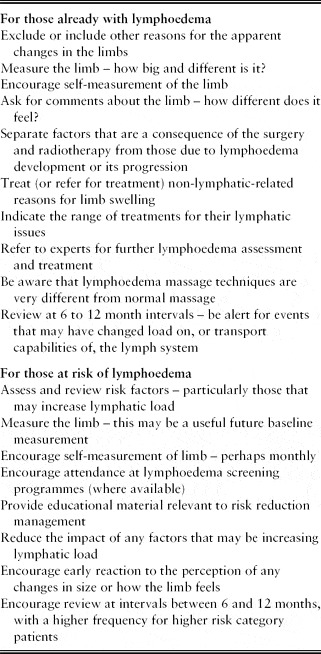
If the lymphatic system is to undertake its normal roles in local and systemic immune function, fat absorption, and fluid and macromolecular balance, then it must actively transport lymph and its contents from the interstitium to the veins via a series of capillaries and collectors. The mechanism behind that fluid movement is the lymphangion, the structural and functional unit of the lymphatic system. It is very clear that, in ageing, this capacity is reduced.Reference Gashev and Zawieja68 This capacity can be improved and in so doing may result in the slowing, halting or even reversal of some of the ageing processes. At the very least, an improvement in quality and comfort of life can be expected. Key points in the clinical assessment of lymphoedema are summarized in Table 4. Some informative web sites, journals and other useful information are listed in Table 5.
Key points in assessment and management of lymphoedema

Informative websites, journals and other useful information

Conflict of interest
The author has no conflicts of interest to declare.