
In 1944, delegates from forty-four countries convened at Bretton Woods, New Hampshire, to create a framework for rebuilding the global economy, which was reeling after the Great Depression and World War II. At that event, the leading economic powers pledged to curb economic nationalism and maintain an open, multilateral system. However, they also agreed that governments would be permitted to intervene in the economy to promote domestic stability and social welfare. In a special issue of International Organization published in 1982, Ruggie argued that this blend of liberal multilateralism and domestic interventionism—which he referred to as the compromise of “embedded liberalism” (EL)—had guided the international regimes for money and trade since the conclusion of World War II.Footnote 1 By actively managing the domestic economy, providing a robust social safety net, and otherwise taking steps to buffer the domestic effects of multilateralism, governments had prevented a globalization backlash and fostered support for the liberal international economic order.
Since the 1990s, however, the digital revolution has changed certain key features of the global economy, posing critical challenges to the EL bargain. This revolution helped firms solve various contracting problems that had previously limited globalization and generated an array of other benefits. But it also created significant adjustment problems and distributional losses in the leading economies that the more limited liberalization embodied in the Bretton Woods architecture had been designed to avoid. As a result, new pressures have been placed on the liberal economic order and the compromise of EL.
Of central importance is that digital advances in information and communication technology (ICT) precipitated the spread of global supply chains and greatly enhanced the ability of multinational corporations (MNCs) to link capital in advanced industrialized countries with labor in less developed countries (LDCs).Footnote 2 The digital era has consequently witnessed greater geographical disaggregation of production as a result of the offshoring of jobs and tasks that had previously been tied to production in the developed economies. Because of these chains and digital innovations, economic integration between the developed and the developing world has grown, and MNCs have spurred massive increases in foreign direct investment (FDI) and trade. Taken together, these developments have led to what we refer to as an era of “global digital interdependence;” that is, a period marked by heightened economic transactions between high-wage and low-wage countries executed through supply chains that have proliferated as a result of advances in ICT.
We argue that global digital interdependence has undermined EL by stimulating distributional losses that were not anticipated in the middle of the twentieth century. More specifically, digital ICT has harmed low-skilled workers in developed economies—where EL thrived during the initial decades of the Bretton Woods era—by fueling the premium that employers place on skills, training, and education, and allowing firms to replace them with cheaper labor in the developing world. Further, ICT advances are increasing international competition for—and the mobility of—capital, thereby weakening domestic regulatory regimes and reducing corporate taxes. These forces are also inhibiting the effectiveness of labor and welfare policies that were a central component of EL. Global digital interdependence has therefore increased the need for a robust social safety net that buffers the large group of distributional losers from globalization while simultaneously undermining the ability of governments to provide such protection.
One consequence of this development has been the erosion of support for multilaternalism and the liberal international economic order in the advanced industrial world.Footnote 3 Existing studies have attributed the antiglobalization backlash and emerging challenges to the liberal order to a wide variety of factors, including the rise of “authoritarian populism” and resistance to outgroups,Footnote 4 the infringement of states’ sovereignty by international institutions,Footnote 5 the decline of trade unions and the manufacturing sector,Footnote 6 the social and economic deterioration of communities affected by the decline of manufacturing employment,Footnote 7 the easing of restrictions on the rights of migrants,Footnote 8 mounting economic inequality,Footnote 9 the growth of austerity policies,Footnote 10 and the sharp rise of Chinese imports into advanced industrial countries (that is, the “China shock”).Footnote 11 These factors may well have contributed to the strains placed on EL. However, we argue that fundamental changes to the global economy linked to technological change and the digital revolution are crucially important in this regard and should be emphasized in future research on embedded liberalism.
The Compromise of EL
EL has roots in both hegemonic stability theory and the work of Polanyi.Footnote 12 During the 1970s, various path-breaking studies posited that the stability of the global economy hinged on the existence of a single, dominant state that was both willing and able to undergird the multilateral system.Footnote 13 Ruggie, however, argued that by focusing solely on power, hegemonic stability theory provided an incomplete picture of the international order's content.Footnote 14 Such content is determined by the “fusion of power with legitimate social purpose;” the latter reflects the social values and objectives that governments aim to promote.Footnote 15 Ruggie pointed out that post-World War II US hegemony was associated with a liberal economic order because the United States and other Western countries (most notably, Great Britain) shared the view that an open multilateral system would foster prosperity and inhibit the beggar-thy-neighbor policies and imperial blocs that had—in the opinion of Cordell Hull, John Maynard Keynes, Harry Dexter White, and other key policymakers—aggravated tensions among the major powers and damaged the world economy during the interwar period, thereby contributing to World War II. Led by the United States, the Bretton Woods attendees ultimately agreed to an open multilateral system, facilitated by fixed exchange rates and capital controls.
However, participants in the Bretton Woods conference also recognized the need for governments to prioritize domestic objectives and actively manage the domestic economy in order to redress the adverse effects of international openness for certain segments of society and sustain the public's support for globalization.Footnote 16 This coupling of nondiscriminatory multilateralism with policies that promoted domestic stability and advanced key domestic goals—especially full employment—was the compromise of EL.Footnote 17 In Ruggie's words, the essence of embedded liberalism was that “unlike the economic nationalism of the [nineteen] thirties, it would be multilateral in character; unlike the liberalism of the [pre-World War I] gold standard and free trade, its multilateralism would be predicated upon domestic interventionism.”Footnote 18 In sum, then, EL involves foreign economic liberalization consistent with legitimate social purpose. In principle, legitimate social purpose reflects the scope of government intervention in the domestic economy needed to promote core social values and objectives. In practice, the key participants in the Bretton Woods system agreed that it involved a combination of independent monetary policy, capital controls, domestic labor, and welfare policies to share the gains or buffer the shocks of external liberalization, and limits on liberalization in sectors or with countries (largely LDCs) that would generate excessive distributional losses in wealthy countries.Footnote 19
In the wake of Ruggie's article and a related, influential study by Cameron,Footnote 20 a large body of research confirmed that, for the initial decades of the Bretton Woods era, industrialized countries did indeed combine relatively liberal foreign economic policies with domestic policies designed to contain the adjustment costs generated by open international markets.Footnote 21 Support for the liberal economic order remained steadfast as a consequence.Footnote 22 A body of empirical research also confirmed Ruggie's observation that EL has been largely an advanced industrial country phenomenon and has had little traction in the developing world.Footnote 23
By the late 1980s and early 1990s, however, there were signs that EL was beginning to fray in the advanced industrial world. Widespread concern was expressed that the domestic policies stemming from this compromise had done little to cushion the effects of the stagflation that marked the 1970s. Further, capital controls had been a central feature of EL because they allowed countries to both (largely) fix exchange rates—thereby avoiding the competitive currency devaluations that had marked the Great Depression—and pursue independent monetary policies—which were integral to fostering social stability. But in response to arguments that capital controls promoted inefficiency in financial markets, leading economies started rolling them back during the 1970s, which enhanced the power of capital by making it increasingly footloose. Equally, doubts began to emerge about whether labor movements and the state could continue to cushion the effects of globalization on workers.Footnote 24 Spearheaded by various influential economists and key political leaders (most notably, Ronald Reagan and Margaret Thatcher), the end of the twentieth century witnessed the emergence of a “Washington Consensus” that emphasized the importance of neoliberal policies. Various scholars have argued that, as a result of these developments, liberalism was becoming “disembedded,” as states were retreating from earlier efforts to intervene in and regulate markets.Footnote 25
These accounts offer important insights into the strain that has been placed on EL in recent decades, but we argue that they give short shrift to how the ICT revolution that gained momentum in the 1990s fundamentally altered the global economy. It is perhaps because of this technological breakthrough that previous scholarship finds that the effects of capital mobility, declining labor unions, and the rise of neoliberal ideas on EL have been so profound. More generally, we maintain that the digital revolution increased the logistical difficulties associated with advancing the social values and objectives embodied in the compromise of EL.
Global Digital Interdependence
The digital revolution created both incentives and opportunities for an array of contracts between and within MNCs and domestic firms (as suppliers and buyers), thereby expanding globalization and triggering governance and social complications that had not existed in the first few decades of the Bretton Woods system. More specifically, ICT has fueled the modern global value chain (GVC), allowing greater disaggregation of production networks that incorporate remote locations, and offshoring jobs that were previously bundled with production in the developed economies.Footnote 26 This led to closer ties between capital in industrialized countries and low-cost labor in developing nations. Less widely appreciated by scholars is the extent to which the digital revolution has also contributed to the rising prevalence and power of MNCs, which have played an increasingly important role in shaping trade and capital flows. We argue that this set of developments has placed enormous stress on the compromise of EL.
ICT is a “general-purpose technology” that—like steam power in the eighteenth century and electricity in the nineteenth century—fundamentally transformed the global economy. The roots of digitalization can be traced to the development of high-density integrated circuit chips in the early 1960s and the subsequent shift from mechanical and analog electronic technology to digital ICT, wherein information and computer instructions are recorded in binary code (bits).Footnote 27 The digital revolution, however, was not fully launched until the early 1990s when the Internet became publicly and globally accessible, and both digital computers and digital record keeping began to proliferate at extraordinary speeds, enabling faster and easier communications, computing, collaboration, storage, and retrieval of information across a vast number of actors.
In the wake of the digital revolution's advent, transformative technological developments quickly followed. Robotics, artificial intelligence, mobile phones, quantum computing, and blockchains are merely some of the most important developments stemming from digital technology. More generally, digital ICT is “a family of technologies used to process, store, and disseminate information, facilitating the performance of information-related human activities, provided by, and serving both the public-at-large as well as the institutional and business sectors.”Footnote 28 Not only do these technologies have a profound impact on how individuals, companies, and governments function, they are continuously and rapidly evolving, as “Moore's law” famously predicted.Footnote 29
The Spread of Global Supply Chains
Like steam power and electrification, ICT triggered a profound transformation in the operation of firms and the global economy. One way that it has done so is by facilitating the spread of GVCs, thereby changing how and where many goods and services are produced.Footnote 30 Digital ICT—especially advances in telecommunications, computers, and software—has made it possible to communicate and solve information problems at greater distances. Because ICT helps geographically dispersed suppliers and buyers overcome information asymmetries and enhances transparency over issues such as quality, reliability, and ethics, more supply chain partnerships and activities have evolved than were heretofore possible, generating significant efficiency gains for firms.Footnote 31
Prior to the digital revolution, supply chains involved select countries, and goods were either traded at arm's length or moved sequentially between countries, adding value at each stage. During the eighteenth and nineteenth centuries, GVCs were less complex but harder to coordinate.Footnote 32 A large part of the production process and many of the inputs used to produce exports were domestically sourced. Since the onset of the digital revolution, the portion of foreign-produced inputs in a nation's exports has increased markedly, although the amount of foreign value added in traded goods varies across countres and industries.
Modern GVCs coordinate complex and geographically diverse production networks, while also stimulating faster and and more efficient production processes. ICT is the glue that binds these chains together, helping to facilitate the flow of information and improve decision making, reducing production delays and distortions, and promoting the coordination of various tasks taking place throughout the world.Footnote 33 Enterprise Resource Planning and Blockchain, for example, are digital technologies that enable fast, detailed, and secure information exchanges between buyers and sellers and that are central to the expansion of GVCs. Advances in ICT thus enable and incentivize firms to optimize globally fragmented supply chains and exploit economies of scale.
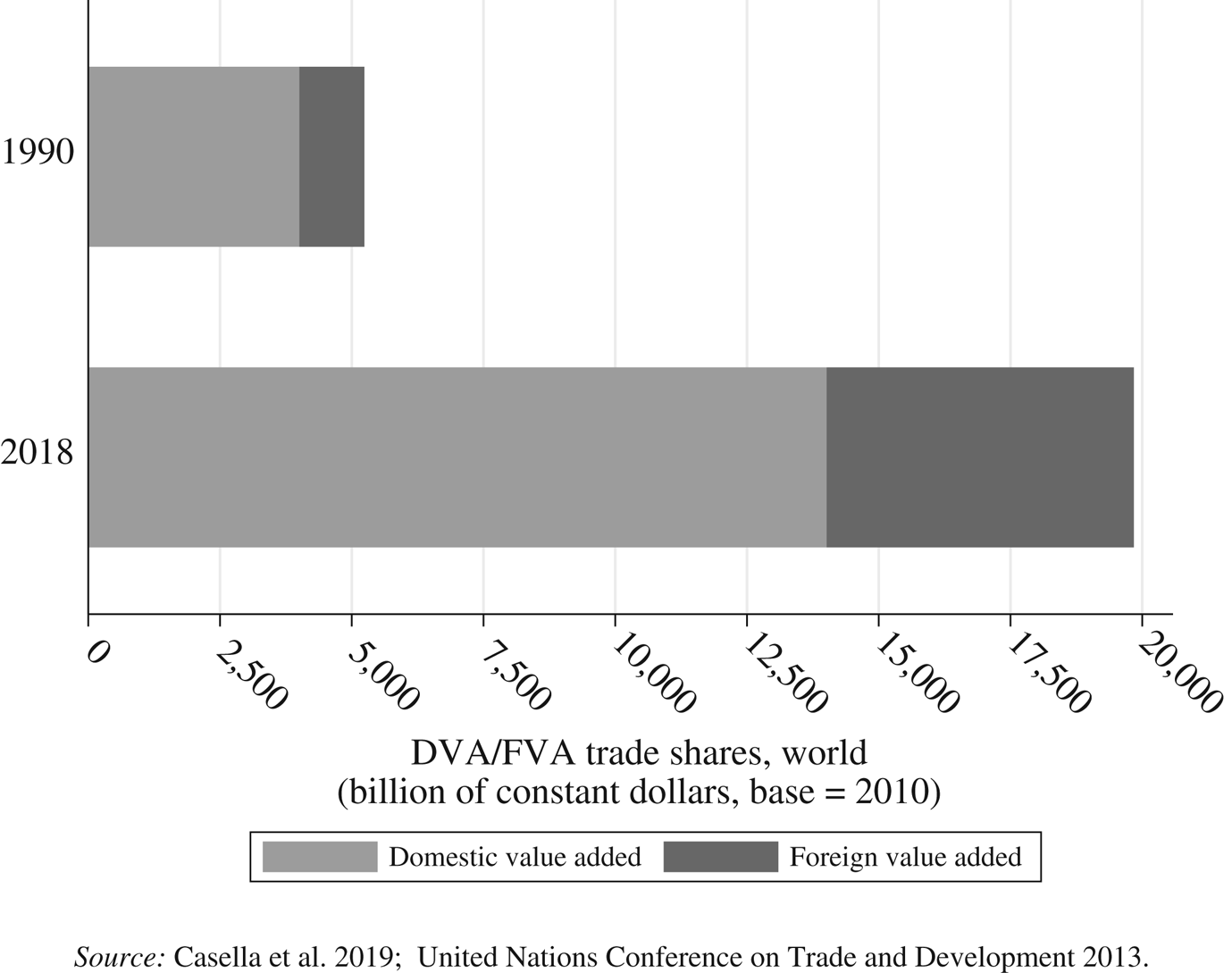
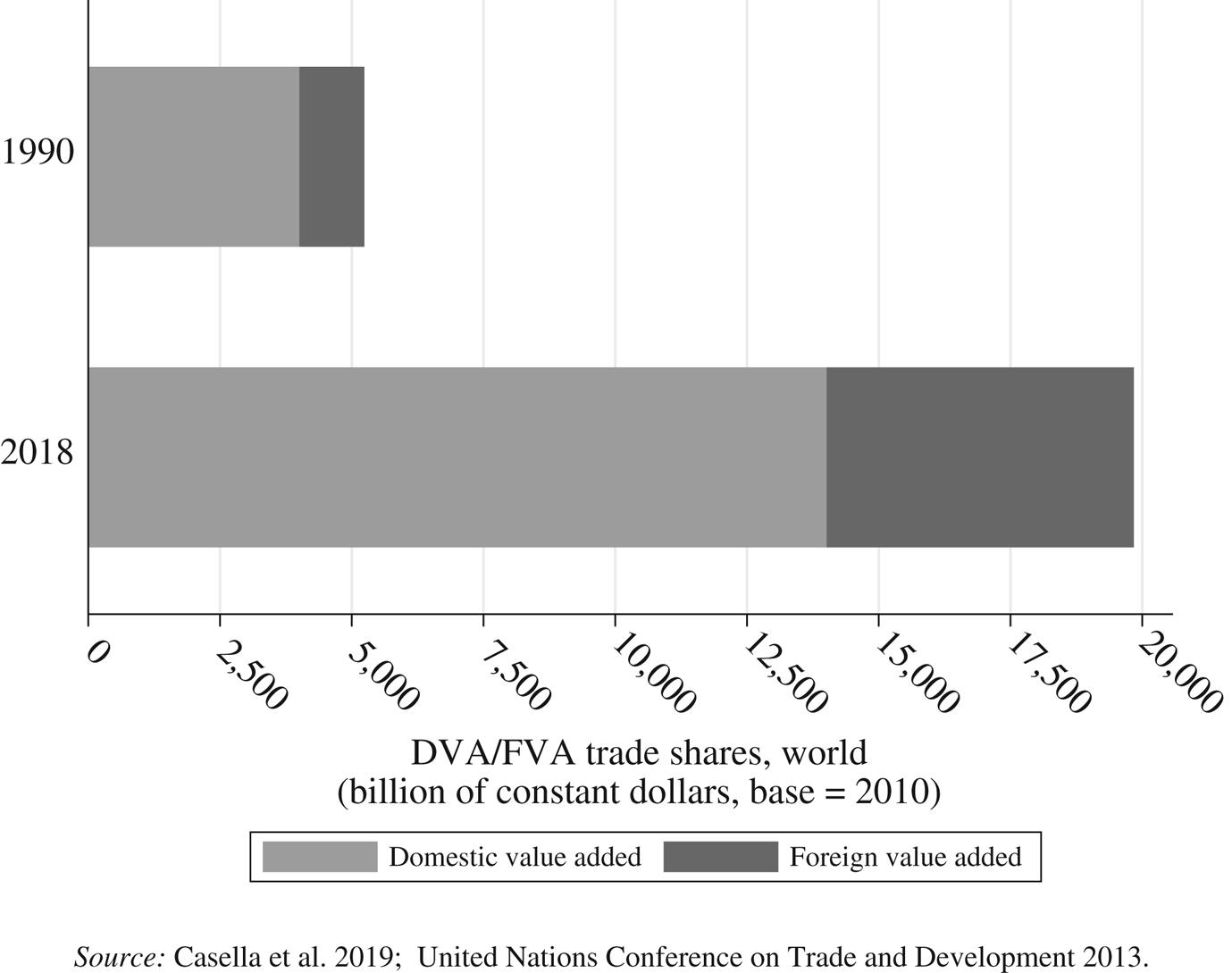
Figure 1 illustrates the rise in GVCs since the start of the digital revolution. Foreign value added in exports is a proxy for the extent to which GVCs contribute to trade; it reflects the portion of a country's exports accounted for by inputs imported from abroad.Footnote 34 As Figure 1 shows, foreign value added has increased roughly fourfold from the digital revolution's onset circa 1990 to 2018. This rise is much more pronounced than the growth of domestic value added during this period; that is, the portion of exports created domestically. In fact, the ratio of foreign value added to domestic value added increased from approximately 25 percent in 1990 to almost 45 percent in 2018.
Foreign value added and domestic value added in global exports, 1990 and 2018
Of course, digital ICT is not the sole source of the rapid spread of global supply chains. Reductions in international transportation costs and containerization have played key roles.Footnote 35 Scholars have also argued that US trade policy with China,Footnote 36 reductions in trade barriers and the proliferation of preferential trade agreements,Footnote 37 and a dearth of workers with information technology skills in developed countries contributed to the growth of these chains.Footnote 38 Nonetheless, an overwhelming amount of research indicates that digital ICT has played an outsized role in the management, spread, and advance of GVCs and that they have become centrally important to various sectors, such as electronics, automobiles, and textiles.Footnote 39
Linking Developed Country Capital with Developing Country Labor
Although trade within supply chains has taken place for centuries, a unique aspect of the modern supply chain is the involvement of low-wage, developing countries.Footnote 40 In the first few decades after World War II, most developing countries eschewed global market integration and engaged in protectionist import-substitution industrialization policies, in marked contrast to advanced industrialized countries. Trade expansion was primarily the result of growing North–North trade in manufactured goods, while developing countries generally discouraged imports and largely exported primary goods, although there were exceptions to this pattern. Most notably, the “Asian Tigers” (Hong Kong, Singapore, South Korea, and Taiwan) enjoyed rapid economic growth from the 1960s to the 1990s, driven in part by open trade policies. But it was not until the late 1980s that many developing countries began embracing trade liberalization, spurred by the success of the Asian Tigers and an interest in achieving similar economic results, as well as the debt crisis and the terms of subsequent International Monetary Fund structural adjustment packages. The advent of the digital revolution at roughly the same time made it both possible and profitable for firms in developed countries to outsource production stages previously performed in close proximity to the lowest-cost locations worldwide.
Accordingly, MNCs face lower costs and risks when linking developed-economy, firm-specific technology with developing country labor, and have been doing so at a rising pace. During the initial decades of the Bretton Woods era and the compromise of EL, the high costs and risks of coordinating production between intermediaries served as barriers to developing country involvement in GVCs. Instead, developed country firms relied on high-technology and high-wage production, while firms in developing countries did the opposite. The structure of production began to change as the digital revolution enabled firms in industrial countries to combine high technology with the low-wage labor of developing nations.Footnote 41
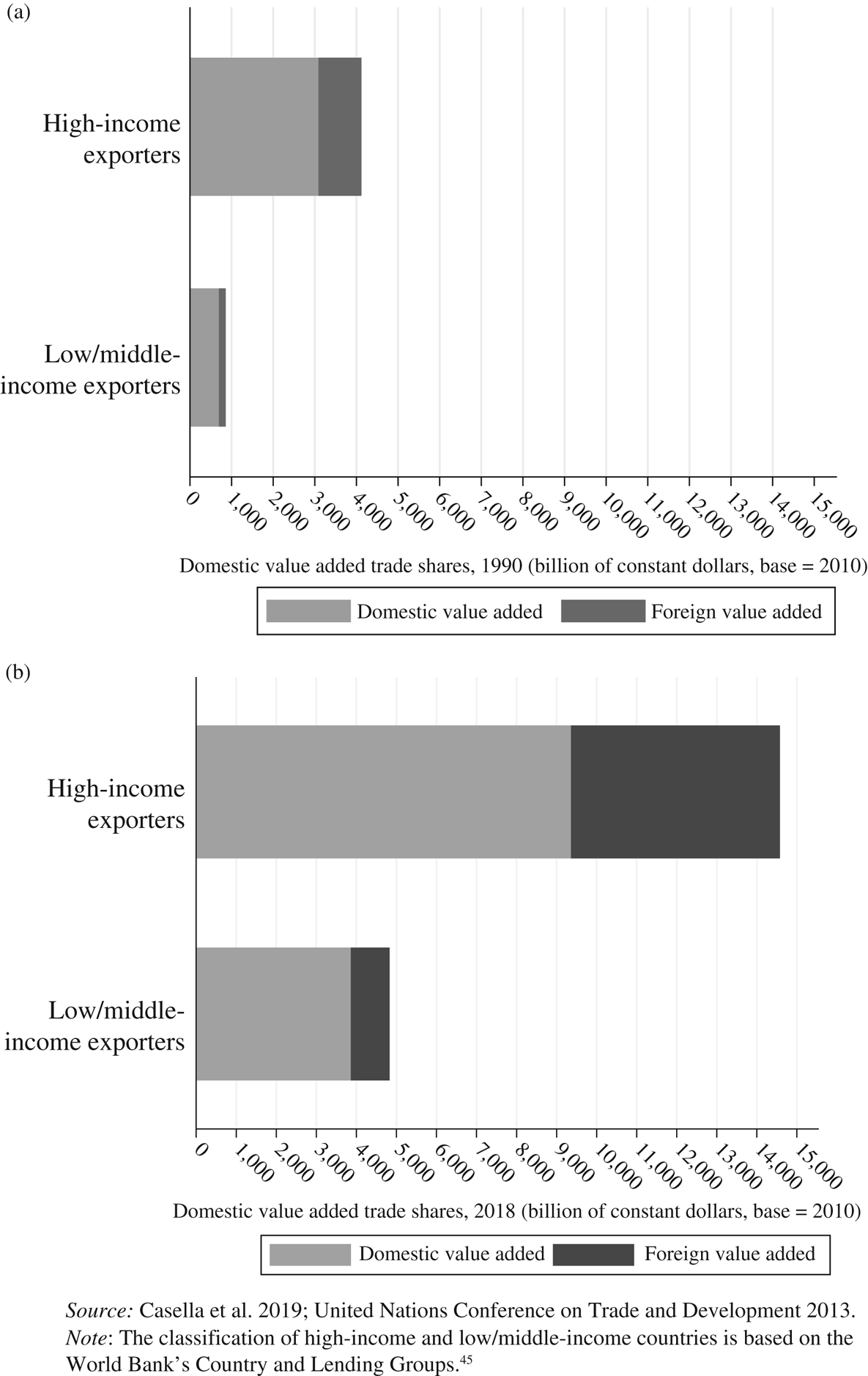
As a result, GVCs have spread to many parts of the developing world. We mentioned earlier that one measure of the extent of GVCs in a country's trade is the foreign value added of its exports. As Figure 2 shows, foreign value added for both developed and developing countries has increased significantly since the 1990s, but this growth has been roughly twice as large for the latter than for the former states. In the same vein, whereas the ratio of foreign to domestic value added in exports has remained roughly constant for developed countries (approximately one third), this ratio has risen dramatically for developing countries, from approximately 10 percent in 1990 to approximately 25 percent in 2018.
Foreign value added and domestic value added in exports for high-income and low/middle-income countries, 1990 and 2018
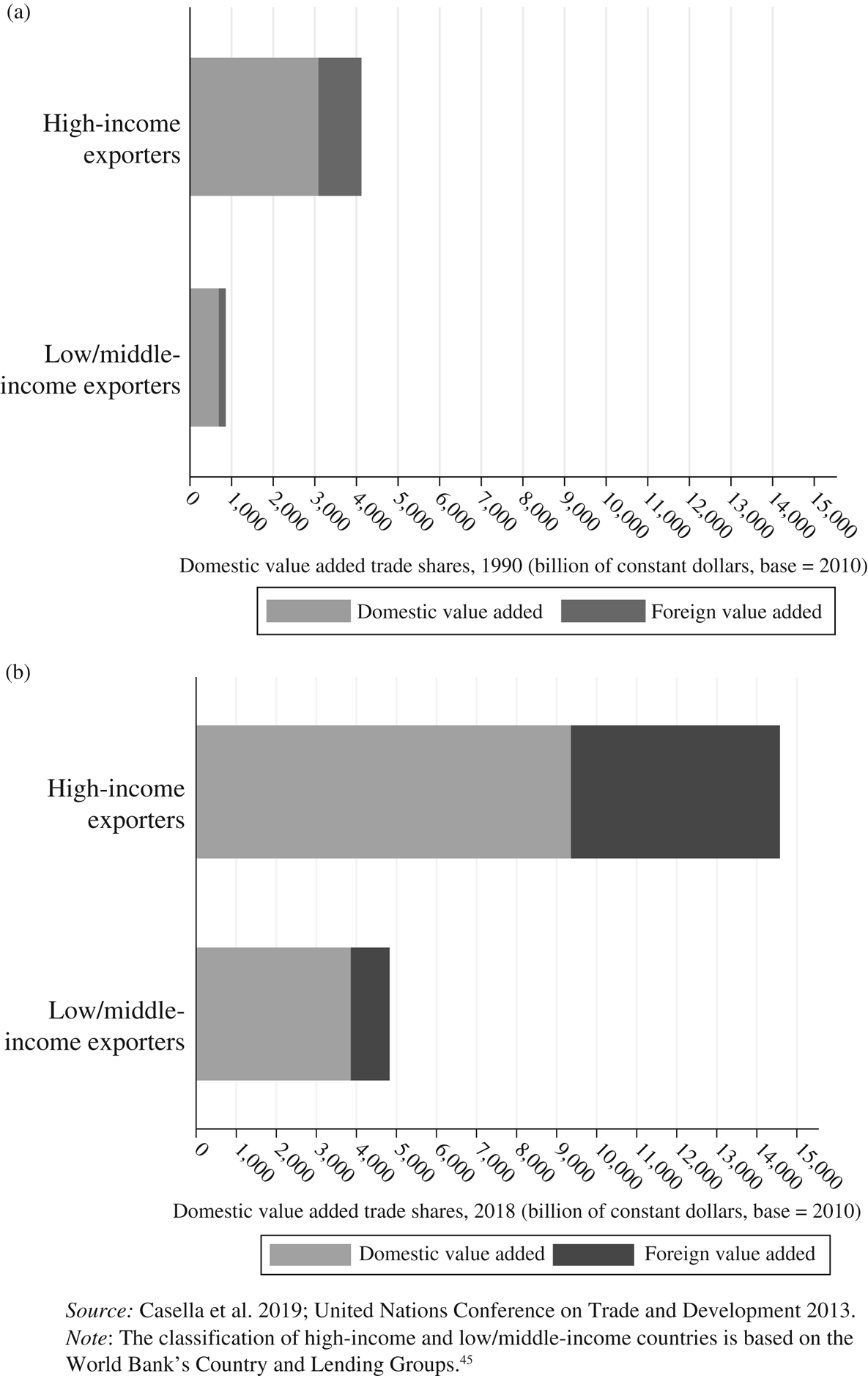
In addition to foreign value added, some of the domestic value added in exports is also linked to GVCs. Between 2005 and 2015, the domestic value added in intermediate exports that are processed in partner countries and then re-exported to still another country grew 3.8 percent annually for developed economies and a whopping 7.1 percent for developing countries.Footnote 42 Not only has the amount of trade linked to GVCs risen dramatically over time, the range of industries and services that are integrated in these chains, especially in the developing world, has also increased.Footnote 43 Developing nations are increasingly focused on moving into higher-value niches in the global production network, rather than on promoting competitive vertically integrated domestic industries.Footnote 44
Of course, these aggregate figures mask both cross-country and cross-regional differences in the extent to which developing countries participate in GVCs. The highest shares of foreign value added in trade are found in East Asia, South Asia, and Central America. China has played a sizable role in GVCs, but so have India, Mexico, Malaysia, Thailand, and various other developing economies.Footnote 46 Despite these variations in GVC participation, however, the growth of these chains is one of the most striking and influential changes to the global economy since World War II.
The Rising Power and Prevalence of MNCs
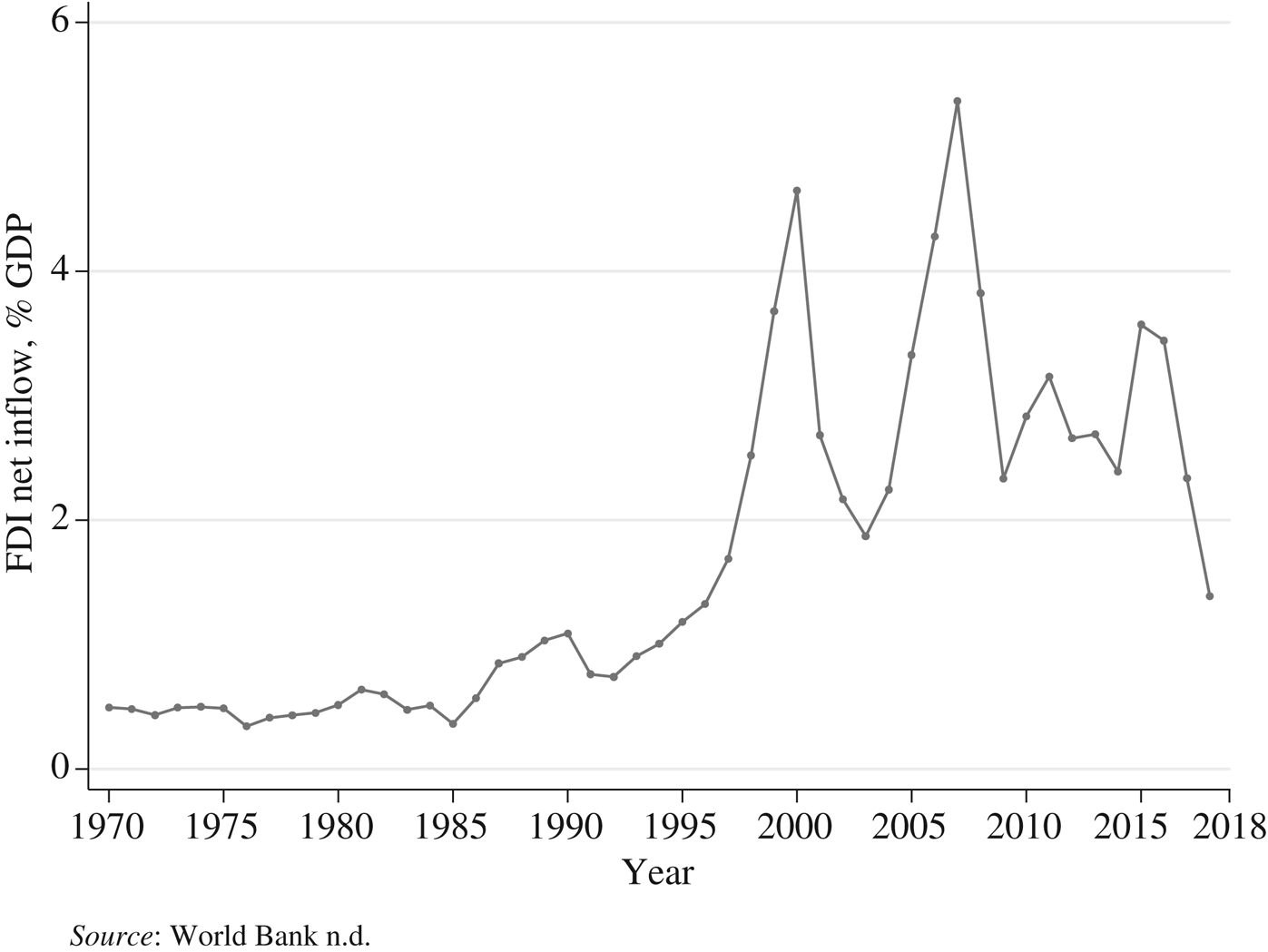
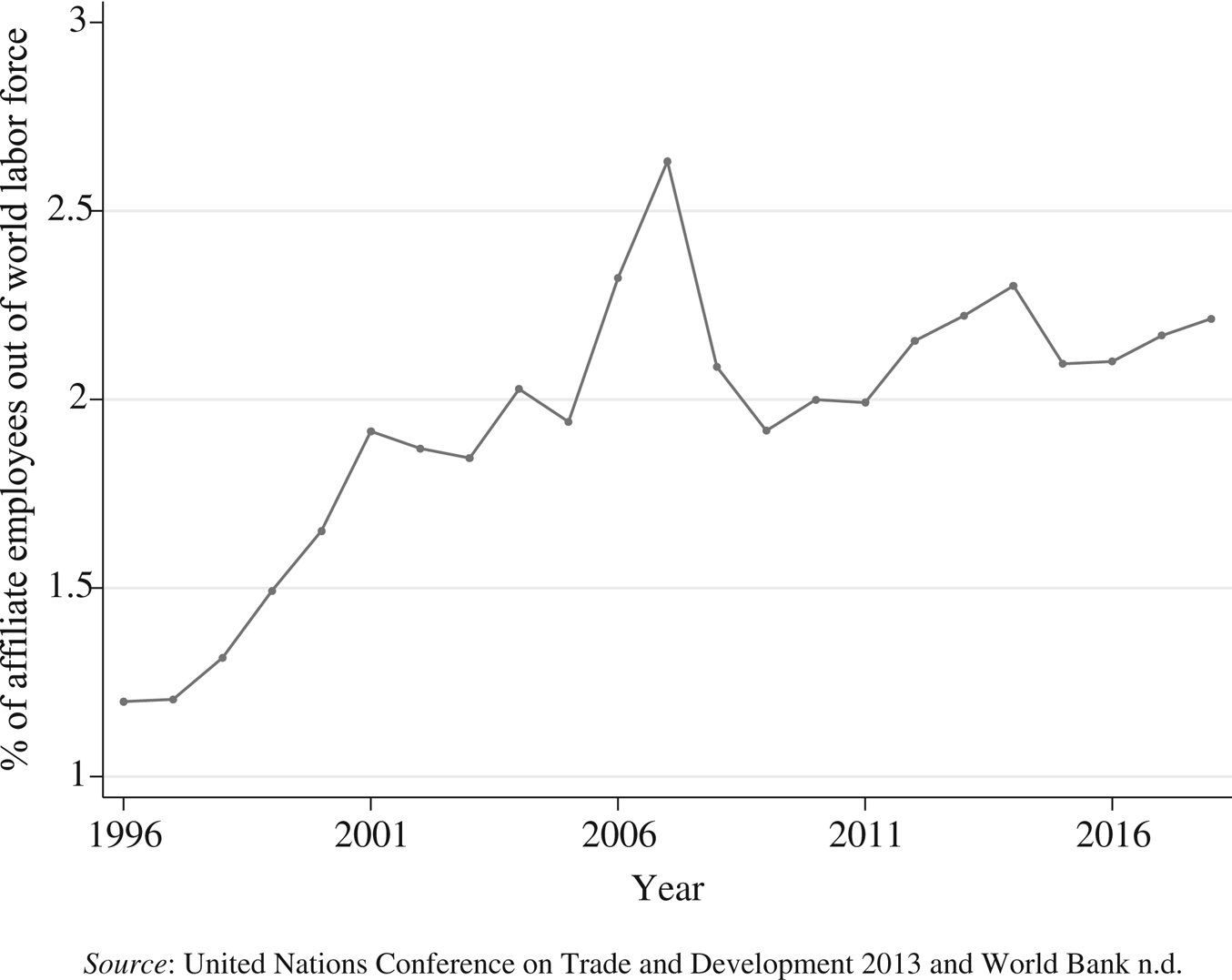
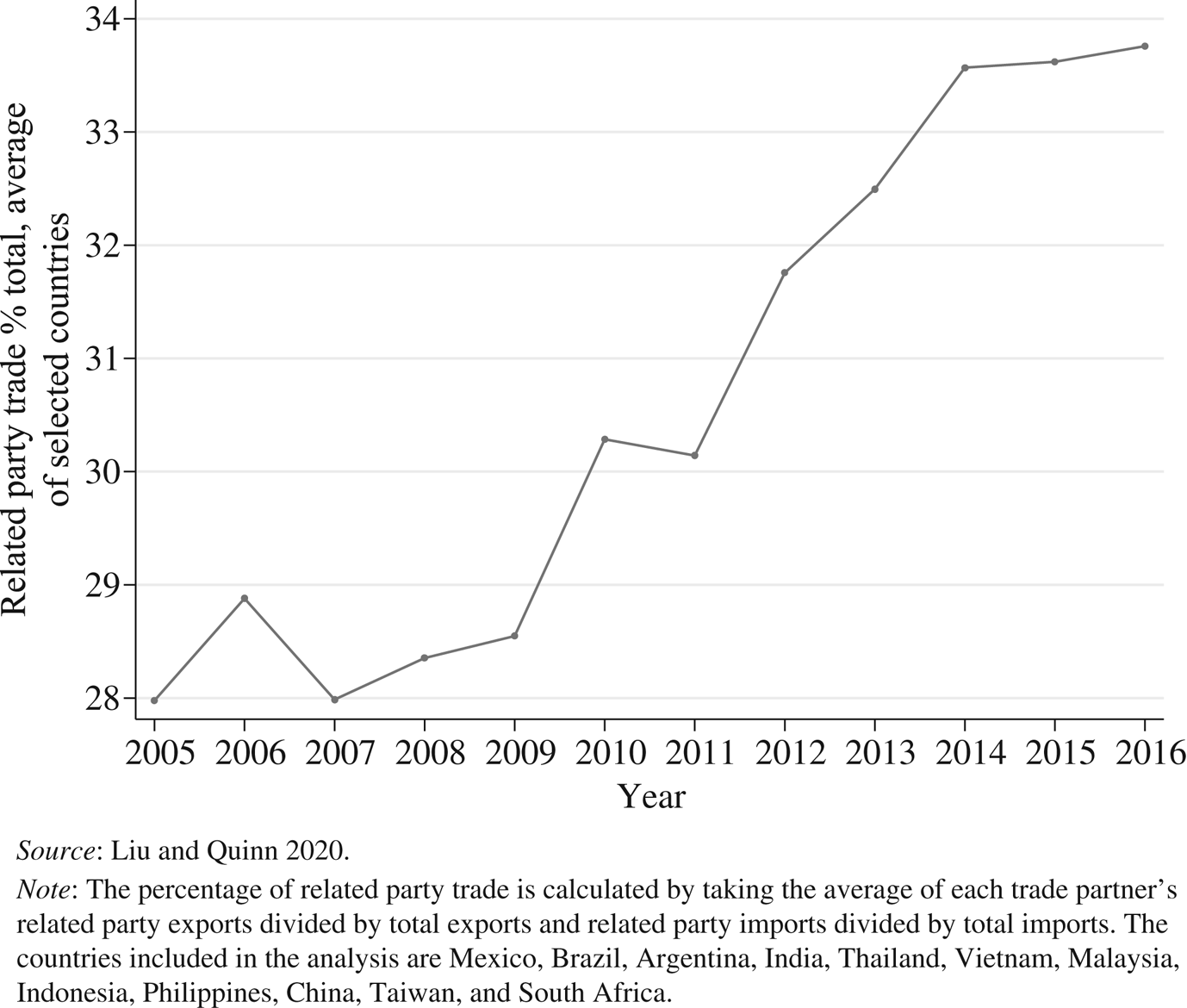
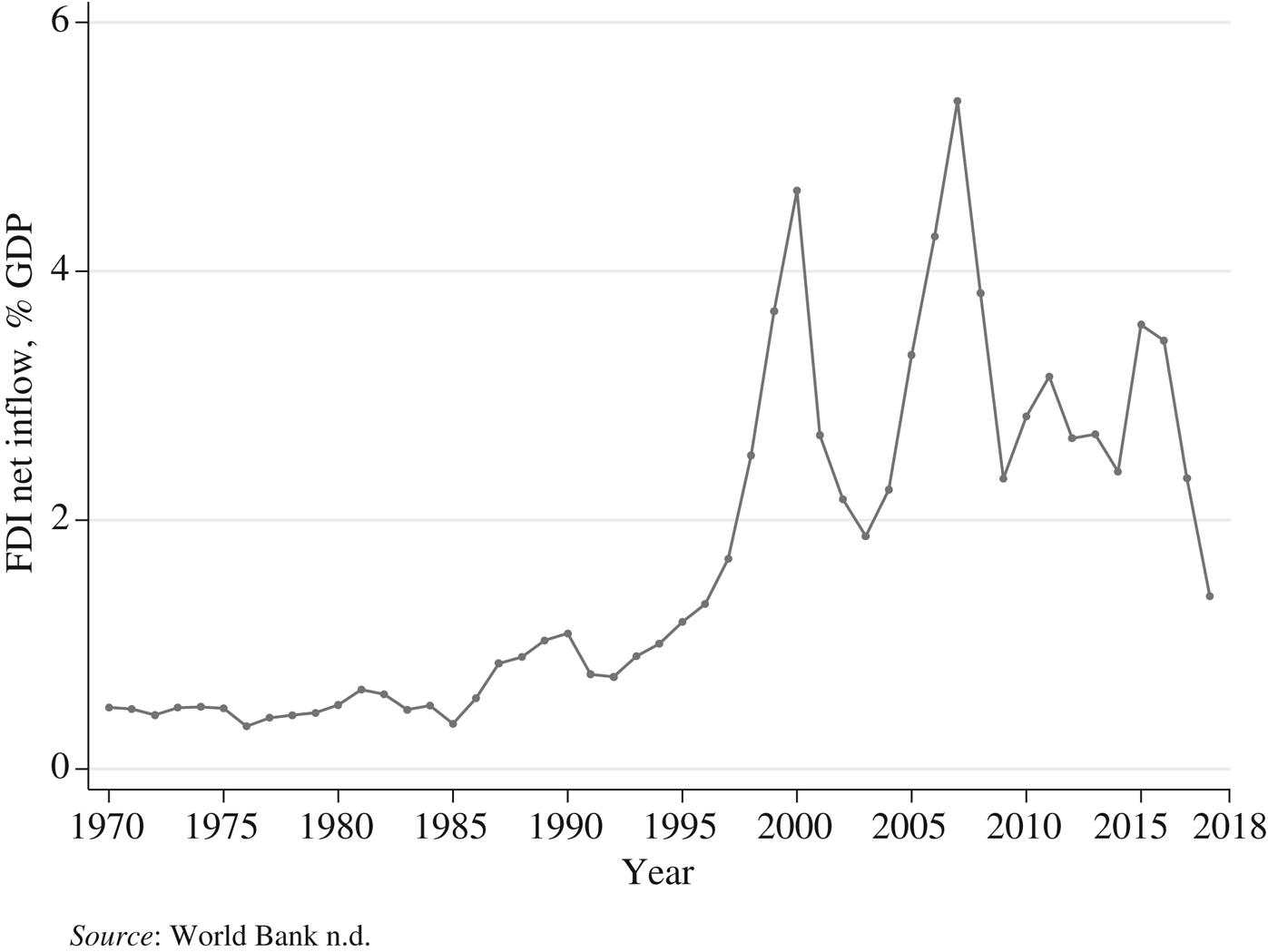
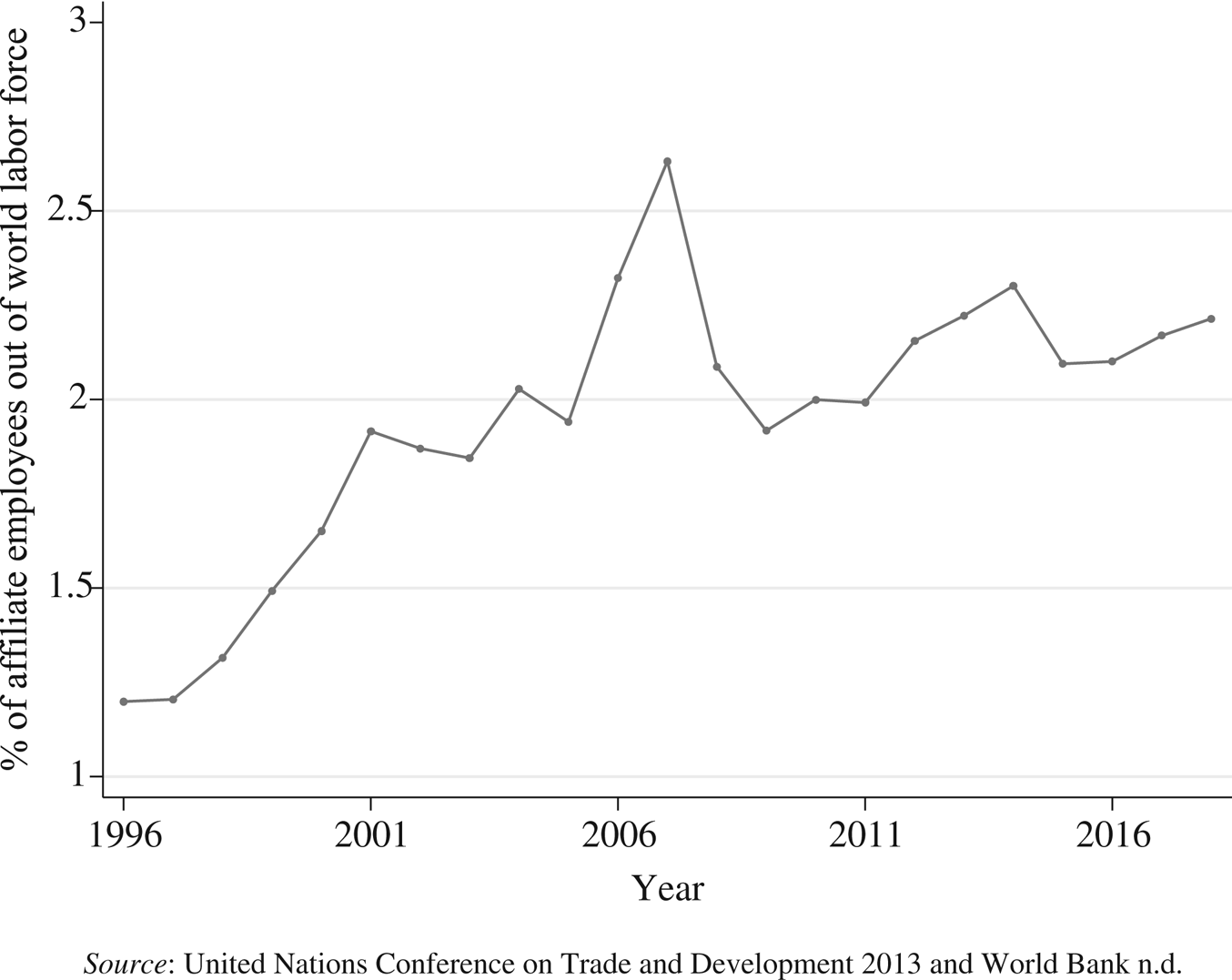
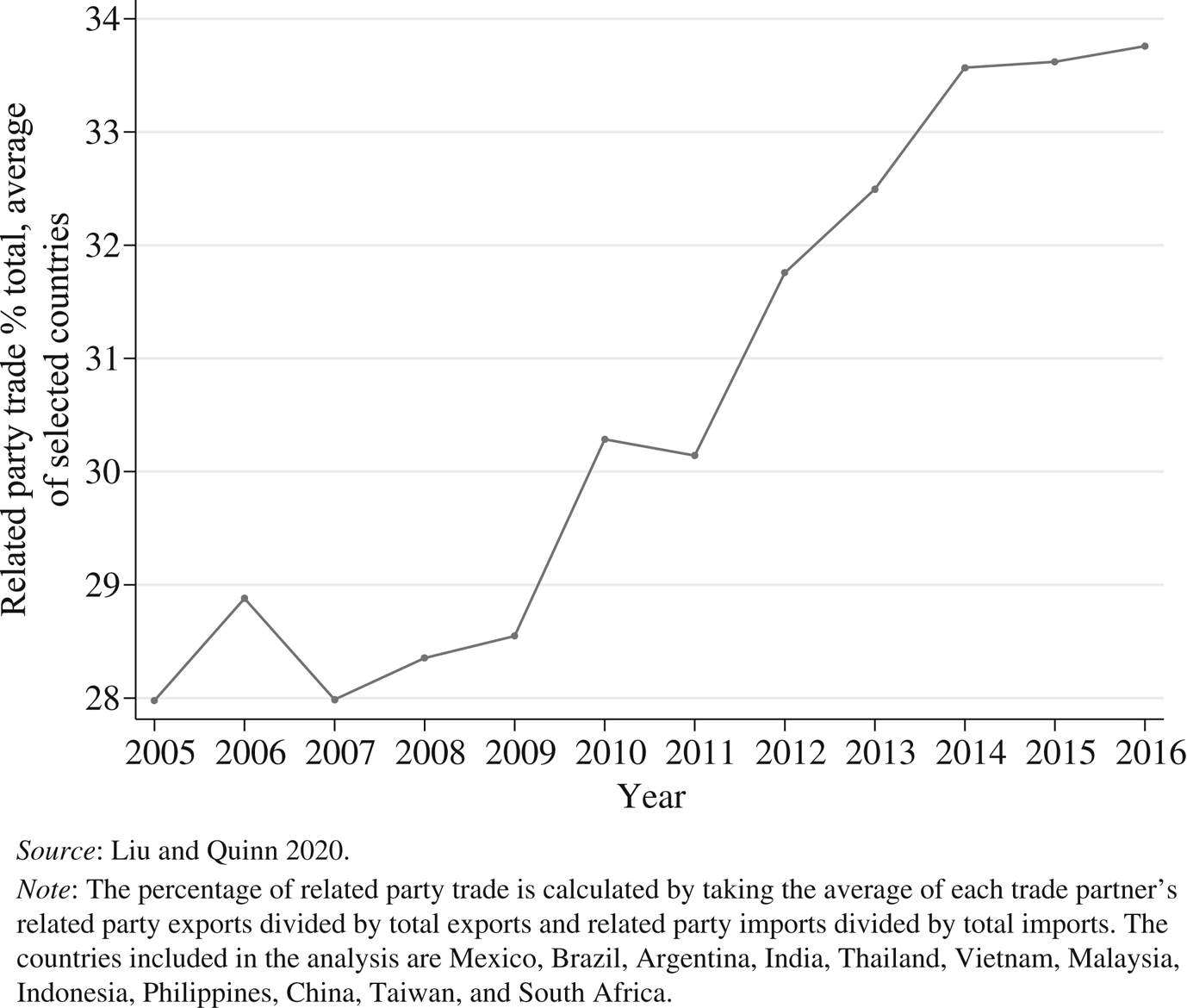
The digital revolution has contributed to the mounting power and prevalence of MNCs. These firms are the driving force behind modern supply chains and are responsible for the massive increase in FDI flows (which are tightly linked to participation in GVCs) in recent decades. As shown in Figure 3, these flows spiked after the digital revolution began and have continued to grow, except during economic downturns. Equally, the spread of MNCs is reflected in the rising portion of the labor force working for one of their foreign affiliates. Figure 4 indicates that approximately 1.2 percent of the global labor force was employed by an MNC foreign affiliate in 1996, a value that rose to roughly 2.6 percent in 2007. Not surprisingly, employment dropped significantly during the Great Recession but it recovered afterward, increasing during the period from 2009 to 2018. Further, as a result of the growth in FDI, intra-firm trade has risen as well. Although systematic data on such trade are limited and available primarily for the United States, Figure 5 shows the amount of intra-firm trade that the United States conducts with twelve developing and emerging economies that are widely involved in GVCs as a percentage of its total trade with these countries.Footnote 47 That this percentage grew steadily from 2005 to 2016 strongly suggests that US MNCs have been integrating the developing world into their global production networks.Footnote 48
FDI net inflows as percentage of global output, 1970–2018
Percentage of the global labor force working for foreign affiliates of MNCs, 1996–2018
US intra-firm trade with twelve developing countries as a percentage of total trade, 2005–16
ICT advances helped spark the increased activity, prevalence, and power of MNCs, especially large “superstar firms.”Footnote 49 These firms tend to be highly productive, to use technology intensively in the production process, and to dominate export markets.Footnote 50 A cycle often develops whereby exporters invest revenues generated by trade into technology upgrades, and these highly productive firms are, in turn, better able than their less productive counterparts to cover the large fixed costs required for exporting.Footnote 51
Perhaps even more critical for the global economy, the digital revolution has magnified the impact of MNCs on international trade and investment patterns. Such firms currently operate far differently than they did prior to the digital revolution.Footnote 52 MNCs are shaping trade patterns through the purchase of intermediate and final goods by an affiliate in one country from an affiliate located elsewhere, by influencing the exports of their contractual partners, and through the activities of arm's-length suppliers located abroad. In all three cases, lead firms coordinate (or subcontract) with firms in distant locations, leading intermediate goods and services to cross national borders several times along the supply chain, often passing through countries more than once.Footnote 53 This has had a profound impact on international trade. In fact, the United Nations Conference on Trade and Development (UNCTAD) estimates that roughly 80 percent of trade is related to the global production networks of MNCs.Footnote 54
In sum, ICT innovations have had important implications for MNCs. Prior to the digital revolution, MNCs largely engaged in intra-firm trade between developed countries to minimize coordination problems, transaction costs, and risk. Firms tended to favor vertical integration strategies within the high-wage advanced industrial world involving high-value knowledge-intensive activities.Footnote 55 This tendency started to change as digital technologies advanced and improved the prospect of offshore outsourcing (either as arm's-length trade with subcontractors or independent suppliers, or between related parties as inter-firm trade), yielding incentives for MNCs to employ lower-cost labor in developing countries. Put simply, ICT advances have made it both possible and profitable for MNCs to offshore production stages previously performed in close proximity, thereby improving efficiency.
Challenges to EL: The Distributional Consequences of Global Digital Interdependence
Despite the many benefits of the digital revolution, however, it has had unforeseen and adverse consequences for the compromise of EL by making it more difficult for governments to pursue policies associated with the legitimate social purpose that Ruggie emphasized was necessary to maintain support for multilateralism.Footnote 56 The rapid advancement of ICT since 1990 has, at once, deepened interdependence, exacerbated distributive conflicts, and limited many governments’ ability to compensate distributional losers.Footnote 57 Social purpose involves the state's role in managing the economy and redressing adverse social and economic effects stemming from multilateralism. By facilitating the spread of GVCs across rich and poor nations, and raising the global reach and prominence of MNCs, the digital revolution has strained the compromise of EL and the state's ability to bolster domestic stability in three ways: (1) placing economic pressure on lower-skilled labor in advanced industrial countries, (2) making it more difficult to regulate and tax capital, and (3) rendering it harder to maintain high labor standards.
Less-Skilled Workers As Distributional Losers
Heightened global digital interdependence has influenced the distributional winners and losers from trade in ways that were unanticipated when the compromise of EL was initialy forged. Political economists since Adam Smith, David Ricardo, Karl Marx, and John Maynard Keynes have expressed concerns about the effects of “technological unemployment.” As advances in trade and technology go hand in hand, digital interdependence has encouraged the spread of skill-biased technological change and increased the distributional losses imposed on low-skill workers in the advanced industrial world.Footnote 58
The rising skill premium accompanying the digital revolution is historically unique. During prior industrial revolutions, technological advances and open trade had a “de-skilling” impact on the labor force, as skilled artisans were replaced with physical capital, raw materials, and unskilled labor.Footnote 59 Consequently, the median education of labor declined in expanding industrial sectors. Factory jobs were monotonous, factory workers earned lower wages than artisans, and these workers did not require a formal education.Footnote 60
In contrast, the digital revolution has had an upskilling effect on the workforce, stimulating a seemingly irreversible demand for more educated workers.Footnote 61 Digital ICT enhances the productivity of skilled workers relative to that of low-skilled labor. It has also contributed to a rise in the skill premium; that is, the ratio of the wages of skilled to unskilled workers. Because GVCs tend to be dominated by ICT-intensive firms, they steer the absorption and dissemination of technologies through the various stages of the supply chain and increase the demand for skilled workers worldwide.Footnote 62
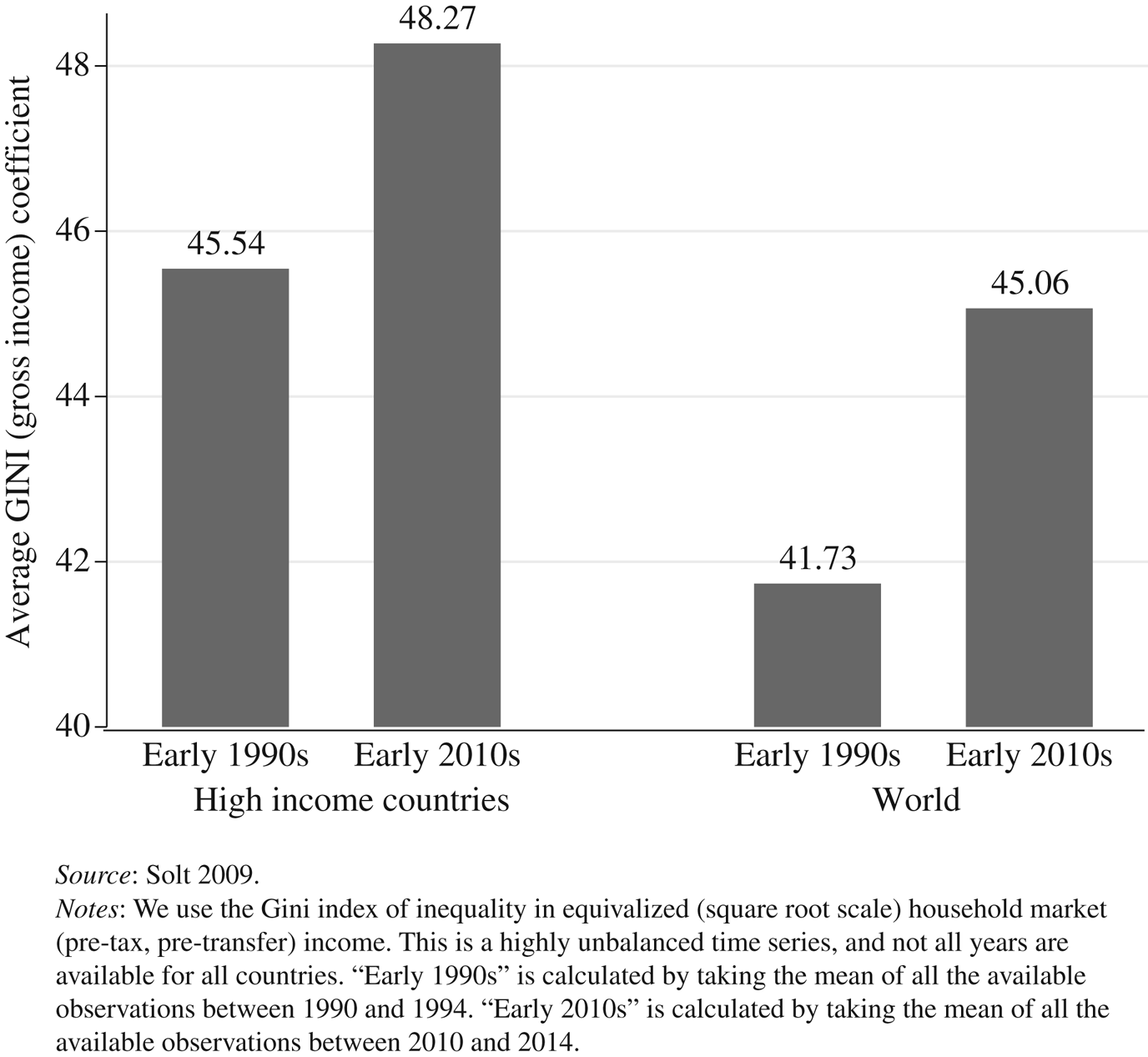
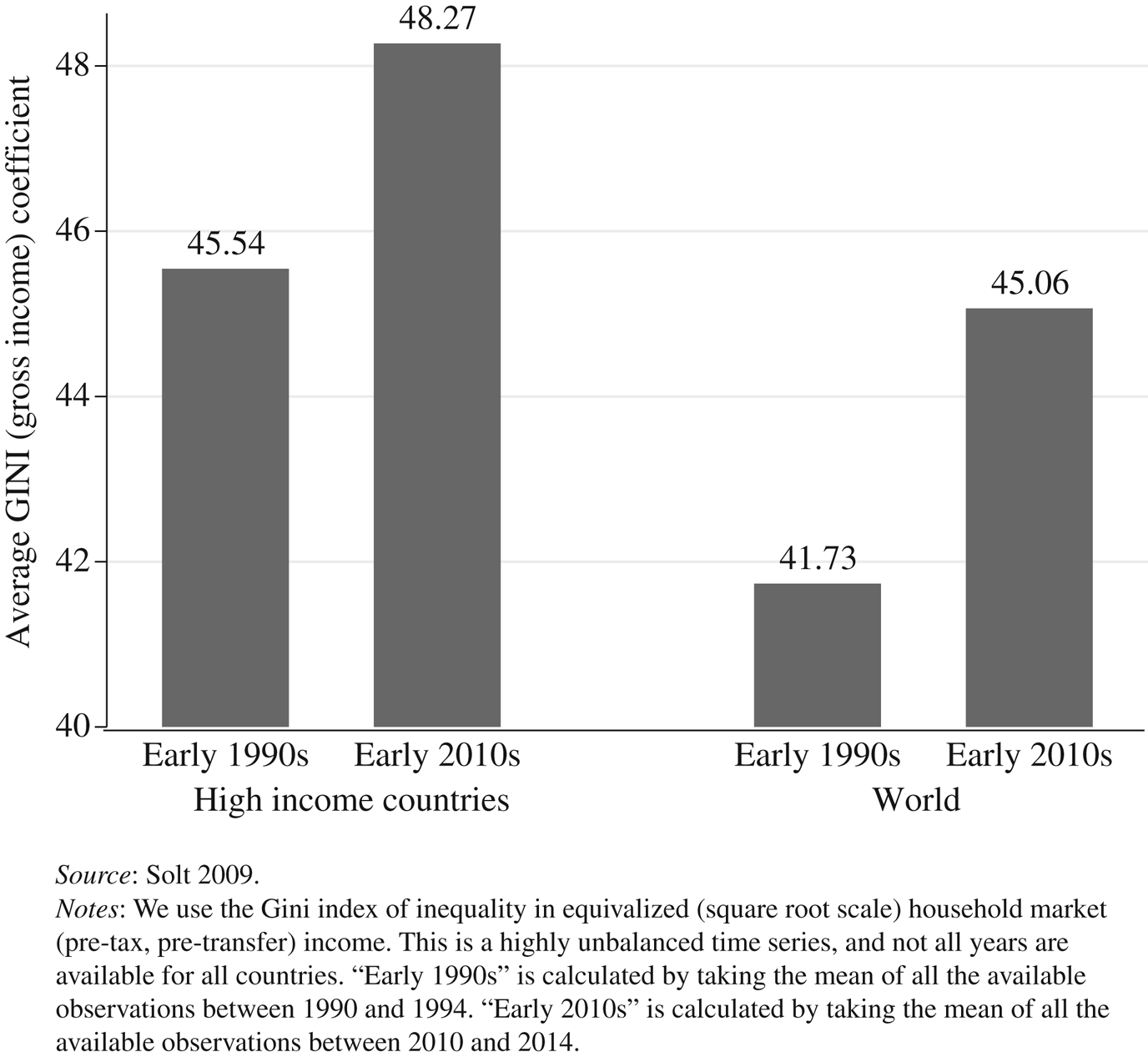
Consequently, low-skilled workers in developed economies have experienced distributional losses. ICT advances have not only facilitated the automation of lower-skill routinized jobs, but also the modern GVC led to the offshoring of such tasks to low-wage economies—developments that have sparked hostility to the liberal international economic order in the developed world.Footnote 63 A cycle develops as ICT stimulates longer GVC chains, which then increase ICT intensity and raise the demand for higher-skilled workers relative to the demand for low-skilled workers.Footnote 64 As expected, there is ample evidence that ICT expansion promotes both the growth of low-wage, low-skill service sector jobs, and higher incomes for higher-skilled workers.Footnote 65 In the United States, for example, the wages of college-educated workers rose by 9.3 percent from 1979 to 2018, while less-educated workers experienced a fall in wages of 24.4 percent over the same period.Footnote 66 The income of workers with postgraduate degrees has increased by almost 24 percent over the last four decades.Footnote 67 More generally, as Flaherty and Rogowski discuss in this anniversary issue and as Figure 6 shows, income inequality has grown worldwide and in the higher-income countries—where EL has been most prevalent—since the onset of the digital revolution.Footnote 68
Income inequality in high income countries and worldwide, 1990–94 and 2010–14
Not only has global digital interdependence contributed to distributional losses for low-skilled workers in developed economies, it has also reduced the range of policies that are available to buffer and compensate them. In the initial decades of the Bretton Woods era, for example, governments could protect these workers with trade barriers that limited their exposure to cheaper low-skill labor in developing countries. In the current era, however, it is more complicated to use such barriers to shield low-skilled labor that is employed by MNCs in advanced industrial countries. These firms and domestic companies that participate in GVCs depend on inputs produced by cheap low-skilled labor in the developing world, and therefore have an incentive to actively oppose raising trade barriers to protect low-skilled labor producing similar inputs in developed economies. Hence, global digital interdependence has made it far more challenging for governments to design policies that are consistent with EL and curb the distributional losses experienced by workers.
Challenges to Regulating Capital
In addition, global digital interdependence is inhibiting the ability of states to regulate capital and fund social adjustment policies. It is often argued that governments should support redistributive policies to compensate low-skilled labor for the rising skill premium associated with ICT advances.Footnote 69 Indeed, cushioning the distributional consequences of liberalization was central to the compromise of EL. Yet global digital interdependence undermines EL by empowering MNCs and intensifying the competition for capital in ways that scholars analyzing the effects of capital mobility,Footnote 70 agglomeration,Footnote 71 or tax havensFootnote 72 and “races to the bottom” in taxation have not considered. ICT vastly increases tax arbitrage opportunities by expanding MNCs’ ability to shift profits to tax-friendly locations in their global value chains, while also encouraging stiffer global competition among supplier firms and encouraging governments to lower corporate tax rates and offer corporate subsidies.
Both governments and firms are using ICT to manage supply chains and, concomitantly, the growing complexity of the global tax environment. Governments worldwide are relying on ICT to prevent corporate tax avoidance through measures such as digitalizing tax admistration systems and implementing indirect taxes (including value added taxes). However, MNCs are sensitive to the toll that these regulatory changes are taking on profits. In response, many firms are making major investments in technology and data analytics infrastructures (such as “tax technology”) that enable them to take advantage of their supply chain networks and optimize global tax strategies.Footnote 73
For example, ICT improvements are influencing the extent to which MNCs can engage in transfer pricing, a particularly vexing tax-avoidance problem for governments. This practice involves pricing transactions between subsidiaries in different countries in order to divert profits away from higher-tax locations to lower-tax locations. Transfer pricing can hamper the ability of states to generate the revenue needed to support the EL bargain. In fact, recent research indicates that, on average, transfer pricing costs governments approximately 1 percent of gross domestic product.Footnote 74 To address this problem, many governments have been adopting transfer pricing legislation recommened by the Organisation for Economic Cooperation and Development (OECD). However, firms can use enabling digital technologies—such as “operational transfer pricing”—to sidestep such tax policies and “plan and execute efficient tax structures and make better and informed business decisions.”Footnote 75
Digital integration is also encouraging tax arbitrage and complicating capital regulation by increasing supplier competition. Because global digital interdependence enables even small-scale producer participation in GVCs, lead firms in these chains are encouraging supplier competition worldwide. This strategy helps MNCs identify the lowest-cost and lowest-risk suppliers,Footnote 76 while also improving their sourcing flexibility, which involves identifying the availability of alternative suppliers that can maximize firm performance and minimize supply chain disruptions.Footnote 77 To promote such flexibility, MNCs often have larger-than-needed pools of preferred and approved suppliers.Footnote 78 The excess of suppliers creates an incentive for governments to minimize taxes so that MNCs will contract with firms in their jurisdiction. Firms can then take advantage of ICT, supply chains, and various tax incentives to reduce the taxes they pay to host governments.Footnote 79
In sum, global digital interdependence has adversely affected the ability of governments to raise revenue through corporate taxes by helping MNCs optimize supply chains and promote supplier competition.Footnote 80 These reduced revenues have constrained the capacity of governments to fund domestic programs that have been central to EL. In Denmark, the Netherlands, and Sweden, for example, the government has rolled back unemployment benefit programs.Footnote 81 In other cases, governments have responded by turning to alternative sources of revenue, such as personal income taxes and consumption taxes, placing a higher burden on labor and the general public.Footnote 82 It is not difficult to understand why public resentment of MNCs and globalization, more generally, would increase as a result.
Challenges to Regulating Labor
In addition to harming lower-skilled workers and increasing the impediments to regulating capital, global digital interdependence has weakened the ability of governments to regulate and safeguard labor. On the whole, GVCs have had a positive effect on employment, although the magnitude of this influence has varied across countries, depending on factors such as the share of value-added activities in the chains and the amount of human capital needed to perform jobs.Footnote 83 But governments face greater problems regulating labor standards and rights in the digital era than was the case during the first few decades of the Bretton Woods era. In part, these problems stem from downward pressure on prices in many markets, which has increased the demand for cheap and under-regulated labor, particularly among second-tier and third-tier suppliers (that are often smaller enterprises serving as middlemen) in global supply chains.Footnote 84
Just as global digital interdependence has constrained the state's ability to regulate capital, it has similarly affected labor regulations. Existing government regulations are primarily directed at individual firms and the domestic workforce, rather than at entire value chains and the workers they employ. Following the digital revolution, ICT-enabled standardization greatly decreased the costs of GVC entry for second-tier and third-tier firms in developing countries by dramatically reducing demands for research and development, learning by doing, and the complementary skills necessary for the production of goods, especially products that are capital intensive.Footnote 85 MNCs have more options for switching production between suppliers (and countries) as a result. They can react to stringent labor regulations by using their supply chain networks to engage in labor standard arbitrage: moving parts of the production process to locations with lax regulations. States that aspire to host these firms or parts of their value chains have an incentive to set labor regulations that allow producers to meet time and cost pressures established by lead firms in GVCs. ICT advances may thus precipitate a race to the bottom in labor standards, at least among countries that aim to participate in supply chains.
This tendency has been particularly apparent in the developing world, where efforts to join GVCs are frequently accompanied by low labor standards and a scarcity of labor rights.Footnote 86 The large population of informal workers in developing countries that participate in GVCs is at particular risk.Footnote 87 Equally, workers performing low value-added tasks for second-tier and third-tier suppliers are vulnerable because it is easy for lead firms to relocate production if the government adopts costly labor regulations. The 2013 Rana Plaza disaster in Bangladesh is just one illustration of how MNC supply chain subcontractors have maintained low labor costs in the developing world by jeopardizing the safety of low-skill workers.Footnote 88
Moreover, poor labor conditions in developing countries may contribute to a vicious cycle, prompting a deterioration of labor conditions in advanced industrial countries. Existing research suggests that MNCs have been able to use the offshoring of certain jobs to developing countries with low-cost labor and poor labor standards to obtain concessions from employees and unions in developed states.Footnote 89 Equally, global capital has been linked to labor market transformations in developed countries, such as the rise of nonstandard jobs (including independent contracting, on-call work, and part-time employment) that typically offer few if any employee benefits.
From the standpoint of maintaining domestic support for EL, the challenge is that governments have limited tools to compensate workers who are vulnerable as a result of advances in ICT. They also have little incentive to stiffen labor standards or discourage supply chain participation, because doing either is likely to dampen economic growth. Implementing regulations encouraging higher labor standards is likely to prompt supply chain contractors to consider shifting the firms they work with to those operating in countries that lack such policies. More generally, production technologies are evolving more quickly than the regulatory regimes put in place to control them and protect workers. In sum, global digital interdependence has upended the post-World War II command-and-control approach to capital and labor, thereby increasing the difficulty that governments face in crafting policies that effectively cushion the effects of multilateralism and international openness.Footnote 90
Moving Forward
The digital era and its effects on global value chains, capital, and labor are placing substantial stress on the compromise of EL. The modern supply chain and associated global production processes continue to evolve during the digital era as a result of ongoing advances in ICT. These supply chains have created linkages between capital and technology in the advanced industrial countries and relatively low-cost labor in the developing world. This has harmed low-skill labor in industrialized nations, where EL thrived in the aftermath of World War II. States’ reduced ability to regulate capital and labor in the digital era has strained EL by making it increasingly difficult to bolster the programs and policies needed to buffer the segments of society that are threatened by multilateralism and foreign economic liberalization. Put simply, the compromise of EL has failed to evolve in tandem with fundamental changes to the global economy stimulated by the digital revolution.
Future research should investigate these challenges to EL in greater depth. One issue that merits attention is the timing of antiglobalization sentiment following the digital revolution. The digital era has been underway since roughly 1990. During that time, opposition to globalization and the liberal international economic order has been mounting, partly as a consequence of the ongoing pressure being placed on EL.Footnote 91 Further work is needed on this issue and on why periods of active hostility to the liberal order that coincided with the digital revolution in the 1990s—such as during Ross Perot's and Pat Buchanan's 1992 US presidential campaigns and the World Trade Organization's 1999 ministerial meeting in Seattle—have been interspersed with periods of relative quiecense. Additional research is also needed on why the anti-globalization backlash has become particularly intense of late, spurring events such as Brexit and the election of Donald Trump. Perhaps this intensity stems from the accumulation of pressure on EL over the past thirty years. Equally, while the current backlash is being felt in various parts of the world, additional work is needed on why it is taking different forms across nations, directed at various combinations of trade agreements, MNCs, immigrants, and international organizations.
We have argued that strains exist on EL throughout the advanced industrial world. At the same time, however, some states continue to do a better job of managing these pressures than others. This puzzle needs to be investigated. One possibility is that states with a history of institutional cooperation with firms (for example, coordinated market economies) are in a better position to regulate labor and capital despite global digital interdependence. It is also likely that the strength of government institutions influences the ability of states to regulate capital and labor, even in the face of rising digital interdependence. In the same vein, we have argued that the digital era has been marked by race-to-the-bottom effects in capital regulation and labor standards. However, additional research should focus on whether there are conditions under which such interdependence instead gives rise to “California effects.”Footnote 92 MNCs, for example, might choose to voluntarily exceed regulatory requirements in order to mollify interest groups and pre-empt stiffer regulations.Footnote 93 Further, there may be domestic political and economic conditions that influence the extent to which race-to-the-bottom effects are likely to prevail in some issue areas related to GVCs (for example, taxation), but not in others (for example, pollution).
Also needed is further analysis of the conditions under which states are able to compensate for the distributional losses associated with global digital interdependence. We maintain that the displacement effects of trade, FDI, ICT, and supply chains are intertwined. This may be why some studies have found that the standard tools for redistributing income and compensating distributional losers are no longer sufficient.Footnote 94 More research is warranted on the political-economic conditions that enable states to better prepare their workers for digital interdependence, and skill obsolescence in particular. Surprisingly, total public spending on worker training has been decreasing over recent decades in several OECD nations, including coordinated market economies such as Norway and Switzerland.Footnote 95 At the same time, countries such as South Korea, Germany, Singapore, Japan, and Estonia are preparing their workers for the age of “intelligent automation” with policies supporting worker training and mobility.Footnote 96 Why are some countries protecting their workers from the adverse influences of global digital interdependence, whereas others are not?
Research is also needed on the politics of technology, including the conditions under which governments support and regulate technological change. Political leaders are well aware of the disruptive effects that technology is having on labor and the broader society, but tend to avoid this issue.Footnote 97 It is even more intriguing that politicians blame trade or foreigners, rather than technology, for the loss of national policy autonomy, particularly as it has become more difficult to identify the exact reason (ICT, trade, FDI, or supply chains) for individual displacement. One possibility is that foreign entities are outgroups and therefore more convenient targets than technology.Footnote 98 Further, why are governments less inclined to antagonize firms by supporting policies that might slow technological innovation, but willing to hurt MNCs by disrupting trade flows? This is an intriguing political calculus that should be the subject of future work.
Further, what political-economic circumstances promote or inhibit EL in developing countries? In the era of global digital interdependence, it will be difficult to revive EL in developed countries without more regulation of capital and labor in LDCs. Yet EL and such regulation have been largely absent from the developing world. Global digital interdependence has generated significant economic benefits for these countries, but is likely to make it even more difficult for them to implement policies associated with EL. These nations tend to have very limited welfare states and poor labor standards, especially within ICT-driven supply chains. Additionally, raising the tax revenue to support EL would be particularly problematic for LDCs.Footnote 99 A dearth of literature currently exists on the political factors in developing countries that can mediate these conditions and address the effects of global digital interdependence.
Signs of an antiglobalization backlash in various parts of the developing world have already begun emerging (for example, India, Brazil, and the Philippines). It is reasonable to wonder if that backlash will spread. As it has in the rich economies, globalization has created a class of distributional losers in developing countries. Furthermore, the difficulties that these countries face in regulating capital and labor in the digital era, combined with their very thin social welfare systems, might well contribute to rising hostility toward the liberal international economic order.
Finally, added research is necessary on the political economy of the modern global supply chain. GVCs have generated many benefits, but the COVID-19 pandemic, for example, has revealed how susceptible firms and countries can be to interruptions in these chains. It is an open question how states (and the mass public) will respond to such vulnerabilities, particularly as pressures on EL have been simultaneously rising. One possibility is that states will prioritize keeping production local and nationalizing supply chains. Alternatively, firms may opt to further diversify their supply chain partners and incorporate even more developing economies, adding redundant links to these chains to reduce their overall exposure.
It is widely argued that the multilateral economic system is under duress because of strains placed on the compromise of EL. In this article, we have argued that fundamental changes to the global economy and the success of the digital revolution have contributed heavily to this pressure and to the antiglobalization backlash. Some form of EL may survive the backlash. But in the digital era, it will need to look different than the original EL bargain.
Data Availability Statement
Replication files for this article may be found at <https://doi.org/10.7910/DVN/BRV0WN>.
Acknowledgments
Earler versions of this article were presented at the Georgetown University Political Economy Workshop, the University of Pennsylvania's Christopher H. Browne Center for International Politics, the London School of Economics, and International Organization's conferences at the University of Wisconsin and Freie Universität Berlin. We thank the participants at these events, the editors of this special issue, Songying Fang, Jeff Frieden, Jessica Green, Helen Milner, Abe Newman, Irfan Nooruddin, Dennis Quinn, Stephanie Rickard, Elizabeth Saunders, Ken Scheve, Jennifer Tobin, Erik Voeten, Stephen Weymouth, and two anonymous reviewers for helpful comments and suggestions. We also thank Niccolo Bonifai and Rumi Morishima for excellent research assistance.