INTRODUCTION
The population of older adults with serious illnesses is expanding. Half of Medicare beneficiaries are expected to suffer from four or more chronic illnesses (Kaiser Family Foundation, 2015). Healthcare spending is very highly concentrated among the highest spenders: the top 5% of spenders account for almost half of all healthcare costs (National Institute for Health Care Management Foundation, 2016). High-intensity care has not been associated with higher quality of life among seriously ill patients (Fowler et al., Reference Fowler, Gallagher and Anthony2008; Kelley et al., Reference Kelley, Morrison and Wenger2010; Mittler et al., Reference Mittler, Landon and Fisher2010; Wennberg et al., Reference Wennberg, Bronner and Skinner2009). The growing literature on the benefits of palliative care has covered quality of life, finances, and caregiver burden relief (Kelley et al., Reference Kelley, Deb and Du.2013; Kelly & Morrison, Reference Kelley and Morrison2015; Teno et al., Reference Teno, Mor and Ward2005; National Hospice and Palliative Care Organization, 2015; SUPPORT Principal Investigators, 1995). Palliative care is the interdisciplinary field that emphasizes the importance of establishing the goals of care and relieving the symptom burdens of patients with advanced illnesses, as well as their families. Palliative care programs have now been well-established within U.S. hospitals, yet there remain enormous variations in service delivery and hospital characteristics (Dumanovsky et al., Reference Dumanovsky, Augustin and Rogers2016; Morrison, Reference Morrison2013). In the era of the Patient Protection and Affordable Care Act, American hospitals face financial challenges (American Hospital Association, 2016; Medicare Payment Advisory Commission, 2016). In one cost-saving effort, U.S. hospitals are planning to cut current hospital margin deficits by reducing hospital length of stay (LOS) of medically futile patients, particularly prolonged LOS for seriously ill older adults (Horton et al., Reference Horton, Morrison and Capezuti2016; Morrison et al., Reference Morrison, Penrod and Cassel2008). A recent metaanalysis found that hospital palliative care can reduce in-hospital deaths and hospital LOS in the ICU for terminally ill patients (Martins et al., Reference Martins, Oliveira and Cataneo2016; Oczkowski et al., Reference Oczkowski, Chung and Hanvey2016). Hospital palliative care can assist in establishing goals of care for medically futile ICU patients and facilitate hospice enrollment of these patients when discharged from the hospital (Khandelwal et al., Reference Khandelwal, Kross and Engelberg2015; Reference Khandelwal, Benkeser and Coe2016; Teno et al., Reference Teno, Shu and Casarett2007). Two recent nationally recognized Medicare studies reported that earlier hospice enrollment can reduce total hospital admission days (Kelley et al., 2014; Zuckerman et al., Reference Zuckerman, Stearns and Sheingold2016). In addition, earlier hospice enrollment can relieve public healthcare financial burdens by saving resources that would otherwise be unnecessarily utilized through to the death of hospice patients (Zuckerman et al., Reference Zuckerman, Stearns and Sheingold2016). However, hospital palliative care is not limited to terminally ill ICU patients. Hospital palliative care might include hospitalized patients in non-ICU settings (e.g., the general medicine floor or the intermediate level of care). Little is known about whether hospital palliative care influences hospital length of stay and in-hospital mortality across ICU and non-ICU settings. The present review examines whether hospital palliative care across intensive care unit (ICU) and non-ICU settings might reduce hospital length of stay and in-hospital death for seriously ill patients in ICUs.
METHODS
Search Strategy
We performed a literature search using the keywords (“palliative care” OR “palliative treatment” OR “palliative therapy”), AND (“hospital length of stay” OR “length of stay”), OR (“hospital death,” “in-hospital death,” OR “mortality”) in various combinations to identify original studies published in English from CINAHL/EBSCO, the Cochrane Library, Google Scholar, MEDLINE/Ovid, PubMed, PsycINFO, and the Web of Science databases through 12 October 2016.
Inclusion and Exclusion Criteria
We included studies that analyzed hospital length of stay and in-hospital deaths in the inpatient palliative care setting. Hospital palliative care could be either consult-type or unit-based services. We excluded studies that analyzed palliative care in the community or nursing homes. Studies from one country (the United States) were collected because health outcomes might be influenced by a different country's delivery of health services. Adult patients (aged ≥18 years) were included because the decision-making process in frail adults can be different from that in children.
Study Selection and Data Extraction
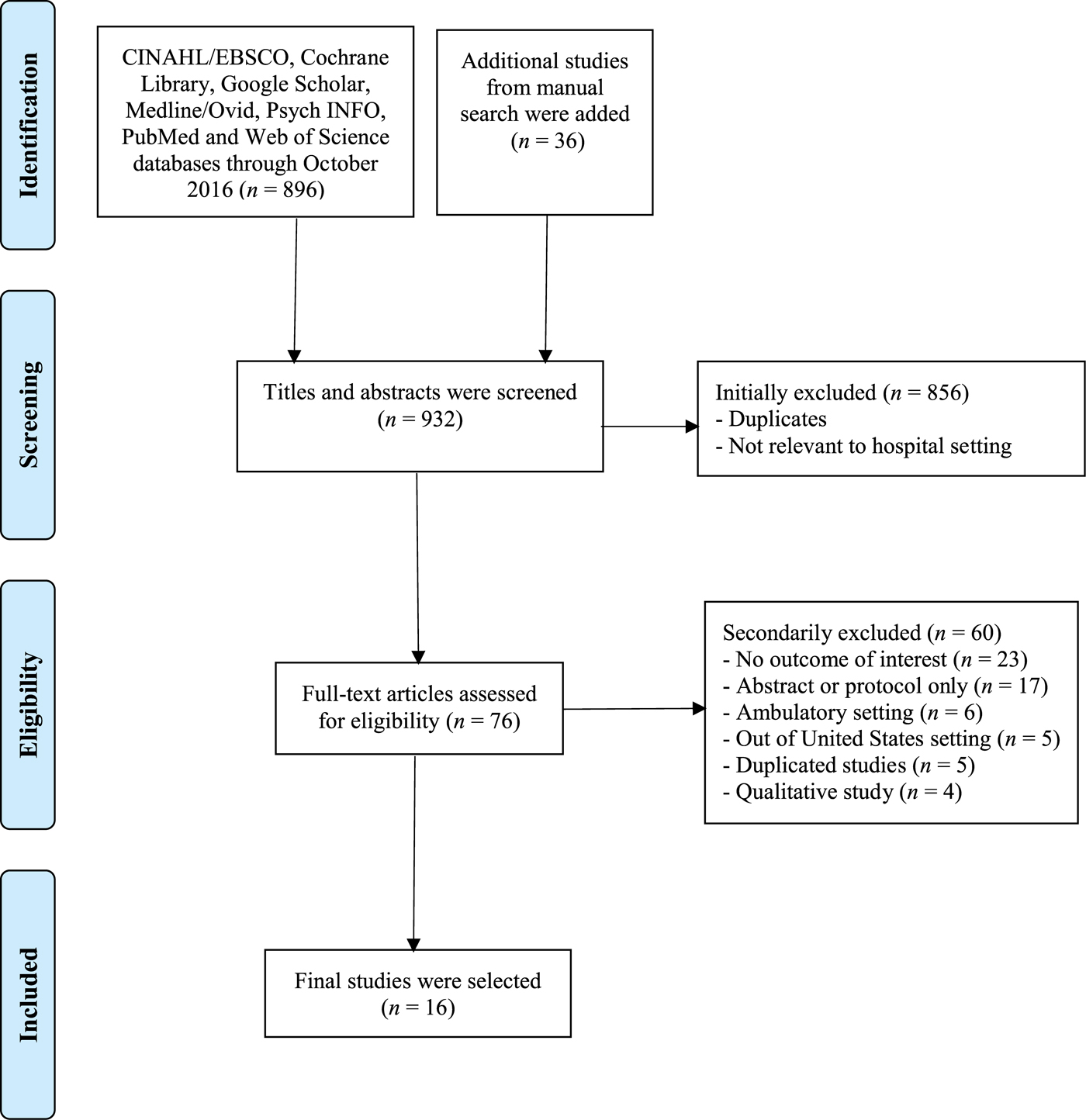
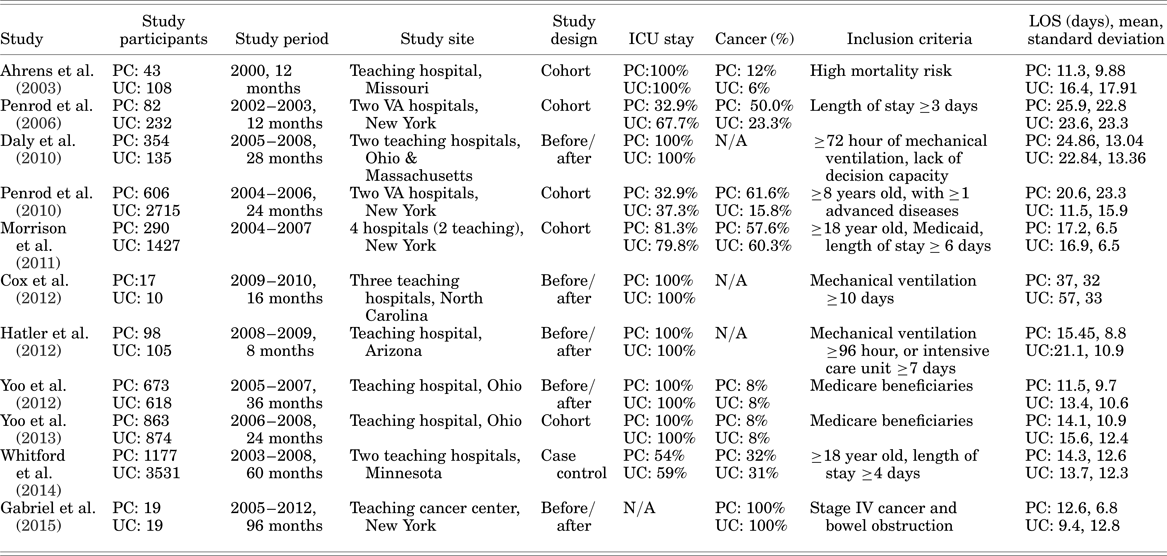
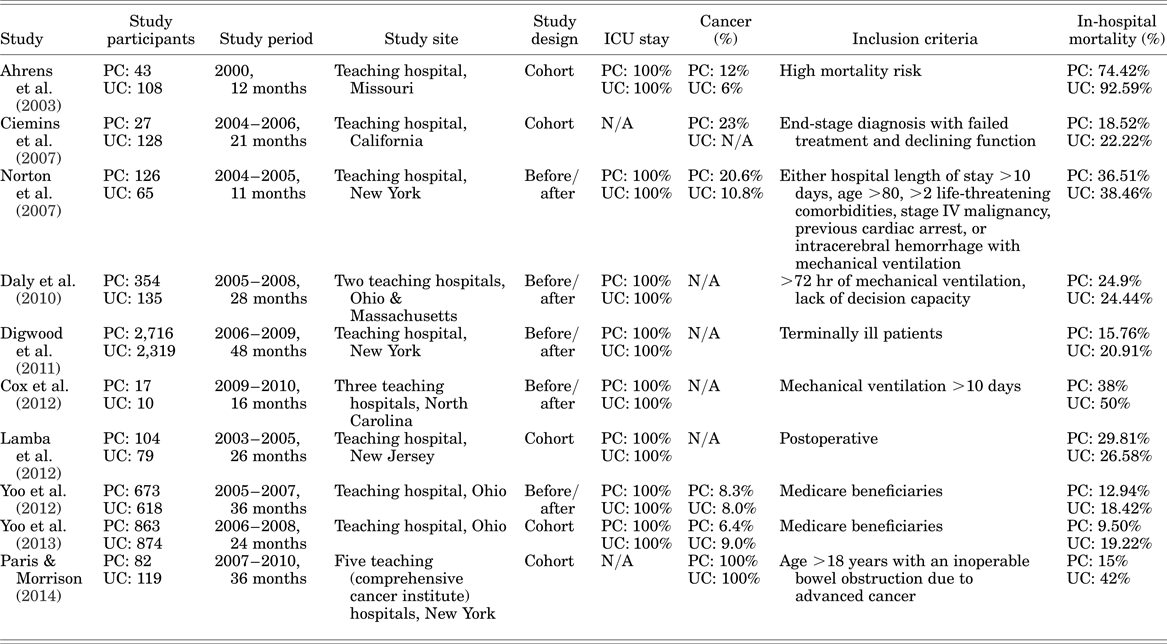
Two authors (X.L. and J.Y.) independently screened titles and abstracts. They obtained full-text articles that met the inclusion and exclusion criteria and after an independent review extracted the data. For all phases, discrepancies were resolved in consultation with two other authors (Y.D. and A.S.). Furthermore, 36 additional studies from a manual search were added. A total of 932 study titles and abstracts were screened. Of these, 856 were initially excluded because of duplication and irrelevance to our study population. Some 76 full-text articles were assessed for eligibility. Of these, 60 were secondarily excluded. When the actual data were not presented in certain studies, two authors (X.L. and Y.D.) directly contacted the authors of those studies to obtain them. Finally, 11 studies were selected for analysis with respect to hospital LOS (Ahrens et al., Reference Ahrens, Yancey and Kollef2003; Cox et al., Reference Cox, Lewis and Hanson2012; Daly et al., Reference Daly, Douglas and O'Toole2010; Gabriel et al., Reference Gabriel, Kukar and Groman2015; Hatler et al., Reference Hatler, Grove and Strickland2012; Morrison et al., Reference Morrison, Dietrich and Ladwig2011; Penrod et al., Reference Penrod, Deb and Luhrs2006; Reference Penrod, Deb and Dellenbaugh2010; Yoo et al., Reference Yoo, Nakagawa and Kim2012; Reference Yoo, Nakagawa and Kim2013; Whitford et al., Reference Whitford, Shah and Moriarty2014), and 10 were selected with respect to in-hospital mortality (Ahrens et al., Reference Ahrens, Yancey and Kollef2003; Ciemins et al. Reference Ciemins, Blum and Nunley2007; Cox et al., Reference Cox, Lewis and Hanson2012; Daly et al., Reference Daly, Douglas and O'Toole2010; Digwood et al., Reference Digwood, Lustbader and Pekmezaris2011; Lamba et al., Reference Lamba, Pound and Rella2012; Norton et al., Reference Norton, Hogan and Holloway2007; Paris & Morrison, Reference Paris and Morrison2014; Yoo et al., Reference Yoo, Nakagawa and Kim2012; Reference Yoo, Nakagawa and Kim2013). Five studies were duplicates with regard to hospital length of stay and in-hospital mortality. Therefore, 16 studies were finally selected. Figure 1 depicts the study selection process in accordance with the Preferred Reporting Items for Systematic Reviews and Meta-Analyses (PRISMA) statement (Moher et al., Reference Moher, Liberati and Tetzlaff2009). A summary of studies by outcomes (hospital length of stay and in-hospital mortality) is given in Tables 1 and 2, respectively.
Study selection process.

Summary of studies: Hospital palliative care effects on length of stay

ICU = intensive care unit; LOS = length of stay; PC = palliative care; UC = usual care; N/A = not applicable.
Summary of studies: Hospital palliative care effects on in-hospital mortality

ICU = intensive care unit; PC = palliative care; UC = usual care; N/A = not applicable.
Quality Assessment
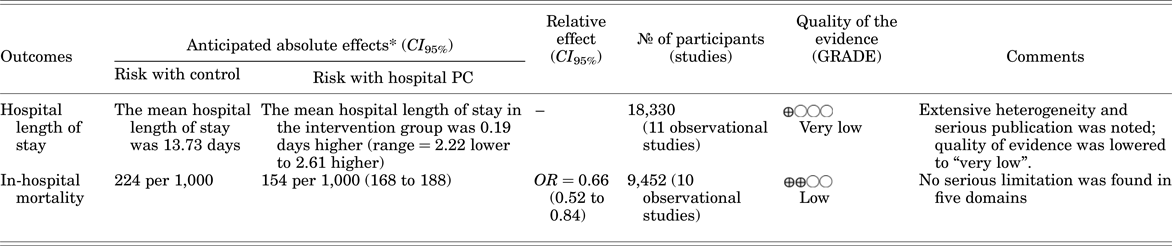
We employed the Grading of Recommendations Assessment, Development, and Evaluation (GRADE) system to assess overall quality of evidence for each outcome (Guyatt et al., Reference Guyatt, Oxman and Montori2008). The overall quality of evidence took into consideration the following five domains: risk of bias, consistency, directness, precision, and publication bias. The GRADE system can be employed to rate the quality of evidence (high, moderate, low, and very low). Metaanalysis from observational studies begins at a low quality of evidence. The quality of evidence may decrease when there is a serious limitation in any of the five domains. We used optimal information size (OIS) calculations as an objective measure of imprecision for grading evidence, as a priori of in-hospital death by 25% from hospital palliative care, with α = 0.05 and β = 0.80. Publication bias was assessed by visual inspection of funnel plots and Egger's regression analysis. Table 3 presents quality of evidence by the GRADE system for hospital length of stay and in-hospital mortality (GradePRO, 2016).
Quality of evidence: GRADE
Patient or population: hospitalized adults across ICU and non-ICU settings
Intervention: hospital palliative care
Comparison: control

*The risk in the intervention group (and its CI 95% interval) is based on the assumed risk in the comparison group and the relative effect of the intervention (and its CI 95%).
CI 95% = 95% confidence interval; GRADE = Grading of Recommendations Assessment, Development, and Evaluation; ICU = intensive care unit; OR = odds ratio; PC = palliative care.
Data Synthesis and Analysis
We combined individual study results to calculate the pooled mean difference estimates and odds ratio (OR) with corresponding 95% confidence intervals (CI 95%) using the random effects. When the mean value or standard deviation was not available and/or reported, we used a formula estimating this information published elsewhere (Hozo et al. Reference Hozo, Djulbegovic and Hozo2005; Wan et al. Reference Wan, Wang and Liu2014). Between-study heterogeneity was assessed using static I 2 values of 50%, representing extensive statistical inconsistency (Guyatt et al., Reference Guyatt, Oxman and Kunz2011). All analyses were performed in the Comprehensive Meta-Analysis program (v. 3, Biostat Inc., Englewood, NJ). A two-tailed p value < 0.05 was considered statistically significant.
RESULTS
Hospital Length of Stay across ICU and non-ICU Settings
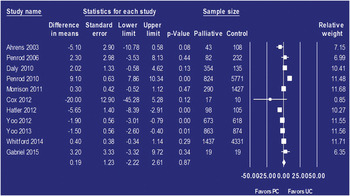
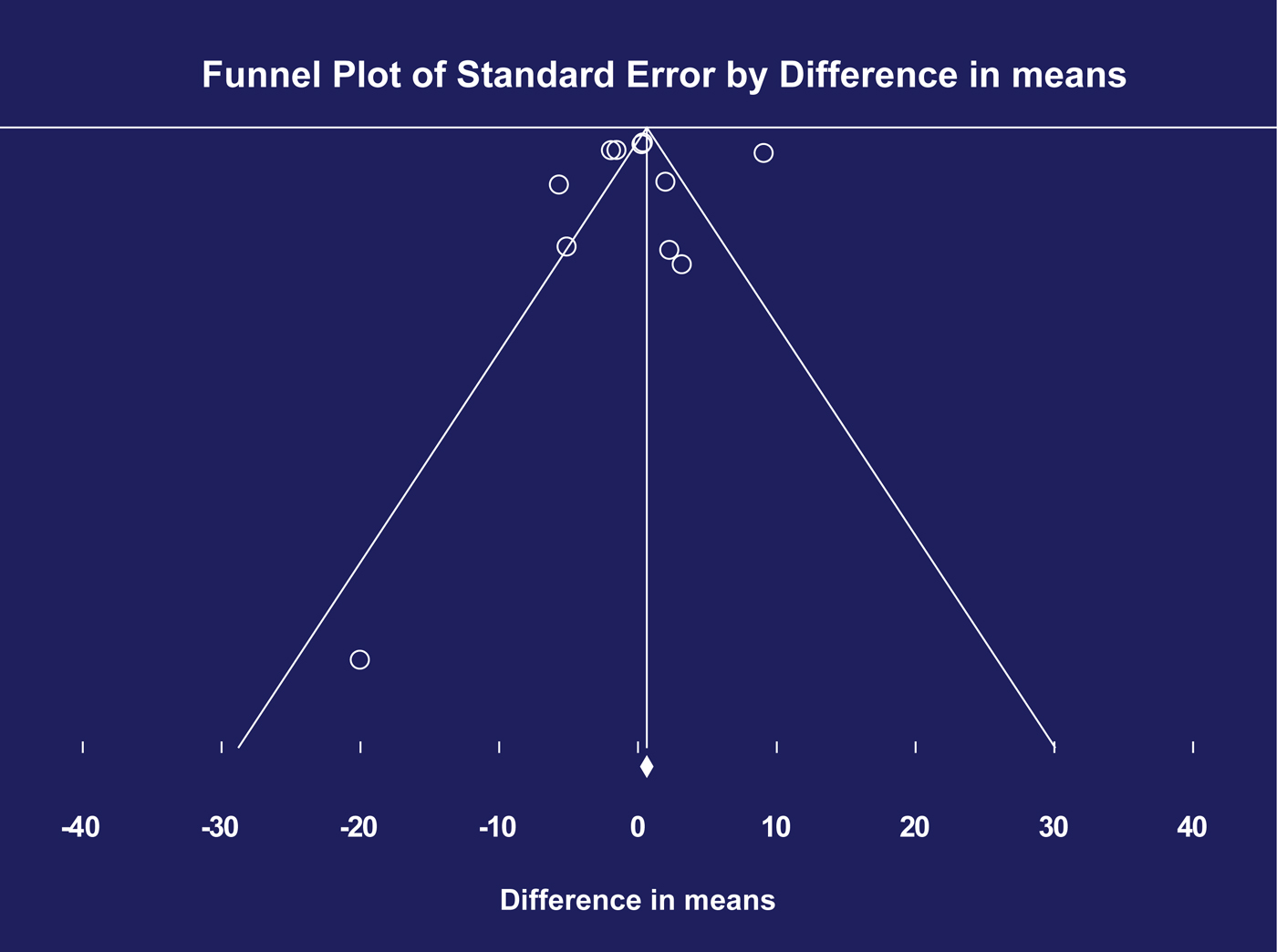
A total of 18,330 patients were analyzed from 11 observational studies on the outcome of hospital LOS. Some 3 of 11 studies included non-ICU patients (Penrod et al., Reference Penrod, Deb and Luhrs2006; Reference Penrod, Deb and Dellenbaugh2010; Whitford et al., Reference Whitford, Shah and Moriarty2014), but none of these studies specified hospital LOS by ICU and non-ICU status. Except for one research group (Morrison et al., Reference Morrison, Dietrich and Ladwig2011), the study site was a teaching hospital. Hospital palliative care was not associated with pooled mean estimates (0.19 days; CI 95% = –2.22 to 2.61; p = 0.87), as shown in Figure 2. Heterogeneity was extensive (Q = 243.18; I 2 = 95.88%). Figure 3 presents a symmetrical funnel plot. An Egger's regression test showed no evidence of publication bias (p = 0.84). The total number of study patients exceeded the OIS was 1,570. Therefore, the overall quality of evidence was lowered to “very low,” as shown in Table 3.
Effects of hospital palliative care on hospital length of stay. PC = palliative care; UC = usual care.

Funnel plot of standard error by difference in means.

In-Hospital Mortality
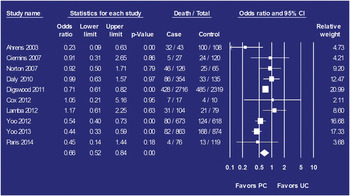
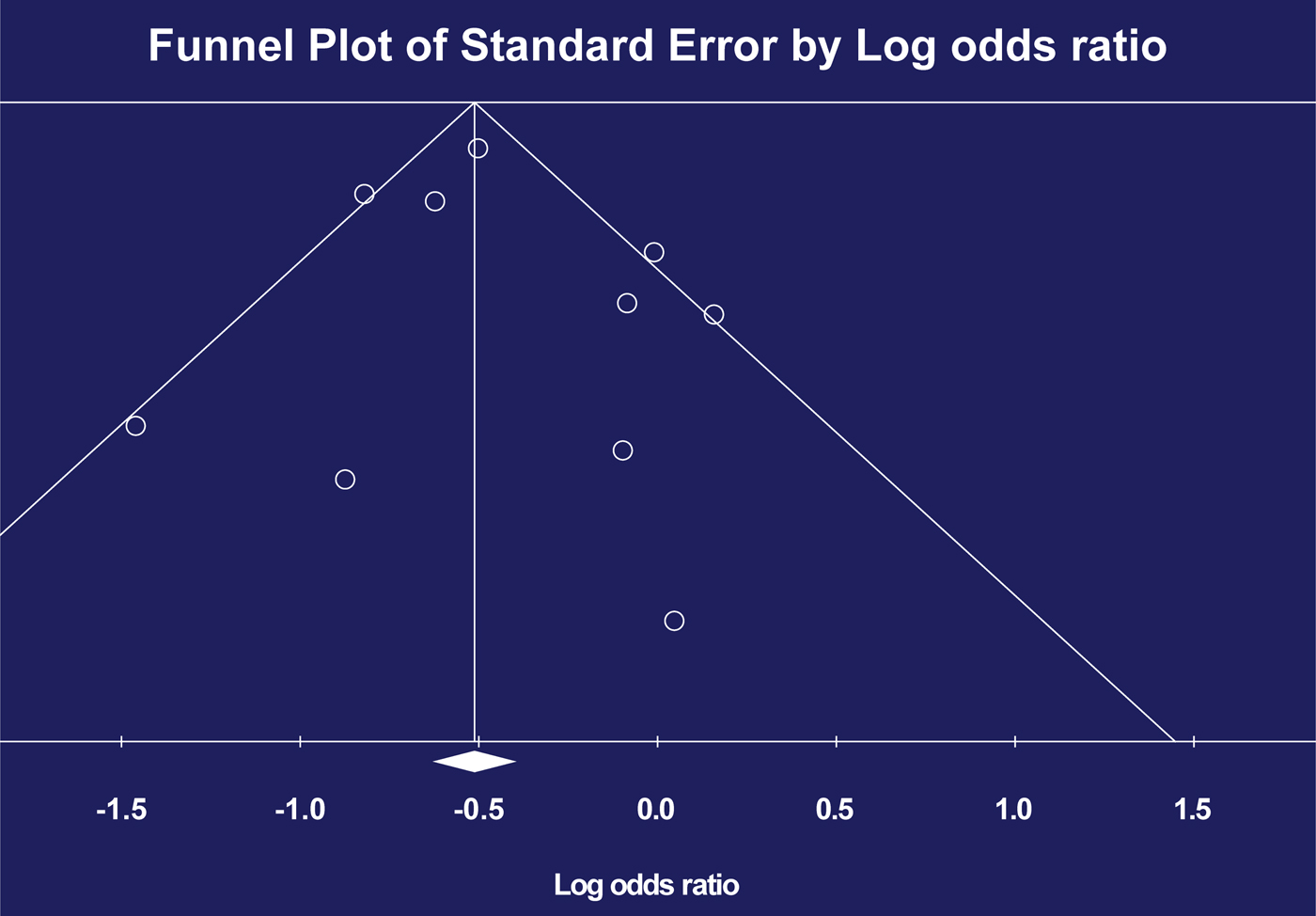
A total of 9,452 patients from 10 selected studies were analyzed for the outcome of in-hospital mortality. Two (Ciemins et al., Reference Ciemins, Blum and Nunley2007; Paris & Morrison, Reference Paris and Morrison2014) did not specify ICU stay status. Another 10 studies were analyzed for in-hospital mortality in the ICU. All 10 studies were performed at teaching hospitals. Hospital palliative care was associated with a reduced in-hospital mortality rate (by 34%; pooled OR = 0.66; CI 95% = 0.52–0.84.; p < 0.01), as shown in Figure 4. Heterogeneity was not substantial (Q = 18.63; I 2 = 48.82%). Figure 5 depicts a symmetrical funnel plot, and an Egger's regression test showed no evidence of publication bias (p = 0.57). The total number of study patients exceeded the OIS (1,447). The overall quality of evidence remained “low,” as no serious limitation was found in five domains, as shown in Table 3.
Effects of hospital palliative care on in-hospital mortality. PC = palliative care; UC = usual care.

Funnel plot of standard error by log odds ratio.

DISCUSSION
The finding of no effect of hospital palliative care on hospital LOS is different from what has been reported in previous metaanalytic studies (Martins et al., Reference Martins, Oliveira and Cataneo2016). This distinction could be caused by various effects (e.g., the quality of the hospital palliative care service). There is a tendency for prolonged LOS to be attributed to a more complicated palliative care process. Discussions about what makes it possible to shorten hospital LOS have led researchers to surmise that this may be due to the use of a more facilitated communication process by consulting hospital palliative care early on in the course of treatment, which assists families to firmly establish the goals of care. Another possible explanation is that hospital palliative care programs might not be a sufficient enough entity to be capable of significantly impacting hospital LOS. Hospital-wide palliative care (PC) support and awareness from non-PC specialists would be necessary to impact hospital LOS (Horton et al., Reference Horton, Morrison and Capezuti2016). In addition to these possible factors, we must consider the wide variations in hospital palliative care that is currently utilized in American hospitals. In analyzing statewide hospital palliative programs, significant differences have been noted in time to initiation of hospital palliative care and in type of PC service (Gibbs et al., Reference Gibbs, Mahon and Truss2015).
The current review and metaanalysis confirmed the effect of hospital palliative care: reduced in-hospital mortality across ICU and non-ICU settings. This finding has been replicated by a recent metaanalysis of terminally ill ICU patients (Martins et al., Reference Martins, Oliveira and Cataneo2016). Reduced in-hospital mortality could be interpreted as a trigger for more out-of-hospital deaths in either a patient's home or nursing home care facility. The effect of advance directives on in-hospital deaths was not involved in our analysis, but we assume that advance directives could facilitate communication among seriously ill patients, their families, and healthcare providers. From the landmark 1980s study (SUPPORT Principal Investigators, 1995) to the recent nationally representative Health Retirement Study (Silveira et al., Reference Silveira, Wiitala and Piette2014), patients with advanced directives were found to be less likely to die in a hospital. In addition, over the past decade, there is an upward trend of patients completing advance directives coupled with fewer in-hospital deaths among the elderly population in the United States (Silveira et al., Reference Silveira, Wiitala and Piette2014; Teno et al,, Reference Teno, Gozalo and Bynum2013).
Reduced in-hospital mortality as a result of hospital palliative care, however, might not directly correlate with improved caregiver quality of life. Training physicians and nurse practitioners participated in and/or conducted most (15/16, except for Morrison et al., Reference Morrison, Dietrich and Ladwig2011) of the studies in our current metaanalysis. Recent reports have raised questions about the effects of communication skills training for resident physicians and nurse practitioners on the quality of communications and/or the quality of care (Carson et al., Reference Carson, Cox and Wallenstein2016; Curtis et al., Reference Curtis, Back and Ford2013). There is an urgent need to develop an effective palliative care training program for young physicians and midlevel practitioners, as they usually take part in initiating hospital palliative care via history taking and setting up family meetings.
Medicare began reimbursing physicians for having conversations with patients about advance care planning in 2016. The Hartford Foundation reported that just 14% of primary care physicians actually bill Medicare for this discussion (John A. Hartford Foundation, 2016). In lieu of the lack of end-of-life discussions in the primary care setting, hospital palliative care could still be the setting for initial end-of-life discussions with seriously ill patients. Recent nationally recognized data analyses suggest that earlier hospice enrollment could lead to cost savings, mostly in terms of fewer hospitalizations and reduced utilization of hospital resources (Kelley et al., Reference Kelley, Deb and Du.2013; Zuckerman et al., Reference Zuckerman, Stearns and Sheingold2016). In addition to analysis of healthcare cost-effectiveness, such non-healthcare-system financial consequences as caregiver strain, illness, and overwork should be incorporated (Drummond et al., Reference Drummond, Sculpher and Torrance2005; May et al., Reference May, Normand and Morrison2014). Therefore, hospital palliative care could lead to relief of public healthcare burdens related to seriously ill patients. Future research should highlight the financial effects of hospital palliative care, but it should not just be limited to hospital stay—it should also include the length of time that is taken up by the dying process.
LIMITATIONS OF OUR STUDY
Our study offers several new insights into the current state of hospital palliative care. We examined how hospital palliative care could influence hospital LOS and in-hospital mortality specifically in U.S. hospitals. Our results demonstrated more homogenous results (I 2 < 50%) compared to previous metaanalytic studies (Martins et al., Reference Martins, Oliveira and Cataneo2016). Our findings should be interpreted in light of several limitations. One major limitation is a lack of generalizability. Because we did not analyze the amount of time taken by and the intensity of hospital palliative care, we were not able to further assess any causal effects between hospital palliative care and outcomes. Due to observational study characteristics, the overall quality of our evidence was low or very low. Furthermore, there was potential selection bias from confining the analysis to studies performed in metropolitan U.S. teaching hospitals. Further studies are required to reflect results in rural non-teaching hospitals. For these reasons, our findings should be interpreted with caution and considered preliminary until future studies from more representative hospitals are analyzed.
CONCLUSIONS
Despite the fact that the quality of the evidence from the selected studies was low or very low, hospital palliative care was found to be associated with reduced in-hospital mortality (by 34%) but not with hospital LOS. Our review is the first metaanalysis of hospital palliative care across the ICU and non-ICU settings. Most of the studies were performed in seriously ill patients in the ICUs of metropolitan U.S. teaching hospitals. Future studies should highlight the financial effects of hospital palliative care at more representative study sites, including rural and non-teaching hospitals.