Where do we come from?
How and why have we become an intelligent lineage? Are we intellectually alone in the Universe? Given the near-infinite vastness of space and likely uncountable number of planets that could harbour life, the possibility for life to develop towards a technologically advanced society should be there. Yet, we have not been contacted by any of these putative civilizations although some could be vastly superior to us in technology (Michaud Reference Michaud2007). A thorough discussion of the Fermi Paradox and its possible solutions is provided elsewhere (Webb Reference Webb2002; Deardorff et al. Reference Deardorff, Haisch, Maccabee and Puthoff2005; Harrison Reference Harrison2009); in the context of this paper it suffices to say that there are many possible roadblocks to the advancement of a sophisticated society to a technological level at least as advanced as ours. The evolution of Homo sapiens on Earth informs us about some of these roadblocks. It took about 4 billion years for the first technological species to occur on our planet (as far as we know), and we are the only member of the human species that has not become extinct (yet). Thus, it is a worthwhile exercise to illuminate the reason that excelled us to a species of technological advancement, compared to our other fellow-intelligent species on our planet (e.g., apes, dolphins, octopi, etc), particularly in regard to our ancestry. Intelligence is used in this article as defined by Reznikova (Reference Reznikova2007) : the ability of an individual to use past experiences to solve newly emerging experiences. The learning principles involved apply to problem solving, navigation, social relationships, logical abstraction, culture, perspective taking, communication, memory, association and acquisition of knowledge.
Up until recently, the prevailing theory about our origins was based on a chimp-like ancestor (Begun Reference Begun2005). It has now become clear that this is not the case (White et al. Reference White, Asfaw, Beyene, Haile-Selassie, Lovejoy, Suwa and WoldeGabriel2009). The discovery of Ardipithecus ramidus (Ardi) has proved to be a turning point in the understanding of what human origins consisted of. After 14 years of reconstruction and interpretation of the remains of Ardi and others (remains of more than 30 individuals were recovered), the nature of these humanoids starts to emerge. The remains were dated as 4.4 million years old. This has offset the split point between the human lineage and the great apes, assumed to be about 4 million years old. Ardi, clearly belonging to the human lineage, proves that this split is far more ancient than previously assumed. When comparing Ardi to Lucy (Australopithecus afarensis, the second most ancient humanoid, 3.2 million years old), there are several very significant differences to note. These lie primarily on the limbs, hands and feet. Ardi is somewhat taller than Lucy (1.2 m vs 1.1 m). Although this difference may not have much meaning, it does indicate that over 1 million years of evolution did not increase the size of our lineage. The reasons can be many: the small size might have been kept by restraints on food sources, agility constraints and arboreal lifestyle, among others. Whatever it was, body size does not appear to have been a significant departure point, since it can be assumed that remained about the same for more than 1 million years. Ardi's skull and brain size are estimated to have been approximately the same as Lucy's. Again, no significant shifting natural selection force can be identified here. The brain is a tremendously energy consuming organ (Raichle Reference Raichle2006) and an increase in size equals a steep increase in energetic costs (Dunbar & Schultz Reference Dunbar and Schultz2007). Although an increase in brain size might have been beneficial, food restrictions might have imposed a negative trade-off in its development. In short, brain size was not a deciding factor at this point in the evolution of the human lineage. It can therefore be assumed that any further development that occurred during this 1.2 million year interval was not due to an increase in brain size. The next notable feature is the limbs. Ardi's arms are noticeable longer than Lucy's. The fingers are also longer, except for the thumb, which is surprisingly small. Ardi's legs are also longer and the feet are clearly distinct from Lucy's, much closer to a great ape's morphology than to a humanoid. When these features are combined, the implications of these findings become quite clear. Ardi was an arboreal humanoid. Its entire anatomy is fit for a tree climber lifestyle, not a savannah walker. Yet, Ardi's hip structure indicates that, when she moved on the ground, she walked in a bipedal way. As opposed to the great apes, which knuckle walk, Ardi's locomotion is identical to all other hominoids. This raises a pertaining question. Has the human lineage ever knuckle-walked? This has certainly been the assumption, but evidence is lacking. Knuckle-walking is unique to the great apes and, in fact, not all of them do so (Ishida et al. Reference Ishida, Tuttle, Pickford, Ogihara and Nakatsukasa2006). Orangutans and gibbons have a striking resemblance to Ardi in that they spend most of their lives in trees and when on the ground adopt a bipedal locomotion. Based on current evidence it appears that our common ancestor with chimps did not knuckle-walk, but instead that that type of locomotion was adopted by some of the great apes at a later time. Ardi's combination of bipedalism with ape feet is a very interesting one, given that it was assumed that apes were limited in their ‘progress’ to bipedalism by those same feet. It now becomes evident that the feet pose no limitation to a bipedal posture. However, the most interesting discovery refers to the teeth. As referred earlier, remains belonging to more than 30 individuals were recovered, among which were many male individuals. The difference in the size of male and female canine teeth is a distinct feature between humanoids and the great apes. In the great apes, the size of the canines in males is much larger than in females. In the mammal lineage this is indicative of a social structure dominated by male competition for access to females (Plavcan & Ruff Reference Plavcan and Ruff2008). This in turn generally leads to polygamous arrangements, characterized by continuous or seasonal violence and instability caused by challenges to the dominant males (Mainguy et al. Reference Mainguy, Côté, Cardinal and Houle2008). This violence is rarely restricted to males themselves in the primate lineage, spreading to females and their infants, with infanticide being a common result of shifts in male dominance (Pradhan & van Schaik Reference Pradhan and van Schaik2008). Surprisingly, Ardipithecus does not show these features. The size of the canines of males and females is identical (White et al. Reference White, Asfaw, Beyene, Haile-Selassie, Lovejoy, Suwa and WoldeGabriel2009). This can be interpreted as indicative of a social structure less based on male–male competition and more on female-choice, which is likely to lead to primarily monogamous arrangements (Lovejoy Reference Lovejoy2009). These systems tend to provide more stability, less violence and therefore more opportunities for cooperation instead of competition. All evidence combined, this suggests that our ancestors might have been widely different from what we have assumed. The discovery of Ardi is a reminder of just how little we understand our own origins.
The power of social structure
A few years ago, the power of horizontal gene transfer (horizontal gene transfer is used here as defined by Sorek et al. (Reference Sorek, Zhu, Creevey, Francino, Bork and Rubin2007) : the non-sexual exchange of genes across hierarchal boundaries) was revealed in the microbiological world. 16S rDNA was, and in some extent still is, the state of the art for characterizing the composition of a microbial community. Deviations of a few base pairs were considered significant in terms of taxonomical classification but the physiology of the organism was assumed to be identical. As culturing attempts improved and the characterization of an increasing number of microbial strains became possible, this assumption was quickly dismissed. There are currently numerous examples of bacterial strains whose signature is virtually indistinguishable (below experimental error), but whose physiology, metabolism and morphology are widely distinct (Bapteste & Boucher Reference Bapteste and Boucher2008). This has rendered the use of genetic taxonomic markers of limited use when the goal is not strictly taxonomic. It has increasingly become evident that the reason for this disparity is largely due to a widespread horizontal gene transfer whose tracing is extremely complex to follow (Thomas & Nielsen Reference Thomas and Nielsen2005).
The use of the genotype as a predictor of the phenotype in eukaryotes has also suffered severe drawbacks. In eukaryotes, the concern about horizontal gene transfer is reduced. Its magnitude when compared to vertical gene transfer is a very rare occurrence. Despite it, the presence of a gene or combinations of genes does not suffice to predict the outcome. Gene silencing (here defined as downregulation of gene expression; Bushati & Cohen (Reference Bushati and Cohen2007) ) can render the existence of entire lengths of the genome non-functional, and therefore its presence becomes irrelevant in phenotypic terms. Different rates of gene expression have the power of controlling the impact of specific genes. Gene expression and silencing are, as far as our current understanding goes, controlled by another class of genes, master gene regulators, ultimately controlled by internal (physiological) or external (environmental) triggers (gene silencing is also instigated by RNA (Meister & Tuschl Reference Meister and Tuschl2004)). As such, the use of DNA as a taxonomic marker is useful when building a timeline, but it should be carefully applied when used to infer physiology, metabolism, morphology and especially behaviour. But there is yet another level of complexity for which gene comparative studies become even less useful. What happens when lineages develop social structures where learned behaviour becomes part of their nature? What genetic mark does this leave behind? The ability to acquire non-innate behaviours is fully demonstrated in numerous lineages and, in a large number of them, is required for the individuals' survival (Avital & Jablonka Reference Avital and Jablonka2000). The power of the social system is that it allows for each newborn individual to learn adequate behaviours for the particular time and space it occupies, instead of a pre-determined response to an environment and circumstances that may no longer exist and therefore decrease its chance of survival. Yet, and despite the power it carries, there is currently no evidence that they are ever genetically registered as they are the product of events that occur during an individual's lifetime and therefore are not genetically (as far as we currently know) transmissible to future generations. What may be registered is the result of social arrangements that allows us a window into the past, as is the case with the teeth of Ardipithecus. But this type of evidence is scarce and fortuitous, leading one to think erroneously that, given the common lack of evidence, this is not an important factor in the evolution of species. We need to become aware of our bias in order to overcome it. Just as life forms that lack a hard enough body structure to be fossilized go unnoticed, so does the ‘abstract’ existence of social structure, and it is therefore inferred to be unimportant. And for those that may render social structure as a particularity of a limited number of species, think again: laboratory settings are severely depleted of even the slightest chance of allowing any possible natural social setting. In fact, they are actively avoided (unless that is the subject being studied), considered side effects or anecdotes of limited importance. Field biologists, however, tell a very different story. It is astounding how limited and grossly oversimplified is our view of the natural behaviour of even the best studied species. The existence of social arrangements in primates, Cetaceans, social carnivores, social rodents, birds and social insects is now recognized, although its extent is still underestimated (Grosenick et al. Reference Grosenick, Clement and Fernald2007). Evidence for the meaning of sociality in primates is undisputed. Cetaceans are understood to have complex arrangements, although our understanding is limited due to a type of communication that escapes our current methodology. Social carnivores from the Canidae and Felinae families as well as social rodents have long been recognized to live in complex communities of several hundred individuals in some cases (rodents), but the extent of their interaction has been assumed to be limited. Each of these animals has unique personalities developed, maintained and altered by their individual life history. They recognize each individual member of their community, develop profound bonds to some of them, adopt and transmit vastly complex learned behaviours, not only from their parents or siblings, but also from other members of the community (Bekoff Reference Bekoff2002). This has been perhaps one of the main reasons why some of them have resisted continuous attempts at their extermination by our own species. Many bird lineages have equally complex arrangements and social insects depend so much on their social structure that finding individuality becomes a challenge. It is easy to envision that no social insect (bee, ant, etc) exists on its own. Yet, although less obvious, the same applies to all other social animals, including ourselves. The lack of a surrounding social system is detrimental to the individual's mental health, resulting in severe behaviour abnormalities that commonly end with a premature death in the wild and psychotic and self-inflicted injuries in captivity (Grippo et al. Reference Grippo, Lamb, Carter and Porges2007). Studying a social animal in isolation is equivalent to studying human behaviour of a prisoner in solitary confinement and then typifying that behaviour as characteristic of the human species. Solitary confinement is effectively depriving a human being of an essential part what makes it human. In the same way, a wolf will not behave as a wolf in solitary confinement because by definition we have deprived that individual of an essential part what makes it a wolf. What seems to escape our comprehension is that routine actions as separating individuals in different cages, even if for a limited amount of time, rearranging them under whichever conditions we intend and exposing them to unfamiliar circumstances is harmful to these animals. We have to remember that they live in families, as we do, and that each individual is unique and cannot be substituted by another one that looks the same. It is this part of the animals' social system that we have underestimated in their similarity to our own arrangements.
The importance of social stability
Change is known to be an evolutionary trigger. When conditions change new phenotypes are selected in order to improve the species adaptation to the new environment. The strife competition created by the presence of strong shifting selective forces is thought to increase the overall fitness, as less fit phenotypes are less likely to survive and reproduce than in an environment where there is less competition (survival threshold is relaxed). In a highly competitive environment, the benefit of developing a successful innovation is very high compared to the potential cost. In other words, the trade-off between innovation and cost of innovation is much more favourable than in a less competitive environment where the innovation benefit may not justify the cost paid for it. In summary, change increases the odds of innovative investments, leading to a likely increase in complexity. But does this generalization still apply to social animals? Social animals critically depend on learning. In order for an animal to learn it needs time, costly investments on parental and communal care, and stability. If the environment (both physical and social) is constantly changing in unpredictable ways, time and energy investments in learning are discouraged due to a reduced pay-off. Furthermore, even if learning is successfully achieved, there is a big chance that the constantly changing conditions render it obsolete, if not even detrimental to fitness (given that a learned behaviour is resilient to change). The existence of a social structure relies on the assumption that it is stable (not prone to change, and therefore reliable), that the community members can trust each other to play a certain role for long periods of time and that cooperation prevails over individual competition (as all members are usually relatives or emotionally bonded). In this case, constant change is detrimental to investment, creation and maintenance of complex behaviours. The reason for this shift is because social animals' fitness is no longer only measured at the gene level. It is also measured in terms of their impact on others, on information acquisition and transmission both horizontally and vertically. A single individual has now the potential to have lasting effects on the entire community (and beyond when exchange occurs), instead of relying solely on its own offspring. The offspring are in effect the result of the entire community, which is one of the reasons why some social animals are known to show no differentiation between their own offspring and others from other members of the community (Komdeur Reference Komdeur2006). The impact that sociality has on these animals is so much stronger than the differences transmitted through genetic material that, in effect, it can be neglected without much prejudice. This justifies the choice of Canidae at large in the efforts of an entire community towards a single reproductive couple. If all individuals were to reproduce, the survival rate and quality of the care provided to the offspring would be severely reduced, if not unmanageable. The social innovation has a profound effect on evolutionary trends. Information can now be transmitted horizontally again, at potentially greater rates than ever possible vertically. Humans have excelled this potential. It is interesting to verify that in fact, if we observe our own species, the regions affected the most by instability are the ones where investment in the development of future generations is depleted. Investment in teaching and learning will not be productive unless stability is achieved. Failure to achieve stability is most likely to result in a stasis, if not regression to a non-social state.
Chimpanzees: the distant cousin?
One of the big evolutionary questions is: Why haven't chimpanzees developed their intelligence levels further? And what triggered and allowed our own advance? Chimpanzees are undoubtedly close to humans, not only at the genetic level but equally in their phenotypes and behaviour at large. However, they are also distinct from us in very important features that are not easily quantifiable and for that reason have generally been given less importance. The differences commonly identified as responsible for the different fate of humans and chimpanzees are bipedalism, dexterity and vocal ability, among others. Although these are significant differences, something more fundamental is likely to have impaired their progress. As mentioned earlier, chimpanzees do have a complex social structure where communal learning is costly and extensive. However, they are plagued by an inherent instability. The constant threat of infanticide by a change in male dominance forces male energy to be invested in status maintenance, mainly achieved by force, intimidation, the instalment of a fear atmosphere and constant aggressive displays (Muller & Wrangham Reference Muller and Wrangham2009). Juveniles will learn these behaviours by imitation and replicate them, perpetuating the instability. This includes females who are often aggressive towards each other (Townsend et al. Reference Townsend, Slocombe, Thompson and Zuberbühler2007). It is important to clearly recognize that chimpanzees do develop lifelong bonds with particular individuals, but the cohesion of the group as a whole is weak when compared to Canidae groups. Chimpanzees in fact score much less than meerkats (for example) on several fronts of group cohesion: chimps have more episodes of intra-violence, a higher severity of violence, demonstrate less sacrifice for their peers, have less demonstrations of group bonding and invest much less if at all in others offspring (dependent on individual relationship with the mother) (Hoppitt et al. Reference Hoppitt, Brown, Kendal, Rendell, Thornton, Webster and Laland2008). It is further reassuring to verify that bonobos (Pan paniscus), despite their close relatedness to the common chimpanzees (same genus), differ from them in very significant features. Bonobos live in more predictable environments and show more flexible cooperative behaviour than common chimps (Hare Reference Hare2009). As predicted, this leads bonobos towards more egalitarian arrangements and they have higher levels of tolerance towards each other and other species. If the assertions put forward in the previous section hold, chimpanzees' social arrangement may have crippled their further investment in transmission of acquired information. In general, the outcome simply will not pay off the investment because fear diverts the concentration of efforts on maintaining security and assuring individual survival, leading in turn to an emphasis on genetic transmission, instead of social transmission. It is a vicious circle, only breakable if communal stability can be achieved and maintained as the norm, instead of the exception. This is a reality that Ardipithecus does not seem to have experienced. We have now enough evidence to believe that the nature of our ancestors was qualitatively different from what we currently observe in the great apes. We can further infer that the social arrangements manifested by the social dogs and rodents resemble the social world experienced by Ardi to a greater extent than the chimpanzees reality. Moreover, although we do not currently have evidence one way or the other, it is likely that the proportion of the reproducing Ardipithecus population was higher than what we observe in dogs or rodents because of the litter size. As mentioned previously, these animals are limited on the viable number of reproducing couples because of large litters. The human lineage does not have that limitation. This may in fact be an important distinctive feature. The residual aggression existent among both dogs and rodents pertains to the establishment of the dominant reproducing couples. If all individuals contributed equally in terms of the gene pool even that residual violence could in theory be removed. This would further increase the stability and bonding of the community, which in turn enhances the investment in innovations and their transmission to the youth and peers. It is important to mention that there are groups of animals that have a similar social arrangement to social dogs and rodents combined with small litter sizes. In fact, they are not a very distant relation from us: the Callitrichidae (New World monkeys) display such a system. These monkeys live in groups of 3–15 individuals where there are one or two breeding couples (although polyandry has been reported in some species) and all others are helpers (mainly siblings) (Rylands & Mittermeier Reference Rylands and Mittermeier2009). Their litter sizes generally consist of two offspring. It is unclear if humanoids like Ardi lived in such a world or if there were more reproducing individuals. However, we can safely assume that their social arrangement was still closer to what we see in these social animals, rather than what we see existing among primates. We do not know how we became predominantly a monogamous species with a high percentage of the population exhibiting reproductive behaviour. This type of system can be encountered in some bird species. Even though Corvidae and parrots score high on intelligence tests (Emery Reference Emery2006) and have the ability to acquire new behaviours during their entire lifespan (which extends for several decades), they have not advanced nearly as much as our lineage has. What is stopping them? This leads to the consideration of yet another set of crucial parameters in the progression towards complexity.
Personalities
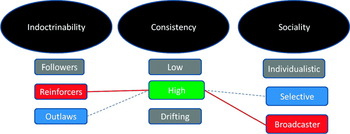
Many animals display individual personalities, more so if they are social animals. Just as in humans, the personality of a social animal is the product of very complex interactions between their genotype, rearing, and youth and adult life experiences that are heavily influenced by their social status, age, sex and particular circumstances that merge to result in the formation of a relatively stable personality (the same circumstances that determine the personality outcome can also determine its rigidity or flexibility to further changes). A particular trait of the personality to be considered a potential key to the impact at the community level is sociality itself. Regardless of the other personality traits, an individual that devotes time to broadcasting its behaviour and in making large investments in the rearing of young has an immense impact on the future of the community, whereas an individual that hides its behaviour from others will be reducing its chance. Here we devise three major personality traits that can heavily impact the evolution of a community: indoctrinability, consistency and sociality. Indoctrinability is the receptivity level to indoctrination. This trait can be further divided into three different categories: the followers, the outlaws and the reinforcers.
The followers are those individuals (usually the highest portion) that tend to adopt behaviours directly (by communication or active demonstration) or indirectly (by imitation) observed by them. The evolutionary value of such a behaviour is that the probability of an observed behaviour being beneficial is high, as opposed to the risks of adopting a new behaviour. The tendency to adopt the observed behaviours is further refined by the relationship to the indoctrinator(s) (the stronger the emotional bond the more likely the follower is to adopt its behaviour, which applies to both positive emotions as affection and negative ones such as fear), the commonality of the behaviour (the more common the more likely the follower is to adopt it), and the ease and applicability of it (the easier to perform the most likely it is to be adopted, and if can be usefully and frequently displayed, the more likely it is to be adopted as well).
The outlaws are those individuals which tend to resist indoctrination. They are unlikely to adopt observed behaviours and may even preferentially exclude those. The evolutionary value of this behaviour is associated with a search for a high reward that can result in a considerable leap in fitness. This behaviour is usually manifested by individuals that are not content with their particular standing in the community or unsatisfied with the community as a whole. In terms of refinement they would fall under the same lines as the followers.
The reinforcers not only adopt the observed behaviours, but in addition also attempt to indoctrinate others. They may also attempt to punish non-followers, acting as enforcers of behaviours (the refinements are also the same as the previous ones). The evolutionary value of this behaviour is that it ensures the stability of the community and the continuity of norms and rules of social behaviour. This is mostly displayed by individuals that benefit greatly from current circumstances and it is of their immediate interest to avoid change.
The second personality trait is consistency. The consistency parameter is relative to the indoctrinability trait. Individuals may be more or less prone to shift from being a follower, reinforcer or outlaw. If conditions change, as a shift in the community behaviour, introduction of new members or individual migration to another community occurs, the individual indoctrinability might change depending on how rigid or flexible that trait is. Consistency can therefore be high, low or drifting. As an example, an individual that is a reinforcer with a high consistency will maintain the role of reinforcer, regardless of changes in the community composition or behaviour. They will usually be aggressive towards change. The evolutionary value of manifesting a high consistency is the active attempt to maintain a dominance position. A reinforcer with low consistency will adopt a follower role or outlaw if put under circumstances where being a reinforcer is detrimental (for example, when the percentage of outlaws becomes high or the followers shift towards divergent reinforcers, this shift is often preceded by a traumatic or bad experience). This is an adjustable consistency that should be the most common. A reinforcer with drifting consistency plays different roles depending on the behaviour. It can be a reinforcer on mating behaviour and yet be an outlaw on foraging behaviour. However, these are likely to be uncommon and likely the result of the adoption of different role models in youth. However, the evolutionary value of this behaviour can be quite high depending on the combinations adopted. The rationale developed for a reinforcer is equally applicable to a follower or outlaw.
The third trait, sociality, is perhaps the one with the greatest potential evolutionary impact. This trait refers to the interest and ability to communicate individual behaviours. In terms of sociality, an individual can be a broadcaster, individualistic or selective. A broadcaster will actively demonstrate behaviours to any other member of the community. This is a powerful trait in the community as it greatly enhances the propagation of behaviours throughout the community with the potential to disseminate to other communities as well. The individual benefit of being a broadcaster is the increased potential of being socially rewarded in terms of status through the establishment of favourable relationships with a large number of community members, which is often reflected in an increase in reproductive value. An individualistic individual will not purposely demonstrate. Even if a beneficial innovation is developed by that individual, the chances are that it will be lost before spreading to other members of the community if not imitated by others. The individualistic animal or human in this way avoids wasting unnecessary time and energy in unsuccessful attempts at communication. A selective individual will only invest time and energy in the transmission of behaviours to relevant members of the community (high status), closely related individuals (offspring), to the youth (since adults are less likely to acquire it) or to individuals to whom they are affectively bonded (companions). This is likely to be the most common behaviour. This results in 27 possible combinations among these three traits. Particular combinations of these traits as well as ratios in a particular population can be a key to the fate of that community (Fig. 1).
– The three main personality traits with 27 possible combinations. A highlight is given to ‘High Consistency’ personalities as they tend to become potential role models. The bold combination represents the most powerful in terms of impact on the cohesion of the community. The dashed combination represents the most relevant dividing force in the community.

Community composition
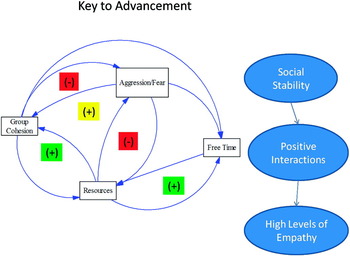
For the purpose of propagation of information, the broadcasters possess clearly a beneficial trait, regardless of their indoctrinability (reinforcer, follower or outlaw). Selective personalities also have a very significant impact potential, since they may lead to fractures in the community and eventually splits. Thus it is safe to assume that the more broadcasters and selectives a population has the more likely it is that behaviours will be transmitted inter- and intra-generations. However, it is less obvious what ratio of indoctrinability is more beneficial for a community to progress. The presence of the three variants is needed: reinforcers, followers and outlaws. Reinforcers are needed in order to guarantee stability and continuity, conserving ‘traditions’ in the community; followers represent the masses, and they are needed in order to propel changes. They are in effect the bulk of the changing force. Outlaws are the innovators, the ones that venture at trying a different angle, and their presence is obviously needed if any change is to occur. But is there an optimal ratio? It is well documented that different species (and different populations within the same species) have different natural tendencies. These natural tendencies are a product of their own life histories. On average social vertebrate species have the majority of the population being a follower (70%) with varying degrees of consistency and sociality (e.g. chacma baboons, Papio ursinus (King et al. Reference King, Douglas, Huchard, Isaac and Cowlishaw2008)) Then they have a significant part of the population acting as a reinforcer (20%), mostly consisting of the high status and older individuals. The less represented role is the outlaws (10%), whose percentage fluctuates, due to the high risk that such a role carries with it (they have higher mortality rates). They also have a higher tendency to migrate, to establish new communities or simply seek isolation. But is this the ratio that is more likely to result in progression? Counter-intuitively, most social animals show no shortage of outlaws (innovators). What they seem to lack is a pacific source of reinforcers. Reinforcers do exist in most social species, but they exert their influence by the power of intimidation and instalment of fear. This is clearly evident in primates (De Waal Reference De Waal2007). Reinforcers which show truly widespread empathic relationships are rare. In this sense, most reinforcers are negative reinforcers, meaning they build their leading positions on negative (destructive) emotions. Positive reinforcers are rare and even rarer will they be in communities where instability prevails, as the power of strength will inevitably gain the upper hand. Thus, in communities where social status is determined by strength, as in male-competition-dominated structures, the occurrence and maintenance of positive reinforcers is condemned to failure. This is the case for primates. Despite their outstanding inventive and communicative abilities, the fear and punishment inculcated by the dominant individuals oppresses the expression of submissive individuals, which are the most likely to search for new social and ecological alternatives. This is the reason why primates have not developed into a more complex lineage: they are hampered by their social structure. Social monkeys, dogs, rodents and birds, where social structure is not necessarily determined by force but instead transmitted from parents to the older offspring, and is relatively respected by all members of the community (mostly disputed at the time of transmission of dominance and afterwards rarely contested), show a much better stability and greater odds of continuity. The dominant individuals do not constantly feel threatened by lower class individuals and therefore can assume a relaxed dominance, allowing for the expression of individuals at large, therefore creating a good level of general satisfaction that feeds back into the continuity of the hierarchy. Positive reinforcers are therefore much more common in these systems. These animals also tend to display monogamous arrangements which promote tighter relationships between individuals and a stronger sense of loyalty and dependability, where males often invest as much on the rearing of the offspring as females. All these factors promote the cohesion of the community and trust instead of fear of each other (Fig. 2). What then is preventing these animals from reaching out to higher cognitive abilities? As mentioned before, the fact that reproduction is limited to only a few individuals might be problematic. There is no example where a communal animal not dominated by male competition has all or a large portion of its individuals reproducing. The few cases that come close to it, as in some birds and rodents, show little and interspersed interactions among its members (often communities consist of hundreds of individuals), resembling more a herd structure (where individuals spatially aggregate, mostly for security reasons) than a true social structure (where each individual interacts socially with all others on a daily basis). There is no obvious reason to think that the number of reproductive individuals is determinant on the cognitive development of a community, but it is interesting to verify the absence of a structure assumed to be the one manifested by Ardi and the one that is the most common among modern humans. Could that be the key? Could the answer to our uniqueness be the simultaneous combination of the existence of a social structure dominated by positive reinforcers in a female-choice arrangement, with a large proportion of reproducing individuals in monogamous arrangements?
– Aggression/fear are the main obstacle in the achievement of social stability. If group cohesion overcomes aggression/fear within the community and resources are non-limited, social stability can be achieved. Once social stability is established, positive interactions will surmount negative interactions, leading to an increase in empathic behaviour.

Discussion
We have provided some insight into the conditions and evolutionary adaptations that made it possible for us to become an intelligent lineage and excel toward technological advancement. Any evolutionary lessons learned from Earth and the human species in particular have to be considered with utmost caution if extrapolated to possible extraterrestrial civilizations. However, collaboration within a species is certainly a trait that propels a species toward intelligence and a social network that enables the survival and relative wellbeing of the innovators propitiates major breakthroughs. In light of the theme in this paper, the potential for the maintenance of intelligence as a species evolutionary strategy may be greater in animals that are less related to us phylogenetically. Social carnivores certainly have not developed intelligence levels compared to ours, but the potential is there. If freed of extrinsic sources of aggression they could reach the next stage. Great apes, on the other hand, have an intrinsic barrier that hampers their progression. Of course this reasoning is not fully satisfying as it only pertains to us and our own path, although we do have reasons to believe that our type of social structure is favourable to the development of both intelligence and consciousness. It may not be the only path, but it certainly is at least one of them. There is a time record of at least 500 million years of animal presence on the planet and surely, if the evolution towards intelligence and a technologically advanced society would be a trait that would be selected for, we should be observing evidence toward this development in the evolutionary history of our planet. This development, however, requires intrinsic (communal) and extrinsic (biotic and abiotic) stability over an extended period of time (in order to become a viable strategy). The supervolcano that erupted at Lake Toba 75,000 years ago, for example, is thought to have triggered the Millennial Ice Age, which lasted for about a thousand years and killed 60 to 75% of the total human population at that time (Chesner et al. Reference Chesner, Halsor and Dolan2008). DNA analyses indicate that the number of our species was down to a mere few hundred 74,000 years ago (Oppenheimer Reference Oppenheimer2002). Lineweaver (Reference Lineweaver2007) suggested that the development of Homo sapiens in Africa only supports the case that the advancement of a technological advanced species is rare. Ward and Brownlee (Reference Ward and Brownlee2000) claim that complex life is likely to be uncommon in the Universe, and the existence of intelligence, even more so. Sure, we may have just made it through. But why would we expect that intelligent civilizations are relatively rare (Forgan & Rice Reference Forgan and Rice2010)? We believe that the power of social structure has been frequently and severely underestimated, and its role as both an enabling and disabling feature of advanced life needs to be better investigated. We are social animals, everything that defines humanness is social, and none of it can be characterized by a single individual or even by a random group of them. The exact same statement can be made of any other social animal. Every single social animal is characterized and defined by his/her interactions with others from an early age. And the uniqueness of each individual, family, community and ultimately species results from those interactions throughout time.
Conclusions
New findings emphasize the point that human ancestors had very divergent social arrangements from the ones we observe today in our closest genetic relatives. Social interactions were more based on collaboration rather than competition, and innovators enjoyed higher tolerance by the social group. Social arrangements are not simple behaviour manifestations, but instead the result of highly complex social interactions that directly reflect the species evolving potential. After all, what is mostly distinctive about humans? Not the genes, not the individual behaviour, but instead the social behaviour. It is this intricate pattern of social behaviour that compelled us to become a technologically advanced society. This aspect of evolution has often been neglected in other assessments about the likelihood of the development towards an intelligent and advanced technological society. Even though our social structure is rare, it is successful, and we do find several examples of it here on Earth. If it has the chance to emerge on other planets with life we can be optimistic in finding complexity out there.
In a SETI (Search for Extraterrestrial Intelligence) context, it is almost certain that we will find alien species with social structures. Any species interested in establishing communication with other worlds is very likely a species that evolved its communicative ability within its own realm. There may be advanced intelligent species that have limited sociality, but those are unlikely to be willing to communicate, and even less likely, in a friendly way. Even though social behaviour is not a prerequisite to some manifestations of intelligence as problem solving (as exhibited by octopi), it is advantageous to its emergence. Social behaviour incites communicative advancements and rewards transmission of knowledge to close relatives and the following generations, which increases the chances that an innovative strategy will not die with its inventor. It is difficult to predict the future of sociality, in particular of the human species. It is likely that our communicative propensities will continue to expand in the future, including our willingness to contact beings from other worlds. And if the evolutionary forces on those other worlds are anything similar to here on Earth, those social intelligent beings will also seek contact from alien worlds.