Introduction
Dandelion is an herbaceous perennial plant of the family Asteraceae (Compositae) that is used in many traditional and modern herbal medical systems, particularly in Asia, Europe, and North America (Yarnell and Abascal, Reference YARNELL and ABASCAL2009). Dandelion is considered as a weed species which can be found growing in temperate regions of the world, in lawns, on roadsides, disturbed banks, shores of water ways and other areas with moist soils (Morley, Reference MORLEY1974). It has many common English names including Blowball, Lions tooth, Cankerwort, Swines snout (Peter, Reference PETER2001) and Arabic names like Hindiba and Khas berri (Jassim et al., Reference JASSIM, SAFANAH and OMAR2012). The genus name Taraxacum might be from the Arabic word ‘Tharakhchakon’ (Morley, Reference MORLEY1974) or from the Greek word ‘Tarraxos’ (Jassim et al., Reference JASSIM, SAFANAH and OMAR2012). The common name ‘dandelion’ comes from the French expression ‘dent de lion’ which means ‘Lion's tooth’, in references to the jagged shaped foliage of this herb (Jassim et al., Reference JASSIM, SAFANAH and OMAR2012). Dandelion root is primarily considered a gastrointestinal remedy supporting digestion and liver functions, while the leaf is used as a diuretic and digestive stimulant (Grieve, Reference GRIEVE1931). Preclinical research on dandelion has revealed numerous properties (Mir et al., Reference MIR, SAWHNEY and JASSAL2013) including its actions as an inflammation modulator, diuretic, digestive stimulant, insulin stimulant, demulcent, prebiotic, immunomodulator, antiangiogenic, and antineoplastic, although not all studies agree. Dandelion has been used in traditional medicine in the treatment of hepatic disorders, inflammation and several diseases. In traditional Chinese medicine, it is described as a non-toxic herb valued for its choleretic, diuretic, antirheumatic and anti-inflammatory properties. The pharmacological properties are attributed to the presence of active chemical components in dandelion such as flavonoids, alkaloids, lactones, tannins and saponins (Mir et al., Reference MIR, SAWHNEY and JASSAL2013). Several flavonoids including caffeic acid, chlorogenic acid, luteolin, and luteolin-7-glucoside have been isolated from dandelion (Williams et al., Reference WILLIAMS, GOLDSTONE and GREEHAM1996). Its leaves are rich in fibre, protein, potassium, iron, calcium, magnesium, phosphorus, vitamins A and C, as well as B-complex vitamins such as thiamine and riboflavin (Schmidt, Reference SCHMIDT1979; Jackson, Reference JACKSON1982).
With the restricted use of dietary antimicrobial agents (Khan et al., Reference KHAN, NAZ, NIKOUSEFAT, TUFARELLI and LAUDADIO2012; Diaz-Sanchez et al., Reference DIAZ-SANCHEZ, D'SOUZA, BISWAS and HANNING2015), new ways are being explored to improve public health, growth rate and productive performance of poultry (Abd El-Hack et al., Reference ABD EL-HACK, MAHGOUB, ALAGAWANY and DHAMA2015). One of the possible alternatives reported in poultry industry are phytogenics which include a group of natural feed additives; derived from herbs, spices or their extracts in the form of cold pressed oils, essential oils and phytochemicals (Windisch et al., Reference WINDISCH, SCHEDLE, PLITZNER and KROISMAYR2008; Abd El-Hack et al., Reference ABD EL-HACK, MAHGOUB, ALAGAWANY and DHAMA2015; Farag et al., Reference FARAG, ALAGAWANY, ABD EL-HACK and TUFARELLI2016). These additives are incorporated into poultry diets in order to enhance productivity and economic feasibility by improving digestibility, absorption and bioavailability of nutrients and eliminating the pathogens from the gut (Athanasiadou et al., Reference ATHANASIADOU, GITHIORI and KYRIAZAKIS2007; Alagawany et al., Reference ALAGAWANY, ASHOUR and REDA2016). In this regard, dandelion is one such phytogenic agent which has shown promising results in poultry nutrition (Al-Kassie et al., 2010; Yan et al., Reference YAN, ZHANG, PARK and KIM2012; Qureshi et al., Reference QURESHI, BANDAY, ADIL, SHAKEEL and MUNSHI2015).
Chemical composition and structure
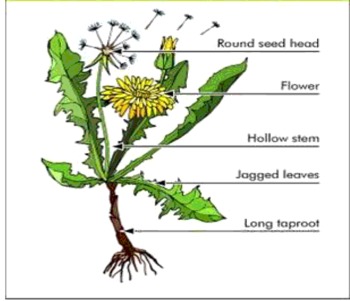
The basic anatomy of dandelion plant is shown in Figure 1 . Dandelion is widely cultivated in India to allow use of its rhizome, leaves and roots, which are commonly employed in medicine with increasing demand. Among the most important compounds in dandelion herb are sesquiterpene lactones as anti-inflammatory and anticancer agents (Faber, Reference FABER1958), phenylpropanoids (non-toxic and anti-inflammatory, analgesic and hypotensive), triterpenoid saponins, and polysaccharides (complex carbohydrates). Major sesquiterpene lactones, generally occurring as glycosides include taraxacolides, dihydrolactucin, taraxacosides, ixerin, ainslioside and taraxinic acids. Phenylpropanoids are part of the chemical structure of sporopollenin and are plentiful in dandelion herb and include monocaffeoyltartaric acid, cichoric acid, 4-caffoeylquinic acid, caffeic acid, chlorogenic acid and inulin (a class of fibres known as fructans) (Yarnell and Abascal, Reference YARNELL and ABASCAL2009 and Hudec et al., Reference HUDEC, BURDOVA, KOMORA, MACHO, KOGAN, TURIANCA, KOCHANOVA, LOZEK, HABAN and CHLEBO2007). The roots of dandelion are rich in many triterpenes, including taraxerol, taraxol, taraxasterol, β-amyrin; ψ-taraxasterol, sterols (stigmasterols, β-sitosterol) and inulin (Rutherford 1972; Kristo et al., Reference KRISTO, TERDZ and SIMÆNDI2000; Yarnell et al., 2009). Flavonoids, saponins, tannins, alkaloids and phenols are highly concentrated in the stem, root and flower with the higher concentration of flavonoids in the flower extracts (Kitts and Hu, Reference KITTS and HU2005; Jassim et al., Reference JASSIM, SAFANAH and OMAR2012; Mir et al., Reference MIR, SAWHNEY and JASSAL2013). Phenols and steroids have been found in various parts of the plant (Mir et al., Reference MIR, SAWHNEY and JASSAL2013).
Basic anatomy of Dandelion plant.

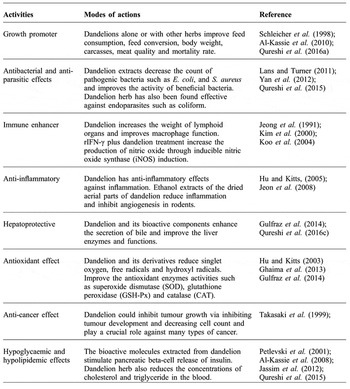
Dandelion is a rich source of vitamins and minerals like calcium (Ca), potassium (K), sodium (Na), magnesium (Mg), zinc (Zn), iron (Fe) and copper (Cu) as reported by Bruneton, (Reference BRUNETON1995); Harrington et al. (Reference HARRINGTON, THATCHER and KEMP2006); Jassim et al. (Reference JASSIM, SAFANAH and OMAR2012) and Khan et al. (Reference KHAN, KHAN and SULTAN2013). The leaves possess a higher content of β-carotene than carrot and more Fe and Ca than spinach, along with macro- and micro-elements (Bruneton, Reference BRUNETON1995). A recent report shows the typical composition of dandelion as 91% dry matter, 9% moisture, 11.4% crude protein, 3.3% ether extract and 13.8% crude fibre (Qureshi et al., Reference QURESHI, BANDAY, SHAKEEL, ADIL and KHAN2016a). The mineral composition of dandelion consists of Ca, Mg, Na, Cu and Zn as 7.3, 2, 0.013, 0.05 and 0.14 mg per 100 g, respectively (Khan et al., Reference KHAN, KHAN and SULTAN2013). Some beneficial applications of dandelion herb and its fractions are presented in Table 1 .
Some beneficial applications of dandelion herb and its fractions.

Effect of dandelion on poultry performance, carcass and meat quality
Inclusion of dandelion in broiler diets as a feed additive resulted in significant (P<0.05) improvement in feed conversion ratio (FCR) and body weight gain (BWG) as reported by Al-Kassie et al. (Reference AL-KASSIE, AL-JUMAA and JAMEEL2008); Qureshi et al. (Reference QURESHI, BANDAY, ADIL, SHAKEEL and MUNSHI2015). Yan et al. (Reference YAN, ZHANG, PARK and KIM2012) reported significant (P<0.05) enhancement in the BWG, FCR and nutrient utilisation in presence of dandelion. Qureshi et al. (Reference QURESHI, BANDAY, SHAKEEL, ADIL and KHAN2016a) showed that the growth performance parameters of broiler chickens improved with supplemental dandelion leaves during the growing period.
Qureshi et al. (Reference QURESHI, BANDAY, SHAKEEL and ADIL2016b) reported that carcass parameters were not significantly (P<0.05) affected by feeding different levels of dandelion, except for dressing percentage and length of different segments of small intestine which increased in dandelion group, compared to the control group. Birds supplemented with 0.5% dandelion showed higher live body weight (LBW) and BWG, and lower FCR and mortality rate than those fed with 0.25%. In addition, no significant impacts were observed on carcass characteristics (percentage dressing and viscera) and stress coefficient due to the addition of dandelion to broiler diets in comparison to control group (Al-Kassie et al., 2010).
Schleicher et al. (Reference SCHLEICHER, FRITZ and KINAL1998) studied the effect of some herbs on growth performance of broilers and showed that herbal plants like dandelion and chamomile had negative impacts on LBW and FCR at 52 days of age. Mortality rate was reduced with dandelion supplementation, but the reasons for any bird mortality were not identified. In this regard, Oh et al. (Reference OH, KIM, KO, BAE, LEE and YANG2007) studied the impact of dandelion and dandelion fermented probiotics on growth parameters and quality of meat in broiler chickens. They found no significant differences in growth performance indices including LBW and BWG as well as feed consumption and FCR of chickens fed diets supplemented with 1.0% dandelion and 0.5 and 1.0% dandelion fermented probiotics. In comparison with an unsupplemented control group, dandelion (1 and 2% in feed) was effective in decreasing pH, thiobarbituric acid reactive substance and volatile basic nitrogen in chicken meat (Park and Kim, Reference PARK and KIM2010).
Hepatoprotective and anticancer activities
Liver diseases are showing increasing trend in our society. Herbal drugs have gained importance in recent years because of their efficacy and cost effectiveness. Numerous plants and poly-herbal formulations are claimed to have hepatoprotective activities. However, only a small portion of such plants have been pharmacologically evaluated for their efficacy. In the case of dandelion, the hepatoprotective roles are well established (Park et al., Reference PARK, YUSI and YOUNGSUN2007; Fallah et al., Reference FALLAH, ZAREEI and ZIAI2010; Al-Malki et al., Reference AL-MALKI, KAMEL, GAMAL and HASSAN2013; Gulfraz et al., Reference GULFRAZ, DAWOOD and SHEERAZ2014). These studies documented dandelion curative activity when given after the administration of a hepatotoxic agent, in terms of rapid hepatocellular regeneration and decreased level of serum enzymes viz. alanine aminotransferase (ALT), aspartate aminotransferase (AST) and alkaline phosphatase (ALP). Regarding the cholagogue effect of dandelion, oral administration of root extracts had shown to increase bile production in the liver and increase bile release from the gallbladder (Bohm, Reference BOHM1959; Vogel, Reference VOGEL1977). Antioxidant enzymes like superoxide dismutase (SOD), glutathione peroxidase (GSH-Px) and catalase (CAT) have been reported to increase (P<0.05) in the liver due to dandelion treatment owing to its antioxidant property (Gulfraz et al., Reference GULFRAZ, DAWOOD and SHEERAZ2014).
A study on the hepatoprotective effect of dandelion leaves was conducted by Qureshi et al. (Reference QURESHI, BANDAY, SHAKEEL, ADIL, MIR, BEIGH and AMIN2016c) on broiler chickens. Results showed that hepatic regeneration increased in broilers fed diet supplemented with dandelion leaves when compared to the control group. Tabassum et al. (Reference TABASSUM, SHAH and QAZI2010) speculated that the hepatoprotective impact of dandelion leaves may be attributed to its bioactive molecules triterpenes, sesquiterpene lactones, flavonoids (apigenin and luteolin), vitamins (A, C, thiamine and riboflavin), carotenoids (lutein) and fatty acids (myristic). The bioactive components extracted from dandelion leaves have been reported to enhance the secretion of bile thereby improving the liver enzymes and functions (Jassim et al., Reference JASSIM, SAFANAH and OMAR2012). Additionally, dandelion extracts have antiteratogenic and antitumoral activities (Takasaki et al., Reference TAKASAKI, KONOSHIMA, TOKUDA, MASUDA, ARAI, SHIOJIMA and AGETA1999).
Antibacterial and antiparasitic activities
The increased incidence of bacterial resistance to many antibacterial drugs is a great concern and medicinal plants have proven as alternative sources to antibacterial agents. Several studies have shown antibacterial activity of dandelion especially against Staphylococcus aureus and Escherichia coli (Oseni and Yussif, Reference OSENI and YUSSIF2012; Jassim et al., Reference JASSIM, SAFANAH and OMAR2012; Ionescu et al., Reference IONESCU, PREDAN, RIZEA and DUNE2013, Qureshi et al., Reference QURESHI, BANDAY, ADIL, SHAKEEL and MUNSHI2015). These researches showed that the phytochemical constituents present in dandelion, such as phenols, saponins, reducing sugar, anthracenosides, triterpenes, steroids, tannins and phlobatannins, aid its antimicrobial activities. Moreover, these classes of compounds were reported to have therapeutic activity against several pathogens and therefore support the statement on use of dandelion traditionally for the treatment of various illnesses (Jassim et al., Reference JASSIM, SAFANAH and OMAR2012; Oseni and Yussif, Reference OSENI and YUSSIF2012). The antibacterial activities of aqueous and ethanolic leaf extract of dandelion have been reported as concentration dependent (Oseni and Yussif, Reference OSENI and YUSSIF2012). Reduction in the total faecal coliform count has also been reported by Yan et al. (Reference YAN, ZHANG, PARK and KIM2012). Dandelion has been successfully used to control endoparasites in poultry (Lans and Turner, Reference LANS and TURNER2011).
Antioxidant and anti-inflammatory activities
Antioxidants like flavonoids, phenolic acids and diterpenes can be used to reverse the harmful and pathological effects of free radicals (Yanishiera et al., Reference YANISHIERA, MARIONOVA and POKORNY2006). Phenolic compounds have antioxidant properties due to their ability of scavenging free radicals and active oxygen species such as singlet oxygen and superoxide and hydroxyl radicals (Hall, and Cuppett, 1997; Farag et al., Reference FARAG, ALAGAWANY and TUFARELLI2017). Several researchers reported antioxidant activities of dandelion (Hu and Kitts, Reference HU and KITTS2003; Kim et al., Reference KIM, LEE and SHIN1998; Reference KIM, OH and CHUNG1999; Hagymasi et al., Reference HAGYMASI, BLAZOVICS, FEHER, LUGASI, KRISTO and KERY2000; Hudec et al., Reference HUDEC, BURDOVA, KOMORA, MACHO, KOGAN, TURIANCA, KOCHANOVA, LOZEK, HABAN and CHLEBO2007; Ghaima et al., Reference GHAIMA, NOOR and SAFAA2013). Other studies have shown that the dandelion flower has high antioxidant properties compared to other parts of the plant (Hagymasi et al., Reference HAGYMASI, BLAZOVICS, FEHER, LUGASI, KRISTO and KERY2000; Hu and Kitts, Reference HU and KITTS2003; Ghaima et al., Reference GHAIMA, NOOR and SAFAA2013). This may be attributed to the presence of active scavenging compounds such as lutiolin and lutiolin-7-o-glycoside (Hu and Kitts, Reference HU and KITTS2004). Furthermore, the free radical scavenging activity was improved with bioactive components extracted from dandelion flower (Hu and Kitts, Reference HU and KITTS2003).
Other dandelion extracts can have an anti-inflammatory effect (Jeon et al., Reference JEON, KANG and JUNG2008). Kashiwada et al. (Reference KASHIWADA, TAKANAKA and TSUKADA2001) reported that sesquiterpene lactones contributed to the inflammation-modulating properties of dandelion root. Crude extracts of both dandelion root and flower modulated inflammation, and some evidences suggested that phenylpropanoids might be the key to this activity (Yasukawa et al., Reference YASUKAWA, AKIHISA, INOUE, TAMURA and YAMANOUCHI1998; Hu and Kitts, Reference HU and KITTS2005). Jeon et al. (Reference JEON, KANG and JUNG2008) showed ethanol extracts of dried aerial parts of dandelion reduced inflammation and inhibited angiogenesis in rodents.
Hypoglycaemic and hypolipidemic effects
The dandelion root and leaf have shown hypoglycaemic properties in various experimental animal models (Akhtar et al., Reference AKHTAR, KHAN and KHALIQ1985; Petlevski et al., Reference PETLEVSKI, HADZIJA, SLIJEPCEVIC and JURETIC2001; Al-Kassie et al., Reference AL-KASSIE, AL-JUMAA and JAMEEL2008; Qureshi et al., Reference QURESHI, BANDAY, ADIL, SHAKEEL and MUNSHI2015), but the exact mechanisms of action are poorly understood. However, Hussain et al. (Reference HUSSAIN, WAHEED and QURESHI2004) reported that hypoglycaemic effect may be due to active constituents in dandelion which caused insulin secretagogue effect i.e. stimulating pancreatic beta-cell release of insulin. Regarding hypolipidemic effect, many studies have shown that dandelion reduces the concentrations of cholesterol and triglyceride in the blood (Al-Kassie et al., Reference AL-KASSIE, AL-JUMAA and JAMEEL2008; Jassim et al., Reference JASSIM, SAFANAH and OMAR2012; Qureshi et al., Reference QURESHI, BANDAY, ADIL, SHAKEEL and MUNSHI2015) and that may be explained by the presence of alkaloids, glycosides, phenolic compounds, flavonoids and tannins in dandelion which have an influence on reducing the cholesterol levels in the blood by intensification of bile secretion. On the other hand, total cholesterol, LDL and HDL in plasma and total cholesterol in meat were not significantly (P<0.05) affected by diets containing 1.0% dandelion and 0.5 or 1.0% dandelion fermented probiotics (Oh et al., Reference OH, KIM, KO, BAE, LEE and YANG2007).
Immune enhancer
Dandelion can play an important role as a natural immunostimulant and may promote non-specific immune mechanisms. Many reports studied the immunomodulatory role of dandelion through inhibition or stimulation of tumour necrosis factor (TNF) (Kim et al., Reference KIM, SHIN and LIM2000; Koo et al., Reference KOO, HONG and SONG2004). Lee et al. (Reference LEE, LEE and AN2012) reported that when dandelion was used in combination with recombinant interferon-gamma (rIFN-γ), a noticeable cooperative induction of tumour necrosis factor-alpha (TNF-α), interleukin (IL)-12p70, and IL-10 production was observed. Furthermore, in peritoneal macrophages, rIFN-γ plus dandelion treatment significantly (p<0.05) increased the production of nitric oxide (NO) through inducible NO synthase (iNOS). This may suggest that dandelion extract has various effects on different lymphocyte populations or body tissues, or it may indicate that dandelion can modulate immune reactions. Many polysaccharides in dandelion are considered as key intermediaries in immune interactions (Jeong et al., Reference JEONG, CHUNG, LEE, PARK and LEE1991). However, the actual biological role of dandelion or its extracts and parts as well as bioactive components remain uncertain (Lee et al., Reference LEE, PARK, PARK, PARK and SIN2005).
Digestive stimulant
Dandelion and its derivatives have many biological benefits as natural digestive stimulants. These benefits could be attributed to the presence of bitter resins (α-amyrin, β-amyrin, epi-lupeol and triterpene) that stimulate the digestive tract by inducing reflex excitation of taste receptors and increased saliva, bile production, gastric juice thereby stimulating appetite and digestion (Yarnell and Abascal, Reference YARNELL and ABASCAL2009; Mir et al., Reference MIR, SAWHNEY and JASSAL2013). Additionally, the fibre content in dandelion herb is described as viscous and with a high ability to transport and eliminate toxins from the body and balance gut microbiota (Faber, Reference FABER1958). Dandelion leaves contain appetite-stimulating substances, eudesmanolides and lactones which may increase gastric acid secretion (Bohm, Reference BOHM1959).
Effect of dandelion on haematological and biochemical blood parameters
Al-Kassie et al. (Reference AL-KASSIE, AL-JUMAA and JAMEEL2008) and Berezi et al. (Reference BEREZI, MONAGO and ADELAGUN2013) showed an improvement in packed cell volume (PCV) and haemoglobin (Hb) content with a reduction in H/L (heterophil/lymphocyte) ratio as a result to dietary supplementation with dandelion in broiler chickens. This could be due to the anti-stress properties of dandelion (Al-Kassie et al., Reference AL-KASSIE, AL-JUMAA and JAMEEL2008) which in turn is attributed to the antioxidant nature of its various constituents (Hagymasi et al., Reference HAGYMASI, BLAZOVICS, FEHER, LUGASI, KRISTO and KERY2000; Hu and Kitts, Reference HU and KITTS2003; Ghaima et al., Reference GHAIMA, NOOR and SAFAA2013). Stress causes an increase in H/L ratio through stimulation of adrenal gland to produce some hormones such as estrone which has a direct effect to analyse a lymphatic cell (Gross and Siegel, Reference GROSS and SIEGEL1983). The H/L ratio could be used as an indicator for the health of poultry as any increase of H/L ratio refers to an increase in stress (McFarland and Curtis, Reference MCFARLAND and CURTIS1989). On the other hand, Park et al. (Reference PARK, SHON and KIM2010) stated that glutamic oxaloacetate transaminase (GOT), glutamic pyruvic transaminase (GPT), total cholesterol, and triglyceride were significantly decreased by the supplementation of dandelion (1 and 2%) extracts compared to the control in broiler chickens.
Conclusions
This review has focussed on the beneficial uses and chemical components of dandelion including carotenoids, phenolic compounds and bitter taste substances. Dandelion components may act as antioxidant, antimicrobial, antiparasitic, antiangiogenic, anti-tumour, anti-inflammatory, immunomodulator, liver protector agents and HDL-cholesterol enhancer. Studies on the application of dandelion in poultry production showed positive effects of supplementation on growth and production through stimulating digestion enzymes, enhancing metabolic androgenic hormones and protecting the liver. Based on these benefits, it could be recommended to extend the use of dandelion herb in poultry nutrition for improving production and better health, but further research is clearly necessary to establish the efficacy of a standardised form and appropriate dose in feed.