Introduction
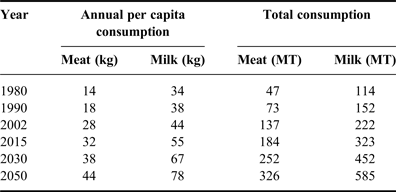
Rapid changes are taking place in the livestock sector of developing countries in response to globalization and an increasing demand for animal-product based diets, owing primarily to the combination of population growth, increasing consumer affluence and urbanization (Seré et al., Reference Seré, van der Zijpp, Persley and Rege2008; Robinson et al., Reference Robinson, Thornton, Franceschini, Kruska, Chiozza, Notenbaert, Cecchi, Herrero, Epprecht, Fritz, You, Conchedda and See2011; Mpofu, Reference Mpofu2014). In these countries, the increasing consumption of livestock products is projected to continue beyond the year 2050 (Thornton, Reference Thornton2010; Table 1). However, livestock development faces increased threats from the growing competition for natural resources (such as land, water and fossil fuels), human conflicts and socio-political instability, weak institutions and market failures, and environmental effects of climate change. Changing climates are foreseen to have the greatest effect on food insecure areas in Africa and South Asia where hunger is a persistent problem and these changes in climate will present new challenges that may stifle rural development and livestock production (Thornton et al., Reference Thornton, Herrero, Freeman, Mwai, Rege, Jones and Mcdermott2007; Global Harvest Initiative, 2013).
Consumption of meat and milk in developing countries and projected trends.

Source: Thornton (Reference Thornton2010).
At a national level, livestock is a major contributor to the gross domestic product (GDP) of many developing country economies, both directly and indirectly. A large proportion of the rural households in developing countries own livestock, which are quite valuable financially and play significant social and economic roles in the communities (World Bank, 2008; Herrero et al., Reference Herrero, Grace, Njuki, Johnson, Enahoro, Silvestri and Rufino2013; Mpofu, Reference Mpofu2014). Development of the livestock industry and its future role in alleviation of household poverty largely depends on how adaptive the livestock production systems will be to the changing global environment (Thornton et al., Reference Thornton, Herrero, Freeman, Mwai, Rege, Jones and Mcdermott2007). According to the 2013 GAP report (Global Harvest Initiative, 2013), adoption of advanced agricultural technologies and better production practices are critical for realizing significant productivity gains in both industrialized and developing countries. In order to catalyse livestock producers in developing countries to be more efficient, take advantage of the rising demand for animal products, adapt to a changing climate, minimize disease risk and spread, and mitigate undesirable environmental impacts of livestock, a good understanding of the differences across livestock production systems is necessary (Robinson et al., Reference Robinson, Thornton, Franceschini, Kruska, Chiozza, Notenbaert, Cecchi, Herrero, Epprecht, Fritz, You, Conchedda and See2011). Characterization studies that elucidate the differences in the way livestock are produced in different places with regard to use of locally available production resources are critical for planning and targeting interventions.
In 2012, the Consultative Group on International Agricultural Research (CGIAR) implemented a number of collaborative research programmes to tackle cross-cutting issues in agricultural development (CGIAR, 2012). One of the programmes aimed to increase the productivity of small-scale livestock and fish systems in sustainable ways, thereby making meat, milk and fish more available and affordable to poor consumers across the developing world (ILRI et al., 2011). The first phase of this Livestock and Fish Programme (L&F) had a focus on a small number of carefully selected animal source food value chains in multiple developing countries building on pre-existing work by ILRI in other countries. Inclusion of countries in multiple regions was to allow comparisons and cross-system learning that would support development of lessons, methodologies and technologies of wide applicability (ILRI et al., 2011). The dairy value chain, focusing on a commodity produced by small-scale farmers across Africa, Asia and Latin America was one area identified to have a high potential for transformational improvement. Analysis of this value chain, however, showed significant productivity gaps, and supply constraints that needed addressing (ILRI et al., 2011). This paper presents information on dairy production systems and requisite genetic and breeding technologies that hold promise for the advancement of global development goals in countries prioritized for dairy improvement under the L&F programme, namely Tanzania (East Africa), India (South Asia), and Nicaragua (Latin America), in addition to Kenya (East Africa) where ILRI is involved in research on dairy development through other projects. Information compiled in this paper has more general application in the prioritization of long-term investments in scientific research for the development of appropriate genetic and breeding technologies to improve dairy livestock production in developing countries.
Materials and methods
A desk study was conducted to collate information on the dairy production systems of Kenya, Tanzania, India and Nicaragua. Information from published literature comprised papers spanning both field and experimental studies. Additional information on the current status of dairy production and utilization of breeding and genetic improvement technologies was obtained from other literature, including government reports, conference and symposia presentations, and from responses to a structured questionnaire administered to managers of the dairy and livestock sectors in the selected countries (listed in Acknowledgement section). The questionnaire was developed by the authors for the current context and included both closed and open-ended questions.
Data obtained from the literature and questionnaires was organized to fit into general classifications of dairy production systems in developing countries (following Robinson et al., Reference Robinson, Thornton, Franceschini, Kruska, Chiozza, Notenbaert, Cecchi, Herrero, Epprecht, Fritz, You, Conchedda and See2011), taking into consideration specific classifications used by the ministries responsible for livestock development in the respective countries. Production and related parameters were compared for dairy production systems found within a country, and, to the extent possible, for “similar” systems from one country to the other. The data assessed in this regard included the breeds and numbers of dairy animals raised within production systems, animal breeding technologies utilized in dairy production, and levels of milk productivity. Country-level information on the production and populations of milk-producing animals over the years was obtained from the statistical database of the Food and Agriculture Organization of the United Nations (FAOSTAT). To understand the context in which dairy genetic and breed improvement is occurring; information was also gathered on key organizations and institutions involved in providing support in the application and use of animal breeding technologies in the countries.
Results and discussion
Trends in animal populations and milk production
In all four countries, livestock play a significant role in people's lives, and positively contribute to the respective countries' GDP. Livestock contribute to the livelihoods of at least 70 percent of Eastern Africa's rural farmers in terms of income and diet (Cecchi et al., Reference Cecchi, Wint, Shaw, Marletta, Mattioli and Robinson2010). In Tanzania, the livestock sector is estimated to provide livelihood support to 37 percent of households engaged in agricultural production. In 2013, the sector contributed 4.4 percent to the national GDP and accounted for 18 percent the agricultural GDP (National Bureau of Statistics Tanzania, 2014). From the 2014 national statistics of Kenya, agriculture is reported to have accounted for 27.3 percent of the GDP, while livestock accounted for 4.9 percent of the GDP (KNBS, 2014). Studies on the livestock sector in Kenya however indicate that livestock production is underestimated in the national GDP estimates and actually accounts for between 10 and 12 percent of the national GDP (IGAD, 2013; KEVEVAPI, 2014; KALRO, 2015). Kenya has the most developed dairy industry in East and Central Africa.
India's livestock sector accounts for 28 percent of the agriculture GDP and 3.9 percent of the national GDP (NDDB, 2013). India is the world's largest milk producing country in terms of volume, with a large proportion of the milk coming from buffaloes relative to cattle (Ahlawat and Singh, Reference Ahlawat and Singh2005; Gandhi and Sharma, Reference Gandhi and Sharma2005; Rao et al., Reference Rao, Bachhman, Sharma, Venkataramaiah, Panda and Rathinam2014). The dairy sector in India demonstrated steady growth during the different phases of “Operation Flood,” a major initiative in dairy development first launched in 1970 by the National Dairy Development Board (NDDB). These initiatives over time have resulted in an increased per capita availability of milk. For example between 2010 and 2011, per capita availability of milk in the country increased from 128 to 267 g/day (Rao et al., Reference Rao, Bachhman, Sharma, Venkataramaiah, Panda and Rathinam2014). The average milk productivity per animal is however reported to be low (Gautam, Dalal and Pathak, Reference Gautam, Dalal and Pathak2010; Rao et al., Reference Rao, Bachhman, Sharma, Venkataramaiah, Panda and Rathinam2014).
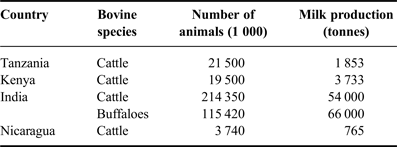
Agriculture contributes 20 percent of the GDP of Nicaragua, with livestock accounting for 45 percent of the agriculture GDP (IFAD, 2014). The Ministry of Agriculture and Livestock (MAGFOR, 2012) in Nicaragua estimates that up to 75 percent of the income for cattle keepers comes from the sale of milk. Table 2 gives a summary of the number of bovine dairy animals in 2013, and the milk produced within the four countries in 2012.

A general overview of the dairy sectors and the key existing challenges with an economic focus is presented for Tanzania, India and Nicaragua at http://livestock-fish.wikispaces.com/Situational+Analysis+Report.
Cattle and domestic Buffalo population trends in the target countries
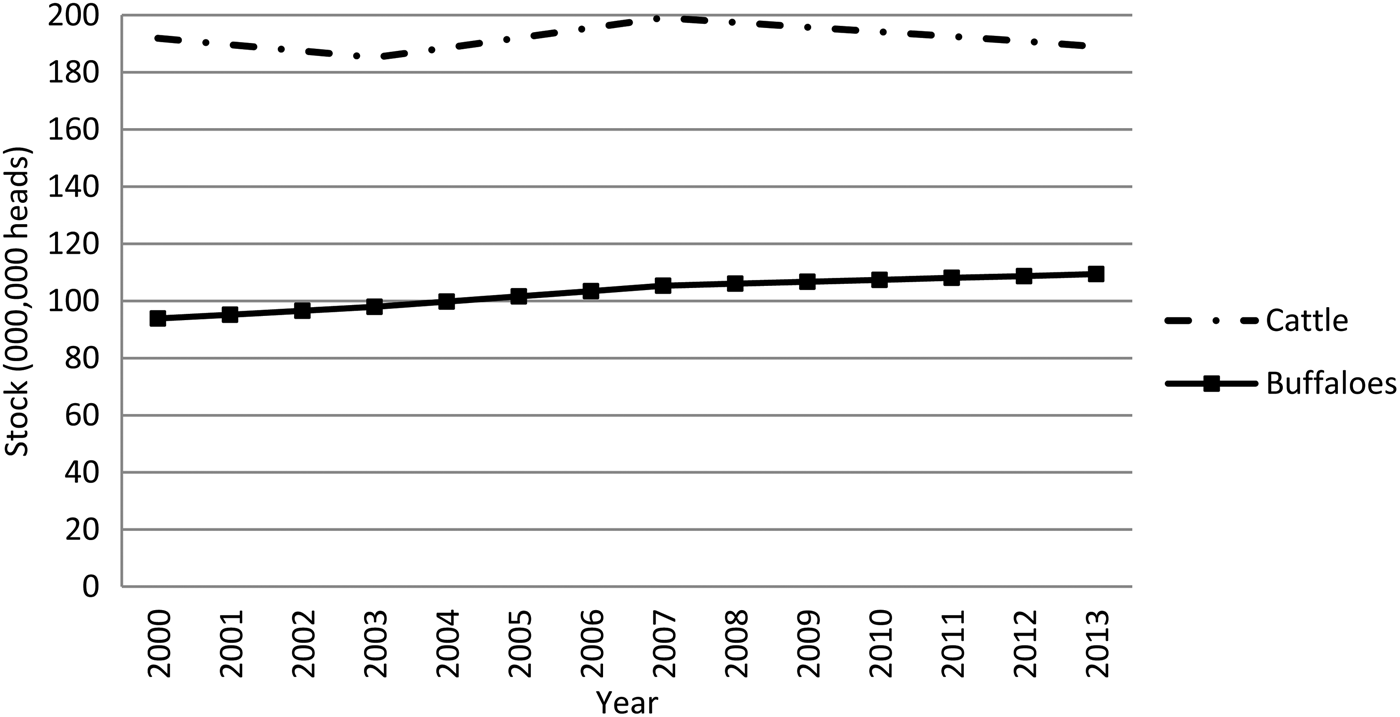
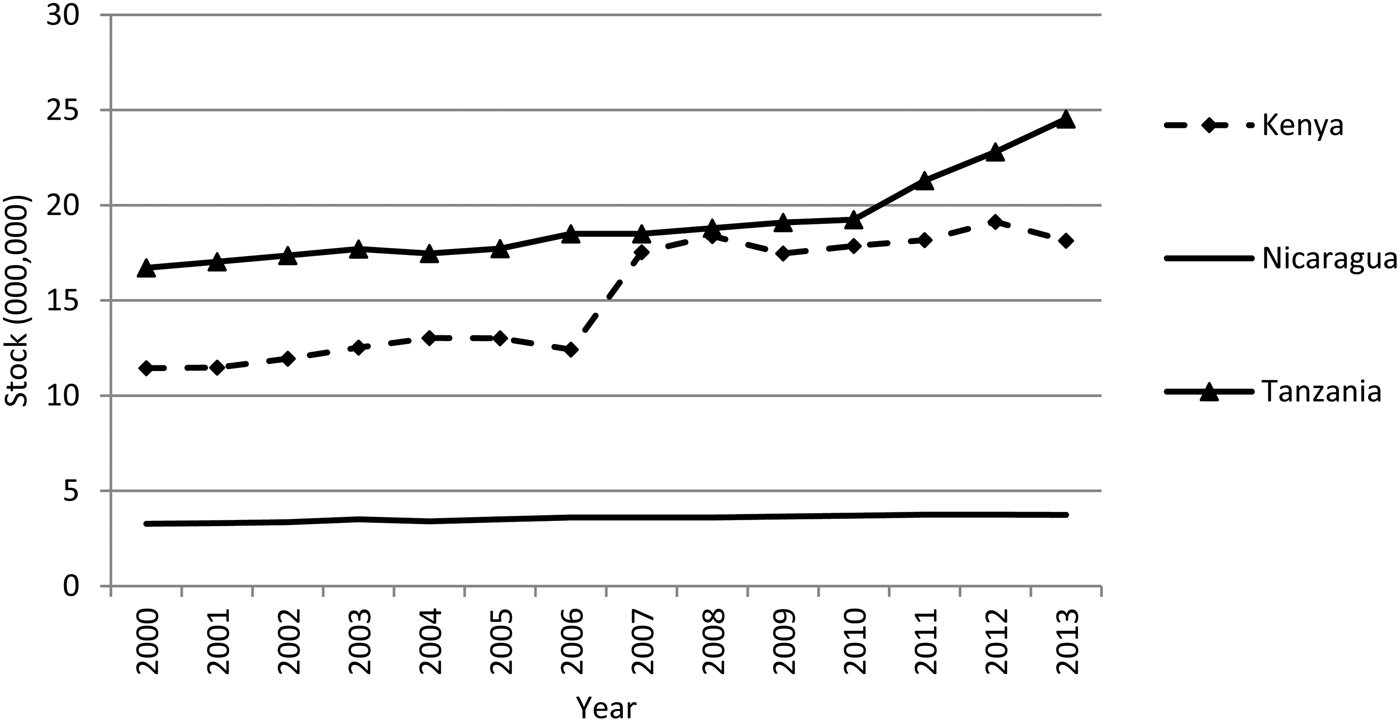
Statistics on animal populations and related parameters as reported by public sector departments responsible for livestock production in the various countries were generated from the Food and Agriculture Organization (FAO) of the United Nations' database (FAOSTAT, 2014). Trends in dairy cattle and buffalo populations are presented for India, Tanzania, Kenya and Nicaragua in Figures 1 and 2. India is home to the world's second largest population of cattle and half of the world's buffalo population, while Nicaragua has the largest cattle population in Central America (FAOSTAT, 2014). Tanzania has the second largest cattle population in Eastern Africa (behind Ethiopia), followed by Kenya (FAOSTAT, 2014). Kenya has the largest number of dairy animals in East Africa, estimated at 3.58 million (Muriuki, Reference Muriuki2011).
Trends in cattle and buffalo population in India (Source: FAOSTAT, 2014).

Trend in the cattle populations of Tanzania, Kenya and Nicaragua (Source: FAOSTAT, 2014).

Over the last decade, animal numbers have increased in all the countries, but at different rates. The slowest increase occurred in Nicaragua (Figure 2). Tanzania has experienced a fairly constant increase in its livestock population over the years, while the population of cattle in Kenya drastically increased between 2006 and 2008 then slowed down thereafter.
Milk production trends in the target countries
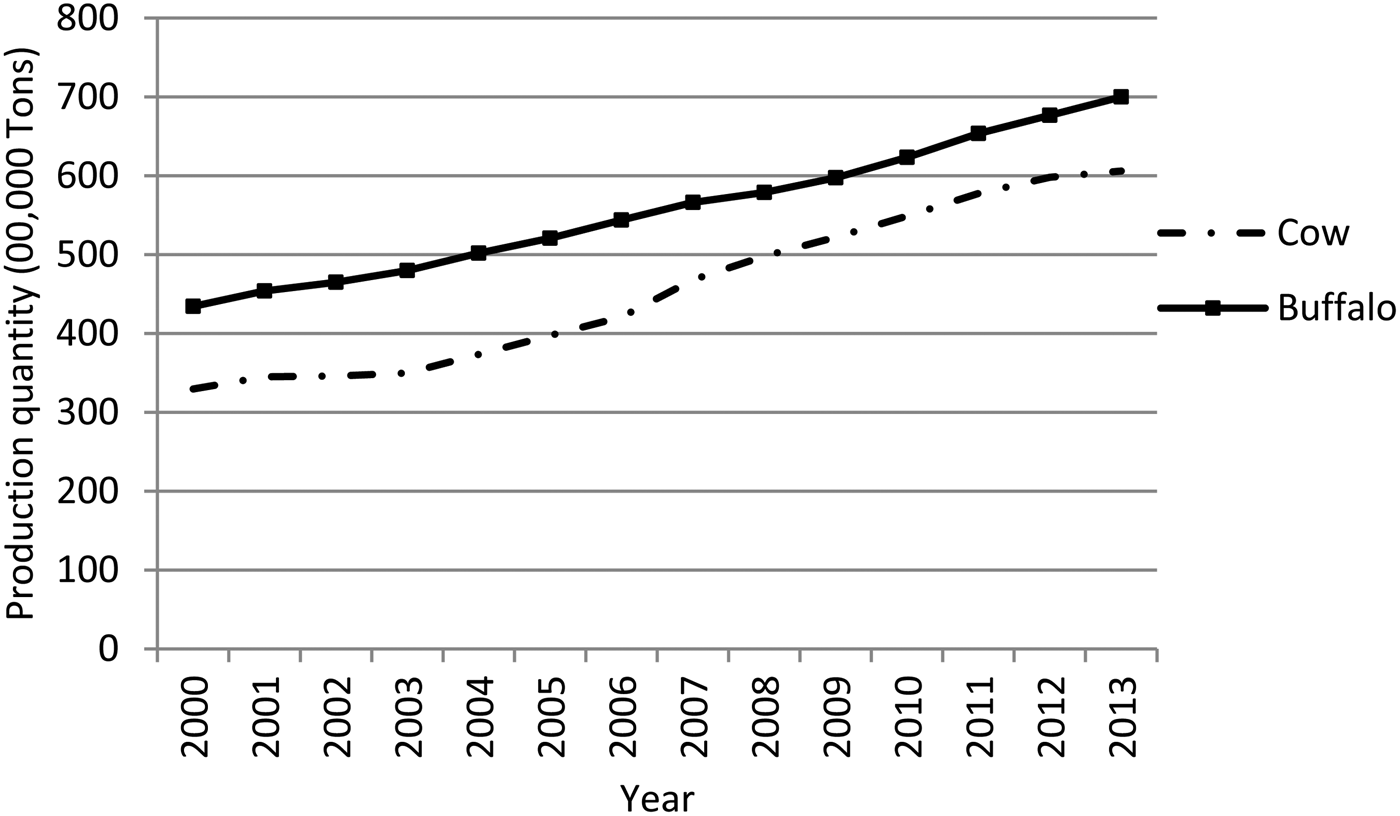
Trends in milk production from 2000 to 2013 are presented for the four countries in Figures 3 and 4. India recorded the largest volume of milk in all the years, with the milk produced from cows increasing from 35 million tonnes in 2001 to 55 million tonnes in 2010 (Figure 3), and that from buffalos increasing from 45 million tonnes in 2001 to 65 million tonnes in 2010. Total milk production from cows increased at a greater rate than the increase in the number of cattle, suggesting an increase in dairy cattle productivity in the country.
Amount of milk produced annually in India from 2000 to 2012 (Source: FAOSTAT, 2014).

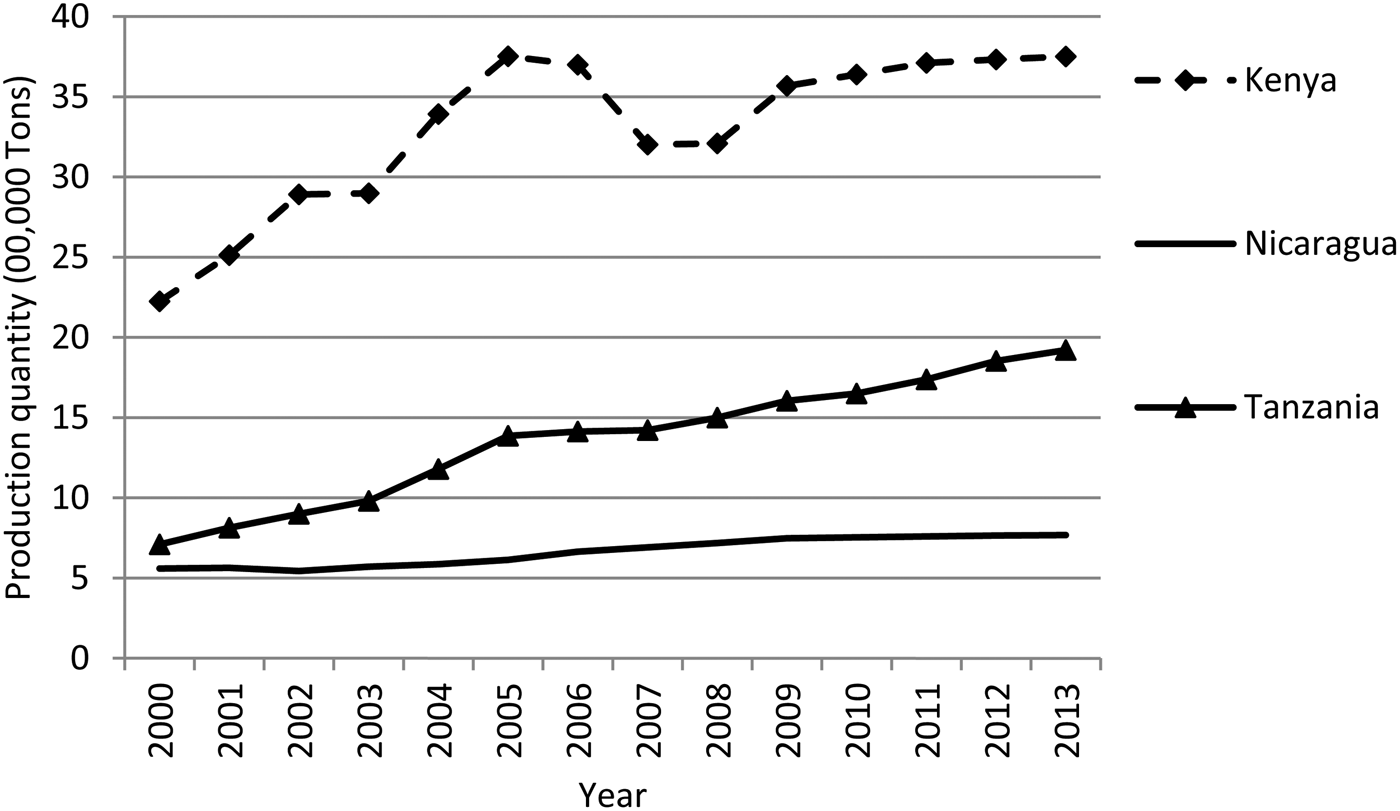
Annual milk production trends from cattle in Tanzania, Kenya and Nicaragua (Source: FAOSTAT, 2014).

The quantity of milk produced in Nicaragua gradually increased from 2005 (614 000 tonnes) to 2010 (753 000 tonnes) then remained at the same level to 2013 (Figure 4). Over the same period, the cattle population increased, but by a smaller proportion – from 3.5 million animals in 2005 to 3.7 million animals in 2010, implying a slight increase in milk production per animal.
Figure 4 presents a scenario of increased milk production in Tanzania. This increase largely resulted from growth in the livestock population (Figure 2), rather than from an increase in production per dairy animal. In Kenya, milk production increased from 2000 to 2005, while the cattle population size remained practically the same (Figures 2 and 4). There was however a marked increase in the cattle population after 2006 (Figure 2), which did not result in increased milk production (Figure 4).
Systems of dairy production and the main dairy genotypes
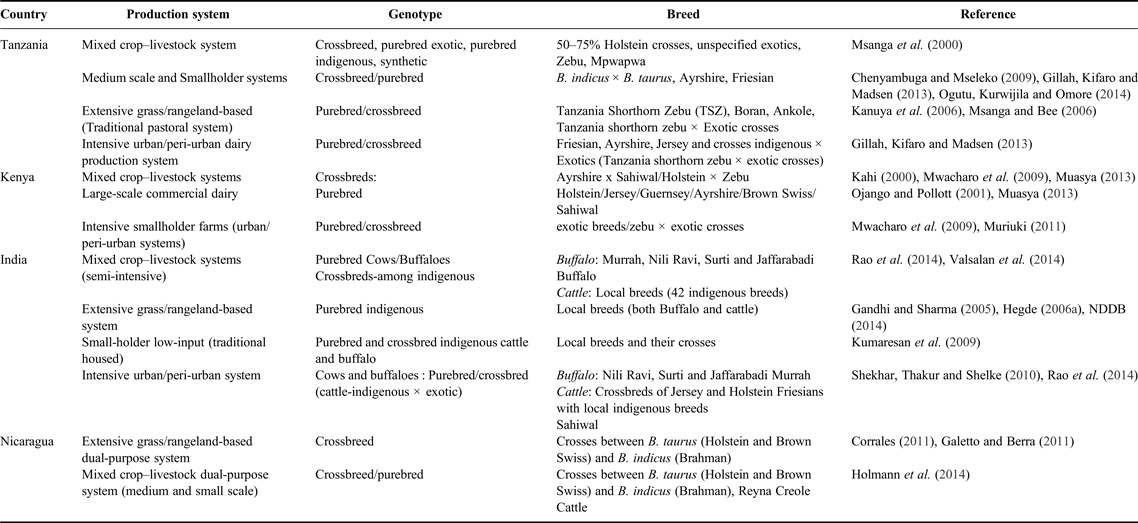
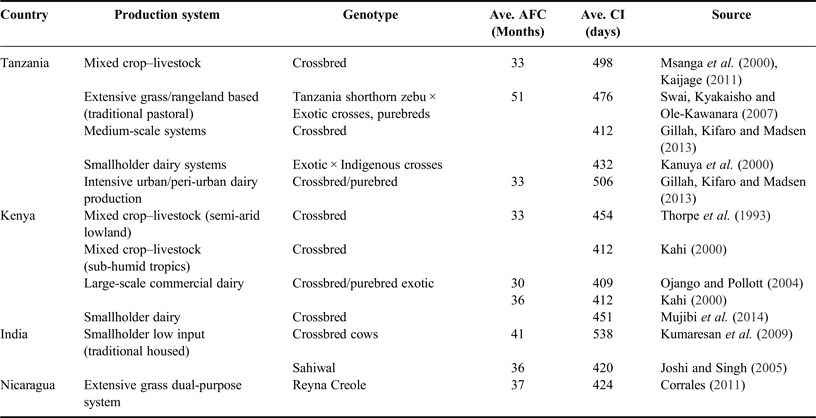
Systems of livestock production vary with climates, availability of production resources, the economic ability and market orientation of producers, and consumer demands (Peeler and Omore, Reference Peeler and Omore1997; Thornton et al., Reference Thornton, Herrero, Freeman, Mwai, Rege, Jones and Mcdermott2007). Attempts have been made to define more unified criteria for production systems classification, including providing spatial mapping of the systems (Robinson et al., Reference Robinson, Thornton, Franceschini, Kruska, Chiozza, Notenbaert, Cecchi, Herrero, Epprecht, Fritz, You, Conchedda and See2011). Table 3 presents dairy production systems found in the four countries of this study, and the types of dairy animals reared within the systems.
Dairy production systems reported in literature and breeds and genotypes of livestock used in the various systems of the four countries.

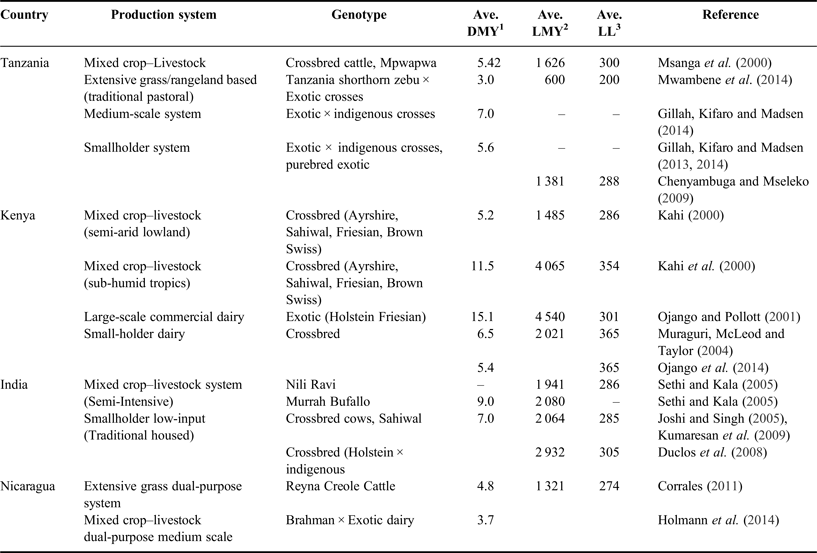
The main genotype reared in each system depends on the scale of operation and the level of economic investment. In the large-scale commercial dairy systems, the exotic dairy breeds are the main breed types reared due to their high milk production potential. In the mixed crop–livestock systems, either pure indigenous breeds or their crosses with the exotic milk breeds tend to be reared (Table 4). The differences among countries are outlined below.
Milk production performance of animals used for dairy production in, India, Kenya, Nicaragua and Tanzania.

1 DMY, Daily Milk Yield.
2 LMY, Lactation Milk Yield.
3 LL, Lactation Length.
Tanzania: In Tanzania, both traditional pastoral and urban dairy production systems exist (Msanga and Bee, Reference Msanga and Bee2006; Gillah, Kifaro and Madsen, Reference Gillah, Kifaro and Madsen2013; Ogutu, Kurwijila and Omore, Reference Ogutu, Kurwijila and Omore2014). Although typically associated with meat production elsewhere, the traditional pastoral system is included as a dairy production system in the country because more than 75 percent of the milk in Tanzania, is produced by indigenous cattle in these systems (Msanga and Bee, Reference Msanga and Bee2006; National Bureau of Statistics Tanzania, 2014). The main breed-type reared within these systems is the indigenous Zebu (Musanga, Questionnaire response). Mixed crop–livestock systems are mainly found in the highland, sub-humid and less-humid areas (Kaijage, Reference Kaijage2011). Within the intensive urban and peri-urban systems, crossbreds of the exotic (Bos taurus) breeds and the indigenous (Bos indicus) breeds, with some limited numbers of pure bred exotic breeds are reared.
Kenya: Mixed crop–livestock systems are common in Kenya. These systems are found in highlands, sub-humid and less-humid areas with good potential for agricultural production (Kahi, Reference Kahi2000). The systems are highly varied in terms of level of inputs. Animals reared in the smallholder mixed crop and livestock production systems comprise a mixture of exotic (B. taurus) and indigenous (B. indicus) breed-types. These account for more than 70 percent of milk consumed in areas not classified as milk shed areas (Staal et al., Reference Staal, Owango, Muriuki, Kenyanjui, Lukuyu, Njoroge, Njubi, Baltenweck, Musembi, Bwana, Muriuki, Gichungu, Omore and Thorpe2001; Muriuki, Reference Muriuki2011). Smallholder systems of dairy production in Kenya have been extensively characterized under the Smallholder Dairy Development Programme (ILRI, 2004). Large-scale commercial farms operating in the country as either dairy or dual-purpose units have also been described (Kahi, Reference Kahi2000; Ojango and Pollott, Reference Ojango and Pollott2001). These systems are highly mechanized, tend to raise pure-bred exotic (B. taurus) breeds, and produce large quantities of dairy products to which they add value. They produce diverse products that are mainly targeted for urban consumers. The large-scale commercial dairy systems also serve as a source of replacement animals for smallholder farmers, and carry out the bulk of the selection and improvement of dairy cattle in the country (Kahi, Nitter and Gall, Reference Kahi, Nitter and Gall2004; Makoni et al., Reference Makoni, Mwai, Redda, van der Zijpp and van der Lee2013).
There have been concerted efforts over the past two decades to improve dairy production in Eastern Africa. These include the Smallholder Dairy Development Programme in Kenya (ILRI, 2004), the East Africa Dairy Development Programme in Kenya, Uganda, Rwanda and Tanzania (ILRI, 2008) and the Livestock Sector Development Policy in 2011 by the government of Tanzania (MLFD, 2011a). Ogutu, Kurwijila and Omore (Reference Ogutu, Kurwijila and Omore2014) summarized the impacts of ten projects implemented for dairy improvement in Tanzania starting in the 1980s. Though each of the projects impacted dairy production in a specific region of the country, the level of impact was greatly variable. In general, it was considered that improvement in infrastructure would be required for long-term sustainability of the interventions.
India: Most of dairy production in India is by a large number of livestock producers on small land holdings, typically organized into three main systems of production (Table 3). Dairying is also practiced by landless farmers (NDDB, 2014). More than 70 percent of the cattle reared in India are indigenous (B. indicus) breeds (Rao et al., Reference Rao, Bachhman, Sharma, Venkataramaiah, Panda and Rathinam2014). The dairy cattle among these comprise both pure and crossbred animals (Hegde, Reference Hegde2006a). An increased level of cross breeding between indigenous (B. indicus) and exotic (B. taurus) cattle has been encouraged in the country through various projects (Hegde, Reference Hegde2006a; NDDB, 2014; NPBBDD, 2014).
Among the 13 buffalo breeds used for milk production in the country, the Murrah breed is the most important for dairy (Valsalan et al., Reference Valsalan, Chakravarty, Patil, Dash, Mahajan, Kumar and Vohra2014) and is the breed of choice for upgrading buffaloes for milk production (Rao et al., Reference Rao, Bachhman, Sharma, Venkataramaiah, Panda and Rathinam2014). A National dairy plan implemented since 2011 aims to develop more productive animals (both cattle and buffaloes) and to develop and expand production systems to increase milk supply in India over a 15 year horizon (NDDB, 2014).
Nicaragua: In Nicaragua, more than 95 percent of the milk is produced by dual-purpose (dairy and beef) cattle (MAGFOR, 2012). A large proportion of the farmers producing milk in the country are medium and small scale (CENAGRO, 2012). In addition to producing milk, these farmers raise male calves for sale at weaning to larger-scale farmers/feedlots where they are grown for beef production (Holmann et al., Reference Holmann, Mtimet, Mora and van der Hoek2014). Up to half of the milk produced in the country is processed and sold as cheese either for local consumption or for export to neighbouring countries. Dairy production in Nicaragua received a major boost from 2001 to 2010 following the creation of a network of dairy cooperatives through a joint project between the Ministry of Agriculture and Forestry and the Swedish Agency for agricultural development (FondeAgro). By providing milk cooling and storage facilities and other essential services, the cooperatives enabled more stable farm gate prices for milk and supported an expanded market for milk products and livestock production (Galetto and Berra, Reference Galetto and Berra2011).
In all the countries, farmer cooperative groups formed through an aggregation of smallholder farmers serve to promote services to farmers, and also organize the collection, handling and sale of milk from the farms. Cooperatives enable small holder farmers to improve their competitive edge in the open market economies (Devendra, Reference Devendra2001).
Milk production and the reproductive performance of dairy animals
Milk production performance
Most of the studies reviewed on the performance of dairy animals in the target countries addressed milk production, reproductive performance, and to a lesser extent survival ability of the animals (Muasya, Reference Muasya2005; Zambrano et al., Reference Zambrano, Contreras, Pirela, Cañas, Olson and Landaeta-Hernández2006; Chenyambuga and Mseleko, Reference Chenyambuga and Mseleko2009; Kumaresan et al., Reference Kumaresan, Prabhakaran, Bujarbaruah, Pathak, Chhetri and Ahmed2009; Corrales, Reference Corrales2011; Holmann et al., Reference Holmann, Mtimet, Mora and van der Hoek2014). Table 4 presents reported milk production performance of dairy animals in the countries.
The average daily milk yield (DMY) was slightly more than 5 kg in mixed crop–livestock systems in semi-arid areas, and in the smallholder systems in Kenya and Tanzania. Large-scale commercial dairy systems in Kenya had the highest recorded production in the literature for systems in developing countries, with an average DMY per animal of 15 kg (Table 4). This high level of production could be attributed to the high genetic potential of the animals for milk production as well as good nutritional management. Crop–livestock systems in the semi-arid lands of Kenya, and Tanzania had the lowest milk yield, understandably due to the breeds and types of cattle kept in such systems.
In India, indigenous cattle, which comprise more than 75 percent of the total cattle population, are reported to produce on average 1.83 kg milk/day, crossbred cattle produce on average 6.36 kg/day, while buffaloes on average produce 3.83 kg/day (Gandhi and Sharma, Reference Gandhi and Sharma2005; Joshi and Singh, Reference Joshi and Singh2005). Higher yields are reported for animals raised under more intensive management systems (Table 4). It should be noted that a large amount of published information on productivity of different breed-types in India is based on animals reared in research stations rather than on the small holder farms (Gaur, Garg and Singh, Reference Gaur, Garg and Singh2005; Joshi and Singh, Reference Joshi and Singh2005; Birthal, Taneja and Thorpe, Reference Birthal, Taneja and Thorpe2006; Mwacharo et al., Reference Mwacharo, Ojango, Baltenweck, Wright, Staal, Rege and Okeyo2009).
The quantity of milk produced by animals in the dual-purpose production systems of Nicaragua is reported to be greatly variable depending on the season, and ranges from 3 to 5 kg/animal/day (Holmann et al., Reference Holmann, Mtimet, Mora and van der Hoek2014). Information on individual animal productivity within the country is, however, limited; reports from the country tended to present data on bulk milk production only.
Lactation length in dairy cattle is usually standardized to 305 days for purposes of performance comparison. Animals in the mixed crop–livestock systems, however, were not reported to have lactation lengths of 305 days. The longest lactation was 365 days in Kenya, and the shortest was reported in Tanzania (200 days). Tanzania relies mostly on indigenous B. indicus breeds that are associated with short lactation length (Katjiuongua and Nelgen, Reference Katjiuongua and Nelgen2014).
Reproductive performance
Reproductive traits reported in the literature were age at first calving (AFC) and calving interval (CI). These traits are easily recorded as they occur following major events in an animal's life. Information is more difficult to obtain on other reproductive traits like conception rates and services per conception. These two indicators may only be accurately captured in systems where artificial insemination (AI) or hand mating is practiced and followed by pregnancy diagnosis. Pregnancy diagnosis generally requires more specialized personnel who may not be readily available; consequently, producers carry out insemination/mating of their animals and wait to see the progress of pregnancy hoping that their animals have conceived. This leads to poor capturing and reporting of information on animal conception in the low-input production systems. Table 5 presents AFC and CI for dairy animals in the countries.
Age at first calving (AFC, in months) and calving interval (CI, in days) of animals used for dairy production in India, Kenya, Nicaragua and Tanzania.

In India, AFC was greater in more traditional low-input smallholder systems than in the mixed crop–livestock semi-intensive smallholder systems. The Kenyan large-scale dairy systems had the earliest AFC (30 months), while the extensive grazing systems in Tanzania reported the latest AFC (51 months) (Table 5). Large variations in AFC have been reported between production systems in the different countries (Table 5). These differences could be due to variation in breeds used within systems, differences in management practices across systems, and differences in climatic conditions. In systems where exotic breeds were reared, the AFC was generally younger than observed in systems utilizing mostly indigenous B. indicus breeds.
The average CI across the systems was 449 days. The longest CIs (more than 500 days) were reported in the traditional small holder systems of India, and in the urban dairy systems of Tanzania (Table 5). The large-scale commercial systems in Kenya had the shortest CIs. Improved and better informed management of dairy animals can greatly reduce the CIs and improve the overall herd productivity.
Reproductive and genetic technologies
Reproductive technologies
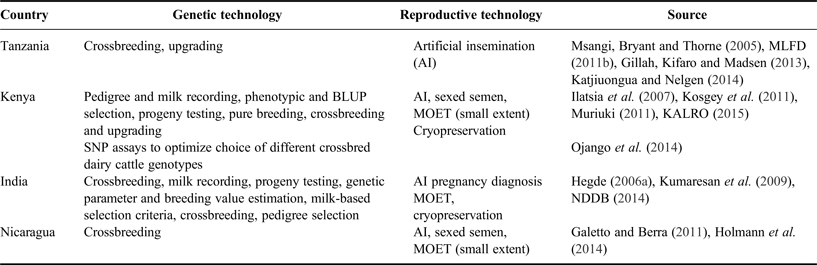
Dairy systems have experienced drastic transformation in the past few decades due to intensification and more extensive use of a wide range of technologies. Reproductive and genetic technologies (biotechnologies) are major avenues through which herd improvement has been achieved. The biotechnologies used in dairy production systems in India, Kenya, Nicaragua and Tanzania are presented in Table 6.
Biotechnologies used in dairy production in the target countries.

The most widely used reproductive technology in all four countries under review is AI, where it serves to introduce and disseminate desired dairy characteristics in populations. Large-scale commercial dairy systems in particular tend to use AI extensively, and opt for semen from commercial dairy B. taurus sires that is imported from more developed countries. Although available since the 1930s and relatively cheap and easy to use, AI has been difficult to administer successfully in smallholder cattle production systems in developing countries. This difficulty is due mostly to logistical and institutional challenges (Okeyo et al., Reference Okeyo, Kajume, Mosi, Okila, Gathuma, Kiere, Agumbah, Kuria and Chema2000; Kosgey et al., Reference Kosgey, Mbuku, Okeyo, Amimo, Philipsson and Ojango2011; NDDB, 2014).
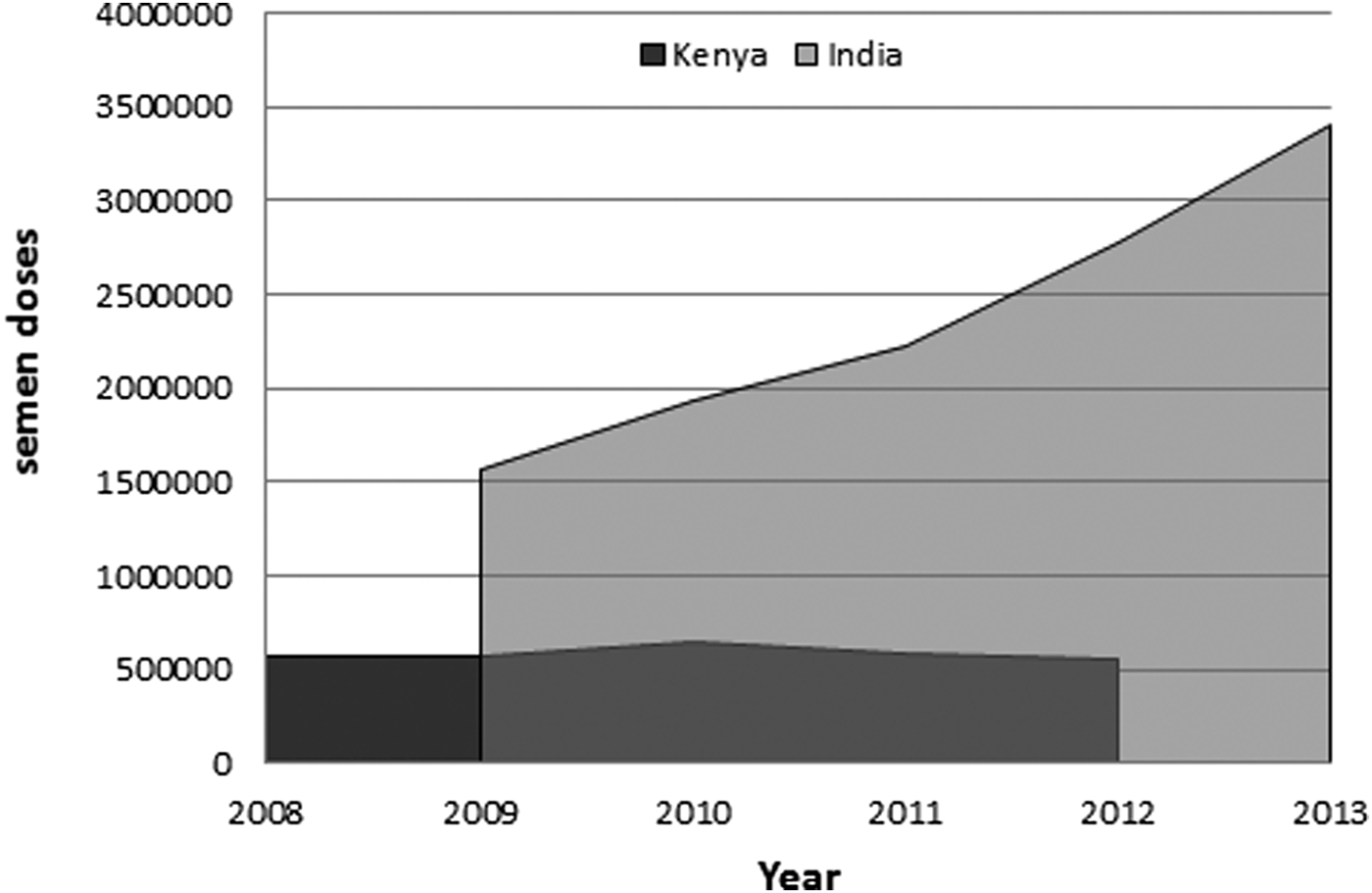
In India, the use of AI has risen since 2008 (Gautam, Dalal and Pathak, Reference Gautam, Dalal and Pathak2010; NDDB, 2014; Rao et al., Reference Rao, Bachhman, Sharma, Venkataramaiah, Panda and Rathinam2014) and has been applied to animal breeding in both cattle and buffalo. Although national coverage was low until 2005 (Ahlawat and Singh, Reference Ahlawat and Singh2005); India currently has the world's largest AI infrastructure, consisting of 49 semen stations producing 66.8 million doses of frozen semen annually (NDDB, 2014). Transformations have been induced in the dairy sector through new interests in the organization of services and markets such that dairy farming in India is rapidly evolving to a more professionally managed industry (NDDB, 2014).
Use of sexed semen and MOET has also been reported in India with an increasing demand for sexed semen (Hegde, Reference Hegde2006b). More extensive use of sexed semen alongside the ongoing expansion of AI infrastructure and adoption in the country could prove useful for improving the productivity of India's dairy sector by helping to reduce the number of male animals born into dairy herds that are not needed for reproduction.
Within East Africa, use of AI is most widespread in Kenya. However, national coverage in Kenya is quite low when compared with current AI use in India (Figure 5). Sexed semen and MOET are also reported to have been used by large-scale commercial farms in Kenya (Muriuki, Reference Muriuki2011), although details are scanty on their adoption and use.
Number of semen doses used for AI annually between 2008 and 2013 (Source: BAIF reports 2008–2013; KAGRC website (http://www.kagrc.co.ke).

AI use in Tanzania is very low, as are conception rates following use of AI in the country (Ogutu, Kurwijila and Omore, Reference Ogutu, Kurwijila and Omore2014). Tanzania has a single national AI centre that produces about 150 000 doses annually, and also relies on limited amounts of semen imported through private companies (MLFD, 2011b; Katjiuongua and Nelgen, Reference Katjiuongua and Nelgen2014; Ogutu, Kurwijila and Omore, Reference Ogutu, Kurwijila and Omore2014). Plans are now underway for substantial investment through public–private partnership arrangements between the government and its development partners to enhance the existing semen production and to implement an increasingly private sector-driven delivery system (Ogutu, Kurwijila and Omore, Reference Ogutu, Kurwijila and Omore2014).
In more extensive systems of Eastern Africa, the use of bulls, mostly of the local B. indicus breeds, remains common practice (Kaimba, Njehia and Guliye, Reference Kaimba, Njehia and Guliye2011).
Although promoted through projects and organizations supported by the government, AI is not widespread in the smallholder cattle systems in Nicaragua (Holmann et al., Reference Holmann, Mtimet, Mora and van der Hoek2014). Many of the smallholder farmers have a strong cultural attachment to having a bull (Toro) in their herds. Where adopted, AI is mainly carried out by private companies that import semen of various breed-types. Smallholder and mixed crop–livestock farmers with interest in upgrading their dairy animals for higher productivity do so using both AI and hand mating, with the semen typically coming from B. taurus bulls (MAGFOR, 2012). The government recently introduced an animal traceability system that allows for monitoring of the movement of animals. This system is applied mainly to animals for export and its adoption remains limited across the country (Holmann et al., Reference Holmann, Mtimet, Mora and van der Hoek2014).
Use of other reproductive technologies such as in-vitro fertilization and embryo sexing is limited in all the countries, as these technologies tend to be more expensive, are logistically more demanding and require administration by more technically skilled manpower. Statistics are generally not available on the use of these technologies in dairy production in the study countries.
Genetic improvement technologies
The use of genetic improvement technologies (Table 6) is not widespread in the target countries. However, crossbreeding and upgrading are commonly used in all the countries with the objective of improving the local stock (Hegde, Reference Hegde2006a; Mwacharo et al., Reference Mwacharo, Ojango, Baltenweck, Wright, Staal, Rege and Okeyo2009; Holmann et al., Reference Holmann, Mtimet, Mora and van der Hoek2014; Katjiuongua and Nelgen, Reference Katjiuongua and Nelgen2014; NDDB, 2014). Livestock keepers in the countries practice some form of selection of their heifers and bulls for breeding. This is usually based on either physical appraisal of the animals, or records on phenotypic performance available for the animals and their relatives. Use of molecular information and genomic selection technologies is limited. However, studies are ongoing on utilization of genomic information for selection and parentage determination (Ahlawat and Singh, Reference Ahlawat and Singh2005; Kios, van Marle-Köster and Visser, Reference Kios, van Marle-Köster and Visser2012; Mujibi et al., Reference Mujibi, Ojango, Rao, Karanka, Kihara, Marete, Baltenweck, Poole, Rege, Gondro, Weerasinghe, Gibson and Okeyo2014).
In India, structures are in place to facilitate milk recording and genetic evaluation (Hegde, Reference Hegde2006b; Duclos et al., Reference Duclos, Gokhale, Bacilieri and Ducrocq2008; NDDB, 2013). A milk-based selection criteria has been adopted for the selection of breeding bulls using pedigree information as well as progeny testing.
In East Africa, Kenya is the only country that has a national animal recording system where pedigree and performance recording is carried out. Kenya also has a national contract mating scheme through which sire selection is done (Mukisira, Reference Mukisira and Trivedi2002; Kosgey et al., Reference Kosgey, Mbuku, Okeyo, Amimo, Philipsson and Ojango2011). These schemes, though open to all producers, are primarily used by the large-scale dairy producers in high-input systems where pure-breeding is common (Kosgey et al., Reference Kosgey, Mbuku, Okeyo, Amimo, Philipsson and Ojango2011). To date, only an estimated 2.5 percent of the national dairy herd is accounted for in the national animal recording program (Kenya Livestock Breeders Organization, (http://www.klbo.co.ke/) personal communication). Given that the larger-scale producers are the major source of improved dairy animals for other production systems, the benefits of the animal recording infrastructure would be greatly improved if more of the smallholder farmers provided information on the performance of their animals. Crossbreeding and upgrading of local stock are more common practice within the smaller-scale livestock production enterprises in Kenya.
In Tanzania, many livestock keepers in the pastoral systems practice selection within their own herds, and use natural mating (Ogutu, Kurwijila and Omore, Reference Ogutu, Kurwijila and Omore2014). In the smaller-scale systems, crossbreeding of various breed-types is common, resulting in a broad mix of breeds (Msangi, Bryant and Thorne, Reference Msangi, Bryant and Thorne2005). Few farmers have a well-developed breeding strategy and many rely on inseminators marketing semen from different countries to inform them about available bulls, characteristics of those bulls and about AI. Use of genomic selection technologies is still in an experimental stage (ILRI, personal communication).
Many livestock keepers in Nicaragua practice crossbreeding using natural mating, and strive to maintain animals with no more than 50 percent exotic breed-types (Corrales, Reference Corrales2011; Holmann et al., Reference Holmann, Mtimet, Mora and van der Hoek2014).
Costs of genetic and reproductive technologies and their influence on extent of usage
Compared with other reproductive technologies, AI has lower costs. The average costs vary greatly across the countries and are influenced by the population from which the sires were selected. This is illustrated in Table 7. In all the countries, semen imported from other countries is generally priced higher than that produced locally from the B. taurus breeds. It should however be noted that semen costs will also differ between countries based on national policies governing the use of imported semen, and depending on the prevailing exchange rates. The price of MOET was reported to be very high with no specific values given, and its use limited to high-input production systems (Questionnaire responses). In Nicaragua, the price per unit of sexed semen was reported to be US$30–40, while costs of embryos were reported to be higher than US$100 (Martin Mena Urbina, Questionnaire response).
Average costs of artificial insemination (AI) offered by various service providers in the four countries.

Source: Ouma et al. (Reference Ouma, Jakinda, Magati and Rege2014).
1 Currency exchange rates used: 1 US$ = 62.65 INR; 90.12 KES; 1790.15 TzS; 597 CFA.
2 See an example AI supply chain in Box 1.
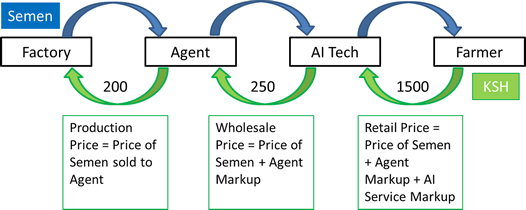
The farm gate price of AI may vary greatly depending on the number of actors involved in the distribution chain (Ouma et al., Reference Ouma, Jakinda, Magati and Rege2014). An example of variation pricing along one AI distribution chain in Kenya is presented in Box 1. Data were generally hard to find on current and projected costs of technology adoption, particularly at the level of dairy producer.
Illustration of one AI Distribution chain in Kenya (adapted from (Ouma et al., Reference Ouma, Jakinda, Magati and Rege2014)).
Semen is sold from the producer for Ksh 200 to the agent (price may vary depending on the bull and its breed), this represents 13 percent of the end price. The Agent sells to the AI service provider at 250, retaining 50 shillings representing 3 percent of the end price. The AI technician then sells the semen to a farmer at 1500 Shillings, retaining 1250 Shillings gross profit which represents 83 percent of the end price.
Conclusion and recommendations
The information collated in this study indicates that data on genetic characteristics and performance of the dairy populations in developing countries is becoming more readily available although still limited in scope. The countries presented are at different stages of developing national genetic improvement strategies that have clearly defined objectives, and are implementing genetic technologies that already exist, notably AI, to effect change. However, limited evidence on the current state and costs of the technologies in the different livestock populations makes it difficult to estimate the benefits to obtain from their adoption.
Crossbreeding and upgrading are common practices across the systems and countries but there is limited information on animal genetics and performance to guide selection towards the desired change. Changing a population without evidence of which animals to retain in the existing population could yield negative rather than positive results.
To bring about change in production practices that will lead to improved productivity of dairy systems within the countries, investments will be needed: to improve measurement and documentation of animal performance; to build technical capacity at different levels to better design and manage genetic improvement; for research to improve the uptake of genetic technologies in key production systems; and in the infrastructure and processes that will deliver appropriate technologies to target populations.
While there seems to be a case for public and private sector providers to offer services like AI that are already popular in some countries, in combination with other technologies currently adopted to a lesser extent, there is still much to understand about technology combinations that will bring about optimum benefits under the different management and agro-ecological systems. There also remains the larger questions on what models of policy, market and institution interventions and arrangements are needed to improve the adoption of animal genetic and reproductive technologies in the mostly smallholder dairy systems found in developing countries.
Acknowledgements
We wish to acknowledge the support of the Global Futures and Strategic Foresight Project (GFSF). This work was undertaken at the International Livestock Research Institute (ILRI) as part of the CGIAR Research Programme on Policies, Institutions and Markets (PIM), led by the International Food Policy Research Institute (IFPRI), and the CGIAR Research Programme on Livestock and Fish (L&F). Colleagues from various institutions in the countries studied shared documents and information on breeding technologies used in their countries. This information was provided by:
-
1. Dr. Y.N. Msanga National Coordinator AnGRs, Tanzania
-
2. Dr. H.A. Mruttu Principal Livestock Research Officer, Tanzania
-
3. Martin Mena Urbina Research Assistant on forages, CIAT, Nicaragua
-
4. Dr. Albert Soudre Scientist/Lecturer University of Koudougou, Burkina faso
-
5. Dr. S.K. Singh Principal Scientist, Head Genetics and Breeding Division, India
We gratefully acknowledge the support received from these institutions and individuals. However, the opinions expressed here are the full responsibility of the authors, as are the errors and omissions.
Statement of interest
No.