Introduction
Introducing a book or a series of articles dedicated to Ziegler-Natta chemistry in 2013 cannot elude two questions predictably raised in the introductory article: How far is this 60-year-old catalysis field from maturity? And does it make sense to insist on fundamental and exploratory research on the subject?
As an academic scientist in the area since the early 1980s, I long ago felt the need to answer the very same questions for myself when, at my midlife crisis, I faced the classical dilemma: “Shall I stay or shall I go?” My conclusion was, and still is, that the problem of maturity at some point would rather be my own, because olefin polymerization belongs among those combinatorial human creations that do not age. To draw a parallel with art, writers and music composers may spend their whole lives assembling letters and notes into original combinations, and literature and music will continue to represent a source of novelty and surprise. In a similar way, with their unique ability for precise control over the catalytic process, polyolefin chemists know how to enchain olefin monomers into ever new molecular architectures,Reference Severn and Chadwick 1 , Reference Busico and Cipullo 2 and as long as they exist, their chemistry will stay young.
Polypropylene-based materials: A paradigmatic story
The case of isotactic polypropylene (iPP)Reference Severn and Chadwick 1 – Reference Moore 3 is well suited to illustrate the concept. Let us consider what can be achieved with just three basic constitutive elements (namely the m (meso) and r (racemo) diads in regioregular strings of propylene units,Reference Busico and Cipullo 2 and some ethylene units (E) copolymerized with the former;Reference Moore 3 Figure 1 ). Very recently, papers have appeared claiming the most highly stereoregular homo-iPP ever: Kol and co-workers used novel post-metallocene Ti-based complexes with “Salalen” ligands and an intriguing C 1-symmetry;Reference Press, Cohen, Goldberg, Venditto, Mazzeo and Kol 4 Rieger and co-workers replied with more classical C 2-symmetric bis(indenyl) ansa-zirconocenes and hafnocenes featuring a properly designed (albeit pretty complex) substitution pattern.Reference Schoebel, Herdtweck, Parkinson and Rieger 5 Their perfect “ . . . mmmmmmmmm. . . ” strings are certainly impressive, and possibly associated with remarkable properties, but they only represent one vertex of a vast triangle with infinite possibilities.
Adapted Fischer representation of an isotactic polypropylene sequence containing an rr stereodefect (m and r = meso and racemo diad, respectively) and a copolymerized ethylene unit (E).

We may want to step into it by randomly introducing just a few Es in the long m strands; in the resulting iPP “random copolymers,”Reference Moore 3 , Reference Gahleitner, Jääskeläinen, Ratajski, Paulik, Reussner, Wolfschwenger and Neißl 6 the ethylene units perturb the crystallization of the propylene homosequences, and practically all properties of the material (physicomechanical parameters, transparency, sealability, gas permeability, feeling at touch, and many more) change in a highly controlled and tunable fashion (provided that our catalyst is good enough). A relevant application can be seen by anyone who has flown economy class on airlines. Until recently, when offered a drink, we used to receive perfectly transparent but very brittle atactic polystyrene cups; storing one such empty cup “in the back-pocket of the seat in front of us” and hearing the “crack” was practically one single event. Now, more and more, the cups are slightly less transparent and with a softer touch, and when we put them in the pocket, they refuse to crack. The first time this occurred to me, I was almost shocked; I took the cup and applied all known and unknown tricks to break it, but they did not work. Then I looked at the bottom, and the familiar “PP” acronym smiled at me: A well-behaved catalyst, a few extra Es, and what a difference compared with homo-iPP!
Now imagine combining iPP random copolymers and homo-iPP. One way to do this is to co-extrude them into multilayered films;Reference Moore 3 at this point, the number of variables sky-rockets, and the story could easily inflate into the chemical equivalent of One Thousand and One Nights. Some applications of this technology, primarily in packaging, are incredibly sophisticated; the fact that the films are marketed at the volume and price of a commodity is amazing, and easily explains why iPP can be so successful and its production has continued to grow exponentially since the mid-1950s.
Not just polypropylene
We are still at the beginning, and this exploration could continue for much longer, but in view of the available space, I have to recall at this stage that of course polyolefins are much more than iPP. In the last two decades, ethene copolymers in particular have undergone tremendous advances, due to the growth of molecular catalysis.Reference Nomura 7 When I was introduced to the field in the late 1970s, heterogeneous Ziegler-Natta catalysts were the only option, and my “Bible” indeed was John Boor’s book titled Ziegler-Natta catalysts and Polymerizations. Reference Boor 8 The author—a renowned Shell scientist who died prematurely in 1974—clearly loved these catalysts, and in the opening paragraph of the Introduction, he declared: “The Ziegler-Natta catalyst is unique and marvelous.” At that time, this was in some respects an overstatement, or maybe a premonition, but love is contagious, and I was ensnared. I wish Boor could have witnessed the incredible series of subsequent breakthroughs that were just about to be made and corroborate his assertion. First-generation TiCl3-based catalystsReference Boor 8 were giving way to MgCl2/TiCl4/electron-donor high-yield ones,Reference Severn and Chadwick 1 , Reference Moore 3 and the serendipitous discovery of methylaluminoxane (MAO) dramatically revealed the true potential of group 4 metallocenes.Reference Andresen, Cordes, Herwig, Kaminsky, Merk, Mottweiler, Pein, Sinn and Vollmer 9 A few years later, the pioneering work of John Ewen,Reference Ewen 10 Hans Brintzinger,Reference Wild, Zsolnai, Huttner and Brintzinger 11 , Reference Kaminsky, Külper, Brintzinger and Wild 12 and Walter KaminskyReference Kaminsky, Külper, Brintzinger and Wild 12 inaugurated the era of molecular stereoselective olefin polymerization catalysis,Reference Resconi, Cavallo, Fait and Piemontesi 13 which is still flourishing with a vigorous stream of post-metallocene structures.Reference Britovsek, Gibson and Wass 14 – Reference Deplace, Scholz, Fredrickson, Kramer, Shin, Shimizu, Zuo, Rong, Hsiao and Coates 25 Among the latest results, I am sure Boor would have immensely enjoyed “living” Ziegler-Natta catalysis,Reference Coates, Hustad and Reinartz 21 – Reference Deplace, Scholz, Fredrickson, Kramer, Shin, Shimizu, Zuo, Rong, Hsiao and Coates 25 and in particular its recent variant based on ZnR2-mediated chain shuttlingReference Arriola, Carnahan, Hustad, Kuhlman and Wenzel 26 , Reference Hustad, Kuhlman, Arriola, Carnahan and Wenzel 27 —a concept immanent in Natta’s work since the very early days,Reference Natta 28 but never demonstrated or usefully exploited until the beautiful work at Dow Chemical in the first years of the new millennium.Reference Arriola, Carnahan, Hustad, Kuhlman and Wenzel 26 , Reference Hustad, Kuhlman, Arriola, Carnahan and Wenzel 27 , Reference Hustad 29
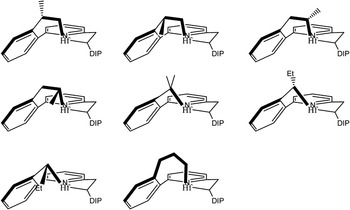
As a scientist working on fundamental issues, I would be proud to acknowledge the dominant role of rational discovery in the polyolefin catalysis success story, but to be honest I cannot. Many aspects are certainly well-understood, to the point that some have become perfect case histories for organometallic chemistry textbooks, and with some oversimplification, could find their way to a much broader nonchemical readership.Reference Ewen 30 However, inventing a polyolefin catalyst from scratch remains primarily a trial-and-error endeavor, and even improving an existing one requires a strong dose of empiricism. It is usually downstream to the invention that understanding develops, and in some cases not even at that stage. A paradigmatic example is that of the (pyridylamido) Hf-based catalysts for iPP discovered by Symyx and Dow within an intensive program of high throughput screening that originally aimed to implement new catalysts for linear-low-density polyethylene (LLDPE).Reference Boussie, Diamond, Goh, Hall, LaPointe, Leclerc, Murphy, Shoemaker, Turner, Rosen, Stevens, Alfano, Busico, Cipullo and Talarico 31 The unforeseen ortho-metalation of certain ligands yielded precursor complexes that are modified in situ by a first monomer insertion into the ortho-metallacycle, and possibly by a subsequent ligand isomerization,Reference Froese, Hustad, Kuhlman and Wenzel 32 – Reference Zuccaccia, Busico, Cipullo, Talarico, Froese, Vosejpka, Hustad and Macchioni 34 with the result that in spite of the well-defined nature of the precursor, the true catalytic species in a vast pool of C 1-symmetric ones ( Figure 2 ) remain(s) unidentified;Reference Busico, Cipullo, Pellecchia, Rongo, Talarico, Macchioni, Zuccaccia, Froese and Hustad 35 notably, this is also one of the only two catalysts that—to the best of our knowledge—is amenable to fast LLDPE chain shuttling.Reference Arriola, Carnahan, Hustad, Kuhlman and Wenzel 26 , Reference Hustad, Kuhlman, Arriola, Carnahan and Wenzel 27
Possible active species formed by a first propene insertion into the ortho-metallacycle of a (pyridylamido) Hf-based catalyst precursor. Adapted from References 32−34. Note: Et, ethyl; DIP, diisopropylphenyl.

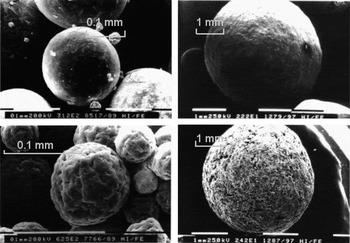
Serendipity, of course, is not a monopoly of olefin polymerization, its contributions being ubiquitous in science in general and organometallic catalysis in particular. What is peculiar to polyolefins, though, is the extent to which the (serendipitous) act of catalyst creation triggers a sequence of increasingly rational inventions where the competences and skills of multidisciplinary teams of scientists and technologists contribute to successfully reach the market and penetrate society. To illustrate this, I would like to go back to Ziegler-Natta catalysts and in particular to so-called “impact-resistant” iPP;Reference Moore 3 , Reference Cecchin, Morini and Pelliconi 36 the definition here is slightly misleading, because iPP represents only part of the material, namely the semicrystalline matrix that ensures the necessary rigidity. Finely dispersed throughout this matrix is an amorphous ethylene/propylene rubber (EPR) phase that dissipates the kinetic energy of an impact by undergoing an elastic deformation before the iPP matrix can break. This general concept of heterophasic iPP is not new, having been introduced in the 1980s,Reference Moore 3 , Reference Simonazzi, Cecchin and Mazzullo 37 but its implementation has greatly improved in the last two decades. A first milestone was the ability to thoroughly control the morphology of MgCl2-supported Ziegler-Natta (pre)catalysts and achieve the replication of such a morphology into that of the polymer granule by means of a mild pre-polymerization step ( Figure 3 );Reference Moore 3 , Reference Cecchin, Morini and Pelliconi 36 , Reference Simonazzi, Cecchin and Mazzullo 37 this makes it possible, inter alia, to freeze—for kinetic reasons—a thermodynamically incompatible intimate iPP/EPR blend. Along with this came the progress in the polymerization reactors, as separate units and assembled in cascades;Reference Moore 3 the ingenious and challenging concept of multizone reactor technology was the latest development, further enhancing intra- and inter-particle product uniformity.Reference Mei, Herben, Cagnani and Mazzucco 38
Scanning electron microscopy images highlighting the faithful replication of prepolymer granules of different porosity into isotactic polypropylene granules. Courtesy of Jochem Pater, LyondellBasell.

As for any polyolefin based material, there are extremely important issues related to processing and additivationReference Moore 3 , Reference Gahleitner 39 (incidentally, the aforementioned example of the unbreakable iPP cup would be incomplete without acknowledging the crucial role of clarifiers), but—again—including them is beyond the scope of this article.
Overall, it is difficult to find other chapters of organometallic chemistry that can feature such a lively and exciting mix of creativity, mechanistic understanding, molecular and supramolecular control, interconnection with other scientific and technological disciplines, and ultimately impact on economy and society. Despite this, in a growing number of academic circles this is considered a closed chapter, with visible consequences; as a matter of fact, the number of high quality experienced academic groups with the appropriate critical size has dropped vertically. At this point, as noted elsewhere,Reference Busico 40 the real question to be addressed is not whether polyolefin catalysis can be further innovated, but if this innovation is beneficial to industry and society.
In the author’s opinion, “good” research should continue for a number of reasons. One is the viscosity of the market, which may take decades to accept a new catalyst or product. Group 4 metallocenes are the perfect example: disclosed in the 1950s, re-discovered in the 1970s with MAO, and elaborated in the 1980s into the chiral ansa-versions, which peaked in the 1990s with the first ansa-zirconocenes for iPP able to rival classical Ziegler-Natta catalysts (at least with respect to polymer stereoregularity),Reference Resconi, Cavallo, Fait and Piemontesi 13 they began to gain significant segments of the polyolefin catalyst market only at the end of the last millennium, and largely for novel applications (like LLDPE) other than those for which most expectations had originally grown. An improved cost/performance balance for some of these catalysts ultimately may enable them to penetrate the iPP market too, until now a monopoly of classical heterogeneous Ziegler-Natta systems,Reference Moore 3 and further expand the available grades of this evergreen material.
An important side merit of metallocenes is that they inspired the implementation of countless non-metallocene homologues.Reference Britovsek, Gibson and Wass 14 – Reference Deplace, Scholz, Fredrickson, Kramer, Shin, Shimizu, Zuo, Rong, Hsiao and Coates 25 In many cases these are easier to make, and some of them have been faster to reach industrial application.Reference Hustad 29 In addition, the (real or supposed) competition from metallocenes put pressure on Ziegler-Natta catalyst research, which produced several new breakthroughs (from novel classes of electron donors to advances in process technology discussed previously), and can still exploit important margins of progress, in particular in ethene/1-alkene co-polymerizations, where, with a finer control on the active species, this catalysis might be able to regain (part of) the LLDPE market.
New polymerization products suffer from similar stand-by problems, in the sense that several novel polyolefin based materials with remarkable properties are awaiting commercialization. In some cases, they are “simply” too expensive in an absolute sense or compared with alternatives,Reference Coates, Hustad and Reinartz 21 – Reference Deplace, Scholz, Fredrickson, Kramer, Shin, Shimizu, Zuo, Rong, Hsiao and Coates 25 which means that progress on the catalyst and/or process side may push them forward. In other cases, the limiting factor appears to be the lack of creativity of potential users, unable to take advantage of materials possibly too innovative for conventional wisdom (e.g., the new olefin block copolymers with photoresponsive behavior).Reference Hustad, Marchand, Garcia-Meitin, Roberts and Weinhold 41 In all cases, the way to the market is long and winding and takes time and patience.
Another important driver for continuing with research is the tremendous improvements in the available experimental and computational toolkits. The introduction of high throughput experimentation (HTE) and screening (HTS) in catalyst discovery programs boosted the chances of trial-and-error-based invention.Reference Hagemeyer, Strasser and Volpe 42 Companies such as Dow Chemical have largely innovated their homogeneous and—to some extent—heterogeneous catalyst platforms in a few years with the use of HTE,Reference Hustad 29 , Reference Peil, Neithamer, Patrick, Wilson and Tucker 43 , Reference Chum and Swogger 44 and their achievements have raised the attention of other companies, which after an induction phase are now taking a similar path. The potential of HTE is being recognized also in academia, with different ways to exploit it, including the rapid generation of kinetic data for mechanistic investigations.Reference Busico, Pellecchia, Cutillo and Cipullo 45 New tools for polyolefin characterization, such as rapid gel permeation chromatography, 46 analytical crystallization elution fractionation, 47 and above all 13C NMR spectroscopy with high-temperature cryoprobes,Reference Zhou, Kümmerle, Stevens, Redwine, He, Qiu, Cong, Klosin, Montañez and Roof 48 , Reference Zhou, Stevens, Klosin, Kümmerle, Qiu, Redwine, Cong, Taha, Mason, Winniford, Chauvel and Montañez 49 make it possible to analyze the produced polymers almost in real time. As a result, the complex variable hyperspace of a catalyst system (either molecular or heterogeneous) can be explored much faster and with a finer screening grid. This leads to the rapid build-up of robust databases under highly reliable and internally consistent experimental conditions, opening the door to quantitative structure-activity relationship (QSAR) models with adequate signal-to-noise ratio (i.e., fewer over-fitting limitations) and predictive ability.
On the theoretical side, the use of quantum mechanics for realistic investigations of catalytic reactivity is now feasible for large molecular systems (including ion pairing and solvent effects)Reference Srebro, Michalak, Hoff and Mathers 50 and even active surfaces, although in the latter case we are still close to the limits of state-of-the-art methods.Reference Busico, Causà, Cipullo, Credendino, Cutillo, Friederichs, Lamanna, Segre and Van Axel Castelli 51 – Reference D’Amore, Credendino, Budzelaar, Causá and Busico 53 Important progress in mechanistic understanding has been reported in recent years for a variety of molecular catalysts, some of which were found to perform in non-obvious ways.Reference Froese, Hustad, Kuhlman and Wenzel 32 – Reference Busico, Cipullo, Pellecchia, Rongo, Talarico, Macchioni, Zuccaccia, Froese and Hustad 35 , Reference Ciancaleoni, Fraldi, Budzelaar, Busico, Cipullo and Macchioni 54 – Reference Ciancaleoni, Fraldi, Cipullo, Busico, Macchioni and Budzelaar 56 The recent revamping of the debate on the mechanism of formation of long-chain branches in LLDPE can be put in this context.Reference Yang, Jensen and McDaniel 57 , Reference Budzelaar 58 In the case of classical Ziegler-Natta systems too, a thorough revision of longstanding qualitative models has been undertaken with surprising results,Reference Busico, Causà, Cipullo, Credendino, Cutillo, Friederichs, Lamanna, Segre and Van Axel Castelli 51 – Reference D’Amore, Credendino, Budzelaar, Causá and Busico 53 suggesting that the widely accepted picture based on the epitaxial relationship among a crystalline MgCl2 matrix, TiCl4, and electron donor adsorbates is little more than wishful thinking.Reference Severn and Chadwick 1 – Reference Moore 3 , Reference Corradini, Guerra and Cavallo 59 , Reference Scordamaglia and Barino 60 It is now clear that all constituents of these catalysts take an active part in the formation of the primary nanoparticles, with the adsorbates attacking the precursors to the support (e.g., MgCl2·n ROH adducts; R = alkyl) and steering surface formation so as to develop in preference those surfaces they interact with more strongly.Reference Busico, Causà, Cipullo, Credendino, Cutillo, Friederichs, Lamanna, Segre and Van Axel Castelli 51 – Reference D’Amore, Credendino, Budzelaar, Causá and Busico 53 , Reference Andoni, Chadwick, Niemantsverdriet and Thüne 61 – Reference Credendino, Pater, Correa, Morini and Cavallo 63 We still do not know what such surfaces look like in detail, but we are progressively enhancing the resolution of the picture, and it is realistic to anticipate that these elusive systems will be largely elucidated in the next few years. All of these may ultimately lead to new generations of catalysts implemented by design.
New/better catalysts can be key to extend the trend of polyolefin “nobilitation,” upgrading commodities into commodity-plus and performance polymers, up to the level of specialities. The new olefin block copolymers produced via tandem catalysis with reversible trans-alkylationReference Arriola, Carnahan, Hustad, Kuhlman and Wenzel 26 , Reference Hustad, Kuhlman, Arriola, Carnahan and Wenzel 27 are a most outstanding example; they may well represent niche products, but a niche in the polyolefin market easily amounts to 1 MT/y or more, and one can envisage quite a number of those niches:Reference Busico 40 , Reference Kaminsky, Funck and Hähnsen 64 (thermoplastic) elastomers, cyclo-olefin copolymers, ultrahigh-molecular-weight polyethylene, advanced reactor blends including polyolefin-based nanocomposites, olefin copolymers with functional monomers, materials made by hybrid catalysis, and more.
Conclusion
The future of modern chemistry (i.e., the science of transforming molecules with high atom-economy and selectivity into useful products) is bright for many decades to come. In this mission, polyolefin catalysis has always been and will remain a leader.