


It is now ten years since I suffered a stroke. I continue to improve, albeit much more slowly than in the first one or two years. Readers of English Today may remember (Schwyter, Reference Schwyter2011) that I was head of the English Department at the University of Lausanne, and a graduate of both the University of Pennsylvania and the University of Cambridge. My stroke came really out of the blue; I did not have any of the early warning signs. And the only possible risk factors I was aware of were very long working hours and stress in all its forms – though ‘stress’ is not very well defined medically, being not one symptom but rather a cluster of symptoms (Kivimäki et al., Reference Kivimäki2015).
My evolving life as a stroke survivor
I had and continue to have a form of Broca's aphasia. The stroke attacked the left side of my brain, in the inferior frontal lobe. Broca's aphasia is usually signalled by poor and non-fluent speech and writing. While my comprehension of spoken and written language recovered fully within a few weeks of the stroke, at first I was only able to comprehend very short and simply structured sentences regarding concrete situations. In other words, Broca's aphasia affected only my expressive language functions.
As a consequence of the aphasia, I suffered from severe phoneme confusion (t versus Ө, s versus ∫, w versus v, etc), used a ‘telegraphic’ style of speech (i.e. only content words and no function words at all, except the coordinator/conjunction and), had no or very few prosodic features (no stress, no rhythm and no intonation), and generally experienced word-finding difficulties, stammering and stuttering. Early on during my rehabilitation, I was able to utter short, phonetically simply structured words, but at times even my attempts were incomprehensible, especially when fricative consonants were involved. Producing sentences, however short, and naming objects (the so-called ‘semantic naming treatment’) were impossible for me at the beginning.
During the first few years after my stroke, I also encountered severe difficulties in describing complex and multi-faceted circumstances. If, for example, something unexpected happened to me and I needed help, I was greatly challenged to verbalise the emergency in a detailed and logically structured way.
Ten years on, all this has improved. I can now speak English relatively fluently again; I have even begun to use my old near-RP accent. I also no longer speak like a robot, and use content words and function words. And now I can verbally contextualise the world around me in a more coherent way. However, a slight problem with phoneme confusion remains – particularly at the beginning of words (for example thick versus tick or wheel versus veal, etc.). I still encounter difficulties comprehending fast speech as well as, occasionally, finding the right word, particularly if I am tired or excited.
Before the stroke I used to be a polyglot who spoke and understood five modern languages.Footnote 1 Ten years later, I have recovered about ‘two and a half’ of the five languages: Swiss German, my mother tongue, and English, the language of my profession and passionate interests, have come back to a level of about 70% to 80% each. My active command of French and High German are less good, at about 40% to 50% each. Unfortunately, I am not able to speak Italian any more. However, I can understand and read all five of these languages perfectly. Although I cannot effortlessly code-switch and code-mix like I could before the stroke, this does not really matter so much.
The paralysis caused by the left-lateral stroke affected my physical ability to write with my right hand. As a child I was left-handed but was re-trained in elementary school to write with my right hand. This is important, inasmuch as language functions in left-handed and ambidextrous people are not as exclusively situated in the left-brain hemisphere as in people who are right-handed.
While I used to tire rapidly after 1 or 2 hours of mental effort, I have become much more adept at managing my rate of work. However, as before, even mundane activities such as participating in light conversation requires a conscious effort and is still mentally exhausting. But I have learned to pace myself and structure my working time and social interactions in such a way that I am able to take a break when I need it.
My life as a university professor
At the University of Lausanne, I now give a semester-long lecture series on ‘Stroke and Aphasia’; each of the 14 lectures is about 60 minutes in length. Being able to sustain a semester-long full lecture course is new as well. The course is in English, and I even can manage – with adequate preparation – to imitate different English accents and dialects, an ability which I had lost after the stroke. However, the interactive nature of a seminar instead of a lecture-course would have been simply too overwhelming for me; I still cannot cope with interactive discussions and immediate replies to questions from students. Nor can I lecture in French or Standard German; my active knowledge of these languages is simply not good enough anymore, given that my word-finding difficulties are more pronounced, my sentence constructions are less complex and sophisticated, and I have articulatory troubles in these languages.
Writing continues to be a problem for me. First of all, I had to switch from using my right hand to my left hand (the stroke was in my left-brain hemisphere, so my right side was – and still is partially – paralysed). Second, while I am quite good writing words up to about four or five letters long (I, on, cat, wind, house), I continue to misspell many longer words. In particular, I am prone to the following:
• omitting the middle part of words, so that e.g. excitable becomes excible;
• scrambling the middle letters of long words, e.g. excruciating becomes excru-ic-ating;
• generally speaking, I find longer words easier to spell when there are prefixes and suffixes into which I can separate the words (e.g. bio-de-grad-ab le versus psychologist); and concrete words are easier than abstract ones (e.g. photocopier versus antonomasia).
When using the computer, I rely on a spell-checker. While I can sometimes recognise a spelling error and correct it, more often my brain is simply incapable of ‘seeing’ the error. It is for these reasons, as well as the partial paralysis of my right arm, that ten years after my stroke I continue to use the Dragon Dictate speech recognition programme, through which I dictate to the computer and the text appears as a written file. This is extremely convenient, but I have to proofread very carefully, especially for homophones (e.g. right versus write) and near homophones (e.g. have versus had).
Nevertheless, and despite my handicaps, I continue to enjoy teaching very much. Students say that they appreciate my new course, which offers them the opportunity to learn about a linguistically oriented approach to strokes and associated language disorders such as aphasia from a professional linguist with first-hand experience – so much so that at least one of these students has entered the field of adult speech and language therapy.
A newly found mission in life: Raising awareness about people with strokes and aphasia
My main tips for coping with aphasia – always say that you have a speech impediment, always prepare what you want to say, and always demand your right to speak even if you are a bit slow – are of course still valid. But the invisible handicaps associated with strokes and aphasia (such as the diminished ability to cope with pressure, increased sleep requirements, reduction in rapid responsiveness to stimuli in general, loss of some behavioural automatisms, and various cognitive disabilities) go well beyond that. Over the last ten years, I have come to realise that a majority of non-handicapped people have no, or very little, understanding of these invisible handicaps. That is only partially their fault. But one is often confronted with the labels ‘lazy’, ‘unwilling to cooperate’, ‘you just don't want to’, ‘sluggish’ and the like. The hidden handicaps, however, are a bitter reality; and this is something I would like to get across to my non-handicapped co-citizens. While with e.g. hemiplegia, a visible handicap, the use of a wheelchair or a crutch generally draws attention to the problem and elicits understanding, this is definitely not the case with invisible handicaps such as aphasia or the need for a siesta several times a day due to sheer exhaustion.
And there are other traps and snares stroke survivors can fall into in our society: the feeling of increasing loneliness and isolation from not being heard and listened to because of word-finding difficulties; an ever so slight latent hostility from interlocutors when you cannot really express yourself clearly due to aphasia; and a sense of shame because of invisible and visible handicaps. These issues need to be addressed, on the one hand, with competent speech and cognitive therapy for the stroke survivor and, on the other, with a bit more understanding, sympathy and compassion from others in the hectic outside world.
I have been given the opportunity to raise awareness about strokes, stroke victims and aphasia via my own research and public outreach activities. I have published articles on multilingualism and aphasia, as well as having completed and published a book on the BBC's language policy – all after my stroke (Schwyter, Reference Schwyter2013, Reference Schwyter2016). Also, I have been featured in a documentary film as well as participated in TV programs on aphasia and the benefits of reintegration into professional life.Footnote 2 I feel it is very important to demonstrate that there are many people with invisible handicaps, and that they are valuable to society, both in a material and spiritual sense.
The final thing I want to revisit is brain plasticity (Kesselring, Reference Kesselring2015, Reference Kesselring2016). Brain (or neuro-) plasticity refers to modifications in the brain which are due to changes in behaviour or the environment, including a stroke; these changes may occur not just in childhood but also during adulthood. Brain plasticity – the brain's great ability to re-organise itself by forming new neural connections throughout life – is the key to repairing damage in the brain following a stroke. For aphasics such as myself, this means that language functions can be taken over by neural networks in other areas of the brain that were not originally specialized for language. But this change needs to be stimulated through targeted activity – that is, training, training, and more training. ‘Use it or lose it’, one Swiss neurologist remarked; or to put it another way, you have to repeat a speech sound or an arm movement several thousand times for the brain to acquire and store it. Brain plasticity in my case did work miracles. I have already said that my speech has greatly improved. So has my right foot, which is now almost ‘normal’, as well as my right arm and hand, which are now only partially paralysed.
Conclusion
In the first ten years of my life as a stroke survivor, my progress has never ceased, although the rate of recovery has gradually slowed down, especially after the initial two years. Life now has taken on a new meaning: my calling has fundamentally changed to one of undertaking research on aphasia and teaching students about it. And most importantly, I hope I have demonstrated that people with invisible handicaps such as aphasia can successfully reach out to the wider society and educate the public about strokes and aphasia, as well as about the possibility of a long and ultimately successful journey to recovery.
Acknowledgements
I would like to express my sincere gratitude to Dr Stefan Weber, Chief of Speech and Language Therapy at the Rehabilitation Clinic Valens (Switzerland). I would also like to thank Jean Hannah, Peter Trudgill and my partner Gunter Siddiqi for their generous help and support in writing, correcting and publishing this paper.
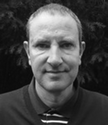 Jürg R. Schwyter was Head of the English Department in the University of Lausanne when he suffered a severe brain stroke. Ten years after, and numerous therapies later, he teaches again and works at the University at 50%. He is still recovering, though not as fast and prominent as during the first two years. His research interests now focus, naturally, on all aspects of language and the brain. Also, he pursues his ‘former’ fields of specialisation in socio- and historical linguistics, in particular styles and registers (especially legal English past and present), language standardization, and broadcast English and the BBC. Email: JurgRainer.Schwyter@unil.ch


