

Multiculturalism and advances in communication technologies have resulted in changes in how teams operate within organizational settings (Kirkman & Shapiro, Reference Kirkman and Shapiro2005). Specifically, such changes have led to individuals from different countries and cultures working together in teams. This increasing demand to work in teams highlights the needs to understand how best to compose a multicultural team, as well as to determine what behaviors and characteristics help individuals thrive in such environments. Cultural diversity refers to the shared beliefs, values, and norms among a group of individuals that form the foundation of their behaviors and interpretation of different features of their social world (Stahl et al., Reference Stahl, Mäkelä, Zander and Maznevski2010; Triandis, Reference Triandis2004). Multicultural teams comprise individuals from different cultures who work together with a joint deliverable for the organization (Kirkman & Shapiro, Reference Kirkman and Shapiro2005).
Within the cultural diversity literature, there are two broad research areas with mixed findings. First, regarding the effects of cultural diversity on performance in teams, while some studies have found that cultural differences among team members may enhance their performance by broadening the team's pool of knowledge (Stahl et al., Reference Stahl, Mäkelä, Zander and Maznevski2010), other studies found a negative performance-diversity relationship, such that cultural differences resulted in relational conflicts that prevented team members to effectively communicate with one another (Gigone & Hastie, Reference Gigone and Hastie1993). Together, mixed findings suggest that cultural diversity is a double-edged sword, such that too much or too little diversity may result in poorer performance than an optimal level of diversity. Furthermore, despite evidence of non-linear effects in other areas of research (e.g., Lam et al., Reference Lam, Spreitzer and Fritz2014), cultural research has generally assumed a simple linear relationship between diversity and performance. In other words, diversity may have a non-linear effect on performance.
Second, there have been calls for research to understand how cultural diversity can be capitalized on within a team context. Stahl et al. (Reference Stahl, Maznevski, Voigt and Jonsen2009) meta-analysis showed that the direct effects of cultural diversity on performance in teams are, on average, close to zero. However, the variance between studies is substantial, with some studies showing a positive relationship between diversity and performance and some a negative relationship. In particular, Stahl et al. (Reference Stahl, Maznevski, Voigt and Jonsen2009) emphasize that there are process gains associated with diversity through increased creativity, but process losses through conflict and poor social integration. The extent to which these processes were helpful or harmful depended on contingencies, such as task complexity and team size. Collectively, these findings imply there are circumstances that drive individuals in teams to perform effectively by capitalizing on cultural diversity, and other circumstances when they underperform as a result of diversity (Williams & O'Reilly, Reference Williams and O'Reilly1998).
Among the few studies that looked at potential moderators, most have focused on task or situational characteristics, rather than characteristics of individual team members (Grandey, Reference Grandey2000). This omission is unfortunate, because the effectiveness of a team is partly influenced by how each member is able to self-regulate their behavior (Ashkanasy & Humphrey, Reference Ashkanasy and Humphrey2011). To this end, emotional regulation may be particularly important, as it involves the deliberate activation of a goal to ensure appropriate emotions are experienced and expressed (Gross, Reference Gross2013). Emotional regulation strategies have been associated with effectiveness in managing conflicts among team members (Curseu et al., Reference Curseu, Boros and Oerlemans2012), such that the intensity and frequency of conflicts are reduced (Ayoko et al., Reference Ayoko, Callan and Härtel2008). Hence, with better emotional regulation strategies, members of multicultural teams may be better equipped to managing negative emotions resulted from differences in cultural values and attitudes, and, subsequently, perform better than their counterparts.
Accordingly, the current study was designed with two aims. First, we investigate the proposition that there is an optimal, mid-range level of cultural diversity that maximizes individual performance in multicultural teams. We adopt an individual-level perspective, assessing diversity as the cultural dissimilarity between each individual and their teammates. We test a curvilinear relationship between each team member's cultural dissimilarity and their performance. Second, based on the premise that emotions influence the extent to which individuals can interact successfully with team members from other cultures, we investigate the effects of emotional regulation strategies on the diversity-performance relationship. In particular, we investigate the role of cognitive appraisal and expressive suppression as two distinct strategies for regulating emotions. We examine how each strategy moderates the diversity-performance relationship.
The Need to Study the Diversity-Performance Relationship at an Individual Level
The majority of cultural research used national cultural values to predict team performance (Elron, Reference Elron1998). Specifically, individuals from the same nation in these studies are typically assigned an equal value on each cultural dimension, based on their national identity (Hofstede, Reference Hofstede2001). Nonetheless, it is often inappropriate to assume that every member of a nation would share the same set of cultural values, and show the cultural orientation that is consistent with their national culture (Yoo et al., Reference Yoo, Donthu and Lenartowicz2011). Offermann and Hellmann (Reference Offermann and Hellmann1997) noted that variations among individuals from a single country could be as big as those among individuals from different countries. Such findings question whether the use of national cultural values is ecologically valid in cases where the focus is on the individual. This is of particular importance for countries with a culturally heterogeneous population, such as Australia (Yoo et al., Reference Yoo, Donthu and Lenartowicz2011). Without considering cultural values at an individual level, many previous studies have not fully captured how variations in individual members’ cultural values may affect their performance within a team context (Kirkman & Shapiro, Reference Kirkman and Shapiro2005).
Furthermore, group-level constructs, such as team performance (Williams & O'Reilly, Reference Williams and O'Reilly1998), are generally used as the outcome variables in many studies on diversity in teams. Without explicitly examining how well each individual in the team performed, many of these studies used aggregated performance scores, and assumed that team members contribute equally to their group work (Yoo et al., Reference Yoo, Donthu and Lenartowicz2011). Nonetheless, it is possible to have high-performing team members within a low-performing team, and vice-versa. For example, a team may perform well on a project, even though one individual did not make a decent contribution to the group outcomes. When individuals work on a collective task, individual effort may often reduce because they are aware that they are not getting assessed individually (Karau & Williams, Reference Karau and Williams1993). Furthermore, given that everyday team work often contains an individualized component, it may not be practical to assign a single performance score for every member (Wagner et al., Reference Wagner, Humphrey, Meyer and Hollenbeck2012).
Together, in order to understand the potential effects of differences in cultural diversity on team members’ individual performance, it may not be appropriate to examine cultural diversity at a group level. Consequently, we focused on cultural diversity at an individual level, and examined individual cultural dissimilarity, which refers to the degree to which a person is similar or dissimilar to their team members in terms of their cultural orientation (Jackson et al., Reference Jackson, Stone and Alvarez1992).
Cultural Diversity Dimensions: Individualism–Collectivism
According to Hofstede (Reference Hofstede1984), culture is defined in terms of five dimensions: individualism–collectivism, power distance, uncertainty avoidance, long-term orientation, and masculinity–femininity. Although all five dimensions are important, in the present study, we focused on assessing how similar participants are in terms of their individualism–collectivism orientation, which refers to the extent to which interdependence is maintained among members of a society (Hofstede, Reference Hofstede2011). This dimension was selected because it is instrumental to the way individuals collaborate and prioritize personal versus team goals. On the one end of this dimension, individualists tend to perceive themselves as being separate from a larger collective, placing their personal interests over shared team goals. On the other end, those who are high on collectivism tend to perceive themselves as members of a larger collective and prioritize shared group interests over their personal interests (Wagner et al., Reference Wagner, Humphrey, Meyer and Hollenbeck2012). This difference between individualism and collectivism is also reflected in the independence–interdependence dichotomy, which proposes that there are differences in people's construal of the self (Markus & Kitayama, Reference Markus and Kitayama1991). Specifically, interdependent individuals construe their behaviors, thoughts, and emotions as contingent on other people, while independent individuals perceive their self by referencing to their own internal thoughts, emotions, and behaviors.
An individual's dissimilarity on any cultural dimension is likely to create mismatched expectations with the rest of their team (Matveev & Nelson, Reference Matveev and Nelson2004). For example, team members who are high on individualism are unlikely to collaborate and communicate with the rest of their team, because they prioritize their personal goals over the team's interest. This may result in relational conflict with teammates with high levels of collectivism, as they expect everyone in the team to focus on the group's shared priorities over their personal achievements. Thus, dissimilarity in individualism–collectivism may influence how effectively they collaborate with their teammates, and, subsequently, their individual performance within the team.
Although other cultural dimensions, such as power distance — the degree to which individuals within a society accept unequal power distribution (Hofstede, Reference Hofstede1984) — may be important in understanding the relationship between employees and managers, they do not specifically relate to interactions among team members. Further, with increasing demands for self-directed, leaderless teams (Cheng et al., Reference Cheng, Chua, Morris and Lee2012), team members are increasingly responsible for coordinating their group activities among themselves in the absence of guidance and structure. Hence, we focused only on the individualism–collectivism dimension for this study.
How Does Cultural Dissimilarity Affect Individual Performance in Multicultural Teams?
Both at the group- and individual-levels, there are two key theories that explain the effects of cultural diversity on performance: (i) information-processing (Gruenfeld et al., Reference Gruenfeld, Mannix, Williams and Neale1996), and (ii) similarity-attraction (Byrne, Reference Byrne1961) approaches. According to the former, the way team members utilize information may be positively influenced by cultural diversity in group composition. Individuals who are culturally dissimilar to their teammates may bring different approaches to group tasks, and produce additional information that enables team members to engage in deeper and more thorough analysis of a problem (Pieterse et al., Reference Pieterse, van Knippenberg and van Dierendonck2012). Moreover, in experimental studies where participants were asked to work on group tasks, individuals with different attitudes were effective in generating more creative ideas than those who were homogenous in their attitudes (Triandis et al., Reference Triandis, Hall and Ewen1965). Nonetheless, such dissimilarity may be insufficient to facilitate sharing of informational resources (Lauring & Selmer, Reference Lauring and Selmer2013). As dissimilar individuals hold different values, they are likely to experience relational conflicts resulted from interpersonal incompatibilities (Ayoko et al., Reference Ayoko, Callan and Härtel2008). Relationship conflict decreases performance because they are associated with negative emotions that divert individuals’ attention away from the group task (Lauring & Selmer, Reference Lauring and Selmer2012b).
The second common framework explaining the diversity-performance relationship is the similarity-attraction theory (Byrne, Reference Byrne1961), which proposes that one's attraction to other individuals is influenced by the level of similarity in their values, beliefs, and attitudes. Specifically, recognition of shared characteristics with other team members facilitates interpersonal attraction, such that individuals rate similar others as more knowledgeable and intelligent than dissimilar others (Hogg & Turner, Reference Hogg and Turner1985). In contrast, individuals tend to avoid social interactions with others whom they perceive to hold different opinions, and provide them with less positive performance ratings (Judge & Ferris, Reference Judge and Ferris1993). Such negative perception is associated with lower level of trust (Lauring & Selmer, Reference Lauring and Selmer2013), and may result in greater difficulty in communicating with dissimilar others because they are unable to effectively manage negative emotions when disagreement arises (Triandis, Reference Triandis1960).
Together, both approaches (Byrne, Reference Byrne1961; Gruenfeld et al., Reference Gruenfeld, Mannix, Williams and Neale1996) suggest that individual performance may be impaired when they are too similar or dissimilar to their teammates. At low levels of dissimilarity, individuals may experience less conflict, yet they may gain only a limited pool of knowledge from their team members. At high levels of dissimilarity, individuals have the potential to learn new information from their teammates, but they are unlikely to realize this potential because high level of dissimilarity produces relational barriers for information exchange. Meyer (Reference Meyer2008) suggested that when opposite effects dominate at low and high levels of an explanatory variable, their combination is likely to result in a quadratic relationship between the variable and an outcome. Accordingly, we hypothesize that the relationship between cultural dissimilarity and performance is curvilinear, such that performance is highest when there is a medium level of dissimilarity.
Hypothesis 1: Optimal performance occurs at medium levels of cultural dissimilarity.
What Helps Individuals to Thrive in Multicultural Teams? The Role of Emotion Regulation Strategies
Given that one of the biggest barriers to working effectively with cultural dissimilar team members is to manage relational conflict that can result from mismatched expectations, it is important to identify under what behaviors and characteristics allow individuals to perform well in multicultural teams (Kirkman & Shapiro, Reference Kirkman and Shapiro2005). The present study examines team members’ emotional regulation as a potential moderator, because the way in which team members respond to the emotional impact associated with relational conflicts can result in different consequences on their effectiveness in teams (Gross, Reference Gross2013). Specifically, previous research showed that relational conflicts occur more intensively among teams with poorer emotional management (Ayoko et al., Reference Ayoko, Callan and Härtel2008).
According to the Process Model of Emotion Regulation (Gross & John, Reference Gross and John2003), emotions may be regulated at two intervening points in the emotion-generation process: (a) antecedent-focused and (b) response-focused emotional regulation (Gross, Reference Gross2001). At the first intervening point, the most commonly studied emotion regulation strategy is cognitive reappraisal, a strategy that involves modifying individuals’ interpretation of a situation in order to change the associated emotional impact (Gross & John, Reference Gross and John2003).
In multicultural teams, reappraisal may be useful in down-regulating the impact of negative emotions resulted from team members’ cultural dissimilarity. Specifically, reappraisal enables individuals to reinterpret the actions and opinions of a culturally dissimilar team member in a more culturally intelligent light (Gross & Thompson, Reference Gross and Thompson2007). For example, instead of seeing the behavior from a dissimilar member as inappropriate and annoying, reappraisers may interpret this from the cultural lens of the team member, and view this as an opportunity for learning something new that facilitates productive team discussion (Jiang et al., Reference Jiang, Zhang and Tjosvold2013). Furthermore, team members are more willing to share their views when they perceive that others in the team are open to and tolerant of different opinions and values (Lauring & Selmer, Reference Lauring and Selmer2012b). Consequently, the use of reappraisal to manage cultural diversity in teams has the potential to enhance mutual understanding, preventing cultural differences from escalating into relational conflict, which diverts people's attention away from the actual tasks (Gamero et al., Reference Gamero, González‐Romá and Peiró2008).
Furthermore, because reappraisal is more effective in regulating one's emotional experience, reappraisers tend to experience and express more positive emotions (Gross, Reference Gross2002). Previous studies showed that, within social interactions, the display of positive emotions is beneficial as it elicits favorable responses from other participants (Hülsheger & Schewe, Reference Hülsheger and Schewe2011). For example, in customer–service interactions, employees’ expression of positive emotions enhances their rapport with customers (Grandey et al., Reference Grandey, Fisk, Mattila, Jansen and Sideman2005). Within the context of multicultural teams, reappraisal should, therefore, enable individuals to develop stronger social connections, and, subsequently, to overcome relational problems that result from cultural dissimilarity.
Accordingly, the second hypothesis examines whether the negative effects of individual cultural dissimilarity on performance can be reduced by the use of cognitive reappraisal. Based on previous findings that reappraisal is beneficial in managing relational conflicts (Jiang et al., Reference Jiang, Zhang and Tjosvold2013) and enhancing social relationships (Lopes et al., Reference Lopes, Salovey, Côté, Beers and Petty2005), we hypothesize that individuals with high levels of reappraisal are more effective in managing the negative emotions associated with high cultural dissimilarity. Specifically, we hypothesize that cognitive reappraisal moderates the relationship between individual cultural dissimilarity and performance such that:
Hypothesis 2: Cognitive reappraisal reduces the negative impact of high cultural dissimilarity on individual performance.
Besides cognitive reappraisal, the ability to suppress the expression of one's internal feelings may also alleviate the negative effects of individual cultural dissimilarity on performance. Specifically, expressive suppression is a behaviorally oriented strategy that takes place at the second intervening point in the emotional process, where individuals modulate the way in which they express their emotional response by influencing their physiological, behavioral, and experiential responding (Gross & John, Reference Gross and John2003). Suppression enables individuals to hide how they are feeling internally by overtly displaying inconsistent emotions (Jiang et al., Reference Jiang, Zhang and Tjosvold2013).
Because the expression of negative emotions has been found to enhance the intensity of conflicts (Ayoko et al., Reference Ayoko, Callan and Härtel2008), suppressing such emotions might be useful in situations where members of multicultural teams experience conflict. Specifically, during conflict, team members’ expression of annoyance, frustration, and even anger about other people's viewpoints can escalate the conflict (Lovelace et al., Reference Lovelace, Shapiro and Weingart2001). Furthermore, via non-conscious contagion process, if an individual member displays negative emotions in team interactions, other members are likely to catch the negative emotions and feel negative as well (Barsade, Reference Barsade2002). More recently, research shows that the relationship between performance and dysfunctional behaviors in teams is lower among those who suppress the display of negative emotions (Cole et al., Reference Cole, Walter and Bruch2008). That is, even though teams may experiencing negative emotions while working together, reduction in the expression of such emotions lessened the negative impact of dysfunctional behaviors on performance. Hence, suppression should assist individuals in reducing the number of observable cues, such as the expression of offensive language and behaviors, available for others to detect negative emotions that they may be feeling internally.
Accordingly, the third hypothesis examines whether the negative effects of cultural dissimilarity on performance can be weakened by individual's use of expressive suppression. Based on the findings that the intensity of relational conflicts are escalated by team members’ expression of negative emotions (Lovelace et al., Reference Lovelace, Shapiro and Weingart2001), inhibiting the display of negative emotional outbursts should facilitate group's harmony, and, subsequently, enhance their performance. Specifically, we hypothesize that expressive suppression moderates the relationship between individual dissimilarity and individual performance, such that:
Hypothesis 3: Expressive suppression reduces the negative impact of high cultural dissimilarity on performance.
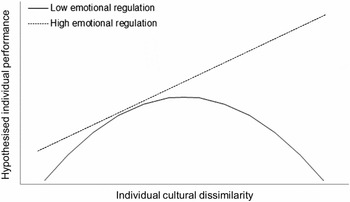
Figure 1 provides a summary of our hypothesized model, including the relationship between dissimilarity and performance, and how it is moderated by emotional self-regulation.
Hypothesized relationship between individual cultural dissimilarity and performance, as moderated by (a) cognitive reappraisal and (b) expressive suppression.

Method
Participants
The present study consisted of 103 participants (64 females, 39 males) who were enrolled in a postgraduate management course. Participants were made up of two cohorts (41 participants in Semester 2, 2013 and 62 participants in Semester 1, 2014). Forty participants were from China, 16 were from Australia, and seven were from Indonesia. Of the remaining participants, 19 participants came from Asian countries (e.g., Thailand and India), 11 participants came from European countries (e.g., France and German), five participants came from South American countries (e.g., Brazil and Mexico), and five participants came from North American countries (e.g., Canada).
As part of their course, participants worked together in teams on a ten-week project. The course coordinator assigned participants into 23 teams, which ranged from three to six participants. The use of a student population allowed us to ensure there was variability across the teams in their level of cultural diversity by assigning members based on their country of origin. It also enabled us to capture measures of cultural values and track performance over the semester.
Measures
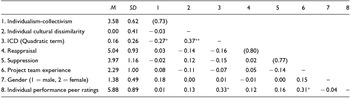
All measures were shown to be reliable. Cronbach's alpha reliability coefficients are reported in the diagonal of Table 1.
Means, Standard Deviations, and Correlations among Variables

Note. Cronbach's alpha (if applicable) is reported on the diagonal. N = 103 individuals. The quadratic term was calculated after the individual cultural dissimilarity variable was mean-centered (its original value was 0.66). Abbreviations: M = Means, SD = standard deviations, ICD = individual cultural dissimilarity.
*p < .05, **p < .01.
Individual cultural dissimilarity (individualism-collectivism)
Since the goal of our study was to examine the effects of dissimilarity in participants’ individualism–collectivism orientation, it was not appropriate to use the Hofstede cultural scales (Hofstede, Reference Hofstede1984), which measure diversity at the national level. Consequently, the present study used the CVSCALE (Yoo et al., Reference Yoo, Donthu and Lenartowicz2011), a 25-item self-report questionnaire that assesses Hofstede (Reference Hofstede2001)’s five dimensions of culture at an individual level: (a) individualism–collectivism, (b) uncertainty avoidance, (c) power distance, (d) masculinity, and (e) time orientation. Specifically, it assesses cultural preferences of oneself and of others, and how such preferences may impact the quality of one's working relationships. The CVSCALE has been cross-validated across multiple nationalities (Yoo et al., Reference Yoo, Donthu and Lenartowicz2011), and its scales have been shown to be correlated with outcomes such as charitable giving (Winterich & Zhang, Reference Winterich and Zhang2014), emotional intelligence (Gunkel et al., Reference Gunkel, Schlägel and Engle2014), and preferences for different models of performance management (Blume et al., Reference Blume, Rubin and Baldwin2013). Participants were asked to rate how strongly they agree with each item on a scale from 1 (strongly disagree) to 5 (strongly agree), and we calculated the scale mean for each participant. There are six items that measure individualism–collectivism. An example item is individuals should sacrifice self-interest for the group.
Although several measures of cultural dissimilarity have been proposed, such as the measures of country cultural dissimilarity used by Kogut and Singh (Reference Kogut and Singh1988) and Morosini et al. (Reference Morosini, Shane and Singh1998), we were unaware of any measures of individual cultural dissimilarity within teams. We operationalized cultural dissimilarity between two individuals as the absolute difference in their individualism–collectivism self-ratings. To measure cultural dissimilarity between an individual and the rest of their team, we calculated the mean absolute difference between the individual and each of the other team members. Based on the average deviation formula of Burke et al. (Reference Burke, Finkelstein and Dusig1999), the following formula was used:
 $$\begin{eqnarray*}
&&{\rm{Cultural\ distance\ of\ participant\ i\ in\ team\ g}} \\
&&\quad= \frac{{\mathop \sum \nolimits_{j = 1}^{{n_g}} \left| {{c_i} - {c_j}} \right|}}{{{n_g}}}
\end{eqnarray*}$$
where ci refers to the individualism–collectivism self-rating of participant i, cj refers to the individualism–collectivism self-rating of team mate j, and ng refers to the number of team members in team g, not counting participant i.
Cognitive reappraisal and expressive suppression
The Emotional Regulation Questionnaire (ERQ; Gross & John, Reference Gross and John2003) is a ten-item, self-report questionnaire that assesses an individual's use of two emotion regulation processes. Specifically, there are six and four items that measure the use of reappraisal and suppression, respectively. On a scale from 1 (strongly disagree) to 7 (strongly agree), participants rated how accurately each item describes their emotion regulation processes, and we calculated the scale mean for each participant. Both scales have been found to be correlated with outcomes including interpersonal functioning and wellbeing (Gross & John, Reference Gross and John2003). An example item measuring appraisal is I control my emotions by changing the way I think about the situation I'm in. An example item measuring suppression is I keep my emotions to myself.
Demographics
Participants were asked to provide information about their gender, country of origin, previous experience working in teams (1 = no experience, 4 = highly experienced), and other demographic information. Information on participants’ country of origin was used to assign participants to teams, which ranged from completely diverse to homogenous.
Team diversity
For each team, we assessed cultural diversity by calculating the standard deviation of its members’ individualism–collectivism scores. A low score indicates homogeneity among team members, and a high score indicates diversity.
Ratings of team member's individual performance
At the end of the team project, participants were asked to provide peer ratings of their teammates’ level of contribution to their group's output. The scale ranged from 0 (superficial — practically no participation) to 7 (excellent). The peer ratings were averaged to form a single peer rating score for each participant. The participants were also asked to provide qualitative feedback about the performance of each team member.
Procedure
At the commencement of a management course, participants were asked to complete a survey containing the ERQ, the CVSCALE and the set of demographics questions. As part of the coursework requirements, participants worked together on a ten-week project, which was completed in partnership with managers from a global professional services firm. Specifically, participants were required to complete a business plan on how Australian managers can generate growth with the challenges and opportunities brought about by the rise of Asia. In the final week of their project, participants had to play a pitch video and 5-minute presentation in which they discussed their business plan. Following the task, the team members provided ratings on how each of their team members performed. Furthermore, participants were asked to provide short open-ended response on how diversity affected productivity in their team performance, and how they managed their team when team collaboration did not go well. In order to encourage participants to complete their surveys, they received 10% of their course marks for completing the questionnaires.
Results
Initial Data Screening
Prior to commencing any statistical tests, the compiled data were screened for any missing values. There were 35, 28, 27, and 20 participants with missing data for individualism–collectivism, reappraisal, suppression, and peer ratings of performance, respectively. Of these participants, only four had missing data for all four variables. We used maximum likelihood estimation to deal with the issue of missing data. Compared to listwise and pairwise deletion, this estimation method has been found to be unbiased and more efficient when data is missing at random or missing completely at random (Enders & Bandalos, Reference Enders and Bandalos2001).
Descriptive Statistics
Descriptive statistics, including observed variable means, standard deviations, and correlations, are presented in Table 1. The small negative association between individual cultural dissimilarity and performance was not significant. Furthermore, while reappraisal and suppression were both positively correlated with individual performance, such associations were not significant. Among the two control variables, only project team experience was positively related to peer ratings, while gender was not significantly related.
As participants were nested in teams, we calculated the intraclass correlation (ICC1; Shrout & Fleiss, Reference Shrout and Fleiss1979) of the peer ratings of individual performance. Between-group differences accounted for 8% of the observed variance. As a result, we conducted all subsequent analyses using multilevel regression.
Tests of Hypotheses
Results were analyzed using Mplus version 7 (Muthén & Muthén, Reference Muthén and Muthén2012) using the Bayes estimator with 10,000 iterations. Diffuse (non-informative) priors were used to estimate all unknown model parameters. As Hypothesis 1 involves testing the non-linear effect of individual cultural dissimilarity on performance, we calculated a quadratic term from each participant's dissimilarity score (i.e., we multiplied each score by itself). Because Hypotheses 2 and 3 involved testing of moderating effects, for each moderator, two cross-product terms were created with the linear and quadratic terms of individual cultural dissimilarity. In order to reduce multicollinearity between interaction terms and their respective component variables, every predictor variable was first centered by subtracting the mean from each score. Cross-product variables were then created by multiplying the two variables of interest (Cohen, Reference Cohen1978). To assess the effect of individual cultural dissimilarity on performance, a four-step hierarchal regression analysis was conducted.
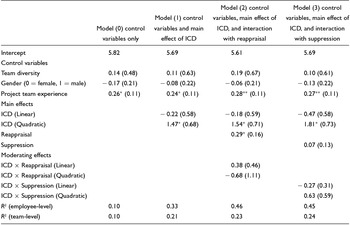
In the first step, to account for the possibility that performance was affected by participants’ project team experience and gender, these two variables were entered as control variables. We also included team diversity as a group-level control variable (Model 0). In the second step, the linear and quadratic cultural dissimilarity scores were entered as additional predictors (Model 1). In the final step, we conducted two separate analyses because cognitive reappraisal and expressive suppression were hypothesized to have interaction effects that were independent of one another. Consequently, we included the following additional predictors in Model 2: (i) reappraisal, (ii) linear, and (iii) quadratic interaction terms between reappraisal and individual cultural dissimilarity scores. In Model 3, the following predictors were entered: (i) suppression, (ii) linear, and (iii) quadratic interaction terms between suppression and dissimilarity scores. The results of these analyses, including standardized regression coefficients and robust standard errors, are presented in Table 2.
Hierarchical Regression Predicting Peer Ratings of Individual Performance

Note. Unstandardized regression coefficients and posterior standard errors (in parentheses) are presented. N = 103 individuals. Abbreviation: ICD = Individual cultural dissimilarity. *p < .05, **p < .01, ***p < .001.
Based on Model 0, we found that, while there was no difference between genders in peer ratings of individual performance, those with greater project team experience received higher performance ratings from their peers, compared to their counterparts. We found that team diversity did not influence performance ratings.
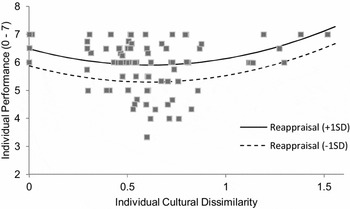
From Model 1, individual cultural dissimilarity did not have a linear effect on peer ratings of individual performance. However, it has a significant quadratic relationship with performance, after controlling for gender, project team experience, and team cultural diversity. As shown in Figure 2, performance was greater at low and high levels of cultural dissimilarity, and lower at medium levels. The direction of this curvilinear relationship was opposite to the hypothesized relationship, which predicted an inverse U-shaped curve. Hence, Hypothesis 1 was rejected.
Effects of individual cultural dissimilarity and cognitive reappraisal on performance. Note. The predicted curve was shifted to its original position to remove the effects of mean centering.

Model 2 revealed that reappraisal had a main effect on peer ratings of individual performance, such that for every one unit increase in team members’ level of reappraisal, this resulted in a 0.29 point increase in performance. Reappraisal did not have a moderating effect on either the linear or quadratic effects of cultural dissimilarity. Thus, Hypothesis 2 was partially supported, because reappraisal enhanced performance across the entire spectrum of cultural dissimilarity.
Model 3 showed that expressive suppression did not have a direct effect on peer ratings of individual performance. Further, the effect of individual cultural dissimilarity on performance did not differ as a function of participants’ level of suppression. Hence, Hypothesis 3 was not supported.
To rule out the possibility that the observed findings were specific to an individual-level analysis, the same analysis was conducted at the group level using national cultural scores. Results at the individual level were not found at the national level, such that a quadratic relationship between cultural dissimilarity and team performance was not found. Moreover, neither emotional reappraisal nor suppression had a moderating effect at the group level.
Qualitative Analysis
A qualitative analysis was conducted using open-ended responses provided by 36 participants, which were provided as part of their peer ratings. We undertook a thematic analysis, in which we categorized the benefits and barriers of working in culturally diverse teams, and then determined the frequency of each category. The most commonly cited benefit was that of generating diverse ideas, such that ‘it provides a variety of opinions and ideas, makes work easier’. In contrast, the most cited problem was reaching consensus. One problem that was not apparent in the quantitative analysis is that of language barrier. Some participants noted that it was often difficult for certain team members coming from a non-English background to express their ideas in English. In terms of resolving conflicts or disagreement, most participants indicated that each member came up with ideas, and the team would then vote for the best idea. Negotiation and explanation of rationale for ideas were some commonly cited processes: ‘Give different personal opinions and show mutual respect, when there is disagreement, discussing till have a conclusion’.
Discussion
The aim of the present study was two-fold. First, responding to inconsistency in previous findings on cultural diversity, we tested the possibility of a non-linear diversity-performance relationship at the individual level (Hypothesis 1). Second, we studied how such cultural dissimilarity could be capitalized on by examining the moderating effects of cognitive reappraisal (Hypothesis 2) and expressive suppression (Hypothesis 3) on this diversity-performance relationship. We found that the relationship between individual cultural dissimilarity and performance was indeed non-linear, but contrary to our expectations, the curve was U-shaped. High levels of reappraisal were associated with elevated individual performance. Finally, suppression did not appear to affect performance, nor did it moderate the effects of individual cultural dissimilarity.
Although the finding that individual cultural dissimilarity had a U-shaped effect on individual performance is unexpected, it raises new questions about the role of cultural diversity in teams. At one end of this spectrum, the positive performance ratings received by highly similar team members is inconsistent with previous experimental studies, which showed that homogeneity in members’ attitudes resulted in poorer performance (Triandis et al., Reference Triandis, Hall and Ewen1965). Conversely, the finding that highly dissimilar individuals received high performance ratings is also inconsistent with previous research, which found that team members perceived to be different were more negatively evaluated (Judge & Ferris, Reference Judge and Ferris1993). One way to explain these unexpected results is the possibility that different mechanisms are responsible for performance among highly similar and highly dissimilar team members.
For team members who are highly similar with each other, the similarity-attraction principle (Byrne, Reference Byrne1961) may have led to these individuals to receive more favorable ratings from their peers. When team members come from similar cultural backgrounds, they are more likely to develop a shared mental model of team functioning (Eby et al., Reference Eby, Meade, Parisi and Douthitt1999). Specifically, similar individuals may be more likely to have shared expectations about each other's roles in the team and the nature of the group task. Shared team mental models have been found to help individuals better predict what is required of one another (Hsu et al., Reference Hsu, Chang, Klein and Jiang2011), as well as locate and integrate informational resources when completing group tasks (Lauring & Selmer, Reference Lauring and Selmer2012a). Thus, through a shared understanding of what is required of them individually, culturally similar team members may be better able to coordinate their efforts to meet their individual performance requirements.
With regard to team members who are highly dissimilar, such members may also receive high performance ratings from their peers because they bring unique informational resources that helps the team achieve its goal (Pieterse et al., Reference Pieterse, van Knippenberg and van Dierendonck2012). Their cultural dissimilarity may in fact draw team members’ attention to the informational value that they bring to the team (Van Knippenberg & Schippers, Reference Van Knippenberg and Schippers2007). Specifically, Phillips (Reference Phillips2003) found that, when making decisions in diverse groups, those who were perceived as dissimilar by their team members were rated as more influential. Consequently, high level of dissimilarity may be associated with the perception that a dissimilar member is able to add important value to the team output, which, in turn, resulted in more favorable perception of their performance.
In contrast, team members with a moderate level of cultural dissimilarity may not enjoy the advantages of the similarity as attraction or dissimilarity as value processes. Therefore, their performance suffers. While the present study did not explicitly test any of these notions, the findings suggest the importance of considering the role of similarity-attraction, shared mental models, and differing expectations about teammates’ contribution based on different levels of cultural differences.
Effects of Cognitive Reappraisal
The finding of a positive effect of reappraisal suggests that cultural differences among team members can be capitalized on when they are able to use cognitive reappraisal to regulate their own and teammates’ emotions. This is consistent with Ayoko et al.’s (Reference Ayoko, Callan and Härtel2008) research, which showed that teams with higher emotional regulation were more effective in managing team conflicts than their counterparts. From an information-processing perspective (Gruenfeld et al., Reference Gruenfeld, Mannix, Williams and Neale1996), reappraisal may enable participants to overcome communication barriers associated with culture diversity. Specifically, previous finding suggests that this is achieved by down-regulating negative emotions associated with task disagreement, and taking a more objective approach in understanding their teammates’ viewpoints (Lauring & Selmer, Reference Lauring and Selmer2012b). Consequently, reappraisers in the present study performed better, regardless of the degree of culture dissimilarity with their team members. Together, the present finding suggests that it may be insufficient to only consider how much unique informational resource an individual member has per se. Instead, research should consider individuals’ ability to create the right emotional dynamics for unique information to be discussed and utilized.
Furthermore, in relation to the similarity-attraction approach (Byrne, Reference Byrne1961), the positive effect of reappraisal suggests that participants’ perceptions of their teammate's performance may not only be influenced by how similar they are in terms of their cultural values and attitudes. That is, even though they may recognize that certain teammates have different cultural values, individuals may also take into account of other factors when making judgments of their peers. Because reappraisers tend to experience and display more positive emotions than their counterparts (Gross, Reference Gross2002), they may have been perceived more positively by their peers, and formed closer relationships that facilitated strong social connections (Coté, Reference Coté2005), despite cultural dissimilarity. Together, the present finding suggests that reappraisal may not only enhance individuals’ performance in teams by being more open to different viewpoints, but it may also positively facilitate their interpersonal relationships with teammates.
Although previous studies have found that the expression of negative emotions has adverse outcomes during conflict (Ayoko et al., Reference Ayoko, Callan and Härtel2008; Lovelace et al., Reference Lovelace, Shapiro and Weingart2001), there was no evidence in the present study that expression suppression as an emotion regulation strategy moderated the effect of individual cultural dissimilarity on performance. One potential explanation is that the effectiveness of suppression may differ as a function of team tenure. Because expressive suppression takes place after individuals have formed an interpretation of the emotional stimulus (Gross & John, Reference Gross and John2003), it requires the individual to actively self-monitor their emotion expression, which, in the long term, is effortful as it drains up the individual's cognitive resources (Gross, Reference Gross2002). Furthermore, as long team tenure is associated with poorer communication and more conflict (Stahl et al., Reference Stahl, Maznevski, Voigt and Jonsen2009), demands for suppressing negative emotions may increase over time. Increasing demands for cognitive resources may explain why habitual suppressors have been found to be less responsive to other people's emotional cues, as they are actively hiding their true feelings (Kim, Reference Kim2008). Nonetheless, because the present study only measured performance and suppression on a single occasion, it was not possible to examine how the effectiveness of suppression may potentially differ over time. As an extension of the present study, future research could explore this issue by using a longitudinal design, such that individual performance within teams is measured on a repeated basis to allow for monitoring and tracking of how suppression shapes their performance.
Limitations and Future Directions
One potential limitation of the present study is that the use of subjective ratings on individual performance may not be an accurate estimation of participants’ objective performance. Because they were only asked to provide ratings on their peers using a single scale, without any explicit guidelines on how they should make such judgments, they may have used different internal criteria that do not represent objectively their peers’ performance (Hoffman et al., Reference Hoffman, Nathan and Holden1991). Nonetheless, this problem was partly overcome using multi-rater scores, which have been shown to provide better reliability than single-rater scores as it takes the average across multiple people (Cook & Beckman, Reference Cook and Beckman2006). Nevertheless, our conclusions here could be strengthened using behaviorally anchored rating scales, which specify the key competencies that participants need to consider when evaluating the performance of their peers (Ohland et al., Reference Ohland, Loughry, Woehr, Bullard, Felder, Finelli and Schmucker2012).
Another limitation is that the present study did not have measures for process variables. That is, the underlying mechanisms for the effects of cultural dissimilarity and reappraisal were inferred, rather than explicitly assessed. Specifically, it is unclear whether the effect of cultural dissimilarity on performance was influenced by team members’ experience of relational conflicts. Although most studies in cultural research do not include measures of such processes (Van Knippenberg & Schippers, Reference Van Knippenberg and Schippers2007), our conclusions here could be enhanced through the use of a mediation–moderation design (Muller et al., Reference Muller, Judd and Yzerbyt2005). Such a design would include a measure of process variables, and involve testing (i) the diversity-performance relationship mediated by a process variable (e.g., conflict), and (ii) the diversity-conflict relationship moderated by individuals’ use of reappraisal.
Our sample size was also relatively small, composed of postgraduate students, and composed of individuals who only worked with each other for a relatively short period of time. In particular, groups who work together for longer periods may overcome communication issues and differences of opinions. Collectively, these factors may limit the robustness and generalizability of the results. In particular, as the U-shaped quadratic effect contradicted our hypotheses, we recommend replicating the study among other types of work teams across different organizations using a larger and more diverse sample, using a longitudinal design.
Theoretical Implications
The present findings add to the existing literature in three ways. In relation to the first aim, the finding of a curvilinear effect challenges the sufficiency of the information-processing (Gruenfeld et al., Reference Gruenfeld, Mannix, Williams and Neale1996) and similarity-attraction (Byrne, Reference Byrne1961) approaches in explaining the diversity-performance relationship. Both approaches assume a linear effect, such that performance would be highest at one extreme end, and would drop linearly as diversity level moves toward the other end of the spectrum. Nonetheless, consistent with Richard et al. (Reference Richard, Barnett, Dwyer and Chadwick2004)’s findings of a curvilinear effect, our present findings further highlight that this relationship is more complicated than a linear relationship, because there was a change in its direction after a certain level of cultural dissimilarity was reached. This finding may help reconcile previous arguments about the benefits and harm associated with cultural diversity. Specifically, previous findings of a linear relationship may have resulted from an effect of range restriction, such that, depending on what section of this range was sampled, this would yield either a positive or negative diversity-performance relationship (Van Knippenberg & Schippers, Reference Van Knippenberg and Schippers2007). Hence, the present finding suggests that the effect of diversity should not be assumed to be either positive or negative. Furthermore, there is a need for more sophisticated theories to explain the conditions under which cultural diversity may enhance or reduce individual performance, and why the direction of such effects changes after a certain level of diversity is reached.
In relation to the second aim, we showed that, in order to identify circumstances under which cultural diversity can be capitalized on, it is necessary to examine moderating variables. Specifically, we expanded on the current literature by identifying an individual-level affective characteristic that enhanced individual performance in culturally diverse teams: cognitive reappraisal. Although previous studies have largely examined group-level contextual factors, such as task interdependence (Joshi & Roh, Reference Joshi and Roh2009), the present findings suggest that it is equally important to consider at an individual level how team members manage emotions, because more culturally diverse teams tend to experience greater conflict and negative emotions (Becker & Cropanzano, Reference Becker and Cropanzano2011). Future studies should move toward an examination of both group and individual factors, and their interplay. For example, given previous findings that greater collaboration is required for highly interdependent tasks (an external factor) (Joshi & Roh, Reference Joshi and Roh2009), future studies could examine how individual differences in reappraisal may have differential effects on performance on tasks that require high versus low levels of interdependence in multicultural teams.
Finally, we showed that differences in deep-level characteristics, such as one's cultural attitudes and beliefs, affect the way in which an individual's performance is perceived by their team members. Although previous studies have looked at demographic dissimilarities within groups (Chattopadhyay et al., Reference Chattopadhyay, Tluchowska and George2004), the majority of them focused on surface-level differences, such as gender and race. A longitudinal study showed that over time, team performance was more affected by diversity in members’ attitudes compared to diversity in their demographics (Harrison et al., Reference Harrison, Price, Gavin and Florey2002). Hence, our findings suggest that future studies should consider the role of both observable and deep-level differences in affecting performance in teams.
Conclusion
With increasing instances of multicultural collaboration (Northcraft & Rockmann, Reference Northcraft and Rockmann2012), it is important to consider how multicultural teams should be composed. Contrary to our hypotheses, our findings suggest that individuals tend to perform worse in teams that are modestly dissimilar, possibly because they enjoy neither the advantages of unique knowledge or shared cultural expectations. As well as testing the robustness of this finding, future studies should consider how team members’ individual characteristics influence their performance in diverse teams.
It is also important to consider how to select individuals who perform well in multicultural teams. Our findings raise the possibility that reappraisers are likely to work better in multicultural teams because they can more effectively manage negative emotions associated with differences in their cultural values, beliefs, and attitudes. While cognitive ability assessments are widely used for workplace recruitment due to their high predictive validity (Schmidt & Hunter, Reference Schmidt and Hunter1998), some evidence suggests that they account for less variance in individual performance in teams, compared to one's level of emotional competence (Offermann et al., Reference Offermann, Bailey, Vasilopoulos, Seal and Sass2004). Thus, people responsible for selecting team members should consider candidates’ level of cognitive reappraisal when considering for positions that require the individual to work with dissimilar others in multicultural teams.