Introduction
Heavy-oil sandstone reservoirs represent an important oil resource globally and particularly in China (Pang et al., Reference Pang, Lyu, Zhang, Wu, Gao, Geng and Luo2018). The main types of minerals in heavy-oil sandstone reservoirs are quartz, feldspar, and clay minerals, the most common of which are montmorillonite, illite, kaolinite, and chlorite (Hurst & Archer, Reference Hurst and Archer1986; Kar et al., Reference Kar, Mukhametshina, Unal and Hascakir2015; Lopes da Silva et al., Reference Lopes da Silva, Martins, Ramos and Bijani2018). Large montmorillonite and illite contents cause damage easily because of water sensitivity (Baker et al., Reference Baker, Grabowska-Olszewska and Uwins1995; Feng et al., Reference Feng, Li, Wang, Li, Sun, Sun, Zhang, Li, Chen and Zhang2018; Morodome & Kawamura, Reference Morodome and Kawamura2009; Skipper et al., Reference Skipper, Sposito and Chang1995; Sudhakar & Thyagaraj, Reference Sudhakar and Thyagaraj2007). Thermal recovery is currently a major recovery strategy for heavy-oil reservoirs, including cyclic steam stimulation, steam drive, hot water drive, and steam-assisted gravity drainage (Kudrashou & Nasr-El-Din, Reference Kudrashou and Nasr-El-Din2020; Zhao et al., Reference Zhao, Wang and Gates2014; Zhuang et al., Reference Zhuang, Liu, Xiong and Liang2018). During steam injection, the water supplied is softened by removing hardness ions such as Ca2+ and Mg2+. As the concentrations of Ca2+ and Mg2+ in the supplied water of the steam generator decrease, the concentration of HCO3 – increases. During the process of high-temperature and high-quality steam injection, HCO3 – decomposes into OH– and CO2. When CO2 escapes, the concentration of OH– in steam condensate increases. The pH of the fluid from the supercritical pressure steam generator is >12. The temperature and pressure of the supercritical pressure steam generator are greater than 374°C and 13.5 MPa, respectively (Afsar & Akin, Reference Afsar and Akin2016; Dong et al., Reference Dong, Liu, Chen, Wu, Lu and Zhang2019). As the steam is injected into the heavy-oil sandstone reservoir, the temperature, pressure, and quality of the steam may decrease. However, the injection of alkaline fluid into the formation by the supercritical pressure steam generator causes complicated water–rock interactions (Bantignies et al., Reference Bantignies, Dit Moulin and Dexpert1997; Herron, Reference Herron1986). As a result, minerals in the reservoir are dissolved, swell, and fall off easily. Meanwhile, the properties of clay minerals are changed (Sauer et al., Reference Sauer, Caporuscio, Rock, Cheshire and Jové-Colón2020). The unfavorable transformation of various clay minerals provides the necessary prerequisite for sensitivity damage. In the processes of thermal recovery, the consequence is reduced permeability and oil recovery of the reservoir (Bentabol et al., Reference Bentabol, Ruiz Cruz, Huertas and Linares2006; Filipská et al., Reference Filipská, Zeman, Všianský, Honty and Škoda2017; Kazempour et al., Reference Kazempour, Sundstrom and Alvarado2012; Yang et al., Reference Yang, Li, Yao, Zhang, Iglauer, Luquot and Wang2019; Zhuang et al., Reference Zhuang, Liu, Xiong and Liang2018).
Asphaltenes are complex, heavy, aromatic molecules present in heavy oil and consist of a polyaromatic core and aliphatic side chains (di Primio et al., Reference di Primio, Horsfield and Guzman-Vega2000; Rogel, Reference Rogel2002). With changes in temperature, pressure, and reservoir fluid properties, asphaltenes are aggregated and deposited easily. The deposited asphaltenes diffuse and adsorb on the surface of clay minerals mainly by coordination bonds, van der Waals forces, and ion exchange (Dean & McAtee Jr., Reference Dean and McAtee1986; Rogel, Reference Rogel2002; Wu et al., Reference Wu, He and Chen2013). However, various factors might affect the adsorption processes, including the structure and characteristics of the clay minerals, the amount and properties of the asphaltenes in the heavy oil, and the existence of a water film preadsorbed on the surface of minerals (Dean & McAtee Jr., Reference Dean and McAtee1986; Dubey & Waxman, Reference Dubey and Waxman1991; Gonzalez & Taylor, Reference Gonzalez and Taylor2016; Piro et al., Reference Piro, Canonico, Galbariggi, Bertero and Carniani1996). When the deposited asphaltenes adsorb on the minerals during thermal production, pores are plugged, wettability is reversed, and permeability is decreased, thus exacerbating the thermal damage of the reservoir (Dean & McAtee Jr., Reference Dean and McAtee1986; Jafari Behbahani et al., Reference Jafari Behbahani, Ghotbi, Taghikhani and Shahrabadi2013; Kord et al., Reference Kord, Mohammadzadeh, Miri and Soulgani2014).
The present study was undertaken to explore the influence of water–rock interactions on the volume changes and transformations of typical clay minerals under oil thermal recovery conditions. On this basis, the adsorption behavior of asphaltenes on the surface of quartz sand and clay minerals under various simulated conditions was analyzed. Another objective was to study the adsorption mechanism under the condition of thermal production by kinetics and isothermal adsorption modeling.
Materials and Methods
Materials
Heavy oil was collected from the Gudong Oilfield Production Plant of Shengli Oilfield, China. The crude oil was characterized by a density of 0.984 g/cm3. Its viscosity was 4749 mPa s at reservoir temperature (Table 1). The salinities of the formation water, water supplied to the boiler, and steam condensate were 9422.09, 746.03, and 1346.96 mg L–1, respectively (Table 2). Asphaltenes used in this study were extracted by dissolution in toluene and precipitation with n-heptane (C7-asphaltenes) according to the method described by Standard SH/T 0266-1992 of China, “Determination of asphaltenes in crude oil” (China Petrochemical Corporation, 1992). KHCO3 was chosen to prepare the simulated steam condensate with a concentration of 1500 mg L–1. NaOH solution was used to regulate the pH values. NaOH and KHCO3, along with toluene, n-heptane, and quartz sand (60 and 200 mesh) were purchased from Sinopharm Chemical Reagent Co., Ltd. (Beijing, China). Clay minerals used in this study (200-mesh montmorillonite, illite, kaolinite, and chlorite) were purchased from the resources platform of National Standard Materials of China (Beijing Baioubowei Biotechnology Co., Ltd. Beijing, China). Both the quartz sand and clay minerals were all dried at 105°C for more than 24 h before the experiment.
Properties of crude oil

Composition of water

Water–rock Interaction
Four kinds of clay mineral (montmorillonite, kaolinite, chlorite, and illite) were selected to carry out batch experiments under various conditions (80°C, 180°C and pH 9, 11). The standard method for swelling clay minerals was applied according to Standard SY/T 7327-2016 of China, “Shale expansion tester” (National Energy Administration, 2016). The volume changes of the various clay minerals were compared. More specifically, 20 g of each clay mineral (montmorillonite, kaolinite, chlorite, or illite) was weighed and added to a high-temperature, stainless steel reactor (Fig. S1). After leveling and compaction (Table 3), the height of clay (oven-dry) was recorded. Then, 100 mL of simulated steam condensate was added slowly. The suspension was filtered out by a 0.45-μm microporous filter membrane and sand core filter after settling. Meanwhile, the height of the clay (aqueous) was recorded. The reactor was set to 80 or 180°C. After 120 h, the reactor was cooled. The supernatant was filtered by the 0.45-μm microporous filter membrane and sand core filter (Fig. S2). The height of the clay (after the interaction) was measured. The expansion ratio of the clay (E c) was calculated by applying the following:

where H d is the height of oven-dry clay and H r is the height of the clay cake after the interaction. The remaining samples were dried for 24 h at 110°C. The volume changes of clay minerals under different conditions (80°C, 180°C and pH 9, 11) were analyzed. Furthermore, the transformations of clay minerals before and after the experiment were quantitatively determined using a D/Max 2500v/pc X-ray diffractometer (Rigaku Corporation, Akishima, Tokyo, Japan) (CuKα radiation, 40 kV, 100 mA) following the Chinese Standard SY/T 5163-2010, “Analysis method for clay minerals and ordinary non-clay minerals in sedimentary rocks by the X-ray diffraction” (National Energy Administration, 2016). In order to identify and quantify the clay minerals, X-ray diffraction (XRD) analysis of the mounts was carried out for each sample under natural (air-dried) conditions (N), ethylene-glycol solvation for 24 h in a desiccator (EG), and heating at 550°C for 2 h (H). The compositions of clay minerals were analyzed using the Chinese Standard SY/T5163-1995, “X-ray diffraction analysis method for relative content of clay minerals in sedimentary rocks” (China National Petroleum Corporation, 1995). Finally, the transformations of clay minerals at 180°C with pH 11 were analyzed.
Bulk density of the clay minerals

Adsorption of Asphaltenes on Minerals
Quartz sand and clay minerals (montmorillonite, kaolinite, chlorite, and illite) were selected as the adsorbents for the isothermal adsorption experiments. Initially, an asphaltene-toluene solution was used to provide adsorbate under various temperatures (80°C and 180°C) and other conditions (oven-dry and aqueous adsorption).
Toluene was used as an asphaltene-soluble solvent. In toluene, asphaltenes are dispersed at the molecular level. An asphaltene-toluene solution with known concentration (25, 50, 100, 500, and 1000 mg·L–1) was prepared to determine the absorbance value at various wavelengths by UV-Visible spectroscopy; maximum absorption occurred at 295 nm. Based on the Beer-Lambert law, a linear standard calibration curve was obtained for the concentration range of 25 to 1000 mg L–1 (Lei et al., Reference Lei, Yang, Qian, Chen, Li and Ma2015; Moreno-Arciniegas & Babadagli, Reference Moreno-Arciniegas and Babadagli2014) The adsorption processes at different temperatures (180°C, 80°C) and wet conditions (oven-dry, aqueous) were simulated in the high-temperature, stainless steel reactor. During the oven-dry adsorption process, 20 g of quartz sand, montmorillonite, kaolinite, chlorite, or illite was added to different reactors. Meanwhile, 36 mL of asphaltene-toluene solution with known concentration (0, 25, 50, 75, 100, or 200 mg·L–1) was added. After shaking evenly, the reactor was put into an electric, thermostatic, air-blast drying oven at 180°C or 80°C) for 48 h, after which the absorbance was measured and the concentration of the asphaltene-toluene solution after adsorption was calculated based on the standard curve. Because the Beer-Lambert law applies only in the dilute solution range, solutions with absorbances >0.8 were diluted before measurement. Ultimately, the amount of asphaltenes adsorbed under the various conditions was calculated as the difference between initial and final concentrations:

where Γ is the amount adsorbed (mg g–1), C 0 is the initial concentration (mg L–1), C is the final concentration (mg L–1), V is the volume of the asphaltene-toluene solution, and m is the mass of the mineral. During the aqueous adsorption process, 20 g of quartz sand, montmorillonite, kaolinite, chlorite, or illite was added to the reactor, then 36 mL of deionized water was added to each reactor and allowed to adsorb to the clay for24 h, the excess was removed by a syringe until no flowing water was obvious, and then 36 mL of asphaltene-toluene solution with known concentration (0, 25, 50, 75, 100, or 200 mg L–1) was added to the reactors for adsorption.
Isothermal Adsorption Modeling of Asphaltene on Minerals
The Langmuir isothermal model of adsorption was derived based on thermodynamics and the hypothesis of monolayer coverage of surface sites with uniform adsorption energies (Al-Duri, Reference Al-Duri1995; Bradley, Reference Bradley1927; Kashefi et al., Reference Kashefi, Lotfollahi and Shahrabadi2019; Langmuir, Reference Langmuir1932; Mansoori Mosleh et al., Reference Mansoori Mosleh, Mortazavi, Hosseinpour and Khodadadi2020):

where C e is the equilibrium concentration of the asphaltene-toluene solution (mg L–1); Q e is the equilibrium amount of asphaltenes adsorbed by different minerals (mg g–1); Q max is the maximum amount of asphaltenes adsorbed on the surface of minerals (mg g–1); and KL is the Langmuir constant (L mmol–1).
The Freundlich isothermal model of adsorption is an empirical equation applied to surfaces with non-uniform adsorption energies and allows for multilayer adsorption on heterogeneous surfaces (Adams, Reference Adams2014; Al-Duri, Reference Al-Duri1995; Daughney, Reference Daughney2000; Dean & McAtee Jr., Reference Dean and McAtee1986; Freundlich, Reference Freundlich1935; Kashefi et al., Reference Kashefi, Lotfollahi and Shahrabadi2019).

where C e is the equilibrium concentration of the asphaltene-toluene solution (mg L–1); Q e is the equilibrium adsorption amount of adsorbed by different minerals (mg g–1); KF is the Freundlich constant; and n is the nonlinear factor.
Results
Volume Changes of Clay Minerals
The volume changes of the clay minerals under simulated steam condensate (Fig. 1, Fig. S4) revealed the expansion ratio of montmorillonite to be more than 110.9%. In particular, at 180°C and pH 11, the expansion ratio reached 159.13%. Montmorillonite showed strong water sensitivity after the water–rock interaction.
Volume changes in clay minerals under various conditions

Compared with montmorillonite, chlorite was more stable after water–rock interaction. The expansion ratios of chlorite at 180°C with pH 9 and 11 were –3.59 and –7.69%, respectively. However, the expansion ratios of kaolinite at 80°C with pH 9 and pH 11 were 21.30 and 47.4%, respectively. For illite, the volume changes were different at 80°C and 180°C. More accurately, at 180°C, the expansion ratio of illite was >48.48%. In particular, for pH 11 at 180°C, the expansion ratio of illite was 58.82%. However, the expansion ratios of illite at 80°C with pH 9 and pH 11 were 13.50% and 16.72%, respectively.
Transformations of Minerals
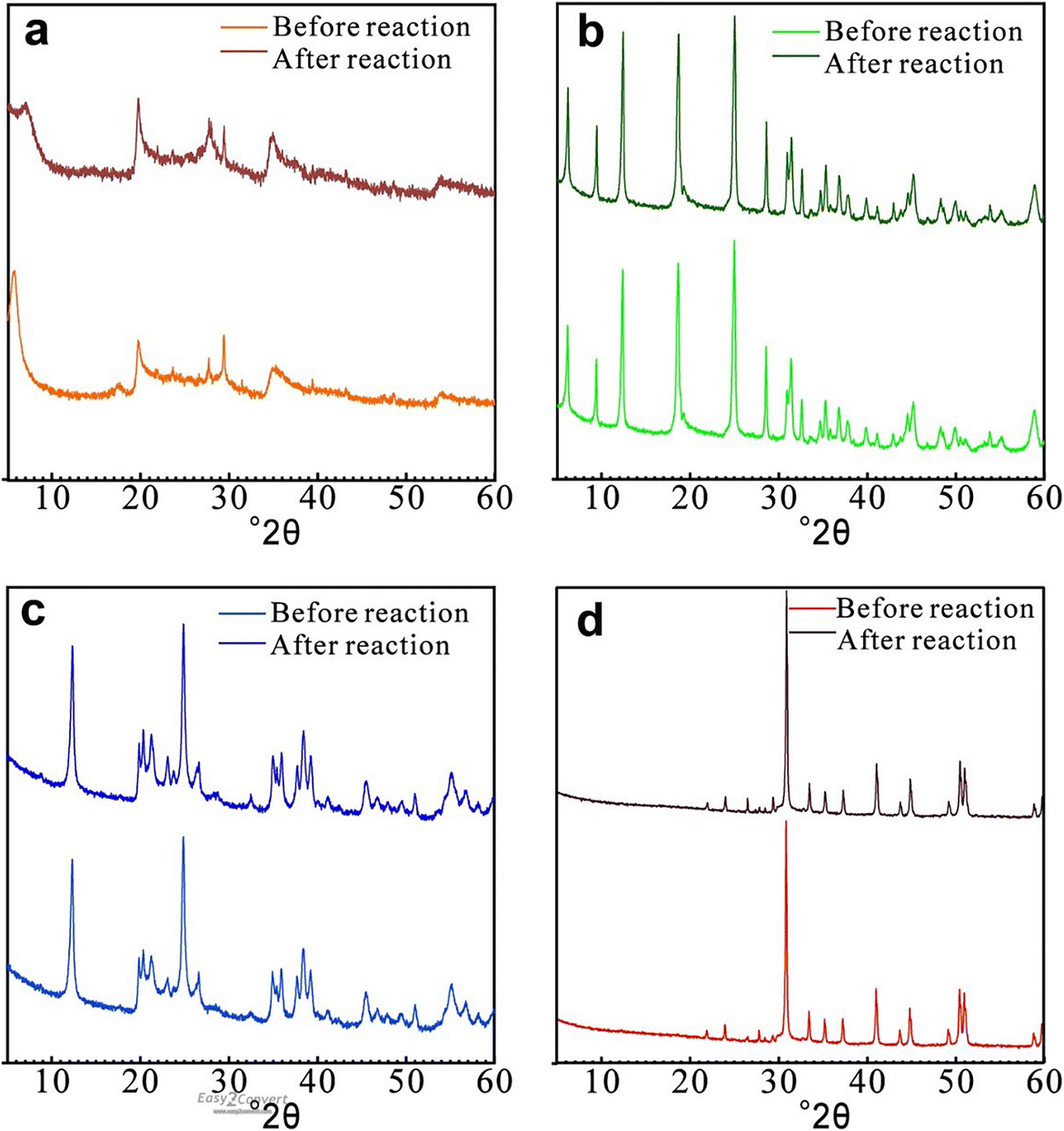
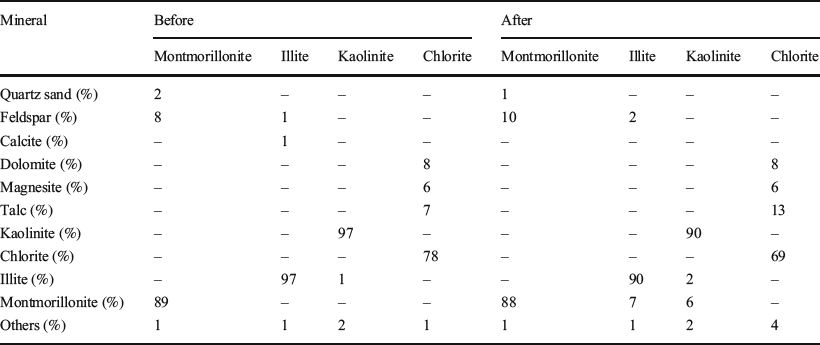
The XRD spectra of typical clay minerals (montmorillonite, chlorite, kaolinite, and illite) before and after water–rock interaction (Fig. 2 and Table 4) showed the purities of montmorillonite, illite, kaolinite, and chlorite used in the experiment to be 89, 97, 97, and 78%, respectively. Compared with the XRD data (Fig. 2 and Table 4) and the volume changes of clay minerals (Fig. 1, Fig. S4) before and after interaction, the results showed the montmorillonite to be stable at 180°C with pH 11. The amount of montmorillonite decreased from 99.0 to 98.0%. Meanwhile, non-expansive minerals changed (quartz sand decreased from 2.0 to 1.0%, feldspar increased from 8.0 to 10.0%). Kaolinite tended to transform into montmorillonite (6.0%) and illite (1.0%). At the same time, the amount of kaolinite decreased from 97.0 to 90.0%. Correspondingly, the volume changes of kaolinite were reduced by the transformation of montmorillonite at 180°C. At 180°C with pH 11, the expansion ratio of kaolinite was –31.6%. However, the expansion ratio of kaolinite at 80°C reached –47.4%. After the water–rock interaction, illite tended to transform into montmorillonite (the amount of montmorillonite increased by 7.0%). Correspondingly, illite expanded at 180°C (by >48.48%). Chlorite reacted with water to form a small amount of talc (6.0%) and vermiculite (3.0%) under the simulated condition.
XRD patterns of clay minerals before and after interaction with asphaltene: a montmorillonite; b chlorite; c kaolinite; d illite

XRD analysis of clay minerals before and after water–rock interaction

Adsorption of Asphaltenes on Minerals
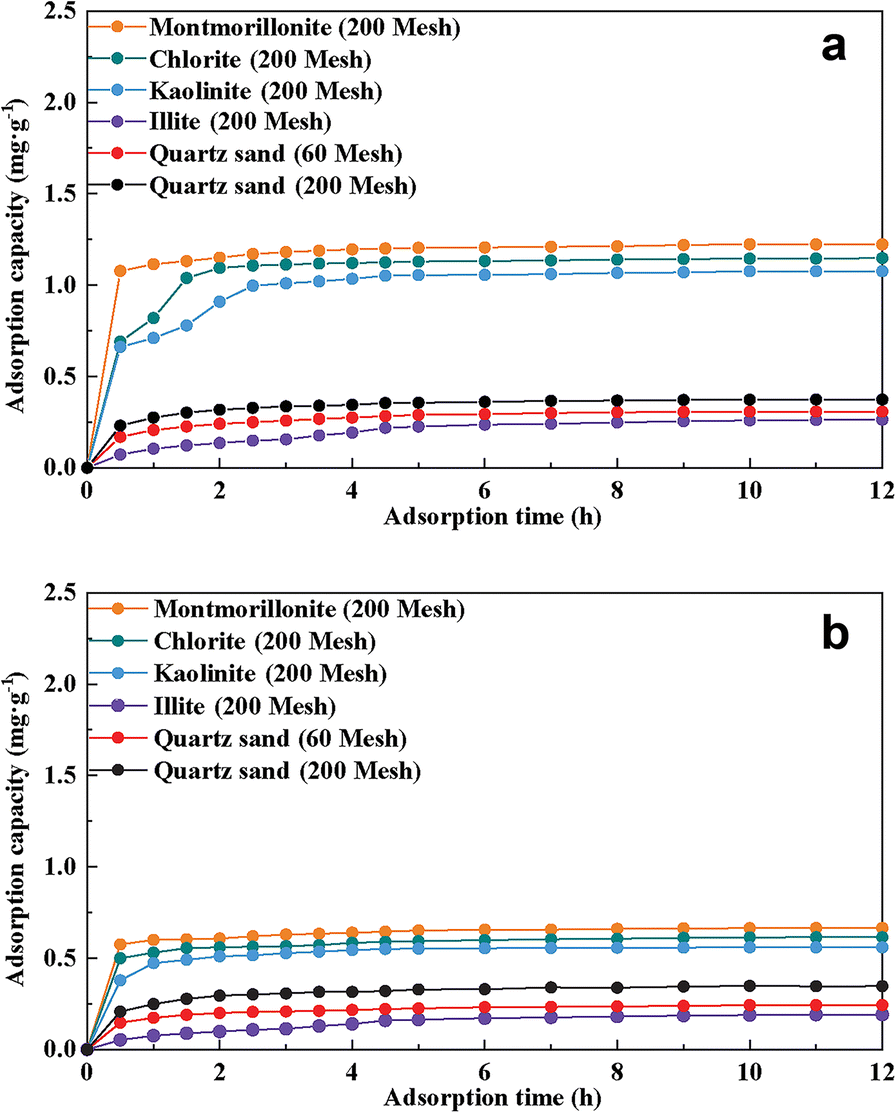
The adsorption kinetics curves of asphaltenes on montmorillonite, chlorite, kaolinite, illite, and quartz sand (Figs. 3 and 4) increased sharply within the first 0.5 h and then tended to stabilize with increasing time. At the same time, the amount of asphaltene adsorbed on 200-mesh quartz sand was greater than that of 60-mesh quartz sand, in both 200- and 400-mg/L asphaltene-toluene solutions. Besides illite, the amount of asphaltene adsorbed on clay minerals was much greater than that on quartz sand. Among them, montmorillonite adsorbed most, followed by chlorite and kaolinite, and the weakest was illite. After 3 h of adsorption, the adsorption processes reached equilibrium. In a 400 mg/L asphaltene-toluene solution, the amounts of asphaltene adsorbed on 200-mesh montmorillonite, illite, kaolinite, chlorite, and quartz sand and 60-mesh quartz sand were 1.22, 0.25, 1.08, 1.15, 0.31, and 0.37 mg g–1, respectively.
Asphaltene adsorption processes on mineral surfaces under various conditions and asphaltene concentrations: (left) under oven dry conditions; (right) under aqueous conditions

Adsorption capacity vs. time of asphaltene on the various minerals at a 80°C, b 180°C

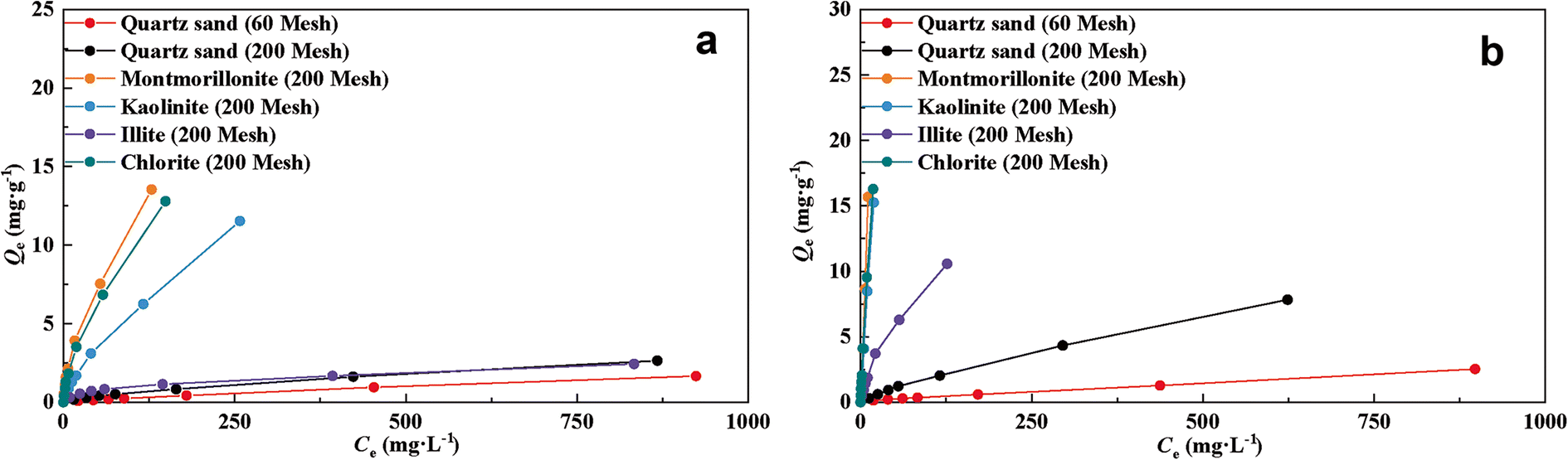
The higher the mesh of quartz sand, the smaller the radius and specific surface area, and the greater the adsorption capacity with respect to asphaltenes. The specific surface areas of the clay minerals were larger than that of quartz sand, and the amount of asphaltenes adsorbed on the clay minerals was greater under the same conditions. The amount of asphaltenes adsorbed on the surfaces of quartz sand increased with the mesh number under oven-dry conditions at 80°C (Fig. 5). When the adsorption equilibrium concentration of asphaltenes was 867.16 mg L-1, the amount of asphaltene adsorbed on 200-mesh quartz sand was 2.65 mg g–1. At the same time, when the adsorption equilibrium concentration of asphaltenes was 923.67 mg L-1, the amount of asphaltene adsorbed on 60-mesh quartz sand was just 1.66 mg g–1. In addition to illite, the amount of asphaltenes adsorbed on montmorillonite, kaolinite, and chlorite was greater at smaller adsorption equilibrium concentrations. When the adsorption concentration of asphaltenes was 128.77 mg L-1, the amount of asphaltene adsorbed on montmorillonite was 13.54 mg g–1. The amount of asphaltene adsorbed on illite tended to be stable with increased adsorption equilibrium concentration. When the adsorption concentration of asphaltenes was 833.21 mg g–1, the amount of asphaltene adsorbed on illite was just 2.437 mg g–1.
Adsorption isotherms of asphaltenes on the various minerals under oven-dry conditions at a 80°C, b 180°C

The adsorption equilibrium concentration of asphaltenes had a linear relationship with the adsorption of asphaltenes on the surface of quartz sand under the oven-dry condition at 180°C. Compared with the adsorption process under the oven-dry condition at 80°C, the adsorption process of asphaltenes on the surface of minerals increased significantly at 180°C. When the concentration of asphaltene solution was 867.16 mg L–1, the asphaltene adsorption amount on 200-mesh quartz sand was 2.65 mg g–1 at 80°C. When the concentration of asphaltene solution was 623.58 mg L–1, the asphaltene adsorption amount on 200-mesh quartz sand was 7.83 mg g–1 at 180°C. For clay minerals, the amounts of asphaltenes adsorbed on montmorillonite, kaolinite, and chlorite were similar. When the adsorption concentration was 10.827 mg L–1, the asphaltene adsorption amount on montmorillonite reached 15.682 mg g–1. The asphaltene adsorption amount on illite was lower than that of the other three kinds of mineral at 180°C. When the adsorption concentration of asphaltenes was 126.43mg L–1, the amount of asphaltene adsorbed on illite reached 10.57 mg g–1. The isothermal adsorption curves of the four kinds of clay mineral were linear, indicating that these four kinds of clay mineral have strong adsorption capacities under oven-dry adsorption at 180°C.
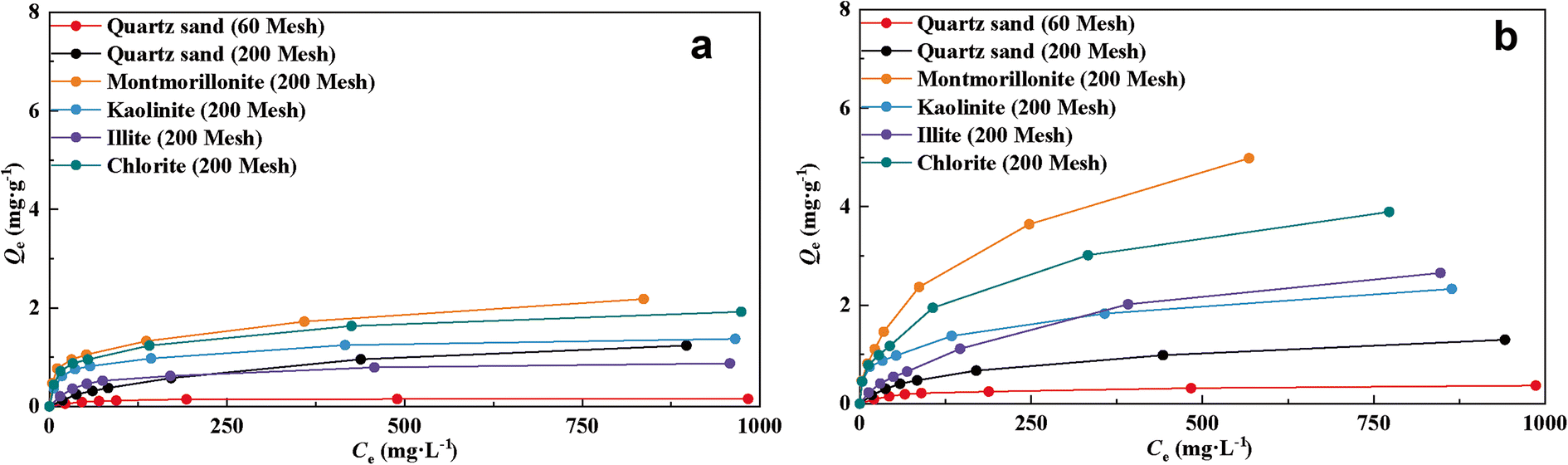
As the concentration of asphaltenes increased under aqueous conditions at 80°C, the adsorption of asphaltenes on the quartz sand increased. However, the slope of adsorption isotherms decreased gradually, and the adsorption processes tended to be in equilibrium at lower concentrations. The adsorption process of asphaltenes on quartz sand was inhibited by the water film. Water film preadsorbed on minerals showed the strongest inhibition of asphaltene adsorption on the surface of 60-mesh quartz sand (Fig. 6). The rate of inhibition by the water film was least on the 200-mesh quartz sand. When the adsorption concentration of asphaltenes was 896.5 mg L–1, the amount of asphaltene adsorbed on 200-mesh quartz sand was 1.237 mg g–1, and the inhibition rate was >50%. The larger the particle size of quartz sand, the greater the inhibition rate by the water film. At the same time, with increasing asphaltene concentration, the amount of asphaltene adsorbed on the clay minerals also increased, but the adsorption processes stabilized gradually. In particular, the amounts adsorbed on montmorillonite, kaolinite, and chlorite under aqueous conditions were significantly smaller than those under oven-dry conditions. When the adsorption concentration of asphaltenes was 836.4 mg L–1, the amount adsorbed on montmorillonite was only 2.328 mg g–1. When the adsorption concentration of asphaltenes was 896.532 mg L–1, the amount adsorbed on 200-mesh quartz sand was 1.24 mg g–1 under aqueous conditions at 80°C. When the adsorption concentration was 941.36 mg L–1, the amount adsorbed on 200-mesh quartz sand was 1.30 mg g–1 under aqueous conditions at 180°C. When the adsorption concentration was 836.35 mg L–1, the corresponding amount adsorbed on montmorillonite was 2.18 mg g–1 under aqueous conditions at 80°C. When the adsorption concentration of asphaltenes was 567.84 mg L–1, the corresponding amount adsorbed on montmorillonite was 4.98 mg g–1 under aqueous conditions at 180°C. At 180°C, the preadsorbed water film could still inhibit asphaltene adsorption on the surface of the clay minerals. However, the inhibition rate was far lower than that at 80°C.
Adsorption isotherms of asphaltenes on the various minerals under aqueous conditions at a 80°C, b 180°C

Discussion
Water–rock Interaction
With changing fluid properties, temperature, and pressure, water–rock interaction occurs in various ways. Changes could easily cause the clay minerals to swell and provoke some dissolution, affecting the physical properties of the reservoir and exacerbating reservoir damage. Under varying reservoir environments, volume changes in clay minerals are caused by their intrinsic properties as well as by their reactions when exposed to water (Kazempour et al., Reference Kazempour, Sundstrom and Alvarado2012; Kong et al., Reference Kong, Wang and Chen2017; Zhuang et al., Reference Zhuang, Liu, Xiong and Liang2018). In the current study, during thermal production, the salinity of steam condensate was less than that of formation water. After water–rock interaction in steam condensate, the volume expansion of montmorillonite became more obvious. Kaolinite dissolved to varying degrees at higher pH; illite was dissolved mainly at the lower temperature. Both kaolinite and illite, however, tended to transform into montmorillonite under the thermal conditions, and thus also resulted in volume expansion and reservoir damage. Anti-swelling agents, therefore, should be added during steam injection to reduce the adverse effects of water–rock reaction of clay minerals and montmorillonite expansion.
Adsorption Kinetics of Asphaltenes on Clay Minerals
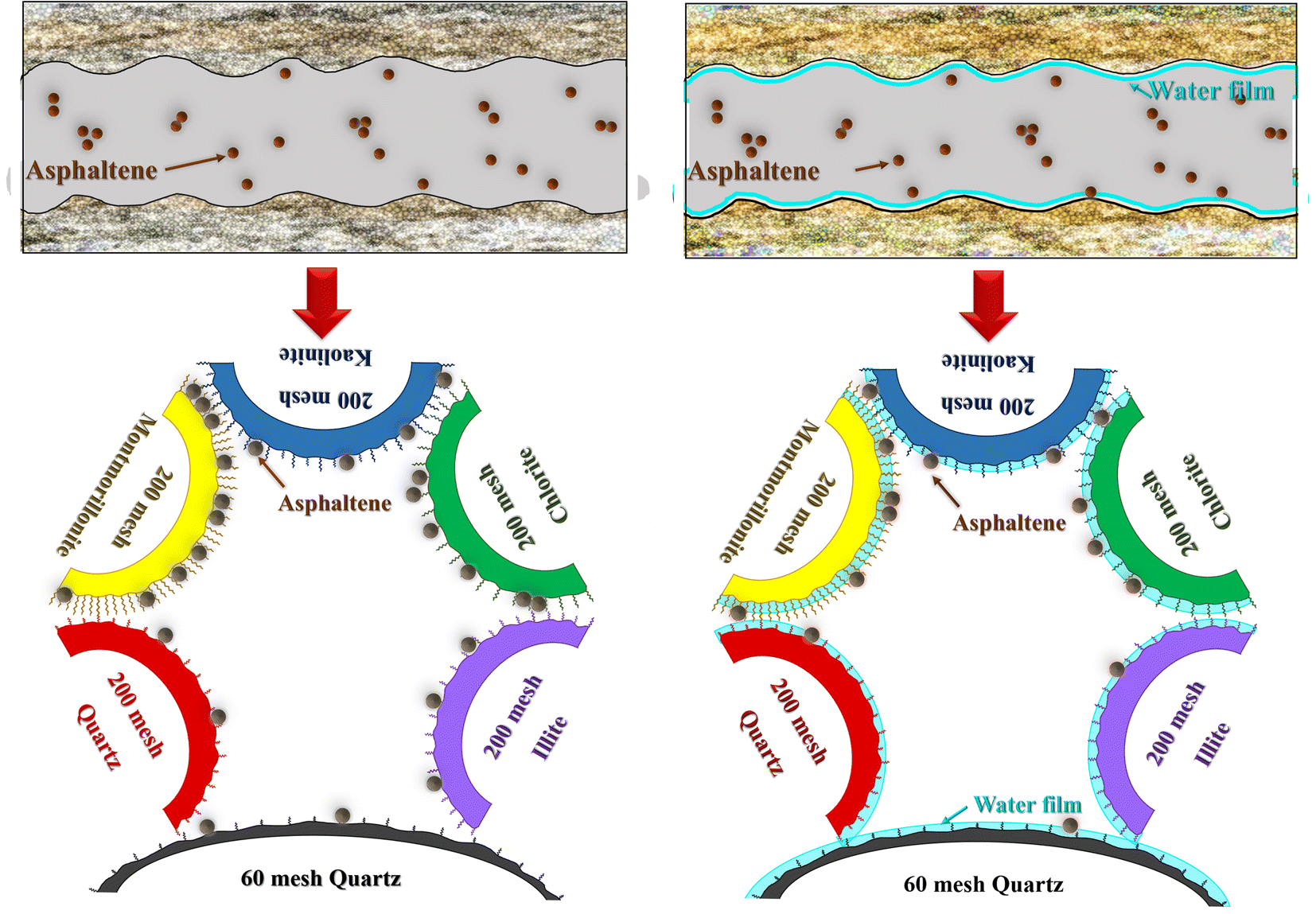
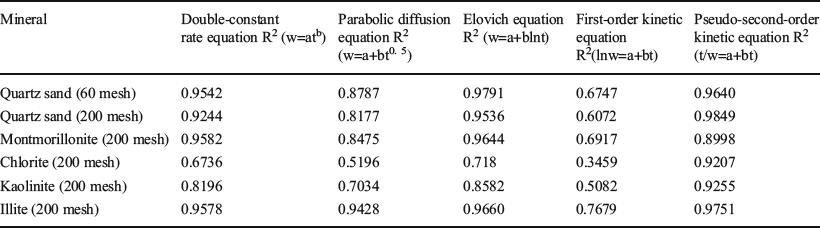
The adsorption of asphaltenes in a reservoir is affected by many factors, such as the environment of the reservoir and the properties of the asphaltenes and the minerals, and by the presence of a water film. The different types of clay minerals have various adsorption sites and capacity. At the beginning of adsorption in the present study, a high concentration of asphaltene-toluene solution was gathered around the adsorption sites on the surface of the clay minerals, which led to increasing surface coverage with time and rates of adsorption thus declined over time as the system approached equilibrium.The adsorption data were fitted to the double-constant rate equation, the parabolic diffusion equation, the Elovich equation, the first-order kinetics equation, and the pseudo-second order kinetics equation (Table 5). The best fit was with the pseudo-second order kinetics equation, the rate-controlling step of which is either chemical reaction or chemisorption. This model encompasses adsorption mechanisms such as external liquid film diffusion, surface adsorption, and intragranular diffusion (Alagumuthu & Rajan, Reference Alagumuthu and Rajan2010; Bhaumik et al., Reference Bhaumik, Mondal, Das, Roy, Pal, Das, Baneerjee and Datta2012; El-Khaiary et al., Reference El-Khaiary, Malash and Ho2010; Hosseini-Dastgerdi & Meshkat, Reference Hosseini-Dastgerdi and Meshkat2019).
R2 values from various kinetics equations for asphaltene adsorption on quartz and the clay minerals (initial concentration of asphaltene = 400 mg·L–1)

Adsorption Isotherm of Asphaltenes on Clay Minerals
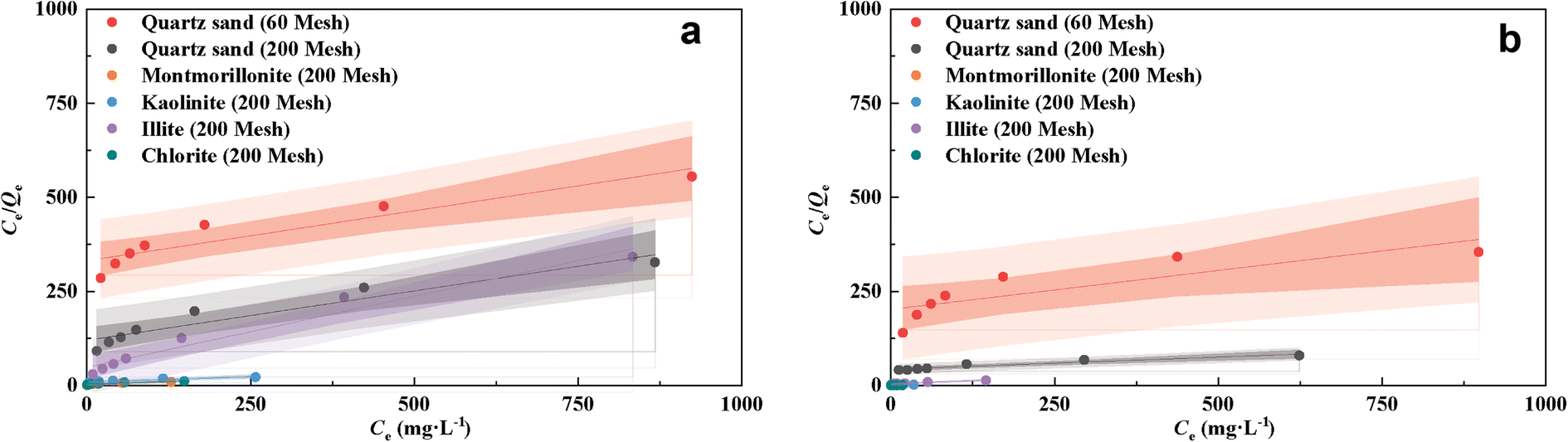
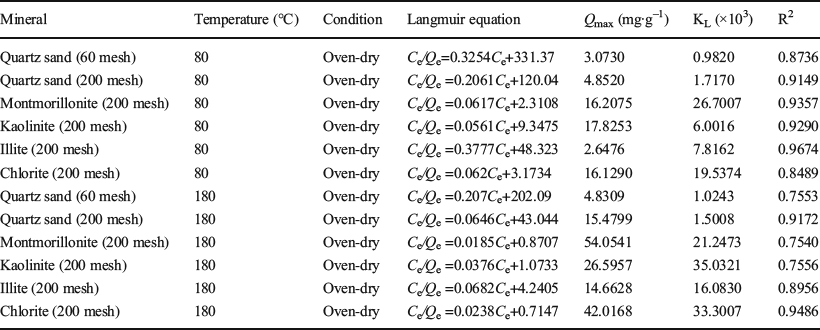
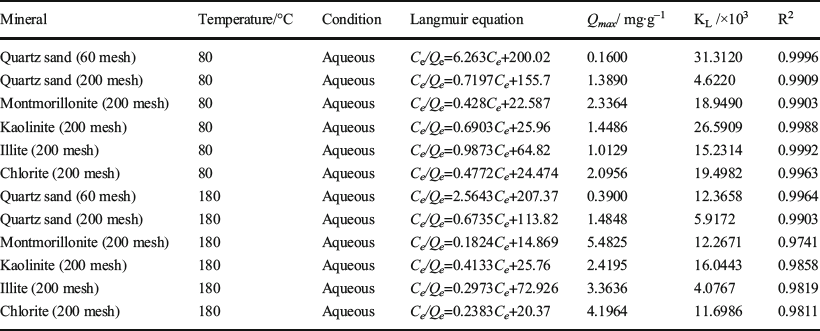
The results from fitting the data to the Langmuir model under different conditions yielded low coefficients of regression (0.7540 to 0.9674) under oven-dry conditions. Under aqueous conditions, however, the regression coefficients were >0.97; in particular the regression coefficient was >0.99 at 80°C (Figs. 7, 8 and Tables 6, 7 and Tables S1 to S12). Under oven-dry condition, the continuous accumulation of macromolecular polar compounds in crude oil formed complex asphaltene aggregates containing surface-active groups with a positive charge and strong polarity (Duran et al., Reference Duran, Casas, Xiang, Zhang, Zeng and Yarranton2019; Rogel, Reference Rogel2002). Surface-active groups on the minerals provided adsorption sites for the strongly polar groups of the asphaltenes by a series of interactions such as dipole-dipole and/or van der Waals forces (Fig. S3) (Dong et al., Reference Dong, Liu, Chen, Wu, Lu and Zhang2019; Dubey & Waxman, Reference Dubey and Waxman1991; Wu et al., Reference Wu, He and Chen2013). Moreover, the water film preadsorbed on the clay mineral surfaces reduced the interaction energy between asphaltenes and clay minerals, thus enabling the water molecules to bind more strongly with the surface. Under these circumstances, water molecules occupied most of the adsorption sites, while the asphaltene molecules were distributed farther from the surfaces (Gonzalez & Taylor, Reference Gonzalez and Taylor2016; Li et al., Reference Li, Bai, Sui and He2017). In particular, the water film homogenized the adsorption sites and made the adsorption of asphaltenes more uniform, which is consistent with the basic hypothesis of the Langmuir model. Furthermore, the rupture of water films was a prerequisite for the adhesion of asphaltenes to a mineral surface. During thermal production, attachment of asphaltene moieties to the surface of clay minerals was irreversible. When protective water films ruptured, water layers which were molecules thick emerged and allowed direct molecular contact of asphaltenes with the mineral surface. With increasing temperature, the forces attracting the water to the clay minerals was overcome and the water molecules were released, which weakened the ability of water films to improve the adsorption capacity of asphaltenes on the clay minerals.
Langmuir fitting curves of asphaltene adsorbed on the various minerals under oven-dry conditions at a 80°C, b 180°C

Langmuir fitting curves of asphaltene adsorbed on the various minerals under aqueous conditions at a 80°C, b 180°C

Langmuir fitting parameters of asphaltenes adsorbed on quartz and clay minerals under oven-dry conditions

Langmuir fitting parameters of asphaltene adsorbed on quartz and clay minerals under aqueous conditions

The foregoing results indicate that, under oven-dry conditions, the Langmuir model failed to describe asphaltene adsorption, i.e. the assumptions of single-layer adsorption, uniform adsorbent surface, and uniform adsorption energy do not hold. However, the Langmuir model performed much better under aqueous conditions. The maximum adsorption capacities, according to the Langmuir model, at 80°C under aqueous conditions for the 200-mesh quartz sand, montmorillonite, kaolinite, illite, and chlorite were 1.3890, 2.3364, 1.4486, 1.0129, and 2.0956 mg g–1, respectively. The corresponding maximum amounts of asphaltene adsorbed at 180°C were 1.4848, 5.4825, 2.4195, 3.3636, and 4.1964 mg g–1, respectively.
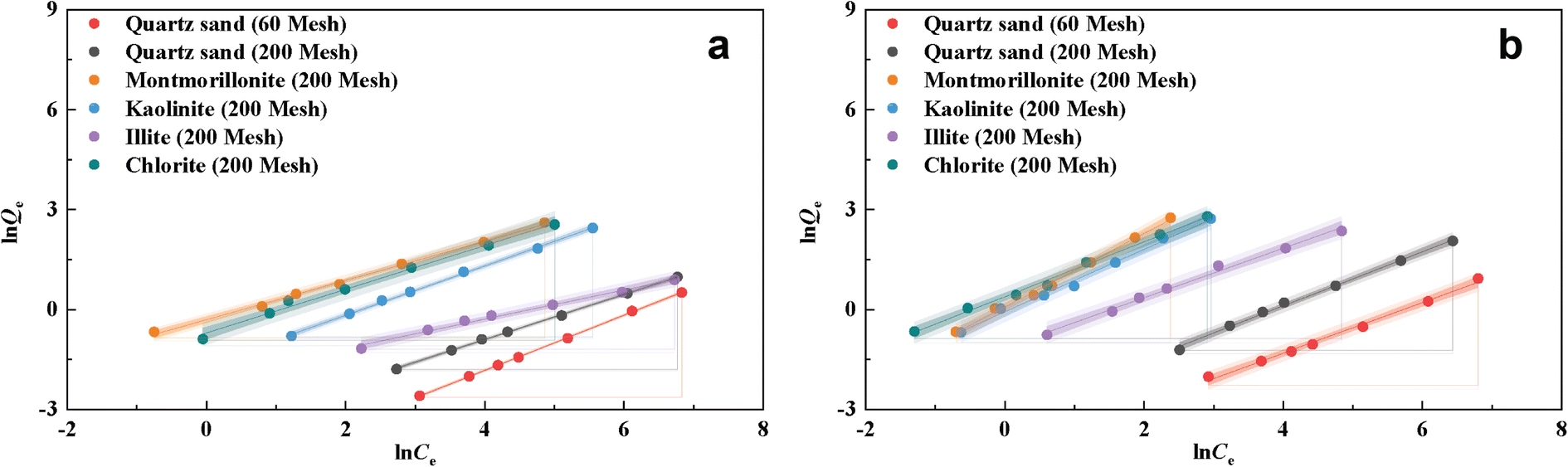
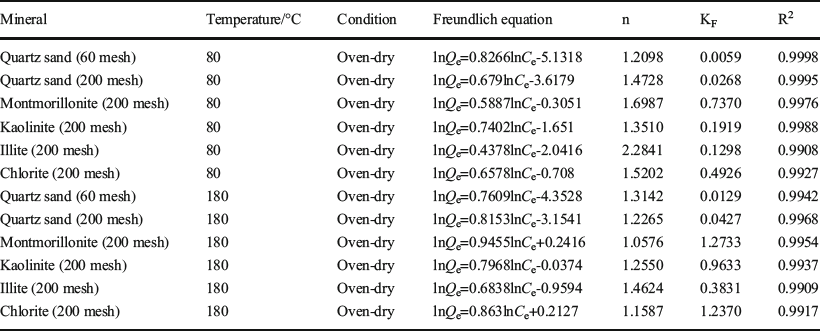
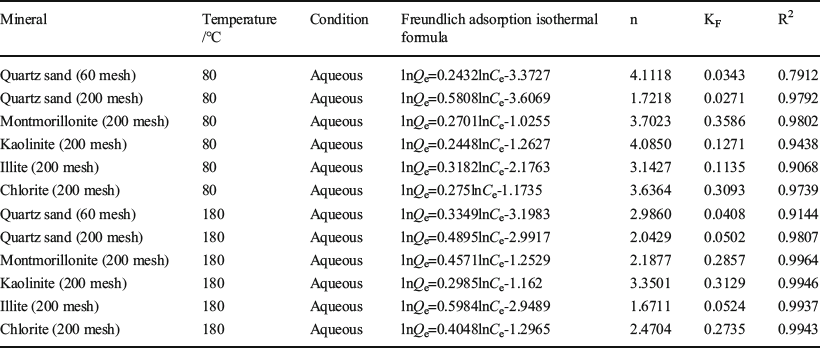
The results from fitting the data to the Freundlich model (Figs. 9, 10 and Tables 8, 9, Tables S13–S24) revealed that, under oven-dry conditions, the coefficients of regression were greater than 0.99 at both 80 and 180°C. Under aqueous conditions, however, the value was well below 0.99 at 80°C but increased to >0.91 at 180°C. For the clay minerals under oven-dry conditions, 1/n was <1, indicating that the adsorption was favorable with good binding and adsorption capacity. For quartz sand, 1/n decreased with increasing mesh, indicating that asphaltenes were easier to adsorb with increasing mesh. The greater the KF value, the stronger the binding ability between adsorbate and adsorbent. Therefore, the larger the mesh of quartz sand, the stronger the binding ability between quartz sand and asphaltenes. Compared with quartz sand, the KF of the clay minerals was greater than that of quartz sand. Under aqueous conditions, the influence of the water film on the adsorption by the clay minerals weakened with increasing temperature. The water film fell continuously from the surface of the clay minerals under higher temperature. The inhibition of the original water film of the adsorption of asphaltenes was broken, causing more of the non-aqueous adsorption sites to participate in the adsorption process. The adsorption process, therefore, could be regarded as that at lower adsorption concentrations under oven-dry conditions (Fig. 3b).
Freundlich fitting curves of asphaltene adsorbed on the various minerals under oven-dry conditions at a 80°C, b 180°C

Freundlich fitting curves of asphaltene adsorbed on the various minerals under aqueous conditions at a 80°C, b 180°C

Freundlich fitting parameters of asphaltene adsorbed on quartz and clay minerals under oven-dry conditions

Freundlich fitting parameters of asphaltene adsorbed on quartz and clay minerals under aqueous conditions

The Freundlich model describes adequately the adsorption process of asphaltene under oven-dry and high-temperature aqueous conditions, i.e. non-uniform adsorbent surface, multi-molecular layer adsorption. Under oven-dry conditions, the order of binding abilities between minerals and asphaltenes was as follows: montmorillonite > chlorite > kaolinite > illite > quartz sand (Fig. 3a).
Conclusions
At 180°C and pH 11, the expansion ratio of montmorillonite reached 159.13%. Kaolinite tended to transform into montmorillonite and illite, which reduced the dissolution volume of kaolinite. The conversion rate of illite to montmorillonite was ~7.8% under the high-temperature conditions.
The adsorption process of asphaltene-toluene solution on the surfaces of the various types of minerals was described well by the pseudo-second order kinetics equation. The order of binding abilities between the minerals and the asphaltenes was as follows: montmorillonite > chlorite > kaolinite > illite > quartz sand. The adsorption isotherms for asphaltenes on the four kinds of clay minerals under over-dry conditions at 180°C were linear, indicating strong adsorption capacities and a failure to conform to the assumptions of the Langmuir model.
The adsorption process of asphaltenes on the surfaces of the minerals under aqueous conditions was inhibited because of the formation of a thin water film. At 180°C, the preadsorbed water film still inhibited asphaltene adsorption, but the inhibition rate was far less than at 80°C. Under aqueous conditions, the adsorption process was well fitted by the Langmuir model. Under aqueous conditions at 180°C, the maximum amounts of asphaltene adsorbed on montmorillonite, kaolinite, illite, and chlorite were 1.4848, 5.4825, 2.4195, 3.36, and 4.1964 mg g-1, respectively.
Under the oven-dry and high-temperature aqueous condition, the adsorption process of asphaltenes on the surface of the minerals fitted the Freundlich model well. Under the high-temperature, aqueous conditions, the adsorption process eventually could be regarded as being equivalent to the adsorption of asphaltenes at lower adsorption concentrations under oven-dry conditions.
Supplementary Information
The online version contains supplementary material available at https://doi.org/10.1007/s42860-022-00178-5.
Acknowledgments
This study was supported financially by the National Natural Science Foundation of China (Grant No. 52004216, No. 52004217, No. 51874240, No. 51804256, No. 51804041) and Scientific Research Projects of Shaanxi Provincial Department of Education (No. 20JS119, No. 20JK0829). Shaanxi Province Key Research and Development Plan (No. 2020KW-027).
Funding
Funding sources are as stated in the Acknowledgments.
Data Availability
All data analysed during this study are included in this published article (and its supplementary information files).
Declarations
Conflict of Interest
The authors declare that they have no conflict of interest.