


An accurate understanding of the distribution and conservation status of species is fundamental for determining national responsibilities (Kukkala et al. Reference Kukkala, Maiorano, Thuiller and Arponen2019; Oliver et al. Reference Oliver, Meyer, Ranipeta, Winner and Jetz2021; Schmeller et al. Reference Schmeller, Gruber, Bauch, Lanno, Budrys and Babij2008). Country endemics are important conservation priorities (Kraus et al. Reference Kraus, Enns, Hebb, Murphy, Drake and Bennett2023), and so is maintaining updated accounts of endemic and near-endemic species shared between two neighboring countries (e.g. Chaparro-Herrera et al. Reference Chaparro-Herrera, Lozano and Echeverry-Galvis2024; Stiles Reference Stiles, Chaves and Arango1998). A critical but often neglected task is the careful re-examination of historical records, some of which may not withstand scrutiny yet can distort current distributional assessments. The importance of this task is underscored by the recent reappraisal of the threatened Yellow-headed Manakin Chloropipo flavicapilla, now confirmed as a Colombian endemic after its purported occurrence in Ecuador was traced to a single misidentified specimen (Palacio Reference Palacio2023).
In this short communication, I reappraise the distribution and conservation status of two near-endemic species from northern South America that had undergone potential regional extirpations: The Yellow-eared Parrot Ognorhynchus icterotis, shared between Colombia and Ecuador, and the Hooded Antpitta Grallaricula cucullata, shared between Colombia and Venezuela. For these reassessments, I employed extinction-date estimators based on historical sighting records (Boakes et al. Reference Boakes, Rout and Collen2015; McCrea et al. Reference McCrea, Cheale, Campillo-Funollet and Roberts2024), which were used to quantify the support for either species persistence or extinction. This approach based on inference from sighting records, has been previously used for various taxa (Akmentins et al. Reference Akmentins, Pereyra and Vaira2012; Carlson and Phillips Reference Carlson and Phillips2020; Zhang et al. Reference Zhang, Jarić, Roberts, He, Du and Wu2020), including supporting the global extinction of the Slender-billed Curlew Numenius tenuirostris (Buchanan et al. Reference Buchanan, Chapple, Berryman, Crockford, Jansen and Bond2025).
Case 1. The Yellow-eared Parrot Ognorhynchus icterotis
Historical records indicate that the Yellow-eared Parrot once formed a metapopulation that spanned the border between southern Colombia and northern Ecuador. At La Planada (Nariño), a seasonal flock of approximately 20 birds was regularly observed throughout the 1980s (Salaman Reference Salaman1994). Bird roosting sites were probably in the nearby Cumbal Volcano region (G. Cantillo, pers. comm.), near the Colombia–Ecuador border. However, during that period, large areas of high Andean forests and páramo around Cumbal were cleared for cattle grazing and agriculture (Pantoja and Lopez Reference Pantoja and Lopez2011), which may have led to the disappearance of this source population. Subsequently, the Yellow-eared Parrot also vanished from Ecuador, where it had been regularly observed until the mid-1990s (Krabbe and Sornoza-Molina Reference Krabbe and Sornoza-Molina1996), with the last confirmed record in 1998 (Krabbe Reference Krabbe and Granizo2002). The species is now considered critically endangered (possibly extinct) by the Ecuadorian Red List (Freile et al. Reference Freile, Santander, Jiménez-Uzcátegui, Carrasco, Cisneros-Heredia and Guevara2019), and Vulnerable by IUCN.
The annual record of the Yellow-eared Parrot in Ecuador from 1980 to 1998, followed by an abrupt cessation, constitutes the end of the species’ documented history in the country and is therefore especially informative for estimating its extinction date (Boakes et al. Reference Boakes, Rout and Collen2015). The Optimal Linear Estimator (OLE), grounded in extreme-value theory, is especially useful to model the timing of the last sightings using a Weibull distribution to estimate the timing of extinction (McCrea et al. Reference McCrea, Cheale, Campillo-Funollet and Roberts2024). The OLE was first used for inferring the extinction date of the Dodo (Roberts and Solow Reference Roberts and Solow2003) and has since been demonstrated to provide accurate and robust estimates (Clements et al. Reference Clements, Worsfold, Warren, Collen, Clark and Blackburn2013; Rivadeneira et al. Reference Rivadeneira, Hunt and Roy2009) and is now widely adopted (Carlson and Phillips Reference Carlson and Phillips2020; Grainger et al. Reference Grainger, Ngoprasert, McGowan and Savini2019; Zhang et al. Reference Zhang, Jarić, Roberts, He, Du and Wu2020). It has also been recommended for use in assessing species in the Critically Endangered (Possibly extinct) category in the IUCN Red List (Collen et al. Reference Collen, Purvis and Mace2010).
The OLE estimator takes the following form:

Where
$ {\hat{T}}_E $
 is the estimated extinction date,
$ {t}_n $
 is the last recorded sighting,
$ k $
 is the number of most recent sightings considered, and
$ {w}_i $
 are optimal weights derived under a Weibull extreme-value model to minimise the variance of the estimator. The recommendation to use k > 10 (Clements et al. Reference Clements, Collen, Blackburn and Petchey2014) was used and tested both the complete record (k = 19) and the 10 most recent sightings (k = 10) using a direct implementation of the OLE estimator in R 4.5.0 (Supplementary material Script S1). In addition to estimating
$ {\hat{T}}_E $
 , the associated approximate P values (Solow Reference Solow2005) were calculated for both analyses, testing the null hypothesis that the species persisted to 2025 (
$ {H}_{0:}{T}_E\ge T $
 ).
The estimated extinction dates from the OLE were 2003 and 2005, respectively. In both cases, the test rejected the null hypothesis of persistence to 2025 (P < 0.001). Overall, the estimated timing of extinction aligns with subsequent observations. In 2010, it was confirmed that “Yellow-eared Parrots still have not returned to Ecuador” (Loro Parque Foundation Reference Foundation2010). Thus, there is clear support for the conclusion that the Yellow-eared Parrot is extinct in Ecuador and is now restricted to Colombia.
On this basis, I propose to recognise the Yellow-eared Parrot in Colombia as Endemic (Relictual), a designation that makes explicit that its endemic status results from extirpation elsewhere in its former range. In Ecuador, the species should be considered as Regionally Extinct (RE). This reinterpretation has important implications for conservation strategy: rather than awaiting natural recolonisation, proactive reintroduction efforts in Ecuador could be considered following IUCN reintroduction guidelines (Carver et al. Reference Carver, Convery, Hawkins, Hertel, Fallon and Lyons2025; IUCN/SSC 2013).
Case 2. The Hooded Antpitta Grallaricula cucullata
The taxonomic status and distribution of the Hooded Antpitta remain poorly understood. In Venezuela, the species is known from a single locality, Río Chiquito in the Tamá Massif, Táchira Department, where two specimens collected in 1955 served as the basis for the description of the subspecies G. c. venezuelana (Phelps Reference Phelps1956). A second locality has been reported in the literature, but it is considered erroneous (Sharpe Reference Sharpe, Rodríguez, García-Rawlins and Rojas-Suárez2015). Of the two specimens, one is retained in the Phelps Ornithological Collection (COP), Caracas, Venezuela, whereas the holotype (COP 61222) is deposited at the American Museum of Natural History (AMNH), New York, USA, under the ownership of the Phelps Collection, and has not been catalogued at AMNH (P. Sweet, pers. comm.). The specimen retained at COP is treated as a doubtful subspecies and marked internally with a blue label (M. Martinez, pers. comm.; Supplementary material Figure S1).
The scant specimen basis has led to differing views on the taxonomic status of venezuelana. Some authors treat G. cucullata as monotypic (Greeney Reference Greeney2018), whereas others suggest that venezuelana may represent a different species (Ascanio et al. Reference Ascanio, Rodriguez and Restall2021). However, populations in Colombia’s Risaralda department also exhibit an olivaceous breast rather than a greyish one, which is considered diagnostic of venezuelana (Phelps Reference Phelps1956). A detailed assessment of phenotypic and genomic variation across populations is therefore needed for a species that has long been considered a high research priority (Stotz et al. Reference Stotz, Fitzpatrick, Parker and Moskovits1996).
Furthermore, interpretations of the geographic extent of venezuelana also differ. Greeney (Reference Greeney2018) assigned all Colombian records to the nominate cucullata, whereas most other authors have attributed records from the Eastern Cordillera of Colombia, north of the upper Magdalena in Huila department, to venezuelana (Ayerbe-Quiñones Reference Ayerbe-Quiñones2022; Hilty Reference Hilty2021; Krabbe and Schulenberg Reference Krabbe, Schulenberg, del Hoyo, Elliott and Christie2003). Under this interpretation, there have been no confirmed records attributable to venezuelana from Colombia for nearly three decades. The last such record is from Cerro El Retiro, Cundinamarca, in 1998 (Salaman et al. Reference Salaman, Stiles, Bohórquez, Álvarez, Donegan and Cuervo2002), whereas a 1997 record from Serranía de los Picachos, Caquetá (Bohórquez Reference Bohórquez2002) is more likely assigned to cucullata based on the subspecies distribution (Hilty Reference Hilty2021).
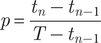
Assuming the broader interpretation that venezuelana extends to both Venezuela and the Eastern Cordillera of Colombia, the available record could indicate that this taxon may already be extinct. To test this, the 1955 specimen record and the 1998 record allow the application of the last-two-sightings non-parametric test (Solow and Roberts Reference Solow and Roberts2003):
With
$ {t}_n=1998 $
 ,
$ {t}_{n-1}=1955 $
 , and
$ T=2025. $
 This yields
$ p=\frac{1998-1955}{2025-1955}=\frac{43}{70}\approx 0.61 $
 , so the null hypothesis of persistence cannot be rejected. For reference, the extinction date estimator is as follows:

which gives
$ {\hat{T}}_E=1998+\left(1998-1955\right)=1998+43=2041. $
 This estimate indicates that substantially more time without observations would be required before extinction could be inferred statistically.
The alternative that venezuelana is restricted to Venezuela should also be considered, because the Tamá Massif, although biogeographically part of the Colombian Eastern Andes, may harbour isolated bird populations (Socolar and Peña Reference Socolar and Peña2022). In that case, extinction-date analyses conducted with taxa known from a single specimen yield highly conservative estimates, often projecting persistence for decades or centuries (Roberts and Jarić Reference Roberts and Jarić2020). Thus, the survival of venezuelana cannot be ruled out. This is consistent with the gradual accumulation of Hooded Antpitta records in Colombia over time (Marín Gómez et al. Reference Marín Gómez, Polanco, Arango Giraldo and Ospina Duque2015) and with recent evidence from plants showing that nearly all species known from a single locality have been found elsewhere (White et al. Reference White, Pitman, Feeley, Rivas-Torres, Bravo-Sánchez and Sánchez-Parrales2024). However, if venezuelana is truly endemic to Venezuela, it would likely qualify as highly threatened owing to its extremely restricted range and probably small population size, as demonstrated for other Andean subspecies (Palacio and Clark Reference Palacio and Clark2023).
Overall, despite the taxonomic and geographic uncertainty surrounding venezuelana, the lack of recent records of the Hooded Antpitta in both the Eastern Cordillera of Colombia and Venezuela is concerning. The expedition that rediscovered the Tachira Antpitta Grallaria chthonia also searched unsuccessfully for the Hooded Antpitta (M. Matta pers. Comm.). Recent inventories from the Tamá massif have also failed to find it (Socolar and Peña Reference Socolar and Peña2022), and playback by birdwatchers in Cundinamarca has been unsuccessful (O. Cortes, pers. comm.). These repeated non-detections raise the possibility either that venezuelana is extinct, if valid, or that the Hooded Antpitta has been extirpated from Venezuela. Thus, there is an urgent need for targeted, intensive fieldwork to determine whether any populations survive in Venezuela or whether it should instead be considered Endemic (Relictual) in Colombia.
Conclusions
In this study, I re-examined the distribution and conservation status of two near-endemic bird species facing potential regional extirpation in northern South America, using extinction-date estimators to assess statistical support for persistence or regional extinction. For the Yellow-eared Parrot Ognorhynchus icterotis, the estimators provided strong support for extirpation in Ecuador, indicating that the species is now restricted to Colombia. For the Hooded Antpitta Grallaricula cucullata, the estimators suggested persistence, but urgent fieldwork is needed to determine whether any populations survive in Venezuela. Moreover, it is important to clarify the validity of the subspecies venezuelana and to assess whether its range extends into the eastern Andes of Colombia.
Together, these case studies show that re-examining historical records of species occurrence can reshape conservation responsibility across borders and clarify how endemic status is interpreted. The designation “Endemic (Relictual)” is proposed for taxa whose present endemism results from extirpation elsewhere within their historically documented range. This differs from the traditional evolutionary and biogeographic use of relict, which refers to remnants of formerly widespread lineages (Grandcolas et al. Reference Grandcolas, Nattier and Trewick2014; Morrone Reference Morrone2008). Recognising this distinction can improve the interpretation of conservation status and the assignment of national conservation responsibilities.
Supplementary material
The supplementary material for this article can be found at https://doi.org/10.1017/S0959270926100732.
Acknowledgements
I thank colleagues who corresponded with me and provided information that informed this study. I also thank two anonymous reviewers for their comments, which greatly improved this manuscript. I received no specific grant from any funding agency, or commercial or not-for-profit sectors.



