Introduction
The last two decades have seen exponential growth in scientific knowledge regarding the serious long-term negative consequences of developmental trauma and attachment problems on children. This wealth of knowledge contrasts with the relative lack of theoretically coherent and research-evidenced therapeutic interventions available in the community to help affected children recover and heal. This paper describes an innovative therapeutic intervention developed by yourtown (formerly known as BoysTown), a not-for-profit organisation that provides a range of counselling, employment and social programmes for disadvantaged children, young people and families. YETI integrates trauma and attachment theory with creative arts and play therapies to respond to the needs of children affected by developmental trauma and attachment problems. This paper describes YETI's therapeutic model and presents the methodology and findings of a two-year outcome evaluation in relation to preschool-aged participants.
The Impacts of Developmental Trauma and Attachment Problems
Recent scientific research points to the highly negative consequences that chronically stressful care giving environments and traumatic events can have on normal child development and the achievement of mental and emotional wellbeing later in life (Cook et al., Reference Cook, Spinazzola, Forde, Lanktree, Blaustein, Cloitre and van der Kolk2005; D'Andrea, Ford, Stolbach, Spinazzola, & van der Kolk, Reference D'Andrea, Ford, Stolbach, Spinazzola and van der Kolk2012; Perry, Reference Perry and Webb2006; Reference Perry2009; Schore, Reference Schore2001; van der Kolk, Reference van der Kolk2014). This evidence has emerged primarily from within trauma, attachment and neurodevelopmental theory and research which, together, provide a valuable conceptual framework for understanding the impact of such environments on children and for devising interventions that may be effective in enabling children to heal and develop.
Trauma
Trauma theory and research over the last half century have established that highly stressful and frightening experiences that overwhelm individuals’ ability to cope may result in neurobiological adaptations which can seriously compromise normal social, emotional and cognitive functioning (Herman, Reference Herman1992; Stien & Kendall, Reference Stien and Kendall2004; van der Kolk, Reference van der Kolk2014). Collectively, these adaptations can compromise the individual's ability to think and reason, solve problems, control behaviour, regulate emotions, and reflect on and learn from experience (Cloitre et al., Reference Cloitre, Stolbach, Herman, van der Kolk, Pynoos, Wang and Petkova2009; D'Andrea et al., Reference D'Andrea, Ford, Stolbach, Spinazzola and van der Kolk2012; Perry, Reference Perry and Webb2006; Reference Perry2009).
While traumatic experience can have serious consequences for adults, trauma that occurs in early childhood, particularly that of a sustained or chronic nature, has been found to be even more profoundly damaging (Cloitre et al., Reference Cloitre, Stolbach, Herman, van der Kolk, Pynoos, Wang and Petkova2009; Perry, Reference Perry and Webb2006; Schore, Reference Schore2001) because it fundamentally interferes with normal child development (Perry, Reference Perry and Webb2006). Perry (Reference Perry and Webb2006) notes that the brain develops in a sequential and hierarchical way in infancy such that an individual's ability to develop more complex and higher order regions and functions relies on first being able to develop and regulate lower brain systems and functions. Being in a chronic state of stress and fear, as occurs when children are traumatised, means that these lower regions of the brain are perpetually in a state of poor regulation, compromising potentially every aspect of brain development associated with normal child development (Perry, Reference Perry and Webb2006; Reference Perry2009; Perry, Pollard, Blakley, Baker, & Vigilante, Reference Perry, Pollard, Blakley, Baker and Vigilante1995; Perry & Pollard, Reference Perry and Pollard1998).
Core developmental tasks that have been found to be inhibited by the fear state include identity formation, regulation of emotional states, cognitive processing (for example, the integration of sensory, emotional and cognitive information into a cohesive whole), moral and spiritual development, ability to control behaviour, experience of bodily integrity, trust of self and others, and capacity to form interpersonal relationships characterised by mutuality, empathy and emotional connectedness (Cook et al., Reference Cook, Spinazzola, Forde, Lanktree, Blaustein, Cloitre and van der Kolk2005; D'Andrea et al., Reference D'Andrea, Ford, Stolbach, Spinazzola and van der Kolk2012; James, Reference James1994; Perry, Reference Perry and Webb2006; Reference Perry2009; Perry et al., Reference Perry, Pollard, Blakley, Baker and Vigilante1995; Perry & Pollard, Reference Perry and Pollard1998; Schore, Reference Schore2001; Reference Schore2015; Stien & Kendall, Reference Stien and Kendall2004; Streeck-Fischer & van der Kolk, Reference Streeck-Fischer and van der Kolk2000; van der Kolk, Reference van der Kolk2005; Reference van der Kolk2014). Klorer (Reference Klorer2004) summarises some of the pervasive impacts of chronic childhood trauma documented in the research literature. These include: ‘chronic affect dysregulation, sleep problems, exaggerated startle response, destructive behaviour against self and others, learning disabilities, hypervigilance, dissociative problems, somatisation, generalised anxiety, and distortion in concepts of self and others’ (p.12).
In light of the complexity of emotional and behaviour problems that chronic childhood trauma typically gives rise to, influential traumatologists (e.g., Cook et al., Reference Cook, Spinazzola, Forde, Lanktree, Blaustein, Cloitre and van der Kolk2005; D'Andrea et al., Reference D'Andrea, Ford, Stolbach, Spinazzola and van der Kolk2012; Teague, Reference Teague2013; van der Kolk, Reference van der Kolk2005) have argued in favour of the term complex trauma to describe this symptomatology. They have proposed a new diagnosis of developmental trauma disorder to support a more effective understanding and treatment of the multiple interrelated effects of this type of trauma within psychotherapy.
Attachment
Attachment theory and research provide a complementary conceptual framework for understanding the impacts of early care giving environments on children's development. The central proposition of attachment theory, developed half a century ago by Bowlby (Reference Bowlby1969) and later Ainsworth (Reference Ainsworth1978), is that responsive nurturing relationships with care givers are essential for a child's emotional and cognitive development. This proposition is widely accepted today following extensive empirical investigation and theoretical development (Rolfe, Reference Rolfe2004; Sroufe, Reference Sroufe, Belsky and Nezworski1988). Influential support for this proposition has also emerged in the last two decades from neurobiological research which has found that secure attachments ‘produce a growth-facilitating environment that builds neuronal connections and integrates brain systems’ (Stien & Kendall, Reference Stien and Kendall2004, p. 7).
Some of the core tasks of child development that are understood to be facilitated by having a sensitive, responsive, nurturing relationship with a care giver include the following:
-
• Development of the ability to self-regulate emotional states and keep arousal at a level that is comfortable so that the individual can achieve their goals (Rolfe, Reference Rolfe2004; Schore, Reference Schore1996; Reference Schore2001).
-
• Development of the ability to inhibit impulses that are dangerous or socially proscribed and in this process learn to regulate feelings of shame (Schore, Reference Schore1996).
-
• Development of a sense of self-efficacy, because such relationships provide the child with a secure emotional base from which to explore the world and through such explorations gradually achieve a sense of autonomy and effectiveness (Rolfe, Reference Rolfe2004; Schofield & Beek, Reference Schofield and Beek2006).
-
• Development of a positive sense of self and others through the development of healthy ‘internal working models’ that result from positive patterns of interaction with care givers over time (Bretherton & Munholland, Reference Bretherton, Munholland, Cassidy and Shaver2008; Stien & Kendall, Reference Stien and Kendall2004).
-
• Development of a coherent sense of self as a result of being supported by care givers to build connections between different parts of self and lived experience – emotions, sensations, thoughts and actions – aiding, in turn, the integration of brain systems (e.g., motor, sensory, cognitive and emotional systems) (Blaustein & Kinniburgh, Reference Blaustein and Kinniburgh2010; Stien & Kendall, Reference Stien and Kendall2004).
-
• Development of capacities for trust, empathy and relating effectively to others, through the model of caring responsive relationships developed with care givers (Schofield & Beek, Reference Schofield and Beek2006).
Children can be prevented from undertaking these core developmental steps in early childhood when they are exposed to chronic neglect or abuse from care givers, or when their care givers do not know how to meet their needs or cannot meet their needs due to their own victimisation (Perry & Szalavitz, Reference Perry and Szalavitz2006; Schofield & Beek, Reference Schofield and Beek2006; Schore, Reference Schore2001; Reference Schore2015). Because these developmental steps underpin so much of later development, if children are prevented from undertaking them, they may be at risk of developing complex emotional and behavioural problems stemming from difficulties with emotional self-regulation, impulse control, learning delays, low self-esteem and shame, poorly developed and negative sense of self and others, and/or difficulty understanding, trusting and relating to others. As with developmental trauma, without effective intervention, these problems can persist and deepen through adolescence and undermine social and emotional wellbeing throughout the life course (Hughes, Reference Hughes2006; Stien & Kendall, Reference Stien and Kendall2004).
yourtown’s Expressive Therapies Intervention (YETI)
Background and objectives
Many of the children entering yourtown’s child and family support programmes display the emotional and behavioural traits of developmental trauma and/or insecure, disorganised or disrupted attachment. While some will have experienced direct abuse or neglect, many will have experienced unpredictable, unavailable or insensitive care giving which for a young child can be stressful to the point of traumatising (Perry & Szalavitz, Reference Perry and Szalavitz2006). Others will have witnessed violence against their primary care giver or other family members and be traumatised by those experiences. And some will be traumatised by being dependent on a primary care giver who is chronically impacted by their own victimisation. Many of these families are also affected by entrenched poverty, housing instability, disability and physical and mental health difficulties that may contribute to stressful care giving environments and additional challenges for developing secure attachment relationships between care givers and infants.
While yourtown was aware of a gap in its service response to these children, it lacked resources to provide a specialist therapeutic intervention. In 2011, with the financial support of a private donor, the organisation was able to establish YETI at two existing sites where services are delivered to disadvantaged children and families. yourtown saw this as an opportunity to provide a more holistic and ultimately effective response to the needs of traumatised and attachment-disturbed children, and thereby potentially enable these children to circumvent the long-term negative impacts of developmental trauma and attachment problems.
The broad therapeutic objectives specified for YETI were, accordingly, to achieve improvements in children's:
-
• emotional and social wellbeing and competence,
-
• behavioural adjustment,
-
• quality of attachment relationships with care givers and
-
• self-concept/self-esteem.
The use of ‘expressive therapies’ in treating trauma and attachment problems
To achieve these therapeutic objectives, YETI integrates trauma and attachment conceptualisations of children's therapeutic needs with an ‘expressive therapies’ intervention modality. ‘Expressive therapies’ is commonly used as an umbrella term for the range of creative arts and play approaches used in psychotherapy and counselling (for example, Malchiodi, Reference Malchiodi and Malchiodi2005). Malchiodi (Reference Malchiodi and Malchiodi2005) identifies seven individual expressive therapy approaches:
-
• arts therapy,
-
• music therapy,
-
• drama therapy,
-
• dance/movement therapy,
-
• poetry therapy and bibliotherapy,
-
• play therapy,
-
• sandplay therapy.
Despite considerable historical and theoretical differences between these therapeutic modalities, there are certain commonalities that allow for a broad conceptual grouping of them together into what Malchiodi (Reference Malchiodi and Malchiodi2005) calls ‘a unique domain of psychotherapy and counselling’ (p. 2). Such commonalities include an activity focus, techniques aimed at integrating experiences of body, mind and emotions, sensory processing, externalisation of internal processes and narratives, use of imagination, and (in many cases) non-verbal expression of sensations, feelings and thoughts (Malchiodi, Reference Malchiodi and Malchiodi2005; Reference Malchiodi and Malchiodi2008b; Reference Malchiodi, Malchiodi and Crenshaw2014).
The last decade has seen a rapid growth in interest in the application of trauma, attachment and neurodevelopmental theories to expressive therapies for the purpose of helping children recover from developmental trauma and attachment problems. Three recently published collections, Expressive and Creative Arts Methods for Trauma Survivors (Carey, Reference Carey2006), Creative Arts and Play Therapy for Attachment Problems (Malchiodi & Crenshaw, Reference Malchiodi and Crenshaw2014) and Creative Interventions with Traumatised Children (Malchiodi, Reference Malchiodi2008a) are evidence of this movement in counselling and psychotherapy and bring together some of the emerging practice wisdom from across these diverse fields of expressive therapy.
Contributions to these collections and other recent practice literature suggest that expressive therapies contribute to children's healing from trauma and attachment problems in various ways, including:
-
• lowering fear and stress arousal and regulating lower brain functions (Gaskill & Perry, Reference Gaskill, Perry, Malchiodi and Crenshaw2014; Malchiodi, Reference Malchiodi, Malchiodi and Crenshaw2014),
-
• building capacity for secure attachment and for relating effectively with others (Crenshaw, Reference Crenshaw, Malchiodi and Crenshaw2014; Devereaux, Reference Devereaux, Malchiodi and Crenshaw2014; Malchiodi, Reference Malchiodi, Malchiodi and Crenshaw2014),
-
• enhancing capacity for emotional self-regulation (Malchiodi, Reference Malchiodi, Malchiodi and Crenshaw2014; Pearson & Nolan, Reference Pearson and Nolan2004; Pearson & Wilson, Reference Pearson and Wilson2008),
-
• facilitating trauma processing and integration (Malchiodi, Reference Malchiodi, Malchiodi and Crenshaw2014; Pearson & Nolan, Reference Pearson and Nolan2004; Pearson & Wilson, Reference Pearson and Wilson2009) and
-
• enhancing self-efficacy (Fall, Reference Fall, Baggerly, Ray and Bratton2010; Pearson, Reference Pearson2004; Stewart, Whelan, & Pendleton, Reference Stewart, Whelan, Pendleton, Malchiodi and Crenshaw2014).
Some of the ways that expressive therapies may support trauma-attachment therapeutic work, such as by assisting individuals to lower their stress arousal and cultivate a sense of calm and safety, have been well researched and evidenced (for example, the impact of music and art therapy on the regulation of the autonomic nervous system functioning: Hammer, Reference Hammer1996; Hernandez-Ruiz, Reference Hernandez-Ruiz2005; Pelletier, Reference Pelletier2004). However, the non-linear, non-directive and dynamic interpersonal nature of many expressive therapy approaches does not lend them easily to experimental or quasi-experimental evaluation design which is generally regarded as the standard evidentiary benchmark in the field of mental health. Accordingly, much of the evidence supporting the effectiveness of expressive therapies for treating trauma and attachment problems in children is qualitative in nature and takes the form of case presentations by therapists, what Pearson and Wilson (Reference Pearson and Wilson2009) refer to as ‘practice-based evidence’.
Notwithstanding these inherent methodological challenges, some models or modalities of expressive therapies have been subject to more systematic controlled research, most notably child-centred play therapy (CCPT). CCPT was originally developed by Virginia Axline in the 1940s who applied Carl Roger's person-centred therapy and non-directive therapeutic principles to her work with children (Ray & Bratton, Reference Ray, Bratton, Baggerly, Ray and Bratton2010). More recently, CCPT has been promoted and refined by Landreth (Reference Landreth2002) who has written extensively about the role of the therapist in ‘the art of relationship’ and attempted to systematise and define elements of practice. Numerous controlled studies of CCPT in the last decade can be seen to use Landreth's specification of playroom features and materials and therapist training and personal qualities (see contributors to Baggerly, Ray, & Bratton, Reference Baggerly, Ray and Bratton2010).
In 2010, Ray and Bratton undertook a meta-analysis of play therapy research focusing on studies published in peer-reviewed journals over the first decade of the 21st century. For selection, studies needed to demonstrate at least some aspect of experimental design and to explicitly employ a child-centred approach to play therapy. A total of 25 studies met the selection criteria. Ten studies specifically explored and demonstrated the positive effects of play therapy on children's disruptive behaviours. Six studies explored and demonstrated positive effects on children's relationships with either parents or teachers. Internalising problems, anxiety and sexual abuse and trauma issues were explored in five studies, while other issues like ADHD, depression, self-concept, language skills, moral reasoning and social behaviour were investigated in one to three studies. Positive effects of play therapy were observed in relation to all these research areas with the exception of sexual abuse, which provided mixed result in two studies.
Therapeutic framework
YETI's therapeutic framework draws on a specific set of practice frameworks from within expressive therapy and trauma-attachment informed psychotherapy. These include:
-
• Pearson and Wilson's ( Reference Pearson and Wilson 2009 ) intermodal model of expressive therapies. This framework integrates a wide range of creative arts and play therapy modalities to nurture individuals’ interest in self-discovery and working through of challenging emotional distress as a way to achieve mind–body integration and emotional resilience. Drawing on Jungian psychology, sandplay therapy, Gestalt psychology, bioenergetics therapy, transpersonal psychology, emotion-focussed therapy and humanistic psychology, Pearson and Wilson's model specifies seven focal areas of therapeutic practice: building connection, developing self-awareness, processing emotions, transformative self-learning through use of symbol and metaphor, enhancing self-esteem, supporting integration and developing emotional literacy and inner life skills. It emphasises the individual's inbuilt drive towards healing and growth, the importance of client-led and directed practice, and the critical importance of the therapeutic alliance.
-
• Child-centred play therapy (Axline, Reference Axline1974; Landreth, Reference Landreth2002), which emphasises play as children's natural medium of expression and thus the appropriate medium for therapy with children. It also emphasises the critical role of the therapeutic relationship in achieving therapeutic objectives and operates from a view of children as having an inherent tendency towards growth and maturity and as capable of positive self-direction.
-
• Sandplay therapy (Kalff, Reference Kalff1980; Reference Kalff1991; Lowenfeld, Reference Lowenfeld1939). yourtown’s expressive therapists draw on both Jungian and Gestalt approaches to working with symbolic objects in a sandtray. Kalff (Reference Kalff1991) explains: ‘Through free creative play, unconscious processes are made visible in a three-dimensional form and a pictorial world comparable to the dream experience’ (p. 9). This externalisation of unconscious emotions and thoughts in a safe and contained environment is thought to facilitate the individual's meaning-making processes and the processing and integration of unresolved and/or traumatic experiences.
-
• Child–parent relationship therapy/filial therapy (Guerney, Reference Guerney1964; Guerney & Ryan, Reference Guerney and Ryan2013; Landreth & Bratton, Reference Landreth and Bratton2006; Van Fleet, Reference Van Fleet2002). This framework emphasises the potential to shift patterns of attachment in children's relationships with their parents/carers through parent education and coaching, and with those shifts bring about significant transformations in children's emotional wellbeing and problematic behaviours, their patterns of relating to others, including their siblings, and their implicit self-concept. The model of child–parent relationship therapy that chiefly informs YETI is Emotional Fitness for Children (Edwards, Reference Edwards2007), a concise adaptation of Van Fleet's (Reference Van Fleet2002) model.
-
• The neurosequential model of therapeutics (Gaskill & Perry, Reference Gaskill, Perry, Malchiodi and Crenshaw2014; Perry, Reference Perry and Webb2006). This framework emphasises a ‘bottom-up’ neurological approach to therapeutic work with traumatised children, starting with somatosensory processes to establish some moderate self-regulation of stress and affect arousal prior to pursuing cortically mediated therapeutic tasks, like trauma processing and affect enhancement. It also emphasises working with children in a manner appropriate to their developmental age rather than their chronological age given the impacts trauma and insecure attachment can have on normal child development.
While a number of these frameworks emphasise non-directive practice, the YETI model simultaneously recognises the value of providing direction, structure and organisation in therapeutic work with traumatised children to support their sense of safety. Providing structure and guidance are also often a practical necessity in the context of time-limited interventions.
Therapeutic process
YETI therapy sessions are generally held in a dedicated room that is equipped with a range of themed toys (including the three categories of toys specified by Landreth (Reference Landreth2002) – real life toys that the child can use to represent reality, acting-out aggressive-release toys and toys for creative expression and emotional release); painting and drawing materials; clay or playdough; sandtray with miniature figurines on adjacent shelving; puppets, dress-up and drama materials; musical instruments, and interactive electronic devices, including an iPad. In some cases, when the therapeutic relationship is well-established and available to act as a container for the child's emotions and expression, therapy sessions may take place outside the therapy room in another private space that enables self-expression and learning, like, for example, an onsite vegetable garden. Sometimes parts of sessions may be held on an enclosed trampoline outside where the rhythmic somatic activity helps the child to lower their stress arousal.
Therapy sessions are held weekly where possible for 30–60 minutes depending on the child's capacity and interest. In therapy sessions, therapists introduce children to means of accessing unexpressed concerns and exploring possible solutions. The expressive therapist works with each child to find the medium(s) he/she more readily responds to, such as drawing, painting, music, sandplay, movement, storytelling, drama or fantasy enactment. In some cases, the therapist will suggest or introduce a medium. This is especially where a child is unfamiliar with being given a choice and appears overwhelmed. Guiding an activity may include introducing the use of toys, even the idea of play.
As an adjunct or alternative to individual therapy, parent–child therapy sessions may be offered. Therapists work with the parent/carer and child together, providing support and modelling to the parent/carer to build their capacity to recognise and respond appropriately to their child's various attachment needs in the context of play. In some situations, sibling therapy, and family group therapy sessions may also be offered where this serves specific goals of therapy.
There is no set number of therapy sessions. Following a period of therapy, the therapist will review therapy goals in consultation with the parent/carer and make a collaborative decision as to whether or not to continue therapy.
Practice contexts
YETI is integrated within case-managed support programmes for disadvantaged families at two yourtown sites in south east Queensland – a regional child and family support centre and a domestic and family violence refuge.
-
• yourtown's Deception Bay Child and Family Service Centre comprises a group of specialist child and family support programmes, all of which refer children for expressive therapies. Most referrals, however, are received from the Glugor Young Parents Programme. This programme provides case management, support, therapy and education for young parents aged up to 25 years who are parenting children aged up to 5 years.
-
• yourtown's domestic and family violence refuge provides secure accommodation and support to women and children escaping domestic and family violence through a therapeutic case management framework. Families can be accommodated for up to 12 weeks and during this period children up to 16 years may participate in expressive therapies.
Both sites employ experienced expressive therapists who have relevant tertiary qualifications and personal attributes assessed to be important for working effectively with young children affected by trauma. All therapists receive regular clinical and operational supervision.
Evaluation of YETI
From 2012–2014, yourtown conducted an outcome evaluation of YETI to assess the intervention's effectiveness in enhancing the social and emotional wellbeing of young children with complex needs as a result of traumatic life and family experiences. The evaluation was framed, in part, as a response to two recognised gaps in the research literature. The first of these is the absence of systematic research on the efficacy of expressive therapies to treat trauma-attachment problems in children as discussed earlier. Second, while CCPT (Axline, Reference Axline1974; Landreth, Reference Landreth2002) and child–parent relationship therapy (Landreth & Bratton, Reference Landreth and Bratton2006) are supported by evidence from a growing number of controlled studies regarding their effectiveness in treating a range of mental health problems in children, almost all of this research pertains to school-aged children or children aged at least three years (for example, see systematic reviews of play therapy research by Baggerly et al. (Reference Baggerly, Ray and Bratton2010) and Bratton & Landreth (Reference Bratton, Landreth, Baggerly, Ray and Bratton2010). YETI's target group is younger on average and includes children less than 18 months of age in view of the purported value of early intervention (Hughes, Reference Hughes2006; Perry, Reference Perry and Webb2006).
Methods
Participants
Over the two year evaluation period, 153 children participated in YETI, 85 being aged 0–5 years at the time of entry to therapy. Of the 0–5 year olds, 41 participated in the outcome evaluation while 44 were excluded for one of the following reasons:
-
• They had not yet completed therapy at the end of the evaluation period (n = 15).
-
• They ceased participation in YETI within the first three weeks of therapy within which time no outcomes were deemed measurable (n = 24) or
-
• They left unexpectedly part-way through the programme and prior to the collection of any outcome data (n = 5).
-
• Where a child left YETI prematurely, but had been enrolled for at least three weeks and had provided at least one source of outcome data (see below) prior to exit, their data were included in the outcome analysis.
Sources of Outcome Data
In order to assess YETI's effectiveness in achieving its objectives in relation to preschool-aged children, outcome data were collected and triangulated from three sources:
-
• Pre/post intervention assessments of children using the Child Behaviour Checklist (Achenbach & Rescorla, Reference Achenbach and Rescorla2000),
-
• a parent/carer feedback survey and
-
• therapists’ ‘end-of-therapy’ reports.
Child behaviour checklist (CBCL)
The CBCL comprises a suite of standardised instruments for measuring the emotional, behavioural and social functioning of children aged 18 months to 18 years (Achenbach & Rescorla, Reference Achenbach and Rescorla2000). These instruments are widely used for diagnosing a range of behavioural and emotional problems in children, a number of which may be associated with traumatic exposure. These include ADHD, oppositional-defiant disorder, conduct disorder, depression, anxiety and phobias. The instrument selected for use in the current study (CBCL/1.5-5) is completed by parents in relation to a child aged 18 months to 5 years, inclusive. It assesses parents’ perceptions of their child's behaviour, adjustment, and emotional and social functioning.
At intake to therapy, parent/carers were asked to complete the CBCL/1.5-5 for their child to provide a baseline measure of their functioning. Parents/carers were then asked to complete the assessment again at the conclusion of therapy. Complete pre–post intervention assessment data were obtained for 30 children aged 18 months to 5 years of the 41 preschoolers who participated in the evaluation. A further five children had pre-therapy CBCL assessments completed but left prior to the completion of the post-therapy assessment. Dependent t-tests were used to assess statistically significant differences in mean pre- and post-therapy scores on the CBCL/1.5-5 where the distribution of the difference in pre and post scores on a scale or subscale was found to be normal. Where the distribution was not normal, the difference in mean pre- and post- therapy scores was assessed using a non-parametric difference-of-means test – the Wilcoxon signed-rank test. Treatment effect sizes for all pre–post measures were calculated using Pearson's correlation co-efficient (r). An r value of .5 or greater is generally considered a large treatment effect size while an r value of .3 is regarded as a moderate effect size (Field, Reference Field2009).
Parent/carer feedback survey
A survey comprising six open-ended questions was developed to elicit from parents/carers their observations in relation to the intended outcomes of the intervention. The survey was completed as an interview conducted by the therapist with the parent/carer, with the therapist writing down the parent/carer's observations. Therapists were instructed to record the parents’/carers’ voice, not paraphrase their responses.
The survey was not mandatory for parents/carers to complete, however, of the 41 preschoolers who participated in the evaluation, parent/carer surveys were obtained for 28 (68%) of the children. Each completed survey was analysed to identify whether 11 specific outcomes were observed, not observed or not commented on by the parent/carer. Coded data were analysed in terms of frequencies and proportions.
End-of-therapy reports
At the conclusion of a child's therapy, therapists are supposed to complete an end-of-therapy report summarising the therapeutic work undertaken with the child and progress made toward the therapeutic goals established for that child. It was anticipated that the end-of-therapy reports would provide a wide range of evidence in relation to the intended outcomes of the intervention.
Of the 41 preschoolers who participated in the evaluation, 33 end-of-therapy reports were available for analysis from the BoysTown electronic client information system. As per the parent survey, each end-of-therapy report was analysed to identify whether 11 specific outcomes were observed, were not observed or were not commented on by therapists. Coded data were analysed in terms of frequencies and proportions.
Informed Consent
Informed consent to participate in YETI and in the evaluation research is obtained during a comprehensive intake process prior to commencing therapy. In addition to detailed information about the processes of expressive therapies, parents/carers are provided with written information about the evaluation which is also explained to them in person by the therapist. It includes the purpose of the research, risks and benefits, what personal information will be gathered from clients, how it will be used and reported, how client privacy and confidentiality will be protected, and the contact details of yourtown’s research and evaluation unit for further information or reporting concerns.
After the intake process and prior to commencing therapy, parents/carers sign a consent form that includes their agreement for certain personal information to be included in the evaluation. They also affirm understanding of their freedom to withdraw from therapy at any time and how their personal information will be used and reported with respect to their rights for privacy and confidentiality. Participation in the parent/carer feedback survey is not a requirement of participation in YETI, however, and informed consent is obtained separately from parents/carers at the time of data collection.
Results
Client Characteristics and Therapeutic Services Received
Of the 41 preschoolers who participated in the evaluation, 59% participated in therapy at the domestic and family violence refuge and 41% participated while their families were involved in the Glugor Young Parents Programme. Two-fifths (39%) were female and three-fifths (61%) were male and at entry to therapy, 51% were aged 2 years or younger.
Collectively, these children received 491 therapy sessions during the evaluation period – 67% were individual therapy sessions, 21% were parent–child sessions, 8% were group therapy sessions and 4% were sibling sessions. Children were enrolled in expressive therapies for between 3 and 85 weeks with a mean of 20 weeks (SD = 19). Children received between 1 and 36 therapy sessions with a mean of 12 sessions (SD = 8). On average, children participated in .8 sessions per week that they were enrolled.
Client Outcomes
Pre/post CBCL assessments
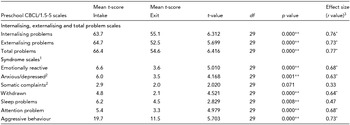
Table 1 presents a comparison between mean t-scores on the three main problem scales and seven subscales of the CBCL/1.5-5 at intake to therapy and at exit from therapy. The higher the t-score, the more symptomatic a child's behaviour is assessed to be. These data show that on each scale and subscale there is a reduction in children's mean scores from intake to exit with the difference being statistically significant at the .01 level in every case apart from the somatic complaints subscale. The size of the observed change on each scale and subscale except the somatic complaints subscale meets the threshold for a large effect (r ≥ .5).
CBCL/1.5-5 – mean t-scores at intake and exit (n = 30).

1 Syndrome scale data presented is raw data, not standardised.
2 p value and effect size derived from Wilcoxon signed-rank test rather than dependent t-test due to non-normal distribution of the difference in pre- and post-scores on these variables.
^r ≥ .5 is considered a large effect (Field, Reference Field2009).
**Statistically significant at .01 level.
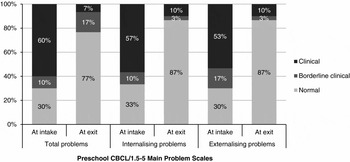
Scores on the three main problem scales are classified into symptom ranges – normal, borderline clinical and clinical – based on standardised population comparisons. This is helpful in terms of assessing the clinical benefit of the changes observed in children's functioning from intake to exit. Figure 1 shows changes in participants’ symptom range classification from intake to exit. The data demonstrate a dramatic reduction in the proportion of children who were classified in the clinical or borderline clinical ranges at intake compared with the proportion that remained in the clinical/borderline clinical ranges at exit in relation to internalising, externalising and total problems. For example, at intake 70% of children demonstrated externalising behaviour that placed them in the clinical or borderline clinical ranges. At exit only 13% remained in the clinical/borderline clinical ranges.
CBCL/1.5-5 Main Problem Scales – changes in symptom range classification from intake to exit (n = 30).

Parent/carer feedback survey
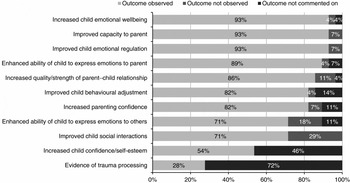
Figure 2 presents a quantitative representation of the thematic coding undertaken in relation to the parent/carer feedback survey. It shows that the most widely reported outcomes concern improvements in children's emotional wellbeing and emotional regulation as well as improvements in parenting confidence and capacity, and improvements in the child–parent relationship. The least commonly noted outcomes were improvements in children's confidence/self-esteem and evidence of their processing of trauma. It is important to note in interpreting this data that parents/carers were not asked to comment on all of these outcomes directly. Trauma processing, for example, was not specifically referred to in the questionnaire but rather questions were designed to explore behavioural and emotional changes that may be indicative of such processing.
Parent survey – qualitative outcome results (n = 28).

End-of-therapy reports
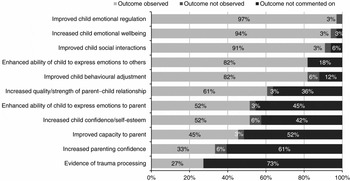
Figure 3 presents a quantitative representation of the thematic coding undertaken in relation to therapists’ end-of-therapy reports. The outcomes most widely noted by therapists are improvements in children's emotional regulation, emotional wellbeing and social interactions. The least commonly reported outcomes pertain to parenting capacity and confidence, and trauma processing.
End-of-therapy reports – qualitative outcome results (n = 33).

In interpreting the data in Figure 3, it is important to remember that these reports were not designed for collecting outcome data related to the objectives of the evaluation. Accordingly, they do not prompt therapists to comment on particular outcomes. Therefore, observations relevant to these evaluation interests may not be recorded. The end-of-therapy reports are intended to focus on the child's progress, rather than the parent's, and therefore are likely to under-report observed changes in the parent, such as improved parenting confidence.
Discussion
A key impetus for the current study was to contribute knowledge to gaps in the research literature concerning effective therapeutic interventions with traumatised and attachment-disturbed preschool-aged children. As noted earlier, while there has been a rapid growth in interest in the application of expressive therapies to the treatment of trauma and attachment problems in children, there is very little systematic research published to support its efficacy. On the other hand, while CCPT and child–parent relationship therapy (two practice frameworks drawn on in the YETI model) are supported by a growing body of evidence regarding their effectiveness in treating a range of mental health problems in children, almost all of this research pertains to school-aged children (Baggerly et al., Reference Baggerly, Ray and Bratton2010; Bratton & Landreth, Reference Bratton, Landreth, Baggerly, Ray and Bratton2010).
The findings of the current study suggest that a trauma-attachment informed expressive therapies intervention in the context of holistic child and family support programmes can achieve significant positive impacts for preschool-aged children associated with healing from developmental trauma. Widely accepted therapeutic tasks in working with traumatised and/or attachment-disturbed children include:
-
• lowering fear/stress arousal and regulating lower brain functions,
-
• enhancing capacity for emotional self-regulation,
-
• building capacity for secure attachment and for relating effectively to others,
-
• facilitating trauma processing and integration and
-
• enhancing self-efficacy (Cairns, Reference Cairns2002; Cook et al., Reference Cook, Spinazzola, Forde, Lanktree, Blaustein, Cloitre and van der Kolk2005; Blaustein & Kinniburgh, Reference Blaustein and Kinniburgh2010; Herman, Reference Herman1992; Hughes, Reference Hughes2006; James, Reference James1994; Jenkins, Reference Jenkins2004; Perry, Reference Perry and Webb2006; Stien & Kendall, Reference Stien and Kendall2004; Streeck-Fischer & van der Kolk, Reference Streeck-Fischer and van der Kolk2000).
The first two of these tasks are generally regarded as the most fundamental, without which further therapeutic progress will be impeded or precluded (Foderaro & Ryan, Reference Foderaro and Ryan2000; Perry, Reference Perry and Webb2006). The findings of the CBCL analysis indicate statistically and clinically significant improvements in behaviours of children that are associated with elevated stress arousal and poor brainstem regulation, like attention difficulties, emotional reactivity and aggression. They also show improvements in another set of behaviours commonly associated with post-traumatic fear states – internalising problems. Chronic internalising of fearful feelings can result in difficulties sleeping, somatic complaints, and anxious or depressed behaviour (Perry, Reference Perry and Webb2006; Streeck-Fischer & van der Kolk, Reference Streeck-Fischer and van der Kolk2000). Children who participated in YETI achieved statistically and clinically significant reductions in internalising behaviours, including significant reductions in withdrawn behaviour, anxious/depressed behaviour and sleep problems. A moderate effect size was also seen in relation to a reduction in somatic complaints although the reduction itself was not statistically significant.
Analyses of the parent/carer feedback survey and therapists’ end-of-therapy reports corroborate the CBCL findings, pointing to widespread improvements in children's emotional self-regulation – such as enhanced ability to express emotions in words rather than actions; self-soothe; recover from upsets; reduce internalising and/or externalising behaviours; and draw on carers to co-regulate emotional states. Parents/carers and therapists also widely observed improvements in the quality of children's relationships with the parent/carer; ability to relate socially to others; sense of self-esteem and self-confidence; and willingness to explore the world. About a quarter of both parent/carer surveys and therapists’ reports also reported indications of children's trauma processing and integration.
Taken together, the findings of the current study therefore suggest that due to participation in the intervention, young children may have increased opportunities to circumvent the entrenchment of complex emotional and behavioural problems commonly associated with developmental trauma and attachment problems; resume a normal developmental trajectory; and experience greater emotional and social wellbeing into the future.
Due to limitations with the study's design, however, it is not possible to say that the observed changes in children will be sustained over time or that they will have long-term positive benefits. Further research is required to establish that claim. Nevertheless, given the timeliness of the intervention in terms of children's developmental stages and the fact that the intervention very often appears to involve fundamental transformations in family and parent–child relationships as well as important developmental and intrapersonal transformations, it would be reasonable to hypothesise that the positive impacts observed on children will have valuable repercussions into the future.
The design of the current study also prevents the attribution of treatment effects to the expressive therapies intervention specifically, as it was not practically or ethically possible to include a control condition. Without a comparison or control group, observed improvements in children may have conceivably occurred with no intervention at all, or they may have occurred due to other programme elements.
It should be noted, however, that therapists’ and parents’/carers’ verbatim observations of changes in children frequently included the making of intelligible connections between specific therapeutic elements or techniques and changes occurring in children's wellbeing and functioning. The impacts of particular therapeutic activities noted by therapists and parents/carers can be seen to align with the kinds of impacts these therapeutic activities and techniques are attributed to have in the research/practice literature. For example, parents/carers frequently attributed improvements in the emotional quality of their relationships with their children to the parenting education and mentoring they received from therapists (a part of child–parent relationship therapy). Similarly, therapists often noted the critical role of somatosensory processes in the initial phase of therapy for lowering a child's fear and stress arousal and enhancing self-regulation prior to being able to successfully engage the child in higher order therapeutic work. These common qualitative insights from parents/carers and therapists strengthen the likelihood that the observed changes in children are not accidental or inevitable or due solely to other programme elements, but are genuinely the result of the application of a theoretically coherent therapeutic framework.
yourtown is hopeful that the strength of these preliminary findings will support interest and investment in a controlled longitudinal study of YETI or other expressive therapies interventions designed for treating trauma and attachment problems in young children in community settings. This is given the enormous value such interventions potentially have in addressing an important area of contemporary public health and social justice concern.
Acknowledgements
The author wishes to acknowledge the generous financial support of the Margaret Pemberton Foundation which enabled yourtown to develop and deliver the expressive therapies intervention from 2011 to 2015. In addition, the expressive therapists employed by yourtown played a central role in the design and theoretical development of the initiative, including Kate Finnila, Lauren Johnson, Veronica Kirkman and Jasmin Roberts. Kim Litchfield, Elisbeth Koberski and Karen Edwards also contributed substantively to the conceptual and practical development of the initiative and/or the design of the research.