Introduction
The concept of co-existence of two species occupying the same habitat and having similar niches has attracted research into understanding of factors controlling species abundance (Chesson, Reference Chesson2000). Species interactions could either affect abundance through competition, leading to competitive exclusion (Siepielski & McPeek, Reference Siepielski and McPeek2010) or the two species may be potentially equal in their ability to compete and therefore populations of both species may persist in neutral coexistence (Bell, Reference Bell2001). However, empirical evidence for true non-competitive co-existence is very limited (Siepielski & McPeek, Reference Siepielski and McPeek2010; Shinen & Navarrete, Reference Shinen and Navarrete2014) and in areas where similar species distributions overlap, competition may lead to small-scale spatial niche separation or partitioning of resources (Schoener, Reference Schoener1974; Aguilera et al., Reference Aguilera, Valdivia and Broitman2013).
Rocky shore communities are well-studied systems and have served as models for ecological theories of how abundance and distribution of species are determined by competition for space and segregation of niches (Connell, Reference Connell1961; Dayton, Reference Dayton1971). Most of the ecological theory derived from intertidal species interactions has been developed from studies of sessile species (Underwood, Reference Underwood2000), while the competition ecology of mobile species such as rocky shore crabs has received relatively less attention (Flores & Paula, Reference Flores and Paula2001). Competition for shelter and food are important factors in determining the abundance and distribution of mobile species such as crabs on rocky shores. Moreover, competitive behaviour is a fundamental factor in determining distribution and abundance in crabs and has been reported from the early settlement stages (Steinberg & Epifanio, Reference Steinberg and Epifanio2011). Previous studies have identified partitioning of spatial resources between crabs co-exisiting in structurally complex intertidal habitats (Navarrete & Castilla, Reference Navarrete and Castilla1990; Meyer, Reference Meyer1994). While resource partitioning in intertidal habitats based on feeding ecology is well known in some taxa (e.g. molluscs, Hawkins et al., Reference Hawkins, Watson, Hill, Harding, Kyriakides, Hutchinson and Norton1989), examples in co-existing intertidal crabs are less well described. Furthermore, even though ontogenetic changes in the ability to utilize resources with increasing size may be expected (Werner & Gilliam, Reference Werner and Gilliam1984), most studies on resource partitioning in crabs with size and sex have focused on spatial separation (e.g. Hines et al., Reference Hines, Lipcius and Haddon1987), rather than trophic niche separation between juveniles and adults that occupy the same habitat.
Stable isotope composition, particularly of carbon and nitrogen, in consumers and prey or dietary sources has been proved a very effective approach in understanding trophic relationhips (Peterson & Fry, Reference Peterson and Fry1987) and an excellent tool to trace the origins of an organism's diet (Gannes et al., Reference Gannes, del Rio and Koch1998) and in determining the trophic level of a species (Post, Reference Post2002). Such studies typically use a relatively small number of samples from a broad range of species making up the food web being studied. More recently, the use of stable isotopes to determine trophic niche width has been proposed, whereby the stable isotopic composition for a larger number of individuals of a single species can provide information on the isotopic range of potential dietary sources, giving a measure of niche width (Bearhop et al., Reference Bearhop, Adams, Waldron, Fuller and Macleod2004). This approach has been used to study changes in niche width in response to ecological change (Layman et al., Reference Layman, Arrington, Montana and Post2007a, Reference Layman, Quattrochi, Peyer and Allgeier2007b) and to compare niche overlap in potentially competing species (Coccia et al., Reference Coccia, Fry, Ramírez, Boyero, Bunn, Diz-Salgado, Walton, Le Vay and Green2016). However, there have been relatively few niche separation studies in co-existing species using stable isotopes in terrestrial (Flaherty & Ben-David, Reference Flaherty and Ben-David2010), freshwater (Coccia et al., Reference Coccia, Fry, Ramírez, Boyero, Bunn, Diz-Salgado, Walton, Le Vay and Green2016) and marine habitats (Olsson et al., Reference Olsson, Stenroth, Nyström and Granéli2009; Young et al., Reference Young, McCauley, Dirzo, Dunbar and Shaffer2010; Matich et al., Reference Matich, Heithaus and Layman2011).
We investigated the trophic ecology and niche overlap in two co-existing rocky shore crabs; the xanthid Leptodius exaratus (H. Milne Edwards, 1834) and the pilumnid Pilumnopeus convexus (Maccagno, 1936). These are both common small crab species that inhabit rocky shores in Kuwait, though both have wider distributions across the Indo-West Pacific and Indian Ocean, respectively (Cooper, Reference Cooper1997; Naderloo & Türkay, Reference Naderloo and Türkay2012). Field investigations have shown that the two species occupy similar habitats and levels on the rocky shores of Kuwait (Al-Wazzan, Reference Al-Wazzan2017). However, there is limited information on the feeding ecology of either species. We applied a stable isotope approach to investigate the potential for resource partitioning between the two species. This tests the hypothesis that where populations of both species persist in the same habitat, there should be some trophic niche separation which prevents competitive exclusion rather than non-competitive occupation of the same niche.
Materials and methods
Study area
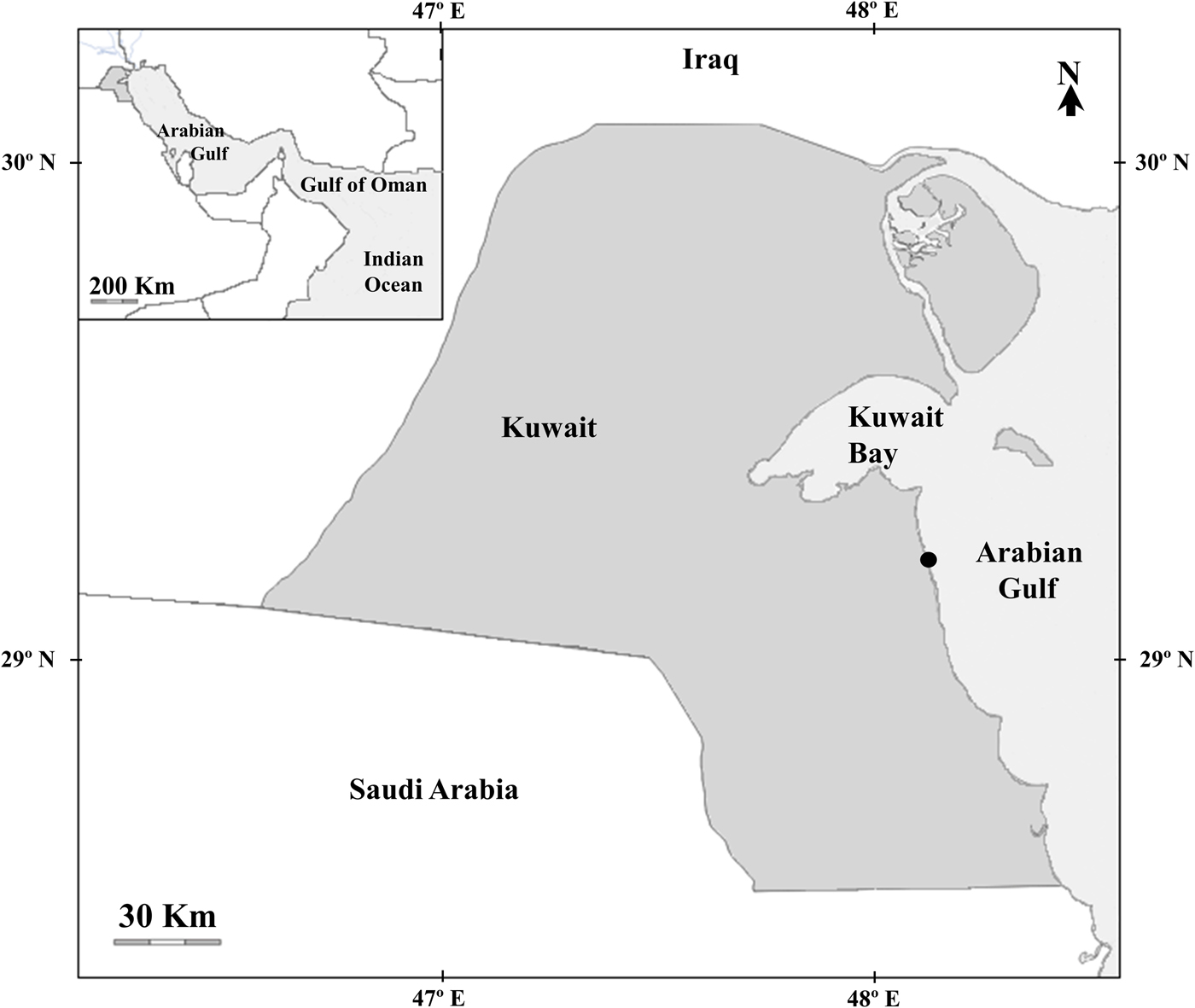
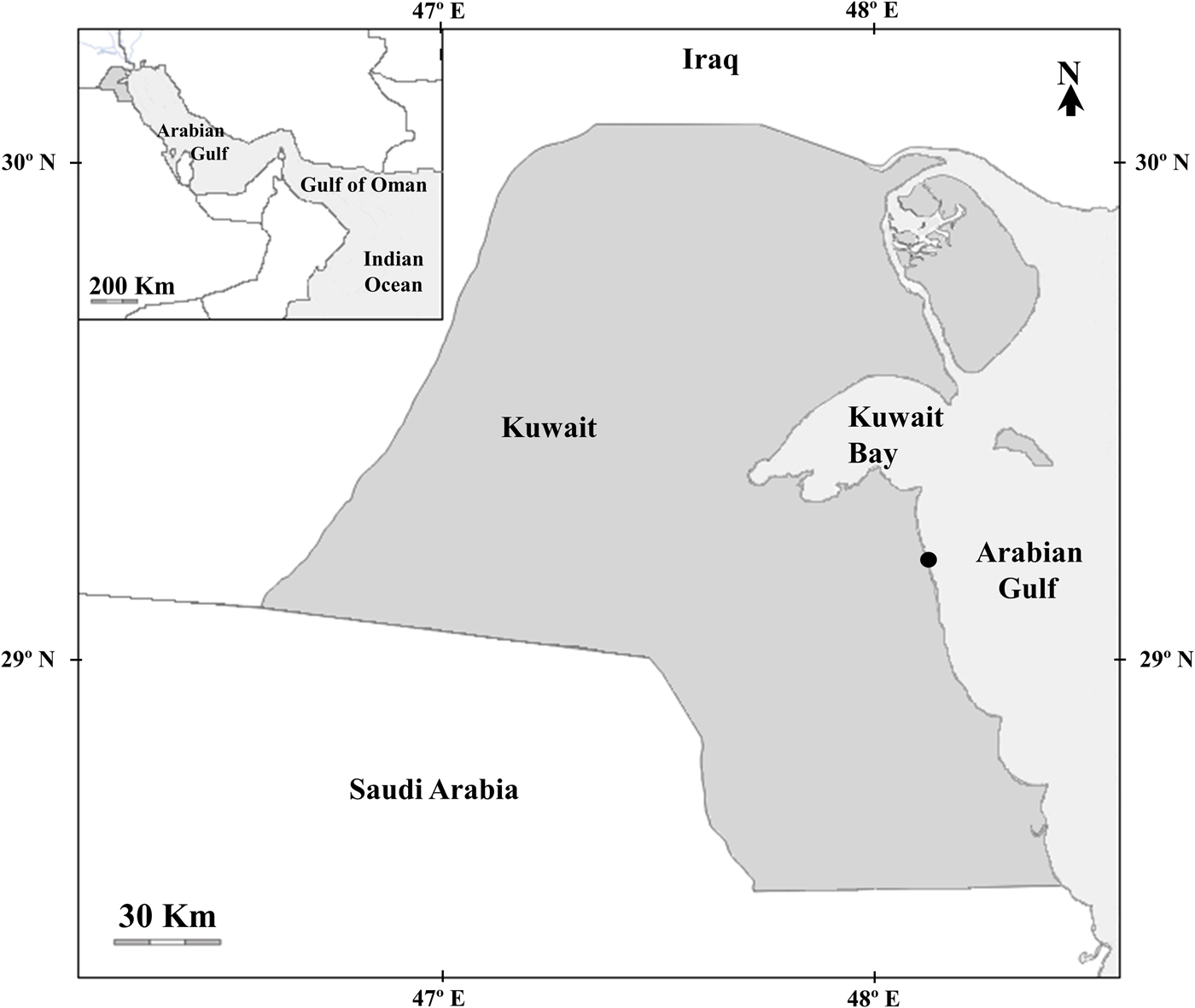
On the Kuwait coast (NW Arabian Gulf), rocky shores are found on the southern rim of Kuwait Bay and are distributed throughout the southern coast. The study was carried out on Al Eqaila shore (29°10′54.7″N 48°07′15.3″E) which is located 27 km to the south of Kuwait City (Figure 1). This shore is a mixed shore dominated by rocky substrate that is exposed only during spring tides. The rocky substrates are made up of calcareous hard rocks (Khalaf, Reference Khalaf1988), subject to moderate-to-high wave energy as well as to subtidal currents (Al-Sarawi et al., Reference Al-Sarawi, Gundlach and Baca1985). The intertidal zone of this site is dominated by boulders of different sizes covering most of the shore levels but more commonly in the higher and middle shores, whereas bedrock dominates the lower part. This site was selected as a model to study the competition between two crab species in Kuwait rocky shore due to the high abundance of both crabs (Al-Wazzan, Reference Al-Wazzan2017).
Sampling site location in Kuwait’s coastline.
Qualitative observation of feeding behaviour and morphology
Before undertaking the stable isotope study, preliminary field observations of crab feeding were made at low tide during multiple site visits (>20) to identify appropriate food sources to include in the mixing models. This comprised visual observation of crab feeding behaviour, including recording of prey items selected and general patterns of foraging behaviour. To improve resolution of prey identification, recordings were made using a digital video camera to allow detailed observations to be recorded. Observations were made in both daylight and dark conditions. To gain a further insight into the range of food types that should be included in the isotopic study, qualitative observations were made of stomach content, morphology of chelae and gastric mills in 10 individual animals for adult and juveniles. Sampled crabs were fixed in 70% alcohol and transferred to the Marine Science Centre at Kuwait University, where the stomachs were removed and dissected and contents were examined under a stereomicroscope. The gastric mills and chelae were also removed and examined.
Sampling of crabs and potential dietary source for stable isotope analysis
A total of 80 crabs for each species were sampled from the study site, 20 juveniles and 20 adults of each sex and species during July 2014. Adults and juveniles were distinguished by size, with maturity in adults confirmed by examination of the length of the propodus of the major chela for males, and the width of the 5th abdominal flap for females (Flores et al., Reference Flores, Saraiva and Paula2002; Lestang et al., Reference Lestang, Hall and Potter2003). Maturity in females was also determined by the size at which the females have presence of eggs or by an unlocked abdominal flap (Walton et al., Reference Walton, Le Vay, Truong and Ut2006). Crab carapace width (CW) was measured to the nearest 0.1 mm using a dial Vernier caliper and for adult crabs one chela was removed by physical manipulation promoting autotomy. Cheliped autotomy is a natural response in crabs and this approach was selected to avoid sacrifice. All crabs sampled were released onto the shore close to the location from which they were sampled. Samples were placed in a labelled plastic bag with species name, CW and sex. In the laboratory, the sex of juvenile crabs was determined using sexual dimorphism and CW measured to the nearest 0.1 mm using a dial Vernier calliper.
Potential diet sources were selected based on the result of the field observation of feeding behaviour and examination of the morphology of the cheliped and gastric mills. Three replicate samples of each potential food species were collected from the intertidal zone (Supplementary Material 1). Potential food sources, comprising benthic fauna and flora samples, were washed with distilled water and soft tissues from animals such as tube worms, bivalves, gastropods, barnacles and hermit crabs after being removed from their hard shells. Whenever possible, the animals were further dissected and muscle tissues sampled. However, for small crustaceans such as isopods and amphipods the whole animal was used. For species where no obvious muscle tissue could be dissected, such as tunicates, a sample of soft tissue was dissected out for isotope analysis.
Stable isotope analysis
The chelae of adult crabs were dissected and their muscle tissue were extracted. Juvenile crabs were dissected and muscle tissue extracted from their chelae and thorax. All tissue samples from the crabs and their potential food sources were oven dried at a temperature of 50°C for 3 days. All samples were finely ground, weighed and packed into tin capsules (8 × 5 mm, Elemental Microanalysis, D008). Samples of ~1 mg were used for animal tissue, whereas samples of ~3 mg were used for algal tissues. All samples were weighed to a precision of 0.01 mg, using a Mettler Toledo MX5 microbalance. Carbon and nitrogen content and stable isotope ratios were analysed using a PDZ Europa Scientific Roboprep elemental analyser coupled to a PDZ Europa Hydra 20/20 stable isotope ratio mass spectrometer (Crewe, UK) at the Stable Isotope Facility, University of California, Davis. Stable isotope ratios in the samples are expressed as delta notation (δ, ‰), deviations from the isotopic ratios found in Pee Dee belemnite and atmospheric nitrogen.
Statistical analyses
A multivariate analysis (MANOVA) was used to test the differences between δ 13C and δ 15N values with sex and stage for Leptodius exaratus and Pilumnopeus convexus. δ 13C and δ 15N were used as dependent variables whereas the sex, stage and species were used as fixed factors. This analysis was performed using SPSS version 22. To investigate isotopic niche width of different size/sex groups of both L. exaratus and P. convexus, the standard Ellipse Areas (SEAc) was calculated using the Stable Isotopes Ellipses (SIBER) package in R, within the SIAR package (Jackson et al., Reference Jackson, Inger, Parnell and Bearhop2011). The Standard Ellipse, which contains 40% of the data, was plotted for each data group using the package functions. The sizes of isotopic niche of the crab groups was compared using the Bayesian Inference model in SIBER (SEA.B). Furthermore, the overlaps between crab niches were calculated using the SEAc value (Jackson, Reference Jackson2016). Prior to the analysis of dietary sources, δ 13C and δ 15N data for each crab species were pooled where there were no significant differences between sexes or between adults and juveniles. Hence, isotopic data for male and female L. exaratus were pooled into two groups: adults and juveniles. For P. convexus, isotope data, all groups were treated separately. A Bayesian mixing model (Moore & Semmens, Reference Moore and Semmens2008) was used to investigate the contribution of food sources to each species sub-group. The model was run for each group separately using the MixSIAR package in R studio (Stock & Semmens, Reference Stock and Semmens2016). The food source list was selected for each crab group separately before running the mixing model (Supplementary Material 2). Isotopic discrimination factors of 0.61 and 2.00 were applied to correct the crab δ 13C and δ 15N values respectively, assuming a single trophic step to each putative food source. Discrimination factors were calculated as mean of values reported for crustaceans in the literature (Supplementary Material 3). The analysis was run several times, with sequential elimination of food sources that contributed less than 1% of the median.
Results
Qualitative observation of feeding behaviour and morphology
The results of the stomach contents examination indicate an omnivorous diet in adults and juveniles of both species. Food fragments that were identified included algae, soft tissue of animal source, shell fragments, broken opercula of snails, and sand particles. The two species have similar powerful, muscular, and asymmetric chelae, in both cases with the inner edge having several teeth or ridges. There are some minor differences in the chelae. In L. exaratus the dactylus is slightly longer with a rounded tip, while in P. convexus it is shorter with a sharper tip. In L. exaratus, when the chela is closed there is a slight gap between the dactylus and propodus, while in P. convexus there is a closer fit. The two crab species have similar gastric mills, in terms of overall morphology, with the gastric mill structures being more developed in adult crabs than in juveniles. Qualitative field observation showed that the crabs exhibited a mixed range of feeding and foraging behaviour. They were observed to graze on macroalgae including filamentous algae and Padina spp. They were also observed manipulating gastropods to crush the shell, eating limpets, and catching mobile prey such as alpheid shrimps, extracting them from refuges. Neither of the two crab species were observed deposit-feeding or filter-feeding, which is consistent with the morphological adaptations decribed above.
Stable isotope signatures in crabs
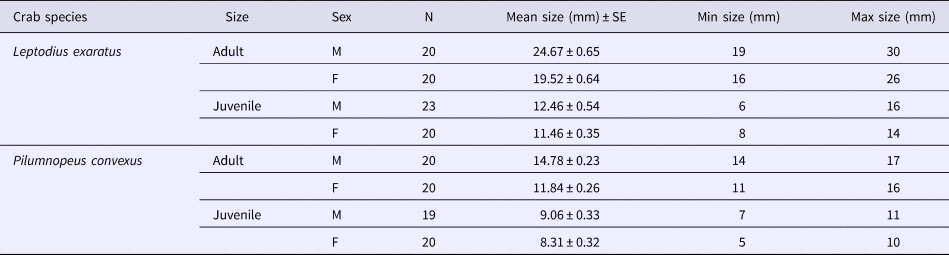
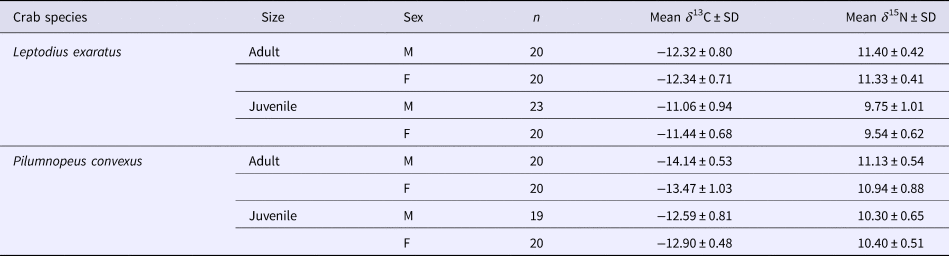
The size measurements of Leptodius exaratus and Pilumnopeus convexus used in the isotopic analysis are presented in Table 1. The results of the multivariate analysis show highly significant differences in δ 13C between the two species (MANOVA: F 1,155 = 149.823, P < 0.001), with L. exaratus having higher δ 13C values. Furthermore, the significantly higher δ 13C values in juveniles of both species compared to the adults (MANOVA: F 1,155 = 78.013, P < 0.001) indicate overall changes in dietary sources with size. However, the significant interaction effect for δ 13C between sex and size (MANOVA: F 1,155 = 7.780, P < 0.001) indicates more consistent dietary sources in juvenile and adult females of P. convexus, compared to adult males. There was no overall significant difference in δ 15N, indicating that the two species are at similar trophic levels. However, there were highly significant differences in δ 15N between adults and juveniles of both species (MANOVA: F 1,155 = 130.570, P < 0.001), indicating that adults of both species are at a higher trophic level compared with their juveniles. However, the significant interaction effect between size and species (MANOVA: F 1,155 = 23.975, P < 0.001) reflects a more consistent and greater difference in trophic level (δ 15N) with size in L. exaratus, with weaker differences in δ 15N values between adult and juvenile P. convexus (Table 2).
Descriptive summary of the morphometric measurements of Leptodius exaratus and Pilumnopeus convexus used in the isotopic study

Stable isotope values (mean ± SD) δ 13C and δ 15N in Leptodius exaratus and Pilumnopeus convexus from Kuwait rocky shores

The results indicate no overall significant difference in either δ 13C or δ 15N between sexes in either species, but highly significant overall differences in both δ 13C (MANOVA-LE: F 1,80 = 38.004, P < 0.001, MANOVA-PC: F 1,75 = 40.445, P < 0.001) and δ 15N (MANOVA- LE: F 1,80 = 132.774, P < 0.001, MANOVA-PC: F 1,75 = 21.480, P < 0.001) values between adults and juveniles in both species. The sex×size interaction was highly significant in δ 13C for the P. convexus (MANOVA: F 1,75 = 8.720, P = 0.004), due to the weak difference between adults and juveniles in females of this species. In contrast, differences in δ 13C between adults and juveniles of L. exaratus are consistent between males and females.
Isotopic niche width
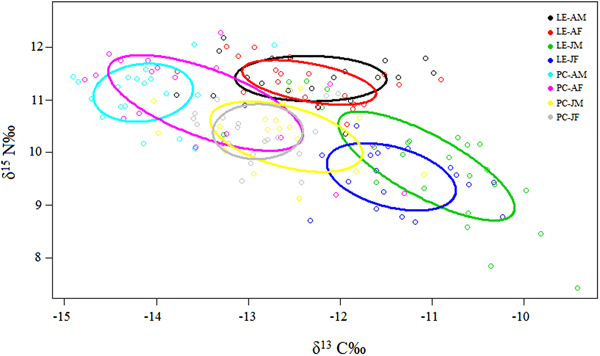
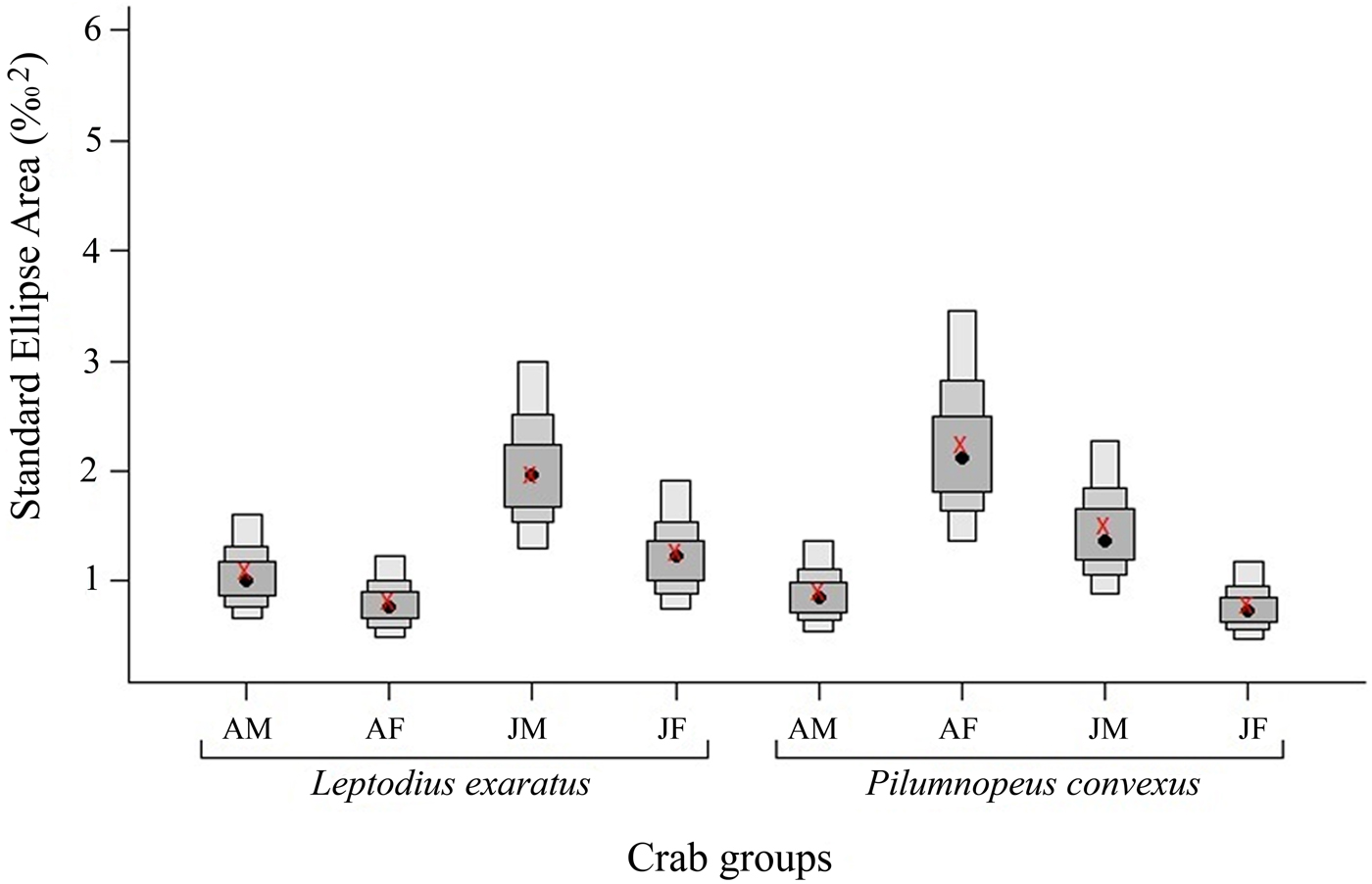
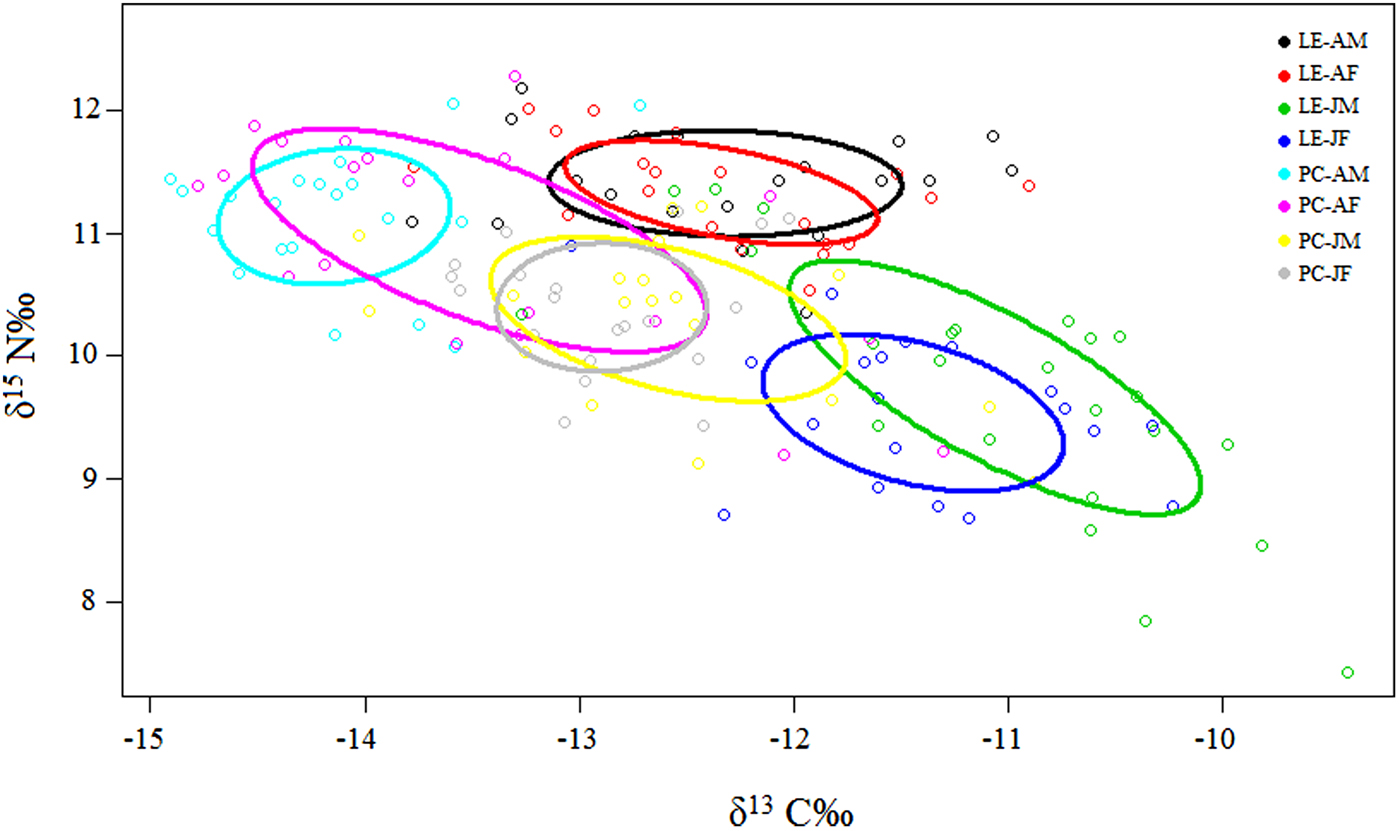
The results of the SIBER analysis show that adult males and females of L. exaratus occupy a similar isotopic trophic niche with narrow N range and broader C range, with males having slightly wider niches than females. Juvenile males have statistically wider isotopic niche width than both adult males (P = 0.02) and females (P = 0.0015) (Figures 2 and 3).
Isotope biplot of size and sex groups of Leptodius exaratus (LE) and Pilumnopeus convexus (PC) showing the standard ellipse area (SEAc). AM, adult male; AF, adult female; JM, juvenile male; JF, juvenile female. The ellipse represents 40% of the data points.
Comparison of isotopic niche widths of Leptodius exaratus and Pilumnopeus convexus groups using the standard ellipse area (SEA.B). The boxes represent the 95, 75 and 50% Bayesian credible intervals, and the black dot shows the mode while the red × represents the (SEAc) value. AM, adult male; AF, adult female; JM, juvenile male; JF, juvenile female.
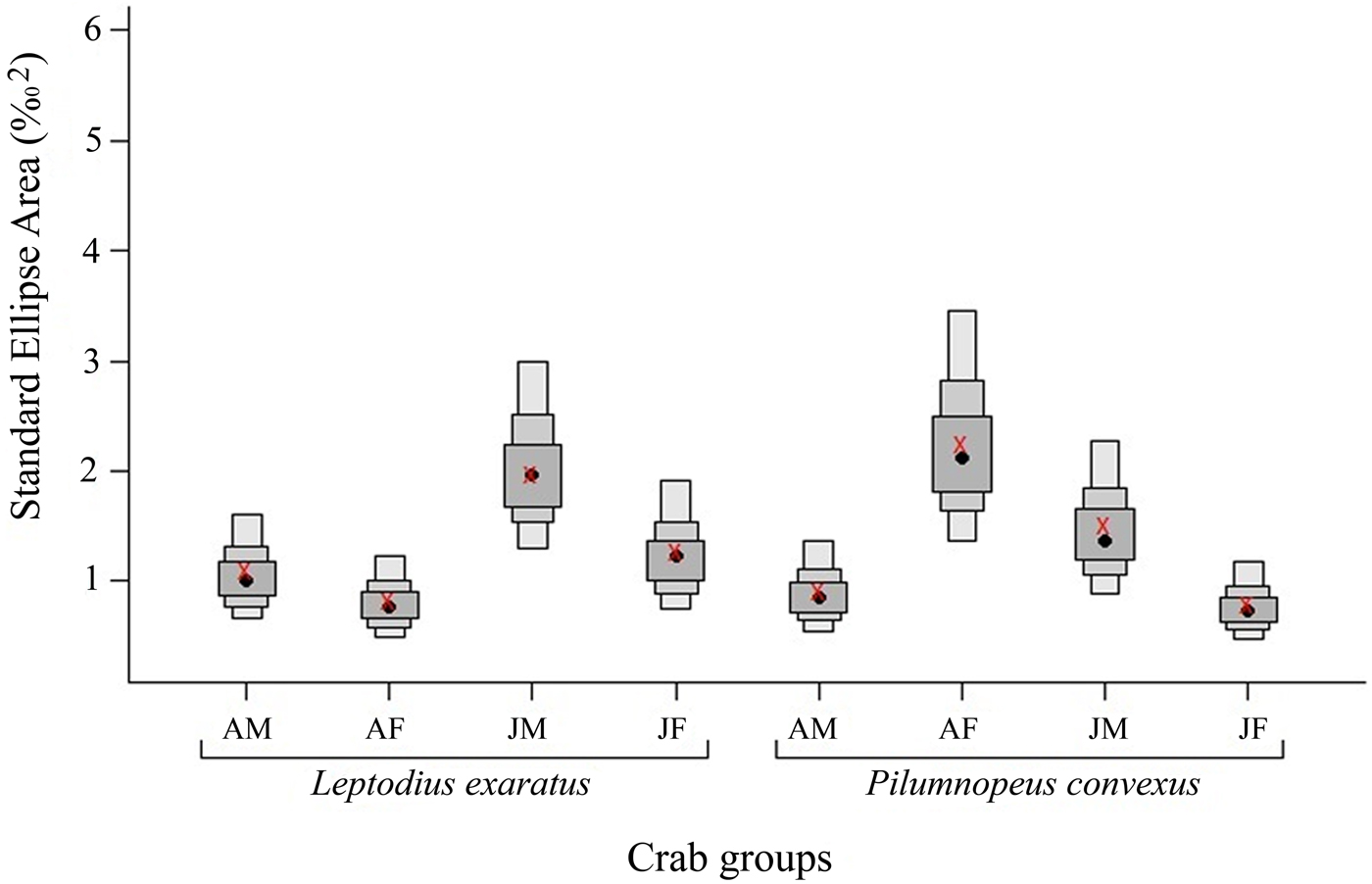
In P. convexus, adult females had significantly wider isotopic niche width than both adult males (P = 0.002) and juvenile females (P < 0.01). Adult females of P. convexus have significantly wider niche width than those observed in adult males (P = 0.01), adult females (P = 0.001) and juvenile females (P = 0.03) of L. exaratus. Pilumnopeus convexus juvenile males on the other hand, had significantly wider food niches than the juvenile females of the same species (P = 0.021) and adult females of L. exaratus (P = 0.03). Moreover, niche width in L. exaratus juvenile males was significantly wider than those of adult (P = 0.004) and juvenile (P = 0.001) females of P. convexus (Figures 2 and 3).
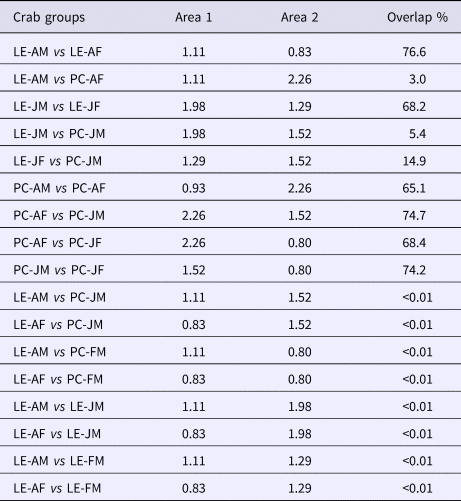
In addition to comparing niche width, the SIBER package also quantifies the relative overlap between the ellipses derived in SEAc. Generally, the overlap was reported to be higher in males and females of the same size and species, than those found between crabs of different sizes and species. In L. exaratus, the overlap between adult males and females was higher than between juveniles. In contrast, in P. convexus, ellipses for the juveniles of both sexes overlapped more than the adult population. There was also a high degree of overlap between adult females and the juveniles of P. convexus (Table 3).
The overlap between the isotopic niches of different size and sex groups of Leptodius exaratus and Pilumnopeus convexus using the standard ellipse area (SEA.c) in SIBER package in R

LE, Leptodius exaratus; PC, Pilumnopeus convexus; AM, adult male; AF, adult female; JM, juvenile male; JF, juvenile female.
Dietary sources
The diverse possible food sources found in the rocky shore habitat have a range of isotopic values from 7.7 to 12.0 for δ 15N and from −19.5 to −11.1 for δ 13C (Supplementary Material 2). The highest δ 15N value was reported for the polychaetes Lepidonotus spp., and Nereis spp. respectively, whereas the lowest δ 15N value was found in the alga Giffordia spp. The highest δ 13C value was found in L. exaratus adults and the lowest δ 15N value was found in the barnacle Microeuraphia withersi.
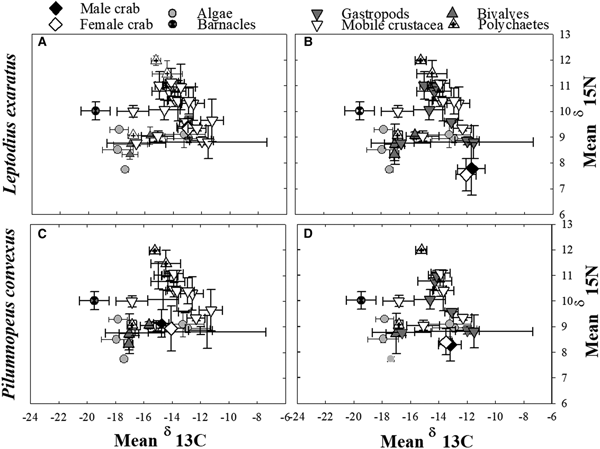
Once the isotopic discrimination factors were applied to the isotopic values of the crabs, the δ 13C and δ 15N values for most crab groups fell within the range of potential dietary sources, except for L. exaratus juveniles which are at the margin of the range of dietary sources, with P. convexus juveniles falling just within that margin. This suggests that some cryptic dietary sources for juveniles were not sampled, hence only data for adult crabs were included in the MixSiar analysis (Figure 4, and Supplementary Material 4).
Dual-isotope food web diagrams of the adult (A, C) and juvenile populations (B, D) of Leptodius exaratus (A, B) and Pilumnopeus convexus (C, D). The data are represented as diamond shapes after applying the discrimination factors. Different diet sources are presented as triangles. Each data point represents the isotopic signature of the each crab and its diet sources as the mean δ 13C and δ 15N (±SD).

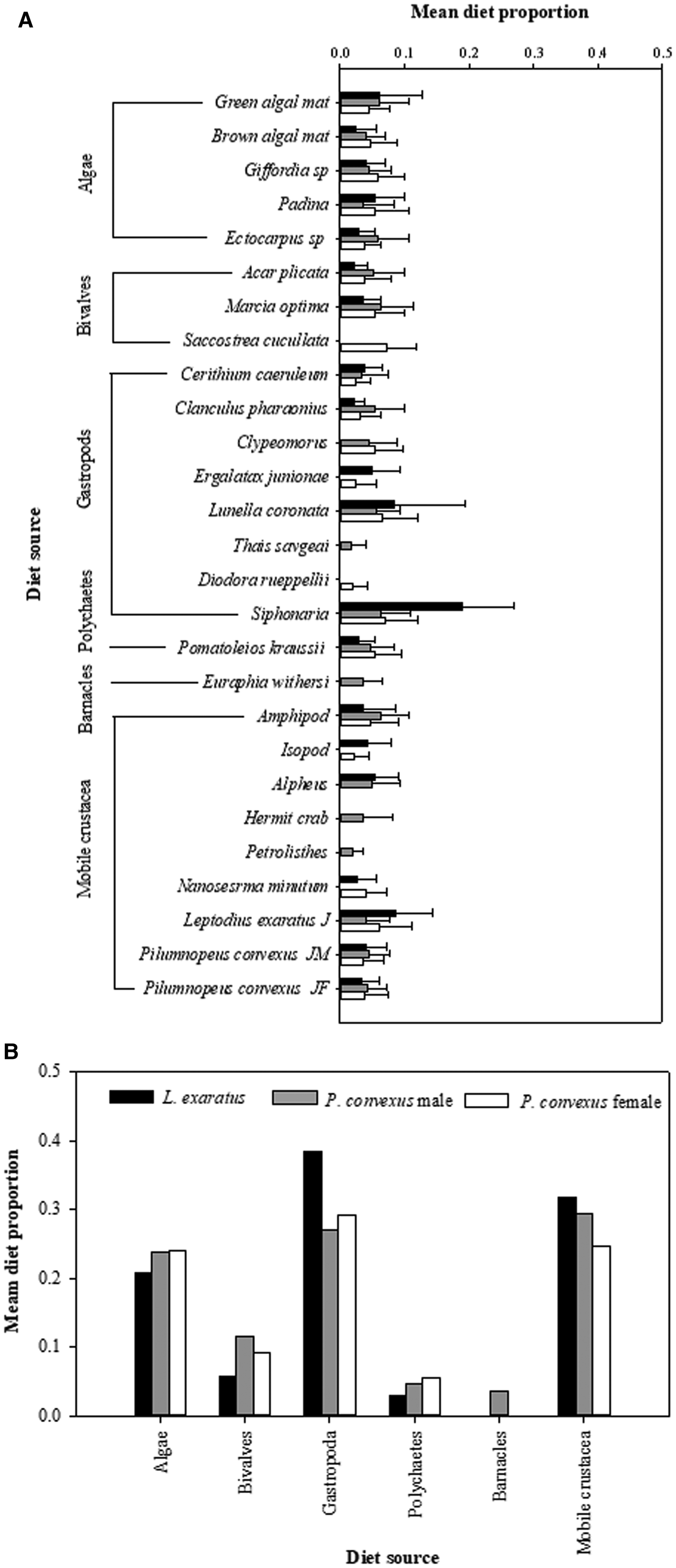
The MixSIAR analysis shows that both crab species had a mixed and diverse diet dominated mainly by benthic intertidal fauna, with some contribution from primary producers. Generally, gastropods, mobile crustaceans and algae appear to be the main contributing sources for adult crabs, as they represent around 90% in L. exaratus and 77% in P. convexus respectively (Figure 5).
The potential diet composition (A) of the adult population of Leptodius exaratus and Pilumnopeus convexus (±SD) in Kuwait rocky shore habitats, and the general diet composition based on the sources type (B).

In L. exaratus, limpets especially Siphonaria spp. are predicted to be an important source of food for the adult crabs, forming an estimated 24% of their diet. In addition to limpets, four different species of snails (Lunella coronata, Cerithium caeruleum, Clanculus pharaonius, Ergalatax junionae) make up 17.5% while mobile crustaceans make up around 32% of adult diet in L. exaratus. In contrast, the result of the mixing model indicates that P. convexus has a broad mixed diet of benthic fauna and algae, with some differences between the diets of males and females of different sizes. For example, the predictions are that algae make up 23% in the diet of adults, with slightly higher contributions in females. Around 76% of the adult diet of P. convexus is from animal sources, being composed of 26–28% gastropods, 23–30% small crustaceans and 13–16% bivalves (Figure 5A).
Generally male P. convexus have higher proportions of mobile crustaceans in their diet, while females have higher dietary contribution from gastropods (Figure 5B). Unlike the result of the SIBER analysis, which indicates that adult female P. convexus have a wider isotopic food niche than adult males, the results of the mixing model suggest that diets of males and females are equally diverse in terms of taxa. However, females appear to feed more on gastropods and bivalves whereas the males consume more crustaceans.
Furthermore, the results of the mixing model indicate mobile crustaceans contribute to 32% of the adult diet. This contribution of mobile crustaceans includes some larger predators such as alphaeids which represent around 6% of the adult's diet. In addition, small crabs appear to make up a component of the crustacean food source for adult crabs, contributing in total around 19% of the adult crab tissue. Predation on smaller crabs, including conspecifics, would contribute to the trophic shift and higher δ 15N values observed in L. exaratus adults (Figure 5). The isotopic model presented here included potential for cannibalism on juveniles, and in L. exaratus results indicate a potential for conspecific juveniles to make up half of smaller crabs consumed. In P. convexus, on the other hand, the mixing model indicates that potential predation on L. exaratus juveniles is lower, and that potential cannibalism on conspecifics is higher (Figure 5).
Discussion
This was the first investigation – regionally and globally – of niche differentiation and competition in co-existing crab species using a stable isotope approach to study their feeding ecology. The stable isotope signatures for primary producers in the rocky shore habitat studied ranged from 7.7–9.3 for δ 15N and from −21.0–9.1 for δ 13C. The δ 13C values are within the range reported in previous studies in the Arabian Gulf (Jones et al., Reference Jones, Price, Al-Yamani, Al-Zaidan, Khan, Munawar and Price2002; Al-Zaidan et al., Reference Al-Zaidan, Kennedy, Jones and Al-Mohanna2006; Al-Maslamani et al., Reference Al-Maslamani, Le Vay, Kennedy and Jones2007, Reference Al-Maslamani, Walton, Kennedy, Al-Mohannadi and Le Vay2013), while the δ 15N values are much higher than those reported previously in the region (Al-Maslamani et al., Reference Al-Maslamani, Le Vay, Kennedy and Jones2007, Reference Al-Maslamani, Walton, Kennedy, Al-Mohannadi and Le Vay2013). The latter could relate to the location of the study site near an urbanized environment with high human population density, which may be a source of anthropogenically enriched δ 15N inputs (Risk et al., Reference Risk, Lapointe, Sherwood and Bedford2009). The δ 13C values for Leptodius exaratus and Pilumnopeus convexus were within the ranges reported in other crabs on Kuwait mudflats (Al-Zaidan et al., Reference Al-Zaidan, Kennedy, Jones and Al-Mohanna2006). Although δ 15N values seem to be high for the rocky shores they were within the ranges reported in the blue crab Callinectes sapidus juveniles in Delaware Bay, north-east USA (Fantle et al., Reference Fantle, Dittel, Schwalm, Epifanio and Fogel1999) and higher than those reported by Dittel et al. (Reference Dittel, Epifanio and Fogel2006) for C. sapidus in the same location. The relative δ 15N data, compared with other species sampled, indicate that adults of both L. exaratus and P. convexus species occupy a high trophic level within the rocky shore community, suggesting similar functional roles in their habitat and potential for competition for food resources. Predators influence the species diversity of rocky shore communities (O'Connor et al., Reference O'Connor, Emmerson, Crowe and Donohue2013). Top predators not only affect their prey directly through predation but they are also indirectly involved in shaping the shore community structure (Trussell et al., Reference Trussell, Ewanchuk and Bertness2002, Reference Trussell, Ewanchuk and Bertness2003). Leptodius exaratus and P. convexus are likely to influence community structure as they are abundant and occupy a high trophic position in the food web on the rocky shore habitats they inhabit. Leptodius exaratus is the target of an intertidal bait fishery on some shores (Al-Wazzan, Reference Al-Wazzan2017), with some potential effects of release of predation pressure on community structure on rocky shores.
In both species, morphological features indicate that the gastric mill and chelipeds are similar to those found in carnivorous crab species, or in omnivores that feed predominantly on animal food. Both species have a powerful muscular chela that is functionally adapted to crush shells and could determine diet selection. In a review on claw morphology, Seed & Hughes (Reference Seed and Hughes1995) described how chela morphology could influence or reflect feeding habits in crabs. They found that crabs that feed on fast mobile prey generally have fast-acting chelae, but their chelae are weak compared with crabs specialized in feeding on slow molluscan prey, where the chelae are slow acting but muscular and very powerful. Moreover, the same authors have suggested that the size of the prey selected by the crabs is critical to minimize predation effort and time spent feeding, as well as to maximize net energy intake and avoid chela damage. Kennish & Williams (Reference Kennish and Williams1997) have found that diet preference in the rocky shore crab Grapsus albolineatus depends on chela morphology, while Kennish et al. (Reference Kennish, Williams and Lee1996) report that feeding behaviour, diet availability, morphology and digestibility were all factors involved in diet preferences in G. albolineatus.
Although observational studies are very challenging as a means to obtain sufficient information about feeding patterns and diet preferences (Gannes et al., Reference Gannes, del Rio and Koch1998), the use of field observation in the present study helped refine the range of dietary sources included in the isotopic mixing model. The isotopic results indicate that both species have a mixed diet dominated mainly by benthic intertidal fauna and some primary producers, though P. convexus has a more diverse diet than L. exaratus. The isotopic data indicate that limpets (Siphonaria spp.) are an important source of food for both L. exaratus and P. convexus, which is consistent with field observation of crabs feeding on limpets which were distributed across the shore, being most abundant on the high and mid shore. According to Phillips et al. (Reference Phillips, Newsome and Gregg2005) combining diet sources that have similar isotopic signatures and/or those which belong to the similar functional groups can help interpretation of results in mixing models. In the present study, the MixSIAR mixing model used to study the dietary sources in L. exaratus and P. convexus required multiple dietary sources, due to the diversity of species the crabs were observed to forage on. As the diets of both species were so diverse, the pooling of prey into broad taxonomic groups was useful in interpreting the differences in diets between the crab species and sizes. However, it is also important to remember the limitations of a stable isotope approach in studying energy flow and food web interaction in open systems such as rocky shore habitats (Peterson, Reference Peterson1999; Vander Zanden & Rasmussen, Reference Vander Zanden and Rasmussen1999); intertidal studies conducted at low water may miss some components of food webs. For example, mobile prey transported onto the shore with the tide may be omitted as dietary sources for intertidal species and the effect of mobile predators cannot easily be included.
While the MixSIAR analysis was not sufficient to clearly determine differences in diet composition, the δ 13C data show that the two species have significantly different dietary sources of carbon, while the SIBER analysis also indicates separation of isotopic trophic niche between adults of the two species. These observations indicate that co-existence of these two crab species is mediated to some extent by partitioning of resources through subtle differences in feeding ecology, rather than non-competitive sharing of the same niche. Similar separation of dietary niche enabling co-existence with partitioning of food resources is known in other intertidal taxa including starfish (Menge & Menge, Reference Menge and Menge1974) and prosobranchs (Hawkins et al., Reference Hawkins, Watson, Hill, Harding, Kyriakides, Hutchinson and Norton1989). In the two species studied here, there is also some potential for habitat or spatial resource partitioning; Al-Wazzan (Reference Al-Wazzan2017) reported that while L. exaratus and P. convexus both inhabit refuges such as holes, cracks, crevices as well as spaces underneath rocks to avoid predation (Good, Reference Good1992), L. exaratus was found more frequently under rocks associated with wet substrate whereas P. convexus was found more frequently in drier locations such as rock crevices and loose rocks associated with dry substrate (Al-Wazzan, Reference Al-Wazzan2017). This suggests some physiological or behavioural differences between the two species, which could separate their spatial niches at a fine scale, with relative competitive advantage dependent on localized conditions (Siepielski & McPeek, Reference Siepielski and McPeek2010). Previous studies of intertidal crabs have indicated spatial resource partitioning based on preferences for different microhabitats (Navarrete & Castilla, Reference Navarrete and Castilla1990), with potential for competitive exclusion where there is direct overlap in habitat requirements (Steinberg & Epifanio, Reference Steinberg and Epifanio2011). Our results suggest that stable co-existence of the two crab species (Al-Wazzan, Reference Al-Wazzan2017) is mediated by trophic niche separation and dietary resource partitioning, with further (unquantified) potential for spatial resource partitioning at the microhabitat level. The isotopic mixing model also indicates the potential of adult predation on juveniles, including conspecifics in both species, which is consistent with competition for space (refuges), and the potential for density-dependent inter- and intraspecific competition.
In the present study, the overlap between dietary niches was greater between conspecific adult males and females, with more separation between crabs of different sizes and between the two species. Hence, the results indicate that L. exaratus adult males and females occupy similar trophic niches, with a narrow δ 15N range and broader δ 13C range, while there are clear differences in trophic niche between juveniles and adults which may relate to ontogenetic changes in the ability to access prey with increasing size and cheliped development (Werner & Gilliam, Reference Werner and Gilliam1984). The trophic niche for male L. exaratus was slightly wider than for females, which could relate to sexual dimorphism in morphology and size; male crabs are larger and have more powerful chelae which could affect the range of accessible prey. In contrast, the observation that P. convexus adult males have a much narrower trophic niche than females is more difficult to explain from differences in morphology. The isotopic niche width model of Bearhop et al. (Reference Bearhop, Adams, Waldron, Fuller and Macleod2004) quantifies the dispersion of individual consumer isotopic values, while establishment of different isotopic signatures in consumers implies that individuals within a population exhibit consistently different dietary specialization over a period of weeks or months prior to sampling (Gamboa-Delgado & Le Vay, Reference Gamboa-Delgado and Le Vay2009). Hence in a population with a wide isotopic niche, each individual is likely to be consuming a narrow range of dietary sources, from a range of prey that are isotopically diverse on a scale that drives isotopic diversity in consumers. Conversely, a narrow trophic niche could reflect two scenarios; either a population of individuals each with a sufficiently broad diet of isotopically diverse prey leading to an ‘average’ isotopic signature in consumers, or of individuals each with a narrow diet of isotopically homogenous prey. In P. convexus, the relatively narrow isotopic niche width in adult males may reflect greater mobility in males, allowing them to access a wider range of isotopic sources in their prey, resulting in more uniform integrated isotopic signatures of individual male consumers. It is also possible that morphological differentiation may influence differences in isotopic niche width; the larger chelae in males may enable more specialized feeding on prey that females are less able to access. In contrast, less mobile females may be limited to dietary sources within narrower home ranges, so that their isotopic signature as consumers may reflect a patchy distribution of isotopically diverse prey. While impossible to test from the present data, this presents an interesting avenue for future research focusing on small-scale isotopic mosaics to investigate foraging range in individual consumers on rocky shores, mirroring an approach that has been previously applied on wider oceanic and intermediate estuarine scales (Carmichael et al., Reference Carmichael, Rutecki, Annett, Gaines and Valiela2004; Cherel & Hobson, Reference Cherel and Hobson2007).
Supplementary material
The supplementary material for this article can be found at https://doi.org/10.1017/S0025315419000134.
Author ORCID
Zainab Al-Wazzan, 0000-0003-2406-4757.
Acknowledgements
The authors would like to thank the Environment Public Authority (EPA) and Marine Science Centre at Kuwait University for providing laboratory facilities in Kuwait. We thank Dr Raquel Quintã for her unlimited help, support and guidance during the isotope analysis and Dr Riza Naderloo from Tehran University and his team for identifying crab specimens and his guidance with mouth parts and gastric mills morphology. We also thank technical staff at the Tropical Laboratory and other laboratories in the School of Ocean Sciences for their assistance during the practical work.
Financial support
This research received no specific grant from any funding agency, commercial or not-for profit sectors.