INTRODUCTION
The treatment of parasitic nematodes with anthelmintic drugs inevitably leads to the appearance and spread of anthelmintic resistance (Coles, Reference Coles1999; Kaplan, Reference Kaplan2004). This process has progressed particularly rapidly among the parasites of small ruminant livestock where resistance to all the major broad-spectrum anthelmintics presents a significant problem for agriculture throughout the world (Bartley et al. Reference Bartley, Jackson, Coop, Jackson, Johnston and Mitchell2001, Reference Bartley, Donnan, Jackson, Sargison, Mitchell and Jackson2006; Pomroy, Reference Pomroy2006). Resistant parasite isolates that are maintained by experimental passage in the absence of drug treatment retain their ability to survive subsequent drug exposure, demonstrating a heritable shift in drug sensitivity. A major current research goal is to identify specific genetic changes responsible for and associated with anthelmintic resistance that may serve as genetic markers of resistance. Such markers would allow resistance to be monitored easily and identified at an early stage, before genetic changes in the parasite reach the point where significant treatment failure occurs. This review discusses a number of aspects of parasite genetics that are relevant to the identification of genetic markers of anthelmintic resistance and their ultimate application as molecular diagnostic tests in the field. Our focus will be primarily on trichostrongylid nematodes of small ruminants, in particular Haemonchus contortus, in which anthelmintic resistance is most advanced and our understanding is greatest.
The major approach to investigate the molecular genetic basis of anthelmintic resistance to date has been to study candidate genes. Consequently, the major focus of this review is to discuss aspects of parasite genetics and population biology that are relevant to the application and interpretation of candidate gene studies. However many of the concepts discussed in this review have major consequences for the future application of genome-wide approaches once parasitic nematode genome resources become available. The limitations of candidate gene studies and the potential value of genome-wide approaches in anthelmintic resistance research have been reviewed in detail elsewhere (Gilleard, Reference Gilleard2006). The power of genome-wide approaches is well illustrated by the tremendous progress that has been made in recent years on drug resistance research in the malaria parasite Plasmodium falciparum (Anderson, Reference Anderson2004).
ORIGINS OF RESISTANCE
Anthelmintic treatment provides a survival advantage for parasites carrying mutations that reduce drug efficacy. Surviving parasites pass these mutations to their offspring and so increase in frequency during subsequent parasite generations if selection is maintained. Eventually this may lead to a significant proportion of parasites that are insensitive to therapeutically relevant doses of drug and treatment fails. The availability of resistance alleles on which selection can act is a prerequisite for the development of resistance. Their initial frequency at the time anthelmintic treatment is first applied is a major determinant of the rate at which resistance develops. Consequently, it is worth considering the different ways in which anthelmintic resistance-conferring mutations could originate in parasitic nematode populations and how this affects their initial presence. Firstly, the resistance mutation may be ancient, having pre-existed in the parasite population for a long period of time prior to the onset on anthelmintic use. In this case, all resistance alleles have a common origin. Mutation and recombination since the appearance of resistance will lead to some difference in markers between alleles which will increase with age of the resistance mutation. There may have been sufficient time before the onset of anthelmintic selection for such an allele to rise to an appreciable frequency although this will depend on the age of the mutation and whether there are any fitness costs associated with it. Secondly, a novel resistance mutation could arise either immediately before, or during the period in which anthelmintic is used. Again, all resistance alleles in a particular population will have a common origin and be almost identical since there will have been little time for subsequent sequence change. Their initial frequency will be very low, possibly even a single representative in the population. Thirdly it is possible that resistance alleles might appear recurrently if mutation is common, with each event occurring on a different genetic background. In this case resistance alleles will not have a common origin. Each allele may have a widely different set of associated markers although by chance one would expect mutations to occur on the most common allelic types. The frequency of the resistant alleles in this situation would be higher than for a single new mutation but possibly not as high as a pre-existing allele. Fourthly, resistance may have arisen elsewhere and alleles be brought into the parasite population by migration from another resistant population, likely brought about as a consequence of host movement. The impact of such migration would depend on whether a single host or an entire flock was responsible for introducing resistance. The relationship between different resistance alleles would reflect their origin in the other location.
Understanding the origin, number and diversity of resistance alleles in parasite populations has a direct bearing on the design and interpretation of candidate gene studies and genome-wide approaches to identify resistance-conferring mutations; this will become apparent over the course of this review. The origin and diversity of resistance alleles is also very relevant to the design and application of molecular diagnostic assays once genetic markers have been identified. In addition, it has important practical implications for parasite control strategies. For example, the extent to which resistance alleles arise independently in different parasite populations, as opposed to being introduced by migration, will determine the relative importance of quarantine drenching versus other aspects of ‘on-farm’ anthelmintic use.
For many years, the general view has been that the selection of pre-existing alleles is the predominant way in which anthelmintic resistance mutations originate in parasitic nematode populations. However, we suggest that whilst there is some evidence to support this, it is not definitive and much of the available molecular genetic evidence is also consistent with, and indeed in some cases supports, the independent appearance of more recent mutations. More detailed research is required to resolve these issues. The relevant background information on sequence variation in parasitic nematodes will be discussed before considering the current evidence supporting each of the different potential origins of resistance.
Sequence variation in parasitic nematodes
High levels of genetic variability have been reported in parasitic nematodes from the first occasions when biochemical techniques became available to assess allozyme variation (Nadler, Reference Nadler1987). A variety of techniques, including restriction enzyme analysis, SSCP and direct sequencing of both mitochondrial and nuclear DNA have all confirmed this variability (Anderson, Blouin and Beech, Reference Anderson, Blouin and Beech1998; Blackhall et al. Reference Blackhall, Liu, Xu, Prichard and Beech1998a, Reference Blackhall, Pouliot, Prichard and Beechb; Blackhall, Prichard and Beech, Reference Blackhall, Prichard and Beech2003; Blouin et al. Reference Blouin, Dame, Tarrant and Courtney1992, Reference Blouin, Yowell, Courtney and Dame1995; Braisher et al. Reference Braisher, Gemmell, Grenfell and Amos2004; Grillo, Jackson and Gilleard, Reference Grillo, Jackson and Gilleard2006). A standardized measure of sequence variability is needed in order to provide a quantitative comparison between different organisms. One such measure is nucleotide diversity, which represents the probability on average that two sequences chosen at random will differ at a specific nucleotide position (Nei and Tajima, Reference Nei and Tajima1981). For small values, this is approximately equivalent to the average sequence divergence.
Typical values for nucleotide diversity in human populations range up to 0·0015 for non-coding, intron sequences (Aquadro, Bauer DuMont and Reed, Reference Aquadro, Bauer DuMont and Reed2001). For the invertebrate Drosophila melanogaster, which has been studied extensively in this regard, this value ranges up to 0·028 for similar, non-coding sequences. This compares with a value in the free-living nematode Caenorhabditis elegans of 0·011 for mitochondrial sequence, which is known to be more variable than nuclear DNA (Thomas and Wilson, Reference Thomas and Wilson1991). Estimates of diversity in parasitic nematodes are as high as 0·026 based on mitochondrial and nuclear DNA sequence with the trichostrongylid nematodes being the most diverse (Blouin, Reference Blouin1998). A striking example of this variability is reported in a recent study of T. circumcincta in which 77 different haplotypes were found for a 350 bp fragment of the mitochondrial ND4 gene from just 85 individuals (Braisher et al. Reference Braisher, Gemmell, Grenfell and Amos2004).
Nucleotide diversity is directly related to the mutation rate and population size (Anderson et al. Reference Anderson, Blouin and Beech1998). Both of these factors are likely to contribute to the levels of genetic diversity in parasitic nematodes. Although it is difficult to estimate effective population sizes accurately, these are likely to be extremely large for trichostrongylid nematode populations in particular. Adult parasite burdens can consist of thousands of worms per host with each female producing perhaps thousands of eggs per day (Urquhart et al. Reference Urquhart, Duncan, Armour, Dunn, Jennings and Jennings1996). Effective population sizes will be smaller than the total number of eggs produced but are nevertheless huge compared to most other dioecious organisms. It is likely that high mutation rates also contribute to high levels of genetic variation. It has been suggested, based on long branch-lengths among nematodes in phylogenetic studies, that nematodes may have higher mutation rates than other organisms (Anderson et al. Reference Anderson, Blouin and Beech1998; Blouin, Reference Blouin1998, Reference Blouin2000). Recent studies suggest that mutation rates of both mitochondrial and nuclear DNA in C. elegans are even higher than those derived by phylogenetic estimates (Denver et al. Reference Denver, Morris, Lynch, Vassilieva and Thomas2000, Reference Denver, Morris, Streelman, Kim, Lynch and Thomas2005). Per-nucleotide mutation rates of 9×10⁻⁹ and 8×10⁻⁹ have been determined for nuclear DNA in C. elegans and D. melanogaster respectively (Denver et al. Reference Denver, Morris, Lynch and Thomas2004; Haag-Liautard et al. Reference Haag-Liautard, Dorris, Maside, Macaskill, Halligan, Charlesworth and Keightley2007).
Nucleotide diversity measures single nucleotide substitutions (SNPs) among sequences. However, it is clear that insertion-deletion events are responsible for a large proportion of sequence variation. Comparison of random read sequences along with overlapping BAC clones from the H. contortus genome project confirms this. Insertion-deletions of a few nucleotides to many kb are common-place in this organism (data not shown). Based on estimates of sequence diversity and examination of the H. contortus genome project shotgun sequence, we approximate that, on average, two sequences of DNA from different individual H. contortus haplotypes typically differ at about 20–30 nucleotide positions per kb. This value may be only 0–5 at the lowest extreme and be as high as perhaps 200 at the highest. Along side the SNP variation there will thus be several small insertion-deletions and occasionally much larger length variation. It is into this genetic background that a new resistance mutation would appear.
The case for pre-existing alleles
Trichostrongylid nematodes appear to be at least as variable as other invertebrate species and perhaps more so. The likelihood that a resistance mutation exists prior to the start of anthelmintic treatment is correlated positively with variability and so we might expect their presence to be common. In practical terms, direct evidence that resistance alleles in fact pre-exist in trichostrongylid nematodes comes from the ease and speed with which resistance can be selected by treatment of apparently susceptible populations. For example, ivermectin resistance can develop in as few as three generations of treatment of experimental infection and selection from an H. contortus isolate not previously exposed to the drug (Coles, Rhodes and Wolstenholme, Reference Coles, Rhodes and Wolstenholme2005). Providing one can be sure that the original population did not contain worms previously exposed to anthelmintic, this supports the existence of resistance alleles at relatively high frequency prior to selection.
Early molecular work on benzimidazole (BZ) resistance also appears to be consistent with the presence of pre-existing resistance alleles, although the evidence needs careful interpretation. The first studies on H. contortus examined three susceptible and three BZ-resistant populations from different geographical locations (Roos et al. Reference Roos, Boersema, Borgsteede, Cornelissen, Taylor and Ruitenberg1990). Probing of genomic Southern blots with an isotype 1 β-tubulin probe revealed a greater number of hybridizing fragments in the susceptible populations than in the resistant, providing evidence of selection. Drug treatment of the susceptible population progressively reduced the number of hybridizing fragments from five to one as resistance increased. Ultimately it was shown that the selected RFLP fragment contained a substitution at position 200 of the β-tubulin protein that confers loss of BZ binding and resistance to the drug (Kwa, Jetty and Roos, Reference Kwa, Jetty and Roos1994). Similar results have also been reported for Trichostrongylus colubriformis (Grant and Mascord, Reference Grant and Mascord1996).
These data can be interpreted as the presence of a resistance mutation pre-existing on a DNA fragment with a characteristic RFLP pattern. Anthelmintic selection then favours survival of individuals harbouring this fragment, which ultimately predominates. However, this is not the only possible interpretation. An alternative would be that the multiple RFLP patterns in the unselected populations are all susceptible haplotypes with no pre-existing resistance mutation. A spontaneous mutation arising in the population shortly before or following the start of selection would, of necessity, arise on one of these haplotypes. This RFLP haplotype would then come to predominate following selection and carry the resistance mutation. Hence, the result can be explained equally by the presence of a pre-existing mutation or a more recent spontaneous mutation. Given the rapid development of resistance it would seem that a pre-existing allele at relatively high frequency is the most likely explanation. Our point is that we cannot rule out spontaneous mutation conclusively and that the evidence again depends on the confidence with which one can be sure that the initial population did not contain worms that had been previously exposed to anthelmintic selection.
Sequencing of resistance alleles has identified identical resistance alleles in different parasite populations, which is also consistent with the presence pre-existing resistance alleles. For example, a detailed study of sequence diversity of isotype-1 β-tubulin in several trichostrongylid species from goats in France found that some of the resistance alleles present on different farms had 100% sequence identity over a 460 bp genomic fragment (Silvestre and Humbert, Reference Silvestre and Humbert2002). The key feature of this study was that the farms were closed herds and had not introduced infected animals since they had been established up to 20 years previously (Cabaret and Gasnier, Reference Cabaret and Gasnier1994). Hence, it was reasoned that any shared resistance alleles must have been present in the founding worm populations prior to formation of the herds (Silvestre and Humbert, Reference Silvestre and Humbert2002). However, there is again another possible interpretation. If different T. circumcincta populations show little between-population genetic differentiation, as has been suggested by several studies (Braisher et al. Reference Braisher, Gemmell, Grenfell and Amos2004; Grillo et al. Reference Grillo, Jackson, Cabaret and Gilleard2007), then one would expect the range and frequency of haplotypes at any particular locus to be similar between different farms; including haplotypes at the isotype-1 β locus. Hence, if there was no pre-existing F200Y mutation, but instead a mutation arose just before or during selection, it would have to appear on one of the haplotypes already present in the population; most likely one of those present at high frequency. Since the same susceptible haplotypes are likely to be present at similar frequencies on the different farms one would expect identical resistance alleles to independently arise quite frequently. Once again, although the data are consistent with pre-existing alleles they are also consistent with more recent spontaneous mutations.
In summary, whilst results of many of the early molecular studies of anthelmintic resistance are consistent with the hypothesis that resistance alleles are present prior to selection, other interpretations are possible. One must also bear in mind that it is very difficult to exclude the possibility that worms previously exposed to the anthelmintic may be present in the initial susceptible populations. In addition, even if pre-existing alleles occur, it does not preclude resistance alleles arising in other ways. Indeed, there is some evidence, both theoretical and practical, that suggest this is the case.
The case for novel spontaneous and recurrent mutations
It is often suggested that recent spontaneous mutations are not a major mechanism by which anthelmintic resistance arises. However, there are theoretical reasons as well as some experimental data to suggest that these may indeed occur. The large population size of trichostrongylid nematodes, along with high mutation rates is likely to provide a plentiful and continual source of spontaneous mutation upon which anthelmintic selection can act. The most recent direct estimate of the nuclear mutation rate in the nematode C. elegans and the fruit fly D. melanogaster equates to approximately 2 mutations per genome per generation (Denver et al. Reference Denver, Morris, Lynch and Thomas2004; Haag-Liautard et al. Reference Haag-Liautard, Dorris, Maside, Macaskill, Halligan, Charlesworth and Keightley2007). Assuming a similar mutation rate in trichostrongylid nematodes and a haploid genome size of 1×10⁸ bp, a sample of 5×10⁷ larvae would be expected to contain at least one larva containing a mutation for every nucleotide in the genome (since 50% of mutations are indels as opposed to SNPs this is a conservative estimate). In the case of a parasite such as H. contortus, this represents the egg output of a just few days from a single sheep with a moderately high worm burden. A resistance allele arising this way is present only once, initially, and must rise in frequency in order to affect drug efficacy. The likelihood of this is difficult to quantify but the potential for new mutations is clearly evident.
Recent mathematical modelling studies have ssuggested that beneficial alleles are more likely to arise repeatedly from multiple independent origins than has previously been suggested. This is particularly so where the population size (Ne) and/or the allelic mutation rate (μ) is very large as in the case of trichostrongylid nematodes (Pennings and Hermisson, Reference Pennings and Hermisson2006a). We should remember that a vast majority of new mutations are not favourable or may even result in a fitness cost and are lost from the population. A favourable mutation, such as one leading to resistance, will be at an advantage the moment a drug is used. As a result a resistance mutation under selection will not be lost and thus have a disproportionately greater effect on the population.
Direct evidence of spontaneous recent mutation as a source of anthelmintic resistance alleles in parasite populations is difficult to obtain. However, there is one detailed study that provides persuasive evidence to support the hypothesis (Silvestre and Humbert, Reference Silvestre and Humbert2002). This work investigated the sequence diversity of isotype-1 β-tubulin alleles, defined as resistant by the F200Y mutation, in a number of goat farms in Central and Southern France. As mentioned earlier, the key feature of this detailed and thoughtful work was that these goat farms had been closed to animal movement, and hence parasite migration, for several decades. In the cases of both T. circumcincta and H. contortus, some populations contained a single resistance allele that was unique to that farm out of all those studied. It was argued to be unlikely that these alleles were lost from the all the other populations by genetic drift, given the large population sizes and the ongoing BZ selection. A more likely explanation is that they arose by mutations that had occurred in the parasite populations subsequent to the establishment of the original goat herds, i.e. shortly before or during selection. Similar evidence comes from a survey of BZ resistant isolates of H. contortus (Kwa et al. Reference Kwa, Kooyman, Boersema and Roos1993). The restriction fragment patterns of isotype-1 β-tubulin from seven geographically separate BZ resistant isolates varied between different locations again suggesting independent origins of resistance.
If we entertain the possibility that novel resistance mutations may arise independently on different farms, either shortly before or during selection, we should also consider the possibility that they may arise recurrently in populations. This seems likely to have occurred in the study on French goat farms. Since, as has already been argued, some of the resistance mutations are likely to have arisen subsequent to the founding of the herds and the onset of selection, then the presence of two different resistance alleles on certain farms suggests that a second resistance allele can rise in frequency and become fixed in the presence of the first. Resistance to BZ is interesting since it appears that mutations at several different positions in the β-tubulin protein can reduce drug potency (Silvestre and Cabaret, Reference Silvestre and Cabaret2002). The appearance of distinct resistance alleles that carry different resistance mutations directly demonstrates multiple independent origins of resistance.
The case for migration of resistance alleles
Insecticide resistance provides clear examples of the potential importance of the migration of drug resistance alleles between populations (Daborn et al. Reference Daborn, Yen, Bogwitz, Le Goff, Feil, Jeffers, Tijet, Perry, Heckel, Batterham, Feyereisen, Wilson and ffrench-Constant2002; ffrench-Constant, Daborn and Feyereisen, Reference ffrench-Constant, Daborn and Feyereisen2006). An extreme example of this is the spread of multi-insecticide resistance mediated by an up-regulation of the cytochrome P450 gene cyp6g1 in Drosophila (Daborn et al. Reference Daborn, Yen, Bogwitz, Le Goff, Feil, Jeffers, Tijet, Perry, Heckel, Batterham, Feyereisen, Wilson and ffrench-Constant2002). It is believed that a single mutational event, the insertion of a transposable element into the cyp6g1 regulatory region, occurred and subsequently spread throughout the global insect population. Only a single allele has been found worldwide in population genetic studies. The mobility of parasitic nematodes is largely dependent on host movement and the rapid spread of a single resistance allele across regions and countries seems unlikely. However, in some countries such as the UK, there is a tremendous amount of livestock movement along with highly variable use of quarantine drenching with anthelmintics. Consequently it seems inconceivable that resistance alleles are not imported onto farms during this process. However migration of resistance alleles is a difficult phenomenon to quantify. Parasites such as T. circumcincta typically show little population structure using neutral genetic markers and have large effective population sizes (Braisher et al. Reference Braisher, Gemmell, Grenfell and Amos2004; Grillo et al. Reference Grillo, Jackson and Gilleard2006, Reference Grillo, Jackson, Cabaret and Gilleard2007). Hence estimates of the rate of migration of parasite genotypes are difficult to obtain and so evidence is likely to come primarily from characterization of resistance alleles in separate parasite populations. Recently, sequencing of alleles from a Scottish T. circumcincta isolate has revealed at least seven different isotype-1 β-tubulin resistant haplotypes, as defined by the F200Y mutation, within a single population (L. Stenhouse, P. Skuce, F. Jackson and J. Gilleard, unpublished). This is in contrast to only one or two resistance haplotypes found in each of the French goat populations. Given that the key difference between these two situations is the closure of the French goat farms to animal movement for many years, it seems likely that migration of resistance alleles has played a role in the Scottish situation.
In summary, it seems likely that all the origins of anthelmintic resistance mutations described above are at play to some extent depending on the particular situation. More research is required to resolve these issues including extensive sequencing and detailed phylogenetic analysis of both resistant and susceptible alleles from different populations. Also, the identification and analysis of parasite material that definitely pre-dates the use of anthelmintics such as fixative-preserved specimens or cryopreserved isolates would be immensely useful.
THE GENETIC FOOTPRINT OF SELECTION
The selection of anthelmintic resistance alleles in parasite populations is anticipated to affect the pattern of genetic variation around the locus under selection. This can be termed the ‘genetic footprint’ of selection and is largely determined by the effects of ‘genetic hitchhiking’ and meiotic recombination. These are central concepts in the molecular genetics of anthelmintic resistance and have important consequences for the interpretation of candidate gene studies, the feasibility of genome-wide approaches, the types of analysis that are appropriate and, ultimately, the meaningful application of molecular markers as diagnostic probes. We will first discuss these two concepts, and the factors that affect them, and then go on to discuss the nature of the genetic footprint of selection that might be anticipated in parasite populations following selection for anthelmintic resistance.
The concept of ‘genetic hitchhiking’
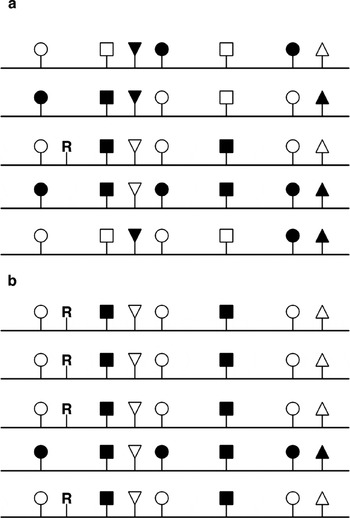
If we consider a parasite population before an anthelmintic resistance mutation has appeared, there will be many different sequences present in the population for any particular locus. These are termed haplotypes. This is particularly true for trichostrongylid nematodes due to the degree of genetic polymorphism discussed earlier. A new resistance mutation will arise in this backdrop of sequence variation and will first appear on a specific single haplotype defined by a characteristic set of SNP and other genetic markers (Fig. 1a). Such a resistance mutation would be subject to genetic drift and its frequency would rise and fall stochastically in the absence of anthelmintic exposure. In many situations such a mutation would be lost from the population. However, in the presence of anthelmintic, this mutation will provide a positive selective advantage over the remaining haplotypes and so will rise in frequency and perhaps become the predominant haplotype (Fig. 1b).
The panels show the effects of the appearance of a resistance mutation on the surrounding genetic variation in the absence of recombination. Panel (a) Initially, each chromosome in the population is characterized by its own unique pattern of variable sites. A resistance mutation that arises will be present in only one of these many different haplotypes. Panel (b) Following anthelmintic selection, the resistance mutation will have increased in frequency in the population along with other polymorphic sites that happen to be on the same haplotype. This is termed a ‘hard’ selective sweep. This is characterized by a reduction in the polymorphism and linkage disequilibrium of adjacent markers. However, not all sites are necessarily in linkage disequilibrium with the resistance-conferring mutation, depending on their association with different haplotypes in the population.

In the absence of genetic recombination, any SNP variant on the same chromosome as the resistance mutation will rise in frequency along with the resistance mutation by genetic hitchhiking (Maynard Smith and Haigh, Reference Maynard Smith and Haigh1974; Hermisson and Pennings, Reference Hermisson and Pennings2005). Tests for SNP markers anywhere on the same chromosome as the resistance mutation would show evidence of selection even though the markers have nothing to do with the mechanism of resistance. This evidence of selection takes two forms. Firstly, there will be a loss of polymorphism around the locus due to the increase in frequency of the haplotype on which the resistance mutation resides at the expense of other haplotypes (Fig. 1b). Good examples of this phenomenon include the selection of pyrimethamine resistance in Plasmodium falciparum and of warfarin resistance in rats (Kohn, Pelz and Wayne, Reference Kohn, Pelz and Wayne2000; Nair et al. Reference Nair, Williams, Brockman, Paiphun, Mayxay, Newton, Guthmann, Smithuis, Hien, White, Nosten and Anderson2003). Secondly, there will be an area of linkage disequilibrium surrounding the locus under selection. Linkage disequilibrium is the term used in population genetics to describe the non-random association of alleles and is discussed in further detail below. In the absence of genetic recombination, genetic hitchhiking would lead to a reduction of polymorphism together with linkage disequilibrium extending across the whole chromosome on which the resistance mutation resided. However, in the case of sexually reproducing organisms meiotic recombination has an additional important effect.
The effect of meiotic recombination
Almost all parasitic nematodes are dioecious; sexually reproducing diploid organisms with genetic recombination being a requirement of meiosis. Offspring inherit a single copy of each chromosome from each parent. The process of meiotic recombination will cause segments of DNA to be exchanged between homologous chromosome pairs. In the current context, linked markers that were on the same chromosome as the resistance mutation in the parent may end up on different chromosomes in the offspring. The probability of recombination between a particular marker and the resistance mutation is positively correlated with physical distance between the two. Hence, although the mutation responsible for resistance will always be associated with the resistance phenotype, adjacent polymorphisms, such as SNPs, may be transferred to a different haplotype by recombination. The probability of this occurring increases with separation distance and also with the number of meiotic events that have occurred since the mutation arose on a particular haplotype background. Hence, markers that are physically close to the locus causing resistance will remain associated with resistance over longer periods of time compared to more distant markers.
Recombination rate
The rate at which recombination occurs in a particular organism will clearly have a significant bearing on the speed with which genetic associations are broken down. However, little is known about the rates of recombination in parasitic nematodes. In organisms for which genetic crosses or pedigree analysis can be carried out, the rate of recombination between genetic markers can be measured directly. In humans, for example, where there is a wealth of SNP and microsatellite markers and a completed genome sequence, the recombination rate is on average 1·1 cM/Mb (one cM represents a 1% recombination between markers) (Kong et al. Reference Kong, Gudbjartsson, Sainz, Jonsdottir, Gudjonsson, Richardsson, Sigurdardottir, Barnard, Hallbeck, Masson, Shlien, Palsson, Frigge, Thorgeirsson, Gulcher and Stefansson2002; Nachman, Reference Nachman2002). There is, however, substantial variation in this rate throughout the genome with recombination rates being elevated towards the ends of chromosomes. This compares to values of 0·47–0·56 cM/Mb in the mouse and 0·60 cM/Mb in the rat (Nachman, Reference Nachman2002; Jensen-Seaman et al. Reference Jensen-Seaman, Furey, Payseur, Lu, Roskin, Chen, Thomas, Haussler and Jacob2004).
Estimates of recombination rates in invertebrates are best established from the fruit fly Drosophila and the nematode C. elegans. D. melanogaster has a recombination rate very similar to humans (1·5 cM/Mb), although the distribution through the genome is more even than the significant location-dependent fluctuation seen in mammals (Kindahl, Reference Kindahl1994; Aquadro et al. Reference Aquadro, Bauer DuMont and Reed2001). The free-living nematode C. elegans has a higher overall recombination rate (3·0 cM/Mb) which may reflect its reproduction as a hermaphrodite (Barnes et al. Reference Barnes, Kohara, Coulson and Hekimi1995). Unfortunately this information is not available for parasitic nematodes. Given current technical limitations it is not likely that recombination rates will be measured directly in parasitic nematodes in the near future.
Linkage disequilibrium
In the absence of a direct measure of the recombination rate, it is possible to infer its effects in populations from analyses of the degree of apparent linkage between polymorphic sites; this is known as linkage disequilibrium. As briefly described above, linkage disequilibrium is the term used in population genetics to describe a situation in which a particular combination of alleles (or haplotypes) occur more or less frequently in a population than would be expected from random segregation of those alleles based on their frequencies in the population.
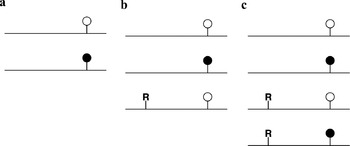
Consider two polymorphic sites, one of which is a resistance mutation as shown in Fig. 2. If there are two variants at each site, then there are four combinations possible. At the moment the resistance mutation appears it will be linked with only one of the variants at the other site. This means only three of the four combinations are present, resulting in linkage disequilibrium (Fig. 2b). Over time, recombination between these three haplotypes will create the missing combination, bringing back linkage equilibrium (Fig. 2c). The time for which linkage disequilibrium is detectable will depend on the recombination rate and the distance between the polymorphic sites. One confounding factor is that genetic drift in small populations can cause the accidental loss of one or more of the four combinations resulting in linkage disequilibrium (Hill, Reference Hill1975). Estimates of linkage disequilibrium can therefore be used to infer the relative recombination rate, which can even be made in absolute terms if a joint estimate of population size can be made (Hudson, Reference Hudson2001).
The three panels show the appearance of a new mutation that leads to anthelmintic resistance on a genetic background segregating for a polymorphic neutral site in the neighbouring DNA. The significant linkage disequilibrium between the two sites is transient and ultimately can be removed by recombination. Panel (a) shows the two different haplotypes which are present in the population before the appearance of the resistance mutation, distinguished by the neutral site. Panel (b) shows the situation immediately following the appearance of a resistance mutation. The mutation only occurs once on a background containing only one of the forms of the neutral polymorphic site. Estimates of linkage disequilibrium between the two sites will be high since one of the four possible combinations is missing. Panel (c) shows the situation after sufficient recombination has exchanged the resistance mutation to the other haplotype. In this situation estimates of linkage disequilibrium will be low since all four possible combinations are present at their expected frequency.

To date there has been only one serious attempt to evaluate linkage disequilibrium in a parasitic nematode. Sequence of almost 1 kb from a gene encoding a subunit of a glutamate-gated chloride channel from Haemonchus placei found almost complete linkage between polymorphic sites within this distance (Mes, Reference Mes2004). This would support the use of linked markers for resistance so long as they were within the gene responsible for resistance. It is not clear how linkage will decay over a much greater distance from a resistance mutation. Unfortunately, no data for other genes or nematode parasites are available. In Drosophila a correlation of linkage disequilibrium against physical separation of markers suggests that linkage can remain high until markers are separated by more than 5 kb (Langley et al. Reference Langley, Lazzaro, Phillips, Heikkinen and Braverman2000) whereas in humans this distance is over 200 kb (Taillon-Miller et al. Reference Taillon-Miller, Bauer-Sardina, Saccone, Putzel, Laitinen, Cao, Kere, Pilia, Rice and Kwok2000). Further information on both recombination and linkage from parasitic nematodes is needed before we can make a rational evaluation of the use of linked markers for anthelmintic resistance.
Anticipating the genetic footprint of anthelmintic resistance selection
The details of the origin of resistance alleles are of critical importance in determining the likely genetic footprint of selection at an anthelmintic resistance locus. Linkage disequilibrium between random markers in a population is inversely related to the population size. Hence for trichostrongylid nematodes, which appear to have very large population sizes, one would anticipate recombination will break down the associations of new mutations with markers defining the original haplotype relatively quickly. Therefore knowing the length of time a resistance allele has existed in a population is critical for determining the extent to which the reduction in polymorphism and linkage disequilibrium extends out from the mutation under selection. Resistance mutations that arise immediately before or following the first use of anthelmintic, and that rapidly increase in frequency due to selection, will leave little time for recombination to break up the initial haplotype on which the resistance mutation appeared. Consequently, a reduction of variability from a large segment of DNA will occur. This has been termed a ‘hard sweep’ which is characterized by all the resistance haplotypes being descended from a single common ancestor (Hermisson and Pennings, Reference Hermisson and Pennings2005). In these circumstances the reduction in polymorphism is likely to be profound, since a single haplotype comes to predominate. It will also extend a long distance since recombination will have had little opportunity to break up the original haplotype. This means the use of genome-wide markers can be a very powerful approach to identify a region of the genome under selection, but fine-scale mapping down to the level of individual genes would not be possible. Similarly, evidence of selection on any particular candidate gene should be interpreted cautiously in this situation as it could still be some distance away from the resistance-conferring mutation.
There are several examples of a ‘hard sweep’ produced by the selection for drug resistance in a number of systems. One of the most dramatic examples of this is the selection for insecticide resistance in Drosophila (ffrench-Constant, Daborn and Le Goff, Reference ffrench-Constant, Daborn and Le Goff2004) discussed previously. Another classic example comes from pyrimethamine treatment of P. falciparum. Pyrimethamine acts by competitive inhibition of dihydrofolate reductase (dhfr). Amino acid replacements in the enzyme active site lead to reduced drug potency and efficacy and enhance parasite survival. Selection for these resistance mutations resulted in a hard selective sweep through the population that reduced the genetic variability in the surrounding DNA (Nair et al. Reference Nair, Williams, Brockman, Paiphun, Mayxay, Newton, Guthmann, Smithuis, Hien, White, Nosten and Anderson2003). The region of reduced variability extends over 100 kb around the dhfr locus. The action of recombination renders markers outside this region effectively unlinked with resistance. Similar selective sweeps have been found surrounding the chloroquine resistance transporter gene pfcrt. In this case, variation is reduced over about 50 kb surrounding the gene (Nair et al. Reference Nair, Nash, Sudimack, Jaidee, Barends, Uhlemann, Krishna, Nosten and Anderson2007). Another good example of the effect of drug treatment on both the level of polymorphism and linkage disequilibrium surrounding the locus under selection comes from studies on warfarin poisoning in rats (Kohn et al. Reference Kohn, Pelz and Wayne2000). In a highly resistant population, extensive linkage disequilibrium of neutral microsatellite markers was observed over a 32 cM interval corresponding to about 14% of rat chromosome 1. In another less highly resistant population, linkage disequilibrium was limited to a 2·2 cM interval. This illustrates the principle that the extent of linkage disequilibrium may vary significantly between different resistant populations presumably depending on the population structure, origin of resistance alleles and the intensity of selection. Clearly the interpretation of candidate gene studies and the utility of genome-wide approaches may differ significantly between populations.
Considering the earlier discussion on the potential origins of anthelmintic resistance alleles, a ‘hard’ selective sweep would only be anticipated in a situation in which a spontaneous mutation arose on a single haplotype background and, as a result of anthelmintic selection, increased in frequency to become the predominant haplotype in the population. It is possible that this has occurred in some of the closed French goat farms which appear to contain a single resistance allele (Silvestre and Humbert, Reference Silvestre and Humbert2002). However, as discussed above, anthelmintic resistance alleles may arise in different ways in different situations and so a simple ‘hard’ selective sweep may not be the typical genetic footprint of selection for anthelmintic resistance. Instead, the recently proposed concept of a ‘soft’ selective sweep may be more common. This has been proposed to describe the situation in which multiple different haplotypes carrying the same resistance mutation are selected rather than a single haplotype sweeping through the population (Hermisson and Pennings, Reference Hermisson and Pennings2005; Pennings and Hermisson, Reference Pennings and Hermisson2006a, Reference Pennings and Hermissonb). This pattern of selection seems a much more likely scenario in the case of anthelmintic resistance. As discussed earlier, it is likely that anthelmintic resistance does not involve a single mutational event that subsequently rapidly sweeps through all parasite populations. Instead, it probably involves a mixture of pre-existing mutations, recurrent recent mutations and migration of resistance alleles between populations.
As argued above, evidence is lacking to quantify the relative importance of these different mechanisms and it is likely to differ between parasite species and husbandry situations. However, whatever their relative importance, these mechanisms would all result in multiple haplotypes carrying the resistance mutation and so lead to a pattern of a ‘soft’ selective sweep. Pre-existing alleles that have been present for a significant period of time prior to anthelmintic exposure will have accumulated mutations and undergone recombination to generate a pool of haplotypes that all contain the resistance mutation. The recurrent appearance of a resistance-conferring mutation in a population or the migration of resistance alleles would also lead to multiple haplotypes carrying the resistance mutation. All these haplotypes, whatever the basis of their origin, will then be selected and rise in frequency. This more complex pattern of selection might be expected to leave a weak, perhaps even undetectable, genetic footprint. However, recent simulations have suggested that although the genetic footprint associated with soft selective sweeps are likely to show minimal reduction in polymorphism around the selected mutation, they should be characterized by unusually strong patterns of linkage disequilibrium (Pennings and Hermisson, Reference Pennings and Hermisson2006b). Indeed stronger patterns of linkage disequilibrium are predicted for recent ‘soft’ selective sweeps than for a ‘hard’ selective sweep. This is because in a ‘soft’ sweep, the multiple resistant mutations bring with them several different independent haplotypes causing polymorphic sites to be in complete linkage disequilibrium. This is an important concept as it suggests that genetic footprints of selection should still be discernable for anthelmintic resistance even if the mutations are of a relatively complex origin. Current research into analyzing patterns of ‘soft’ selective sweeps in other systems should have great relevance for future research on anthelmintic resistance.
THE CURRENT STATUS OF CANDIDATE GENE STUDIES
The approach for identifying anthelmintic resistance-conferring genes that has been used exclusively to date is the evaluation of candidate genes in susceptible and drug-resistant parasite isolates. Such resistant parasites can be derived either by artificial selection for resistance in the laboratory or be directly isolated from the field. Before discussing the relative merits of these two different approaches, it is pertinent to define the candidate gene approach and briefly review its application to date. A candidate gene study is based on an understanding of the biological effects of a drug and of the physiological response to it. Genes encoding proteins that are involved in these processes become candidates for analysis. An investigation of genetic and biochemical differences between susceptible and resistant parasites is then undertaken in order to obtain circumstantial evidence for a role for the pharmacologically relevant proteins in conferring resistance. Up to this point, evidence for involvement with resistance is merely associative and must be regarded with circumspection. Functional studies are then required to prove a causal relationship between a mutation in the candidate gene and the resistance phenotype. The process can be considered complete once a specific gene mutation is demonstrated to cause phenotypic resistance in vivo and be able to explain the presence of resistance in the field. Most candidate gene studies to date have focused on BZ resistance and ivermectin resistance.
Benzimidazole resistance
The most successful example of the candidate gene strategy in parasitic nematodes is the elucidation of the role of β-tubulin encoding genes in conferring resistance to BZs. Early observation of the effects of BZ on parasitic nematodes found the drug appeared to inhibit a metabolic enzyme, fumarate reductase, in vitro (Prichard, Reference Prichard1970). However, the focus moved away from metabolism when evidence began to accumulate from work on fungi that a mutation in β-tubulin could affect the degree of resistance to BZs (Davidse and Flach, Reference Davidse and Flach1977). Later it was shown that purified β-tubulin from either resistant or susceptible parasites has very different binding characteristics for BZ in vitro (Lubega and Prichard, Reference Lubega and Prichard1990, Reference Lubega and Prichard1991a, Reference Lubega and Prichardb). An allele in which tyrosine replaced phenylalanine at position 200 of the isotype-1 β-tubulin gene, was present at much higher frequency in resistant than susceptible parasite populations (Beech, Prichard and Scott, Reference Beech, Prichard and Scott1994; Kwa et al. Reference Kwa, Jetty and Roos1994). Evidence of a link between Y200F and BZ-resistance remained circumstantial until it was demonstrated that this substitution was indeed sufficient to confer BZ-sensitivity when the H. contortus gene was heterologously expressed in transgenic C. elegans (Kwa et al. Reference Kwa, Veenstra, Van and Roos1995).
Many subsequent studies have shown that the isotype 1 β-tubulin Y200F substitution is present at a high frequency in BZ-resistant populations in a range of parasitic nematode species demonstrating its widespread importance (Kwa et al. Reference Kwa, Jetty and Roos1994; Prichard et al. Reference Prichard, Eng, Ardelli, Halstead and Beech2001; Silvestre and Humbert, Reference Silvestre and Humbert2002). It is worth noting however, that other mutations in the isotype-1 β-tubulin gene, as well as a deletion of the isotype-2 β-tubulin gene, are now thought to contribute to BZ resistance in H. contortus (Kwa et al. Reference Kwa, Kooyman, Boersema and Roos1993; Beech et al. Reference Beech, Prichard and Scott1994; Silvestre and Cabaret, Reference Silvestre and Cabaret2002; Ghisi, Kaminsky and Maser, Reference Ghisi, Kaminsky and Maser2007).
Ivermectin resistance
Although candidate gene studies have been very successful in the study of BZ resistance, the investigation of macrocyclic lactone resistance reveals the limitations of the approach. The most widely used drug in this class is ivermectin (IVM) (Chabala et al. Reference Chabala, Mrozik, Tolman, Eskola, Lusi, Peterson, Woods, Fisher, Campbell, Egerton and Ostlind1980; Campbell et al. Reference Campbell, Fisher, Stapley, Albers-Schonberg and Jacob1983) which typically induces a flaccid paralysis of nematode muscles; muscles in the pharynx are more sensitive than somatic muscles (Geary et al. Reference Geary, Sims, Thomas, Vanover, Davis, Winterrowd, Klein, Ho and Thompson1993). In C. elegans, a series of elegant experiments based on functional evaluation of cDNA libraries led to the identification of a glutamate-gated chloride-channel as the principal drug target (Cully et al. Reference Cully, Vassilatis, Liu, Paress, Van, Schaeffer and Arena1994). Several genes in this class confer susceptibility to ivermectin in the whole organism (Dent et al. Reference Dent, Smith, Vassilatis and Avery2000). Consequently, much ivermectin resistance research in parasitic nematodes has focused on the potential role of these channels.
Glutamate- and GABA-gated chloride-channels loci have been implicated in IVM-resistance in H. contortus loci by response to selection by the drug (Blackhall, Reference Blackhall1999; Blackhall et al. Reference Blackhall, Pouliot, Prichard and Beech1998b, Reference Blackhall, Prichard and Beech2003; Njue and Prichard, Reference Njue and Prichard2004). Pharmacological studies have also demonstrated differences in IVM sensitivity of these channels in H. contortus and Cooperia oncophora (Feng et al. Reference Feng, Hayashi, Beech and Prichard2002; Njue et al. Reference Njue, Hayashi, Kinne, Feng and Prichard2004). Importantly, none of these mutations has been found to be widespread in IVM-resistant populations in the field. This highlights a feature of evaluating candidate genes that may be considered both an advantage and a disadvantage. These types of study have the potential to identify resistance genes no matter how great or small their relative importance. Although such data may not directly advance our capability of controlling resistance, it does provide valuable information on drug mode-of-action and the biology of the parasite.
EXPERIMENTAL APPROACHES USED TO TEST THE ASSOCIATION OF CANDIDATE GENES WITH ANTHELMINTIC RESISTANCE
Two main experimental approaches have been used to apply genetic techniques to test the association of candidate genes with an anthelmintic resistance phenotype: selection of anthelmintic resistance during experimental infection and the comparison of field isolates. Other genetic approaches are potentially possible involving the crossing of resistant and susceptible parasite isolates but these are beyond the scope of this review (Gilleard, Reference Gilleard2006). Although the emphasis of the following discussion is on the use of these approaches to test candidate gene associations with anthelmintic resistance, they could equally be used for genome-wide approaches to identify anthelmintic resistance loci once parasitic nematode genome resources are more fully developed (Gilleard, Reference Gilleard2006).
Selection for resistance during experimental infections
The core approach to identify genes responsible for conferring anthelmintic resistance has compared parasite populations that differ in their response to treatment. This approach is most powerful when all differences, other than those directly associated with resistance, can be excluded. Since parasitic nematode populations support a large amount of sequence variation, it has to be considered possible, or even likely, that there will be significant genome-wide genetic differences between two independently derived isolates. This is particularly true if the isolates come from different geographic locations (Troell et al. Reference Troell, Engstrom, Morrison, Mattsson and Hoglund2006).
One solution to this problem is to derive susceptible and resistant lines from a single parasite isolate. Separate lines can be derived from the common parental base by different treatment regimens and, after many parasite generations of selection, significant differences in anthelmintic sensitivity can be produced between treated and untreated groups (Egerton, Suhayda and Eary, Reference Egerton, Suhayda and Eary1988; Molento, Wang and Prichard, Reference Molento, Wang and Prichard1999). Since the lines share an initial common genetic pool, differences between the lines can be attributed to anthelmintic selection. This technique has proved particularly effective in screening candidate genes for an association with resistance to the macrocyclic lactones (Blackhall et al. Reference Blackhall, Liu, Xu, Prichard and Beech1998a, Reference Blackhall, Pouliot, Prichard and Beechb, Reference Blackhall, Prichard and Beech2003; Blackhall, Reference Blackhall1999; Njue and Prichard, Reference Njue and Prichard2004; Ardelli, Guerriero and Prichard, Reference Ardelli, Guerriero and Prichard2006a). Careful consideration should be given to the interpretation of data from such selected lines.
Firstly, it is important to consider the genetic structure of the parasite population. It is possible that the founding parasite population could consist of an admixture of distinct subpopulations such has been demonstrated for a French T. circumcincta population (Grillo et al. Reference Grillo, Jackson and Gilleard2006). In such a situation, rather than selecting a particular resistance-conferring mutation from within a freely interbreeding population, there could be selection for one or more sub-populations that are more resistant to the drug. Careful consideration is also needed to prevent population bottleneck effects. This is achieved by using a sufficiently large population throughout the selection process to ensure all the genetic variation is maintained in the population except for at the loci under selection. Failure to prevent population bottlenecks during selection could lead to genome-wide changes in genetic markers. Both of the above phenomena can be controlled for by ensuring that a number of independent control loci are evaluated as well as the candidate genes under investigation (Blackhall et al. Reference Blackhall, Liu, Xu, Prichard and Beech1998a, Reference Blackhall, Pouliot, Prichard and Beechb, Reference Blackhall, Prichard and Beech2003). As long as no genetic changes are observed at such control loci gross changes in population structure are unlikely to have occurred.
A more difficult effect to define and monitor is the possibility that the anthelmintic selection regime might have additional unintended consequences other than selection for anthelmintic resistance. For example, the desire to collect parasite eggs and progress quickly to the next generation can itself impose quite strong selective pressure on a parasite population. Characteristics such as early establishment, early egg production and rapid larval development will be favoured under these conditions (Chehresa, Beech and Scott, Reference Chehresa, Beech and Scott1997). Although this would be expected to occur in all lines equally, the lower density of infection in animals treated with anthelmintic could produce differential selection in the different lines. This might lead to loci encoding proteins involved in reproductive traits showing evidence of selection in addition to and independently of anthelmintic resistance loci.
It is important to be aware that the genetic consequences of selection during experimental passage are not necessarily the same as those following selection in the field. Selection experiments identify genes that have a measurable effect on susceptibility to anthelmintics in a laboratory setting. In some cases, these genes have been shown to have an effect on the biology of the parasite (Beech, Cambos and Levitt, unpublished; Beech and Zhou, unpublished). However, in the case of macrocyclic lactone resistance, current evidence suggests these same genes do not have a major effect in a field situation (Galazzo, Reference Galazzo2004; Zhou, Reference Zhou2005). One explanation for this observation is that the selective pressures exerted in the ‘real world’ are very different to those applied during laboratory selection. In the former case, animals are treated with full therapeutic dose rates with the aim of removing as many parasites as possible, preferably all. In order to survive, an individual parasite must be capable of tolerating such a high dose immediately. This approach is not possible in the research setting since sufficient parasites must survive the treatment to passage onto the next generation to make the labour involved manageable and to prevent population bottleneck effects. Thus a laboratory selection regime typically begins with a low dose of anthelmintic that allows survival of a significant fraction of the parasite population from which eggs can easily be collected for the next generation. Over successive generations, the dose rate is increased as the parasite line becomes progressively more resistant to the drug (Molento et al. Reference Molento, Wang and Prichard1999). Gradual selection in this way tends to favour any gene that can contribute to resistance even if its effects are minimal. Later in the selection regime many such genes may combine to produce parasites with resistance levels comparable to those observed in field-derived resistant isolates. To avoid some of these problems it would be preferable to impose intense selection of the kind seen in a field situation. Experiments along these lines have demonstrated the development of high levels of resistance in as few as three generations (Coles et al. Reference Coles, Rhodes and Wolstenholme2005). In doing this, changes similar to those that occur in the field might be expected and so comparison of selected and unselected lines should reveal genes with major effect on anthelmintic resistance.
As an alternative approach to repeated passage, it may in fact be more appropriate to avoid raising the parasite in the laboratory at all and simply compare parasites before and after a single high dose treatment of anthelmintic. This is most sensitive when the genotyping of survivors and non-survivors is possible, such as in a larval motility (Gill et al. Reference Gill, Redwin, van Wyk and Lacey1991) larval migration (Wagland et al. Reference Wagland, Jones, Hribar, Bendixsen and Emery1992), larval (Alvarez-Sanchez et al. Reference Alvarez-Sanchez, Perez Garcia, Bartley, Jackson and Rojo-Vazquez2005) or adult feeding assay (Geary et al. Reference Geary, Sims, Thomas, Vanover, Davis, Winterrowd, Klein, Ho and Thompson1993). The use of an appropriately high drug dose could be used to limit the identification of those genes that confer a large increase in resistance. The availability of techniques to rapidly survey genetic changes in individual worms makes such approaches more feasible, but the ability to accurately and reliably phenotype the drug sensitivity of individual worms remains a major challenge.
Comparison of field isolates
The most direct approach to identify anthelmintic resistance genes that are important in the ‘real world’ is to study populations of resistant and susceptible parasites directly isolated from the field. This has been used in a number of studies to date (Grant and Mascord, Reference Grant and Mascord1996; Njue and Prichard, Reference Njue and Prichard2004; Ardelli, Guerriero and Prichard, Reference Ardelli, Guerriero and Prichard2006a, Reference Ardelli, Guerriero and Prichardb; Eng et al. Reference Eng, Blackhall, Osei-Atweneboana, Bourguinat, Galazzo, Beech, Unnasch, Awadzi, Lubega and Prichard2006). The biggest problem with this approach is that separate parasite populations may show many genetic differences across the genome in addition to those underlying the anthelmintic resistance phenotype. Consequently, a detailed understanding of the population structures and the way in which genetic variation is partitioned between parasite populations is needed to apply such approaches. For parasite populations with little or no between-population sub-structure, marked differences in candidate gene allele frequencies may be taken as strongly indicative of a role in resistance. However, for parasite populations for which there is significant partitioning of genetic variation, there will be differences in allele frequencies in many loci throughout the genome. In this situation, differences in candidate gene allele frequencies between susceptible and resistant populations may simply reflect the underlying genetic differentiation and may not relate to the anthelmintic resistance phenotype at all.
Early work suggested that trichostrongylid nematode populations showed little genetic sub-structure, with almost all genetic variation partitioned within rather than between populations (Blouin et al. Reference Blouin, Yowell, Courtney and Dame1995). If this were the situation for all parasite populations then genetic differences would largely be confined to loci under selection – albeit not necessarily anthelmintic selection – and comparative studies of candidate genes would be reasonably straightforward. However, more recent studies suggest that population structures may be more complex and may differ between parasite species, geographical regions and husbandry regimes (Leignel and Humbert, Reference Leignel and Humbert2001; Troell et al. Reference Troell, Engstrom, Morrison, Mattsson and Hoglund2006; Grillo et al. Reference Grillo, Jackson, Cabaret and Gilleard2007). For example, mtDNA sequence and AFLP analyses have revealed high levels of genetic differentiation between H. contortus populations isolated from different continents (Troell et al. Reference Troell, Engstrom, Morrison, Mattsson and Hoglund2006). Similarly, microsatellite analysis of commonly used H. contortus laboratory isolates, originally derived from field populations in different countries, have uncovered extreme levels of genetic differentiation (Redman L., Packard E., Grillo V., Jackson F. and Gilleard J., unpublished observations). In addition, it has now been shown that, under certain circumstances, significant differentiation can occur between populations for both for H. contortus and T. circumcincta even within a country (Leignel and Humbert, Reference Leignel and Humbert2001; Troell et al. Reference Troell, Engstrom, Morrison, Mattsson and Hoglund2006). Hence care should be taken when comparing resistant and susceptible parasite populations isolated from different geographical regions.
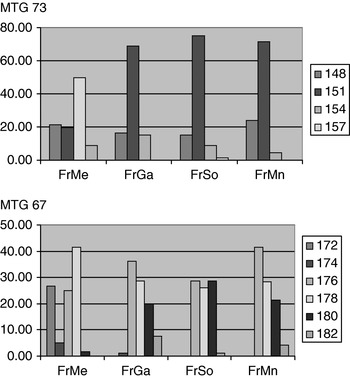
It is not geographical separation alone that can result in genetic differentiation between parasite isolates and even those taken from the same region cannot automatically be assumed to be genetically similar. Although the small number of T. circumcincta populations examined in the UK show little geographical sub-structure (Braisher et al. Reference Braisher, Gemmell, Grenfell and Amos2004; Grillo et al. Reference Grillo, Jackson, Cabaret and Gilleard2007), it would be unwise to extrapolate this status to other populations without experimental verification. For instance, sequence analysis at several loci and microsatellite genotyping reveals one T. circumcincta population from the Touraine region of France to be genetically divergent from three others taken from the same area (Grillo et al. Reference Grillo, Jackson, Cabaret and Gilleard2007). Population genetic and molecular data both suggest the presence of a cryptic species that exists sympatrically with the more ‘standard’ T. circumcincta (Grillo et al. Reference Grillo, Jackson, Cabaret and Gilleard2007; Leignel, Cabaret and Humbert, Reference Leignel, Cabaret and Humbert2002). As a consequence, there are major differences in the frequency of alleles of random neutral genetic markers between this population and the others (Fig. 3). If this divergent population happened to be resistant to an anthelmintic and was being compared to the other local susceptible populations, frequency differences in candidate gene alleles would be meaningless. It is critical that the population genetic structures of parasite isolates used for candidate gene studies are investigated on a case-by-case basis.
Allele frequency histograms for two microsatellite markers, MTG73 and MTG67 used to genotype four different T. circumcincta populations from France (Grillo et al. Reference Grillo, Jackson, Cabaret and Gilleard2007; Grillo, Jackson and Gilleard, Reference Grillo, Jackson and Gilleard2006). There is strong molecular genetic evidence that the FrMe population contains a cryptic species whereas the FrGa, FrSo and FrMn contain standard T. circumcincta (Grillo et al. Reference Grillo, Jackson, Cabaret and Gilleard2007; Leignel, Cabaret and Humbert, Reference Leignel, Cabaret and Humbert2002). It can be seen that the allele frequencies for the two markers are very similar in the three standard T. circumcincta populations but very different in the FrMe population.

CONCLUSION
This review has discussed several aspects of parasite genetics that are relevant to anthelmintic resistance research. These include the different ways for resistance to originate: pre-existing alleles, novel mutations, recurrent mutations and migration. We have highlighted the likely effects of these alternatives on the genetic footprint left by selection in relation to the interpretation of candidate gene studies, selection experiments and analysis of field resistance. We have argued that our understanding of parasite genetics is incomplete and this needs to be addressed if anthelmintic resistance is to be understood at both the molecular and population levels. Consequently, detailed genetic and population genetic studies are essential to support on-going work with candidate genes and the future application of genome-wide approaches (Gilleard, Reference Gilleard2006). This in turn will require a major investment in the development of better genetic tools and resources, including fully sequenced genomes, for those parasitic nematode species for which anthelmintic resistance is to be studied in detail.