The Fontan surgery, serving as the final of three procedures that culminate in a total cavopulmonary connection, has contributed significantly to the dramatic improvements seen in the survival of patients with single-ventricle CHD physiology.Reference Khairy, Fernandes and Mayer1,Reference d’Udekem, Iyengar and Galati2 With improved survival, there has been an increased focus towards optimising physical functioning and quality of life in this population.
Children with Fontan physiology have reduced exercise capacity compared with children with healthy hearts.Reference Goldberg, Avitabile, McBride and Paridon3 This is due to specific limitations in the patient’s cardiorespiratory circulation, including a limited ability to generate adequate cardiac output during exercise, elevated pulmonary vascular resistance, decreased lean muscle mass, and other variables, including the impact of medications, non-cardiac conditions, and the presence of residual cardiac lesions.Reference Goldberg, Avitabile, McBride and Paridon3 Parental attitudes and patient feelings of self-efficacy also play an important role in exercise participation.Reference Banks, Rosenthal and Manlhiot4,Reference McKillop, McCrindle, Dimitropoulos and Kovacs5
Traditional exercise programmes involving moderate-intensity continuous exercise have not consistently produced clinically significant improvements in exercise capacity in the Fontan population.Reference Gomes-Neto, Saquetto, da Silva e Silva, Conceicao and Carvalho6–Reference Duppen, Takken and Hopman10 High-intensity interval training, consisting of short, intense bursts of exercise interspersed with rest periods,Reference Costigan, Eather, Plotnikoff, Taaffe and Lubans11 is an appealing model to improve strength and fitness in paediatric and adult populations. It repeatedly brings the individual close to or at their peak workload, promoting superior training adaptations.Reference Guiraud, Nigam, Gremeaux, Meyer, Juneau and Bosquet12 To this end, in numerous paediatricReference Costigan, Eather, Plotnikoff, Taaffe and Lubans11,Reference Logan, Harris, Duncan and Schofield13 and adult populations,Reference Batacan, Duncan, Dalbo, Tucker and Fenning14–Reference Wisloff, Stoylen and Loennechen16 high-intensity interval training has yielded equivalent or better increases in exercise capacity compared to moderate-intensity continuous exercise, while remaining safe and well tolerated. To date, high-intensity interval training has not been evaluated in the single-ventricle population, or any CHD population for that matter. Herein, we evaluated the feasibility and safety of a new home-based high-intensity interval training programme in youth with Fontan physiology, using a supervised video game-linked telemedicine ergometer known as the MedBIKE™.
Methods
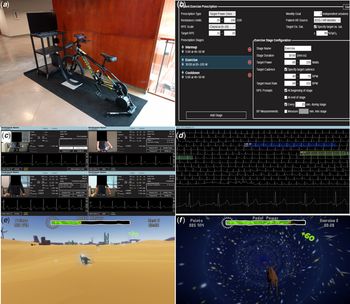
In collaboration with the Advanced Man-Machine Interface Laboratory at the University of Alberta, a custom paediatric remote cycle ergometer (MedBIKE™) was developed (Fig 1). This custom telemedicine ergometer is linked to a video game platform and allows networking for up to four participants per session. The video game is interactive, and the user accrues in-game currency, allowing them to “purchase” new animal avatars throughout the 8-week programme. Music is played throughout the exercise session that matches the cadence the participant should cycle at. During high-intensity intervals, the complex, navigable environment is replaced by a simple tunnel to ensure the participant is engaged and to help prevent steering during high exertion. Medical supervision occurs via a live two-way audiovisual feed, providing face-to-face communication, as well as electrocardiogram and pulse oximetry monitoring. The MedBIKE™ allows live remote modulation of participant workload throughout each session by the supervising health care professional and communication of relative perceived exertion by the participant via a built-in tablet. The MedBIKE™ has an accompanying user manual, and a technical support group is available and aware of testing times. Health Canada approval has been received for its home-based use (Pro00057730). The current cost of each MedBIKE™ is approximately $4500 USD. Ethics approval was obtained from the Research Ethics Board at the University of Alberta.
The MedBIKE™ platform. (a) MedBIKE™ with linked tablet and telemedicine system. (b) Built-in software on the supervisor’s end allows remote design and modulation of the exercise regimen. (c) A live audiovisual feed with oximetry and electrocardiography data is available for up to four participants at a time. (d) A more detailed telemetry analysis is available. (e) Video game screenshots demonstrating the navigable environment during non-interval periods and the “worm-hole” tunnel to promote focus and less steering during high-intensity intervals.

The study consisted of three phases. The first phase involved comparing the exercise workload between the MedBIKE™ and a standard cardiopulmonary exercise test cycle ergometer (Ergoselect II 1200 Ergoline, Blitz, Germany). Healthy adult participants were recruited within the Division of Pulmonary Medicine, and the Division of Pediatric Cardiology, University of Alberta. Following consent, 10 healthy adult participants completed 2 non-maximal graded exercise tests, 1 on a cardiopulmonary exercise test cycle ergometer, and 1 on a MedBIKE™, performed in random order with adequate breaks between the tests (>60 minutes). Exercise tests consisted of a 2-minute steady-state resting period followed by a 25-W stepwise increase in work rate every 2 minutes until 125 W. Oxygen consumption, carbon dioxide production, and minute ventilation were determined using expired gas breath-by-breath data (Encore229 Vmax, SensorMedics, Yorba Linda, CA, USA).17 Delivery of exercise workload was compared between the MedBIKE™ and cardiopulmonary exercise ergometer primarily by comparing measured oxygen consumption at a given power output, as described in the Statistical Analysis section.
The second phase of the study involved the feasibility assessment of a high-intensity interval training regimen for children with a Fontan circulation. Eligible participants were those with Fontan circulations between 10 and 18 years old. Those with known arrhythmias, resting oxygen saturations <85% in room air, severe ventricular dysfunction at their most recent clinical assessment, a history of chest pain on exertion, or exercise restriction for any reason by their paediatric cardiologist were excluded. All exercise assessments were medically supervised.
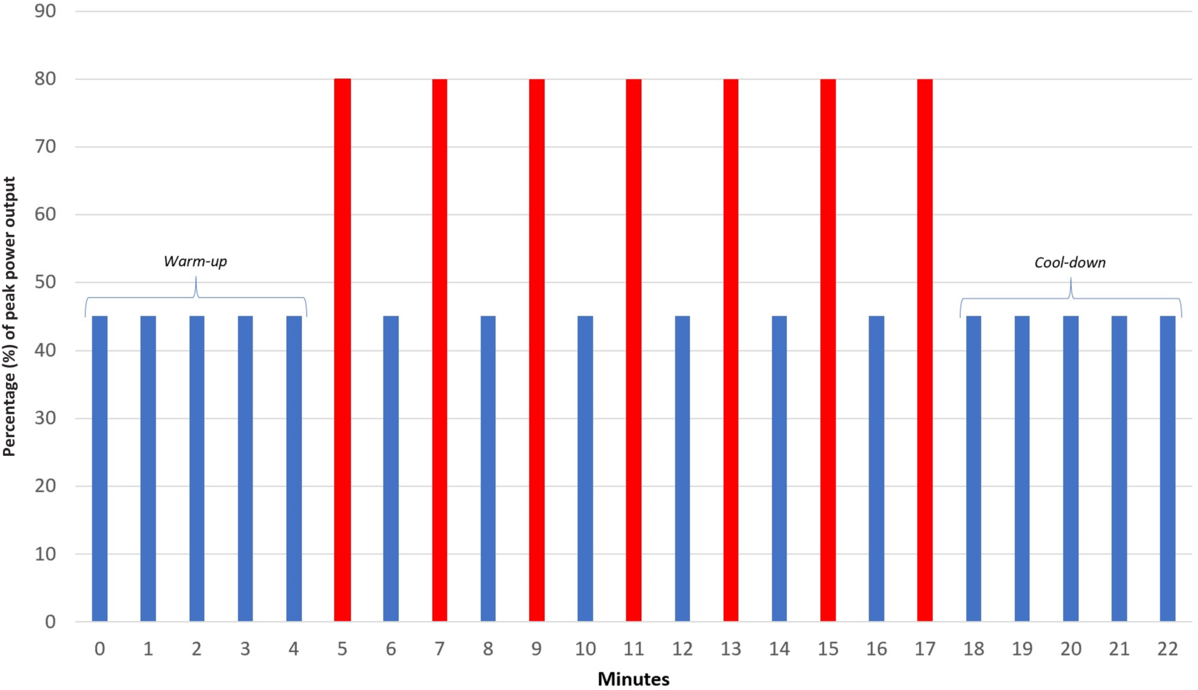
Each participant underwent a baseline pulmonary function test and cardiopulmonary exercise test assessment using a 10-W per-minute ramp protocol to evaluate exercise capacity. Consistent with standard guidelines,17 exercise workload was increased progressively, such that the exercise test lasted 8–12 minutes. Oxygen consumption, carbon dioxide production, ventilation, oxygen saturation, and blood pressure were monitored and recorded throughout each exercise test. Key parameters obtained from the cardiopulmonary exercise test included indexed peak oxygen consumption, peak power output, and peak heart rate. Participants returned at least 2 days following the cardiopulmonary exercise test for their MedBIKE™ high-intensity interval training assessment. A baseline regimen was designed based on the results of the baseline exercise test, consisting of a 5-minute warm-up, seven 1-minute high-intensity intervals at 70–90% of peak power output with 1-minute breaks at 40–50% peak power output in-between, followed by a 5-minute cool-down (Fig 2). To simulate the unique nature of the MedBIKE™ as a telemedicine-equipped ergometer, the physician supervised the session from an adjacent room. Therefore, all interactions, including telemetry and oximetry monitoring between the participant and the supervising physician, were through the telemedicine system. A research assistant remained with the participant to obtain blood pressure assessments and remain a direct point of contact as needed. Relative perceived exertion on a 10-point scale was obtained from participants via a built-in tablet MedBIKE™ software. Interval intensity was modulated by the supervising staff through each session based primarily on the relative perceived exertion (goal 8–9), with the heart rate response (target 80–90% peak heart rate) used as an additional measure of exertion, to ensure a challenging yet achievable subsequent interval. All adverse events were documented. In addition, any major adverse events, including significant desaturations, chest pain, electrocardiogram changes consistent with ischemia, reductions in blood pressure by more than 20 mmHg, arrhythmias, or injury would result in immediate stoppage of the exercise regimen and evaluation by the supervising physician with further consultation if necessary. Following completion of the MedBIKE™ assessment, a brief questionnaire was administered to the participant assessing ease of use of the MedBIKE™, enjoyment, difficulty, and communication ease/barriers (Supplementary File).
High-intensity interval training protocol. Red bars indicate high-intensity intervals. The warm-up, rest periods, and cool-down were set at 40–50% of the peak power output, based on the baseline cardiopulmonary exercise test. Intervals were set at 70–90% peak power output and were modified based on heart rate response and relative perceived exertion (see text for details). Of note, for phase III, the warm-up and cool-down periods were modified to 3 minutes for each.

The third phase of the study involved assessing the feasibility of an 8-week, three times weekly, home-based high-intensity interval training programme. In addition to the inclusion and exclusion criteria for phase II, eligible participants included those whose parents/guardians committed to being available in person during the sessions and consistently available by phone for communication with the research team and adequate space for installation of the MedBIKE™ system. The preferred internet connection was one that can sustain at least 5 Mbps down/5 Mbps up. For participants without such internet connections, a temporary home internet upgrade was subsidised as needed. Two participants with Fontan physiology were recruited via convenience sampling, one of which (Participant 2) had been a participant in phase II. Appropriately sized MedBIKEs™ were installed at their home by the research coordinator and one of the research team computer scientists (WM) following a baseline cardiopulmonary exercise test as described above for phase II. An onsite orientation was provided, including how to appropriately apply the pulse oximeter and electrocardiogram stickers/leads, and the research coordinator and WM remained present for the initial exercise session. Twenty-four sets of disposable electrocardiogram sticker sets and one re-usable oximeter were provided to each participant. A MedBIKE™ manual was provided for further reference as needed. A high-intensity interval training program (as described in phase II, Fig 2) was designed for each participant, with a 3-minute warm-up and cool-down rather than 5 minutes as in phase II to keep each session under 20 minutes. A 20-point Borg relative perceived exertion scale was used rather than a 10-point scale (as in phase II) to provide improved precision in evaluating changes in perceived exertion both within and across sessions.Reference Borg18 The relative perceived exertion goal during intervals was 16–18. The interval intensity prescription for each subsequent exercise session was based on the achievements of the previous session, with an aim towards continuous improvement throughout the 8-week programme. Similar to phase II, the remote supervising physician had a continuous video feed of the participant with accompanied continuous oximetry and electrocardiogram monitoring, and all adverse events and logistical issues were recorded. Each session required about a 30-minute time commitment from the supervising physician and took place at a dedicated laptop workstation with the necessary MedBIKE™ software installed, with remote supervision possible from the hospital office or home. Scheduling of sessions and resolution of scheduling conflicts that arose was facilitated by the study research coordinator. Following completion of the 8-week programme, a repeat cardiopulmonary exercise test was performed within 1 week of ending the programme. The primary objective of phase III was to evaluate the safety and feasibility of the home-based MedBIKE™ high-intensity interval training programme.
Statistical analysis
Continuous demographic and clinical variables were described using means and standard deviations or frequencies with percentages, as appropriate. For phase I, a two-way repeated-measures analysis of variance testing with Brown–Forsythe and Tukey’s range testing was used to detect differences in measured indexed oxygen consumption at various power outputs using the cardiopulmonary exercise test cycle ergometer and the MedBIKE™.
For phases II and III, oxygen consumption values were converted to weight- and sex-based paediatric norms.Reference Cooper, Weiler-Ravell, Whipp and Wasserman19 For boys, the predicted peak oxygen consumption was calculated as: peak oxygen consumption (ml/min) predicted = (52.8 × weight(kg)) – 303.4; for girls the calculation was calculated as: peak oxygen consumption (ml/min) predicted = (28.5 × weight(kg)) + 288.2.Reference Cooper, Weiler-Ravell, Whipp and Wasserman19 Peak predicted heart rate was estimated using the Tanaka formula (208 – 0.7 × age).Reference Tanaka, Monahan and Seals20 All inferential statistical analyses were performed using SigmaPlot Software version 13.0 (Systat Software Inc., San Jose, CA, USA),
Results
Phase I
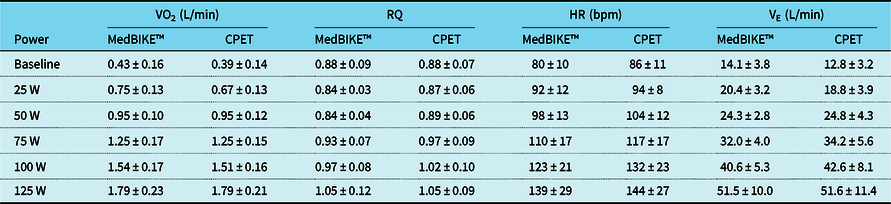
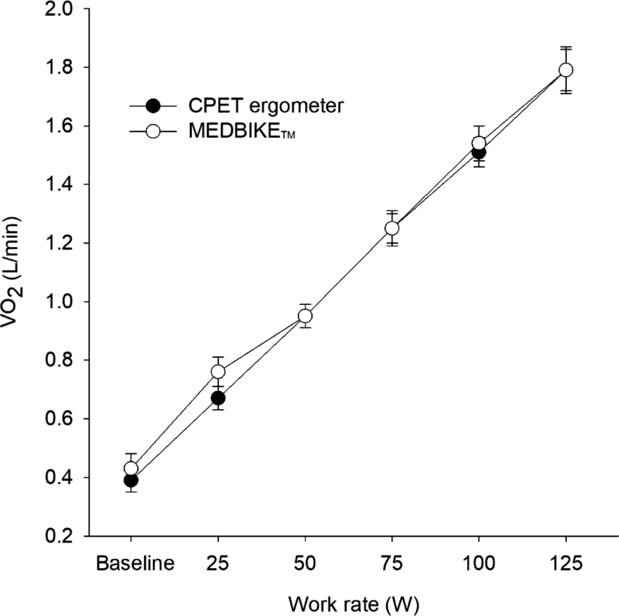
Ten healthy adults (four female, mean age 31.7 ± 6.2 years) completed the comparison assessment between the cardiopulmonary exercise test cycle ergometer and MedBIKE™. As expected, oxygen consumption increased with intensity (p < 0.01); however, there was no effect of condition (MedBIKE™ versus CPET) on oxygen consumption, respiratory quotient, heart rate, or minute ventilation response to workload (Table 1, Fig 3).
Delivery of exercise workload for MedBIKE™ and standard CPET ergometer*

All values reported as mean ± standard deviation.
CPET = cardiopulmonary exercise test; HR = heart rate; RQ = respiratory quotient (VCO2/VO2); VE = ventilation; VO2 = oxygen consumption.
*No main effect of condition (MedBIKE™ versus CPET) was observed for any measured physiologic variables (VO2 p = 0.44; RQ p = 0.20; HR p = 0.19; VE p = 0.75).
Delivery of exercise workload for MedBIKE™ and standard cardiopulmonary exercise test (CPET) ergometer. VO2 = oxygen consumption. p = 0.44.

Phase II
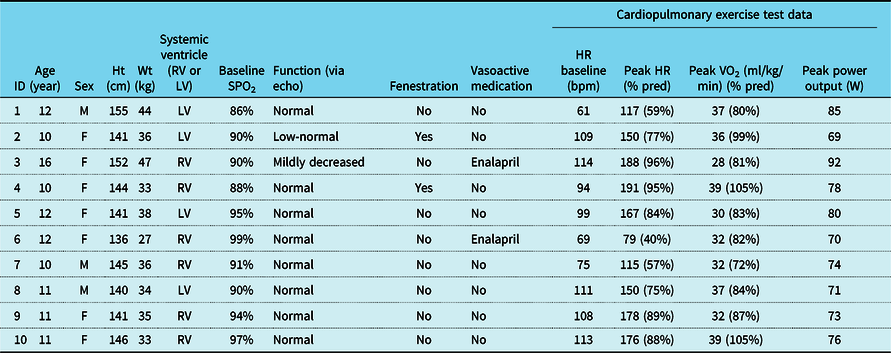
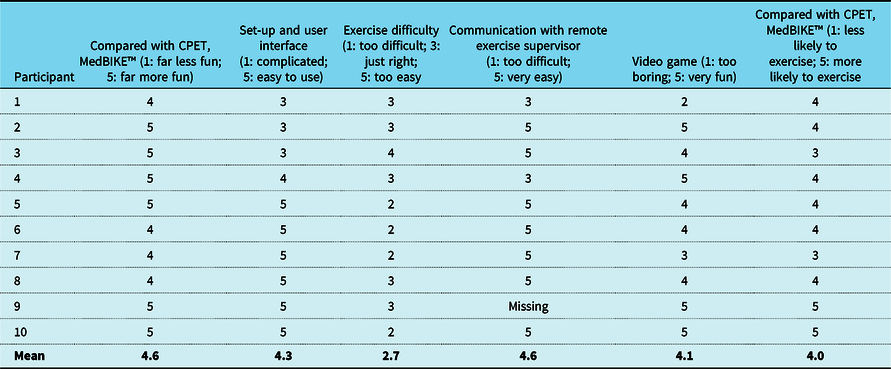
Ten youth with Fontan physiology completed a cardiopulmonary exercise test assessment and an individualised, in-hospital high-intensity interval training session on the MedBIKE™ (mean age 11.5 ± 1.8 years, range 10–16 years old, 30% male, Table 2). The mean baseline peak VO2 was 34 ml/kg/minute (88% predicted, Table 2). All participants tolerated the high-intensity interval training session with no adverse events. All 10 participants completed the post-testing questionnaire. Participants rated their experience on the MedBIKE™ favourably, with all participants finding it more fun than the traditional cardiopulmonary exercise test cycle ergometer, with a favourable user interface, appropriate difficulty, and a sense that the MedBIKE™ experience had the participants more likely to exercise compared with their experience on the cardiopulmonary exercise test cycle ergometer (Table 3).
Fontan participant characteristics and cardiopulmonary exercise test data (phase II)

HR = heart rate; Ht = height; LV = left ventricle; pred = predicted; RV = right ventricle; SPO2 = oxygen saturation; VO2 = oxygen consumption; Wt = weight.
MedBIKE™ user experience questionnaire results

CPET = cardiopulmonary exercise test.
Phase III
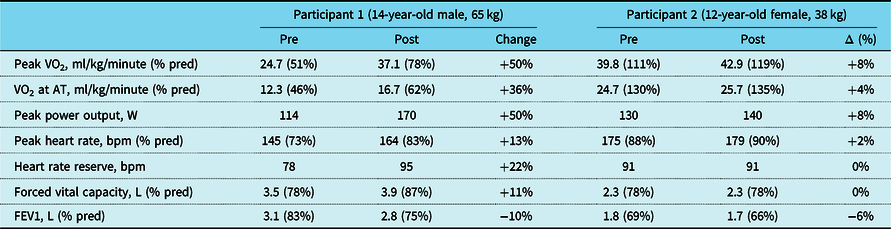
Two participants, a 14-year-old male (Participant 1, diagnosis: tricuspid atresia) and a 12-year old female (Participant 2, diagnosis: double outlet right ventricle with hypoplastic left ventricle), completed the 8-week home-based MedBIKE™ high-intensity interval training programme. Participant 1 completed 24/24 (100%) sessions and Participant 2 completed 23/24 sessions (96%). Participant 1 had an inter-current illness that resulted in temporarily pausing and extending the programme for 10 days. Participant 1 had relatively low cardiorespiratory fitness at baseline (peak oxygen consumption 51% predicted) compared to Participant 2 who had normal exercise capacity at baseline (peak oxygen consumption 111% predicted, Table 2). No adverse events occurred for either participant in the 47 sessions. At the end of one session, there was a temporary loss in the two-way audiovisual connection for Participant 1. Participant 2 had inconsistent ST depression changes noted with exercise but this was not deemed to be concerning for ischemia. Moreover, there were no symptoms consistent with ischemia, including no chest pain. This was adequately addressed by the MedBIKE™ technical support group and did not recur. Electrocardiogram tracing artefact was typically amenable to lead/sticker manipulation. Both participants increased their exercise capacity parameters at the post-intervention cardiopulmonary exercise test, including peak oxygen consumption (50% for Participant 1 and 8% for Participant 2) and peak power output (50% for Participant 1 and 8% for Participant 2) (Table 4).
Aerobic capacity parameter changes following an 8-week home-based MedBIKE™ high-intensity interval training programme

AT = anaerobic threshold; FEV1 = forced expiratory volume in 1 second; pred = predicted; VO2 = oxygen consumption.
Discussion
In the present study, we demonstrated that the physiological responses on the MedBIKE™ were similar to a standard cardiopulmonary exercise cycle ergometer (phase I), and that the MedBIKE™ high-intensity interval protocol was safe, feasible, and enjoyable in 10 children with Fontan physiology (phase II). Moreover, our preliminary experience applying the MedBIKE™ high-intensity training protocol to an 8-week home-based programme in two participants (phase III) suggests that this programme is safe and achievable. Specifically, no adverse events were noted in 57 sessions across phases II and III. The telemedicine component of the MedBIKE™, including the audiovisual, electrocardiogram tracing, and oximetry connection, was consistent and reliable. Importantly, the MedBIKE™ video game platform was able to achieve excellent compliance (98%) in a demanding 8-week (24 sessions) programme. Moreover, the preliminary findings suggest that the protocol may be effective in improving exercise capacity parameters, though this requires further exploration. The findings from the present study suggest that the MedBIKE™ high-intensity training protocol can safely and reliably be applied to a home-based programme for the Fontan population.
To the best of our knowledge, this is the first study to demonstrate the safety and feasibility of a high-intensity interval training programme in the Fontan population or the broader CHD population. High-intensity interval training programmes are typically shorter than traditional aerobic trainingReference Costigan, Eather, Plotnikoff, Taaffe and Lubans11 and require minimal equipment. This makes them particularly appealing for youth and families, where time constraints and lack of access to facilities may be key barriers to physical activity.Reference Costigan, Eather, Plotnikoff, Taaffe and Lubans11 Youth often require vigorous physical activity to improve their exercise capacity.Reference Costigan, Eather, Plotnikoff, Taaffe and Lubans11 High-intensity interval training repeatedly brings the individual close to or at their peak workload. By inducing greater cardiovascular stress compared with moderate-intensity continuous exercise, high-intensity intervals promote superior training adaptations.Reference Guiraud, Nigam, Gremeaux, Meyer, Juneau and Bosquet12 To this end, in numerous paediatricReference Costigan, Eather, Plotnikoff, Taaffe and Lubans11,Reference Logan, Harris, Duncan and Schofield13 and adult populations,Reference Batacan, Duncan, Dalbo, Tucker and Fenning14–Reference Wisloff, Stoylen and Loennechen16 high-intensity interval training has yielded equivalent or better increases in exercise capacity compared to moderate-intensity continuous exercise, while remaining safe and well tolerated in youthReference Costigan, Eather, Plotnikoff, Taaffe and Lubans11,Reference Logan, Harris, Duncan and Schofield13 and adults.Reference Batacan, Duncan, Dalbo, Tucker and Fenning14–Reference Wisloff, Stoylen and Loennechen16 Moreover, high-intensity interval training does not appear to impair systolic or diastolic function in individuals with heart failure; rather, systolic and diastolic function are improved in the immediate post-exercise period.Reference Tomczak, Thompson and Paterson21 While the safety of high-intensity interval regimens have not been studied in the Fontan population, other exercise interventions in this group have consistently been shown to be safe and well tolerated, with no direct major adverse events being reported to date.Reference Gomes-Neto, Saquetto, da Silva e Silva, Conceicao and Carvalho6,Reference Sutherland, Jones and d’Udekem8–Reference Duppen, Takken and Hopman10 The findings from the present study suggest that not only do youth with Fontan physiology tolerate moderate-intensity continuous exercise and other forms of submaximal exercise, but they also can safely participate in more intense regimens, including high-intensity interval training. It is important to note that Participant 2 in phase III did have inconsistent ST depression noted with exercise. This was felt to be non-specific and not consistent with ischemic changes. To this end, ST changes are known to commonly occur with exercise in youth with Fontan physiology and typically do not reflect myocardial ischemia.Reference Kyle, Denfield, Valdes, Penny, Bolin and Lopez22 This is an important consideration and a potential limitation in the remote monitoring of youth with Fontan physiology participating in a home-based exercise programme.
In the Fontan and broader CHD population, early exercise interventions typically focused on moderate-intensity continuous exercise and demonstrated either modest or no improvements in exercise capacity.Reference Rhodes, Tikkanen and Jenkins7,Reference Tikkanen, Oyaga, Riano, Alvaro and Rhodes9,Reference Duppen, Takken and Hopman10 More contemporary studies incorporated static/resistance training components with mixed results.Reference Rhodes, Tikkanen and Jenkins7,Reference Tikkanen, Oyaga, Riano, Alvaro and Rhodes9,Reference Duppen, Takken and Hopman10 Gomes-Neto et al., in the only meta-analysis on the subject, demonstrated an increase in peak oxygen consumption of 3.7 ml/kg/minute (95% confidence interval 1.58–5.78) in five studies that used peak oxygen consumption as an outcome.Reference Gomes-Neto, Saquetto, da Silva e Silva, Conceicao and Carvalho6 Given the inconsistent and generally modest improvements in exercise capacity as a result of moderate-intensity continuous exercise-focused exercise interventions in the Fontan population to date, evaluation of new exercise strategies in this population is warranted.
Exercise interventions can either be facility- or home-based. Facility-based programmes are often impractical or inaccessible for patients and families, involving significant time and financial costs, particularly for those living in more remote communities, resulting in suboptimal attendance.Reference Rhodes, Tikkanen and Jenkins7,Reference Lear23 This is particularly relevant for Canadian paediatric heart centres, as they provide regionalised care serving many patients and families living remotely.Reference Martin, Ross, Aklabi, Harder, Dyck and Rebeyka24 Home-based programmes present a more practical and attractive alternative. However, home-based programmes, by their nature, sacrifice the ability for real-time supervision of safety, technique, and compliance. Such programmes traditionally have relied on weekly phone calls or visits to monitor participant progress.Reference Goldberg, Fripp, Lister, Loke, Nicholas and Talner25,Reference Moalla, Maingourd, Gauthier, Cahalin, Tabka and Ahmaidi26 Lomgmuir et al. evaluated a 12-month parent-led home-based programme for youth with Fontan physiology aimed towards improving physical activity and demonstrated sustained improvements in moderate-vigorous physical activity.Reference Longmuir, Tyrrell, Corey, Faulkner, Russell and McCrindle27 This programme, however, was longer and more resource-intensive than typical clinical cardiac rehabilitation programmes. The MedBIKE™ presents a unique opportunity to leverage existing technologies to provide a supervised yet convenient and challenging programme for youth with Fontan physiology. In addition, the video game component may demonstrate increased physiologic responses during exerciseReference Warburton, Sarkany and Johnson28 and improved adherence and outcomes,Reference Warburton, Bredin and Horita29 as previously demonstrated in healthy participants.
Numerous studies have demonstrated that youth with CHD, including the Fontan population, have suboptimal physical activity levels, falling short of existing recommendations.Reference Banks, Rosenthal and Manlhiot4,Reference Voss, Duncombe, Dean, de Souza and Harris30–Reference Longmuir, Russell, Corey, Faulkner and McCrindle32 This reduced physical activity may be due in part to restrictions imposed by the child’s cardiologist, parents, teachers/coaches, and/or themselves,Reference Longmuir and McCrindle33–Reference Dulfer, Duppen and Van Dijk35 as well as numerous perceived barriers by the youth themselves.Reference McKillop, McCrindle, Dimitropoulos and Kovacs5,Reference Bay, Lamas, Berghammer, Sandberg and Johansson36–Reference Bjorbaekmo and Engelsrud38 Fortunately, clinical recommendations have shifted from one of activity restriction to activity promotion in the CHD population.Reference Longmuir, Brothers and de Ferranti39 Importantly, youth with CHD often have poor self-efficacy towards physical activity,Reference Moola, Faulkner, Kirsh and Kilburn40 which itself is an important predictor of physical activity participation.Reference Banks, Rosenthal and Manlhiot4 The MedBIKE™ high-intensity interval training protocol, through repeated supervised exercise sessions at maximal intensity, may enable youth and their parents to have improved self-efficacy towards exercise that, in turn, may yield long-term improvements in physical activity.
The reduced exercise capacity associated with Fontan physiologyReference Goldberg, Avitabile, McBride and Paridon3,Reference Sutherland, Jones and d’Udekem8 is due in part to suboptimal stroke volume adaptations and blunted heart rate response.Reference Goldberg, Avitabile, McBride and Paridon3 To this end, 5 of the 10 participants in phase II of the study had a peak heart rate <80% predicted. Despite this, in the present study, the mean peak oxygen consumption of the 10 participants in phase II was 88% predicted for normal, suggesting that the study cohort was more fit compared with the general paediatric Fontan population. This may reflect volunteer bias and is a limitation that must be considered when interpreting the results of the study, as youth with higher baseline fitness may have been more interested in participating in this exercise-related study compared to their less-fit counterparts.
There are other limitations that also should be considered when interpreting the study results. Healthy adult controls were recruited for phase I, rather than Fontan participants, for convenience purposes and as we were evaluating the MedBIKE™ technology, and not unique physiology, for this phase. For the questionnaire, multiple questions compared the MedBIKE™ experience to that of the prior cardiopulmonary exercise test, which had the added feature of oxygen consumption and carbon dioxide production measurement. As such, the participants had an uncomfortable mouthpiece and headgear on throughout the assessment, likely reducing its enjoyability. The two participants in phase III demonstrated the safety and feasibility of applying the MedBIKE™ high-intensity interval training protocol as a home-based exercise programme. However, the safety and compliance demonstrated in these two participants do not indicate that the programme will be equally tolerated and feasible in other youth with similar physiology, including those with neurodevelopmental, behavioural, or cognitive disorders. Therefore, rigorous safety monitoring and individualised communication and troubleshooting approaches will continue to be applied for each participant moving forward. Finally, a series of exclusion criteria were employed in order to safely evaluate a home-based programme in youth with Fontan physiology. Therefore, while the exclusion criteria are largely in keeping with previous exercise interventions and clinical paediatric cardiac rehabilitation programmes, the study findings may not be applicable for all children with Fontan physiology.
Conclusions
The MedBIKE™ is a novel telemedicine exercise ergometer that demonstrates excellent agreement with respect to delivery of exercise workload when compared with a cardiopulmonary exercise cycle ergometer. A high-intensity interval training protocol using the MedBIKE™ in a paediatric Fontan population appears to be feasible, safe, and enjoyable. This is supported by the successful completion by two participants of a home-based high-intensity interval regimen. High-intensity interval training is a promising exercise strategy that may yield important improvements in exercise capacity in a population that previously has had inconsistent responses to more traditional aerobic exercise protocols. To this end, a randomised-controlled clinical trial evaluating the impact of the home-based MedBIKE™ high-intensity interval training protocol on exercise capacity, physical activity levels, and self-efficacy towards physical activity in the CHD population will next be undertaken.
Supplementary Material
To view supplementary material for this article, please visit https://doi.org/10.1017/S1047951120002097
Acknowledgements
The authors are grateful for the help of Rae Foshaug, research coordinator, in facilitating the completion of this study.
Financial support
This research has been funded by the generous support of the Stollery Children’s Hospital Foundation through the Women and Children’s Health Research Institute (Stollery Single Ventricles Outcomes Team Grant # RES0025935 and Clinical/Community Research Integration Support Program #2306).
Conflicts of interest
None.
Ethical standards
The authors assert that all procedures contributing to this work comply with the ethical standards of the Canadian guidelines on human experimentation and with the Helsinki Declaration of 1975, as revised in 2008, and have been approved by the University of Alberta Research Ethics Board.