Significant outcomes
-
∙ The positive treatment effect of pulsed electromagnetic fields (PEMF) on symptom severity supports a hypothesis of central nervous system (CNS) involvement in multiple chemical sensitivity (MCS).
-
∙ The significant end-of-treatment reduction in capsaicin-induced secondary hyperalgesia among responders to PEMF supports a hypothesis of an altered pain response in MCS.
-
∙ Transcranial PEMF may offer a possible treatment strategy for MCS which, although a potentially disabling condition, currently has no proven treatment options.
Limitations
-
∙ The MCS case definition used in the present study is not officially approved due to lack of consensus and the case criteria are solely based on self-report as no objective clinical tests are available to confirm the condition.
-
∙ As part of the inclusion criteria, the requirement of a QEESI LIS score beyond a certain boundary limits the generalisability of the results.
-
∙ The small sample size limits the statistical tests and the generalisability of the results.
Introduction
MCS is a chronic medically unexplained condition characterised by recurring non-specific symptoms attributed to low level exposure to common airborne chemicals such as perfumes, tobacco smoke and freshly printed paper (1–Reference Cullen3). Among several pathophysiological theories, the theory of central sensitisation in MCS is gaining credence (Reference Graveling, Pilkington, George, Butler and Tannahill4–Reference Yunus7). Central sensitisation involves alterations in the CNS leading to an increased responsiveness of the central neurons to a normal or subthreshold input (Reference Loeser and Treede8). Scientific evidence of CNS changes in MCS is beginning to emerge. First, hypoperfusion of the odour processing brain regions has been demonstrated (Reference Hillert, Musabasic, Berglund, Ciumas and Savic9,Reference Orriols, Costa, Cuberas, Jacas, Castell and Sunyer10). Second, the inhibitory serotonergic 5-hydroxytryptamine-(HT)1A receptor was recently suggested to be downregulated in the brain structures (Reference Soudry, Lemogne, Malinvaud, Consoli and Bonfils11) that are involved in the processing of odours and emotions (Reference Hillert, Jovanovic, Ahs and Savic12). This could provide the link for the established association between MCS and affective disorders (Reference Caccappolo-van, Kelly-McNeil, Natelson, Kipen and Fiedler13,Reference Fiedler, Kipen, DeLuca, Kelly-McNeil and Natelson14). Third, an enlarged area of secondary mechanical hyperalgesia induced by capsaicin (the pungent ingredient in hot chilli pepper) has been observed suggesting facilitated central mechanisms (Reference Holst, Arendt-Nielsen, Mosbech and Elberling15,Reference Tran, Arendt-Nielsen, Kupers and Elberling16).
MCS can be a quite disabling condition affecting patients’ occupational and social lives. Hence an evidence-based treatment is obviously needed, but is currently unavailable. Although two intervention studies with mindfulness-based therapies have been conducted, they have focussed on psychological distress as treatment outcome rather than measures of MCS (Reference Sampalli, Berlasso, Fox and Petter17,Reference Skovbjerg, Hauge, Rasmussen, Winkel and Elberling18). One case study reported a transient but remarkable effect of electroconvulsive therapy (ECT) on symptom severity and social functioning in two cases (Reference Elberling, Gulmann and Rasmussen19). Others reported beneficial effects using selective serotonin reuptake inhibitors (Reference Andine, Ronnback and Jarvholm20,Reference Stenn and Binkley21). Thus far, these reports seem to support a treatment targeted at the CNS. Although ECT can be successful in treating depression, the disadvantages of this have prompted the search for other options. Latest, PEMF have shown promising results in medication-resistant depression (Reference Bech, Gefke, Lunde, Lauritzen and Martiny22,Reference Martiny, Lunde and Bech23). PEMF has been attempted to treat MCS in an open case study. This study reported improvements of symptoms and functional impairments along with a reduction in the area of capsaicin-induced secondary hyperalgesia in two of the three cases (Reference Tran, Skovbjerg, Arendt-Nielsen, Bech, Lunde and Elberling24).
Aims of the study
Based on an urgent need for evidence-based treatments and the promising results from the case study, the primary objective of the present study was to evaluate the efficacy of transcranially applied PEMF in patients with MCS in terms of functional impairments and symptom severity. Secondary objectives were to examine whether therapy with PEMF would have positive effects on psychological distress and capsaicin-induced secondary punctate hyperalgesia.
Materials and methods
This study was conducted as a randomised, parallel-group, double-blind and placebo-controlled trial which took place at The Danish Research Centre for Chemical Sensitivities, Department of Dermatology and Allergology, Copenhagen University Hospital Gentofte, Denmark, from May 2013 to December 2013. To enable a wider national coverage, facilities at the Department of Clinical Biochemistry, Fredericia Hospital, Denmark, were also used for data collection. The study was approved by the Danish Data Protection Agency, the Committees on Biomedical Research Ethics of the Capital Region of Denmark (protocol no. H-1-2013-006) and the Danish Health and Medicines Authority (CIV-ID no. 13-01-008621). The study was conducted in accordance with good clinical practice (GCP) guidelines and was monitored by the GCP unit at Copenhagen University Hospital. The study was registered at Clinicaltrials.gov (NCT01834781) and the full study protocol has been published (Reference Tran, Skovbjerg, Arendt-Nielsen, Christensen and Elberling25). All participants provided written informed consent before study enrolment.
Participants
Participants were recruited by inviting MCS patients who had agreed to be registered at The Danish Research Centre for Chemical Sensitivities for research purposes and MCS patients who had recent contact with the Department of Dermatology and Allergology, Copenhagen University Hospital Gentofte, Denmark. Eligible participants had to be between 18 and 75 years of age and meet Lacour’s extended criteria for MCS (Reference Lacour, Zunder, Schmidtke, Vaith and Scheidt26). These were considered fulfilled if participants were presenting: (1) symptom duration of at least 6 months, (2) symptoms in response to at least two of 11 categories of chemical exposure, (3) at least one CNS symptom and one symptom from another organ system, (4) symptoms causing lifestyle or functional impairments that score ≥35 on the Life Impact Scale (LIS) of the Quick Environmental Exposure and Sensitivity Inventory (QEESI), (5) symptoms occurring when exposed, and improving or resolving when triggering exposures were removed, and (6) symptoms being triggered by exposure levels that do not induce symptoms in other individuals exposed to the same levels. Exclusion criteria were a previous history of transcranial PEMF therapy, psychosis or a comparable disorder, epilepsy, cerebral tumours, leukaemia or malignancies in the head or neck region, having a pacemaker or other active implants, pregnancy or nursing, unreliable contraception, drug or alcohol abuse, a pending application or intention to apply for early retirement, initiation of pharmacological treatment which had not stabilised, or participation in another research study. Potential participants were screened for eligibility via a telephone interview.
Interventions
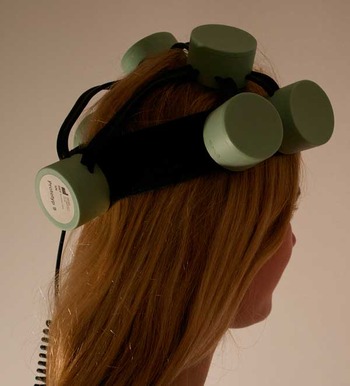
PEMF was delivered by the Re5 Independent System® (Re5 Aps, Frederiksberg, Denmark), in which a pulse generator provides pulses for a head applicator. The pulses fluctuate between +50 and −50 V with a frequency of 55 Hz. The Re5 head applicator is worn as a helmet and comprises seven electromagnetic coils, two of which are located over the anterior and posterior temporal region bilaterally, one coil over the upper parietal region bilaterally and one coil over the centre of the lower occipital region (Fig. 1). The coils generate fluctuating magnetic fields with a calculated maximum of 1.9 mT (19 G) at a distance of 0.5 cm from each coil, which are able to induce electrical fields in the underlying tissues with a magnitude of 2.2 mV/cm at a distance of 0.5 cm from each coil decreasing to around 30 μV/cm 10 cm from the coil. Participants received PEMF or placebo applied transcranially for 7 days a week over 6 consecutive weeks. Each treatment session lasted for 30 min and took place twice daily, that is morning (06:00–09:00) and evening (17:00–20:00). The treatments were self-administered in the participants’ homes, for which reason the participants received careful instructions on how to use the Re5 device before treatment commencement. Participants were able to read or perform other sedentary or supine activities during treatment.
The Re5 head applicator positioned on the head. The photo is viewed posterolaterally showing six out of seven electromagnetic coils (one coil over the right anterior temporal region, one coil over the posterior temporal region bilaterally, one coil over the upper parietal region bilaterally and one coil over the centre of the lower occipital region).

Control visits and calls
During treatment, the participants attended control visits 1, 2 and 4 weeks after start of treatment. At these visits, the smart cards, which were used to operate the Re5 device and contained information on if and when the participants had received the scheduled treatments, were read in order to monitor treatment compliance but without disclosing the concealed treatment allocation. In addition, the control visits served to register symptomatic events during treatment and to secure that the questionnaires were completed at these weeks. At weeks 3 and 5, the participants were contacted by telephone instead and were asked whether all treatments had been carried out, they were reminded to fill in questionnaires if necessary and symptomatic events were registered. A research nurse, who was blinded to group affiliation, was assigned to perform the control procedures.
Outcomes
Self-rated outcomes were assessed via a web-based questionnaire at baseline (week 0), once weekly during treatment (weeks 1–5) and at end of treatment (week 6). The capsaicin test was conducted only at baseline and end of treatment.
QEESI
QEESI is a questionnaire designed to record MCS patient anamneses. Three of five original scales, that is the Symptom Severity Scale (SSS), the Chemical Intolerance Scale (CIS) and the LIS, were used in the form of a validated Danish translation (Reference Skovbjerg, Berg, Elberling and Christensen27). Each scale produces a score ranging from 0 to 100. LIS was the primary outcome, in which the participants rated the extent of functional impairments in everyday life, such as their ability to perform domestic chores, take part in social activities, attend to work, etc. In SSS, the participants rated the severity of various symptoms from multiple organ systems (e.g. headache, memory/concentration difficulties, symptoms from muscles, joints, airways or the gastrointestinal tract) without linking them to triggering exposures whereas in CIS, the severity of symptoms attributed to a list of diverse odours and chemicals was rated.
Sheehan Disability Scale (SDS)
SDS is a self-rated scale, which evaluates impaired functioning in the domains of work, social life and family life (Reference Sheehan, Harnett-Sheehan and Raj28). The scale produces four disability scores, one for each domain ranging from 0 (no impairment) to 10 (extreme disability) and a total score by adding up the three domain scores. The SDS has been demonstrated to be a valid, reliable measure of disability (Reference Arbuckle, Frye and Brecher29).
Symptom Check List-92 (SCL-92)
SCL-92 measures psychosomatic symptoms, which are subdivided into nine affective reactions. Of these, the subscale of depression was employed. It comprises 13 items, each of which is rated from not at all (0) to very much (4). The total score is derived by taking an average of all items. SCL-92 has been validated in a general Danish population and normative data have been established (Reference Olsen, Mortensen and Bech30,Reference Olsen, Mortensen and Bech31).
Self-reported 6-item Hamilton Depression Rating Scale (HAM-D6-S)
HAM-D6-S is a short self-rated measure of depression based on the six core symptoms of depression. The scale produces a score from 0 to 22 and has been shown to be as sensitive as the more widely used interviewer-rated 17-item Hamilton Depression Rating Scale in measuring antidepressive treatment effects (Reference Bech, Gefke, Lunde, Lauritzen and Martiny22).
Capsaicin-induced secondary punctate hyperalgesia
Participants received an intradermal injection of 0.1 ml capsaicin (3.3 μM, 1 μg/ml, 0.01% solution) in the volar side of the left forearm. The area of secondary punctate hyperalgesia was assessed at 10 and 30 min post-injection by applying a punctate stimulus (handheld probe with blunt tip, diameter 0.6 mm, weight 50.1 g) to the skin starting from a point well outside the capsaicin injection site and then sequentially reapplying the probe to the skin moving along a dotted line towards the injection site. In advance, the participants had been instructed to report when the pricking sensation changed in intensity or character. When this occurred, the point was marked on the skin. This procedure was repeated along eight dotted lines (V1–V8) resulting in eight marks which were connected to form an area of secondary punctate hyperalgesia. The area (A) was calculated using trigonometry by the rule of the area of a triangle, adding up and subtracting the area of the capsaicin blister: A=1/2·Sin(45°)·(V1·V2+V2·V3 + … + V7·V8+V8·V1)−(π·0.52). An area was only calculated if at least two neighbouring marks were present. A mean area of secondary punctate hyperalgesia was obtained by taking the mean of the area assessments at 10 and 30 min post-injection. The participants were blindfolded during the entire procedure of area determination. The same examiner conducted the capsaicin procedure at baseline and follow-up.
As described in the study protocol (Reference Tran, Skovbjerg, Arendt-Nielsen, Christensen and Elberling25), other secondary outcomes, that is self-selected individual tasks, anxiety, somatisation, stress, noise sensitivity, life quality and plasma levels of selected cytokines, were also assessed in the present study.
Randomisation and blinding
Participants were randomised with a 1 : 1 ratio and in block sizes of 10 to either PEMF or placebo. The random allocation sequence was computer-generated by the manufacturer of the Re5 device, Re5 Aps, and was generated for the participant numbers 1–40. Participants were numbered in succession from 1 to 40 according to their enrolment in the study. The Re5 devices delivered to the PEMF and the placebo group were identical. The Re5 pulse generator device is operated using smart cards, upon which the type and duration of treatment is loaded. The smart cards were assigned a number from 1 to 40 and loaded with 30-min sessions of the allocated treatment (PEMF or placebo) according to the random allocation sequence. Participants were then supplied with the smart cards that matched their participant number. A placebo treatment was thus externally administered in exactly the same way as a PEMF treatment. However, during a placebo treatment, the pulse generator of the Re5 device did not provide pulses for the head applicator and as a result the coils of the applicator remained inactive.
As the appearances of the smart cards were identical together with the fact that PEMF therapy cannot be felt, the participants, the research nurse and the investigators were all blinded to treatment allocation. The allocation sequence was not disclosed for the investigators before all main statistical analyses were completed.
Sample size
The sample size was based on QEESI LIS and calculated using a two-sample t-test. A recent study among Danish MCS patients registered a mean LIS score of 61.5 and a standard deviation of 24.3 (Reference Skovbjerg, Berg, Elberling and Christensen27). In the present study, we expected the intervention to reduce the LIS score by 40% and thus decrease to 36.9 in the intervention group whereas an unchanged LIS score was expected in the control group. We assumed that the standard deviation of the change score was 24.3. Under these assumptions, the study was estimated to require 17 participants in each group to be able to reject the null hypothesis with a two-sided significance level of 0.05 and a power of 0.80. Drop-outs were estimated at three participants in each group and thus a total of 40 participants were needed to detect the expected difference. A total of only 39 participants were enrolled within the inclusion period. However, as the drop-out rate was lower than anticipated, this was not expected to influence the power of the study.
Statistical analyses
Statistical analyses were conducted using SAS and SPSS. Data were analysed by a statistician blinded to group affiliation, that is PEMF or placebo. The intention-to-treat approach was used for all analyses. For baseline data, categorical and continuous data were analysed using Fisher’s exact test and unpaired t-test, respectively. For all outcomes, within-group analyses were carried out using paired t-test whereas between-group analyses were done using a linear mixed model with a random person intercept using all available data from the two time points, baseline and follow-up. Effect sizes are estimated from the parameters of this model using the delta method. Effect sizes were calculated as the difference in mean change score from baseline to follow-up between the PEMF and the placebo group divided by the standard deviation of the change score for both groups. A negative effect size indicates a larger decrease in the PEMF group and thus that PEMF is superior to placebo whereas a positive effect size indicates a larger decrease in the placebo group and thus that placebo is superior to PEMF. Exploratory post-hoc analyses were conducted after the disclosure of the allocation sequence. Participants in each group were subdivided into responders and non-responders during post-hoc analyses. Responders to interventions were defined a priori as a QEESI SSS change score ≥10. Level of significance was set at 0.05 in all analyses.
Results
Participant flow and recruitment
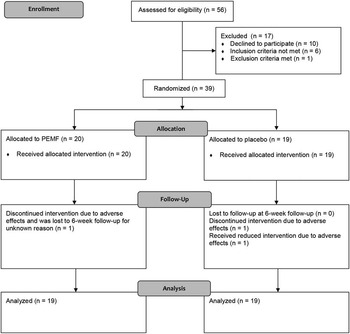
Figure 2 shows the participant flow through the trial. A total of 448 MCS patients were invited to participate and 56 patients agreed to be screened for eligibility. A total of 17 patients were found to be ineligible. Of these, the majority (n=10) declined to participate due to various reasons, six did not fulfil inclusion criteria (the majority, n=4, owing to a QEESI LIS score lower than 35), and one met the exclusion criteria of participation in another research study. In all, 39 patients fulfilled all study criteria and were randomised to either PEMF or placebo treatment. Participants were enrolled in the study continuously from May 2013 to October 2013 and the last participant completed the 6-week follow-up in December 2013.
The CONSORT flow diagram. A diagram of the participant flow through the trial.

In the PEMF group, one participant discontinued intervention due to unacceptable diarrhoea attributed to treatment, and was lost to follow-up from week 1 and onwards without reporting a reason. In the placebo group, one participant discontinued intervention due to unacceptable dizziness attributed to the treatment, but agreed to continue filling in the questionnaires. Another participant in the placebo group experienced palpitations and felt uneasy, and after 10 days treatment was reduced to once daily for the remaining intervention period.
Participant characteristics
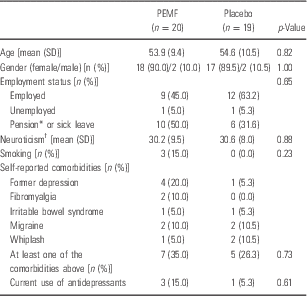
Baseline demographic and clinical characteristics for participants in the PEMF and the placebo group are presented in Table 1. No significant difference was observed in mean age between groups. More women than men participated in the study, but gender distribution did not differ between groups. Nor were there any significant differences between groups in employment circumstances, smoking practice, trait neuroticism, self-reported comorbidities or current use of antidepressants (Table 1). Of the 84 planned treatments, the mean compliance was 79.7 (SD=16.8) treatments in the PEMF group and 78.3 (SD=15.2) treatments in the placebo group and the difference between groups was not statistically significant (p=0.79).
Baseline demographics and clinical characteristics of the pulsed electromagnetic fields (PEMF) and the placebo group

* Due to disability or retirement.
† Assessed with the NEO Personality Inventory.
Outcomes
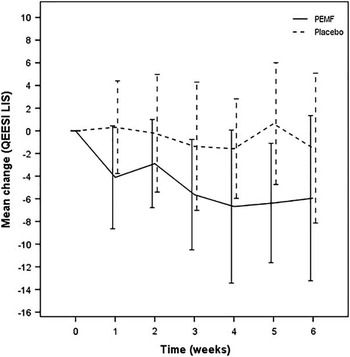
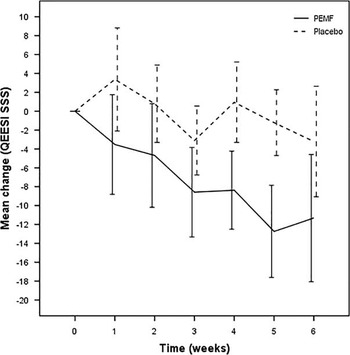
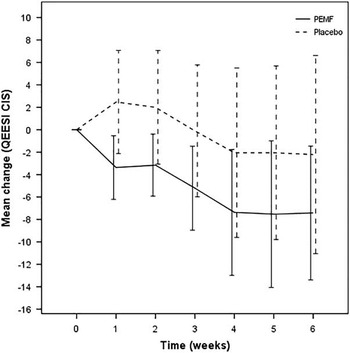
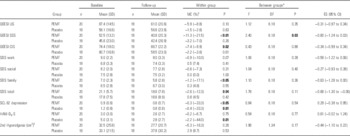
No statistically significant difference between baseline and follow-up was observed on the primary outcome, QEESI LIS, neither within nor between groups (Table 2). However, larger absolute and relative decreases on all QEESI outcomes were observed in the PEMF group compared with the placebo group although not all reached statistical significance (Table 2, Figs 3–5). Only the decrease on QEESI SSS was statistically significantly larger in the PEMF group compared with the placebo group (p=0.03, Table 2, Fig. 4). In addition, statistically significant decreases were observed on QEESI SSS (p<0.01) and QEESI CIS (p=0.02) within the PEMF group but not within the placebo group (Table 2). On SDS, statistically significant decreases were found on the domain of family life (p<0.05) and on the total score within the PEMF group (p=0.04), whereas no differences were registered within the placebo group. However, the SDS decreases were not statistically significant between groups (Table 2).
The Life Impact Scale of the Quick Environmental Exposure and Sensitivity Inventory (QEESI LIS). The mean change scores on QEESI LIS at baseline (week 0), during treatment (week 1–5) and end of treatment (week 6) in the pulsed electromagnetic fields (PEMF) and the placebo group.

The Symptom Severity Scale of the Quick Environmental Exposure and Sensitivity Inventory (QEESI SSS). The mean changes scores on QEESI SSS at baseline (week 0), during treatment (weeks 1–5) and end of treatment (week 6) in the pulsed electromagnetic fields (PEMF) and the placebo group.

The Chemical Intolerance Scale of the Quick Environmental Exposure and Sensitivity Inventory (QEESI CIS). The mean changes scores on QEESI CIS at baseline (week 0), during treatment (weeks 1–5) and end of treatment (week 6) in the pulsed electromagnetic fields (PEMF) and the placebo group. Error bars display 95% confidence intervals and are intentionally displaced around the time point to give a better overview of the data.

The scores of Quick Environmental Exposure and Sensitivity Inventory (QEESI), disability, depressive symptoms and area of secondary hyperalgesia at baseline and at 6-week follow-up in the pulsed electromagnetic fields (PEMF) and placebo group

CI, confidence interval; CIS, Chemical Intolerance Scale; DF, degrees of freedom; ES, effect size; F, F statistics; HAM-D6-S, self-rated 6-item Hamilton Depression Rating Scale; LIS, Life Impact Scale; MC, mean change; SCL-92, symptom checklist-92; SDS, Sheehan Disability Scale; SSS, Symptom Severity Scale.
Bold values indicate statistically significant result with P <0.05.
* Mixed model analyses adjusted for baseline values.
† Absolute mean change (% mean change relative to the baseline value). The calculation of mean change was based on completers, that is the number of participants (n) at follow-up.
‡ Induced experimentally by capsaicin injection.
Significant decreases were detected on the SCL-92 subscale of depression within both groups (p<0.05 in the active PEMF group and p=0.01 in the placebo group, Table 2) while on HAM-D6-S, the decrease was only statistically significant within the placebo group (p=0.01, Table 2). No between-group differences were observed on the SCL-92 subscale of depression or HAM-D6-S.
The mean area of capsaicin-induced secondary punctate hyperalgesia was unchanged at follow-up compared with baseline within and between groups (Table 2). Exploratory post-hoc analyses revealed that there were nine PEMF responders (45.0%) and five placebo responders (26.3%). The baseline value of the mean area of secondary hyperalgesia was 40.8 cm2 (SD=33.1) in PEMF responders and 25.6 cm2 (SD=16.6) in PEMF non-responders, but the difference was not statistically significant (p=0.20). However, the mean change in the area of secondary hyperalgesia from baseline to follow-up was −16.7 (SD=20.4) and 5.0 cm2 (SD=12.1) in PEMF responders and PEMF non-responders, respectively, and this difference was statistically significant (p=0.01). Similar exploratory analyses in the placebo group showed that the mean baseline area of secondary hyperalgesia was similar in placebo responders (mean 33.8 cm2, SD=18.9) and placebo non-responders (mean 32.9 cm2, SD=23.0, p=0.94). Furthermore, the mean change in the area of secondary hyperalgesia from baseline to follow-up did not differ between placebo responders (mean 0.5 cm2, SD=15.4) and placebo non-responders (3.8 cm2, SD=21.0, p=0.76).
No statistically significant differences were observed between groups on other secondary outcomes, that is, self-selected individual tasks, anxiety, somatisation, stress, noise sensitivity, life quality and plasma levels of selected cytokines (data not shown).
Adverse events
No serious adverse events were reported during the trial. In both groups, the most frequently reported symptomatic events during the treatment period were headache, nausea, tiredness, diarrhoea, muscular neck soreness and pain other than headache. The PEMF group seemed to report symptomatic events more frequently than the placebo group, but the number of participants reporting at least one symptomatic event did not differ statistically significantly between groups (p=0.30). The origin of muscular neck soreness was mostly attributed to the considerable weight of the helmet.
Discussion
This is the first randomised, controlled study showing an effect of transcranial PEMF therapy on symptom severity in MCS.
Although no statistically significant difference between groups was found on the primary outcome, QEESI LIS, a significantly positive effect of PEMF on symptom severity in MCS was demonstrated. In support of this result, a consistent pattern of larger reductions was observed in the PEMF group compared to the placebo group on LIS, CIS and SDS, although they were not statistically significant. Looking back, this result may not be surprising, because intuitively a treatment would be expected to have a symptomatic effect at first and then positively affect daily functional level. As there are virtually no intervention studies in MCS, depression may be suitable for comparison given that it is a common comorbidity in MCS and that both conditions are descriptive labels for symptom patterns without objective measures.
In the evaluation of antidepressants, treatment efficacy is indeed based on the symptoms of depression, although daily functional impairments are being acknowledged as an important outcome as well (Reference Bech32). Furthermore, the time frame for response to antidepressants at the symptomatic level ranges from 6 to 8 weeks whereas the time frame for response on a functional level is 8 to 12 weeks (Reference Bech32). If similar in MCS, this could explain the lack of difference on LIS after only 6 weeks of treatment.
The estimated effect size for the MCS symptom severity was 0.60. Whether this effect size is clinically significant is difficult to determine as we lack comparable estimates in MCS. For antidepressants, the overall effect size of 12 antidepressants has been estimated to be around 0.31–0.32 whereas the effect sizes of individual antidepressants range from 0.17 to 0.42 (Reference Kirsch, Deacon, Huedo-Medina, Scoboria, Moore and Johnson33,Reference Turner, Matthews, Linardatos, Tell and Rosenthal34). Given these effect sizes for antidepressants, the effect size of PEMF therapy on MCS symptom severity may thus be clinically important. Reports of PEMF used as add-on therapy in patients with medication-resistant depression have described effect sizes of 0.60–1.02 (Reference Bech, Gefke, Lunde, Lauritzen and Martiny22,Reference Martiny, Lunde and Bech23). Although a larger effect size is desirable in MCS, patients’ individual responses are not all or none and a partial response may indeed be meaningful. However, factors that may have an influence on treatment efficacy could possibly be adjusted to increase efficacy.
Treatments were given twice daily in the present study unlike the once daily dosage in the preceding MCS case study (Reference Tran, Skovbjerg, Arendt-Nielsen, Bech, Lunde and Elberling24), but this increased dosage seems not to have augmented efficacy. The other methodological parameters of the PEMF therapy applied in the present study, such as the duration of 6 weeks, the coil locations and the strength of the magnetic fields generated, were derived from an antidepressive trial with PEMF as add-on therapy (Reference Martiny, Lunde and Bech23), but whether these factors affect the clinical response to PEMF in MCS is unknown but yet probable. Perhaps the effect size could be augmented by extending the treatment duration and/or increasing the strength of the magnetic fields in order to reach deeper cerebral structures more effectively and/or combining PEMF therapy with a centrally acting pharmacological agent as in the antidepressive PEMF trial (Reference Martiny, Lunde and Bech23). Just as in the case study, the positive effect on symptom severity in the present study did not level off, which could support an extension of the treatment period. Furthermore, a recent PEMF study in depressed patients supports beneficial effects of extending the treatment period (Reference Straasoe, Lauritzen and Lunde35). Nevertheless, this remains speculative and further studies examining the effect of PEMF in MCS are warranted.
PEMF have been shown to have a stimulatory effect on intracellular signalling which may result in cellular activation and gene transcription (Reference Rahbek, Tritsaris and Dissing36). However, PEMF’s mode of action underlying the clinical effects in depression and other conditions is mainly unclarified. Although speculative, the effect of PEMF may be mediated by altered receptor expression on the central neurons as the antidepressive effect of ECT has been suggested to involve the regulation of serotonergic and/or dopaminergic receptor expression assuming that these modalities may have a common mode of action (Reference Lanzenberger, Baldinger and Hahn37–Reference Yatham, Liddle and Lam39). In addition, reduced binding potential of the inhibitory serotonergic 5-HT1A receptor in the amygdala and insula has recently been suggested in MCS using the radioligand (11C)WAY-100635. As this radioligand has also been demonstrated as a potent dopamine D4 receptor agonist (Reference Chemel, Roth, Armbruster, Watts and Nichols40), these recent findings may reflect downregulation of serotonin as well as dopamine receptors in MCS. The post-hoc analysis of capsaicin-induced secondary hyperalgesia supports central alterations in PEMF responders.
The present study has some limitations which need to be addressed. This study is of preliminary character owing to a small sample size and the fact that no difference was detected on the selected primary outcome measure. The sample size calculation was based on the assumption of no change in the placebo group. However, as a placebo effect was actually observed, this means that the study could have been underpowered which increases the risk of a type II error. This could explain the lack of statistical significance on several outcomes despite a consistent pattern. Also the problems regarding the case definition should be mentioned. There is no officially approved case definition for MCS and thus several overlapping case definitions exist. Furthermore, the case criteria in these are based solely on self-report as no objective clinical tests are available to confirm the condition. The requirement of a QEESI LIS score beyond a certain boundary in the inclusion criteria of the present study was an attempt to recruit more severely affected MCS patients. This means that the results of this study may not be applicable to all MCS cases when other case definitions or other boundaries are used.
In conclusion, 6 weeks of PEMF treatment showed no effect on the life impact in MCS. However, a significant decrease in symptom severity was observed suggesting that PEMF may offer a possible treatment strategy for MCS with few and mild adverse effects.
Acknowledgements
The authors thank Anne Marie Topp for her great efforts in screening the participants, collecting and preparing the blood samples, conducting the control procedures during treatment and collecting questionnaire data. They also thank the Department of Clinical Biochemistry, Fredericia Hospital, Denmark and the Department of Clinical Biochemistry, Copenhagen University Hospital Gentofte, Denmark for generously allowing them to use their facilities for data collection.
Authors Contributions: Conceived and designed the trial: Marie Thi Dao Tran, Jesper Elberling, Sine Skovbjerg and Lars Arendt-Nielsen. Acquisition of data: Marie Thi Dao Tran. Analysis of data: Karl Bang Christensen and Marie Thi Dao Tran. Interpretation of data and writing the paper: Marie Thi Dao Tran, Jesper Elberling, Sine Skovbjerg, Lars Arendt-Nielsen and Karl Bang Christensen.
Financial Support
This study was funded by the Danish Ministry of the Environment and received a research grant from Aage Bang’s Foundation (grant number 73-2012/13). The sponsors had no role in the design, conduct, analysis, interpretation of data or writing of the report of this study.
Conflicts of Interest
None.
Ethical Standards
The authors assert that all procedures contributing to this work comply with the ethical standards of the relevant national and institutional committees on human experimentation and with the Helsinki Declaration of 1975, as revised in 2008.