


Introduction
Combined geochemical and stable-isotope studies of ice cores have a long history (Reference Legrand and MayewskiLegrand and Mayewski, 1997). However, most publications deal with Greenland and Antarctic ice, and very little has been published comparing the isotope/geochemical properties of glacier and ground ice, especially for the Russian Arctic. Paleoclimatic reconstructions using ground ice as evidence of past glacial extent are mainly based on stratigraphy and dating (Reference Forman, Ingolfsson, Gataullin, Manley and LokrantzForman and others, 1999). Since 1998, efforts have been made to use geochemical methods to determine the origin of tabular ground ice (Reference Leibman, Lein, Hubberten, Vanshtein and GoncharovLeibman and others, 2001, Reference Leibman, Hubberten, Lein, Streletskaya, Vanshtein, Phillips, Springman and Arenson2003). There were no comparable geochemical data on undoubted glacier ice from the Russian Arctic to serve as a benchmark for the interpretation of ground ice.
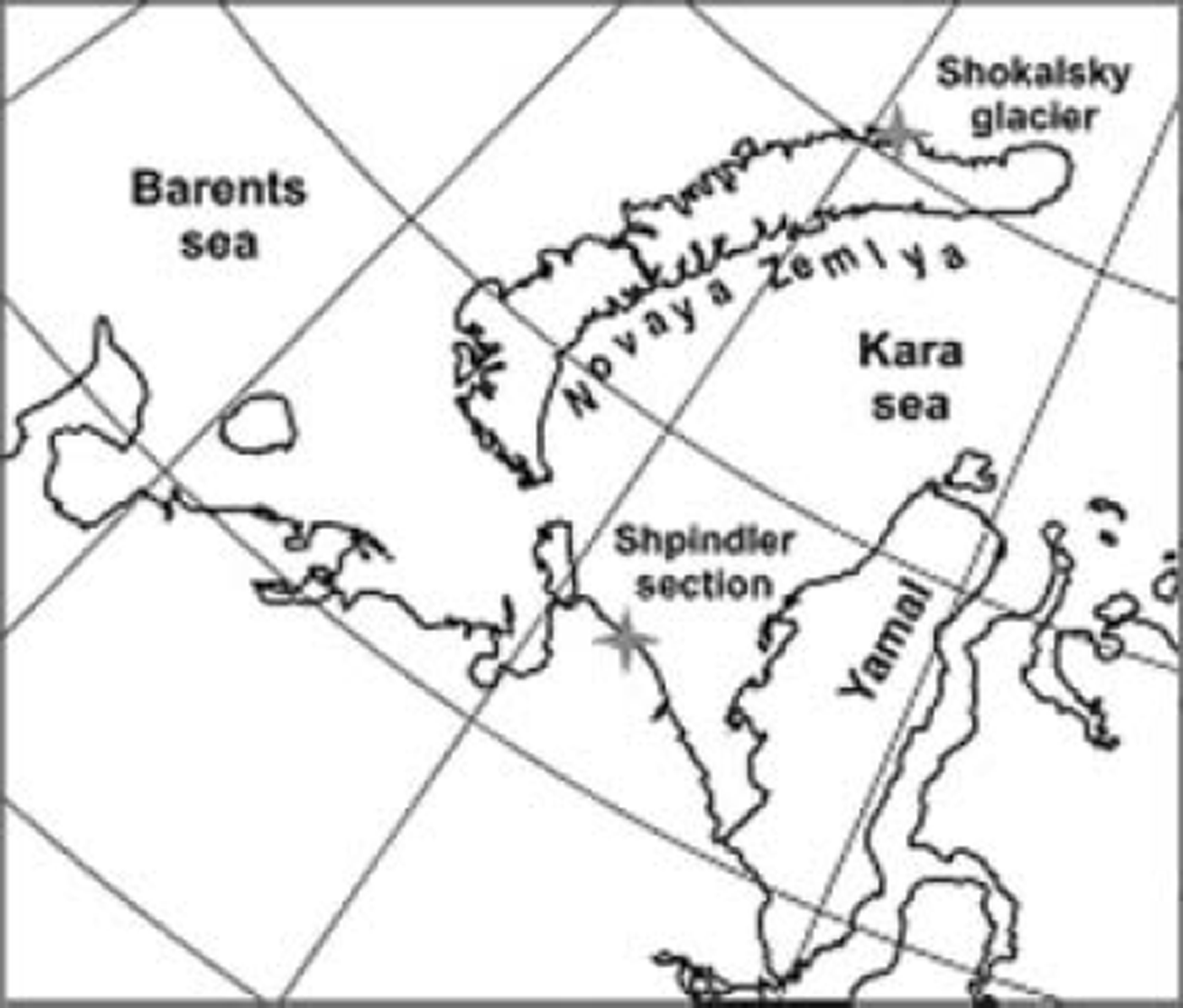
Tabular ground ice is widely distributed in the Arctic, from northeastern Europe, Svalbard and Kolguev island to the Canadian Arctic Archipelago and Alaska, USA (Reference Brown, Ferrians, Heginbottom and MelnikovBrown and others, 1997). Numerous publications debate the glacial or intra-sedimentary origin of tabular ground ice in the Arctic (e.g. Reference VtyurinVtyurin, 1975; Reference Rampton and SennesetRampton, 1988; Reference Goldfarb and EzhovaGoldfarb and Ezhova, 1990; Reference Moorman, Michel, Wilson, Lewkowicz and AllardMoorman and others, 1998; Reference Forman, Ingolfsson, Gataullin, Manley and LokrantzForman and others, 1999; Reference KotovKotov, 2001; Reference Leibman, Lein, Hubberten, Vanshtein and GoncharovLeibman and others, 2001). The formation of tabular ground ice out of meltwater from glaciers has been widely discussed (Reference Rampton and SennesetRampton, 1988; Reference Moorman, Michel, Wilson, Lewkowicz and AllardMoorman and others, 1998; Reference Leibman, Hubberten, Lein, Streletskaya, Vanshtein, Phillips, Springman and ArensonLeibman and others, 2003). In order to try to prove or disprove the glacial origin of one of the ground-ice bodies, Shokalsky glacier, Novaya Zemlya (NZ), on the west coast of the Barents Sea (Fig. 1), and tabular ground ice at the section ‘Shpindler’, Yugorsky peninsula, on the south coast of the Kara Sea (Fig. 2), were chosen as key sites for geochemical, isotope and microbiological studies. Glacial advance from NZ should have reached the southern coast of the Kara Sea, so both selected research sites would provide a unique natural experiment for the correlation of geochemical properties (Fig. 3).
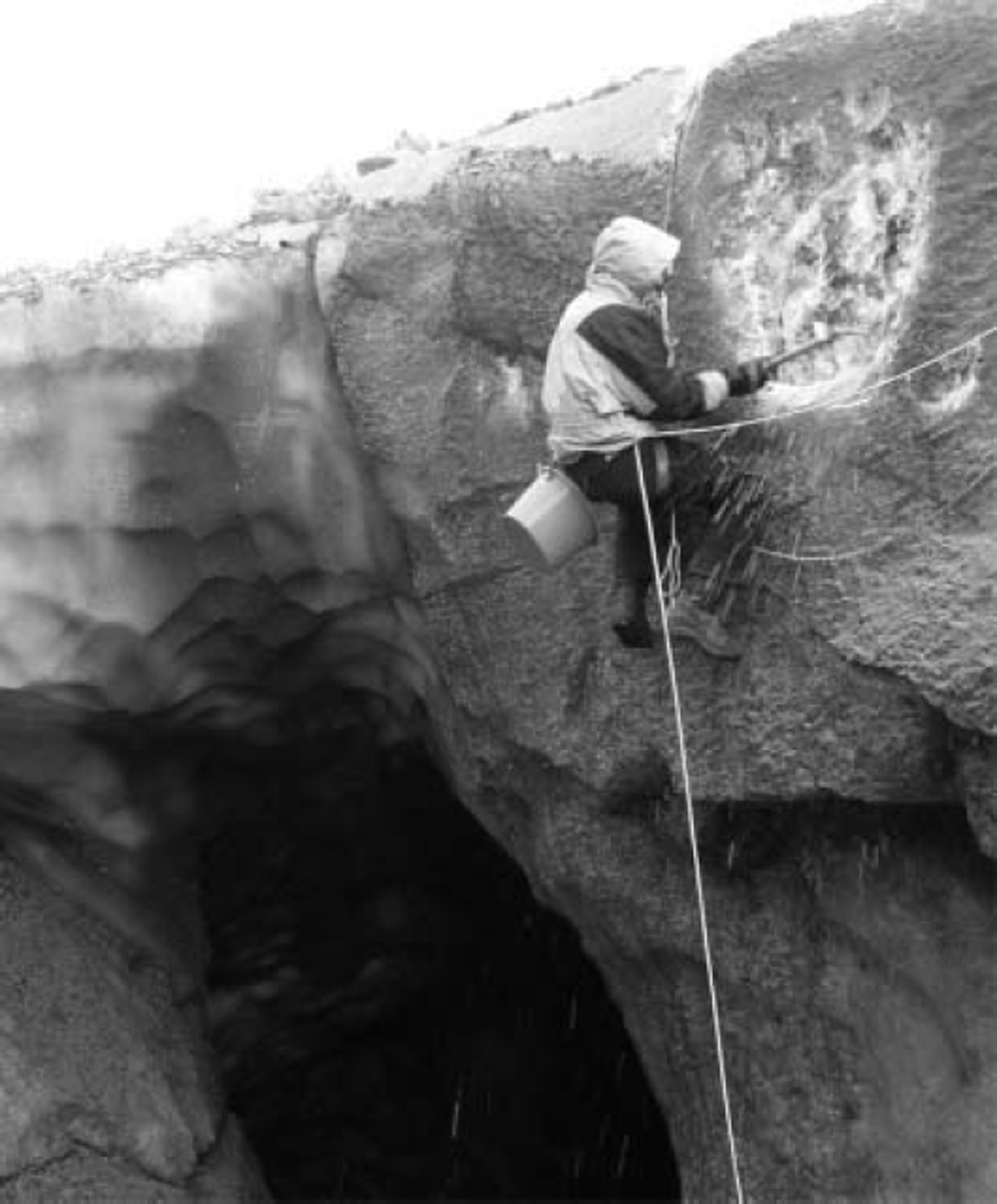
Sampling of Shokalsky glacier. The person sampling the section is 1.85 m tall.
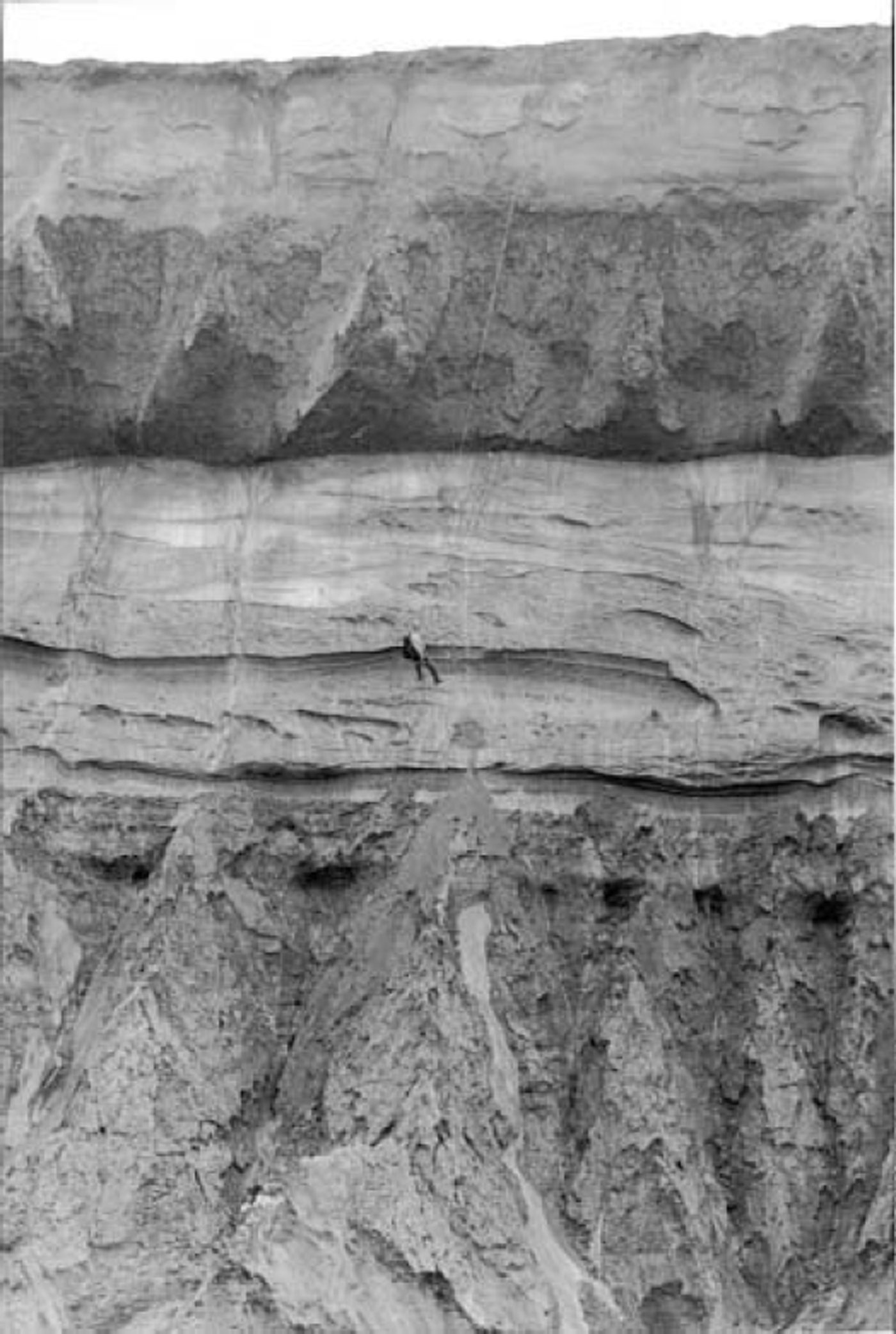
Shpindler key section: tabular ground ice covered by marine clay and underlain by deltaic interbedding of sand, clay and peat. White lenses: bubbly ice; dark lenses: stratified ice. Person in center of picture is 1.85 m tall.
Study sites: Shokalsky glacier, NZ, and Shpindler section, Yugorsky peninsula.
Though modern glacier ice is much younger than the tabular ground ice of Yugorsky peninsula, we believe it is appropriate to compare both objects, first because NZ was considered the center of late Pleistocene glacial advance towards the Yugorsky coast (Reference Forman, Ingolfsson, Gataullin, Manley and LokrantzForman and others, 1999; Reference Manley, Lokrantz, Gataullin, Ingolfsson and AnderssonManley and others, 2001), and secondly because geochemical specialization of the area due to bedrock weathering had not changed during the late Pleistocene. There is a major inconsistency concerning the stable-isotope data. According to dated occurrences, tabular ground ice found to the south of modern glacial areas formed in much colder epochs (Reference Manley, Lokrantz, Gataullin, Ingolfsson and AnderssonManley and others, 2001), and therefore should be isotopically ‘lighter’ than the glacier ice of NZ.
Methods
Geochemical analyses include hydrochemistry, trace-elements, oxygen and hydrogen isotope composition as well as microbial activity. Conventional hydrochemical analyses (titration for anions, and photometry for cations) were performed in the laboratory of VNIIOkeangeologia (All-Russia Research Institute for Geology and Mineral Resources of the World Ocean), St Petersburg, Russia, for Cl–, SO4 2–, HCO3 –, Na+, Ca2+ and Mg2+. Analytical methods were applied in accordance with the Russian standards, allowing errors of up to 20–30% for ion concentrations of <0.3 mEq L–1 (equivalent molecular mass per liter), 10–20% for 0.3–1.0 mEq L–1, and 3–10% for concentration exceeding 1.0 mEq L–1. In this paper, only total concentration of all analyzed anions and cations (in mgL–1) and ratios of Cl– and Ca2+ ions (in mEq L–1) are considered. The total concentration shows the redistribution of soluble salts, while Cl– and Ca2+ ratios show whether the source of salts is of marine or continental origin. Trace elements were also measured at VNIIOkeangeologia using the total reflection X-ray-fluorescence (TXRF) method (Reference Kondorov and KorotkichKondorov and Korotkich, 1992). Oxygen and hydrogen isotope measurements were carried out at the Alfred Wegener Institute (AWI), Potsdam, Germany. The samples were measured using the common equilibration technique with a Finnigan MAT Delta-S mass spectrometer and related to the international standard V-SMOW (Vienna Standard Mean Ocean Water; Reference Meyer, Schonicke, Wand, Hubberten and FriedrichsenMeyer and others, 2000). The external errors of long-term standard measurements for hydrogen and oxygen isotopes are better than 0.80/00 and 0.100/00, respectively. Microbiological tests were undertaken in the Institute of Microbiology, Russian Academy of Sciences, Moscow. To count the total number of microorganisms, meltwater was fixed with ethyl alcohol and concurrently with paraformaldehyde. The intensity of 14CO2 assimilation and 14C (glucose) consumption was determined in fresh ice-melt samples exposed in 30 mL penicillin flasks at 0˚C for 1day. A total of 82 samples of 1–5L volume were collected, some from boreholes and others (sampled by axe) from exposures at depths of at least 20 cm from the front of the exposed wall, to avoid sampling of the weathered layer. The average values for each type of moisture and ice facies were calculated and compared with those for the tabular ground ice of the Shpindler section. The Shpindler section samples were obtained in the field by the same team during the period 1998–2002, and the analytical results are published by Reference Leibman, Vasiliev, Rogov and IngolfssonLeibman and others (2000, Reference Leibman, Lein, Hubberten, Vanshtein and Goncharov2001, Reference Leibman, Hubberten, Lein, Streletskaya, Vanshtein, Phillips, Springman and Arenson2003), Reference Lein, Leibman, Pimenov and IvanovLein and others (2000, Reference Lein, Savvichev, Miller, Pimenov, Leibman, Phillips, Springman and Arenson2003a,Reference Lein, Leibman, Savvichev, Miller and Pimenovb) and Reference Vanshtein, Cherkashev, Piven, Leibman, Phillips, Springman and ArensonVanshtein and others (2003).
Study Objects and Their Structural Characteristics
At NZ, several types of ice from Shokalsky glacier were studied: dead ice buried by a lateral moraine (about 2 km from the sea shore), and ice from the active glacier (terminus several hundred meters above the glacial front). This glacier ice contains ice facies similar to those found in the tabular ground ice – vitreous, bubbly, muddy or with gravel (with suspended grit–sand–silt matter) – and, only rarely, stratified facies. Snowpatches show all types of snow–firn–ice transitions. Icicles were collected from the overhanging bank of the meltwater stream of glacial drainage channels. Water was collected from meltwater streams and from a proglacial lake behind a moraine dam.
The study objects were classified into five groups, within which analyses for various moisture types were compared:
(I) Snowpatches. They were compared with icicles formed from snowmelts.
(II) ‘Dead ice’, a core of the lateral moraine nearest to the glacier. It was compared with icicles formed at the edge of the exposure.
(III) ‘Dead ice’, a core of the lateral moraine up-slope from the lateral moraine I I , probably older than dead ice I I.
(IV) Active ice. It was compared with surface snow, melt crust and stream water fed by the meltwater of the glacier.
(V) ‘Icing’ which appeared to be a snowpatch soaked by proglacial lake water filtrating through the dam. It was compared with lake water and lake ice, as well as water from the stream dissecting the snowpatch.
The main data interpretation approach is the correlation between ‘initial’ moisture (snow, firn or ice) and ‘derivative’ moisture (meltwater, melt crust, icicles and superimposed ice). For example, the snowpatch (group I) is analyzed in the following sequence: snow (initial)/superimposed ice (derivative recrystallizing in situ); snow meltwater (derivative displaced); and snow/icicle (derivative displaced and freezing).
For a more detailed correlation, the ice is subdivided into facies according to its inclusions: vitreous ice contains no inclusions; bubbly ice contains only gas bubbles; gravel/ muddy ice contains rock particles of various grain-size, and generally also gas bubbles. In the stratified ice, silty to clayey grains of rock are grouped into stripes interbedding with vitreous ice stripes. These ice facies are also most typical for tabular ground ice. This subdivision is morphological and does not refer to the mechanism of the formation of each ice facies.
Geochemical and Isotope Results
The total concentration (ionic budget), averaged for the samples within each group of study objects in the Shokalsky glacier area, is shown in Figure 4. It can be seen that, in general, the range of ion concentrations is quite wide, varying from 1.5 to 165 mg L–1. The lowest concentrations are characteristic of the active glacier (group IV), and the highest are those of the lake water and the stream originating from the lake (group V).
Total ion concentration (mg L–1) averages for sample types in snowpatches (group I), dead ice (groups II and III), active ice (group IV) and snowpatch and icing (group V).
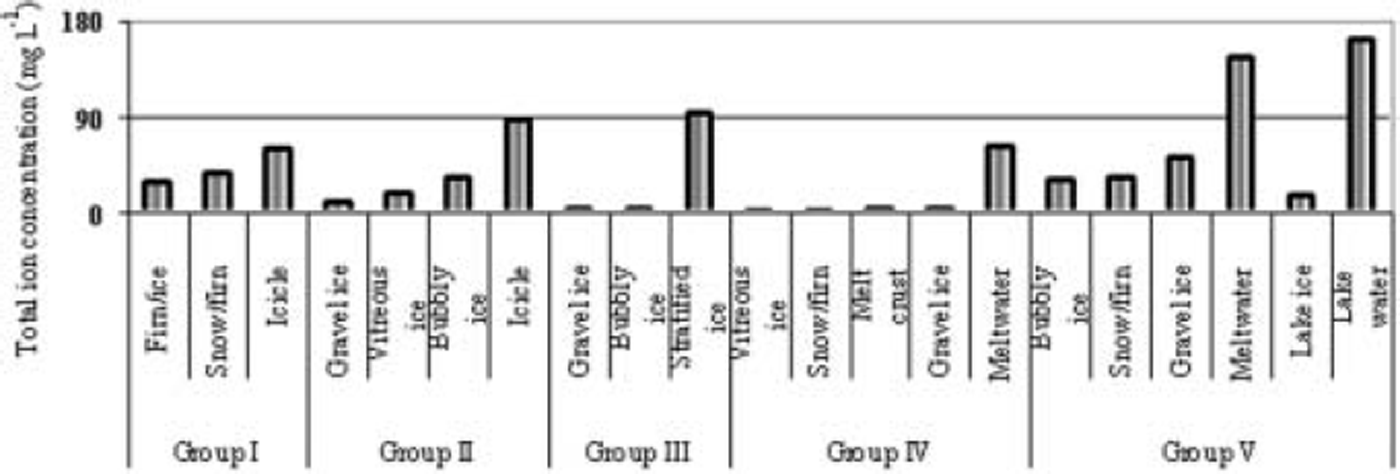
Within group I, ‘initial’ snow has a higher concentration than derivative ice formed in situ, but a lower concentration when compared to icicles. In other words, ion fractionation during the snowpatch evolution is directed to reduce ion concentration in the ice due to the removal of ions by meltwater which forms icicles.
The same conclusion can be drawn when interpreting the data of the other group. The highest ion concentration is found in the icicles formed out of dead ice (group II) and meltwater out of active ice (group IV). In glacier ice (groups II–IV), no large differences in hydrochemical composition are observed in the various ice facies. Only the stratified ice in group III has a different ion concentration, which can be interpreted as different origin of this type of ice, possibly by ice deposition from flowing water (not in situ derivative, but displaced derivative).
The total ion concentration for Shokalsky glacier and the Shpindler section is shown in Figure 5. Average values for the total ion concentration are similar for both ice types, while the range, and especially the maximum for tabular ground ice, is higher. We interpret the maximum ion concentrations as more crucial than the averages, because (1) the heterogeneity of geochemical fields in dead ice and ground-ice bodies is high, while (2) the number of samples collected is low, for technical reasons. The maximum ion concentration in such ultra-fresh media, especially in vitreous and bubbly ice facies, is assumed to be indicative for salt sources.
Averages and range of total ion concentration for various ice facies at Shokalsky glacier, group II (NZ), compared to the same ice facies of tabular ground ice at the Shpindler section (Sh, calculated from Reference Leibman, Hubberten, Lein, Streletskaya, Vanshtein, Phillips, Springman and ArensonLeibman and others, 2003).
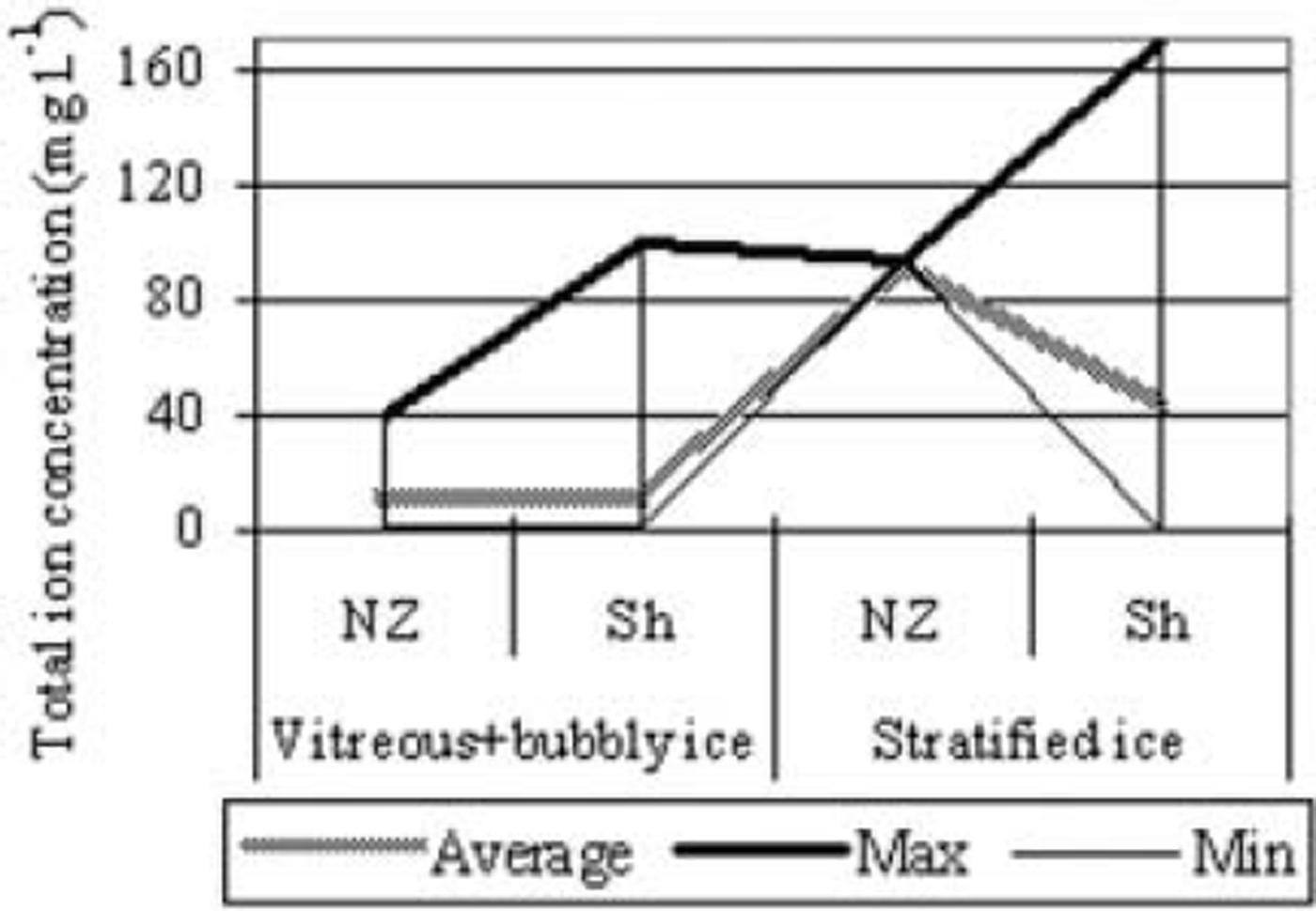
The ion concentration for the stratified ice of NZ is within the range of this parameter obtained for Shpindler tabular ice. However, only a small body of stratified ice was found at NZ, and only one sample was collected.
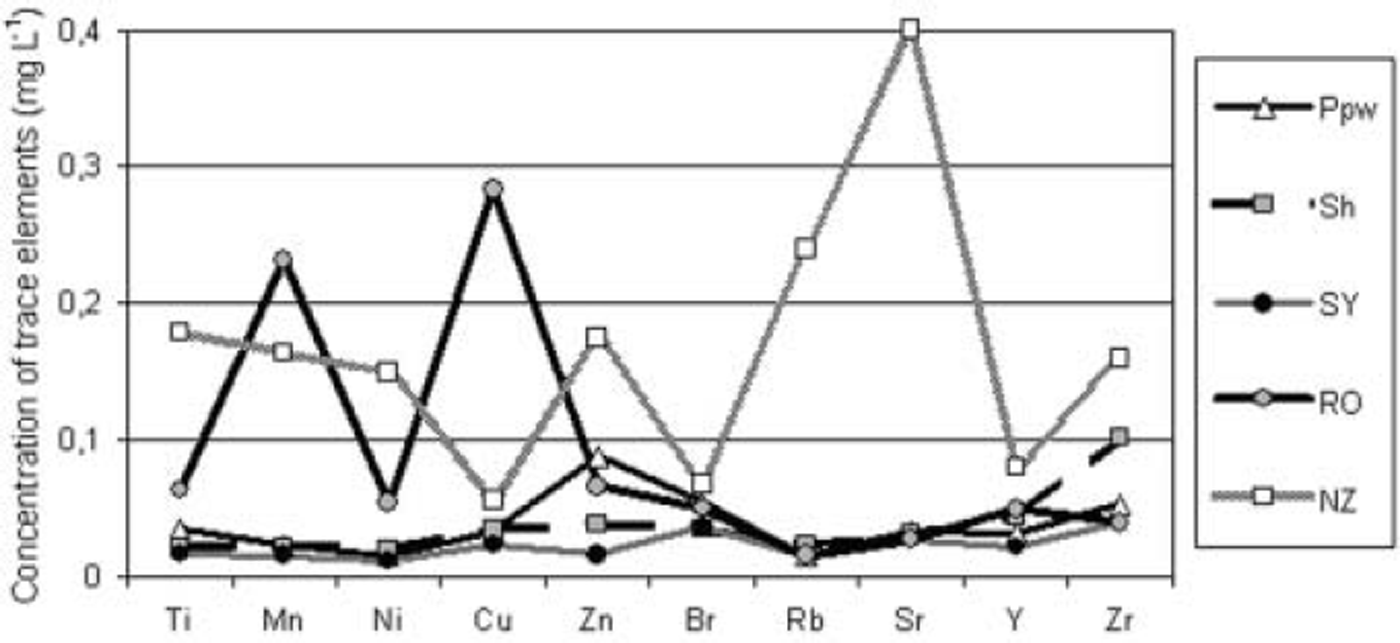
To reinforce the evidence that ground ice in the Shpindler section has a different origin from that of the glacier ice, trace-element and microbiological tests were applied to the samples from both types of ice. Trace elements were determined in several sections of the Russian Arctic at Yugorsky, Yamal and Chukotka peninsulas (Reference Leibman, Lein, Hubberten, Vanshtein and GoncharovLeibman and others, 2001). Averages for these tabular-ice sections show common features in all areas of tabular ground ice except the Chukotka section ‘Rogozhny’. The results are shown in Figure 6. They allow the Chukotka section and Shokalsky glacier to be separated from other tabular ground-ice sections. This supports Reference KotovKotov’s (2001) hypothesis that tabular ground ice of the Rogozhny section on Chukotka peninsula is a buried Pleistocene glacier, because only this section has a much higher concentration of trace elements compared with other tabular ground-ice sections and is closer to that in the glacier ice. The higher trace-element content in glacier ice is possibly due to an aeolian source, which is not the case for an intra-sedimentary ice formation. This may be considered as one of the signals for sedimentary ice origin. At the same time, the Shpindler section of Yugorsky peninsula does not seem to be similar in trace-element content and composition to Shokalsky glacier, which leads to the conclusion that they are of different origin. Even if glacial water was the source for ground-ice formation, it has lost some trace elements during filtration through the deposits and during freezing.
Concentration of trace elements in tabular ground ice of various sections and in the Shokalsky glacier (NZ) ice. Key for tabular ground-ice sections: Ppw, Pervaya Peschanaya western section, Yugorsky peninsula; Sh, Shpindler section, Yugorsky peninsula; SY, Se-Yakha river section, Yamal peninsula; RO, Rogozhny cape section, Chukotka peninsula.
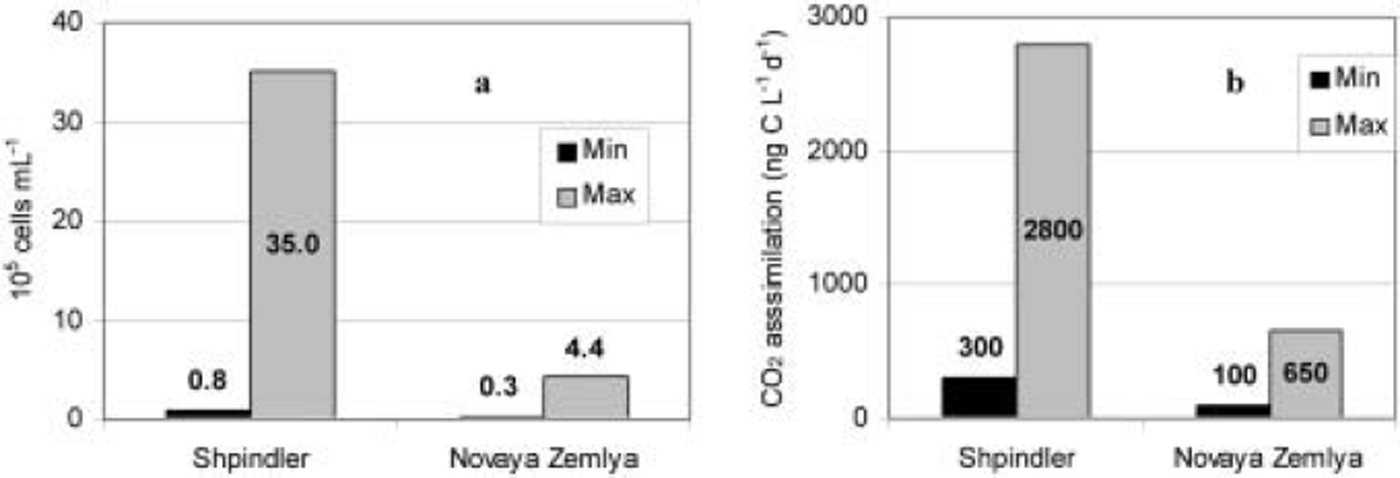
Microbial activity, determined by counting the cell numbers (Fig. 7a) and the CO2 assimilation (Fig. 7b) in the glacier ice (Shokalsky), is considerably lower than in the tabular ground ice (Shpindler). It is highly probable that the Shpindler ice was formed out of whatever source water filtrated through the deposits.
Variation of the total cell number (a) and CO2 assimilation (b) in the ice melts of the Shpindler section and Shokalsky glacier.
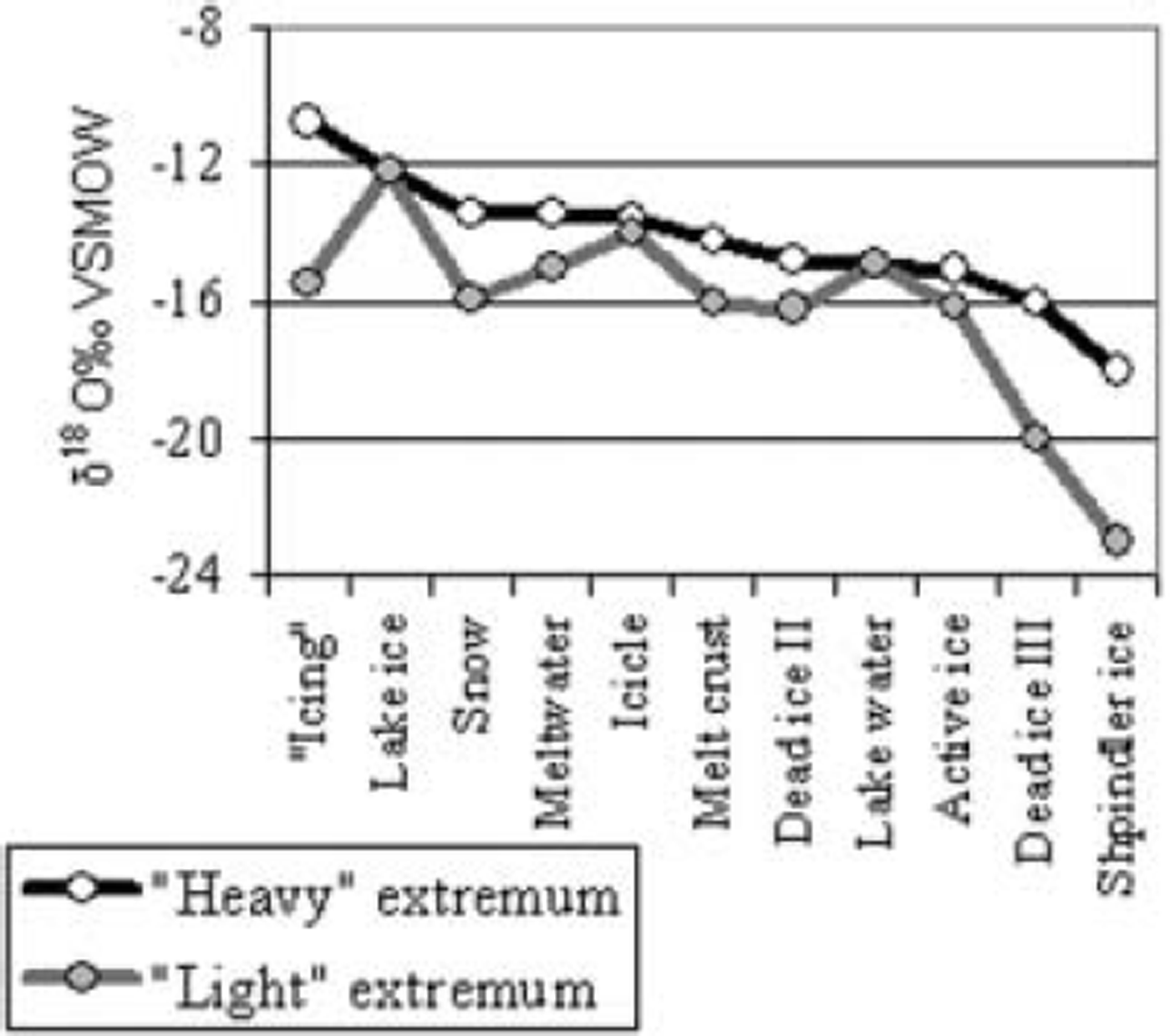
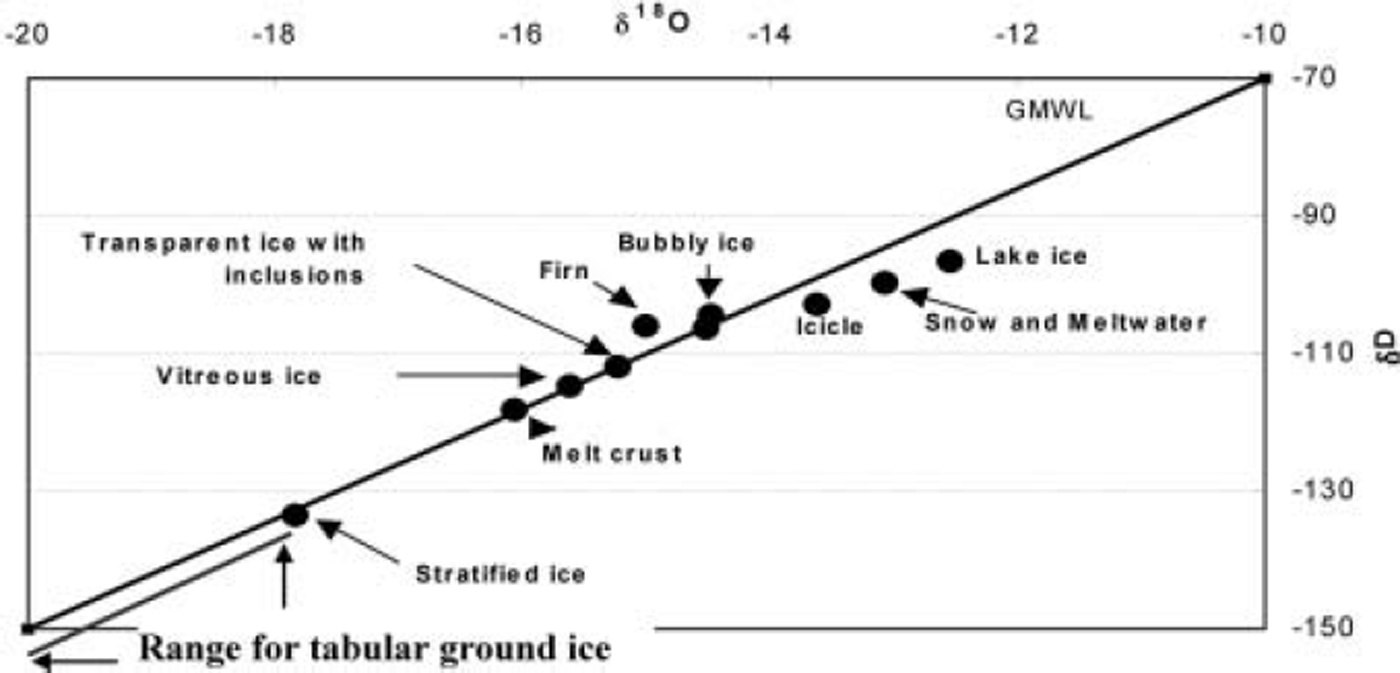
Oxygen isotopes are widely used for paleoclimatic reconstructions. The diagram for δ18O values presented in Figure 8 shows that (1) the range for all types of moisture in the glacier area is very narrow except for two types connected to lake water (the lake water and the ‘icing’). This probably proves that transformation of the glacier ice after its activity is finished does not produce essential changes in δ18O values, so this parameter can be referred to as a signal of climatic conditions during the time of glacier formation even if measured in dead ice. At the same time, ‘older’ dead ice (group III) is lighter than ‘younger’ dead ice (group II), which means that it was formed in colder conditions when the glacier thickness was larger, reaching higher hypsometric levels. In both extremes the tabular ground ice of Shpindler section is ‘lighter’ than any type of moisture at NZ. This can be explained either by fractionating during refreezing or by differences in climate. The excess-hydrogen diagram in Figure 9 shows that the tabular ground-ice range is found to be below the meteoric water line, as are icicles, meltwater and lake ice which appear to be derivatives. This may be taken as additional evidence in favour of refrozen meltwater rather than buried glacier ice or intra-sedimental freezing of sub-permafrost groundwater.
Oxygen isotope composition in water, snow and ice at Shokalsky glacier and in tabular ground ice of the Shpindler section.
Excess-hydrogen averages in water, snow and ice of Shokalsky glacier and in tabular ground ice of the Shpindler section.
Conclusion
For the first time, a wide range of geochemical data has been obtained for the NZ glacier. The limited number of samples is not yet sufficient to allow final acceptance or rejection of the glacial or non-glacial origin of the tabular ground ice, but it leads to a reliable interpretation of ground-ice formation out of glacial meltwater by intra-sedimentary refreezing after filtration through the ground.
Acknowledgements
The work was supported by INTAS (International Association for the Promotion of Cooperation with Scientists) grant 01-2211. Special thanks go to H. Meyer of the AWI, for stable-water-isotope measurements, reviewing the paper and very helpful advice. We thank E. Isaksson, A. Stroeven and anonymous reviewers for constructive suggestions to improve the manuscript.



