Introduction
Leishmaniasis occupies the ninth position in the world ranking among the priority infectious diseases (World Health Organization., 2015; Machado et al., Reference Machado, Silva and Vilani2016; Carvalho et al., Reference Carvalho, Riboldi, Bello, Ramos, Barcellos, Gehlen, Halon, Romão, Dallegrave and Rossetti2018). Visceral leishmaniasis (VL) is present in more than 80 countries (Mehrjou et al., Reference Mehrjou, Hosseini and Nadjar Araabi2016), nevertheless 90% of these cases are concentrated in 10 of them (Brazil, Bangladesh, Ethiopia, China, Kenya, Nepal, India, Sudan, Somalia and South Sudan) (World Health Organisation, 2009; Arruda et al., Reference Arruda, Cardoso, Teixeira-Neto, Barbosa, Ferraz, Morais, Belo and da Silva2019). In the Americas, it is present in 12 countries, and 95% of the cases are reported in Brazil (Mehrjou et al., Reference Mehrjou, Hosseini and Nadjar Araabi2016).
In the 1990s, the highest index of Brazilian notifications was around 90% in the Northeast Region. The unplanned expansion of the peripheries in small and large cities, associated with the lack ok of adequate infrastructure (Albuquerque et al., Reference Albuquerque, Mendonça, Cardoso, Baldaçara, Borges, da Borges and da Pranchevicius2014; Silva and Abud, Reference Silva and Abud2016), and the presence of dog, the main reservoir of Leishmania infantum (Mehrjou et al., Reference Mehrjou, Hosseini and Nadjar Araabi2016), favoured environments conducive to the proliferation and adaptation of the vector, as well as the consequent expansion of the disease to other regions, as Midwest and Southeast. Thus, the percentage in the Northeast Region decreased to 77% (Brasil, Reference Brasil2014, Reference Brasil2015).
In Brazil the disease is more prevalence in Maranhão, Ceará, Bahia, Piauí, Tocantins, Pará, Minas Gerais, Mato Grosso do Sul and São Paulo State (Brasil, Reference Brasil2015). The cases are often related to poor quality of life and child malnutrition (Duarte-Cunha et al., Reference Duarte-Cunha, Souza-Santos, Matos and Oliveira2012).
Epidemiological and socioeconomic situations and ecological processes can reduce the impact of control programmes (Otranto and Dantas-Torres, Reference Otranto and Dantas-Torres2013). The Secretariat of Health Surveillance of Ministry of Health coordinates the VL control and surveillance activities in Brazil (Mehrjou et al., Reference Mehrjou, Hosseini and Nadjar Araabi2016). However, the control strategies currently applied were not successful in decreasing the incidence of the disease to acceptable levels (Costa et al., Reference Costa, Rocha, Carvalho, Lima-Neto, Harhay, Costa, Barral-Neto and Barral2013), exposing the vulnerabilities of such measures (Araújo et al., Reference Araújo, Pinheiro, de Almeida, de Menezes, Morais, Reis, Assunção and Carneiro2013; Arruda et al., Reference Arruda, Cardoso, Teixeira-Neto, Barbosa, Ferraz, Morais, Belo and da Silva2019).
Using spatial analysis tools and those from Geographic Information System (GIS) allows the creation of thematic maps that assist in the checking and offer a better understanding of the spatial patterns of data distribution, making it possible to detect risk areas and associated factors, as well as indicate the regions with greater need to intensify and/or prioritize control measures, in addition to implementing control strategies, both for the disease and the limited financial resources (Arruda et al., Reference Arruda, Cardoso, Teixeira-Neto, Barbosa, Ferraz, Morais, Belo and da Silva2019).
A model of geographic distribution has been used in the human visceral leishmaniasis (HVL) (Barbosa and Werneck, Reference Barbosa and Werneck2011; Karagiannis-Voules et al., Reference Karagiannis-Voules, Scholte, Guimarães, Utzinger and Vounatsou2013; Barbosa et al., Reference Barbosa, Belo, Rangel and Werneck2014; Fontoura et al., Reference Fontoura, Fontoura and Nascimento2016) and is widely used to analyse the spatial distributions of other studies, as dengue (Rodrigues et al., Reference Rodrigues, Lino, Daumas, de Andrade, O'Dwyer, Monteiro, Gerardi, Fernandes, Ramos, Ferreira and da Leite2016), Zika virus (de Oliveira et al., Reference Oliveira, de França, Carmo, Duncan, de Souza Kuchenbecker and Schmidt2017), tuberculosis (Santos Neto et al., Reference Santos Neto, Da Silva, Sodré, Yamamura, Santos, de Costa, de Serra, de Gordon, Pascoal, Bezerra, dos Santos, de Andrade, Fontoura, Pieri and Arcêncio2017), diarrhoea (Fontoura et al., Reference Fontoura, Graepp-Fontoura, Santos, Santos Neto, de Tavares, Bezerra, de Feitosa, Neves, de Morais and Nascimento2018a), among others.
Although spatial analyses have already been used in other Brazilian research studies, this study was necessary to identify spatial patterns during the period of last 10-years in order to determine areas that must be prioritized regarding planning disease surveillance and control actions in the country, mainly taking into account the HVL rates in the Brazilian states.
Materials and methods
Study area
Brazil is located in South America, and its area comprises 8.5 million km2. Its population was estimated in 211 million residents in 2020. It is divided into five regions, i.e. Northeast, North, Midwest, Southeast and South, with 27 federated states (1 Federal District and 26 States) and 5570 cities (IBGE, 2020).
Study design and population
We carried out an ecological spatial analysis based on secondary data and time series related to HVL cases in Brazilian cities between 2006 and 2015. We analysed the epidemiological characteristics, spatial patterns with time trends of the HVL distribution, as well as the identification of risk areas.
Data sources
Populational data collected in 2017 originated from the 2010 Demographic Brazilian Census (IBGE, 2017a) carried out by the Brazilian Institute of Geography and Statistics (IBGE, 2017b). HVL data were obtained from Information System of Disease Notification (SINAN, acronym in Portuguese) from 2006 (Brasil, Reference Brasil2017a) and between 2007 and 2015 (Brasil, Reference Brasil2017b), which includes standardized forms that are completed by the physicians in charge of notification. The disease notification form provides demographic data (gender, skin colour/ethnicity, age range, years of study, data regarding region and states), and clinical information (HIV coinfection, evolution, entrance type, diagnosis examinations, confirmatory criteria). These data are available in the website of Computing Department of the Brazilian Unified Health System (DATASUS, acronym in Portuguese) and they are of public domain, therefore they can be accessed for free. We included all data available between 2006 and 2015 regarding HVL in Brazil.
The selection of indicators was based on the distribution of HVL cases reported and their association with risk factors for its occurrence. The analysis was based on indicators that determine the HVL (Araújo et al., Reference Araújo, Pinheiro, de Almeida, de Menezes, Morais, Reis, Assunção and Carneiro2013; Arruda et al., Reference Arruda, Cardoso, Teixeira-Neto, Barbosa, Ferraz, Morais, Belo and da Silva2019). The HVL epidemiological characteristics were compared with gender, skin colour/ethnicity, age range, evolution, type of entrance, diagnosis examinations, years of study grouped in a biennial form and data regarding region and states.
Statistical analysis
We described the available variables of the studied population: gender, skin colour/ethnicity, age range, disease evolution, entrance type, HIV coinfection, parasitological diagnosis, immunofluorescent diagnosis, confirmatory criterion, region, and states. The descriptive statistics included absolute number, 95% confidence interval (95% CI) for categorical variables, and average annual rate (AAR), standard deviation (s.d.) and 95% CI for continuous variables.
Gross rate and AAR were calculated by dividing the HVL number in each year through the direct method using the 2010 Brazilian population, multiplied by 100 000 residents.
Prais–Winsten linear regressions were used between 2006 and 2015, a statistical procedure for the analysis of prevalence trend regression and autocorrelation in time series (Falavina et al., Reference Falavina, Lentsck and de Mathias2019). It was used for annual increment rates and respective confidence intervals (95%). Based on these parameters, they were classified as increasing (positive rate), stable (regression coefficient not significant between its value and zero, P > 0.05) or decreasing (negative rate) (Brilhante et al., Reference Brilhante, Melchior, Nunes, de Cardoso and Galati2017; Costa et al., Reference Costa, Dos Santos-Júnior, Moreira and Góes2019).
Finally, we analysed the spatial patterns of HVL distribution in Brazil using the home cities (n = 5570; 2010 territorial division). The geographic units were analysed per tool of the GIS, which are useful in the geographic distribution assessment, as well as in the spatial dependence of the HVL rates.
The development of thematic maps occurred based on gross rates (number of HVL/population living in Brazil in 2010 × 100 000 residents) (Martins-Melo et al., Reference Martins-Melo, da Lima, Alencar, Ramos and Heukelbach2014b). The gross rates of HVL were grouped in every 2 years (2006–2007; 2008–2009; 2010–2011; 2012–2013; 2014–2015) and in the total period (2006–2015).
After the descriptive analysis of data, we estimated global and local Moran's I indices (Local Indicators of Spatial Association – LISA), which estimate the spatial correlation and local self-correlation by helping to identify sub-regions with the occurrence of spatial self-correlation. We used a first-order neighbourhood criterion to concretize calculations, in which the cities defined as neighbours were those in the borders (Barbosa and Werneck, Reference Barbosa and Werneck2011; Fontoura et al., Reference Fontoura, Fontoura and Nascimento2016). Moran's I global index is defined between −1 and 1, in a way that values close to 0 suggest absence of spatial correlation or randomness and next to 1, positive spatial dependence with more similarity between the adjacent cities (grouping). Negative spatial dependence is pointed as −1, which indicates dissimilarity (dispersion) and negative spatial self-correlation (Martins-Melo et al., Reference Martins-Melo, Lima, Ramos, Alencar and Heukelbach2014a; INPE, 2015).
Data available between 2006 and 2015 were analysed in order to observe a potential overlap between HVL (Fontoura et al., Reference Fontoura, Fontoura and Nascimento2016). It was defined in quantiles (form in which the classes are divided, each one receives the same number of occurrences), because this is the best configuration to represent data using the intervals: 0,0 for absence of cases; >0,1 to 5,0, very low; >5,0 to 10,0, low; >10,0 to 20,0, medium; >20,0, high (this format was used to classify the gross rate per 100 000 residents). Choropleth maps were developed to better visualize the attribute variation (Barbosa and Werneck, Reference Barbosa and Werneck2011; INPE, 2015).
The generation of LISA map showed clusters of HVL and CVL cases, suggesting places with higher and lower need of interventions, in which 0 indicated non-significant (P > 0.05) that showed inexistence of self-correlation; 1 had low self-correlation, with a 95% confidence level (P = 0.05); 2, medium self-correlation and 99% confidence (P = 0.01); and 3 indicated existence of high self-correlation and 99.9% (P = 0.001) (Barbosa et al., Reference Barbosa, Belo, Rangel and Werneck2014; Carvalho and Nascimento, Reference Carvalho and Nascimento2014; Fontoura et al., Reference Fontoura, Fontoura and Nascimento2016).
Data for Moran's I Map construction were generated indicating a significance level in the interface (>95% confidence) and suggested places with priority of intervention (INPE, 2015), considering as criteria: zero for non-significant (absence of data); quadrant 1, Q1 – high–high, high priority (positive values, positive means); quadrant 2, Q2 – low–low, low priority (negative values, negative means); quadrant 3, Q3 – high–low (high variable values and low of neighbours) and quadrant 4, Q4 – low–high (low variable values and high of neighbours), which are considered of medium priority (negative spatial association) (Barbosa and Werneck, Reference Barbosa and Werneck2011; Fontoura et al., Reference Fontoura, Fontoura and Nascimento2016). Random oscillations were minimized, considering that several consecutive years were analysed according to each variable.
For the spatial analysis, cartographic data presentation, calculation of spatial and local self-correlation indicators and construction of thematic maps, we used the TerraView 4.2.2 software (Instituto Nacional de Pesquisas Espaciais, INPE, São José dos Campos, SP, Brazil – INPE, 2013). The descriptive analysis of the data, as well as the Prais–Winsten regression tests, with 5% significance, was performed using the IBM SPSS 24 programme (IBM SPSS Statistics, 2016).
Results
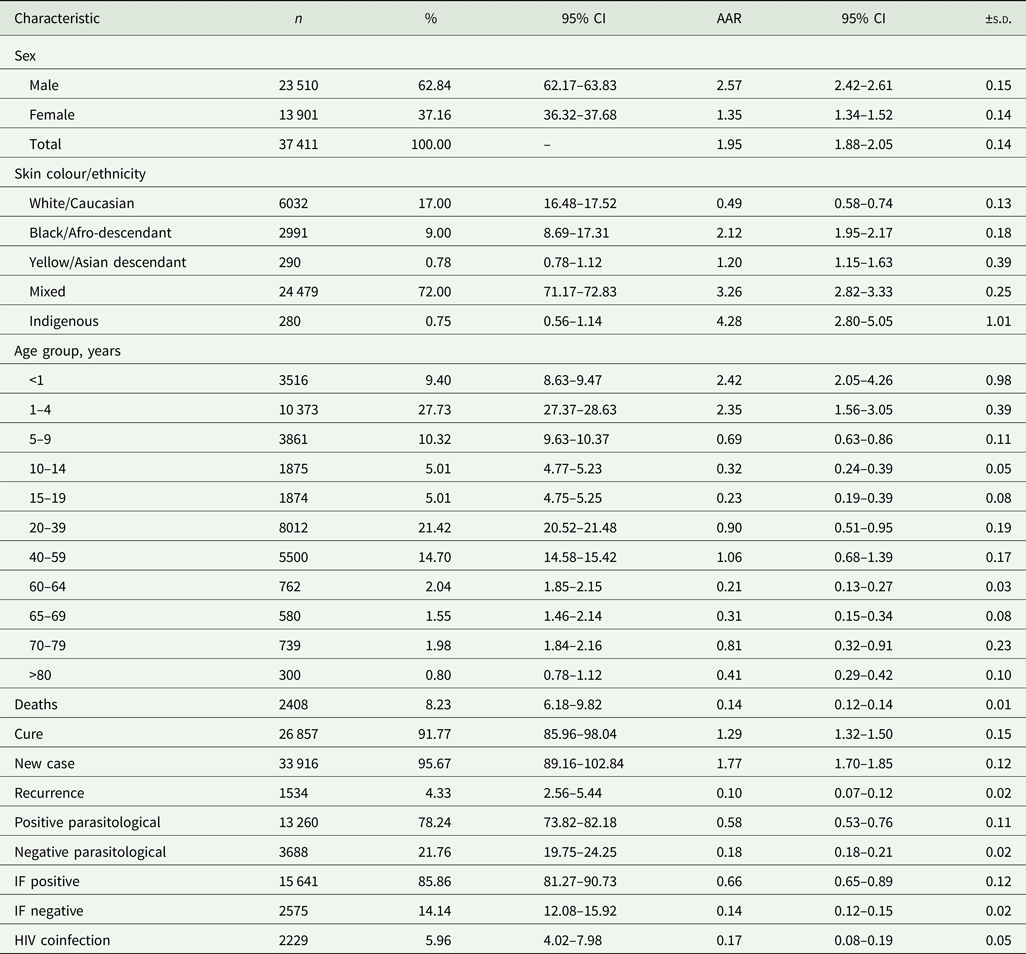
During the study period, 37 411 cases of VL were reported between 2006 and 2015, representing AAR of 1.95 case/100 000 inhabitants (s.d. ±0.14; 95% CI 2.05–1.88). The Prais–Winsten regression showed that the incidence rate of the total number of cases remained stable −4.9/100 000 inhabitants (P = 0.12).
Male gender (23 510; 63%; AAR of 2.51/100 000 inhabitants) and mixed-race (72%) corresponded to the predominant characteristics of HVL. The highest incidence was found among indigenous people (AAR of 4.28/100 000 inhabitants). The highest proportion was in the age group of children between 1 and 4 years old (27.73%), but with a higher incidence in children under 1 year old (AAR 2.42/100 000 inhabitants). We found 2408 deaths reported (AAR of 0.13/100 000 inhabitants), 26 857 (AAR of 1.39/100 000 inhabitants) were considered cured, 33 916 were new cases (AAR of 1.77/100 000 inhabitants), and 1534 (AAR of 0.08/100 000 inhabitants) presented recurrences.
Among the diagnostic tests performed, 13 260 cases (AAR of 0.68/100 000 inhabitants) were confirmed by parasitological examination, and 15 641 by the indirect immunofluorescence test (AAR of 0.80/100 000 inhabitants). The LVH/HIV co-infection was present in 2229 people (AAR of 0.13/100 000 inhabitants) (Table 1).
Epidemiological characteristics of HVL in Brazil, from 2006 to 2015

95% CI, 95% confidence interval; AAR, average annual rate per 100 000 inhabitants; s.d., standard deviation; IF, indirect immunofluorescence.
Ignored or unspecified values were not considered.
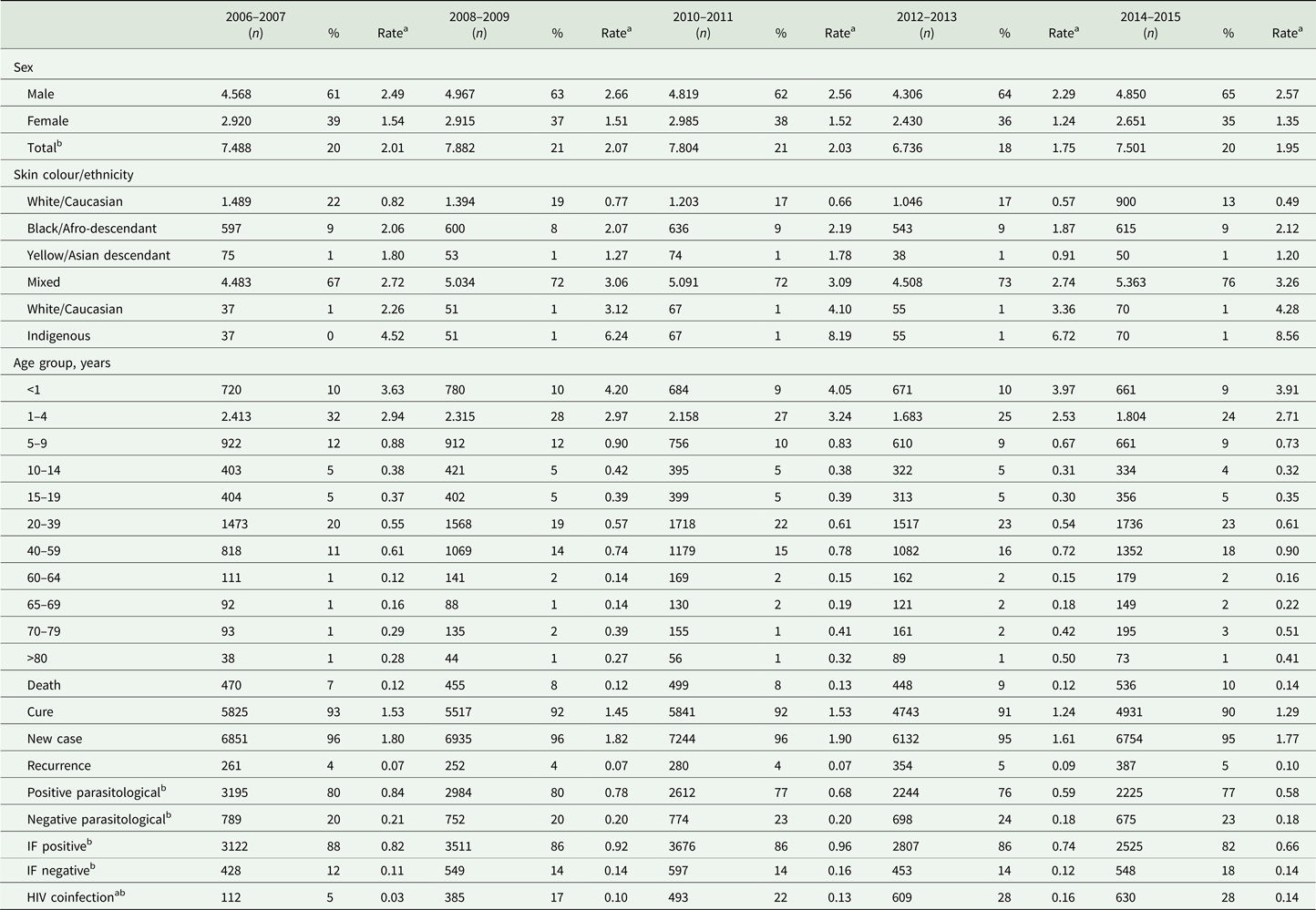
Regarding sex over the years, both AAR of total and of male and female sex were similar, with a slight decrease between 2012 and 2013, then increasing again (Table 2). Rates related to colour skin or race and to indigenous race had significant increase between 2010 and 2011, with a slight decrease between 2012 and 2013, then increasing again. Concerning the age, rates continued similarly, with an increase between the years 2008 and 2011, and then they decreased. Mortality and cure rates remained almost the same, with a slight growth in 2015. The rates of new cases increased significantly between 2010 and 2011, with an important decrease in the period between 2012 and 2013, increasing again between 2014 and 2015, unlike recurrences that were remained the same between 2006 and 2011, with an increase between 2012 and 2013, getting higher between 2014 and 2015. The diagnosis rates confirmed by parasitological method presented with significant regression over the years, unlike the rates of positive diagnoses confirmed by the indirect immunofluorescence test that significantly increased over the years until 2010 and 2011, with an important decrease between 2012 and 2013 and an increase between 2014 and 2015. The HVL/HIV coinfection rates gradually increased over the years, especially after 2010.
Epidemiological characteristics over the years of HVL in Brazil, from 2006 to 2015

IF, indirect immunofluorescence.
Ignored or unspecified values were not considered.
a Average biennial rate per 100 000 inhabitants; †percentage values compared horizontally and total vertically.
b Calculated percentage between positive and negative in parasitological examination and positive and negative indirect immunofluorescence test.
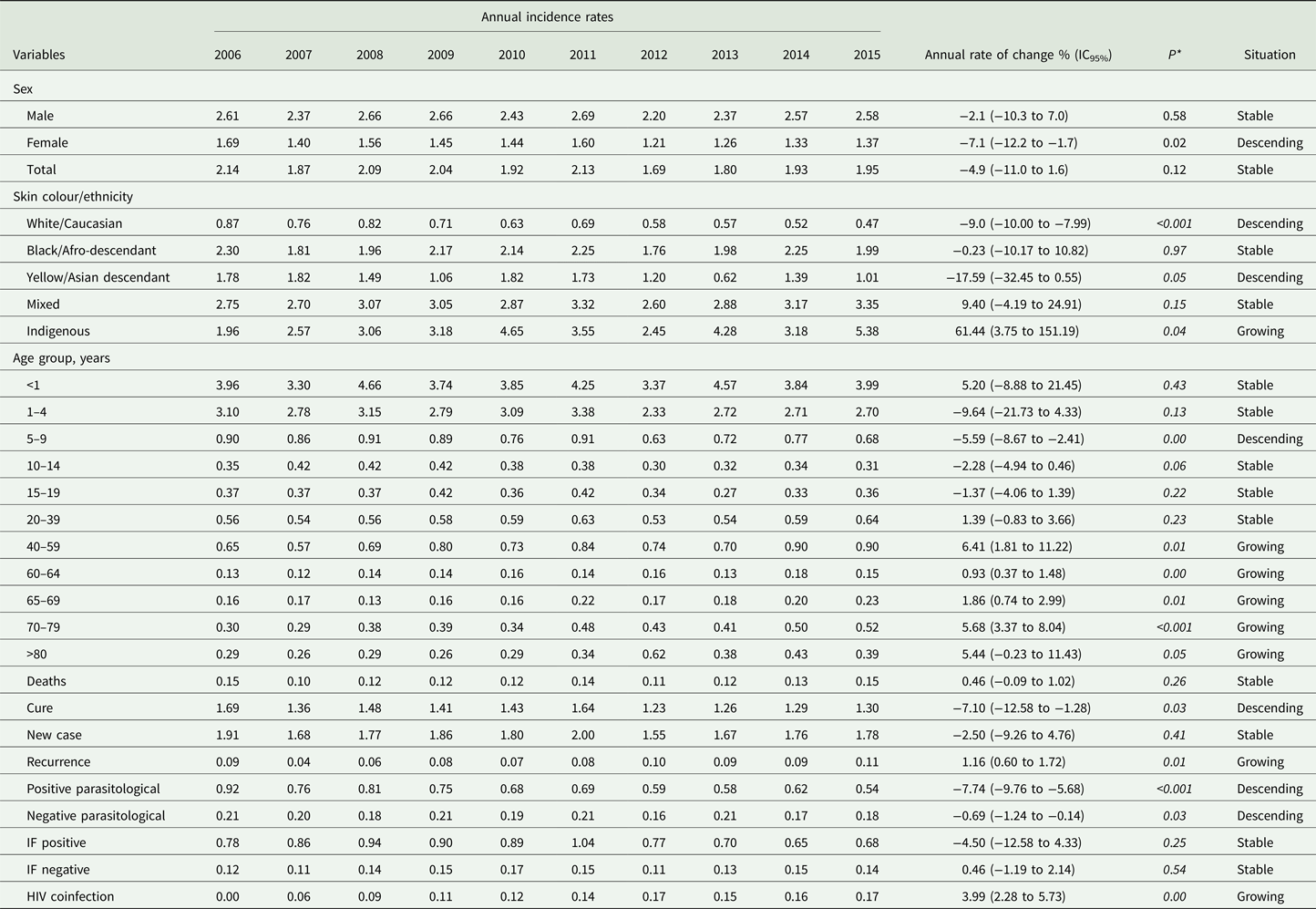
The Prais–Winsten regression showed that the incidence rate of the total number of cases remained stable −4.9/100 000 inhabitants (P = 0.12), in the period from 2006 to 2015, without significant changes over the years, conferring a stable trend, without statistical significance (P > 0.05). However, in some variables, the incidence rates presented an increasing trend with positive values among indigenous peoples 61.44/100 000 inhabitants (3.75–151.19; P = 0.04), in the age groups between 40 and 59 years 6.41/100 000 in inhabitants (1.81–11.22; P = 0.01), 60–64 years old 0.93/100 000 inhabitants (0.37–1.48; P 0.00), 65–69 years old 1.86/100 000 inhabitants (0.74–2.99; P = 0.01), 70–79 years old 5.68/100 000 inhabitants (3.37–8.04; P < 0.001), >80 years old 5.44/100 000 inhabitants (−0.23 to 11.43; P 0.05), relapses 1.16/100 000 inhabitants (0.60 to 1.72; P 0.01) and co-infected HVL/HIV patients HIV 3.99/100 000 inhabitants (2.28 to 5.73; P 0.00). In other variables, it was possible to observe a decrease (P < 0.05), with negative values, such as female gender −7.1/100 000 inhabitants (−12.2 to −1.7; P = 0.02), individuals with white colour/ethnicity −9.0/100 000 inhabitants (−10.00 to −7.99; P < 0.001), Asian descendants −17.59/100 000 inhabitants (−32.45 to 0.55; P = 0.05), aged between 5 and 9 years −5.59/100 000 inhabitants (−8.67 to −2.41; P = 0.00), cure −7.10/100 000 inhabitants (−12.58 to −1.28; P = 0.03 inhabitants parasitological tests positive −7.74/100 000 inhabitants (−9.76 to −5.68; P < 0.001) and negative −0.69/100 000 inhabitants (−1.24 to −0.14; P = 0.03). The other variables remained stable (P > 0.05) (Table 3).
Regression analysis with annual percentage of incidence rates of characteristics of HVL in Brazil, from 2006 to 2015

*Prais–Winsten regression (P < 0.05).
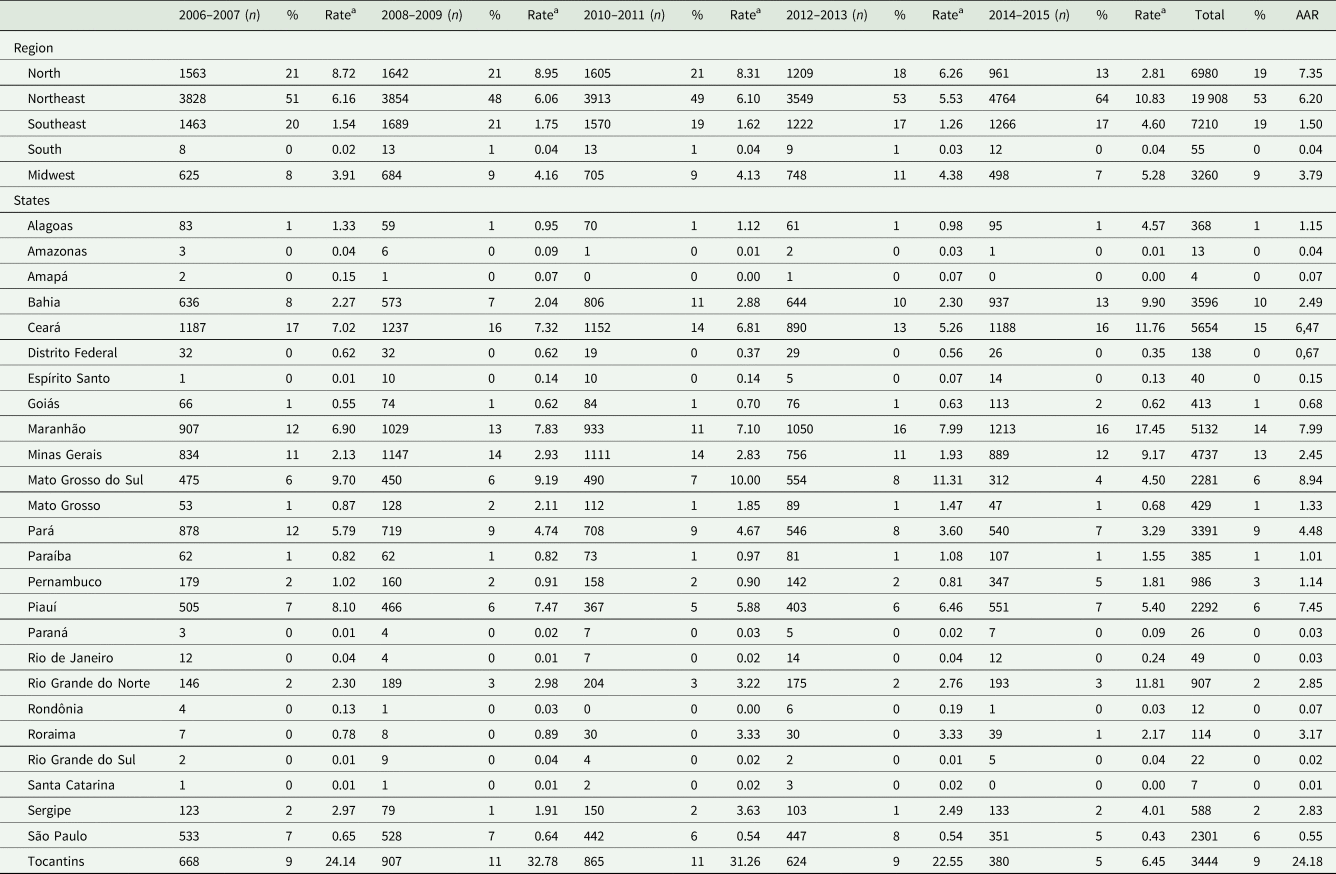
The highest proportion of cases of HVL was in the Northeast (19 908; 53%), but the highest incidence was in the North Region (AAR of 7.35/100 000 inhabitants). Among the states with the highest rates of HVL, Ceará was the prevalent, with 5654 (15%) of the reported cases, but the highest rate was in the state of Tocantins (AAR of 24.18/100 000 inhabitants) (Table 4).
Epidemiological characteristics of HVL in Brazilian regions and states, from 2006 to 2015

AAR, average annual rate per 100 000 inhabitants.
Ignored or unspecified values were not considered.
a Average biennial rate per 100 000 inhabitants.
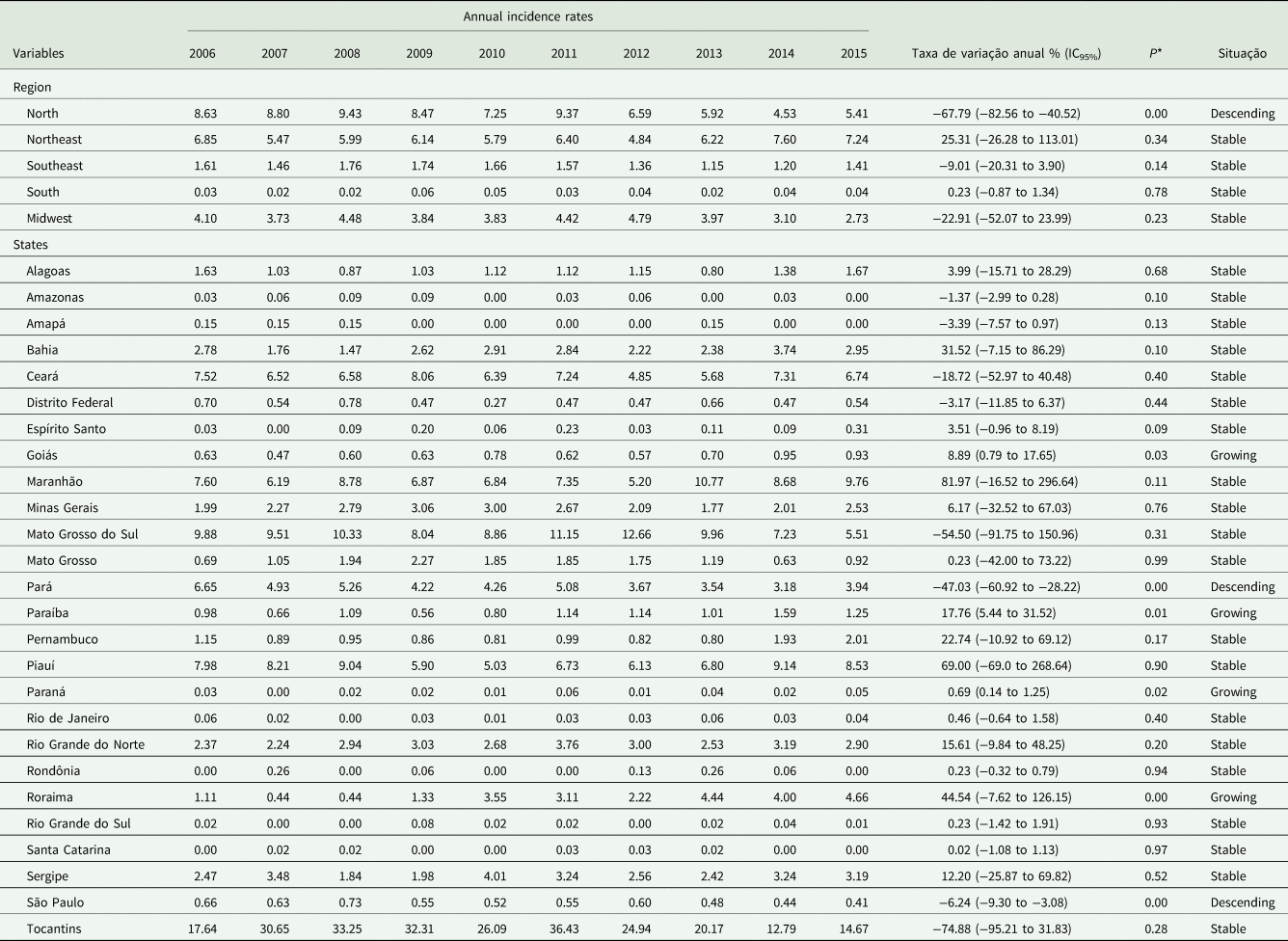
In relation to the regions and states of Brazil, the annual increase in incidence rates of VL in the period from 2006 to 2015 remained stable, without significant changes, over the years, in most variables, conferring a stable trend, without statistical significance (P > 0.05). Except for the variables that showed a decreasing trend (P < 0.05), with negative values, as in the North −67.79/100 000 inhabitants (−82.56 to −40.52; P = 0.00), in the states of Pará −47.03/100 000 inhabitants (−60.92 to −28.22; P = 0.00) and São Paulo −6.24/100 000 inhabitants (−9.30 to −3.08; P = 0.00), as well as the variables with increasing trend, with positive values (P < 0.05), such as the states of Goiás 8.89/100 000 inhabitants (0.79–17.65; P = 0.03), Paraíba 17.76/1 000 000 inhabitants (5.44–31.52; P = 0.01; P = 0.76 Paraná 0.69/100 000 inhabitants (0.14–1.25; P = 0.02) and Roraima 44.54/100 000 inhabitants (−7.62 to 126.15; P = 0.00) (Table 5).
Regression analysis with annual percentage of incidence rates of HVL in Brazil regions and states

*Prais–Winsten regression (P < 0.05).
The highest rates presented, according to the classification from the highest to the lowest, referring to the total number of notified cases, were from the North (AAR of 7.35/100 000 inhabitants), Northeast (AAR of 6.20/100 000 inhabitants), Midwest (AAR of 3.79/100 000 inhabitants), Southeast (AAR of 1.50/100 000 inhabitants) and South (AAR of 0.04/100 000 inhabitants). The highest proportion of cases (64%; mean: 53; median: 63; s.d. ±5) and the highest rate of HVL over the years were from Northeast Region, between the years 2014 and 2015 (AAR of 10.83/100 000 inhabitants; mean: 6.94; 95% CI 5.40–8.47). The North Region had the second highest incidence over the years, in the period between 2008 and 2009 (AAR of 8.95/100 000 inhabitants).
In order of classification, the states that had the highest HVL rates, between 2006 and 2015, were Tocantins (AAR of 24.18/100 000 inhabitants), Mato Grosso do Sul (AAR of 8.94/100 000 inhabitants), Maranhão (AAR of 7.99/100 000 inhabitants), Piauí (AAR of 7.45/100 000 inhabitants), Ceará (AAR of 6.47/100 000 inhabitants) and Pará (AAR of 4.48/100 000 inhabitants).
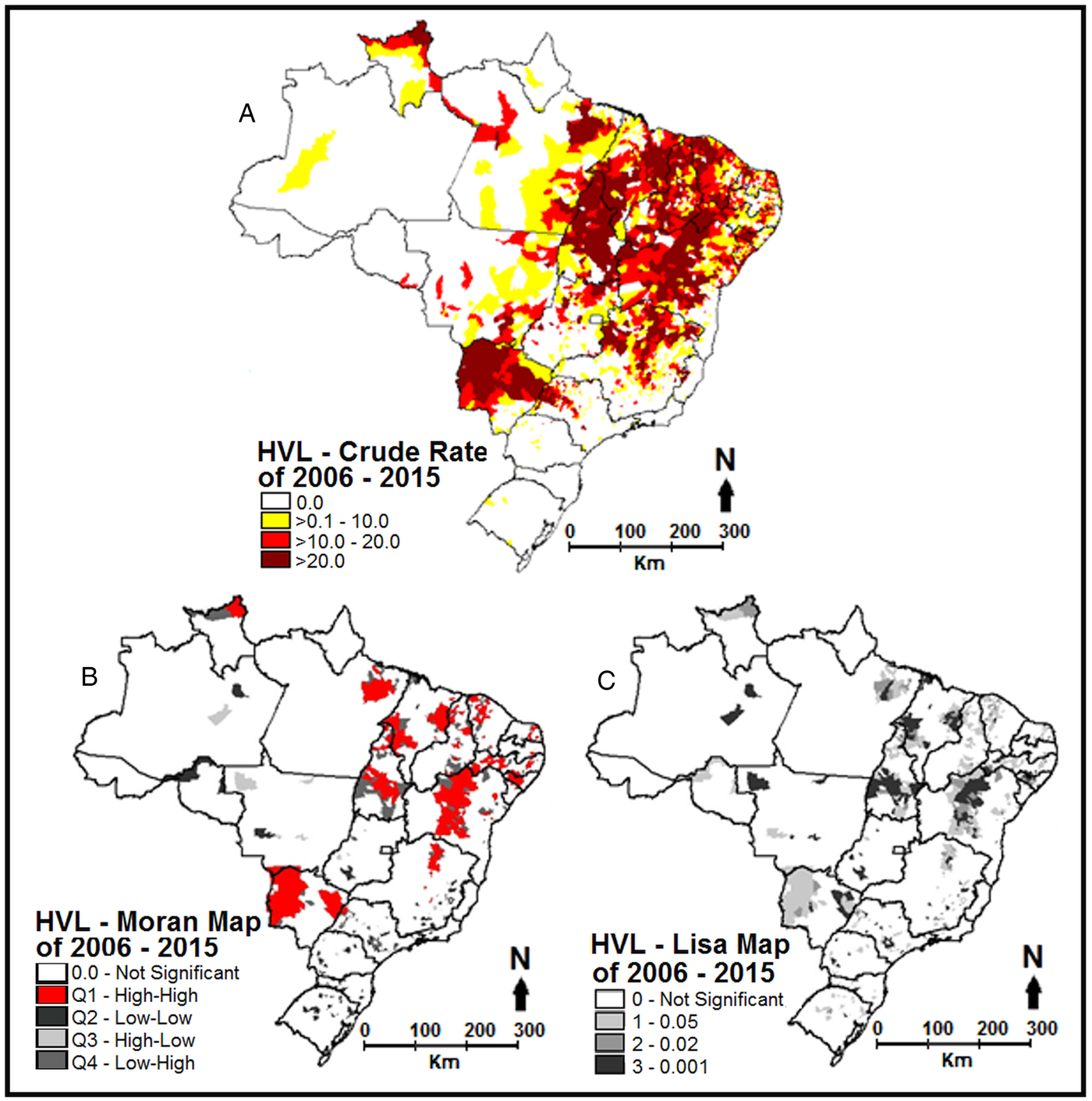
The thematic maps showed the presence of municipalities and/or clusters statistically significant (P < 0.05), with high HVL rates, in the Northeast, North, Midwest and Southeast Regions (Fig. 1A). A higher concentration of LVH rates forming clusters was found in the Northeast Region, covering the nine northeastern states. In the North Region, there was a concentration of clusters throughout the state of Tocantins and the southeast of the state of Pará. In the Midwest Region, the rate clusters encompassed practically the entire state of Mato Grosso do Sul and the central and southern part of the state of Mato Grosso. The global Moran's I was 0.46 (P < 0.01), indicating similarity between neighbouring municipalities.
HVL data by municipalities of residence in Brazil, between the years 2006 to 2015. (A) Crude rate distribution per 100 000 inhabitants; (B) Moran map; (C) LISA map.

Discussion
This study provides an in-depth view of the HVL in Brazil, characterizing spatial and temporal patterns of its occurrence, in the period. Spatial clusters of HVL were presented in this study. Despite the slight decrease in the number of cases reported nationally in recent years, HVL has expanded geographically to other regions. This information is worrying and follow different pattern, related to regions, as sex, age group and skin colour, exposing a problem for the public health (Nascimento et al., Reference Nascimento, Moura, Queiroz, Barroso, Araujo, Rego, Wilson, Pearson and Jeronimo2011; Martins-Melo et al., Reference Martins-Melo, Lima, Ramos, Alencar and Heukelbach2014a; Brasil, Reference Brasil2015; Druzian et al., Reference Druzian, de Souza, de Campos, Croda, Higa, Dorval, Pompilio, de Oliveira and Paniago2015; Herrador et al., Reference Herrador, Gherasim, Jimenez, Granados, San Martín and Aparicio2015; Lane, Reference Lane2016).
HVL is expanding geographically in Brazil. The epidemiological profile of this disease has been modified in developing countries (Herrador et al., Reference Herrador, Gherasim, Jimenez, Granados, San Martín and Aparicio2015), due to its expansion from rural to urban areas (Nascimento et al., Reference Nascimento, Moura, Queiroz, Barroso, Araujo, Rego, Wilson, Pearson and Jeronimo2011; Albuquerque et al., Reference Albuquerque, Mendonça, Cardoso, Baldaçara, Borges, da Borges and da Pranchevicius2014; Brasil, Reference Brasil2015; Druzian et al., Reference Druzian, de Souza, de Campos, Croda, Higa, Dorval, Pompilio, de Oliveira and Paniago2015).
The higher prevalence found in male individuals may be related to socioeconomic, behavioural and environmental factors (Martins-Melo et al., Reference Martins-Melo, da Lima, Alencar, Ramos and Heukelbach2014b). The literature indicates that the disease affects both sexes, but men are described as the most susceptible (Lane, Reference Lane2016). Occurrence was higher in the age group between 1 and 4 years old, with higher incidence between those who were under 1 year, possibly because children are more susceptible to morbidity and mortality, probably due to the greater contact with animals, the cycle of home/peridomestic transmission and by vectors, as well as nutritional and immune deficiencies (Martins-Melo et al., Reference Martins-Melo, Lima, Ramos, Alencar and Heukelbach2014a; Guimarães et al., Reference Guimarães, Alves, de Pessoa and da Junior2015).
The HVL prevalence was higher between those with mixed-race – and most of the Brazilian population considers themselves as with mixed-race. The higher incidence was found between the indigenous people. Indigenous populations are more susceptible to HVL, probably due because of the gold mining activities, the increased immigration from endemic areas and the visits to family members taking dogs contaminated by Leishmania or contaminated in the place visited (Guimarães et al., Reference Guimarães, Alves, de Pessoa and da Junior2015; Silva and Abud, Reference Silva and Abud2016).
The method for diagnosing HVL used with the greatest number of positive cases was the indirect immunofluorescence test. This test is more effective than the parasitological test, since it is based on the antibody response (World Health Organization., 2010; Dupnik et al., Reference Dupnik, Nascimento, Rodrigues-neto, Keesen, Duarte and Jeronimo2011;Souza et al., Reference Souza, Biscione, Greco and Rabello2012; Cota et al., Reference Cota, de Sousa, de Freitas Nogueira, Gomes, Oliveira, Assis, de Mendonça, Pinto, Saliba and Rabello2013, Reference Cota, de Sousa, de Mendonça, Patrocinio, Assunção, de Faria and Rabello2014; Albuquerque et al., Reference Albuquerque, Mendonça, Cardoso, Baldaçara, Borges, da Borges and da Pranchevicius2014; Druzian et al., Reference Druzian, de Souza, de Campos, Croda, Higa, Dorval, Pompilio, de Oliveira and Paniago2015; Távora et al., Reference Távora, Nogueira and Gomes2015).
According to DATASUS, out of the HVL patients, 93% were considered cured and 7% died, with prevalent numbers in the Northeast Region (49.74%) and in the state of Minas Gerais (18.87%). HVL is a potentially lethal disease if not treated and diagnosed early (Martins-Melo et al., Reference Martins-Melo, Lima, Ramos, Alencar and Heukelbach2014a).
Concerning the type of entry, 96% were new cases and 4% were recurrence. The mortality rates are often higher in immunocompromised individuals and in recurrences (Gomes et al., Reference Gomes, Romero and Werneck2012; Fontoura et al., Reference Fontoura, Barbosa, de Andrade Paes, Santos, Neto, Fontoura, Lopes Costa and Abreu Silva2018b).
Using geoprocessing techniques, we analysed the distribution of the occurrence of HVL, and the detection of statistically significant spatial clusters. The HVL distribution is heterogeneous, but, with the different techniques for spatial analysis, it is possible to identify areas with greater and lower needs for interventions, where control measures, when targeted, become more effective (Martins-Melo et al., Reference Martins-Melo, Lima, Ramos, Alencar and Heukelbach2014a; Silva and Abud, Reference Silva and Abud2016).
The national AAR of HVL was 1.95 per 100 000 inhabitants. When analysing the spatial distribution of HVL rates, we found that HVL was recorded in all Brazilian regions – with clusters prevalent in the Northeast Region. However, the highest rate was in the North Region (rate 7.04/100 000 inhabitants), specifically in the state of Tocantins (rate 21.65/100 000 inhabitants). The HVL notified cases have increased and expanded to other areas in the state of Tocantins (Fontoura et al., Reference Fontoura, Fontoura and Nascimento2016). Irregular land occupation causes environmental imbalance.
A study carried out in Tocantins State evaluated the correlation of the HVL incidence rate with environmental and climate variables. These rates increase as night temperature increases, as well as air humidity and precipitation (Reis et al., Reference Reis, da Balieiro, Fonseca and Gonçalves2019). Temperature increase is associated with phlebotomine density increase, contributing to the occurrence of higher contact between vector and host and favouring the disease spread (Galati et al., Reference Galati, de Camara, Natal and Chiaravalloti-neto2015), as well as its activity (Rivas et al., Reference Rivas, de Souza, Peixoto and Bruno2014). Consequently, there is higher parasitic load in the vector due to the increase in the number of times blood repast occurs (Serafim et al., Reference Serafim, Coutinho-Abreu, Oliveira, Meneses, Kamhawi and Valenzuela2018) and Straw mosquito infectivity.
The city of Araguaia, in the North of the state, has one of the highest rates of HVL (Silva, Reference Silva2016). In addition to intense urban expansion, deforestation without proper planning and inadequate infrastructure shows climate and environmental factors favourable to the vector development (Reis et al., Reference Reis, da Balieiro, Fonseca and Gonçalves2019). Besides climate and environmental factors, others have been associated with subjects, including socioeconomic status, low immunity, and nutritional condition (Toledo et al., Reference Toledo, de Almeida, de Chaves, Sabroza, Toledo and Caldas2017).
The VL is a disease associated with poverty that also perpetuates it (Lane, Reference Lane2016). The high number of cases in the Northeast Region reflects the socio-environmental conditions that favour the spread of HVL (Martins-Melo et al., Reference Martins-Melo, da Lima, Alencar, Ramos and Heukelbach2014b; Silva et al., Reference Silva, Gomes, Oliveira, Coura-Vital, de Silva, Pais, Ker, Reis, Rabello and Carneiro2015).
According to the Moran maps of HVL, the Northeast Region, part of the North Region and part of the Midwest Region are among the regions with the greatest need for intervention (in red, which corresponds to high-high). The LISA map indicated the statistically significant clusters (P = 0.001). Thus, it is possible to observe the importance of TerraView software for spatial analysis studies, showing regions with greater and lower intervention needs (Campi and Nascimento, Reference Campi and Nascimento2014).
Poor living conditions in the community favour the proliferation of diseases (Diro et al., Reference Diro, Lynen, Mohammed, Boelaert, Hailu and van Griensven2014; Castelo Branco et al., Reference Castelo Branco, Soares, de Jesus, Moreira, Alves, de Castro Belfort, Silva and Ferreira Pereira2016). It is necessary to develop the correction of precarious infrastructure questions and inadequate packaging waste, and to improve HDI indicators (Brasil, Reference Brasil2014; Ursine et al., Reference Ursine, Dias, Morais and Pires2016). The lack of basic sanitation and the breeding of animals around the home favour human and canine infections by attracting Lutzomyia longipalpis (Lane, Reference Lane2016).
From the moment one invests to improve the poor living conditions of a population, the spread of disease must be minimized. The number of HVL cases increases in regions with conditions conducive to the development of sandflies, especially in the peridomicile (Nascimento et al., Reference Nascimento, Moura, Queiroz, Barroso, Araujo, Rego, Wilson, Pearson and Jeronimo2011; Albuquerque et al., Reference Albuquerque, Mendonça, Cardoso, Baldaçara, Borges, da Borges and da Pranchevicius2014; Brasil, Reference Brasil2015; Druzian et al., Reference Druzian, de Souza, de Campos, Croda, Higa, Dorval, Pompilio, de Oliveira and Paniago2015). In a place where rigorous control measures were adopted, with the reorganization of the home, construction of suitable places for animal shelters away from the residence, improvement of the sanitary facilities, proper packaging waste, pruning of trees, it was possible to drastically reduce the number of sandflies around 90% (Machado et al., Reference Machado, Silva and Vilani2016). Ignorance in relation to VL control measures, both for the population and health professionals, added to the lack of infrastructure for early diagnosis and treatment in health services, has contributed to the expansion of VL in Brazil (Lane, Reference Lane2016).
The HVL has changed its epidemiological profile and increased its morbidity and mortality. This fact requires urgent attention from epidemiological surveillance agencies, aiming at preventive and interventional measures, such as combating the vector and breeding sites, mainly with investments from the agencies responsible for correcting deficiencies in infrastructure of basic sanitation (adequate waste disposal and sewage), especially in communities with poor living conditions (Ursine et al., Reference Ursine, Dias, Morais and Pires2016). The HVL has been spread to other areas, but it has also maintained the old outbreaks, indicating the inefficiency of current control measures.
There are still many obstacles to control HVL, with enormous challenges (Araújo et al., Reference Araújo, Morais, Reis, Rabello and Carneiro2012; Menon et al., Reference Menon, Rossi, Nshimyumukiza and Zinszer2016; Silva and Abud, Reference Silva and Abud2016). All patients with characteristic signs and symptoms of HVL in endemic areas should be investigated, aiming at early diagnosis and treatment (Alexandrino-de-Oliveira et al., Reference Alexandrino-de-Oliveira, Santos-Oliveira, Dorval, das Da-Costa, Pereira, da Cunha, Paniago and Da-Cruz2010; Martins-Melo et al., Reference Martins-Melo, da Lima, Alencar, Ramos and Heukelbach2014b; Brasil, Reference Brasil2015), in addition to making compulsory notification (World Health Organization., 2010; Brasil, Reference Brasil2014; Albuquerque et al., Reference Albuquerque, Mendonça, Cardoso, Baldaçara, Borges, da Borges and da Pranchevicius2014), so that databases of institutions such as the World Health Organization and the Pan American Health Organization were fed (Araújo et al., Reference Araújo, Morais, Reis, Rabello and Carneiro2012; Das et al., Reference Das, Halder, Rabidas, Mandal and Das2014; Albuquerque et al., Reference Albuquerque, Mendonça, Cardoso, Baldaçara, Borges, da Borges and da Pranchevicius2014). However, despite the adoption of preventive measures, intending to interrupt the transmission cycle, such as early treatment of positive human cases, chemical control of vectors, and elimination of infected domestic reservoirs, there has been an increase in the HVL impulse in national public health (Machado et al., Reference Machado, Silva and Vilani2016). The adaptive characteristics of the L. longipalpis vector hinder the epidemiological control (Van Griensven et al., Reference Van Griensven, Diro, Lopez-Velez, Ritmeijer, Boelaert, Zijlstra, Hailu and Lynen2014; Castelo Branco et al., Reference Castelo Branco, Soares, de Jesus, Moreira, Alves, de Castro Belfort, Silva and Ferreira Pereira2016).
Secondary data are subject to limitations due to possible inconsistencies in information and/or underreporting, despite significant progress in the quality and the coverage of information in recent years (Martins-Melo et al., Reference Martins-Melo, da Lima, Alencar, Ramos and Heukelbach2014b; Cardim et al., Reference Cardim, Vieira and Chiaravalloti-Neto2015). In addition to underreporting, there are ignored or blank items, which should have been filled out or reported correctly, limiting the robustness of the data. As the canine data are incomplete for many municipalities, with little information about areas research, universe of dogs and type of survey (sample or census), the occurrence values can be biased and/or inconclusive.
Conclusion
Our study offered the detection and analysis of clusters of HVL rates and the occurrence, as well as pointed out the sites with greater and lower need for intervention. Based on the Prais–Winsten estimation, we found a stabilization of HVL in the average annual rates per 100 000 inhabitants. Mortality rates have remained stable in the last 5 years, and there has been a slight drop in the average annual rates of new cases in the last 9 years, suggesting that, in some way, interventional actions have an effect on reducing or maintaining cases of VL in different epidemiological contexts, despite the many obstacles to the control of this disease. It is expected that these findings will be useful for planning disease surveillance and control actions in the country.
Financial support
This work was supported by the Foundation for Research and Scientific and Technological Development of Maranhão – FAPEMA (PAEDT, concession number 02290/15; UNIVERSAL, concession number 01015/17). Dr Ana Lucia Abreu-Silva is a research productivity fellow of National Scientific and Technological Development Council (Conselho Nacional de Desenvolvimento Científico e Tecnológico – CNPq) grant number 309885/2017-5.
Conflict of interest
The authors declare no conflict of interest.
Ethical standards
This study was approved by the ethics committee of the Universidade Federal do Maranhão (UFMA), under protocol: 1.073.550 and CAAE: 41557314.5.0000.5087.