Introduction
Not even 100 years after the discovery of the first antibiotic, we are faced with a worldwide public health concern as antibiotic resistant strains are rapidly spreading as a consequence of antibiotic misuse and abuse in human and animal disease control and treatment as well as a growing connectivity between populations. Endowed with the most diverse microbiome of the body, the human gastrointestinal tract (GIT) has been shown to be a significant reservoir of antibiotic resistance.Reference Salyers, Gupta and Wang 1 – Reference Hu, Yang, Lu and Zhu 7 Furthermore, not only the adult GIT constitutes such a reservoir, but the infant GIT also harbors a variety of antibiotic resistances as early as the 1st month of life.Reference Gueimonde, Salminen and Isolauri 8 – Reference Alicea-Serrano, Contreras, Magris, Hidalgo and Dominguez-Bello 12 By analyzing stool samples taken 1 month after childbirth, de Vries et al. Reference de Vries, Valles and Agerso 10 were able to show that specific tetracycline resistance genes with identical sequences were recovered from both mother and infant, suggesting vertical inheritance of such genes. Traditionally, because the womb was considered sterile, such vertical transmission could only be conceived as an after-birth event due to the exposure of the infant to the external and proximal environment. However, today, in the era of metagenomics, this dogma has been laid to rest.
On the mother’s side, there are important physiological changes occurring in the GIT during pregnancy and in particular during the third trimester, in which the mother shows symptoms similar to those presented by individuals with metabolic disorders, obesity and diabetes.Reference Collado, Isolauri, Laitinen and Salminen 13 – Reference Koren, Goodrich and Cullender 15 These conditions entail an inflammatory state of the intestinal epithelium that could enhance translocation events of bacteria to the mesenteric lymphatic nodes (MLN) and blood. In fact, BergReference Berg 16 suggests that in healthy immunocompetent individuals a low level of translocation of bacteria to the MLN is the norm rather than the exception, and that mechanisms such as intestinal bacterial overgrowth, increased mucosal barrier permeability and/or host immune deficiencies would allow for such events to increase in frequency. Both of the latter mechanisms are exacerbated during pregnancy, as a low-grade inflammation of the intestinal epithelium takes place involving a reduction of epithelium integrityReference Cani and Delzenne 17 and immune responsiveness is altered in order to allow for the development of the fetus and placenta. These physiological changes presumably could foster translocation events, facilitating transport of maternal GIT bacteria to the fetal GIT.Reference Francino 18 – Reference Valles, Artacho and Pascual-Garcia 20 In fact, in mice enhanced bacterial translocation from the gut has been shown to take place both during late pregnancyReference Perez, Dore and Leclerc 21 , Reference Donnet-Hughes, Perez and Dore 22 and at the early onset of type 2 diabetes,Reference Amar, Chabo and Waget 23 and, in the latter case, the dendritic cells of the immune system have been implicated in mediating the increased translocation level. On the fetus side, the dendritic cells, essential for their immune function of antigen sensing and presenting, play key roles in the establishment of a tolerogenic environment, providing a delicate immunological balance throughout fetal development. This is possible in part thanks to the fact that fetal T-cell differentiation is biased towards producing regulatory (Treg) cells upon stimulation. The establishment of such a robust tolerogenic environment is essential particularly in the fetal GIT, permitting the initiation of commensal microbe colonization.Reference McGovern, Chan and Ginhoux 24
In accordance with the notion of maternal transmission of bacteria to the fetus, a substantial number of both culture-dependent and 16S-rRNA-based analyses have demonstrated the presence of bacteria in amniotic fluid,Reference DiGiulio, Romero and Amogan 25 – Reference Bearfield, Davenport, Sivapathasundaram and Allaker 32 fetal membranes,Reference Dong, St Clair, Ramzy, Kagan-Hallet and Gibbs 27 , Reference Steel, Malatos and Kennea 33 umbilical cord,Reference Jimenez, Fernandez and Marin 34 placentaReference Roos, Malan and Woods 35 – Reference Aagaard, Ma and Antony 37 and meconium.Reference Gosalbes, Llop and Valles 19 , Reference Jimenez, Marin and Martin 38 – Reference Valles, Gosalbes, de Vries, Abellan and Francino 45 Although it is difficult to completely rule out the possibility of external bacterial contamination of intrauterine human samples, experimental work in mice has confirmed that an efflux of bacteria from the mother’s gut to that of the fetus does exist, as genetically labeled bacteria orally inoculated to pregnant mice are recovered from the meconium of offspring obtained by C-section.Reference Jimenez, Marin and Martin 38 The bacteria that reach the fetal GIT could have a strong influence on the process of microbial succession in this niche as well as on the trajectories of immune, metabolic and somatic development.Reference Francino 18 – Reference Valles, Artacho and Pascual-Garcia 20 Therefore, it is important to investigate the composition of the microbiota present in meconium, and the type of genes that it carries. 16S rRNA analyses show that meconium microbial communities in term neonates are predominantly composed by enterobacteriaReference Hu, Nomura and Bashir 42 and/or lactic acid bacteria (LAB).Reference Gosalbes, Llop and Valles 19 Remarkably, this composition coincides with the reported levels of translocation efficiency from the GIT to the MLN for different bacteria,Reference Berg 16 which are highest for the Gram-negative, facultatively anaerobic enterobacteria, intermediate for the Gram-positive, oxygen-tolerant LAB, and lowest for obligately anaerobic bacteria, such as Bacteroides, which is scarcely represented in meconium in spite of its high abundance in the adult GIT. Moreover, Cabrera-Rubio et al. Reference Cabrera-Rubio, Collado and Laitinen 46 have identified in colostrum, the first ‘milk’ secreted by the human breast, a bacterial microbiota composed mainly of the same LAB genera often detected in meconium, suggesting that these bacteria may travel through the maternal circulation and reach both the fetus and the mammary gland. In addition, we have detected similarities in composition between the microbiota in meconium and that present in the infant during the 1st weeks of life, while showing that some of the bacterial strains found in meconium remained in the infant GIT up to 7 months of age.Reference Gosalbes, Llop and Valles 19
In the present work, we have used a culture-independent approach to explore whether the bacteria present in meconium and in the fecal microbiota of 1-week-old babies carry detectable frequencies of antibiotic resistance genes (ARG). For comparison, and to assess the possibility of maternal transmission, we have also investigated the ARGs present in the perinatal fecal microbiota of the mothers of the 1-week-old babies. Furthermore, for one of the mother–infant pairs (MIPs), we have evaluated the presence of ARGs in an entire series of fecal samples spanning the infant’s 1st year of life (including meconium), as well as in colostrum and in maternal fecal samples collected during the perinatal period and 1 year after delivery. Our screenings have targeted resistances to β-lactam antibiotics (BLr) and tetracycline (Tcr), which are known to be widespread in the GIT microbiota. Specifically, we have screened for the presence of different types of genes encoding β-lactamases, which convey resistance by breaking up the β-lactam ring in the antibiotic,Reference Nichols, Renslo and Chen 47 including the extended-spectrum β-lactamase genes bla CTX-M and bla KPC, the broad-spectrum β-lactamase gene bla TEM, and the metallo-β-lactamase genes bla NDM and bla VIM. We have also screened for mecA, which encodes the penicillin-binding protein 2a that provides resistance to methicillin and a wide array of β-lactam antibiotics.Reference Lowy 48 Finally, we have screened for 11 tet genes encoding proteins that confer Tcr by several mechanisms,Reference Kazimierczak, Scott, Kelly and Aminov 49 including active efflux [tet(A), tet(B), tet(C), tet(D), tet(E), tet(G), tet(K), tet(L)], ribosomal protection [tet(O), tet(Q)] and monooxigenase inactivation [tet(X)].
Method
Study subjects
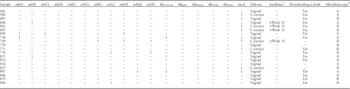
This study employs meconium samples and metadata from 20 children enrolled in the Valencia birth cohort of project INMA (Infancia y Medio Ambiente – Childhood and the Environment, http://www.proyectoinma.org).Reference Ribas-Fito, Ramon and Ballester 50 Briefly, pregnant women from a well-defined geographic area in Valencia and attending the first prenatal visit at La Fe Hospital during November 2003 to June 2005 were recruited before week 13 of gestation and followed up until delivery. Their children were enrolled at birth and have been followed up until 9 years of age. The mothers of the 20 children were all born in Spain, had a non-vegetarian diet and, in most cases (18/20), had normal body mass indexes (18.5–24.9) before pregnancy. All had healthy pregnancies with no complications (no fever, urine infection, gestational diabetes, high blood pressure or amniotic fluid losses). Six of the mothers underwent a C-section and likely received amoxicillin during delivery, as this is the standard practice in Spanish hospitals, although this was not specified in the Valencia INMA cohort clinical metadata. Two of these mothers also received some antibiotic treatment before the 12th week of pregnancy and one of them received antibiotic treatment after the 12th but before the 32nd week. In addition, one of the 14 mothers who delivered vaginally also received antibiotics before the 12th week (Table 1). The 20 infants were born at term (>37 weeks of gestation), none of them had a low birth weight (<2500 g) and only one was small for the gestational age (length below the 10th percentile within the INMA cohort). The 20 meconium samples analyzed in this study have been previously characterized for microbiota composition based on high-throughput 16S rRNA gene pyrosequencing.Reference Gosalbes, Llop and Valles 19
Antibiotic resistance genes in meconium samples from the INMA cohort

a We show whether antibiotic treatment was received by the mothers before or after the 12th week of pregnancy. The only treatment after the 12th week (sample 697) took place before week 32. In addition, although not specified in the Valencia INMA cohort clinical metadata, mothers likely received amoxicillin during C-section delivery, as this is the standard practice in Spanish hospitals.
b Meconium microbiota is defined as type A or B depending on whether it is enriched in Enterobacteriaceae (A) or lactic acid bacteria (B).Reference Francino 18
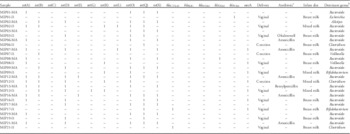
In addition to the INMA meconium samples, we analyze fecal samples from a different cohort of 13 healthy MIPs, recruited in the city of Valencia in 2010. None of the mothers had taken antibiotics for at least 3 months before the onset of labor, and all 13 infants were born at term, 10 of them vaginally and three by C-section (Table 2). Samples were collected perinatally for the mothers (<1 week before delivery) and at 1 week of age for the infants. For one of the MIPs (MIP21), we additionally analyze a series of samples that includes two maternal fecal samples (MA, perinatal, and MB, 1 year after delivery), colostrum, meconium and five infant fecal samples collected at 1 week (I1), 1 month (I2), 3 months (I3), 7 months (I4) and 1 year of age (I5). The MIP21 infant was born by vaginal delivery and his size was appropriate for gestational age. The microbiota composition of the fecal samples of the 13 women and their infants has been previously reported.Reference Valles, Artacho and Pascual-Garcia 20
Antibiotic resistance genes in pairs of 1-week-old infants and their mothers

MA, maternal, perinatal; I1, infant at 1 week.
a We show any antibiotic treatment received by the mothers during delivery or by the infants during the 1st week after birth.Reference Gosalbes, Llop and Valles 19 None of the mothers had taken antibiotics before childbirth for at least 3 months. Oftalmowell is a combination of gramicidin, neomycin and polymyxin B.
b From Gosalbes et al.Reference Gosalbes, Llop and Valles 19
Sample collection and DNA isolation
Meconium samples were collected at La Fe Hospital. All of the meconium passed was collected into sterile flasks and immediately stored at −20°C. The 20 meconium samples employed in this study remained intact and frozen since their collection. Fecal samples from mothers and infants were collected into sterile containers with 10 ml phosphate-buffered saline (PBS), immediately placed in home freezers and brought to the laboratory within days for storage at −80°C. The colostrum sample was collected at La Fe Hospital and immediately stored at −20°C. Before sample collection, the breast was cleaned with an iodine swab to reduce potential contamination by bacteria residing on the skin, and colostrum was collected manually, discarding the first drops, with a sterile milk collection unit.
Meconium and fecal samples were resuspended in PBS and centrifuged at 1258 g for 2 min to remove debris, after which bacterial cells were pelleted from the supernatant. DNA was then extracted using the QIAamp DNA Stool Mini Kit of QIAGEN (DNA isolation for pathogen detection protocol). The same kit was used to extract DNA from pelleted cells from the colostrum sample.
Screening for ARGs
We employed the polymerase chain reaction (PCR) to screen total DNA extracted from each one of our samples for the presence of six ARGs conferring BLr (bla CTX-M, bla KPC, bla NDM, bla TEM, bla VIM and mecA) and 11 ARGs conferring Tcr [tet(A), tet(B), tet(C), tet(D), tet(E), tet(G), tet(K), tet(L), tet(O), tet(Q) and tet(X)].
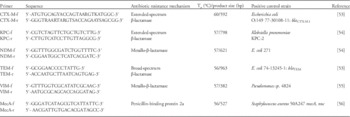
For detection of BLr ARGs, 50 µl PCR mixes were prepared, containing 5 µl of Taq buffer (10X) with 20 mM MgCl2, 2 µl of dNTPs (10 mM), 2 µl of each primer (5 µM), 0.5 µl of FastStart Taq DNA Polymerase (5 U/µl) (Life Science, Roche Diagnostics, Basel, Switzerland) and 50 ng of DNA template. Annealing temperatures were optimized by gradient PCR using positive control strains, obtained from the Technical University of Denmark (DTU). To this aim, 1 ml of either control DNA (positive controls) or H2O (negative controls) was added to the PCR mix and the thermal cycler was set to run a gradient PCR with annealing temperatures ranging from 50°C to 60°C (60°C to 70°C for bla CTX-M due to a higher melting temperature) yielding six discrete annealing temperatures for each primer pair. The initial denaturation was performed at 98°C for 3 min, followed by 40 cycles of denaturation at 98°C for 10 s, annealing for 30 s and elongation at 72°C for 15 s. The reaction was completed with a final elongation at 72°C for 10 min, before holding at 4°C. The annealing temperatures for each primer pair yielding a specific and strong band of the expected size are listed in Table 3.
Primers and PCR conditions for genes encoding resistance to β-lactam antibiotics

For detection of Tcr ARGs, we performed a multiplex PCR using the control strains, primers and groupings described by Ng et al. Reference Ng, Martin, Alfa and Mulvey 51 We modified the PCR reaction mix using 0.5 µl of each primer (5 µM) and 10 µl of Go-Taq (Promega Corporation, Madison, WI, USA). DNA amplification was carried out using the following conditions: a 5 min initial denaturing step at 94°C followed by 30 cycles of 94°C for 1 min, 57°C for 1 min and 72°C for 1.5 min and a final extension step at 72°C for 10 min.
Negative controls were run with every PCR batch and the amplification process was checked by gel electrophoresis [0.8% (w/v) agarose in 1×TBE buffer].
Statistical analyses
Fisher’s exact tests were performed to evaluate potential differences in the frequencies of ARG detection depending on mode of delivery, antibiotic intake by the mother or the infant and infant diet. The odds ratio with 95% confidence intervals (95% CI) was used to measure potential associations between the detection of a given ARG in the infant and the presence of that ARG in the infant’s mother. We only report and discuss in the text those associations with P-values reaching or approaching the statistical significance threshold of P⩽0.05.
Results
Resistance to β-lactam antibiotics (BLr) and tetracycline (Tcr) in meconium samples from the INMA cohort
Remarkably, our PCR screenings detected ARGs in 14 (70%) of the INMA meconium samples (Table 1). In all, 10 (50%) of the samples carried BLr, eight (40%) carried Tcr and four (20%) carried both. Regarding the number of ARGs detected, six samples (30%) carried more than one gene (two samples with two ARGs, three samples with three and one sample with four). BLr was only conferred by two of the six gene types analyzed for this resistance, mecA and bla CTX-M, but these were the most prevalent individual ARGs, present in nine and three of the samples (64% and 21% of the resistance-carrying samples, respectively). In contrast, Tcr was conferred by a variety of different genes, with eight of the 11 tested ARGs being detected in the samples; however, each of these genes was only detected in one [tet(C), tet(K), tet(Q)] or two of the samples [tet(A), tet(B), tet(L), tet(O), tet(X)].
Overall, the specific types of ARGs detected in the meconium samples were consistent with the patterns of microbiota composition previously established for these samples by means of 16 S rRNA gene pyrosequencing.Reference Gosalbes, Llop and Valles 19 In the case of mecA, this gene is known to occur mainly in the genus Staphylococcus but is also found in some species of the LAB Streptococcus. Among the meconium samples, there were only three (739, 607, 697) in which Staphylococcus was detected at a significant abundance (>1% of the total microbial community), and the three of them carry mecA. On the other hand, Streptococcus was present in all the meconium samples in which mecA was detected (Table 1), with the exception of sample 710, which carries neither of the two genera. In fact, detection of mecA is associated with C-section (P=0.002, Fisher’s exact test), probably reflecting the fact that Streptococcus is more likely to be present in the meconium at a significant abundance for this type of delivery (P=0.05, Fisher’s exact test). The other BLr-conferring gene detected, bla CTX-M, is only known to occur in Enterobacteriaceae, and the three meconium samples that carry it (710, 811, 847) contain a very high abundance of this bacterial family (microbiota type A, Table 1).
Similarly, for Tcr, most of the ARGs that we detected in Enterobacteriaceae-enriched or LAB-enriched meconium samples (microbiota types A and B in Table 1, respectively) have been previously reported in those bacterial groups (http://www.faculty.washington.edu/marilynr/). This is the case for tet(A), tet(B), tet(C) and tet(O), which we detected in type A samples 630, 699 and 710, and which are known to occur in enteric genera. In an analogous manner, the tet(K), tet(L) and tet(O) genes that we detected in type B samples 739, 776 and 894 have been reported in LAB such as Enterococcus and Streptococcus. We also found one instance of an ARG not known to occur in enterobacteria [tet(Q)] being detected in the A-type sample 847, but, remarkably, this sample is the only meconium sample where Bacteroides, known to harbor tet(Q), reaches the 1% abundance threshold. Conversely, we also detected tet(X), which is not known to occur in LAB, in the LAB-enriched type B meconium samples 739 and 776, but these samples contain low abundances of Escherichia and other enterics where tet(X) has been reported.
BLr and Tcr in fecal samples from 1-week-old infants and their mothers
PCR screenings detected at least one ARG in every one of the samples from 1-week-old infants and no fewer than three ARGs in every sample from the mothers (Table 2). More than one gene was present in nine of the infant samples (one sample with two ARGs, four samples with three, two samples with five, and two samples with six). In all, eight of the infant samples carried BLr (62%), 11 carried Tcr (85%) and six carried both (46%). In contrast, in the case of the mothers, all the samples carried Tcr but only two also carried BLr (15%).
With respect to specific ARGs, four out of the six BLr genes and 10 of the 11 Tcr genes assayed were detected in at least one of the samples. As it was in meconium, mecA was the most prevalent BLr gene identified, being present in six of the infant samples and in the maternal sample of MIP07. In contrast, bla CTX-M, bla VIM and bla TEM were each identified in only one or two samples (infant samples in the case of the first two and a maternal sample in the case of the latter). For Tcr, tet(C) was the only assayed gene not detected in these MIP samples; tet(E), tet(G), tet(K) and tet(L) were detected in a small number of samples (two, one, five and two samples, respectively); and tet(A), tet(B), tet(D), tet(O), tet(Q) and tet(X) were detected in at least nine samples each (13, 9, 12, 17, 15 and 14, respectively). tet(Q) was the most frequently detected Tcr gene in infants (six times), followed by tet(D) and tet(K) (five times each), whereas tet(O) and tet(X) were the most frequent in the mothers, in which they were present in every sample.
The specific ARGs present in the 1-week-olds may or may not have been present also in their respective mothers, with patterns of gene distribution between mothers and infants varying substantially among different genes. For BLr, the only two ARGs detected in the mothers were not recovered in their respective infants, and, conversely, none of the specific genes detected in the infants were recovered in those infants’ mothers. This suggests that 1-week-old infants are not acquiring BLr genes from their mothers’ GIT, but rather from other maternal body sites or from alternative environmental sources. The previously established patterns of microbiota composition for these samplesReference Valles, Artacho and Pascual-Garcia 20 suggest, that, in the case of mecA, a likely carrier of this ARG in 1-week-olds could again be Streptococcus. Although both Streptococcus and Staphylococcus can be detected in every sample from mothers and 1-week-old infants, Staphylococcus is rare in all, whereas Streptococcus reaches significant abundances in a majority of the infants but in only two of the mothers. Interestingly, the only maternal sample where mecA is detected (MIP07-MA) is one of the two in which Streptococcus did reach 1% abundance. Regarding the β-lactamase genes bla CTX-M and bla VIM, which we detect exclusively in infants, these are only known to occur in Enterobacteriaceae and Pseudomonas. The Enterobacteriaceae are also much more prevalent in infants than they are in adults, and the three infant samples that carry these bla genes have significant abundances of bacteria belonging to this family, with MIP-I1 actually being the only 1-week sample harboring a microbiota dominated by the genus Escherichia (Table 2).Reference Valles, Artacho and Pascual-Garcia 20
In contrast to BLr, the overall distribution pattern of Tcr genes shows that in most of the instances where a given gene was present in a 1-week old, the gene had also been present in the mother (18/31). The odds ratio for the presence of a given Tcr gene in the infant when the gene was present in the mother v. when it was not is 2.3 (95% CI 0.95–5.66, P=0.06). This suggests a weak tendency for 1-week-old infants to have acquired Tcr genes from their own mothers, or from environmental sources that they uniquely share with them. Nevertheless, this is not the case for some specific Tcr genes, such as tet(K), which was exclusively detected in infant samples, even though this ARG has a relatively wide distribution in Gram-positive bacteria and has been found in genera, such as Clostridium and Eubacterium, that were prevalent in the maternal samples.Reference Valles, Artacho and Pascual-Garcia 20 The infant samples, though, were more likely to carry significant abundances of several of the genera known to carry tet(K), such as Streptococcus and Haemophilus. On the opposite end of the spectrum, we detected tet(X) in all maternal samples, but in just one of the infants. This is in accordance with the fact that tet(X) is common in Bacteroides, which is the dominant genus in nearly all maternal samples, as well as in the only 1-week-old infant sample in which tet(X) was found (MIP16-I1, Table 2).Reference Valles, Artacho and Pascual-Garcia 20
Tcr in a series of maternal and infant samples from birth to 1 year
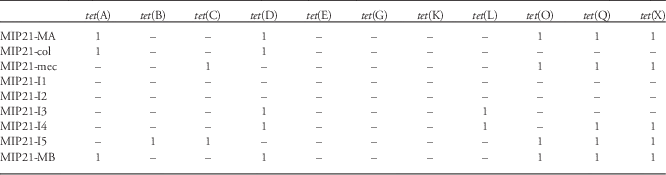
In order to gather some more insight into the origin and persistence of Tcr genes in the infant gut, we studied one series of samples for a single MIP for which we had collected five fecal samples spanning the infant’s 1st year of life, as well as meconium, colostrum and maternal fecal samples from days before delivery and from 1 year after (Table 4). The mother before delivery had five different Tcr genes [tet(A), tet(D), tet(O), tet(Q), tet(X)], every one of which was still present the year after, suggesting that the Tcr-carrying strains were stable within the adult gut. Interestingly, all of these genes could be recovered from either meconium [tet(O), tet(Q), tet(X)] or colostrum [tet(A), tet(D)], supporting their potential for early establishment in the infant gut. In addition, the meconium sample also carried tet(C). However, the two earliest infant fecal samples, taken at 1 week (MIP21-I1) and 1 month (MIP21-I2) after childbirth, did not carry any Tcr gene. In contrast, the 3-month sample (MIP21-I3) carried tet(D) and tet(L), the 7-month sample (MIP21-I4) carried tet(D) and tet(L) plus tet(Q) and tet(X), and the 1-year sample (MIP21-I5) carried tet(B), tet(C), tet(O), tet(Q) and tet(X). So, the number of ARGs tended to increase with age, with the 1-year-old infant carrying as many ARGs as the mother. At the same time, there was a turnover of ARGs in the infant, as specific genes were lost while new ones appeared, with no ARG being continuously detected throughout I3, I4 and I5. The appearance of tet(Q) and tet(X) at the latest timepoints is consistent with the fact that these ARGs are most typically found in Bacteroides, which by then has become a dominant genus in the microbiota.Reference Gosalbes, Llop and Valles 19 , Reference Valles, Artacho and Pascual-Garcia 20 Moreover, Bacteroides is also present in the MIP21 meconium,Reference Gosalbes, Llop and Valles 19 which could account for the fact that tet(Q) and tet(X) are also present in this sample. By 1 year of age, the infant had gained, in addition to tet(Q) and tet(X), three new ARGs, tet(B), tet(C) and tet(O). It is noteworthy that nearly all of the ARGs that were detected in the infant from 3 months onward were found in the mother and/or in the meconium or colostrum, but not at the earlier infant timepoints. This was the case for tet(C), tet(D), tet(O), tet(Q) and tet(X). These ARGs could potentially have been transmitted to the infant early, within bacterial species that remained in the gut but did not thrive until later on, or could have been acquired from the mother or a common environmental source at a later point. In addition, two ARGs were detected in the infant that were not found in the mother, meconium or colostrum [tet(B) and tet(L)] and were therefore presumably acquired from the environment.
Tetracycline resistance genes in the mother–infant pair MIP21 series from birth to 1 year

MA, maternal, perinatal; col, colostrum; mec, meconium; I1, infant at 1 week; I2, infant at 1 month; I3, infant at 3 months; I4, infant at 7 months; I5, infant at 1 year; MB, maternal at 1 year.
Discussion
Increasing bacterial resistance to antibiotics has clearly become a worldwide challenge to the effective control of infections by many pathogens. But, beyond affecting the pathogenic agents for which it is intended, antibiotic treatment also affects the mutualistic communities of microbes that inhabit the human body. As a result, the GIT has become a significant reservoir of antibiotic resistances. To date, just two studies had investigated the presence of ARGs in meconium or in the 1st week of life. Zhang et al. Reference Zhang, Kinkelaar and Huang 11 tested for three ARGs (tet(M), ermB and sul2) in samples from one infant and detected each of these genes during the 1st week, but not in meconium, while Alicea-Serrano et al. Reference Alicea-Serrano, Contreras, Magris, Hidalgo and Dominguez-Bello 12 tested for four Tcr genes [tet(M), tet(O), tet(Q) and tet(W)] in rectal swab samples from 10 infants taken after meconium passage and only detected tet(W) in one of them. Here, we have screened for a larger battery of ARGs, detecting different Tcr and BLr genes in both meconium and feces collected at 1 week of birth, with 70 and 100% of the samples, respectively, containing at least one type of resistance. Our results show that the GIT begins its role as a resistance reservoir very early on, probably in utero, as a large majority of the meconium samples carried some ARG. Moreover, we have previously shownReference Gosalbes, Llop and Valles 19 that bacterial strains present in meconium can still be detected in the infant at 7 months of age, suggesting that early acquired resistances may contribute to the infant’s ARG reservoir in the longer term. These ARGs could also contribute to the infant’s reservoir by being acquired by different strains through a variety of horizontal gene transfer mechanisms involving phages, mobile genetic elements or transformation with DNA from dead bacteria.
Of note, the ARG we detected the most frequently in meconium, and as one of the most frequent in 1-week-old infants, was mecA. The frequencies of this ARG in meconium (45%) and in 1-week-olds’ fecal samples (46%) were very similar, in spite of the long timespan (∼6 years) elapsed between the collection of the INMA meconium samples and that of the latter samples, suggesting that a high frequency of mecA in infants is being sustained through time. In contrast, we detected mecA at a much lower frequency in the infants’ mothers (8%), indicating that the infant GIT is a particularly important reservoir for this gene. The most commonly known carrier of mecA is methicillin-resistant Staphylococcus aureus, which is responsible for a large number of nosocomial and community-based infections that are very difficult to treat. The detection of mecA in meconium and 1-week-old infants does not imply the presence of this particular species, as the gene is also known to occur in other staphylococci and streptococci. Nevertheless, even if mecA were located in non-pathogenic strains, our finding still implies that the young infant is a considerable reservoir of this resistance, which is usually carried in mobile genetic elements and could easily spread to pathogenic species coming into the infant gut. It is especially notorious that none of the six 1-week-old infants carrying mecA had been treated with any antibiotic; in addition, none of the mothers had been under antibiotic treatment during the last 3 months before childbirth and in only three of the six cases the mother had received antibiotic during delivery (Table 2). For the nine INMA meconium samples in which mecA was detected, only four of the mothers had received antibiotics during pregnancy, and in three of the cases the antibiotic intake had occurred before the 12th week (Table 1). However, six of these nine infants were born by C-section, for which amoxicillin administration is standard practice in Spanish hospitals. Therefore, amoxicillin could have selected for mecA-carrying bacteria in these infants. Nevertheless, the other BLr-conferring gene detected in meconium, encoding the extended-spectrum β-lactamase CTX-M, was exclusively found in vaginally delivered infants. This result, and the lack of association between C-section or antibiotic use and mecA carriage in the 1-week-olds, rather suggest that the high frequency of mecA detected is not due to recent direct selection by β-lactams and implies that this gene is likely widespread in the GIT of young infants in the general population. This is also in line with recent results showing that BLr-conferring genes can be identified in the fecal microbiotas of human populations that have presumably not been directly exposed to anthropogenic antibiotics, such as the Yanomami people of the Amazon.Reference Clemente, Pehrsson and Blaser 52
In the case of Tcr, several specific ARGs reached high frequencies in the 1-week-old infants [46% for tet(Q), 38% for tet(D) and tet(K)], but no single ARG reached above 10% frequency in meconium. Nevertheless, Tcr as a whole was prevalent in both sample sets, reaching 40% in meconium and a remarkable 85% in the 1-week-olds. Moreover, in contrast to BLr, which was relatively low in the mothers’ GIT (15%), some form of Tcr was found in all the mothers analyzed. Again, these high frequencies likely reflect the overall situation in the general population of young infants and adults, as tetracycline is no longer used for treatment of pregnant women or children under the age of 8 years. Nevertheless, although the medical applications of tetracycline have decreased in the last decade, this antibiotic is still widely used for therapeutic treatment in animal production and in some countries it is also used as growth promoter in animal feed.Reference Kazimierczak, Scott, Kelly and Aminov 49 Therefore, intestinal bacteria are still likely to be extensively exposed to low doses of tetracycline, contributing to the maintenance of Tcr in the GIT reservoir. Still, it is striking that Tcr has already reached a prevalence of 85% in the GIT microbiotas of 1-week-olds, and the analysis of the MIP21 sample series suggests that the number of Tcr genes in the gut tends to increase in the following months, being similar to that observed in the mothers by the end of the 1st year of age.
Patterns of distribution between mothers and infants varied substantially among different ARGs, suggesting that some of the genes were more likely to be inherited from the maternal GIT, whereas others were most probably acquired from other sources. In the case of mecA, even though the INMA samples provided evidence that this gene can be often found in meconium, the distribution of the gene in the analyzed MIPs did not provide support for inheritance from the maternal GIT, as it was not detected in the maternal samples for the infants who carried it. Nevertheless, Streptococcus, which is one of the two known taxa potentially harboring the mecA gene, is often found at significant abundances in meconium in spite of its rarity in the adult GIT, suggesting that this genus may have been transmitted to an infant even if it was present at only very low abundances in the mother’s intestinal microbiota. In the case of Tcr genes, these tended to be more often present in 1-week-old infants whose mothers also carried them, and, in MIP21 (Table 4) most of the genes detected in the infant at any timepoint were also present in the mother. This suggests that, overall, Tcr genes may be more likely to be maternally inherited. Nevertheless, the coincidence of the same genes in mother and infant does not necessarily imply vertical inheritance, as genes could have been independently acquired from a source to which both individuals were preferentially exposed by virtue of their common environment. On the other hand, it is also important to recall that infants may be inheriting microbes, and ARGs, that originate in maternal body locations other than the intestines, both in utero, during and after birth. In fact, bacteria likely stemming from the oral cavity have been detected in amniotic fluidReference Bearfield, Davenport, Sivapathasundaram and Allaker 32 and placenta.Reference Stout, Conlon and Landeau 36 , Reference Aagaard, Ma and Antony 37 Also, de Vries et al. Reference de Vries, Valles and Agerso 10 identified in the fecal microbiota of a 1-month-old infant a transposon encoding the ARGs tet(M), tet(L) and erm(T) within the genome of a Streptococcus strain of likely vaginal origin.
In conclusion, we have shown that the GIT microbiome may act as an antibiotic resistance reservoir from birth and even earlier, and that the ARGs present in the mother may reach the meconium and colostrum and become established in the infant GIT. This provides yet another line of evidence indicating that extreme caution should be employed in the prescription of antibiotics to infants and pregnant women.
Acknowledgments
The authors thank Juan Antonio Ortega, Josep Ferris and other paediatricians who collaborated in the meconium collection, as well as all the professionals participating in the INMA cohort in Valencia. The authors thank all the mothers and babies who participated in the study for their generous collaboration.
Financial Support
This work was supported by grant SAF2009-13032-C02-02 from Ministerio de Ciencia e Innovación, and grant SAF2012-31187 from Ministerio de Economía y Competitividad, Spain. This part of the INMA study was funded by grants from the Instituto de Salud Carlos III (Red INMA G03/176), Ministerio de Sanidad y Consumo (FIS PI041931 and FIS-FEDER 03/1615, 04/1112, 04/1509, 06/1213, 09/02647, 13/1944 and 13/2032) and Conselleria de Sanitat de la Generalitat Valenciana.
Conflicts of Interest
None.
Ethical Standards
The authors assert that all procedures contributing to this work comply with the ethical standards of the Spanish Biomedical Research Law (14/2007) and with the Helsinki Declaration of 1975, as revised in 2008, and has been approved by the Ethics Committees of La Fe Hospital and the Center for Public Health Research (CSISP) in Valencia, Spain. Informed consent was obtained for all participants in the study.