A prominent area of educational research is dedicated to what motivates students to achieve and how this motivation can determine a student's success at secondary school. Student motivation has been shown to predict important educational outcomes, including psychological wellbeing and academic achievement, making it an essential aspect of educational research (Barker, Dowson, & McInerney, Reference Barker, Dowson and McInerney2006). Student motivation is commonly described as a student's energy and drive to engage in learning activities (Martin, Reference Martin2003). The factors that influence and enhance students’ drive to learn and achieve have long intrigued educational researchers and have formed the focal point for literally hundreds of studies seeking to unlock paths to higher levels of student engagement and achievement. However, before devising effective means to promote student motivation, there is a need to measure motivation reliably with valid instrumentation that is applicable to a range of cultures, and to understand the similarities and differences relating to males and females from different cultural backgrounds.
This article first outlines the theoretical background of the study by providing a description of achievement goal theory and how different goal types relate to student achievement. This is followed by a brief review of the cultural similarities and differences highlighted in past research and the need to increase understandings of students’ motivational goals in both Western and non-Western contexts. Finally, the existing motivational research examining gender differences is reviewed, and in line with the aims of the current study, the need to validate instrumentation in cross-cultural settings is emphasised.
Achievement Goal Theory
Achievement goal theory has emerged as one of the most prominent theories of student motivation (Meece, Anderman, & Anderman, Reference Meece, Anderman and Anderman2006). The theory proposes that students’ motivation and achievement behaviours can be best understood by considering the students’ purposes for academic engagement based on their subjective learning experiences (Ames, Reference Ames1992; Grant & Dweck, Reference Grant and Dweck2003; Middleton & Midgley, Reference Middleton and Midgley1997; Wigfield, Reference Wigfield1997). Consistent with most achievement goal theories, these goal orientations are believed to be relatively enduring dispositions about the way individuals perceive the general purposes for their behaviour (Ames, Reference Ames1992; Blumenfield, Reference Blumenfeld1992; Dweck & Legget, Reference Dweck and Leggett1988). However, this view has been challenged by recent research, which has shown that the types of goals students hold can be influenced by family and cultural obligations (Meece et al., Reference Meece, Anderman and Anderman2006; Pintrich, Reference Pintrich2000; Urdan & Giancarlo, Reference Urdan and Giancarlo2000; Wolters, Reference Wolters2004). This is significant when exploring student motivation in cross-cultural contexts because it highlights how diverse socio-cultural practices can impact on students’ motivation and achievement.
Achievement goal theory distinguishes between two different types of motivation goal orientations: (a) ‘mastery goal orientation’, where the focus is on developing one's competence for personal satisfaction; and (b) ‘performance goal orientation’, where the emphasis is on demonstrating one's competence in an effort to look good in front of others (Linnenbrink, Reference Linnenbrink2005). Mastery and performance goals signify different conceptions of success and failure (Ames, Reference Ames1992; Ames & Archer, Reference Ames and Archer1988), different purposes for approaching and engaging in learning tasks, and involve different ways of evaluating the self in academic settings (Covington & Beery, Reference Covington and Beery1976; Covington & Omelich, Reference Covington and Omelich1979). An abundance of evidence has consistently shown that the adoption of mastery goals relate positively to adaptive patterns of cognition, affect, and behaviour in educational settings, whereas performance goals are not commonly associated with, or negatively associated with, these learning strategies (Ames, Reference Ames1992; Blumenfield, Reference Blumenfeld1992; Dweck & Legget, Reference Dweck and Leggett1988).
In addition to mastery and performance goals, there is a growing body of literature highlighting the importance of social goals in relation to student learning and achievement. The current understanding of how the pursuit of social goals influences classroom dynamics and student achievement is undeveloped and often overlooked by studies examining student motivation (Maehr & McInerney, Reference Maehr, McInerney, McInerney and Van Etten2004; Murphy & Alexander, Reference Murphy and Alexander2000; see also Ali, McInerney, Craven, Yeung, & King, in press; King, McInerney, & Watkins, Reference King and Watkins2013). As a result, little is known about the relations between the expression of social goals and academic motivation (Wentzel, Reference Wentzel1996). Weiner (Reference Weiner1990) argues that ‘school motivation cannot be divorced from the social fabric in which it is embedded’ (p. 621), therefore we must consider factors outside the self in order to gain a deeper understanding of what motivates students to strive for achievement. It is possible that social goals interact with both mastery and performance goals in school settings and subsequently influence educational outcomes. In support of this view, a study conducted by Anderman and Anderman (Reference Anderman and Anderman1999) demonstrated that social goals were related to adaptive patterns of learning such as personal improvement, personal effort, and recognising the importance of learning. Furthermore, other social goals were associated with gaining status within the peer group and acceptance. Both forms of social goals appear to reflect characteristics similar to those found in both mastery and performance goals respectively (Hinkley, Reference Hinkley2001).
Cultural Similarities and Differences
Examining the potential similarities and differences of students’ motivational profiles cross-culturally is an important topic for research. For the most part, goal theory research has been conducted using Caucasian samples, and the potential differences between cultural groups have remained relatively unexplored (Urdan & Giancarlo, Reference Urdan and Giancarlo2000). In Australia (and other Western societies), it is acknowledged that society is multicultural; however, most of the research in educational psychology fails to address the significance of race, ethnicity, and class, and how these variables impact on our understanding of students’ motivational states (Pintrich, Reference Pintrich1994). In terms of achievement goal theory, McInerney (Reference McInerney1992) argues that the literature on students’ achievement goals needs to be expanded to include a larger variety of cultural groups.
Existing research on cultural variations in regard to students’ goals has resulted in mixed findings. Some researchers posit that achievement goals, particularly performance goals, have different meanings and effects for different cultures (Berry, Reference Berry, Miller and Brewer1984, Reference Berry2000; Triandis, Reference Triandis2004; Urdan & Mestas, Reference Urdan and Mestas2006), while others argue that there are minimal group differences (McInerney, Roche, McInerney, & Marsh, Reference McInerney, Roche, McInerney and Marsh1997). Most often, these researchers tend to make contrasts between individualistic and collectivist groups (Ali et al., in press; McInerney & Ali, Reference McInerney, Ali, Craven, Bodkin-Andrews and Mooney2013). Triandis (Reference Triandis2004) argues that collective groups emphasise values consistent with social goals such as security, obedience, duty, and in-group harmony, while individualistic societies tend to endorse values consistent with performance and mastery goals such as individual pleasure, winning, freedom, autonomy, and achievement. It is believed that through socialisation these values translate into the goals that direct an individual's behaviour (McInerney & Ali, Reference McInerney and Ali2006).
However, very little is known about the salience of different goals held by students from different cultural backgrounds who are schooled in Western countries. Western schools tend to emphasise individualistic mastery and performance goals, which are often incongruent with many of the values held by minority students (Urdan & Giancarlo, Reference Urdan and Giancarlo2000). Covington (Reference Covington2000) suggests that this involves a special dilemma for many minority students who must find some kind of balance between accepting the dominant Western values ‘sufficiently to do well at school but not enough to incur the wrath of their minority peers and families as betrayers of their cultural heritage’ (p. 180).
Within Australia, one of the most marginalised cultural groups are Indigenous Australians, who are cited as being one of the most disadvantaged of cultural groups across a variety of indicators (Craven & Bodkin-Andrews, Reference Craven, Bodkin-Andrews and Craven2011; McInerney, Fasoli, Stephenson, & Herbert, Reference McInerney, Fasoli, Stephenson, Herbert, Franco and Svensgaard2012). Although there is a general consensus that the factors that may contribute to the current educational inequities between Indigenous and non-Indigenous Australian students are diverse and complex (Howard, Reference Howard2002), numerous authors have raised the links between patterns of achievement and the need to motivate Indigenous students to become more engaged in their short- and long-term educational outcomes (Bodkin-Andrews, Dillon, & Craven, Reference Bodkin-Andrews, Ha, Craven and Yeung2010; Munns, Martin, & Craven, Reference Munns, Martin and Craven2008; Schwab, Reference Schwab2012).
To date, there has only been a small amount of research seeking to quantitatively understand differences in motivational patterns for Indigenous and non-Indigenous Australian students (De Bortoli & Cresswell, Reference De Bortoli and Cresswell2004; McInerney, Reference McInerney, Marsh, Craven and McInerney2003, Reference McInerney2008, Reference McInerney2012; McInerney & King, in press). What is notable from these research findings is the repeated claim that Indigenous and non-Indigenous students seem to be more similar than dissimilar in their academic motivational behaviours and cognitions (as few significant differences were identified; De Bortoli & Cresswell, Reference De Bortoli and Cresswell2004; McInerney, Reference McInerney, Marsh, Craven and McInerney2003). It may be argued that such results stand in opposition to more qualitatively based research seeking to understand the motivation and engagement patterns of Indigenous Australians. For example, despite the quantitative data indicating minimal differences between Indigenous and non-Indigenous students, research has indicated that Indigenous students are less engaged and more likely to drop out than non-Indigenous students (Boulton-Lewis, Wilss, & Lewis, Reference Boulton-Lewis, Wilss and Lewis2003; Howard, Reference Howard2002; Schwab, Reference Schwab2006, Reference Schwab2012; see also McInerney, Reference McInerney, Fasoli, Stephenson, Herbert, Franco and Svensgaard2012). This finding is supported by Howard (Reference Howard2002), who found that Indigenous students held low levels of interest in the schooling system. This may explain the potential lack of motivation and poor retention rates within this cultural group (Schwab, Reference Schwab2006). In addition, Boulton-Lewis et al. (Reference Boulton-Lewis, Wilss and Lewis2003) found that the study habits of 15 Indigenous Australian university students show patterns of dissonance between conceptions of learning and ways of learning. That is, while Indigenous students did not differ from the mainstream in the value of learning and importance for mastery orientation, the majority of the Indigenous students interviewed used surface learning approaches of simple rehearsal rather than seeking greater intrinsic understanding.
Although it may be argued that qualitative research would naturally be more sensitive to the intricacies of cultural variation than quantitative research, more recent advances in cross-cultural factorial equivalence (or invariance) testing is allowing researchers to more accurately ascertain if measures are equally representative or meaningful across differing cultural groupings (Bodkin-Andrews, Ha, Craven, & Yeung, Reference Bodkin-Andrews, Ha, Craven and Yeung2010; Byrne, Reference Byrne2001; Cheung & Rensvold, Reference Cheung and Rensvold2002; Marsh, Tracey, & Craven, Reference Marsh, Tracey and Craven2006). However, to date, few of the existing quantitative studies have utilised invariance testing, which makes it difficult to determine whether the measures of motivation used, or goal orientations examined, are indeed equivalent across Indigenous and non-Indigenous Australian students.
Even less is known about students’ goal orientations in developing countries such as Papua New Guinea (PNG). Profiling students indigenous to PNG provides researchers with a unique opportunity in which to study the potential clash between culture and the motivational goals required for achievement in today's educational system. This is because despite being a non-Western collective culture, PNG has increasingly adopted a Western education system since the mid-19th century (McKeown, Reference McKeown2006; Nelson, Reference Nelson2007). Despite the implementation of a Western curriculum and teaching methods, educational outcomes for Year 11 and 12 PNG students fall approximately 2 years behind those educated in Western countries, and retention figures indicate that most students will withdraw from all forms of schooling by Grade 8 (Romanyshyn & Romanyshyn, Reference Romanyshyn and Romanyshyn2010). As Nelson (Reference Nelson2007, p. 401) states: ‘Papua New Guinea has experienced a long history of arduous challenges, dealing with low retention rates, poor literacy, and ambivalent attitudes toward the value of education’. Therefore, increasing understandings of the factors that influence student engagement, achievement and progression is essential in order to address these ongoing problems.
In an Australia context, it is particularly important to research the disparity between the goal orientations supported by Western schools and teachers, and the goals held by Indigenous students, as it has been well documented that the educational success of Australian Indigenous students is not commensurate with their non-Indigenous peers (e.g., McInerney, Reference McInerney2012; McInerney, Hinkley, Dowson, & Van Etten, Reference McInerney, Hinkley, Dowson and Van Etten1998). Highlighting the validity of similarities and differences between groups, particularly in an ever-increasingly multicultural Australia, is vital if educators are to recognise the literal, behavioural, and cultural obstacles that diminish or enhance students’ motivation and subsequent academic achievement. The current investigation aimed to extend the literature on cross-cultural motivation, learning and achievement beyond Western cultures to include both an Australian and Papua New Guinean (PNG) Indigenous sample to help elucidate potential cross-cultural differences.
Gender Similarities and Differences
Historically, few studies have examined the relation between students’ gender and the type and quality of the goal orientations they endorse. More recently, a number of studies have begun to examine the relations between these variables (Anderman & Young, Reference Anderman and Young1994; Dowson, McInerney, & Nelson, Reference Dowson, McInerney and Nelson2006; Harackiewicz, Barron, Tauer, & Elliot, Reference Harackiewicz, Barron, Tauer and Elliot2002; Wentzel, Reference Wentzel1996; Da Silva & McInerney, Reference Da Silva, McInerney, Tan, McInerney, Liem and Tan2008). However, despite these efforts, there is still no agreed-upon conclusion as to how, if at all, gender impacts on students’ goals and performance (Barker, Reference Barker2006; Dowson et al., Reference Dowson, McInerney and Nelson2006). Of the limited research studying gender differences, most studies have found that males most often adopt performance goals and females more strongly endorse social and mastery goals (Giota, Reference Giota2002; Meece & Holt, Reference Meece and Holt1993; Wentzel, Reference Wentzel1989, Reference Wentzel1996).
However, contradictory results have also been reported. For example, Henderson and Dweck (Reference Henderson, Dweck, Feldman and Elliot1990) found that females, rather than males, were more inclined to adopt performance goals. In an attempt to clarify the association between gender and achievement goals, Dowson et al. (Reference Dowson, McInerney and Nelson2006) systematically examined the influence of gender and school context on students’ goals. They found that females were significantly higher on the social concern orientations than males; however, the reverse was true for social affiliation. Similar results were reported by Wentzel (Reference Wentzel1996), although due to differences in the instruments used, Wentzel did not differentiate between social affiliation and concern, reporting only that girls held a stronger social goal orientation than boys. Interestingly, in the Dowson et al. (Reference Dowson, McInerney and Nelson2006) study, females reported a greater adherence to both performance and mastery goals than males, contradicting previous findings. In contrast, Wentzel (Reference Wentzel1996) found that girls were higher than boys in mastery goals, whereas boys were higher than girls on performance goals. Given the inconsistent findings in the link between gender and goal orientation it is clear that future research is required. It is also plausible to suggest that gender differences in goal orientations will vary across cultural contexts depending on the gender roles, social practices, and expectations of the culture. In an attempt to clarify the ambiguous results found in previous studies, future research could benefit from examining the gender differences in students’ academic goal orientations using diverse cultural groups (McInerney & Dowson, Reference McInerney and Dowson2003).
The Present Investigation
Given the somewhat limited and inconsistent findings on the relation between goals and group differences, the current study incorporates cultural and gender differences into its design to explore these important relations in an attempt to clarify the links between them. Whether or not the reported differences above are true indications of group differences or a reflection of the different measures and methodologies used were explored in the present study by conducting invariance testing across all groups in order to accurately assess any group variation. The overarching aim of the proposed investigation is to extend the literature on cross-cultural motivation, learning and achievement in secondary schools, beyond Western countries where Indigenous students form the minority, by including the developing country of PNG in which Indigenous students are the majority. Specifically, this study examined what factors influence students’ goals and achievement in an under-resourced and developing country (PNG) and determined whether or not the pattern of relations between these concepts are consistent across both Western and non-Western cultures. In addition, the study aimed to examine gender similarities and differences in motivational profiles. Due to the inconsistencies in the literature the following research questions were posited: What cross-cultural differences and similarities are evident in Indigenous and non-Indigenous groups? What are the relations between goal orientation and gender in different cultural contexts? And are gender differences and similarities in motivational profiles consistent across cultural groups?
Method
Background
While it may be argued that there has been a plethora of research investigating Indigenous Australian ‘issues’ from a quantitative methodological framework, many authors have highlighted that the poor quality of such research has resulted in inaccurate, stereotypical, Eurocentric, and deficit conclusions that have failed to accurately represent the lived experiences and needs of Indigenous Australians (McInerney, Reference McInerney1995; Penman, Reference Penman2006; Ranzijn, McConnochie, & Nolan, 2008; Walter, Reference Walter2010). Walter (Reference Walter2010) though, is careful to stress that quantitative research methodologies themselves should not necessarily be considered the reason for poor quality research per se, but rather the axiological framework, or lens from which the quantitative research tool is approached and interpreted, is where the limitations of validity arise. Somewhat related to the position of Walter (Reference Walter2010), Bodkin-Andrews et al. (Reference Bodkin-Andrews, Ha, Craven and Yeung2010) have highlighted recent advances in quantitative research methodologies (e.g., factorial invariance testing) that allow much greater levels of confidence in determining whether quantitative measures are equivalent in meaning across broad cultural groups. Furthermore, they argued that unless such confidence can be obtained, meaningful group comparisons cannot be made. With the concerns of Walter (Reference Walter2010) in mind, the methodology utilised in this investigation will take a strict approach in ensuring the measures at the very least are equivalent in meaning across each of the three participant groups before any group comparisons are made.
Participants
Participants (N = 1792) consisted of PNG, Indigenous Australian, and non-Indigenous Australian students. The non-Indigenous Australian sample consisted of 520 students, drawn from Years 7–11 from Australian rural and urban secondary schools in New South Wales and the Northern Territory. There were a similar number of male (n = 278) and female (n = 242) students with ages ranging from 11 to 16 years (M = 13.53, SD = 1.10). The Indigenous sample comprised students in Years 7 to 12 (n = 398) drawn from a combination of rural, remote, and urban secondary schools within the Northern Territory of Australia. This sample included 171 males and 227 females aged from 11 to 21 years (M = 13.83, SD = 1.72).
The PNG sample consisted of secondary students (n = 874) from rural (PNG's north coast), urban (Port Moresby), and village (remote villages located along the Kokoda Track) schools. The sample comprised a comparable number of males (n = 468) and females (n = 406) aged from 11 to 28 years with a mean age of 17.05 years (SD = 2.49). It is important to note the large age range of this sample, particularly due to the large number of adult learners in the PNG group. As schools in PNG are fee paying, many students are not in a financial position to access education at the ‘age appropriate’ time. As a result, many postpone their education until they become more financially secure, usually in young adulthood (Nelson, Reference Nelson2007).
Recruitment of Participants
Three data sets were used in the present study. The non-Indigenous sample was collected by the first author, the Indigenous sample was collected by the last author, and the PNG sample was collected by the third author. All three samples were recruited in the same manner. First, ethics approval was sought and subsequently obtained from the University of Western Sydney Human Ethics Committee. Second, approvals to perform the study were obtained from the Departments of Education and Training in PNG, the Northern Territory, and New South Wales. After ethics approval, principals of potential participating schools were emailed and followed up a week later with a telephone call from the researcher.
Information meetings were held with principals wishing to participate in order to brief them on the purpose, methodology and implications of the study. Additionally, the researcher initially consulted with each of the school's Indigenous advisory group/or officer in regard to the processes and aims of the study, and then again during and after the data collection process. Only those students who volunteered to participate and whose parents had consented to the child's participation completed the survey. The parents of students were given information sheets and parent consent forms that informed them of the purpose of the study, the procedures to be followed, description of any risks and benefits, how much time would be needed, confirmation of voluntary and anonymous participation, and of the fact that their child was free to withdraw from the study at any time.
Measure
The Inventory of School Motivation (ISM) has been used cross-culturally by a number of researchers and has consistently demonstrated acceptable reliability and validity across diverse cultural groups (e.g., Ganotice, Bernardo, & King, Reference Ganotice, Bernardo and King2012; King & Watkins, Reference King and Watkins2013; Leung & Lo, Reference Leung and Lo2013; McInerney et al., Reference McInerney, Yeung and McInerney2001). The ISM consists of 34 positively worded items randomly assigned throughout the questionnaire. All items were measured on a 5-point Likert scale ranging from 1 (strongly disagree) to 5 (strongly agree). Thus, higher scores reflected a stronger endorsement of the particular goal orientation being examined. The ISM delineates eight first-order factor scales and three higher-order factors labelled Mastery, Performance, and Social Goal orientations. The Mastery factor is defined by two first-order factors: Task and Effort; the Performance factor is represented by four first-order factors: Competition, Social Power, Token, and Praise; and the Social factor is measured by the two first-order factors: Affiliation and Social Concern.
Statistical Analyses
Preliminary analysis included: (a) checking for assumptions of normality, linearity and homoscedasticity; (b) identifying univariate and multivariate outliers, and missing values; and (c) reliability testing using Cronbach's alpha estimates (see Hills, Reference Hills2005, for further explanation of these terms). Cronbach alpha estimates should ideally be above .70 (Hills, Reference Hills2005); however, others have argued that exploratory research in cross-cultural settings should allow for some flexibility, and that in these circumstances estimates of .60 and above are acceptable (Nunnelly, Reference Nunnelly1978; Steiner & Norman, Reference Steiner and Norman2003).
In order to validate the factor structure of the ISM cross-culturally, confirmatory factor analysis (CFA) was performed with PRELIS and LISREL 8.72 (Jorskog & Sorbom, Reference Joreskog and Sorbom2004) using maximum likelihood estimation (see Hu, Bentler, & Kano, Reference Hu, Bentler and Kano1992; Jorskog & Sorbom, Reference Joreskog and Sorbom1993). In the present investigation, the 34 ISM items were hypothesised to represent eight a priori first-order factors and a series of CFAs were carried out for each culture separately and for the total sample. Following recent recommendations (Hoyle & Panter, Reference Hoyle, Panter and Hoyle1995; Hu & Bentler, Reference Hu, Bentler and Hoyle1995; Marsh, Wen, & Hau, Reference Marsh, Dowson, Pietsch and Walker2004), the outcomes of CFA models were evaluated using a goodness-of-fit criteria of the Tucker Lewis Index (TLI), the Comparative Fit Index (CFI), and the Root Mean Square Error of Approximation (RMSEA). A CFI and TLI of .95 or above are indicative of an excellent fitting model, although values of .90 or above are considered acceptable (Bryne, Reference Byrne2001; Hu & Bentler, Reference Hu and Bentler1999; Marsh, Dowson, Pietsch, & Walker, Reference Marsh, Dowson, Pietsch and Walker2004). RMSEA values at or below .05 are considered to represent a ‘close fit’ to the data, values of .08 indicate an ‘acceptable fit’, and values of .1 or above indicate a ‘poor fit’ (Browne & Cudeck, Reference Browne, Cudeck, Bollen and Long1993; Marsh, Balla, & Hau, Reference Marsh, Balla, Hau, Marcoulides and Schumaker1996).
To ensure the consistency of the ISM across gender and cultural groups, tests of factorial invariance were conducted separately for all gender and culture groups. A total of five nested models were tested and assessed according to the goodness-of-fit criteria described by Byrne (Reference Byrne2001). The first model was completely free and all parameters were allowed to vary across groups. To meet the necessary requirements for invariance, factor loadings (first and higher-order) were constrained to be equivalent across groups in the second model. The third model held factor variances and covariances equal, while the fourth model placed restraints on the factor loadings and item uniquenesses. In the final model, all parameter estimates (i.e., factor loadings, variances/covariances, and uniquenesses) were constrained to be equivalent across groups. After ensuring that the factor structure was equivalent across groups, Multiple-Indicator-Multiple-Cause (MIMIC) modelling was conducted to investigate potential gender and cross-cultural similarities and differences. Specifically, the main effects of gender, culture, and the gender × culture interaction effects on multiple motivational goals were examined in a series of MIMIC models. A MIMIC model contains latent variables that are simultaneously identified as both exogenous causal constructs and observed indicators. In the present investigation, exogenous variables included culture and gender, while the observed indicators were those representing the latent constructs (i.e., goal orientations).
Results
Preliminary Analysis
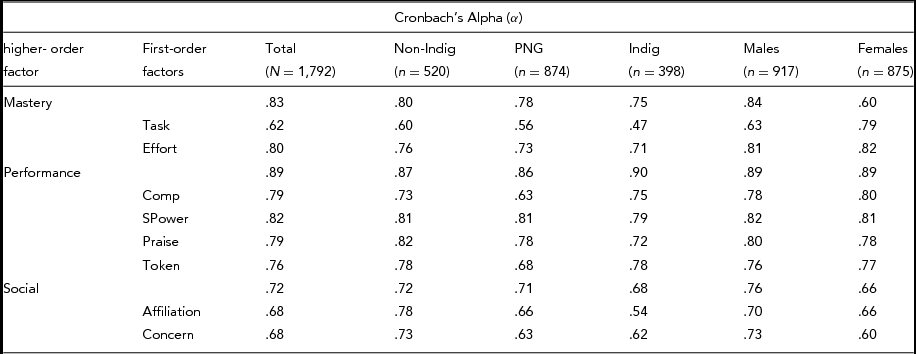
Descriptive statistics are presented in Appendix A. Cronbach's alpha estimates for the total sample were deemed acceptable and ranged from .62 to .89 (see Table 1). Cronbach's alpha estimates for cultural subgroups showed more variability; however, in most cases, reliabilities were acceptable, with the lowest Cronbach's alphas found in the Indigenous group for Task (.47) and Affiliation (.54). This may be due to the remote nature of the sample and the relatively small sample size. Furthermore, the lower reliabilities of the Task and Affiliation subscales may reflect the small number of items within each scale, consisting of four and three items respectively. There was substantial improvement when the Task and Affiliation scales were combined into their respective higher-order factors, resulting in reliability estimates of .75 for Mastery and .68 for Social; however, results involving these first-order subscales should be regarded with caution.
Reliability Estimates for First-Order and Higher-Order ISM Scales

Note: PNG = Papua New Guinea, Non-Indig = Non-Indigenous Australians, Indig = Indigenous Australian, Comp = Competition, Spower = Social power, Concern = Social concern.
In order to examine the structure of the eight motivational factors posited to underlie responses to the ISM, a first-order CFA was performed on the data where each of the 34 items was assigned to load only onto their designated factor. The results of this preliminary model found that the correlations between the two subscales of the Mastery dimension (Task and Effort) were so high that they were indistinguishable from each other (r > .90; McInerney, Roche, & McInerney, Reference McInerney, Roche and McInerney1994). They were therefore collapsed into a single Mastery scale as was previously done in a study by McInerney et al. (Reference McInerney, Roche and McInerney1994). Furthermore, the correlations for Social Concern were higher with Task and Effort than Affiliation in all three groups, thus offering little justification for the inclusion of a higher-order Social factor. Hence the McInerney et al. (Reference McInerney, Yeung and McInerney2001) model was modified to a seven first-order structure with a higher order Performance factor.
Confirmatory Factor Analysis
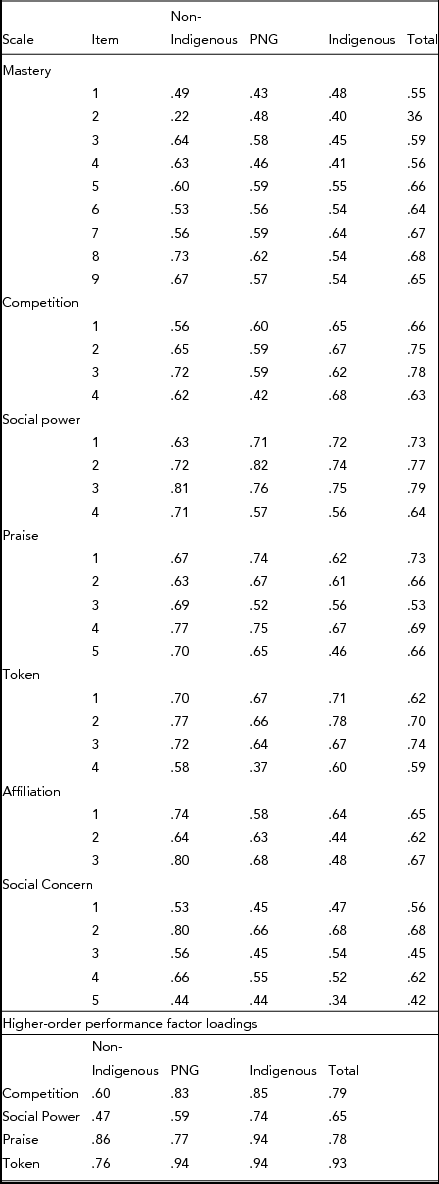
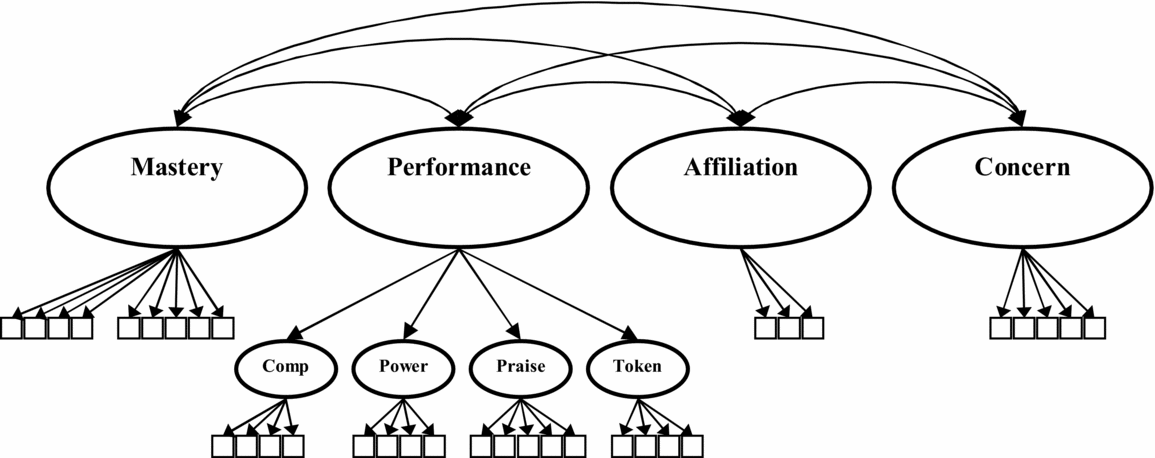
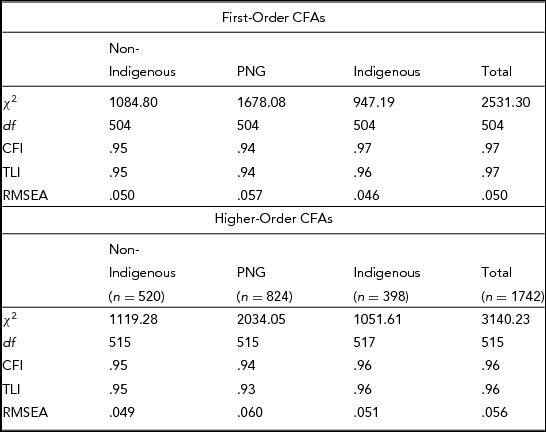
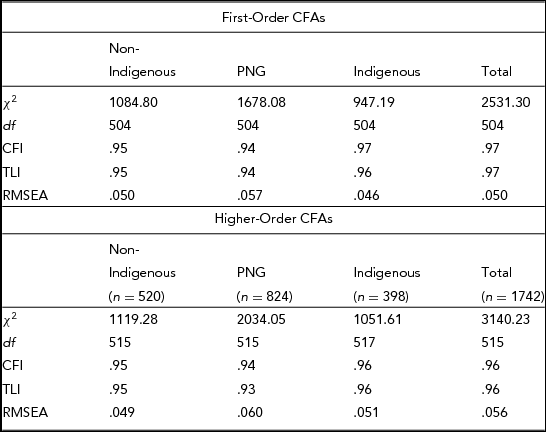
The final model (Figure 1) consisted of 34 items measuring seven first-order factors (Mastery, Competition, Social Power, Praise, Token, Affiliation, and Social Concern) and one higher-order Performance factor. Results testing the revised model for each sample demonstrated good to excellent fit indices (see Appendix B), with a RMSEA of .050, a CFI of .97 and a TLI of .97 for the total sample. Across the three separate cultural groups, RMSEAs ranged from .046 to .057, the CFI from .94 to .97, and the TLI from .94 to .96. Factor loadings (Table 2) indicated that all seven factors were clearly defined for each cultural group and all factor loadings were positive and statistically significant. One item had a low factor loading (.22) in the non-Indigenous analyses; however, it was retained in the targeted factor in order to maintain consistency across groups.
Factor Loadings for the Subscales of the ISM
Final model reflecting the factor structure of the ISM Note: Mastery = mastery goals, Comp = competition goals, Power = social power goals, Praise = praise goals, Token = token goals, Affiliation = affiliation goals, Concern = social concern goals.
A higher-order model was evaluated separately for the total sample and each cultural subgroup (see Appendix B). Results indicated that the model provided a good fit to the data (TLI & CFI > .90 for all groups). The correlations among the four performance factors were moderate to high (.34 to .89), thereby supporting the formation of a higher-order performance factor. All second-order factor loadings (Table 2.) for the higher-order performance factor were statistically significant (ranging from .47 to .94) and well over the minimum level of acceptability of .30 (Hills, Reference Hills2005), thereby supporting the higher-order model across culture.
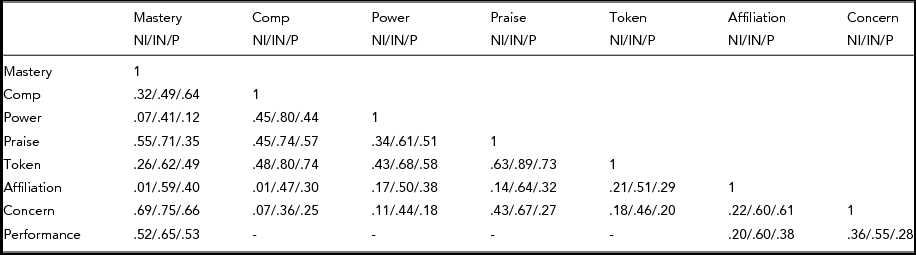
The correlations among the seven first-order factors (see Table 3) were all positive, although they varied from near zero (.01 for Affiliation and Mastery across the non-Indigenous sample) to substantial (.89 for Token and Praise across the Indigenous sample) in size. Some variation between cultural groups could also be identified, for example, the correlation between mastery and affiliation is moderate in both the PNG (.40) and Indigenous (.59) samples; however, this correlation is zero in the non-Indigenous group. Another notable variation occurs in the correlations between the social factors (affiliation and social concern) and the performance factors. In the Indigenous group these correlations are moderate (.60 and .55), whereas in the other two groups these correlations are quite low (non-Indigenous .20 and .36; PNG .38 and .28). Overall, it seems the largest variations occur when comparing the non-Indigenous sample with either the Indigenous or PNG samples.
ISM Correlations for Non Indigenous, Indigenous and Papua New Guinean Samples
Note: NI- Non-Indigenous sample, IN = Indigenous Sample, P = Papua New Guinean sample. Comp = Competition, Power = Social power, Concern = Social concern.
Invariance Testing
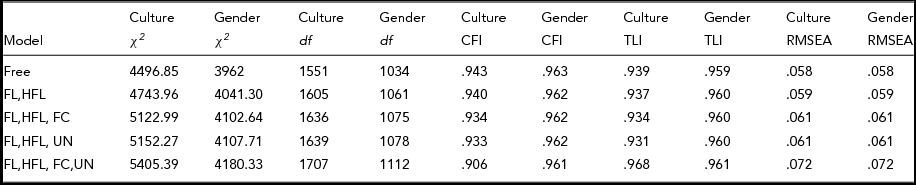
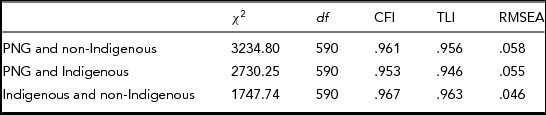
To determine whether the factor structure was equivalent across diverse groups, invariance testing was carried out for both culture and gender on all first-order and higher-order parameters. As can be seen from Table 4, for culture the change in the RMSEA, TLI, and CFI indices does not exceed the .01 while the factor loadings (first-order and higher-order), correlations, and factor variance/covariance parameters were held invariant (Cheung & Rensvold, Reference Cheung and Rensvold2002). Hence, there was strong support for the invariance of factor structure across the three cultural groups (see Bodkin-Andrews et al., Reference Bodkin-Andrews, Ha, Craven and Yeung2010; Byrne, Reference Byrne2001). Results also demonstrated that the factor structure was fully invariant across gender (see Table 4) as placing increasingly restrictive constraints upon the model's various parameters produced little change in all fit indices (<.01). Therefore, the higher-order model not only met the minimal requirements of invariance for the cultural groups, but can also be confidently considered completely invariant across gender groups.
Invariance Tests across Culture and Gender for the ISM
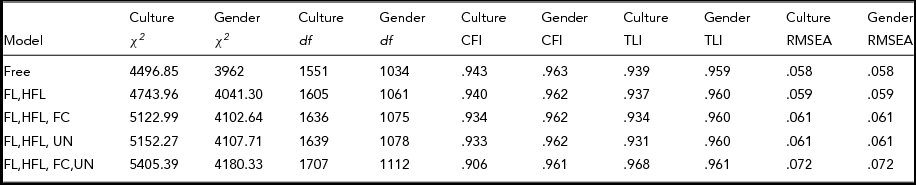
Note: RMSEA = root mean square error of approximation, TLI = Tucker Lewis Index, CFI = comparative fit index fixed, FL = factor loadings fixed, HFL = higher-order factor loadings fixed, FC = factor correlations fixed, UN = item uniquenesses fixed.
MIMIC Models
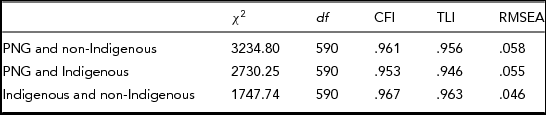
The invariance of the factor structure provided a strong basis for group comparisons. To investigate potential group differences, MIMIC models were conducted to examine the relations between gender, culture, and the gender × culture interaction with the motivation factors of the ISM. As only two cultural groups can be examined simultaneously, a total of three MIMIC models were tested. Model 1 examined PNG and non-Indigenous group differences, Model 2 looked at these differences in PNG and Indigenous groups, and Model 3 examined group differences between the non-Indigenous and Indigenous samples. With the exception of cultural groups examined, all three models were identical.
Following recommendations made by Aiken and West (Reference Aiken and West1991), culture was zero-centred (changed to reflect deviation scores so the mean became zero) to avoid excessive multicollinearity between culture and the corresponding interaction term. The zero-centred interaction term was calculated by multiplying gender by the zero-centred culture variable. As high levels of multicollinearity can pose potential technical difficulties in estimating the regression coefficient, centring the variables often minimises these potential problems (Marsh et al., Reference Marsh, Dowson, Pietsch and Walker2004). The results demonstrated that the goodness-of-fit indices were acceptable across all three models, with all CFIs and TLIs > .90 and all RMSEAs < .60; see Appendix C).
Mimic 1: PNG and non-Indigenous Australian
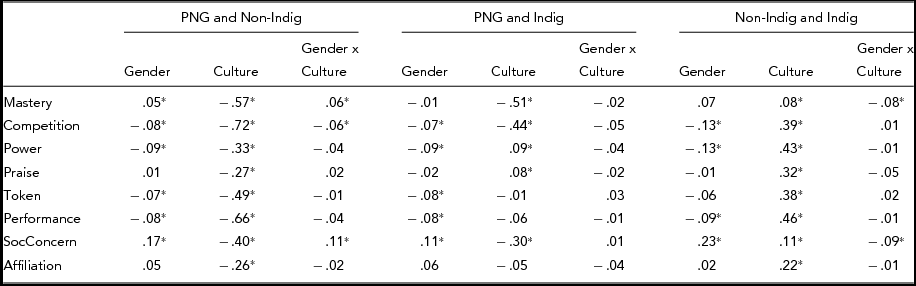
Beta coefficients for latent factors are displayed in Table 5. Comparisons between PNG and non-Indigenous students demonstrate significant main effects for both culture and gender. For gender, females scored significantly higher on social concern and mastery goals than did males, whereas males scored significantly higher than females on competition, token, social power, and performance goals. Females were also more orientated toward affiliation and praise than males; however, these differences were not significant.
Standardised Beta Coefficients for Culture, Gender and Culture x Gender Interactions for First-Order and Second-Order ISM Factors
Note: SocConcern = Social concern, Power = Social power, PNG = Papua New Guinea, Indig = Indigenous, Non-Indig = non-Indigenous. *p < .05.
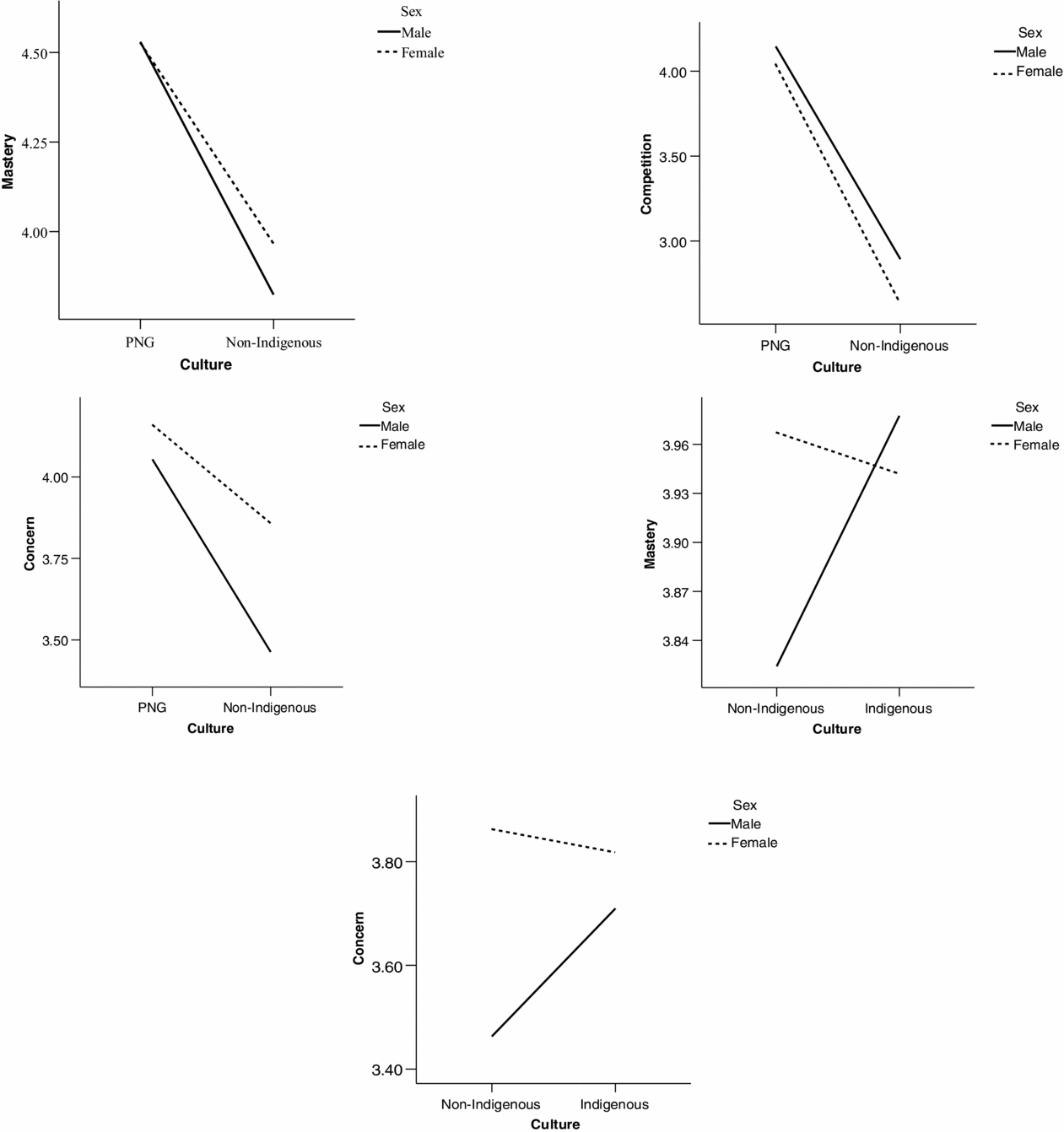
Examination of cross-cultural main-effect differences showed that the PNG group was significantly higher than the non-Indigenous group on all goal orientations. However, diminishing the importance of these main effects was the significant gender × culture interaction for mastery, competition, and social goals (see Figure 2 for a pictorial representation). Investigation into the interaction for mastery goals shows that PNG males and females are comparable in their endorsement of mastery goals; however, non-Indigenous males and females differed in their strength of mastery goal orientation, with females being more mastery orientated than males.
Visual representations of interaction effects. Note: Refer to Figure 2 for main effects and interaction path sizes.
The gender × culture interaction for competition indicated that PNG males and females were similar in their endorsement of competitive goals, whereas for the non-Indigenous sample, males were more competitive than females. Although this interaction is significant, the divergence between non-Indigenous males and females’ competitive goal orientation was only marginal. The gender × culture interaction for social concern goals shows that females scored higher on social concern for both groups; however, the disparity between genders is greater for the non-Indigenous group.
Mimic 2: PNG and Indigenous Australian
Examination of goal orientation differences between PNG and Indigenous students demonstrated a number of significant main effects with no significant gender × culture interactions. For gender, males were significantly more performance orientated than females, and females were significantly higher than males on social concern goals. Cultural differences between PNG and Indigenous students showed that PNG students were significantly more mastery and social concern orientated than Indigenous students.
Mimic 3: Indigenous and non-Indigenous Australians
Finally, Indigenous and non-Indigenous students were compared. Results indicated a significant main effect for gender on competition, social power, performance, and social concern; and cultural main effects were evident for all goal types. Females scored significantly higher than males on social concern goals, and males were significantly more performance orientated than females. Males were also significantly more competitive than females, and males scored significantly higher on social power than did females. A significant gender × culture interaction was found for mastery and social concern goals (see Figure 2). The gender × culture interaction for mastery goal orientation showed that in the non-Indigenous group, females were more strongly mastery orientated than males; conversely, in the Indigenous group males had a stronger mastery orientation than females. The results also indicated that both male and female Indigenous students were comparable on their endorsement of social concern goals. In contrast, there was a difference between males and females in the non-Indigenous group, with males scoring significantly lower than females, as indicated by the gender main effect results.
Discussion
The present findings indicate that the ISM measure is psychometrically sound and demonstrates comparable factor structure for both males and females. Additionally, invariance testing showed that each scale item within the ISM had similar meaning for PNG, Indigenous, and non-Indigenous students. This finding is important and has practical significance, as this is one of the first studies demonstrating the generalisabilty of the ISM measure to non-Western samples drawn from an Indigenous minority and an Indigenous developing nation.
In relation to the research questions concerning gender similarities and differences, results indicated that males were significantly more performance orientated than females in all three groups examined; however, the disparity between genders was most apparent for the non-Indigenous group. The findings also suggest that non-Indigenous females were more mastery orientated than males. However, this was not the case in the PNG comparisons where no discernable differences were found. Furthermore, the gender × culture interaction showed that in contrast to the non-Indigenous group, Indigenous males were more mastery orientated than Indigenous females. Finally, females were significantly more orientated toward social concern than males across all three groups. Nevertheless, interaction effects demonstrate that the gender difference is far more prominent for non-Indigenous students. The current findings are consistent with the limited research showing support for gender differences in achievement motivational goals in much of the Western research (Middleton & Midgley, Reference Middleton and Midgley1997; Wigfield, Eccles, MacIver, & Reuman, Reference Wigfield, Eccles, MacIver and Reuman1991).
Examination of cultural differences showed that the two Indigenous cultural groups endorsed social goals more strongly than the non-Indigenous group. Furthermore, PNG students were significantly higher than Indigenous students on mastery and competition goals, whereas Indigenous students were higher than PNG on social power and praise orientations. A tentative explanation for these differences may be that while PNG students value learning, thus the strong endorsement of mastery goals, in comparison to Australian's, access to educational resources is extremely limited (Nelson, Reference Nelson2004), thereby facilitating a more competitive orientation in PNG students. Running counter to Western-Indigenous stereotypical expectations, PNG and Indigenous students were significantly higher than the non-Indigenous group on all goal orientations.
An important implication of these findings is that the ISM allows for valid comparisons between groups with a reasonable level of confidence that the constructs being measured are equivalent across groups. Now that this has been established, the next step for future research is to determine how different goal orientations relate to outcome measures such as academic achievement and other desirable educational outcomes, and whether goal orientations have the same relationship with these outcomes for all cultural groups or whether there is variation. The current findings relating to gender differences also provide potential avenues for future research in the classroom context. As males across the three groups showed a stronger endorsement of performance goals, which is often associated with negative learning practices (Ames, Reference Ames1992; Blumenfield, Reference Blumenfeld1992; Dweck & Legget, Reference Dweck and Leggett1988), it may be useful to enhance male students’ interest in classroom activities, while trying to minimise competitiveness. Additionally, the finding that females endorsed social goals more strongly than males suggests that female students benefit from classroom environments that encourage group activities and peer discussion. Developing social goal orientation among boys may also be useful, as the endorsement of social goals has been associated with enhanced academic achievement (e.g., King et al., Reference King, McInerney and Watkins2013; King, McInerney, & Watkins, Reference King, McInerney and Watkins2012). These suggestions could be examined more closely in future research endeavours.
In addition, the current findings challenge the theoretical assumption that females are more mastery orientated than males (Giota, Reference Giota2002; Meece & Holt, Reference Meece and Holt1993; Wentzel, Reference Wentzel1989; Reference Wentzel1996; Ve, 1991). While this was true of non-Indigenous Australians, Indigenous males were more mastery orientated than females and there was little difference between the genders in the PNG group. Despite the gender differences found in the non-Indigenous group being consistent with previous research (Anderman & Young, Reference Anderman and Young1994; Barker, Reference Barker2006; Dowson et al., Reference Dowson, McInerney and Nelson2006; Wentzel, Reference Wentzel1996), these current findings elucidate the importance of assessing gender differences across diverse cultural groups, as broad statements relating to such differences do not appear to be applicable in all cultural contexts.
In addition to the theoretical and practical significance of the findings discussed above, it is important to note a number of limitations associated with the present research. First, the reliabilities of the task and affiliation subscales were lower than ideal. Although the task and effort scales were merged, resulting in acceptable reliabilities (and factor loadings), results pertaining to the affiliation scale should be interpreted with caution, thereby indicating that it may be necessary to refine these scales in future research (although the acceptable factor loadings suggests that the reliability estimates could have been adversely affected by there only being three items in this factor).
An additional limitation of the current study is that the motivational data presented was reliant on student self-report. The use of self-report measures is based on the assumption that respondents have an objective and direct awareness of the constructs under study; however, this can create potential problems with response bias (Murphy & Alexander, Reference Murphy and Alexander2000; Pintrich, Reference Pintrich2000). Such problems may have occurred in the present research as there is a possibility that a social desirability bias was operating, particularly in the PNG group, who scored highly on all goal orientations. Therefore, future research examining goal orientations with PNG students may be strengthened from developing alternative methods of inquiry.
Additionally, it is important to acknowledge that for many of the participants in the current study, English was not their first language. This may have affected the participants’ understanding of the items, and although the survey was read aloud and invariance testing indicated that the questionnaire was interpreted similarly across the three groups, it may be useful to use translation in future research studies examining students’ motivational goals. However, it is important to note that the use of translation is not without additional problems; for example, there is no one common Indigenous language to translate the survey items into, and second, there is a reliance on the accuracy of an interpreter's translation or interpretation of the material (McInerney, Reference McInerney2012). Within the final limitation, it is critical we return to the work of Walter (Reference Walter2010), and understand the limitations in the research lens this investigation has taken. It should not be ignored that the measures themselves, although equivalent in meaning across the three participant groups, were ultimately developed from a Western framework, thus raising the question of what motivational constructs, from Indigenous Australian and PNG perspectives, have not been measured within this investigation. In addition, the broad participant groupings are not reflective of the true diversity of nations, cultures, and language groups that comprise not only Indigenous Australia (Walter, Reference Walter2010), but also the Papua New Guinean and non-Indigenous Australian student groups.
In sum this research has validated the use the ISM instruments designed to measure motivational goal orientations with PNG, Indigenous, and non-Indigenous Australian students. The investigation has also highlighted a number of cultural similarities and differences as well as showing that previous assumptions relating to gender and culture differences may be oversimplified and cannot be accurately determined without taking contextual variables such as cultural background into account.
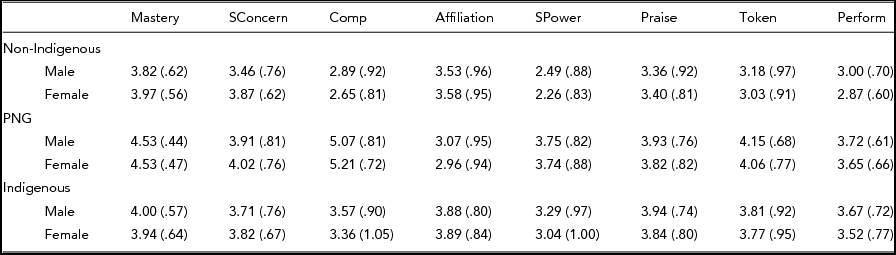
Means and Standard Deviations for ISM Scales by Culture and Gender
Goodness of Fit Indices for the First and Higher-Order ISM CFAs
Goodness-of Fit Indices for Culture, Gender and Gender × Culture MIMIC Models
About the Authors
Natasha Magson is an early career researcher. In 2007, she gained first class Honours with her thesis examining the domain specificity of student motivation among secondary students. Natasha completed her PhD in 2013, which investigated the impact of social capital on physical, psychological, and socio-economic outcomes in disadvantaged youth. Natasha is currently working as a project officer in the Institute for Positive Psychology and Education at ACU, which specialises in educational psychology throughout the lifespan. Natasha's main research interests include social capital, student motivation, and improving life outcomes in adolescents living in disadvantaged settings.
Rhonda Craven is the Director of the Institute for Positive Psychology and Education at Australian Catholic University. Her research interests include: the structure, measurement, development, and enhancement of self-concept and key psycho-social drivers of potential; the effective teaching of Indigenous Studies and Indigenous students; maximising life potential in diverse settings; and interventions that make a tangible difference in educational settings. She is the National Project Coordinator of the Teaching the Teachers: Indigenous Australian Studies Project of National Significance, which has resulted in the majority of Australian universities introducing core studies in this area into their teacher education course. She is also the editor of the best-selling text Teaching Aboriginal Studies, a founding member of the national Aboriginal Studies Association (ASA), the inaugural recipient of the ASA's Life Achievement Award, and an Associate Member of NSW AECG.
Genevieve Nelson is the Executive Director of the Kokoda Track Foundation. Genevieve's psychological background led her to complete her PhD on education in developing countries and the psychological influences of student achievement for students in PNG. During this time, she lived in and visited many communities in the catchment area of the Kokoda Track. Genevieve was appointed the Executive Director of the Foundation in January 2009. She is also a registered psychologist with the NSW Psychologists Board and has worked for organisations including the University of Western Sydney (where she holds an adjunct research fellowship) and The Benevolent Society. She is passionate about the people of Papua New Guinea and creating opportunities for those who live along the Kokoda Track.
Gawaian Bodkin-Andrews is a Senior Lecturer and Australian Indigenous Research Fellow (funded by the Australian Research Council) situated within Warawara — Department of Indigenous Studies at Macquarie University. He is also a participating member of the National Indigenous Research and Knowledges Network. His research is largely focused on Indigenous Australian perspectives on racism and bullying, self-perceptions, and academic engagement. His research has also attracted a number of national and international awards (including the AARE Betty-Watts Indigenous Researcher award), and he currently has numerous journal publications, book chapters, and peer reviewed conference publications, all of which have a strong emphasis on Indigenous Australian affairs.
Alexander S. Yeung is an Associate Professor and the Deputy Director of the Institute for Positive Psychology and Education at ACU. He is a registered teacher, a psychologist, a professional translator, a linguist, and an educational researcher. He has taught in various educational settings from preschool to tertiary levels, and has been a teacher educator for 40 years. His expertise includes self-concept, motivation, measurement and evaluation, cognition and instruction, and language and psychological studies in cross-cultural settings.
Dennis M. McInerney is Chair Professor of Educational Psychology and Co-Director of the Assessment Research Centre at The Hong Kong Institute of Education. He previously served as the Associate Vice-President for Research and Development. Professor McInerney has published over 300 research articles in refereed international journals, books and conferences. He edits two international research series, Research on Sociocultural Influences on Motivation and Learning (Volumes 1–10) and International Advances in Self Research (Volumes 1–4). He is author of the popular text Educational Psychology: Constructing Learning (2014, 6th ed., Pearson). He has received numerous research grants, including seven Australian Research Council grants and two Hong Kong University Grants Committee grants.