Introduction
The global prevalence of intellectual disability is 1 per cent (Maulik et al., Reference Maulik, Mascarenhas, Mathers, Dua and Saxena2011) although the estimated rate is deemed to be higher in developing countries due to the impact of socio-economic deprivation (Emerson, Reference Emerson2013). There is recognition that, whilst the longevity of populations is increasing worldwide, the life expectancy of people with intellectual disability is also improving (Ouellette-Kuntz, Reference Ouellette-Kuntz2005; Janicki, Reference Janicki2009). In Australia, for example, Bittles et al. (Reference Bittles, Petterson, Sullivan, Hussain, Glasson and Montgomery2002: M471) found a correlation between the level of intellectual disability (mild 54.7%, moderate 27.8%, severe 17.5%) and longevity at 74.0, 67.6 and 58.6 years, respectively. In Ireland, the age at death between 1995 and 2001 averaged 45.68 years for people with intellectual disability (Lavin et al., Reference Lavin, McGuire and Hogan2006) whereas this was 55.8 years in the United States of America (Janicki et al., Reference Janicki, Dalton, Henderson and Davidson1999).
Defining the stage at which people with intellectual disability are seen as ‘ageing’ is a challenge (Bigby, Reference Bigby2004; Grant, Reference Grant2007), although 40 years is commonly seen as a starting point (Taggart et al., Reference Taggart, Coates and Truesdale-Kennedy2013). As a population people with intellectual disability may also experience higher rates of ill-health and mortality (Hogg et al., Reference Hogg, Lucchino, Wang and Janicki2000; McCarron et al., Reference McCarron, Swinburne, Burke, McGlinchey, Mulryan, Andrews, Foran and McCallion2011) and frailty at an earlier age than the general population (Evenhuis et al., Reference Evenhuis, Heermans, Hilgenkamp, Bastiaanse and Echteld2012). Furthermore, age-related conditions tend to be either under-diagnosed or masked by other unmet needs (Bigby, Reference Bigby2004), including social disadvantage which is highly prevalent amongst people with an intellectual disability and is a precipitating risk factor for physical and mental health issues (Emerson and Hatton, Reference Emerson and Hatton2007).
Despite the focus on deinstitutionalisation over the past 30 years, most people with intellectual disability do not live in residential care (McCarron et al., Reference McCarron, Swinburne, Burke, McGlinchey, Mulryan, Andrews, Foran and McCallion2011), are a largely hidden population, residing with family well into adulthood (Grant, Reference Grant2007), and may be accessing generic rather than specialist services (Bigby, Reference Bigby1995). This can create problems for those with intellectual disability who are ageing because they may experience increased vulnerability in regard to accessing suitable community supports should the care-giving relationship breakdown (Dodd et al., Reference Dodd, Guerin, Mulvany, Tyrrell and Hillery2008). Such vulnerability may be due to the potential power imbalance inherent in familial systems of care that may reduce an individual's autonomy and/or limit their access to the community (Parley, Reference Parley2010) and/or result in an inappropriate community placement (McConkey et al., Reference McConkey, Kelly, Mannan and Craig2011).
Few studies have sought the perspective of older persons with intellectual disability in regard to living with family and considerations about the future as they age. O'Rourke et al. (Reference O'Rourke, Grey, Fuller and Mcclean2004), for example, identified that 37 per cent of such older adults were satisfied with their living arrangements amongst their family despite experiencing difficulties such as altered levels of independence. Changing roles within families have also resulted in some people with intellectual disability caring for another family member (Bowey and McGlaughlin, Reference Bowey and McGlaughlin2005). Furthermore, as with the general population, people with intellectual disability have varied ideas about what ageing or death might be like (McEvoy et al., Reference McEvoy, MacHale and Tierney2012). The aim of this study was to explore the perceptions of ageing and future aspirations by people with intellectual disability who live with someone they identify as family.
Methods
An interpretive grounded theory approach was used in which the researcher co-constructs an understanding of experiences alongside participants (Bryant and Charmaz, Reference Bryant and Charmaz2010). This is based on the historical, cultural and social lenses which inform the interaction of each party as it occurs (Charmaz, Reference Charmaz, Morse, Stern, Corbin, Bowers, Charmaz and Clarke2009). Ultimately, the goal is to develop new theories, concepts or understandings in areas where research is limited. The application of this methodology is reported throughout the Methods section.
Recruitment
Information about the study was disseminated through a range of avenues including primary health-care providers, a district health board, local newspapers and snowball sampling. As a result, an expression of interest form was sent either directly to the person with intellectual disability or the family member who enquired about the study. In keeping with constructivist grounded theory, theoretical sampling was undertaken. This seeks ‘events, or information to illuminate and define the properties, boundaries, and relevance of [a] category’ (Charmaz, Reference Charmaz2014: 345; see also Corbin and Strauss, Reference Corbin and Strauss2008): theoretical sampling occurs once analysis has been commenced. This may be undertaken with existing research participants and is not necessarily dependent upon recruiting additional subjects (Charmaz, Reference Charmaz2006).
Participants
Semi-structured interviews were completed with 19 participants with intellectual disability who ranged in age from 37 to 58 years, with a mean of 48 years, and over two-thirds were male (N = 13). One exception was made to the inclusion criteria where a participant under 40 years was included. This was on account of the age and health of his mother which had brought thinking about ageing and planning into focus for the participant. Inclusion criteria required participants to have verbal or aided expressive language and the ability to consent or assent to an interview. All were able to do so and for the one person who assented, consent by proxy was also obtained. Each participant chose their own pseudonym. Additional diagnoses of participants were Down syndrome (N = 6), autism and Arnold-Chiari syndrome (N = 1) and cerebral palsy (N = 2). Co-morbid conditions ranged from zero to four and included arthritis, allergies, asthma, epilepsy, post-traumatic stress disorder, depression and hypertension. Only two people had no identified health issues. Living arrangements included: with parents (N = 4), mother only (N = 9), sister only (N = 1), brother and sister-in-law (N = 1), aunt only (N = 1) and non-biological adults (N = 3). Whilst the majority of participants were from a city, three came from small towns in New Zealand.
Data collection
Within constructivist grounded theory data collection involves memo writing, theoretical sampling and concurrent data collection; these elements occurred concurrently throughout the research process (Charmaz, Reference Charmaz2006). With the exception of two participants, each chose to be interviewed in the family home. Six participants decided to meet independently of others and the remainder opted to have a family member (N = 7) or other supports (N = 6) present. The semi-structured interviews were audio-recorded using a dictaphone, had a mean duration of 61 minutes (range 30–139 minutes) and were transcribed. Participants were provided the opportunity to review their transcript by means of meeting again with the first author to go through it verbally; three chose to do this and no changes were required.
Participants with intellectual disability were invited to bring a photo, picture, drawing or object to the interview that helped them think about getting older and was a form of theoretical sampling in this study. Fifteen participants brought a photo, image or object as part of the interview process and consent was sought for the inclusion of the chosen visual stimulus in publication. Data collection approaches such as photo-voice (Wang et al., Reference Wang, Burris and Ping1996) and photo-elicitation (Collier, Reference Collier1957) are based on the premise that, respectively, photographs, as well as objects, video and works of art allow the researcher to collect data that goes beyond words alone (Whitehead, Reference Whitehead, Jirojwong, Johnson and Welch2011). Photo-elicitation has been demonstrated ‘to prod latent memory, to stimulate and release emotional statements about the informant's life’ (Collier, Reference Collier1957: 848). It bridges the gap between the researcher and the researched and enhances the authority of the participant on the subject (Harper, Reference Harper2002). Finally, as part of this concurrent data collection and theoretical sampling process memo writing was undertaken; this facilitates a reflexive process in which the researcher records interpretative observations thereby informing the analysis as it unfolds (Charmaz, Reference Charmaz2014).
Semi-structured interview questions were informed by the Family Life Interview (Llewellyn et al., Reference Llewellyn, Bundy, Mayes, McConnell, Emerson and Brentnall2010) and the Family Quality of Life (FQOL-2006) questionnaire (Werner et al., Reference Werner, Edwards, Baum, Brown, Brown and Isaacs2009), and some examples of are listed below:
• Tell me about who is important to you? Family? Friends? Who else lives with you?
• What do you do during the day? The week? At home? In the community?
• Tell me about your health? What support or help do you get now?
• What do you think about getting older? What might change as you get older?
• Where would you like to be living in the future? What would you like to be doing?
• What are you looking forward to as you get older?
• Tell me about the photo/image/object/drawing that you have.
• Why did you choose this? What do you see/like in the picture?
• How does this help you think about getting older?
Data analysis
The process of theoretical sampling supports the generation and contribution of data to the construction of theory throughout the process of analysis (Birks and Mills, Reference Birks and Mills2011). In keeping with grounded theory, constant comparative analysis was also undertaken within and between the transcribed interviews through initial and focused coding; this is a circular not a linear process. Initial coding was done between interviews which allowed for the exploration of ideas through subsequent interviews (Starks and Trinidad, Reference Starks and Trinidad2007). Words and phrases were highlighted and initial codes assigned which were integrated within the theme of ‘entertaining possibilities’. For example:
• Code: Feeling uncertain – ‘I'll probably have to go flatting [flat sharing]’.
• Code: Losing an identity – ‘I got laid off after 28 years … I was their head painter … this new community system where I'm … in the community say for two days and the rest I'm gonna be over at the other place where I actually work.’
Focused coding identified contrasts between individual and group perspectives and is the process through which conceptual mapping begins to occur (Charmaz, Reference Charmaz2014). This ensures that the emerging codes and categories are grounded in the data and is integral for theoretical development (Charmaz, Reference Charmaz2006, Reference Charmaz2014) and continued in this study until data saturation was achieved (Wang and Burris, Reference Wang and Burris1997; Charmaz, Reference Charmaz2006, Reference Charmaz2014). The following codes, for example, were synthesised into the theme of ‘reciprocating relationships’: conceptualising family; reflecting on roles; providing companionship, examples of which are in the Findings section.
Ethical issues
Ethical approval was obtained from the Upper South A Regional Ethics Committee, Ministry of Health, New Zealand. It is important to note that people with intellectual disabilities must be ‘assumed to have capacity to consent, unless it is proven otherwise’ (Dye et al., Reference Dye, Hendy, Hare and Burton2004: 145; see also Freedman, Reference Freedman2001). Participation in research for people with intellectual disability is deemed to be fraught with ethical issues as they are considered vulnerable and unable to consent (Polit and Beck, Reference Polit and Beck2004). Conversely, not including them at all challenges this perception (Iacono, Reference Iacono2006). Further, gatekeeping by family members or services may exclude individuals from the opportunity to make a decision for themselves to the extent possible (Iacono, Reference Iacono2006; McDonald and Kidney, Reference McDonald and Kidney2012; Ponterotto, Reference Ponterotto2013). It is accepted that people with cognitive limitations may be able to assent and be willing to participate in research, however, they may not be able to provide informed consent (Tuffrey-Wijne et al., Reference Tuffrey-Wijne, Bernal and Hollins2008; McDonald et al., Reference McDonald, Kidney, Nelms, Parker, Kimmel and Keys2009; Veenstra et al., Reference Veenstra, Walsh, van Schrojenstein Lantman-de Valk, Haveman, Linehan, Kerr, Weber, Slavador-Carulla, Carmen-Cara, Azema, Buono, Germanavicius, Tossebro, Maatta, van hove and Moravec2010). Consent by proxy (Freedman, Reference Freedman2001) by an existing court-appointed welfare guardian was an option in this study to enable participation and was used with one participant. The participant's assent was revisited at regular intervals throughout the interview.
Findings
Analysis of the data generated four themes about what ageing meant for participants, as well as future aspirations namely: reciprocating relationships, emerging (in)dependence, configuring ageing and entertaining possibilities.
Theme 1: Reciprocating relationships
Ideas about getting older included the reality of who is taking care of whom, their respective roles and was the focus of this theme. The identified bonds motivated members to engage in reciprocating relationships which demonstrate the connectedness of participants with their family. Family was described by four participants in terms of the biological relationship, e.g. nephews were nominated as people who could be contacted if help was needed. Maddie (aged 40) believed that if she had a Dad, then she would have a family: her father was different to a Dad as ‘He doesn't deserve to be called Dad at the moment … [A good Dad is] someone who is there every day.’ For others, family was not dependent upon blood ties: Samantha (age 50) was one of two participants with intellectual disability who regarded her friend as family whom she trusts ‘more than family. She's my next-of-kin at the hospital … I said to Mum – you don't even know me…’ Therefore, what constituted family involved connections and experience which were informed by memories, or the qualities expected of members. Photo-elicitation demonstrated the importance of family as participants conceptualised their connection with others in relation to themselves. Jamie (aged 50), for example, brought a photograph of himself with seven of his siblings. He described those he is estranged from as ‘they don't come and see me … [but] that's all I have … they are important to me those two’.
The roles of those identified as family were described as dynamic. A number of factors influenced the uptake of instilled, acquired or evolving roles in the reciprocal nature of the relationship. Whilst some participants did not begrudge this reality, many were not cognisant of how it had occurred, yet there was a resignation that it was due to their own ageing or that of their family member: six participants expressed a lack of choice about their responsibilities and felt resigned or trapped in a designated role as they did not have a choice about staying at home and were doing so due to the health of a family member. Preston (aged 53) commented:
…not at the beginning [choice about staying at home] … It is just the way it is for the time being until such time it [his mother] all passes on…
Being the eldest in the family demanded this role in the relationship for Trevor, aged 58:
If anything happens [sister] gives us a ring to say ‘will you do this?’ … and suggest anything they [siblings] might like me to do … Sometimes I feel I could belt them up! … I wish it was someone else that could be older, not me … someone has to be responsible for Mum, might as well be me.
Such care-giving roles were not negotiated and often hidden. Thirteen participants identified key tasks they undertook alongside their family with whom they lived. Trevor and Bobby (aged 55), for example, each noted that they now vacuum, hang out washing, do the lawns and were simply available. As his mother had recently lost her vision, another spoke of having to go in and out of the house to check on her when he waters the garden to check she is okay. Peter (aged 45) managed the firewood and would seek help for his parents if needed from neighbours or ‘if Mother wasn't feeling well, I would call an ambulance’. Since his father's death, Preston continued to live at home with his mother who relied on him for many things as her health was now failing. He reflected, ‘it's a 24-7 job you know day in day out’.
Not unexpectedly, companionship was therefore a natural outcome brought about by reciprocating relationships. Kate (aged 48) liked having her mother to talk to, Peter and Leslie (aged 48) acknowledged the company was important as one gets older as they now play games together. Living with family also enabled participants to get out into the community. For Michael, aged 47: ‘I like living with [aunt]. She takes me to school [adult education classes] … Takes me everywhere.’ It also facilitated ways in which time was spent by listening to music, watching television or, for Jeffery (aged 47), knitting together as his mother could not go out as much as in the past. Samuel (aged 47) was more pragmatic about the meaning of the arrangement, stating ‘it's cheap board I suppose!’
Reciprocating relationships were based on notions of what constitutes family, the responsibilities inherent therein or expected of its members (which is not without mutual benefit). These inform the perspectives that participants had of themselves and are evident in the following theme.
Theme 2: Emerging (in)dependence
Autonomy is a valued notion and, compared to what they had experienced to date, several participants believed they would achieve greater independence as they got older. Participants identified factors which helped or hindered autonomy. Twelve participants noted that maintaining independence as one ages is important. Trevor said, ‘Touch wood that'll never happen…’, in reference to not being able to drive, ride a bicycle or go out for meals. Mobility was associated with independence and the loss of mobility was described as signifying the need to move into a rest home. Independence for Leslie was described as being able to go ‘somewhere on me own all the time’ when she got older as she was unable to do that at the present time. For Maddie and Jamie, going out into the community denoted independence and Mitchell (aged 47) ‘sometimes [gets] a little bit frustrated’ when people could not understand what he is saying or do not ‘take time’ to listen which he hoped would change as he aged. Four participants felt that cooking their own food would signify greater independence as they got older and for six others, managing their own money would achieve this. For Bobby (whose sister had Power of Attorney), this was also described as disempowering – he said ‘I can't go to the bank and get my money out. She's got to go with me and sign for it … It's a bit harder because sometimes she doesn't turn up’. Being supported to access community facilities was described by several participants as an important example of increased independence as one ages.
In exercising autonomy, a third of participants described opportunities that fostered independence through learning and developing skills which, again, was anticipated as part of the ageing process. Sometimes, learning new skills was described as being a necessity or, for others, their own pleasure. For Samantha, the role of the support worker was pivotal as ‘she takes me swimming … we go to the pictures … to the beach. Trying to get into something I can do’. Leslie wanted to be able to use the telephone as it was hard for her to dial the numbers because she did not ‘know which ones to push … if the number's very big I can see’. For Bobby, the skills were practical household chores:
Oh the first couple of times [Mother was in hospital] I didn't cope too well because I didn't know how to use the washing machine … To clean the house … to make the bed … there was ironing and there was cooking…
For five participants with intellectual disability the status quo (in terms of living arrangements) was seen as preferable and inevitable as things would ‘stay the same’ (Samuel). Hence, as the future was largely unknown there was security in what they knew. However, as noted above there were limitations in the autonomy experienced by some individuals which may foster greater dependence rather than independence as they age.
Theme 3: Configuring ageing
Initially, age was described as a number by the majority of participants. For Maddie, turning 40 ‘just seems old to me’ and Frank (aged 37) recognised the obvious in relation to himself: ‘I would say forties and fifties, but I'm almost up to there, see.’ Four others reflected that 60 years of age was old, and a further six participants reflected that being in one's eighties or nineties defined this. Carol (aged 46) was emphatic that ageing was a lifelong expectation as ‘we all get old – from when I'm born’. Photo-elicitation further enabled participants to generate ideas about ageing: Leslie and Jack (aged 51), for example, drew a picture and described changes in appearance as an inevitable part of getting older which were, respectively, linked to changes in the hair getting thinner and facial appearance: ‘That's me when I'm grown old … all the hair around there … It grows out’ (Leslie).
In conceptualising ageing, references were made to those considered to be old, such as a parent or grandparent. Although telling time was difficult, four participants described an inherent sense of how time was qualified and the implications this has as one gets older. Trevor reflected that a clock made him think about getting older as he would ‘like to have perhaps another day … but it's too jolly quick … I'd like to have a wand to slow it down but nobody can do that’. All but three of the 19 participants correlated getting older with changes in physical and cognitive function. Two female participants identified menopause as a milestone in the ageing process: Kate noted that ‘menopause that's one worry … a lot of people have sweats, and hot and flush face, flushed whatever you call it’. Bobby spoke of his neighbour who was 99 years of age who had a nurse aide and someone coming in to clean the house as indicative of ageing. Samantha initially stated that she did not know ‘what about getting older is’. However, when she brought her dog into the interview, ageing was likened to her pet as her dog is ‘older than humans, sleeps a lot … [and] used to run around like a mad idiot; now not so much’. In addition, the dog was no longer as sociable and she concluded that her dog was like her, ‘I am just getting older.’
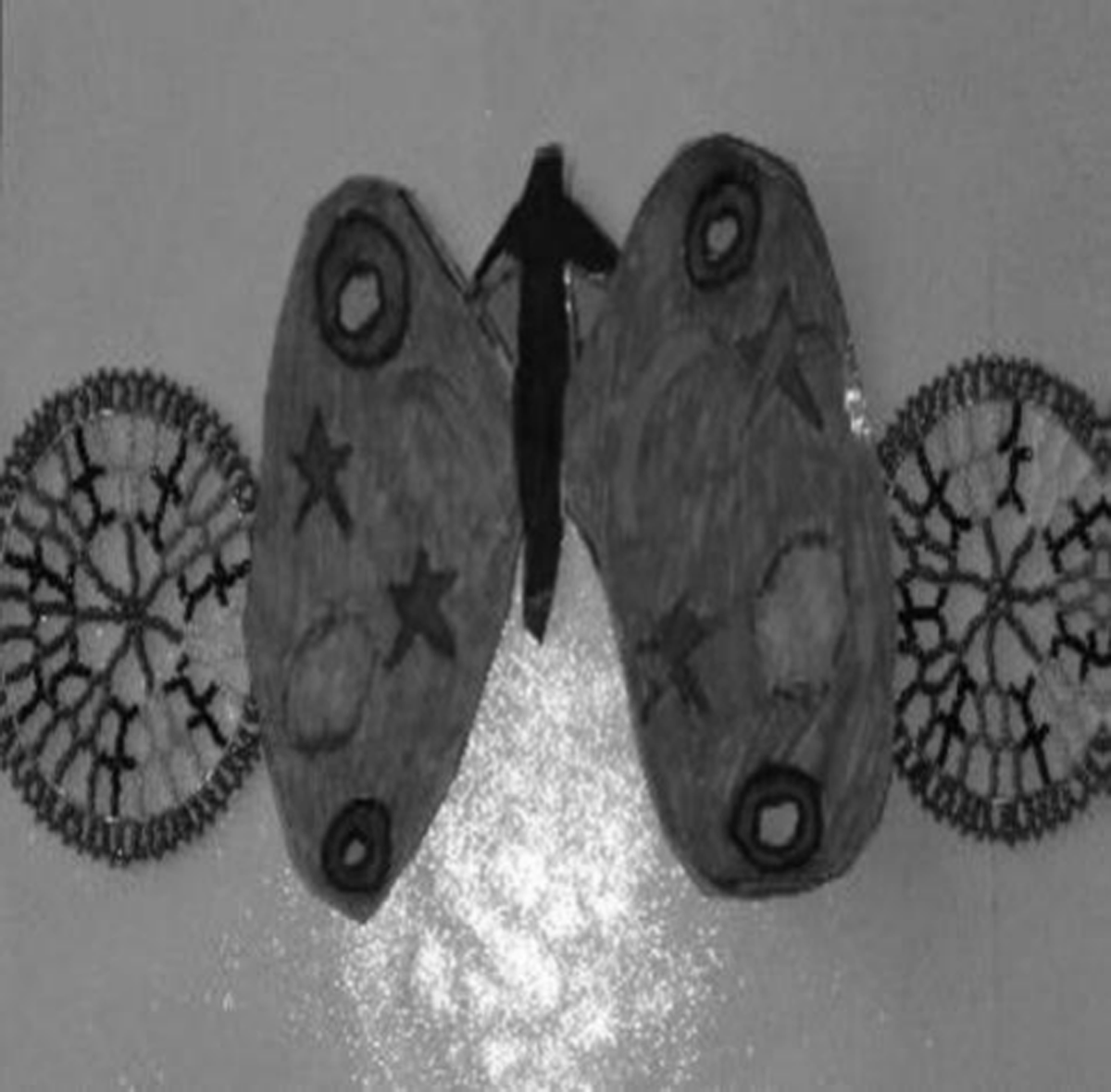
Jacob brought a picture of a steam train (Figure 1) and likened getting older and changes in bodily function with a steam train: ‘our bones become brittle … frail and brain becomes weak … it's [the train] got parts that works by steam and wood to make the engine go and it's the same with our body parts working’. Mitchell chose a picture of himself on a horse as it not only reminded him of being younger, but that he was able to sit up by himself, something which has become increasingly limited with age. Changes in function were not only limited to body systems; several participants identified a cognitive element to ageing. Frank brought a butterfly to the meeting that he had made (Figure 2) and explained that ‘when you get older your mind starts to disappear on you’, thereby likening the temporality of the sight and flight of the butterfly to memory loss.
Jacob's steam train.

Frank's butterfly.

For some, getting older was equated with the eventual reality of death. Jacob, for example, was pragmatic in linking the picture of a steam train with the physiological process of dying in that ‘the upper body parts may shut down yes, before it's to sign off for death … That's how I know about getting old’. Cyril (aged 42) saw such deterioration as the beginning of the end ‘It's going to be really sad to be that old … To have a walking stick because they're dying or don't want to live’. Of note, four participants described feeling sad about the notion of dying, including two participants who thought that dying would also be scary and did not wish to be put in a closed coffin.
Theme 4: Entertaining possibilities
Ageing was not only equated with decline, it was also described in relation to entertaining future possibilities and reflected hope as to the prospects awaiting individuals: in entertaining the future, the hope of getting married was important for Carol, and finding someone to help him get a job was a priority for Cyril who wanted ‘to be a chef and artist’. At least four other participants also aspired to travel to places such as Paris and ‘go to see The Bill … Go to England’ (Stephen, aged 46). By virtue of having a job, Jeffery also maintained that ‘I work hard, earn my pay’ which allowed him to ‘save more on a holiday’. Three participants were in part-time paid employment whilst the majority (N = 13) attended a vocational setting. Regardless of their employment situation, others identified the concept of retirement as a stepping stone to the future and conceptualised this as an opportunity to go on holiday or sleep-in, for example. Peter saw ‘being unemployed [as an opportunity to] play bowls more days a week’ and having the opportunity to choose his own flatmates as things that would make living good for him.
Kate brought a photograph of her with her sister as the image represented a conversation in which she was told that when she gets a bit older she would ‘have to go and find a flat … It was quite a shock and I felt frightened’ and hoped that this was ‘a long way down the track yet’. Fifteen participants expressed a vision of alternative living arrangements, three of whom wanted to live alone or in a flat with at least one other person. How changes in circumstances may be actualised was described as dependent upon the availability of support, demonstrating an awareness of their own abilities, confidence or experience. For example, ‘if Mum and Dad were died, my sister and brother will come down and take me to one of the homes … hopefully they would help me’ (Leslie). Tony (aged 51) thought that when he got older he would ‘be living in a rest home’ just as his father had done. Part of enjoying life included a sense of freedom, as Bobby commented that ‘sometimes you feel like you just want to be by yourself when you get older’. Whilst this was desirable, Leslie and Preston thought that they would ‘still need help even after Mum passes on’.
Eight participants recognised the need for and/or identified their ability to manage their own health as important for entertaining future possibilities. Four participants identified their mental health history, how it manifests and impacts upon them: Maddie, for example, noted that her ‘depression's not that good … I wish I was dead … Taking my pills [helps]’. Being monitored was reassuring for two participants, as Cyril spoke of seeking out a nurse should he become unwell with ‘all the voices’. Five participants described keeping well through restricting sugar, going for walks or dancing to maintain fitness, not smoking and losing weight. Managing diabetes was important for Trevor as it has been difficult to get under control, ‘but it's good now … if I don't exercise doctor once said my diabetes will get worse by the time I reach 60 … So I exercise sometimes every day’.
Four participants found it hard to imagine what the future might hold: Trevor expressed the belief that ‘I think the future's here now’. The other three were satisfied with their current life and found it difficult to predict the future. Existing activities, such as going out in the van with the vocational service or spending time at the farm as ‘there's friendly people out there … I've got my best friends at the farm’ (Peter), were seen as of value currently. Critically, this exposed the idea of relationships as integral to enjoying life.
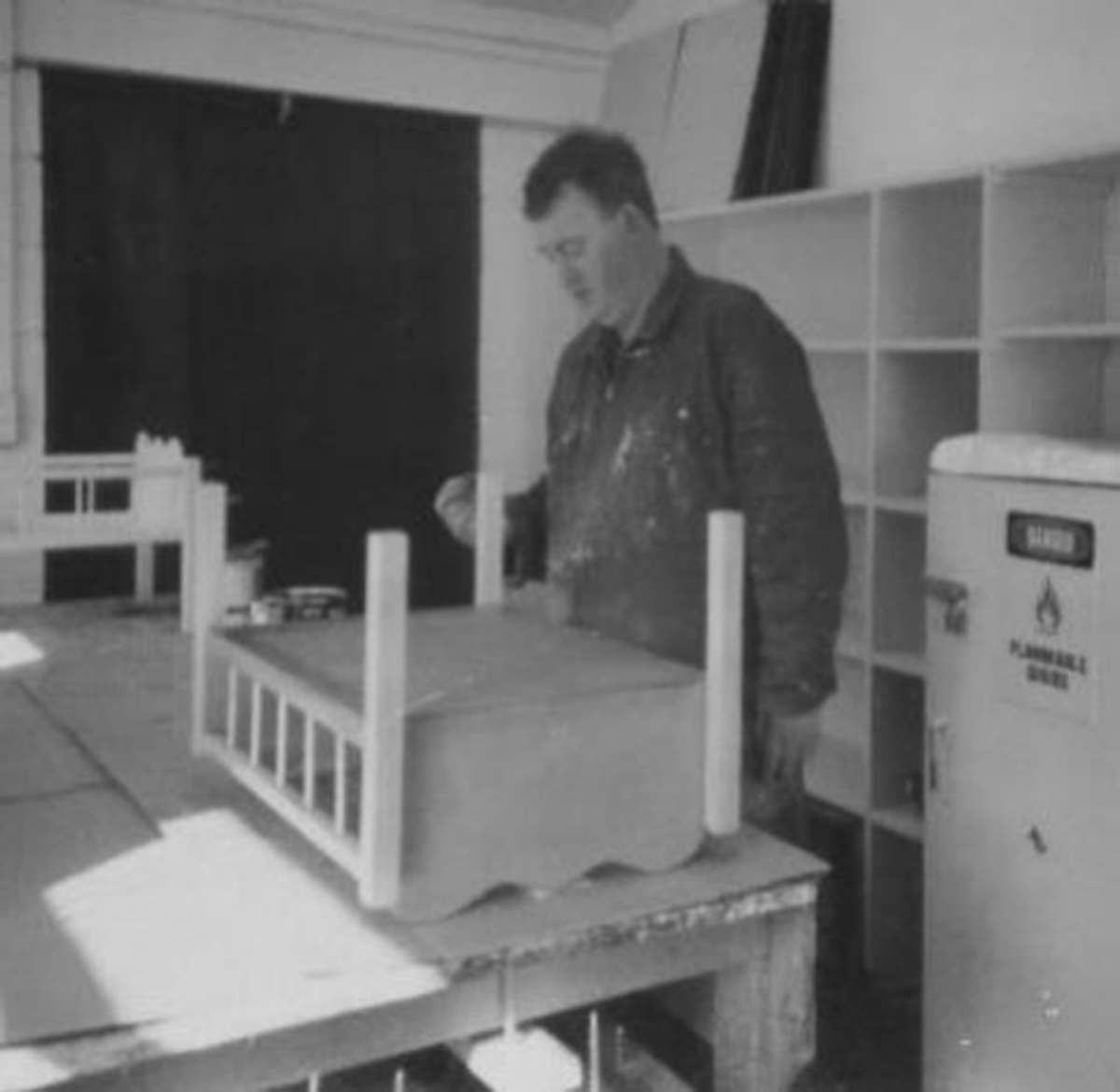
For 13 other participants, the human need to be recognised as an individual with skills, someone who seeks meaning and has a future to be entertained – was important. Entertaining possibilities was also linked to past identities: Bobby was the head painter in a service before he was made redundant. In reference to his photograph, he said ‘that was my life as a painter, as a toy painter … It was a good life … I did it for 28 years virtually … I liked the job – you know what I mean…’ (Figure 3). Whilst he did not feel he had any meaningful occupation currently, he identified the loss of a work identity with ageing and continued to entertain the possibility that he could still use those skills. Maddie sustained a head injury at age five when she was run over. The photograph she brought of herself in hospital ‘brings back memories about what happened to me’. She linked the accident to her experience of a cognitive disability and the associated limitations which ‘haven't been much fun’. In relation to getting older, therefore, Maddie entertained the hope that she would be able to continue to manage everyday tasks despite her disability.
Bobby as a toy painter.
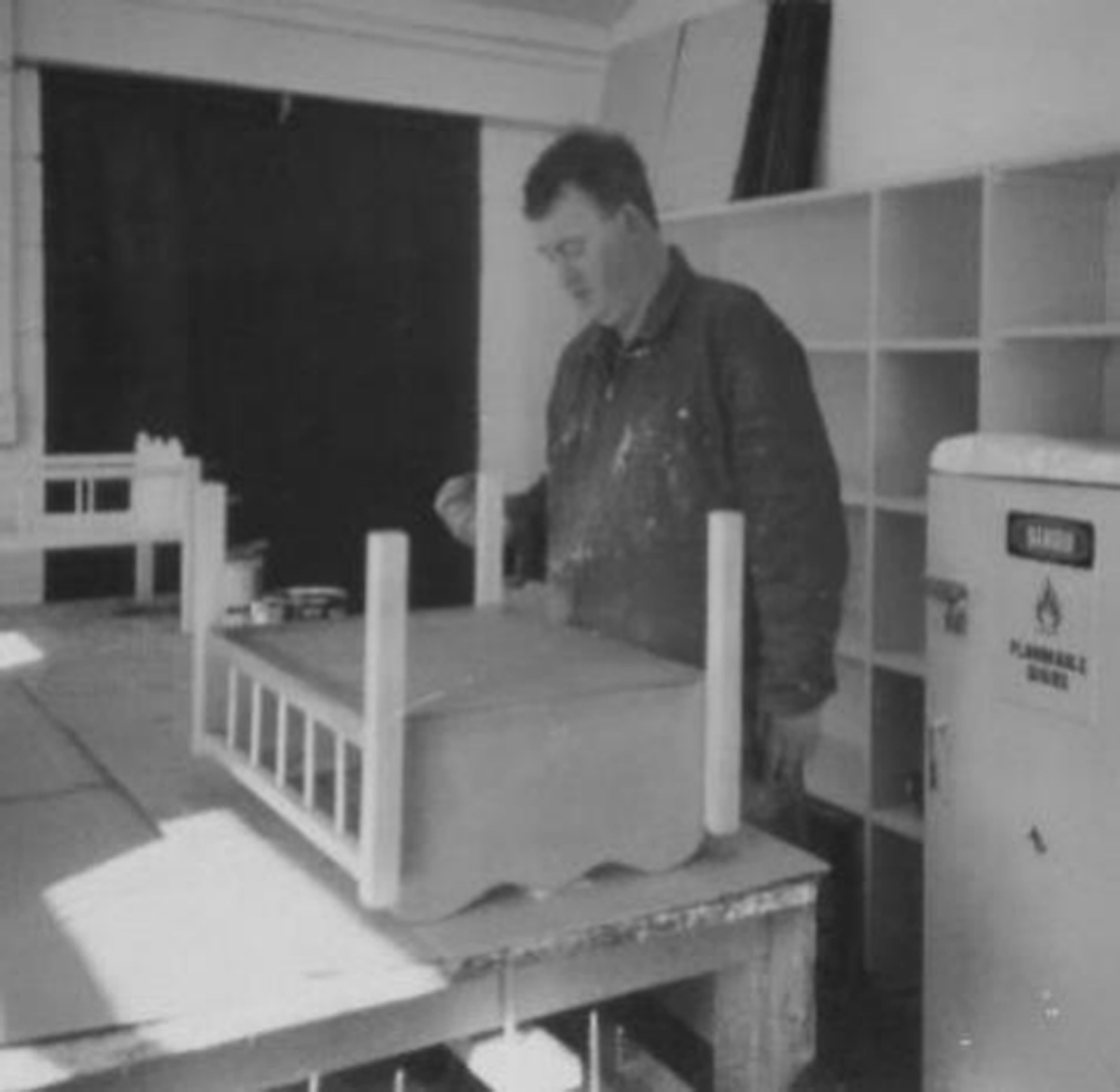
Aside from the anticipated death of a parent or significant other in the future, the majority of participants had ideas about what they hoped or expected the future to hold. However, participants were unable to explain how their aspirations might come to pass.
Discussion
Traditionally, people with intellectual disability have been perceived as passive recipients of care. However, given the increasing longevity of this population, growing recognition of their personhood, coupled with philosophical shifts in society in terms of their rights as citizens (Rapley, Reference Rapley2004), this study provided unique insights into their experience and expectations of ageing within the context of family. Whilst some of the perspectives captured were influenced by those identified as family, many remain unique to the individual. Participants clearly recognised their role through reciprocating relationships within the system of care, were able to explore the concept of ageing as an inevitable part of living and, through emerging independence, were entertaining possibilities. Until now, there has been limited evidence as to what is important to people with intellectual disabilities themselves as they age (Strnadová et al., Reference Strnadová, Cumming, Knox, Parmenter and Lee2015).
By exploring reciprocating relationships, individuals articulated the care-giving duties they undertook which need to be formally recognised. Critically, this was not simply defined as just doing chores, but rather, their contribution enabled continued independence for their ageing family member. This may increase the vulnerability of older adults with intellectual disability due to ‘the double jeopardy’ of ageing with a disability (Ryan et al., Reference Ryan, Taggart, Truesdale-Kennedy and Slevin2014: 223). There is a need to quantify the type of care respectively given and received that constitutes ‘mutual assistance’ (Banks, Reference Banks2003: 378) to ensure the needs of each party in the care-giving relationship are identified and addressed. Greater flexibility and co-ordination is thus required between the disability and aged care sectors (World Health Organization, 2000; Washko et al., Reference Washko, Campbell and Tilly2012) as existing resources from the respective sectors may, in isolation, be insufficient for one or both parties to age in a place of their choosing. Ultimately, should responses to increasing care needs only occur at the point of crisis, there is a risk of further increasing their vulnerability (Eley et al., Reference Eley, Boyes, Young and Hegney2009).
Assisted by photo-elicitation, the majority of participants in this study were aware of their own ageing in relation to others and several individuals linked getting older to both health and the inevitability of death (Jurkowski, Reference Jurkowski2008). Kåhlin et al. (Reference Kåhlin, Kjellberg, Nord and Hagberg2015) similarly found ageing was indicative of change for this population in terms of function due to age, physical wellness, activities and location, and a process which, ultimately, resulted in death.
In keeping with the research of Kåhlin et al. (Reference Kåhlin, Kjellberg, Nord and Hagberg2015), there were also examples in this study of the anticipation of increasing engagement and involvement in meaningful activities as one ages; this included perspectives about retirement (Cordes and Howard, Reference Cordes and Howard2005) regardless of their employment status. More than two-thirds of participants were able to articulate aspirations about ageing and their own future and, to achieve greater independence, connections beyond family relationships are needed. The anticipated realities about the future for participants in this study resonate with the goals of meaningful community living as espoused by O'Brien and Lyle (Reference O'Brien and Lyle1986) who recommended five core features to succeed: choice (for preferred decisions, knowledge of options and an ability to exercise this); respect (for the right to make choices, to be treated with dignity and the expertise they have about their own lives); community presence (to be actively acknowledged as an individual who has a contribution to make – both within and external to the family context); community participation (to access the community, engage and utilise the available resources in both disability-specific and mainstream settings); skill acquisition (to be supported within the scope of one's abilities and opportunities to learn through the above elements). It is important, therefore, to recognise the ability of people with intellectual disability to exercise autonomy across contexts and the importance of ‘developing decision-making skills’ (Whitehead et al., Reference Whitehead, Trip, Hale and Conder2016: 389) to achieve aspirations within and external to the family context.
The application of such an approach is critically dependent upon the interactions between all parties and is essential for family, care-givers, and health and disability service systems as they engage with individuals with intellectual disability to promote autonomy and inclusion throughout the lifecourse and particularly in older age. The imperatives of seeking and being afforded the ‘freedom’ and opportunity to make choices about one's future (Walmsley, Reference Walmsley1996: 334), including living circumstances, is embedded within the United Nations Convention on the Rights of Persons with Disabilities (United Nations 2006): having the support to be meaningfully engaged in one's own life and the opportunity to learn the skills necessary to be present and participate in communities (Buys et al., Reference Buys, Boulton-Lewis, Tedman-Jones and Knox2008) was also important for participants in this study. It could be argued that the experience of participants is not dissimilar, in part, to care-giving realities for family members without an intellectual disability. This would reflect contemporary philosophical leanings of community living in terms of both normalisation (Nirje, Reference Nirje, Kugel and Wolfensberger1969) and social role valorisation (Wolfensberger, Reference Wolfensberger, Fynn and Nitsch1980).
Limitations
Whilst the value of using images or objects in research with people with mild to moderate disability has been demonstrated, it is recognised that for those with severe intellectual disability the process of identifying an image or item and conceptualising the relationship between this and a topic is more challenging (Stephenson, Reference Stephenson2009). In order to link an image or object to an experience or meaning, an individual needs to generate an awareness of a relationship and have the ability to map the significance between them (DeLoache, Reference DeLoache1995). A further limitation is the generalisability of the findings. Whilst participants in this study were not a homogenous group, the range of responses demonstrates the potential depth that may be apportioned to the inclusion of photo-elicitation as a data collection tool. These are both areas for further exploration.
Conclusion
Identifying preferences for the future and exploring the implications of ageing with and for people with intellectual disability is imperative and further research is needed for those who are younger as well as older persons in residential care or independent living settings. The findings from this study illustrate the need for people to have the opportunity to make choices about their future (Walmsley, Reference Walmsley1996), which includes having the necessary supports to be meaningfully engaged in planning and decision-making, as well as learning the skills necessary to be present and participate in the community (Buys et al., Reference Buys, Boulton-Lewis, Tedman-Jones and Knox2008). As autonomy is a dynamic process, corresponding perspectives and supports need to be reviewed frequently as access to information and/or acquired experiences shape preferences over time (Jeppsson Grassman et al., Reference Jeppsson Grassman, Holme, Taghizadeh Larsson and Whitaker2012).
Education for people with intellectual disability themselves about lifestages is a further key recommendation from this study and may actively support their sense of ageing (McEvoy et al., Reference McEvoy, MacHale and Tierney2012); developing health literacy is a component of this (Heller, Reference Heller2008). A key issue identified in this study is recognising the role people with intellectual disability have as actual or prospective carers who must therefore have an ‘assessment in their own right’ (Bowey and McGlaughlin, Reference Bowey and McGlaughlin2005: 1383) which reflects the changing relationship (Williams and Robinson, Reference Williams and Robinson2001). Furthermore, to participate in this study, people with intellectual disability were largely dependent upon others to access information. For populations considered vulnerable, family and care-givers may, at times, act as gatekeepers to inclusion (Veenstra et al., Reference Veenstra, Walsh, van Schrojenstein Lantman-de Valk, Haveman, Linehan, Kerr, Weber, Slavador-Carulla, Carmen-Cara, Azema, Buono, Germanavicius, Tossebro, Maatta, van hove and Moravec2010). This may reduce an individual's autonomy and reinforce stereotypes about the contribution such individuals can make to a body of knowledge (Morgan et al., Reference Morgan, Cuskelly and Moni2014; Northway et al., Reference Northway, Howarth and Evans2014). Inclusion in research is a continued challenge for populations considered vulnerable. Furthermore, research is needed to explore photo-elicitation as a data collection method for facilitating the inclusion of people with intellectual disability and is recommended to ensure their perspectives are heard (Povee et al., Reference Povee, Bishop and Roberts2014).
This study illustrated that people with intellectual disability have, and are able to express, their own perspectives, experiences and realities in regard to their own mortality and future aspirations as they themselves age in the context of family. These new insights were evidenced through the reported complexity of the care-giving relationship in terms of its reciprocating nature, clear statements were made about configuring ageing, alongside aspirations for emerging independence which enable the entertaining of possibilities. The need for autonomy in decision-making to be enabled was clearly evident, and the ability to do this is under-estimated. There are a number of hidden care-giving relationships and the roles therein demand attention. Health and disability service systems must develop inclusive policies which are responsive to each party in this unique network of care to ensure that the needs of each member in the care-giving relationship both in regard to ageing and future aspirations are respected, particularly those with intellectual disability.
Acknowledgements
The authors sincerely thank the research participants who so generously gave of their time to share their perspectives and aspirations which have contributed to the conversation about ageing in this study. This research was completed in partial fulfillment of a PhD and it was conducted through the Centre for Postgraduate Nursing Studies, University of Otago, Christchurch, New Zealand.
Author contributions
The study was undertaken by HT, with LW and MC as academic supervisors. All authors contributed to the development of the study, analysis of the data and preparation of the manuscript.
Financial support
This work was supported by the University of Otago, New Zealand.
Conflict of interest
The authors declare no conflicts of interest.
Ethical standards
Ethical approval was obtained from the Upper South A Regional Ethics Committee, Ministry of Health, New Zealand (URA/11/02/004).