Introduction
Infant malnutrition is a global public health problem associated with a heavy burden of disease. Malnutrition is a significant underlying factor of child mortality accounting for approximately 50% of deaths among under-five children. In developing countries, approximately 25% of children are moderately or severely malnourished (underweight and/or stunted). With over 9.2 million under-five child deaths in 2007 worldwide, malnutrition accounts for a significant proportion of this burden (UNICEF, 2008; WHO & UNICEF, 2009). Globally, malnutrition causes over one-third of infant mortality, mostly from increased severity of disease. Cameroon ranks 153 out of 182 countries on the Human Development Index. Life expectancy at birth is 51 years, while the lifetime risk of maternal death is 1 in 24. Under-five mortality is 131 per 1000 live births. Additionally, the country is ranked 43rd highest in terms of stunting out of 136 countries. In Cameroon at least 45,000 children die annually due to malnutrition (UNICEF, 2012a; United Nations Development Programme, 2012). Undernourished children between conception and age two are at high risk for impaired cognitive development, which adversely affects the country's productivity and growth (UNICEF, 1999, 2008). In Cameroon, 36% of children under the age of five are stunted, 16% are underweight and 7% are wasted; 45% of those aged fifteen and above are overweight or obese and 11% of children are born with a low birth weight (UNICEF, 2008; WHO & UNICEF, 2009). This middle-income country with an estimated population of 20,129,878 clearly falls short of the Millennium Development Goals (halving 1990 rates of child underweight by 2015; UNICEF, 2008). The aim of Millennium Development Goal 4 is to reduce child mortality by two-thirds by 2015 (UN, 2005).
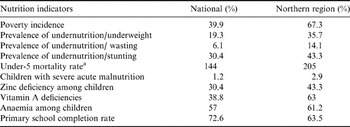
This study is a review of secondary qualitative and quantitative data to explain differences in the incidence of infant malnutrition and mortality in Cameroon. The country is comprised of ten administrative regions: Adamawa, North and Far-North (Northern Province until 2008, henceforth referred to as northern region(s)), Centre, East, Littoral, South, North-West, South-West and West. Acute malnutrition of infants and under-five children is accentuated in the northern region of the country – home to one-third of Cameroon's children and where an estimated 55,000 children suffered from severe acute malnutrition (about 70%) in 2012 (UNICEF, 2012a). Most of the 5 million inhabitants of this enclaved region lack access to safe water and sanitation. The region is further lagging behind in terms of various national-level, nutrition-related indicators suggesting that it has a huge incidence of malnutrition (see Table 1).
Comparison of national nutrition-related indicators with those of the northern region of Cameroon

a Expressed per 1000 live births, not percentages.
Relying on the WHO/CDC/NCHS reference population as a benchmark, Table 1 shows that whereas 19.30% of children aged 0–59 months are chronically malnourished in Cameroon, an even higher rate of 35.7% is found in northern Cameroon. Stated otherwise, they are too short for their age, or stunted (height-for-age Z-score of below −2 SD). The proportion of children who are stunted is sixteen times the level expected in a healthy, well-nourished population. Table 1 further suggests that the rate of wasting (evidence of acute malnutrition) stands at 6.1% nationally against 14.1% for the northern regions. According to the WHO/CDC/NCHS reference population, a weight-for-height Z-score that is below −2 SD, as these figures suggest, results in a child being too thin for his or her height. It affects 6.1% nationally against 14.1% of children in the northern regions of Cameroon. This is some 2.5 times the level expected in a healthy population. Nineteen per cent (19.3%) of children under five are underweight (weight-for-age Z-score below −2 SD), and in northern Cameroon the figure is 35.7%. This is an estimated 9.5 times the level expected in a healthy, well-nourished population.
Five per cent of children under five are overweight (weight-for-height Z-score above +2 SD based on the WHO/CDC/NCHS reference population). This is equivalent to 2.5 times that expected in a healthy, well-nourished population. Stunting ranges from 10% to 45% among children in the ten regions of Cameroon. Stunting rates are least in Yaoundé (10%) and highest in the North region (43.3%). Wasting ranges from 1% to 9% among children in the ten regions with a national prevalence rate of 6.1%, which contrasts sharply with 14.1% in the northern regions. Wasting rates are least in the West region (1%) and highest in the northern region (14.1%). The same negative trends and contrasts are reflected for zinc and vitamin A deficiency (30.4% and 38.4%) against 43.3% and 63% respectively and for anaemia (57%) against 61.2% nationally and for the north, respectively. Whereas the national primary school completion rate stands at 72.6%, it is 63.5% for the North region. An increase in the level of maternal education is correlated with a decrease in the level of stunting and wasting. Maternal education is further related to knowledge of good child care practices and to household wealth (Reisma, Reference Reisma2008, p. 10). These statistical figures compellingly suggest that more children in Cameroon suffer from chronic malnutrition as compared with acute malnutrition and that this trend is accentuated in the northern regions of the country, as evidenced by its higher under-five malnutrition rate of 205% against 144% nationally. Children that suffer from acute malnutrition live in the Extreme North and North-West regions (see also Reisma, Reference Reisma2008, p. 10).
From the late 1980s, Cameroon was suffering from a chronic and internecine economic crisis. Structural adjustment and privatization led to rigorous cut-backs in social services, including health care, restricting access to the rich few. In the mid-1990s there was a stabilization of the economy and decentralization of the health care system, and in 2006 Cameroon met the requirements for reaching the completion point under the enhanced Heavily Indebted Poor Countries (HIPC) initiative. The completion point triggers met included satisfactory implementation of the poverty reduction strategy, maintenance of macroeconomic stability, social sector and structural reforms and action to improve governance and reduce corruption (Charlier & N'Cho-Oguie, Reference Charlier and N'Cho-Oguie2009). Although this led to debt relief and seeming economic progress, infant malnutrition and mortality, which is accentuated in northern Cameroon, has continued unabated.
Over time undernutrition and infant mortality have remained significantly higher in the northern region (Adamawa, North and Far North) and in the eastern region than in the western region of Cameroon. How can this higher rate of malnutrition in northern Cameroon be accounted for? This paper combines a review of available secondary quantitative and qualitative data in an attempt to (1) explore the social and cultural factors related to child-feeding practices and (2) to explain the regional differentials for the worrying reverse trend in the incidence of infant mortality in Cameroon. This article argues that an adequate account of infant malnutrition and infant mortality will need to address both its statistical patterns, as well as the socially meaningful processes that underlie it. Demographic statistics are, of course, the residuals of social practice, and to understand them attention must be directed at their social causes (see Greenhalgh, Reference Greenhalgh1995; Bledsoe, Reference Bledsoe2002; Johnson-Hanks, Reference Johnson-Hanks2003).
Methods
This study relies primarily on data from three sources: an extrapolation of secondary data from the 1991, 1998, 2004 and 2011 Cameroon DHSs to capture trends over time, and ethnographic sources, both primary and published, for possible explanation of the underlying social and cultural factors regarding maternal and child-feeding practices. The 1991 DHS, a nationally representative sample, covered 10,462 households, 10,656 women aged 15–49 and 5280 men aged 15–59. A total of 5227 women and 5125 men were tested for HIV. The 1998 DHS covered 5501 women aged 15–49 and 2562 men aged 15–59 years. The 2004 DHS targeted 10,462 households, and 10,656 women aged 15–49 and 5280 men aged 15–59. A total of 5227 women and 5125 men were tested for HIV. The DHSs are carried out by Macro International in conjunction with the Bureau Central des Recensements et des Études de Population of Cameroon. (For a discussion of sampling, translation and interview methods, see Fotso et al., Reference Fotso, Ndounour, Libite, Tsafack, Wakou and Ghapoutsa1999.) These DHS data are complemented by a literature review of publications by the World Health Organization (WHO), UNICEF and the World Bank.
The ethnographic materials analysed include the authors' field notes from research among various tribes, particularly a national ethnographic study on the ethno-medical causes of infertility in Cameroon (1999–2000), and published and archival sources from various regions of Cameroon. Although on each occasion the studies were approved by the Independent Ethics Review Board of the Cameroon Ministry of Scientific Research, participants further signed ethics forms or gave oral approval. In order to provide understanding for perceptions and beliefs regarding infant feeding practices, purposive sampling and semi-structured interviews were used with health care workers, mothers and grandmothers, as well as participant observation, to collect data. Qualitative and quantitative data are therefore combined to explain the regional differentials in the incidence of infant malnutrition and mortality in Cameroon.
The usefulness of well-designed, mixed-method studies has been well documented (Gherardi & Turner, Reference Gherardi, Turner, Grant, Keenoy and Oswick1987, p. 208; Miles & Huberman, Reference Miles and Huberman1994, p. 40; Lincoln & Guba, Reference Lincoln, Guba, Denzin and Lincoln1998). In fact, ‘… numbers and words are both needed for us to understand the world’ (Miles & Huberman, Reference Miles and Huberman1994, p. 40). Simple analyses of various DHS data were undertaken and compared to expose trends over time so as to gauge the magnitude of the problem of infant malnutrition. The results of both the quantitative and qualitative data were compared and complemented after independent analysis of both datasets so as to enhance understanding of infant malnutrition. The analytic method is in line with standard anthropological practice, which seeks to explore the social causes underpinning patterns that are observable in demographic statistics. This resonates with Kreager's (Reference Kreager1982) model of ‘demography in situ’ (see also Johnson-Hanks, Reference Johnson-Hanks2003).
Results
Chronic malnutrition
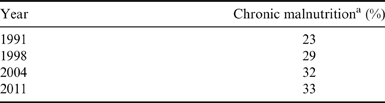
Table 2 shows the rate of chronic malnutrition among under-five children in Cameroon from four nationally representative surveys (DHSs) conducted in 1991, 1998, 2004 and 2011. It shows that there has been an increasing rate of moderate chronic malnutrition or stunting (height-for-age) among children in this age range over time. In 2011, 14% of children aged 3–59 months suffered from severe stunting (included in the 33% reported in Table 2) (Counterpart International, 2012), reminiscent of 1991 (1991 DHS), but the percentage of severe stunting was as high as 29% in 1998 (1998 DHS) and has since continued to rise. This suggests a more than 50% increase in the rate of chronic undernutrition over time. Negative trends are observable in the three main indicators of malnutrition – stunting, wasting and underweight. Although the 2004 DHS showed some improvement with 14.6% underweight, 32.5% stunting and 5.6% wasting (Charlier & N'Cho-Oguie, Reference Charlier and N'Cho-Oguie2009, p. 40), it revealed that 32% of infants under five years old (one in three) suffered from chronic malnutrition, and 13% from severe malnutrition. Stunting goes beyond poverty in Cameroon as 12% of children in the richest quintile are stunted, suggesting that this is not an issue of food access, but of caring practices and diseases (UNICEF, 2008). The 2011 DHS found that one in three children in Cameroon suffer from malnutrition, with an increase in chronically malnourished children from 32% to 33%, and in children who are victims of severe malnutrition from 13% to 14% compared with 2004. UNICEF estimates that malnutrition kills at least 105,000 children less than five years old in Cameroon annually. Furthermore, some 210,000 children less than 5 years suffer from chronic malnutrition, with 120,000 of them living in the North and Extreme North regions of the country (UNICEF, 2012b).
Moderate chronic malnutrition in Cameroon
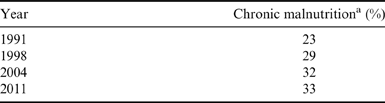
a Moderate chronic malnutrition indicated by height-for-age (stunting) in under-five children.
Infant and child mortality
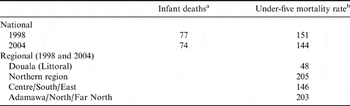
Table 3 shows that there was a 3 percentage point change in infant deaths per 1000 live births (below age 1). However, between 1998 and 2004, the under-five mortality rate per 1000 witnessed a 7 percentage point change (Population Council, 2009). Cameroon shows higher infant and maternal mortality rates compared with sub-Saharan Africa. According to a recent World Bank sponsored report, the country actually has the worse health indicators when compared with other middle-income countries in the region. The country has the highest incidence of under-five mortality: for every 1000 live births, Cameroon has 122 deaths largely attributed to malaria, pneumonia and diarrhoea. Regionally, the average number of deaths in this age bracket is 108. The report further notes that in the course of the last two decades, Cameroon has been one of the countries in the world where the rate of under-five mortality has decreased minimally. Only sixteen infants for every 1000 live births live beyond five years in Cameroon, whereas on average 65 more infants survive in sub-Saharan Africa. Infant mortality remains extremely high in the poorest regions of the country such as the northern regions (Adamawa/North/Far North regions), where an estimated 20% of infants do not reach the age of five. Recent estimates further suggest that in these regions, there are approximately 191 deaths per 1000 live births. On the other hand, the East (90 deaths per 1000 live births) and South regions (50 deaths per 1000 live births) show the highest reductions in the rate of infant mortality. Among poor and rural communities, women and newborn babies are exposed to higher risk of death, and the risk of premature births is higher (young girls and women in the 10–24 years age bracket have a 33% rate of pregnancy: Campos et al., Reference Campos, Holm-Nielsen, Diaz, Rubiano, Costa and Carlos2013; see also Population Council, 2009).
Decline in infant and child mortality and regional variations, Cameroon
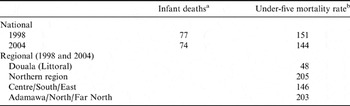
a Infant deaths: deaths below the age of one per 1000.
b Child mortality rate: deaths under the age of five per 1000.
Utilization of prenatal care and assisted delivery services
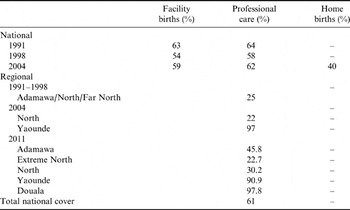
The 2004 DHS suggests modest improvements in the coverage of utilization of both prenatal care and assisted delivery services. Attendance for prenatal care witnessed an estimated 4.6 percentage point change between 1998 and 2004, with important increments in the relatively disadvantaged Adamawa, Far North and North regions. At the same time, the incidence of assisted deliveries showed a 7.8 percentage point change (Charlier & N'Cho-Oguie, Reference Charlier and N'Cho-Oguie2009). Between 2004 and 2011, 85% of Cameroonian women consulted a health care professional for prenatal care – a 1 percentage point change from 2004 (83%). Simultaneously, 20% more urban than rural women consulted a health professional for prenatal care. The Extreme North and North distinguished themselves with the lowest rates of prenatal consultations. The Adamawa and East regions recorded intermediate levels of prenatal consultations, whereas in other regions 90%, and as high as 99% in the West region, consulted a health care professional for prenatal care (2011 DHS). These figures compare unfavourably with the national total of 61%, and the high percentage scores for Yaounde and Douala, and depict an urban monopoly of health care facilities and personnel, as well as inequality in the sharing of these resources (Campo et al., Reference Campos, Holm-Nielsen, Diaz, Rubiano, Costa and Carlos2013). These disparities are represented in the Table 4.
Births in health care facility and regional variations, Cameroon

Low rates of exclusive breast-feeding
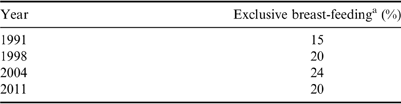
Table 5 shows a 5 percentage point change in the number of infants who were exclusively breast-fed for the first 6–7 months between 1991 and 1998, which has, however, not been sustained (1991, 1998 and 2004 DHS). Since 2004 there has instead been a 4 percentage point difference in exclusively breast-fed infants. Presently, four out of five infants are not exclusively breast-fed. This is in sharp contrast to the WHO recommendations to supplement breast-feeding with solid/mushy food at 6 months of age. In 77% of cases, infants receive water (37%), liquids (6%) and other milks (8%) while 26% receive solid/semi-solid food. The level of severe malnutrition varies according to the region of residence. In the Extreme North and North regions, the prevalence of acute malnutrition is more than 10%, whereas it is estimated at only 1% in the Littoral (excluding Douala) and West regions (2011 DHS). In Cameroon, only 20% of all newborns receive breast milk within one hour of birth, and four out of five infants under 6 months are not exclusively breast-fed. During the important transition period to a mix of breast milk and solid foods between 6 and 9 months of age, more than one-third of infants are not fed appropriately with both breast milk and other foods (UNICEF, 2008).
Exclusive breast-feeding, Cameroon
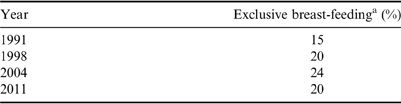
a Exclusive breast-feeding is defined as the percentage of children less than 6 months old who are fed breast milk alone (no other liquids) in the past 24 hours (WHO, 1998).
Childhood stunting and underweight
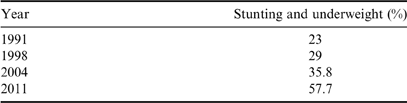
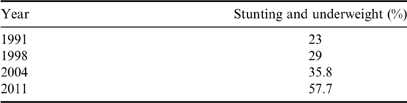
The prevalence of childhood stunting accompanied by underweight witnessed a 6 percentage point change between 1991 and 1998 (Table 6). This was reminiscent of the rising trends in under-five mortality over the same period (Pongou et al., Reference Pongou, Ezzati and Salomon2006). These indicators of the child health situation became rather accentuated, as shown by the 21.9 percentage point change between 2004 and 2011 (2011 DHS). Of children under age five, 57.7% were stunted (height-for-age) and 27.7% severely stunted (inclusive of the 57.7%), quite high values for this measure; 28.8% were underweight (weight-for-age) (2011 DHS; Haub, Reference Haub2012).
Childhood stunting and underweight, Cameroon
Inappropriate feeding of infants and young children
Most often, infants are given supplementary foods either too early (basically water, liquids and solid foods) or too late. This is further compounded by the potential dangers of early, later and/or inappropriate supplementation or appropriate feeding during episodes of illness of the mother and/or child. A combination of cultural beliefs and lack of knowledge about the advantages of giving colostrum to babies tends to hamper maternal and child health and well-being. Twenty three per cent of households are reportedly food insecure, according to a measure of per capita access to calories. Many more households probably lack access to diverse diets year round, particularly in the North and Extreme North regions (FAO, 2009).
Causes of malnutrition in northern Cameroon
The factors responsible for infant malnutrition in Cameroon are many and varied and include lack of basic health care, food insecurity, poor access to essential child-survival services and poor infant feeding practices. Although these factors work in conjunction, they are accentuated in the North compared with the West and other regions of the country. The higher malnutrition rate in the North region – the hardest hit according to UNICEF – can be attributed to lack of essential health care treatment, lack of mother's education, insufficient exclusive breast-feeding practice and poverty. In their study of the cultural acceptability of biomedical services in North Cameroon, Beninguisse and De Brouwere (Reference Beninguisse and De Brouwere2004) maintained that biomedical services are culturally inacceptable because of too early first prenatal visits, the sharing of delivery rooms, wards and obstetrical tools, the absence of massage as a form of traditional healing, the medical staff's refusal to hand over the placenta and umbilical cord to the family, and restrictions on the presence of family members during childbirth. They call for a transition from a normative medical system to an efficient and flexible medical system related to the expectations of the target group established by collaboration, i.e. patient-centred care.
Women and children in the predominantly Islamic northern regions face multiple protection risks, and as part of their survival strategies vulnerable households often force children to drop out of school in order to work. High rates of premature marriages and the fear of pregnancy before marriage usually lead to school drop-outs coupled with the belief that educated girls have less respect for elders and men, and are less subservient, are other factors contributing to the under-education of women. As rightly articulated by UNICEF:
Despite some progress, schooling is still perceived to be incompatible with cultural and religious customs in certain regions of Cameroon. Traditions often inhibit the participation of women in social life, and the education of girls is not considered a priority for many parents in some areas, especially in the northern provinces, who often keep their female children at home for domestic chores and prepare them for early marriage (http://www.unicef.org/infobycountry/cameroon).
Although the government decreed free and compulsory primary school attendance in 2000/01, the public educational system lacks infrastructure and suffers from staff desertion due to poor pay and working conditions. Primary school teachers in the northern region are often away from their schools undertaking other, more lucrative economic activities with the pretext of compiling documents for integration into the public service payroll in Yaounde. This is partly due to the corrupt activity of internal staff, middlemen and users.
In the 1998/1999 academic year 82% of children in Cameroon, including the northern region, were enrolled in primary school while the total enrolment rate in the northern region was only 53%. By sex, 74% of girls against 88% boys went to school in the whole country, while in the three northern regions the rate was 38% for girls against 68% of boys. In Adamawa – the province situated closest to the southern provinces – the situation is better than in the two other northern regions, the North and the Extreme North. In Adamawa, the rate of girls was 43% against 62% boys.
Poverty is gendered and includes low purchasing power of families, particularly women, and inequitable income distribution. It should, however, be pointed out that malnutrition is not solely related to poverty as even children from the richest quantile suffer from malnutrition. Adequate nutrition requires much more than access to food. It requires adequate knowledge of how to prepare it, the nutritional needs of children and how often feeding is required. Additionally, it needs someone present with adequate time to feed children (Wodon & Zaman, Reference Wodon and Zaman2010).
Furthermore, the region is prone to drought, and food supplements provided by UNICEF often arrive at community distribution centres already expired because of enclavement and lack of means of transport (UNICEF, 2011). The enclavement and isolation of the northern region is further compounded by the interplay between difficult living conditions and influxes of refugees from the Central African Republic and Chad. Since 2003 there has been an unprecedented influx of refugees fleeing instability into the East as well as the three northern regions (Pemunta & Aristide, Reference Pemunta and Aristide2013). They amount to a quarter of a million, with 82,000 refugees from the Central African Republic in the Adamawa and East regions and 3500 Chadian refugees in North region. In the Adamawa and East regions, the global acute malnutrition rate among refugees from the Central African Republic is about 12.1%, which is considered critical, particularly in East Province. In northern Cameroon, malnutrition is widespread: the global acute malnutrition rate of 14.5% is close to the emergency threshold of 15%. The pervasive condition is due primarily to a lack of access to age-appropriate foods and feeding practices, essential health services and safe water and hygiene practices (UNICEF, 2011).
Additionally, the North region further suffers from a conjuncture between drought, climate change, desertification, prolonged dry spells and extensive flooding, which often lead to significant crop failure, alter agricultural yields and fuel illnesses and diseases (Pemunta, Reference Pemunta, Keynes and Lucero2013, p. 1). This situation is exacerbated by poor infrastructure, making it impossible to bring in food from other regions of the country as well as for humanitarian agencies to supply food aid. About 4000 people, including more than 600 children, were affected in 2010 by the flooding, although no long-term displacement was caused because these individuals were eventually resettled. In May 2010, the country's worst cholera outbreak in more than 40 years affected 74 health districts in the Adamawa, Centre, Extreme North, Littoral, North, South-West and West regions, leading to 10,965 reported cholera cases and 658 deaths – an extremely high fatality rate of almost 6.03% (UNICEF, 2011a; see also the Global Emergency Overview (ACAPS, 2012)). Alongside poor infrastructure, the situation is further compounded by lower rates of female education as well as inequalities in the distribution of health care facilities and personnel (Pemunta & Aristide, Reference Pemunta and Aristide2013). In 1999, for instance, only 40% of the population of the Adamawa region, 51% of northerners, 50% of people in the Far North and 40% in the East region lived within 5 km of a health centre. These regions constantly see the desertion of rural Integrated Health Centres (IHC) and District Health Centres (DHC), and some District Hospitals are considered ‘difficult areas’ by health care staff. ‘Difficult areas’ are remote or landlocked health areas, subdivisions and health districts underserved by modern amenities where health services are provided by low-skilled professionals and poorly equipped with health technology. They are mostly located between 80 and 400 km, or between a 1 and 4 hour's drive in good weather, from the first referral hospital and these delays make it impossible to guarantee continuity of care (Centre for the Development of Best Practices in Health, (CDBPH), 2011, p. 2). This bleak picture is in contrast to the 78%, 75% and 65% of people from the Littoral, West and South-West regions, respectively, who live within 5 km of a health centre (Charlier & N'Cho-Oguie, Reference Charlier and N'Cho-Oguie2009, p. 42). While the quantitative and qualitative shortages, alongside unequal distribution of health workers at the expense of rural areas, characterize sub-Saharan African countries, in Cameroon the population/caregiver ratios (9.245/medical doctor, and 1.806/nurse) deemed acceptable mask an uneven regional distribution: 3.657/medical doctor are found in the Central vs 61.873/ medical doctor in the Far North regions; 2.036/nurse in the West vs 7700/nurse in the Far North region. Moreover, 59.75% of the health care workforce is concentrated in the richest regions (Central, Littoral and West) and serves 42.14% of the population. The high urban concentration of health workers contrasts with the severe shortage in rural areas, exacerbating unequal access of citizens to a basic public service: 25% of doctors and 38% of nurses serving 46% of the population and fuelling the vicious circle of poverty.
Concerted efforts have been made by the Cameroon Government and development partners since 2006 to prioritize staff recruitment. In 2007, 2331 fix-term staff were recruited in the most deprived areas under the HIPC funding opportunity, and 150 additional staff under C2D funding, with contracts to work in targeted districts of Adamawa, East, Far North and North, and further recruitment in 2009 and 2011. However, the decentralized management of contract staff and their retention has not always been efficient, with an over 12-month delay in the payment of their first salary, irregular wage payments, regional devolution of management not extended to the payroll, as well as multiple migrations. This has undermined and compromised Cameroon's chances of achieving the health MDGs related to maternal and child health, as well as endemic disease control, thus impoverishing the rural populations (CDBPH, 2011, p. 2).
[These four] poorest regions [are also] the most deprived [in terms] of human resources [and] account for more than three-quarters of 4500 maternal deaths recorded annually. The skilled birth attendance rate is on average 29.3% in the three northern regions against 71.9% in the Centre Region. The rates of maternal morbidity and mortality are inversely proportional to workforce health. The same applies to the appropriate treatment of diarrhoea, cholera, respiratory infections and malaria in children. In terms of access to free vaccination, 64% of children aged 12–23 months living in the urban areas against 52% in rural areas have received all eight routine vaccines of the Expanded Programme on Immunization
(CDBPH, 2011, p. 3).In ten health centres in Kousseri city, moderate and severe malnutrition cases jumped from 75 in May to 166 in July, while six children died from malnutrition in Kousseri hospital in July 2012. Only 20 of the 43 health districts in the North and Far North regions have the trained staff, equipment and means to provide free malnutrition treatment (Agenzia Fides, 2012). In September, 2012, 40 people died in the wake of tropical downpours and the breaching of a dam in the Far North region. The inundation affected more than 26,000 people, and in neighbouring Nigeria at least fifteen deaths were blamed on waters rushing into the country from Cameroon's compromised Lagdo Dam on the Benoue River wiping out homes, farms and livestock. In 2010, flooding in northern Cameroon triggered an outbreak of cholera that claimed nearly 6000 lives. The conjunction between drought, climate change, desertification, prolonged dry spells and floods often affects temperature, which disproportionately affects children at tender ages, but also adults, with more senior citizens dying of heat stroke. Simultaneously, these factors favour the spread of infectious agents and their vectors, especially pathogenic microorganisms, thereby having a negative impact on health and mortality (Pemunta, Reference Pemunta, Keynes and Lucero2013, pp. 16–18, 34–35). Thousands of children suffered from respiratory problems brought on by the flooding, and malaria infections among pregnant women ran high. Food supplies have largely been low, increasing worries about malnutrition, and tent shelters are inadequate for the tens of thousands of displaced flood victims. Assistance was too limited, and thousands of families were sidelined (Tanku, Reference Tanku2012) because of bribery and corruption.
Ngatchou et al. (Reference Ngatchou, Gubry and Ngwe1993, p. 1287) observed a higher rate of infant mortality in isolated sub-divisions of the Extreme North with difficult access. These sub-divisions include those found around the Mandara Mountains, bordering Nigeria, the Tcholliré sub-division at Poli around the frontier with the Central African Republic, and around Amban in the border with Gabon. However, other isolated areas with difficult access such as Lomie and Messaména sub-divisions in the East region had, and continue to have, a lower rate of infant mortality, which is difficult to explain.
In Cameroon, infant mortality differs by region (urban and rural, or by administrative units), depending on the cause of death. Generally, it is higher in rural than in urban areas, partly due to differences in the concentration of health care services. The Centre–South has the least mortality, unlike the northern region. The former region, however, has a higher incidence of diarrhoea, malaria and tuberculosis. But it also has the most equipped health care infrastructure with some 7852 inhabitants per doctor, against 13,000 at the national level. Seventy-two per cent of women from this region are without education, 71% give birth unattended by medical personnel and only 52% of the population have access to potable water.
The North region is a high-risk zone for infant mortality. Only 7% of the population have access to potable water, 89% of women have no formal education, 79% give birth at home without any medical assistance and there is acute malnutrition (2011 CDHS). This low female socioeconomic status is compounded by poor weaning and infant feeding practices and a reticence to acknowledge malnutrition (‘to say a child is malnourished’), which is further exacerbated by lack of access to treatment (IRIN, 2012). Heavy annual flooding leading to the contamination of water sources and a cholera outbreak in the area are also exacerbating the nutrition problem, as crops have been destroyed (Agenzia Fides, 2012). Additionally, certain customary practices are directly linked to infant mortality in the region. For example, the coating of the umbilical cord of newborn babies with cow dung and soil causes tetanus. Children here further suffer from pneumonia, bronchitis, measles and malaria.
Socio-cultural factors
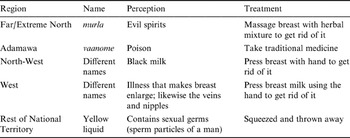
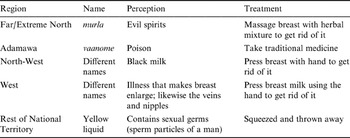
There is an intricate relationship between culture, food availability, infant feeding practices and maternal nutrition. Ethnic groups are characterized by specific models and practices relating to pregnancy and childbirth that explain conception, the evolution of pregnancy and childbirth in line with the life representations of the ethnic group. These cultural conceptions and representations inform the protection of pregnancy through the observation of alimentary and behavioural prohibitions and prescriptions. Most of these cultural practices are more entrenched in the northern rather than the western part of Cameroon. This could be one of the outcomes of low levels of female education. Local ideas about ethno-physiology, with particular reference to lactation and the perception of infant diseases like diarrhoea, must be borne in mind in the analysis of infant mortality. These local concepts and beliefs about the body and its functioning are most often, contrary to ‘standard’ medical beliefs, based on germ theory that explain illness causation from a biomedical perspective. Feeding is both a biological and cultural phenomenon and food is good to be eaten, but at the same time, we must take care of what we eat. Various customs further represent colostrum as dangerous for children, as shown in Table 7. Additionally, the failure to comply with the postpartum abstinence period is correlated with diseases such as diarrhoea and determines (non)-recourse to therapy. In a review article, Mortajemi and colleagues (Reference Motarjemi, Käferstein and Quevedo1993) maintain that after respiratory infections, diarrhoeal diseases are the commonest illnesses and have the greatest negative impact upon the growth of infants and young children. While the causes of diarrhoeal diseases they concede have traditionally been ascribed to water supply and sanitation, in attempting to prevent such diseases efforts by governments and non-governmental organizations have been focused on, and sometimes limited to, improving water supply and sanitation as well as promoting and protecting breast-feeding. They demonstrate that weaning foods prepared under unhygienic conditions are frequently heavily contaminated with pathogens and thus are a major factor in the cause of diarrhoeal diseases and associated malnutrition.
Cultural representations of colostrum in Cameroon
Inappropriate weaning foods given to children with the aim of transmitting ethnic identity is a real problem for their health. The first solid food, and the most popular weaning food, in the northern Cameroon region is a thin cereal gruel made from millet pap and soya beans. Most mothers use the traditional forced hand-feeding method (see Osuhor, Reference Osuhor1980). Like in most of West Africa, the problems inherent in the traditional weaning foods and feeding practices predispose the infant to malnutrition, growth retardation, infection and high mortality. Guiro et al. (Reference Guiro, Sail, Kane, Ndiaye, Diarra and Sy1987) rightly observed that one major cause of weaning-age malnutrition is complementation of breast milk with cereal gruels of low energy density. Thus, protein–energy malnutrition is a common problem among infants and children in the poor socioeconomic groups of developing countries. The inadequate growth or stunting produced as a result of poor supplementation is best described as hidden malnutrition. This is because the child may appear healthy while being severely malnourished (Gopalan & Srikantia, Reference Gopalan and Srikantia1973). Writing on malnutrition in the Nigerien Sahel, Casiday et al. (2010b, p. 166) noted that ‘cultural practices of eating together and sharing food equally between children make it difficult for parents to single out a child for special treatment’. In the same vein, Claxton (Reference Claxton2008) observed that ‘food establishes the cultural identity of an ethnic group’ and that children are usually socialized early in life through weaning food into this cultural identity by being made to consume it because ‘[Food] is always imbued with meaning, which is understood and communicated in various symbolic ways’. However, these ethnic foods may not meet children's age-specific food needs. However, research findings from Nigeria show that a high proportion of nursing mothers utilize local food ingredients to formulate weaning foods for their babies. While the nutritional composition of these foods is of high quality, they are also suitable as weaning foods, particularly for infants from low socioeconomic level families who do not have access to commercial weaning foods (Ijarotimi & Ogunsemore, Reference Ijarotimi and Ogunsemore2006).
In what follows, child feeding practices are explored with particular reference to representations of the colostrum, the gendering of food (division of food by sex and age of the consumer), food taboos, infantile diseases, local therapy and their impact on infant health.
Breast-feeding beliefs and practices
Decision-making relating to the initiation of breast-feeding or to its non-initiation is reached in the light of socio-cultural considerations. Socio-cultural factors underpin infant feeding practices by determining what is and what is not food, when and who should consume what and at what time of the life cycle. All over Cameroon, there is late initiation of breast-feeding. The discarding of colostrum deprives infants of its immunological and nutritional benefits. Barriers to breast-feeding show great variation in their cause, but include ethnic and cultural association, gender issues as well as the accessibility and availability of education. In many developing countries, public health education is both widely unavailable and inaccessible and familial, cultural or religious traditions often dictate the practices of mothers (USAID, 2001, cf. Schwartz, Reference Schwartz2008, p. 8). A study conducted in the Western region of Cameroon found that cultural beliefs about breast-feeding were the most significant barriers in preventing optimal infant feeding practices, which resulted in mothers giving food and water to their infants at too early an age. The decision to introduce foods other than breast milk to their babies at a very early age is largely cultural, and includes pressure by village elders and families to do this because it is a traditional practice, belief that breast milk is an incomplete food that does not increase the infant's weight, belief that all family members should receive the benefit of food grown in the family farm and the taboo of prohibiting sexual contact during breast-feeding (Kakute et al., Reference Kakute, Ngum, Mitchell, Kroll, Forgwei, Ngwang and Meyer2005, see also Chwartz, 2008, pp. 8–9).
Breast-feeding is rooted in social norms, beliefs and prohibitions. Among the Bakweris of the South-West region of Cameroon, for instance, a lactating woman is prohibited from consuming palm oil during the first month after giving birth because ‘it will spoil the child's stomach’. This means that it will cause the child to suffer from diarrhoea. Ironically, palm oil contains both proteins and vitamins. All over Cameroon, various representations of colostrum that prevents it from being given to children have been formulated. It is mostly discarded (see Table 7).
There is, however, a reduction in the postpartum abstinence period, as well as an almost non-compliance to the lactation taboo, in most of Cameroon. This is attributed to modernism, the drop in the number of legally married wives due to economic hard times and the improved educational status of women today unlike in the past. The fall in the number of polygynous unions has meant bed sharing by partners, so much so that they instinctively start intercourse a few weeks after the woman has just given birth. This might equally be attributed to a more Western orientation in both beliefs and practices today unlike in the past. The Western idea of one man, one woman has been readily adopted by the new generation of educated African women. The masculine need for sex at any time fostered the institution of polygyny whereas women were expected to stay without sex until they were rostered for intercourse by their collective husband one at a time. In his analysis of World Fertility data from Cameroon, Ivory Coast, Ghana and Nigeria, Ofosu (Reference Ofosu1998, p. 10) maintained that ethnicity is a significant determinant of both breast-feeding and postpartum abstinence, and that various ethnicities have followed and continue to follow different cultural patterns, but that new cultural patterns are evolving. He further conceded that these transformations, associated with the major agents of social change (education, urbanization and religion), ‘nearly always take the form of reductions in postpartum duration, and consist of a movement away from tradition toward some sort of homogeneity. The most significant changes occur with respect to traditionally long durations, and among those groupings that have undergone the most social change. When the durations have traditionally been short, little change has occurred.’ Similarly, Benefo (Reference Benefo1995) maintained that modernization and female status is associated with declines in abstinence, which could lead to an increase in fertility and deterioration in maternal and child health.
Body image, sexuality and disease
From the standpoint of ethno-physiology, it is held that sperm changes the body chemistry of a lactating woman, affects the quality of the breast milk and endangers the health of the child. Any violation of the sex prohibition taboo during breast-feeding is believed to be evidenced by the development of red hair (kwashiorkor) and generally the child looks weak. Pamela Feldman-Savelsberg, who studied the Bangangtes of the western region of Cameroon, noted that:
While the ‘official’ reason for abstinence during lactation was to protect the quality of the breast milk, sexual abstinence also prevented mothers of infants from becoming caught up in fights among co-wives regarding sexual access to the husband.
(Feldman-Savelsberg, Reference Feldman-Savelsberg and Maynes1995, p. 499)This taboo, which is under serious contestation from young females today, was functional for reproductive health. It encouraged prolonged breast-feeding, and gave women respite from sex and reproduction. Sexual intercourse in traditional African society was not meant for pleasure but rather for procreation and taboos permitted a woman's reproductive organs to rest. In the northern region of Cameroon, where syncretic Islam is practised, birth spacing is more a function of lactational amenorrhoea: that is, non-susceptibility to conception due to breast-feeding. From informal chats with several young females, it was recorded that breast-feeding leads to physiological changes, particularly the fact that the breasts ‘fall’ and the male partner looks for firmer breasts elsewhere. Concern about the shape of their breasts, and an eagerness to preserve this, seems to play a crucial role in whether women breast-feed or not. Additionally, there are social costs to breast-feeding, such as interference with social roles such as working out of the home in a country where neither the government nor private employers provide breast-feeding or child care facilities.
Taboos, infant diseases and therapy
The perception of the cause of infant diarrhoea is determined by cultural beliefs. There is teething diarrhoea and diarrhoea believed to be induced by non-adherence to sexual abstinence norms by the lactating mother. Prolonged postpartum sexual abstinence is intended to promote child health. The control of sexuality is meant to ensure family health and avoid the social implications of non-adherence to sexual abstinence norms. Abstinence and control, Columba Mbekenga and colleagues (Reference Mbekenga, Pembe, Darj, Christensson and Olsson2013, p. 1) maintain, are more emphasized with regards to women than to men: ‘Discourses on sexuality after childbirth are instrumental in reproducing gender-power inequalities, with women being subjected to more restrictions and control than men are’. Whereas teething diarrhoea is considered natural and part of the child's growth cycle, sexual abstinence is resorted to for diarrhoea believed to be caused by the breach of the sexual abstinence norm as a therapeutic regimen. The child is subjected to an enema leading to dehydration instead of oral dehydration therapy (ORT). In Messaména village in the East region of Cameroon, where one of the co-authors did fieldwork in July and August 1997, this diarrhoea aetiology is partly held. Children are purged (given an enema) using the fresh leaves of the tobacco plant against diarrhoea and malaria. They also hold that malaria and diarrhoea are caused by ‘dirty stomach’. Despite cross-country variations in the median duration of postpartum abstinence, women in polygynous unions in Cameroon and Ghana report abstaining for 2–3 months longer than wives in monogamous marriages. At the same time, there is the weakening of traditional patterns of child spacing (Lesthaeghe, Reference Lesthaeghe1989). In Cameroon and Ghana, the gap between the minimum and the maximum duration of abstinence by region is 10.6 and 23.5 months respectively. The reasons include ensuring adequate birth spacing and the child's health and are often framed in symbolic terms such as semen being capable of ‘spoiling’ the breast milk and leading to diarrhoea (van de Walle & van de Walle, Reference Van de Walle and Van de Walle1989). In sub-Saharan Africa there is a widespread belief that a polluting ‘heat’ originates from certain types of sexual intercourse, including extramarital sex and violations of the postpartum abstinence period (van de Walle & van de Walle, Reference Van de Walle and Van de Walle1993). This is what Mary Douglas (1992/Reference Douglas1966, pp. 123, 206) describes as ‘sex pollution’. Douglas points out that the ‘sex taboo’ is a ‘danger belief’ that influences behaviour. Sexual fluid is considered as dangerous (Douglas, Reference Douglas1966/1984, p. 3) to the health and well-being of an infant. In her own words: ‘What goes for sex pollution also goes for bodily pollution’. Among the Wagogo of Tanzania the most serious cases of childhood diarrhoea are associated with violations of the postpartum sex taboos by the parents of a child (Mabilia, 2005). A study of the likely barriers to exclusive breast-feeding among 320 women in Cameroon found that sexual contact is proscribed during the postpartum period, as it is believed to spoil the breast milk and harm the child. Infant diarrhoea is often linked to the resumption of sexual intercourse (Kakute et al.; Reference Kakute, Ngum, Mitchell, Kroll, Forgwei, Ngwang and Meyer2005, see also Liamputtong, Reference Liamputtong2011).
Gender and food segregation
Infant nutrition does not only involve the availability of food. Quality food is needed at all stages of infant upbringing. A well-fed mother gives birth to healthy offspring. Traditional society, however, tolerates certain foods and behavioural patterns for a woman during pregnancy: the consumption of citron, unripe mangoes, charcoal, soil and ‘kalaba chalk’ among others. Although these are tolerated, a pregnant woman is forbidden from consuming other categories of food. They are considered to be the root causes of deformation of the fetus and eventually of the new-born baby if it survives. It is believed that the child will manifest certain physiological characteristics in its body, as well as behavioural patterns.
Kouinche et al. (Reference Kouinche and Eteki1997), using focus group discussions conducted nation-wide in Cameroon with 600 respondents (45% men and 55% women) on food taboos during pregnancy, concluded that: (1) When foods that are rich in protein such as egg are consumed, the child will have a bald head or become a thief depending on the tribe (South-West region). The Kirdis of northern Cameroon hold that egg consumption causes diarrhoea. (2) The consumption of wild animals such as lions and tigers is believed to lead to malformation of the fetus. However, in other regions of Cameroon, it is believed that the child will be as strong and powerful as these animals. The consumption of gorilla, chimpanzee and antelope meat, among others, leads to haemorrhage (bleeding) during pregnancy and subsequently abortion. Certain species of fish are held to cause epilepsy. (3) Some forbidden foods are those that are rich in sugar: fruits and sugar cane. There is the risk of oedema for the mother and she can give birth to a large baby, which at times may necessitate a surgical operation.
Food and commodities are used as symbolic expressions of male dominance within the context of everyday social interaction (Bourdieu, Reference Bourdieu1977, pp. 177–179). The chicken gizzard in the western grassfields of Cameroon is a patriarchal symbol of honour and prestige. Its consumption is forbidden for women. The deviant woman who breaches this injunction loses her fertility (Simo, Reference Simo1995, p. 90). Achebe (1966) further noted that when a man fails to find it in his dish, he can beat his wife without any sanction from society. When a mature man who is served with a chicken dish fails to find the gizzard in the dish, he will refuse to eat it on the grounds that ‘some other person’ (in this case, his wife's lover) has already eaten the dish. If a woman is single, a widow or separated, she is supposed to give the gizzard to a man irrespective of the latter's age. But he must be a close relative or somebody she admires and respects (Simo, Reference Simo1995, p. 90).
In an ethnographic study on reproductive health practices in Tiben village, Timah (unpublished) catalogued ‘forbidden foods’ for females. Following him, monkeys are forbidden for pregnant women for fear that the child will resemble the monkey, cobra on the grounds that the child will be heady and will be persistently crying, a situation that is incompatible with farm work. Chicken and egg consumption is held to confiscate the reproductive prowess of a woman and render her infertile. In the same vein, a menstruating woman is forbidden from giving food to a wine taper or even passing by the calabash because she will spoil the wine. In most instances of prohibition, taboos are invoked as justification. In Mary Douglas' (Reference Douglas1966) analysis of beliefs in ritual pollution, she suggests that societies are likely to see things as ‘taboo’ when they are anomalous, and when they do not fit neatly into a society's classification of the world. Sometimes ritual taboos apply to a whole community at all times (like the rule against Jews and Muslims eating pork), and sometimes only to part of a community, or a particular time period (e.g. many cultures make certain foods taboo to pregnant women, or isolate menstruating women from the rest of the community).
Consumable food categories for pregnant women and children
Although gendered food segregation is increasingly losing its value and currency in Tiben village and in most of Cameroon, this does not apply to certain categories of food. Edible foods for pregnant women include viper meat. The belief is that its consumption will make the child sleepy and therefore untroublesome once delivered. This, of course, is compatible with farm work. Large quantities of palm wine are equally consumed to increase and induce the flow of breast milk. Ironically, ‘the first dark milk’ (colostrum), which contains hormones and antibodies for protection against diseases, is discarded. The fear, as seen above, is to avoid contaminating the child because it is presumed to contain sperm particles, which can cause disease. Preventive health personnel, nurses and other members of the Medical Corp must raise a voice of warning against this, as well as the giving of enemas to a pregnant woman to remove dirt and to clean the child.
Among the Oban clan of the Ejaghams of South-West Cameroon, a pregnant woman is given a knife to carry for protection. The woman subsequently abstains from the consumption of certain foods and from undertaking certain activities believed to be harmful to the fetus. For example, she is not supposed to eat eggs. If she does, the child will develop a bald head. If she drinks water while standing up during labour, the baby's movement will be upwards instead of downwards. She will encounter difficulties during delivery. Also, the woman should not wear a necklace as it is thought that it will strangle the baby. Failure to comply with these rules will result in difficult and prolonged labour. For her to give birth safely in such a situation, traditional rites must be performed.
Local beliefs, practices and ideas also tend to influence access to health care for particular diseases. They partly underpin the under-utilization of the limited existing maternal and child health infrastructure in northern Cameroon. They have effects on the feeding practices and nutritional status of pregnant women. Food taboos, for instance, frequently deprive a woman of nutritional elements necessary for the proper development of her pregnancy. Adherence to traditional beliefs and food taboos may lead to the malnutrition of the mother. This calls for the intensification of nutrition education with a focus on healthy foods: selection and the importance of nutrition during pregnancy. Research from the Nwangele Local Government Area of Imo State, Nigeria, suggests that 15% of pregnant women adhere to food taboos and that 38% are malnourished. Pregnancy imposes greater energy need on the body, so when all easily available sources of energy food are forbidden women have limited food to select from, leading to monotonous feeding (Maduforo, Reference Maduforo2010).
Child weaning practices
Child weaning practices and the web of prohibitions in which they are embedded are part and parcel of the process of socialization. Experience shows that weaning foods may be inappropriate considering the age of the child. In the East, Centre and South regions of Cameroon, cassava leaf juice (mpeme) is part of the weaning menu, whereas among the Kirdis of the North millet-derived products are used. What is given to the baby as weaning food is the symbol of an identity, an element of cohesion and unity. The symbolic meaning of food sometimes has little to do with the food itself, as in the use of rice to shower newly-weds in certain cultures, and eating socially has less to do with nutrition than with communication and relationships (Claxton, Reference Claxton2008, p. 1). One respondent opined that ‘it is meant to prepare the child for the meal s/he has to take in the future’. Once a woman becomes pregnant in the North region of Cameroon, she is supposed to stop breast-feeding the last child. Breast milk at this time is believed to cause diarrhoea because the woman's body chemistry has changed.
The key issue at stake is that meaningful maternal and child care requires much more than just delivering a baby. UNICEF (2008, p. 3) advocates a human rights approach to maternal and neonatal health through the enhancement of health care provision, and by addressing gender discrimination and inequalities through cultural, social and behavioural changes. This requires ‘respect for women's rights, and the need to establish a continuum of care for mothers, newborns and children that integrate programmes for reproductive health, safe motherhood, new born care and child survival, growth and development’. Stated otherwise, pre- and postnatal care of the mother should include the provision of appropriate nutrients ‘to repair worn-out tissues, promote growth, reproduction and regulate body processes’, and to provide the heat and energy to perform their daily functions. The newborn baby must be given the same treatment. Other components of maternal health care include: family planning, immunization, nutritional guidance and careful follow-up of both infants and child under five years old (Coreil & Mull, Reference Coreil and Mull1996, p. 63).
Globally, acute malnutrition (weight deficit for height) is 12.6%, and affects 115,000 children under five in northern Cameroon. Additionally, nearly 40% of children in Cameroon (approximately 350,000) suffer from chronic malnutrition. The World Health Organization classifies an acute malnutrition level between 10% and 14.9% as ‘serious’, warranting supplementary feeding, and a level of 15% and above as constituting an emergency. The North and Extreme North make up 4.9 million of Cameroon's 20 million people (WHO, 2010).
Female empowerment and the behavioural determinants of mortality reduction
Governments, planners and social scientists alike neglect women. Unlike men, they have differential access to education, health care and employment (Anker et al., Reference Anker, Buvinic and Youssef1982; Hammer, Reference Hammer1982; Khan et al., 1984). Unfortunately, the female literacy rate for Cameroon is only 54.8% (UNICEF, 2008) and the northern region of the country has the highest number of ‘never-been-to-school’ women. A woman's education exerts an influence on infant and child mortality that is independent of the rate of both the available medical technology in a society and the family's access to it (Orubuloye & Caldwell, Reference Orubuloye and Caldwell1975). Survey data analysis from Ibadan, Nigeria, showed that mother's education was a more decisive determinant of child survivorship than family economic characteristics, such as husband's occupation (Caldwell, Reference Caldwell1979).
Female education impacts on mortality and morbidity rates. It empowers a woman to make better use of existing health care services for both preventive and curative health purposes, to accept medical advice and to make timely recourse to modern health care facilities, greater identification with the outside world, more social confidence at handling officials and willingness to go out of the home for services. Maternal education is correlated with the use of modern health care services in West Africa (Brown et al., Reference Brown, Djogdom, Murphy, Kesseng and Heymann1982). There is a high probability of better-educated women getting married to similarly economically advantaged men and enjoying relatively high standards of living. A fifteen-country comparative study undertaken by the United Nations in 1985 aimed at re-evaluating the impact of maternal education confirmed this point of view. Although data for household income were fragmentary and only available for three countries, on water supply for six, on toilet facilities for five, other residential facilities for four countries, data on place of residence and husband's education, occupation and status permitted a reasonable evaluation of the net effects of education. The overwhelming conclusion was that almost half of the gross effects of mother's education could be attributed to economic advantage (cf. Deasi & Alva, Reference Desai and Alva1998).
Policy recommendations
The high rate of infant mortality in Cameroon, which is partly due to socio-cultural factors, suggests the need for culturally sensitive health education so as to change infant and maternal food habits and practices. To achieve this, culture must be borne in mind and taken into consideration instead of being labelled merely as superstition and ignorance. A national nutrition policy must above all be holistic and comprehensive. Interventions should cut across sectoral boundaries; there is a need for improved food security, changes in infant feeding behaviours and increased knowledge regarding dietary diversity, child care and health care. A woman's overall health and nutritional status, pregnancy outcomes and other reproductive health problems are considered to be the major biological causes of maternal mortality; therefore, the overall nutritional status of a pregnant woman is principally determined by the feeding practices and care facilities available to her (Saba, Reference Saba1996). A broad maternal and child nutritional policy should ideally include broad interventions that cut across multiple sectors such as food and agriculture, water and sanitation, education and health.
-
• Negative practices should be discouraged, including: the throwing away of the first breast milk, which contains colostrum, the excessive use of other liquids other than breast milk, the use of feeding bottles, massaging of the female abdomen with hot water after birth, food chewing using the mouth for infants and food segregation for mothers and infants.
-
• A lengthy lactation for at least 6 months and the immediate initiation of breast-feeding after birth should be encouraged.
-
• Women should be empowered through education since a ‘mother's socioeconomic characteristics, particularly mother's education, remain the fundamental factors of child malnutrition in Cameroon’ (Emina, Reference Emina2010). This could be achieved partly by increasing their purchasing power and granting them access to formal education.
-
• The broadcasting of developmental and reproductive health programmes over the mass media should be increased. Radio health programmes already attract many female listeners. Information should also be disseminated in local languages. Town criers, school teachers, community leaders, female organizations and NGOs must lead the way. This is more the case because women's resources are mostly geared towards the care and welfare of their children.
-
• Prenatal and postnatal health care should lay emphasis on household hygiene and infant immunization, whose rural outreach must be extended.
-
• A maternal and infant nutrition handbook with tables on nutritional groups as well as the nutrient content of the various classes of food for both mother and child should be published and distributed.
-
• There is a need to balance the regional distribution of health care facilities so as to avoid the existing disequilibria in terms of the quality and quantity of health care infrastructure and personnel, as well as to undertake balanced regional development. Reproductive health facilities must be given top priority in terms of both quantity and quality.
Conclusion
This study argues that an adequate account of infant malnutrition and infant mortality will need to address not only its statistical patterns, but also the socially meaningful processes that underlie it. The relationship between social processes and demographic indices undergirds recent work in cultural demography and the anthropology of population (see especially: Greenhalgh, Reference Greenhalgh1995; Hertrich, Reference Hertrich1996; Bledsoe, Reference Bledsoe2002; Johnson-Hanks, Reference Johnson-Hanks2003). Ultimately, demographic statistics are the residuals of social practice, and to understand them, attention must be directed at their social causes (Johnson-Hanks, Reference Johnson-Hanks2003).
This study has shown that local beliefs, practices and ideas determine what a pregnant or lactating woman is supposed to consume. Conformity is held to lead to the enhancement of the health and well-being of the fetus whereas non-conformity is held to negatively affect the health and well-being of the infant. Taboos whose violation usually relates to children's health have been formulated so as to control the behaviour of women in matters of sexuality by attributing particular illness episodes to the mother's misbehaviour, such as indulging in sexual intercourse during breast-feeding, which is said to spoil the quality of the breast milk leading to diarrhoea. Certain food categories are attributed physical and social characteristics and are either (dis)qualifed for both children and their mothers. Men are not spared. It is held, for instance, that ‘sweet food items’ weaken the virility of a man and are therefore not good for consumption because they will weaken a man's sexual performance. ‘Bitter foods’ are held to enhance sexual performance. Weaning foods reflect ethnicity and ethnic identity. What is given to children as food is not considered in terms of their age or nutritional value but rather in terms of what they will eat when they eventually grow up. Local beliefs and practices may not always hold up to the rationality of scientific reason as expressed in germ theory and biology. This does not mean that they should be disqualified as ‘superstition’. Rather, health care personnel, particularly those practising in transcultural situations, should try to understand local cultural beliefs and sentiments before initiating change efforts. The reduction of infant mortality trends is only possible through interdisciplinary collaboration by multiple actors.
Practically, this paper articulates the need to adapt biomedical services to the social and cultural needs of the target population, particularly women, as well as the fact that beliefs and practices underpin therapeutic recourse. In the specific case of diarrhoea believed to be caused by sexual contact of the parents, non-recourse to therapy might be resorted to, whereas in reality it is caused by unhygienic conditions. Similarly, weaning foods meant to transmit ethnic identity might not meet a child's age-specific food needs.
Acknowledgments
The authors wish to acknowledge the research assistance and inputs of Tabe Geneva Nkongho and Dr Tatah Peter Ntaimah. Dr Mathias Alubafi Fubah is grateful for comments as well as critical and useful feedback from various individuals at the Centre for African Studies, University of Cambridge, where he was a Research Fellow in 2012. We equally acknowledge the editorial assistance of Jeni Harris, the comments of the anonymous reviewers as well as the input, energy and enthusiasm of the editorial staff of this journal.